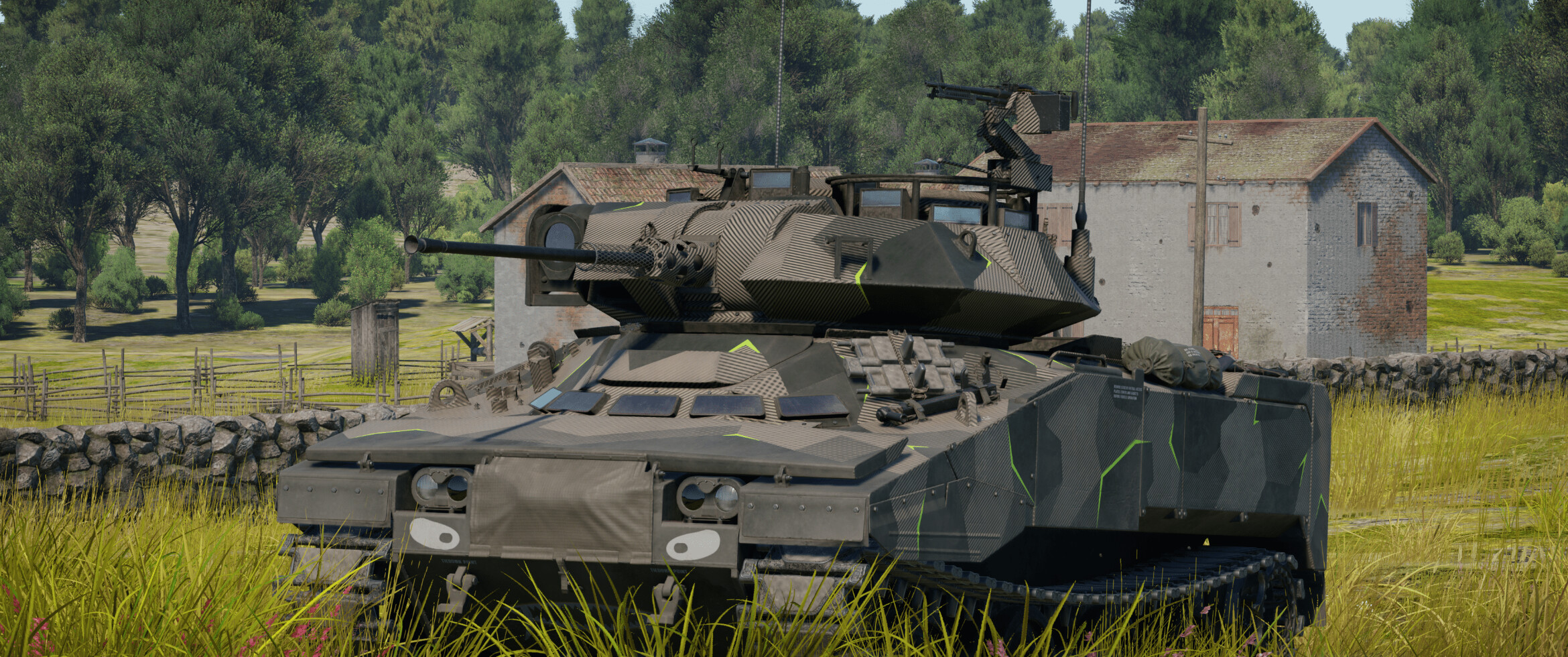
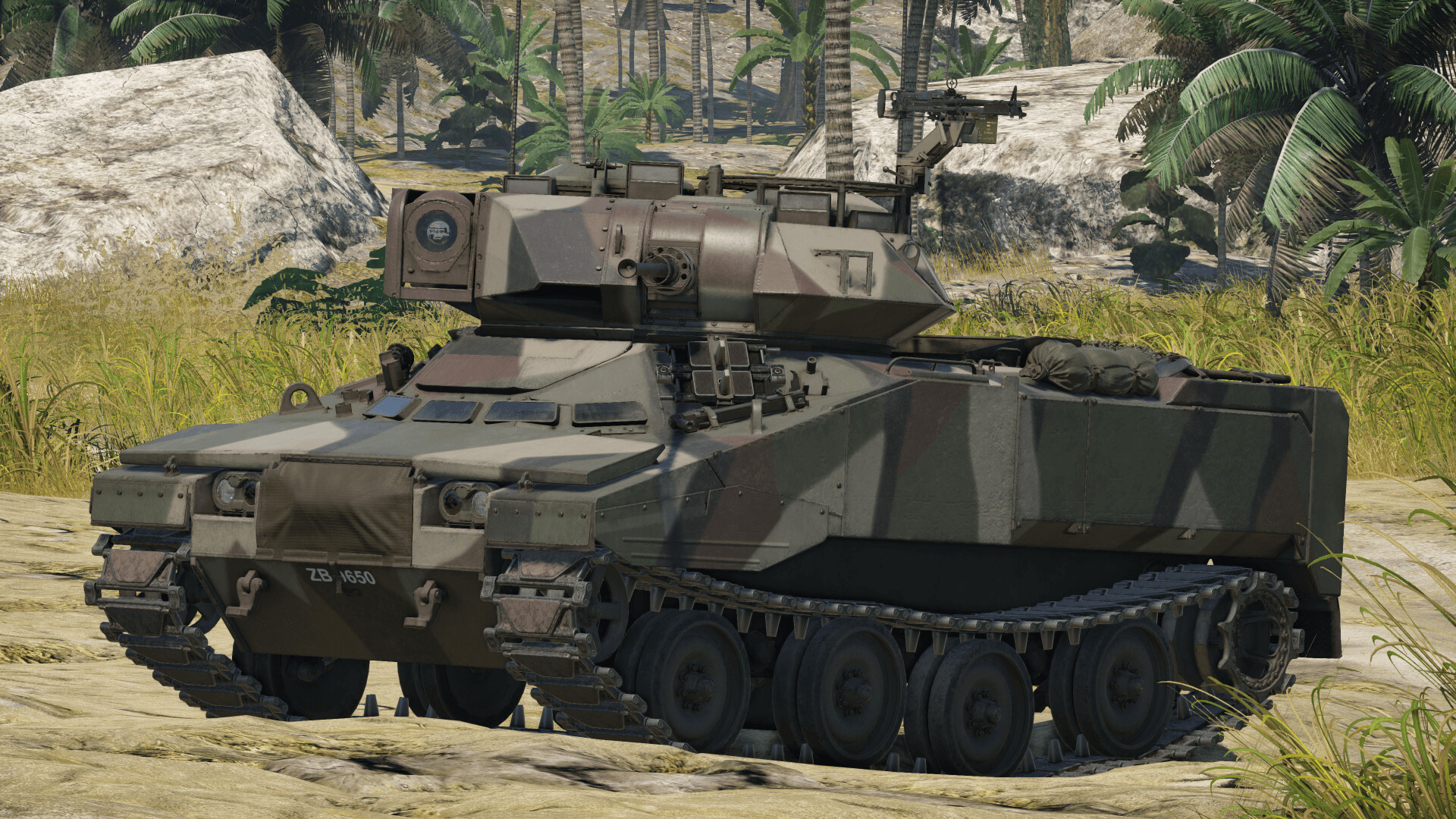
The XM800T is an ARSV, developed in the 1970s by Chrysler, FMC Corp., and Teledyne Continental. It was meant to replace the M114 but never entered production, although the experience gained was used in the M2 Bradley later on. However, this tank combines weak armor with a gun that can’t even penetrate 70mm of armor up close. So how to play this exceptional light tank? Find out in this article!
History:
In the 1960s, the military decided to design a new vehicle to replace the M114 ACRV due to its poor showing. The already existing M113 was used as a basis and got redesigned by the US Army Infantry School at Fort Benning. The M113 used banks on the left and right sides of the vehicle, so all soldiers could see each other. The USAIS at Fort Benning changed it, so the soldiers sat back-to-back and also cut armored vision slots and covered rifle ports in the chassis. This led to the development of a similar vehicle, called the XM734, which also had a cupola with MGs or other weapons and pintles for MGs at the rear. Compared to the original M113, this vehicle has much more firepower. It didn’t get build or put into service, but due to the great potential, the MICV-65 project started, to develop it even further. The concept of the MICV-65 project was a new IFV and two main proposals:
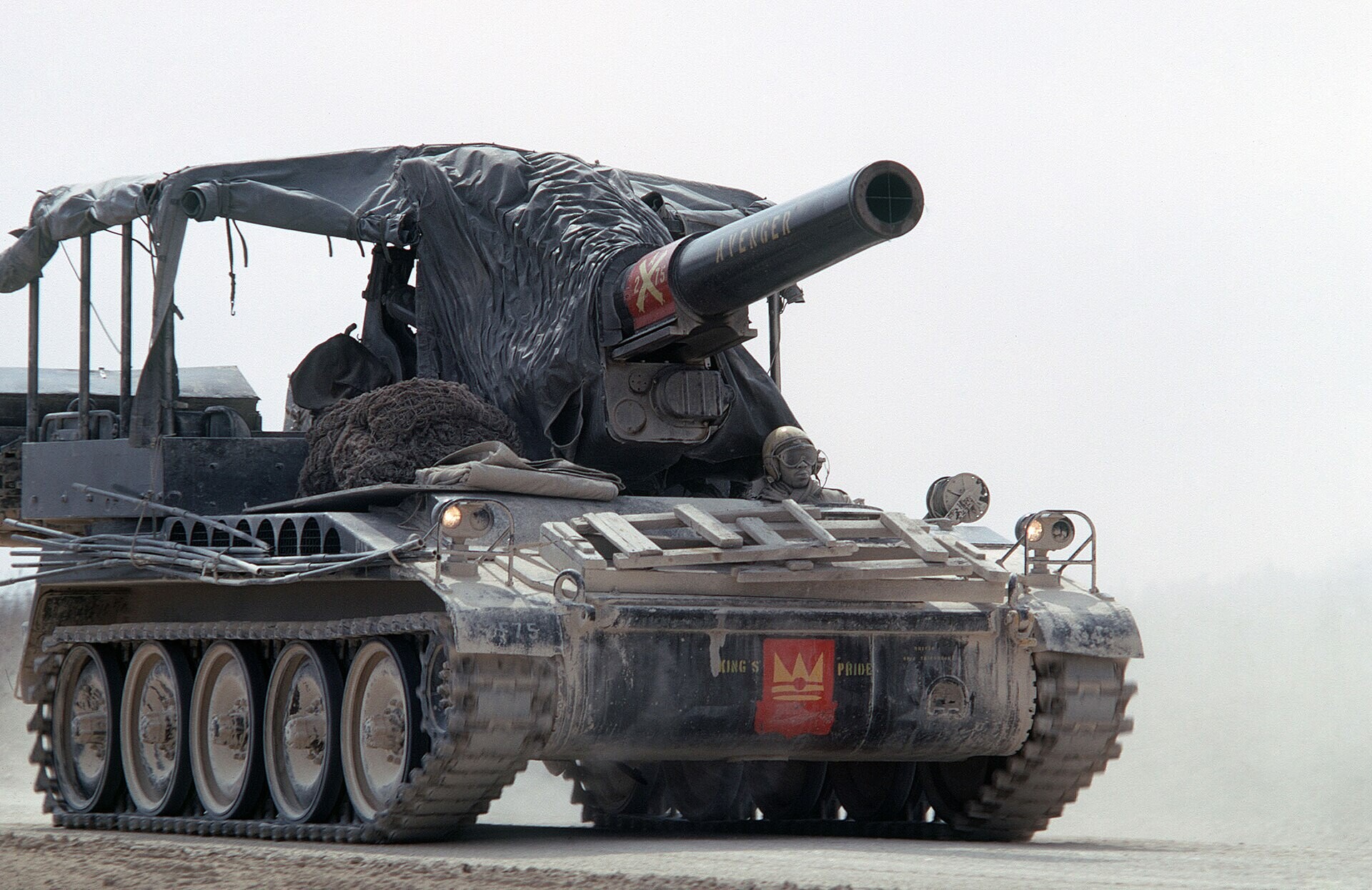
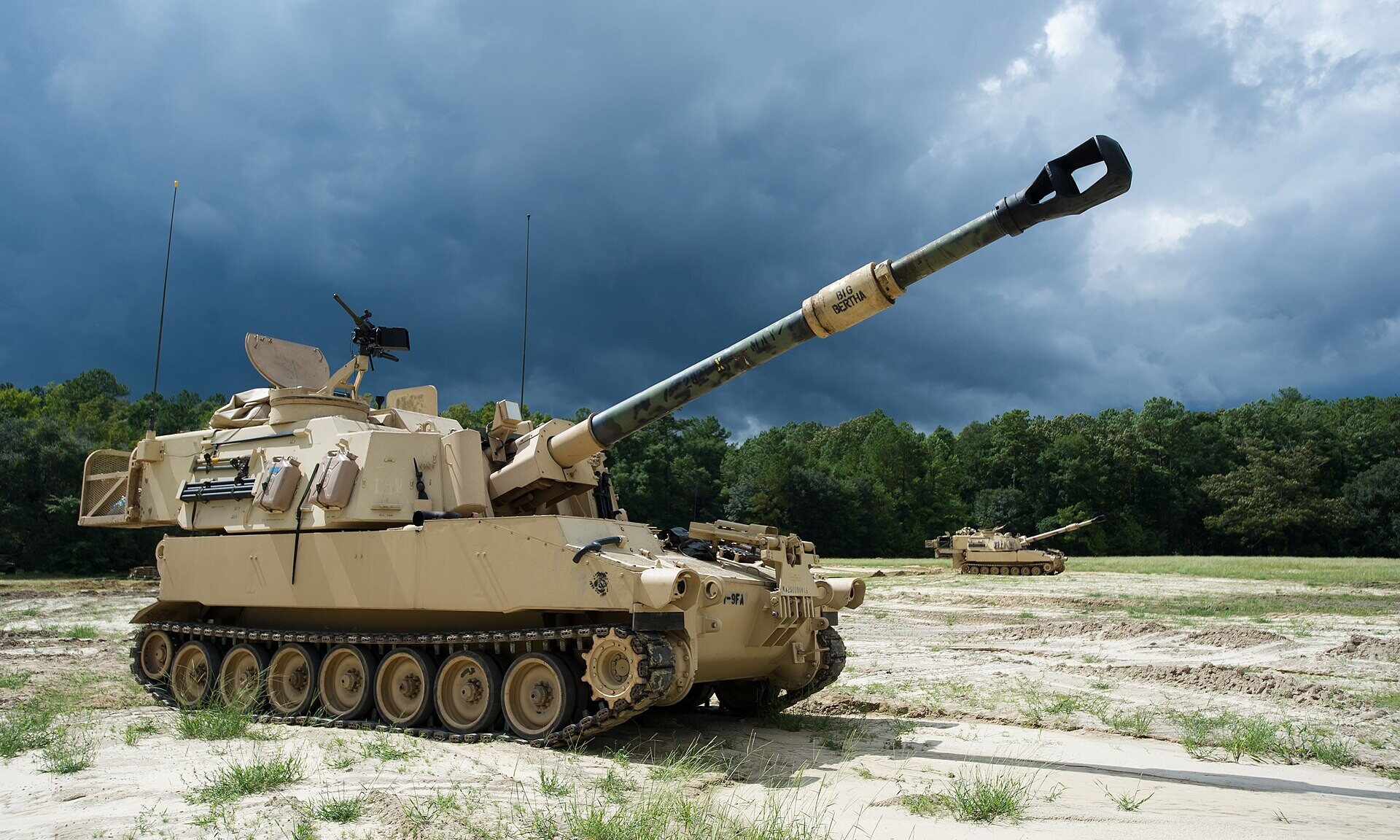
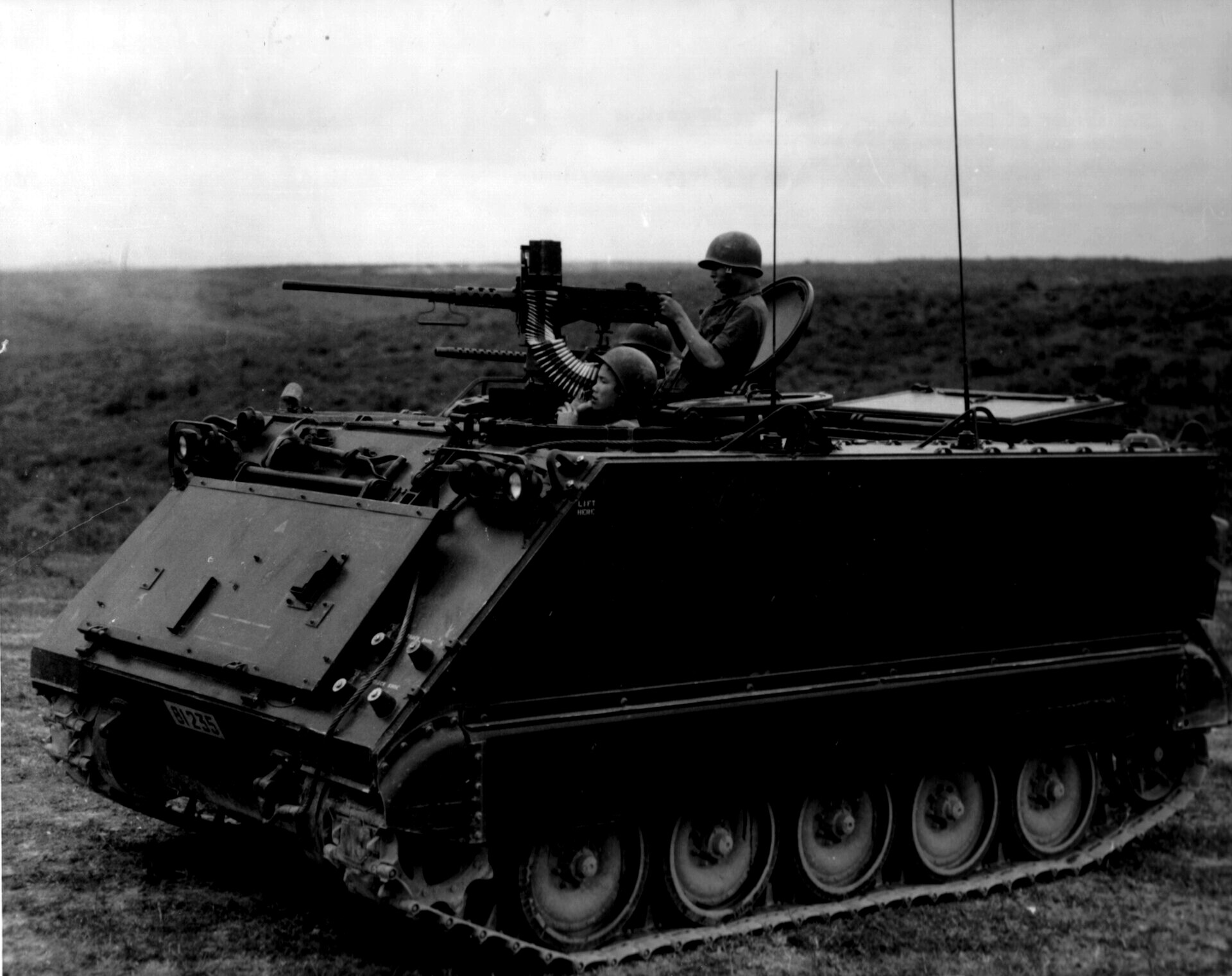
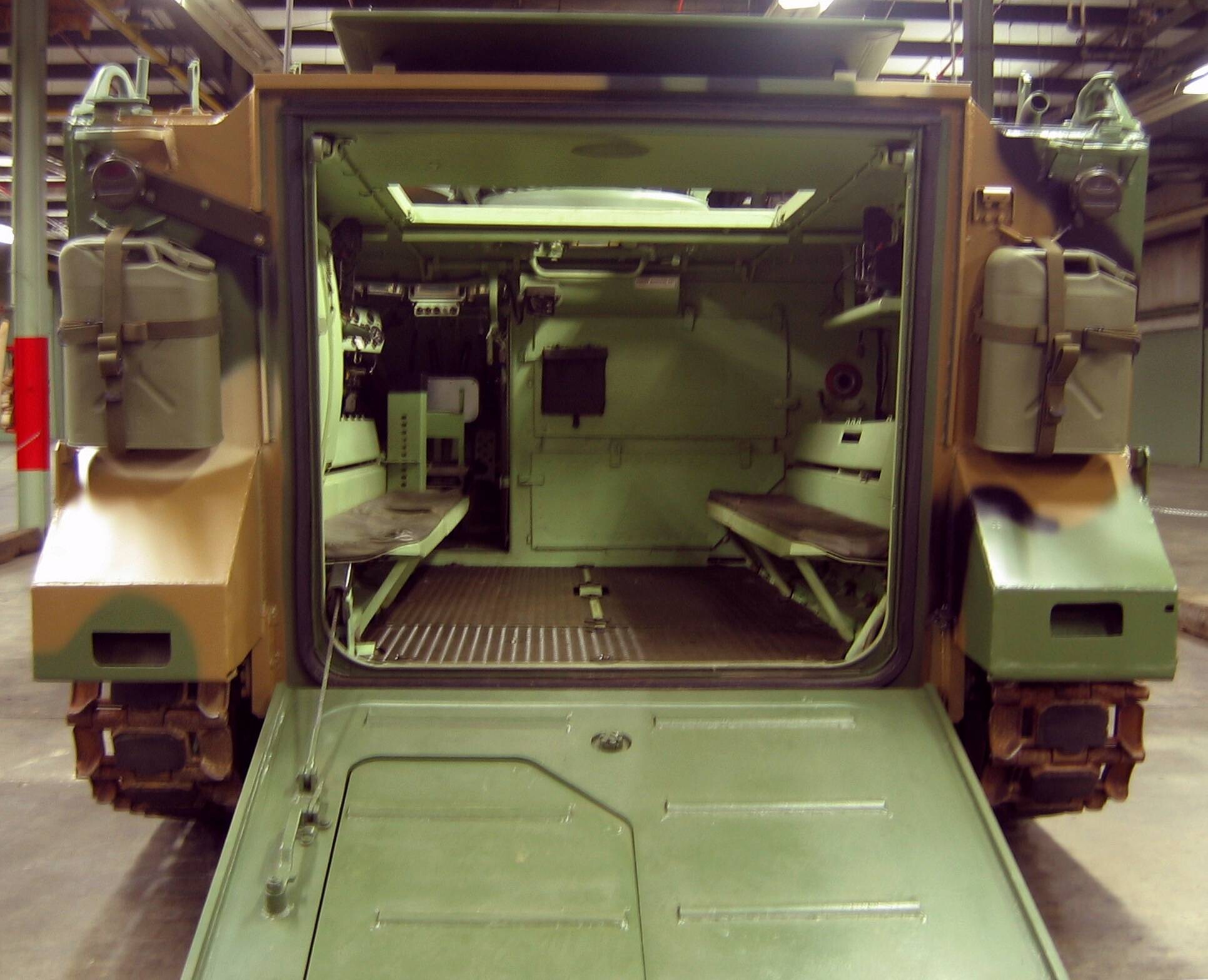
The XM701 won and was selected for further work. However, the program later failed, and the army still didn’t have an IFV and still needed to replace the aging M114. Later the “XM800 Armored Reconnaissance Scout Vehicle” project got announced by the US Army Armored Vehicle Command. There were three requirements:
- Amphibious: the tank must be able to swim,
- Self-defense: it also must be able to defend itself against light targets,
- Air transport: the tank must have air transport capabilities.
There were two main proposals:
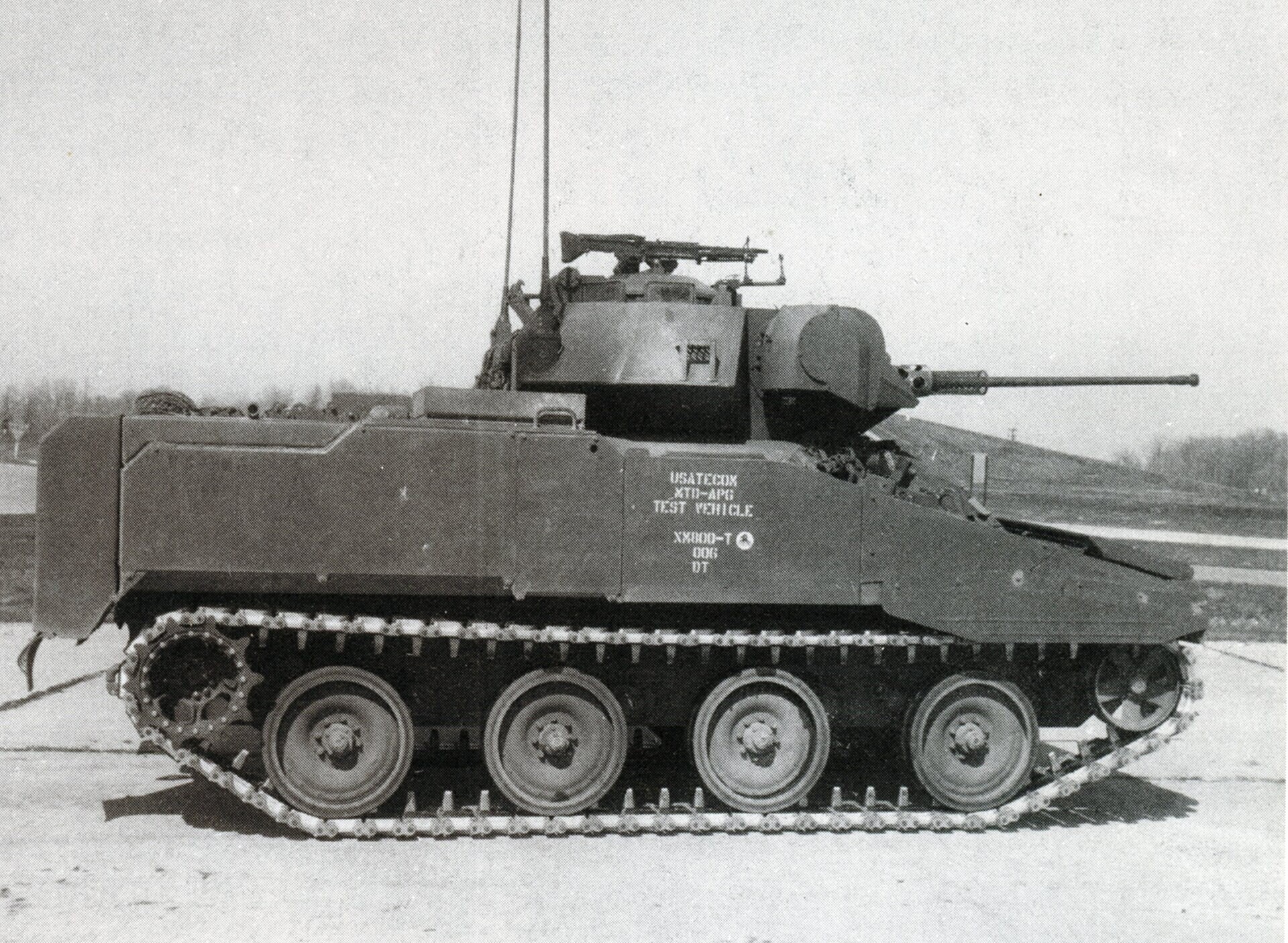
XM800T: A tracked XM800 design by FMC, Teledyne Continental, and Chrysler, they also had a new design of the FV101 Scorpion. The XM800T also had a Laser Rangefinder (LRF), and was able to reach up to 100km/h.
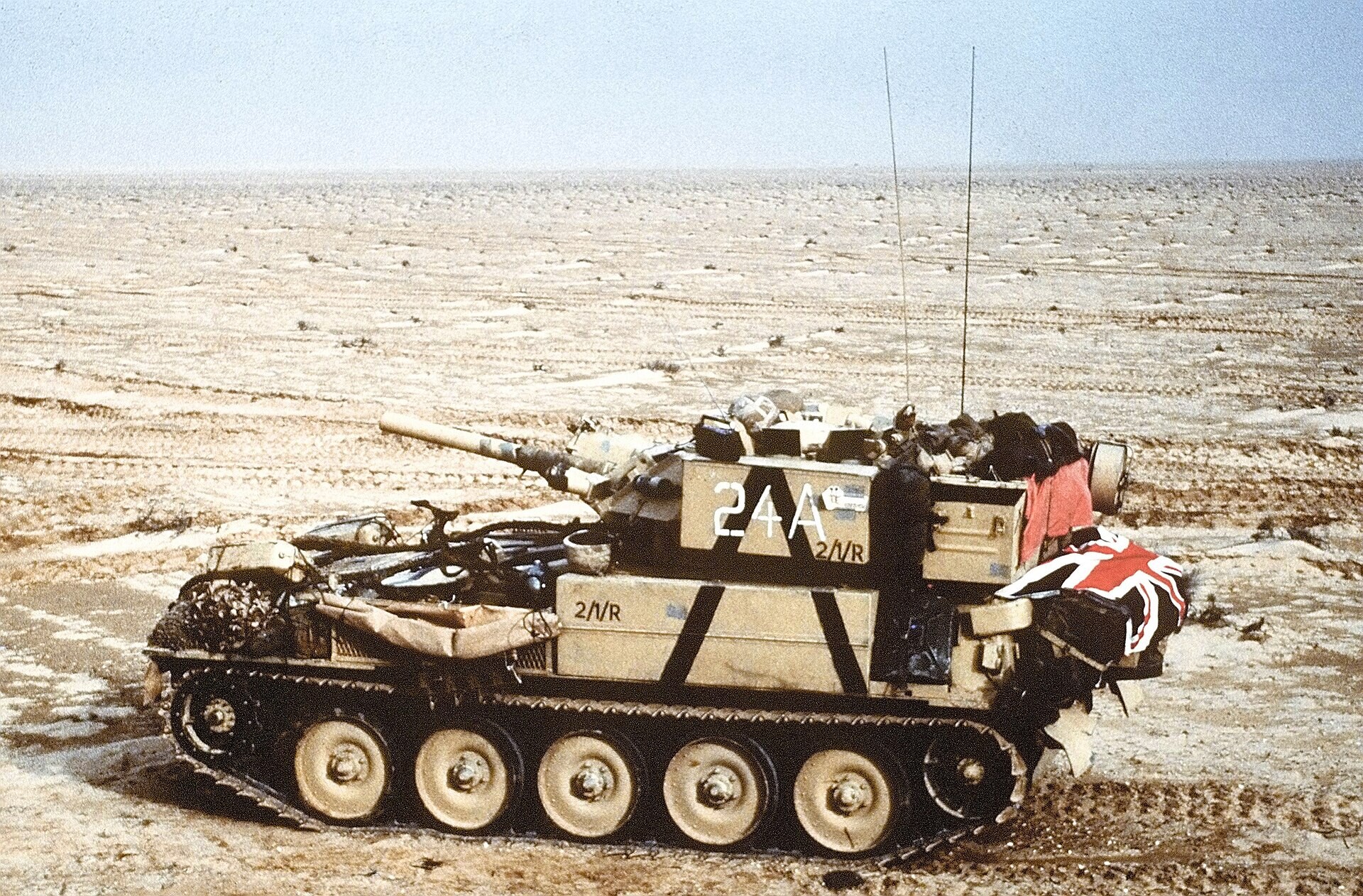
The Scorpion is a British ARSV, which belongs to the CRV (T) family. There were some major changes that needed to be done, for example, the guns had to be the M139 and the M60. The original Scorpion used a 76mm L23A1 cannon and a coax 7.62mm L37A1 MG. The XM800 and the Scorpion could become competitors, the flagships of the USA and the UK. Due to the XM800T never reaching production, this never happened.
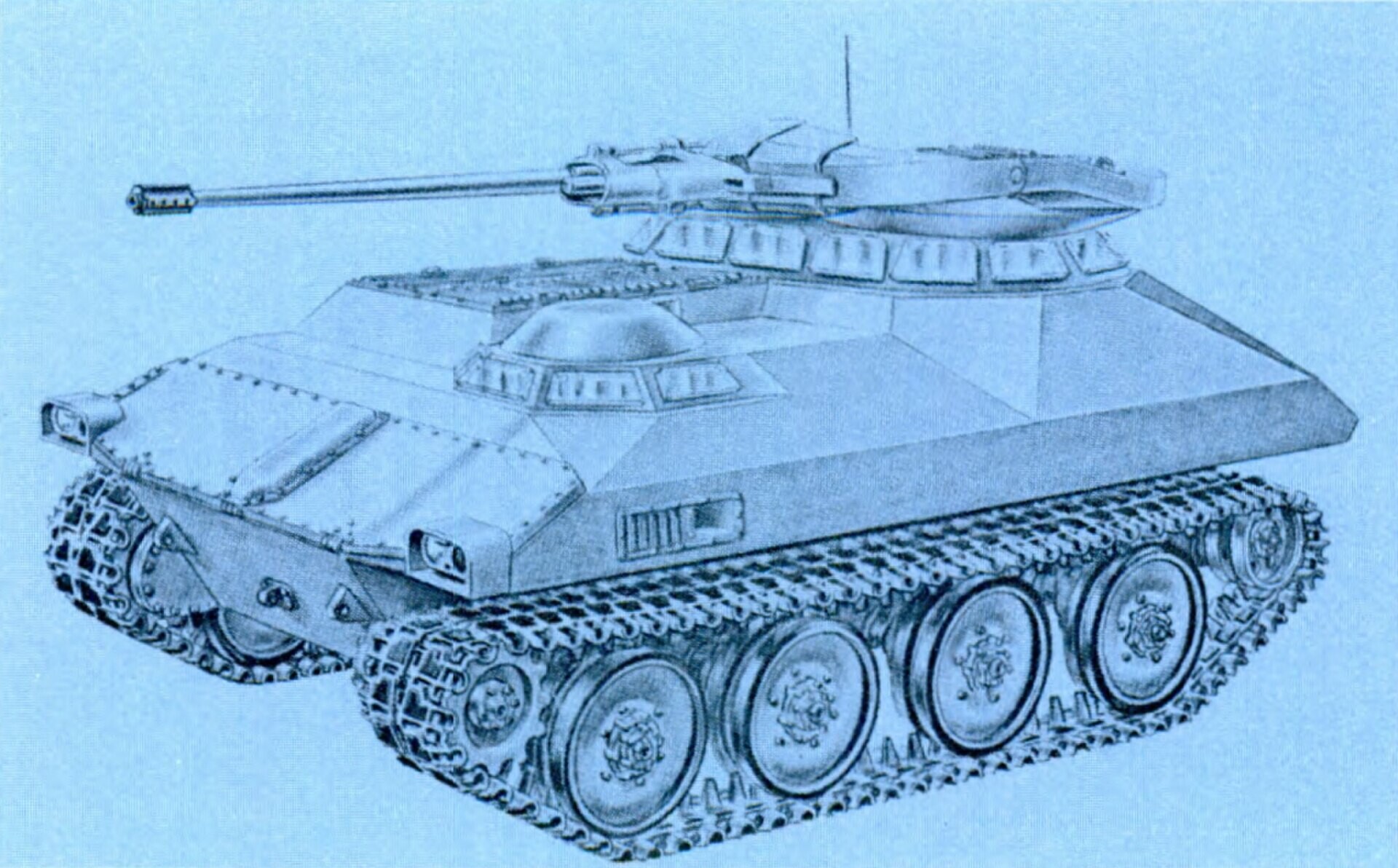
XM800W: This proposal by Lockheed, CONDEC, and Ford used 6 wheels. It was based on the work of Lockheed with the 8×8 Lockheed XM808 Twister, which was already tried and tested in Vietnam. Also, after the competition, Lockheed updated the XM800W with a new turret, nonetheless the main cannon remained the same.
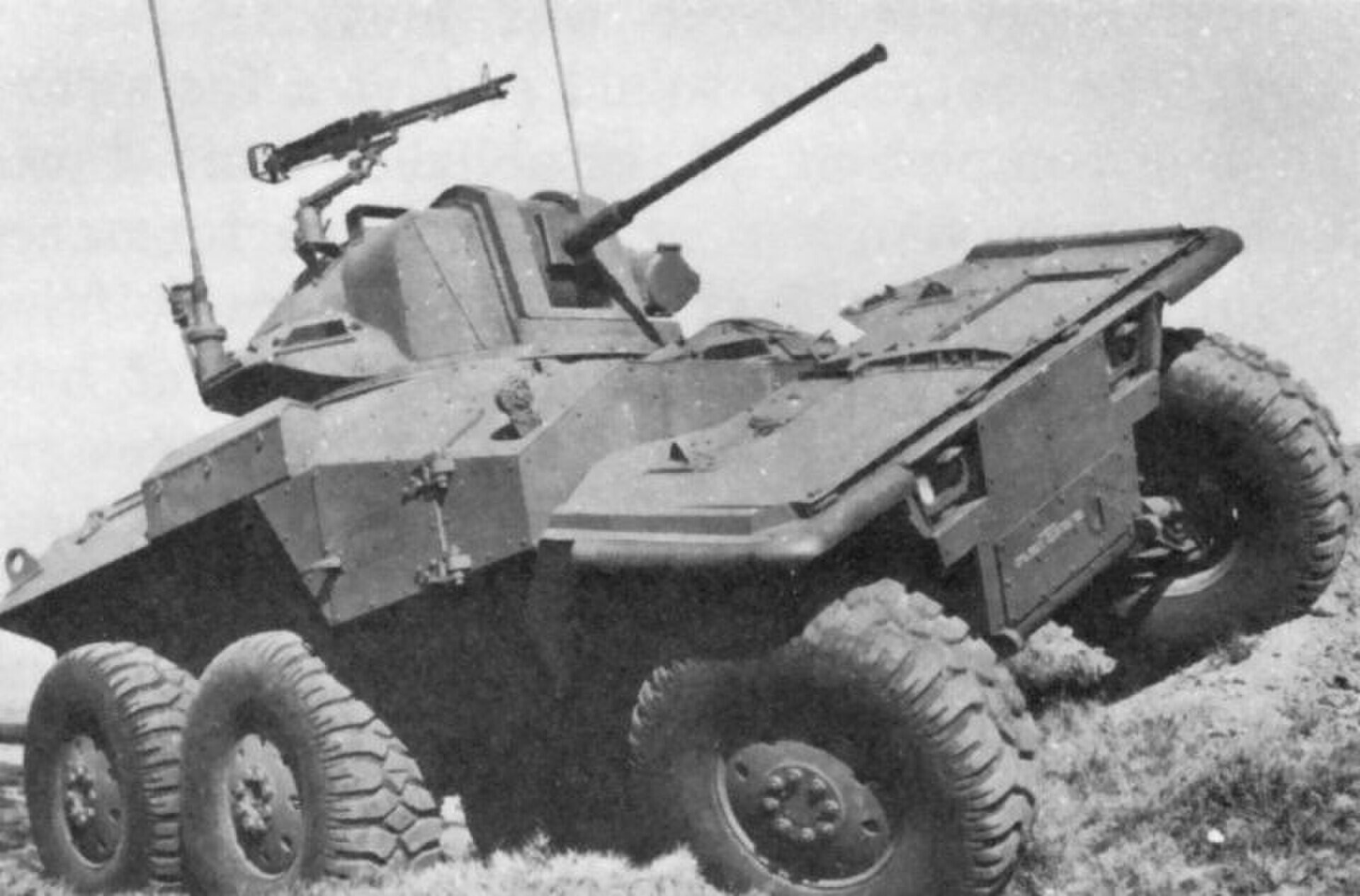
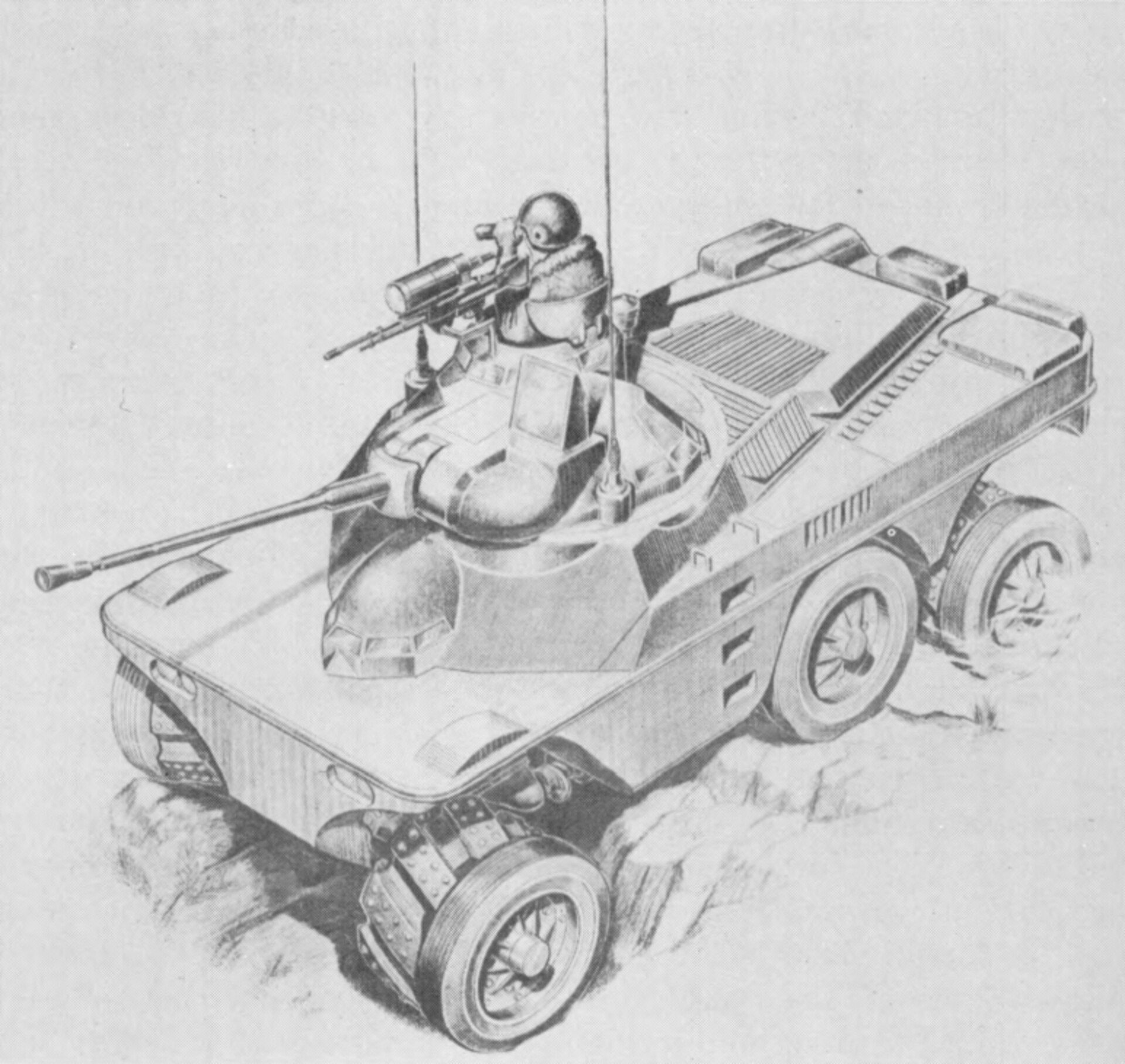
They all used the 20mm M139 (a licensed version of the Hispano-Suiza HS.820) and the pintle-mounted M60 MG because they were selected for this program. As all proposals were compared, the XM800T proved superior over all other competitors. In 1976 the program had problems since the applicants could not perform 24-hour duty, had no air defense capabilities, and generally possessed no surveillance equipment, and the program finally came to an end.
- The M113A1 AIFV,
- The Canadian Lynx,
- A PI M113A1 featuring a turbocharged engine and tube-over-bar suspension,
- The British Scimitar reconnaissance vehicle,
- A modified M551 Sheridan,
- The XR-311 dune buggy,
- The V-150 armored car
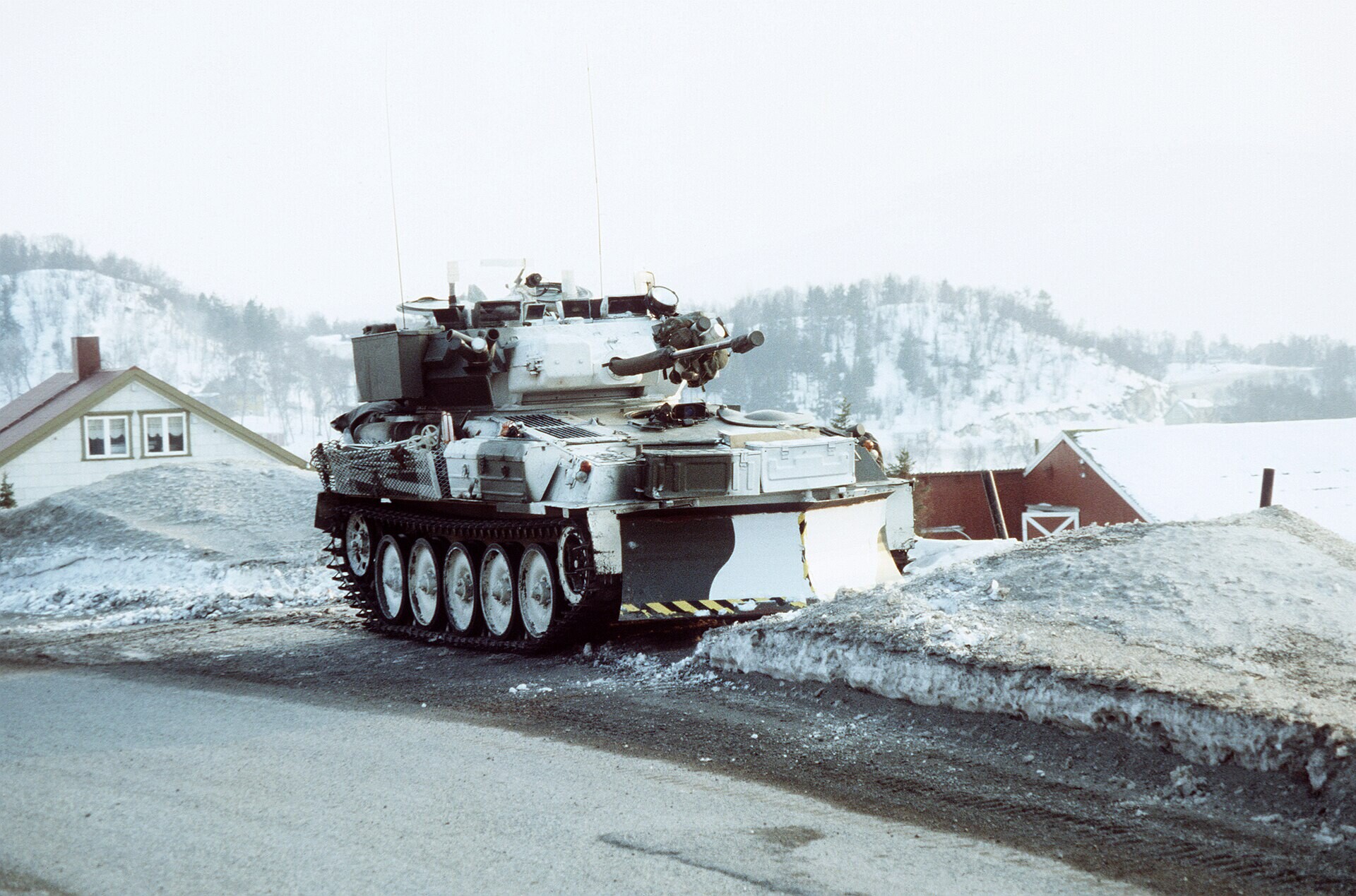
After the program ended, the MICV-65 and XM800 project got merged to develop a tank that could serve as both IFV and ARSV, and the Bradley family was created. The M2 Bradley was an IFV with space for troops, while the M3 is an ARSV, with more ammunition and communication equipment.
Pros and Cons:
| Pros | Cons |
|---|---|
| Decent mobility and acceleration | Mediocre armor, vulnerable to almost everything |
| Fast turret traverse | Main gun overheats quickly |
| High RoF, fully stabilized | Lacks LRF |
| Good depression/elevation angles | No smokescreening of any kind |
| Amphibious capabilities | Mobility in water is extremely reduced |
| Access to scout drone and active scouting |
Mobility
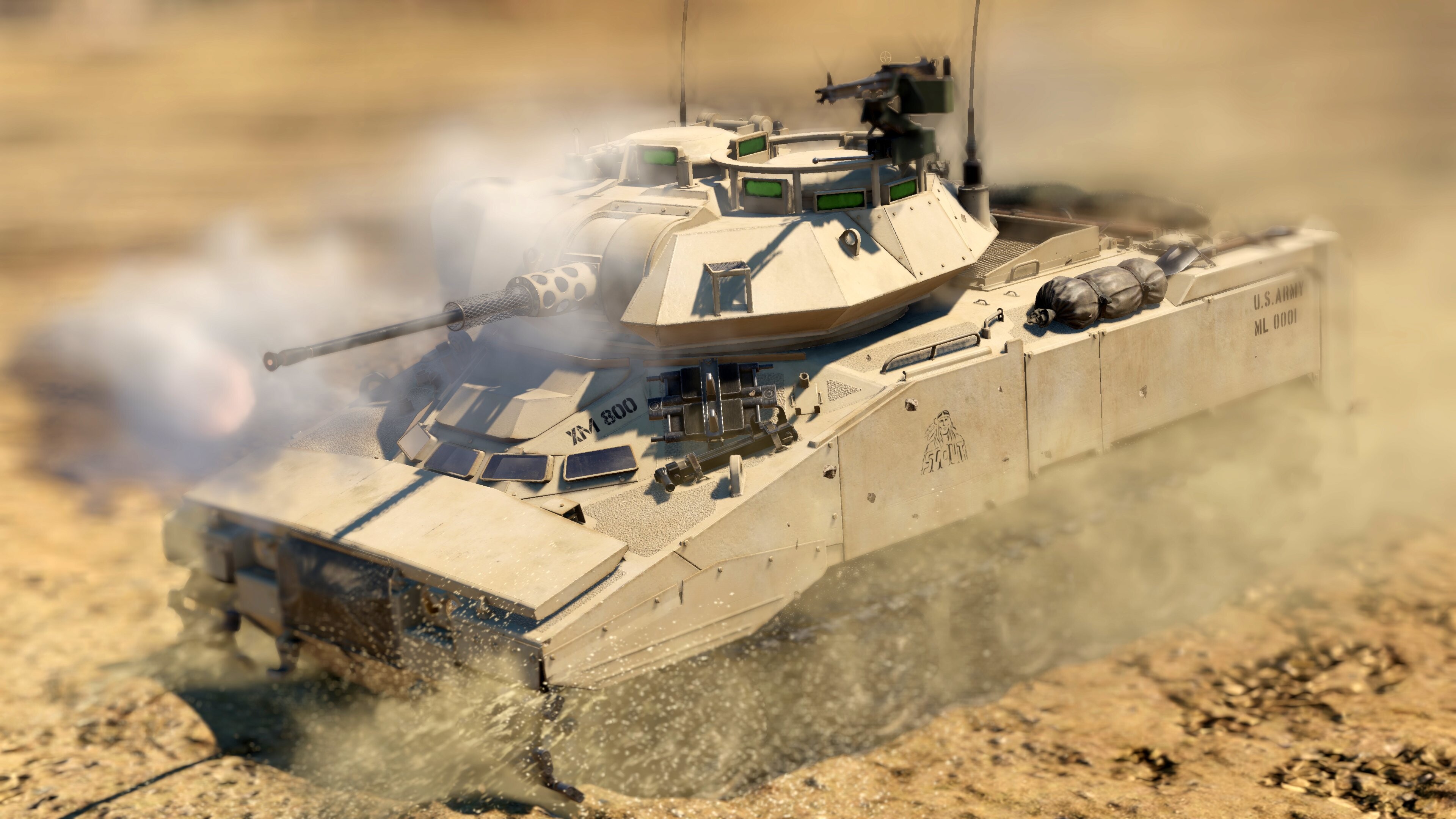
This little tank boasts an impressive top speed, both forwards and backwards. The rear of the XM800T houses an engine with 285 hp, so the power-to-weight ratio is amazing with 33.1 hp/t, as this tiny scout only weighs 8.6t. The XM800T also accelerates fast to its top speed, which is pretty high, compared to other IFVs and ARSVs. It’s better to be careful when making sharp turns at high speed, as the tank can and will easily flip over and land on the side! Besides, it is extremely maneuverable, it can rotate 360° in 6 seconds, but in the water, this thing is much slower and only reaches forwards 7 km/h and backwards 4 km/h.
Survivability
Because this ARSV is a light tank, it only boasts weak armor, so it is nothing one should rely on. The XM800T has aluminum alloy 7039 and a bit of RHA as armor, giving it between 15mm (on the left side of the breach) and 90mm (lower side of the turret) armor RHA equivalent. The best protection is its small profile and speed, so the safest way of surviving is running away and scouting what is too heavily armored. A big problem is the lack of smoke screening, which means that the XM800T cannot reposition without getting seen as easily as, e.g., a Fox. This also can be annoying when repairing in the open field or when getting sniped on large maps like “European Province”.
Survivability against a penetrating shell:
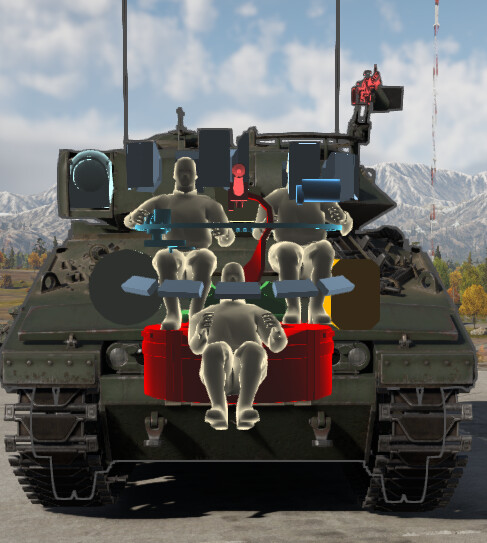
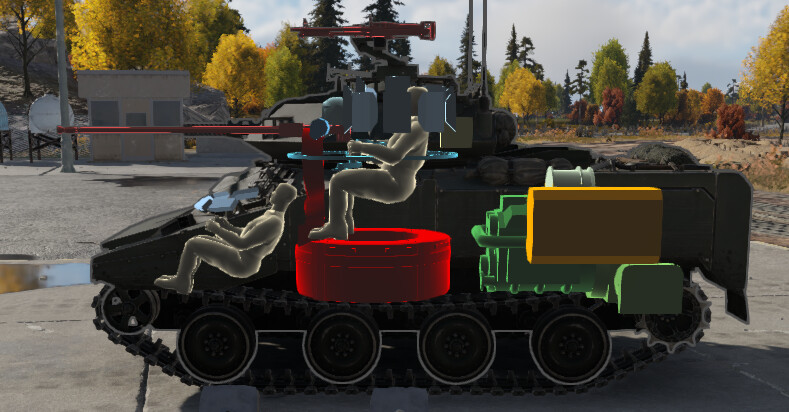
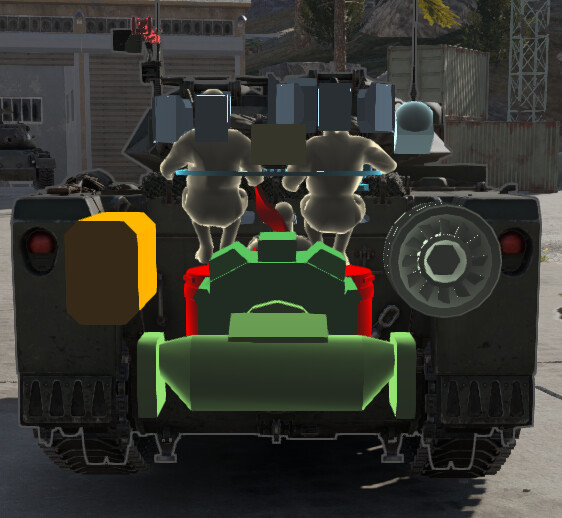
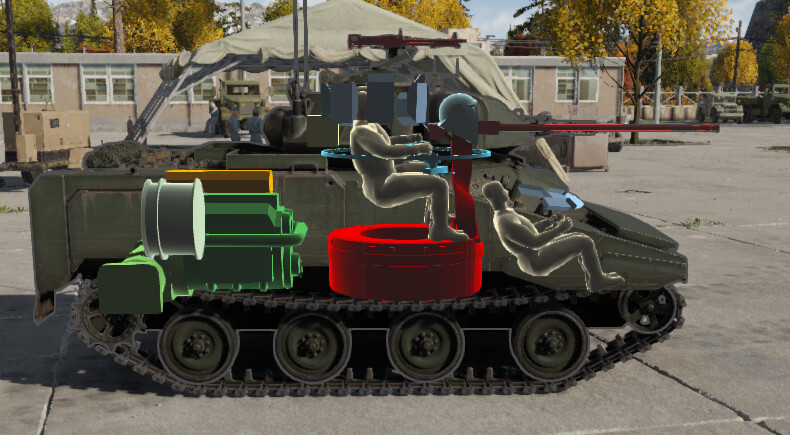
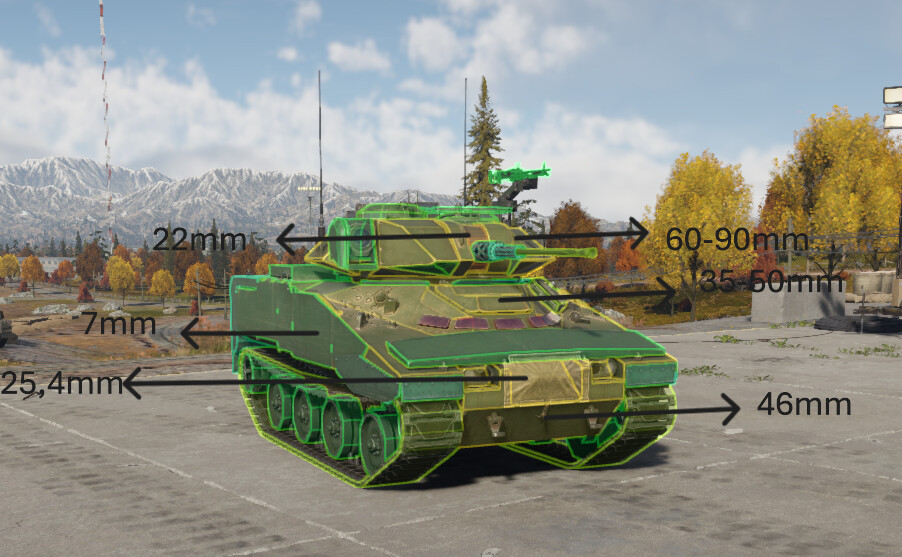
This ARSV has almost no survivability. A piercing round kills, in most cases, the whole crew, it doesn’t matter if it hits the hull or turret. The XM800T only has 3 crew members, 2 in the turret and one in the hull. Underneath the fighting compartment is the only available belt, so if the side is hit, this will cause a fatal ammunition cook-off. When a round strikes the rear, the engine or fuel will eat it, but maybe the fuel also explodes and sends one straight back in the hangar. There is one big rule:
The only survivability is stealth and speed!
Firepower and Belts
The XM800T has two weapons: A little 7.62 mm and the main 20 mm MG. Let’s look at their best usage:
20mm Hispano-Suiza HS.820 M139 (main gun):
Possessing 500 rounds in one large belt and an insane RoF of 1050 shots/minute, you will run out of bullets within ~30s when firing without a stop. This results in a constant need to replenish at a capture point, so it is better to fire in short, controlled bursts, this will also prevent the barrel from overheating. If the 20mm overheats anyway, it needs a few seconds to cool down. Also, the turret turns extremely fast, for turning 180°, it only needs ~3s. The vertical guidance is also very good, with -20°/+65°, which allows firing over small hills and engaging planes. Let’s look at the available belts and how to use them. Keep in mind, only one belt can be chosen!
| Belt | Components | Best use |
| Default | HVAP/HEI-T | As this is the stock belt, it needs quick replacement with the DM63, because it fires HEI-T and HVAP, and killing tanks with HEI-T is a hard task. |
| 20mm HE | HEI-T | This belt can only penetrate 6mm RHA up close. Paired with +65° vertical guidance, this is a dangerous tool against low-flying aircraft and helicopters. |
| 20mm AP | HVAP | Should be the primary belt until the APDS is unlocked. HVAP doesn’t do a lot of damage, like APCR, but can pierce more than HEI-T. It shatters a lot. |
| DM63 | APDS | DM63 is the best available belt, because it can penetrate more armor, has better angle performance, and damage than HVAP. |
7.62mm M60D:
Can penetrate up to 13mm RHA, so it’s for nothing really useful, except for clearing sight lines and destroying objects. Clearing sight lines is only in some cases good and useful, because this allows enemies to spot you much faster and easier.
Playstyle
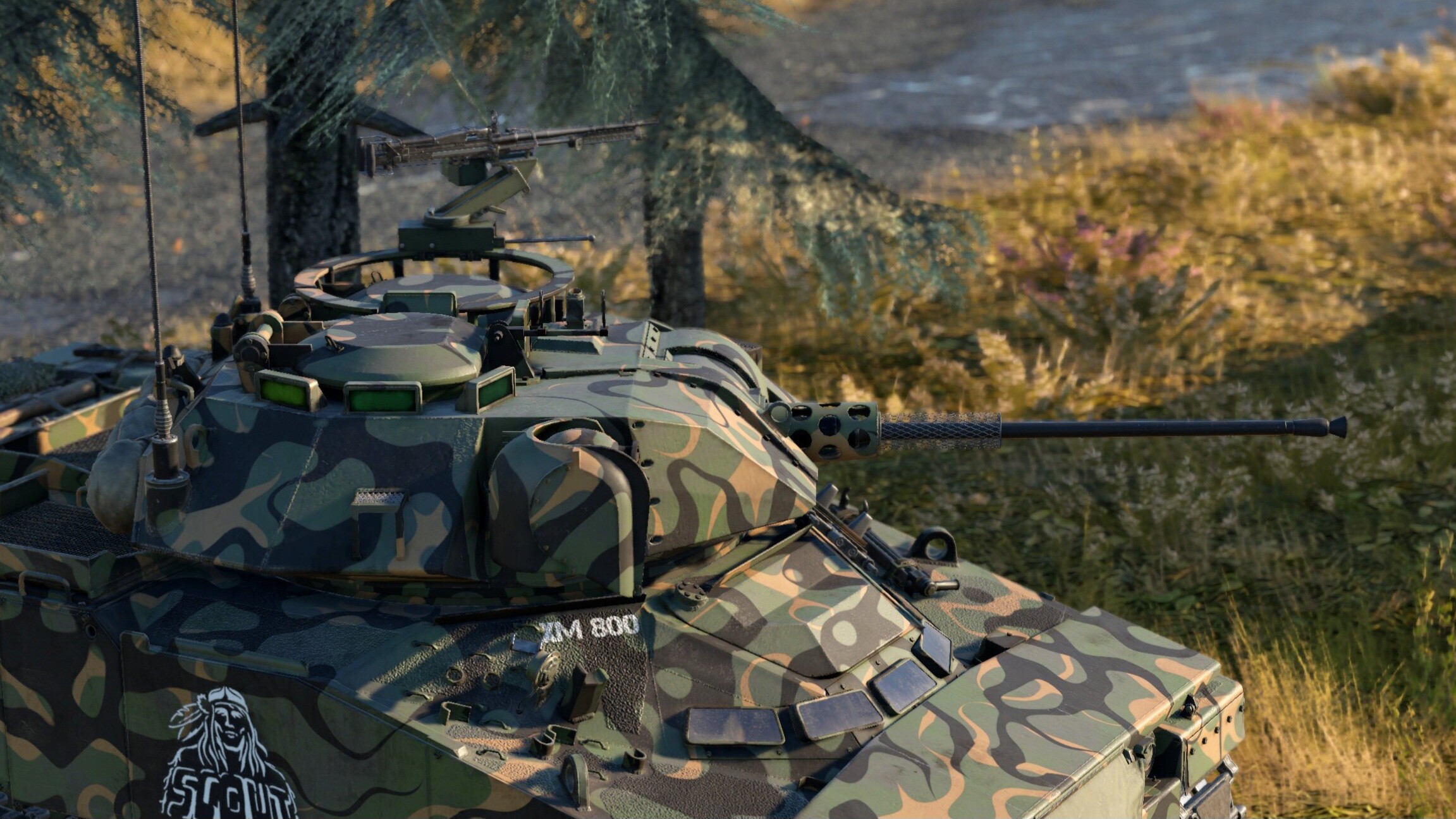
With its superb mobility, high RoF, and weak armor, 2 playstyles are recommended:
1. Flanker:
With the excellent speed, the XM800T will always be among the first to reach the flank. The small silhouette helps to hide it until light or medium targets like Leopards arrive, whose side armor is easily pierced by the 20mm M139. Staying hidden is important, but when the enemies discover the hiding spot, repositioning is the best option. When heavier tanks (e.g., a Maus) appear, the player should scout them and try to hide until they are away. The scout UAV can be used to find enemy routes, so the team knows, and an ambush can be started. SPAAs can shoot down the drone, this will pop up in the kill feed.
2. Supporter:
When spawning, wait for mates in medium or heavy tanks and follow them. Once they are fighting, scout the opponents and disable tracks and barrels. Light targets (for example, a Begleitpanzer 57) can be taken out without support. Also, help your mates with repair and capture points, because this is a highly rewarded task. When there is an opportunity, slip behind the enemy lines and attack them from behind, as the rear is the weakest spot! Always pay attention when doing this, maybe a player arrives and kills you, so watch out and hear out! This play style is good for stock grinding.
Enemies worth noting
A quick rundown about the most scary and dangerous vehicle families you will face:
Light tanks:
Generally, light tanks are never really a problem, due to their weak armor all around, but still try to get the first shot.
Medium tanks:
This type usually features thin side armor, with poorly protected ammo racks. They should be flanked after tracks, MGs and the barrel are disabled.
All of these tanks that are not located in rank VI have a back and side that is vulnerable to your 20mm, with one exception: The TO-55. This tank can easily melt tiny scouts, as it is one of 3 tanks that are equipped with a flamethrower. The only spots that are weak enough are shown in the pictures underneath:
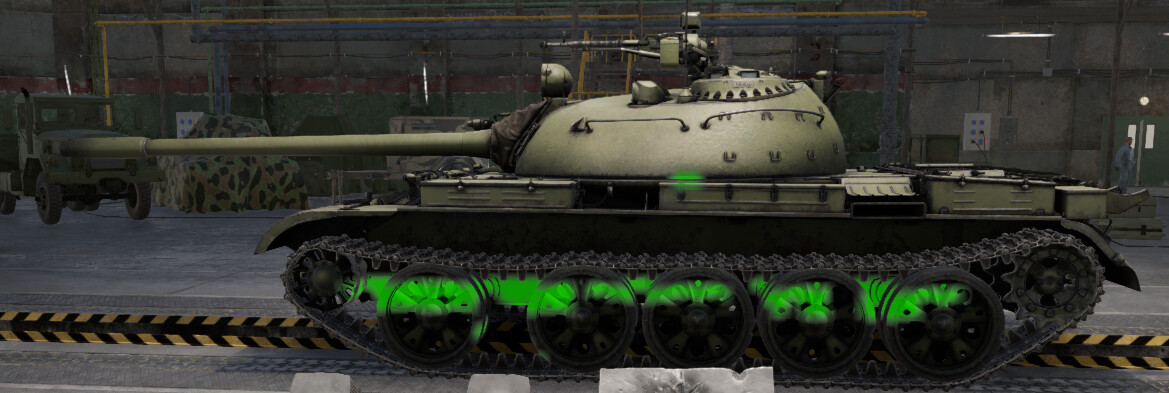
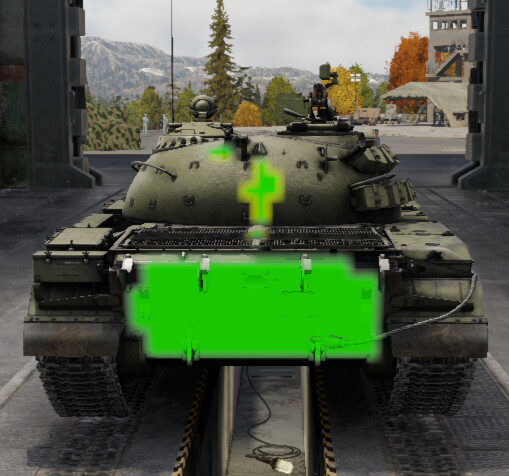
All of this family share this weakness at their side on the upper side of the sprocket. The ones at rank VI do have the same turret armor as the TO-55. When they notice the XM800T and turn their turrets towards it, the barrel, MG, and tracks should be disabled, so there is a possibility to attack this beast from the side. While it extinguishes the flames, the player can kill or scout it. If it is a T-10M, running is the wisest decision because it is way too thick-armored for 20mm APDS at almost all spots.
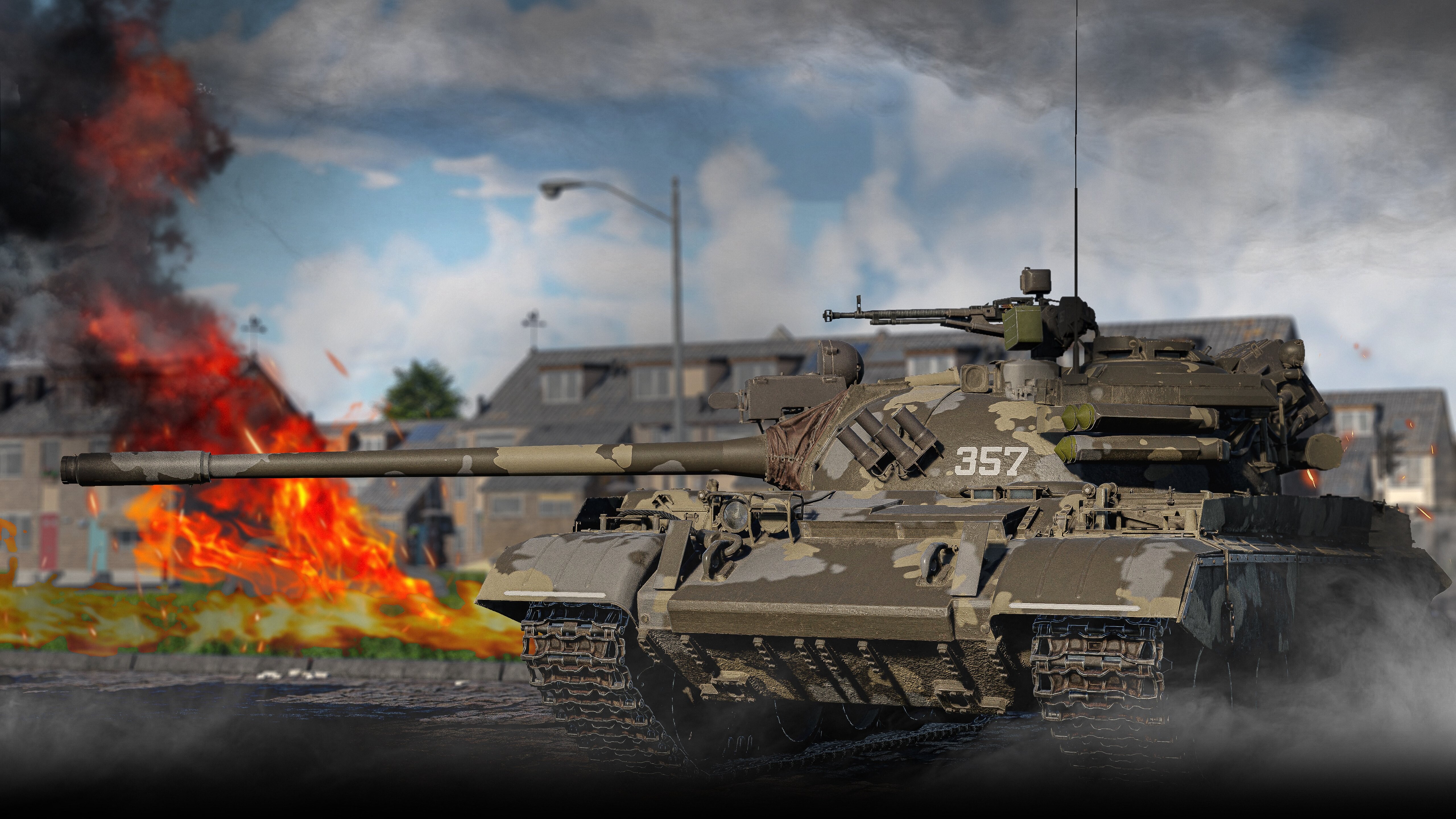
Leopards are easily pierced at their flanks and rear, but their front is too well-protected. Again, aim for crew and ammunition, e.g., at the one next to the driver. For Turm IIIs, shooting the left side of the turret is a good solution, because all rounds are there. The player should be aware of the 30mm MG, because this fires APHE-T and can easily pierce the XM800T. When it hasn’t noticed the player yet, it can also be penetrated at the turret frontally.
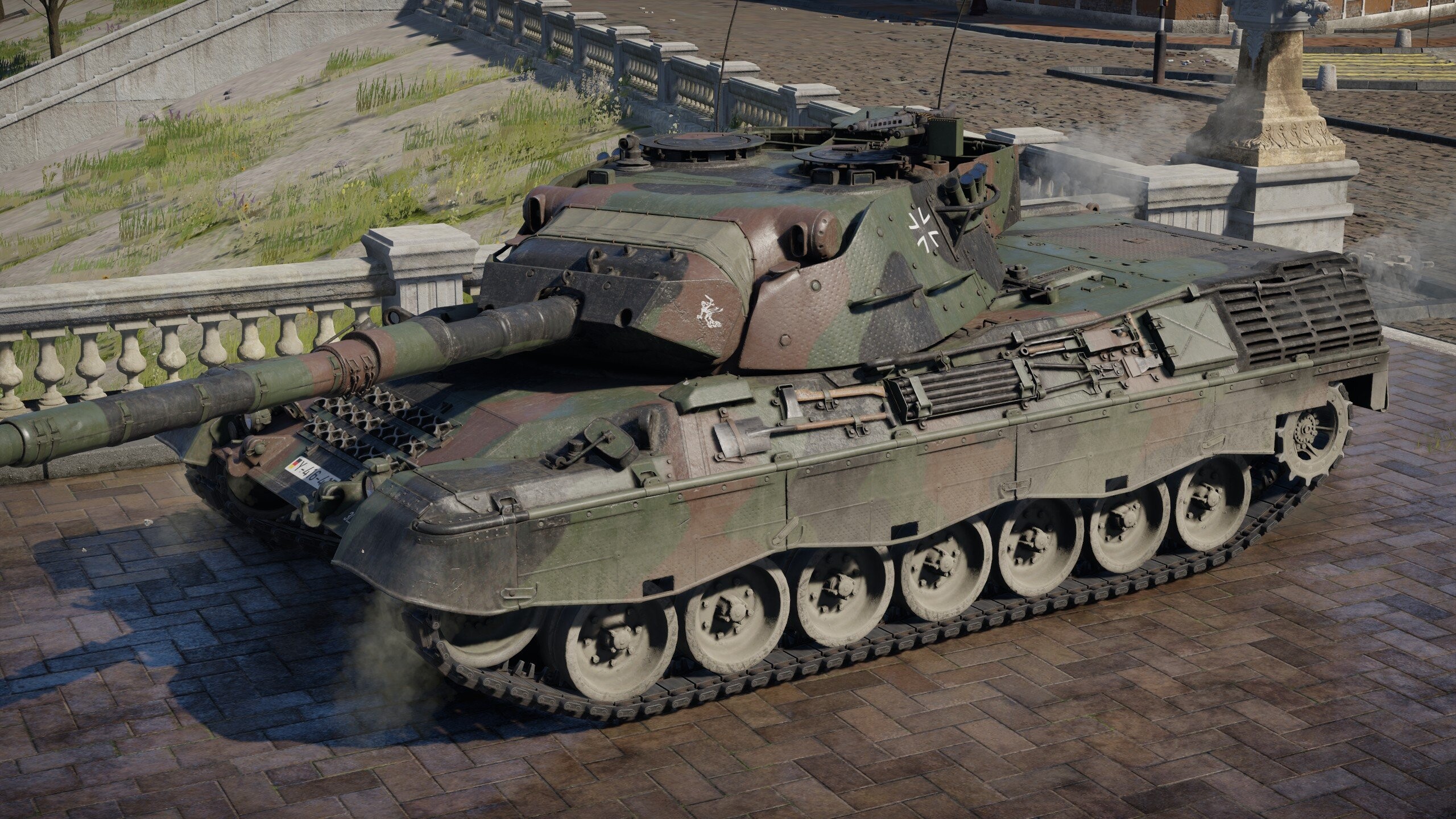
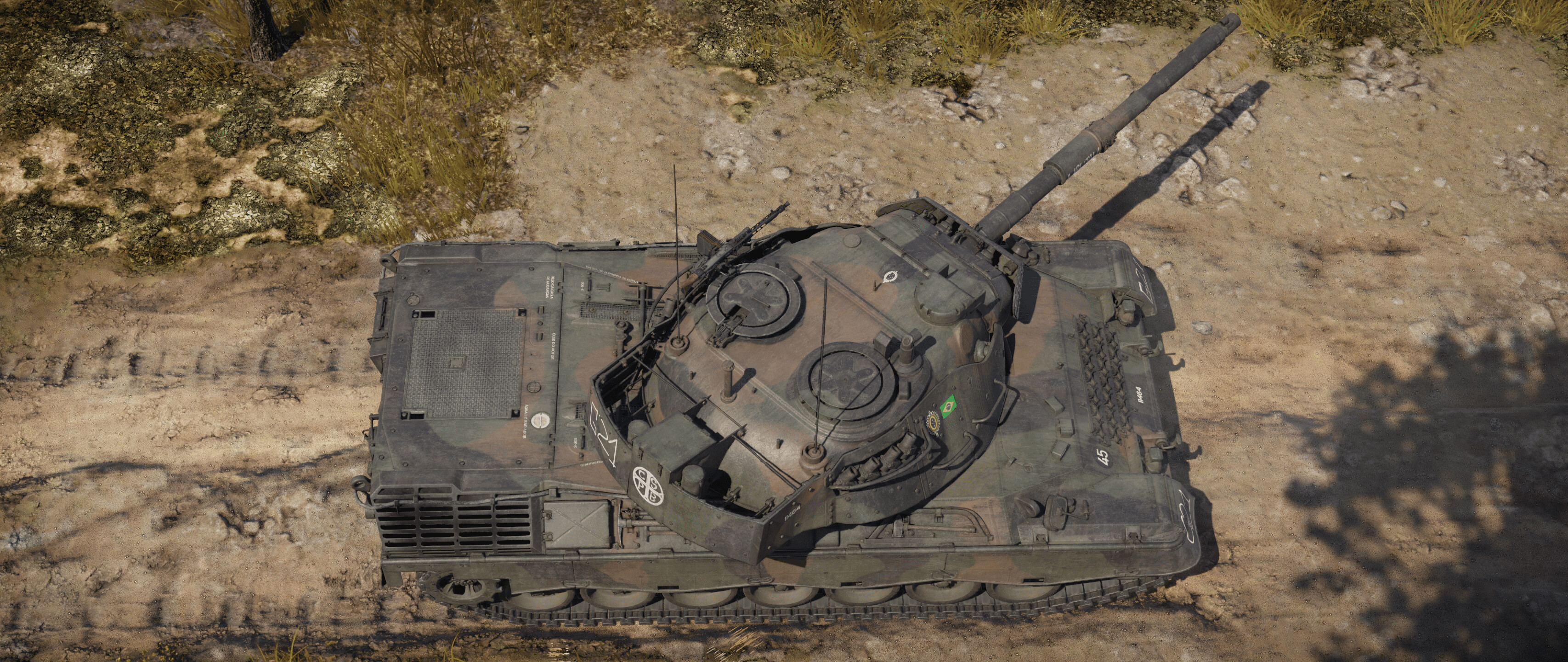
Chieftains are simple to kill, because at their side is a big, poorly protected ammunition rack near the driver. When flanking, this is the spot to aim at. The damage report can be used to spot said depot or the crew members to take out one after another.
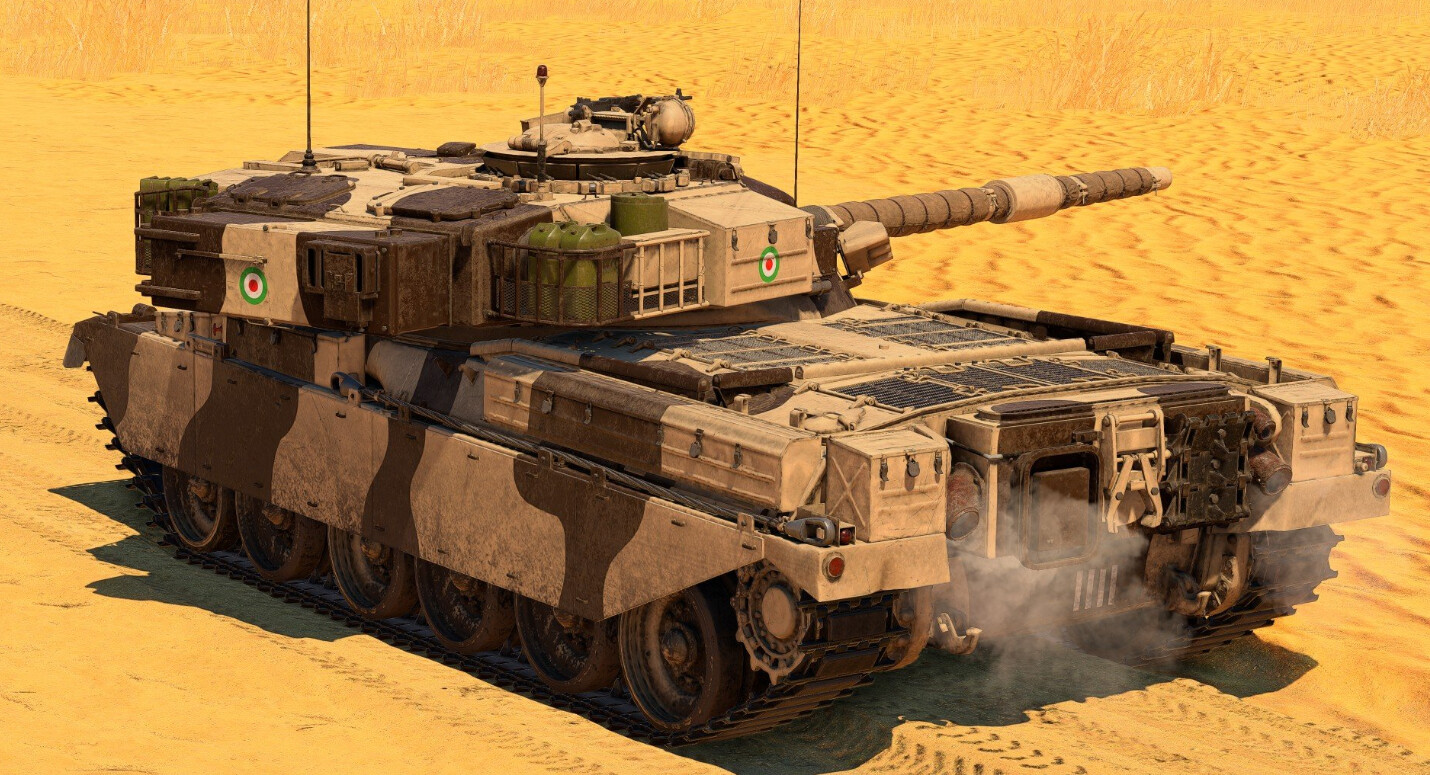
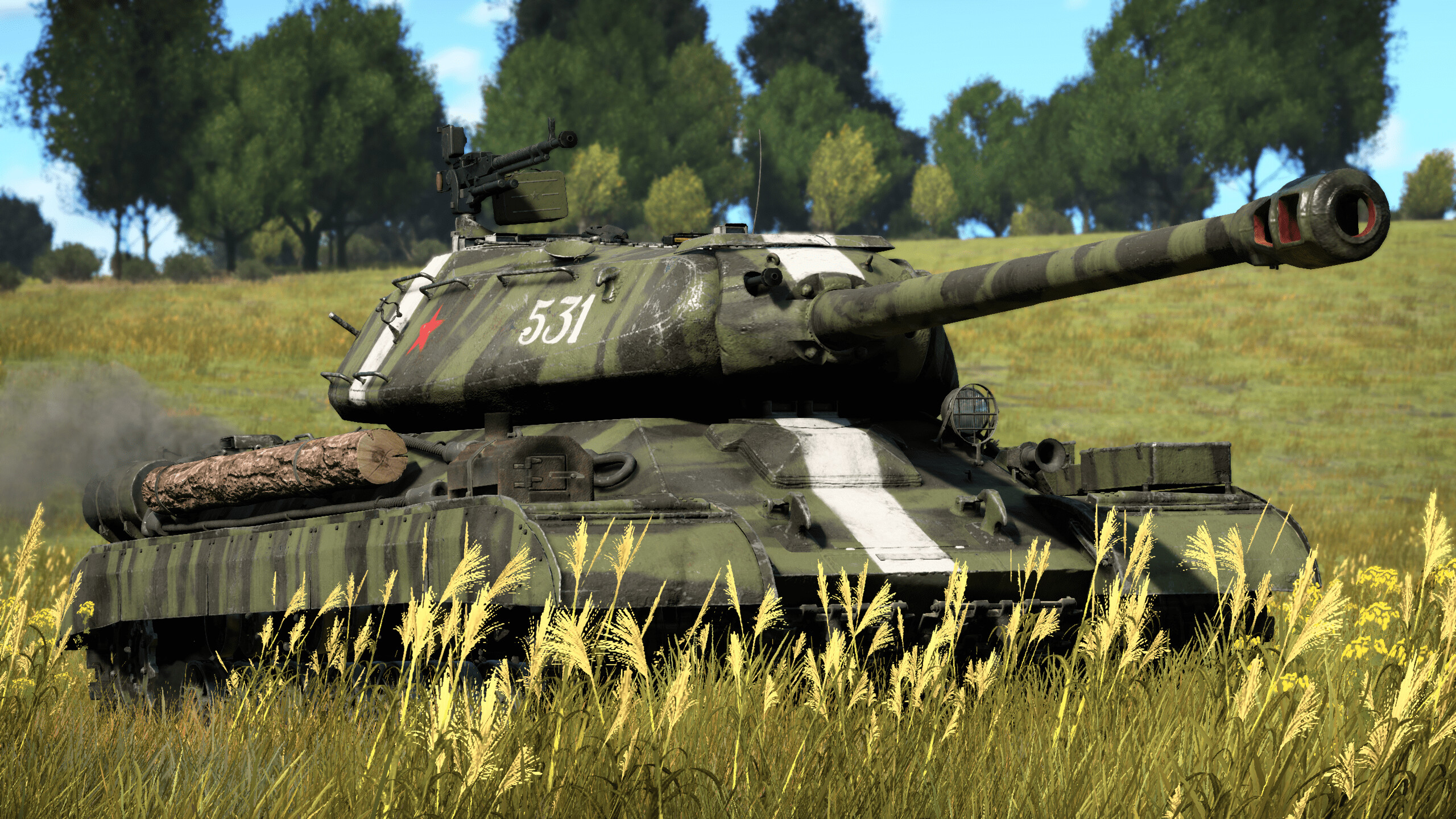
Heavy Tanks:
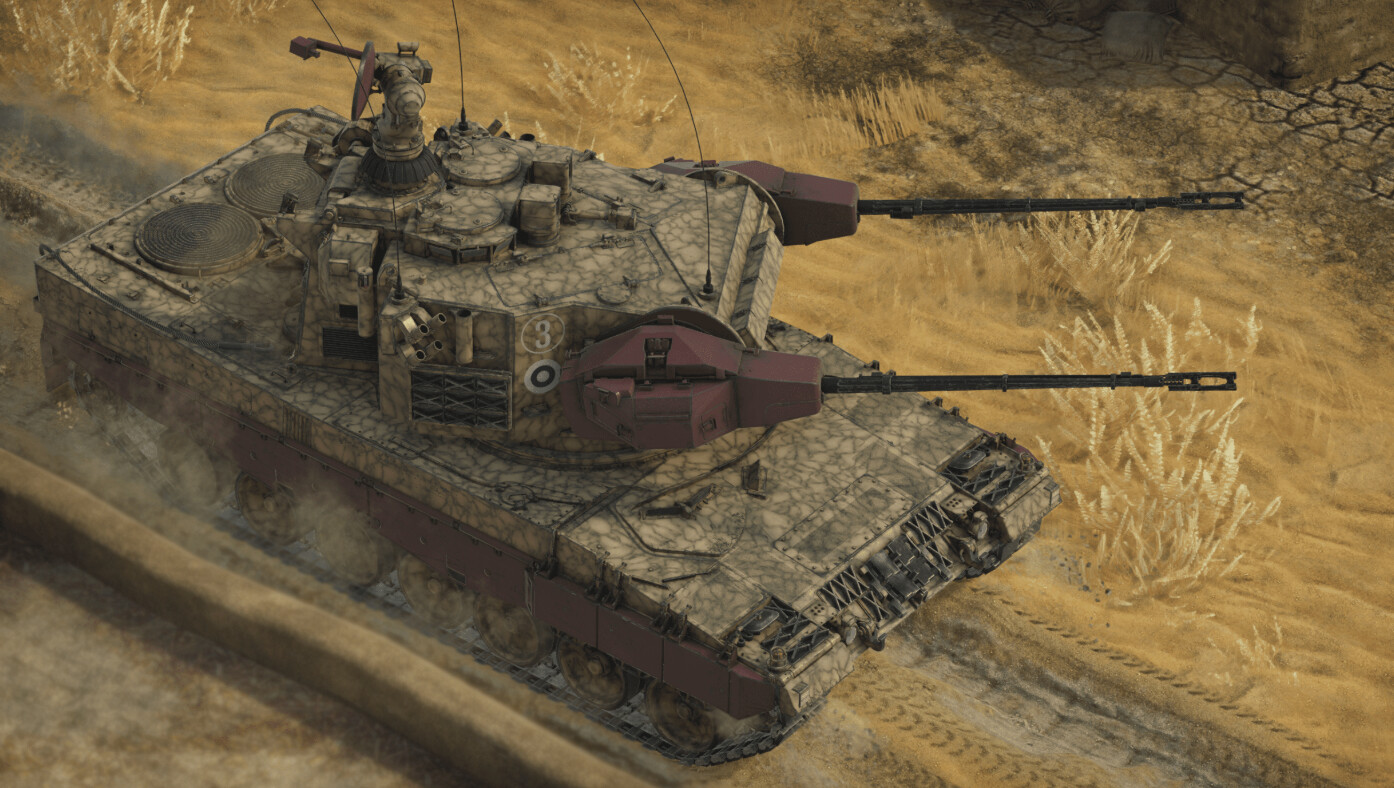
SPAAs:
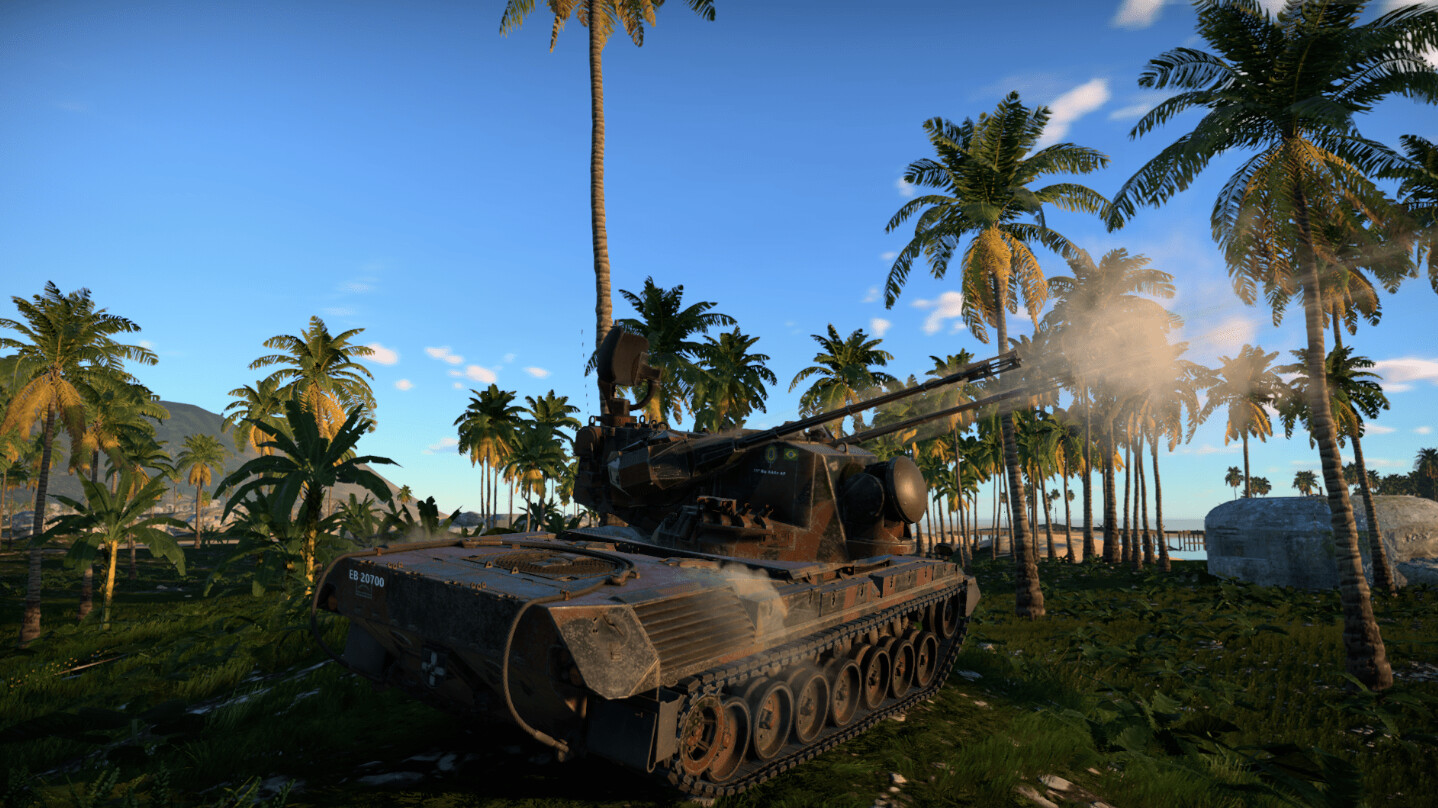
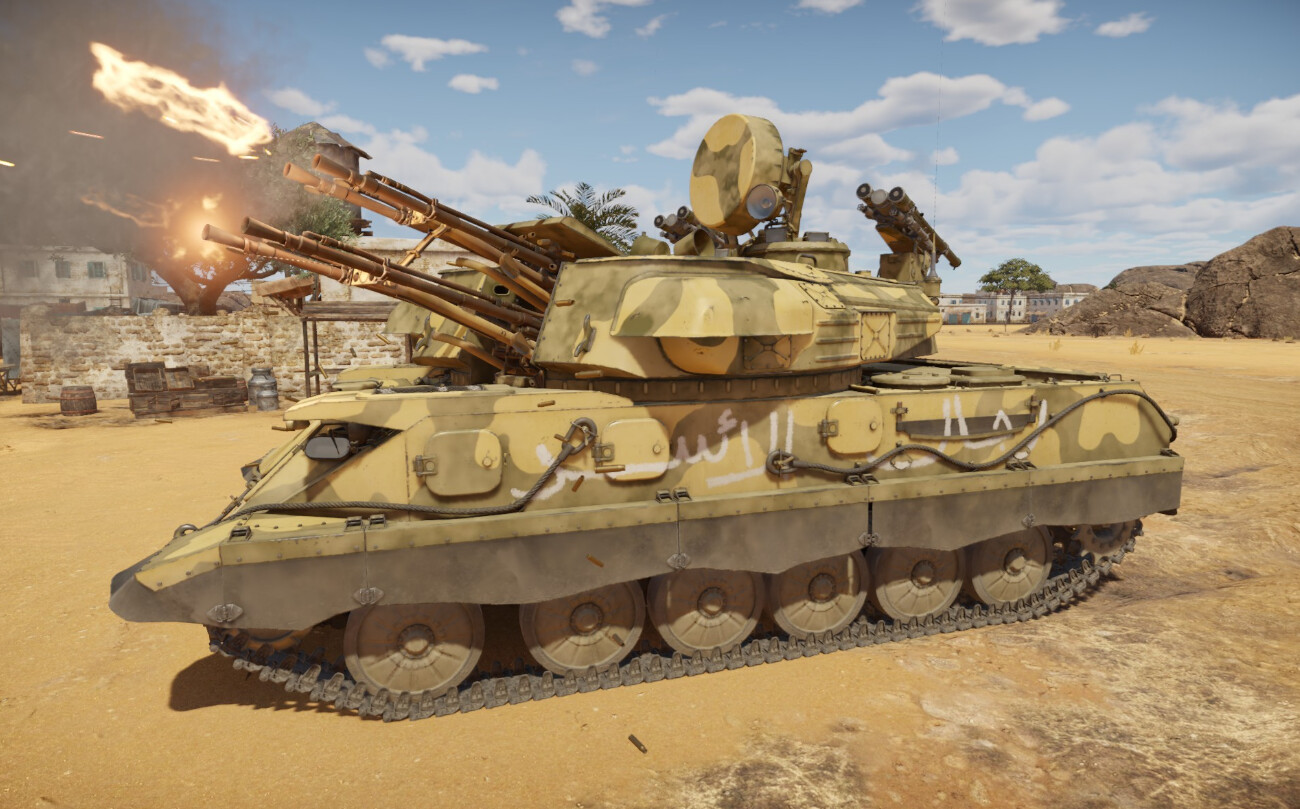
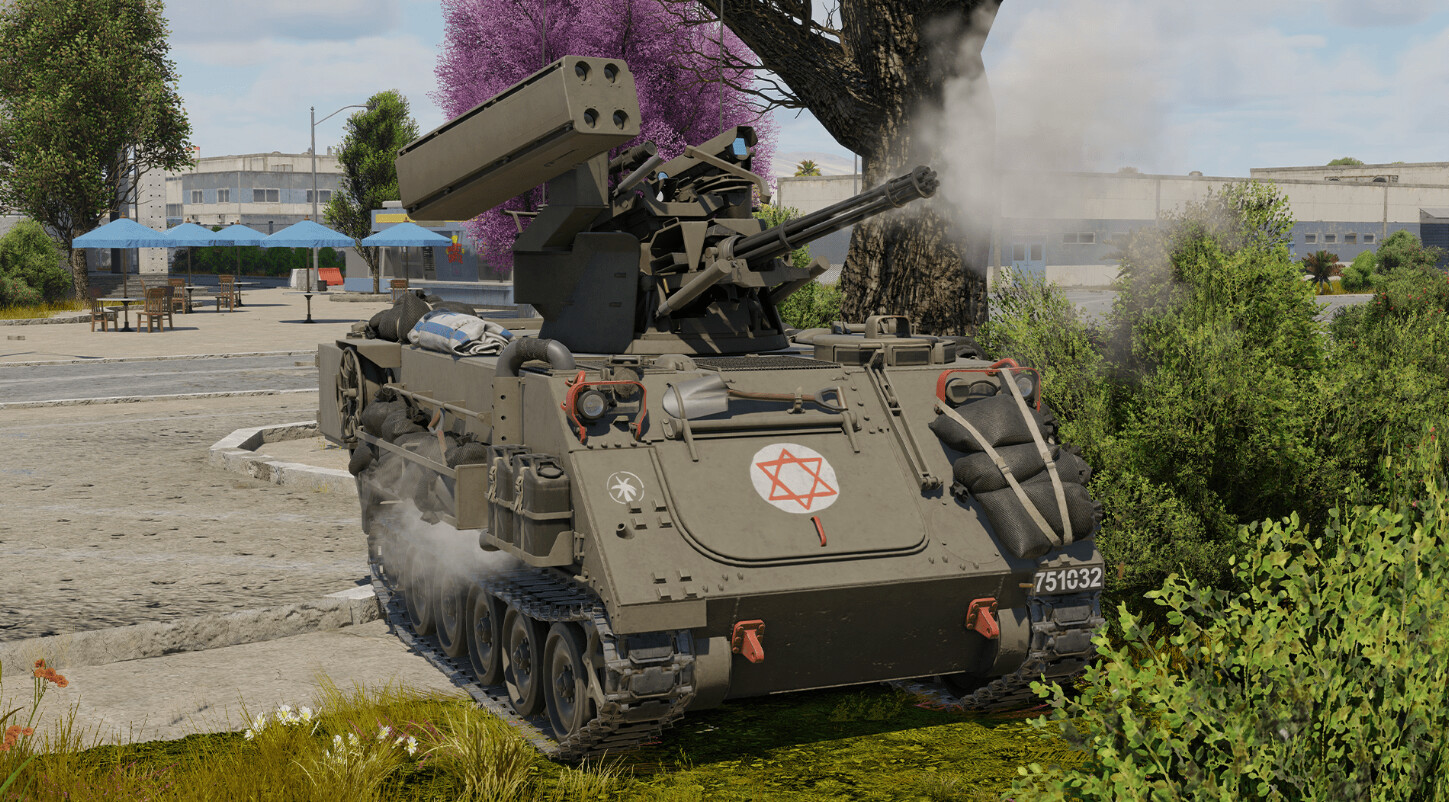
All nations have a scary SPAA sitting at rank VI, for example, the Gepard, a ZSU, or the Machbet. All of these possess high RoFs and thin armor. The best way to encounter these tanks is to flank them and shoot their turret, because this is the place where the ammunition is stored. If they found out where the player is hiding, one should scout them and exit the situation, because these can all easily shred the XM800T in less than two seconds.
ATGM-carriers/SPGs/SPHs/TDs:
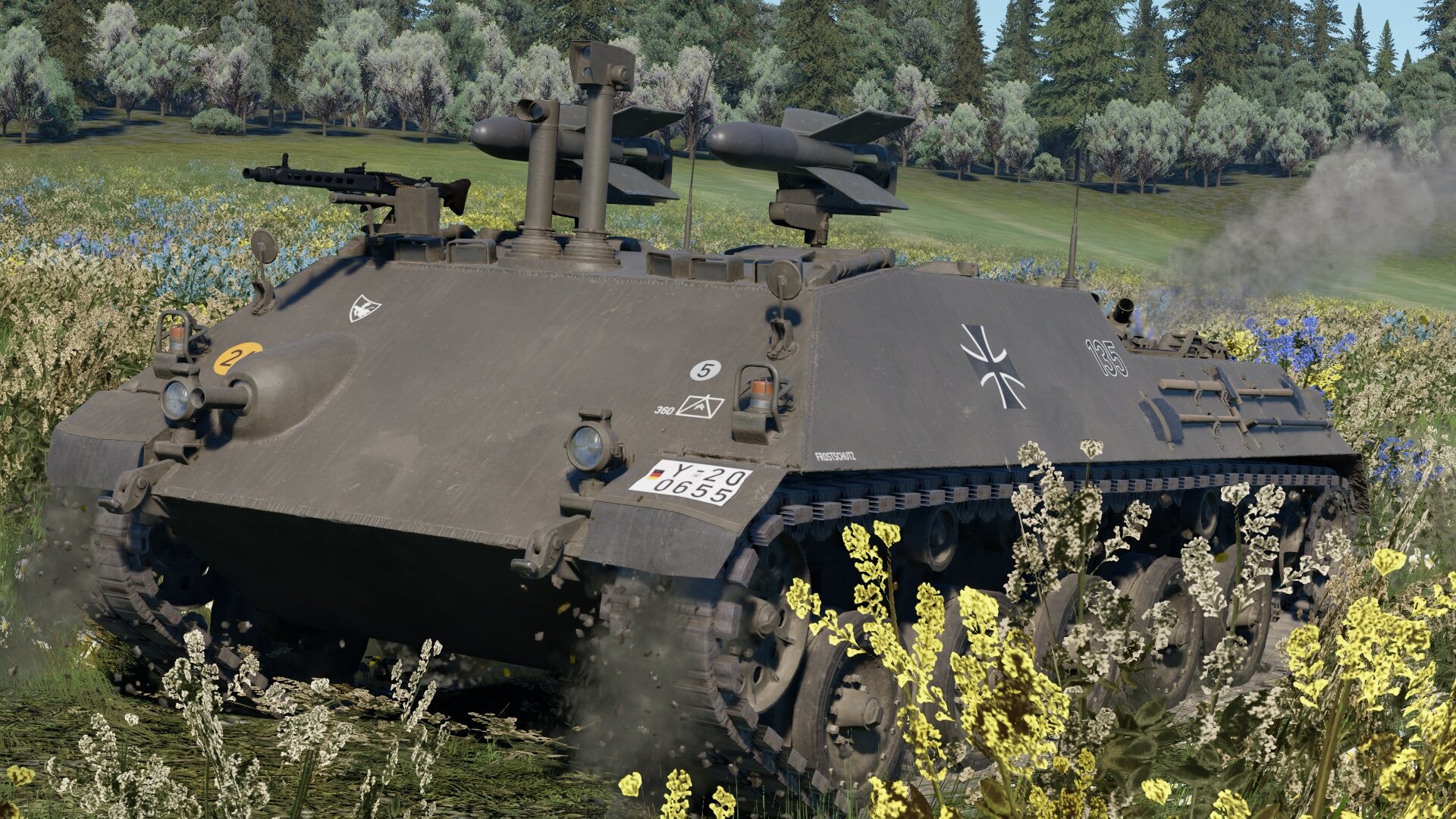
Tanks like the Khrizantema-S, the Wiesel 1A2 or RakJPz-family are glass cannons, with separated launchers. They often fight hull-down to hide the weak chassis, so a successful, unexpected flank is a possible option. Otherwise, these can be easily ammo racked by shooting the launchers.
Tanks like the U-SH 405 also pose a big threat, due to their quick reloaded 81mm HEAT launchers.
Howitzers like the PLZ05 or PzH 2000 with high-caliber HE shells are able to annihilate the XM800T with a single precise round. Due to this, the FCS and the breech (or gunner and commander) are vital to destroy in a head-on situation. This gives you time to hit the ammo, which sometimes is hidden, where you can’t hit it.
The infamous Object 775 (frequently called the pancake due to its low silhouette) is a well-armored tank, you can’t really penetrate (front and side). Scout it and don’t attack it.
Line-up:
The lineup is an important aspect, and with this versatile scout, there are many options, for example, the infamous one with the M3 Bradley, the M60A2 “Starship” and the XM246.
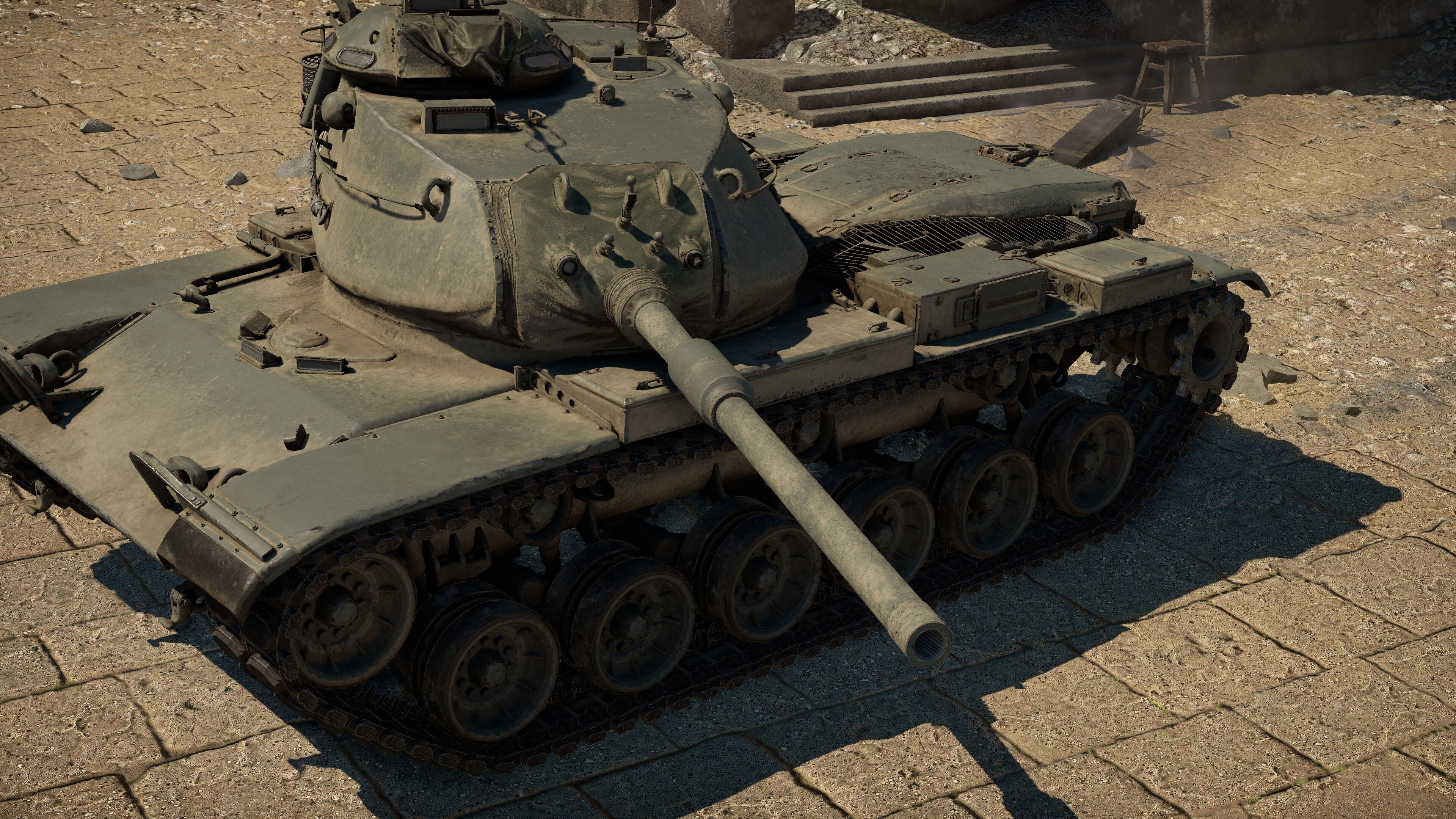
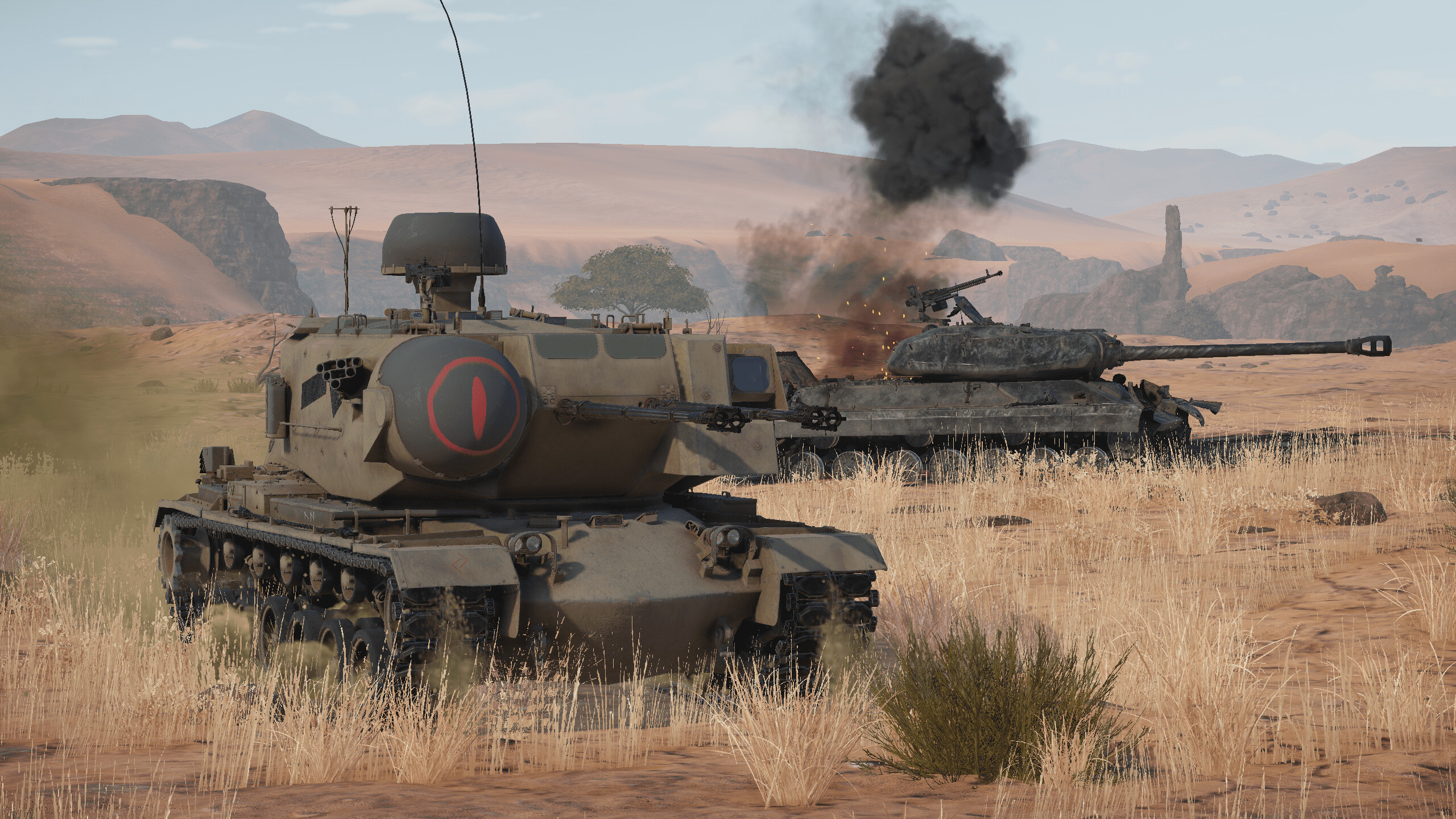
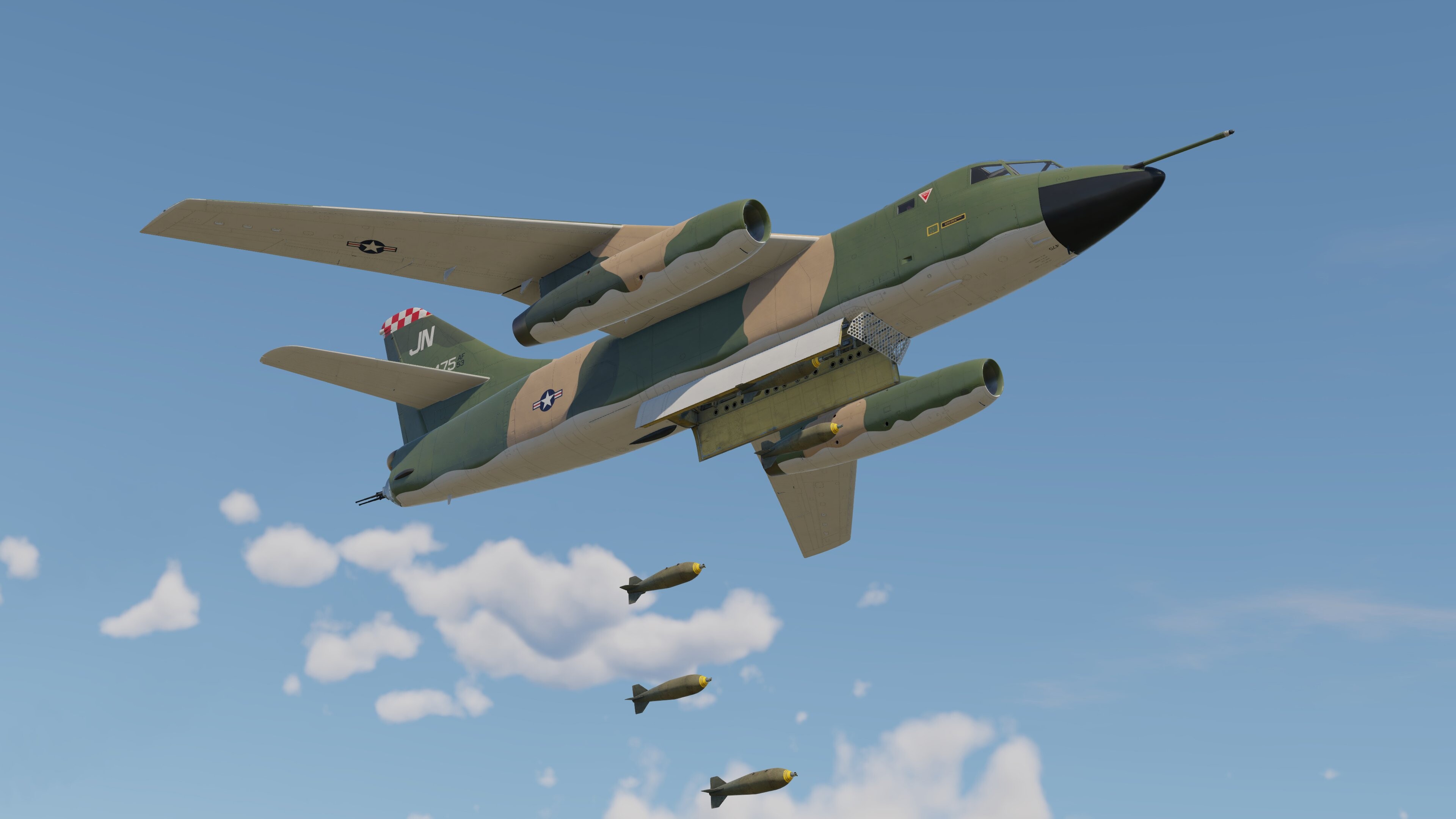
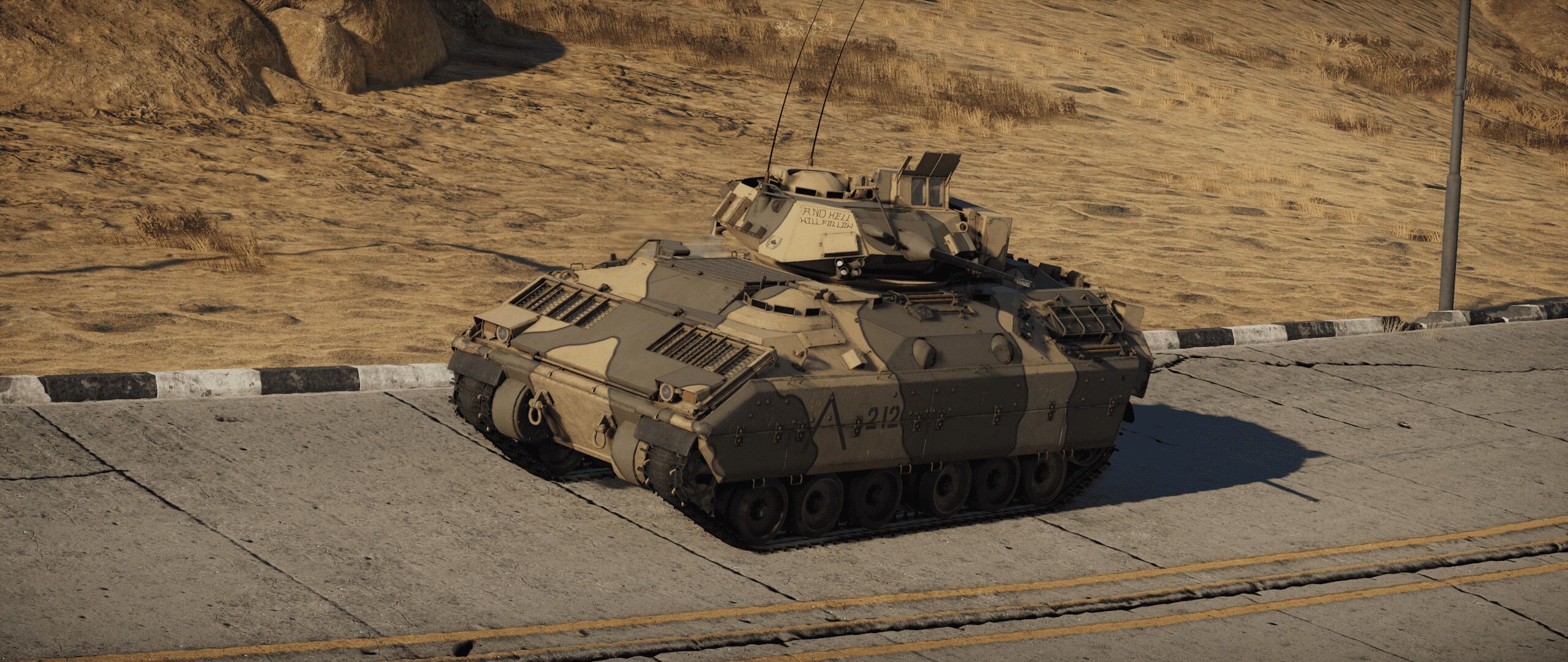
It is recommended to bring 1-2 mediums (e.g., the T95E1 or the M60A1 (AOS)) and maybe also an SPAA. The best anti-air would be the M247 “Sergeant York” or the XM246 as an anti-everything weapon. For CAS, it is recommended to bring the F9F-8 for dogfights due to it being equipped with 4x AIM-9B Sidewinder AAMs and for bombing, the B-66B.
With six slots, you have more possibilities, and you can take a tank you enjoy, you needn’t focus only on the grind. Video games are mostly developed to have fun. Maybe bring an additional medium or light tank, like the M3 Bradley or the M60A2.
I also recommend the M901 “Wall-E” for open terrain with large sight lines because it can fight hull-down extremely effectively and uses ATGMs. The hull is extremely weak, so it should stay hidden.
My opinion:
Use the line-up with a helicopter or plane, two mediums, an SPAA, and a light tank. I recommend the M60A1 (AOS), the T95E1, the M3 Bradley, the XM246 and the B-66B. This lineup has a response to almost every threat that appears on the battlefield and is pretty diverse.
The Spade-guide:
For Rank I, it is recommended starting with the “Improved Parts” modification or the M601 HVAP belt. The Parts allow the player to repair, which is necessary for a light tank, while the HVAP belt is an improvement for the armament.
In Rank II, the best options are “Improved FPE”, “Adjustment of Fire” and “Airstrike”:
- Improved FPE: Every tank needs to have this to fight fire effectively (twice).
- Adjustment of Fire: This makes the gun more accurate, very helpful for fights in urban terrain or medium range engagements.
- Airstrike: With every successful scout, the costs for an air spawn get decreased. This modification isn’t as important as the others (FPE and Adjustment) and can be researched after the APDS.
Rank III gives access to useful equipment like a scout UAV (Recon Micro Drone) or crew replenishment. Crew replenishment is a good option, as this also enhances survivability after surviving a shell. The drone can be unlocked afterward.
Rank IV has APDS, which should get unlocked directly! After the ammo, the engine is a good decision, a light tank needs to be fast! Next, the Rank III modification “Elevation Mechanism”, which makes your turret turn faster, is a nice option. Artillery support is also good to have. All critical modifications are now researched, and the player can research the rest without big problems.
Other tips: Without APDS, you should never attack any tank that is angled, even if it is only a few degrees. A special threat are T-55s, as their turret is essentially a hemisphere giving you no point to attack.
Ending
In the end, the XM800T rewards players that stay cool under pressure and know where to aim. It is incredibly fun, so give it a try! Other tanks that are very similar and played the same are for example the Fox and the Wiesel. The Wiesel has the similar speed and armament, while the Fox has a 30mm cannon, but with a faster engine. I can only recommend giving them a try!
I want to say a big thank you, Typhoeus, for correcting and to you
for reading this article, feel free to share your opinions on this tank in the comments! I hope you enjoyed it, and see you on the battlefield!
This is my first article, so I took ideas from several articles, like Gerbil99999999s on the T-80UK, or MarksmanOfDooms article on the M901 and M3A3 Bradley. I also used F-16D Barak IIs article on the VBCI-2 (MCT30) and one on the M3 Bradley by -_Dozer_-. These are the ones I used the most, but I took ideas of many articles.
Bibliography
More articles
The XM800T plays similarly to the Bradleys, the Fox, and his brother the Scimitar, so maybe read these articles when you are interested: