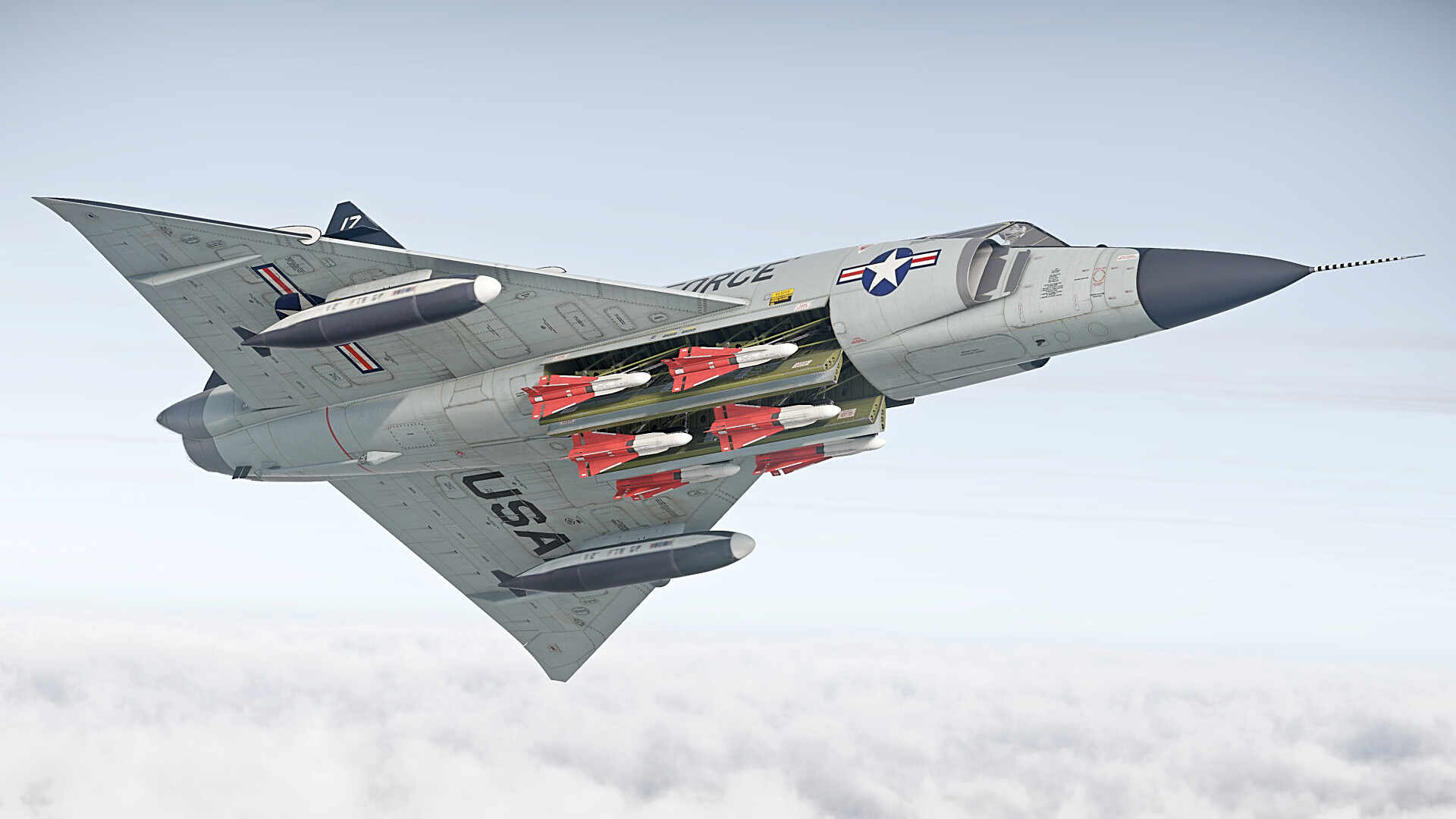
The F-102A was set to become the U.S. Air Force’s ultimate interceptor. However, the first prototypes could not even reach supersonic speeds, so the aircraft was redesigned. The production models also failed to meet expectations, which is why the more advanced F-106, based on the F-102A, was developed. In War Thunder, the aircraft can carry up to six AIM-4 missiles, including radar-guided variants, in its bomb bay. However, it can only accelerate to Mach 1 at sea level and it lacks a cannon. So how does one play it?
| Pros | Cons |
|---|---|
| Radar missiles | No cannon armament |
| Good energy retention at speeds higher than 850 km/h | Slow missiles without proximity fuze |
| Overall high speed | Missiles and rockets require an open bomb bay for launch |
| Large size | |
| Lack of air-to-ground weaponry |
Flight characteristics
Unlike the F-106A, the earlier F-102A has a less powerful J57-P-23A engine. This engine can only accelerate the aircraft to 1 Mach at ground level. At higher altitudes, such as 7,000 meters, however, it is possible to reach Mach 1.1 or even Mach 1.2, especially with a slight dive. Theoretically the F-102A’s design allows to reach Mach 2.1, but getting that fast is basically impossible, and at lower altitudes it is limited by around 1250 km/h IAS.
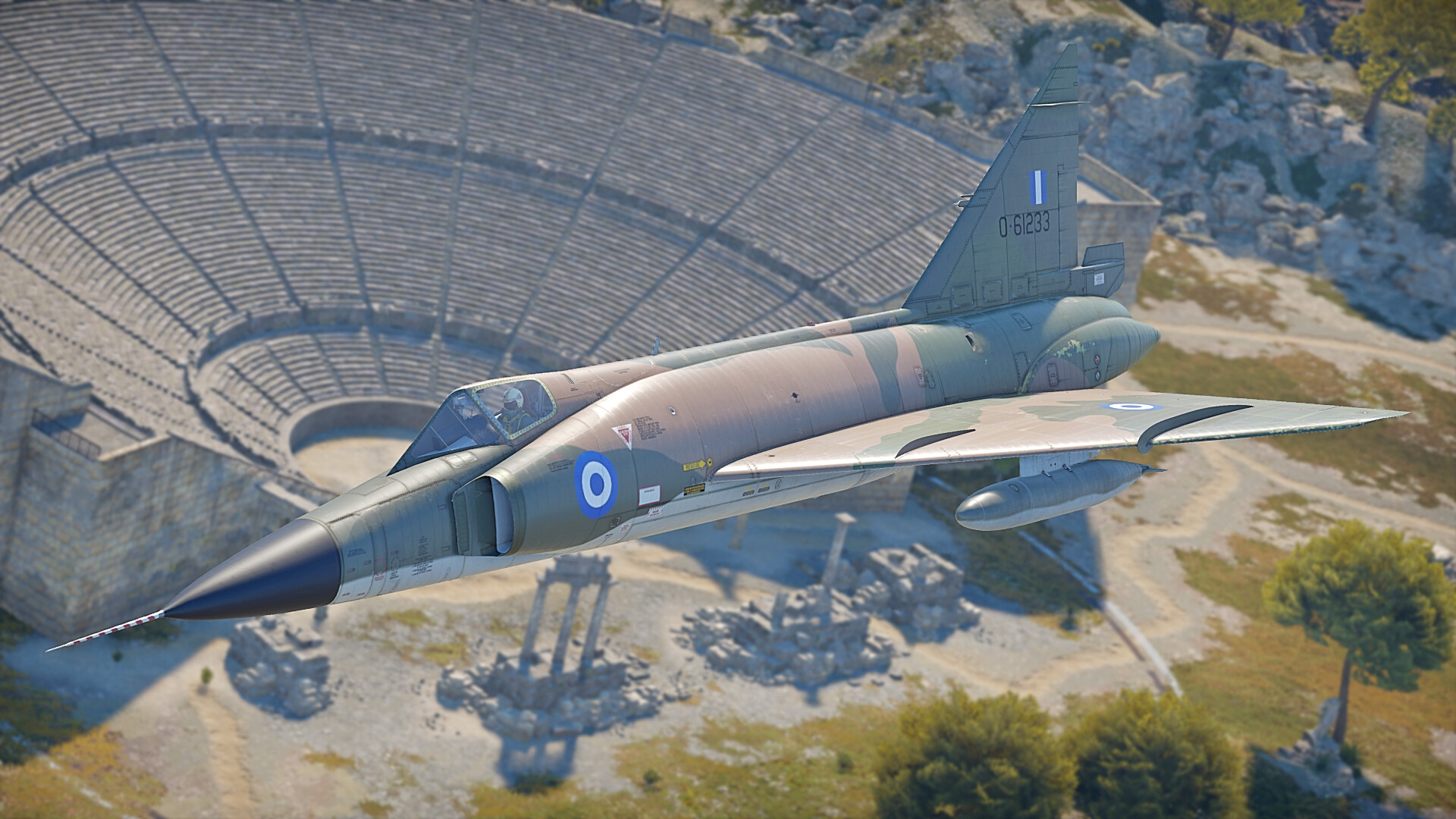
The Delta Dagger’s maneuverability is questionable due to its delta wing design. Below 750 km/h, the aircraft becomes significantly more maneuverable, but only for a couple of turns. If you pull too hard, you can easily lose all your energy and get shot down quickly. Above 800 km/h, the F-102A turns less sharply. However, if you don’t pull too hard, it doesn’t lose much speed. This makes it easy to outmaneuver some opponents. Depending on the speed, it’s possible to outmaneuver aircraft such as the Hunter or the Su-7.
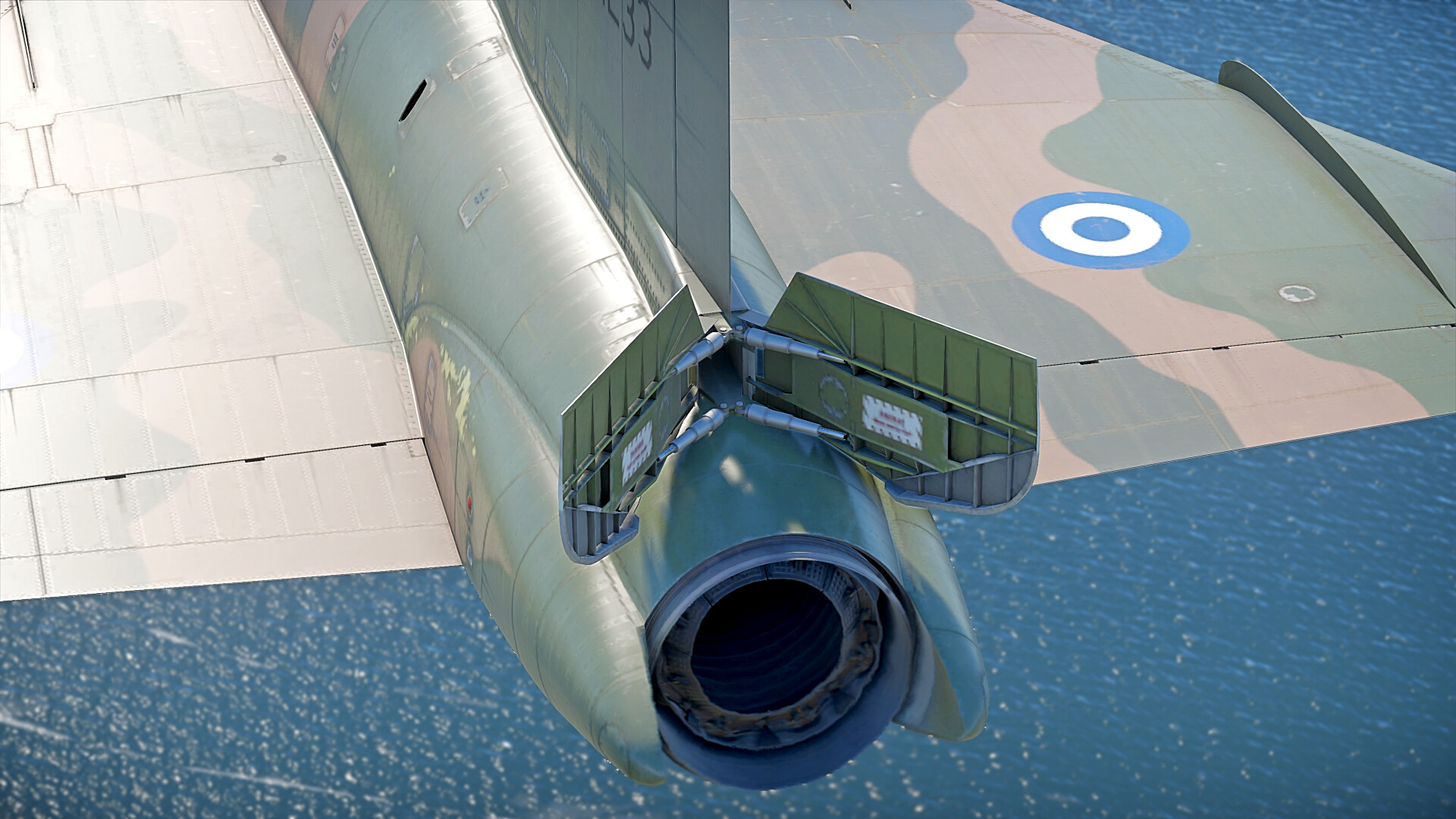
The F-102A has no flaps, but it gets an airbrake. Landing gear breaks at speeds of 400-500 km/h or higher.
Armor and survivability
Like many other jet fighters, the F-102A has poor survivability. It has no armor, is enormous, and nearly the entire delta wing is filled with fuel tanks. As a result, hitting any part of the Delta Dagger will severely impair its performance or get it shot down.
Moreover, it lacks any countermeasures or RWR. Lacking RWR is not that much of an issue, since it does not have to fight against the AAA and early radar missiles are uncommon. But lacking flares means a good launch of a missile like the Shafrir 2 is incredibly hard to dodge, if at all possible.
Armament
Unlike the majority of fighters, the F-102A is limited to six AIM-4 missiles inside its bomb bay:
- AIM-4G Super Falcon: a rear-aspect IR missile which superficially has good characteristics: maximum G-load of up to 27 G and a theoretical engagement range of 5.5 km. In practice, however, these missiles are extremely slow and quickly lose their modest speed once the motor stops. Additionally, the missile flies in a straight line for part of its flight. It is most effective against slow-moving targets, even those aware of the launch. The AIM-4G also lacks a proxy fuse and requires a direct hit.
- AIM-4F Super Falcon: an all-aspect SARH missile with identical characteristics. Since radar-guided missiles are still uncommon among aircraft and RWRs are equally rare, the enemy may fail to detect the launch altogether or use flares that the AIM-4F will ignore. After launch, the missile flies straight for a short time without turning. Like the AIM-4G, it lacks a proxy fuse and requires a direct hit.
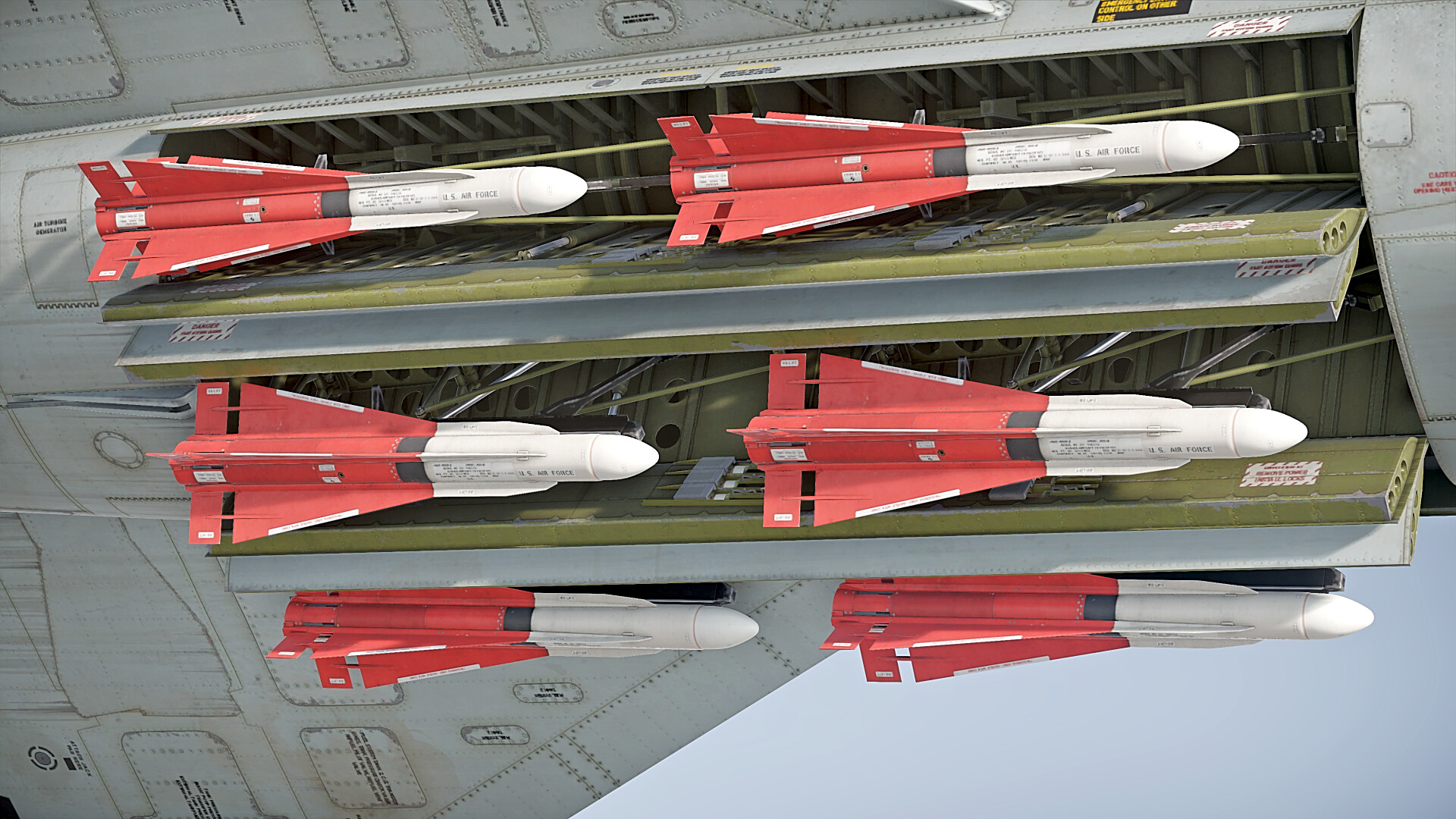
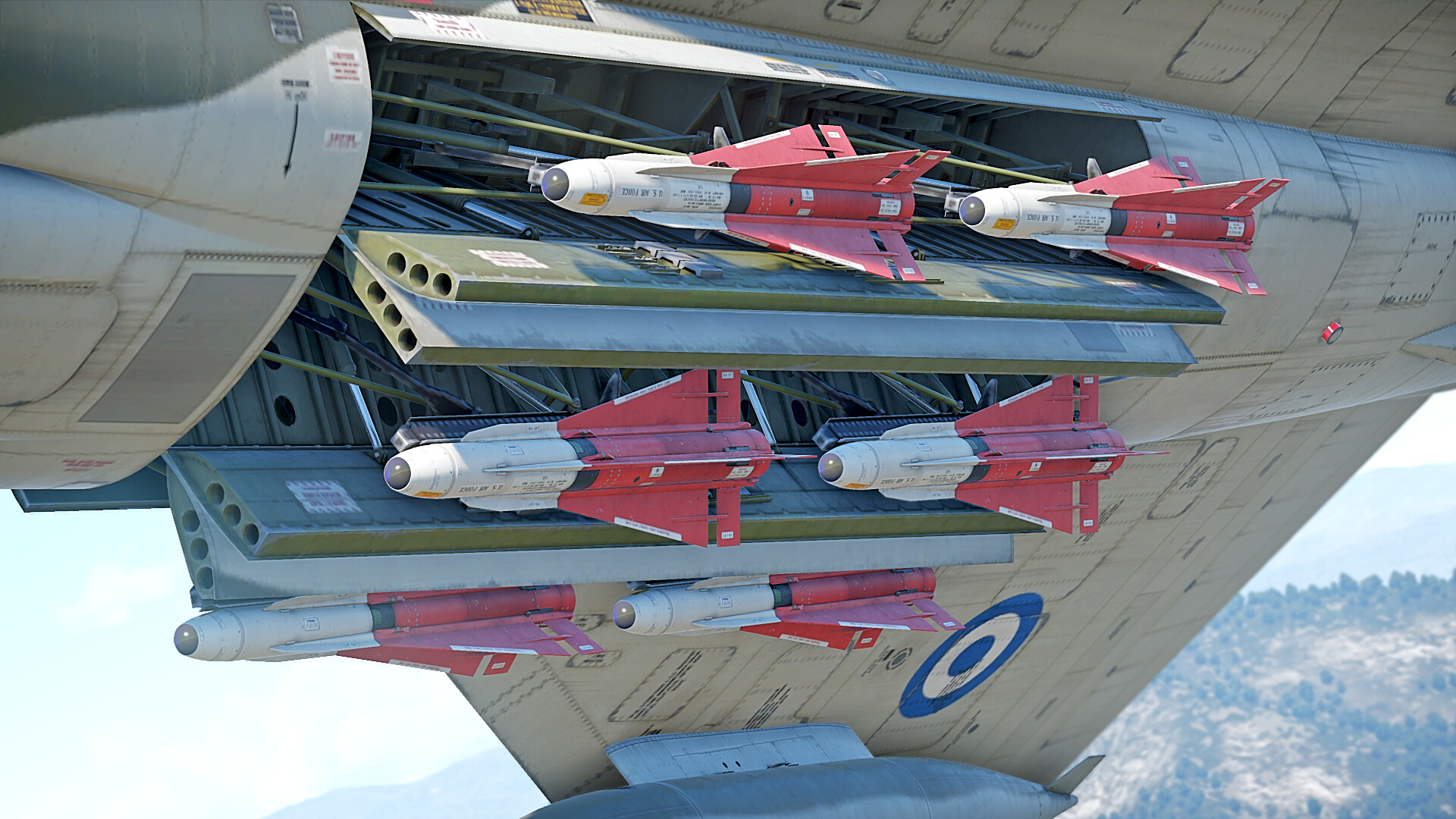
Other suspended options include two fuel tanks and 24 Mighty Mouse rockets, all shooting in one salvo while also having low penetration, making them quite useless beyond acting as make-shift flares.
Radar
The Delta Dagger also has the relatively early MG-10 radar. While it cannot detect targets close to the ground and lacks IFF, it is sufficient for detecting and locking onto targets and launching the AIM-4F. The IRST is a nice bonus, but it is useless.
Combat usage
The F-102A is pretty difficult to properly use in combat. It is basically forced to be flying in a straight line, catching distracted opponents, and frequently switching targets while avoiding dogfights. 20 minutes of fuel is usually enough for a standard engagement. Missile selection is completely up to the pilot’s preference.
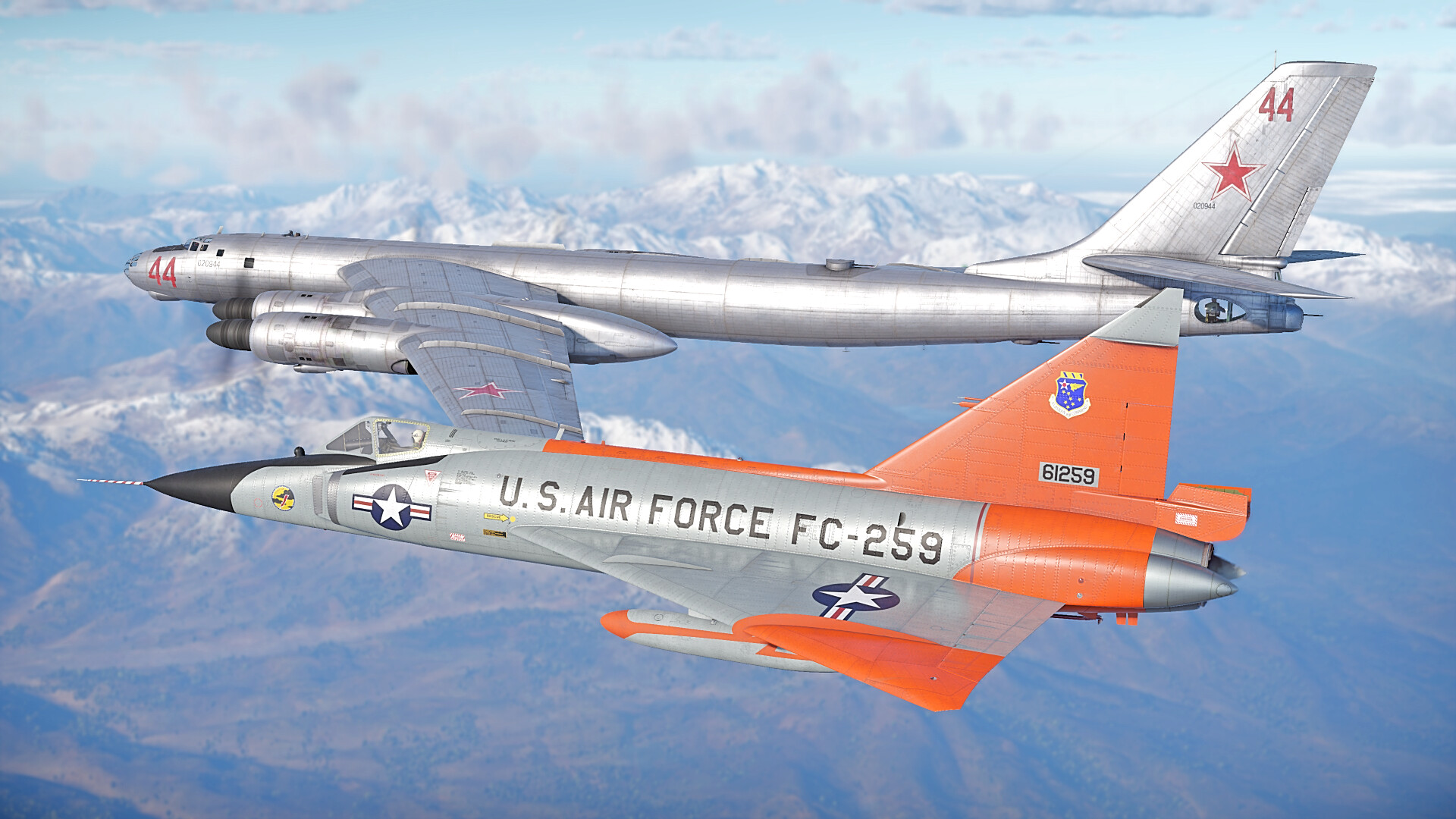
Since there is no cannon, engaging the enemy in a dogfight is almost pointless. Even if you manage to get on their six, an enemy that is aware of you won’t let you get into a position to launch a missile. With the AIM-4, all it takes is to avoid flying too slowly or flying straight. The only vulnerable aircraft in this scenario are bombers since even without a proximity fuze it’s still easy to hit them due to their size.
So the main tactic would be to engage slow or already engaged opponents. When launching an AIM-4, pay attention to the launch range and your opponents' flight speed. Against extremely slow enemy aircraft (300–500 km/h), you can launch an AIM-4G from up to a kilometer away, but it will miss if they use flares. The ideal engagement range is narrow—600–750 meters or closer, depending on the relative speeds. If launched too close, the missile won’t turn in time; if launched too far away, it will simply run out of speed.
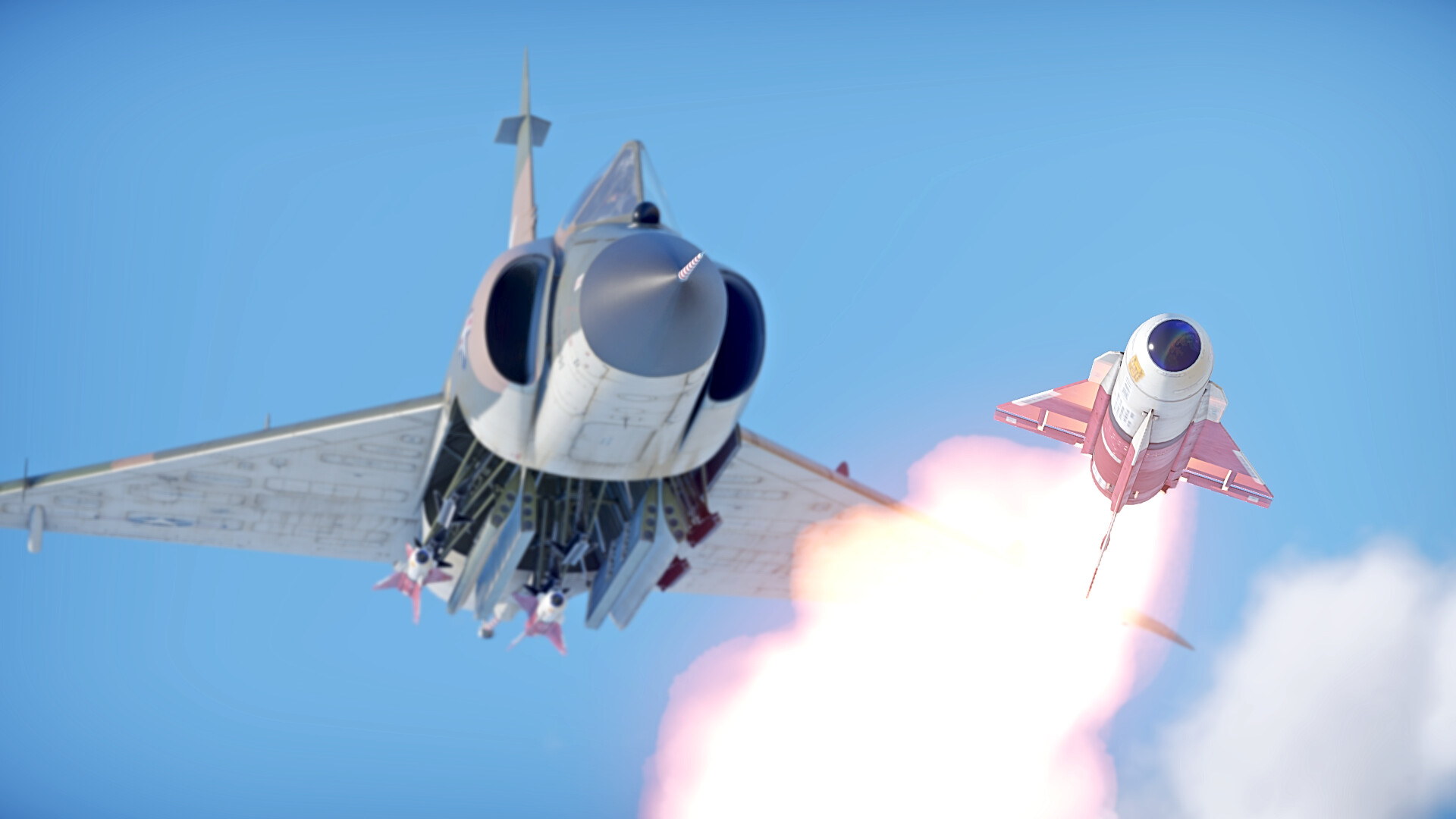
The AIM-4F can be launched head-on, but you need to do so fairly early because the missile flies in a straight line for a long time before turning. Alternatively, you can fire it at aircraft without RWR or at the enemies with flares which expect an IR missile. Often, they either don’t see the launch or don’t bother turning, relying on countermeasures.
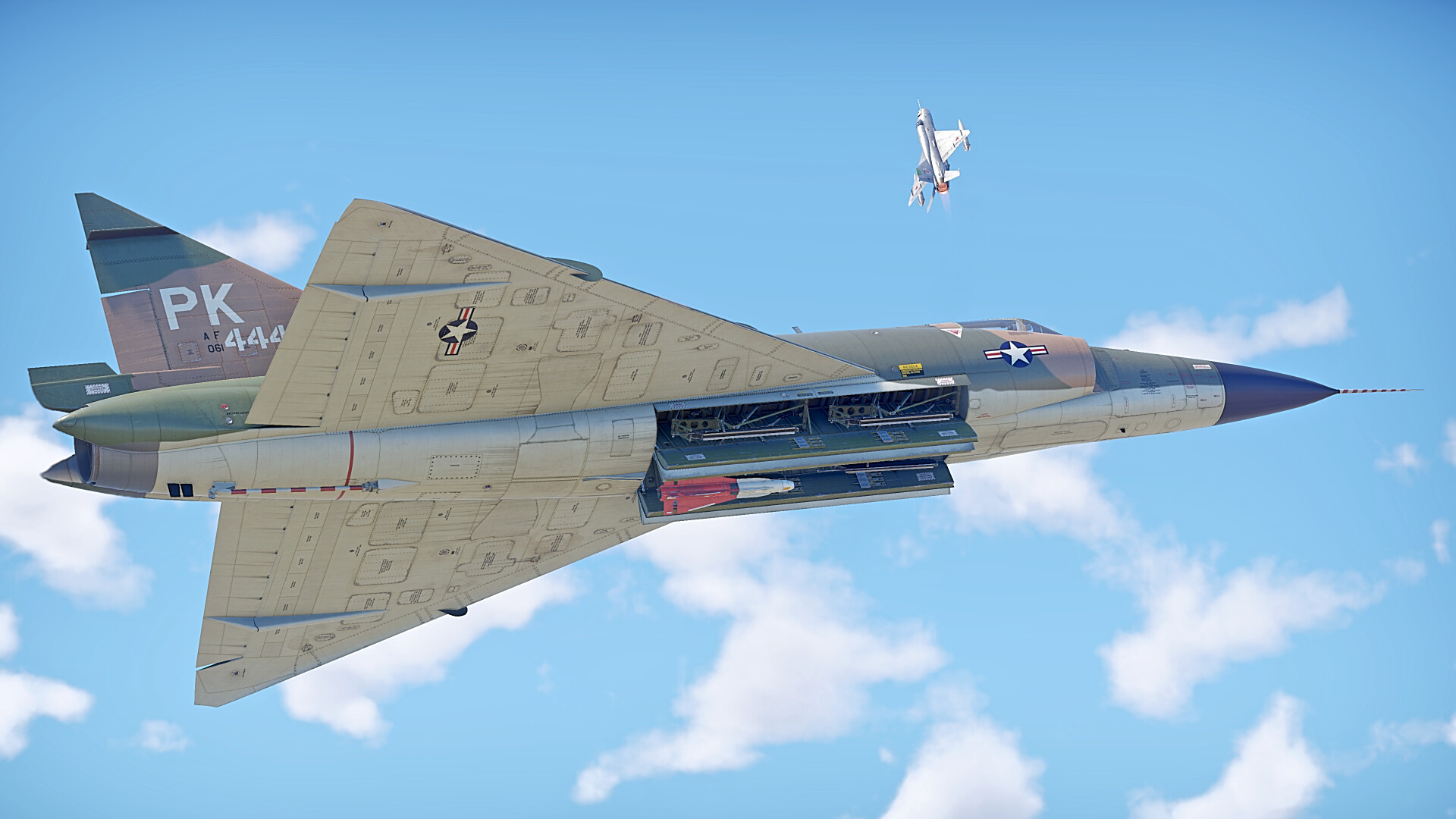
In mixed battles the only thing the F-102A can do is to be a fighter aircraft. It lacks RWR and countermeasures, as well as external ordnance for attacking ground targets. It doesn’t even have a cannon to do it. Therefore, it is better to attack enemy aircraft while avoiding the battlefield itself.