
The CV 90105 TML was a conceptualized light tank that resulted from a cooperation between Hägglunds and GIAT on the basis of the CV 90 platform while using various already existing components. The vehicle was showcased at Eurosatory in 1994 and was meant to show the multirole usage and capabilities of the CV 90 chassis. The vehicle underwent in-depth testing, but ultimately no country ever showed interest in the tank, and the project was abandoned.
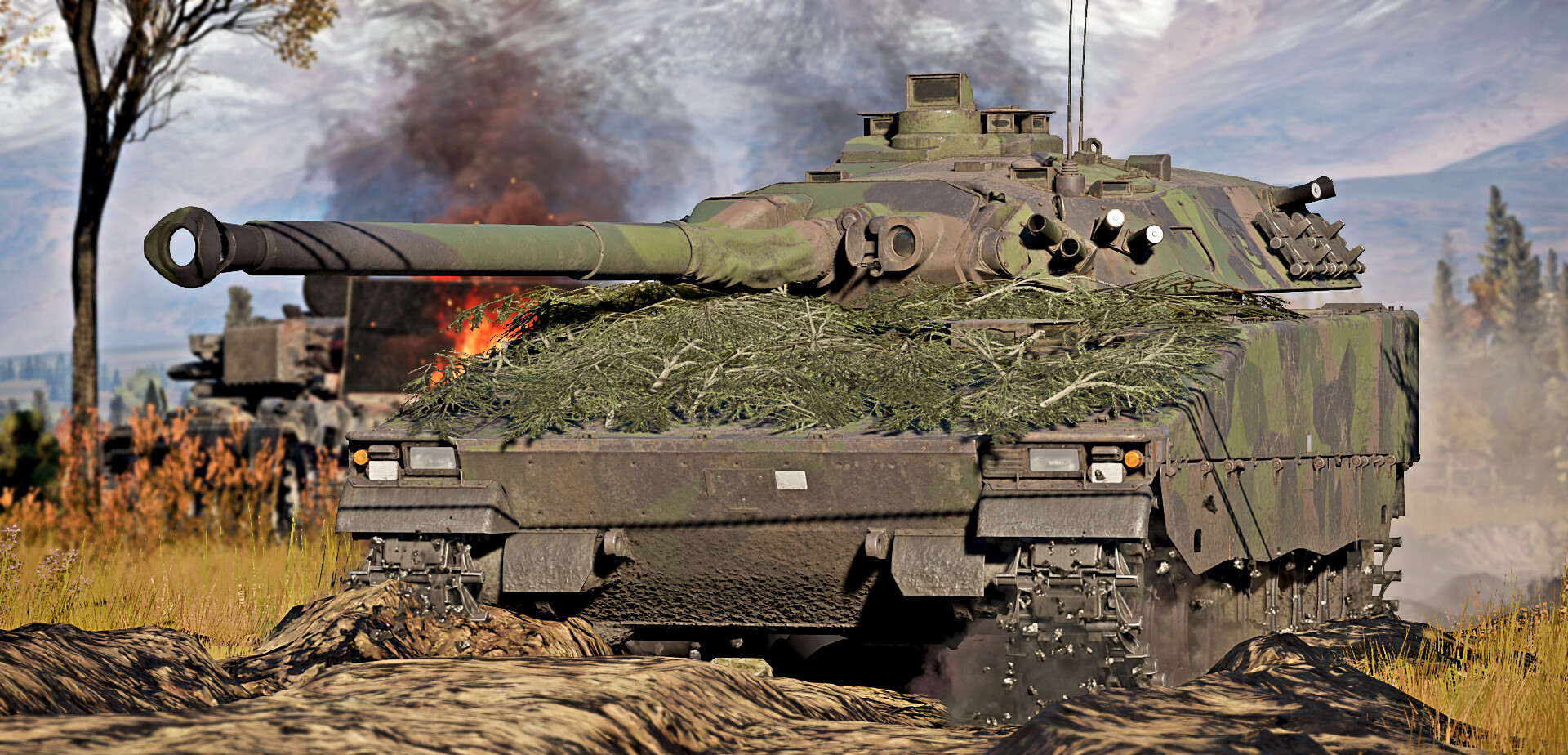
The CV 90105 TML used to be in the game as a premium pack vehicle for the Swedish tech tree. However, due to some historical inaccuracies, it was replaced by the current CV 90105 XC-8 in the “Drone Age” update.
This current iteration of this vehicle was added to War Thunder in the “Tusk Force” update. It is now part of the Swedish ground forces tech tree and can be found in the light tank/IFV line.
| Pros | Cons |
|---|---|
| High resolution thermals | Lacks a stabilizer |
| Good acceleration and top speed | Can be penetrated by .50 cal on the side and rear |
| The engine can absorb bad aimed shots | Engine in the front makes corner peeks harder and more risky |
| Excellent gun elevation and depression angles | Mediocre gunner sight FOV |
Mobility
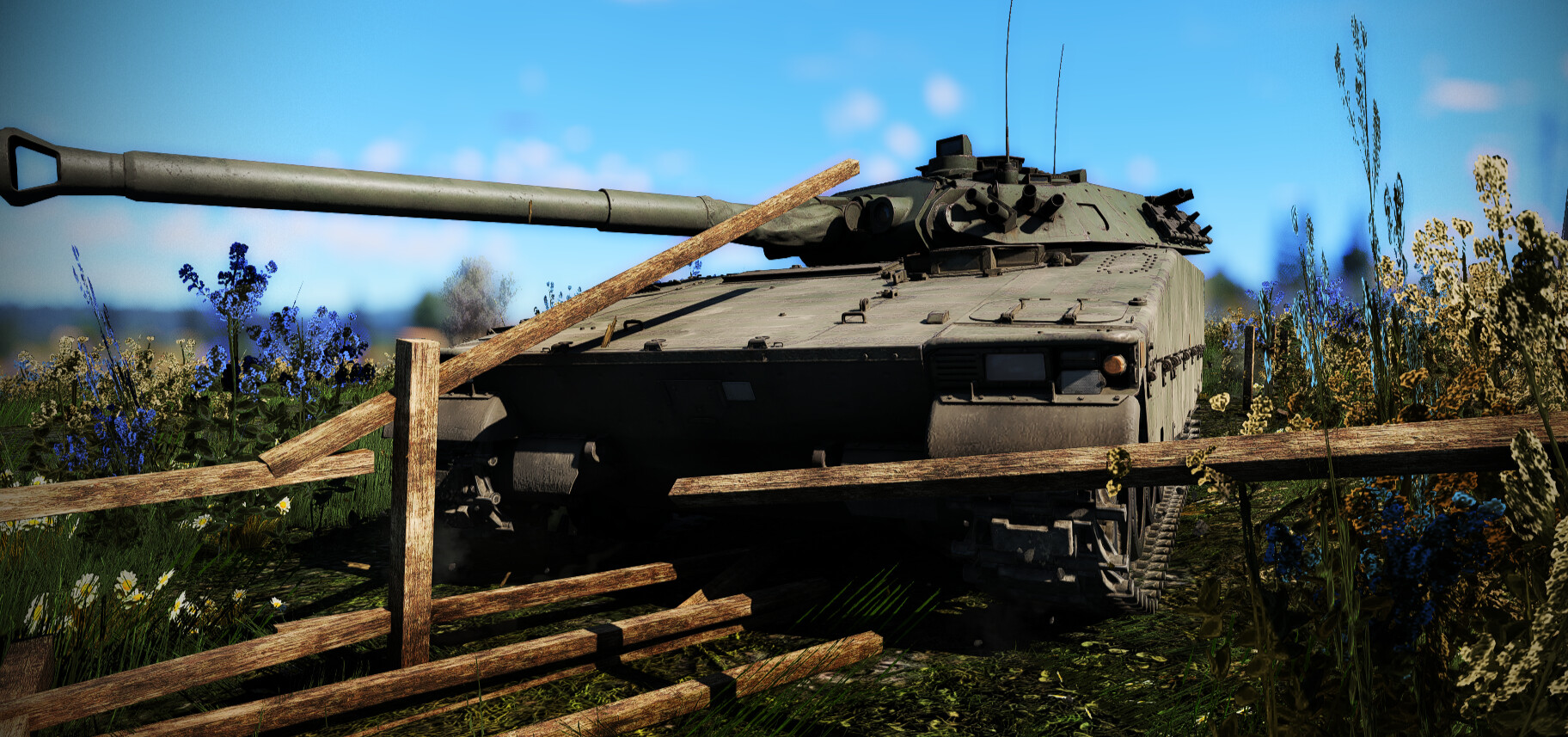
The CV 90105 TML is based on the already well-known CV 90 chassis and therefore carries over the same Perkins X-300 automatic transmission, which gives the vehicle not only a great top forward speed of 70 km/h with 8 gears and a maximum reverse speed of 40 km/h with 4 gears, but also allows the vehicle to accelerate to those speeds in a respectable time.
This vehicle is equipped with the Scania DSI14 engine located right behind the transmission at the front of the vehicle. Spaded, this engine can deliver up to 670 horsepower in optimal conditions. Due to the vehicle’s very low weight of only 21.9 tons, once fully spaded, this tank has an incredible power-to-weight ratio of 30.6 hp/t. Apart from that, the CV 90105 also has neutral steering, just like all other vehicles of the CV 90 family.
Armor and Survivability
This vehicle’s front, roof, and rear of the hull are protected by 20 mm of rolled homogeneous armor. The front of the hull is constructed at an angle of 78°, this is enough to make some APDS and APFSDS rounds bounce off if shot from below and aimed badly. Furthermore, the side armor is composed of two spaced-armor plates, the outer one is 6 mm and the inner plate is 10 mm (for a total of 16 mm of rolled homogeneous armor). That is enough to stop low-caliber machine guns, but a .50 cal will easily penetrate the armor. The turret has 20 mm of rolled homogeneous armor on the roof, side, and rear with an additional 5 mm of high-hardness rolled armor on only the side and rear. The gun mantlet is made out of 35 mm of cast homogeneous armor, which is enough to deflect low-caliber including .50 cal ammunition.
Although the CV 90105 TML lacks any actual raw armor protection, badly aimed shots to the front of the vehicle will often result in survival of the vehicle. That is not only thanks to the engine and transmission in the front of the hull but also thanks to the 4 crew members who are spread out across the vehicle, making it difficult to kill it with 1 shot. Further, due to the thin side armor, it is possible for shells to over-penetrate and not deal any significant damage, especially in the area between the driver and turret crew.
Firepower
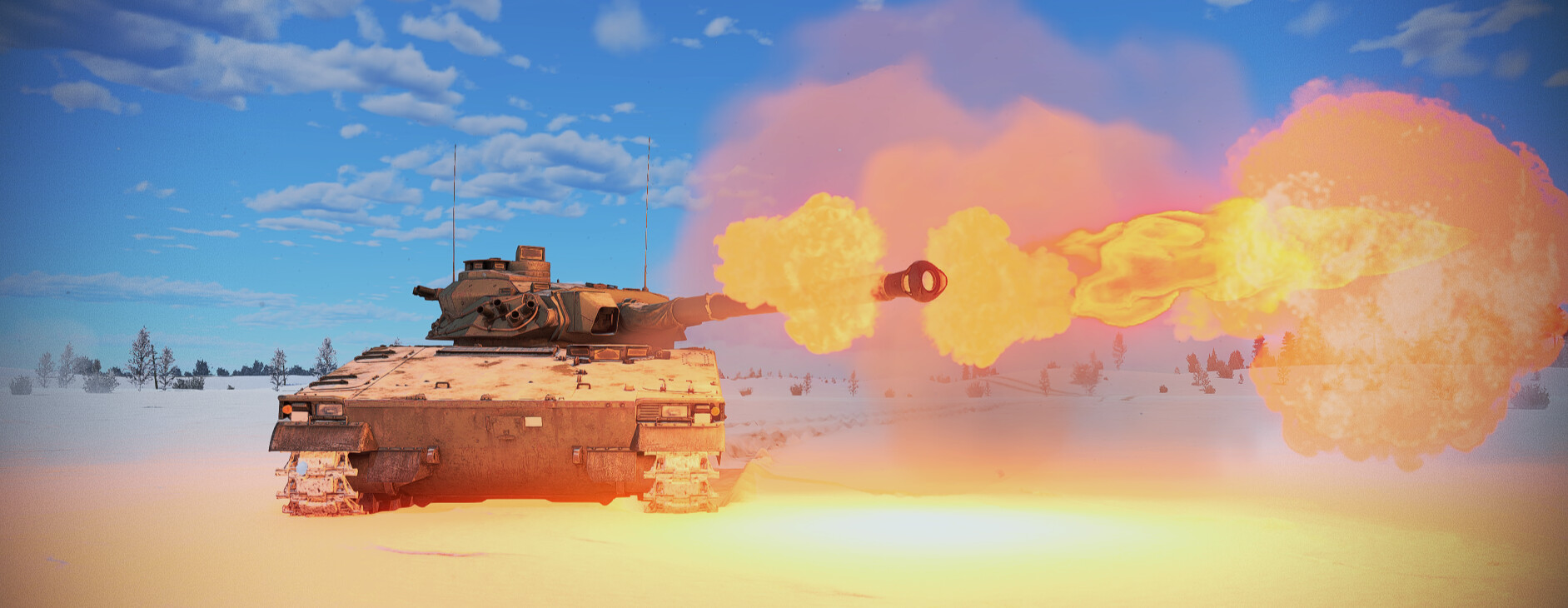
The main armament of this vehicle is the CN105 G2 cannon, manufactured by Giat Industries. The same cannon can also be found on the French Vextra 105, and an almost identical version is mounted on the AMX-10RC. Unlike on the Vextra 105, the cannon on the 90105 TML is not stabilized. However, the vertical guidance angles are noticeably better on the CV 90 compared to the Vextra, capable of not only depressing the cannon by up to -10 degrees but also raising it up to +42 degrees. The turret’s vertical and horizontal guidance speeds are average for a light vehicle of this kind.
In War Thunder the CV 90105 TML has access to 4 different shells. The stock shell is the M1061 HEAT-FS, identical to the already known DM12 and M456 shells, which can be found on plenty of other vehicles. Furthermore, this tank also has access to the 105 mm M416 smoke shell, this shell can also be found on vehicles such as the STB-2, M60, and more.
However, the most versatile and primary round for the vehicle is the familiar DM23 shell, it has a good mix of penetration across all ranges, decent post-pen damage, and good velocity. As a high explosive shell, this tank has access to the M393A2 HESH shell. This is an ordinary HESH shell, which can also be found on many other tanks with the NATO 105 mm cannon.
| Shell Name and Type | Recommended Amount* | Intended Usage |
|---|---|---|
| M1061 HEATFS | 0 to 2 | Primarily stock shell, it can be used to fight vehicles where DM23 would struggle to penetrate. |
| M393A2 HESH | 2 to 4 | Against lightly armored targets where APFSDS might over-penetrate. It is also capable of overpressuring vehicles in areas where DM23 would not be able to deal damage. |
| M416 Smoke | 2 to 4 | For obscuring the vision of the enemy across long distances or to hide your own vehicle while retreating or repairing. |
| DM23 APFSDS | 14 to 18 | The primary and most versatile shell, suitable for most targets in various situations, is most efficient with side shots. |
*The recommended amount is a baseline for inexperienced players. The actual amount can vary vastly based on personal preferences and playstyle.
As a secondary weapon, the vehicle is equipped with a coaxial 7.62 mm ksp 58 machine gun, carrying six belts of 250 rounds each, for a total of 1,500 rounds. The belt consists of only AP and T bullets and is primarily only useful against exposed crew.
Electronics and Optics
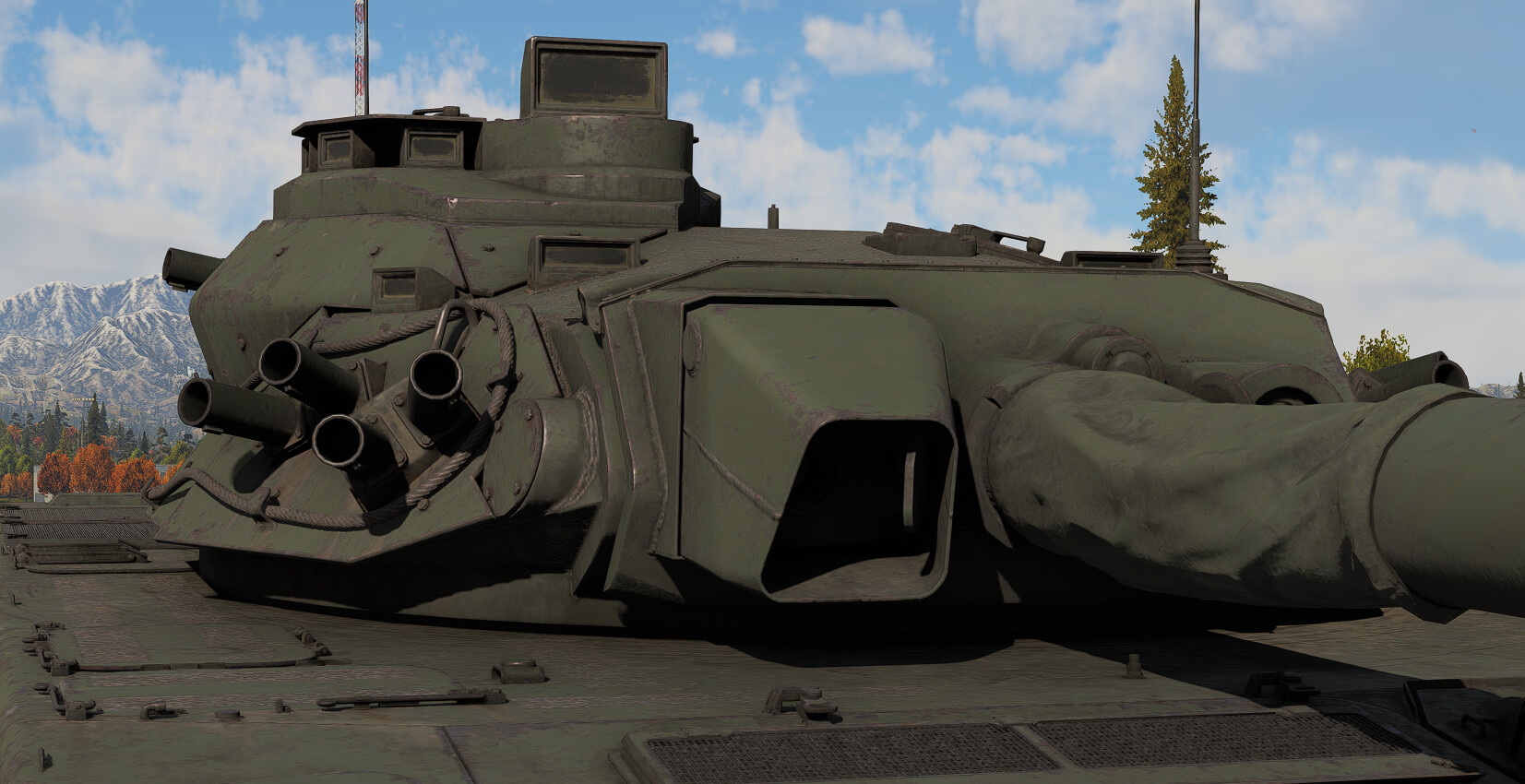
The CV 90105 TML has access to second-generation thermal vision for both gunner and commander. Apart from that, this tank also has commander aiming and overwrite, allowing for quick follow-up shots in case of the loss of the gunner. In addition, it features a laser rangefinder.
The gunner optics of this vehicle have a high base zoom and barely any additional magnification. That can not only make close-range combat very uncomfortable due to the narrow FoV but might also affect the ability to quickly estimate ranges at higher distances for some players, especially during stock grind. However, the Commander Optics have more comfortable zoom levels, from 2x up all the way to 8x, but aren’t as easy to use for combat.
| Optic Type | Magnification (Zoom) | Field of View (FoV) |
|---|---|---|
| Gunner Optics | 8.8x — 10.0x | 8° — 7° |
| Commander Optics | 2.0x — 8.0x | 38° — 9° |
Usage in Battle
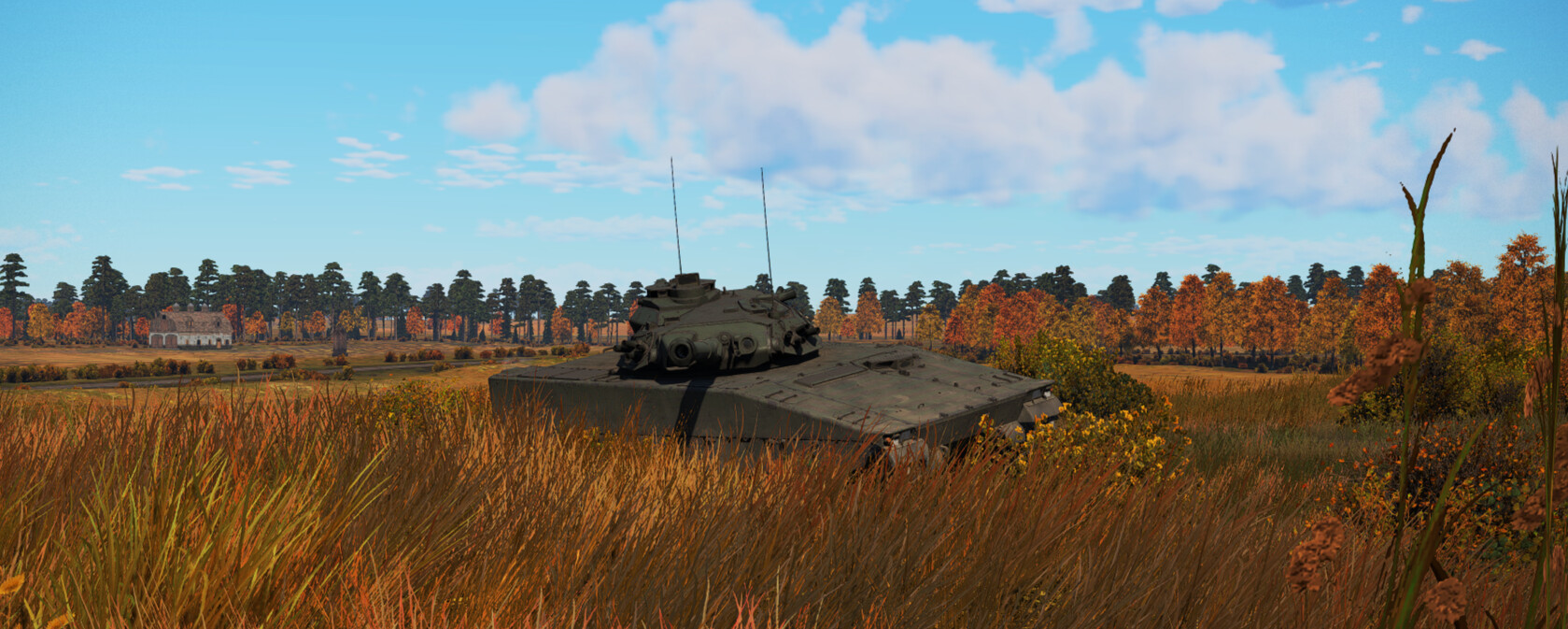
The focus of this vehicle is medium- to long-range combat and support. Using the vehicle’s good mobility, it can take key positions on the flanks of a map very easily and provide cover for the allied vehicles. The high-resolution thermals, laser rangefinder, and DM23 shell allow it to combat vehicles effectively even across greater distances, however, it is recommended to always aim carefully due to the mediocre angle performance of the APFSDS and try to go for side shots if possible. Apart from that, it is also recommended to regularly scout targets for the team, especially more armored vehicles this tank might struggle against. Notable vehicles here are the T-64A and T-64B, the T-72A and T-72M1, as well as the Chieftain Mk. 10. At times it is better to not take a shot if a target is especially hard to hit or if only a small part is visible.
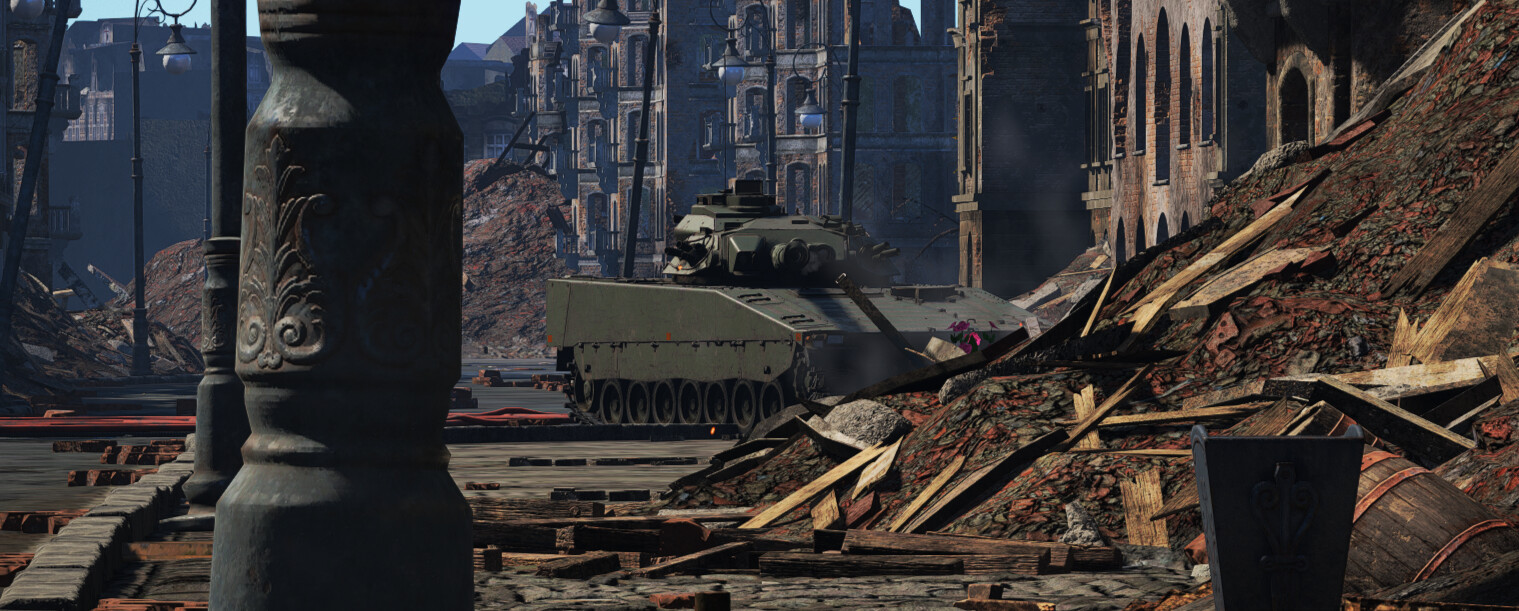
The lack of stabilizer and high base zoom of the gunner optics make it hard to use this vehicle in close-quarters combat, however, that doesn’t mean it’s impossible. In city and close-quarter combat the focus should be on supporting friendlies in various ways, this can be done by doing simple things such as helping with repairs or by doing a quick follow-up shot in case the allied vehicle got hit or missed their shot. However, that’s not the only thing this tank can do. The good mobility also allows the vehicle to catch enemies off guard by taking an alternative route than the rest of the allied vehicles and building a crossfire from a different angle.
Unfortunately, the coaxial 7.62 mm machine gun does not have any actual use cases, it is not effective at shooting down aircraft because of poor damage and elevation speeds, nor does it have enough penetration for the majority of armored vehicles. Its best use case is disabling exposed crew members or “hit-marking” enemies with it in case the scout is not available.