The Cold War provided the backdrop for the emergence of many strategic partnerships, as smaller nations pursued to maintain a degree of autonomy in a world dominated by two global superpowers. While some of these collaborations proved short-lived, others endured, including the partnership between Brazil and Italy. Over time, both countries developed long-standing strategic ties across several sectors, including the military sphere. The AMX emerged from a shared requirement to replace aging aircraft, emphasizing pragmatism and operational effectiveness while prioritizing mature and reliable technologies.
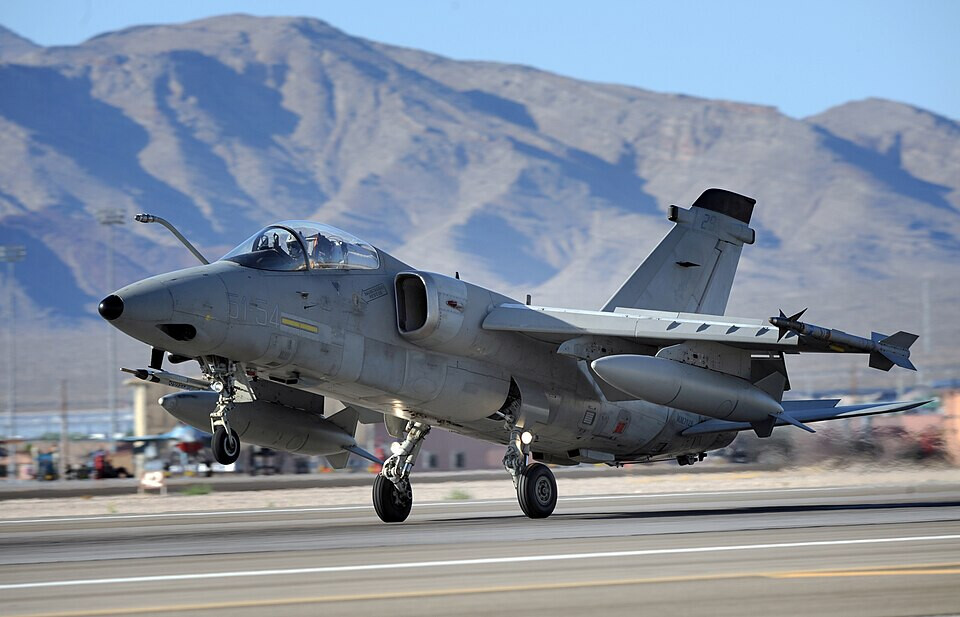
Table of contents:
Origins:
The development of the AMX began in the 1970s, when the Italian Air Force (AMI) wanted to replace its aging fleet of FIAT G.91s (at that time limited to the G and Y variants) and F-104 Starfighters, and also to complement the expensive and complex Panavia Tornado, which was under development at the time. The Italian doctrine adopted a high-low mix, combining smaller quantities of high-tech and consequently more expensive and complex-to-maintain weaponry (such as the Tornado) with larger quantities of simpler and consequently cheaper and faster-to-produce weaponry (G.91, and later the AMX).
Between 1970 and 1977, the Italian aerospace industry experienced a buzz, with the two largest companies, Aermacchi (nowadays Leonardo S. p. A.) and the state-owned Aeritalia (Previously FIAT Aviazione/Aerfer, nowadays Leonardo S. p. A.) awaiting some kind of official requirement from the AMI for the new aircraft. In 1973, Aeritalia proposed modernizing the G.91s once again, but the plan was deemed neither financially nor operationally viable, and that the aircraft should be retired in the 1980s (although it ultimately remained in service until the 1990s).
That same year Aeritalia also produced several conceptual designs of generic aircraft in the 3-1x study, which aimed to anticipate possible AMI requirements. The Model 3-11 was similar to the G.91Y but had a larger wing for more hardpoints and a new J85-21 engine with afterburner. The Model 3-13a was powered by Rolls-Royce/Turbomeca Andour Mk 102 engines, while Model 3-17 would use the same engine as the Tornado, the RB199. Among these proposals, the Model 3-15 stood out due to a bicycle landing gear similar to that of the British Harrier and its use of the TF34 engine, which was good for its low fuel consumption; however, it was found that the overall flight characteristics of the aircraft would be worse than those of the G.91, and the concept was ultimately abandoned.
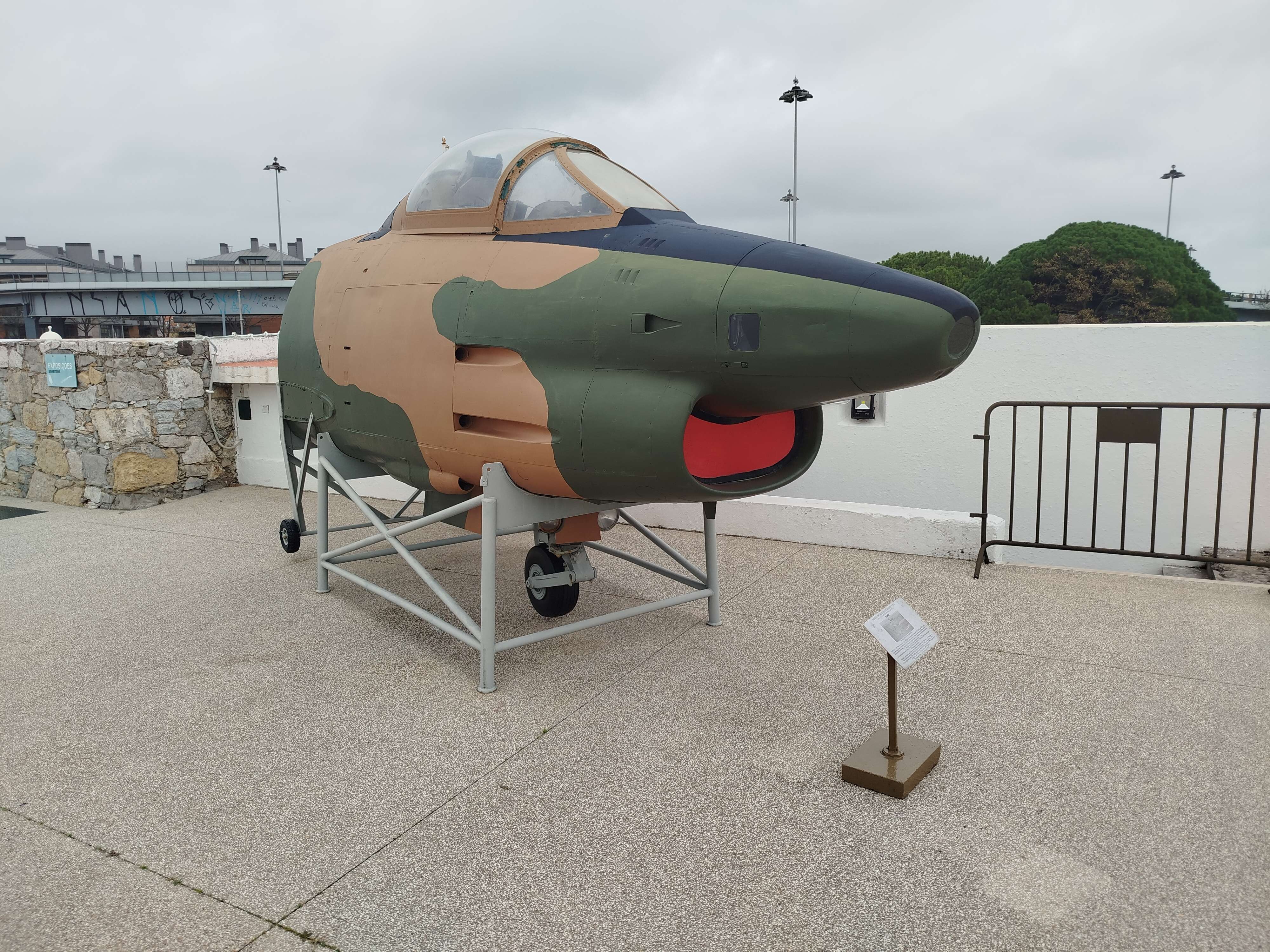
With more than 700 units produced, the aircraft was a commercial success, being operated by Italy, West Germany and Portugal, its most notable operator due to the air operations of the Portuguese Air Force during the Portuguese Colonial War. Source: Author
In June 1977, the official requirement was issued for a new reconnaissance and ground-attack aircraft designated AM-X (“AM” for Aeronautica Militare and “X” for unknown). The specifications included capability for deep air support (DAS) and close air support (CAS) missions, operation from short or semi-prepared runways, engine start without reliance on a ground-based auxiliary power unit (APU), high-speed low-altitude penetration, survivability in the event of partial system failure, structural redundancy, an internal cannon, and self-defense capability with at least two air-to-air missiles.
Aeritalia was selected to proceed with its proposal, designated Model 3-20/10, which was initially designed around the RB199 engine, implying potential supersonic capability. The concept envisioned two closely related variants: a general-purpose version and a specialized ground-attack version that would be slightly longer and taller. Continuous refinements followed, and the later Model 3-20/13 adopted a configuration closer to what would become the AMX, now powered by the Rolls-Royce Spey engine.
Meanwhile, Aermacchi was pursuing its own responses to anticipated national requirements, developing the MB-338 and MB-339 projects, one intended for ground attack and the other for advanced training. Due to limited financial resources, the MB-338 was ultimately cancelled, and the MB-339 proceeded as the company’s primary program, quickly attracting AMI interest as a replacement for the MB-326 and G.91T trainer variants. Aermacchi also maintained industrial ties with countries that produced the MB-326 under license, notably South Africa through the Atlas Aircraft Corporation (nowadays Denel Aerospace Systems) with the Impala Mk 1 and Mk 2, and Brazil through the Embraer AT-26 Xavante.
In 1978, Aermacchi and Aeritalia signed a joint development agreement for the AM-X program with the goal of reducing costs and shortening timelines. It was now redesignated AMX (Aeritalia, aerMacchi, Esperimentale-eXperimental). The two companies agreed to collaborate on a project derived from the Model 3-20 studies. That same year, the Italian Air Force formally specified the Rolls-Royce Spey as the required engine.
Problems in the tropics…
On the other side of the Atlantic, Brazil was undergoing a broad modernization of its armed forces, including its air force. In 1960, the country relied primarily on Gloster Meteors and T-33 trainers, the training variant of the F-80 Shooting Star, to defend its continental-scale airspace. Following the 1964 civil-military coup, the new regime initiated an extensive procurement program to modernize the armed forces.
The Brazilian Air Force (FAB) introduced several new aircraft in the early 1970s. In 1971, the first Brazilian-built AT-26 Xavante conducted its maiden flight. The following year, 16 Mirage IIIs were delivered, and in 1973, the F-5 was selected as the country’s new main fighter. Within a relatively short period, more than 170 aircraft were acquired, over one-third of them supersonic. These aircraft were capable of providing significant relief to the then precarious situation of the FAB.
However, not all deficiencies were resolved. Brazil’s primary ground-attack aircraft remained the B-26 Invader, a design originating from the Second World War that had become increasingly obsolete by the late 1960s. Although the fleet had undergone modernization in the United States, serious structural issues were identified in 1972, including cracks in the wing spars. These findings indicated the aircraft’s imminent retirement. Without the B-26, the FAB would rely primarily on the AT-26 Xavante for ground-attack missions — a less than ideal solution, given its training origins. In 1975, the remaining B-26s were retired, and the ground-attack role was formally assigned to the Xavante.
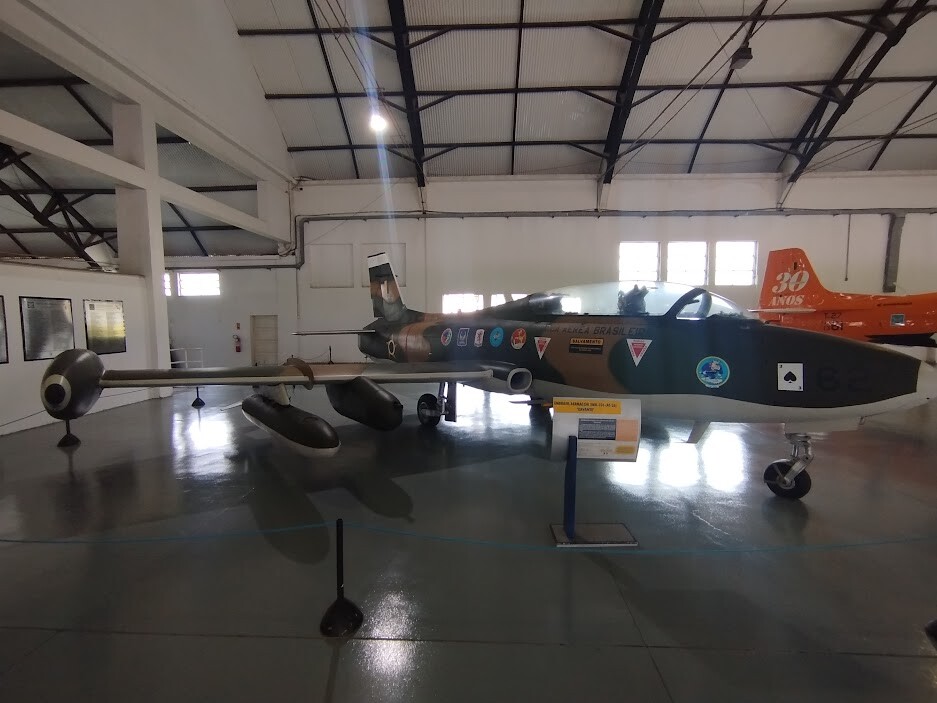
It was within this context that Brazil launched the A-X program in 1974, assigning it to Embraer, which had accumulated experience building the MB-326 under license. The A-X project was initially based on the MB-326, and Embraer soon presented the conceptual EMB-330. Several differences were immediately apparent, including the removal of the second seat, a redesigned forward fuselage, the addition of two 30 mm cannons (one on each side), and the elimination of the wingtip fuel tanks. The proposal was submitted to the Ministry of Aeronautics (MAer), which determined that it was insufficiently modern and required greater specialization for DAS and CAS missions.
Embraer subsequently began work on a new, more advanced design, but the effort proved challenging due to the company’s limited experience, having been founded only a few years earlier. It was therefore decided to seek assistance from Aermacchi, with whom Embraer maintained strong relations. With Aermacchi’s support, the project was almost entirely redesigned, retaining only the two 30 mm cannons from the previous concept.
The revised aircraft featured raised wings, the replacement of the original engine with the Rolls-Royce M45H, and a modified tail configuration with elevated horizontal stabilizers forming a T-tail. In mid-1977, this new proposal, designated MB-340, was submitted to the MAer.
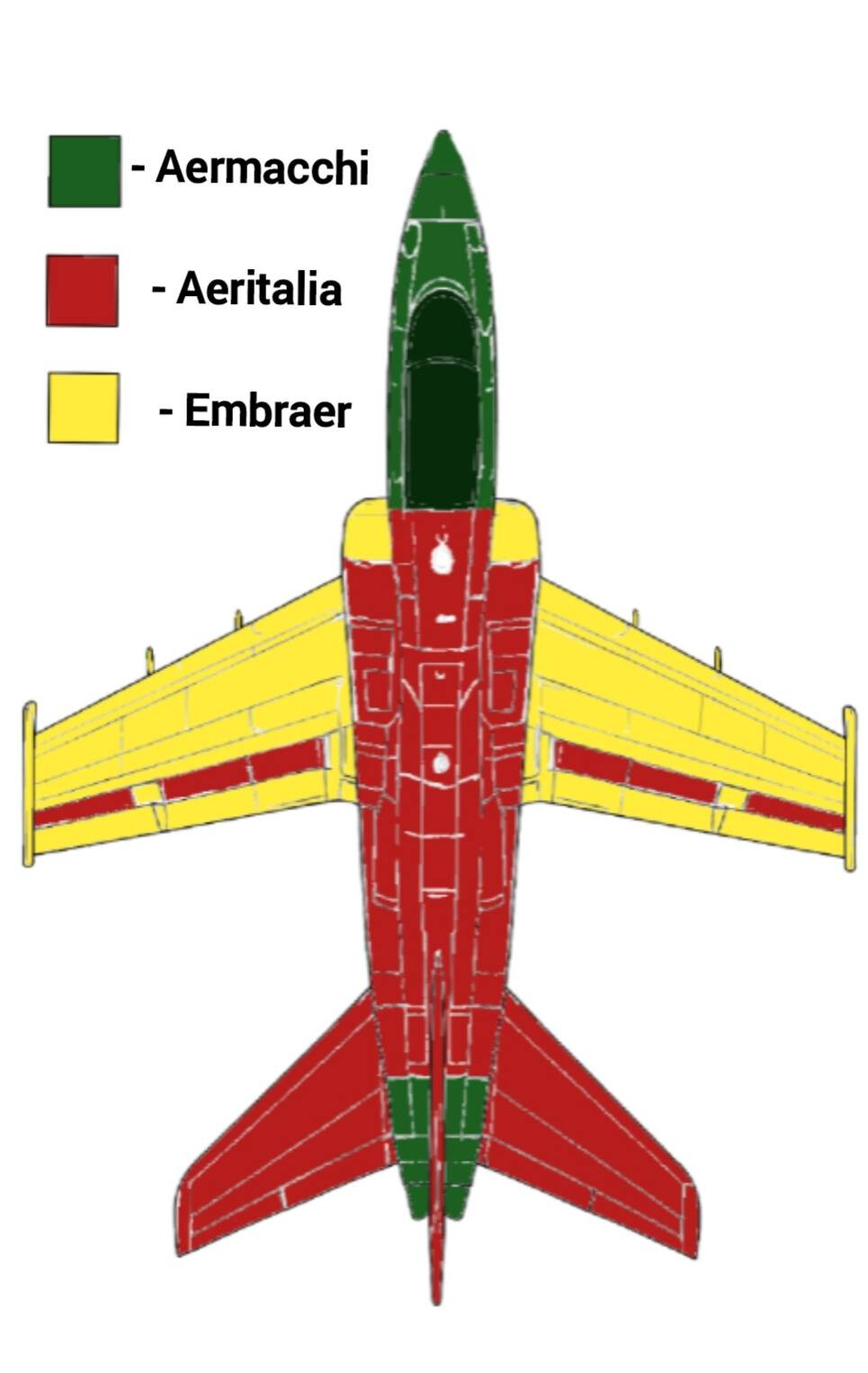
Workshare arrangements allocated one-third of the program to Embraer (responsible for wing sections, the empennage, and structural fatigue testing) and two-thirds to Aermacchi, which would produce the fuselage, onboard systems, conduct static testing, and oversee weapons integration. The construction of four prototypes was planned, two in each country. In the second half of the year, a team of Embraer engineers traveled to Varese, Italy, awaiting authorization from MAer to proceed. However, the Minister of Aeronautics, Brigadier Araripe, ultimately decided to suspend the program due to cost and schedule constraints.
In 1978, General João Figueiredo assumed the presidency, and the A-X program gained new momentum. The MB-430 was set aside, but not a partnership proposal like the one proposed by Aermacchi. In 1979 Brazil approached British Aerospace to assess the suitability of the BAe Hawk for the A-X program. The British suggested changes to the Hawk but denied Brazilian participation in the program, offering only local licensed production. Under these terms, the talks did not progress, and discussions with Aermacchi soon resumed.
Upon arriving in Italy, the Embraer team was introduced to the AMX project, which quickly sparked the interest of the Brazilians. The Italian proposal for joint development would place Embraer on another level, unlike simple license-production arrangement, Embraer would have the opportunity to actually participate in the construction of a modern jet aircraft.
The International Consortium, Development, and Export Challenges
In March 1980, the Brazilian government formally expressed its intention to join the AMX program through Embraer. This decision intensified contacts between engineers from the three companies, who began drafting a memorandum of understanding. In most cases, Brazilian representatives traveled to Italy for negotiations.
Relations were initially strained. While Embraer and Aermacchi maintained strong ties, the same was not true with Aeritalia. Engineer Ozires Silva, founder of Embraer, later described the situation in his book “The Takeoff of a Dream”:
“Aeritalia’s hostility towards having Brazilians involved in the project became clear in the first meetings with the company’s directors in 1980. Gathered in Turin, at a gigantic table (…), surrounded by many people, we felt that Embraer and Macchi were there simply because of the FAB’s interest in buying the new aircraft. We were blatantly ignored and constantly disrespected when presenting any point we considered relevant.”
In June 1980, the three companies signed a Memorandum of Understanding (MoU), intended to define technical and economic responsibilities and establish workshare distribution. Aeritalia was assigned 46.7% of the program, Aermacchi 23.6%, and Embraer 29.7%.
In March 1981, Brazil’s participation was formally ratified through a bilateral agreement between Brazil and Italy, which also included substantial procurement commitments. The initial projection called for 200 aircraft for the AMI and 100 for the FAB. However, at the signing of the development memorandum in July 1981, the figures were revised to 187 aircraft for Italy and 79 for Brazil. The final production totals were ultimately lower: Italy received 136 aircraft (including 26 two-seat variants), while Brazil received 56 aircraft (11 of them two-seat variants).
The division of work also took logistical considerations into account. The Italian companies were responsible for manufacturing the entire fuselage, with the exception of the engine air intakes. Embraer was tasked with producing the wings, fuel tanks, air intakes, pylons, and “wet” pylons designed to interface with the underwing fuel tanks. This allocation was particularly significant for Embraer, as it allowed the company to be directly involved in design areas related to range and maneuverability, aspects considered strategically important for Brazil’s operational requirements.
The specifications common to both the AMI and the MAer included high subsonic speed, an advanced navigation and attack system, and the ability to operate from short runways.
Additionally, the operational survivability requirements were defined as follows:
- A single 12.7 mm projectile must not compromise aircraft controllability.
- The mission should remain achievable with acceptable maneuverability after the first electrical or hydraulic system failure.
- Return to the primary or an alternate base should be possible even after a second electrical or hydraulic system failure.
In the Italian version, the AMX A-11, uses the 20mm Vulcan M61 rotary cannon; the US vetoed the use of the M61 by Brazil, which led to the A-1 version using the 30mm DEFA 554 cannon. The adaptation of the fuselage for the DEFA also ended up being the responsibility of Embraer.
Aircraft production was carried out simultaneously in three cities corresponding to the headquarters of the participating companies: Turin and Varese in Italy, and São José dos Campos in Brazil. The first prototype completed was Aeritalia’s MM-X594, which left the factory in Turin on February 12, 1984, and conducted its maiden flight on May 15 of the same year.
On June 1, 1984, during a test flight, MM-X594 experienced an engine failure shortly after takeoff. The aircraft was piloted by Manlio Quarantelli, one of Italy’s most prominent test pilots at the time. According to accounts, Quarantelli delayed ejection in order to guide the aircraft away from populated areas. He eventually ejected during the landing phase after a fire developed in the cockpit. He sustained severe burns and multiple fractures and was hospitalized for over a month before succumbing to his injuries on August 19, 1984.
The first Aermacchi prototype conducted its maiden flight on November 19, 1984, while the Embraer prototype flew for the first time on October 16, 1985.
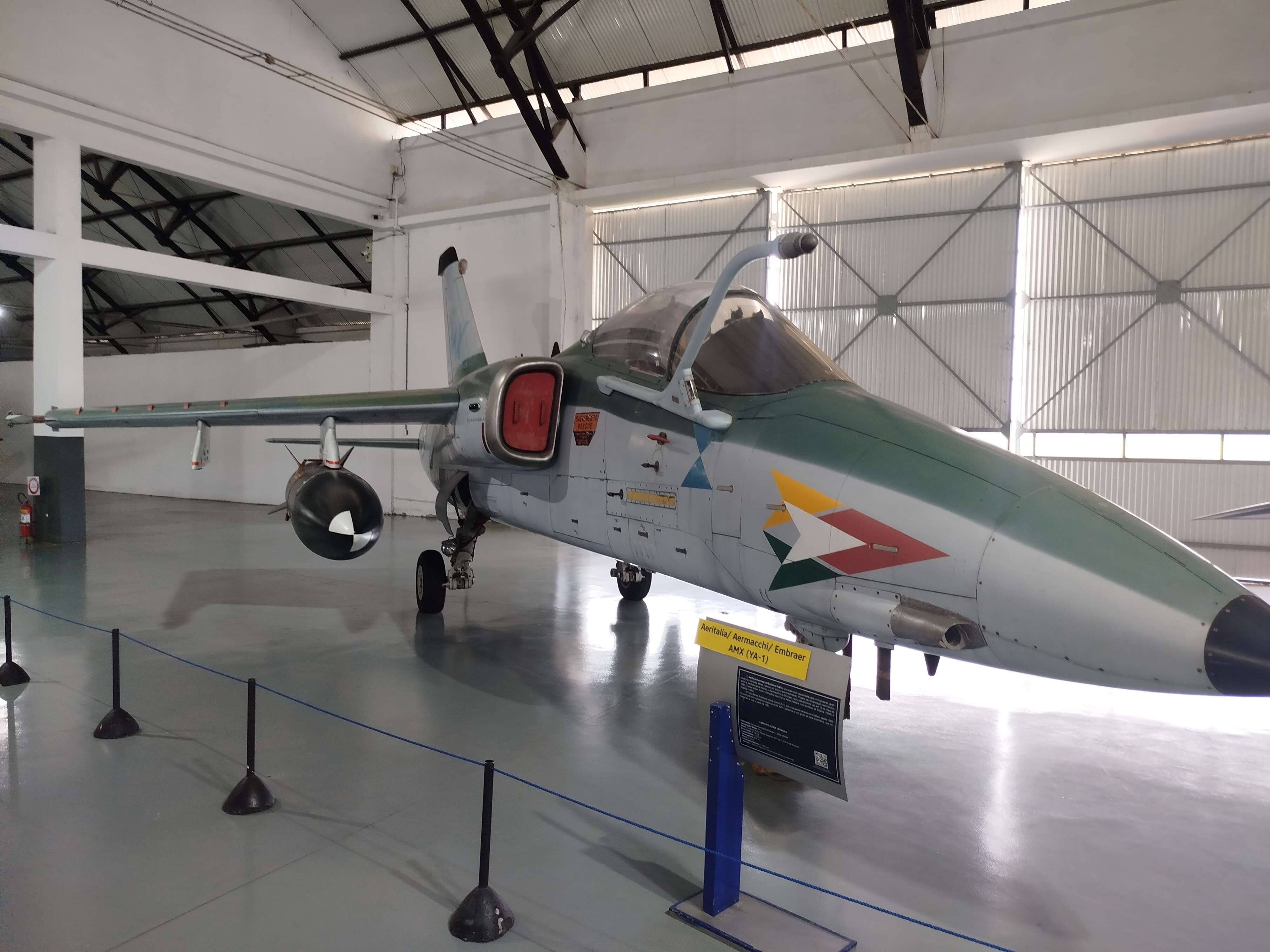
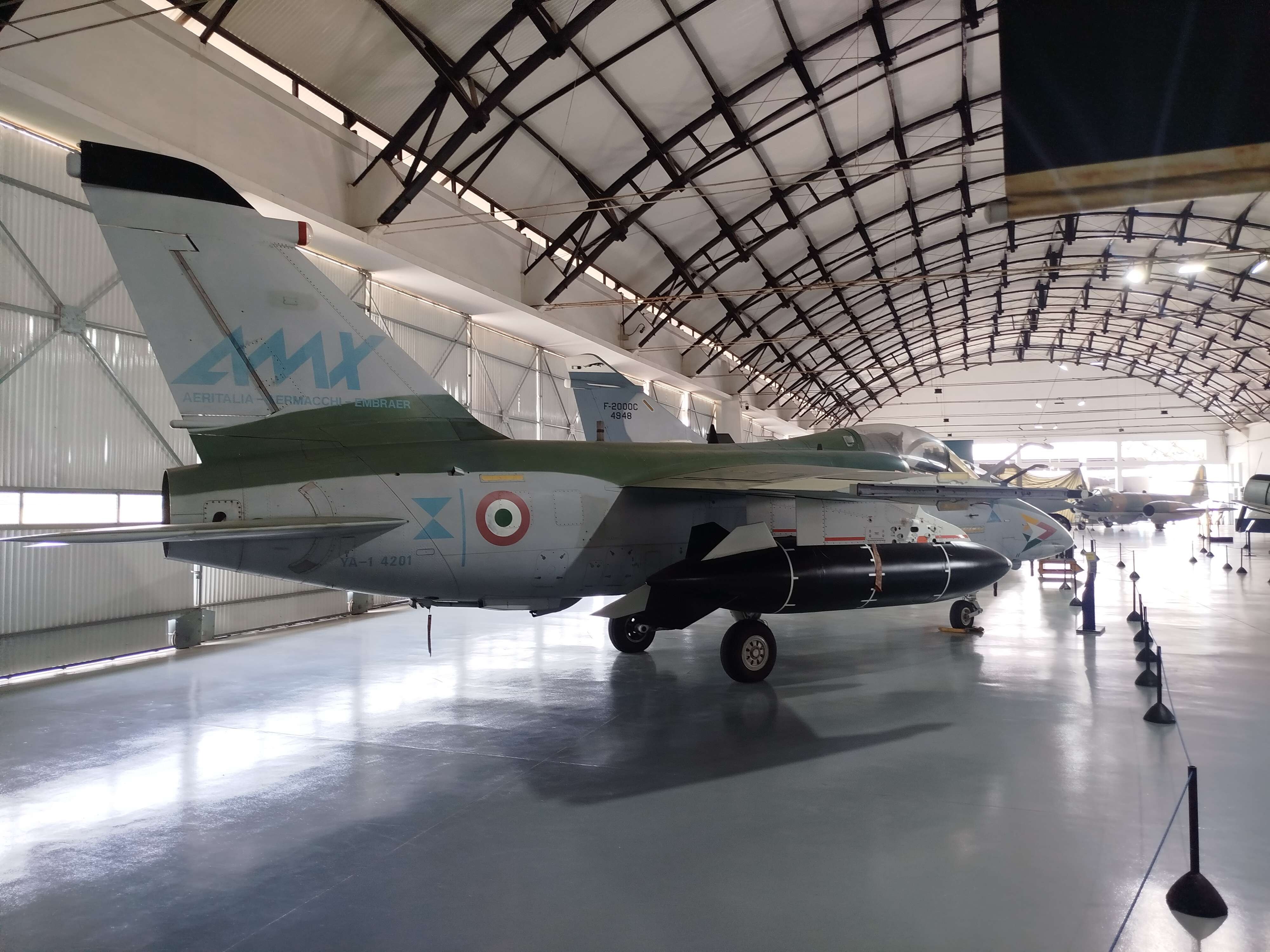
The final aircraft featured a robust design with redundant systems and required relatively limited ground support, largely due to the inclusion of an onboard APU. Its reinforced landing gear and suitable engine performance enabled operations from short or semi-prepared runways. At a takeoff weight of 10,000 kg, the aircraft required approximately 760 meters of runway.
The integration of the electronic warfare system within the fuselage was also advantageous, as it eliminated the need to dedicate an external pylon to a separate pod. The aircraft was considered satisfactorily modern for its intended role and was at times informally referred to as the “pocket Tornado.” Its design emphasized maintainability: a significant portion of its components were modular line replaceable units (LRUs), monitored through a built-In test equipment (BITE) system. Additionally, approximately two-thirds of all inspection panels were located no more than 1.70 meters above ground level, facilitating access for maintenance personnel.
In 1985, both Chile and Argentina expressed interest in the AMX. However, Chile was subject to United States sanctions affecting the export of certain electronic components used in the aircraft, while Argentina faced international restrictions in the aftermath of the Falklands War, limiting the viability of potential acquisitions.
In 1986, the consortium launched a coordinated marketing effort to attract export customers, advertising in specialized international publications, promoting the aircraft’s capabilities, and participating in the Farnborough Airshow, a significant step for the program’s international visibility. Despite these efforts, no export orders materialized. The AMX was a highly specialized aircraft with associated costs that limited its appeal, particularly as the strategic environment began to shift.
By the late 1980s, the Communist bloc was already showing signs of decline, culminating in the fall of the Berlin Wall in 1989 and the dissolution of the Soviet Union in 1991. In the post-Cold War environment, many countries reduced defense budgets and downsized their air forces, resulting in a surplus of relatively modern second-hand aircraft on the international market at lower prices.
Nevertheless, potential customers continued to express interest. The Philippines evaluated the AMX in 1997, but negotiations were halted by the Asian financial crisis. The aircraft was also considered by Malaysia, India, Ecuador, Turkey, Greece, South Africa, and Peru, among others; however, no export contracts were ultimately concluded.
In 1999, Venezuela already under the presidency of Hugo Chavez, also tried to acquire the AMX, even initiating the purchase process, but it was vetoed by the US. The Venuezlan AMX would be called AMX-ATA (Advanced Trainer and Attacker). It would feature improved avionics systems and a more modern cockpit configuration.
| Data: | Common | Italy | Brazil |
|---|---|---|---|
| Manufacturer: | Aeritalia | Aermacchi | Embraer | |
| Engine: | Rolls-Royce Spey RB.168 Mk.807 without afterburner, 5,000 kgf | ||
| Wingspan: | 8,87 m | ||
| Length: | 13,57 m | ||
| Height: | 4,57 m | ||
| Crew: | 1 | 2 | ||
| Empty Weight | Max. Weight | 6.000 kg | 11.500 kg | ||
| War load: | 3.800 kg | ||
| Attachment points: | 1 double pylon under the fuselage | 4 pylons under the wings | 2 missile rails on the wingtips | ||
| Max. speed: | 1.160 km/h | ||
| Operational ceiling: | 13.000 m | ||
| Ferry range: | ~3,150 km (with 2 external 1,100 L tanks) | ||
| War range: | ~900 km | ||
| Original designation: | A-11/TA-11 | A-1A/A-1B | |
| Modernized designation: | A-11B/TA-11B | A-1M/A-1BM | |
| Cannon: | 20mm Vulcan M61 | 2x DEFA 554 30mm | |
| Air-to-air missile: | AIM-9L/IRIS-T(?) | MAA-1A/A-Darter(?) | |
| Activity period | 1989-2024 | 1989- |
Italian service
The first production AMX, MM.7091, was received by the AMI in April 1989 integrating the 103° Gruppo Caccia Bombardieri “Indiani” /51° Stormo based in Istrana. Then the AMX was integrated on the 132° Gruppo/3° Stormo, the 28° Gruppo/32° Stormo, the 14° Gruppo/2° Stormo and finally the 13° Gruppo/32° Stormo. Initially, the groups had some difficulty adapting to the aircraft considering the large difference between their past aircraft (G.91s and F-104s) to the new ones.
In 1991, Italy deployed a number of AMX aircraft to Turkey in support of coalition operations during the Gulf War; however, they were not committed to combat. Instead, the AMI and the Royal Air Force (RAF) relied primarily on the Panavia Tornado for low-altitude strike missions against Iraqi targets, operations that exposed the aircraft to intense anti-aircraft defenses. This type of mission would be precisely the specialty of the AMX, it is speculated that they were not used because the operational squadrons were not yet at a satisfactory level of adaptation to the new platform.
In the second half of the 1990s, budgetary constraints led the AMI to place approximately half of its AMX fleet in reserve. In 1995, during Operation Deny Flight over Bosnia and Herzegovina, AMX were assigned standby roles for reconnaissance, CAS, and air defense missions, operating in coordination with NATO E-3 AWACS aircraft. Once again, the plane was not employed in active combat during the operation.
During this period, Italian AMX aircraft also participated in several multinational exercises, including Maple Flag, Central Enterprise, and Bright Star.
In 1999, during the Kosovo War, NATO initiated Operation Allied Force, and the AMX was again assigned operational duties. Initially, the aircraft conducted regional training flights and remained on standby for CAS, a role primarily carried out by A-10s and F-16s. The deployment of Orpheus reconnaissance pods was not authorized due to the perceived threat posed by Serbian surface-to-air missile (SAM) systems, as strategic reconnaissance was already being conducted by satellites, German unmanned aerial vehicles, and U-2 aircraft.
Twenty-two days after the start of the operation, on April 14, the AMX from the 103° Gruppo, 51° Stormo were tasked with low-altitude strike missions against Serbian air defense positions near the Albanian border. Two aircraft conducted a four-hour sortie that included aerial refueling and formed part of a broader effort to suppress threats to NATO forces. The aircraft employed 227 kg (Mk 82) bombs fitted with Israeli Opher infrared guidance kits against designated targets.
By the end of the conflict, AMX aircraft had carried out a substantial portion of the Italian Air Force’s strike sorties. The aircraft demonstrated effective performance in terms of avionics, navigation systems, and defensive countermeasures, as well as high operational availability, reported at approximately 99.5% during the campaign. However, limitations were also noted, particularly regarding the Rolls-Royce Spey engine, which produced significant exhaust smoke and offered a modest thrust-to-weight ratio, reducing energy margins during evasive maneuvers.
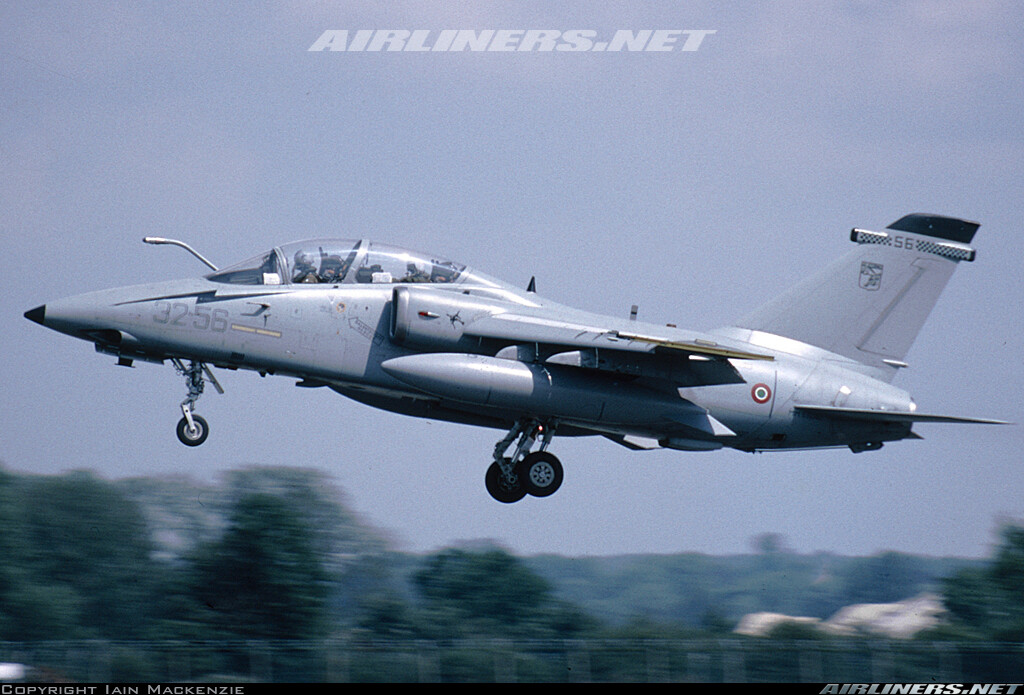
In the early 2000s, Italy approached Brazil regarding the possibility of a joint modernization program for their respective AMX fleets. The proposed Mid-Life Upgrade (MLU) did not proceed as a bilateral effort, as the two countries had differing priorities: Italy wanted a cost-effective upgrade applied to a larger number of aircraft, while Brazil preferred a more comprehensive modernization for a smaller fleet.
Italy subsequently implemented its own upgrade program, designated ACOL (Adeguamento delle Capacità Operative e Logistiche-Adequacy of Operational and Logistical Capacities). Initiated in 2003 and completed in 2012, the program modernized 52 aircraft, including 10 two-seat variants. The effort involved Alenia (formerly Aeritalia), Aermacchi, and the Reparto Sperimentale di Volo (RSV).
The ACOL upgrade introduced improved navigation systems, expanded compatibility with precision-guided munitions, integration of the Litening targeting pod, and adoption of the RecceLite reconnaissance pod, capable of transmitting imagery in near real time. IFF systems were upgraded to contemporary standards. Single-seat aircraft received cockpit modifications to enable night-vision goggle compatibility, and the cockpit was modernized with multifunction color LCD displays supported by an updated computer symbol generator. The TA-11B reportedly achieved a capability level comparable to that proposed for the Venezuelan AMX-ATA configuration.
The first upgraded aircraft entered operational service in 2007 under the designations A-11B (single-seat) and TA-11B (two-seat). Between 2009 and 2011, AMX aircraft equipped with RecceLite were deployed to Afghanistan in reconnaissance roles. Following full Litening integration, the type also conducted CAS missions employing laser-guided bombs.
In 2011, Italian AMXs participated in Operation Unified Protector over Libya, carrying out reconnaissance and strike missions and accumulating more than 500 flight hours during combat operations. Later on they also flew over Iraq and Kuwait.
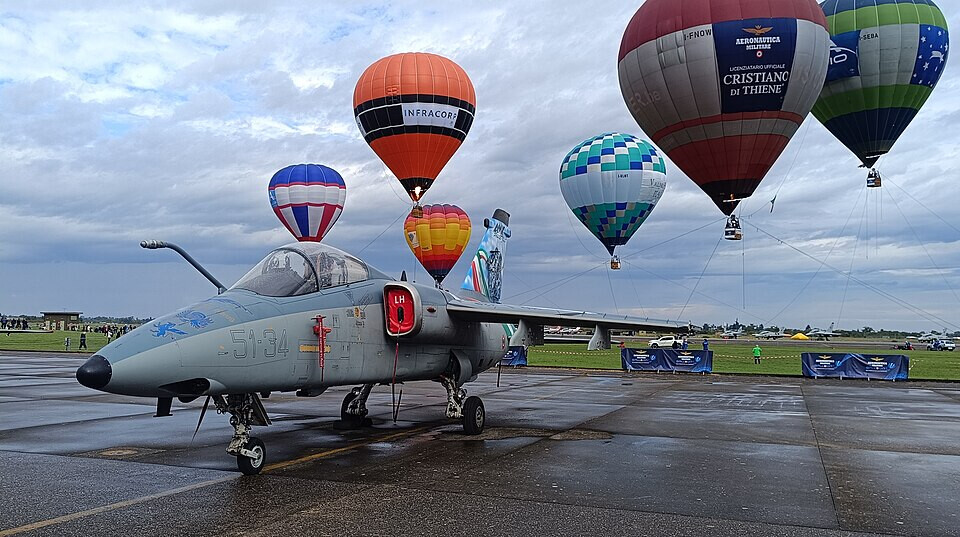
On April 5, 2024, the AMX were officially retired from the AMI, ending its service with with over 240,000 flight hours, including 18,500 hours of actual operational work in conflict zones. Aircraft MM.7162 received a special commemorative paint scheme. Inscribed on the tail in Latin were “Volatus ad astra, memoria in aeternum” (Flew to the stars, remembered forever).
Brazilian service
Service in the FAB was comparatively less combat-intensive, reflecting Brazil’s relative distance from major international conflicts during the period. Nevertheless, the AMX represented a significant technological milestone for Brazilian military aviation. Unlike previous FAB aircraft, the type introduced modern features such as the Hands On Throttle and Stick (HOTAS) concept and head-up display (HUD) integration for flight and targeting information.
Additional advancements included a ballistic computer supporting CCIP and CCRP delivery modes, a radar warning receiver (RWR), identification friend or foe (IFF) systems, built-In test equipment (BITE), modular line replaceable units (LRUs), an onboard electronic countermeasures system, and a fly-by-wire flight control system.
The first unit to enter service was the AMX A-1 FAB 5500, which was integrated first to the 1° Esquadrão/16° Grupo de Aviação “Adelphi” in October 1989, then to the 3º/10º GAv and finally the 1°/10° GAv, a squadron specialized in recce.
The first large-scale national exercise involving the AMX was Operation Surumu in 1993. Conducted in the Brazilian Amazon, the exercise simulated a conflict scenario against a fictional country known as “Cratenia.” Some sources suggest that the exercise also served a strategic signaling purpose, amid domestic and international tensions related to indigenous land demarcation and concerns over cross-border illicit activities in the region.
The aircraft’s first international deployment occurred in 1994 during Exercise Tiger I, conducted with the United States Air Force in Puerto Rico. In 1998, Brazilian AMXs also participated in Exercise Red Flag 98-3 in Nevada, operating alongside and against USAF F-16s Block 15.
In addition to military exercises, the AMX has also appeared in ceremonial roles. In 1994, four aircraft conducted a flyover during the state funeral of Formula One driver Ayrton Senna in São Paulo.
There have also been claims that AMX aircraft were employed in operations targeting illegal airstrips in the Amazon region, including runway denial strikes. However, publicly available information on such missions remains limited, and definitive confirmation is scarce.
In 2003, the AMX accomplished one of the longest endurance flights in the history of Brazilian fighter aviation. Two aircraft departed from Santa Maria Air Base in Rio Grande do Sul and flew north toward the border with French Guiana before returning south and landing at Natal Air Base in Rio Grande do Norte. The mission lasted more than 10 hours and included aerial refueling operations. During this journey, the aircraft traveled more than 5000 km continuously.
The flight established an endurance benchmark within the FAB’s combat force and demonstrated the aircraft’s capacity to operate across Brazil’s extensive national territory when supported by aerial refueling.
Also in 2003, the FAB initiated discussions with Embraer regarding a potential modernization of the A-1 fleet. The Air Force declined participation in a joint upgrade program with the Italian consortium, citing differing operational objectives and modernization priorities. Instead, the FAB favored a domestic upgrade approach that would promote greater internal standardization, aligning the A-1’s systems more closely with those introduced on the F-5EM and A-29 programs.
In 2007, the FAB began inducting the first aircraft into the modernization program. Embraer and its contracted partners implemented extensive upgrades under what would become the A-1M standard.
The modernization introduced the SCP-01 Scipio multimode radar, providing air-to-air, air-to-ground, and maritime modes. The cockpit was comprehensively updated with a new HUD, DASH IV helmet-mounted display (HMD) integrated with the MAA-1 Piranha, and three multifunction color displays (two measuring 152 × 208 mm and one 104 × 127 mm).
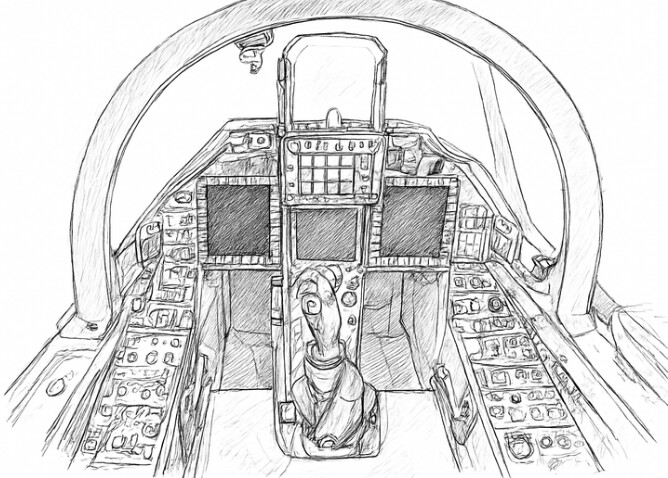
Source: Author
Avionics improvements included the installation of two new redundant mission computers operating on the MIL-STD-1553B data bus, as well as a modernized weapons management system compatible with the MIL-STD-1760 standard. Survivability enhancements comprised the addition of a new missile approach warning system (MAWS) possibly a PAWS system, an upgraded RWR, integrated electronic warfare systems, and compatibility with the Sky Shield electronic countermeasures pod.
The aircraft also received an on-board oxygen generating system (OBOGS), reducing reliance on ground-supplied oxygen.
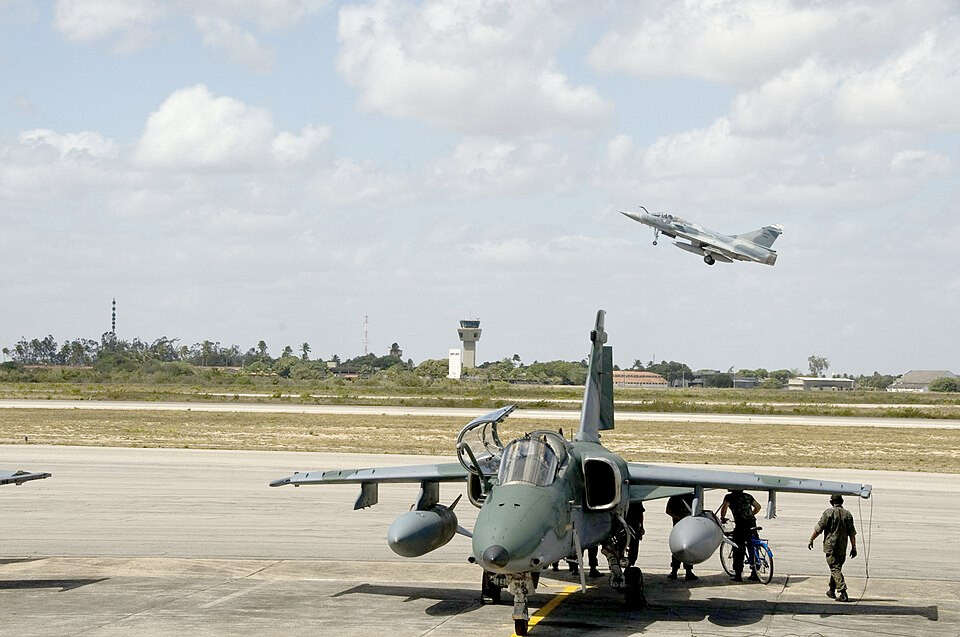
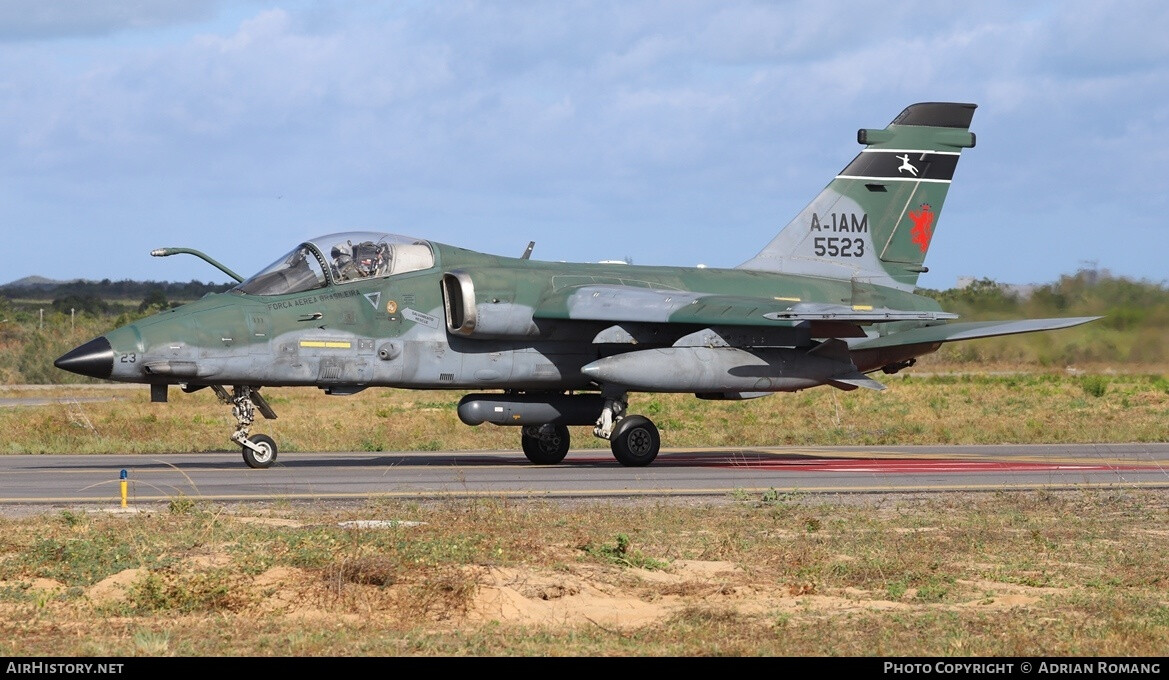
The first modernized aircraft, FAB 5520, was delivered to 1°/16° GAv in early September 2013. It entered service in time to participate in Exercise CRUZEX, marking the operational debut of the A-1M standard.
Initial plans projected the modernization of approximately 40 aircraft. However, the program was significantly reduced to 11 units due to budgetary constraints and competing priorities within the FAB, particularly the development of the KC-390 and the acquisition process for the F-39E Gripen.
Of the 11 upgraded aircraft, nine were single-seat A-1A variants and two were two-seat A-1B variants. Following modernization, they were redesignated A-1M and A-1BM, respectively.
Note: The project delivered modernized aircraft between 2013 and 2020. The aforementioned SCP-01 radar was at the time manufactured by the Brazilian company Mectron, which closed in 2016 as a consequence of the political and economic crisis affecting the country at the time. It is unclear whether the units that came later received a different radar or if it continued to be produced by another company.
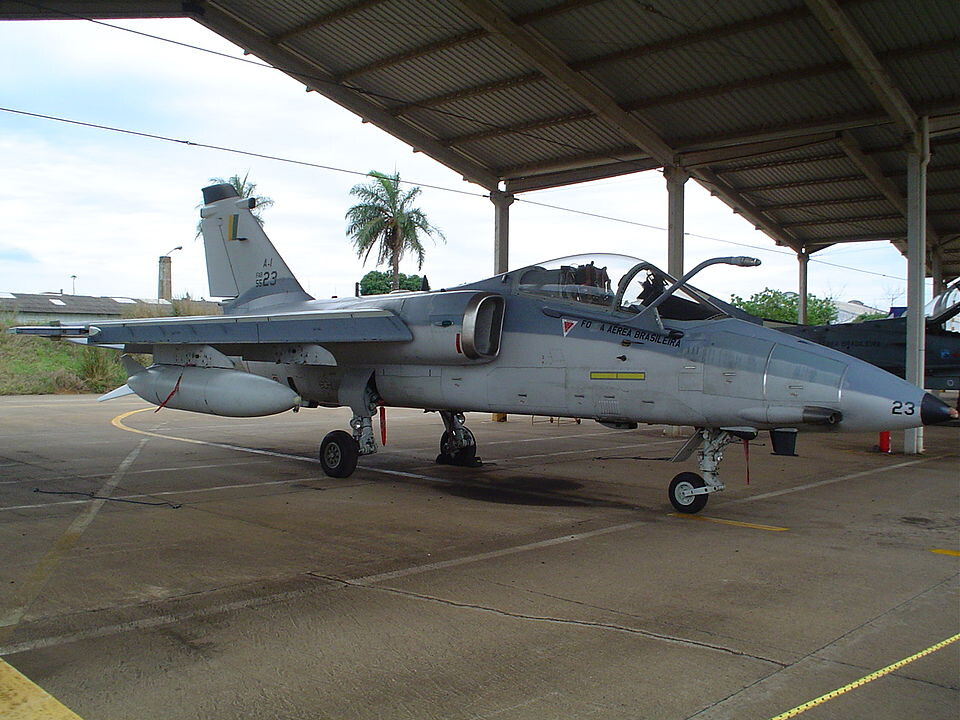
Paper Airplanes: The variants that never flew
The purpose of this section of the article is to briefly discuss some interesting variants of the AMX that were never implemented until the planning stage.
- AMX-MLU (Mid-Life Upgrade): The Brazil-Italy proposal for joint modernization did not move forward due to differing objectives between the two air forces. It envisioned improvements to the HUD, avionics, and internal electronic panels.
- AMX-ATA (Advanced Trainer/Attacker): The two-seat version, intended for sale to Venezuela, would have featured a new Elta-EL M-2032 radar, internal improvements to the HOTAS system, and new avionics. Eight units were to be purchased with the possibility of expanding to four more. This did not occur due to a US veto.
- AMX-ATA-2: Similar to the ATA but with a new EJ200 engine without afterburner.
- SUPER AMX: It would be similar to the modernization of the Brazilian AMX: SCP-01 radar, HMD, HUD modernization, modernization of defensive systems, and a glass cockpit. The project did not go ahead because South Africa opted to focus on other options.
- AMX-E: It would have been specialized in electronic warfare, featuring a larger protrusion on its underside to house advanced electronic warfare equipment. It would have been used in escort jammer and SEAD (saturation of enemy air defense) missions. The project underwent feasibility testing but ultimately did not move forward.
- AMX-Brazilian Navy: The Brazilian Navy showed interest in the possibility of adapting the AMX for operation on the aircraft carrier NAeL Minas Gerais. The project would have required an overhaul of the landing gear and fuselage to withstand the impact and stress of prolonged operation on extra-short runways with hooks. The project ultimately did not move forward, with the Navy focusing on other areas.
Final considerations:
The AMX program emerged during the final phase of the Cold War as a joint Italian–Brazilian effort to field a modern, specialized light attack aircraft. Although strategic circumstances shifted rapidly after its introduction, the aircraft proved capable of adapting to a changing operational environment.
In Italian service, where it became known as the Ghibli, the AMX participated in expeditionary missions in the Balkans, Afghanistan, Libya and more, operating within demanding NATO frameworks. Over decades of service, it demonstrated consistent availability and adaptability through successive upgrades.
In Brazil, the AMX marked a turning point in the modernization of the FAB. It introduced cockpit philosophies, avionics integration, and precision-strike capabilities that influenced subsequent aircraft programs. Its long-range national deployments and modernization into the A-1M standard reflected its continued strategic utility within Brazil’s vast territory.
Industrial cooperation through the program also played a formative role in strengthening Embraer’s expertise in military systems integration and complex aircraft development. The experience gained there was invaluable and was used as part of the recipe for creating the ERJ family of civilian aircraft, and later the E-Jets.
The aircraft was not without shortcomings. Its propulsion system imposed performance limitations, and the fleet experienced the typical attrition and technical challenges associated with long service lives. Yet these constraints did not prevent it from fulfilling its mission for more than three decades.
As the AMX approaches retirement, it leaves behind a legacy shaped by reliability, adaptability, and the steady fulfillment of the roles for which it was designed. Its history reflects both the ambitions and the practical realities of mid-sized air powers navigating a changing strategic landscape.
Sources:
- História da FAB de Rudnei Cunha: o AMX Internacional
- Poder Aéreo, o AMX na Itália
- The Aviationist: history of the AMX in the AMI
- Poder Aéreo, concepção do projeto AMX parte 4
- Sistema de Armas: AMX
- Aeronautica Militare: dopo 35 anni dall’entrata in servizio, si congeda il jet AMX
- Asas de Ferro: AMX o Tornado de bolso
- FAB canhão DEFA 550
- Leonardo: AMX ACOL at nation’s service
- AirVectors: FIAT G.91 & Alenia-Aermacchi-Embraer AMX
- Clube de Engenharia: AMX
- Tecnodefesa: 35 anos de serviços do AMX
- AM-X UM PROGRAMA DE SUCESSO de Fábio Antonio de Faria
- DefesaNet, Embraer começa a entregar caças AMX A-1M
- Armas Nacionais A-1M AMX
- Poder Aéreo: da concepção a modernização do AMX
- Sistema de Armas: Modernização do AMX
- Sistema de Armas: Sensores do AMX
- DefesaNET: SCP-01 afiando a pontaria
- Embraer: Aircraft Modernization
- FAB: AMX A-1
- AMI: AMX A-11
- ABRA-PC AMX
- Infodefesa
- about Mario Quantarelli