
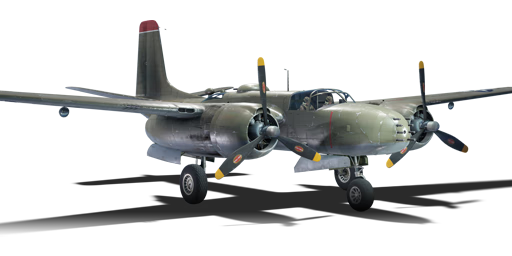
A-26B-50



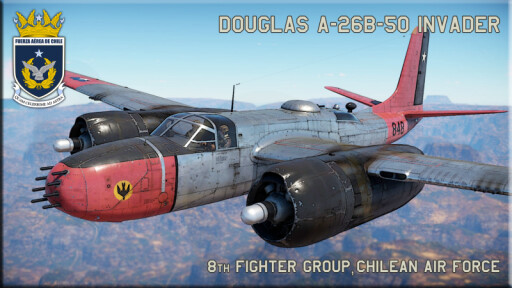
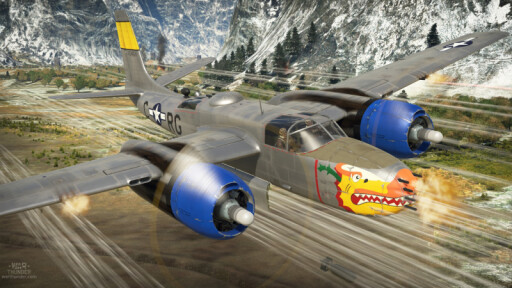
The A-26B-50 Invader was a late-war variant of the Douglas A-26 Invader attack aircraft. As the Invader entered service in 1944, several deficiencies were identified and gradually resolved. Following the A-26B-10, the A-26B-15 featured an electric bomb release system, a different aileron extension angle, a redesigned pilot's instrument panel, and a new N-9 bombsight. This was followed by the A-26B-20, which finally fixed the A-26's problematic and unreliable cockpit. Next came the A-26B-35, which featured a teardrop-shaped cockpit to provide better visibility. Then came the A-26B-45, which featured a water injection system for the engines. Finally, the A-26B-50 featured a staggering fourteen Browning machine guns in the nose as its offensive armament, the addition of hardpoints for HVAR rockets, as well as further improvements in flight characteristics. In total, 109 of the A-26B-50 were built, and would remain in service with the USAF until the late 1960s.
The A-26B-50 was introduced in Update 1.67 "Assault". This variant of the Invader is largely the same as its predecessor, the A-26B-10, with the main difference being its offensive armament. Instead of a modular nose, the B-50 variant has a staggering 14 Browning MGs in the nose as its main armament. This ensures that any aircraft or lightly armoured ground/naval targets unfortunate enough to be within its range will be riddled with holes in a short burst. In terms of flight performance, the A-26B-50 is a fast yet cumbersome attacker, though it trades a bit of its top speed and climb rate for slightly improved handling over its predecessor, allowing it to fare better in air combat. While the payload is largely the same, the A-26B-50 has the option to use HVAR rockets to further aid in strafing attacks.

flaps
flaps
flaps
brake
| Belt | Belt filling | Armor penetration (mm) at a distance: | |||||
|---|---|---|---|---|---|---|---|
| 10 m | 100 m | 500 m | 1000 m | 1500 m | 2000 m | ||
| API-T/AP/AP/I | 30 | 27 | 20 | 13 | 9 | 6 | |
| AP-I/AP-I/API-T/I/I | 28 | 26 | 18 | 11 | 7 | 4 | |
| API-T/I/AP/AP/AP-I/AP-I | 30 | 27 | 20 | 13 | 9 | 6 | |
| API-T | 28 | 26 | 18 | 11 | 7 | 4 | |
| AP-I/I/AP-I/I | 28 | 26 | 18 | 11 | 7 | 4 | |
| Belt | Belt filling | Armor penetration (mm) at a distance: | |||||
|---|---|---|---|---|---|---|---|
| 10 m | 100 m | 500 m | 1000 m | 1500 m | 2000 m | ||
| API-T/AP/AP/I | 30 | 27 | 20 | 13 | 9 | 6 | |
| AP/AP/AP/API-T | 30 | 27 | 20 | 13 | 9 | 6 | |
| AP-I/I/AP-I/API-T | 28 | 26 | 18 | 11 | 7 | 4 | |
| Name | Weight | Slot | ||||||
|---|---|---|---|---|---|---|---|---|
| 7 × | 439.6 kg |  | | |||||
| 49.9 kg |  | | | | ||||
| 117.9 kg |  | | | | ||||
| 242.6 kg |  | | | | ||||
| 16 × | 798.4 kg |  | ||||||
| 8 × | 943.2 kg |  | ||||||
| 6 × | 1,455.6 kg |  | ||||||
| 4 × | 2,003 kg |  | ||||||
| 4 × | 1,828.9 kg |  | ||||||
| 2 × | 1,768.1 kg |  | ||||||


 A-26B-50
Flight performance | |
|---|---|
Survivability |
|---|
Weaponry | ||
|---|---|---|