
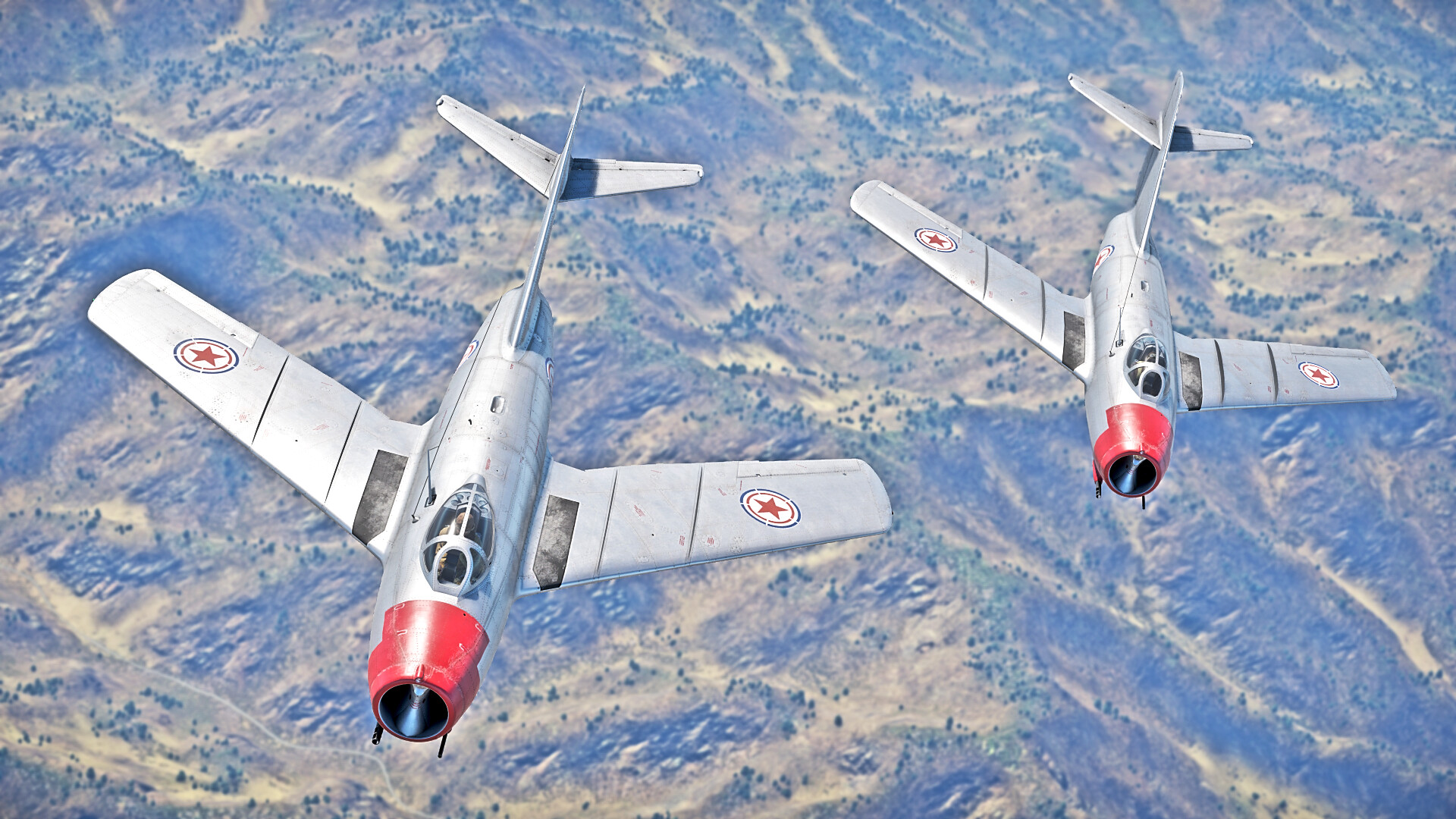
The Soviet MiG-15 gained fame during the Korean War as the F-86 Sabre's most notable adversary. Its swept wing, powerful engine, and small size gave it a significant advantage over its outdated enemies and predecessors, such as the F-84 and MiG-9. Due to these characteristics, it was also used by Hungary, China, East Germany, and many other Soviet allies. In the game, the MiG-15 shines with its excellent maneuverability, energy retention, impressive climb rate, and strong airbrake—so useful when fighting Sabres. But are these characteristics offset by poor gun position, awful roll, and ineffective rudder?
| Pros | Cons |
|---|---|
| Impressive climb rate | Small amount of ammo |
| Excellent maneuverability | Difficult to aim due to the cannons' position and round velocity |
| Strong airbrake | Awful roll |
| Effective flaps | Weak payload (except ISh) |
| High cannon damage | |
| High energy retention | |
| CCIP for rockets (ISh) |
Flight characteristics
All MiG-15s have an exceptional flight performance. The non-bis MiG-15 has a Klimov RD-45F engine capable of producing approximately 2,000 kgf of thrust. The MiG-15bis and J-2 are both equipped with a more powerful Klimov VK-1 engine that produces around 2,450 kgf of thrust. The MiG-15bis has more speed, a better climb, and loses less energy in vertical maneuvers compared to the MiG-15. The MiG-15bis ISh also has a VK-1 engine, but the plane itself is slightly heavier and is a tiny bit draggier, which is most noticeable during acceleration in the 900–1,000 km/h range.
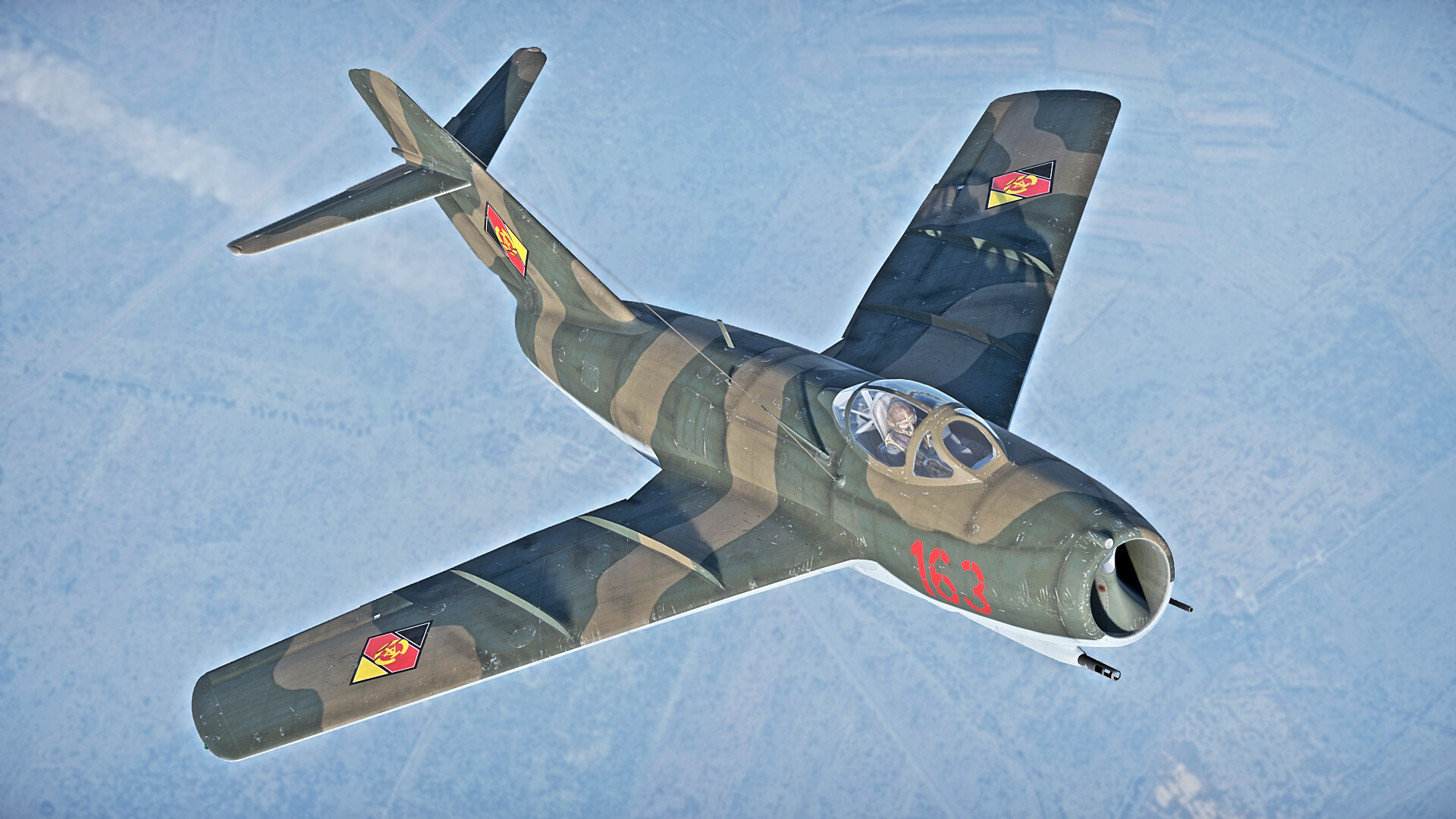
The MiG-15 also features excellent straight line pulling, vastly exceeding that of a Sabre, and even earlier aircraft such as F-80, as they will lose energy much quicker, especially in vertical maneuvers. The only really dangerous aircraft in terms of maneuverability is Me 163, but MiG-15 can simply run away from it. It is also important to note that pull gets significantly worse at around 850-900 km/h, especially compared to F-25 or F-2 Sabre with "all-flying" tail.
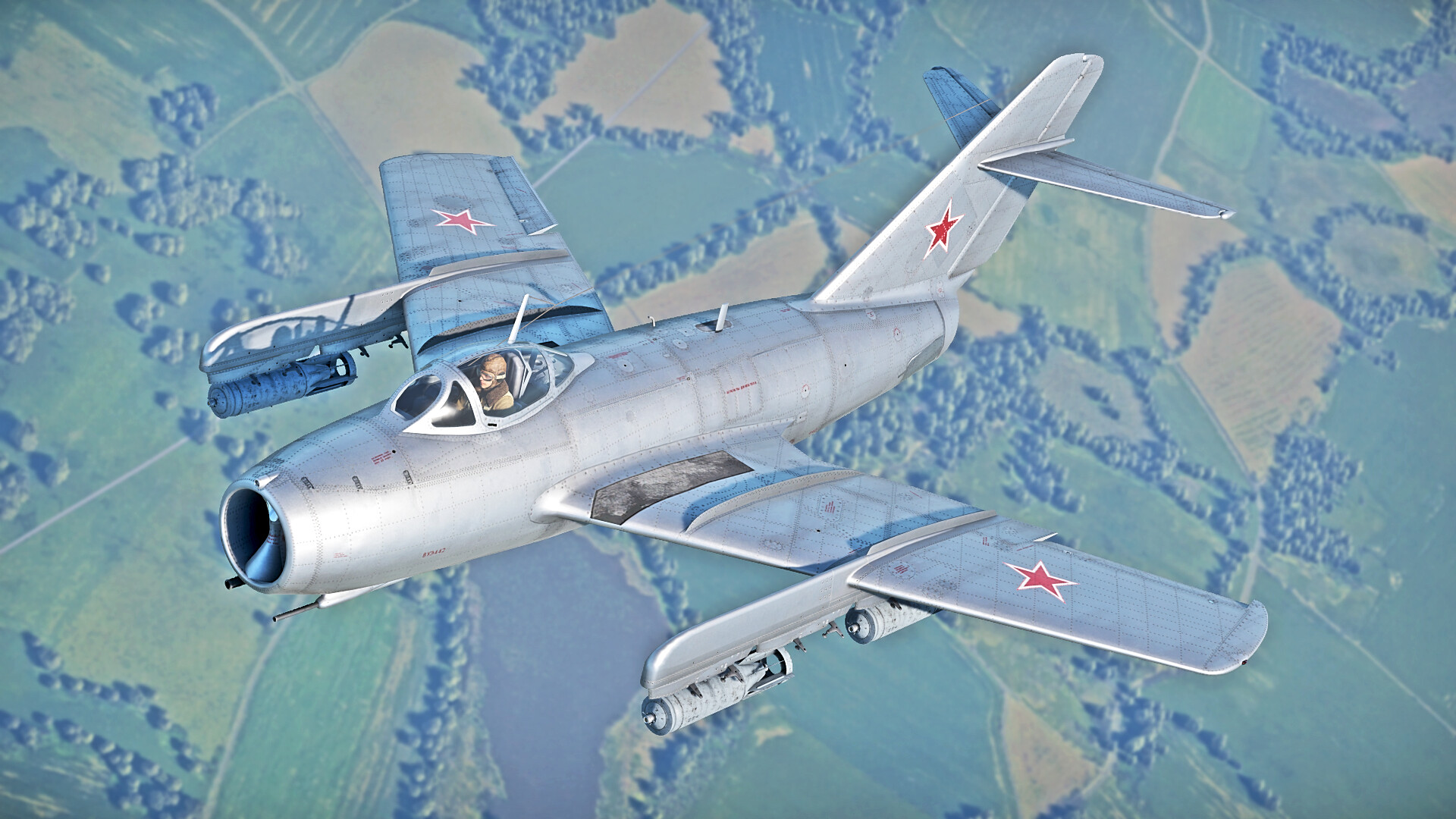
One of the MiG-15's biggest downsides is its roll rate. Even at optimal speeds it is poor, and it gets much worse when flying slower than 350 km/h or faster than 800 km/h. This allows Sabres, as well as most of the other planes, to roll out of the MiG-15's path and make it overshoot. Moreover, it makes aiming much more difficult, especially combined with ineffective rudder. But it is possible to partially compensate poor roll with a very effective airbrake, which will slow the plane down before the enemy will roll away and make you go past.
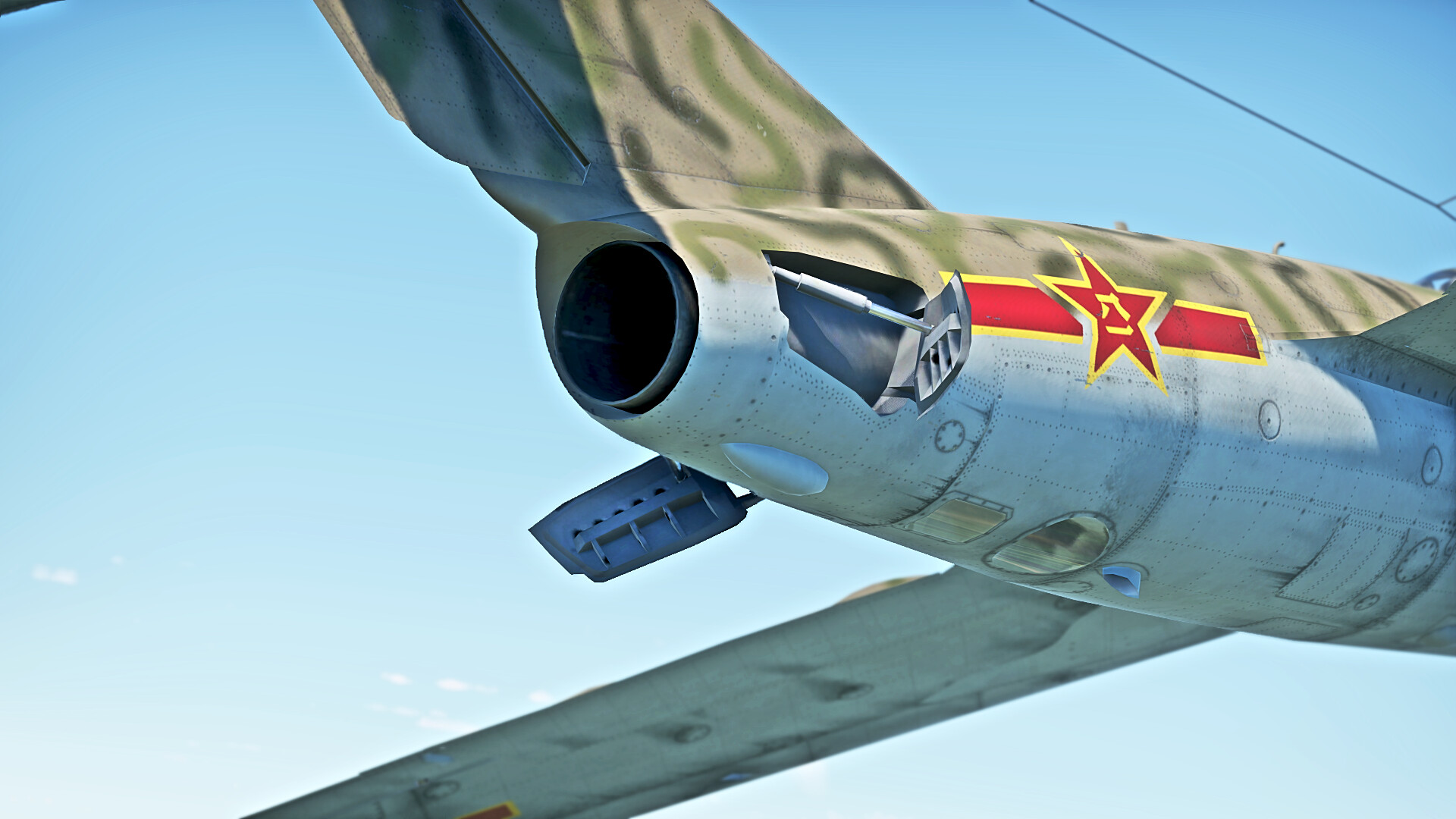
Flaps are also pretty good. MiG-15 only has takeoff and landing positions. They somewhat decrease the acceleration, but are pretty helpful when the enemy tries to stall you out. Takeoff flaps speed limit is 600 km/h, landing flaps speed limit is 450 km/h.
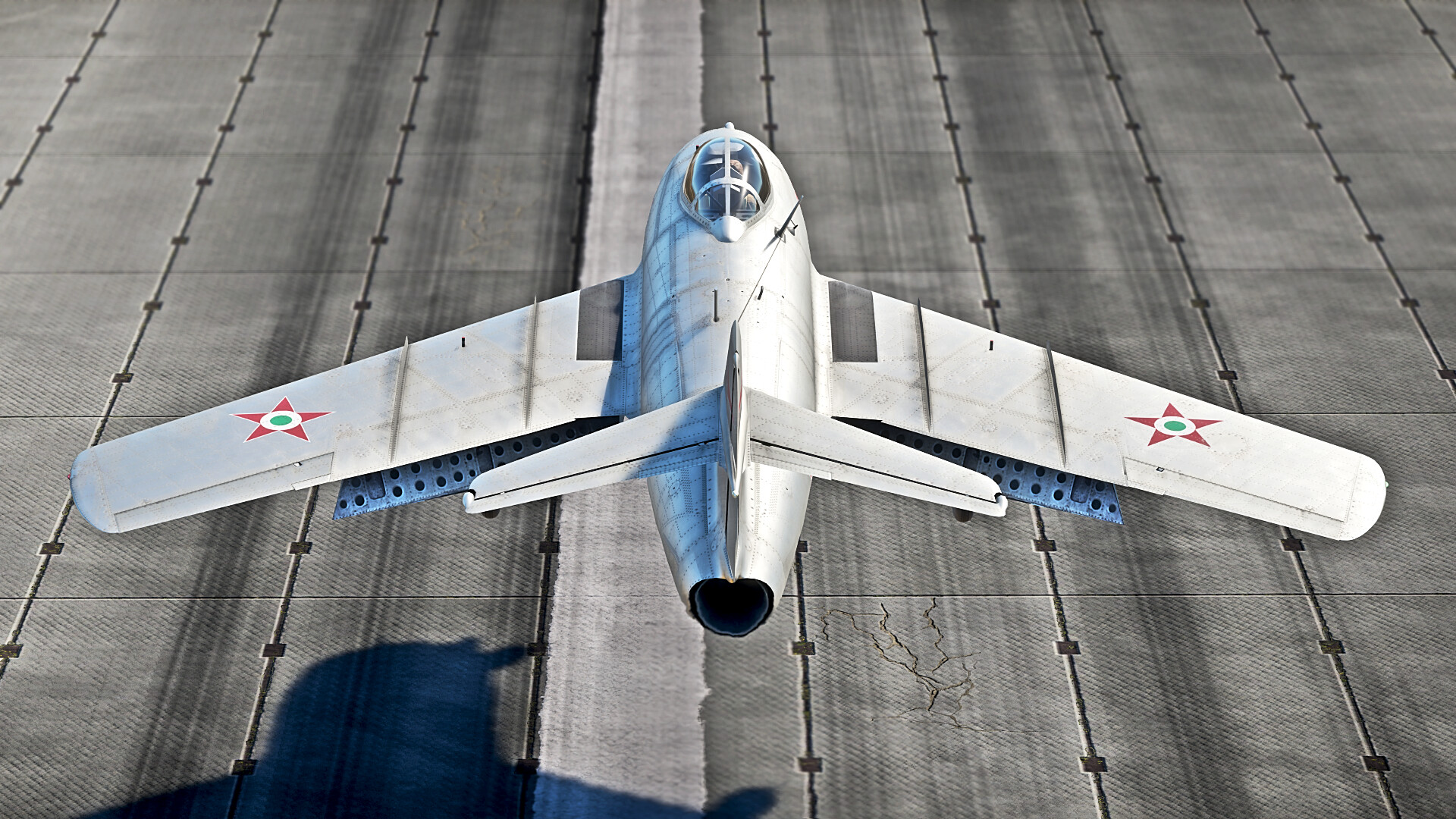
Survivability and armor
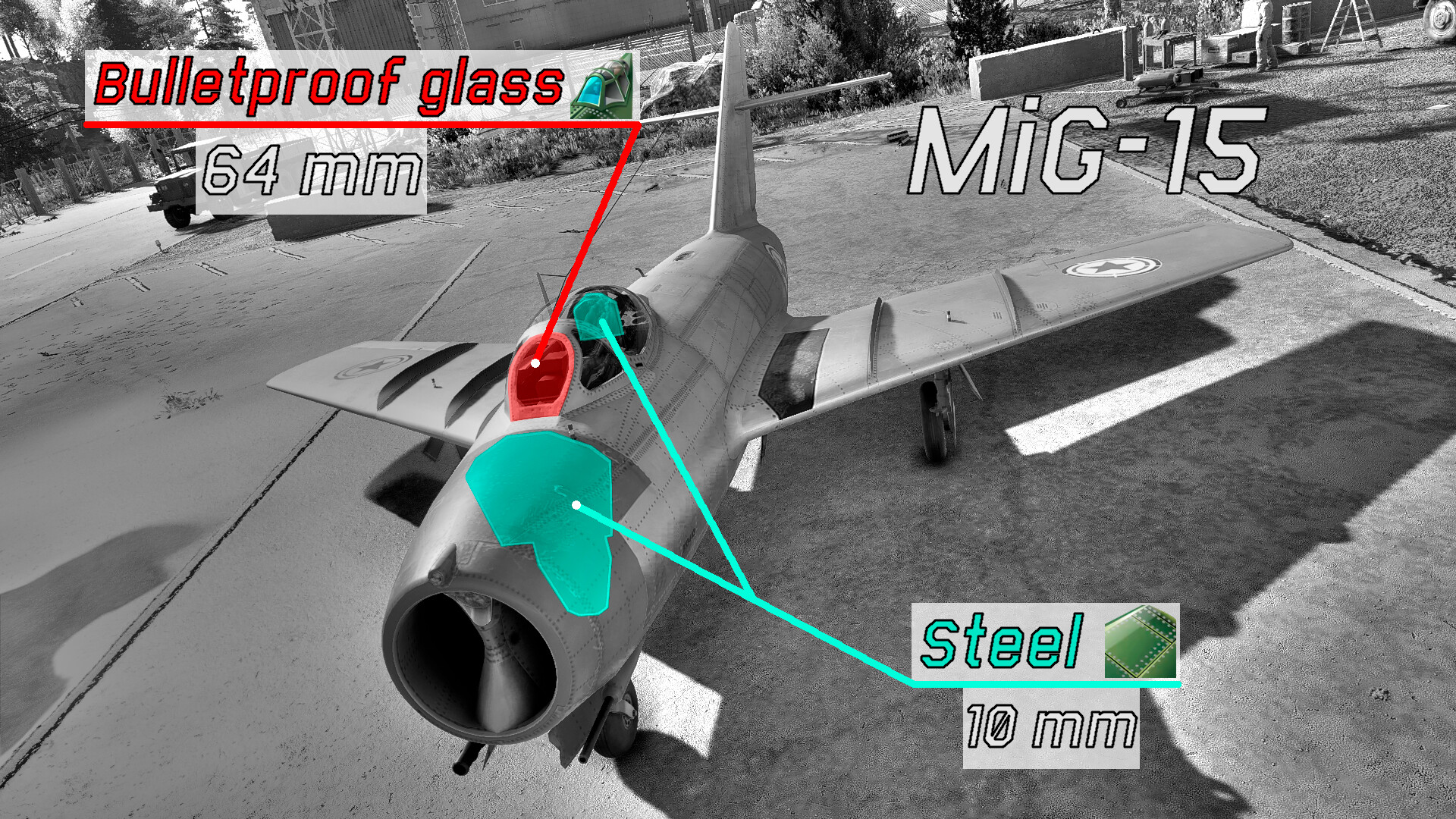
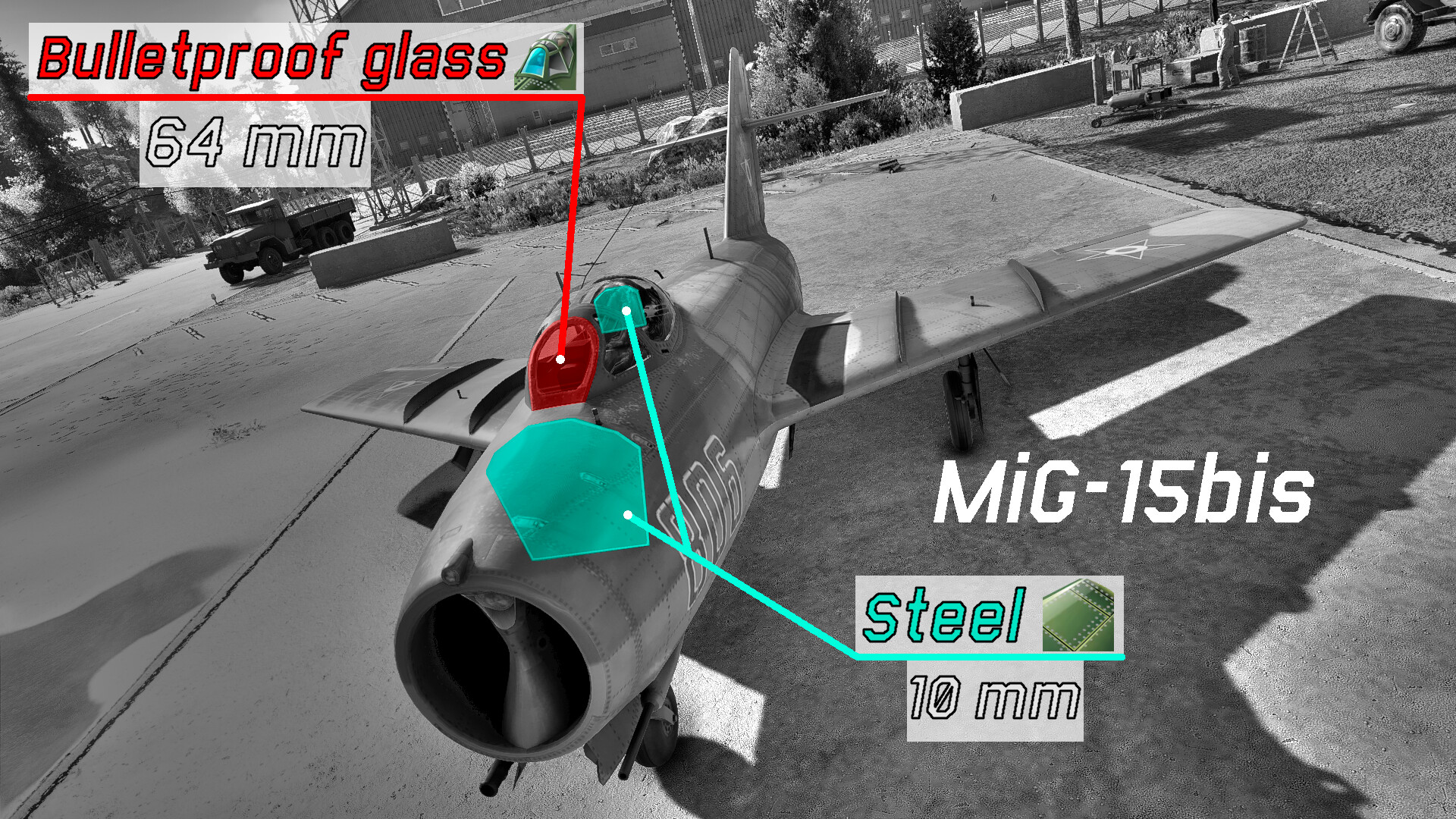
In terms of survivability the MiG-15 is no different to other jets of the era. The non-bis MiG-15 is protected by two 10 mm steel plates and 64 mm armoured glass in front, and a 10 mm steel plate behind the pilot's head. Bis is only different in lacking the lower 10 mm front plate, but it doesn't make much difference. Such armor will not even protect from 12.7 mm Brownings.
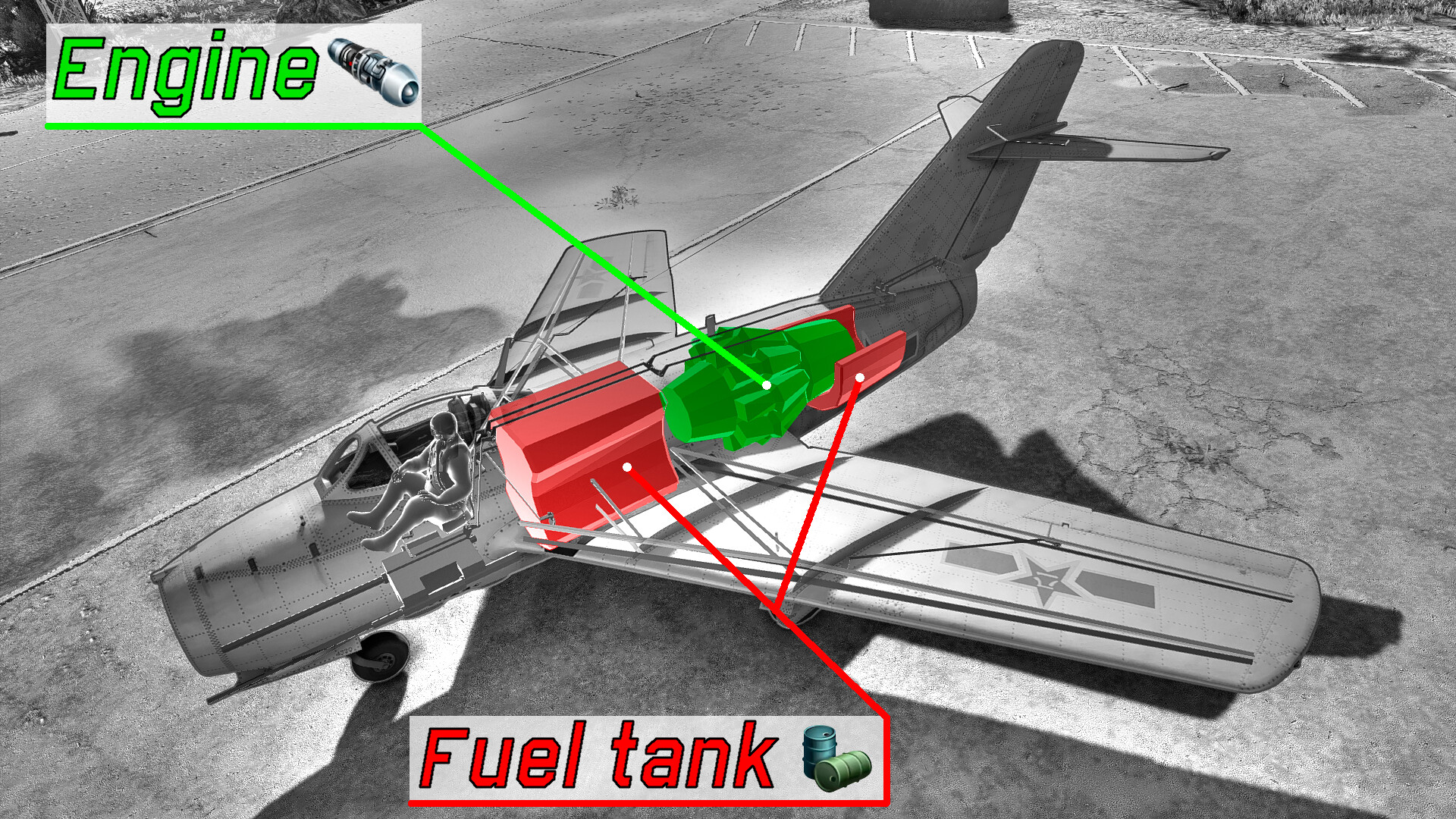
Right behind the pilot are two fuel tanks: one is self-sealing and another one is not. There is also an engine. Due to their position those modules rarely get damaged. The wings dont have any fuel tanks, but are very susceptible to any damage.
Armament
Cannons
All MiG-15's offensive armament is nearly identical. Non-bis MiG-15 is armed by two NS-23 23 mm cannons with a total ammo of 160 rounds and a 37 mm N-37D cannon with 40 rounds. Bis received different 23 mm cannons being NR-23, but they are only different in having a higher fire rate (900 rounds/min instead of 600). All guns are positioned very low in the nose, have different ballistics and are very hard to aim. Using 300-800 meters vertical convergence depending on pilot's preferences can help if its too hard to aim. The ammo is also pretty small and requires to shoot in short bursts.
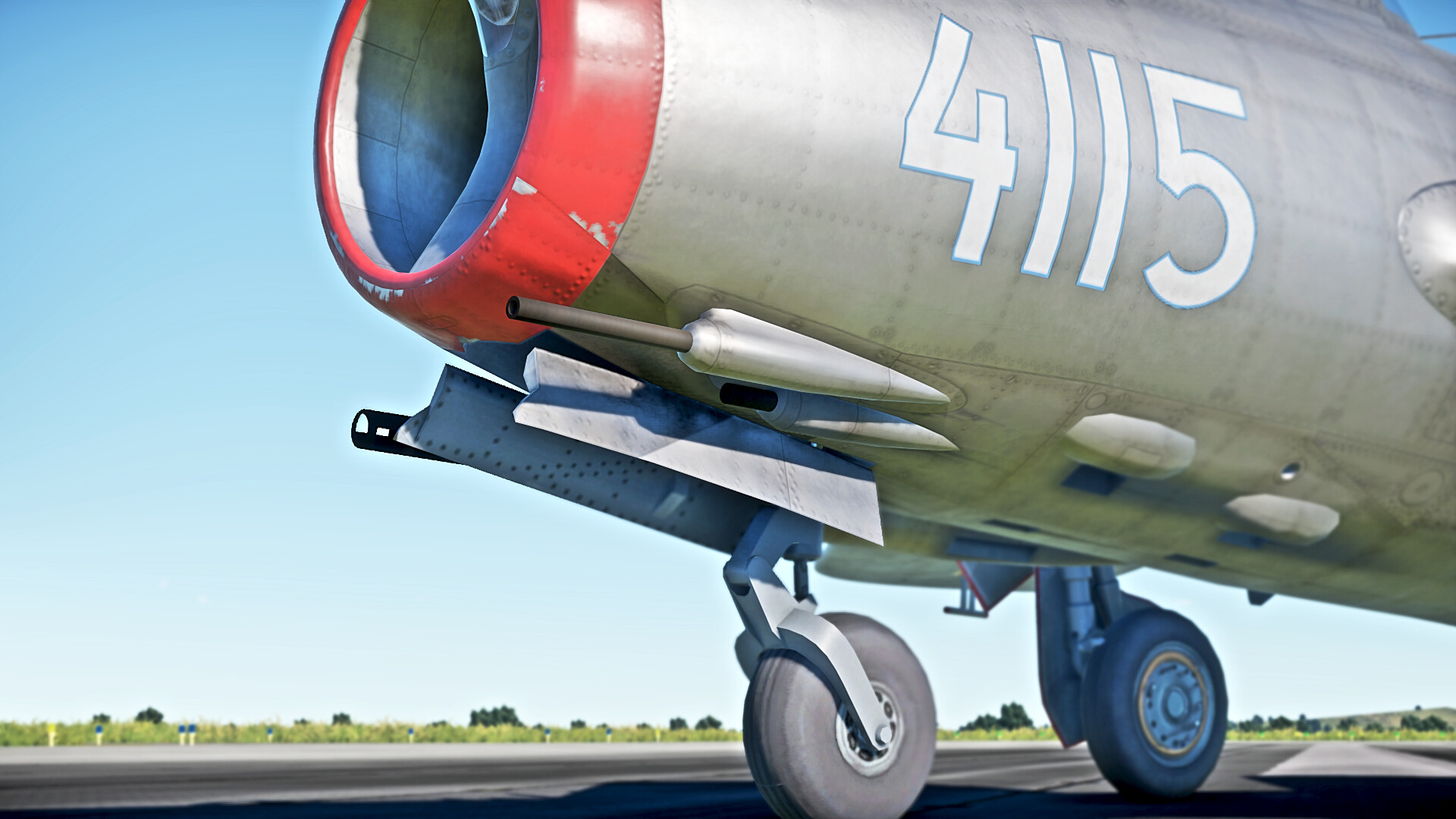
23 mm cannons have the following belts:
- Default (AP-I/FI-T);
- Armored targets (FI-T/AP-I/AP-I/AP-I);
- Air targets (FI-T/FI-T/FI-T/AP-I);
- Stealth (AP-I).
As the name suggests Air targets is the most efficient against the aircraft. It often strikes hits, but still is capable of disabling the pilots, destroying wings and setting engines or fuel tanks on fire. The armored belt, though, is pretty underwhelming if used against tanks as it lacks in penetration. Stealth is pretty much the worst: the guns are already difficult to aim, and the damage is lacking.
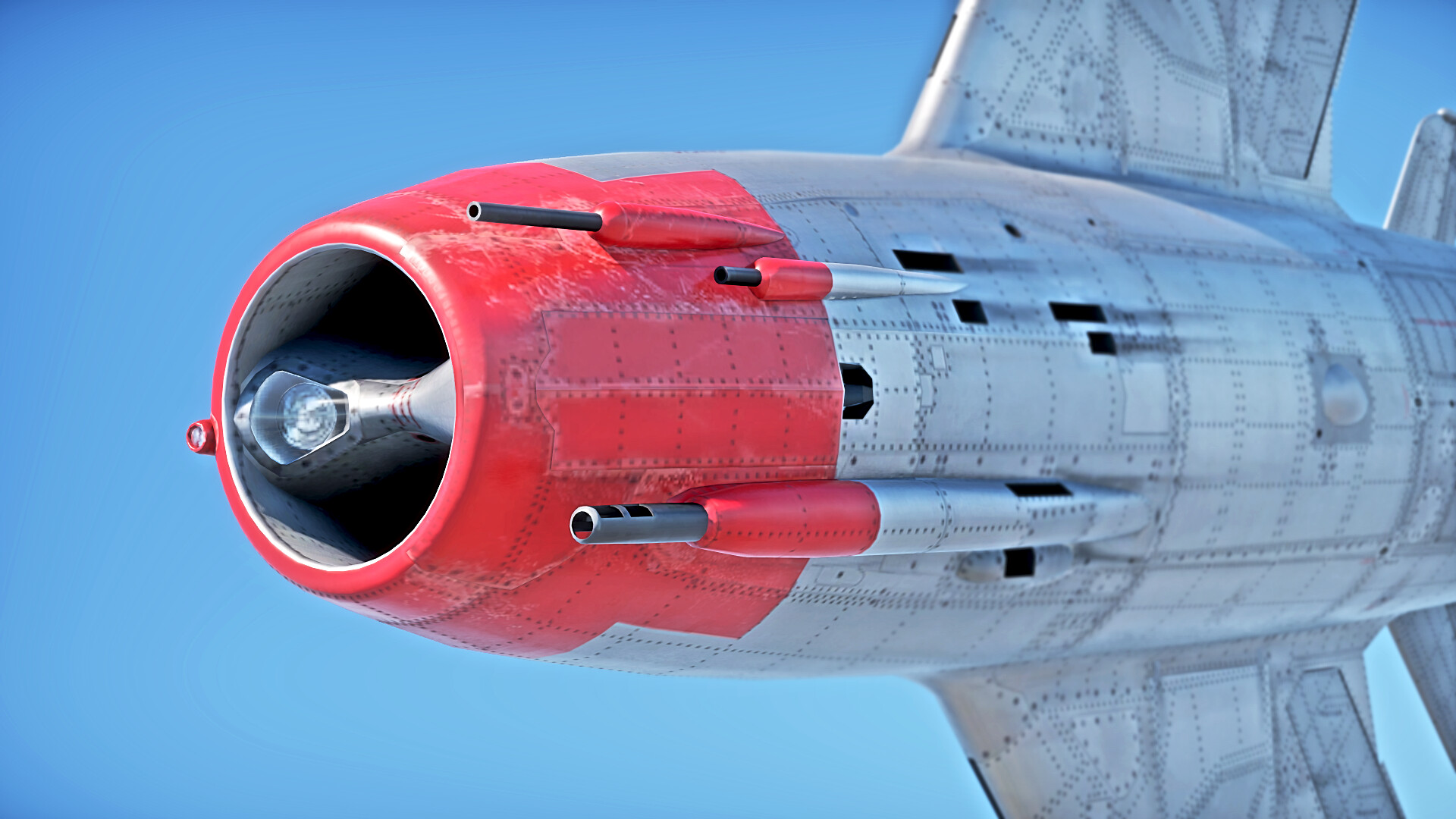
37 mm cannon has the following belts:
- Default (HEFI-T/HEFI-T/API-T);
- Air targets (HEFI-T/HEF-I/HEF-I);
- Armored targets (API-T).
And yet again air targets is the most effective against aircraft, as the name suggests. While 23 mm score hits, set fires and do critical damage, 37 mm will often one shot the wing or the tail of the enemy, even with such giants as B-29. It is important to note that the fire rate of the cannon is pretty low, and, unless timed well, enemies will often fly past within that interval between the two shots. Armored targets is generally better than that of 23 mm and can be used for lightly armored vehicles or their engine areas, but overall it is difficult to aim and the ammo is so low it is better to stick to shooting aircrafts.
Suspended armaments
The biggest differences between MiG-15 variants are in their payload. The normal MiG-15 only has two 100 kg bombs, only capable of destroying a well-protected enemy tank on a direct hit.
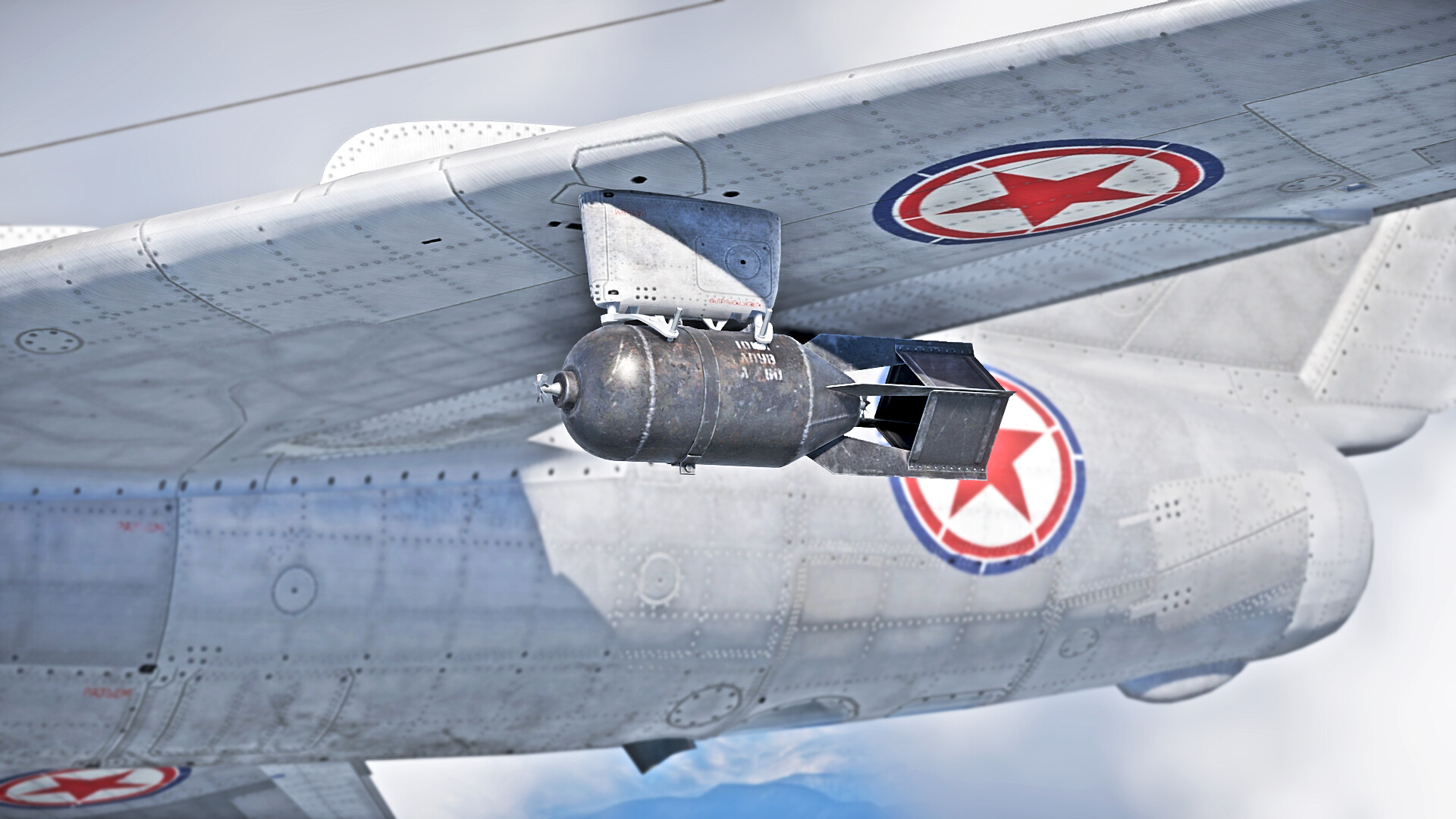
The MiG-15bis and the Chinese J-2 have a bigger payload variety, but the only effective option is picking two S-21 rockets with 62 mm of HE penetration. 100 kg bombs are weak and require flying close to the target, HE S-5M rockets have penetration so low it renders them useless against ground targets, and S-5K rockets have poor damage and require a direct hit.
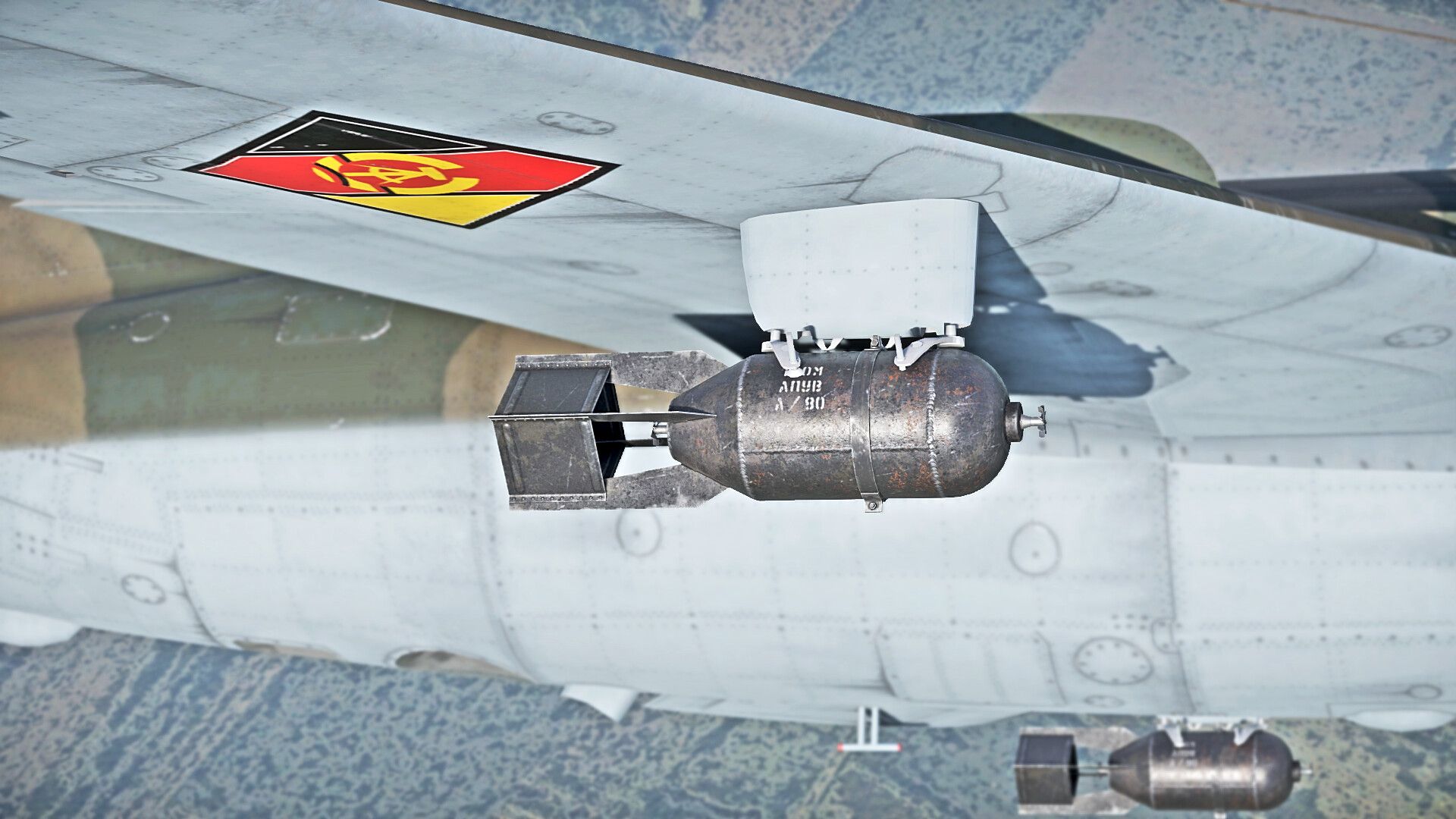
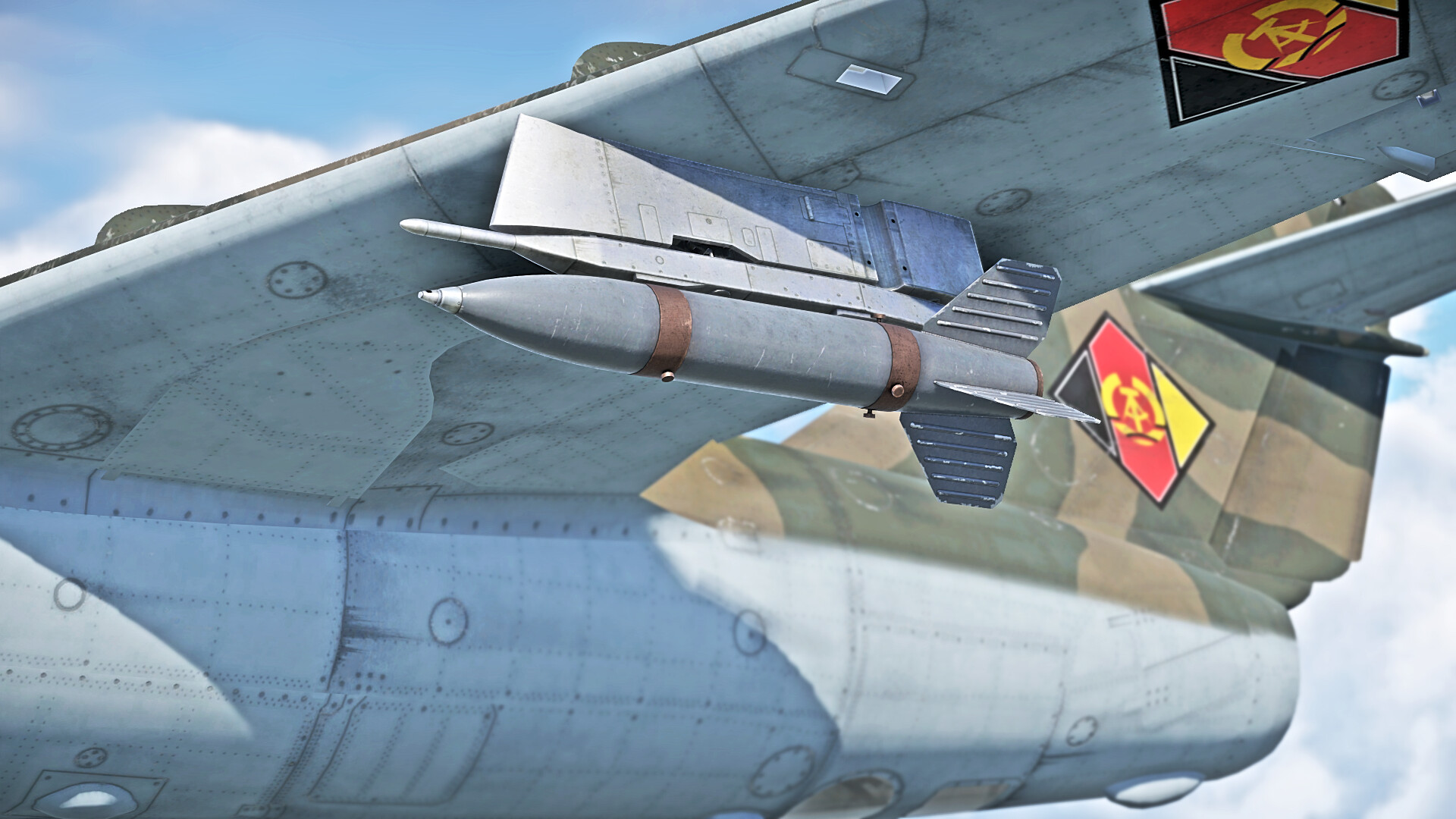
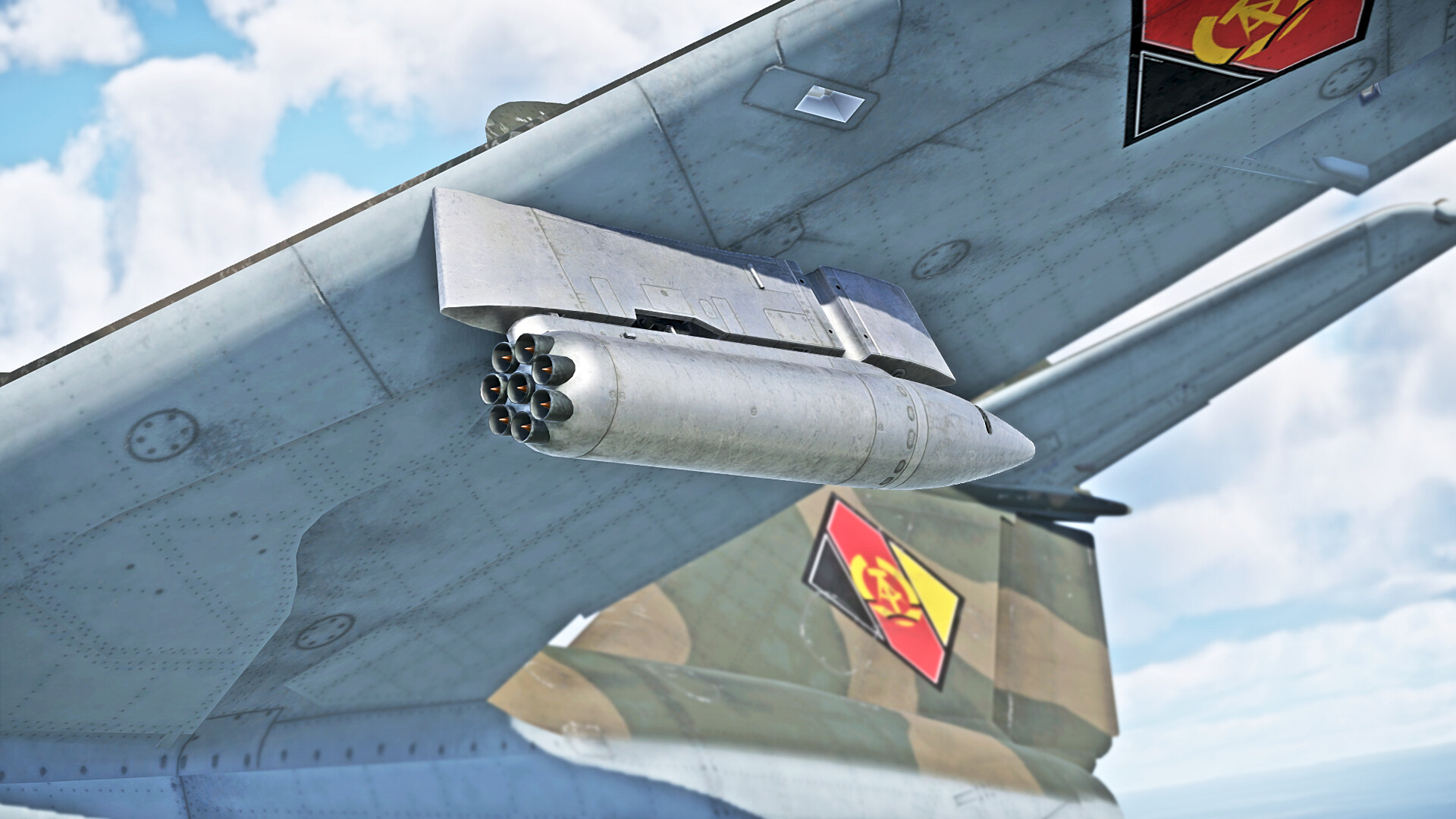
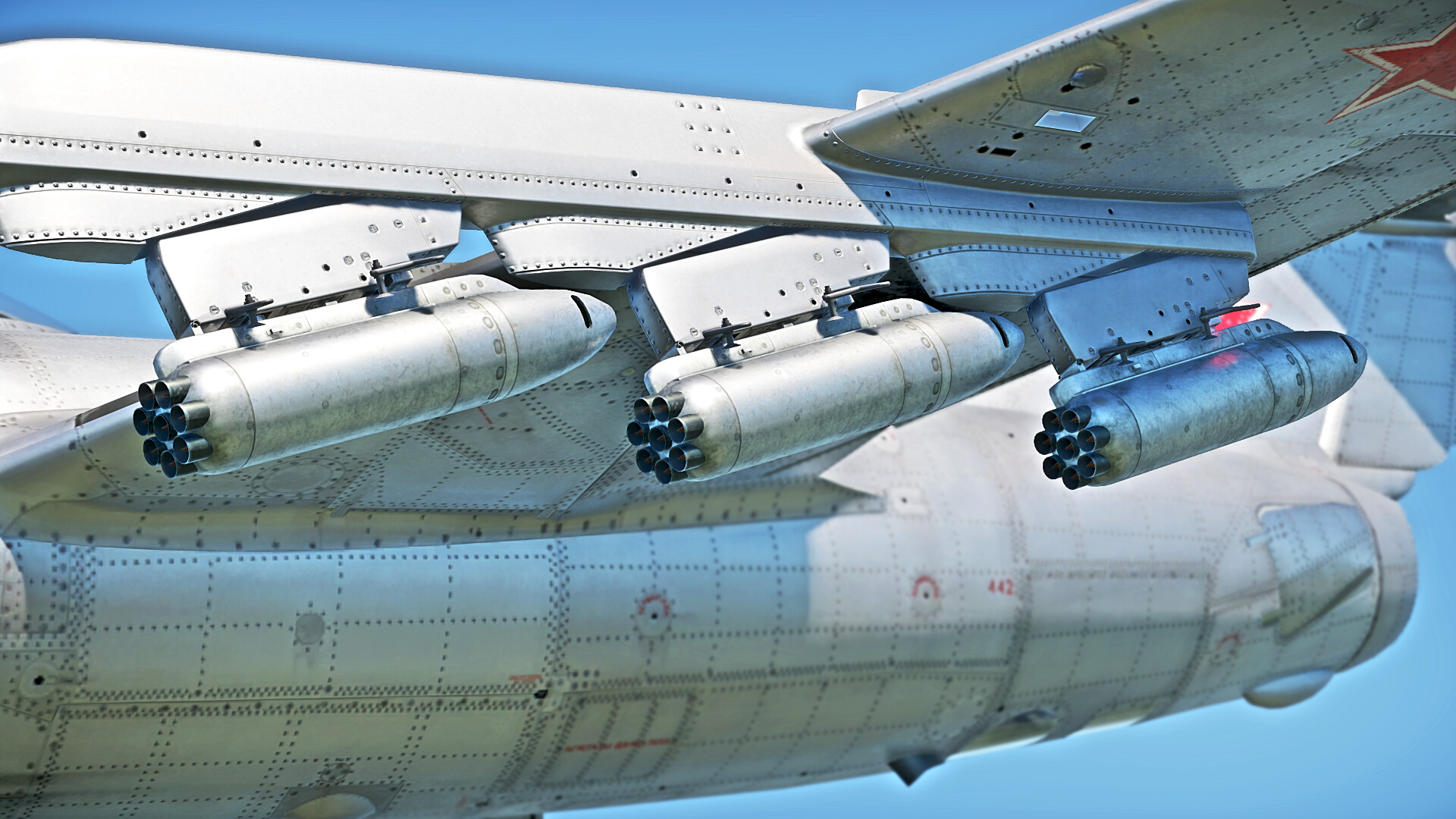
The MiG-15bis ISH is the one which truly shines. Not only does it have CCIP for rockets, the choice of your payload is also bigger:
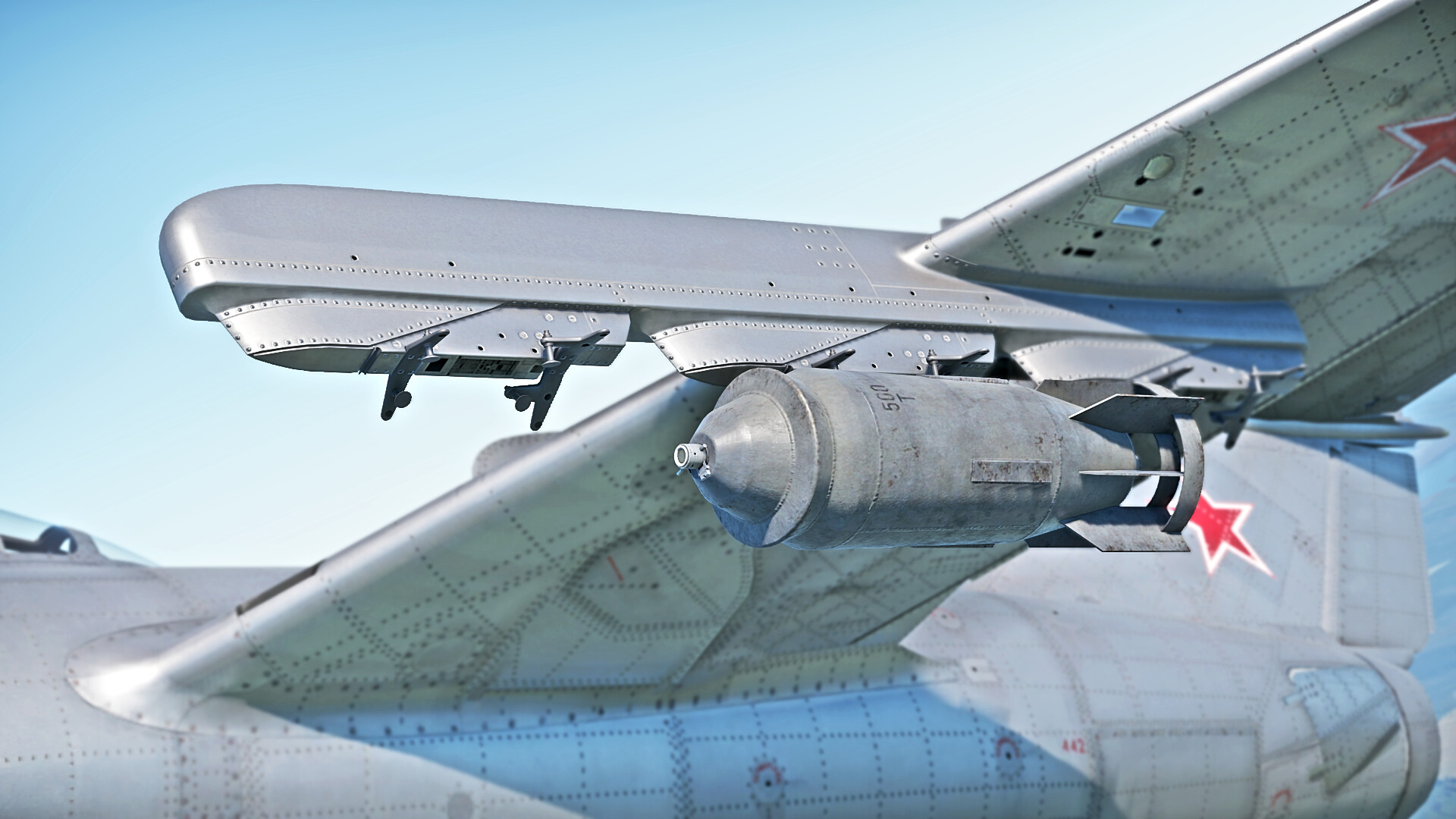
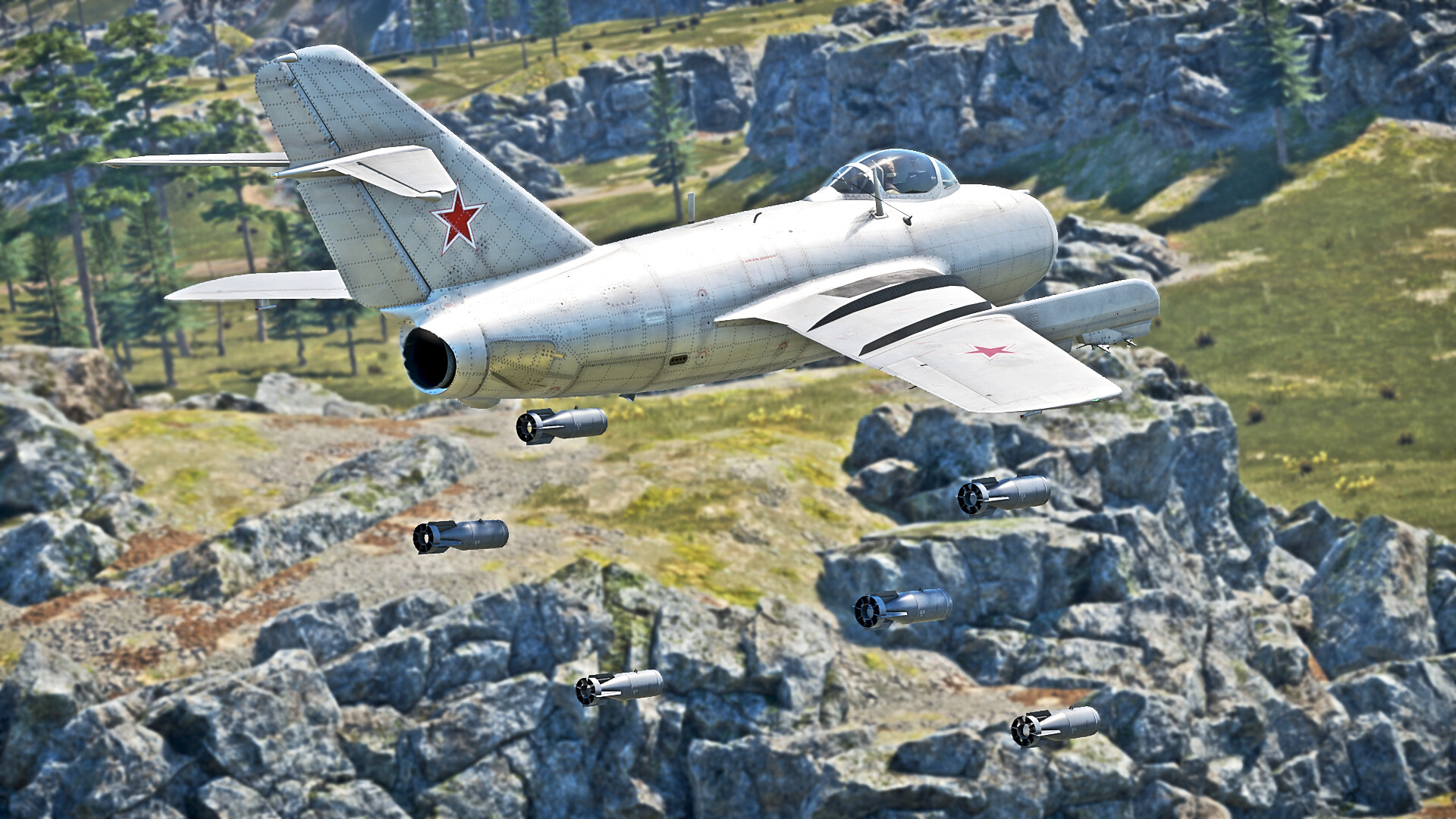
- FAB-250 x4 — each bomb contains 97 kg of TNT. Unlike 100 kg they are not as demanding in accuracy, and unlike previous MiG-15s now you have 4 bombs instead of two.
- FAB-500 x2 — each bomb contains 210 kg of TNT. Requires less accuracy, but unlike 250 kg you carry less bombs, and you are still required to fly pretty close to your target.
- S-1of x8 — unguided rockets, each containing 9.3 kg TNT. These missiles have a very unusual installation and are angled down, requiring to re-learn shooting. But that is greatly compensated by having CCIP for the rockets. They will highly likely oneshot the enemy on a hit in the turret or at the very least set them on fire if hit on the sides. As you have CCIP and the rockets themselves have some acceleration you can also use those from way bigger distances than the bombs.
- S-5 rockets are mostly useless. FAB-100 bombs have a lot of drops, but due to smaller explosive size and requirement to fly close to the enemy, they are not as useful as the other options.
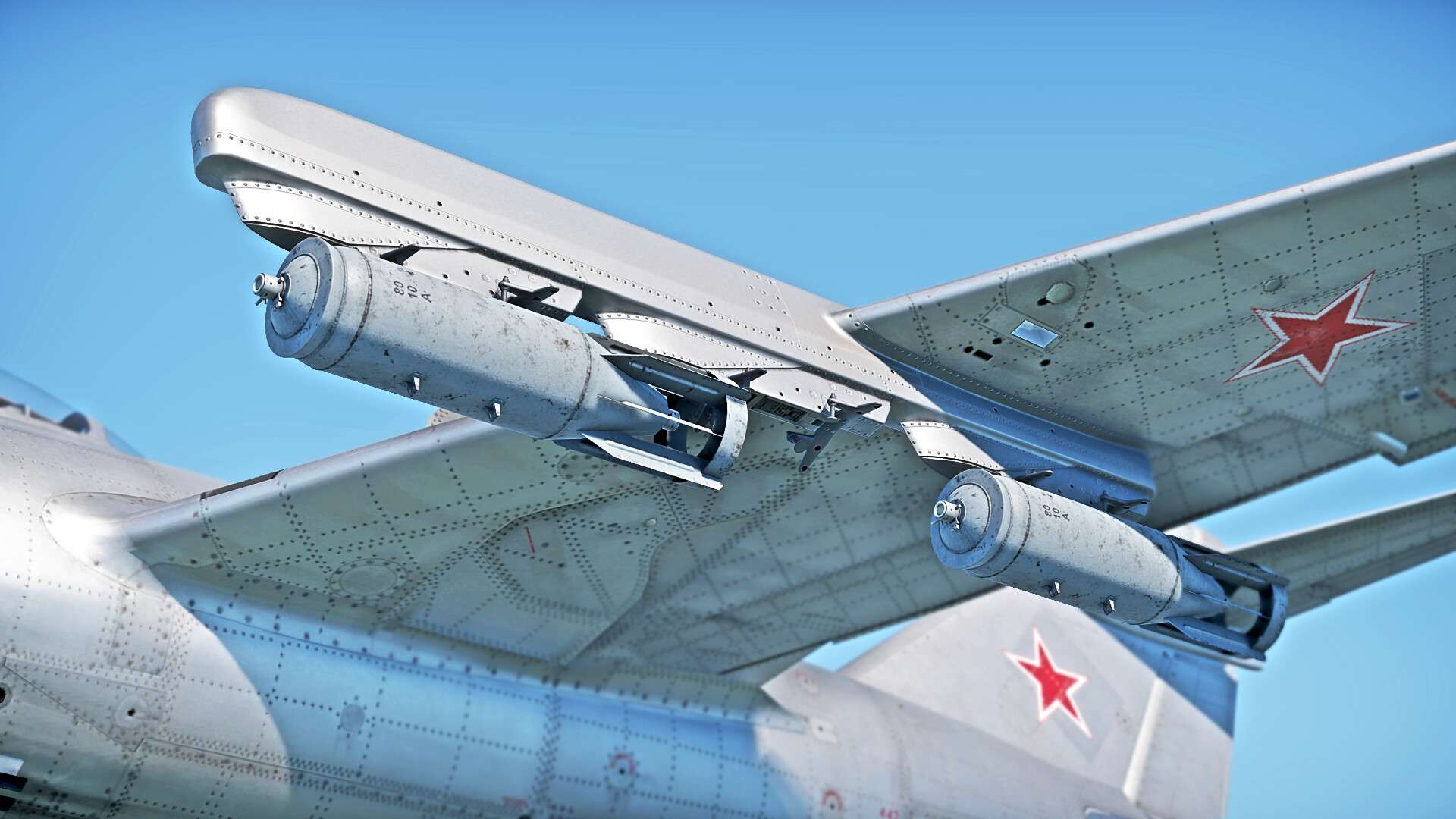
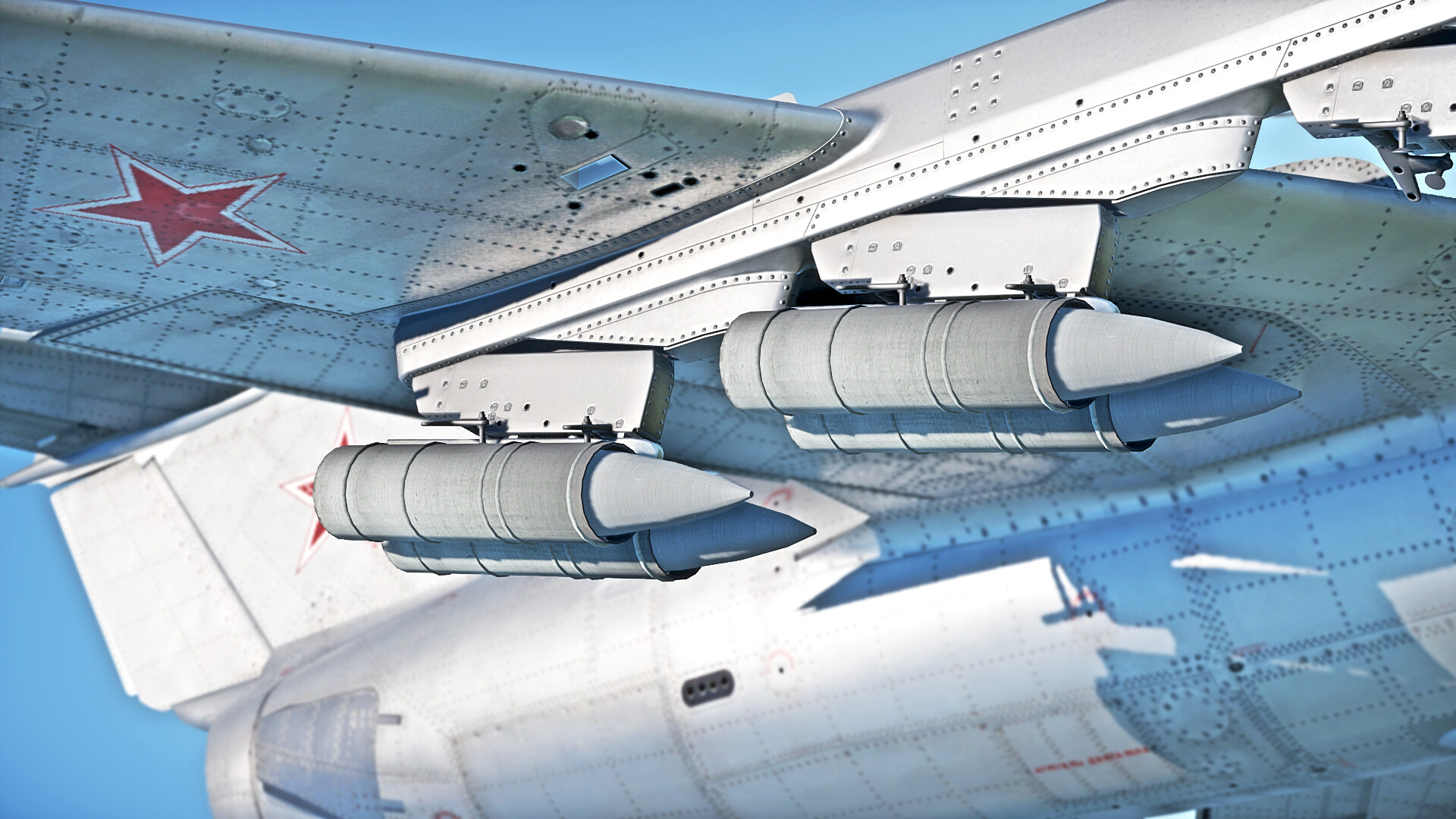
Usage in battles
Air battles
The MiG-15 is a dedicated fighter best used in combat against other aircraft. At the beginning of combat, it is best to accelerate first and then climb at a speed of around 700 km/h. Climbing slowly may result in a lack of energy, which is especially dangerous when an enemy is flying higher than you. In most cases, however, you will end up at the same altitude as bombers like the IL-28 or fighters like the F-84G and F-84F. It is important not to engage in head-on attacks or chase enemies that dive below you, as it will be extremely difficult to shoot at high speeds.
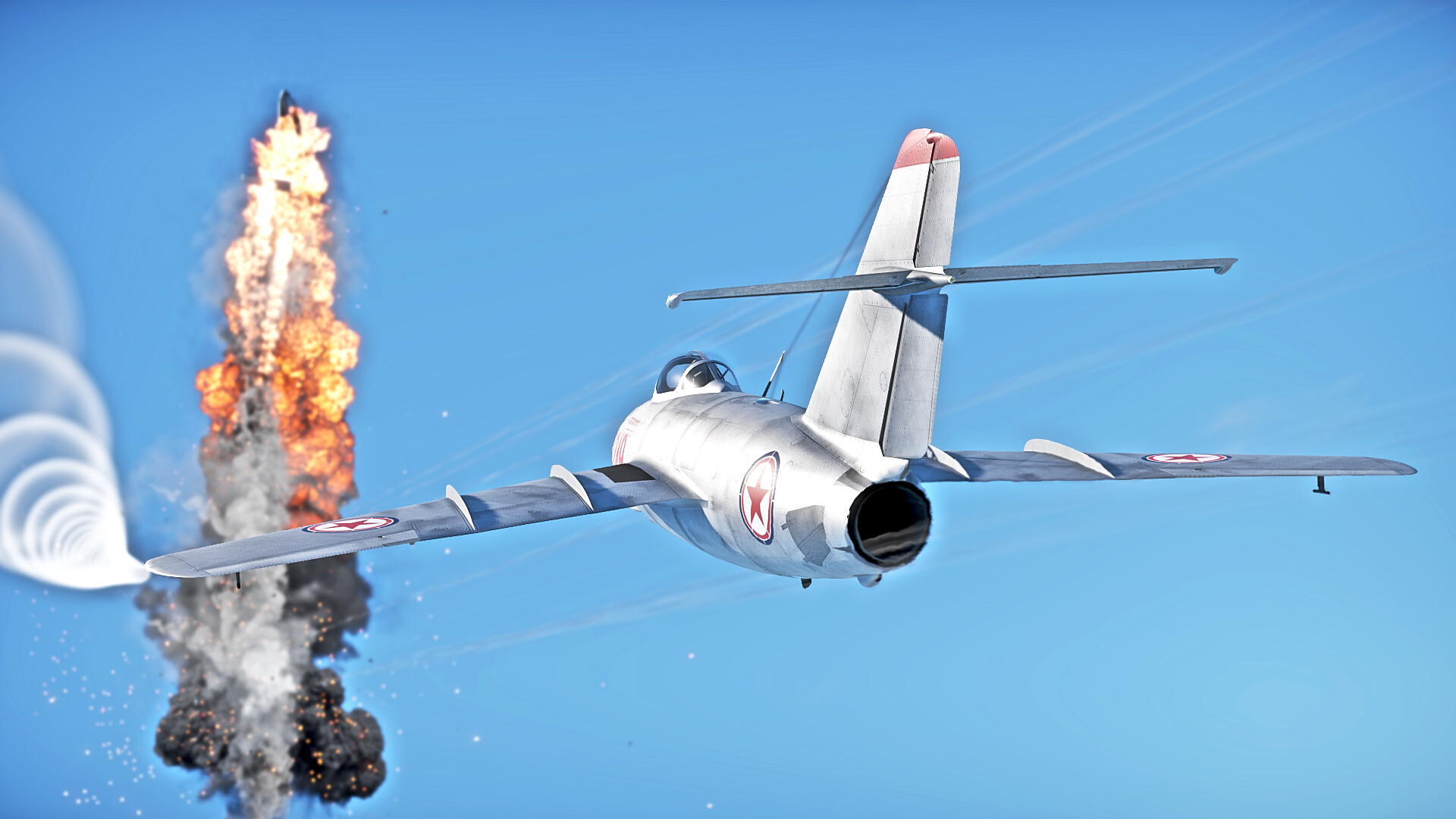
This high early in the battle there will be some dangerous enemies to be aware of. A-4Es can catch you off guard with their AIM-9s while you're engaged in a dogfight. Vautours can do the same. However, those planes are generally inferior to a MiG-15 in a dogfight. You will also face MiG-15s from other nations. Against an experienced pilot, such a dogfight can take a long time, so it is best to pursue other targets. And when meeting Sea Vixen, it is only dangerous when presenting your six, as a launch from a proper distance will be impossible to dodge.
The fight will inevitably go down, and so will the MiG. Despite the MiG-15 being weaker at higher speeds, its pilot will have to work around its disadvantages. If a MiG-15's pilot tries to use its superior maneuverability on lower speeds they will make themselves an easy target for much inferior aircraft, which is hardly worth shooting down a single enemy before that. So instead of trying to get your enemies slow it might be best to disengage and go for another boom and zoom attempt.
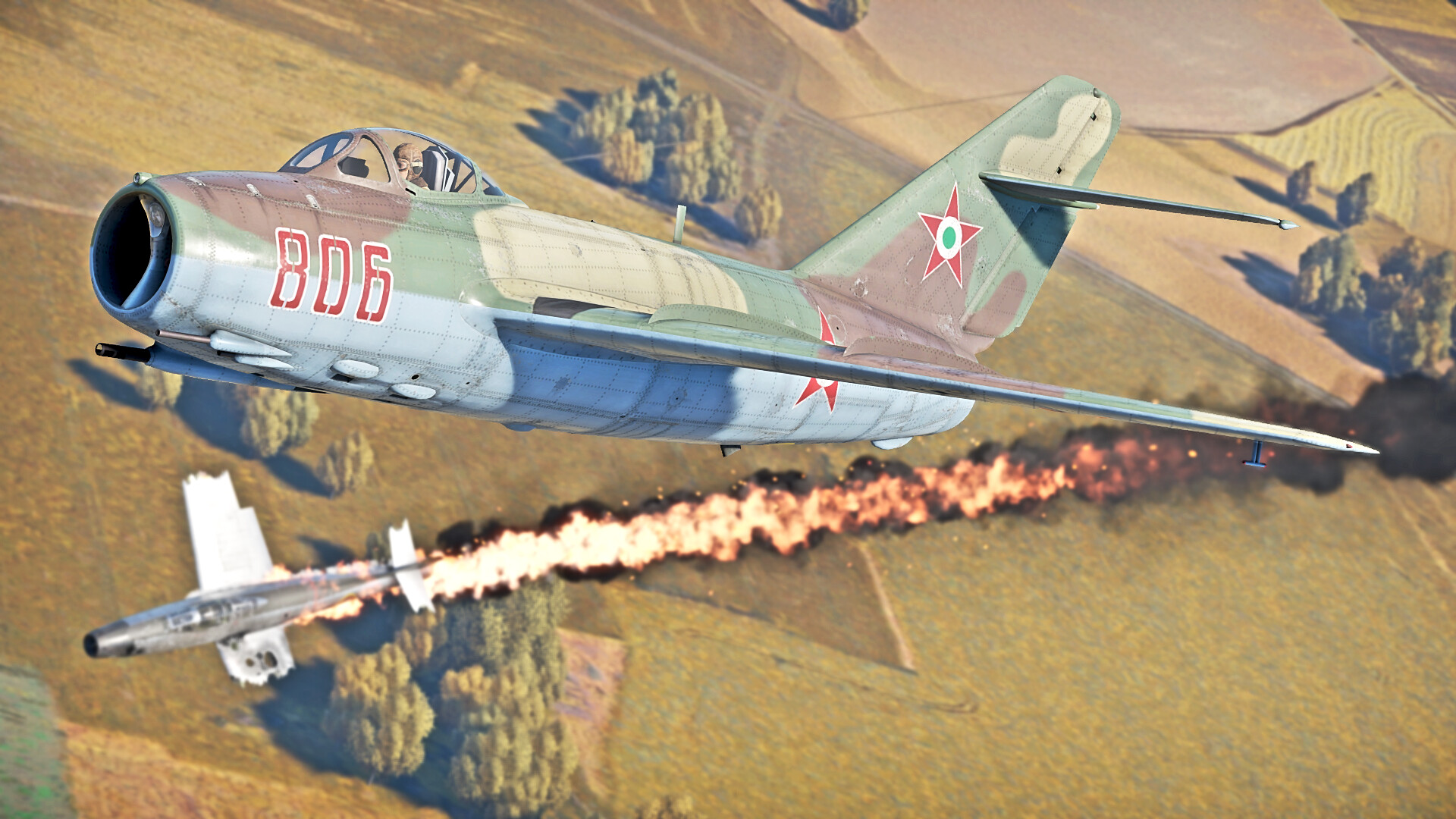
Flying low, the MiG-15 will face different enemies, which can be separated into groups. The first group includes various F-80s, F-84s, Me 262s, and J29s. These planes generally have good maneuvering characteristics, but their engines are much weaker, and they tend to have poor energy retention. It is very easy to force them to stall out or energy trap them. Their guns are still very effective in the head-ons and other scenarios, though.
Sabres are much more dangerous. They have an excellent roll rate and don't lose as much maneuverability at high speeds. They are also extremely easy to aim because the nose goes exactly where the mouse points. However, they generally suffer from the same issues as the previously mentioned vehicles. The MiG will outpull it on most of the speeds and when MiG-15 is on the F-86's tail, the Sabre will try to force an overshoot with its roll. In this case an airbrake will be extremely helpful in slowing the MiG down to allow to make a shot. Similarly, it is possible to force the faster Sabre to overshoot when it attacks from behind.
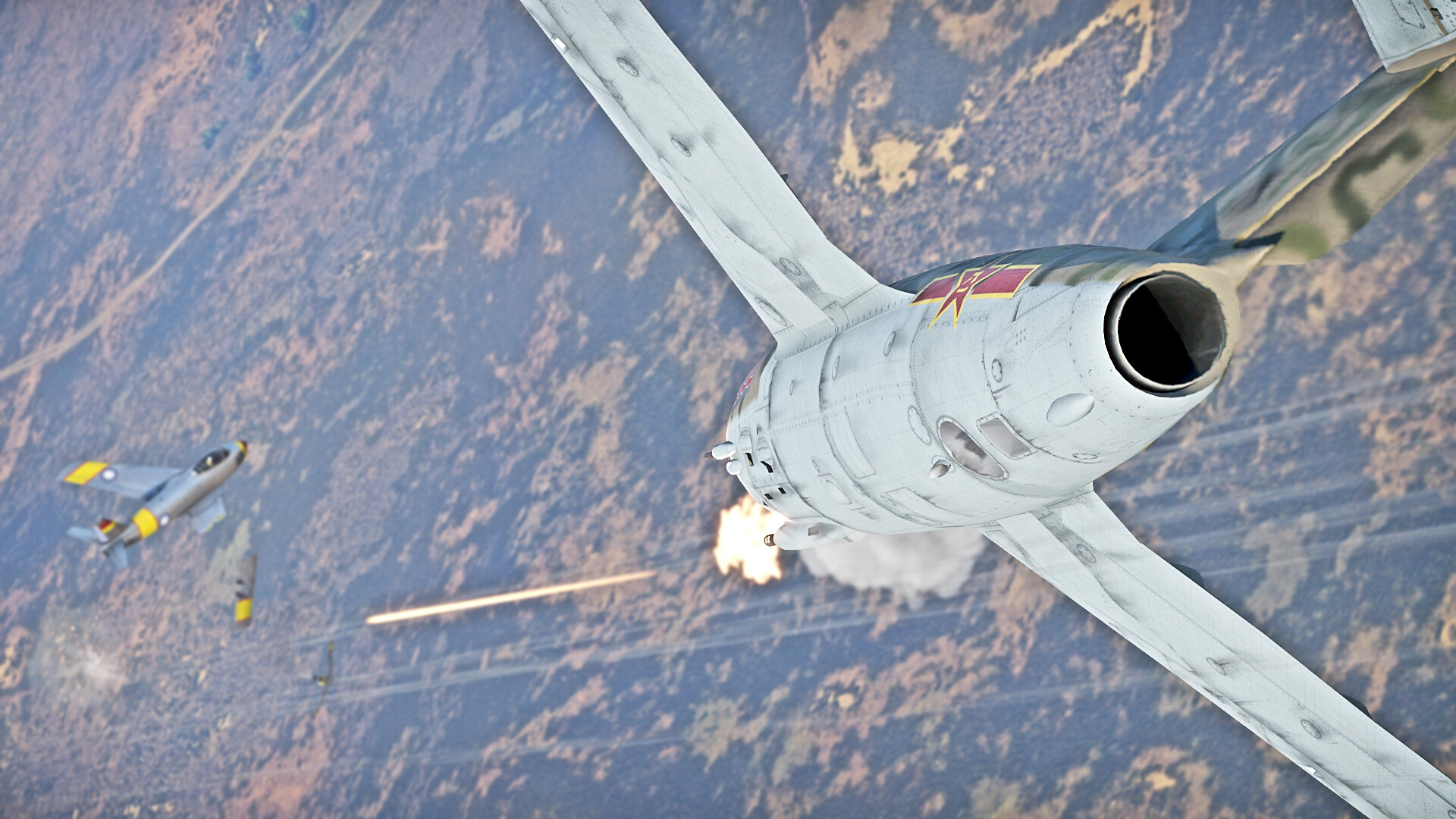
The most annoying enemies are the F-100s, F-104s, F-106s, MiG-21s, and other much faster planes. They have much superior cannons, so you can't attack them head-on. You must try to shoot them during the brief moment when they miss their boom-and-zoom attempt. Experienced MiG-19 pilots can also simply outturn you using their greater energy.
Me 163s and Ki-200s are also difficult to deal with because they are among the few planes that can outturn the MiG-15. However, they are slower, so it is easy to simply fly away from them. Then, they are easy to attack in high-speed passes or when they are engaged with someone else.
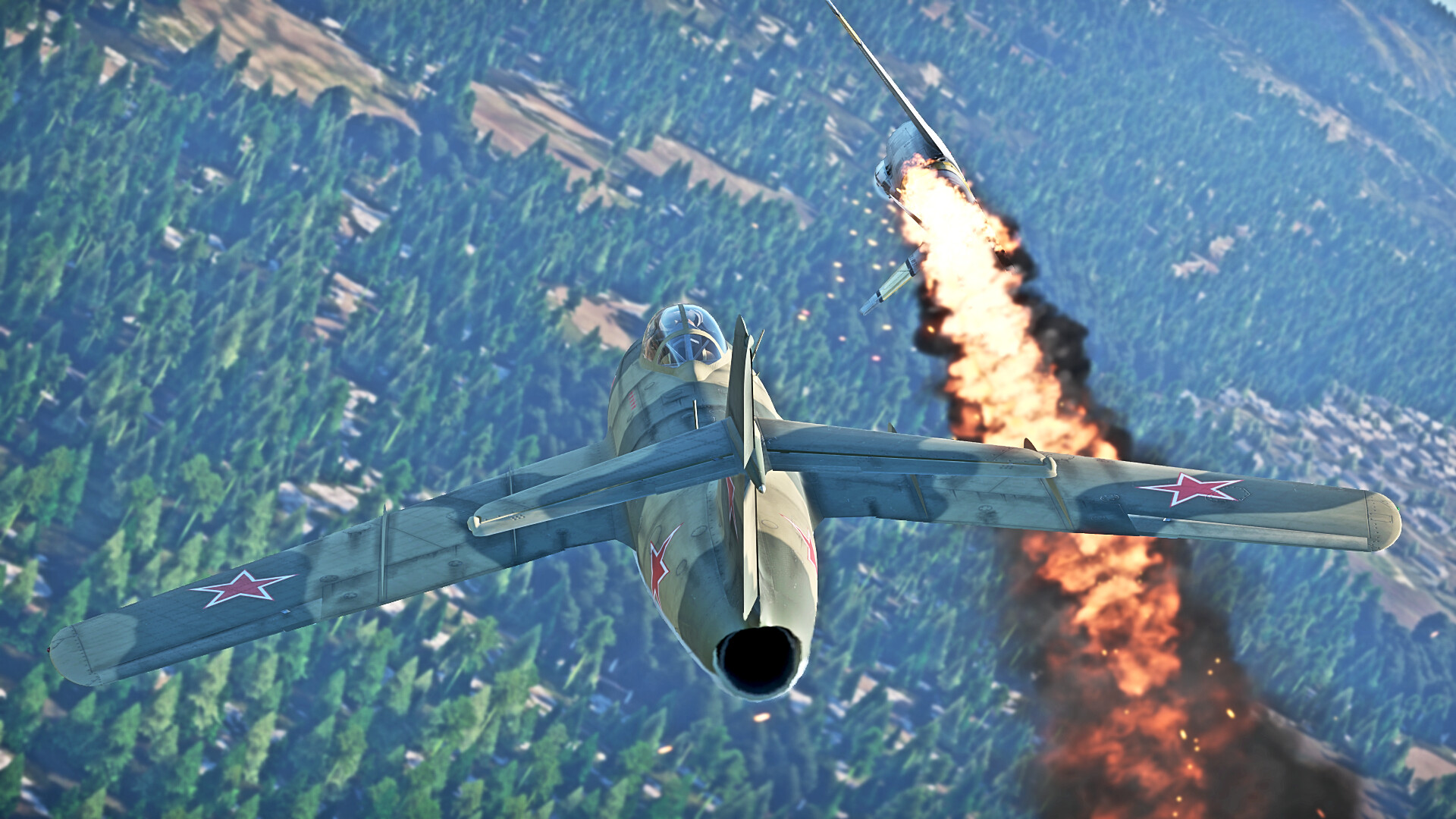
10 minutes of fuel, or even less, is more than enough for an average air battle. Guns require some getting used to, but a 300-800-meter vertical convergence can make it easier, even if you don't do that for the other planes.
Mixed battles
In mixed battles, all MiGs except the ISh are essentially forced to act as fighters. The strategy for dealing with other aircraft is the same as the one explained above for air combat. On MiG-15bis ISh it is pretty easy to attack your enemies using CCIP with your rockets, merely requiring to get the aiming point on the enemy. Keep in mind that dangerous SPAAs, such as the M247 or Chaparral, may be present.
History
Development and modifications
By the end of WWII, it was clear that jet technology was the way to increase the speed of aircraft. And while Germany, UK, and the US were already mass-producing first generation jet fighters and even using them in combat, USSR did not go past some obscure prototypes. It was only after the war that the USSR was able to begin mass-producing jets such as the Yak-15 and MiG-9, as well as copying German designs, as seen in the Su-9 prototypes. However, those Yaks and MiGs had very limited combat capabilities. To create a superior aircraft, much stronger engines were required.
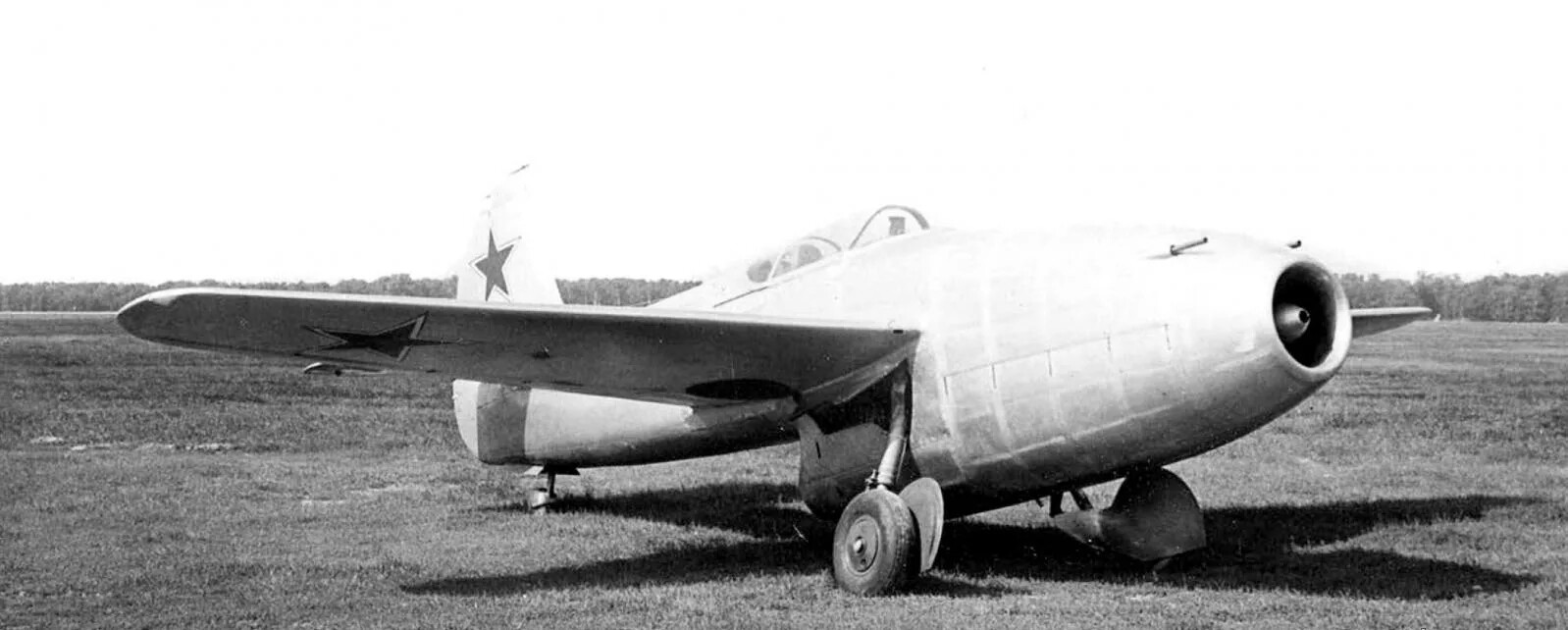
This was known long before the MiG-9 and the Yak-15 made their maiden flights. In 1946, the USSR's Ministry of Aviation Industry was permitted to purchase ten Rolls-Royce Nene I engines and five Derwent V engines from the UK. Meanwhile, OKB-117 (later known as OKB Klimov) was tasked with developing a Soviet engine in case the purchase failed. In December 1946, the Soviet delegation visited the United Kingdom, and the first deliveries began in March 1947.
Back in February, the Soviets decided not to negotiate any license production, fearing it would take too much time. Instead, the Nene I engine was copied without a license and became known as the RD-45. Production began at the No. 45 factory in May, and the first engine was ready in January 1948.
Meanwhile, the development of the new aircraft was also underway. On March 11, 1947, the VVS released the official specifications for the second-generation jet fighter. The specifications required it to fly faster than 1,000 km/h and climb to 5,000 meters in 3.2 minutes. The plane was designed to be a day interceptor that was easy to maintain and effective even when flown by a "mediocre" pilot. The planned armament was one 45 mm cannon combined with two 23 mm cannons; however, the 45 mm cannon was later changed to a 37 mm N-37 cannon.
The Mikoyan OKB-155 presented the I-310 fighter, which had a swept wing as its main feature. Its rivals were the La-168, which also had a swept wing, and the Yak-23, which had a straight wing. The I-310 made its maiden flight on December 30, 1947. The planes were soon compared in various tests, and the I-310 was considered the best of the three prototypes and designated for mass production. However, since the USSR was short on modern jet aircraft, the La-168 (later known as the La-15) and the Yak-23 were also put into production.
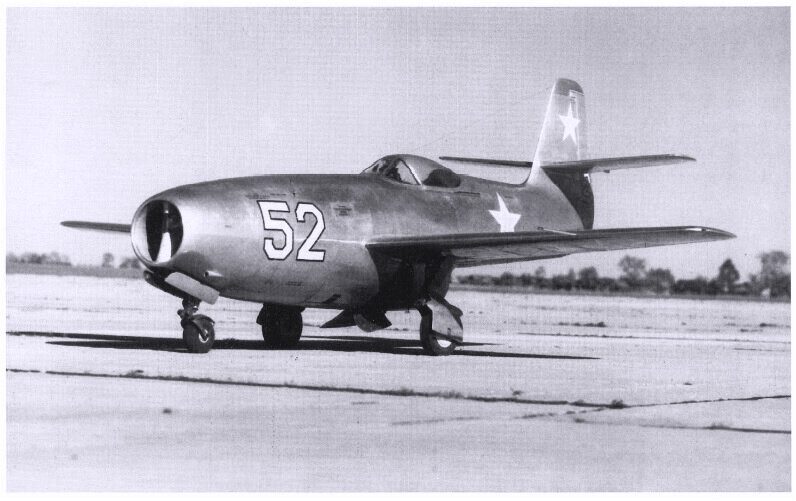
Mikoyan's aircraft was sent for state trials in May 1948, but the decision to begin mass production was made prior to that. Along with that came the plane's designation: the MiG-15. It was put into service by 1949. Initially, the plane was produced only at the Kuybyshev No. 1 plant. Later, production was expanded to the No. 153 plant in Novosibirsk and the No. 381 plant in Moscow.
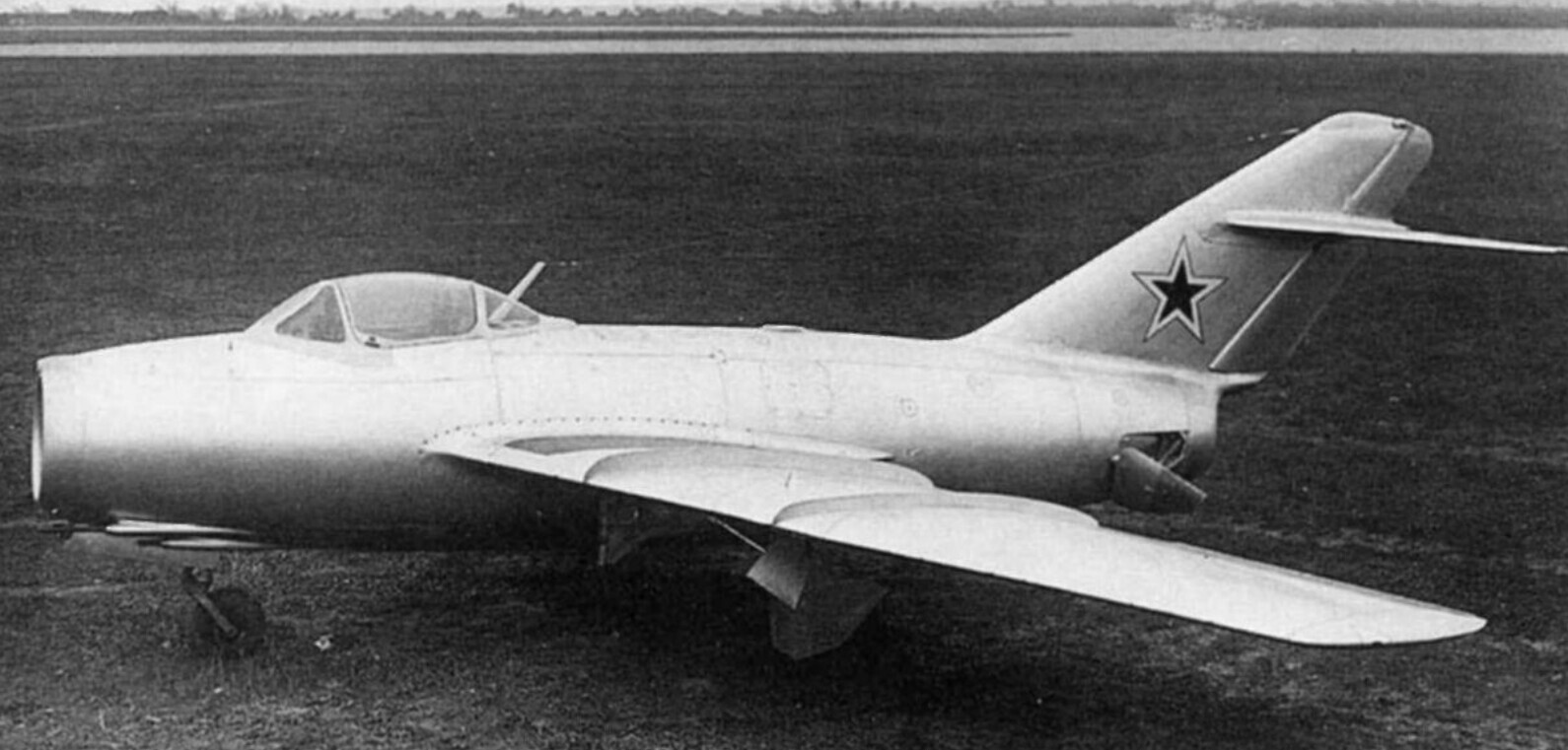
A more advanced version, the MiG-15bis, came out in 1950. One of the most noticeable changes was the new VK-1 engine, which had more advanced metallurgy and thus greater power. Additionally, the location of the 23mm cannon was changed and an air intake headlamp was installed.
All-weather interceptors
Some planes were used as de facto test aircraft for new airborne radars. Initially, however, the MiG-15 with the "Toriy-A" radar, designated the SP-1 (СП-1), was intended to compete with the La-200 and the Su-15. However, it quickly fell out of favor. Still, five vehicles were built in 1950, and the aircraft received the designation MiG-15Pbis.
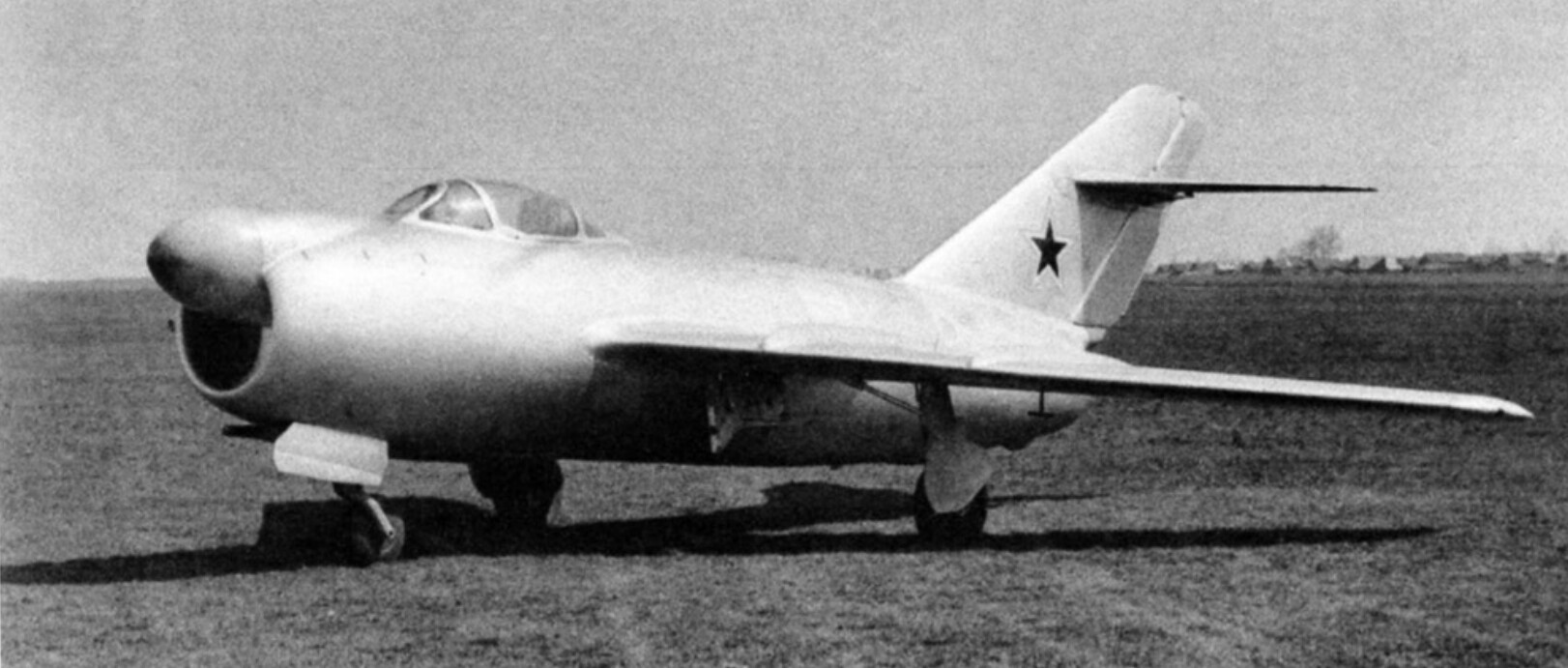
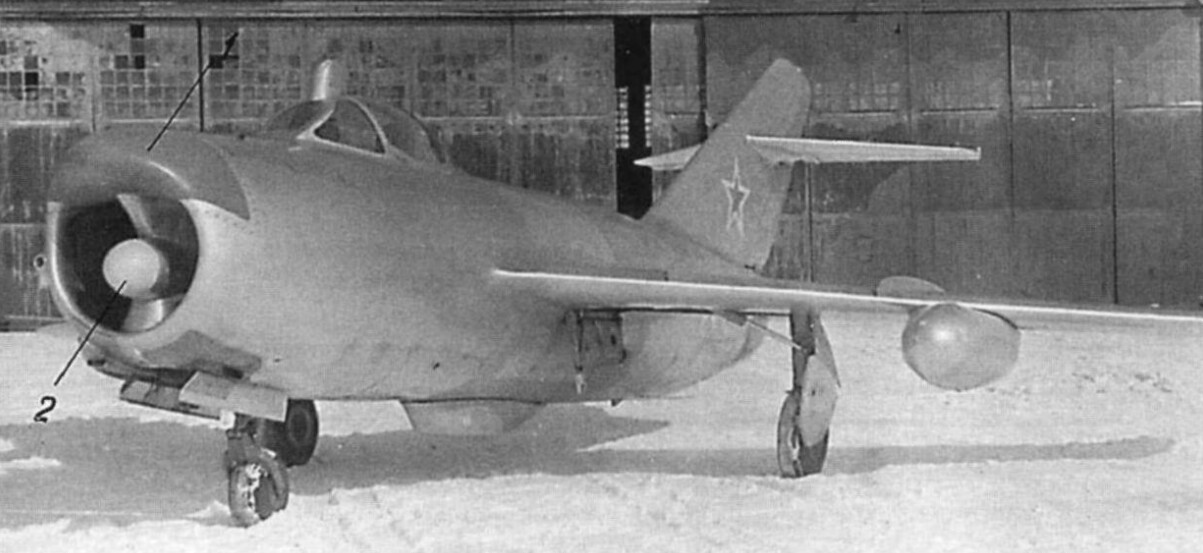
The Toriy-A radar was inadequate, so the SP-2 with the "Izumrud" radar was developed soon after. A couple more planes followed up to the SP-5, which mainly differed in its better radar view angles.
Reconnaissance version
In addition to the interceptor version, development of the reconnaissance variant began in 1950. The designers planned to replace some of the weaponry with an AFA/BA-40 camera positioned directly below the pilot. Other changes included a redesigned cockpit canopy and an instrument landing system. A prototype based on the MiG-15bis was built and named "SR" (which stands for "Самолёт-Разведчик," or "reconnaissance aircraft") by the plant. It was sent to the factory trials during the summer.
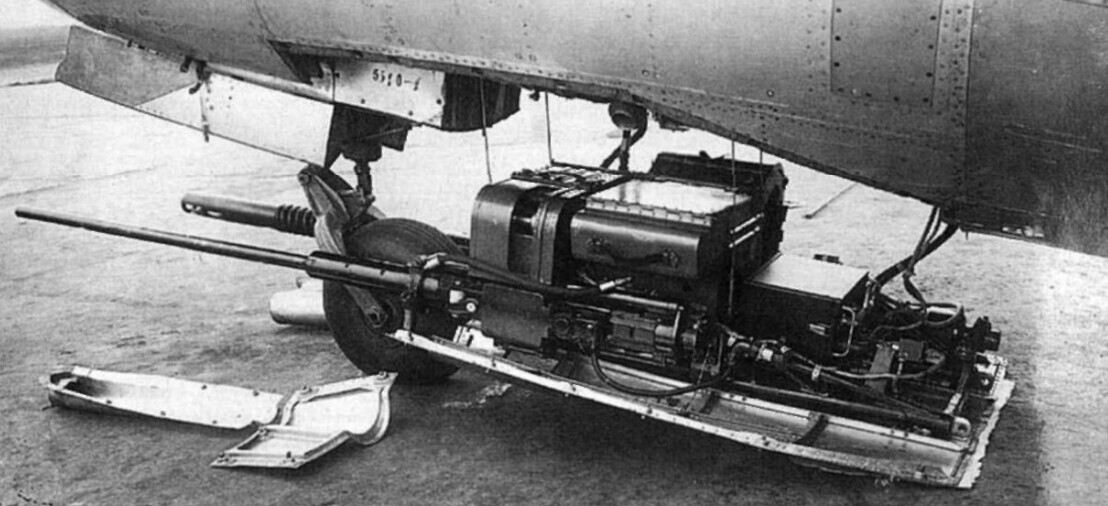
In July 1951, the SR was given to the VVS for trials, which it soon failed. The VVS was particularly unhappy about the inability to take photos at low altitudes, the poor air conditioning system, and some minor issues. It is unclear if these issues were resolved, but the aircraft was soon modified to carry external fuel tanks. Another change was the addition of an extra oxygen tank. In August, the plane was accepted into service as the MiG-15Rbis. A total of 364 planes were manufactured.
MiG-15bis ISh
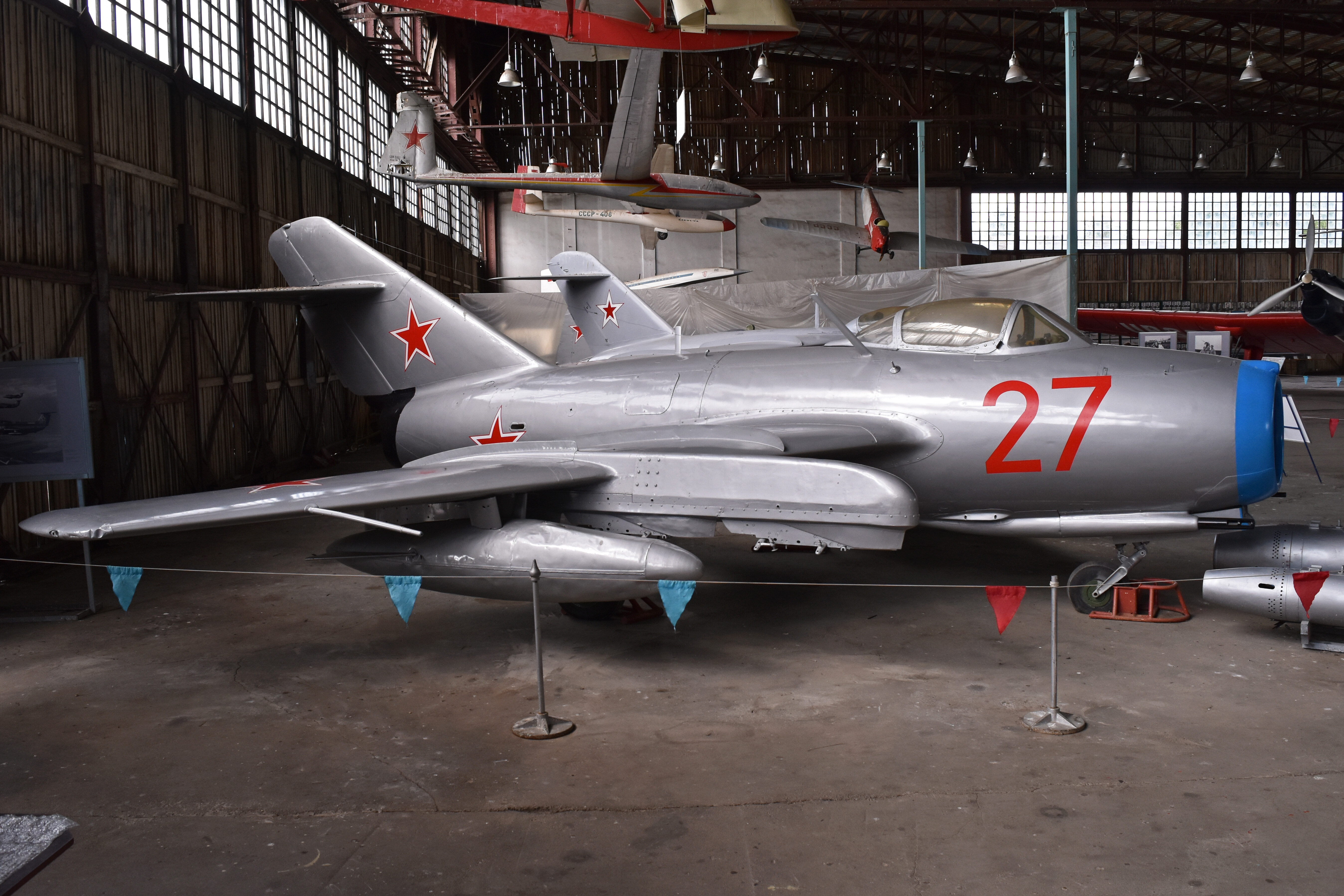
In 1958, the NII ERAT decided to modernize the outdated MiG-15s into attack aircraft. The NII initiated a program in which four planes received experimental pylons with three angled attachment points in "tandem." This allowed rockets or bombs to be placed without greatly increasing drag. However, the program was canceled due to the failed landing of one of the MiG-15bis ISh prototypes.
In service and combat
Civil wars in China and Korea
The first combat usage of the MiG-15 occurred six months before the Korean War, during the Chinese Civil War. In early 1950, the Nationalist ROCAF attacked Chinese mainland cities and military facilities, and the outdated Communist air force could do little about it.
For this reason, the 50th Fighter Aviation Division (IAD) was relocated to China in February 1950. Its main task was to train Chinese pilots to fly MiG-15s. However, in April, the division was moved to Shanghai to defend against attacks from Taiwan. On April 28, Major Keleinikov of the 29th Guards Fighter Aviation Regiment (IAP) shot down a two-engine P-38 fighter. And then, on the night of the 11th and 12th of May, another MiG-15 shot down a B-24 Liberator.
By the end of 1950, the IAPs and various anti-aircraft and auxiliary forces had been reorganized into the much larger 64th Fighter Aviation Corps (IAK). The IAK was the first to fight UN forces in the skies over Korea. As the Korean civil war was raging and North Korean forces were already on the retreat, and its air force of old World War II aircraft had been decimated, it was obvious that some jet modern fighters were required to fight B-29s and early jets, which was impossible to do in the outdated Yak-9s.
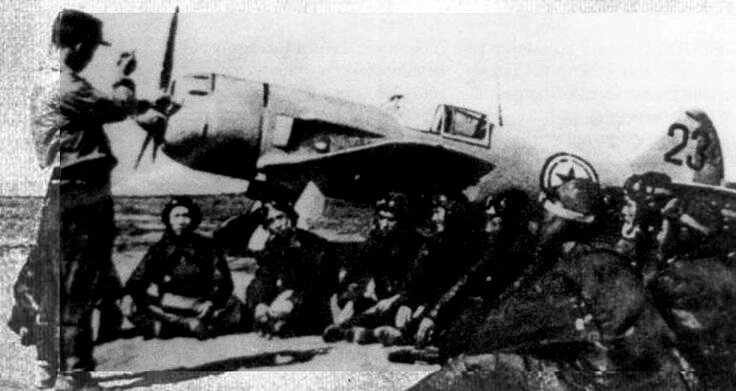
The 64th IAK was relocated close to Korea, and Ivan Kozhedub's air group soon followed it on the Trans-Siberian Railway right after the Victory Parade in Moscow. In November the Soviet MiG-15s, painted in the North Korean air force aircraft insignia, for the first time attacked and shot down enemy planes. Those were three unlucky F-51s, which, unfortunately for them, met four MiG-15s. Two were shot down, one escaped.
Before the F-86 Sabres began to appear in large numbers (in Fall 1950, there were only 15 of them on the whole Korean Peninsula), the MiG-15s were fighting unopposed, shooting down 10 B-29 bombers and one F-84 in five battles. On December 17th the MiG-15 first met F-86 Sabre in combat and was shot down. But already on 23rd the first F-86 was shot down by MiG-15.
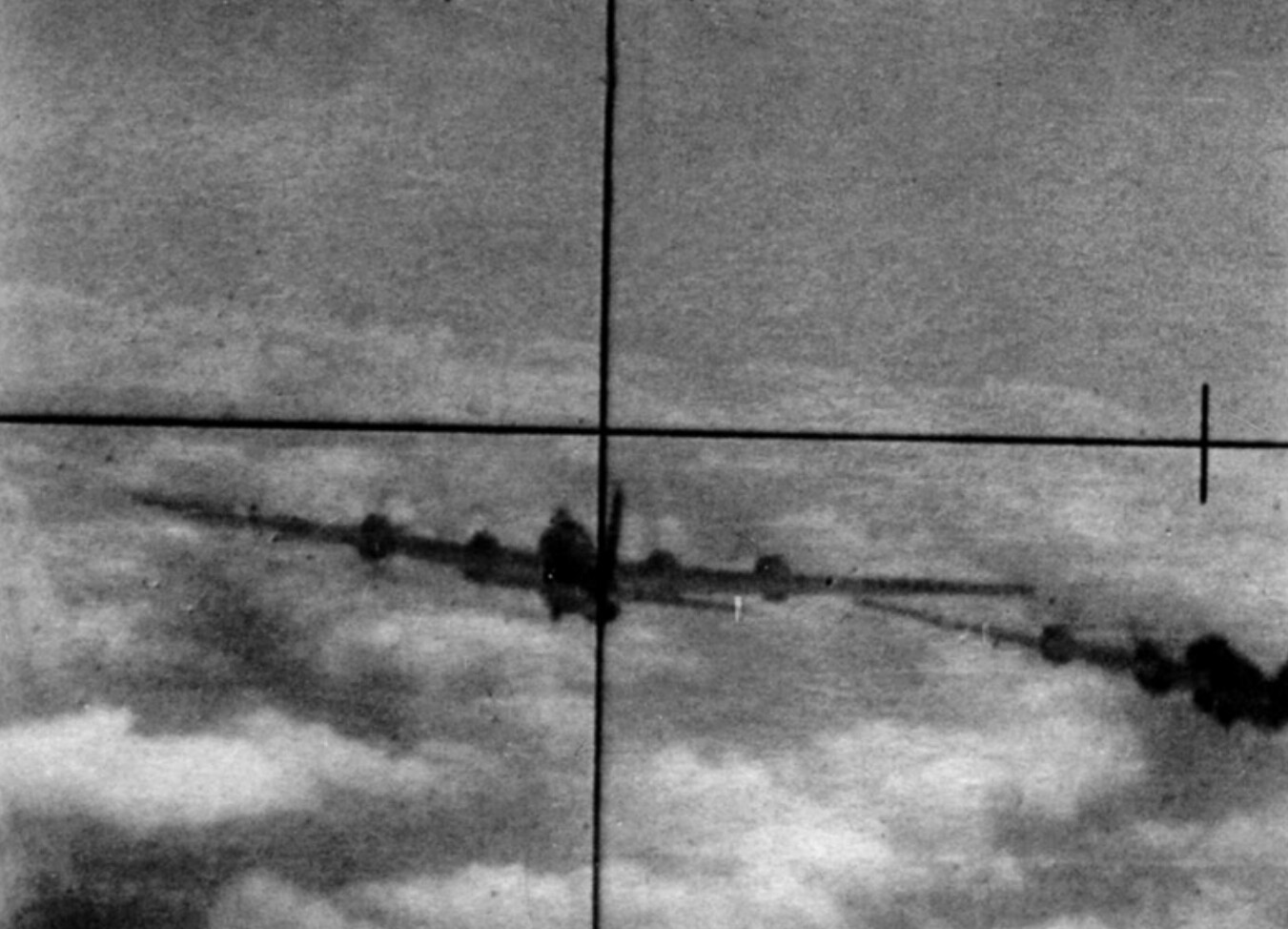
Throughout the entire conflict, the Soviet MiG-15s only operated within the so-called MiG Alley in the northwest of Korea. The planes were stationed in China and were forbidden to fly beyond the Pyonang-Wonsan line or above the sea.
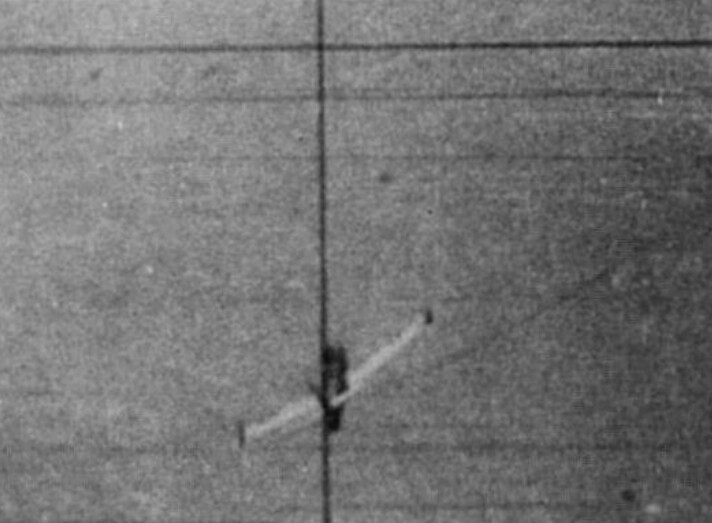
For the Soviet pilots, jettisoning from the shot-down MiG was another difficulty. Even if they made a safe landing, they were often attacked by local Korean peasants who considered anyone who looked Caucasian to be a UN aggressor. Soviet pilots were often attacked with sticks or shot at by friendly forces. In this manner, Soviet pilot Evgeny Stelmakh was killed in a shootout with allied Korean soldiers.
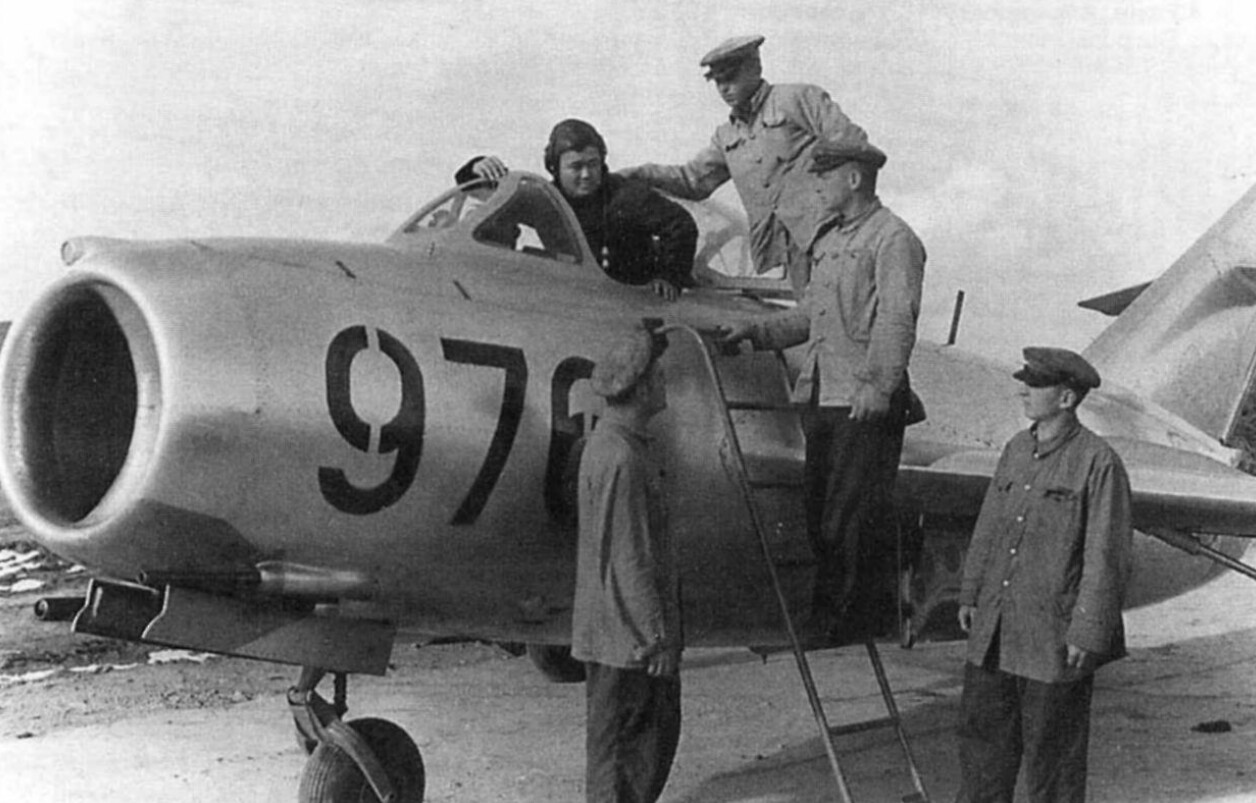
The overall MiG-15 kill ratio is highly disputed. Soviet pilots claimed to have shot down over 1,100 UN planes, including 647 Sabres. The US claims only 224 Sabres were lost. At the same time the figure of over 660 MiG-15s shot down is often shown, including Soviet, Chinese and Korean planes.
In use by PLAAF
The Chinese PLAAF was among the first to receive the new aircraft. Deliveries of the MiG-15, MiG-15bis, and MiG-15 UTI (two-seater trainer variant) began in 1950, but large quantities were not delivered until January 1951. At the time, China was suffering tremendous losses with its outdated MiG-9s and Pe-2s, so the USSR needed to supply them with quite a few planes.
After minor repairs and changes, the MiG-15bis planes were renamed J-2 and the MiG-15UTIs were renamed JJ-2. Later, China sold them to Pakistan, where they were renamed F-2.
During the Second Taiwan Strait Crisis in 1958, Taiwanese F-86 attacked and shot down a PLAAF MiG-15bis, marking the first air-to-air kill with an AIM-9 Sidewinder.
Other countries
A significant number of planes were also built in Poland and Czechoslovakia. Poland produced 227 MiG-15s (Lim-1) and approximately 500 MiG-15bis (Lim-2) aircraft. Meanwhile, Czechoslovakia produced 821 MiG-15s (S-102), 620 MiG-15bis (S-103), and 2,012 MiG-15UTIs (CS-102).
In 1953, the Hungarian Air Force received 36 MiG-15bis planes from the USSR. They had a rather uneventful service until 1966, when most of the aircraft were scrapped or modified into a reconnaissance variant. A small number of these were used in this role until 1975.
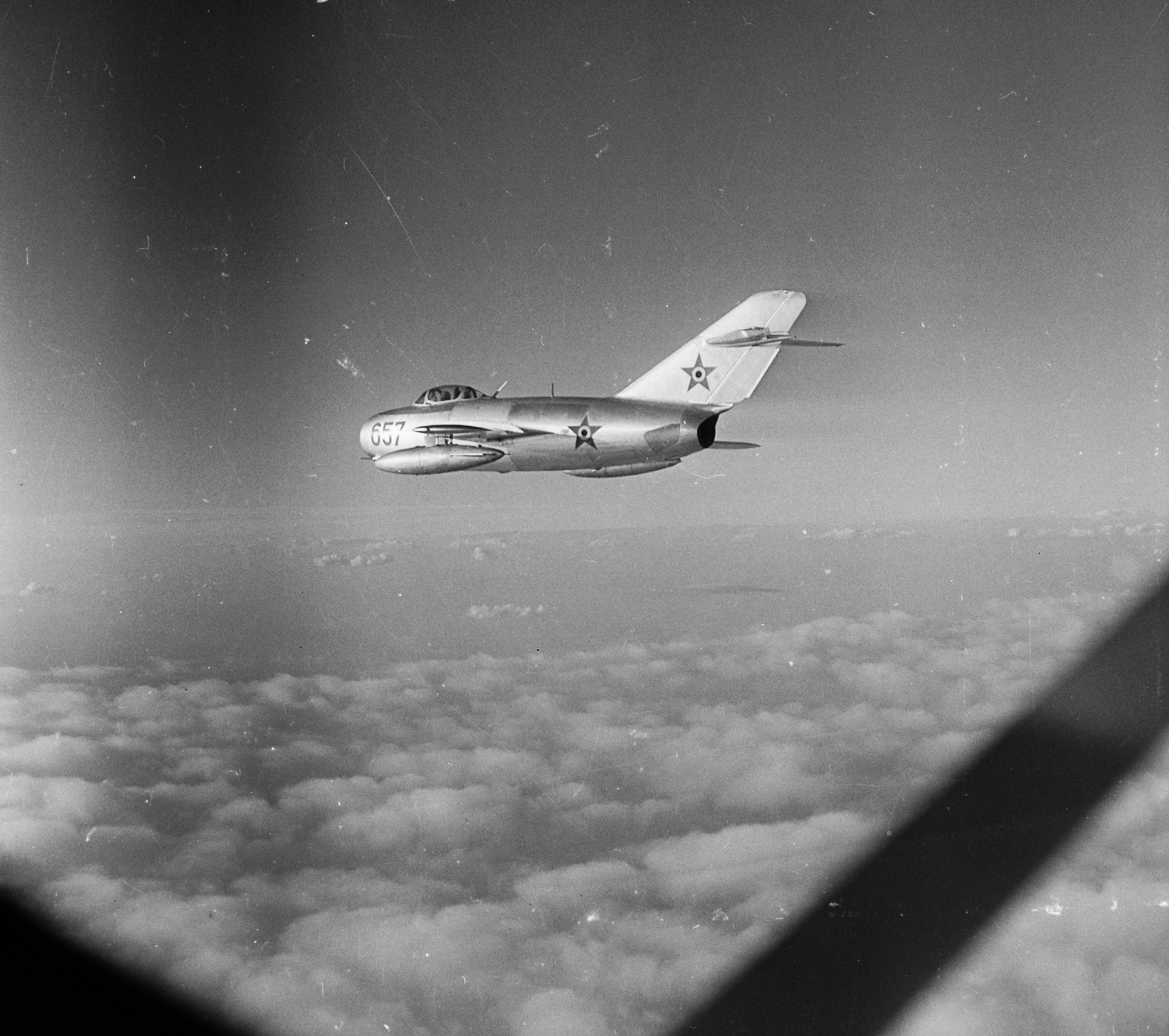
The German Air Force of the National People's Army received 28 MiG-15bis planes in 1953. This number increased to 177 planes soon after. Later, as MiG-17s became available, the MiG-15s were not replaced and were used until the MiG-21F deliveries began in the early 1970s. Some MiG-15s remained in service until the mid-1980s.
Albania was the last country to retire the MiG-15bis, faithfully using the outdated Soviet fighter until 2008. The remaining planes were scrapped or sent to museums.
Sources for text and unmarked images
- F-86 Sabre vs MiG-15. Korea 1950-53. Douglas C. Dildy, Warren E. Thompson, 2013;
- MiG-15 all variants. Yefim Gordon, 1997.
- Истребитель МиГ-15. Арсеньев Е., Крылов Л., 1999;
- Истребитель МиГ-15. Гроза «Летающих Крепостей». Якубович Н.В., 2009;