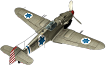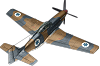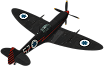
In the history of military aviation, it is rare to find instances of enemy air forces battling each other using the same aircraft. The British withdrawal from Palestine in 1948 is an example of such a rarity: Mustangs, Spitfires and Mosquitoes alike all took part in this conflict, as well as other R.A.F. and I.A.F. aircraft, which will be discussed here as well.
29th November 1947
Two years after the end of the Second World War, Britain was in trouble once again. Charged by the League of Nations with helping the Palestinian population to work towards a self-governing system (“the rendering of administrative assistance and advice”), whilst implementing the Balfour Declaration for the Jewish population and the rising number of immigrants. However, civil unrest on both the Jewish and Palestinian sides had become so severe that it was eventually decided that Britain should withdraw from the area in February 1947, 25 years after the Mandate’s formation.
Upon Britain’s gradual departure from the region and the subsequent recognition of the state of Israel by the U.N., however, a brutal war broke out amongst the Jewish communities and Palestinian natives. Britain, adopting a strict non-intervention policy, set about planning its withdrawal from this troubled land as quickly as possible. It would, however, not be until May 1948 that Britain fully abandoned the Mandate, and June when the last units left Palestine. Until then, the R.A.F. would have to fight.
At the time, a number of R.A.F. Squadrons were based in Palestine. Notable units were:
| Unit | Aircraft Operated | Based | Notes |
| 13 Squadron | Mosquito PR.34 (Photographic Reconnaissance) | RAF Ein Shemer | |
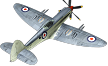
| 800 Naval Air Squadron | Seafire FR.47 | HMS Triumph (Aircraft Carrier) | The only Seafire unit to operate in this conflict, based off of the Palestinian coast. |
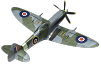
| 208 Squadron | Spitfire F Mk.XVIIIe | RAF Ein Shemer, Ramat David | |
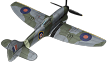
| 6 Squadron | Tempest Mk.VI (mostly similar to the Mk.V in-game) | RAF Deversoir | Based in Egypt, the unit patrolled regularly near the Israeli border, but never crossed into it purposefully. |
| 249 Squadron | Tempest Mk.VI | RAF Deversoir |
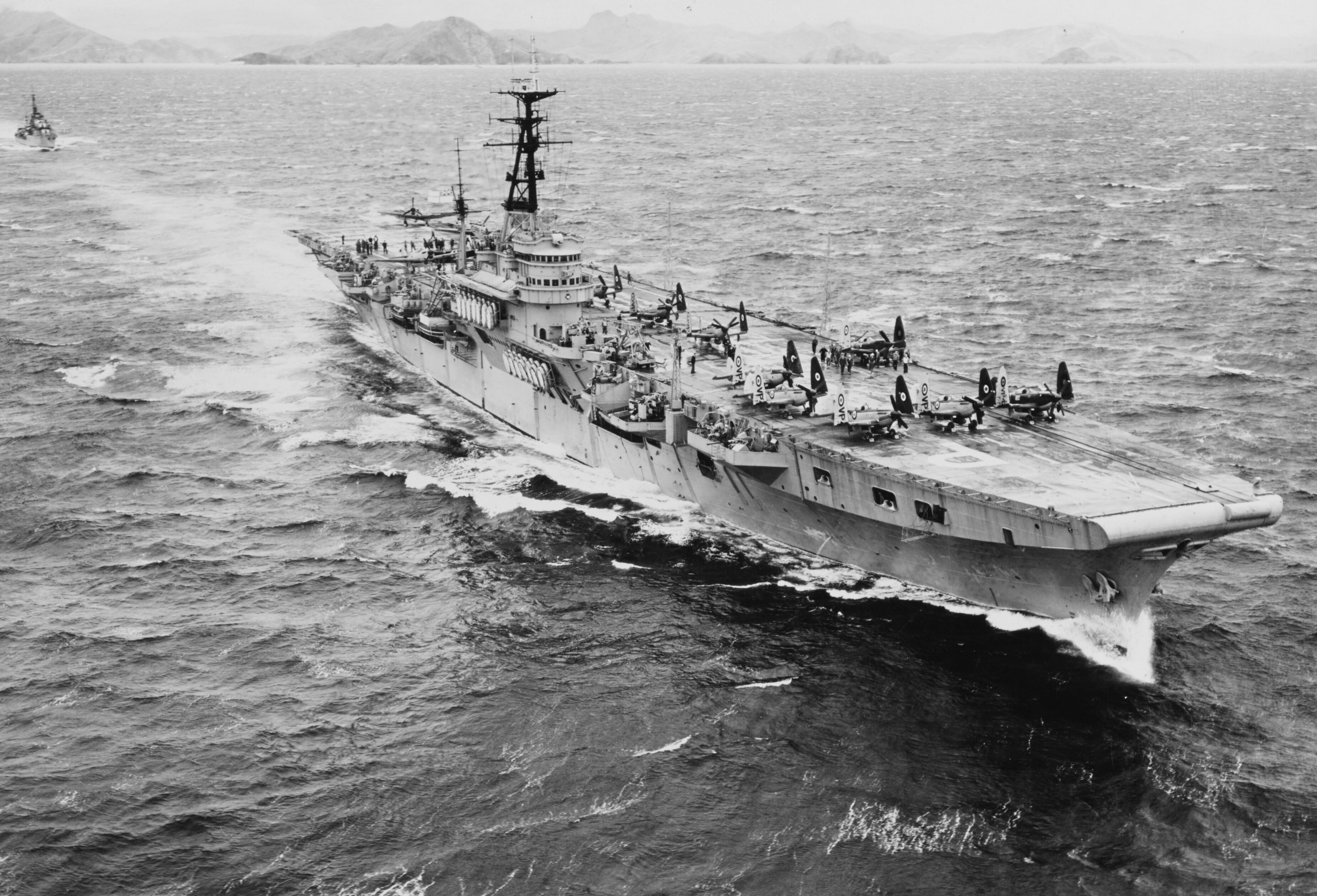
In addition to these fighter and reconnaissance units, there were also many bomber units (mostly Halifaxes and Lancasters) based in and around Palestine, used during the operation to document illegal immigration and evacuate personnel.
The Protagonists
In this conflict, all three sides (British, Arab and Jewish) were faced with difficulties and setbacks in their respective air forces, which severely hampered their ability to challenge their opponents in the skies.
R.A.F. (Royal Air Force)
A well-established formation that had previously served in conflicts such as the First World War and (of course) the Second, this branch of Britain’s armed forces consisted of experienced leaders and personnel, flying the epitome of modern aircraft design.
In the sandy stretches of Palestine, however, the R.A.F. would have to fight a war which had rarely been fought before.
The emerging Jewish state, resenting the British occupation for the aforementioned reasons, was eager to cast off the British Mandate. But, because of the U.S.A.'s strict arms embargo and the regular British stop-and-searches which took place, it would be difficult to simply build up a professional army and overthrow their adversary. Organisations like the Haganah (which had actually worked with British forces before the Second World War), Irgun, and Stern Gang (who claimed themselves to be terrorists) assassinated British personnel, committed acts of sabotage and facilitated the mass immigration of Jews using stolen British weapons, stored in secret caches.
The use of Jewish and Arab labour alike in R.A.F. aerodromes opened the door for spontaneous acts of sabotage and intelligence gathering, and this is exactly what happened.
In the early hours of 19 February 1947, Irgun militants carried out a raid on R.A.F. Ein Shemer with mortars, firing twelve shells before retreating. Whilst ineffectual, this attack did act as a harsh reminder to the R.A.F. of the danger posed by Jewish resistance movements.
Squadrons such as 621 (operating Lancasters) and 208 suffered sabotage at the hands of the Irgun; 621, whilst having some aircraft damaged, were fortunate not to lose any to these attacks. In contrast, 208 Squadron lost 7 aircraft in one night in 1946 to sabotage, almost crippling the unit until reinforcements could arrive in August.
Overall, however, serviceability for R.A.F. aircraft remained of a relatively high standard: one flight, for example, experienced a serviceability rate of 79%.
Morale amongst pilots was high, despite the nation living under a state of martial law with strict curfews for civilians, with units flying patrols and reconnaissance missions usually from 7am to 1pm.
I.A.F. (Israeli Air Force)
Before any official air force could be established, the Haganah and Irgun had set up their own formations: for the Haganah it was the Sherut Avir, and the Irgun had the Palestine Flying Service. Neither of these units had much of an impact on the war’s course however (the Sherut Avir only possessed 25 converted civilian aircraft), and they were soon disbanded.
The declaration of the state of Israel by the U.N. in 1948 allowed the newly formed state to create an Army, Navy and Air Force of its own, but, as with all new enterprises, this was not without its difficulties.
The most obvious challenge facing the I.A.F. was its acquisition of weapons. After the Declaration of Independence, the U.N. and U.S.A. placed an absolute embargo on exporting weapons to Israel, fearing an escalation of the already dire situation. Certain figures, however, were able to circumvent this restriction.
Adolph Schwimmer, a former engineer in the U.S.A.A.F. (United States Army Air Force), used his contacts and influence in the U.S. arms industry to attain 30 surplus U.S.A.A.F. aircraft and smuggle them to Israel. Hudsons (4 aircraft delivered), B-17s (3) and P-51s (79) all made it into the I.A.F., almost entirely through Schwimmer.
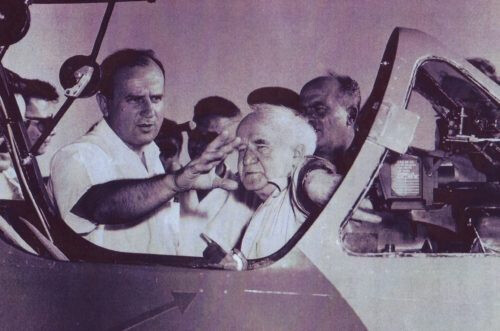
Another route through which aircraft were obtained by Israel was by signing arms contracts with Czechoslovakia. Rabbi Zev Tzvi Vorhand, previously Chief Rabbi of Prague, was able to pull strings in Czechoslovakia, and managed to persuade the Czechoslovak Foreign Minister to sign large armament contracts with Israel, supplying thousands of small arms, ammunition and grenades.
Among these weapon shipments were aircraft as well. After the Second World War, Czechoslovak aircraft factories found themselves with lots of surplus parts intended for the manufacture of Messerschmitt Bf 109 Gs. In order to use these stocks up, Czechoslovak engineers designed a new aircraft, the S-199. Despite being unpopular with Czechoslovak pilots for its poor handling, Israel readily bought 25 S-199s, receiving 23, the first of which arrived in May 1948.
Despite seeing some success against Egyptian aircraft such as C-47s and Spitfires, a lack of spare parts and general maintenance issues meant that serviceability was constantly low for the S-199 'Sakeen' (Hebrew for knife, a play on words of Messerschmitt, or knife-smith in German) units, and it only saw use until October 1948.
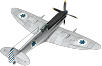
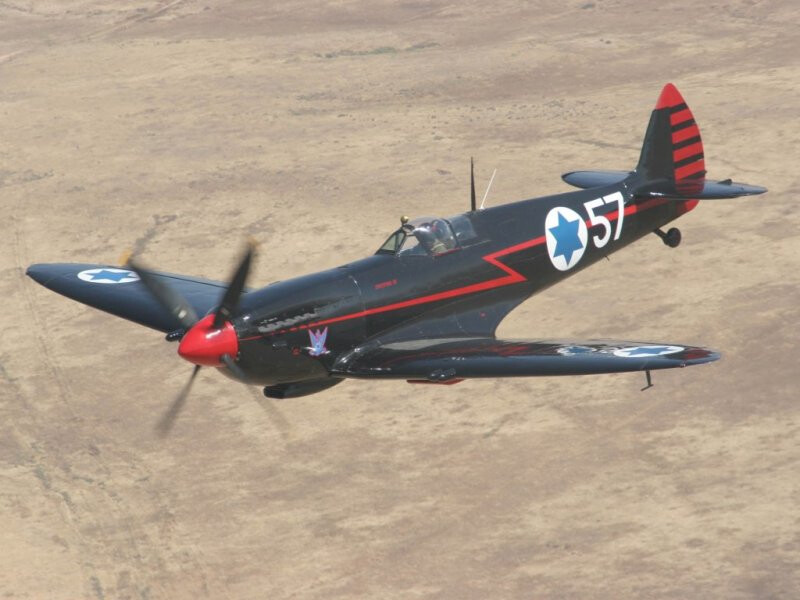
The other main aircraft used by the I.A.F. was the Spitfire. Like the 'Sakeen', many (that is to say, 59) were bought from Czechoslovakia in 1948. Britain, fearing the spread of communism post-war, gifted Czechoslovakia these Spitfires for use in her air force. Under Soviet pressure, however, these aircraft were soon decommissioned and sold to Israel.
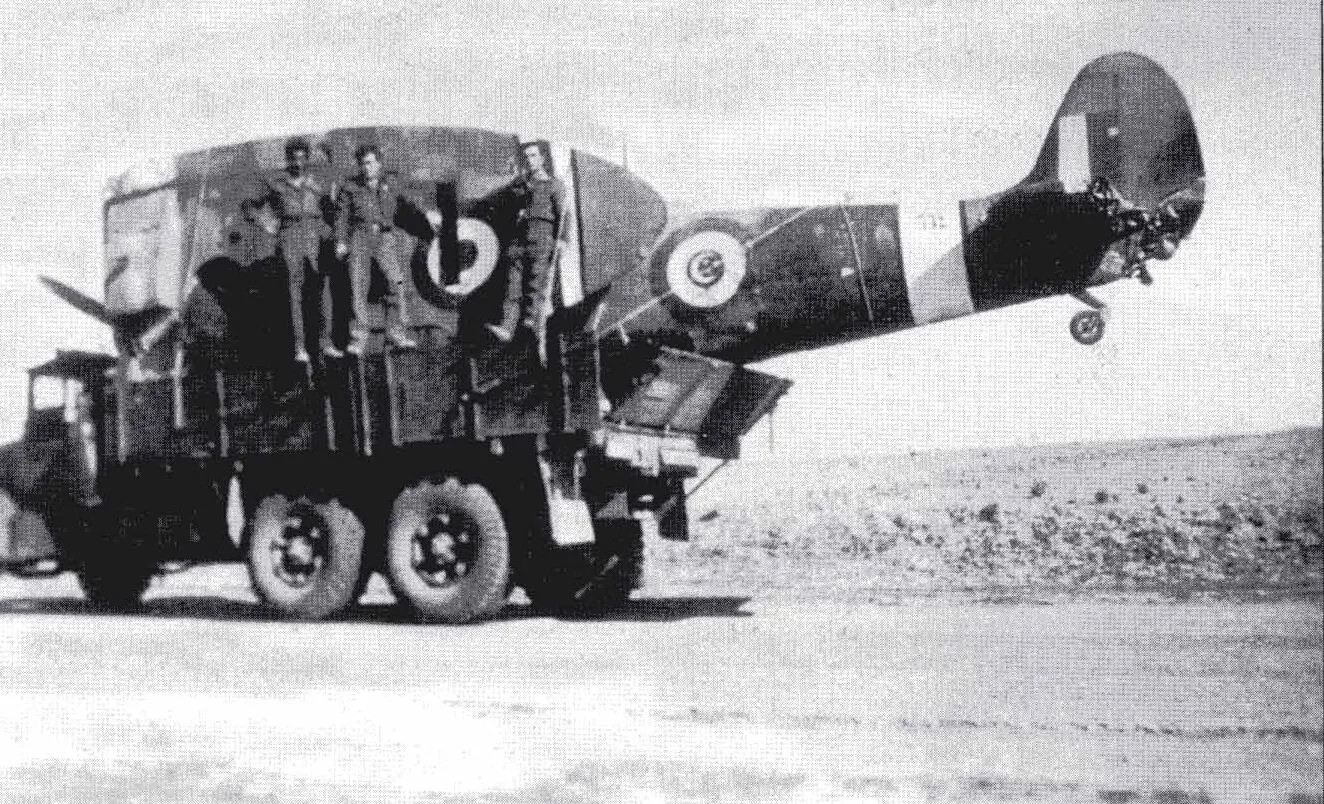
The other way Spitfires were obtained by Israel was through salvaging. After the R.A.F. withdrew to Egypt in 1948, the airfields previously occupied by the British were found completely abandoned, along with those aircraft which R.A.F. mechanics were unable to repair or destroy in time for the retreat. These wrecked aircraft were in turn towed by the Israelis back to factories, where they were repaired with parts salvaged from R.A.F. and Egyptian Spitfire crash sites.
Four former R.A.F. Bristol Beaufighters were operated by the I.A.F. as well. A Jewish pilot of the R.A.F. obtained permission in July 1948 to fly five surplus Beaufighters to Scotland for filming a documentary. Instead of doing this (there was never such a documentary), the pilot and some accomplices flew four of the aircraft (one crashed along the way) to Israel, where they were pressed into front-line service.
For personnel, the I.A.F.'s roster was mixed. Two-thirds of Israel’s manpower consisted of Machals (an acronym for Mitnadvei Chutz LaAretz, or 'Volunteers from Abroad'). These men came to Mandatory Palestine from across the globe, and were often ex-servicemen in the Second World War, or deserters. France, Britain, South Africa, America, Canada, Ireland and even Burma had men who served in the I.A.F., to name but a few.
R.E.A.F. (Royal Egyptian Air Force)
The R.E.A.F acquired 38 Mk.IX and 26 Mk.V Spitfires from the R.A.F.'s surplus soon after the Second World War’s conclusion. The Mk.Vs were operated until 1949, and the Mk.IXs until 1955.
After the termination of the Anglo-Egytian Treaty of 1936 which granted Britain the use of military bases throughout Egypt until 1946, Britain was forced to withdraw all her forces to the strategically vital Suez Canal Zone for another 20 years. Thus, during the 1948 conflict, many participating R.A.F. units flew out of bases within the Canal Zone, which was within Egypt, but bordering Palestine.
Into Combat
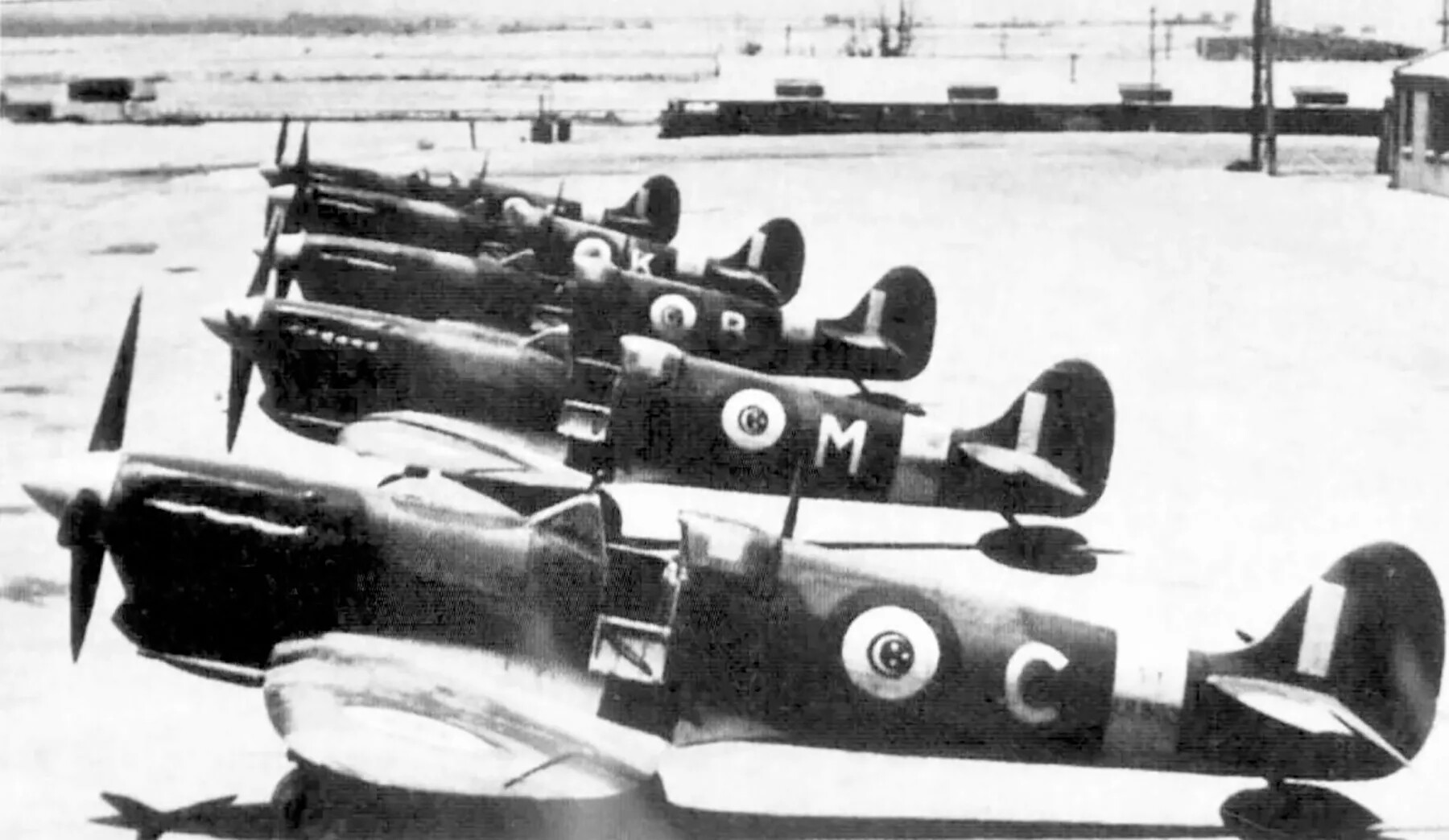
In response to the creation of the state of Israel on 14 May 1948, a coalition of Arab states led by Egypt crossed the border into Palestine to support the Palestinian locals. Almost immediately, widespread airborne attacks on Israeli positions were carried out by coalition air forces, including, of course, the R.E.A.F.
There were, however, numerous cases of mistaken identity.
The Ramat David Attack
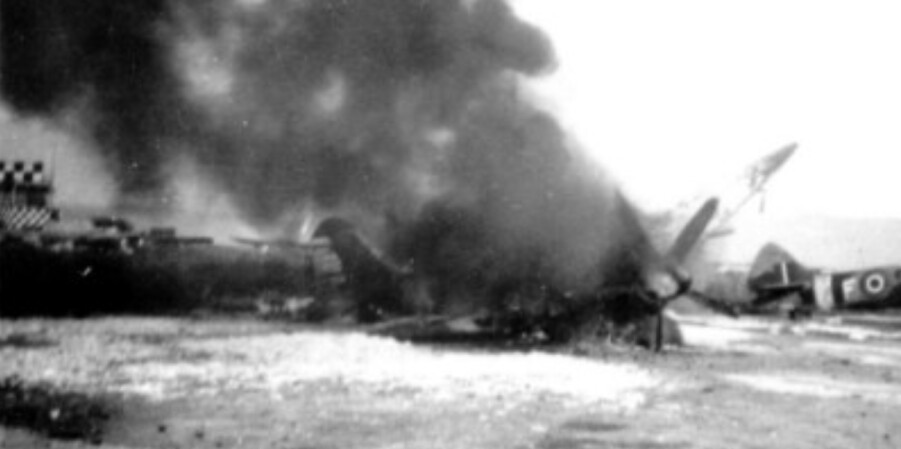
In the early morning of the 22nd, British pilots and ground crew stationed at Ramat David were awoken by the sound of machine-gun fire nearby. Two Spitfire IXs, carrying two bombs each, had conducted strafing attacks on the base, dropping two 250 lb bombs on aircraft dispersal pens, as well as strafing the airfield. Two R.A.F. Spitfires were sent to catch these attackers, but they disappeared into the dark before they could be identified. But that wasn’t the end. Just under two hours later, a second wave of Spitfires attacked, destroying the main hangar and a stationary Spitfire. This time, though, the attackers weren’t so lucky.
Two of the aircraft were ambushed by R.A.F. Spitfire Mk.XVIIIs which were patrolling the area after the first attack, and both were destroyed. The other, limping home after being hit numerous times by anti-aircraft defences on the ground, crashed in Israeli territory.
Just two hours after this, more attacks followed. Two more hostile Spitfires swept in low over the airfield, strafing and dropping bombs as they went; the R.A.F. patrol was not able to attack them in time, but they were soon caught up with, and Flight Officer Tim McElhaw single-handedly destroyed both attackers. During this third wave, one stationary C-47 Dakota was completely destroyed, and another severely damaged by explosions and fire from the two Spitfires. Another C-47 was wrecked whilst attempting to take off, killing two crewmen and injuring three others.
Altogether, four British airmen were killed and five wounded as a result of these attacks. It was later determined that the attack was conducted by Egyptian Spitfires, but, possibly due to the poor light or navigational issues, the R.A.F. base was mistaken for that of the I.A.F., and the attack was not intentional. The Egyptian Government quickly apologised, and Britain requested compensation be paid by Egypt.
Mosquito Interception
At 1100hrs on 20 November, a lone R.A.F. Mosquito PR.34 reconnaissance aircraft of 13 Squadron took off from its airfield in Egypt, but the purpose of this flight is disputed. Arthur Henderson, Secretary of State for Air, claimed in a correspondence with the then-Conservative Leader of the Opposition, Anthony Eden, that the unarmed Mosquito was simply conducting a training flight when it was downed; he doubled down on this claim after Eden asked why photographic recon would be carried out over an area where, 'to put it mildly, the international situation is extremely tense'.
Later accounts, however, state that the plan was to patrol the skies of Palestine and other surrounding nations, photographing any important developments on the Arab-Israeli front lines and documenting other such changes in the situation. It is claimed that this would feed information into the execution of Operation Barter, as part of the Anglo-Transjordanian treaty.
Whatever its purpose, 'Graphic III' (the aircraft’s call sign) had been carrying out these flights since late May with such regularity that the Israelis had nick-named it 'Noon Charlie'.
Having landed in Iraq for refueling as usual, the Mosquito continued on its course, climbing slowly towards Haifa in northern Israeli territory. Whilst in the area, the extremely high altitude of the Mosquito meant that contrails started to appear behind the aircraft’s tail and wingtips. Seeing this from the ground, and probably fearing that it was an enemy reconnaissance aircraft, the I.A.F. dispatched the American Machal Wayne Peake to investigate in his P-51.
Having sighted the 'Mustang', the Mosquito swung round to the west into the Mediterranean rather than heading south for home. Despite flying at over 9,000 metres above sea level, the Mosquito was soon caught by Peake who, almost having passed out and suffering from extremely blurred vision due to the high altitude, almost lost his target. Somewhere over the coast, however, Peake closed in behind the reconnaissance aircraft, and tore into it with his six .50 calibre machine-guns. The main question is, however, why didn’t the R.A.F. crew attempt to avoid the P-51's fire?
It could be that the crew, accustomed to such missions by now, simply didn’t bother to check their six o’clock. On the other hand, it could be that the men assumed that the Israelis knew the neutral status of Britain, and that they wouldn’t dare to attack an aircraft of the R.A.F. For that reason, they perhaps recognised the Israeli 'Mustang', but didn’t identify it as a threat.
Nonetheless, the fact was that this Mosquito was a free kill for Peake, which crashed in a fireball near Haifa. An Israeli search party was sent to look for the two crewmen, but all that was left of the aircraft was a few mangled remains lying on the surface of the Mediterranean.
The 208 Squadron Massacre
After this loss, it was decided that reconnaissance missions should be carried out with a fighter escort to guard against any such incident happening again.
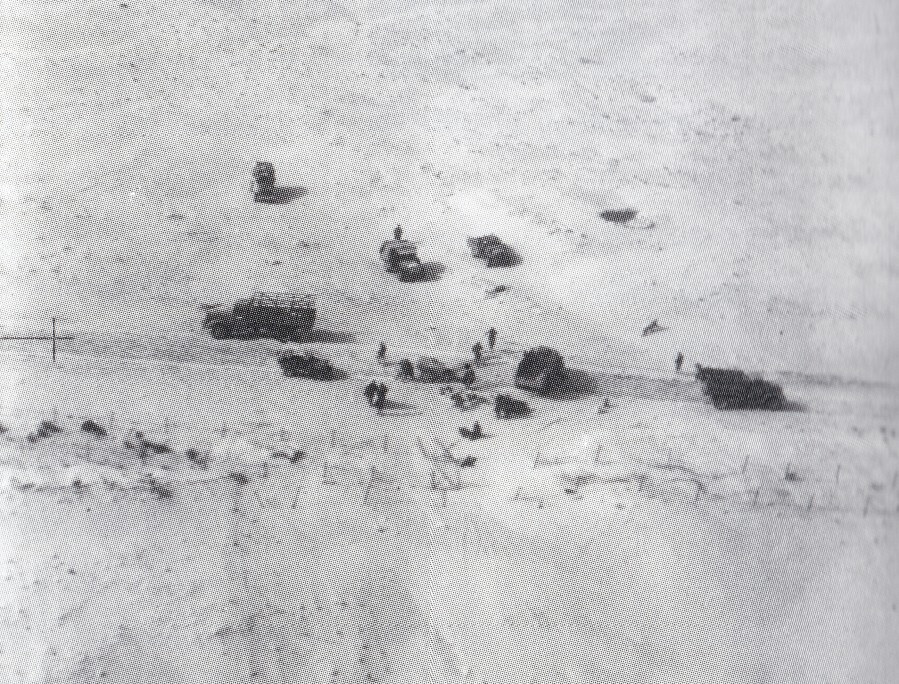
On 7 January 1949, after having moved to R.A.F. Fayid in Egypt, four 208 Squadron Spitfires were surveying the Arab-Israeli front lines near to the Egyptian border, taking photographs of the Israeli trucks on the ground. They had been specifically ordered not to cross into Israeli territory.
Fearing that these were hostile Egyptian Spitfires (despite the fact that not a shot had been fired by the 208 Squadron aircraft), the troops on the ground opened fire with their rifles, and radioed for back-up. Within a few minutes, a pair of I.A.F. Spitfires had arrived on the scene, both of which were flown by Machals.
The leader of the two was a Canadian, John McElroy, and his wingman an American, by the name of Chalmers Goodlin. Both of these men were experienced pilots from the previous war, with McElroy having shot down five German aircraft over Malta, earning himself the DFC (Distinguished Flying Cross). Goodlin, a former test-pilot for Bell, had been the pilot responsible for the trials of the Bell X-1, later handing over this task to Captain Chuck Yeager.
Sighting the trucks, the two Spitfires went to investigate, believing the aircraft of 208 Squadron to have set three on fire. In truth, three vehicles were indeed ablaze, but this had been done by Egyptian Spitfires the day before.
Taking the British aircraft completely by surprise, McElroy dived and opened fire on an unsuspecting Spitfire, killing the pilot and sending it cartwheeling into the ground in a ball of flames.
Then pulling out of this engagement, McElroy planted himself on the tail of Flight Officer Tim McElhaw, the pilot who had downed two Egyptian Spitfires the year before. Riddling McElhaw’s fuselage with bullets, the Machal soon hit the Spitfire’s engine, forcing McElhaw to abandon his Mk.XVIII. He landed safely in Egypt a few miles from his aircraft.
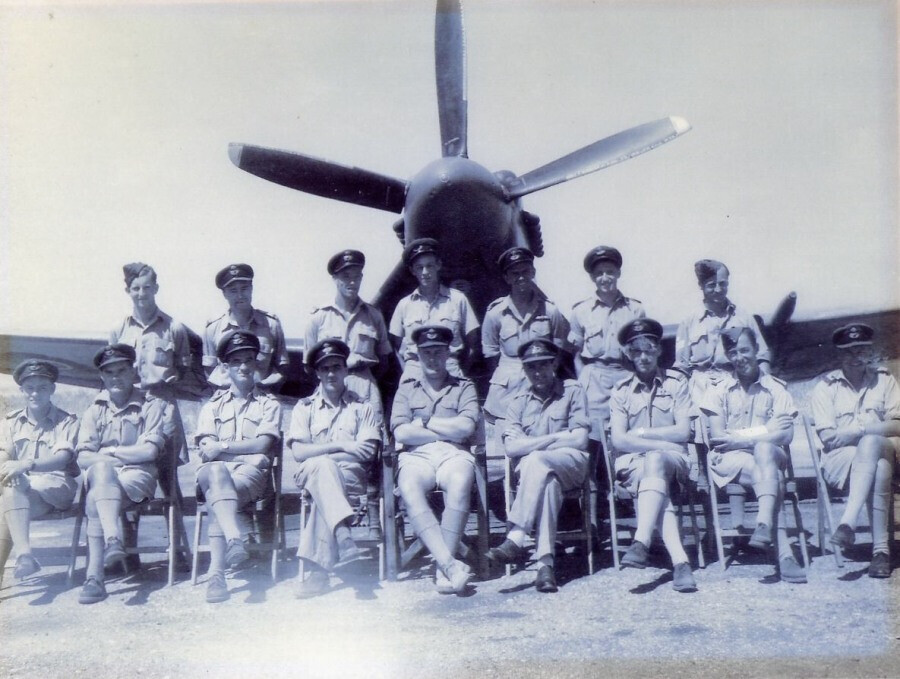
Goodlin, meanwhile, had lined himself up on the tail of the final R.A.F. Spitfire. Just as he was about to open fire, however, his quarry performed an Immelmann turn, bringing himself into a head-on with the Machal. Passing by the Mk.XVIII, Goodlin steered his Mk.IX into a flat scissors manoeuvre with the British Spitfire, trying to force an overshoot. At this moment, Goodlin realised his fatal error: on the wings of the Spitfire which was currently on his tail, the American suddenly made out the R.A.F. roundels on the enemy aircraft’s wings; by this stage in the dogfight, however, it was too late: it was kill or be killed. Luckily for Goodlin, he managed to eventually force an overshoot, and was soon able to land some hits on his prey before the pilot bailed out over Egypt.
The two Israeli Spitfires returned to their airfield where they discovered that the Spitfires they had engaged in fact belonged to the R.A.F., which McElroy reportedly struggled to believe.
Meanwhile, concerned about the four Spitfires' failure to return from patrol, the Squadron Leader of 208 Squadron ordered a further four aircraft to investigate, escorted by 15 Tempests from 213 and 6 Squadrons. Upon arriving at the scene, however, the relief formation itself was set upon by Israeli Spitfires, this time being led by Ezer Weizman, future Prime Minister of Israel.
The result of this ambush was much the same as the one which the Spitfires and Tempests set out to prevent. One young R.A.F. pilot was killed at the controls of his Tempest, and a few more were damaged by Israeli fire, whilst all opposing aircraft returned safely back to their base.
There were, however, a few factors which caused the R.A.F. to suffer greater at the hands of the I.A.F. than they should have. First, the Tempests were unable to jettison their long-range external fuel tanks once in combat: this was due to ground crews accidentally tightening the pins which held the tanks in place too hard, causing them to become stuck and immovable. As a result, the manoeuvrability of the aircraft was greatly restricted, putting the pilots at a great disadvantage against the more nimble Israeli 'Spits'.
In addition, much like in the first encounter with the reconnaissance Mosquito, the British assumed at first that the aircraft closing in from behind was simply a friendly patrol, leading them to hold their fire until it was too late.
Furthermore, in the fog of war, it was extremely difficult to tell friend from foe, and the Tempest pilots began treating all Spitfires as hostile, until it could be confirmed otherwise. This was complicated further by the fact that both nations' Spitfires had painted their spinners red and had exactly the same camouflage schemes as the British, further intensifying the similarities between the aircraft.
As a result of this engagement, Britain asked Israel to pay compensation for the aircraft and lives lost, and ordered all aircraft that weren’t Egyptian or British that were seen over Egypt to be viewed as a hostile threat by British servicemen.
End of Campaign and Final Thoughts
Britain would eventually withdraw from the Suez Zone in 1956 after their agreement with Egypt had expired, abandoning Britain’s stronghold in the Middle East and North Africa for good.
Israel, meanwhile, had defeated the Arab coalition in 1948 and therefore controlled the vast majority of the region that was Palestine, establishing itself as a rising power in that region, eventually falling into another war with surrounding countries by 1967.
As for the aircraft, Britain would eventually withdraw all of its Mk.XVIII Spitfires in 1951, whilst Israel retired its 'Spits' five years later, with some being housed in museums such as the Israeli Air Force Museum, where they can still be seen to this day.
Many Machals eventually would settle in Israel, with some gaining considerable power and influence in the country, such as the New Yorker Paul Shulman (who would become second commander of the Israeli Navy), or Adolf Schwimmer.
- Naval 8/208 Squadron Association Website
- World Machal Website
- Purnell’s History of the Second World War: Volume 8, Number 118, Phoebus Publishing Ltd.
- https://hansard.parliament.uk/commons/1949-05-11/debates/ea997d51-ba2a-401a-abbd-7ad452f4ea71/Israel(AttackedBritishAircraft)
- Caught in the Middle: Air Combat between Israel and the RAF, by Sqn. Ldr. B T Williamson
- Israel v the RAF, Spyflight Website
- Excerpt from No Margin for Error, by Ehud Yonay
- Supermarine Spitfire in Egyptian Service — Destination’s Journey
- Wikipedia — Egyptian Air Force
- Wikipedia — Supermarine Spitfire (Griffon-powered variants)
- Wikipedia — Adolph Schwimmer
- israelhistory.info
- Britain and the Arab-Israeli War of 1948, Avi Shlaim
- Wikipedia — No. 208 Squadron RAF
- Britain’s Small Wars: The RAF in Palestine
- United Nations — The Question of Palestine