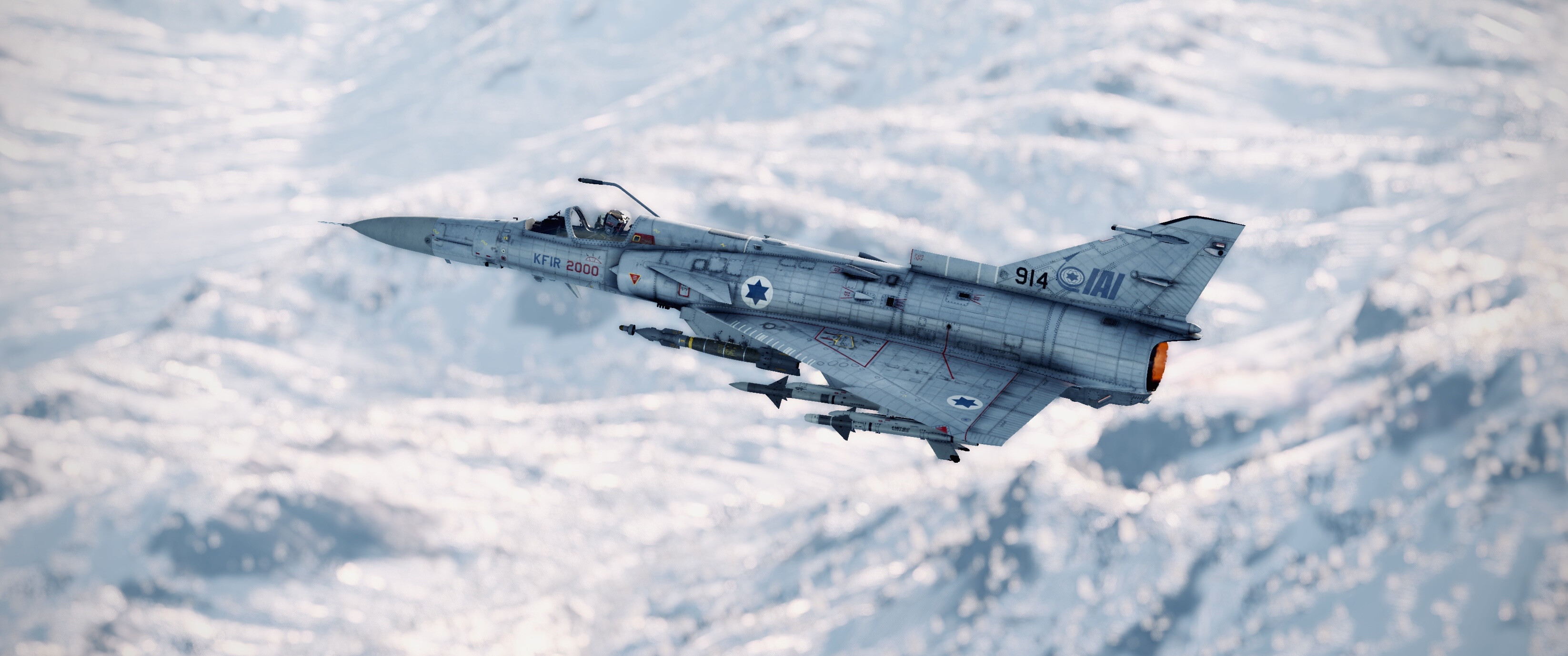
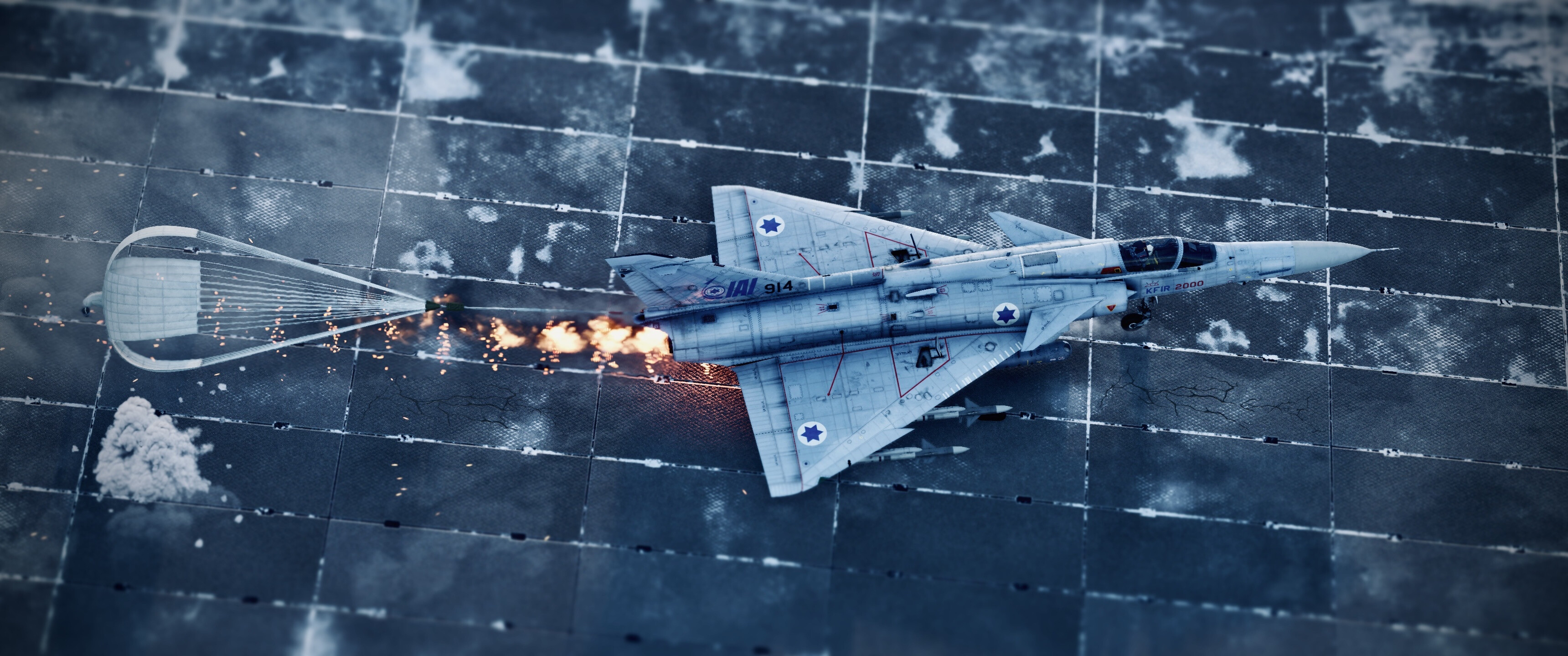
The Kfir C.10 (Block 60) is a modernized variant of the Israeli Kfir multirole combat aircraft, which is in turn a derivative of the French Dassault Mirage 5. With the addition of four DERBY active radar-homing missiles and a top-of-the-line avionics suite, combined with the excellent airframe of the Kfir C.7, the Kfir C.10 is a force to be reckoned with in air battles, and it excels in medium to close range engagements. However, a small missile payload limits the Kfir C.10's ability to engage multiple targets simultaneously.
| Pros | Cons |
|---|---|
| AESA radar with NCTR capability | Low total missile count of 4 |
| Quick acceleration and high top speed | Lacks IRCCM IR missiles |
| Good turn rate and nose authority at higher speeds | Commonly matched against more modern aircraft due to its advanced weaponry |
| Very large unguided bombload capacity | Excessive speed bleed in turns |
| Has access to HMD | DERBY missiles have limited range |
Flight performance
The Kfir C.10 uses the same 7.39-ton airframe of the Kfir C.7, but it has a lengthened nose cone to accommodate the addition of a modern radar set. While it may struggle in dogfights with more modern jets like the F-16C, the Kfir C.10 can still outrun most jets that it faces. However, pilots should still bear in mind that the Kfir C.10 is a delta-winged aircraft, and thus should manage their energy and airspeed appropriately.
Engines
The Kfir C.10 is powered by a single General Electric J79-GE-17 turbojet engine, which is similar to the engine found in the F-4E Phantom II. However, the engine in the Kfir C.10 is a later model and has around 800 more kilograms of thrust (kgf).
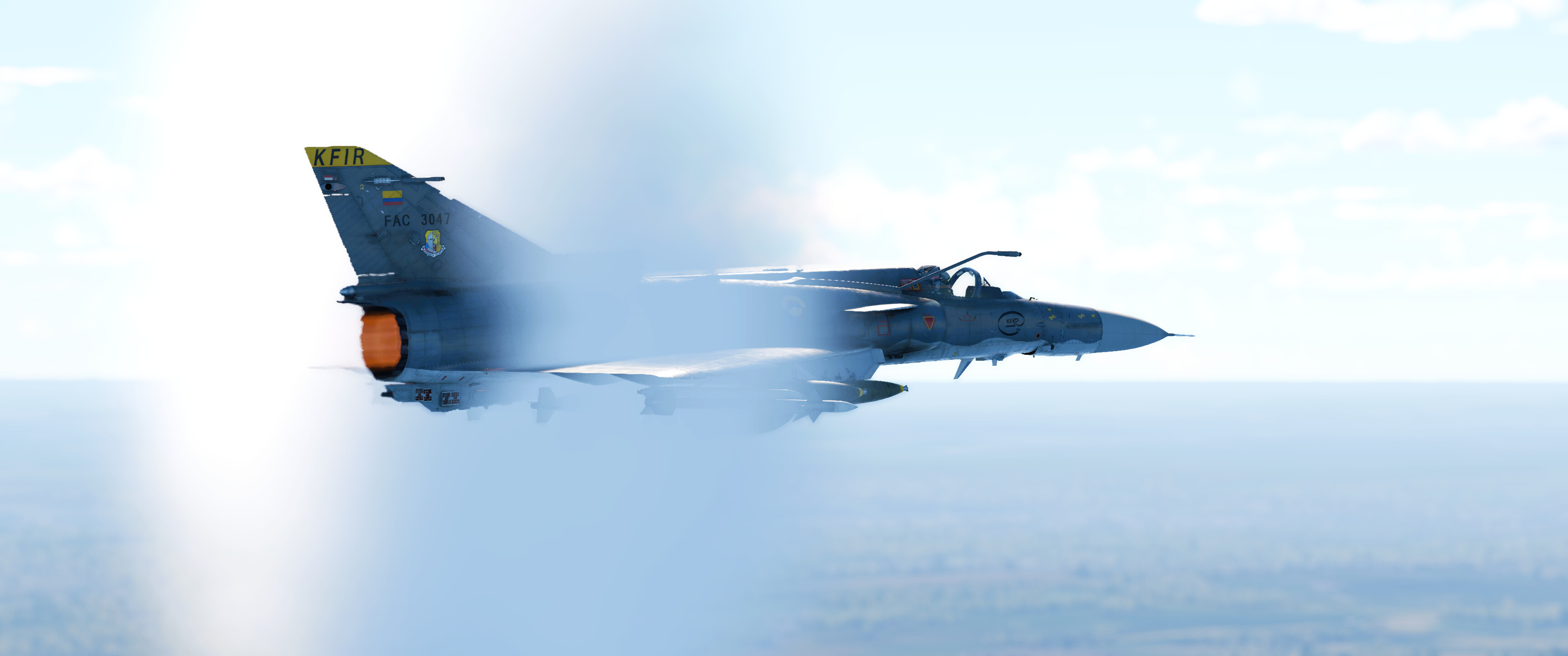
Even with a full fuel and armament load, the J79-GE-17 will accelerate the Kfir C.10 extremely quickly and will eventually wing-rip the aircraft at 1,460 km/h (IAS). It is important to monitor the airspeed and throttle down or extend the airbrakes when diving on opponents.
The Kfir C.10 can rely on its engine to outaccelerate and sometimes even outrun opponents, but the overwhelming speed advantage enjoyed by older Kfirs is gradually eroded with the prevalence of more modern aircraft that have better acceleration, such as the MiG-29. However, the Kfir C.10 can still (literally) fly circles around slower and less agile aircraft, specifically the F/A-18 and older 3rd-generation jets.
The J79-GE-17 does burn through fuel quickly when the throttle is set to 110% afterburner, so taking the 880-liter drop tank on larger maps may be needed.
Maneuverability
The Kfir C.10 has good turning performance and nose authority within the 500 to 900 km/h speed range and can produce high angles of attack, meaning that it can turn much sharper than most aircraft for the first few turns of a dogfight. At higher speeds than ~900 km/h, the Kfir C.10's control surfaces will become noticeably stiffer due to compression, and at lower speeds the aircraft becomes much more sluggish due to the lack of energy it has to perform various maneuvers.
However, instantaneous turn comes at the cost of airspeed, and the Kfir C.10 will bleed all of its energy in prolonged dogfights. While the powerful engine of the Kfir can delay this outcome, as a delta winged aircraft this is an inevitable future in the long run, and players should still avoid engaging multiple opponents simultaneously to avoid being caught while low on energy. Proper energy management is key to success in dogfights.
In a one-on-one fight, forcing an overshoot is a good strategy to gain an advantage, as the Kfir C.10 can typically bleed enough speed in a scissors maneuver for an opponent to fly past. If the opponent chooses to run, the Kfir can use its raw engine power to catch up, and if the opponent commits to the dogfight, the Kfir can simply sit behind and pull into the enemy’s turning circle. Avoid using this tactic if there are multiple enemies in the near vicinity, since they will be easily able to gun down or missile a slow Kfir.
Avionics and countermeasures
The Kfir C.10 has a superb avionics suite, which includes a modern radar and a radar warning receiver equivalent to those on toptier aircraft. However, the awkward countermeasure placement leaves a bit to be desired.
Radar
The Kfir C.10 uses the ELTA EL/M-2052 active electronically scanned (AESA) radar. With its Non-Cooperative Target Recognition (NCTR) capability, rapid scan rate, and long range, the EL/M-2052 is widely considered to be one of the best radars in the game.
In addition to being able to detect and identify a wide variety of aircraft, the EL/M-2052 can also pick up rockets, missiles, and even bombs in TWS mode.
| Band | I |
| Range | 120 km |
| Search zone | 140° x 140° |
| IFF | Yes |
| DL targets | 4 |
Non-Cooperative Target Recognition
Non-Cooperative Target Recognition (NCTR) enables radars to identify targets without prior cooperation or information from them. The EL/M-2052 can identify 53 different types of targets with its NCTR feature, giving the pilot the valuable ability to determine which aircraft or other flying object they are tracking, even in beyond-visual-range engagements.
- Single-engine propeller aircraft
- Multi-engine propeller aircraft (up to 4 propellers)
- Single-engine jets
- Multi-engine jets (up to 4 engines)
- Helicopters
- Rockets and missiles
Unidentified objects (typically bombs)
- Small: less than 5 m in size
- Medium: 5 m to 25 m
- Large: 25 m to 500 m
Aircraft (includes all aircraft variants in respective family)
- A-7
- A-10
- AMX
- Buccaneer
- F-4
- F-5
- F-8
- F-14
- F-15
- F-16
- F-18
- F-20
- F-104
- F-105
- F-111
- Harrier
- Hawk
- J35 Draken
- J37 Viggen
- J-8
- J-10
- Jaguar
- JAS39 Gripen
- JF-17
- JH-7
- MiG-15
- MiG-21
- MiG-23
- MiG-25
- MiG-29
- Mirage 3
- Mirage 2000
- Mirage 4000
- Mirage F1
- Q-5
- Rafale
- Su-17
- Su-24
- Su-25
- Su-27
- Tornado
- Typhoon
- Yak-38
- Yak-141
Radar Warning Receiver
| Band | E, F, G, H, I, J |
| Range | 70 km |
| Threat types on scope | 45 |
| Tracked threats | 12 |
| Launch detection | 27 |
| IFF | Yes |
Countermeasures
There are 72 regular caliber countermeasures mounted in dispensers on the lower “tail” of the Kfir C.10. While 72 countermeasures is not a very large amount, it is generally sufficient for most battles.
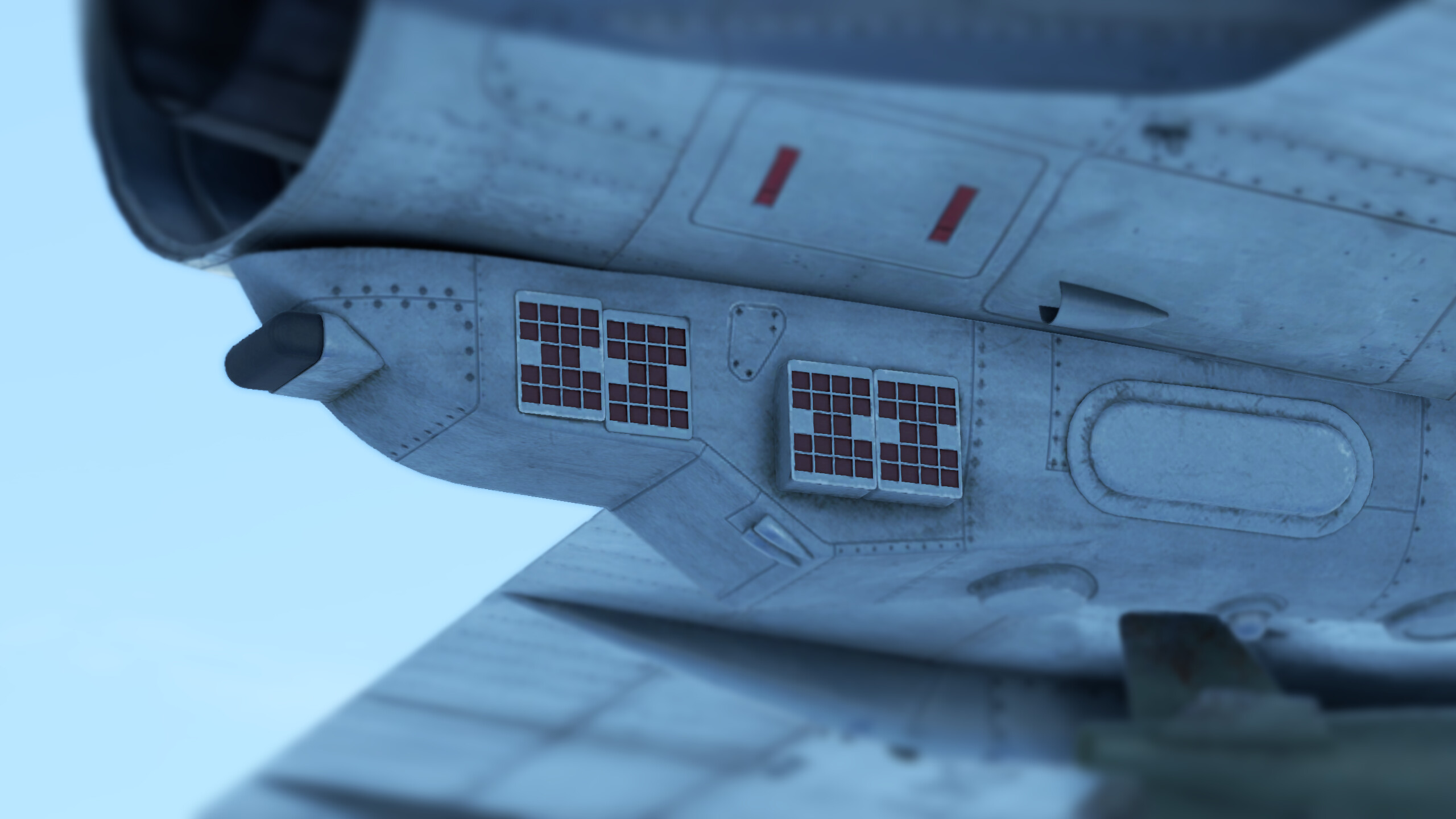
Countermeasures will fire 1 countermeasure per “pop” and dispense to the right of the aircraft from the pilot’s perspective. Due to the location of the dispensers, some readjustment may be necessary when flaring IR missiles to shoot flares into the seeker’s view.
Air-to-air armaments
While earlier Kfir models are typically known for being close-range gunfighters, the Kfir C.10 is the first Kfir fitted with radar missiles and can thus effectively engage in beyond-visual range (BVR) combat.
Warning: The Kfir C.10 only has 4 air-to-air missiles, so use them sparingly.
DERBY
The DERBY is an active radar-homing (ARH) missile produced by Rafael, and the Kfir C.10 can carry up to four of them. While infamous for being the worst-performing ARH due to its somewhat limited range and maneuverability, it can still be quite effective at closer distances while also giving the Kfir C.10 a significant advantage over older aircraft that only have semi-active radar homing (SARH) missiles, which require a constant radar lock.
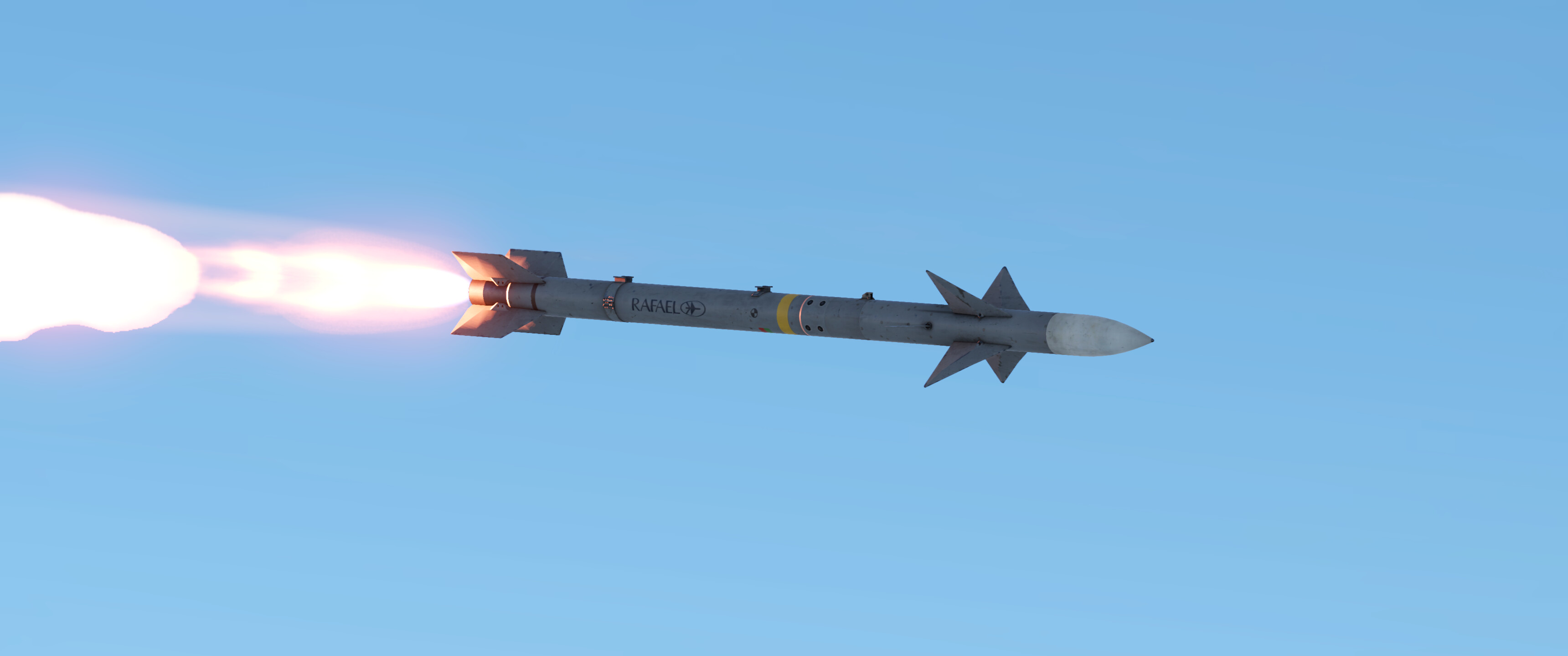
Ideally, the DERBYs should be fired at aircraft between 3 km and 14–16 km away. The probability of getting a kill is higher when targets are closer, and keep in mind that the DERBY tends to bleed all of its speed while maneuvering to hit targets that are 20 km away or further. While DERBYs can be used at closer ranges, especially in head-on engagements, as the missile lacks any kind of TVC control it is inadvised to launch a missile if your target isn’t near the front of your aircraft at those ranges.
A consistent strategy to increase the likelihood of a successful kill is to lob the DERBYs at targets on the deck from above, but avoid leading or lofting the missile excessively, which can occasionally confuse the autopilot.
Python 3
The Python 3 is an infrared-guided missile also produced by Rafael, and is generally considered to be the best non-IRCCM guided missile on an aircraft due to its extraordinarily quick acceleration and great maneuverability. Up to four Python 3s can be taken on the same wing pylons as the DERBY missiles.
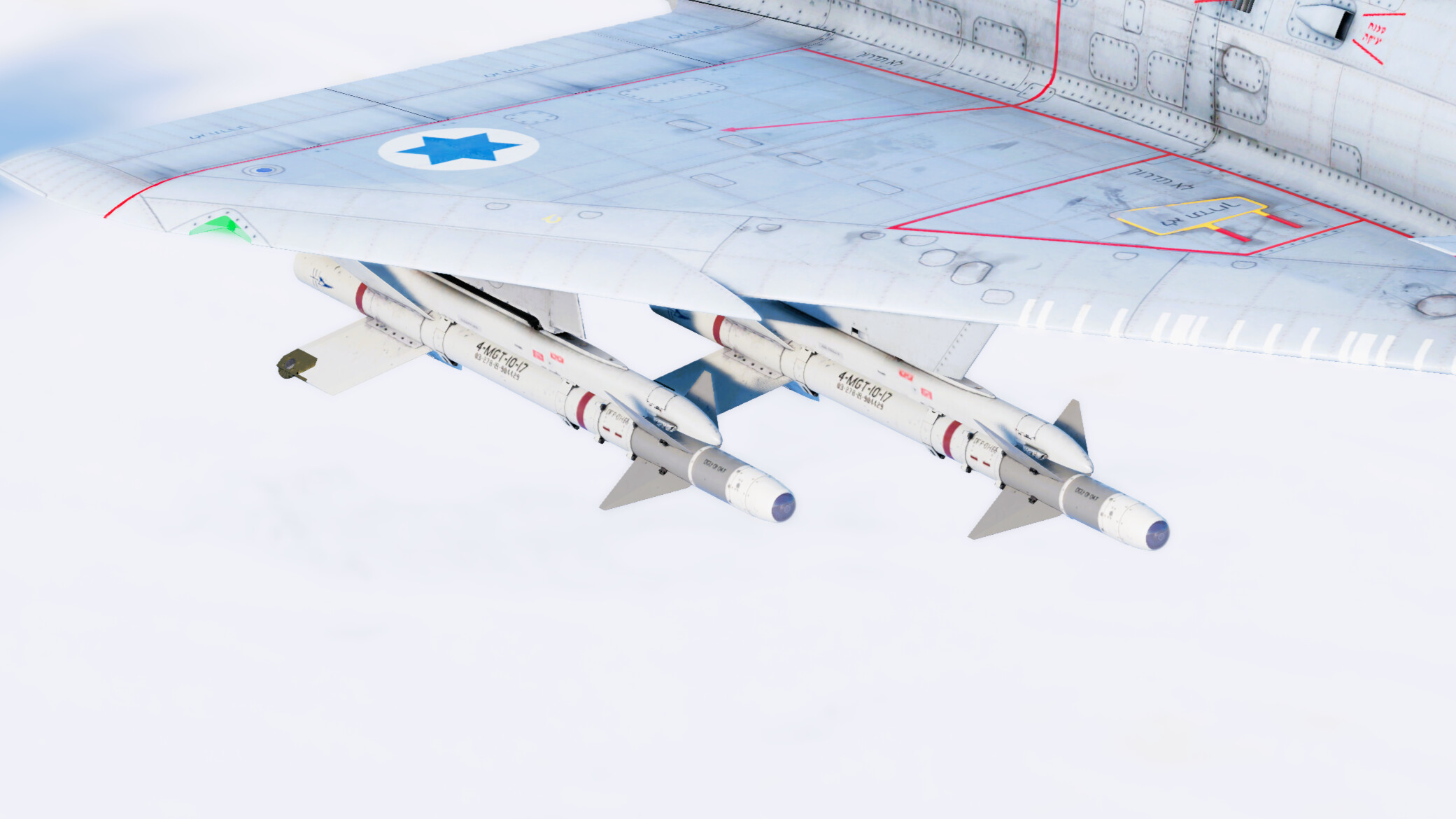
For an IR-guided missile, the Python 3 has a very good maximum range and can easily hit aircraft from up to 3 km away if the Kfir C.10 is flying as fast as the target. However, the Python 3 lacks IRCCM, so it can be easily fooled by flares if opponents turn off their afterburner and deploy their countermeasures.
30 mm DEFA 522A cannon
The Kfir C.10 has two 30 mm DEFA 552A cannons mounted at the bottom of the fuselage with 280 rounds of ammo (140 rounds per gun).
Note: The Kfir C.10 does not get a radar/enhanced envelope gunsight (EEGS) to display a lead indicator on air targets.
- Default: API-T/HEI/HEF
- Ground targets: HEI/API-T/API-T/API-T
- Air targets: HEF/HEI/HEF/HEI/API-T
- Stealth: HEF/HEI
In most battles, the air targets belt will be the best option. The DEFA 552A is generally not very effective against ground targets, and every belt contains API-T shells, so using the ground targets belt is not needed.
20 mm GAU-4 cannon (gunpods)
Pilots who have flown the Kfir Canard have probably used the twin GAU-4 Vulcan gunpods at least once, and gunpod enthusiasts will be pleased to discover that the Kfir C.10 can equip the same gunpods in place of two air-to-air missiles.
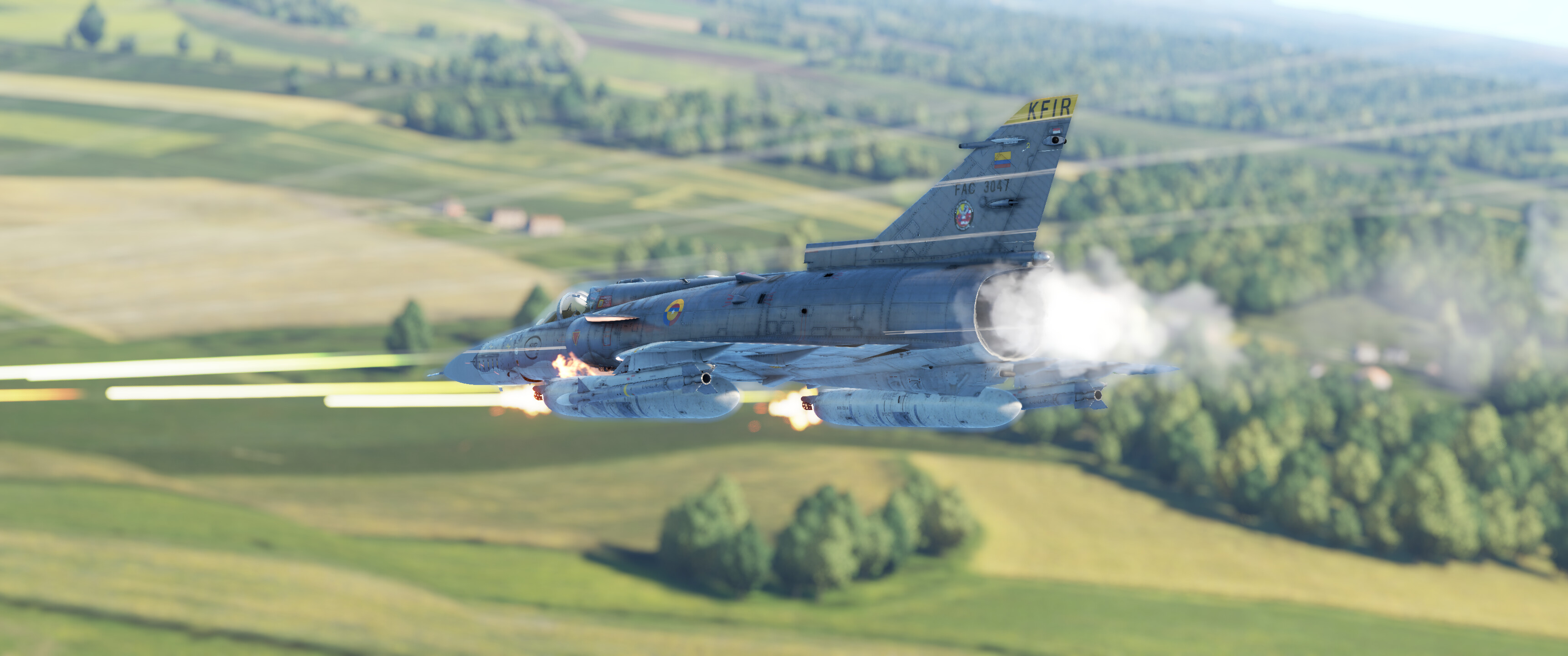
- Default: HEF-I/API-T/AP-I
- Air targets: HEF-I/HEF-I/API-T/HEF-I/HEF-I/AP-I
- Armored targets: API-T/AP-I/AP-I/HEF-I
- Stealth: HEF-I/AP-I/AP-I
These gunpods severely hamper flight performance and turn rate in exchange for a monstrous amount of firepower. Taking them into battle is not advisable due to the rarity of close-range dogfights in the era of missile combat, but they can surprise opponents who are not expecting a wall of 20 mm lead flying toward them head-on.
Air-to-ground armaments
Although the Kfir C.10 can only equip a limited amount of guided munitions, it can still carry a devastatingly large payload of unguided bombs, which can be aimed accurately using the ballistic computer.
Unguided bombs
| Bomb | Weight | Explosive mass (TNTe) | Max # of bombs |
|---|---|---|---|
| 500 lb. LDGP Mk 82 | 531 lbs. | 117.6 kg | 15 |
| 750 lb. M117 cone 45 | 799 lbs. | 206.6 kg | 8 |
| 1000 lb. LDGP Mk 83 | 985 lbs. | 272.4 kg | 8 |
| 2000 lb. LDGP Mk 84 | 1,970 lbs. | 578.6 kg | 2 |
| 3000 lb. M118 | 3,000 lbs. | 1,060.8 kg | 1 |
Unguided bombs (parachute)
| Bomb | Weight | Explosive mass (TNTe) | Max # of bombs |
|---|---|---|---|
| 500 lb. SAMP Mk 82 | 560 lbs. | 117.6 kg | 15 |
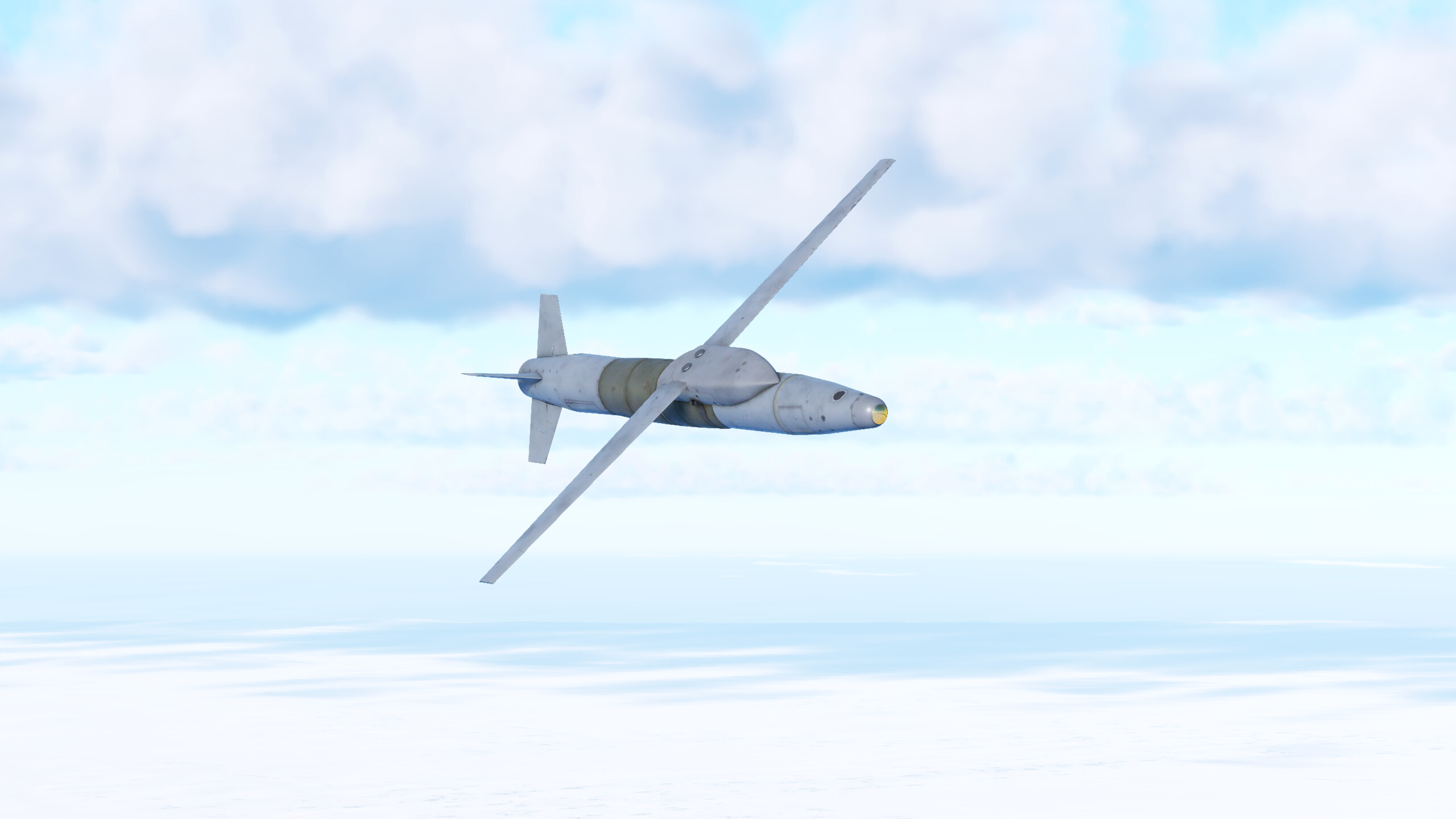
Guided bombs
| Bomb | Weight | Explosive mass (TNTe) | Guidance method | Max # of bombs |
|---|---|---|---|---|
| GBU-12 Paveway II | 277.1 kg | 117.6 kg | Laser | 2 |
| GBU-49 Paveway II | 277.1 kg | 117.6 kg | Laser + IOG + GNSS | 2 |
| SPICE 1000 | 1,000 lbs. | 272.4 kg | IR + IOG + GNSS | 1 |
Rockets
| Rocket | Weight (rocket) | Explosive mass (TNTe) | Max # of rockets |
|---|---|---|---|
| FFAR Mighty Mouse | 9 kg | 1.2 kg | 76 |
| Zuni Mk 32 | 57.3 kg | 8.9 kg | 16 |
LITENING III
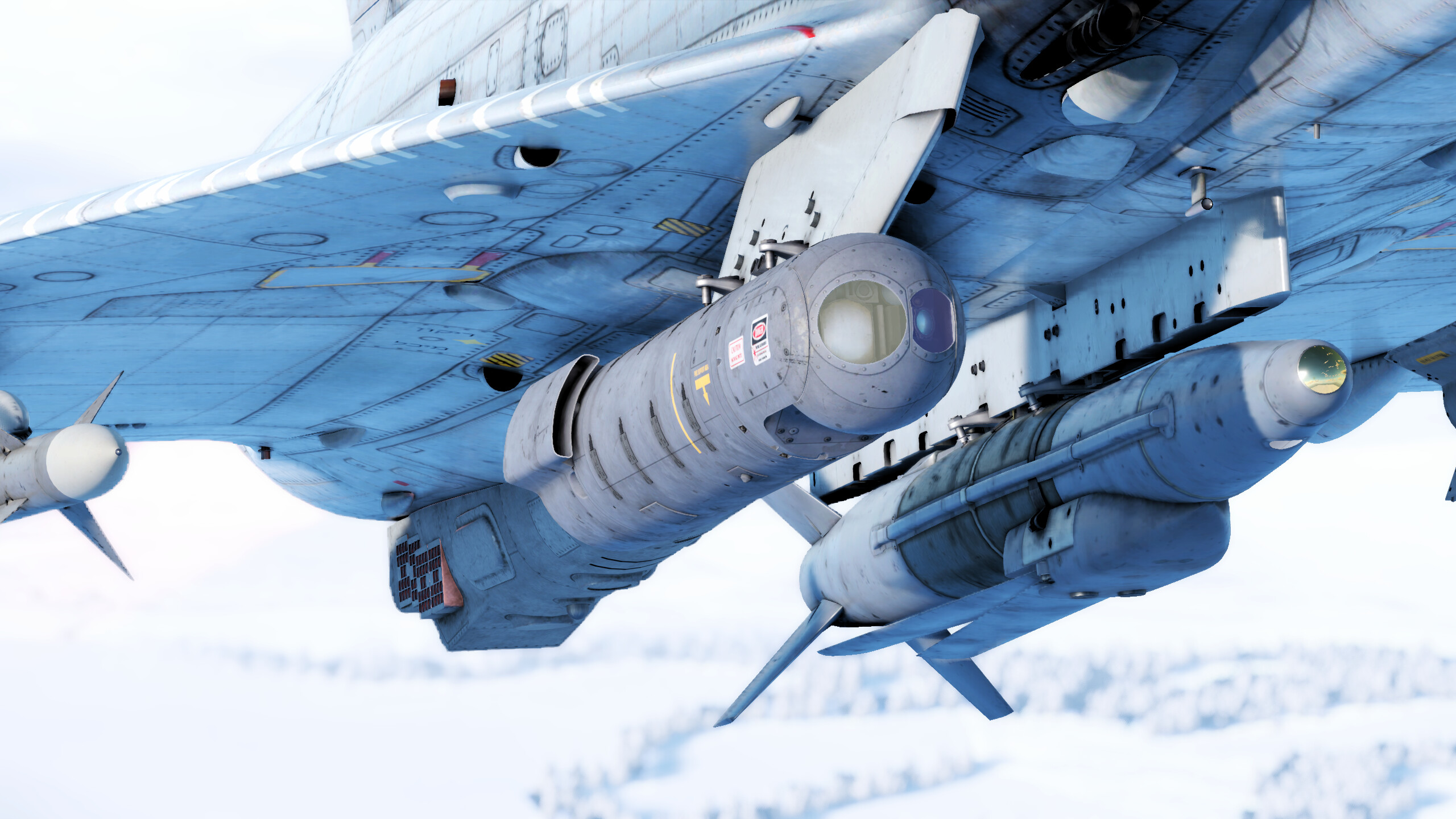
The LITENING III is a laser targeting pod used to spot targets, guide the GBU-12 and GBU-49 Paveway II guided bombs, and lock the fire-and-forget SPICE 1000 onto ground targets.
Cockpit
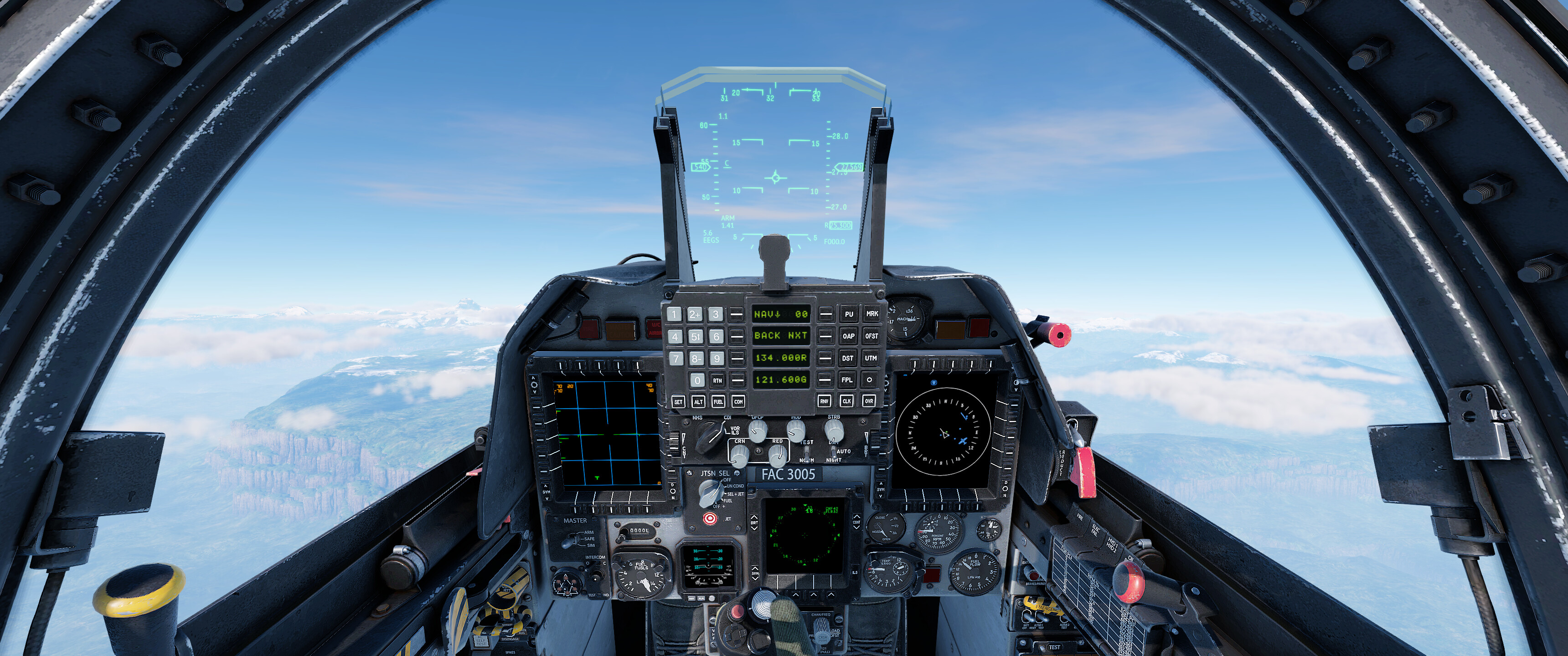
The Kfir C.10 has excellent forward visibility from the cockpit thanks to the removal of two supports at the front of the visor that were present on earlier Kfir models. Rearward visibility is partially obstructed by the pilot’s seat/headrest and the aerial refuelling probe, but visibility should not be a problem for simulator pilots.
Helmet-mounted display
The Kfir C.10 is also equipped with the Targo II head-mounted display (HMD) for the pilot, which projects an interface onto the pilot’s helmet, allowing them to radar lock or cue missiles in the direction of their view.
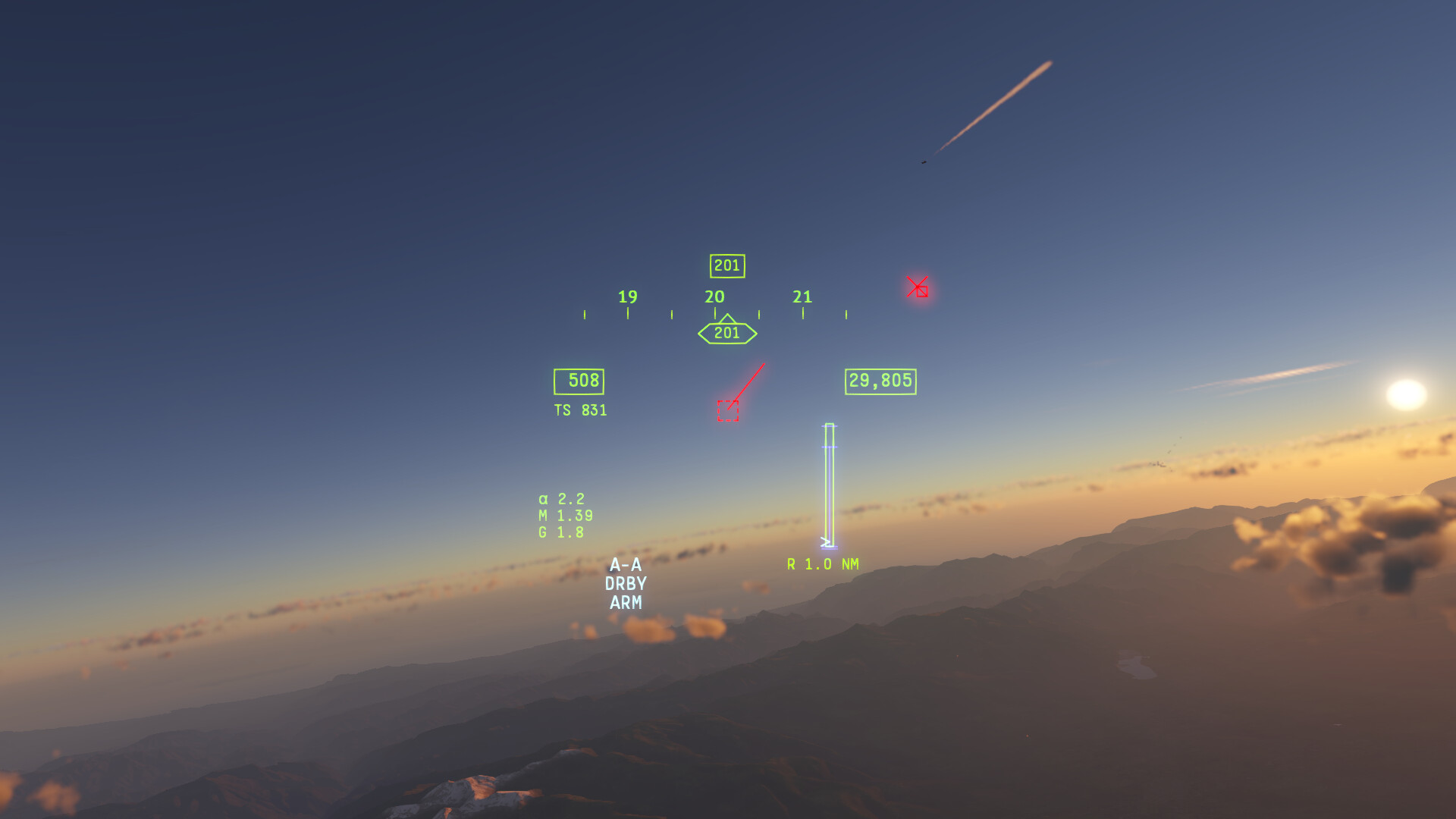
While lacking auto-IFF features for both ground and air units, the Targo II provides a substantial amount of useful information for the pilot, including the range to the target, current G-overload, and the selected missile.
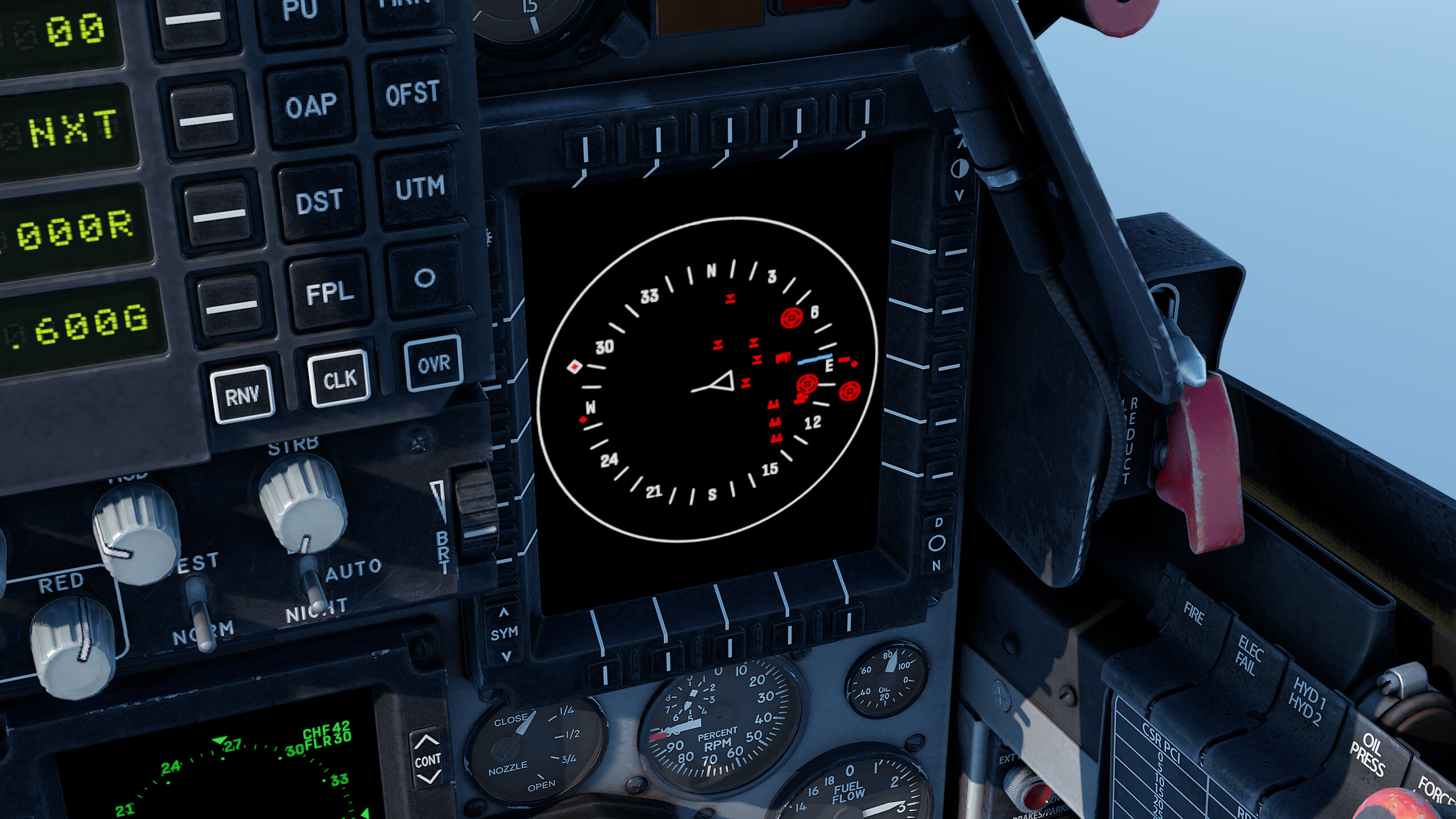
Multifunction displays
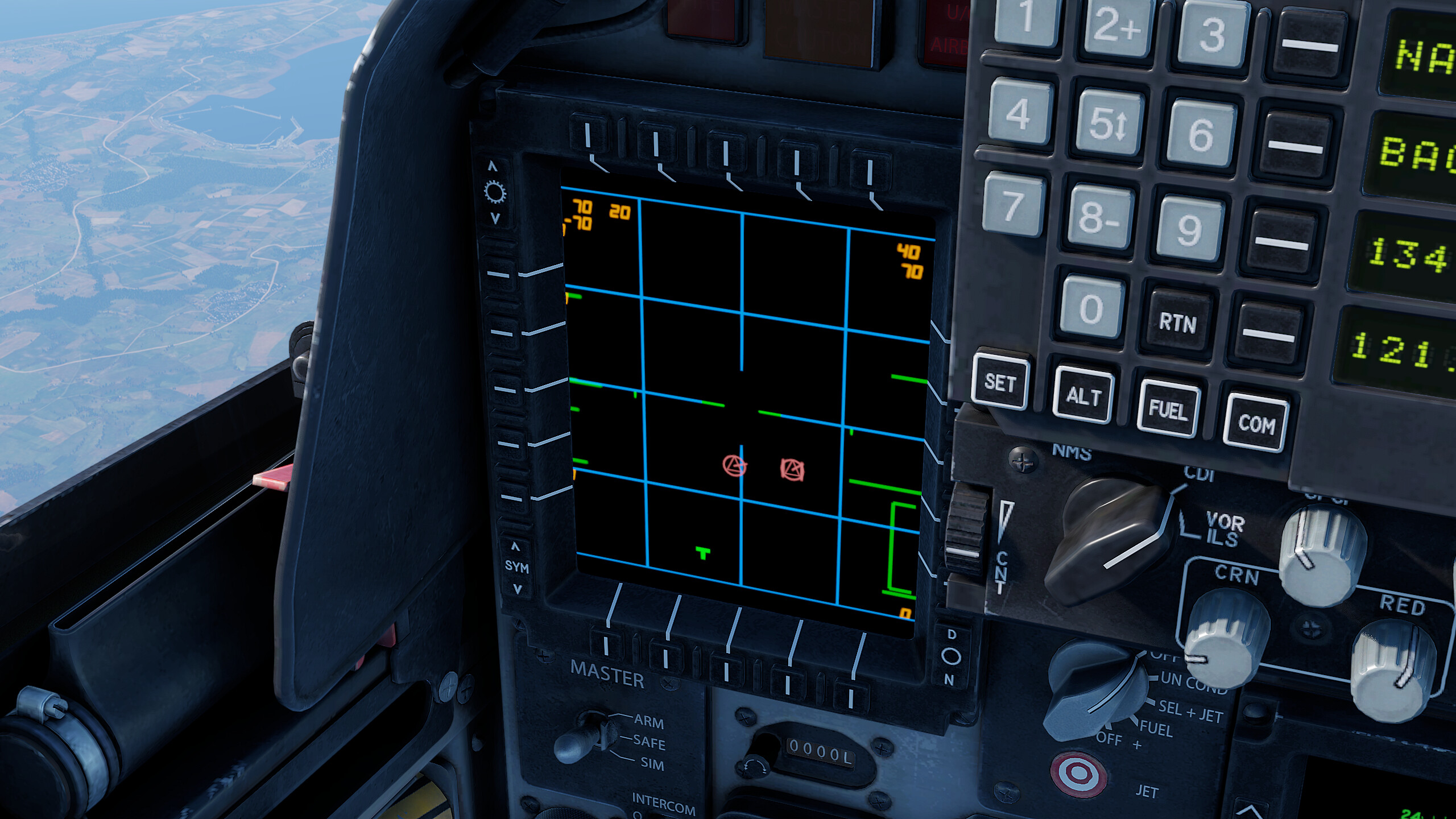
The cockpit features two large color multifunction displays (MFDs) that can be used to display the radar scope and a minimap display. Note that the left-most MFD can only display a radar scope and not the map.
Usage in battles
The Kfir C.10's playstyle is largely dictated by the lobby that it faces. In downtiers, it can outperform nearly all opponents in missile combat and dogfights with relative impunity. Although the Kfir has a relatively old (but still maneuverable) airframe, it will commonly be matched against more modern aircraft with superior weaponry since the C.10 has advanced avionics and weaponry. The F-4F ICE and the Tornado F3 (Late) are similar aircraft in the same boat as the C.10, so if you’ve flown either aircraft and managed to perform well in them, you’ll feel right at home with the Kfir.
The Kfir C.10 is still workable in uptiers, but it will be mostly relegated to picking off enemies or relying on hit-and-run tactics due to its relatively small missile count and the inability to handle certain enemies in direct engagements.
Recommended loadout
- Air battles: 4x DERBY, 1x 880 liter drop tank, 30 flares/42 chaff, 20 minutes of fuel (67%)
- Ground battles: (CAS): 4x DERBY, 1x LITENING III, 1x SPICE 1000, 1x GBU-49, 38x FFAR Mighty Mouse, 30 flares/42 chaff, 20 minutes of fuel (67%)
When facing off against older 3rd-generation aircraft, it is quite easy to net a few kills at the beginning phases of the match by climbing to 7000 to 8000 m and firing the DERBY missiles at targets that are 8 or 9 km away at low altitudes from directly above (multipathing is rarely effective against missiles fired from above). Avoid launching the DERBYs at targets that are actively defending or are far away enough to notch or crank the missile. Afterwards, pilots can either return to the airfield to rearm or assist teammates with destroying opponents with remaining missiles or the guns. Targeting opponents in a dogfight or those occupied in a furball is an efficient method of getting easy kills; simply use hit-and-run tactics.
Note: Using up the DERBY missiles in early game stages will reduce the Kfir’s effectiveness in the later game, and launching them from further away can be inconsistent.
The Targo II HMD on the Kfir C.10 is also a luxury that older aircraft do not have, making off-bore shots with the DERBY missiles a viable tactic: while sitting in a semi-notch position, radar lock an enemy aircraft with the HMD, fire a DERBY, and then go back into the notch position to remain safe from incoming radar missiles. Note that the DERBY might not be able to pull into tighter off-bore shots under 3 km.
The Kfir C.10 is less effective against more modern aircraft like the F-15E or the Su-27SM, but it still can hold its own with proper positioning and target prioritization. Avoid getting targeted or hit in the initial missile jousts by sideclimbing to altitude or hugging the deck, and then re-engage opponents once the majority of the missiles have found their targets or missed. Try to surprise unaware opponents who are occupied with engaging other teammates or those that are near-directly above or below you, as their RWRs may not pick up your missile when launched at these blindspots. However, beware of engaging more maneuverable aircraft in a dogfight, as they can usually out-energy or out-turn the Kfir C.10.
In ground battles, the Kfir C.10 only has two guided bombs to use, so it is generally better to take out the F-16D Barak II or an alternative with more guided weaponry. If pilots choose to use the Kfir, drop the SPICE 1000 first and then the GBU-49 Paveway. The FFAR Mighty Mouse rockets can be fired in the general direction of the enemy spawn to temporarily flood the radar of enemy anti-air units, making it harder for them to intercept the guided bombs.