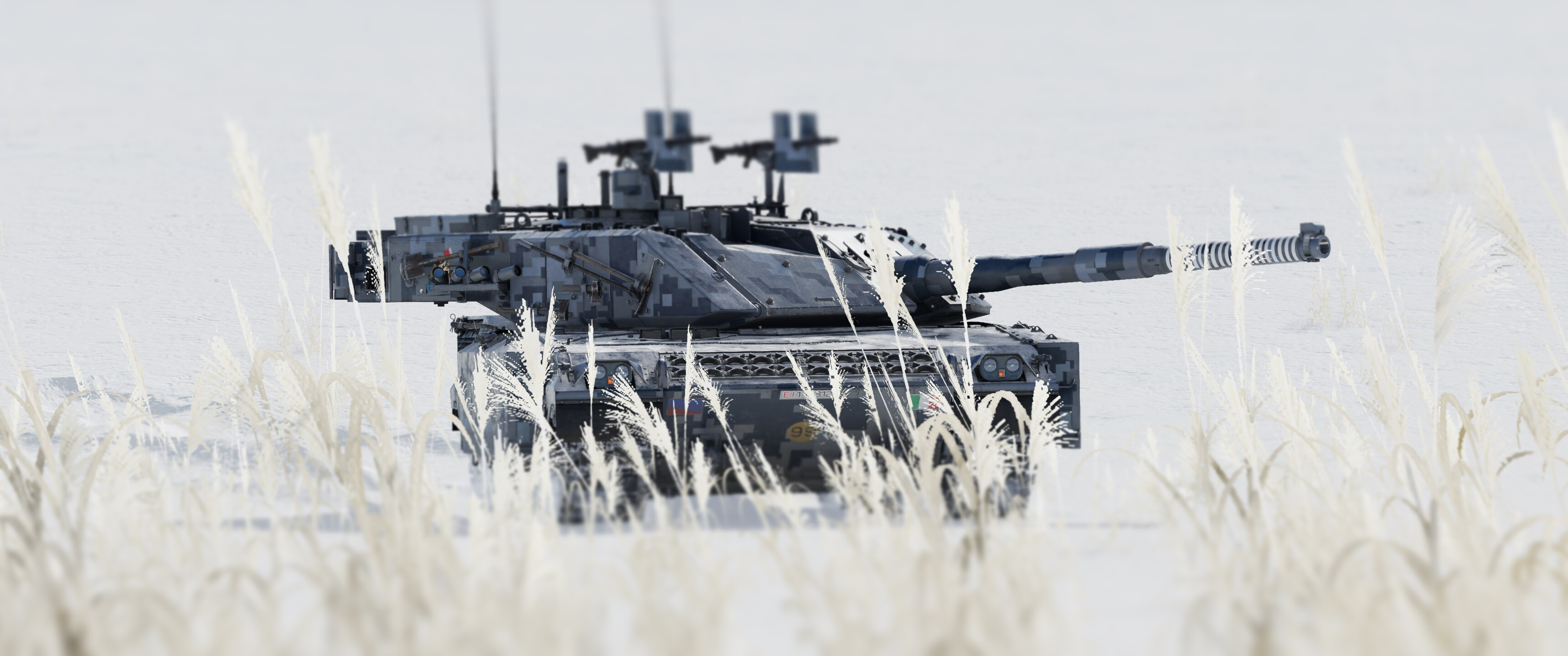
The Ariete PSO is a lesser-known variant of the Italian C1 Ariete MBT modified for peace support operations. Rather than being fitted with the standard WAR armor package, the Ariete PSO is equipped with specialized composite armor designed to increase survivability against RPG attacks in low-intensity combat environments. Like the standard Ariete and the more modern Ariete AMV, the Ariete PSO lacks any meaningful protection against kinetic rounds and is extremely unforgiving to use when compared to other MBTs like the Leopard 2A7V. However, players who can work around the Ariete’s various weaknesses will be able to utilize the full potential of the Ariete’s excellent offensive armament, making it a formidable opponent when in the hands of a skilled tanker.
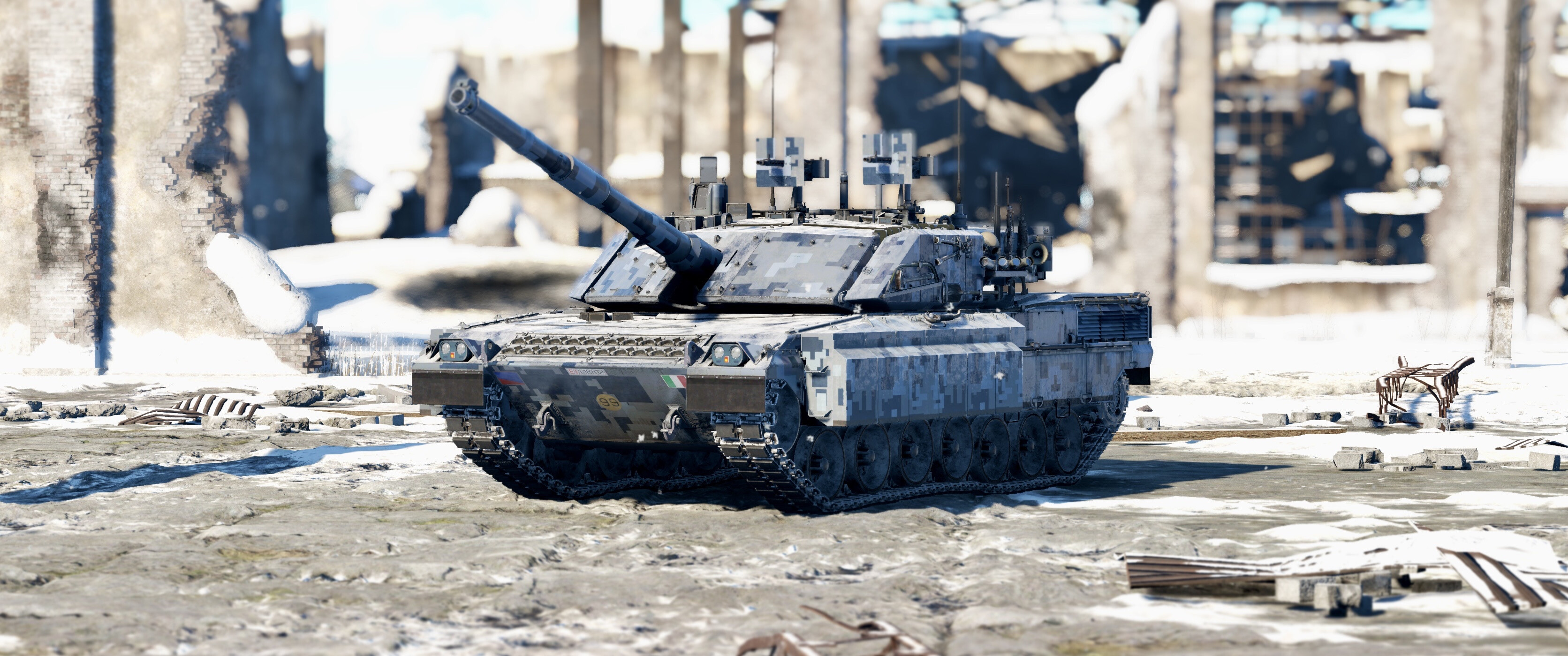
| Pros | Cons |
|---|---|
| 5-second reload and DM53 APFSDS round | Terrible armor protection |
| Excellent gun handling and thermals | Ammo racks are easy to hit and detonate |
| Good mobility and power-to-weight ratio | Huge lower glacis plate weakspot |
| PSO armor kit provides increased protection against autocannons and some HEAT rounds | PSO armor kit is ineffective against large-caliber APFSDS or modern ATGMs |
Service history
Brief history of the C1 Ariete
During the latter half of the 20th century, Italy’s main battle tank fleet consisted of the ubiquitous M60A1 and Leopard 1A5, both of which were beginning to show their age in service at the time. In response, Italy moved forward in developing its own indigenous MBT under a consortium led by Iveco-Fiat and OTO Melara (which also had experience building Italy’s Leopard 1s under license) beginning in 1982.
PSO armor upgrade
In the late 2000s, Iveco-OTO Melara and the Italian Directorate of Ground Armaments signed a contract to upgrade several standard C1 Ariete MBTs with a new armor package. Unlike the existing WAR kit on the C1 Ariete, this new armor package would be focused on increasing the tank’s protection against RPGs during peacekeeping operations by adding applique composites to the side of the vehicle. Future C1 Arietes equipped with the PSO kit would be known as the Ariete PSO.
Operational history
Unfortunately, there is not much declassified/publicly available information on the service history of the Ariete PSO. Still, it is known that several tanks participated in Operation Ancient Babylon in Iraq in 2003, with satisfactory results. At the conclusion of Italy’s military operations in Iraq, the Ariete PSOs had their armor kits removed and were converted back to the C1 Ariete standard.
Armor
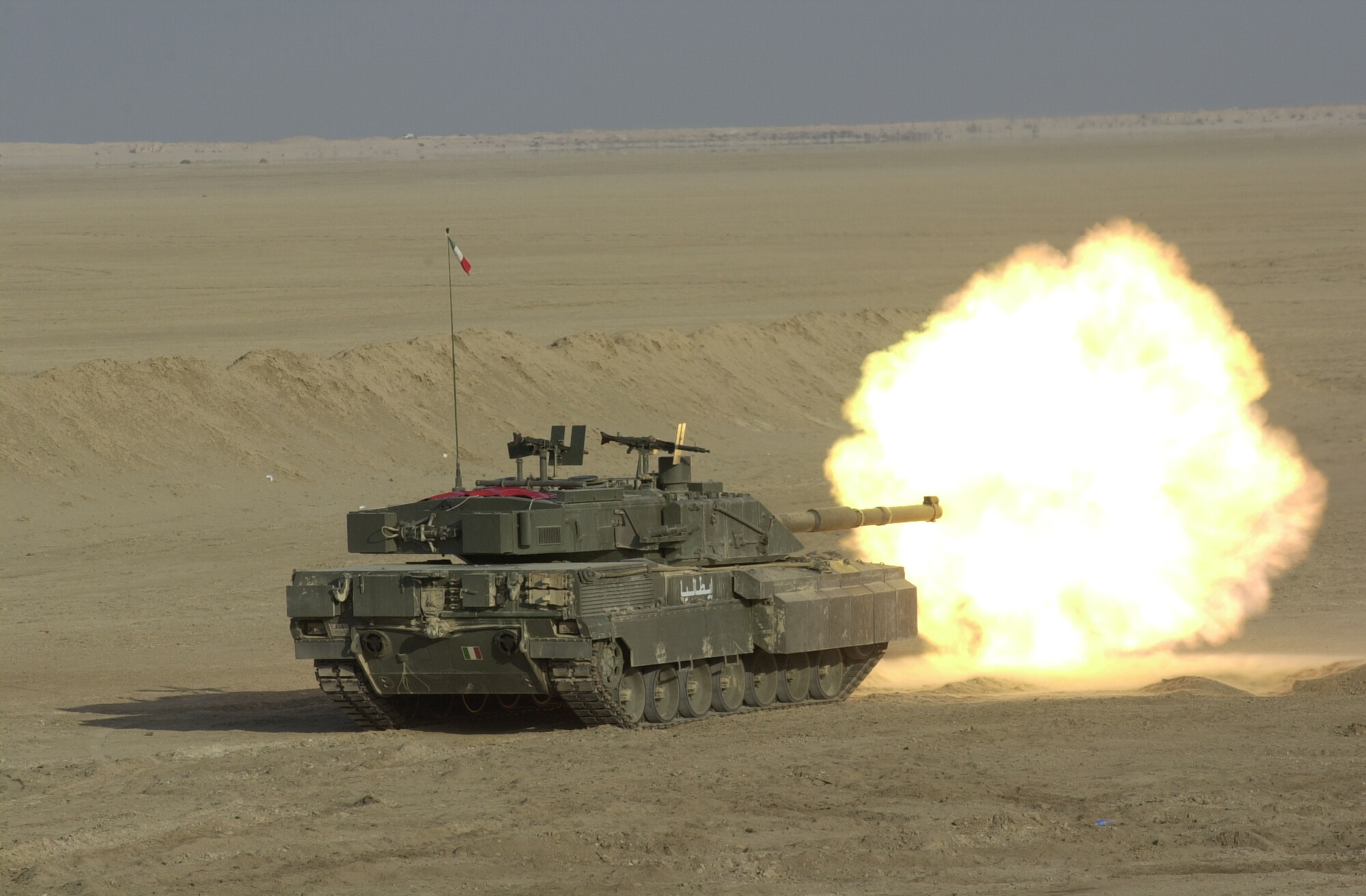
The Ariete PSO (and the other three Arietes) are notorious for having the least effective armor amongst all MBTs in the game due to their reliance on spaced armor and minimal usage of NERA composites.
Armor composition
Most of the Ariete’s armor is composed of rolled homogeneous armor (upper frontal plate and turret sides). The only place where NERA composites are located is in the turret cheeks, while the upper glacis and turret sides rely on spaced armor (similar to the OF-40 MTCA), which results in inadequate protection against most threats.
From the frontal arc, the Ariete PSO’s armor is essentially useless against nearly all APFSDS penetrators, ATGMs, and even some HEAT shells. The lower frontal plate is the most glaring weakspot as autocannons and even shells from obsolete World War II-era vehicles can penetrate it. However, it is worth mentioning that the upper half of the frontal glacis plate (below the turret ring) is steeply angled, and poorly aimed APFSDS rounds can ricochet off the armor.
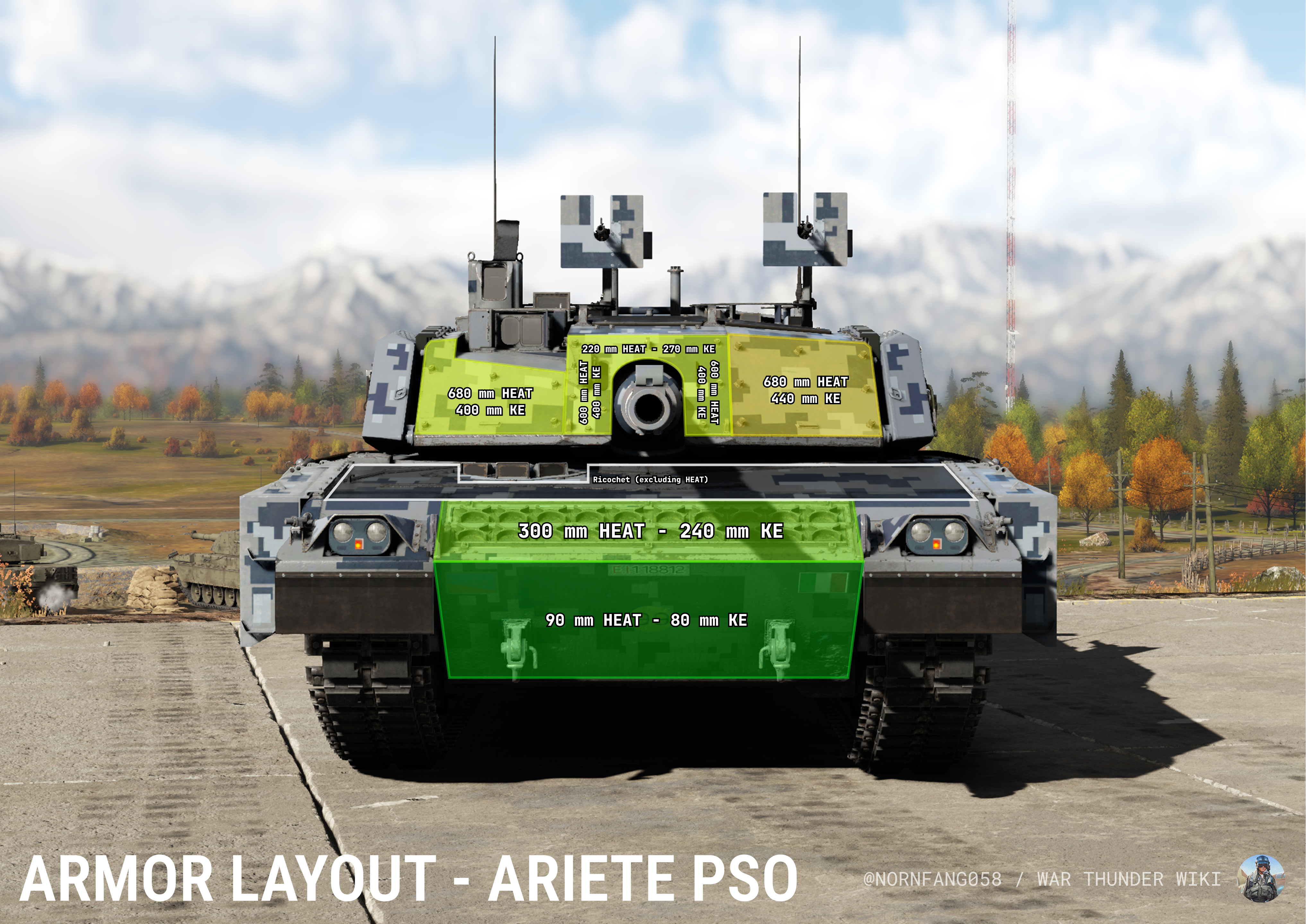
The add-on composites from the PSO armor package significantly increase the resilience of the 20 — 35 mm hull and turret side armor against chemical threats and autocannon fire. When compared to the C1 Ariete, the composite blocks attached to the hull provide approximately 400 mm of chemical protection and 50 to 60 mm of kinetic protection, respectively. For the turret side composites, around 200 mm of chemical/40 mm of kinetic protection is provided. Installing the optional Tipo 2 armor package can boost the protection even further, but note that all modern tandem-charge ATGMs, such as the lethal 9M113 'Kornet' ATGM on the BMP-2M as well as large-caliber APFSDS rounds can penetrate the composites easily. The composites can also be shot off after being hit repeatedly.
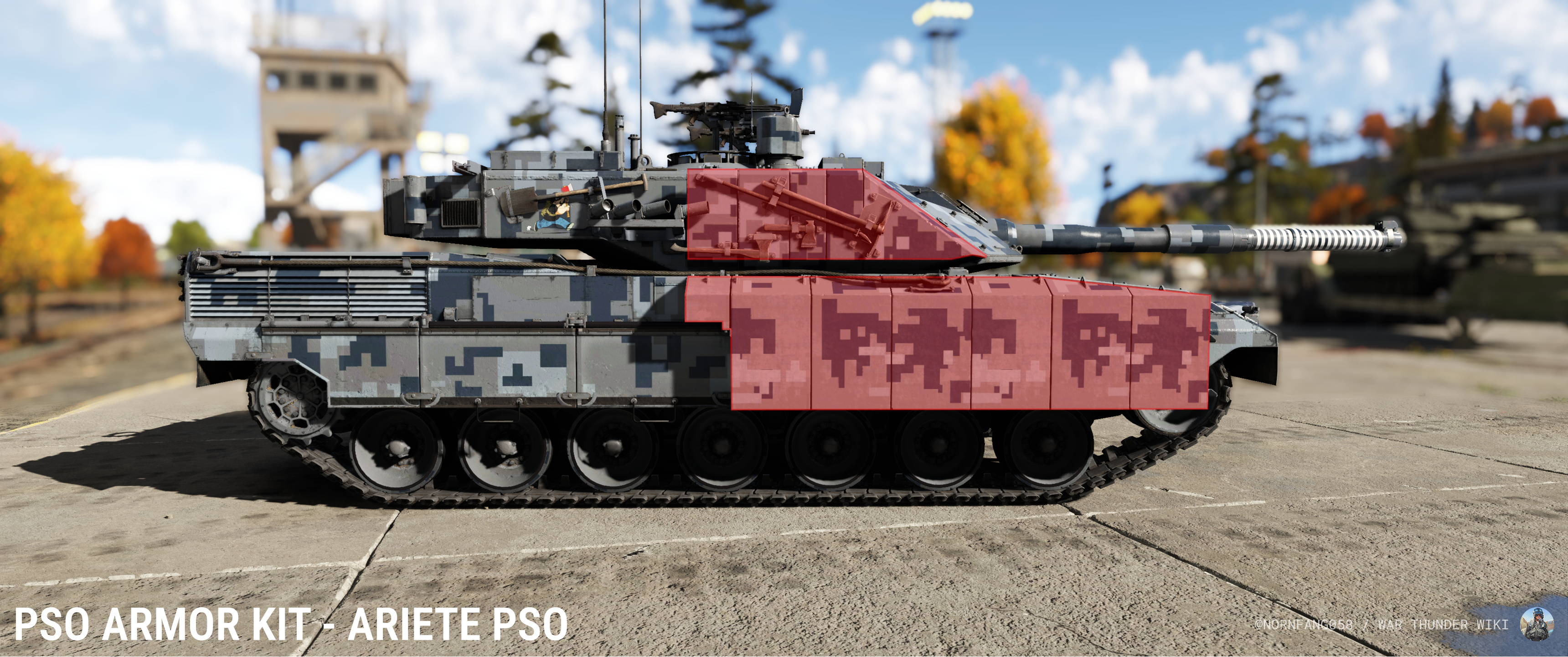
The roof armor is also very thin (20 mm RHA with an applique 10 mm composite screen attached in some areas), leading to the Ariete being quite susceptible to artillery strikes and overpressure damage. As these may somewhat frequently knock out the engine or overpressure the crew, try to avoid sitting directly under an artillery strike whenever possible given its poor protection.
Internal armor
The Ariete PSO has two 20 mm and thicker 35 mm sheets of RHA inside the hull sides and spaced armor in the sides of the turret. Additionally, there is a 10 mm RHA plate separating the driver compartment from the ammunition rack and an 8 mm RHA plate partitioning the engine compartment from the turret crew.
The effectiveness of this internal armor is negligible against most weaponry that the Ariete PSO faces, but it may stop some weaker or smaller-caliber autocannon rounds from penetrating occasionally or reduce spall damage by a minute amount.
Tipo 2 armor modification
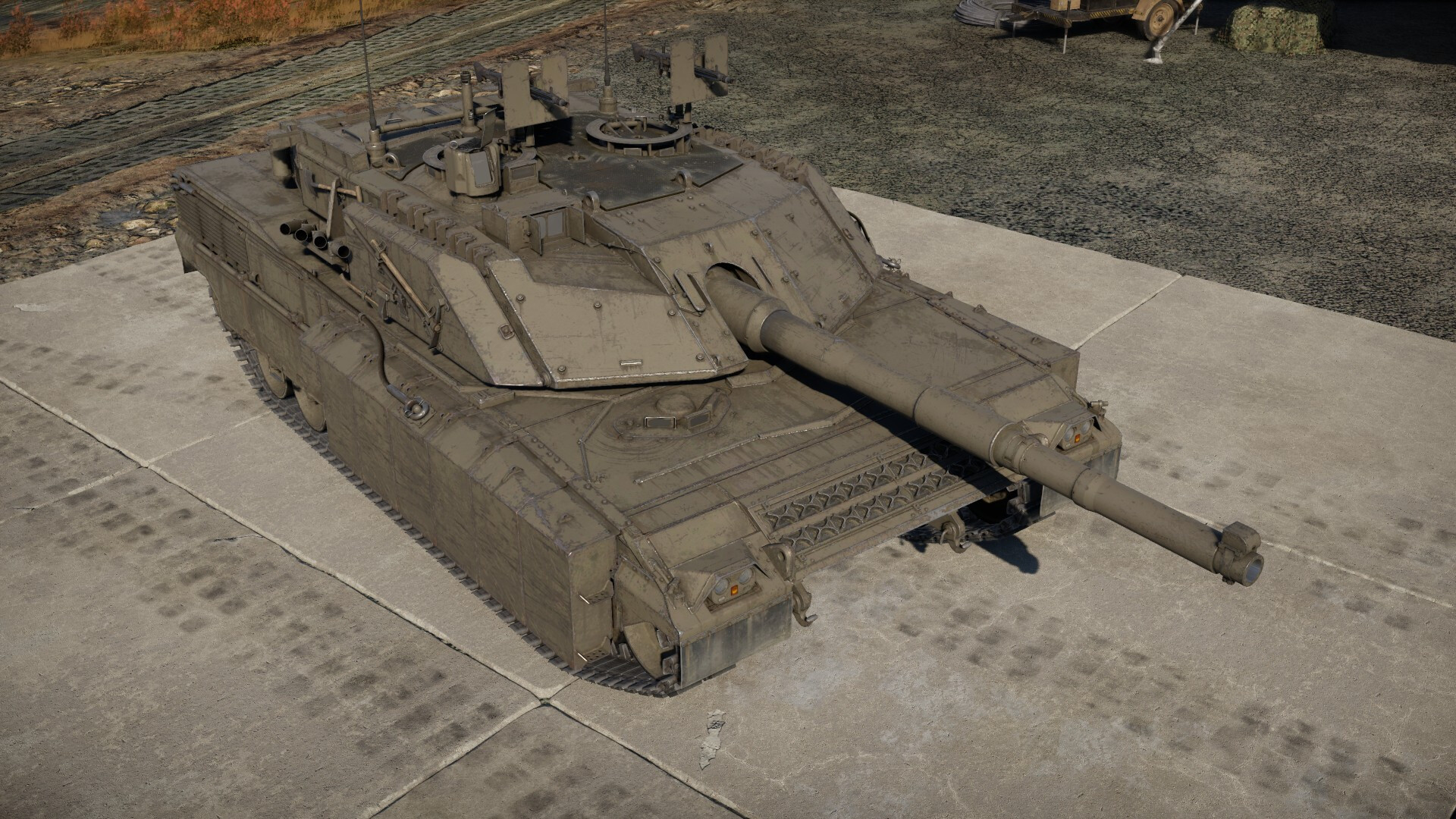
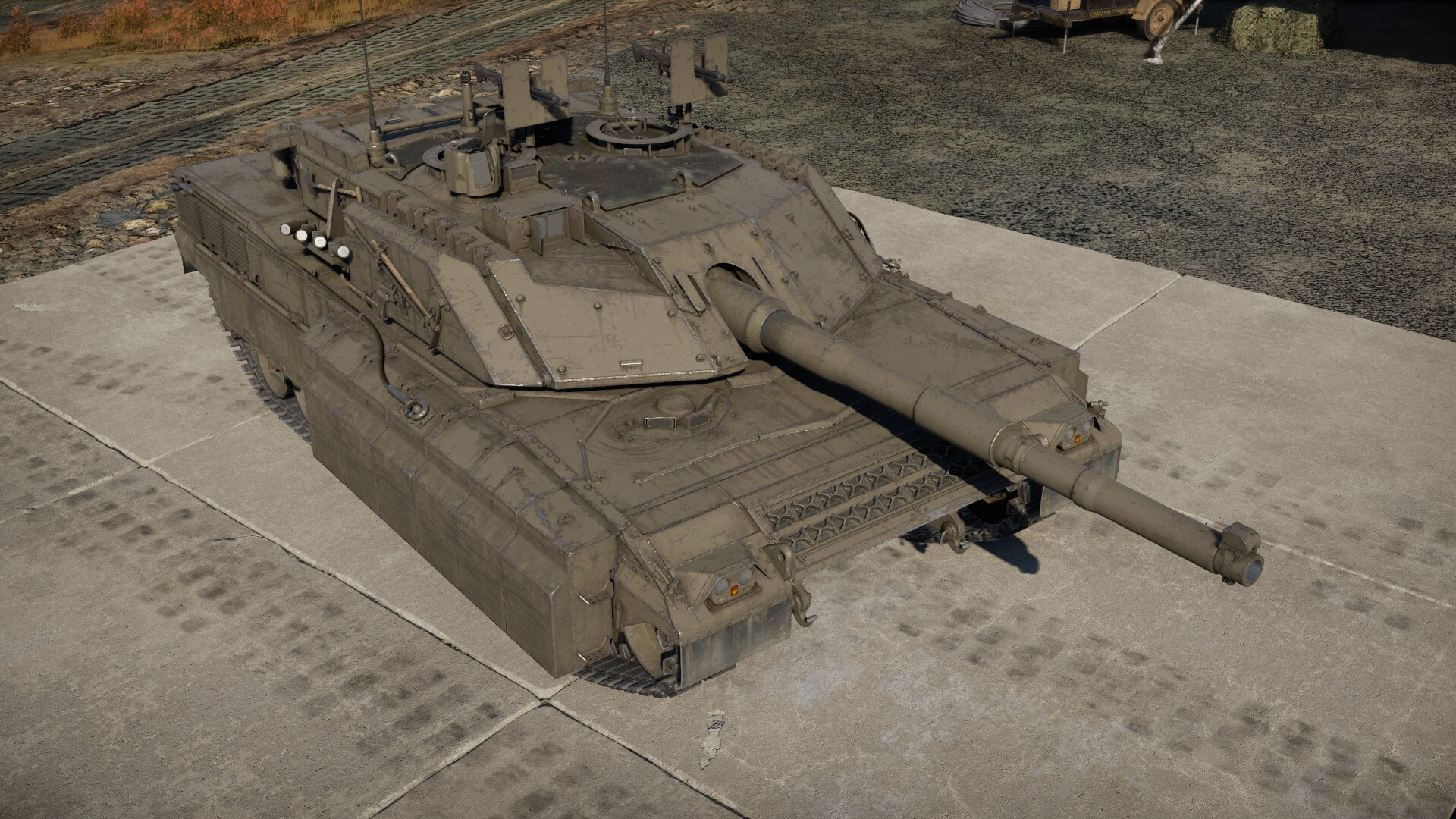
The Tipo 2 armor modification can be equipped to increase the thickness of the composites located on the lower sides of the hull. This adds a sizable amount of weight (2 tons) to the tank, but increases chemical protection by around 150 mm and kinetic protection by 30 to 50 mm.
Survivability
Like its armor, the Ariete PSO’s survivability is also a letdown. Opponents do not need to aim for a specific weakspot: simply shooting at the center of the Ariete is sufficient to knock out the crew (driver, gunner, and commander) or detonate either of the ammo racks.
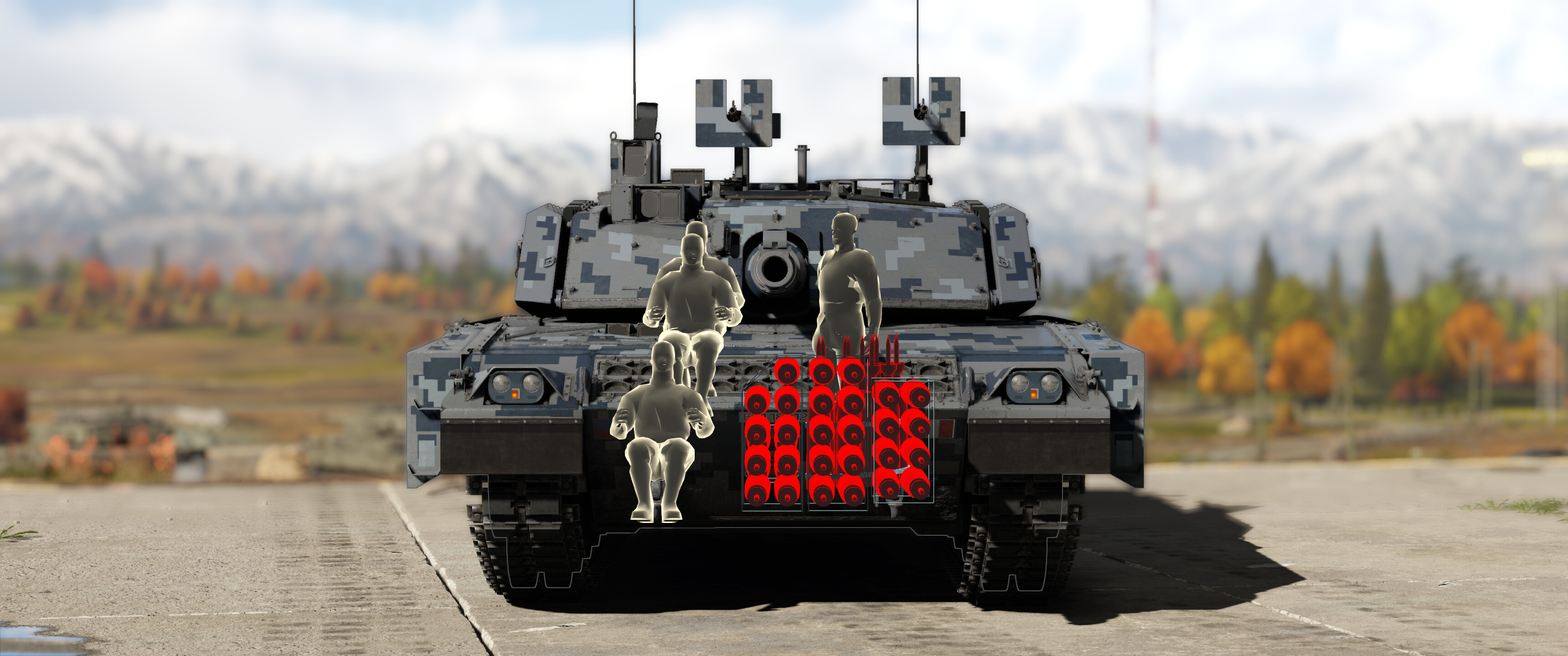
Unfortunately, the proverbial War Thunder saying “no armor is best armor” is not quite true for the Ariete PSO, as its armor is thick enough to cause considerable spalling but also too thin to offer any meaningful protection against most munitions.
Tip: The larger secondary ammo rack next to the driver can be fully emptied if 15 or fewer rounds are loaded. Carrying above 25 rounds of ammo is not necessary on most maps, with the exception of large, open maps like Pradesh or Red Desert.
While this may not be viable in all situations, tankers using the Ariete PSO should generally err on the side of caution and play sensibly to avoid a quick demise at the hands of other tanks, IFVs, or even anti-aircraft platforms with autocannons.
Spall liners
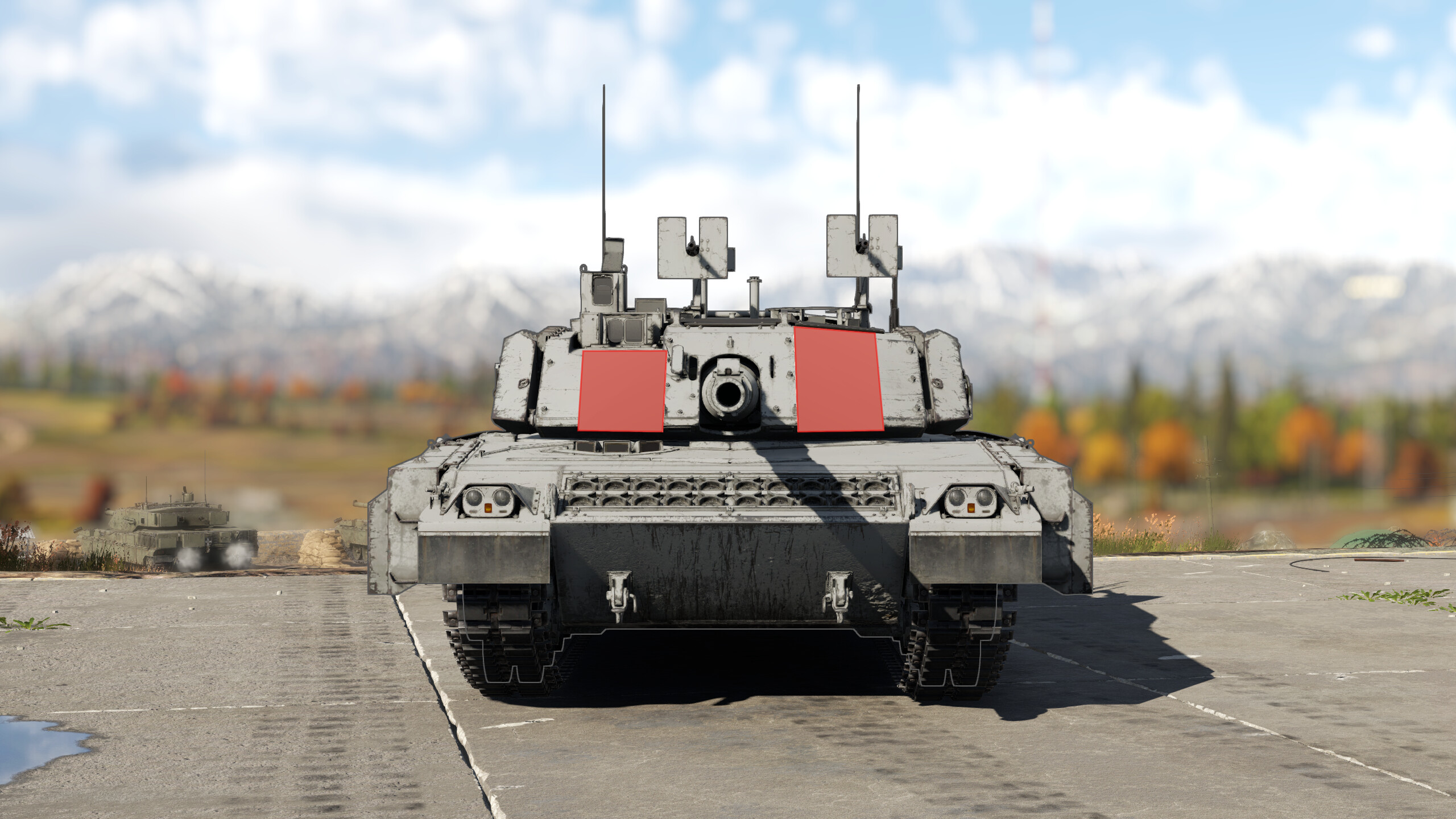
All Arietes are equipped with a single spall liner behind each turret face. They help to absorb the post-penetration damage from chemical or kinetic munitions and can prevent the turret crew from being knocked out if enemies shoot near the edges of the turret cheeks. Unfortunately, there are no spall liners located in any other areas of the vehicle, unlike vehicles such as the Russian T-90M.
Smoke grenades
The Ariete PSO is equipped with 8 smoke grenades, with 4 launchers on each side of the turret. These can be used to create a near-instantaneous but temporary smoke screen in front of the vehicle. Smoke grenades should be used appropriately (e.g., when covering sightlines or retreating), since they can make the tank easier to target and destroy when deployed in the wrong situations.
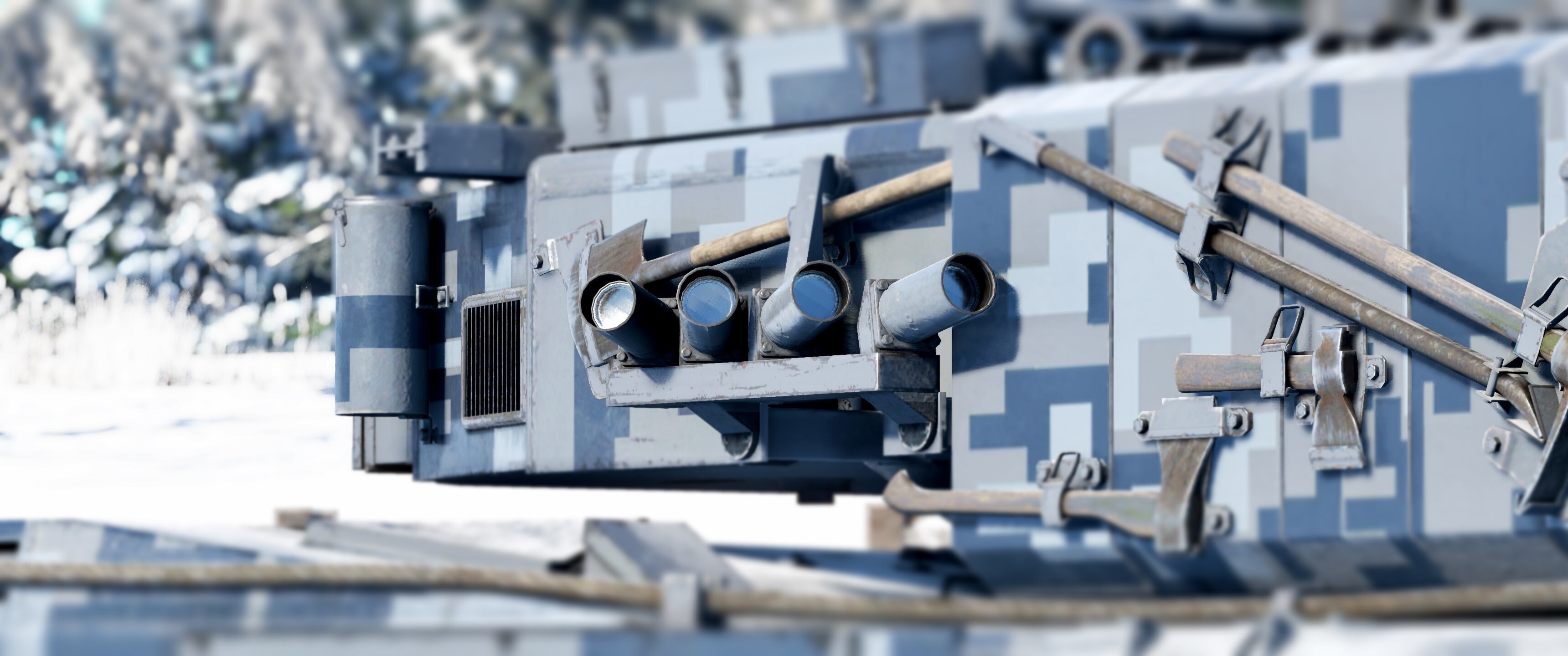
Unlike most top tier MBTs, the Ariete PSO does not have access to an Engine Smoke System (ESS) generator. However, smoke grenades are generally more effective than ESS, so the lack of ESS is not a huge detriment to the Ariete’s survivability.
Mobility
The Ariete PSO has average mobility for an MBT, with a 1,300 hp diesel V12 engine, and has no problem maneuvering in all types of terrain. Some other MBTs will be noticeably more agile than the Ariete, but the Ariete is by no means a slow tank, reaching a max speed of 65 km/h. An excellent reverse speed of 46 km/h is also useful for executing speedy retreats.
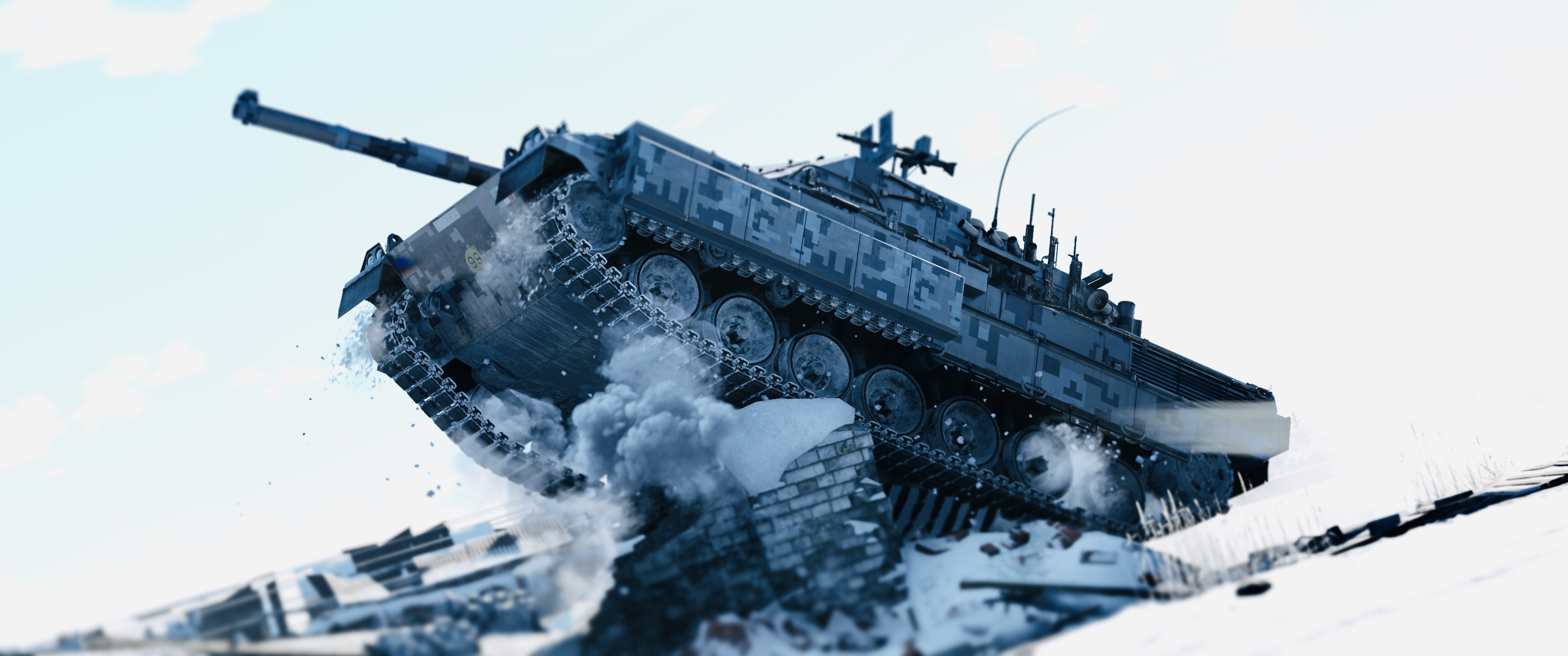
Due to the gear ratios of the transmission, the Ariete PSO handles a bit sluggishly when moving from a standstill, but will gradually pick up speed above 25 to 30 km/h.
Note: The mobility of the Ariete PSO largely depends on whether the Tipo 2 armor upgrade is installed, as equipping the modification will hamper the tank’s acceleration noticeably.
Tankers who are looking for a more mobile Ariete will enjoy the modernized Ariete AMV, which has one of the best power-to-weight ratios of any MBT due to its upgraded 1,500-horsepower engine.
Optics and systems
The Ariete PSO has great optics (Generation 2 thermals) for the gunner and commander. A downside of the gunner’s sight is that the FoV is quite low, which can result in decreased situational awareness.
Using the commander’s sight can remedy this since it provides a much wider FoV while also being situated slightly above the gunner sight, which allows players to look over hills or other obstructions. The main armament can also be fired in the commander’s sight by enabling dual control.
| Regular optic zoom | Magnified optic zoom | Thermal resolution (pixels) | NVD | |
|---|---|---|---|---|
| Gunner | 8.0x | 12.0x | 800×600 | Yes |
| Commander | 2.5x | 10.0x | 800×600 | Yes |
| Driver | N/A | N/A | N/A | Yes |
Laser Warning System (LWS)
The Laser Warning System, or LWS, greatly enhances the player’s situational awareness since it can alert them when the Ariete PSO is painted with a short or continuous laser emission from enemy tanks or aircraft. Players should pay attention to LWS warnings and deploy smoke grenades to conceal the tank whenever necessary.
Note: The LWS cannot differentiate between emissions from friendly or hostile sources, so accidental laser lases from a friendly unit will still trigger the LWS.
Generally, a short warning indicates that another MBT has used their laser rangefinder on the vehicle, while a long warning indicates a lock from a laser-guided munition, such as a GBU or beam-riding ATGM.
Armaments
The Ariete PSO is armed with the punchy 120 mm OTO Breda 120/44 cannon for its primary armament, while also being equipped with three 7.62 mm Beretta MG42/59 machine guns (two roof-mounted, one coaxial). The tank’s laser rangefinder (LRF) can be quickly used to range targets and estimate the necessary vertical lead.
Due to its potent DM53 round, excellent reload rate, and responsive gun handling, the Ariete is one of the best MBTs in-game in terms of firepower.
120 mm OTO Breda 120/44
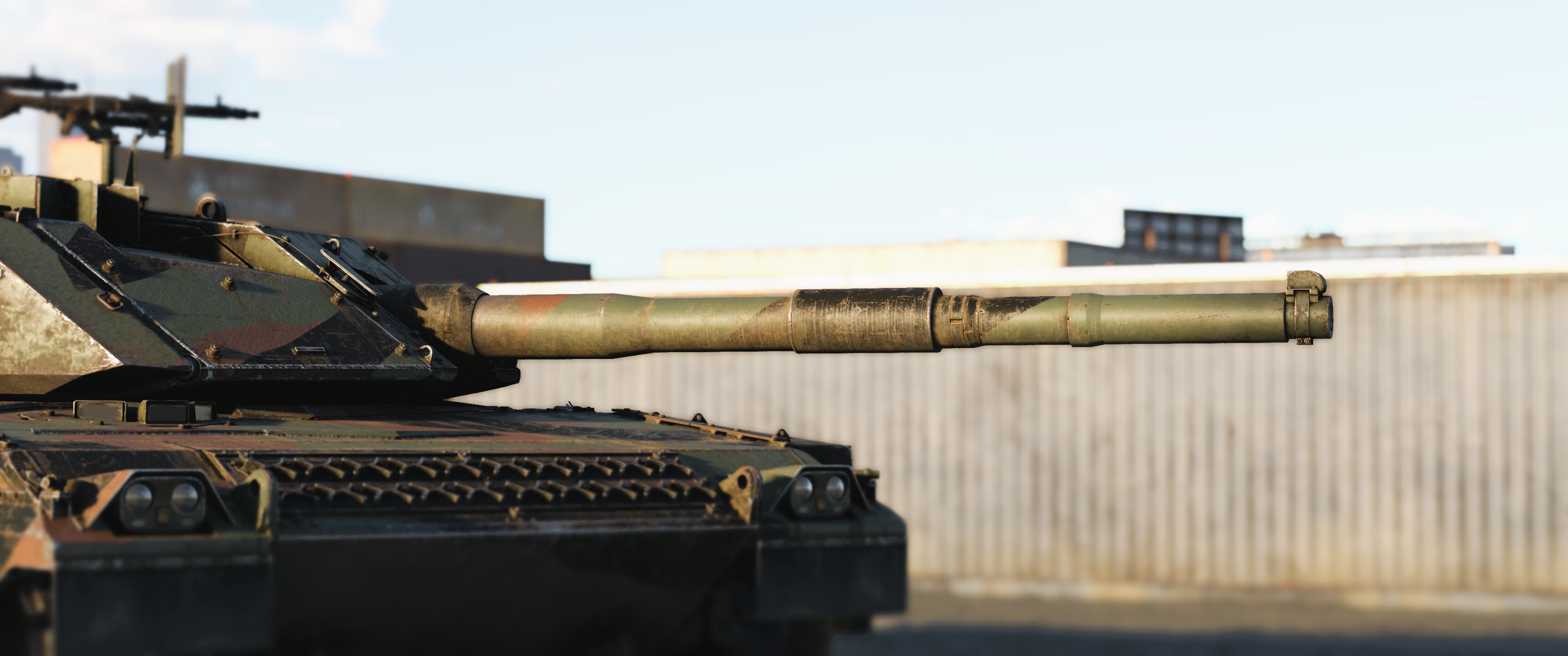
The 120 mm OTO Breda cannon is similar to the Rheinmetall L/44 cannon on the Leopard 2A5/PSO, and has the same selection of rounds, with the exception of the DM11 HE-TF shell. Ammunition is stored in the vertical ready rack (15 rounds) in front of the loader, or the regular storage rack next to the driver (27 rounds), for a total capacity of 42 rounds.
| Name | Type | Max penetration @ 10 m | What should I use it against? |
|---|---|---|---|
| DM12A1 | HEAT-FS | 480 mm | Avoid using this after researching DM33 |
| DM33 | APFSDS | 481 mm | Everything, but switch to DM53 if unlocked |
| DM53 | APFSDS | 623 mm | Everything |
The DM53 APFSDS round is the best round to use out of the ones listed above due to its high penetration and consistency. Unfortunately, the Ariete PSO does not have a dedicated high-explosive round to use against aircraft or light vehicles, so precise aiming may be needed if players are shooting lightly armored vehicles with APFSDS.
The gun handling is excellent, with horizontal and vertical traverse speeds of 40°/s and 20°/s, respectively, and a gun depression of up to -9°. A speedy reload rate of 5 seconds also ensures that the Ariete PSO can out-reload the T-series MBTs and even the Leopard 2s by over a second. The Ariete PSO also does not have the notorious “NATO hump” issue on Leopard 2s that limits gun depression when aiming near the engine deck.
7.62 mm Beretta MG42/59
The Beretta MG42/59 is a modern derivative of the German MG42 machine gun with a fire rate of 800 rpm and a belt capacity of 200 rounds. Two machine guns are mounted on top of the turret, and one is coaxially positioned next to the main gun.
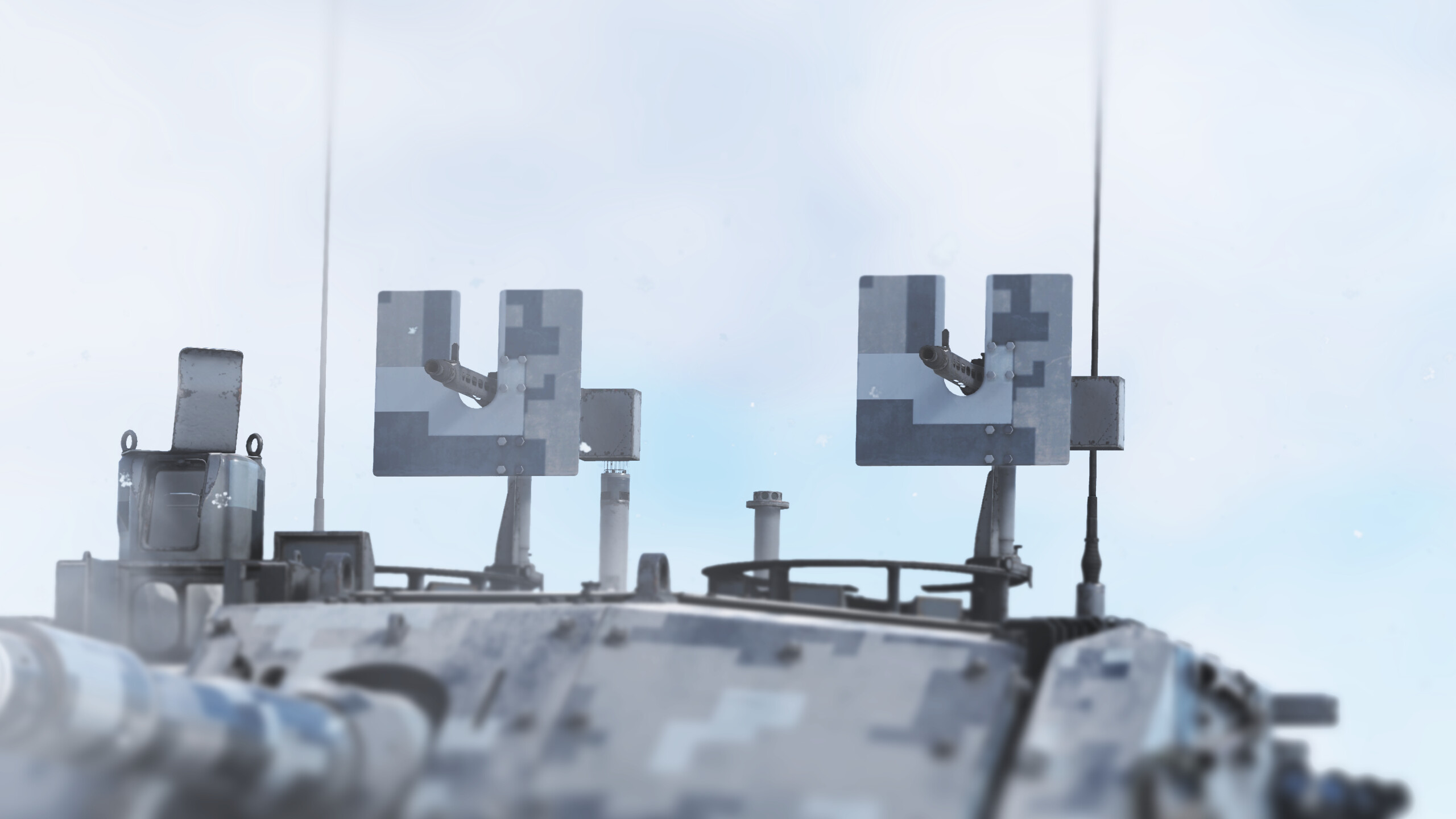
Due to its low caliber, the MG42/59's AP-T rounds can only penetrate up to 13 mm of armor, making it rather ineffective against most armored vehicles. However, the three machine guns can be used to quickly spray down nearby unarmored aircraft and are also useful for clearing shrubbery and other obstructions blocking your line of sight.
Usage in battles
Due to the lack of protection against kinetic and chemical rounds, the Ariete PSO can be a very unforgiving tank for inexperienced players. Positioning and quick target spotting are crucial to staying alive.
Recommended loadout
- Ammo loadout: 20x DM53
- Camouflage: As appropriate for map
The Ariete PSO serves as somewhat of a sidegrade to the regular C1 Ariete in most situations due to the lack of the WAR kit. Nevertheless, the Ariete PSO variant is generally better for close-quarter engagements since the add-on side composites allow for an increased degree of sidescraping while also negating most (but not all) autocannons and smaller HEAT rounds.
Similar to most other NATO main battle tanks, the Ariete PSO can generally perform adequately in any playstyle (brawling, sniping, etc.) due to its powerful armament and good mobility. However, to minimize the weakness of the armor, keeping a distance from enemies and picking off targets from range is a great way to stay alive.
If players opt for more close-quarter engagements, the Ariete PSO can perform in a more supportive role by sticking close to more well-armored teammates or by executing flanking maneuvers to dispatch enemies rapidly with the 5-second reload. Just be careful not to overextend or carelessly expose the Ariete to enemy fire, as even a single shot is enough to severely cripple or incapacitate the tank.