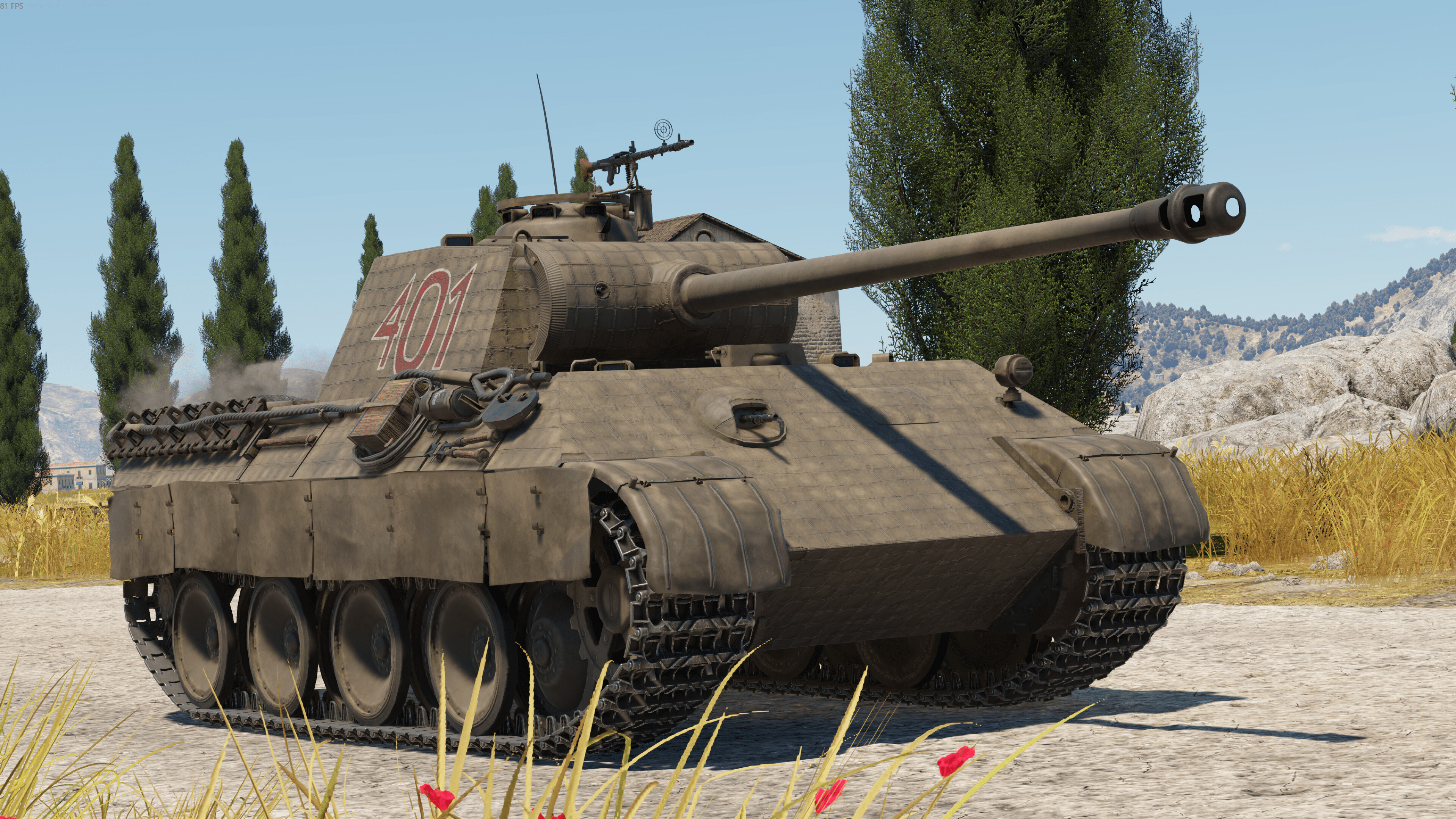
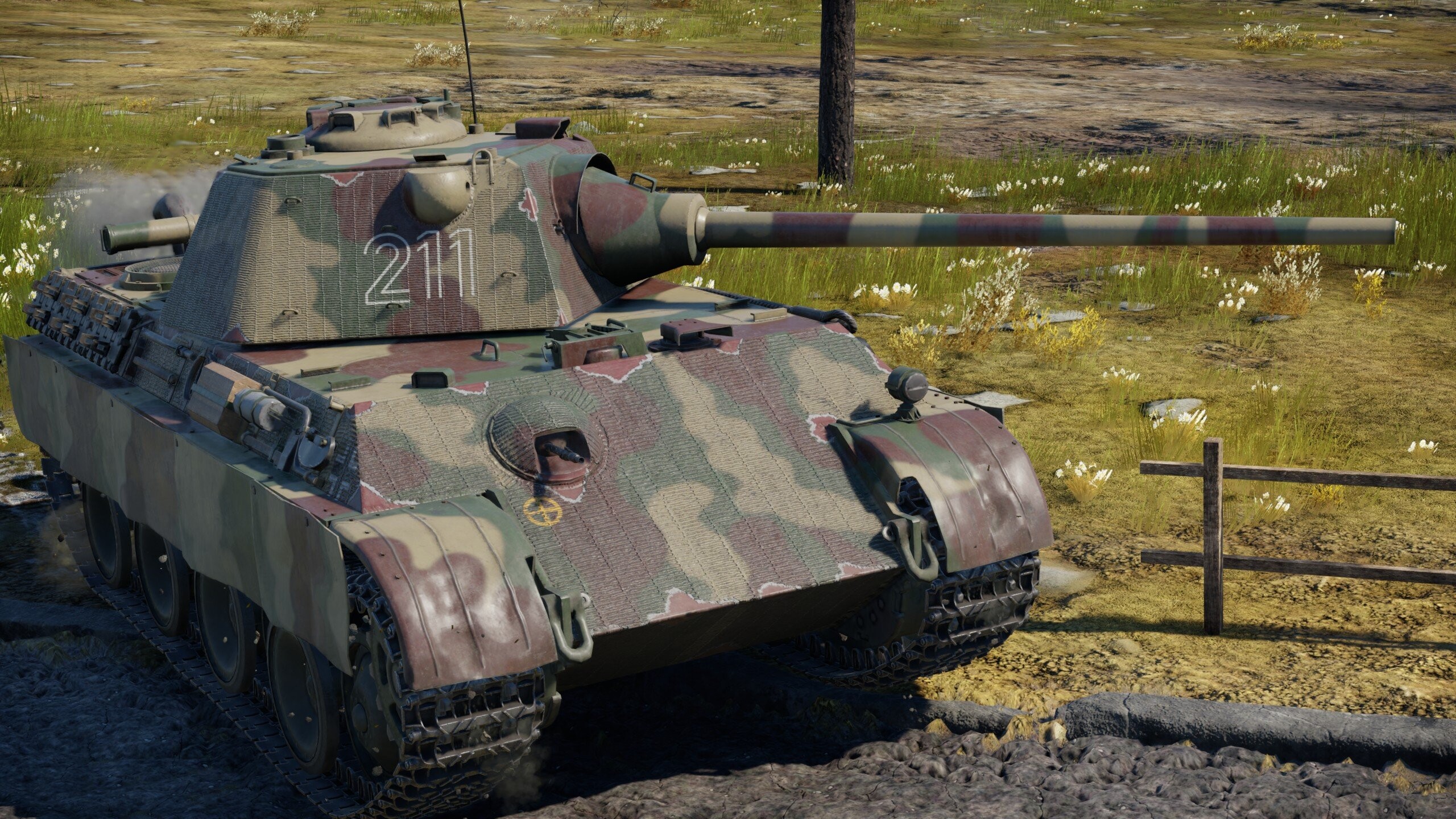
The Panther series is one of the most iconic tank lineages in history, and its reputation lives on in War Thunder. Fast, well-armed, and well-armored, the Panther is an absolute joy to play. It’s also one of the few tanks in the German tech tree that doesn’t heavily sacrifice armor for speed, giving it a playstyle that stands out from many of its German counterparts. In today’s article, we’ll take a look at the Panther’s strengths and weaknesses, the tactics that suit it best, and how to get the most out of one of Germany’s most iconic cats.
| Pros | Cons |
| Good armor | Poor reverse speed |
| Very good speed and mobility | Bad turret traverse speed |
| Outstanding firepower | Poor ammo rack layout |
| Has smoke grenades |
Variants
As you have probably noticed, there are several variants of the Panther. This includes the Panther D, A, G, and F for Germany, and the T-V (Panther A) for Russia and Panther “Dauphiné” (Panther G) for France, both as premiums. Historically, the main difference between variants was reliability, which does not apply too much in War Thunder, as what I will cover in this article will apply to all in-game. However, here are the main in-game differences:
- Panther D — First model, no hull MG port, no APCR, and slowest turret traverse of 4.2°/s stock.
- Panther A — Has APCR, better scope zoom (5.0x compared to 3.5x), much better turret traverse speed (14°/s stock).
- Panther G — Slightly better armor and has lip to prevent shot trap.
- Panther F — Thicker turret armor, faster reload, has a rangefinder, better scope zoom (6.0x), and has a MG42 coaxial machine gun (other variants used the MG34).
- Panther II — Prototype successor of the Panther. Main changes are armed with an 88mm cannon and access to night vision. This tank will not be included in the article as it is practically another tank.
Note: For the sake of consistency and simplicity, all of the main statistics in this guide will be based on the Panther G unless stated otherwise. Keep in mind that the core stats are very similar across the Panther series, so most of what is covered here also applies to the other Panthers.
Armor
| Armor Location | Armor Thickness (mm) | Armor Angle (°) | Effective Thickness (mm, approx.) | Notes |
| Turret Front | 110-100 | 10° (varies) | ~110-120 | Solid, will tank most rounds |
| Turret Side | 45 | 25° | 50 | Not great |
| Turret Rear | 45 | 20° | 47 | Not great |
| Hull Front | 80 | 55° | 125 (varies slightly) | Will block almost everything |
| Hull Front (Lowever) | 50 | 56° | ~115 (varies slightly) | Weak spot, but transmission will block income shells |
| Hull Sides | 50 | 30° | 58 | Not great |
| Hull Rear | 40 | 24° | 46 | Not great |
| Top (Turret) | 15 mm | - | 15 | Decent |
| Top (Hull) | 17 | - | 17 | Decent |
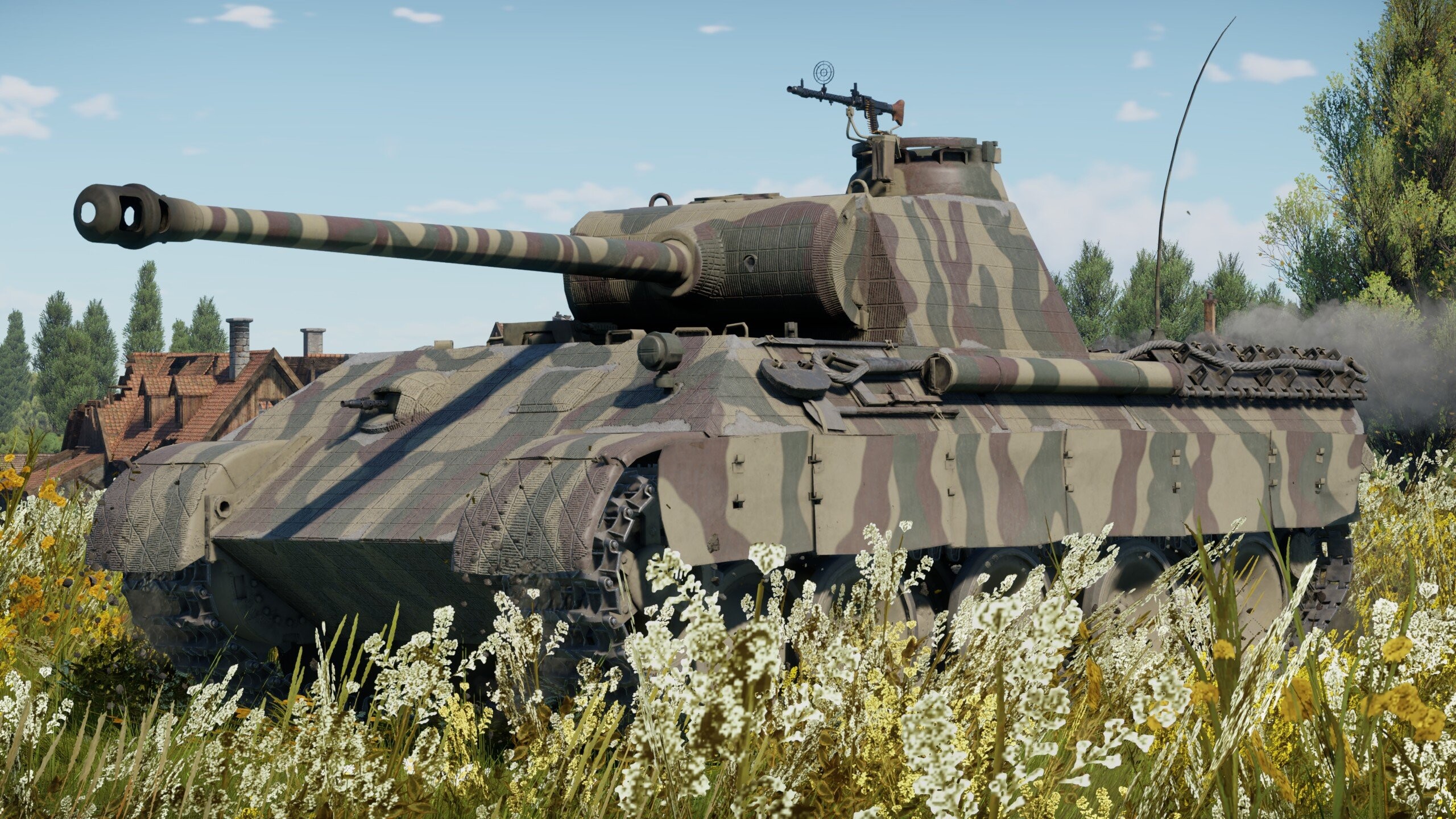
The Panther’s armor is quite good, though it isn’t as formidable as that of some other German tanks. Even so, it’s well protected, but there are a few important things to keep in mind.
First, your upper frontal plate is strong and will stop most incoming rounds. However, it can struggle against high-powered guns like the Soviet 122 mm and 100 mm cannons, as the 122 mm can penetrate you in almost any realistic scenario, and the 100 mm can penetrate you unless you are at a long range or it hits you at a bad angle. Your turret armor is also strongest around the gun mantlet. There is a small weak spot where the armor flattens out around the mantlet, but it’s difficult for most enemies to hit consistently.
The side and rear armor are about average for a tank at this battle rating. They’ll stop most autocannon fire and very light guns, but don’t expect them to save you from full-size tank rounds. Finally, the roof armor is quite thin and will only reliably protect against machine-gun fire and, occasionally, small-caliber autocannon rounds.
Tip: In most tanks, angling your armor helps you absorb incoming shells. The Panther, however, is a rare exception. Its frontal armor is strong enough that it generally doesn’t need to be angled, while its side armor is comparatively weak. Angling too much exposes those vulnerable sides and can make you easier to penetrate. Against the 122 mm specifically, it doesn’t really matter whether the Panther is angled—the shot will generally perform the same either way. So, rather than relying on angling, keep your frontal armor pointed toward the enemy and avoid exposing your sides unnecessarily.
Survivability
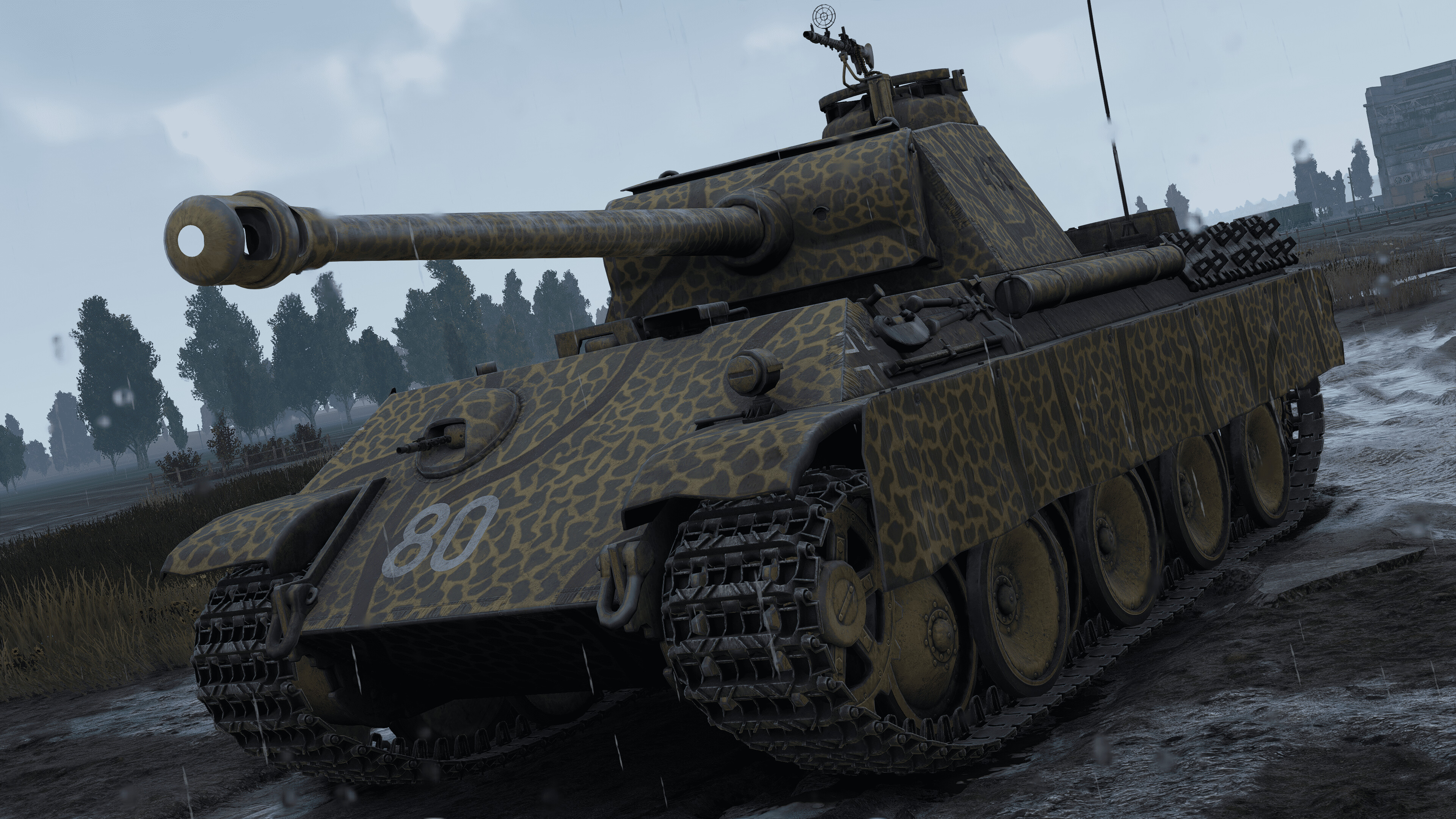
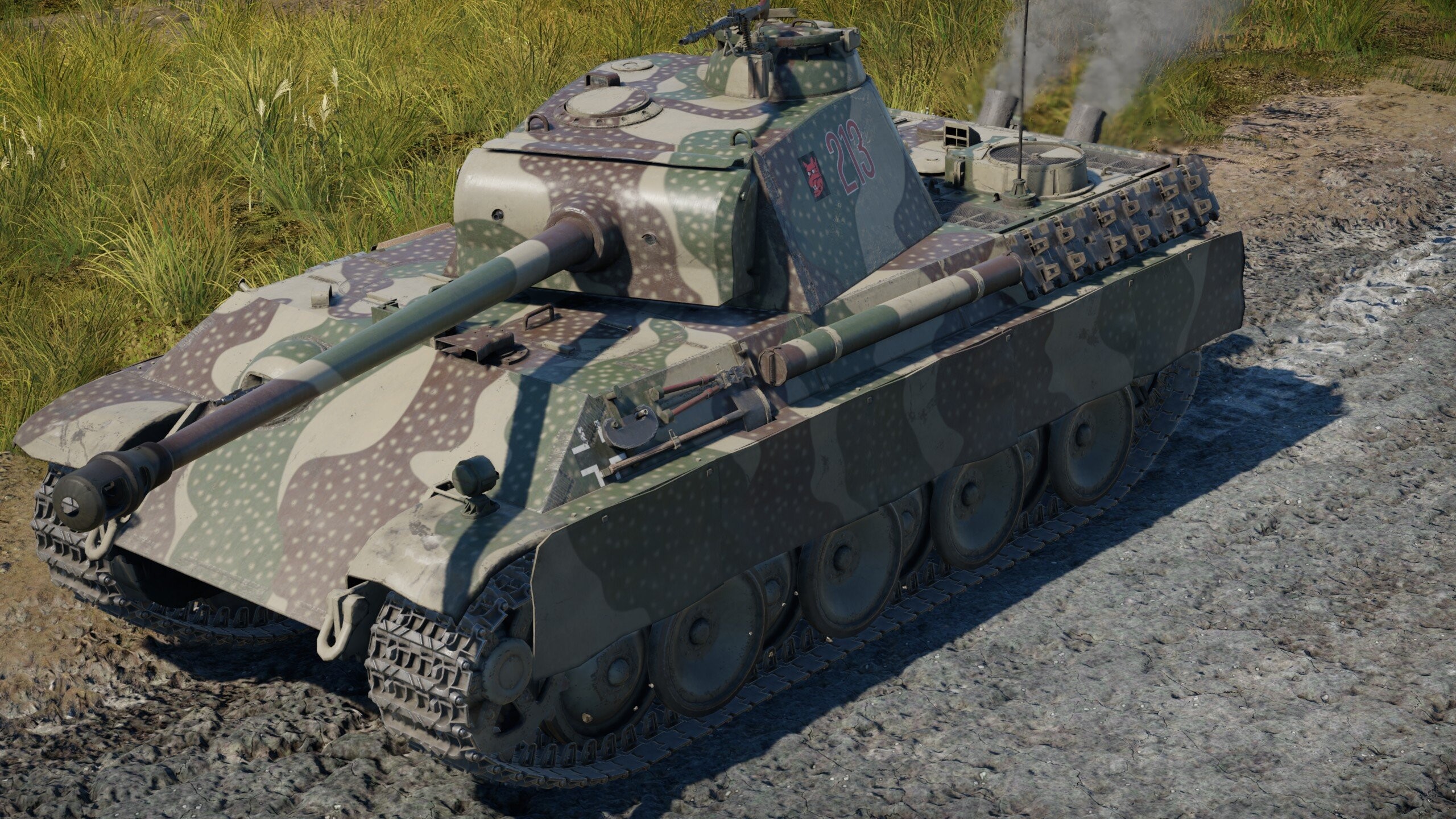
The Panther has a crew of five: commander, gunner, driver, loader, and radio operator. The turret is somewhat cramped, so a well-placed hit—even from a solid shot round—can knock out multiple crew members at once. Fortunately, the driver and radio operator sit farther forward in the hull, so a penetrating hit to the turret won’t necessarily incapacitate the entire crew.
Every Panther is equipped with smoke grenades, and they can be a real lifesaver. The Panther has an abysmal reverse speed of just 1.86 mph (3 km/h), meaning a quick getaway simply isn’t an option. Smoke is especially useful if your gunner is knocked out and you need to break line of sight while retreating. Even then, your reverse speed is so poor that smoke won’t always be enough. In those situations, you’ll have to choose between slowly backing away under cover or turning around to escape faster at the cost of exposing your weaker rear armor.
The Panther’s ammo rack layout is, quite frankly, awful. Most of the ammunition is stored along the sides of the hull, so even a hit that wouldn’t normally be fatal can detonate your ammo and send you back to the hangar. The good news is that there are no ammo racks in the turret, so ammunition explosions generally only happen if your hull sides are penetrated.
Armament
Main Armament
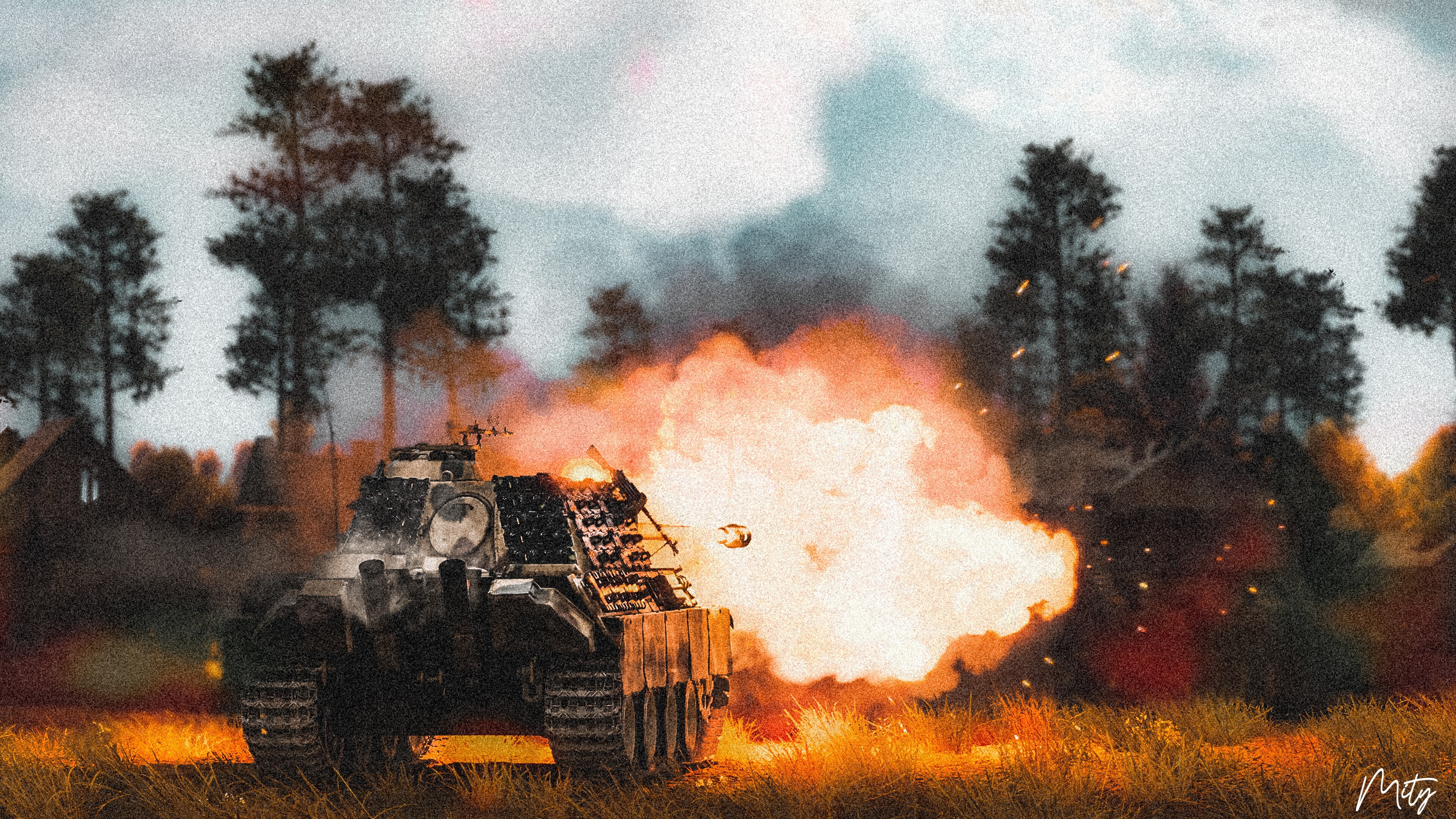
The Panther’s main armament is the 75 mm KwK 42 cannon, a remarkably powerful gun with up to 228 mm of penetration at 10 m. This gives it excellent firepower, especially for a 75 mm cannon, allowing it to comfortably deal with most opponents it encounters. However, its relatively small caliber means it lacks the devastating post-penetration damage of larger guns, so careful shot placement is important when engaging enemy vehicles.
Secondary Armament
Depending on the variant, the Panther is equipped with two or three 7.92 mm machine guns, with the Panther A and G featuring an additional roof-mounted machine gun. While these won’t do much against aircraft, they’re more than capable of destroying unarmored vehicles, disabling exposed crews, ranging shots, or simply annoying your enemies—and occasionally your allies.
Ammunition
The Panther is equipped with the following rounds:
- PzGr 39/42 — An outstanding APCBC round with 192 mm of penetration at 10 m. Its TNTe filler is lacking, with only 29 g. Other than that, an outstanding round that will be your primary shell.
- Sprgr. 42 — A basic HE shell. Use to destroy light/unarmored vehicles.
- PzGr 40/42 (not available on the D variant) — An outstanding APCR round. It has a very high velocity (1,120 m/s) and great penetration 228 mm at 10 m. Yet it suffers from basic APCR faults, such as penetration falloff and high chance of ricochet.
Loadout
Because of the Panther’s poor ammo rack layout, try to carry as little ammunition as you reasonably can. Bringing 20 APCBC rounds, 2–3 HE rounds, and 2–3 APCR rounds keeps the ammo count low while still giving you enough shells to handle just about any situation.
That said, you don’t have to bring APCR if you want to minimize your ammo load even further. The APCBC round is more than capable of dealing with the vast majority of targets you’ll encounter. A few APCR rounds may still prove useful every now and then for targets that your APCBC just doesn’t want to punch through.
Mobility
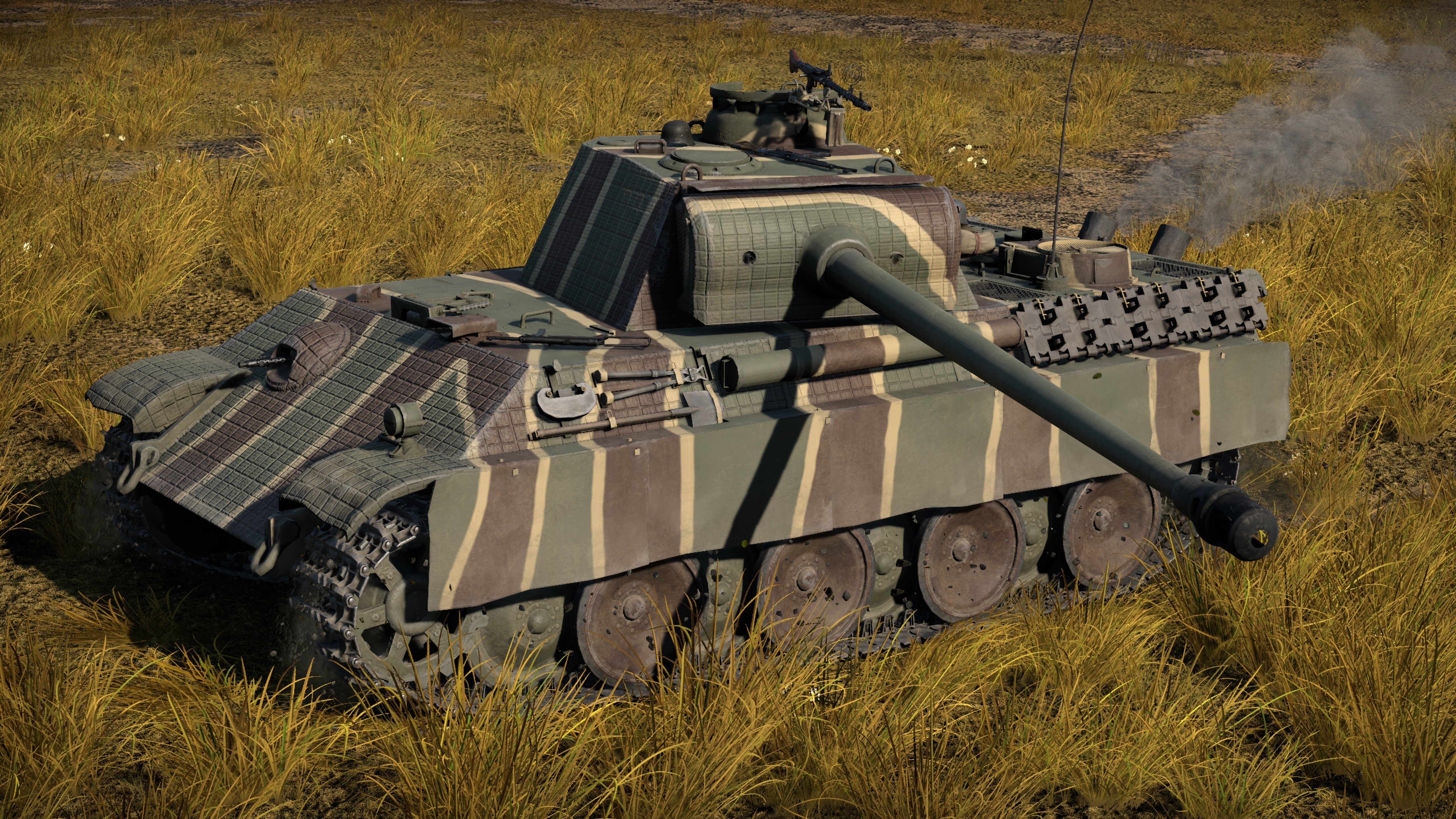
The Panther’s mobility is outstanding for a tank of its weight. With a top speed of 29 mph (46 km/h) and a power-to-weight ratio of 13.4 hp/t, it offers significantly better mobility than most other late-war German tanks. Its acceleration is also impressive, especially once you’ve unlocked the Transmission and Engine modifications.
That said, you’re still slower than most light tanks and even some medium tanks. However, considering the Panther’s level of armor protection, it has some of the best mobility in its class. You won’t be outrunning light tanks, but you can still catch plenty of opponents off guard with your speed and agility.
Usage In Battle
Sniper
Because the Panther has an outstanding cannon, playing as a sniper is a very effective tactic. Use your speed to reach a strong firing position before the enemy and engage targets from around 800–1,000 m away. Keep in mind that some heavily armored vehicles can shrug off your rounds at those ranges, so plan your engagements accordingly.
Ambusher
This tactic is similar to sniping but focuses on engaging enemies at closer ranges. Conceal yourself in trees, behind buildings, or wherever you can find good cover, then fire into the enemy’s flank from around 600 m away. Be careful, though—if multiple enemies are alert, they’ll likely pinpoint your position after your first few shots. That can become extremely dangerous if there’s no nearby cover or if your gunner or cannon is knocked out.
To avoid getting caught in that situation, always have a fallback position ready and relocate after every few kills to keep the enemy guessing.
Zone Contester
With this tactic, you use the Panther’s speed to rush a capture point and eliminate any enemies already there or still on their way. It’s a high-risk, high-reward playstyle. Capture zones usually offer solid cover, you earn points for taking the objective, and clearing out enemy vehicles can make the push even more rewarding.
The downside is that, despite being fast, the Panther is still slower than most light tanks. There’s a good chance at least one enemy will reach the zone before you. While the Panther can handle multiple opponents, a single shot that disables your gun or mobility can quickly turn the fight against you.
Because of those risks, I recommend newer players stick to sniping and ambushing. Both tactics are more forgiving and require less situational awareness. If you’re a more experienced player, though, zone contesting is well worth trying.
Notable Enemies
Heavy Tanks
- Russian 122 mm and 100 mm — These two cannons are extremely dangerous to the Panther, as they can penetrate your frontal armor and carry enough TNT equivalent filler to knock out most, if not all, of your crew. Fortunately, most tanks armed with these guns can also be penetrated by your cannon from both the front and the side.
- T34 — This American heavy tank is a formidable opponent for the Panther. With decent mobility, strong armor, and a powerful cannon capable of penetrating your frontal armor, an encounter can go bad very quickly. Fortunately, you can penetrate it through the machine gun port or the lower frontal plate, and its cannon has a relatively long reload. If it misses or you survive its first shot, you’ll usually have enough time to return fire.
- T26E5 — This tank is another deadly opponent for the Panther. While its cannon is respectable, its greatest strength is its armor, which is thick enough to shrug off many of your shells. If you encounter one, aim for the machine gun port, as it’s the most reliable way to knock it out.
- T26E1-1 — Similar to the T26E5, this tank trades some of its armor for a much more powerful cannon. While it’s slightly easier to penetrate, it’s also a much greater threat to the Panther if it gets the first shot. If you encounter one, aim for the machine gun port or, if possible, the sides for the best chance of knocking it out.
Medium Tanks
- T-44 — This Russian beast is very similar to the Panther, combining excellent speed, armor, and firepower. Its upper frontal plate can shrug off your shells, but its turret cheeks and side armor are much more vulnerable. On top of that, the T-44's cannon isn’t quite as capable as yours, giving you a slight advantage in a head-on engagement if you place your shots well.
- Centurion Mk 1 — The Centurion is a very tough opponent for the Panther. It’s fast, well armored, and heavily armed, with APDS rounds capable of penetrating your frontal armor. If you encounter one, your best option is to disable its gun by shooting the barrel or, if the opportunity presents itself, attack its side armor.
- ST-A1/2 — These two tanks excel in speed and pack very powerful cannons capable of penetrating your frontal armor. Fortunately, their protection is quite poor, allowing you to penetrate them from almost any angle at most combat ranges. As long as you get the first shot, you should have little trouble dealing with them.
Light Tanks
- M18 — Love it or hate it, the M18 is probably one of the most iconic tanks in War Thunder, and it excels at speed and flanking. While its cannon will struggle to penetrate your frontal armor, it can easily outmaneuver you and exploit your thin side armor. If caught in a head-on engagement, it can also disable your barrel and tracks before finishing you off from the side. Fortunately, the M18's armor is extremely thin, so a single well-placed shot from almost anywhere will usually cripple or destroy it.
- Ratel 20 — This school bus-looking armored car is not something to underestimate, as its ATGMs with 530 mm of penetration can be a serious threat to the Panther. Luckily, it has almost no armor, and its missiles are much slower than regular tank shells, giving you more time to react and take it out before it can fire again.
Tank Destroyers, SPAAs, and SPGs
- M36B2 — This US tank destroyer has a solid cannon with powerful HEAT rounds capable of penetrating your frontal armor. Fortunately, it has extremely thin armor, allowing you to penetrate it from almost any angle and at nearly any range. As long as you spot it first, it should be an easy target to deal with.
- CA Lorraine — Don’t underestimate this funny-looking French tank destroyer, as its powerful 100 mm cannon can easily penetrate your frontal armor. Fortunately, its protection is extremely weak, allowing your cannon to punch through it with ease from almost any angle.
- AMX-13 DCA 40 — This French SPAA can be extremely dangerous, not only against aircraft but also against tanks like the Panther and Tiger. Its fast-firing 40 mm autocannon has more than enough power to destroy you if it gets a shot into your side armor. Fortunately, it is very lightly armored and has ammunition stored throughout the turret, so a single well-placed hit will usually send it straight back to the hangar.
Thank You For Reading!
Thank you for taking the time to read this article! As you might have been able to tell, the Panther is one of my favorite tanks, so if you have any questions or think I left anything out, please feel free to let me know in the comments!