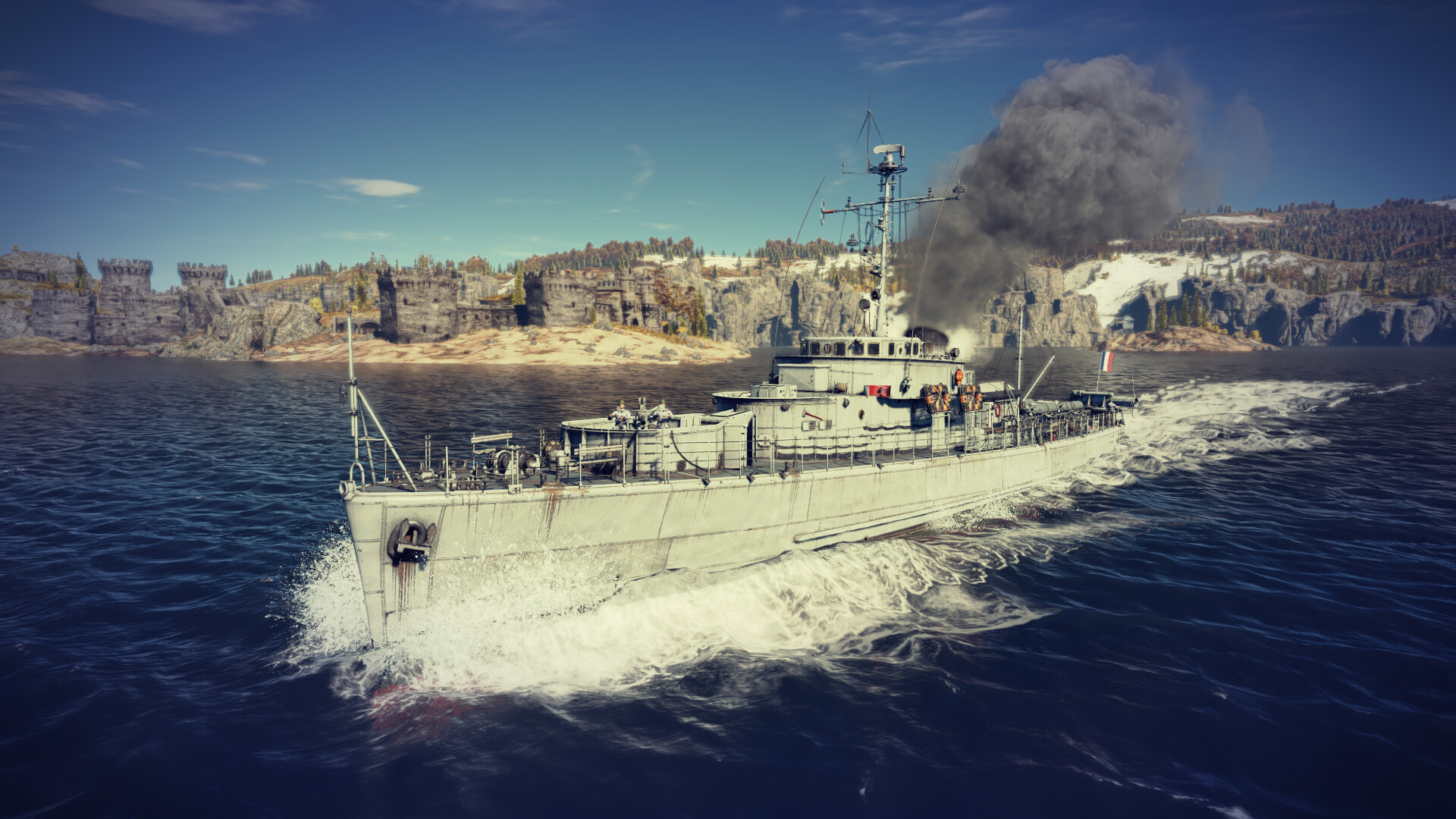
After World War II, the Marine Nationale urgently needed to rebuild its fleet with domestic ships. By 1950, it still relied on pre-war vessels and Allied loans, pushing France to restore naval independence. Alongside major ships like the T 47-class destroyers, smaller patrol vessels such as the Fougueux and Adroit classes were designed. Intrépide, one of eleven Adroit-class ships, stood out for testing an experimental stern-mounted torpedo launcher. Introduced in the Tusk Force update, the Intrépide brings a unique coastal asset to France with a mix between the size of large frigates like the Marne and the armament of smaller patrol boats like the VLT-1.
Pros & cons
| Pros | Cons |
|---|---|
| High number of torpedoes | Very slow for a boat |
| Pretty good torpedoes | Only single 40 mm cannon as the main gun |
| High survivability | Quirky torpedo launcher placement |
Armament
Intrépide’s armament may initially seem underwhelming, as it is limited to a single cannon and one torpedo launcher. However, the 40 mm gun ranks among the most effective weapons available on coastal vessels, offering strong firepower for its class. Additionally, the relatively large number of torpedoes enables the ship to excel in ambush tactics, making it particularly dangerous in the right circumstances.
Its primary drawback lies in the absence of smaller-caliber weapons, such as 20 mm or 12.7 mm guns, which are typically used for close-range defense. This limitation leaves Intrépide vulnerable to aircraft attacks and fast-moving patrol boats at short distances.
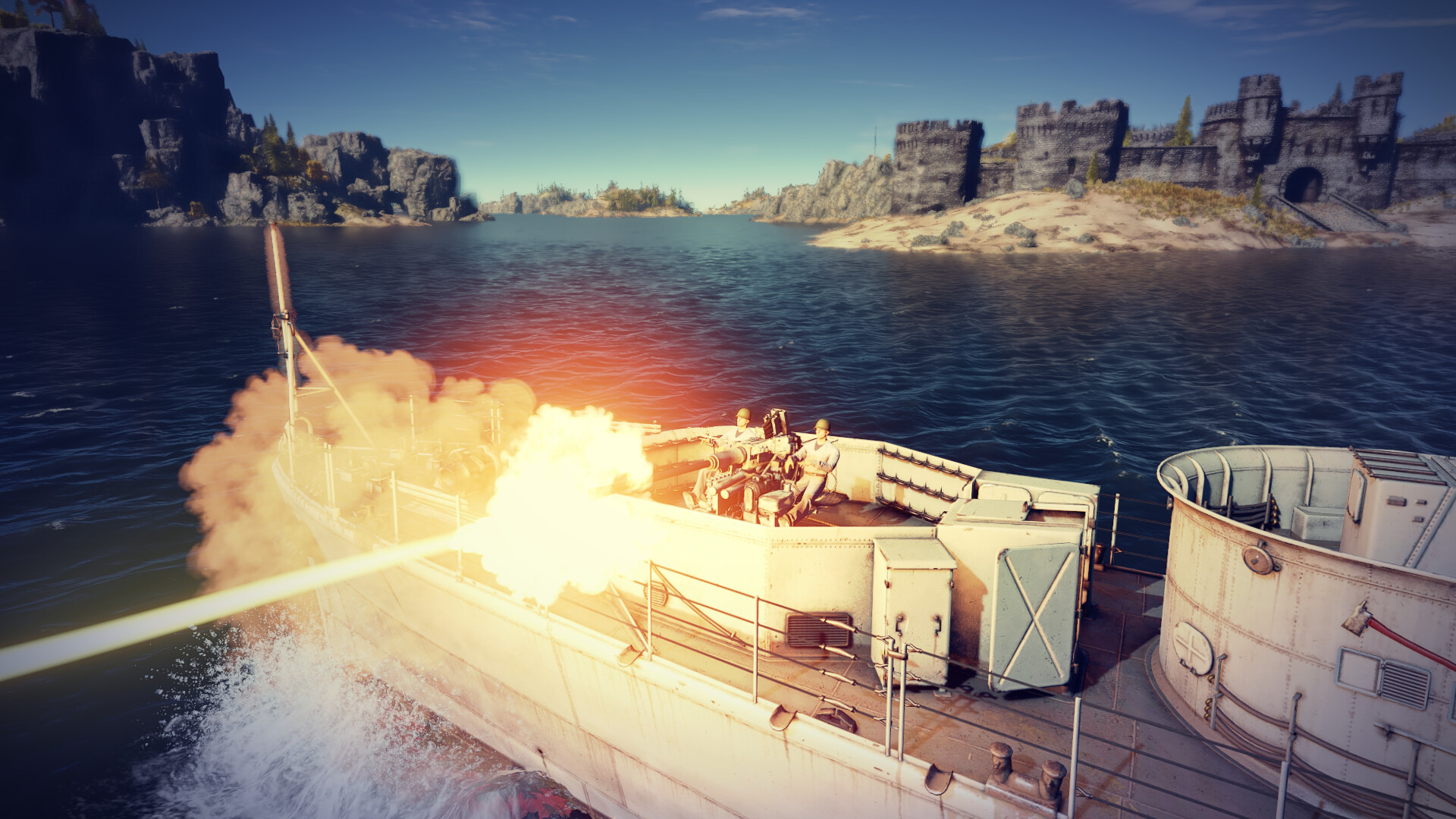
40 mm Bofors L/60 Mark 3 gun
The 40 mm Bofors cannon remains one of the best naval armaments in coastal battles. It combines great damage, high fire-rate, and continuous fire capability (belt-fed weapon system features an exceptionally fast reload time, giving the impression of continuous fire with virtually no noticeable pause between reloads). With a fire-rate of 160 shots/min and a total capacity of 2000 rounds, it is possible to fire continuously for 12.5 minutes, which is more than enough for a coastal battle. The rotation speed of the gun is very fast (30°/s horizontal, 24°/s vertical), which provides great reaction time (to get guns on target after encountering one).
The 40 mm is capable of firing 3 different belts. An AP belt, an HE belt and a mix of AP and HE. It is recommended to use the AP belt as it is the best to deal damage and take out critical components (engine, armament, ammo magazines). The HE belt is better for AAW duty.
The lack of SAP/APHE shells isn’t an issue as they wouldn’t fuze on the boats easily.
Having only one main gun at the bow can make it dangerous when positioning yourself for launching torpedoes from the stern as on certain angles you get nothing to defend yourself.
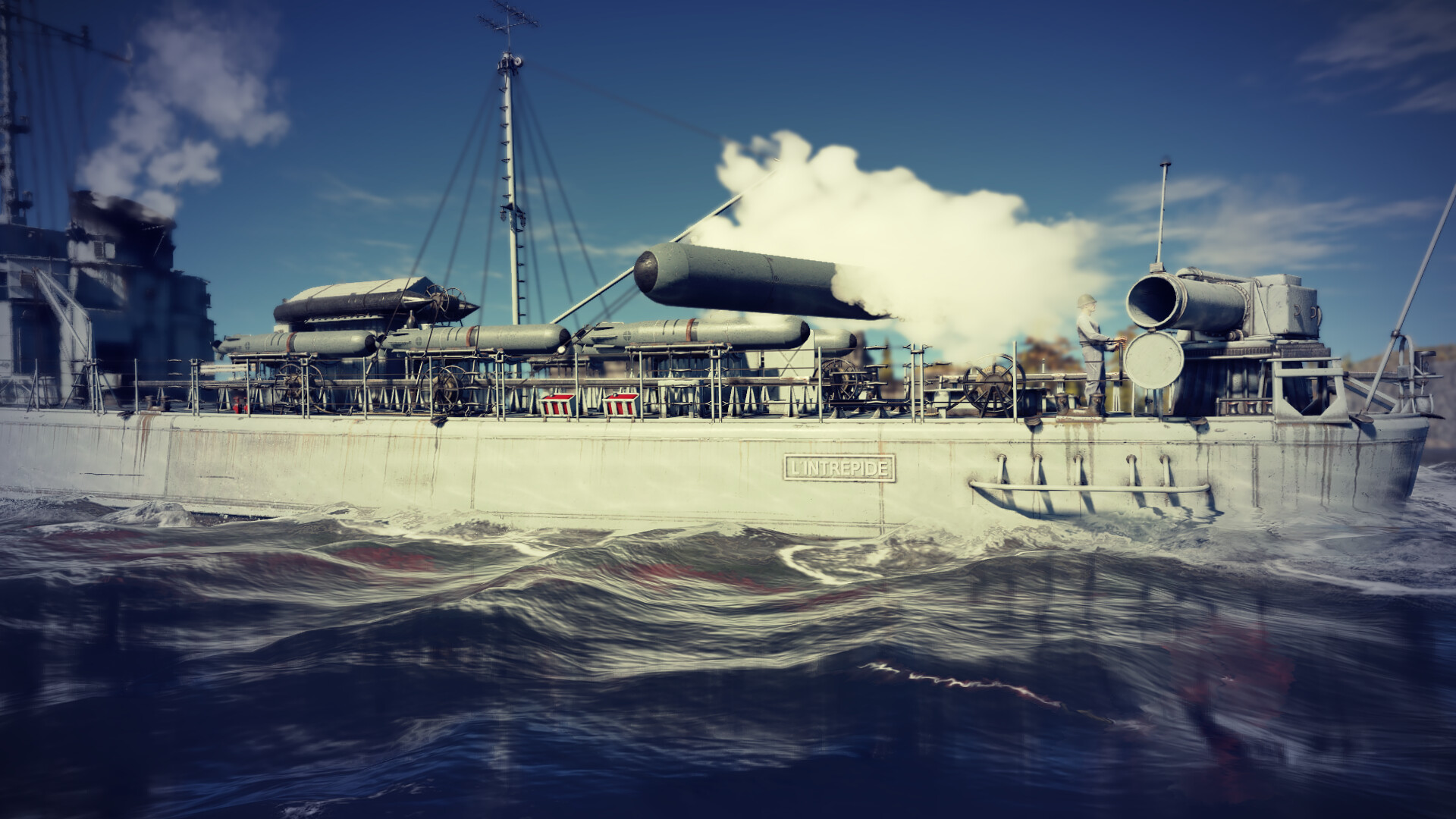
550 mm L3 Torpedoes
The L3 torpedo is an average torpedo, not exceptional in any way but still capable. It has an explosive mass of 200 kg, which is more than enough for taking out small coastal boats and frigates but less effective for bigger targets like destroyers which would be required to aim for the ammo or engine room to deal big damage.
The main problem with it is its speed of 46 km/h and small range of 5 km. Hitting targets will take time meaning that if the target is moving, it will require a big lead. Most importantly is that if the target sees the torpedo, it will have plenty of time to react and evade it.
The torpedo launcher on the Intrépide is a unique design and also its biggest flaw. Being located at the stern and with a limited horizontal traverse means that it is only able to launch torpedoes from the back and left side of the ship, which requires turning your back to the target.
Survivability
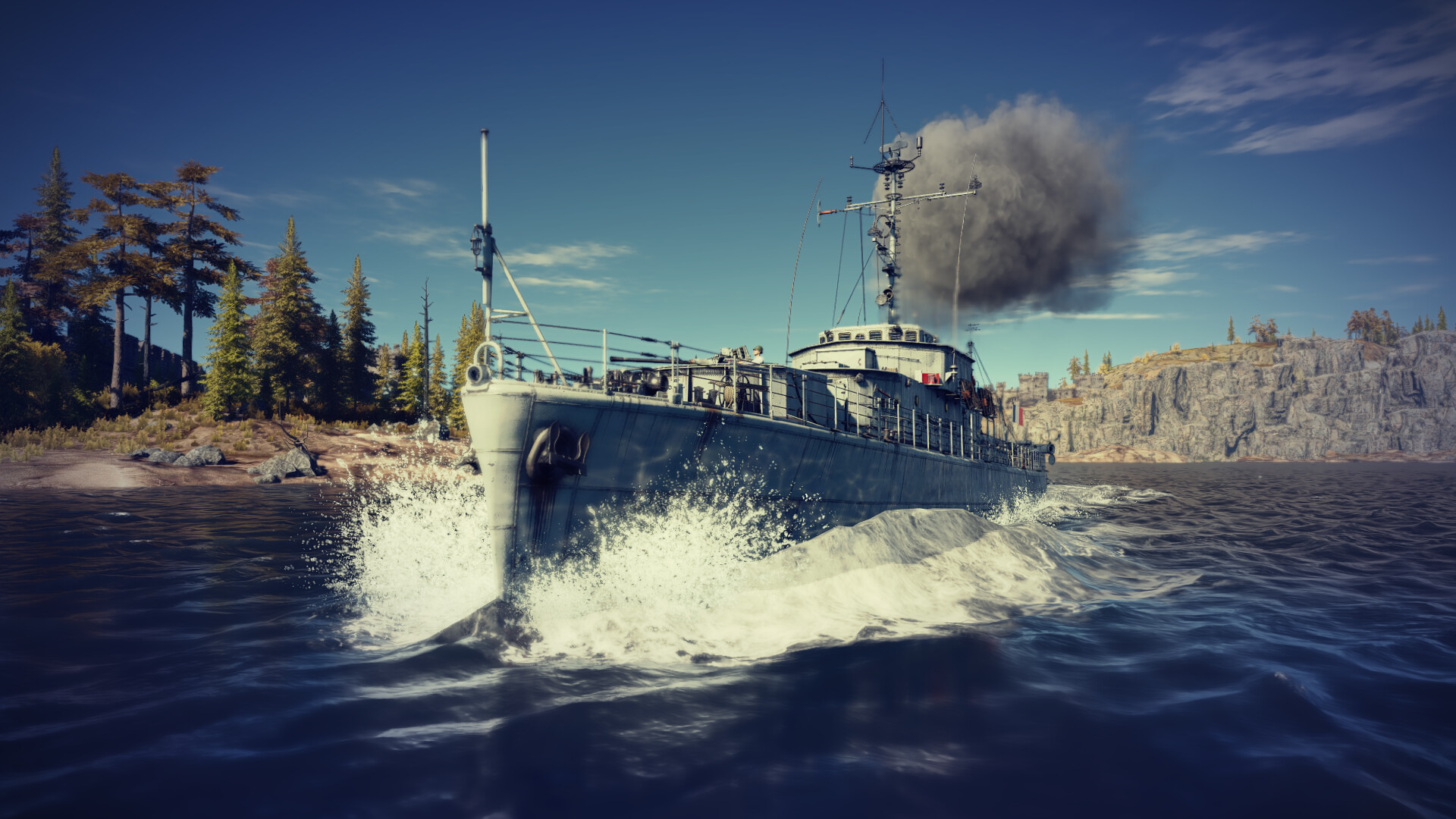
The Intrépide is a rather large boat for a coastal ship which gives it a big advantage against smaller patrol boats with weak armament. Its high crew number of 64 persons and big silhouette makes it pretty resistant to autocannons of small and medium caliber (7.62 to 40 mm).
Enemies will need to fire at you for a prolonged time before taking you out and reducing your crew count significantly. This gives you plenty of time to counter-attack with your 40 mm which is very effective for small boats.
The main problems in terms of survivability is that once your 40 mm is taken out you can’t retaliate anymore, and being a large and slow target, you are very vulnerable to torpedoes which will certainly destroy your boat with only one hit.
Mobility
The mobility is the biggest flaw of the Intrépide. With a displacement of 400 tons and only 3,200 hp, the Intrépide is barely capable of achieving a max speed of 19 knots (35 km/h) and reverse speed of 6 knots (11 km/h).
This gives the Intrépide a very bad maneuverability on sea with bad acceleration and deceleration. Positioning yourself for aiming your torpedoes requires preparing yourself in advance as the mobility gives little to no reaction for a sudden threat.
Because of its rather big size, moving on closed coastal maps can be difficult.
Usage in battles
The Intrépide provides a unique play style with its torpedo launcher. Standard engagement against patrol boats and larger coastal targets with the 40 mm is not a problem as the cannon will make quick work of them.
The uniqueness comes from the torpedo launcher with the ability to make the Intrépide a great ambusher. Rotate yourself and try to hide yourself behind a large obstacle such as an island or a rock. Wait for someone to reveal themselves and come out of your hideout, launch a torpedo at them and quickly hide back in to reload. The effectiveness of this technique is not guaranteed but the satisfaction of it working is guaranteed.
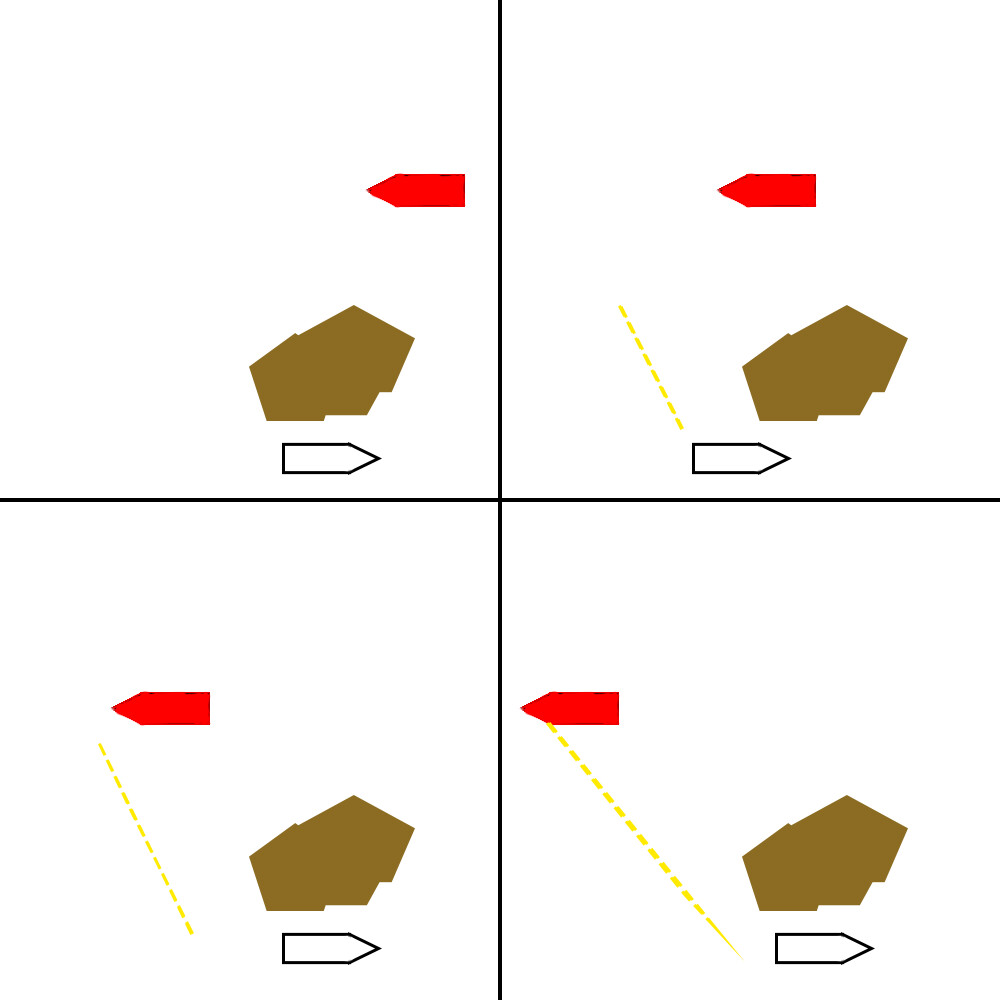
It is not recommended to engage targets closely as your size and mobility don’t provide you good reaction, and you’re very vulnerable to torpedoes. If someone launches a torpedo at you from close range you have no chance to avoid it, so it’s better to stay relatively far.
For aircraft engagement, your only chance is your 40 mm, but its fire-rate and high velocity shells won’t make hitting them very hard. If the target is flying low or towards you, hitting them won’t be a problem and with the caliber of the gun, only 1 or 2 hits will be necessary to destroy the target.
History
After WW2, the French navy was left in a rudimentary state. Its fleet was largely composed of British and American vessels, supplemented by ships acquired from former German and Italian forces. Although an urgent replacement program was necessary, progress was hindered by the strained post-war economy and the challenge of rebuilding the naval industry from the ground up.
WW2 showed the importance of vessels specifically designed to protect convoys, such as the River-class frigate and the Flower-class corvette, the latter of which equipped the Free French Naval Forces. And alongside bigger ships like the T47 Surcouf class and Le Corse class, a smaller type of ship dedicated to coastal escorts was being made.
This effort started with the Le Fougueux-class patrol vessel, financed by the United States under the Mutual Defense Assistance Act. The class was heavily inspired by the PC-461 class patrol craft and was produced between 1954 and 1955. These vessels were intended not only to help rearm allied navies—including those of France, Portugal, West Germany, the Netherlands, and Ethiopia—but also to support the revival of French shipbuilding. Of the nine ships constructed, three were incorporated into the French Navy.
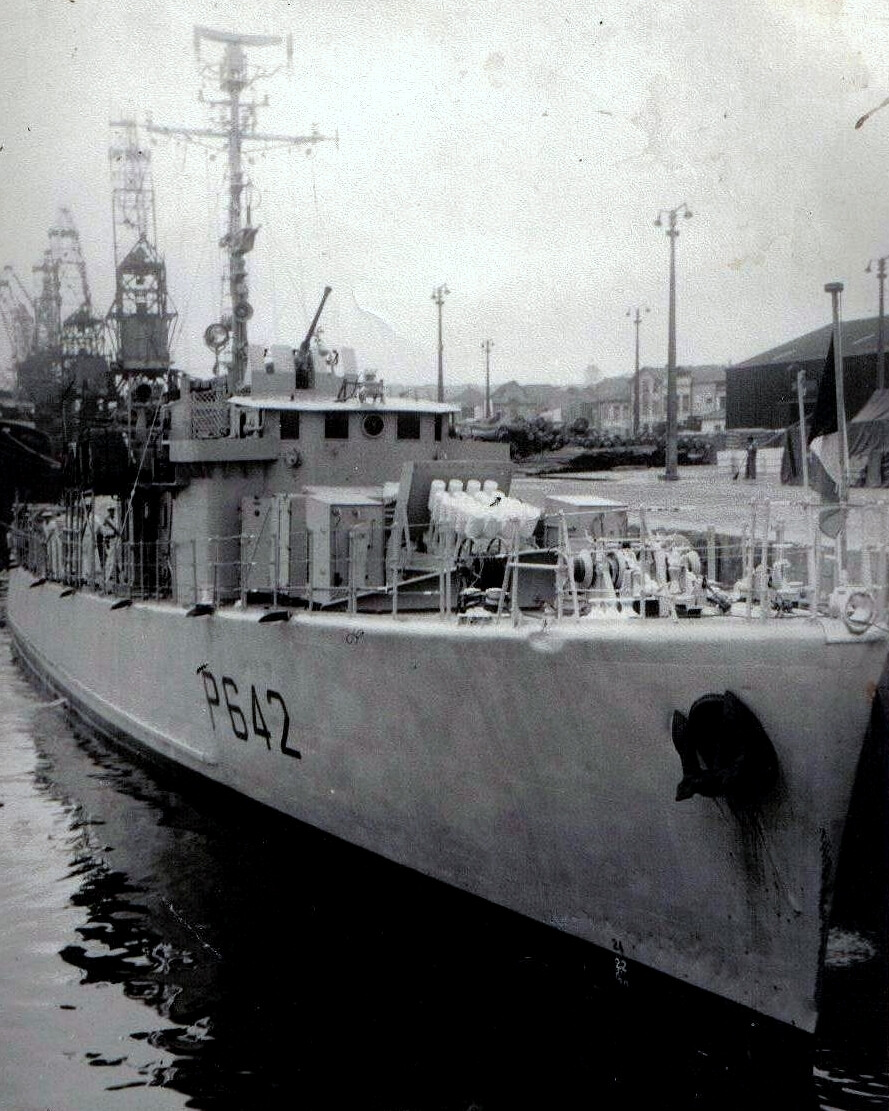
Although these ships were not particularly effective, they provided a foundation for the development of a more advanced coastal vessel, better suited for patrol operations in North African waters, particularly off Algeria. As a result, the 1955–1956 defense budgets allocated funding for the construction of eleven new ships under the “programme exceptionnel AFN”. These vessels would form the Adroit-class patrol vessel, a class of eleven ships built between 1957 and 1959.
| Hull Number | Name | Builder | Laid Down | Launched | Commissioned |
|---|---|---|---|---|---|
| P644 | L’Adroit | DTCN Lorient | 20 February 1957 | 5 October 1957 | 23 June 1958 |
| P645 | L’Alerte | DTCN Lorient | 20 February 1957 | 5 October 1957 | 16 June 1958 |
| P646 | L’Attentif | DTCN Lorient | 15 April 1957 | 5 October 1957 | 10 July 1958 |
| P647 | L’Enjoué | DTCN Lorient | 15 April 1957 | 5 October 1957 | 19 August 1958 |
| P648 | Le Hardi | CMN Cherbourg | 2 July 1957 | 17 September 1957 | 1 May 1959 |
| P635 | L’Ardent | ACH Havre | 7 March 1957 | 17 July 1957 | 22 March 1959 |
| P630 | L’Intrépide | CMN Cherbourg | 26 September 1957 | 12 December 1958 | 28 July 1959 |
| P637 | L'Étourdie | FCM | 15 May 1957 | 5 February 1958 | 22 March 1959 |
| P638 | L’Effronté | ACH Havre | 3 September 1957 | 27 January 1959 | 1 September 1959 |
| P639 | Le Frondeur | DTCN Lorient | 15 April 1957 | 7 October 1957 | 1 September 1959 |
| P640 | Le Fringant | FCM | 1 June 1957 | 6 February 1958 | 15 June 1959 |
These vessels typically served as versatile coastal patrol and anti-submarine warfare platforms, primarily tasked with safeguarding France’s extensive maritime interests in the post-war era. Their operations included patrolling metropolitan coastlines—particularly along the Atlantic seaboard—and maintaining a naval presence in French-controlled territories in Africa prior to their independence.
Following the period of decolonization, their roles gradually shifted toward the protection and surveillance of France’s overseas territories. In addition to these sovereignty missions, the ships were actively employed in anti-submarine warfare duties and frequently served as training platforms for personnel of the French Navy.
Between 1962 and 1963, Intrépide was assigned to the ECAN in Saint-Tropez, where it underwent modifications to carry and deploy the L3 torpedo. The entire stern was reconfigured, including the removal of the aft 40 mm gun mount, to accommodate a new torpedo launcher and deck-mounted torpedo storage. This configuration remained in place until the vessel’s decommissioning in 1979.
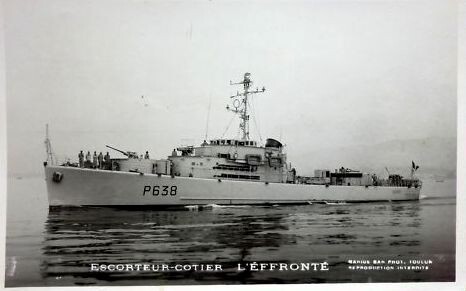
The Adroit-class patrol vessel ships began to be decommissioned in 1979, after roughly two decades of service. By that time, the class had become significantly outdated, especially when compared to more modern vessels entering service with the French Navy, such as the D’Estienne d’Orves-class aviso. The technological and operational gap between these newer ships and the aging Adroit class had grown substantial, highlighting the rapid evolution of naval design and capabilities during the post-war period.