The Vautour IIN is a twin-seater interceptor variant of the French Vautour multirole bomber aircraft, manufactured by Sud Aviation during the Cold War. While it is largely overlooked by many due to the much more commonly encountered IL-28 and Canberra family of bombers, the Vautour IIN can pose a notable threat to enemy fighters due to its high top speed, Shafrir air-to-air missiles, and powerful search radar. However, the Vautour IIN is thoroughly outclassed by more modern aircraft that it commonly faces, such as the F-106, Hunter F.58, MiG-19PT, and the F-104 Starfighter. The Vautour's poor control authority and sluggish roll rate in particular make dogfighting in it a struggle, although skilled pilots may still find ways to outsmart their enemies.
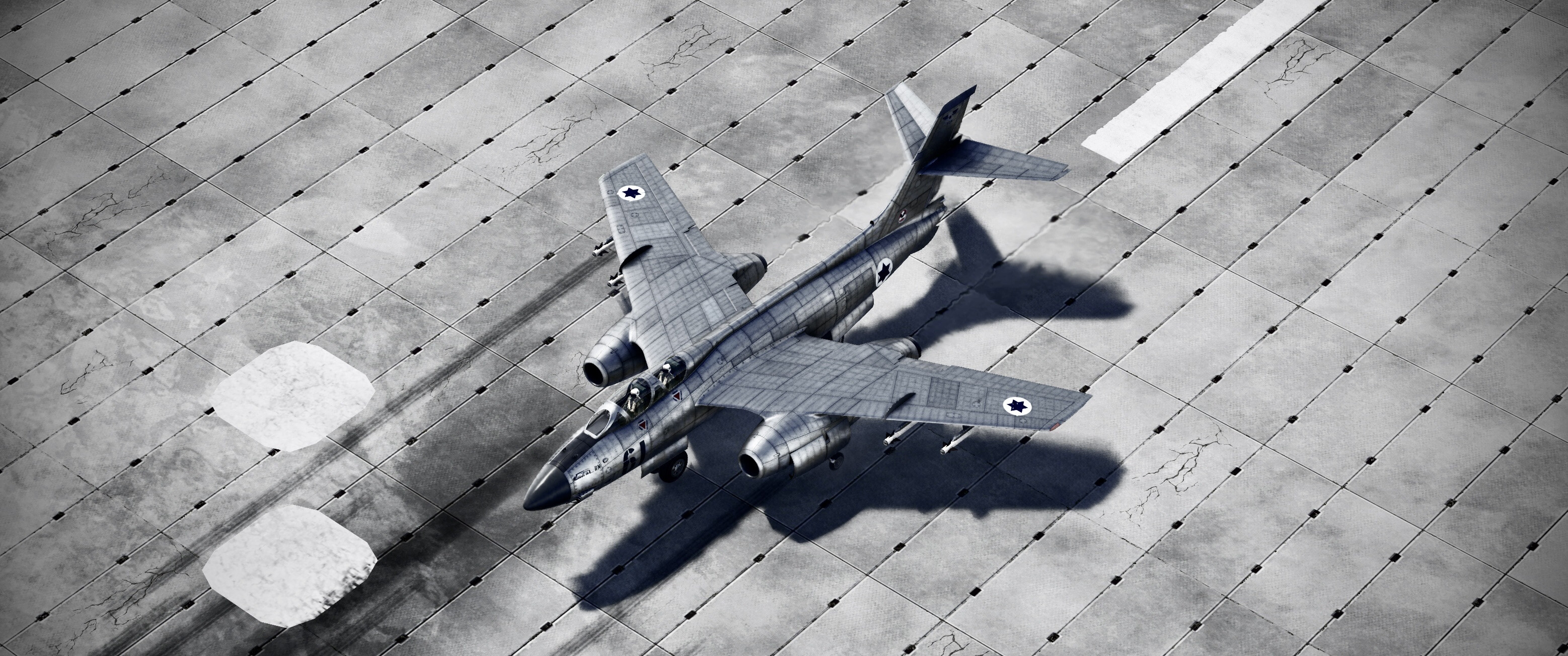
This article will focus specifically on the Vautour IINs flown by the Israeli Air Force during the Six-Day War and the War of Attrition. While it is identical in terms of flight performance to the French S.O.4050 Vautour IIN, the Israeli variant utilizes the infrared-guided Shafrir air-to-air missile instead of the manually guided AA-20 Nord.
| Pros | Cons |
|---|---|
| High top speed and powerful engines | Obsolete airframe; Struggles to engage modern aircraft |
| Good energy retention | Very sluggish controls that compress easily at high speeds |
| Equipped with four Shafrir missiles | Poor roll rate; Inadequate agility to react quickly |
| Radar is useful for detecting targets | No ballistic computer or bombsight |
| Deadly forward-facing cannon armament |
Flight performance
Contrary to other contemporary bombers or strike aircraft, the Vautour IIN is surprisingly quick, which allows it to play as a heavier pseudo-fighter and lets it "boom and zoom" opponents in certain scenarios. However, in dogfights, single-seater fighter aircraft will easily be able to outturn and outroll the Vautour.
Engines
Two SNECMA Atar 101E5 turbojet engines, each outputting 3,320 kgf of thrust, are mounted in underwing nacelles. These are slightly more powerful versions of the Atar 101E3 turbojets found on the single-seater Vautour IIA, and have the ability to use 110% throttle to output extra thrust.
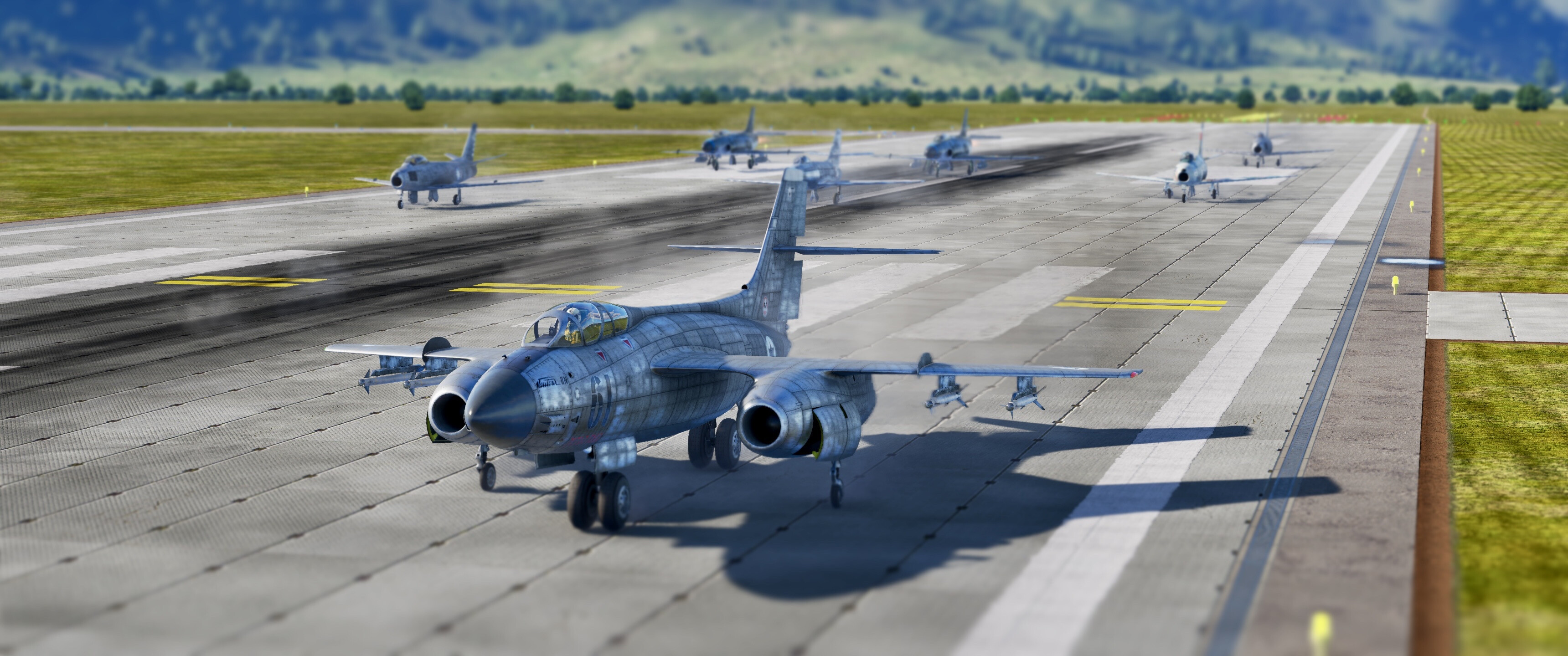
The Atar 101E5 engines are more powerful than the engines on the Soviet IL-28, American B-57A, and the British Canberra. This gives the Vautour IIN impressively quick acceleration and a maximum top speed of around 1,050 km/h IAS. The Vautour can outrun low-powered opponents like earlier models of the F-86 Sabre and the Meteor. However, aircraft that are equipped with more powerful or afterburning engines will be able to run down the Vautour.
It is common for the oil to overheat when the engine is set to 100% throttle or above. Letting the oil remain at a high temperature will not cause any damage in the short term, but it is strongly recommended to reduce the throttle once the oil temperature readout turns red and starts flashing as to avoid permanent engine damage.
The Vautour IIN will typically not be able to exceed its structural limits in level flight or even in a dive, but the wings will rip off at around Mach 1.1 (1,160 km/h IAS). This rarely occurs and usually only happens when diving from extremely high altitudes at a near-vertical angle.
Maneuverability
The Vautour IIN's main advantage lies in its engine power, and not its maneuverability. The rudder and aileron response becomes noticeably more sluggish at high speeds (above 800 km/h), which can make aiming at maneuvering targets or evading opponents difficult. The inability to pull sharply in any direction at speed also results in the Vautour having a very wide turning circle, so it is usually not worth trying to cut into an enemy's turn as they will generally be able to out-turn you handily.
It is crucial to ensure that opponents do not stay behind the Vautour for an extended period during dogfights. The Vautour has a poor roll rate, which makes it difficult to evade enemy fire. While most aircraft lose speed during maneuvers, the Vautour's excellent energy retention allows it to maintain speed and stay ahead of its opponents, which is a hindrance in this situation because adversaries can easily position themselves behind the Vautour, reducing the chances of forcing them to overshoot. In these situations, your airbrake is your most useful tool to force enemy overshoots. However, it may not be needed against opponents who are diving from altitude and are flying more quickly than the Vautour.
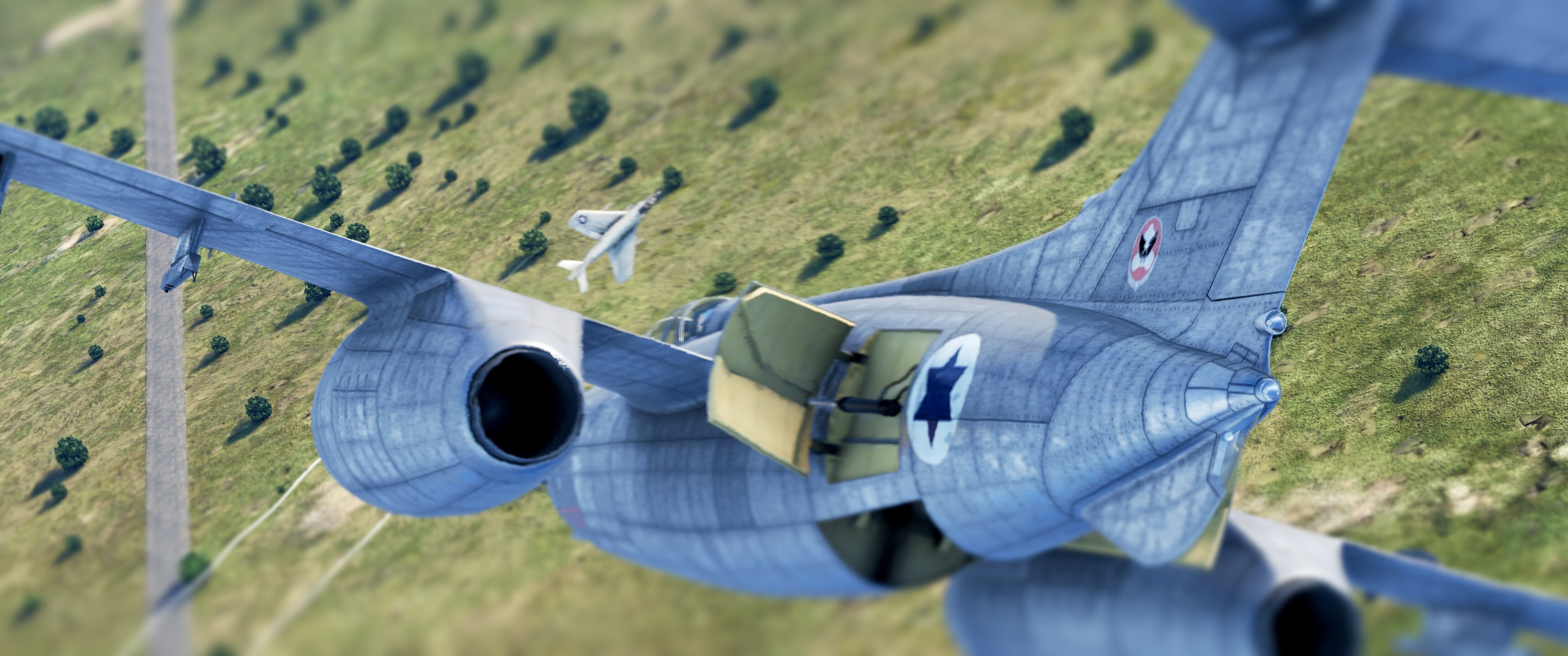
After forcing an overshoot, the flaps will be useful to pull into the enemy, especially if they choose to go vertical. Beware of deploying the flaps early on in a dogfight as they will quickly rip off when deployed at higher speeds.
Survivability
The Vautour IIN is a fairly large (albeit fast) target for most opponents and does not withstand airframe damage well. Smaller caliber weapons like the 12.7 mm M3 Browning will not immediately cause catastrophic damage, but most autocannons (especially the Soviet 37 mm N-37D cannon) will tend to oneshot the airframe or immediately incapacitate the pilots. In the rare situation that only 1 engine is damaged, the Vautour can still limp back to base (with some difficulty).
A "bathtub" of 3 mm steel armor around the cockpit and a 50 mm bulletproof glass screen helps to protect the two pilots from low-caliber machine guns, but this internal armor is relatively ineffective against autocannons (which most aircraft are equipped with) or the fragmentation from missiles.
The underwing engines are unarmored and thus are very prone to damage. Engine fires will almost always bring down the Vautour IIN due to the lack of an EFS system for the engines, and fuel fires burning out the airframe is a possibility, as only 3 of the 6 fuel tanks are self-sealing.
Radar
As the dedicated interceptor model of the Vautour family, the Vautour IIN has a DRAC-25A radar mounted in its nose cone. The DRAC-25A operates in the I band and can detect targets that are up to 45 kilometers away.
Tip: The DRAC-25A is also equipped with IFF to distinguish between hostile and friendly contacts. In simulator battles, this can be used to quickly verify whether a plane is on the same team as the pilot without using the ingame chat.
The DRAC-25A is very useful for detecting unspotted aircraft (especially in Simulator gamemodes). Some opponents that the Vautour faces are also not equipped with a radar warning receiver, so they will be completely oblivious to their position being exposed.
Radar search modes
| Setting | Description |
|---|---|
| 130° x 5° | The default radar mode. It scans a 130° area in front of the aircraft at the same altitude. |
| 130° x 16° | Same horizontal search area as the 130° x 5° setting, but has a slightly wider vertical search area. |
| 30° x 5° | Narrower search area than the 130° x 5° setting, but the radar scans at a higher rate and picks up targets much more reliably. |
Air-to-air armament
The Vautour IIN retains the same devastating quartet of 30 mm autocannons found on other Vautour models, but its air-to-air capabilities are bolstered with the addition of up to four Shafrir IR-guided missiles.
30 mm DEFA 551
The Vautour IIN is equipped with four 30 mm DEFA 551 autocannons, which are located in the nose of the aircraft beneath the radar. Each gun contains 100 rounds of ammunition and has a very quick fire rate at 1,200 rpm.
With a one-second burst mass of 20 kg, a quick burst is more than sufficient to unleash catastrophic damage upon all aircraft. However, pilots will only get around 5 seconds of trigger time before they run out of ammunition, so trigger discipline is a necessity. The DEFAs are also mounted slightly below the nose, so pilots will have to adjust their aim accordingly.
- Default: API-T · HEI · HEF
- Air targets: HEF · HEI · HEF · HEI · API-T
- Ground targets: HEI · API-T · API-T · API-T
- Stealth: HEF · HEI
There are four different belts for the DEFA 551s that contain different ratios of API-T, HEF, and HEI shells. As the name suggests, the air targets and ground targets belts carry more high-explosive and armor-piercing rounds, respectively. The stealth belt only contains tracerless high-explosive rounds.
Shafrir
The Shafrir is Israel's first indigenously developed air-to-air missile. It is comparable to the American AIM-9B and Soviet R-3S, but is slightly more maneuverable and has better acceleration. The Vautour IIN can carry up to four Shafrir missiles on its wingtip pylons.
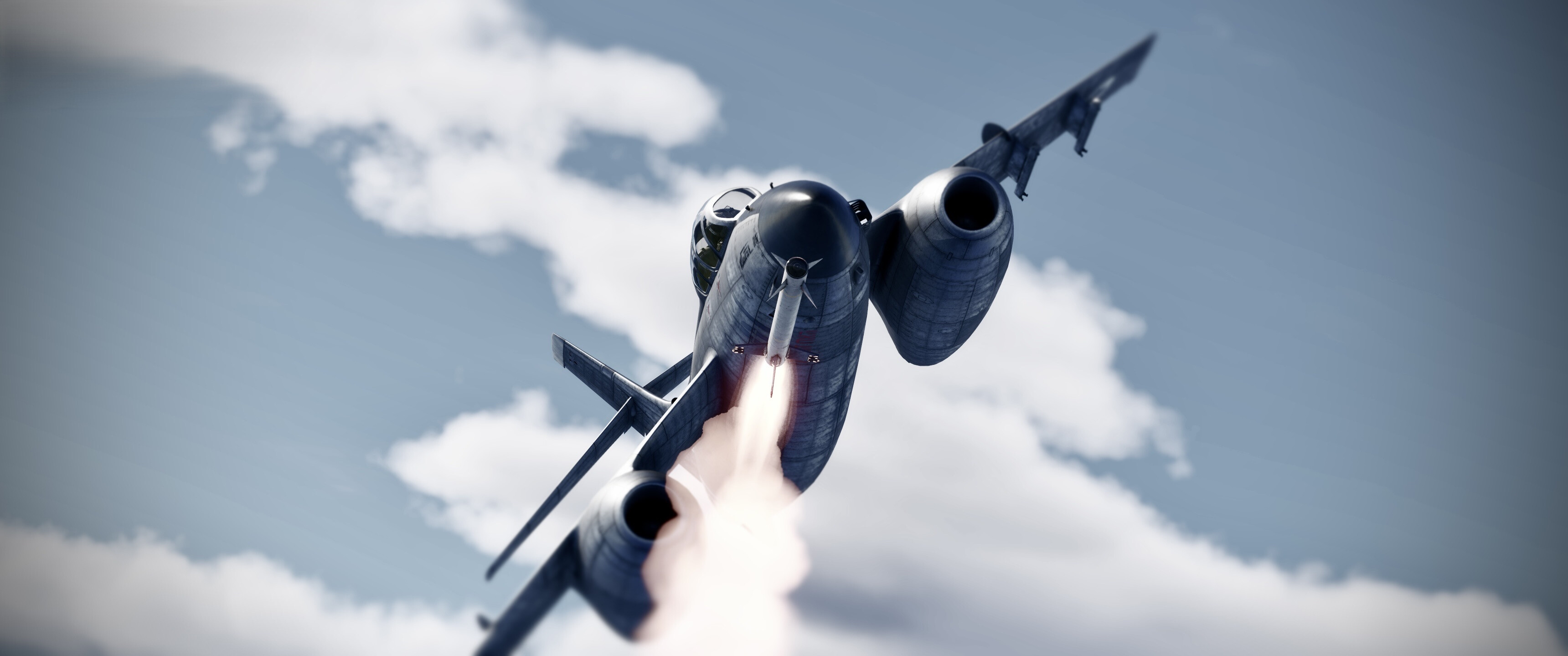
Generally, the Shafrir has a maximum effective range of 0.5 to 1.5 km. Most opponents will be able to easily dodge the Shafrir with basic maneuvers, making it only truly effective in certain situations (e.g., against unaware or stalling opponents, preferably lacking countermeasures).
Nevertheless, the Shafrir can still surprise enemies who may not expect a jet bomber to be equipped with air-to-air missiles, and can be effectively used against less maneuverable aircraft making a pass and attempting to run away from you, such as the F-104. Aircraft with a poor roll rate (Such as the Soviet MiG-17) can also have difficulty dodging the Shafrir if they do not turn soon enough, so when you see an opportunity it is recommended to take it, to see where it leads you.
Air-to-ground armaments
The Vautour IIN retains the same bomb and rocket loadouts as its original bomber variant, which include dumb bombs and unguided rockets. Unfortunately, pilots will have to aim their bombs or rockets themselves as the Vautour is not equipped with a ballistics computer to provide lead/impact point estimation.
Bombs
Four different types of bombs can be carried on the wing pylons and inside the internal bomb bay rack. The 500/50 kg G.P. bomb is the best suited for bombing vehicles in mixed battles due to its high explosive mass. For base bombing in air battles, six 360/50 kg G.P. bombs and a single 100/50 kg G.P. bomb is sufficient to destroy one base.
Note: Bombs that are mounted on the external wing pylons take priority when being dropped over the ones inside your bomb bay.
| Name | Mass per bomb | Explosive mass (TNT equivalent) | Max # of bombs (all available slots) |
|---|---|---|---|
| 100/50 kg G.P. bomb | 134 kg | 72.8 kg | 10 |
| 250/50 kg G.P. bomb | 265.7 kg | 151.5 kg | 10 |
| 360/50 kg G.P. bomb | 362.4 kg | 206.6 kg | 10 |
| 500/50 kg G.P. bomb | 453.6 kg | 340.6 kg | 6 |
Rockets
There are three types of rockets available to the Vautour: the smaller Type 23 SNEB, and the larger T10 140 and T10 151 rockets. The T10 151 offers more penetration and requires fewer hits to destroy a vehicle, but the Type 23 SNEB compensates for its lack of penetration and explosive mass through sheer numbers. It is recommended to avoid using the T10 140, due to its rather poor penetration.
Tip: The Type 23 SNEB rockets can be used as makeshift flares to fool enemy missiles. Carry the 112x center-mounted rockets and launch them whenever a missile is fired at the aircraft, while taking evasive maneuvers. Don't forget to open the bomb bay door first!
| Name | Mass per rocket | Explosive mass (TNT equivalent) | Warhead type | Penetration (mm) | Max # of rockets (all available slots) |
|---|---|---|---|---|---|
| Type 23 SNEB | 5.1 kg | 435 g | HEAT | 400 mm @ 0 m | 188 |
| T10 140 | 28 kg | 2.5 kg | HE | 30.2 mm @ 0 m | 24 |
| T10 151 | 28 kg | 2.1 kg | HEAT | 450 mm @ 0 m | 24 |
When using the center-mounted Type 23 SNEB rockets (112x rockets), make sure to open the bomb bay as the rockets fire out of a rack located inside the bomb bay.
Cockpit
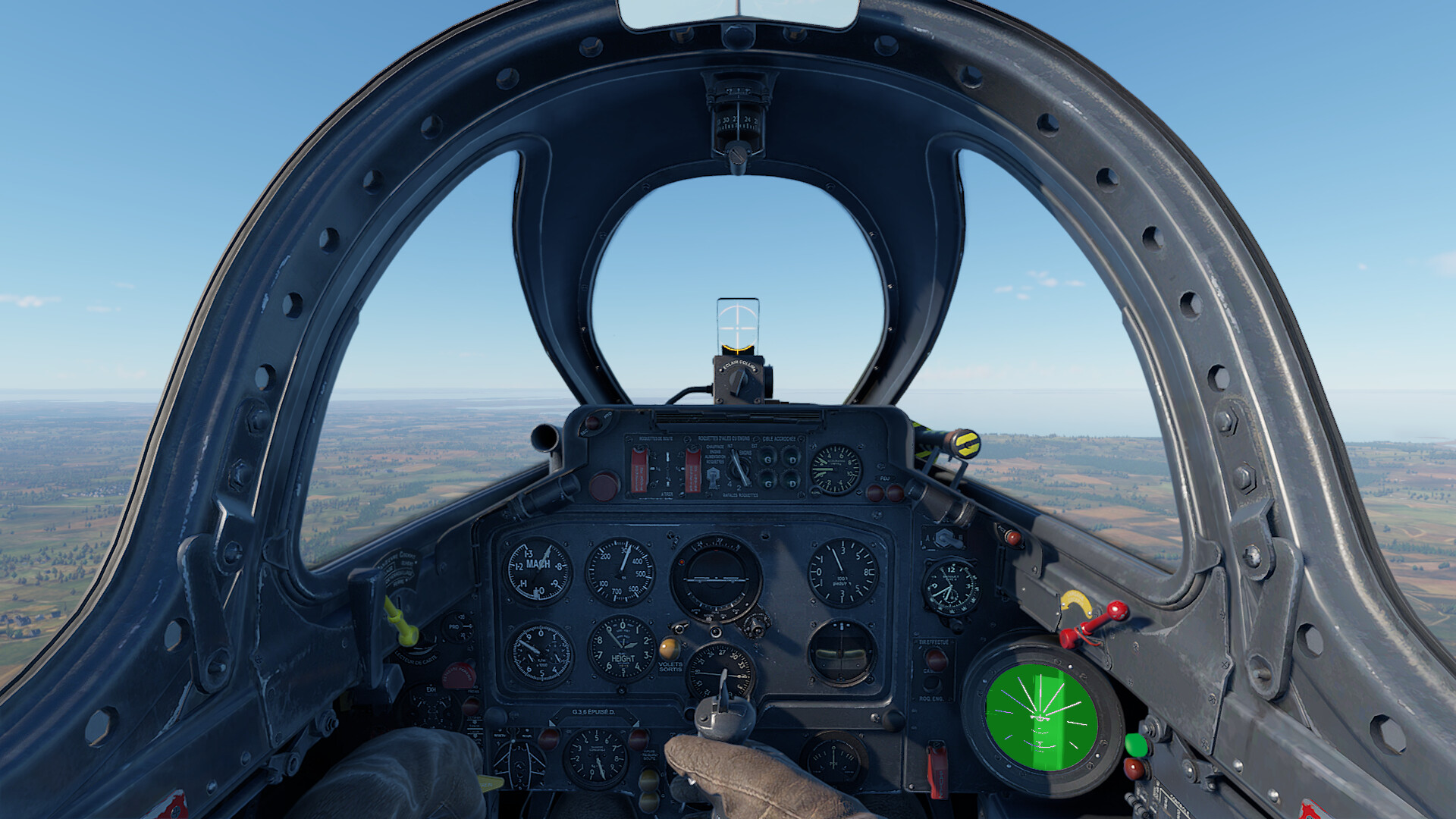
The Vautour IIN has a relatively simple cockpit layout, with various analog instrument displays located on the center panel. The radar scope display for the DRAC-25A is located on the lower right. The forward visibility of the cockpit is slightly obstructed by the bulletproof windscreen supports, but the side and rear visibility is quite good.
Camouflages
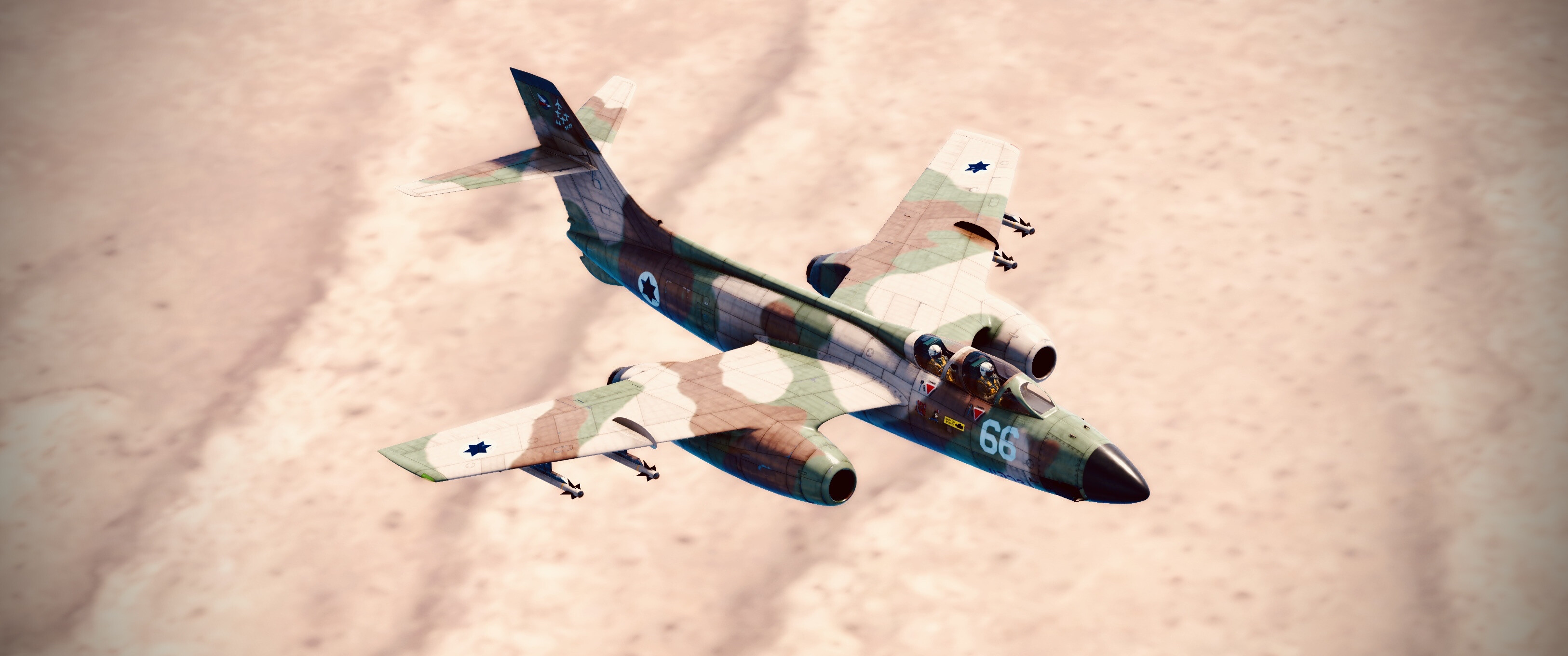
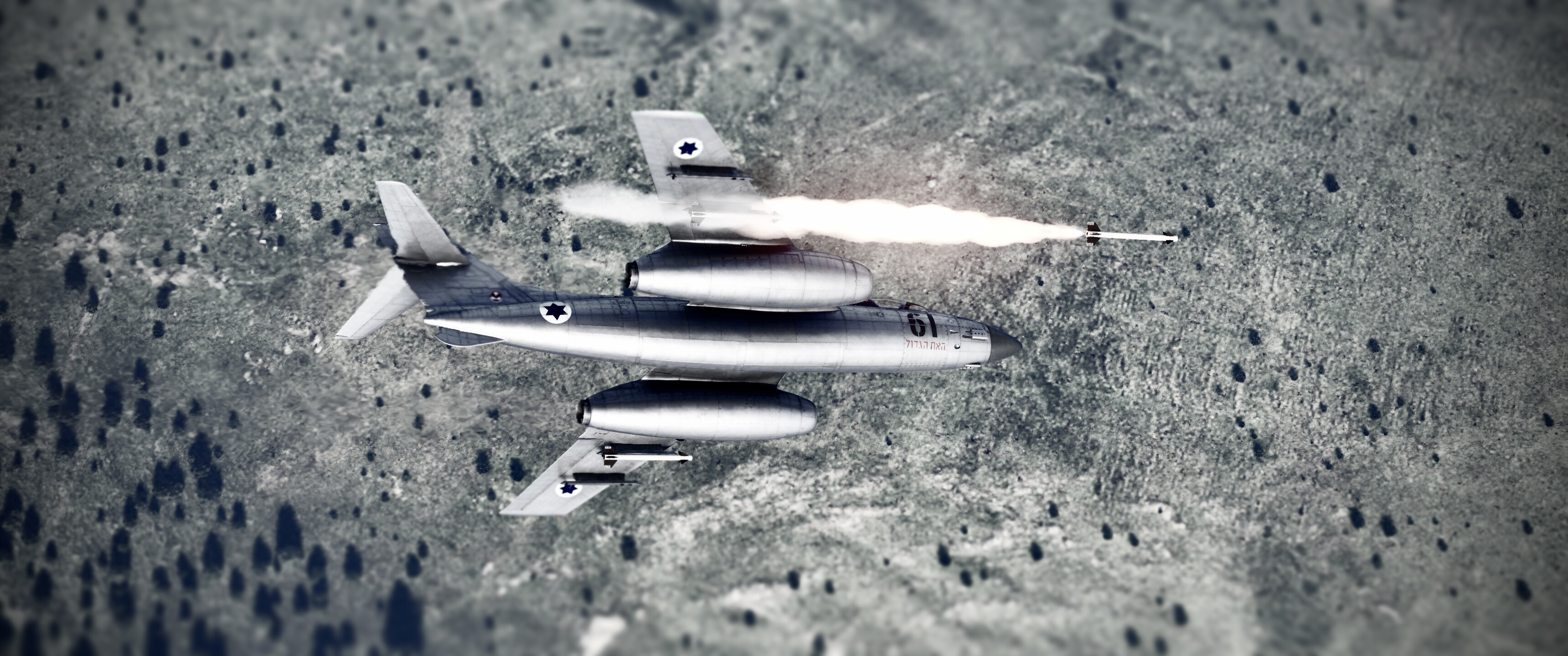
In addition to the default bicolor camouflage, a tricolor desert camo used by the Israeli Air Force's 110th Squadron and a silver unpainted camo used by the 119th Squadron are also available as alternative camouflages.
Tricolor camouflage (110th Squadron)
Unpainted camouflage (119th Squadron)
Usage in battles
The Vautour IIN's performance in matches largely depends on the type of aircraft that it will be facing in that match. When matched against early Cold War, often much slower jet aircraft, pilots can roam freely around the map and outrun nearly all opposition with ease. However, when facing off against supersonic aircraft such as the MiG-19 and F-106 that are also equipped with air-to-air missiles, the Vautour is mainly relegated to playing as a heavy support fighter that opportunistically picks off enemies that are already engaging its teammates, or enemies that are distracted or in the process of stalling out.
Recommended Loadouts
- Air battles: 4x Shafrir, 1x Type 23 SNEB rockets (bomb bay), 10 minutes of fuel (37%), Air targets belt
- Ground battles/CAS: 4x 500/50 G.P. bomb, 12x T10 151 rockets, 10 minutes of fuel (37%), Ground targets belt
In air battles, side-climb to the left at the beginning of the match to an altitude of around 6,000 to 7,000 meters. Stay on the lookout for incoming radar missiles.
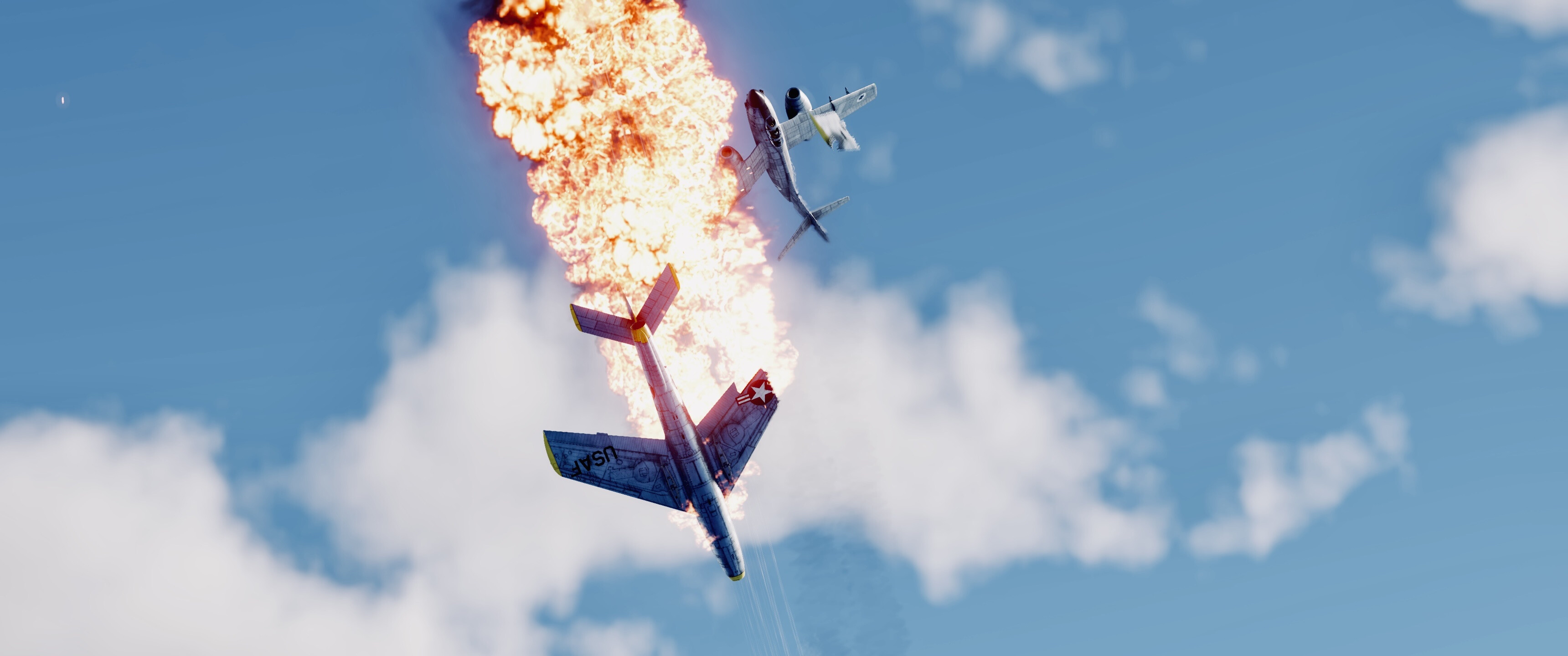
Afterwards, pilots should find themselves to be partially or completely above the majority of opponents at sea level, and can engage from the sides or rear of the opposing team. Gun down slower aircraft or unaware enemies with the DEFAs, and use the Shafrir missiles on opponents that are further out (no more than 1.5 km, when gaining on them).
| Slower aircraft | Faster aircraft | |
|---|---|---|
| USA | F-84F, F-86, F9F | F3H-2, F-100, F-104, F-106 |
| USSR | MiG-15 (regular) | MiG-15bis, MiG-17, MiG-19PT, MiG-21 |
| Britain | Meteor, Vampire, Sea Hawk, Venom | Scimitar, Hunter, Buccaneer, Javelin, Lightning |
| Germany | Me 163, Alpha Jet A | CL-13 Mk 5/6, MiG-19S, Lim-5P, MiG-23BN, F-86K |
| France | M.D. 450/452 | Mystere, F-100D, Etendard, Hunter |
Beware of engaging dangerous opponents like the MiG-19PT/S, F-106, CL-13B Mark 6, and the Hunter, which can easily outrun and outmaneuver the Vautour IIN with ease (these aircraft also have air-to-air missiles). Never try to engage these enemies alone without the element of surprise or teammates around that can help.