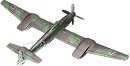
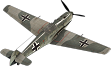
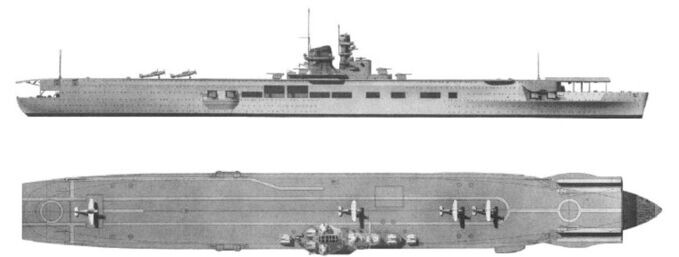
Germany had already toyed with the idea of possessing its own aircraft carrier during the First World War; this was to be called Ausonia, but it was never seriously pursued. However, shortly after the termination of the Treaty of Versailles, a new carrier project was initiated, based on the experience of other major powers such as Japan, the USA, and Great Britain, acquired through exchanges or espionage. Ultimately, not a single aircraft carrier was fully commissioned or built. The Graf Zeppelin was largely completed, but its construction was halted, while its sister ship, Aircraft Carrier B, was abandoned during construction. During the design of the accompanying aircraft, some were built specifically for the project, such as the Arado 197. However, this met with little approval from the Luftwaffe, which is why modifications of existing aircraft like the Bf 109 T, the Ju 87 C or T, or the Fi 167 found more favor.
Carrier Planes
Since the basic idea of planning a German aircraft carrier had already been conceived in the Weimar Republic, and since aircraft carriers became more popular in the 1920s, it was necessary to design and build appropriate aircraft that were adapted to the conditions at sea and could take off and land on aircraft carriers.
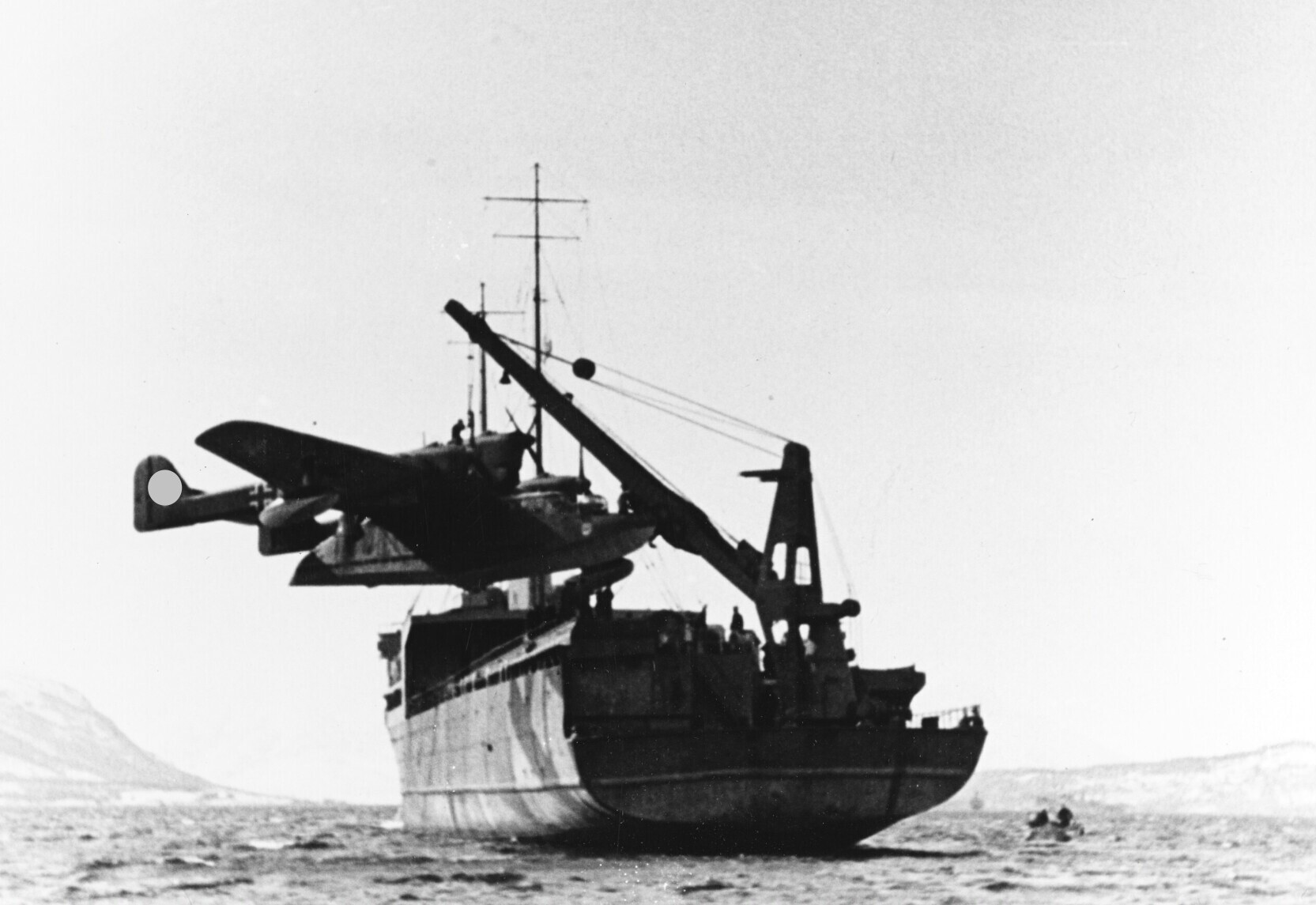
The basic idea of launching aircraft from ships is nothing special in itself, especially since cruisers and battleships have reconnaissance aircraft. However, there were also so-called catapult ships, which were mostly research vessels or, in wartime, reconnaissance ships that functioned similarly to aircraft carriers. They had various types of seaplanes, for example the Do 18, BV 138, He 58, and the He 12. They were launched from the ship using a catapult and later lifted back on board with a crane installed on the ship, and could be launched again, just like on other large ships.
But the Imperial Japanese Navy also had an interesting combination: the battleships Ise (伊勢) and Hyūga (日向) were converted into hybrid aircraft carriers. This involved removing the aft guns and building a relatively short flight deck. They had two catapults like aircraft carriers. The catch, however, was that the carriers could only launch aircraft, not land them.
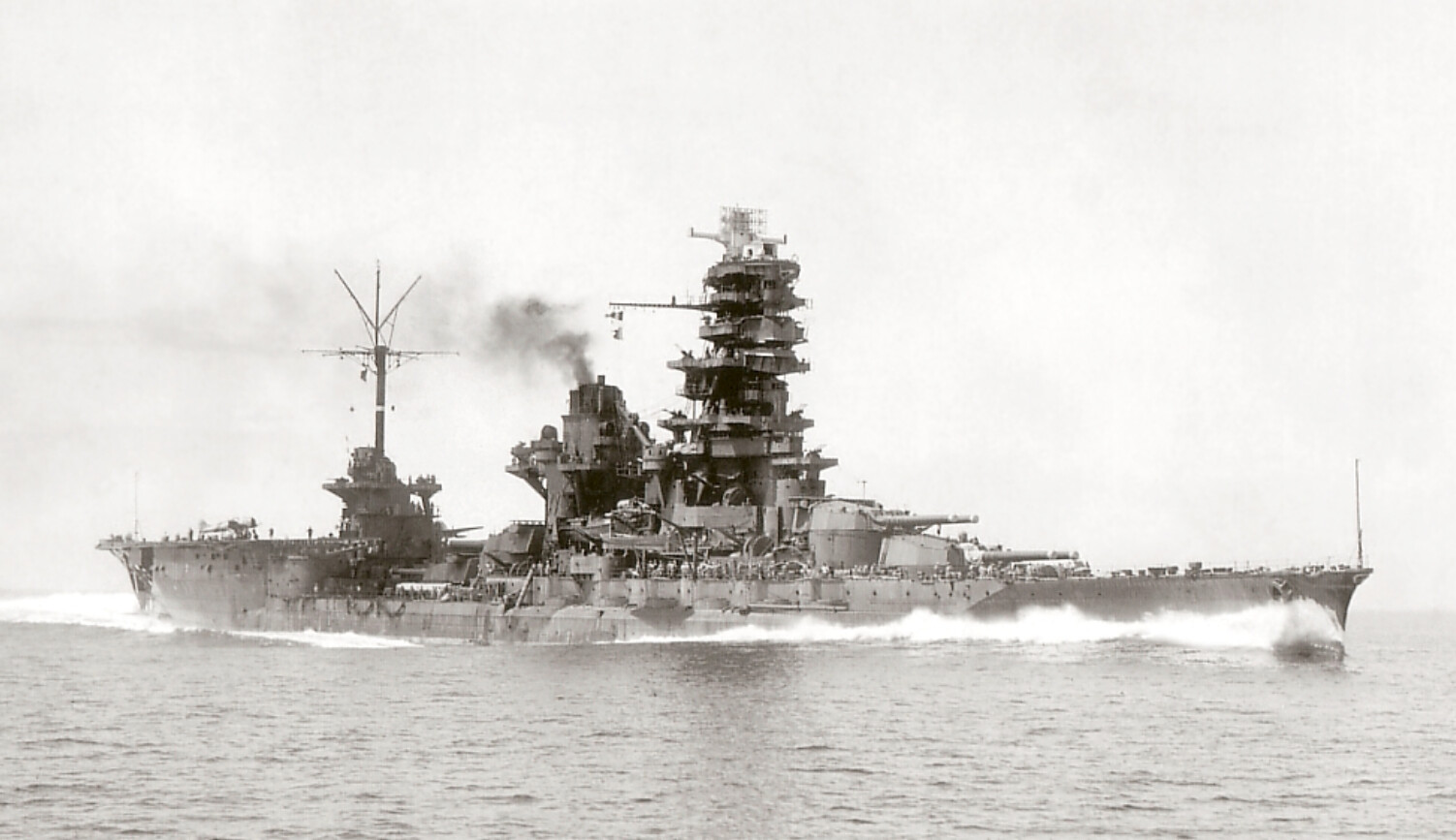
Intresting Fact: Germany also considered building such hybrid aircraft carriers from its own cruisers or battleships in 1942, but this idea never received much attention and was completely abandoned.
Two aircraft squadrons were originally planned for the two carriers: Carrier Squadron 186 for the Graf Zeppelin and Carrier Squadron 286 for Aircraft Carrier B. Both were to receive the same aircraft equipment. However, since Carrier Squadron 286 never materialized, only Carrier Squadron 186 was partially completed until it also became clear that the carrier would never be fully realized.
Hermann Göring had objections to the project and wanted to hinder it. He mostly did so by obstructing the development of the aircraft through withholding resources and slowing down bureaucratic and development processes.
Bf 109 T
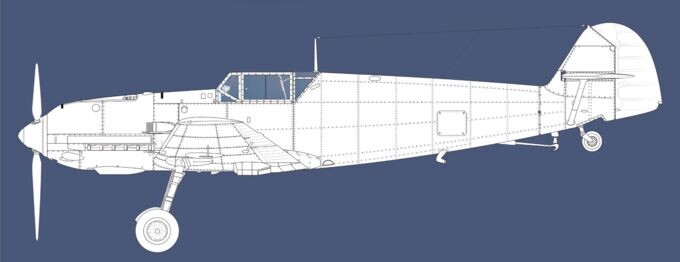
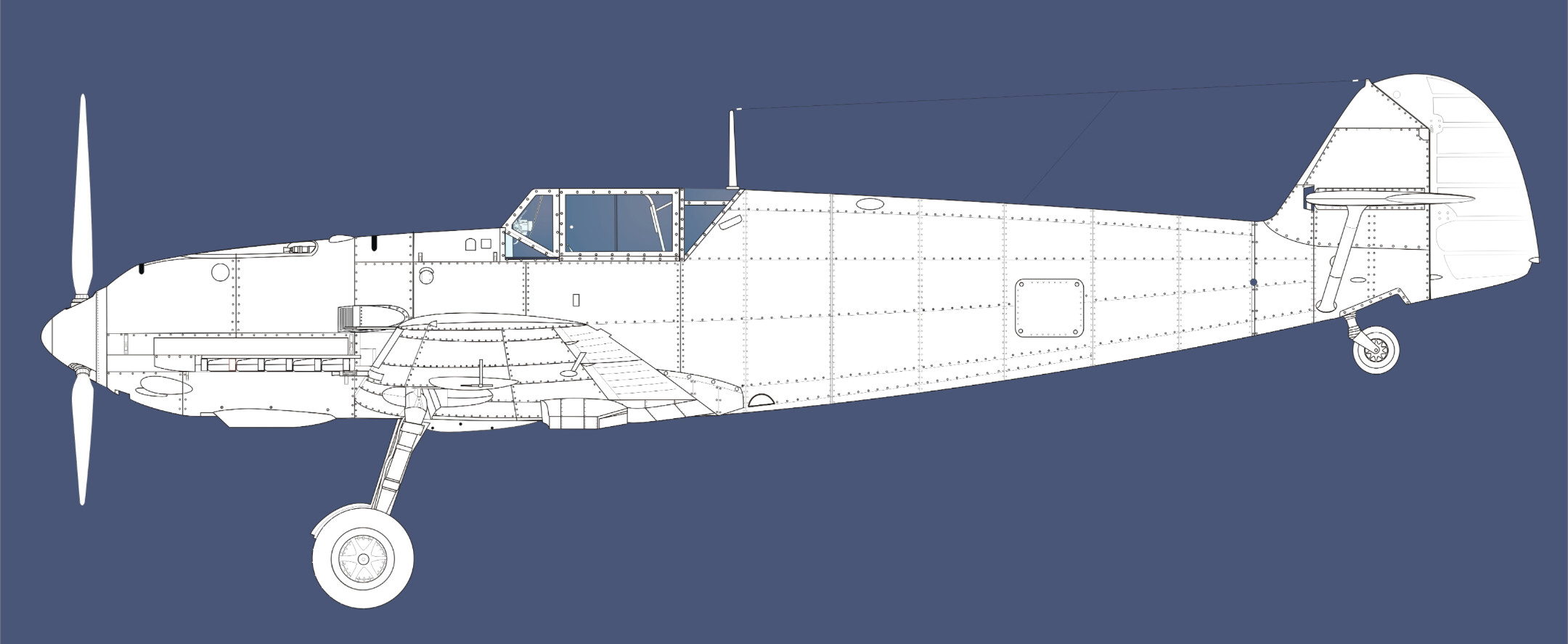
One of the aircraft series specifically designed for use on aircraft carriers was the Bf 109 T series. This consisted of three sub-types: the Bf 109 T-0, the Bf 109 T-1 and the Bf 109 T-2. Its development began after the development of the preceding carrier-based version of the Arado 167 failed due to its inadequate flight performance.
The main problem lay in the construction of the Bf 109. It was too light to withstand the kinetic forces generated during landing and takeoff from an aircraft carrier, which is why it had to be reinforced. A retractable arresting hook, an arresting hook release, a four-point mounting for the four-point catapult, a brake cable deflector bar in front of the main landing gear, as well as armrests and a reinforced head cushion for the pilot were also added, which would give the aircraft the ability to land on an aircraft carrier. With these additional modifications, the first test aircraft, V17 “D-IYMS,” was built and tested at the Travemünde test site. It was decided that further development would be based on the Bf 109 E-7/N / E-7/Z.
Bf 109 T-0
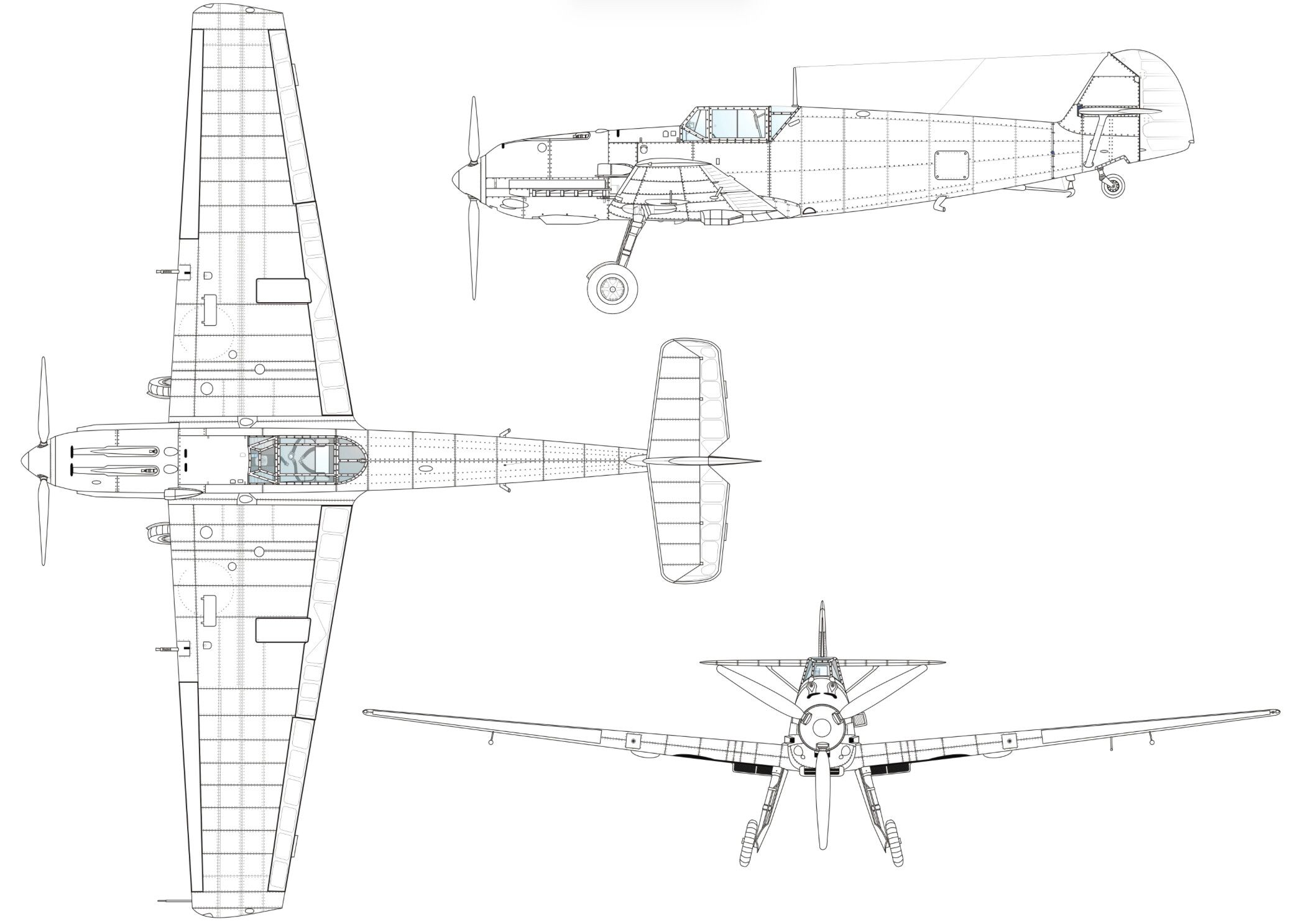
First, the wing span was increased from 9.87 m to 11.08 m. This also increased the wing area from 16.2 m² to 17.50 m². This was intended to give the aircraft more lift during takeoff and landing from the carrier. At the same time, the wing structure was reinforced to enable it to reach at least 750 km/h in a dive without risking the wings breaking or tearing off. A total of 70 Bf 109 T series aircraft were built by Fieseler in Kassel as the T-0 series.
| Height | 2.6 m |
| Length | 8.64 m |
| Width | 11.08 m |
| Empty mass | 2,160 kg |
| Takeoff mass | 2,800 kg |
| Top speed | 560 km/h |
| Service ceiling | 10.5 km |
| Range | 800 km |
| Engine | 12-Cylinder V-Motor Daimler-Benz DB 601 N |
| Power | 1,020 hp |
| Wing area | 17.50 m² |
| Crew | 1 |
| Armament | 2×7.92 mm MG 17 above the engine (1,000 rounds each), 2 x two 20 mm MG FF machine cannons in the wings (60 rounds each) |
Bf 109 T-1
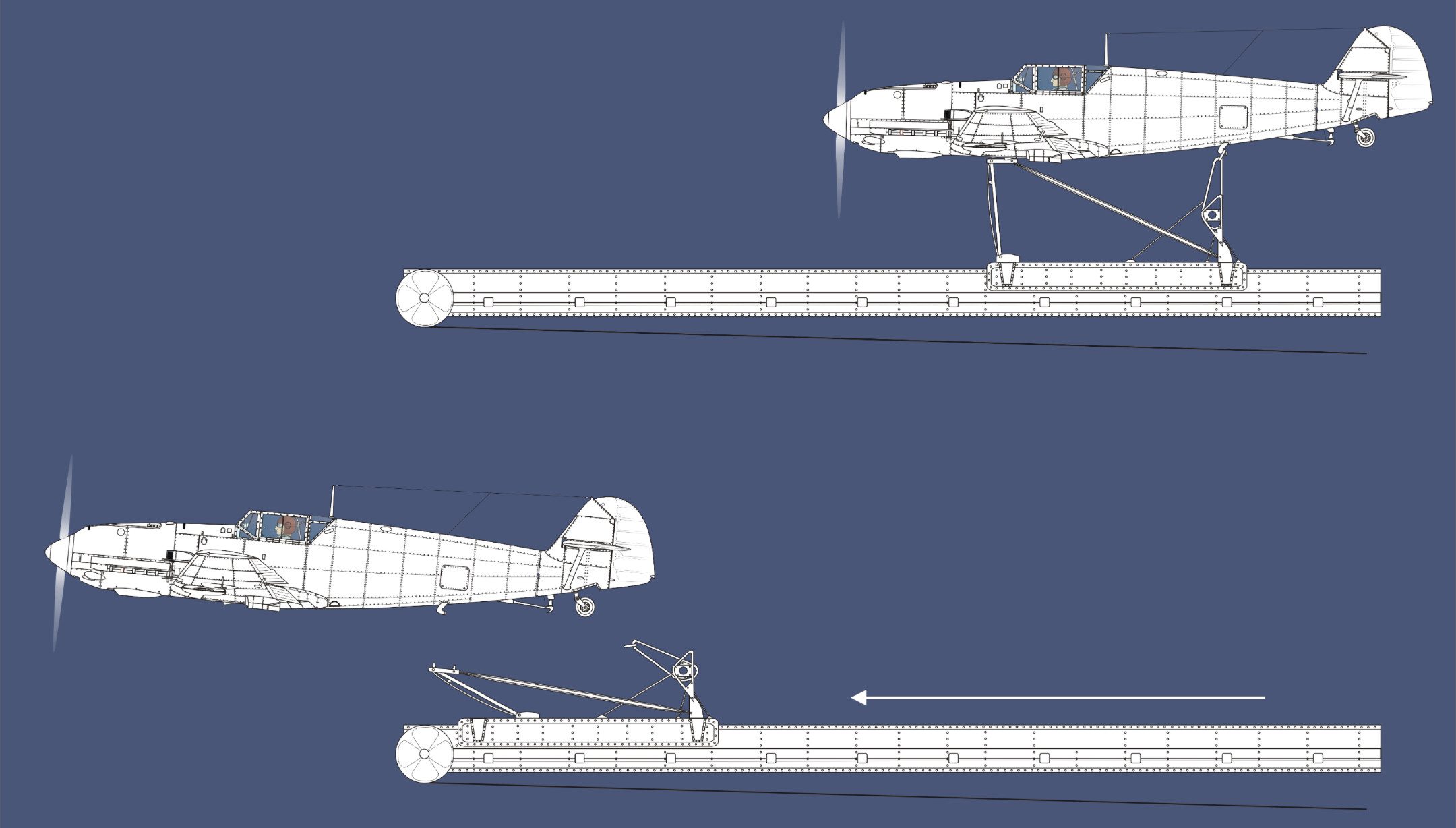
The seven aircraft of the T-1 version, like the others, originated directly from the T-0 series (construction numbers: W.Nr. 7728 to 7734). As planned, they received modifications to land and take off from a carrier. They were assigned to Carrier Group 186, which was to be stationed on the Graf Zeppelin. However, one aircraft of the Bf 109 T-1 series was lost in a crash during a flight test by Messerschmitt in Augsburg.
Bf 109 T-2
The remaining 63 aircraft of the T-0 series were renamed the T-2 series. These were not equipped to take off and land from a carrier but were intended to function as coastal-based fighters.

Because the T series was suitable for landing and taking off from short and medium runways, they were stationed with I./JG 77 (First Group of Jagdgeschwader 77) in Norway, as well as with the Drontheim Fighter Group and the Stavanger Fighter Group. Around the end of 1942, the remaining aircraft were ordered back to Germany, as the completion of the Graf Zeppelin was now on the horizon. Therefore, they were to be converted to the T-1 type in Kassel, whereupon 45 aircraft also received carrier equipment.
However, with the decree of February 2, 1943 to stop the complete aircraft carrier program, the conversion of the T-2 aircraft to the T-1 standard also became unusable. For this reason, they were converted back from the T-1 type to the T-2 type. After that, they were assigned coastal defense duties for a few months in Jagdgeschwader 11 “Jasta Helgoland” from the island of Heligoland until the end of 1943, when they were stationed in Norway again. However, they were soon replaced by more modern aircraft as the Allied aircraft were also becoming increasingly modern. Their last use was in the training of pilots for Nachtjagdgeschwader 101 and in the Blindflugschule 10. until the end of the war.
Ju 87 C
Around the same time as the development of the Bf 109 T, the Reich Air Ministry decided on August 18, 1938, to introduce the Ju 87 C. This variant was intended to operate on the Graf Zeppelin as a dive bomber and torpedo bomber. It was based on the Ju 87 B. The C variant differed from other Stukas in that it could fold its wings to save space on the carrier. Between April and October 1941, five such Ju 87 Type C aircraft were ordered and delivered by the Kriegsmarine.
Initially, two prototypes were built: the V10 and the V11. The V10 possessed the same characteristics as the Ju 87 B and was equipped with a Jumo 211 A engine. The V10 was completed in March 1938, allowing it to successfully complete its maiden flight on March 17, 1938, and thus it was designated Ju 87 C-1. Shortly afterward, the V11 also had its maiden flight on May 12, 1938. The V11 differed from the V10 in that it could fold its wings; this version was designated Ju 87 C-0. By December, 915 takeoff and landing trials had been conducted with both aircraft, and even during the planning phase, the Kriegsmarine ordered 120 Ju 87 C aircraft.
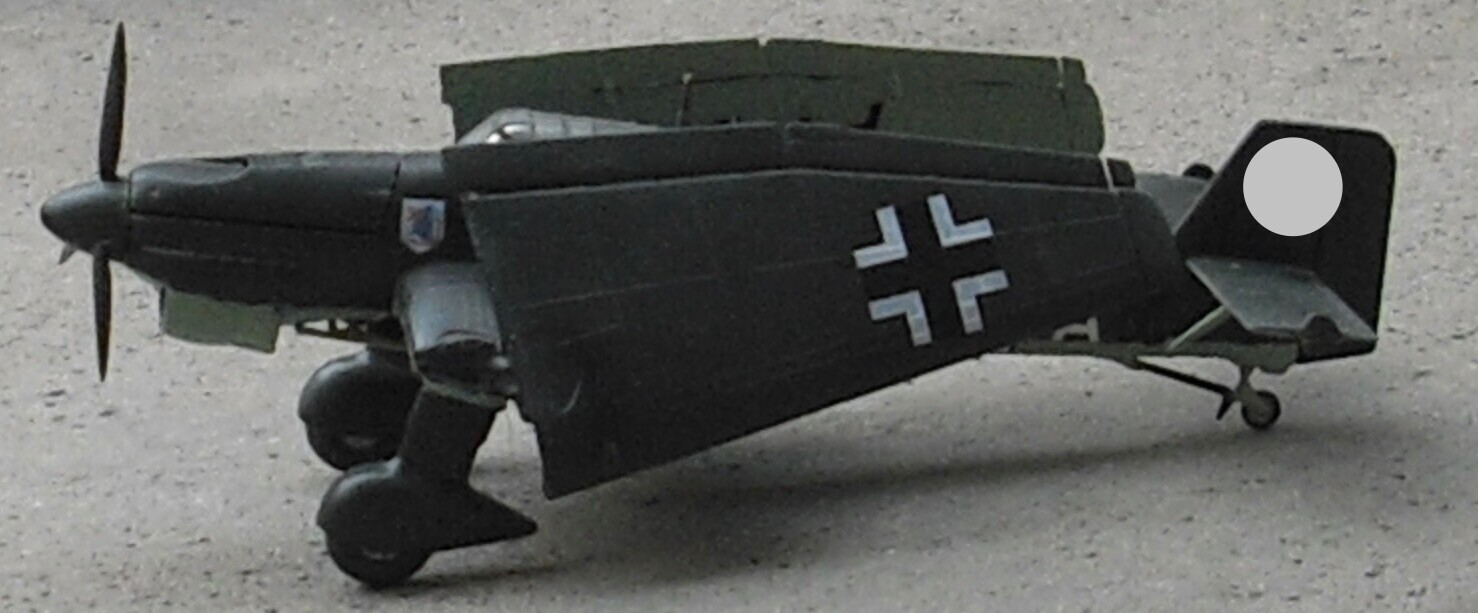
The Stukas of the C-0 variant, which were ultimately selected for the carrier project after testing, were additionally equipped with a two-person inflatable boat and rescue equipment, including a signal pistol with ammunition, emergency food, and other emergency and survival supplies. A rapid jettison mechanism was also installed to jettison the fuel and wheels, as well as two inflatable tanks in the wings and two in the fuselage, enabling the Ju 87 C to land on the water in an emergency and float there on its own for a few days.
Naturally, the Ju 87 C was equipped with a catch hook and the four-point catapult safety device for use on the Graf Zeppelin.
| Height | 11.5 m |
| Length | 13.8 m |
| Width | 3.9 m |
| Empty mass | 3,900 kg |
| Takeoff mass | 5,300 kg |
| Max mass | ~ 6,650 kg |
| Top speed | 410 km/h |
| Service ceiling | ~ 7 km |
| Range | ~ 1,500 km |
| Engine | Junkers Jumo 211 |
| Power | ~1,200 hp |
| Wing area | 31.90 m² |
| Crew | 2 |
| Armament | 2x MG 17 in the wings and 1x MG 15 for the rear gunner |
| Bomb load | 1×500 kg bomb / 1×250 kg bomb / 4×50 kg bombs. Theoretically, the F5w torpedo could also be used. |
On October 6, 1939, the order for the Ju 87 C was cancelled. A few individual aircraft were completed, but these were either restructured into the Ju 87 R or Ju 87 D series, or converted back to the Ju 87 B. Shortly before the end of the war, another attempt was made to build a “Träger Stuka” (Carrier Stuka) based on the Ju 87 D. This was to be called the Ju 87 T and receive the same modifications as the Ju 87 C, but ultimately it was never built into series production or even a prototype.
Fieseler Fi 167
The Fi 167 was a biplane designed by the Fieseler company for the tender for the carrier project. It was intended to serve as a torpedo bomber and reconnaissance aircraft on the Graf Zeppelin. A total of 14 were built.
On November 15, 1936, work commenced under the direction of Chief Engineer Reinhold Mewes and his deputy Viktor Maugsch. As with the Ju 87 C-0, the development of the Fi 167 took into account emergency water landings.
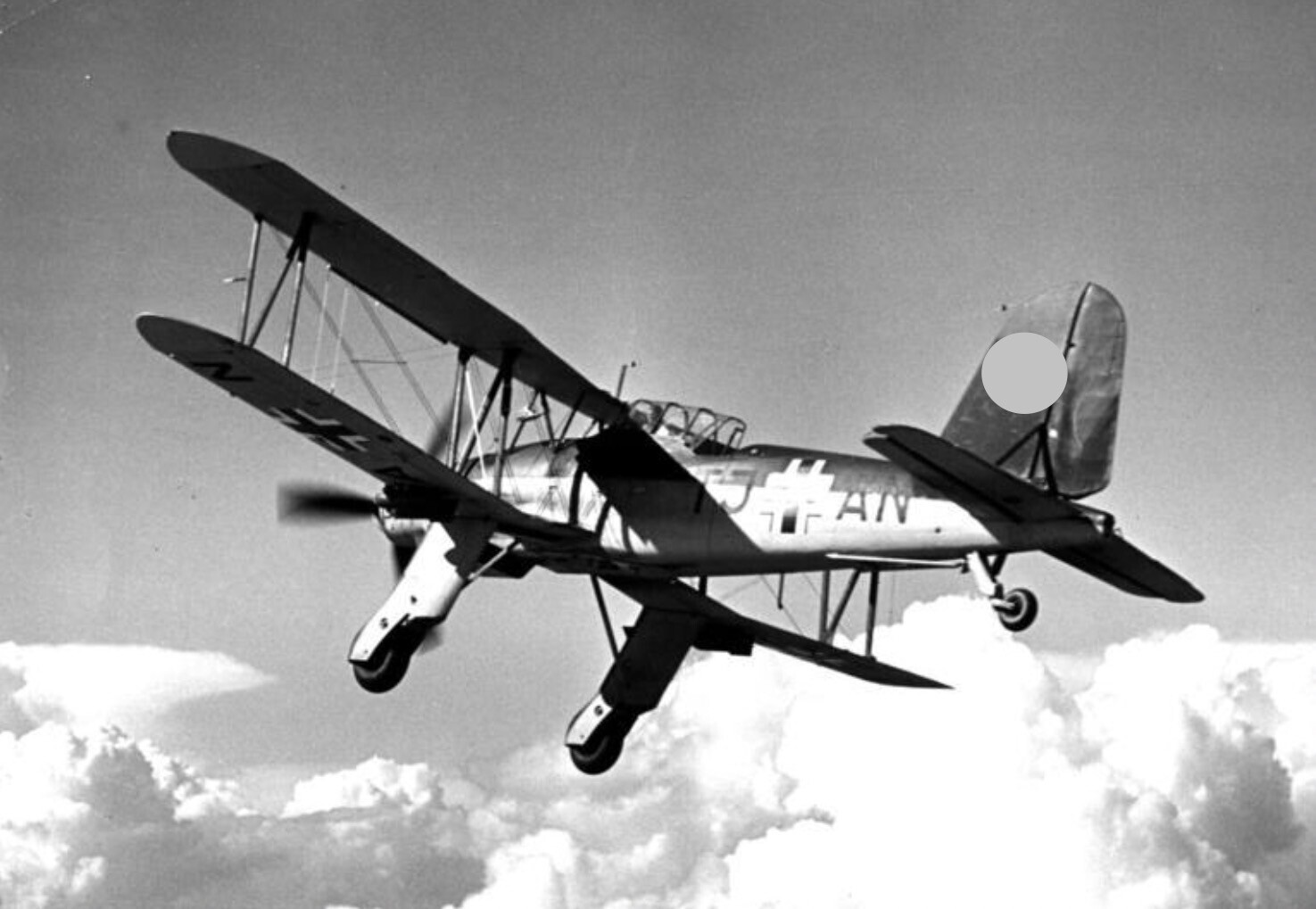
For this purpose, inflatable floats were fitted to the wings and fuselage to support the all-metal aircraft on the water. The wings could be folded back against the fuselage to save space on the carrier. A high-lift device from the Fi 156 “Storch” was also installed to give the Fi 167 improved climb performance during takeoff.
Three prototypes of the Fi 167 were built in 1938: D-OCML (V1), D-OFWP (V2), and D-OJBZ (V3). They underwent extensive test flights, as their closest competitor, the Arado Ar 196, was a direct contender in the tender. Ultimately, the Fi 167 was chosen because it demonstrated superior flight and performance characteristics compared to the Arado 195. The Arado 195 was too underpowered, too slow, and lacked sufficient power to meet the requirements of the Kriegsmarine (German Navy). While the Fi 167 fulfilled the requirements, it was selected for the carrier project.
| Height | 5.46 m |
| Length | 11.43 m |
| Width | 13.5 m 5.75 m: wings folded |
| Empty mass | 3.03 t |
| Takeoff mass | 4.05 t |
| Max mass | 4.8 t |
| Top speed | 320 km/h |
| Service ceiling | 7.5 km |
| Range | 1,300 km |
| Engine | Twelve-cylinder engine DB 601 B-1 |
| Power | 1,100 hp |
| Wing area | 45.50 m² |
| Crew | 2 |
| Armament | Two 7.92 mm MG 17 |
| Bomb load | 4×50 kg and 1×250 kg / 1×500 kg bomb / 1x SC-1000 / 1x Lt5b Torpedo |
However, after the premature end of the carrier project, the Fi 167 found no further use. Nevertheless, Fieseler built eleven more Fi 167 models until 1942, which were designated Fi 167 A-0. In 1942, when the carrier project was resumed, they were considered obsolete and no longer featured in the carrier project. As a result, they found a use in a specially formed flight squadron, Erprobungsstaffel 167, stationed in the Netherlands, as coastal aircraft and as test subjects for experimental paint schemes for seaplanes.
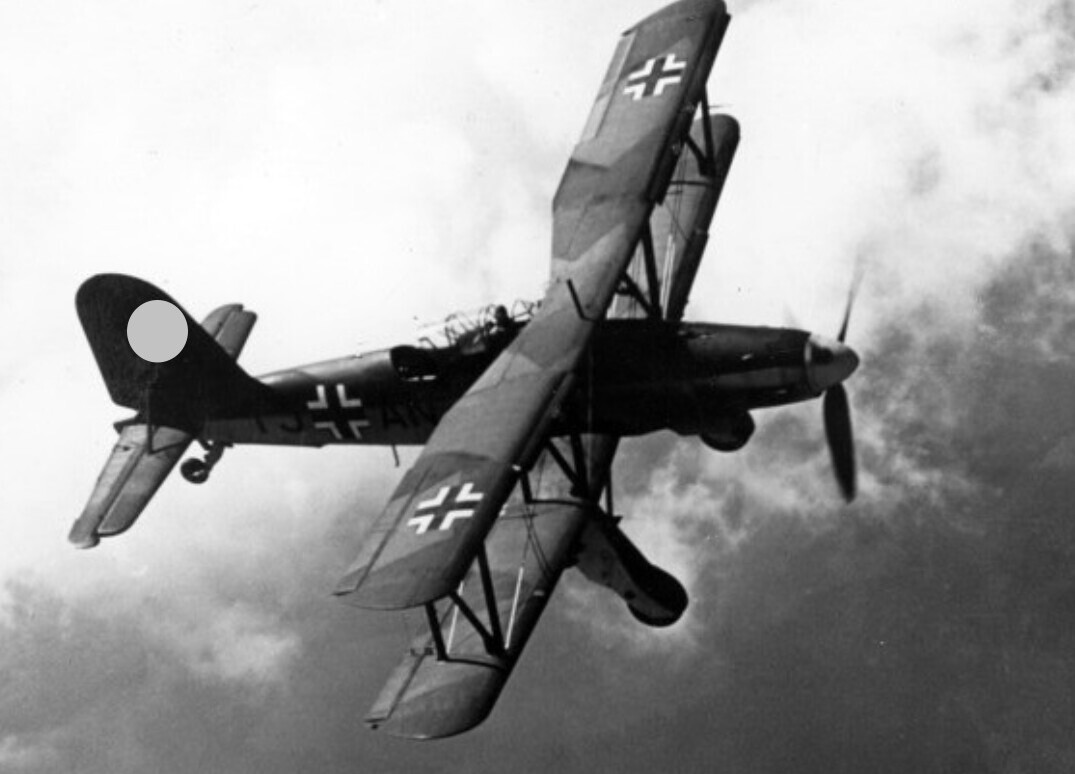
From September 1944, the 14 aircraft were transferred to Croatia, where they were assigned to the 1st Squadron in Zagreb. They were intended for reconnaissance and, due to their ability to have a very short landing and takeoff runway, were also used as supply aircraft to provide infantry units with ammunition. On October 10, 1944, five P-51 Mustang Mk IIIs managed to shoot down an Fi 167. The remaining three Fi 167s found their last use after World War II with the Yugoslav People’s Army and the Yugoslav Partisan Army. their fate is unknown.
Arado Ar 195
The Arado Ar 195 was Arado’s first design of a polygonal biplane, designed for the first attempt of the German carrier project.
| Height | 3.60 m |
| Length | 10.50 m |
| Width | 12.50 m |
| Empty mass | 2,380 kg |
| Takeoff mass | 3,746 kg |
| Top speed | 290 km/h |
| Service ceiling | 6,000 m |
| Range | 750 km |
| Engine | BMW 123 M |
| Power | 830 hp |
| Wing area | 46 m² |
| Crew | 2 |
| Armament | 1 x MG 17 Offensive, 1 x MG 15 Deffensive |
| Bomb load | Up to a 500 kg bomb load or a 500 kg torpedo |
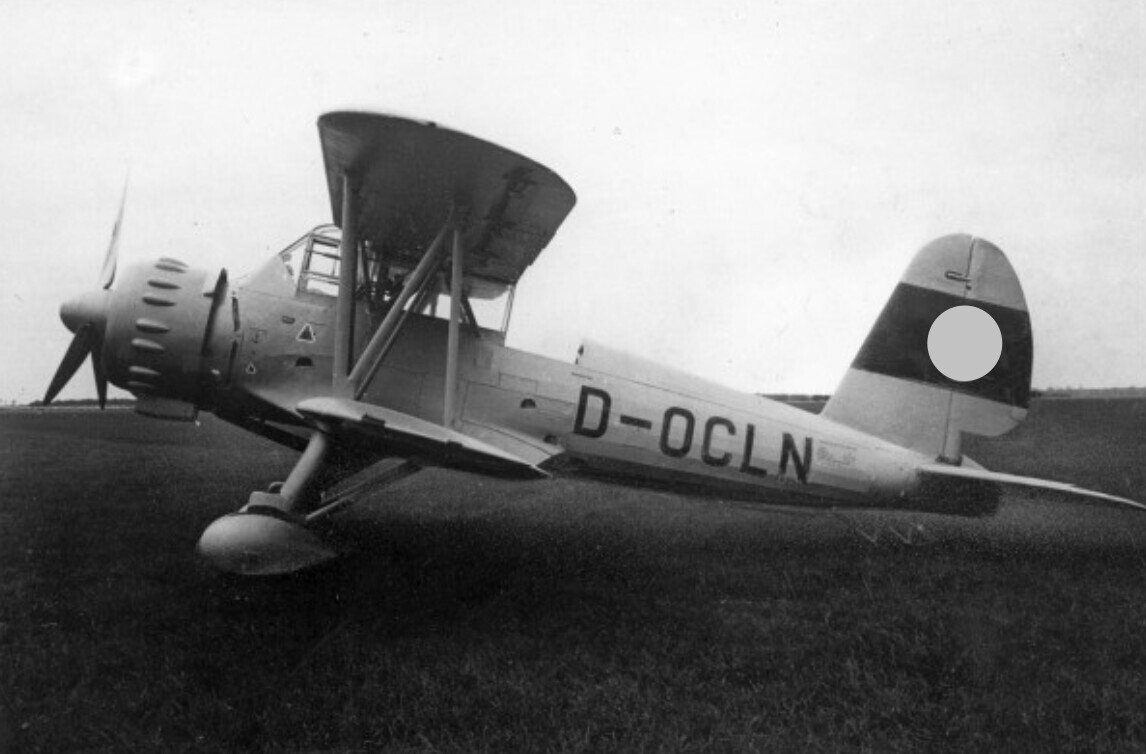
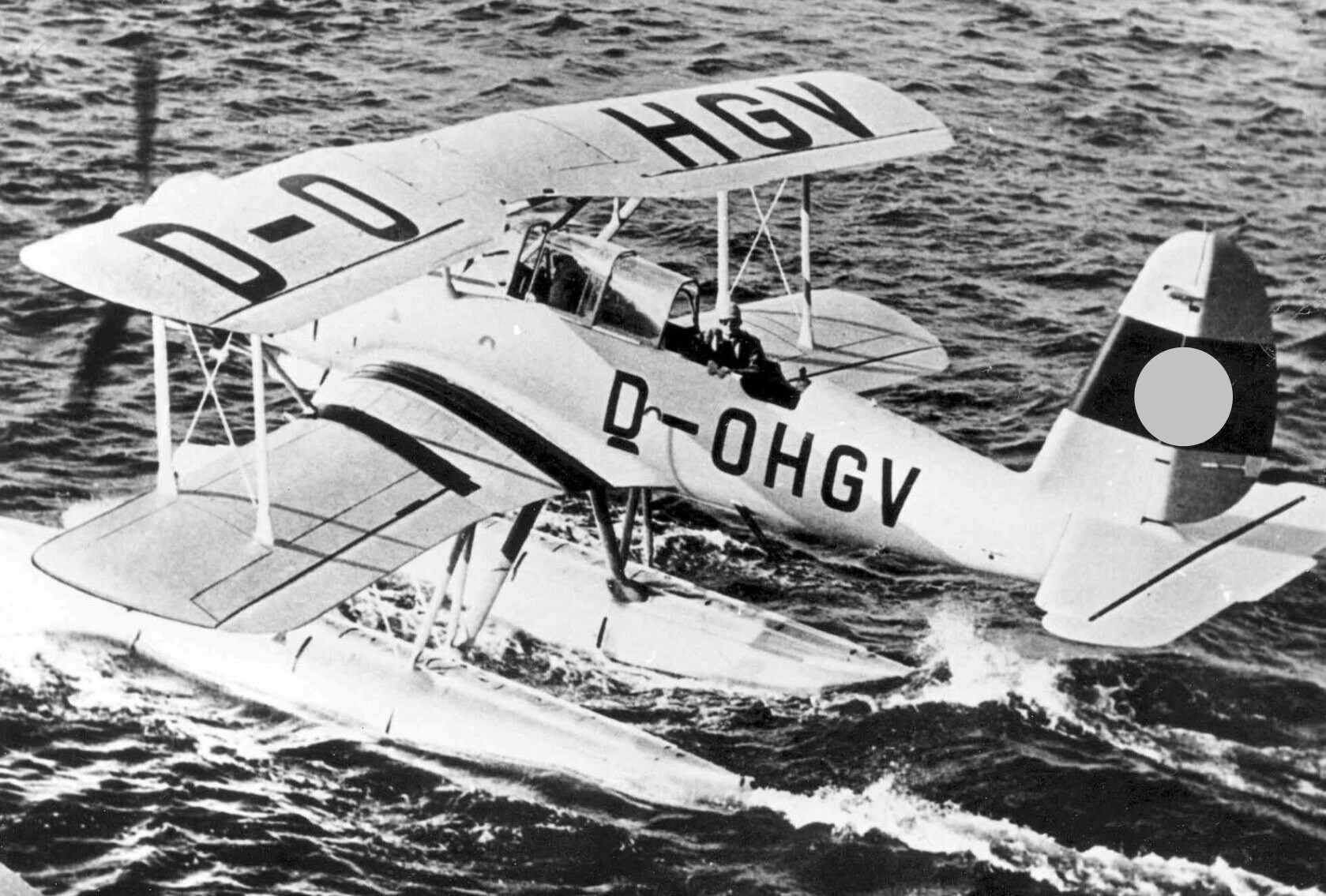
In 1937, Arado designed the Ar 195 based on the Ar 95, which was already in series production as a catapult aircraft. It was fitted with a new engine: a BMW 132 K/M radial engine, producing 812 hp and propelling the aircraft to speeds of up to 290 km/h. However, since the radial engine severely restricted the pilot’s field of vision, the enclosed cockpit was moved as far forward as possible to maximize visibility during carrier landings. Three prototypes were built, typically designated V1, V2, and V3. However, the Arado 195 was not ultimately selected for the project in favor of the Fi 167.
Arado Ar 197
| Height | 3.6 m |
| Length | 9.2 m |
| Width | 11 m |
| Empty mass | 1,800 kg |
| Takeoff mass | 2,425 kg |
| Top Speed | 400 km/h |
| Service celling | 9,200 m |
| Range | ~695 km |
| Engine | Nine-cylinder radial engine BMW 132 J |
| Power | 815 hp |
| Wing area | 27.8 m² |
| Crew | 2 |
| Armament | 2×20 mm MG FF, 2×7.92 mm MG 17 |
| Bomb load | 4×50 kg bombs |
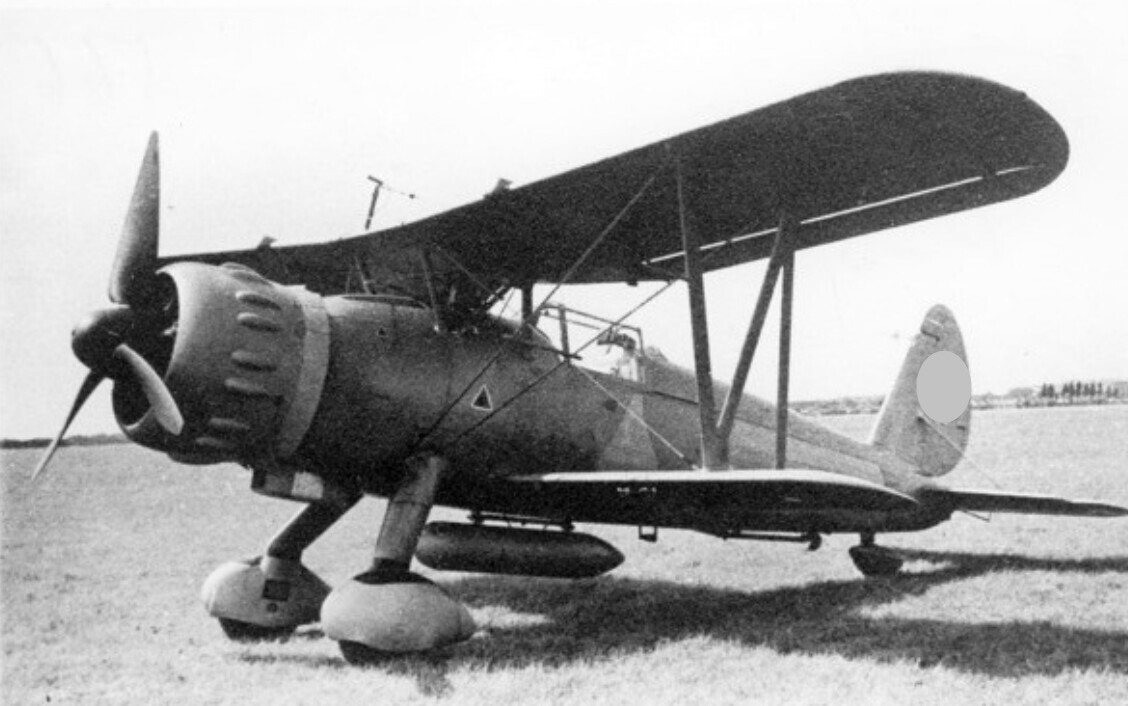
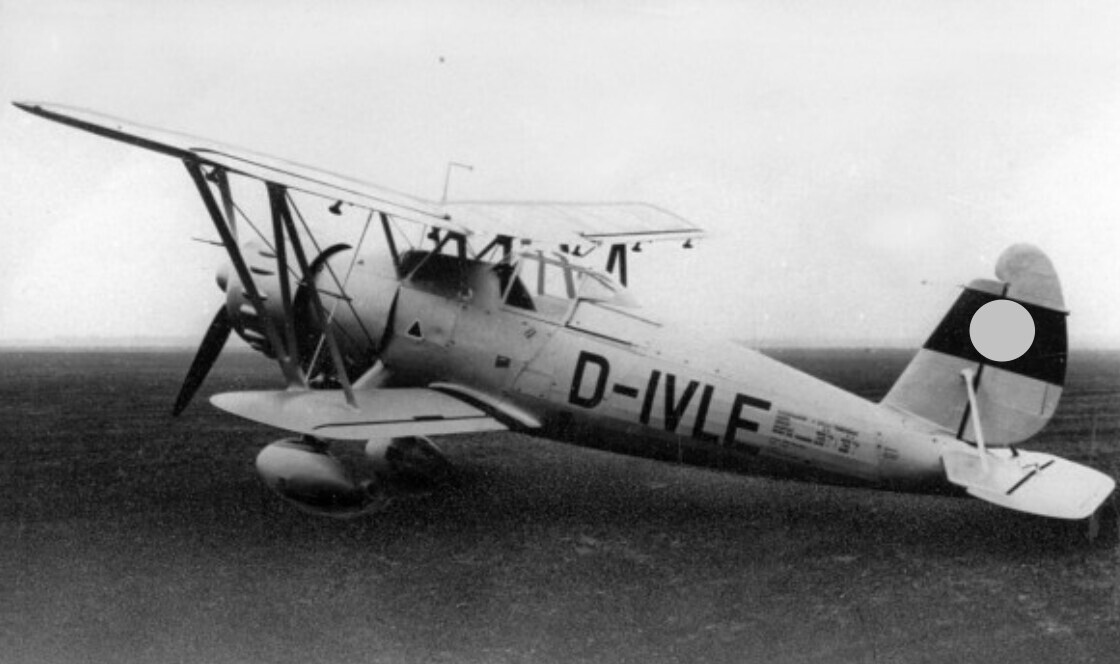
Arado also presented a design for a carrier-based, single-seat biplane fighter, the Ar 197. It was based on the Ar 68 H biplane for the carrier project. Development began in March 1936 under Walter Blume, who later designed the Ar 234 during the war. The enclosed cockpit was slightly modified, the landing gear was made jettisonable so it wouldn’t obstruct a water landing, and an arrestor hook and the corresponding three-point catapult fittings were added. Instead of the BMW VId, the first prototype, V1 (D-ITSE), was fitted with a water-cooled V-engine, similarly arranged to the DB 600, which produced up to 910 hp. The second prototype, V2 (D-ITZO), was equipped with a BMW 132 J radial engine capable of generating 813 hp, while the V3 (D-IVLE) version featured a different radial engine, and that is the BMW 132 Dc, producing 880 hp. Additionally, the V3 received an external auxiliary fuel tank and was armed with two 7.92 mm MG 17 machine guns and two 20 mm MG FF cannons, as well as the capability to carry four 50 kg bombs under the wings.
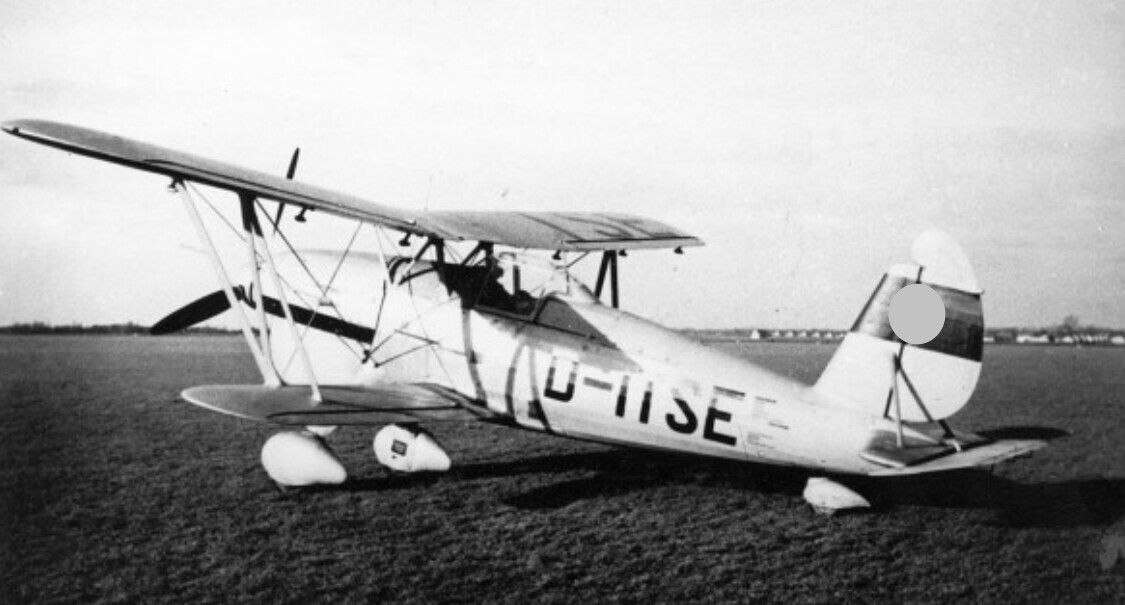
The first flights with the prototype took place as early as 1937. However, it became clear that the biplane’s flight performance was insufficient. Its ability to land on a shorter runway and requiring less speed meant it wasn’t completely abandoned, and 11 more were built by 1940 until the Bf 109 Ts proved more suitable for the project. This was also due to disagreements between the Luftwaffe and the Navy regarding the aircraft’s requirements. The Luftwaffe, under Göring, did not tolerate the Kriegsmarine having completely in-house developed aircraft, preferring only those based on existing Luftwaffe models. Furthermore, the Navy did not specify clear requirements for its aircraft.
BV 155
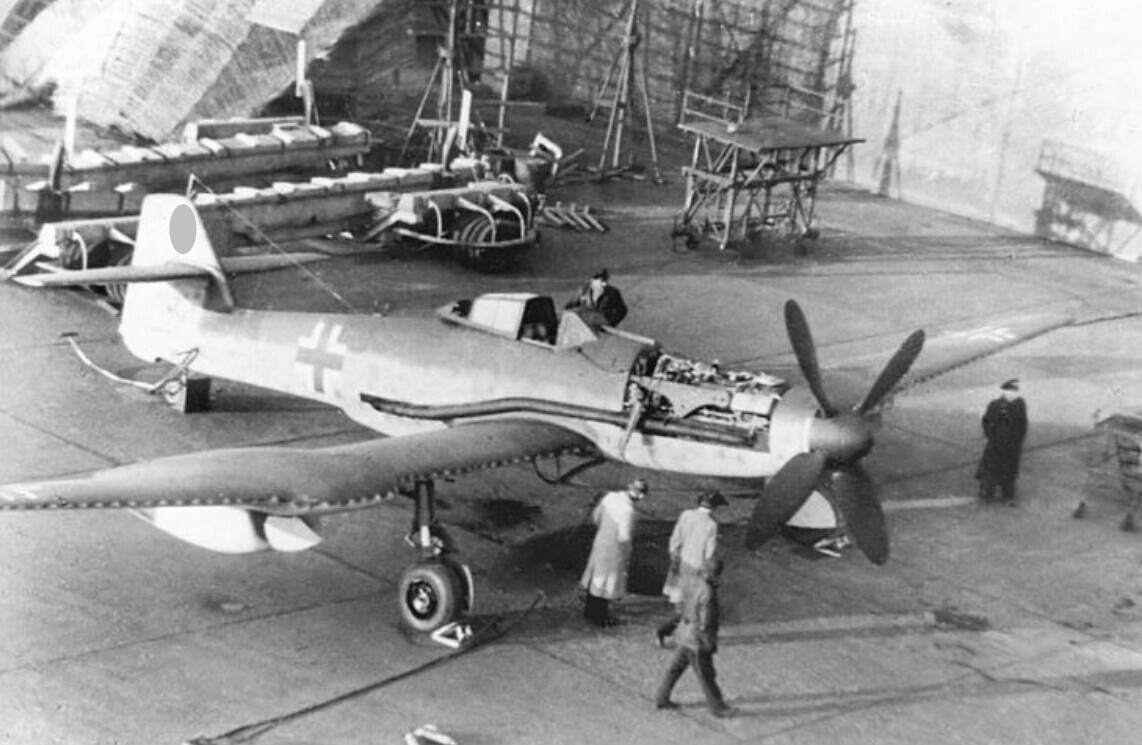
The BV 155 was a fighter aircraft designed by Blohm & Voss, of which two prototypes were built. Blohm & Voss primarily built ships, such as the Bismarck (More about the Bismarck in my article: Famous Overnight: The Bismarck), numerous submarines, or the Wilhelm Gustloff, but they also built aircraft like the BV 238.
The BV 155 was developed from the Bf 109 and was intended to be able to take out high-flying bombers and reconnaissance aircraft. To this end, the wing area was increased, a turbocharger was integrated into the engine, and two cooling systems were mounted under the wings. There was also consideration of using the BV 155 for the carrier project; for this purpose, it was to receive the corresponding carrier equipment as well as a wider landing gear for increased stability on the flight deck of the Graf Zeppelin. However, the project to use the BV 155 for the Graf Spee was quickly abandoned in January 1943 when the Reich Air Ministry prioritized the further development of the Me 209.
Various armaments for the BV 155 had been considered:
- Option A: a 30 mm MK 108 cannon mounted in the nose with the engine, firing through the propeller shaft, and two 20 mm MG 151/20 cannons in the wings
- Option B: The same as option A, except that the Mk 108 has been replaced by a Mk 103.
- Option C: Three 30 mm Mk 108 cannons, one in the nose and the other two in the wings.
- Option D: Three 30 mm Mk 103 cannons: one in the nose, the other two in the wings.
| Height | 4.02 m |
| Length | 12.1 m |
| Width | 20.33 m |
| Empty mass | 5.39 t |
| Takeoff mass | 6.037 t |
| Top speed | 690 km/h |
| Service ceiling | 16,050 m |
| Range | 1,440 km |
| Engine | DB 603 U |
| Power | 1,810 hp |
| Wing area | 38.5 m² |
| Crew | 1 |
| Armament | 1x MK 108 and 2x MG 151/20 (Option A) |
Shortly afterward, Messerschmitt revived the plan to produce the Me 155. This time, a Bf 109 G was to be used. However, since Messerschmitt’s engineering offices were already overloaded, the resumption of the BV/Me 155 project was passed back to Blohm & Voss. Blohm & Voss engineer Richard Vogt then completely redesigned the aircraft, creating the BV 155 B. The wingspan was increased to 13.02 m, and a Daimler-Benz 603 engine with an exhaust-driven TKL-15 supercharger was installed. This necessitated a fuselage lengthening to accommodate the supercharger behind the cockpit. Exhaust gases were routed to the turbine, which was hydraulically driven by a two-stage radial compressor. A duct running along the rear of the wings supplied the engine with fresh intake air, which was drawn in at the two twin flat cooling water radiators. Versions V1, V2, and V3 were planned; only V1 was completed and underwent public testing, while V2 and V3 of the BV 155 B were only partially built but never fully completed.
A further development of the BV 155 B was also planned, namely the BV 155 C. This version had one large radiator under the engine and fuselage instead of the two twin radiators under the wings. However, apart from a few experimental builds and components, the project was not realized.
The Graf Zeppelin: A loner
Fun fact: Ferdinand Adolf Heinrich August Count von Zeppelin, born on July 8, 1838, in Konstanz, died on March 8, 1917, in Berlin, held several titles and offices. Between 1858 and 1859, he attempted to study chemistry, mechanical engineering, and political science, from which he was granted leave from his military service as a lieutenant. Due to the Austro-Italian War of 1859, he was drafted into the Engineer Corps.
After three months, he was transferred to the Engineering Department of the General Quartermaster Staff. He was appointed an unofficial diplomat and traveled to several countries. He also served as an officer in the American Civil War of 1863, where he met Abraham Lincoln personally. In 1865, he returned to Württemberg, was promoted to General Staff Officer, awarded the Knight’s Cross, and became adjutant to King Charles I of Württemberg.
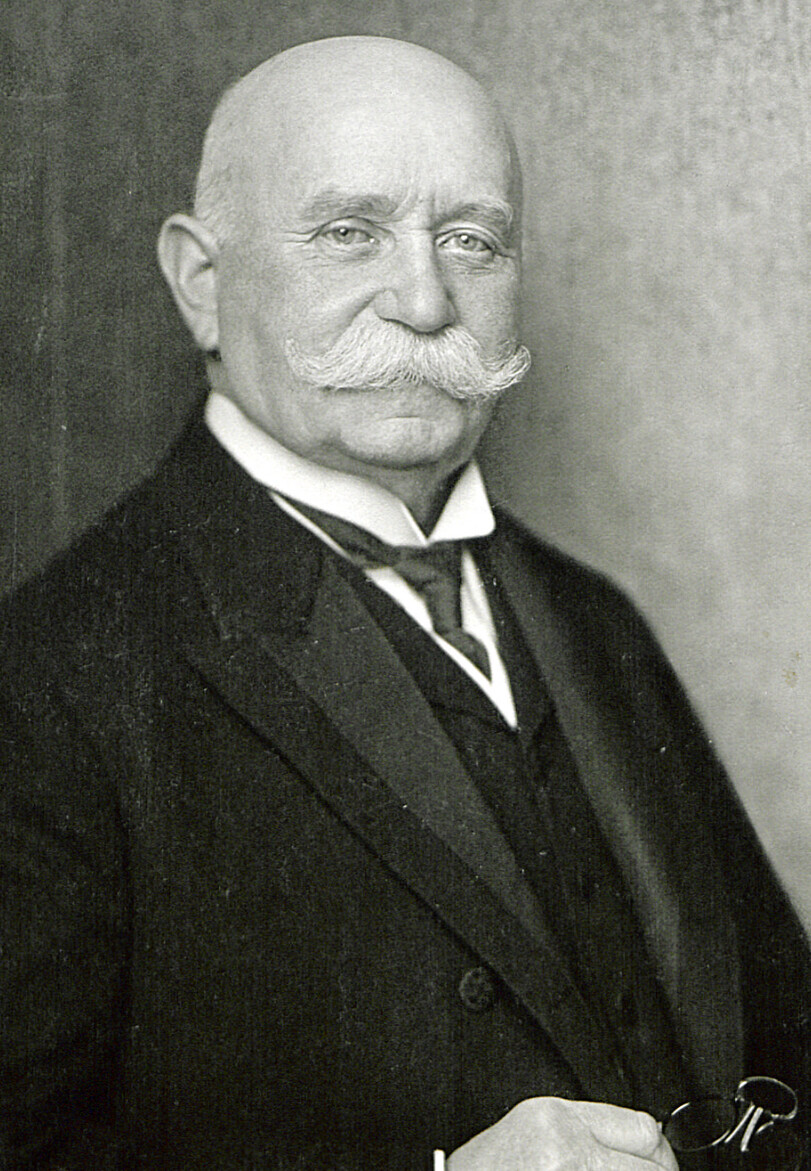
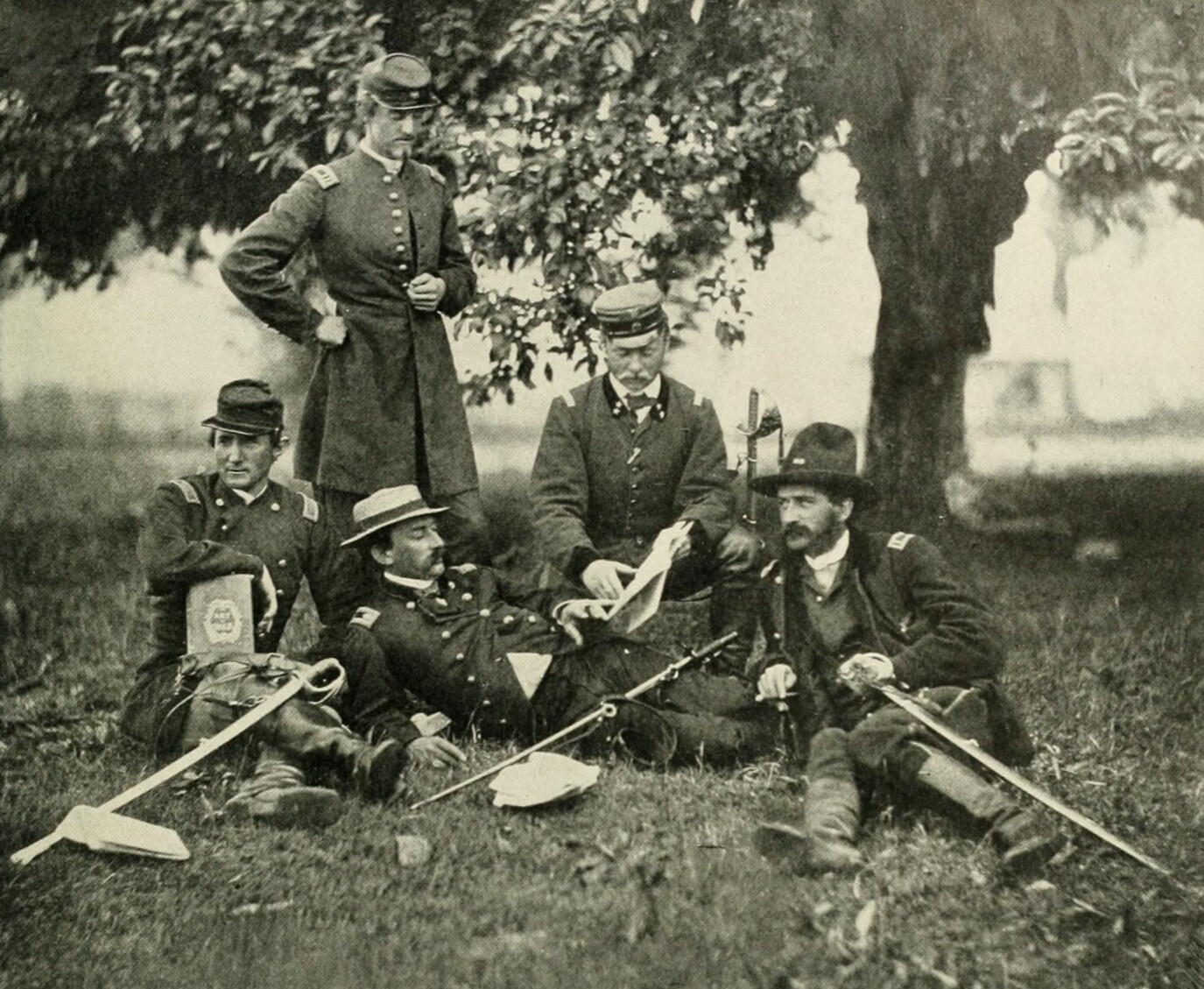
He fought in the Third War of German Unification against France and became famous during this campaign. It was also during this war that the first ideas for zeppelins, specifically for a steerable balloon, were developed. In the newly unified Germany, Zeppelin continued his career climb, rising to the rank of General of the Cavalry. This allowed him to realize his idea of a dirigible balloon, the first of which was called LZ 1 (Luftschiff Zeppelin 1, or in English Airship Zeppelin 1). It had its maiden flight in 1900. Until the First World War, development progressed rapidly, and even larger and improved airships were built, serving both civilian and military purposes. During the First World War, they were particularly used for bombing and reconnaissance. His name, Zeppelin, became the generic term for a dirigible airship, a term used or slightly adapted in almost every language, yet still used everywhere.
Technical data
| Length | 262.5 m | |
| Width | 31.5 m | |
| Depth | 8.5 m | |
| Crew | 1,760 | |
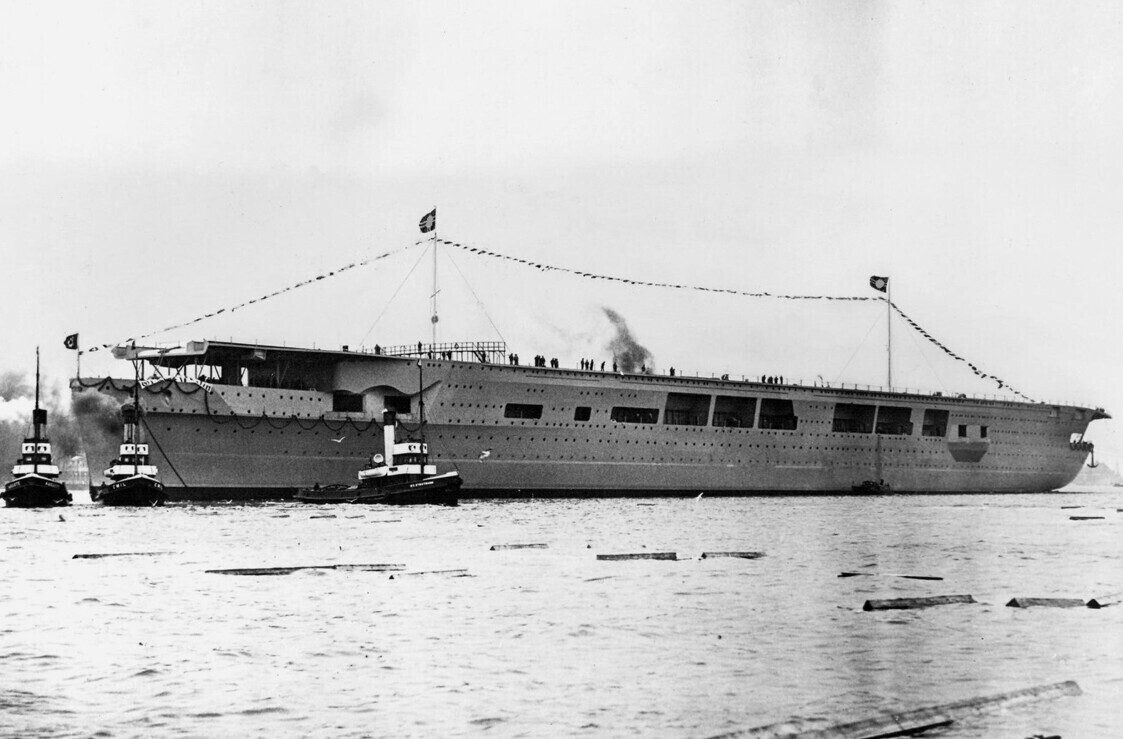
| Keel laying | December 28, 1936 | Deutsche Werke Kiel |
| Launch | December 8, 1938 | |
| Whereabouts | Sunk on 18 June 1947 | |
| Construction costs | 92,700,000 marks | Converted: ~ 47,500,000 € / ~ 55,000,000 $ |
| Drive | 16 steam boilers, 4 BBC geared turbines | |
| Propeller | 4 four-winged Ø 4.4 m each | |
| Ruder | 2 | |
| Performance | 200,000 hp | |
| Top Speed | 63 km/h | |
| Reach | 8,000 Sm | |
| Planes | 1939: — 20 X Fi 167 — 13 X Ju 87 C — 10 X Bf 109 T. | 1942: — 28 X Ju 87 E — 15 X BV 155 A |
| Catapults | 2 | |
| Flight deck length | 242 m | |
| Main armament | — 16 X Sk 15 cm L/55 | 1,840 rounds |
| AA armament | — 12 X Flak 10,5 cm L/65 — 22 X Flak 3,7 cm L/83 — 28 X Flak 2 cm L/65 | 4,800 rounds 44,000 rounds 56,000 rounds |
Development
After the NSDAP (National Sozialistische Deutsche Arbeiter Partei / National Socialist German Workers Party) took power on January 30, 1933, it was clear that the armament restrictions imposed by the Versailles Peace Treaty would no longer be observed. So they started developing new and larger weapons, including battleships like the Bismarck (if you want to know more about the Bismarck, here is the link to my Bismarck article: Famous over night: The Bismarck) and aircraft carriers like the Graf Zeppelin.
The naval command then commissioned the naval design department to prepare an official design that would meet the navy’s requirements. These were:
- Area of operation: North Sea and Atlantic Ocean
- Displacement: 15,000 t
- Speed: 33 kt
- Armament: 9×15 cm guns or 6×20.3 cm guns and anti-aircraft armament
- Deployable range: 12,000 nm
- Armor protection comparable to light cruisers
- 60 aircraft (with folding wings required for only one-third of the aircraft)
- Two catapults
- Minimum flight deck length: 180 m
The driving force behind the German aircraft carrier project was the engineer Wilhelm Hadeler. He had a strong interest in aircraft carriers and therefore defined the requirements the ship had to meet. Especially since they had no prior experience to draw upon; the only points of reference they could have found, even within the navy, were the Ausonia project from the First World War. However, the plans were lost, so they started from scratch, building the carrier without any prior knowledge. To at least get an idea of what they were building, they first used publicly available materials on aircraft carriers from other nations such as Great Britain, the USA, and Japan. The Courageous class served as the initial model for the new aircraft carrier, but a team member also attended a public presentation of the British aircraft carrier Furious to observe its design, although this yielded hardly any noteworthy information.
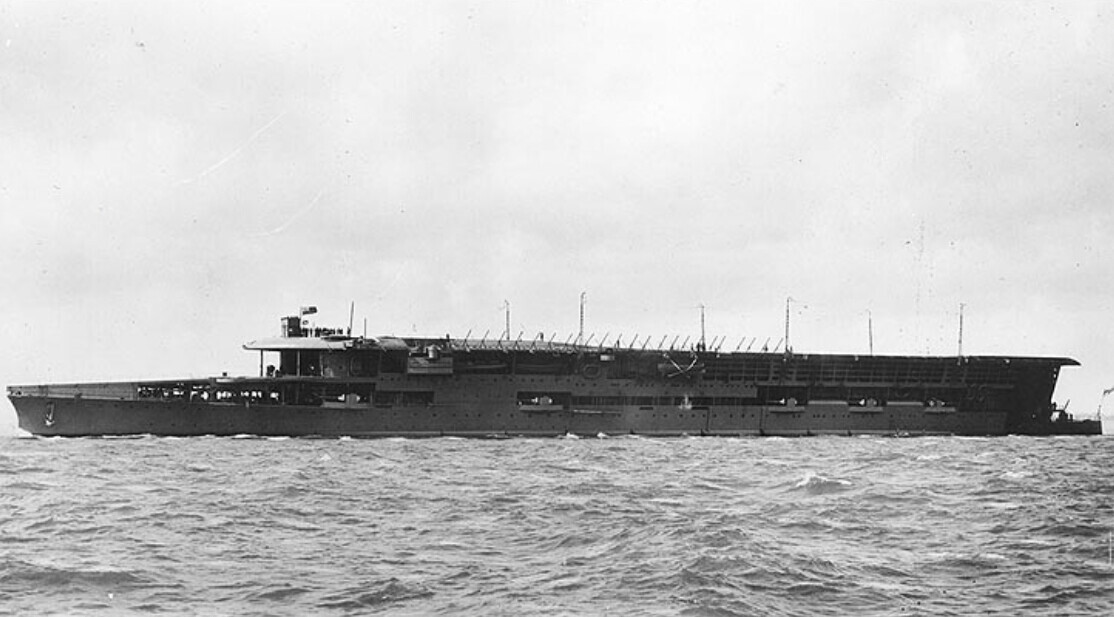
Simultaneously in the autumn of 1935, it became possible for engineers to inspect the Japanese aircraft carrier Akagi and study its design, which provided valuable information for the planning of their own carrier. The Japanese were generous in sharing the Akagi’s design, as it was already outdated and its modernization was imminent.
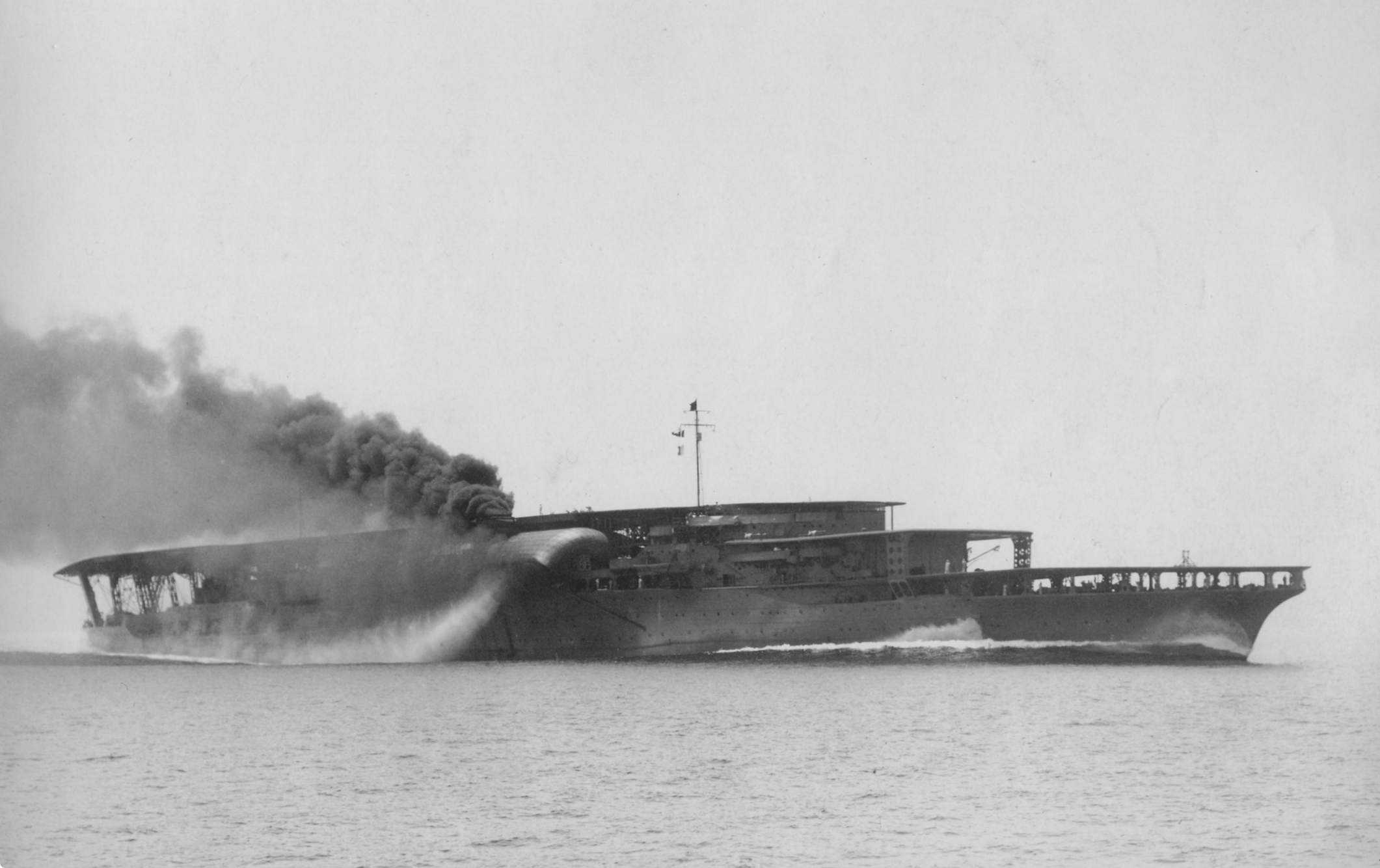
On March 16, 1935, Hitler officially denounced the Treaty of Versailles, paving the way for Germany to build its own aircraft carriers and allowing the plan to be implemented. Shortly thereafter, on June 18, 1935, a naval agreement was concluded between Germany and Great Britain, which aligned the construction of the German Navy with the British Royal Navy. The total tonnage of the German Navy was to be 35% that of the Royal Navy, and the German Navy was permitted 45% of the British submarine fleet. For aircraft carriers, the limit was 47,000 long tons. Hitler intended to use this agreement to bring the British, then under the leadership of Neville Chamberlain, into closer Cooperation between the British and German governments, with the aim of forging a possible alliance with Great Britain. On November 16, 1935, the German Navy awarded the contract for the construction of Flugzeugträger A to Deutsche Werke in Kiel, while the contract for Flugzeugträger B was awarded to the Friedrich Krupp Germania shipyard. At that time, neither ship had a name. This was not due to secrecy or anything similar; rather, the Commander in Chief of the Navy, Erich Raeder, wanted to decide on the name himself before the launching and present it at the launching ceremony, as was customary.
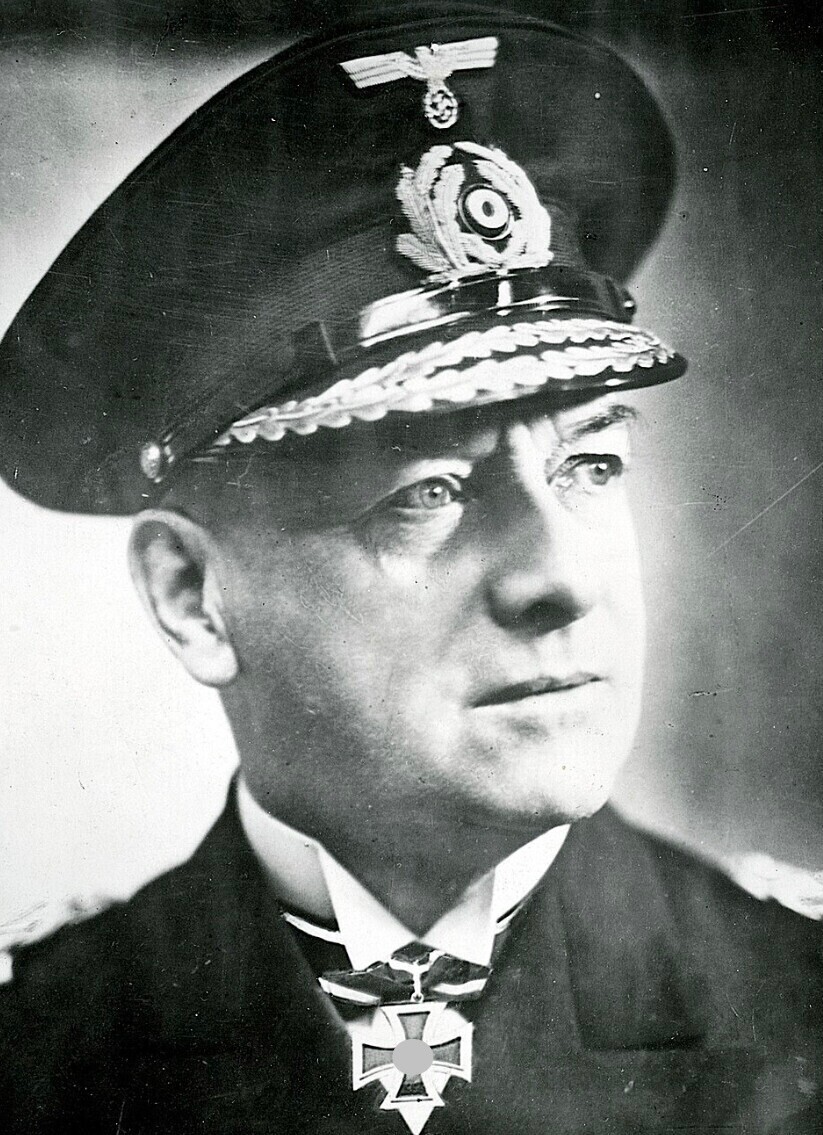
Erich Raeder was Commander-in-Chief (later in 1935 Grossadmiral) of the German Navy (Kriegsmarine) from 1928 until his resignation on January 30, 1943. His naval policy was characterized by a mania for large-scale naval battles. He favored battleships like the Bismarck and the Tirpitz, and heavy cruisers like the Prinz Eugen and the Scharnhorst, much like the Imperial German Navy of the German Empire. His successor, Karl Dönitz, completely reversed this policy in favor of the U-boat navy, which he considered more operationally valuable than the battleships.
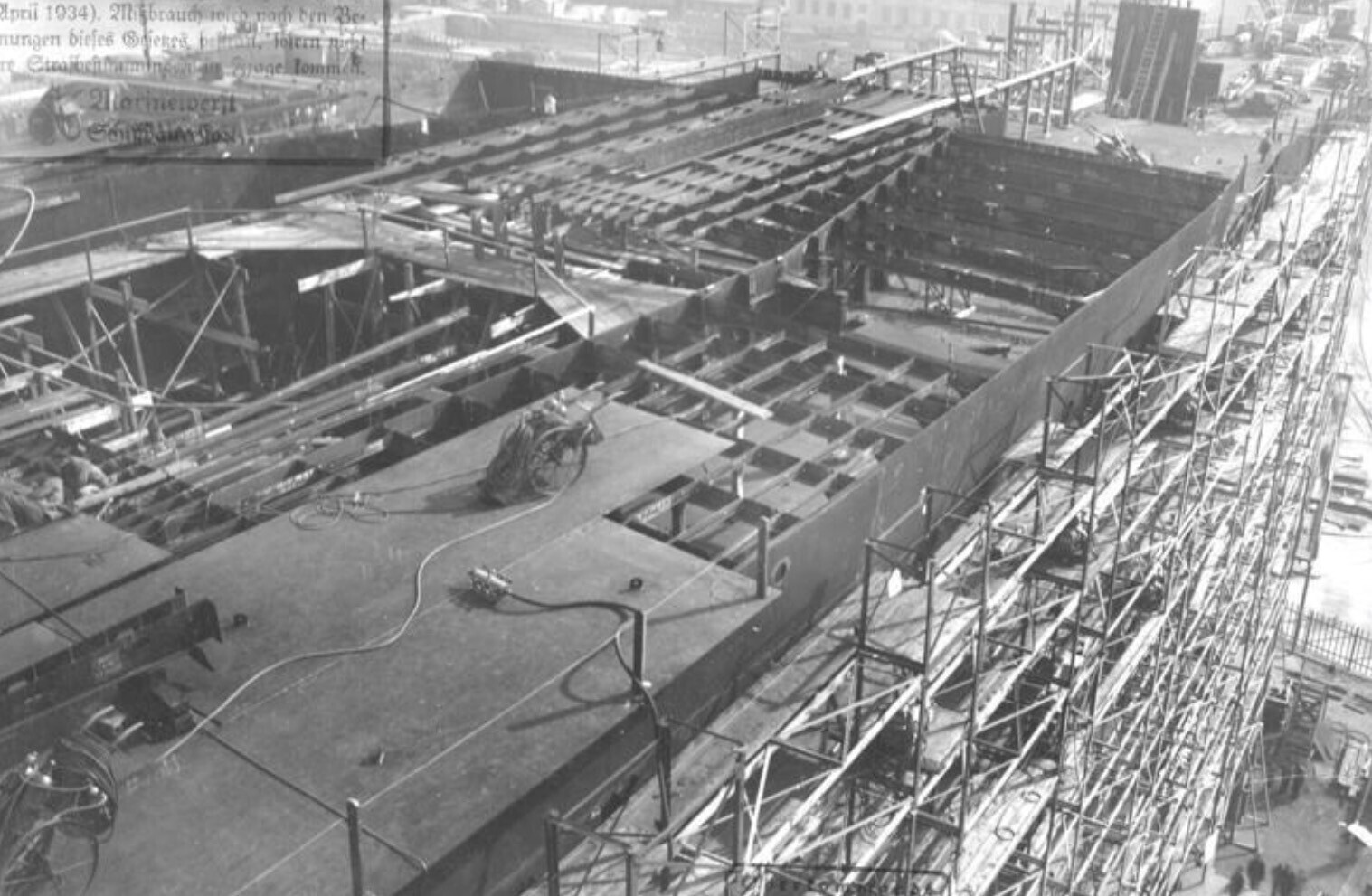
On December 8, 1938, the launch of Flugzeugträger A took place. The ship was personally christened with the official name Graf Zeppelin by Hella von Brandenstein-Zeppelin, Count Zeppelin’s daughter. Later in the ceremony, Hermann Göring gave the christening speech for the Graf Zeppelin. The irony is that Hermann Göring was not in favor of this project. As Commander-in-Chief of the Luftwaffe, he believed that all combat aircraft should be under the sole command of the Luftwaffe in the
“Alles was Fliegt gehört mir!” (in English: “Everything that flies belongs to Me!”)
Thus, the idea of a German aircraft carrier was clearly out of the question for him, since the aircraft would be under the command of the Kriegsmarine and not the Luftwaffe. Therefore, Göring was aware that his views hampered or hindered the progress of the project.
Intresting Fact: Between 1938 and 1939, Erich Raeder developed the Z-Plan, which envisioned a massive expansion of the Kriegsmarine, including an increase in aircraft carriers. In addition to the Graf Zeppelin and the Flugzeugträger B, either two to six more (the number varies depending on the source) were to be built from former passenger or captured warships. These included the Seydlitz, which was to be converted from the French cruiser De Grasse, and the Europa, which was to be built from the passenger ship of the same name. Ultimately, no other carriers besides the Graf Zeppelin class were built or even started.
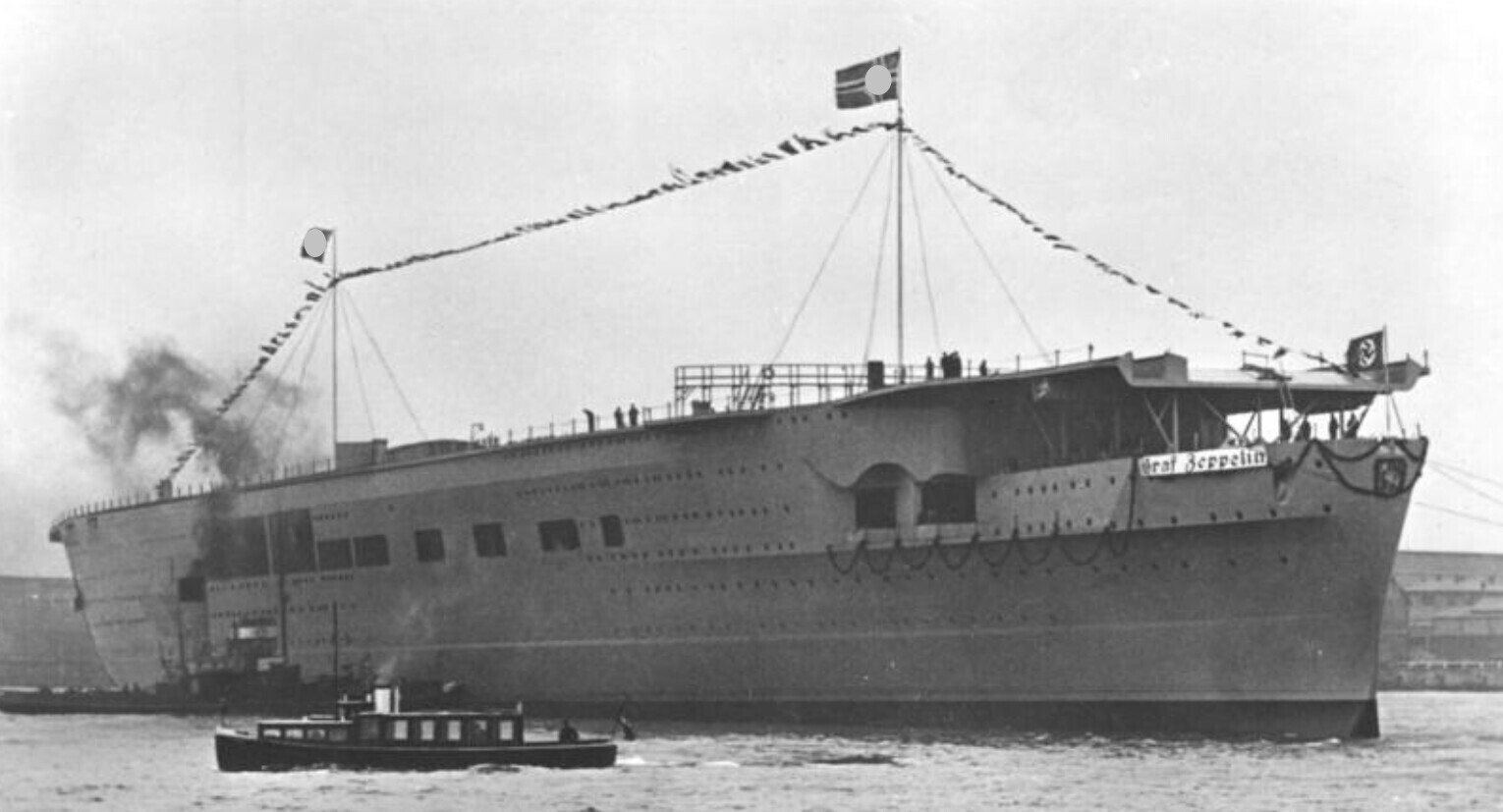
At the begin of Second World War on September 1, 1939, the Graf Zeppelin was 90% finished. However, construction slowed due to the increasing demand for submarines for the U-boat navy.
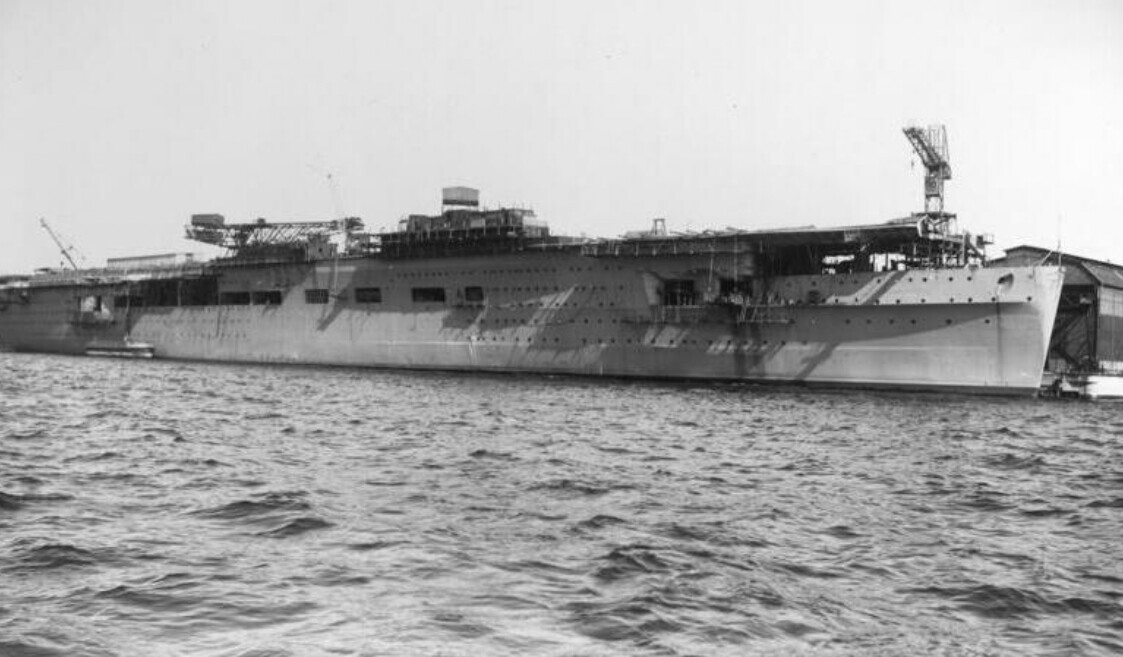
After France was overrun by the Wehrmacht in June of 1940 with Guderian’s Blitzkrieg tactics, construction was completely stopped so that it could be resumed at a later date. With the construction stoppage, the development of the corresponding aircraft was also paused. Meanwhile, the unfinished Aircraft Carrier B was completely abandoned and the scrapping order came on February 29, 1940, the carrier’s aircraft catapults and braking cable system were sold to Italy, which installed and used these systems in their aircraft carrier Aquila.
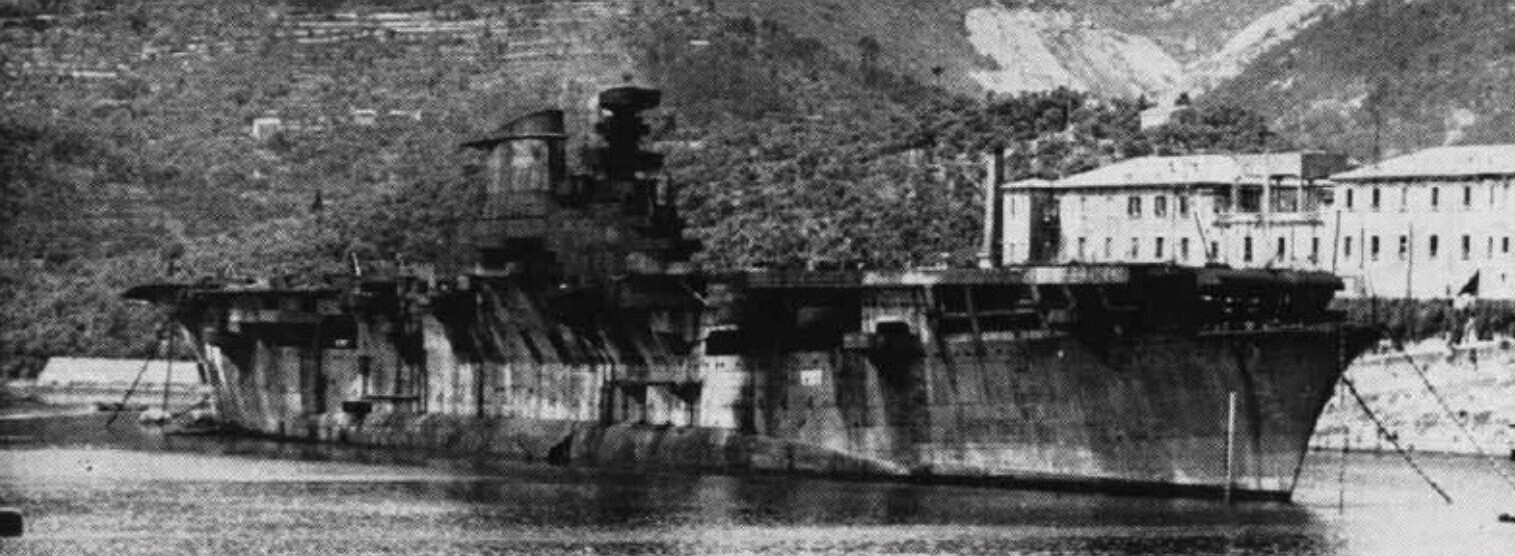
Interesting fact: the sources mention several possible names for the Flugzuegträger B, but most sources name Peter Strasser as the planned name.
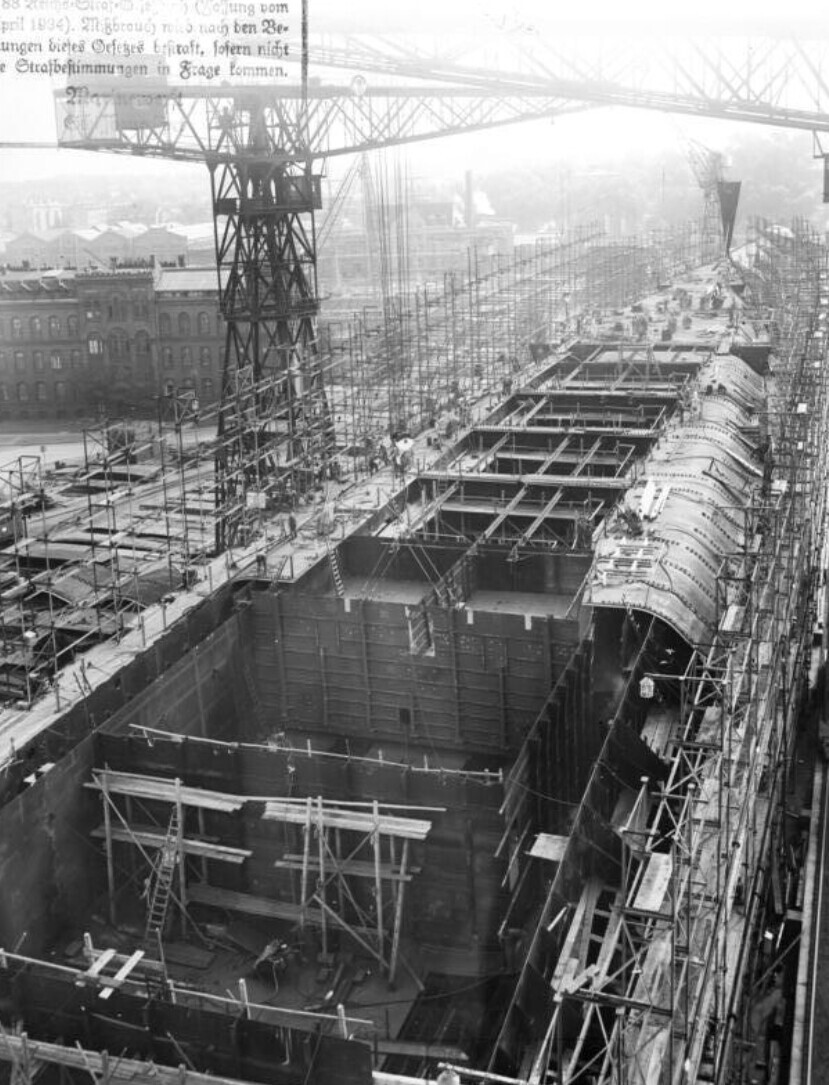
However, the Graf Zeppelin was soon relocated from Kiel to Gotenhafen on July 12 due to the steadily increasing threat of bombing. The first Allied bombing of Kiel on July 2 had already become a danger, and the decision to relocate was therefore made on July 6.
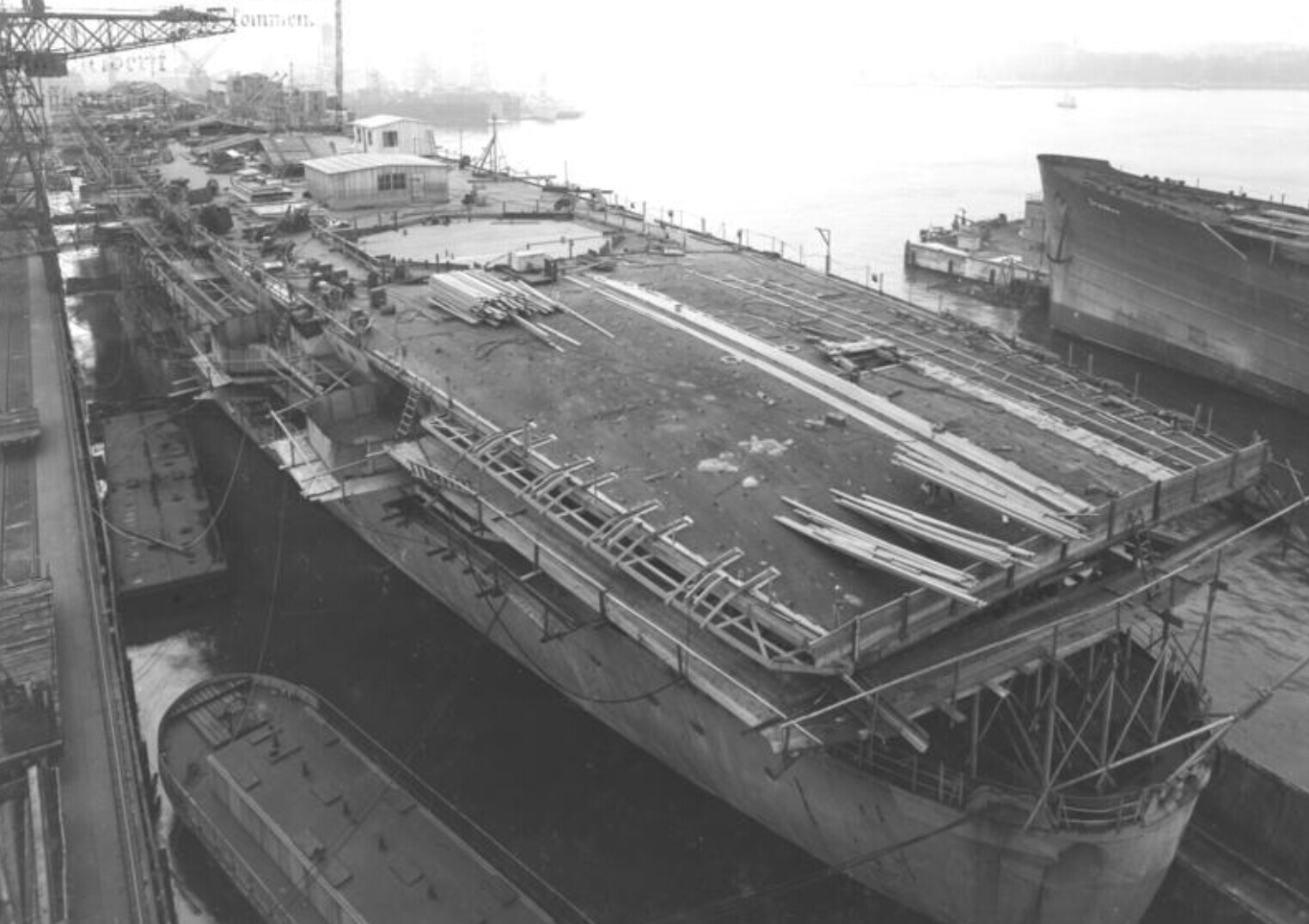
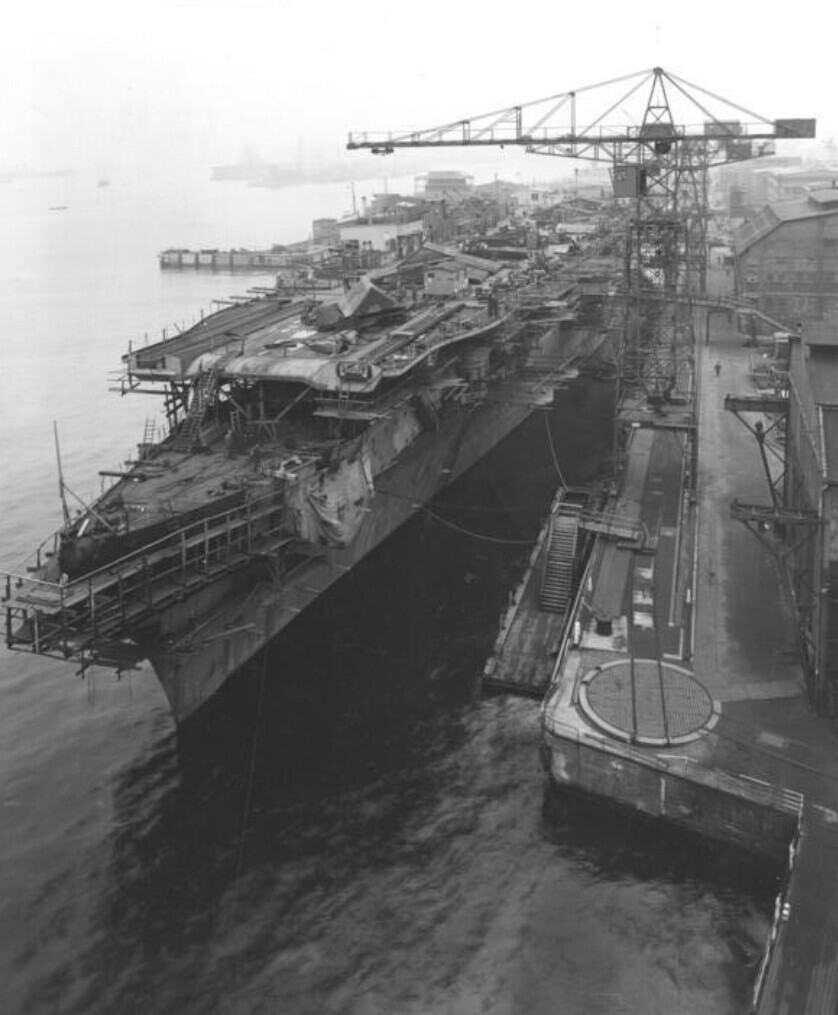
Shortly before the start of Operation Barbarossa, the Graf Zeppelin was ordered to be moved to Stettin for protection against possible reprisals. It remained in Stettin for a year until it was moved back to Gotenhafen, where it was used by the Kriegsmarine as a storehouse for valuable timber.
After the Kriegsmarine experienced firsthand the strategic capabilities of aircraft carriers following the sinking of the Bismarck, and witnessed the potential of multiple carriers during the attack on Pearl Harbor in Hawaii by their allies in the IJN (Imperial Japanese Navy), it was decided to continue the Carrier project. Construction of the ship, as well as the development and planning of the aircraft, was resumed. To ensure the carrier remained at the cutting edge of technology, further modifications were made to the hull. The Graf Zeppelin received a torpedo bulge at the waterline for additional protection and to increase its range. The space that created by the torpedo bulge could and was be used for fuel storage. The turbines were also overhauled and prepared for imminent operation.
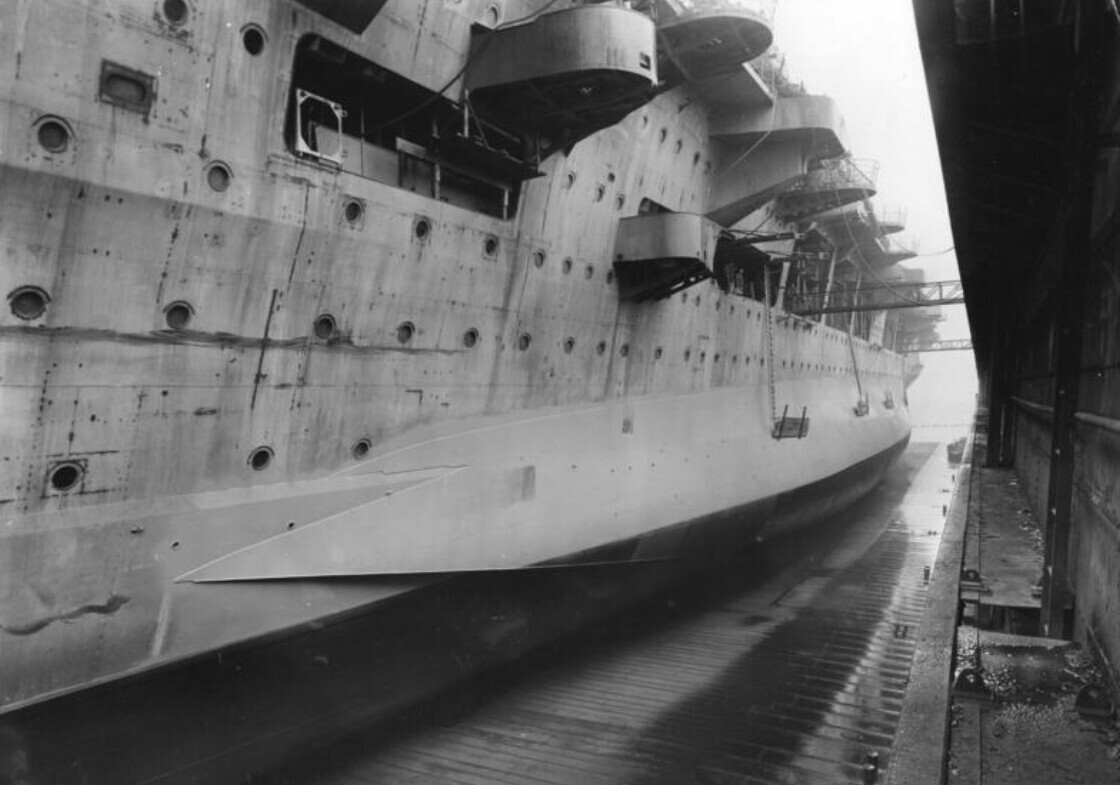
The resumed construction of the Graf Zeppelin did not last long, as it was completely halted after only 61 days due to the defeat in the Battle of the Barents Sea. On January 26, 1943, Hitler ordered all major warships to be decommissioned, as the Battle of the Barents Sea was a disgrace for the Kriegsmarine and its Großadmiral Raeder, which was one of the reasons for his resignation. On February 2, the project was completely abandoned and was not pursued further in the war, primarily because Raeder’s successor, Großadmiral Karl Dönitz, who focused more on the U-boat fleet and massively increased U-boat production.
Post-war period
From April 21, 1943, the Graf Zeppelin was towed back to Stetin by a tugboat and moored in a side arm of the Oder River where it remained until the end of the war.
The Graf Zeppelin served as a spare parts depot for the other ships of the Kriegsmarine until it was scuttled and rendered unusable by a bomb disposal squad on April 25, 1945, so that the Soviets could no longer use it as an aircraft carrier.
After the Graf Zeppelin was captured by the Red Army at the end of the war on April 25, 1945 the same day its crew scuttled it and drove it aground—it was raised and made seaworthy in March 1946. Subsequently, it was towed to Leningrad (now St. Petersburg) where it operated as a floating base under the name IA-101. From March 1947 onward, it served as accommodation for a special unit tasked with investigating and documenting the construction of the Graf Zeppelin and other captured German Navy ships. Among other things, they were to assess whether it would be worthwhile to repair and use the Graf Zeppelin themselves, which proved too costly. Therefore, the Graf Zeppelin was used as a test target to evaluate how to sink an aircraft carrier.
The data gathered was used to determine the best way to combat such ships. This was then tested in practice; the Graf Zeppelin was used as a target for bomber attacks and target practice. On June 18, 1947, a storm hit the region, causing the quay’s mooring lines to be cut to prevent the Graf Zeppelin from damaging them. The storm drove the aircraft carrier out into the Baltic Sea. The Graf Zeppelin was subsequently sunk with two torpedoes 30 nautical miles north of Władysławowo, off the Bay of Gdańsk.
Video
- [Wiki DE] Fieseler Fi 167
- [Wiki FR] Fieseler Fi 167
- [Wiki EN] Fieseler Fi 167
- [wiki EN] Blohm & Voss BV 155
- [Wiki DE] Ju 87
- [Wiki DE] Bf 109 T
- [Wiki DE] Graf Zeppelin, (Schiff 1938)
- [Wiki DE] Blohm & Voss BV 155
- [Wiki EN] Junkers JU 87 C
- [Wiki DE] Erich Raeder
- [Wiki DE] Flugzeugträger B
- [Wiki DE] Arado Ar 195
- [Wiki DE] Arado Ar 197
- [Wiki EN] Z-Plan, Carrier
- [Wiki EN] German Aircraft Carrier II
- [Berlintaucher DE] Viedo der Woche — Wracktauchen an der Graf Zeppelin
- [German Navy DE] Ju 87 C/D
- [German Navy DE] Fi 167
- [German Navy EN] Z-Plan Carrier
- [German Navy EN] Z-Plan Flugdeckkreuzer
- [Me 109 Info DE] Bf 109 T-1
- [Me 109 Info DE] Bf 109 T-2
- [Newington war museum EN] Ju 87 C
- [Flugzeug Lexikon DE] Ju 87
- [Flieger Web DE] Fieseler Fi 167
- [NDR DE] Als der Nazi-Flugzeugträger “Graf Zeppelin” vom Stapel lief
- [my3dbase EN] BV 155: The high Altitude interceptor
- [National Air and Space Museum EN] Blohm & Voss BV 155 V2
- [Warefarehistorynetwork EN] The Nazi Aircraft Carrier Program: Erich Raeder vs. Hermann Göring
- [German Navy EN] Flugzeugträger B