#naval_aircraft

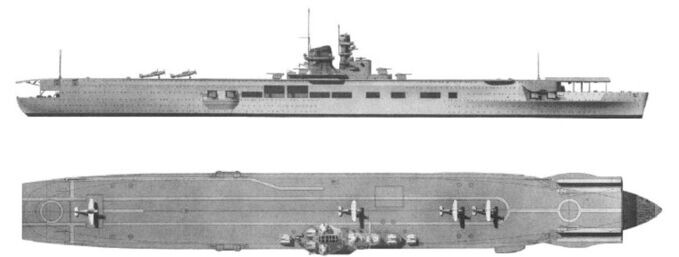
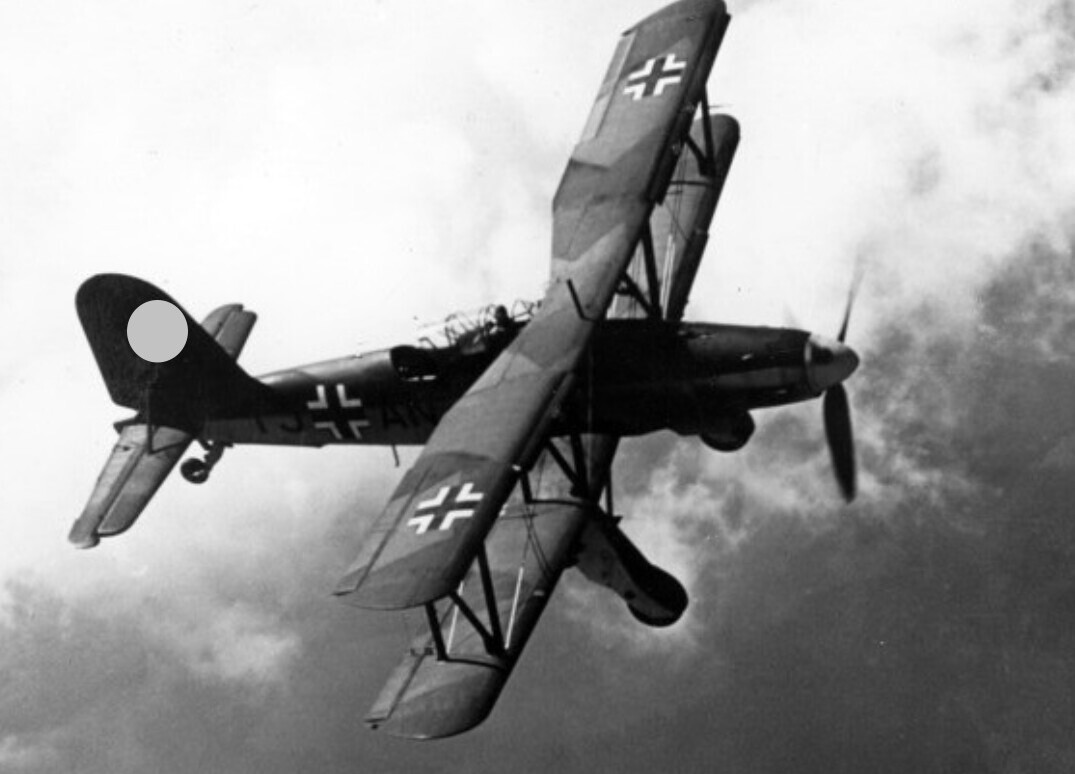
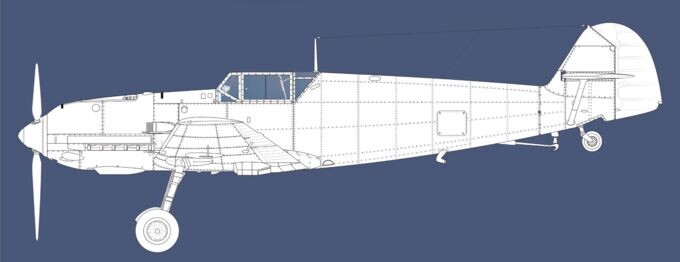
Germany had already toyed with the idea of possessing its own aircraft carrier during the First World War; this was to be called Ausonia, but it was never seriously pursued. However, shortly after the termination of the Treaty of Versailles, a new carrier project was initiated, based on the experience of other major powers such as Japan, the USA, and Great Britain, acquired through exchanges or espionage. Ultimately, not a single aircraft carrier was fully commissioned or built. The Graf Zeppelin was largely completed, but its construction was halted, while its sister ship, Aircraft Carrier B, was abandoned during construction. During the design of the accompanying aircraft, some were built specifically for the project, such as the Arado 197. However, this met with little approval from the Luftwaffe, which is why modifications of existing aircraft like the Bf 109 T, the Ju 87 C or T, or the Fi 167 found more favor.

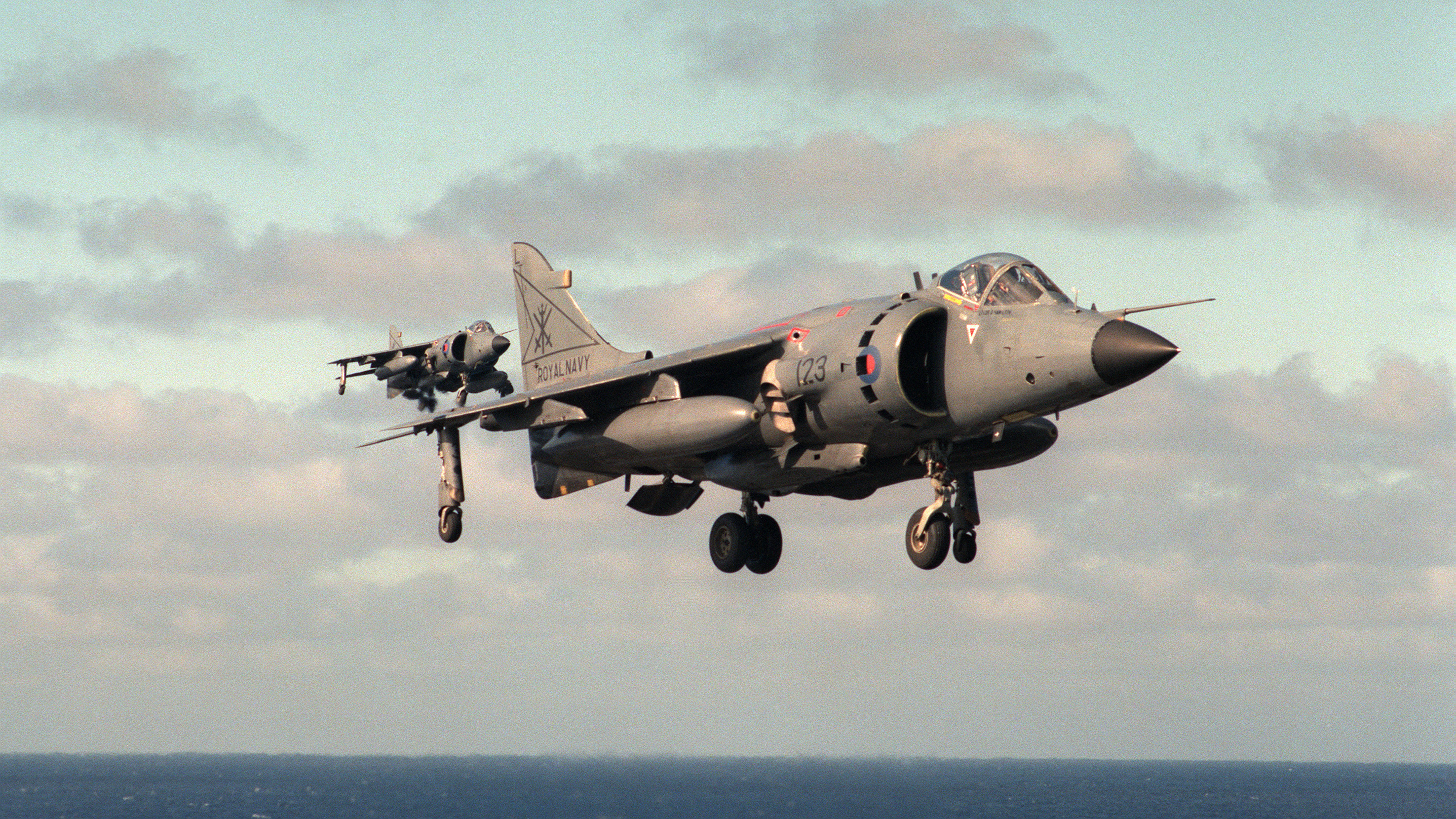
The Harrier GR.3's most noteworthy deployment was to the Falkland Islands during, and after, the 1982 Falklands War. When the war began on 2nd April 1982 with the Argentine invasion of the Falkland Islands, Britain was forced to rapidly assemble a task force to retake the islands, located some 8,000 miles away from the British mainland. The decommissioning of the aircraft carrier HMS Hermes was cancelled and, along with HMS Invincible (itself in the process of being sold to Australia), it was rapidly prepared for deployment. The two aircraft carriers left Portsmouth Naval Base three days later (on 5th April), setting sail to Ascension Island (a small British island in the South Atlantic); which was the designated rendezvous point from where the task force would then sail to the Falklands. The two carriers were carrying Sea King helicopters and Sea Harrier FRS.1 fighters (12 Sea Harriers on Hermes and 8 on Invincible).
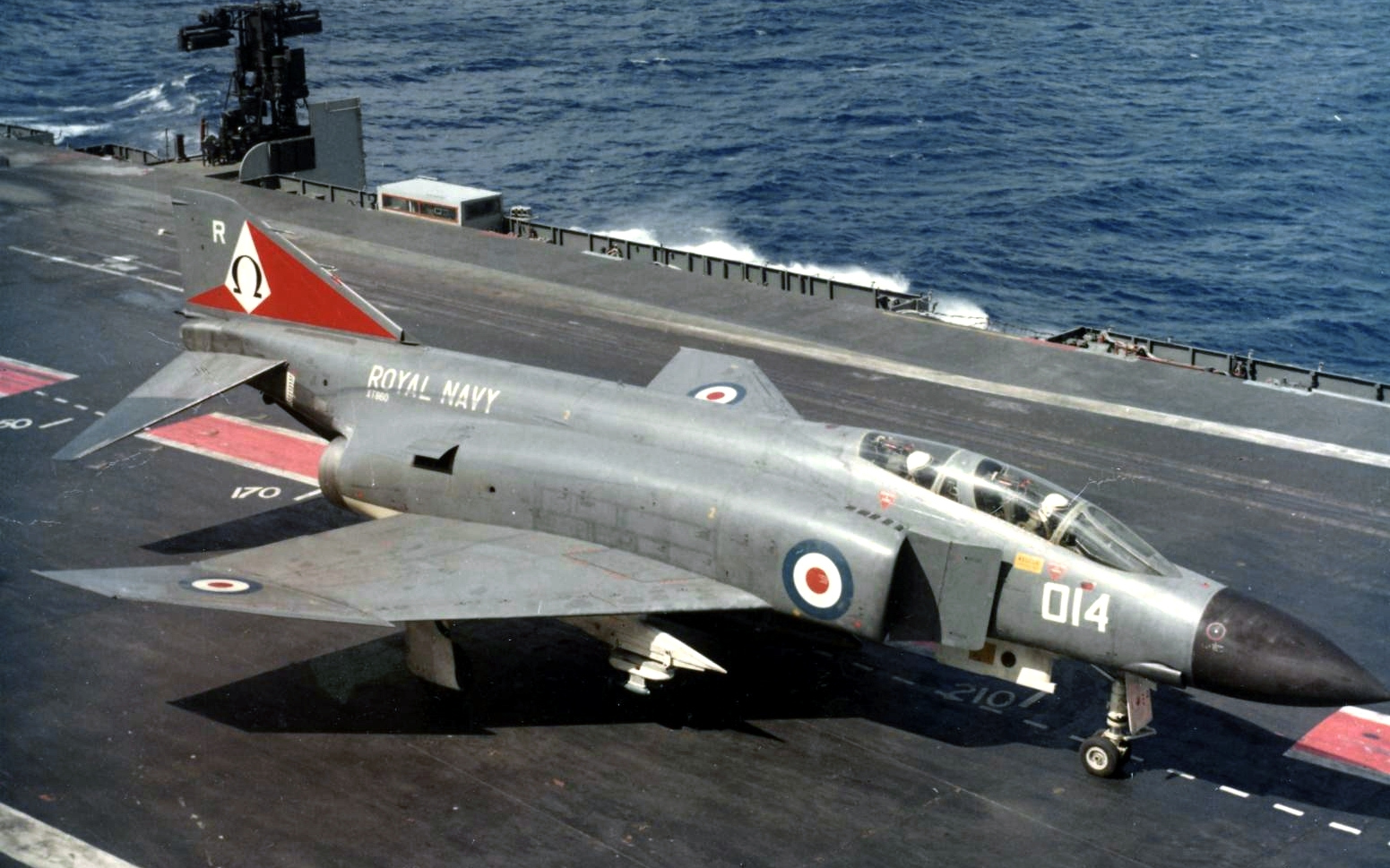
After a slew of cancelled aircraft development programmes in the 1960s, the UK would, like many other nations, eventually come to operate the F-4 Phantom II. Three special variants of the F-4J would be created, namely the Phantom FG.1 (F-4K), de-navalised Phantom FGR.2 (F-4M), and the Phantom F.3 (F-4J(UK)) which was upgraded to almost-F-4S standard. The Phantoms would remain the UK's primary air defence force from their introduction in 1968 through to the 1990s when they were finally replaced by the Tornado F.3.