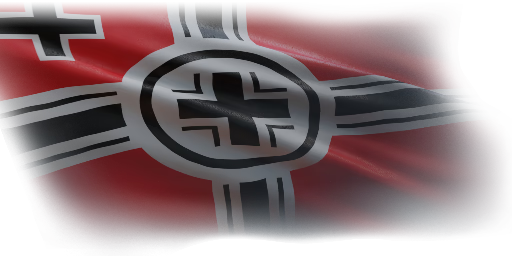
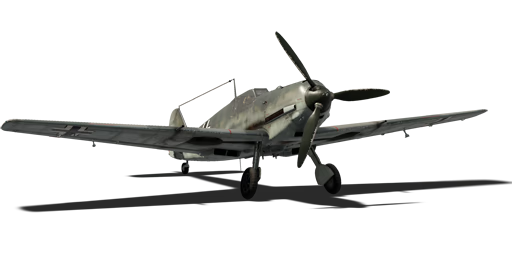
Bf 109 T-2



Before World War II began, the Kriegsmarine was interested in building an aircraft carrier similar to those of the British and Japanese. This resulted in the Graf Zeppelin aircraft carrier and two aircraft: the Bf 109T and the Ju 87C. The "T" stands for "Träger," which is German for "aircraft carrier". In the late 1930s, seven Bf 109 aircraft were retrofitted with enlarged wings, larger ailerons, extended flaps, and slats. These aircraft were modifications of the Bf 109 B, Bf 109 C, and Bf 109 E. The wings could not be folded but could be removed for transport. Equipment for a catapult and landing hook was also installed. This modification was designated the Bf 109 T-1. An order was placed for 70 aircraft, but only seven were built.
The remaining 63 fighters were Bf 109 T-2s, which lacked carrier equipment. In 1941, they were sent to Norway as part of I/JG 77 to be used on short mountain airfields. By the end of the year, they were sent back to Germany and replaced by Bf 109 E-3s. In 1943, some Bf 109 Ts were sent to training units. In April, the rest were sent to the island of Düne as Jagdstaffel Helgoland. By the end of the year, the squadron was serving in southern Norway's Lista region and had been renamed 11./JG 11. They remained in combat units until the summer of 1944, after which all remaining aircraft were transferred to training units.
The Bf 109 T-2 was introduced in Update 2.49 "Tusk Force". The fighter resembles the Bf 109 E-4 or Bf 109 E-7 in many ways. Despite its large wing area, the Bf 109 T-2 is heavier and less maneuverable with poorer roll and handling at high speeds. Otherwise, it is essentially the same as the early Bf 109, offering excellent maneuverability and a pleasant climb rate relative to other aircraft. However, its armament is mediocre.

flaps
flaps
flaps
brake
| Belt | Belt filling | Armor penetration (mm) at a distance: | |||||
|---|---|---|---|---|---|---|---|
| 10 m | 100 m | 500 m | 1000 m | 1500 m | 2000 m | ||
| IT/HEI/APHE | 15 | 13 | 8 | 4 | 4 | 4 | |
| IT/HEI/HEI/APHE | 15 | 13 | 8 | 4 | 4 | 4 | |
| FI-T/HEI/HEI/FI-T/HEI/HEI/APHE | 15 | 13 | 8 | 4 | 4 | 4 | |
| IT | 7 | 7 | 4 | 3 | 2 | 1 | |
| APHE/HEI/HEI/HEI/AP-I | 20 | 17 | 10 | 5 | 3 | 2 | |
| Belt | Belt filling | Armor penetration (mm) at a distance: | |||||
|---|---|---|---|---|---|---|---|
| 10 m | 100 m | 500 m | 1000 m | 1500 m | 2000 m | ||
| AP-T/AP-I/AI | 9 | 8 | 6 | 3 | 0 | 0 | |
| AP-T/AP/AI/AP-I | 13 | 12 | 7 | 3 | 2 | 0 | |
| AP-T | 9 | 8 | 6 | 3 | 0 | 0 | |
| AI/AP/AP/AP/AI | 13 | 12 | 7 | 3 | 2 | 0 | |
| Name | Weight | Slot | ||||||
|---|---|---|---|---|---|---|---|---|
| 4 × | 200 kg |  | ||||||
| 250 kg |  | |||||||
| 110 kg |  | |||||||

 2 x (40 / 100 / 200) %
2 x 124 %
2 x (40 / 100 / 200) %
2 x 124 %
Flight performance | |
|---|---|
Survivability |
|---|
Weaponry | ||
|---|---|---|