
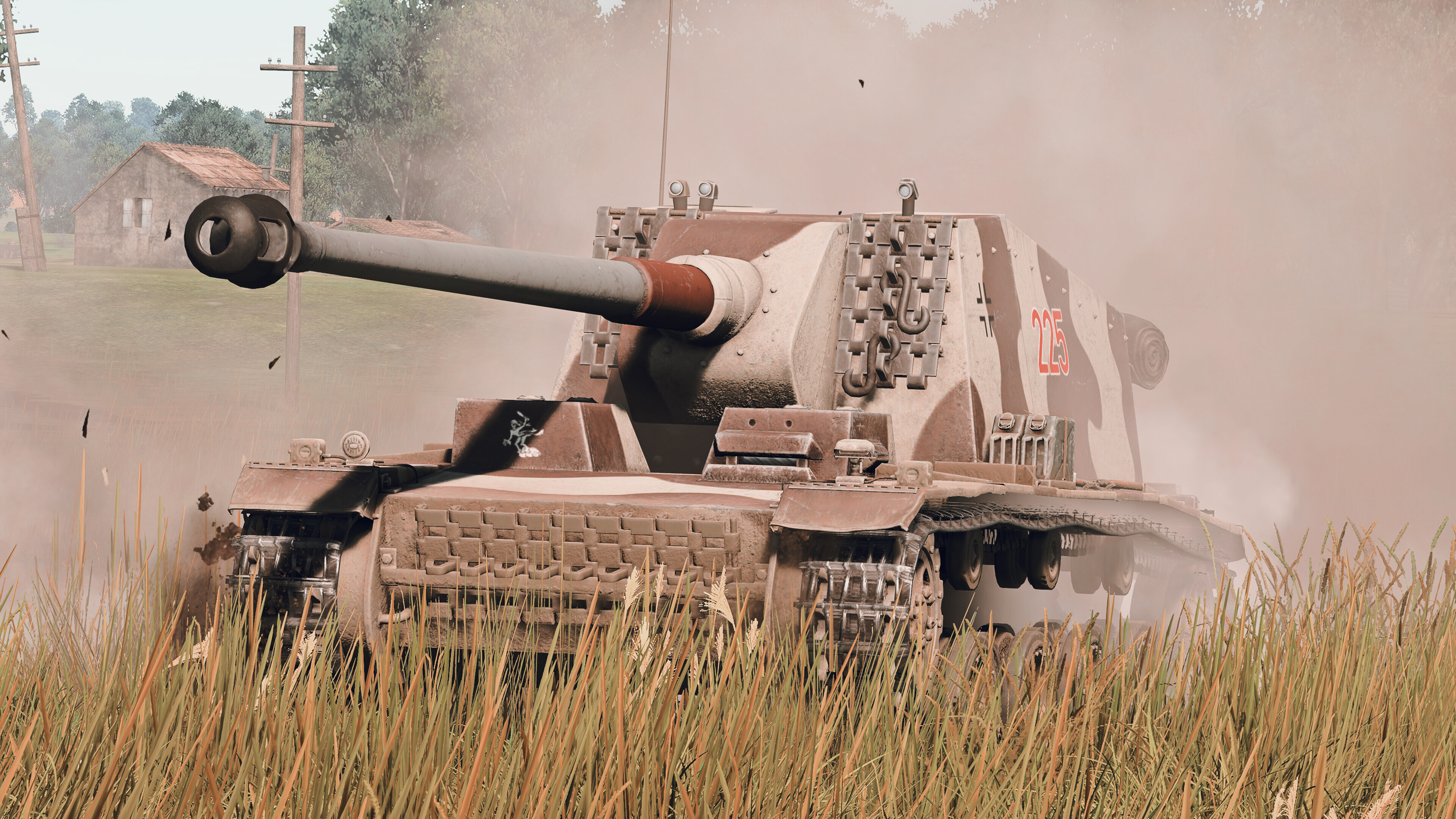
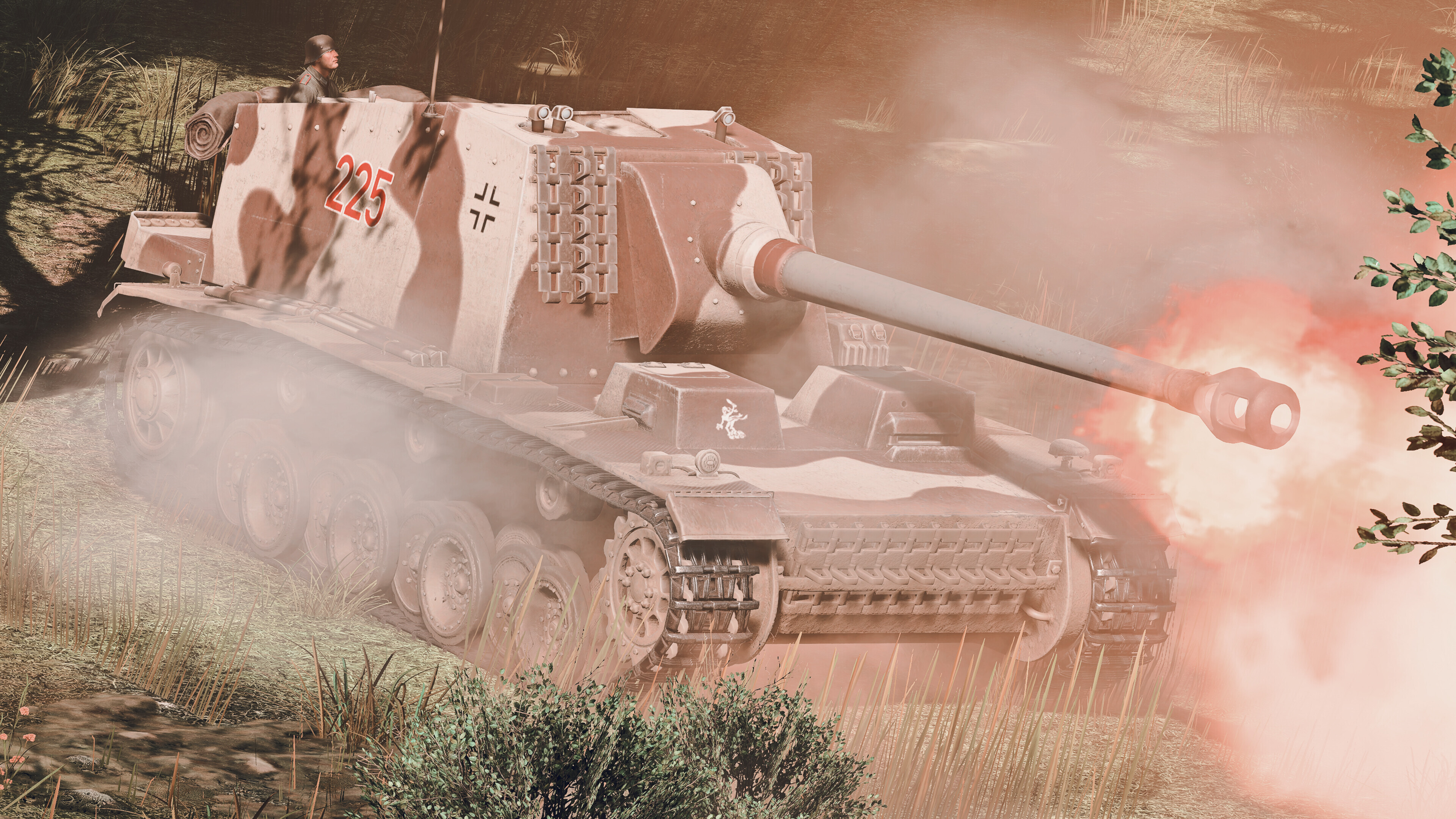
The Sturer Emil is a German tank destroyer designed to engage and destroy enemy heavy tanks. It was equipped with a powerful 12.8 cm cannon, similar to the main guns of the Jagdtiger and Maus. Its armor-piercing shells had excellent penetration and could effectively engage heavily armored vehicles. However, this formidable firepower came with many drawbacks, which limited its production and combat use. So, how is the “Stubborn Emil” like in War Thunder, and how can you make the most of its strengths? Read on to find out.
Pros
- Good cannon;
- Good gun depression;
- Decent reload speed.
Cons
- Mediocre mobility;
- Poor armor;
- Open-top casemate;
- Small ammunition load.
Armament
The Sturer Emil is equipped with a powerful 128 mm K.40 gun, capable of effectively destroying heavily armored vehicles such as the KV-1, Churchill III, and M4A2.
Its excellent gun depression (-15° to +10°) allows it to engage targets on hilly terrain with ease. It has a reload time of 16 seconds, which is faster than other vehicles with similar armament. For comparison, the Maus and Jagdtiger have a reload of 23.6 seconds (18.2 seconds when aced), while the ISU-122 takes 26 seconds (20 seconds aced). Although its reload speed isn’t particularly fast, it’s compensated by the large explosive filler in its shells.
Despite all these positive qualities, there is one major drawback: the ammunition capacity is limited to just 15 rounds, leaving little room for error in combat.
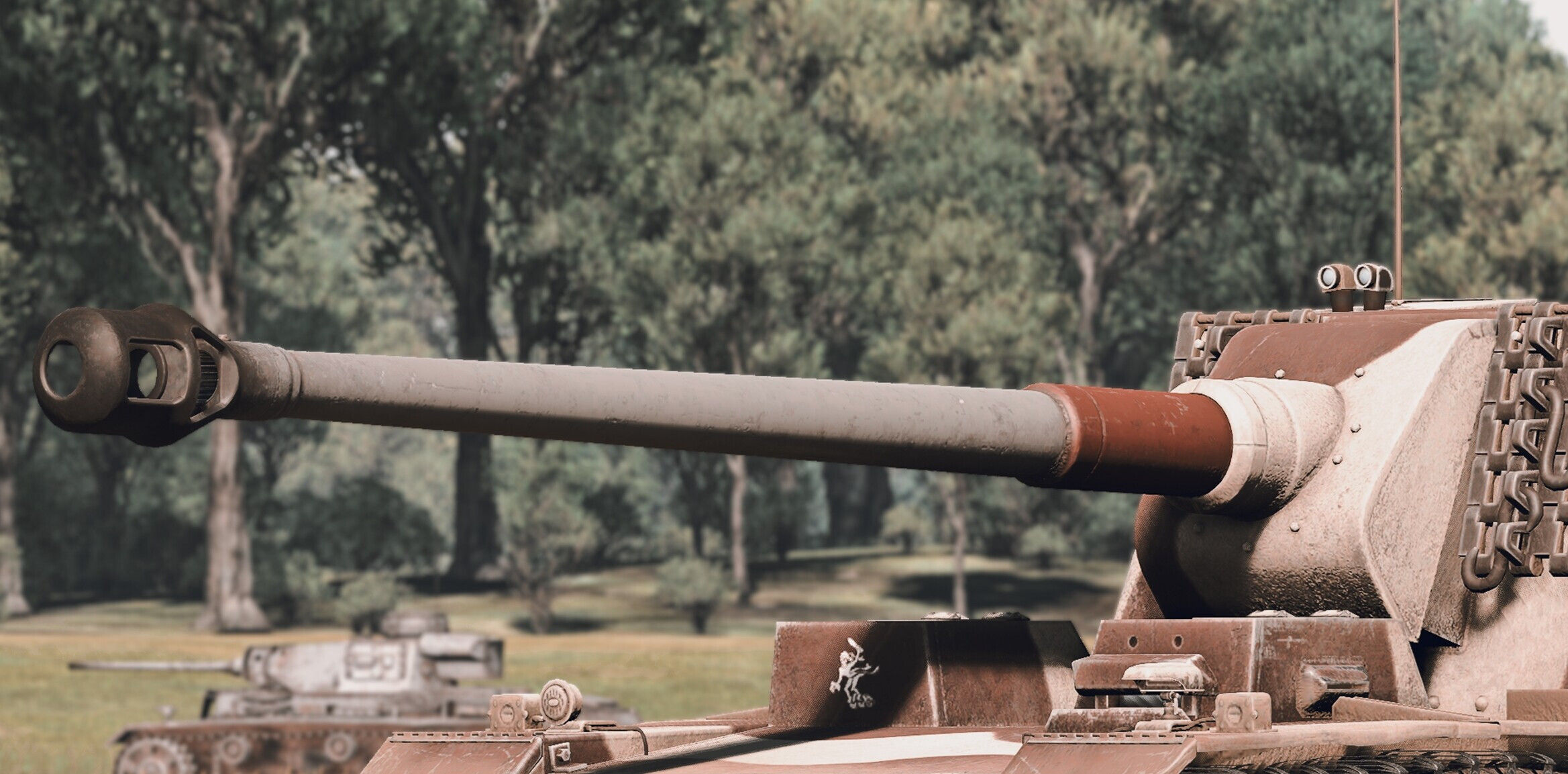
The following shells are available for the main gun:
- PzGr (APC) — This is the default ammunition provided with the vehicle. With 230 mm of penetration at 100 meters, it can reliably engage even heavy tanks. Its effectiveness is enhanced by a substantial 786 g TNT equivalent filler, ensuring devastating post-penetration damage. A muzzle velocity of 880 m/s also makes it well-suited for long-range engagements.
- Sprgr. L/5 (HE) — This high-explosive fragmentation shell is the second type in the default loadout. Although it contains a significant 3.7 kg of explosive filler, its practical use is severely limited by the vehicle’s small ammunition capacity.
- PzGr 43 (APCBC) — This is the final and most effective shell in the Emil’s arsenal. It boasts excellent penetration of 245 mm at 100 meters while matching the standard PzGr in all other aspects, retaining the same high-explosive filler and muzzle velocity. For these reasons, it is the recommended primary ammunition type.
Mobility
The Sturer Emil is powered by a weak 310 hp engine. With a combat weight of 36.5 tons, it suffers from a poor power-to-weight ratio of just 8.5 hp/t. This results in a very low top speed of only 25 km/h forward and 5 km/h in reverse. By comparison, a similar vehicle like the Nashorn can reach up to 40 km/h.
Furthermore, the vehicle’s acceleration is sluggish, taking around 8 seconds to reach top speed on asphalt and nearly 10 seconds on dirt. These poor mobility characteristics prevent it from seizing key positions early in a battle and leave it without the agility to relocate quickly under fire.
The tank destroyer’s maneuverability is also disappointing. A 180-degree turn on any surface takes about 9 seconds. However, while moving, it turns relatively quickly, allowing it to react to an unexpected enemy. That said, when turning from a standstill, it’s advisable to rev the engine.
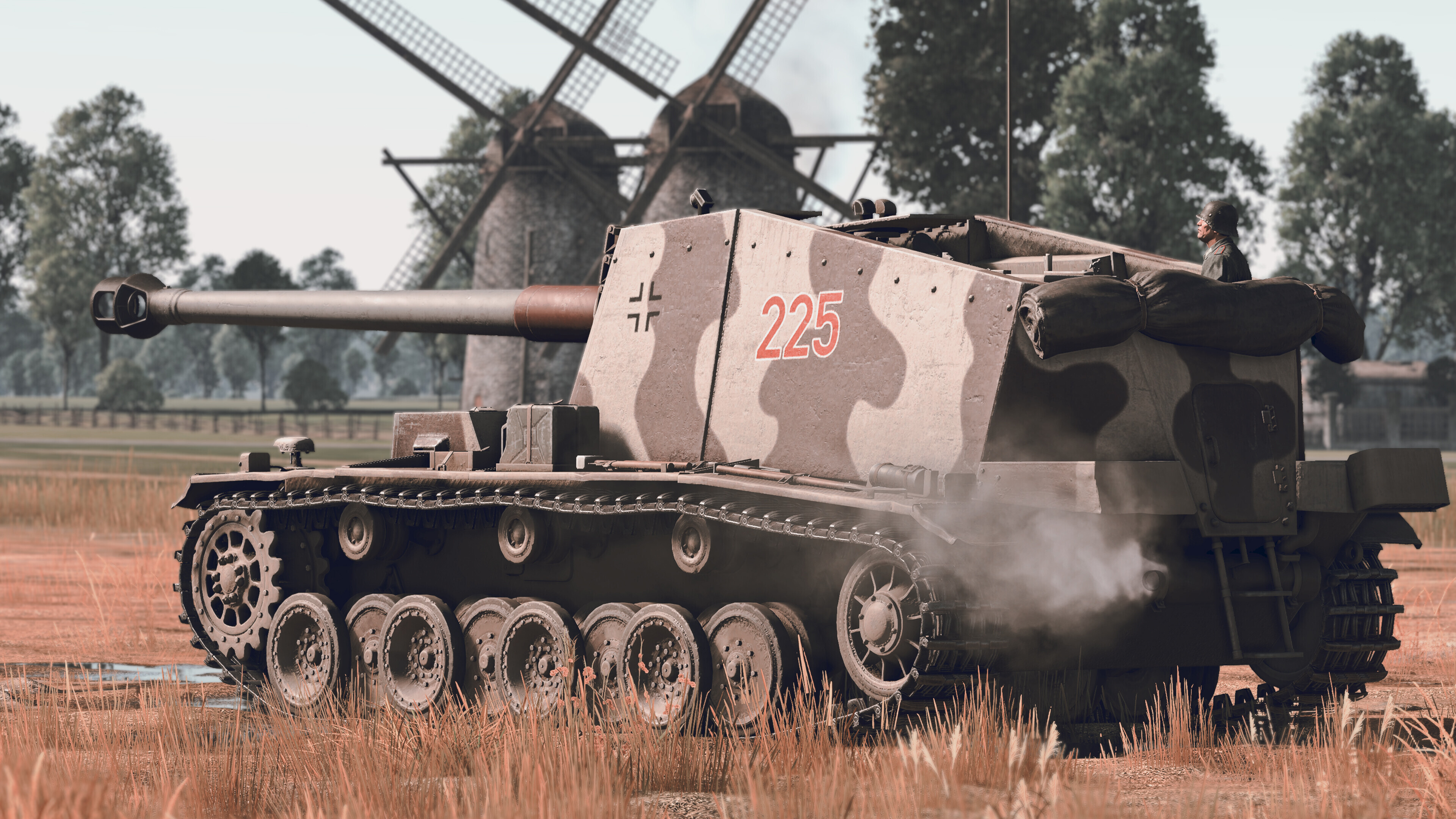
Armor and survivability
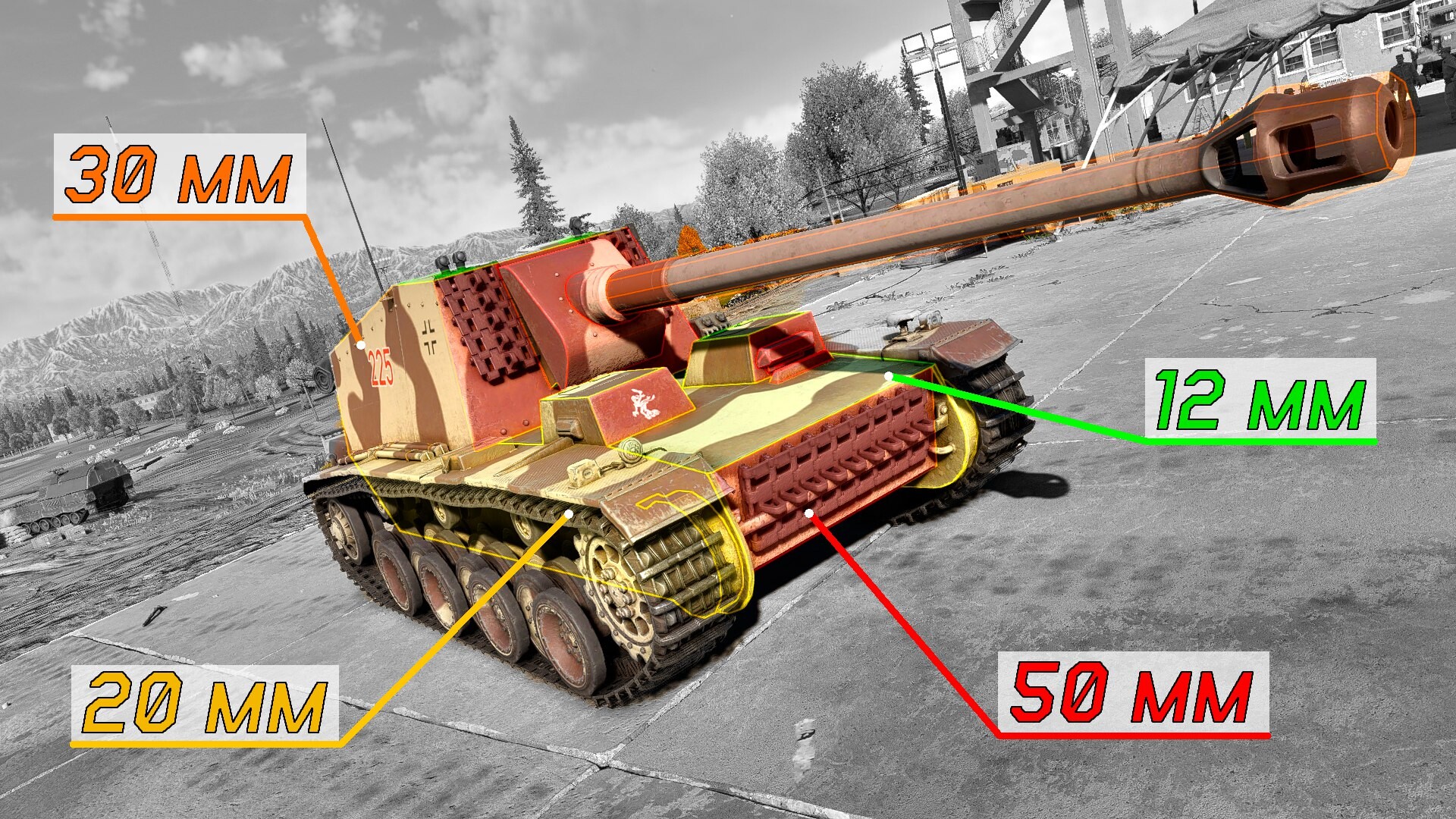
The Sturer Emil’s armor is a significant weakness. Its lower frontal plate and the front of the fighting compartment are only 50 mm thick, angled at 71° and 14° respectively. Even the 20 mm track links bolted onto the latter are insufficient to reliably protect the crew and internal modules from common threats like the T-34 or M10 GMC.
The side armor is extremely thin: the fighting compartment is 30 mm thick, while the hull sides are only 20 mm thick — sometimes not enough to stop heavy machine guns. As a result, the Emil is vulnerable to a wide variety of opponents. Conventional tanks such as the M4, KV-1S, or Churchill III easily penetrate it, and even lightly armed anti-aircraft guns like the ZSU-37, M19A1, and Ystervark pose a serious threat from the sides or even from the front.
The driver and radio operator are housed in an enclosed compartment at the front of the hull, although its protection is weak due to the nearly vertical armor layout. Furthermore, the open-top fighting compartment makes the vehicle extremely vulnerable to air attacks.
The survivability of this self-propelled gun is dismal. Its primary flaw is the ammunition stowed along the walls of the fighting compartment, which turns the vehicle into a “powder keg”. If flanked, the crew has an extremely low chance of survival.
This critical vulnerability is compounded by the vehicle’s massive size, making it highly conspicuous in open terrain to both ground vehicles and aircraft.
The crew consists of five members:
- The radio operator/gunner and driver are positioned in the front of the hull;
- The commander and loader are located on the right side of the fighting compartment;
- The gunner is stationed on the left side of the fighting compartment.
Combat tactics
Optimal tactics for the Sturer Emil involve two main approaches: long-range engagements and flanking maneuvers.
Long-Range Engagement
This method involves taking up a position behind the front line. It is particularly effective on open maps such as the Sands of Sinai or El Alamein, where the gun’s long range can be fully utilized. However, on maps with mixed terrain like Poland or the Maginot Line, this tactic becomes more difficult, as hills and urban structures provide cover for the enemy, allowing them to quickly break line of sight.
Flanking Maneuvers
This approach requires proactive gameplay: you must move stealthily to outflank the enemy, secure a favorable position, and engage the weaker side and rear armor of hostile vehicles. This tactic is well-suited to maps with varied terrain. In the Hürtgen Forest, for example, you can use the low ground for cover and fire from behind dense foliage, while on Poland you can set up ambushes from positions around the lake. However, this strategy demands careful planning due to the vehicle’s poor mobility.
Urban Combat
On city maps like “Berlin” or “Stalingrad”, the Sturer Emil’s effectiveness drops significantly. However, you can still use unorthodox tactics by navigating through less frequented courtyards and alleys to attack from unexpected angles. If a frontal confrontation is unavoidable, the outcome depends entirely on the crew’s reaction speed and landing the first accurate shot — given the long reload time, that initial hit is often decisive.
Historical background
The history of the Sturer Emil (German for “Stubborn Emil”) begins in May 1941, when the German High Command initiated the development of a tank destroyer armed with a powerful 128 mm gun. The project was originally conceived to counter British heavy tanks. However, after the cancellation of Operation Seelöwe (“Sea Lion”), work was suspended. The project was revived with Germany’s invasion of the USSR and the emergence of Soviet KV-1 and T-34 tanks, which proved nearly impervious to standard German anti-tank weapons.
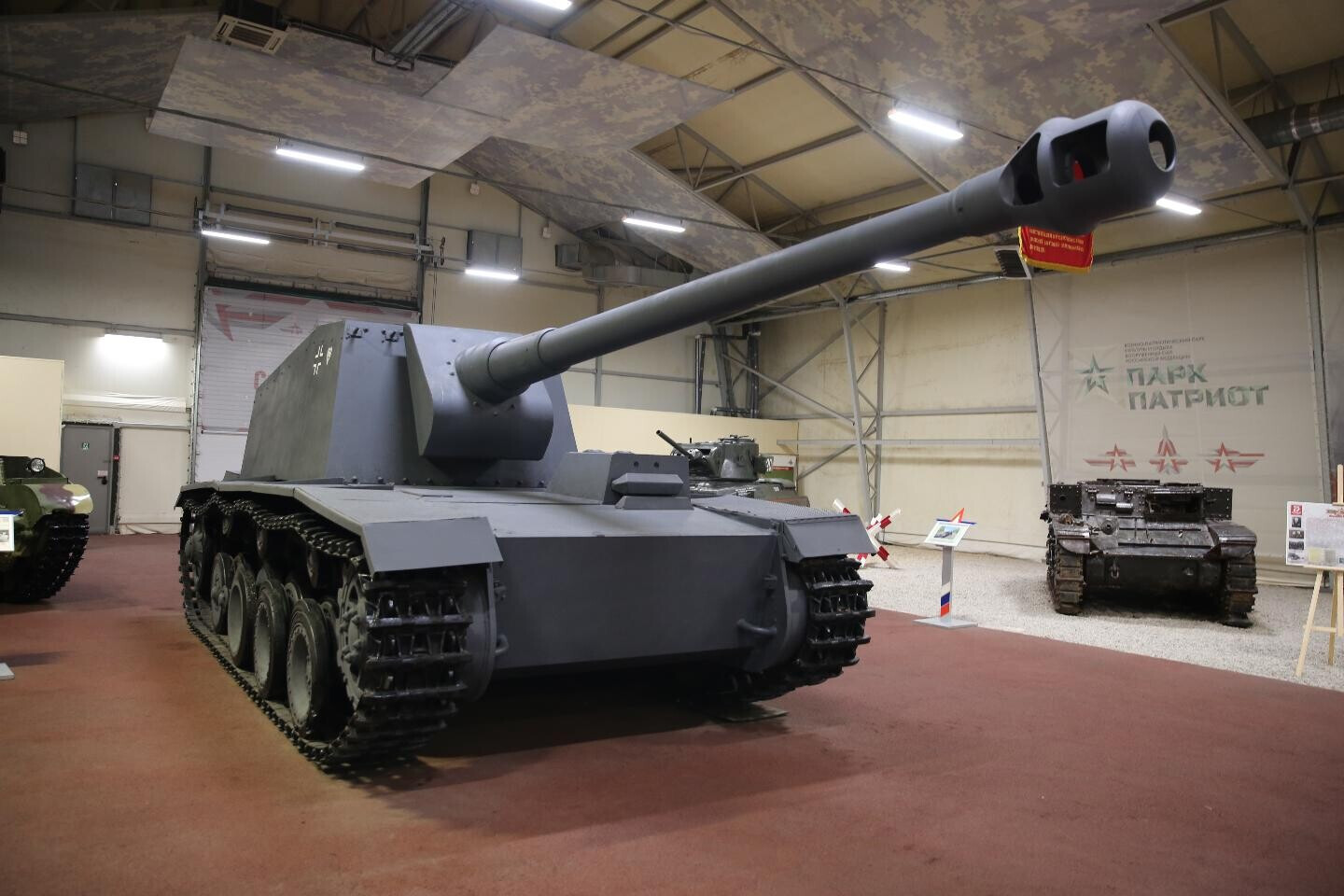
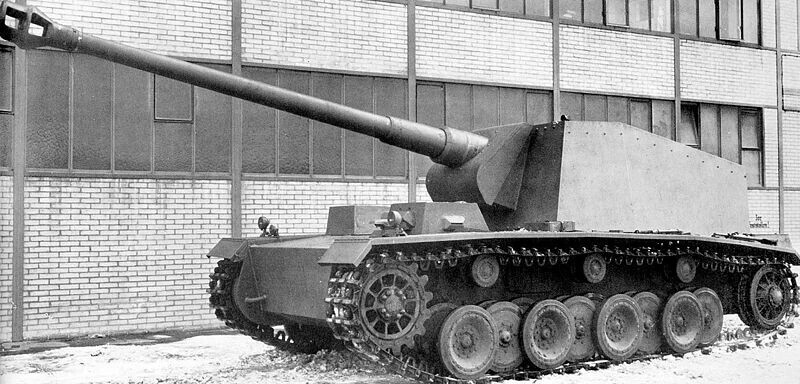
The development of this self-propelled gun was a joint effort by Henschel und Sohn and Rheinmetall, with production taking place at the Rheinmetall-Borsig plant in Düsseldorf. It was based on the experimental VK 30.01(H) tank chassis and armed with the massive 128 mm K.40 gun, which alone weighed seven tons. To handle the increased load, an extra road wheel was added to the suspension. Despite this modification, the running gear remained prone to overloading and frequent breakdowns. Power was provided by a 300 hp Maybach HL116 six-cylinder engine, which proved inadequate for the 39-ton vehicle, resulting in a top speed of just 25 km/h.
The resulting vehicle was controversial. On one hand, it possessed unprecedented firepower, capable of destroying any Soviet tank at long range with devastating effect. On the other hand, its combat effectiveness was severely hampered by a long reload time, a tiny ammunition load of just 18 rounds, extremely poor mobility, and low mechanical reliability. Only two prototypes were ever built, named “Max” and “Moritz” after characters from the works of German humorist Wilhelm Busch.
In mid-1942, the two prototypes were deployed to the Eastern Front with the 3rd Company of the 521st Heavy Tank Destroyer Battalion, attached to Army Group South. “Max” and “Moritz” saw extensive action along the Don River and in the Battle of Stalingrad, where they were credited with destroying approximately 35–40 Soviet tanks. Their service, however, ended in misfortune: “Max” was destroyed in late 1942, and “Moritz” was abandoned and captured by Soviet troops near Stalingrad in January 1943.
- Article from Wikipedia (ru)
- Article from Patriot Park (ru)
- Article from Topwar (ru)
- Барятинский М. Б. Танки III Рейха. Том III Panzer VI Tiger История создания. — М.: Яуза; Эксмо, 2011