
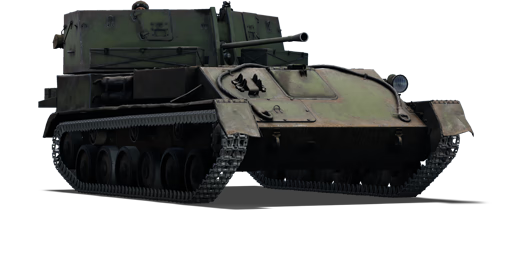
ZSU-37



The ZSU-37 is a Soviet self-propelled anti-aircraft gun. Developed in 1943, it was the result of experiments involving the mounting of anti-aircraft machine guns or cannons on truck or tank chassis. These experiments were conducted due to the heavy losses of anti-aircraft vehicles during the Great Patriotic War. The ZSU-37 was built on the chassis of the SU-76M light self-propelled gun with a 37 mm 61-K cannon installed. After completing trials in February 1944, the ZSU-37 was recommended for service pending minor corrections. Serial production began in 1945, and approximately 75 vehicles were produced before the war's end, though its exact combat use is unknown. The vehicle remained in production until 1948, with approximately 375 units manufactured overall.
The ZSU-37 was introduced in the Update 1.43. Although its 37 mm gun has an average rate of fire, successful hits can easily destroy a plane’s wing or tail. Its armor-piercing rounds can also penetrate the sides of most tanks. However, the vehicle is highly vulnerable to air and artillery attacks due to its compact layout and open fighting compartment.

| Belt | Belt filling | Armor penetration (mm) at a distance: | |||||
|---|---|---|---|---|---|---|---|
| 10 m | 100 m | 500 m | 1000 m | 1500 m | 2000 m | ||
| AP-T/HEFI-T | 70 | 68 | 56 | 45 | 36 | 29 | |
| HEFI-T | 8 | 8 | 7 | 5 | 4 | 3 | |
| AP-T | 70 | 68 | 56 | 45 | 36 | 29 | |
| HVAP-T | 87 | 82 | 65 | 49 | 37 | 28 | |


 ZSU-37
Mobility | |
|---|---|
Protection |
|---|
Firepower | |
|---|---|