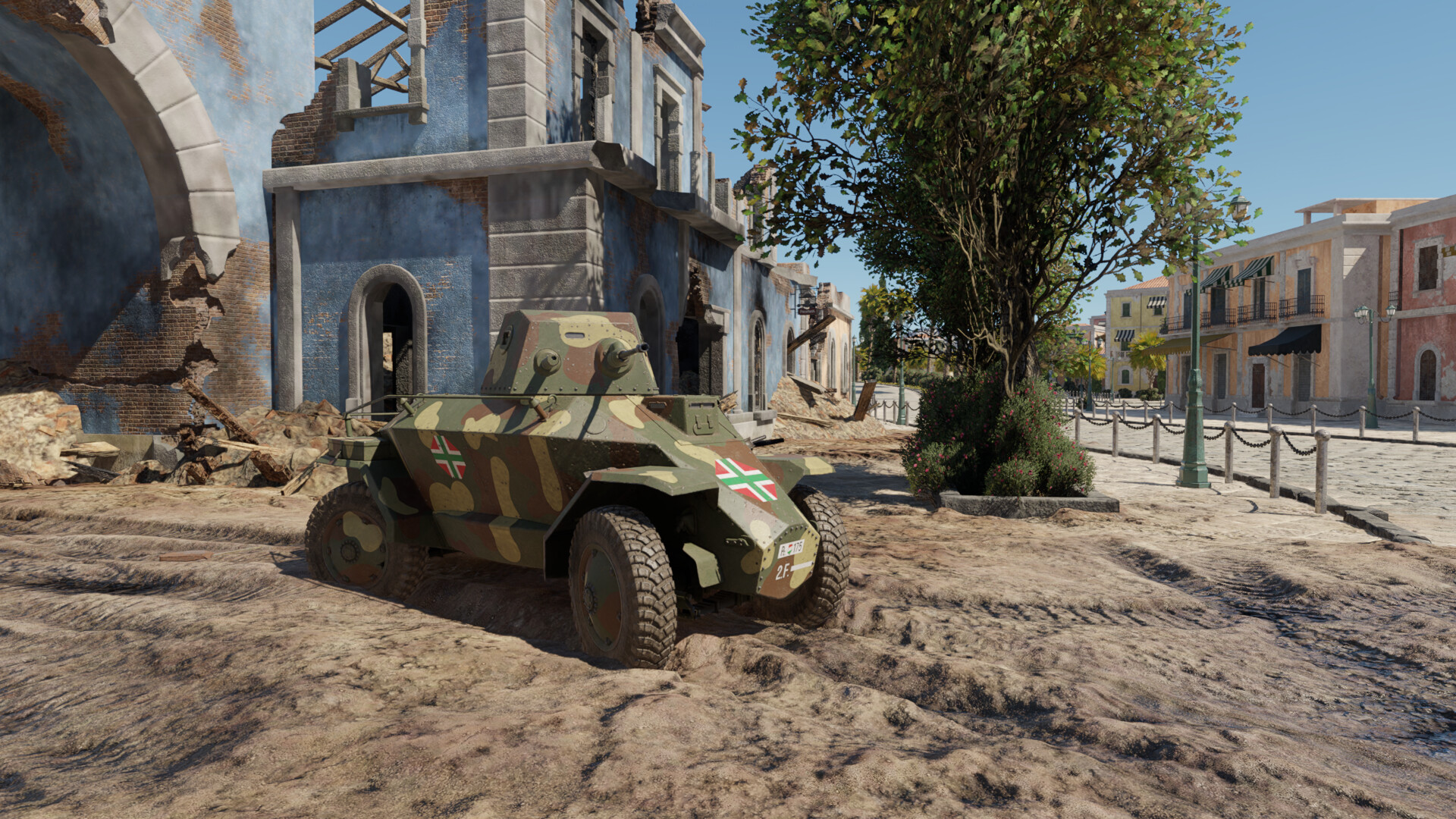
After the Hungarian peace treaty of World War I (Treaty of Trianon), Hungary was not allowed to maintain any armored vehicles in the small authorized Hungarian Army. When tension began to rise in Europe, Hungary decided to modernize its army by acquiring new tanks and armored cars. This new tank development program resulted in the 40.M Turán, while the armored car program resulted in the 39.M Csaba. Added in the Sons of Attila update, the Csaba is often neglected compared to the Italian L3/33C or the German Sd.Kfz.222, but it remains an interesting option in the Italian tech tree, as well as having an interesting history.
Pros & Cons
| Pros | Cons |
|---|---|
| Excellent mobility | Low survivability |
| High speed | Very bad firepower |
Survivability
Being a light tank, don’t expect great survivability from the Csaba. Being a closed tank, the Csaba doesn’t suffer much from aircraft guns, but higher caliber
(12.7 mm and above) will be able to pierce the roof.
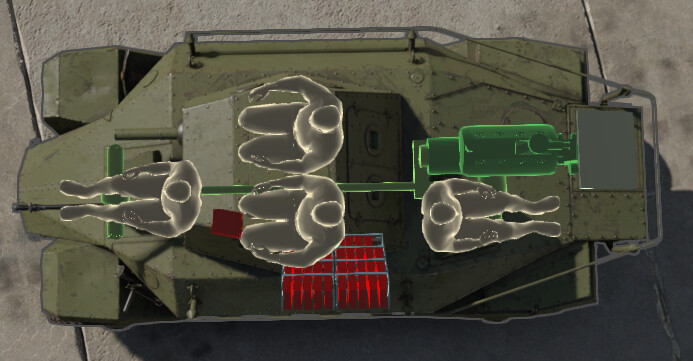
Having a crew of 4 allows the Csaba to replace critical crew members, such as the driver and gunner but only once.
The ammunition is stored on the entire left side of the Csaba, making a hit in this area a guaranteed ammo explosion.
The Csaba’s armor makes it able to withstand standard light machine guns
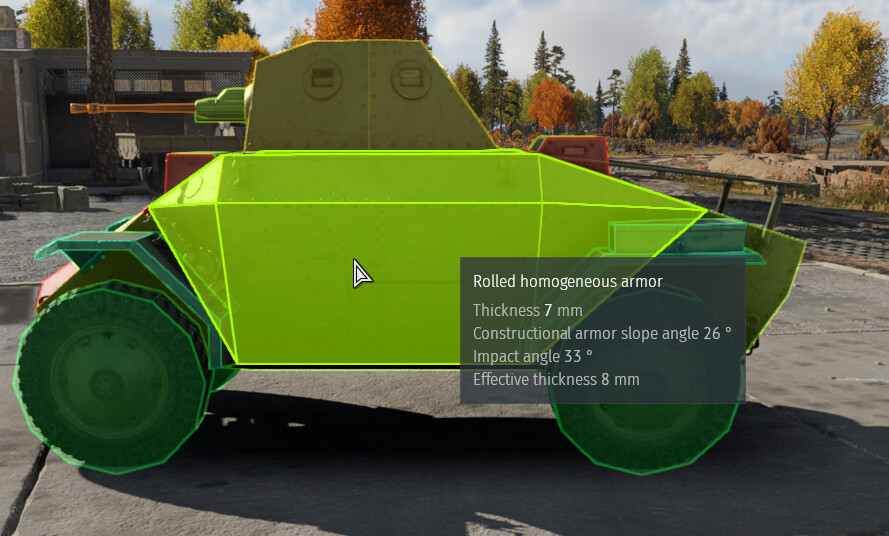
(7.62 mm) from all sides. Higher caliber machine guns (12.7 mm) will be able to pierce through the Csaba’s sides like butter. When it comes to standard shells, the Csaba is incapable of taking any hits, though, thanks to its thin armor, most APHE shells won’t fuse on it.
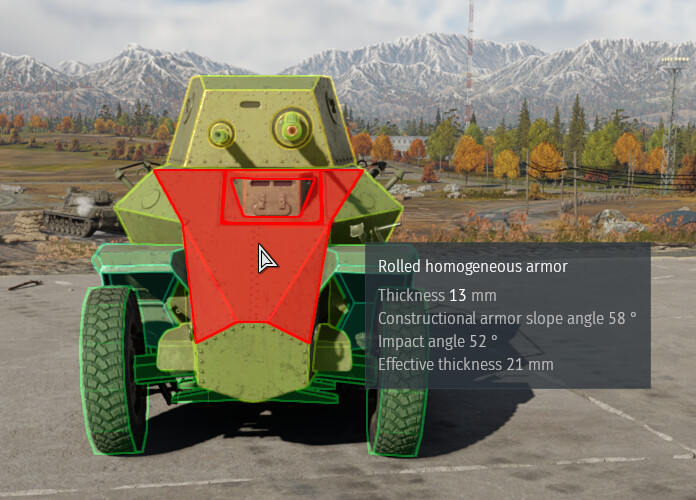
The frontal part of the Csaba is protected by a 13 mm angled plate. The rest of the body is protected by 7 mm rolled homogeneous armor while the turret is protected by 10 mm plates all around.
Mobility
The mobility is the most important part of the Csaba. Being a wheeled vehicle, its grip is not as good as tracked vehicles but its top speed of 65 km/h (both forward and in reverse) surpasses most other tanks it faces. With its 95 hp engine, the Csaba gets a power-to-weight ratio of 16 hp/t, giving it very good acceleration.
Because it is a wheeled vehicle with poor traction, its off-road capabilities are quite poor. Your speed will be significantly reduced compared to driving on concrete. Sloped terrains are also dangerous, since hill starts are very difficult. Therefore, it is important to maintain momentum when driving on slopes.
Being a wheeled vehicle, its turning capability is not as good as tracked vehicles but by having 4 wheels steering capability, its turning radius stays small compared to other wheeled vehicles.
Note: Having the same top speed both in forward and in reverse gives the Csaba very good capabilities to flee from dangerous situations.
Armament
The 39.M Csaba is armed with a 20 mm Solothurn QF.36M cannon, a German / Swiss Solothurn S-18/100 anti-tank cannon built under license by Hungary. It has a 5 round magazine clip with a maximum load of 40 magazines. The Italian L3/33C gets an upgraded version of the same cannon with higher muzzle velocity and bigger cartridge. The overall firepower of the Csaba is pretty poor, even for early tanks. The combined mix of bad penetration and bad post-pen damage makes the Csaba struggle when dealing with targets.
The 20 mm cannon can only fire an APHE shell, the “20 mm 36M páncélgránát”. It gets around ~2.4g of TNT. Don’t rely on the explosive filler of the shell to deal damage as it would require multiple shots to knock a crew out just with the explosive damage. The shell should be used as an AP shell. Aim directly for critical crew and ammo for the shell to actually do damage and the explosive filler will simply be able to deal some damage to untouched crew.
Note: Even with its fire rate of 60 rounds/min, fast engagements can be difficult as it will take multiple shots to destroy a target
| Shell | Pen @ 100 m | Pen @ 500 m |
|---|---|---|
| 20 mm 36M páncélgránát | 32 mm | 25 mm |
Additionally, the Csaba has access to a shoulder stabilizer, meaning that up to 8 km/h, the gun is stabilized vertically, helping to get the gun on target after stopping.
Usage in battles
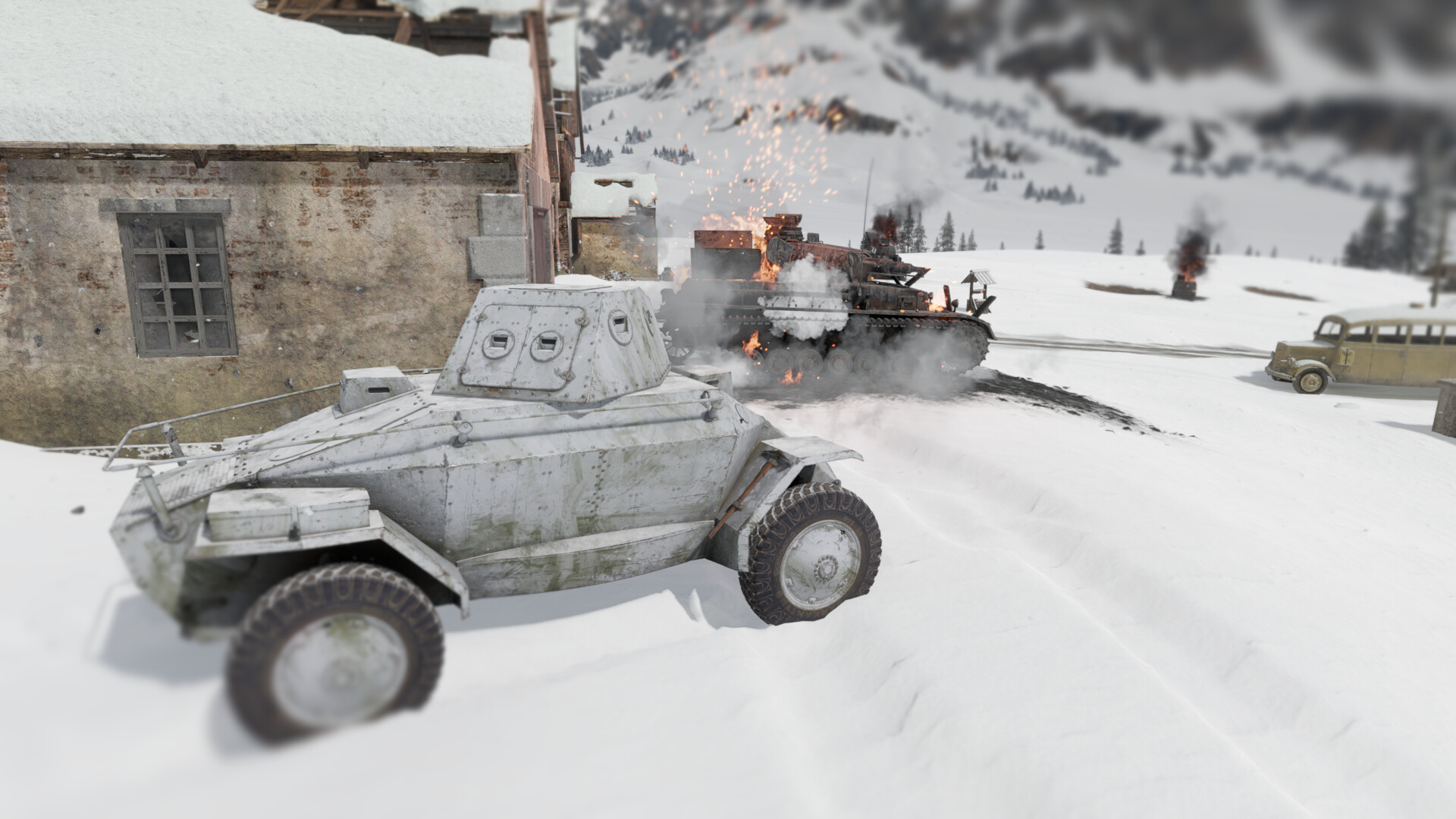
With its high mobility and weak firepower, the best tactic for the Csaba is flanking. Avoid face-to-face engagements and flank the enemies in order to engage them from the sides or the rear. Be careful when aiming your shots, as you will need to destroy them (or at least disable them) in a short time before they have time to react and destroy you. The Csaba is not capable of tanking a lot of shots, with most hits destroying at least a component or knocking out a crew member.
Stay on the move, don’t stay at the same position for too long and don’t engage multiple targets at the same time as it will result in a guaranteed defeat.
Warning: Be sure to always have a full clip of 5 rounds in order to avoid reloading in the middle of an engagement
History
After the Hungarian peace treaty of World War I (Treaty of Trianon), Hungary was not allowed to maintain any armored vehicles in the small authorized Hungarian Army (only a dozen armored cars were allowed for the police). The first important Hungarian developments started in the '30s, when the Hungarian engineer Nicholas Straussler (Miklós Straussler in Hungarian) started a project for an armored car originally for the British Army. In 1932, Straussler completed the drawing of what would become the AC.I (Armoured Car Type 1). Lacking the necessary funds to proceed independently, Straussler decided to go back to Hungary and work with the Manfréd Weiss industrial company which had the resources to build the prototype.
The AC.I was deemed promising. It had access to four-wheel drive and four-wheel steering. It was powered by a Ford 3.3L 70 hp engine. When this was not required, the system could be driven as a normal two-wheel drive car and with only the two front wheels steering. The chassis was completed in 1933 and passed successful trials by the Hungarian Army through the Haditechnikai Intézet– HTI (Eng. Military Technical Institute) with the intention of acquiring this armored car for themselves but the lack of funds made it impossible. Later the AC.I was sent to the UK for inspection.
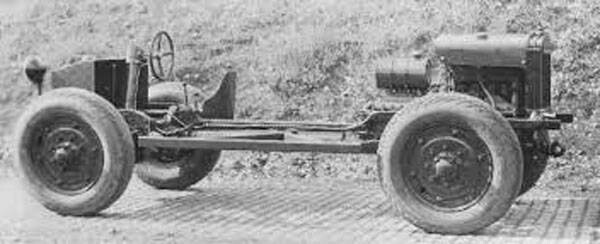
The AC.I suffered traction issues when ascending steeper slopes. The root cause of the problem was its weak engine. Straussler began working on the improved model, designated as AC.II. This new version was to be powered by an experimental Weiss V-8 100 hp engine. This time, two AC.II prototypes were constructed, one to be sent to the UK and one for Hungary. This time the British Army was generally satisfied, and after sending it to Iraq for further testing, placed an order for 50 AC.II. They would be armed with the Vickers 7.7 mm machine gun mounted inside the turret and protected with 8 mm of armor. Production likely commenced in 1937 and concluded in 1938.
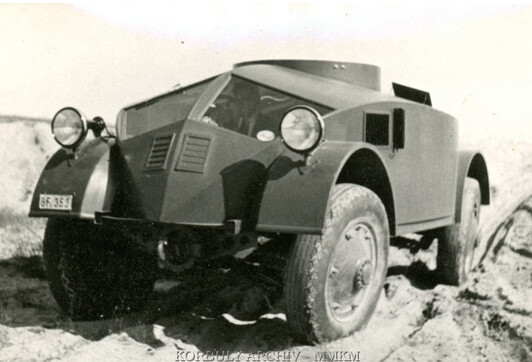
While the story of the British AC.II ended in the mid-1930s, its journey in Hungary was just beginning. With rising tension across Europe and its neighbors, the Hungarian government started the Győri program, a one billion pengő (around $4.2 billion USD or €3.8 billion today) army development program in order to expand its army resources which was looking for new armored vehicles and tanks. In order to save cost and time, Manfréd Weiss proposed using the AC.II prototype, which was still in Hungary, as a base for the new armored car. Several changes were ordered, including a new engine and a new superstructure design. Work on it began in 1937. The engine was replaced by a Ford i8 3.5 L 90 hp engine and coupled with a 5-speed transmission, giving it a max speed of 65 km/h.
The original AC.II superstructure was outdated and the Hungarian Army was dissatisfied with it. As a result, Manfréd Weiss undertook a complete redesign of the superstructure. Instead of the curved design, the new version would use simpler angled plates. The new box-shaped driver port allowed for a better field of view. The new turret had a hexagonal shape and used angled plates. It would hold the final piece of the prototype: its armament. The Hungarians decided to replace the Vickers machine gun with a more powerful, locally produced, 20 mm 36M anti-tank rifle, a licensed production version of the Solothurn S 18-100. The turret was also fitted with an 8 mm Gebauer 34/37 machine gun.
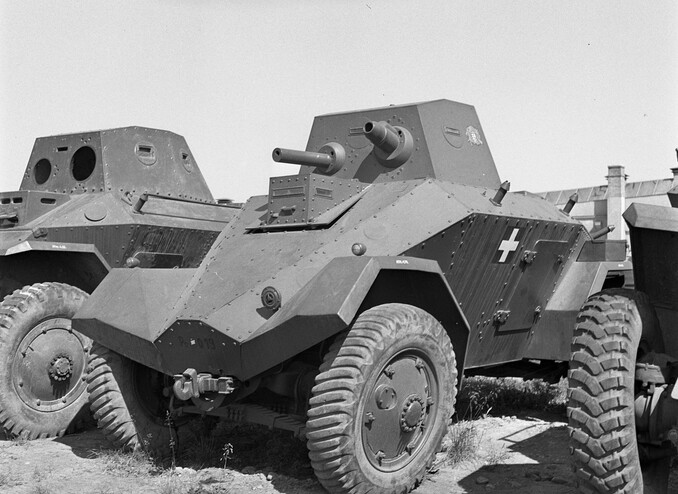
It was adopted in service in 1939 under the designation “39.M Csaba” (named after the son of Attila the Hun). A first order of 61 39.M Csaba was placed by the Ministry of Defence, followed by an additional 20 standard version and 12 40.M Csaba commander version, with a total of 93 Csaba produced from 1939 to 1941 all by the Manfréd Weiss industrial company.
Note: Some sources claim a total of 143 39.M Csaba and 12 40.M Csaba were built
The 39.M Csaba was developed into a command version called the “40.M Csaba”. In order to keep production simple, this version was very similar to the 39.M Csaba. The 20mm was removed and equipped with R-4T long-range radio as well as a special lattice radio mast. A prototype designed Borbála (a 39.M Csaba without a turret) was an attempt to create a protected towing vehicle for the 4 cm Bofors anti-aircraft guns but was discontinued due to higher cost compared to standard towing trucks.
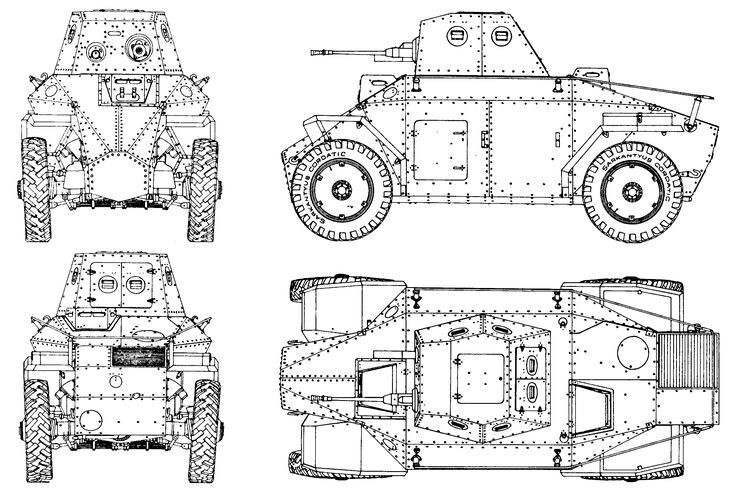
The first 61 39.M vehicles equipped the 1st and 2nd Mechanized Brigades, the 1st and 2nd Armored Divisions, and the First Mountain Brigade. Except for the mountain brigade, these units would participate in Operation Barbarossa. By November 1941 over 90% of the Csaba had major defects. All armored vehicles (Csaba, Toldi light tank, CV3 tankettes) were recovered but their repair and refitting would take over a year. These combats showed that the Csaba shouldn’t be used outside of its reconnaissance role.
By the summer of 1944 the Army was left with 48 combat-ready armored vehicles. Four Csabas formed a section, of which one was a command one. These sections were assigned to four Hungarian infantry divisions. In June 1944 these sections fought in Galicia with the cavalry divisions, with 8 out of 14 returning from the fight. From the autumn 1944 their numbers gradually decreased. None seem to have survived the war.
Sources
- https://tanks-encyclopedia.com/ww2/uk/alvis-straussler-a-c-1-and-a-c-2
- https://tanks-encyclopedia.com/ww2/hungary/hungarian-ac2
- https://tank-afv.com/ww2/hungary/39M-40M_Csaba.php
- Magyar Steel — Hungarian armour in WWII (Csaba Becze)
- The Royal Hungarian Army 1920-1945 Volume 1 (Leo W.G. Niehorster)
- The Royal Hungarian Army 1920-1945 Volume 2 (Peter Mujzer)