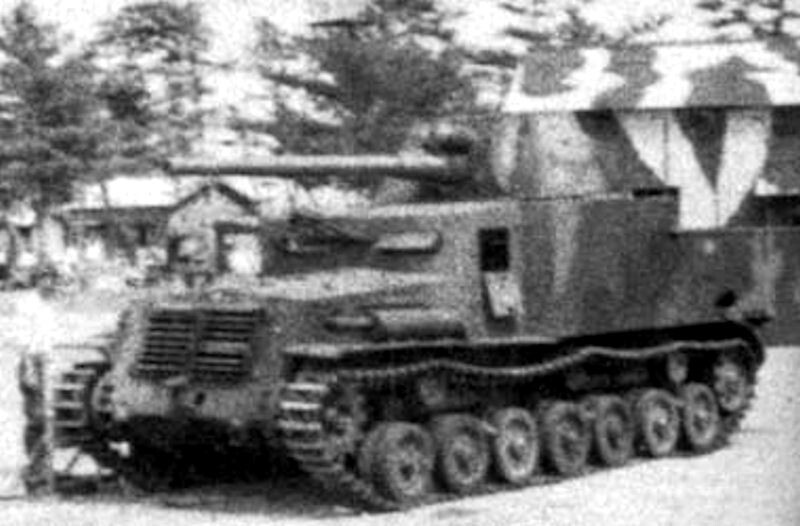
During the Pacific War, Japanese tanks severely lacked anti-tank capabilities. Guns such as the Type 94 37 mm gun and short-barreled 57 mm gun had very low penetration. Japanese officials started the development of a new anti-tank gun that would be capable of dealing with American tanks such as the M3 Light Tank and M4 Medium Tank. The development of this new gun resulted in the Type 5 Na-To, an SPG prototype using an experimental 75 mm anti-tank gun, a rather obscure and forgotten tank from the Japanese army and in War Thunder.
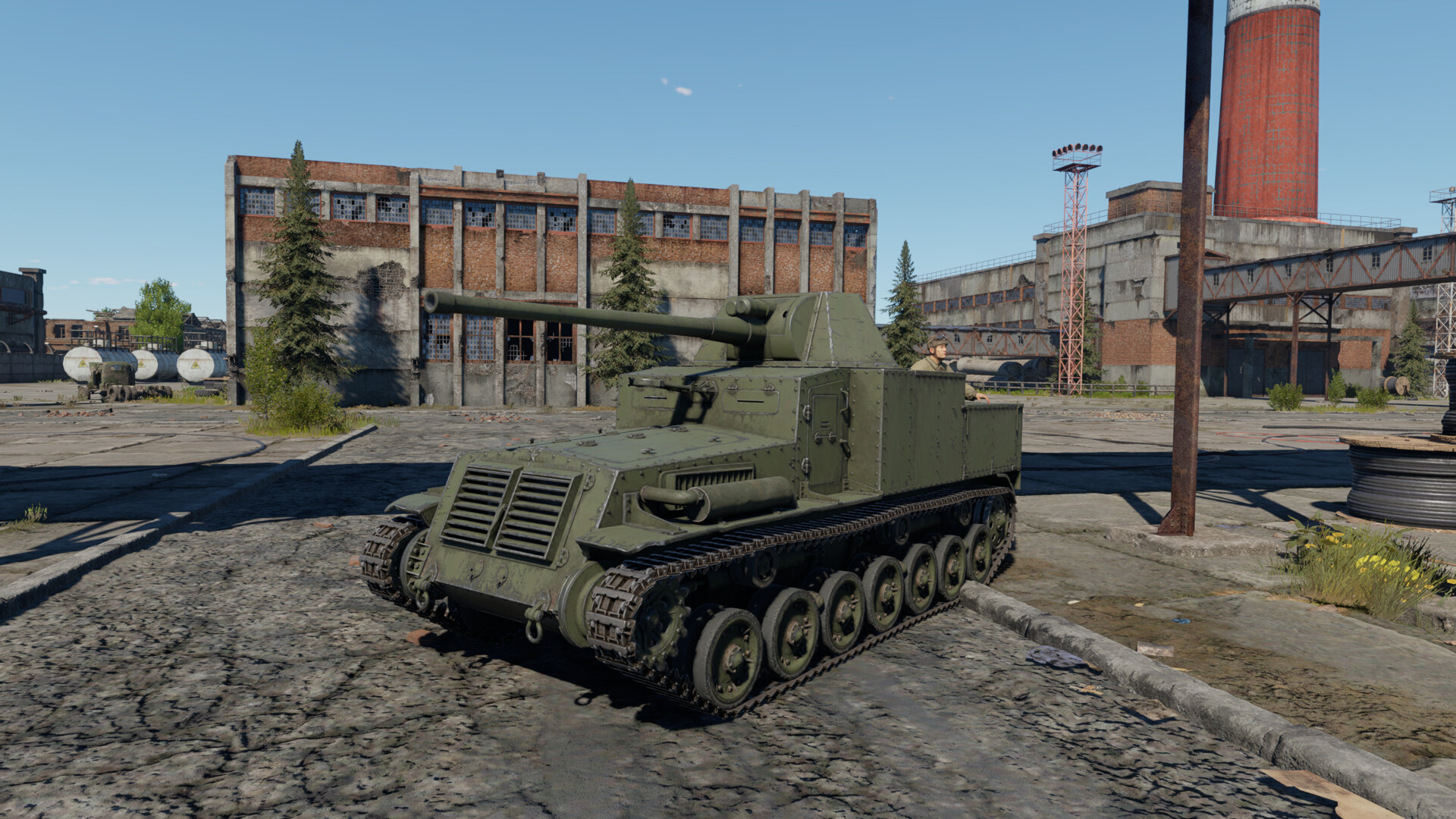
Pros & Cons
| Pros | Cons |
|---|---|
| Excellent firepower | Low survivability |
| Great elevation and depression angles | Subpar mobility |
Survivability
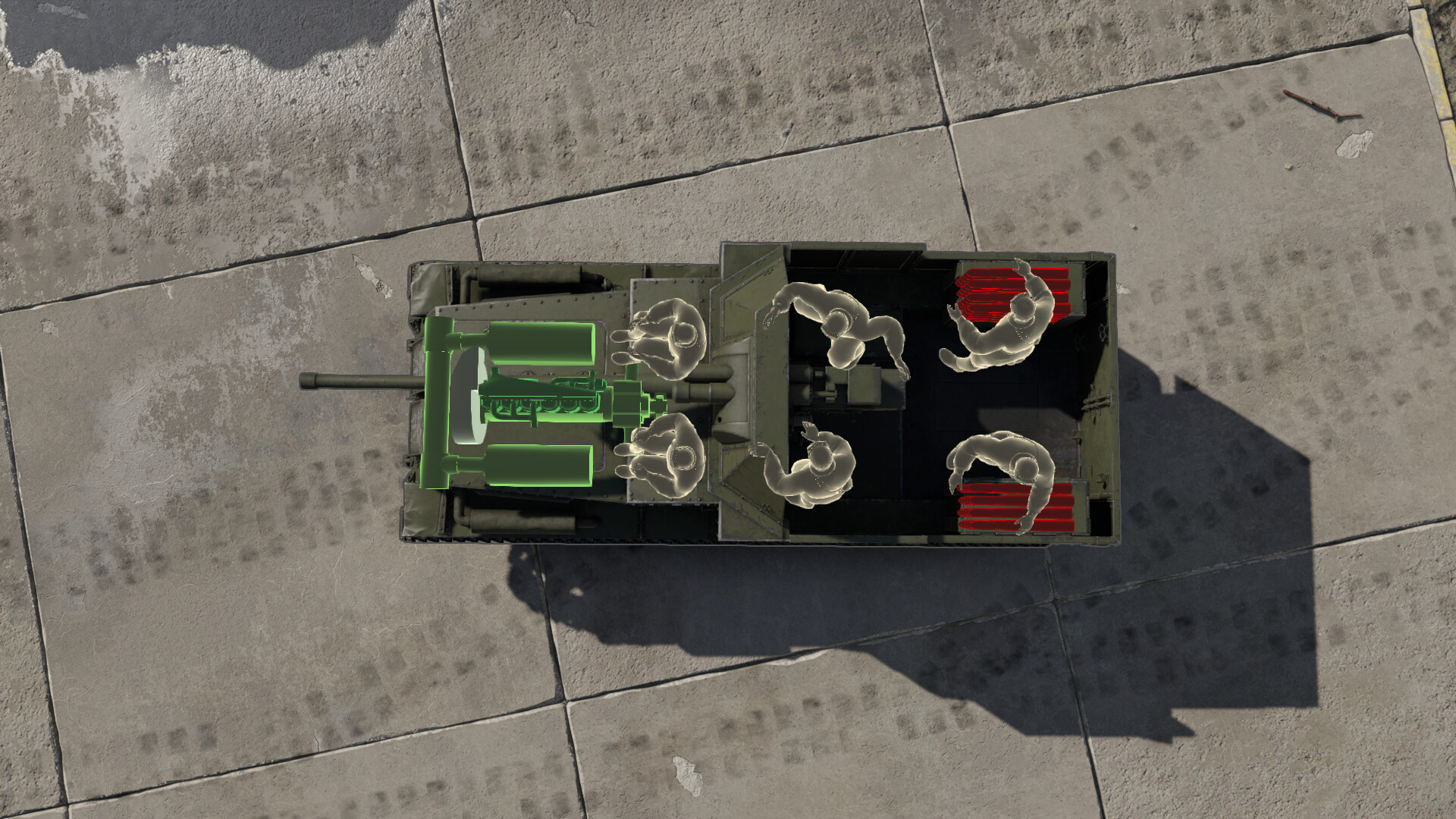
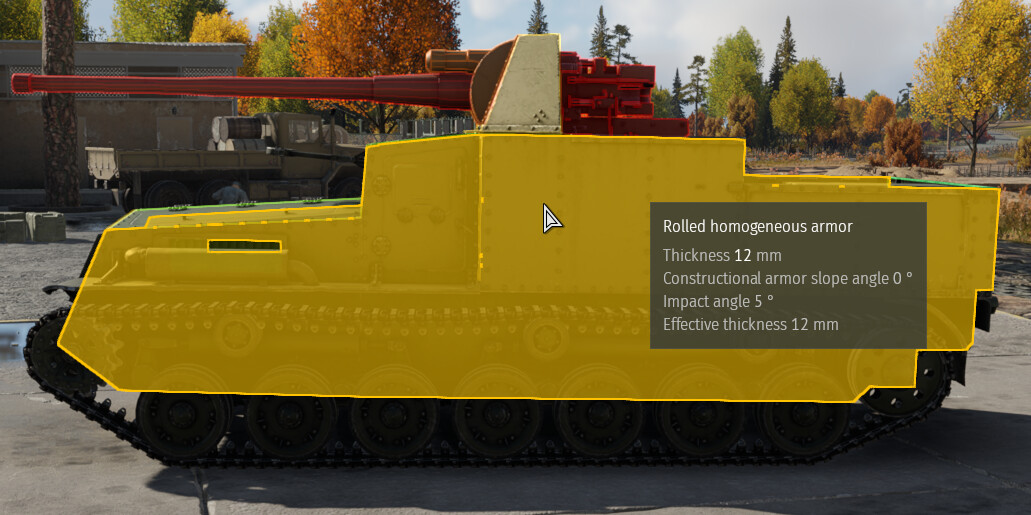
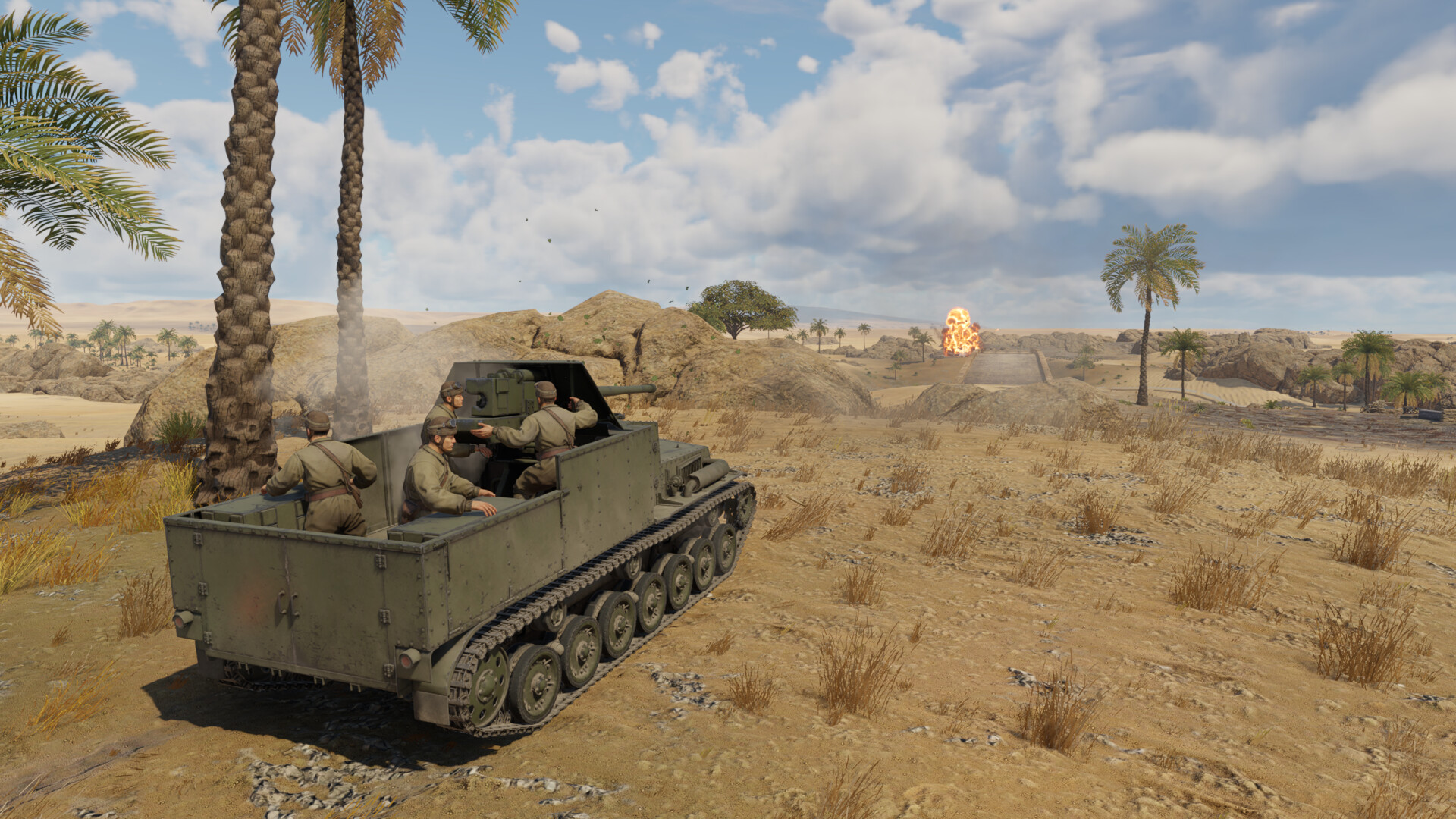
The Na-To’s survivability is not great. Having thin armor and being open top makes it very vulnerable to machine guns, planes, artillery and overpressure.
Having a crew of 6 allows the Na-To to replace critical crew members, such as the driver and gunner, multiple times.
The ammunition is stored at the rear, near the crew and takes a big amount of space making it an easy target; a hit around there will likely destroy the vehicle with an ammo explosion.
The engine and transmission take the entire front part of the tank, helping to block spall from APHE rounds. Standard AP shells will go through and damage the crew behind.
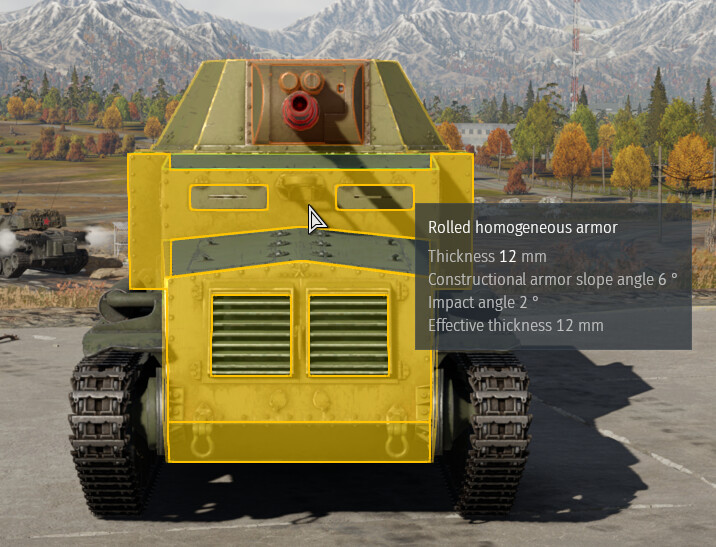
The entire tank is protected with 12 mm welded armor. But because of the thin armor, most shells won’t fuse on it, reducing damage if being shot at.
Mobility
The Na-To, like most early Japanese tanks, doesn’t offer great mobility. Being able to achieve a max speed of 40 km/h and 8.2 km/h in reverse, its 165 hp engine gives it a ratio of 12 hp/t. Its acceleration is nothing amazing but enough to move around the battle.
Being a casemate tank, if the engine or transmission is taken out, the tank is thus unable to aim around it, making it very vulnerable.
Armament
The long 75 mm of the Na-To gives it excellent firepower for its BR. Fairly similar to the German long 75 mm, it is able to pen almost everything it faces (T-34, M4, KV-1).
The Na-To has access to 3 shells:
- Type 1 APHE: Its primary round. Excellent penetration and ~100 g of TNT providing very good post-pen damage, able to one shot most enemies
- Type 4 APCR: Providing slightly more flat pen but much less post-pen. Rather useless as the APHE provides enough pen to deal with most enemies
- Type 90 HE: With 490 g of TNT, this shell is excellent to deal with open-top targets like SPAAs and tank destroyers
| Shell | Penetration @ 100 m | Penetration @ 1000 m |
|---|---|---|
| Type 1 APHE | 144 mm | 114 mm |
| Type 4 APCR | 177 mm | 127 mm |
Its 6x optic zoom makes it very good for spotting targets and sniping them from far away.
The Na-To offers great depression and elevation (-10°/+20°) but its horizontal guidance is pretty weak with only 20° for both sides.
Its reload is rather average, with a minimum reload time of 6s with an ace crew.
Usage in battles
Being a tank destroyer with very weak armor, the best way to use this tank is by sniping from far away (500 m-1000 m). Most enemies can be easily destroyed, with the only threat being uparmored German TDs like the Jagdpanzer IV or Jagdpanzer 38(t).
Being a casemate, close encounters are not recommended as enemy tanks can easily flank you and destroy you. Taking hits is also not advisable as you don’t have much armor to take hits. You’re also exposed to overpressure with HE shells and artillery.
Don’t stay in the same position for too long. Use your mobility to get to a position where you are hidden / protected, destroy enemy vehicles and leave to another position. In this way enemies won’t be able to chase you down from your last position.
Stay away, hidden, and help your team by destroying heavy targets.
History
During the Pacific War, Japanese tanks suffered a disastrous defeat against the American M4 medium tank. Even in mobile combat around the sides and rear or in ambushes, the M4 medium tank had 38.1 mm of armor on its sides, and was difficult to destroy it unless the conditions were favorable with guns like the Type 1 47 mm gun. This issue was anticipated early, as the prototype mobile 57 mm gun was already being tested. However, information received at the end of 1941 through Germany indicated that the new KV-1 used by the Soviet Army had armor over 75 mm thick. This raised concerns about a possible encounter with it and Japanese officers feared a lack of firepower against it. The development of a 75 mm gun was ordered, with the idea of being self-propelled already planned from the start.
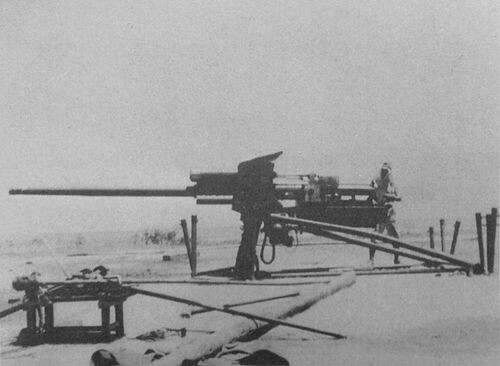
On February 23, 1942, the development of a 75 mm anti-tank gun was envisaged in the 1942 Army Technical Research and Development Headquarters Weapons Research Plan. In November 1942, it was officially incorporated into the weapons research policy for use by independent rapid-fire artillery units and armored units. The barrel was repurposed from the Type 4 7.5 cm anti-aircraft gun while the chassis would be based on the Type 4 Chi-So troop carrier.
Two prototypes for the gun were tested, resulting in the “Experimental 7.5 cm Anti-Tank Gun Type I”. Around the same time, the “Experimental Type 5 7.5 cm Tank Gun Type II,” planned for deployment on the Type 4 Chi-To, was nearly complete. The Army planned to mount this on a vehicle and then, aiming to share parts between the Type I and Type II, ordered the design of a new gun based on this. This was the “Experimental 7.5 cm Anti-Tank Gun Type II”, which had a much shorter breech length as it was made to be mounted on tanks whereas the Type I would be used on the ground.
By spring of 1945, the prototype was finally finished, using the “Experimental 7.5 cm Anti-Tank Gun Type II” mounted on the modified Type 4 Chi-So troop carrier. Despite the fact that it had successfully passed trials, the Na-To never entered mass production.