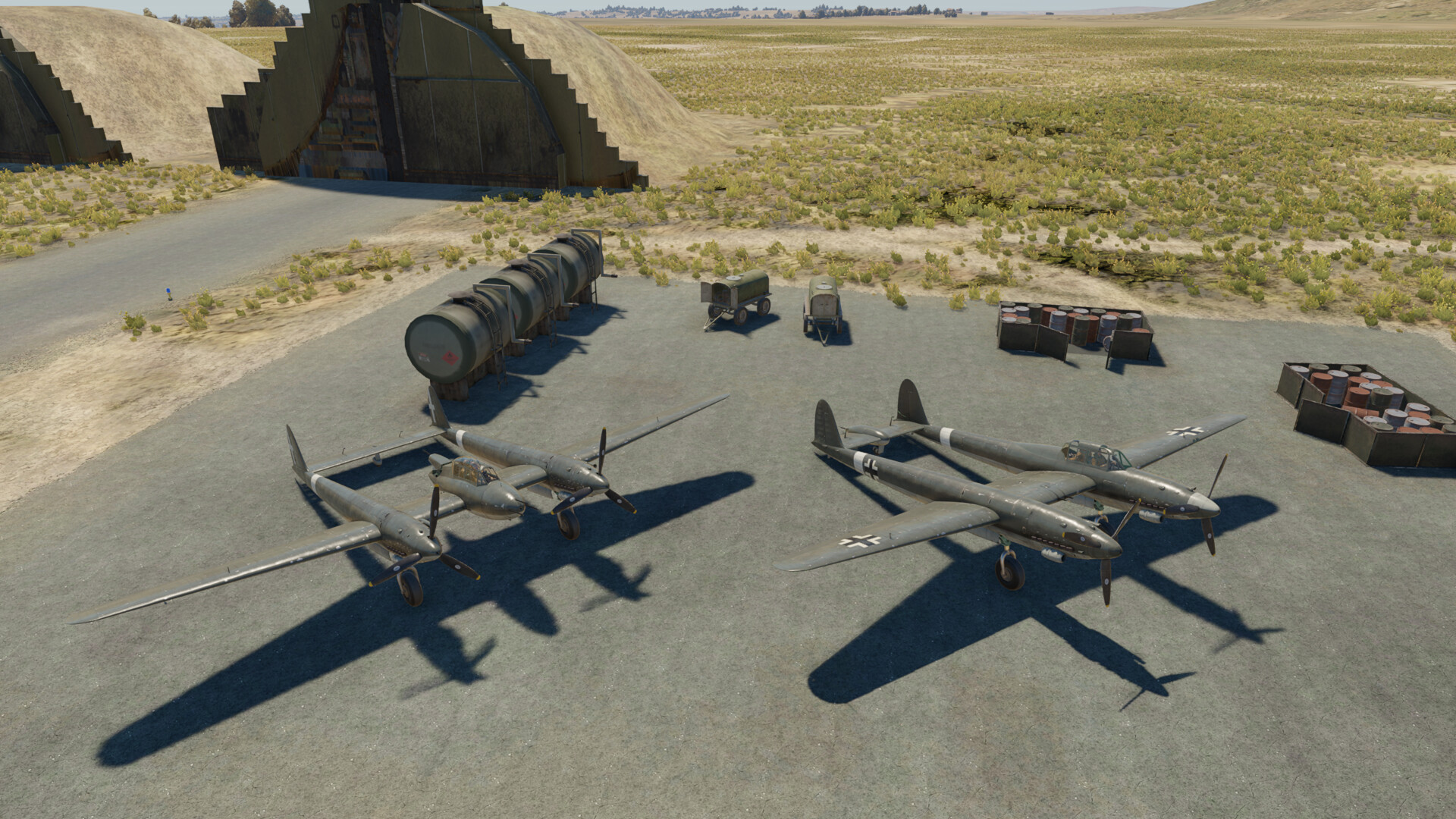
When we think of twin-boom aircraft, the iconic American P-38 Lightning instantly comes to mind. Yet in the shadow of this legend, Italy’s Savoia-Marchetti crafted its own ambitious take on the design: the SM.91 and SM.92. Born from the Regia Aeronautica’s demand for a versatile multirole fighter, these aircraft blended Italian engineering with striking aesthetics. Though largely forgotten today, their unique story and untapped potential make them fascinating footnotes in aviation history and in War Thunder.
| Pros | Cons |
|---|---|
| Very good firepower | Slow shell velocity making it hard to aim |
| Excellent dive performance | Slow climb speed |
| Has an airspawn | Poor maneuverability at low speed |
History
The idea of equipping Regia Aeronautica units with a twin-engined, heavily-armed, long-range fighter first appeared in 1935. However, in 1941 the Ministero dell Aeronautica framed a requirement for a two-seat multi-role combat aircraft.
The SIAI Marchetti concern proffered two contenders, the SM.91 and SM.92.
The SM.91 (or MM.530) was one of the first all-metal aircraft manufactured by Savoia-Marchetti in order to achieve the best performance regardless of the cost. Designed in 1941, it was competing with the Caproni Ca 380 Corsaro (another twin-boom design). Powered by two Daimler-Benz DB 605A of 1,475hp each and armed with five 20mm cannons MG 151 and a remote controlled turret armed with a 20mm MG 151 that could be controlled by the gunner. It was able to carry one 500kg bomb under the gondola or four 100kg or 160kg bombs under the wings.
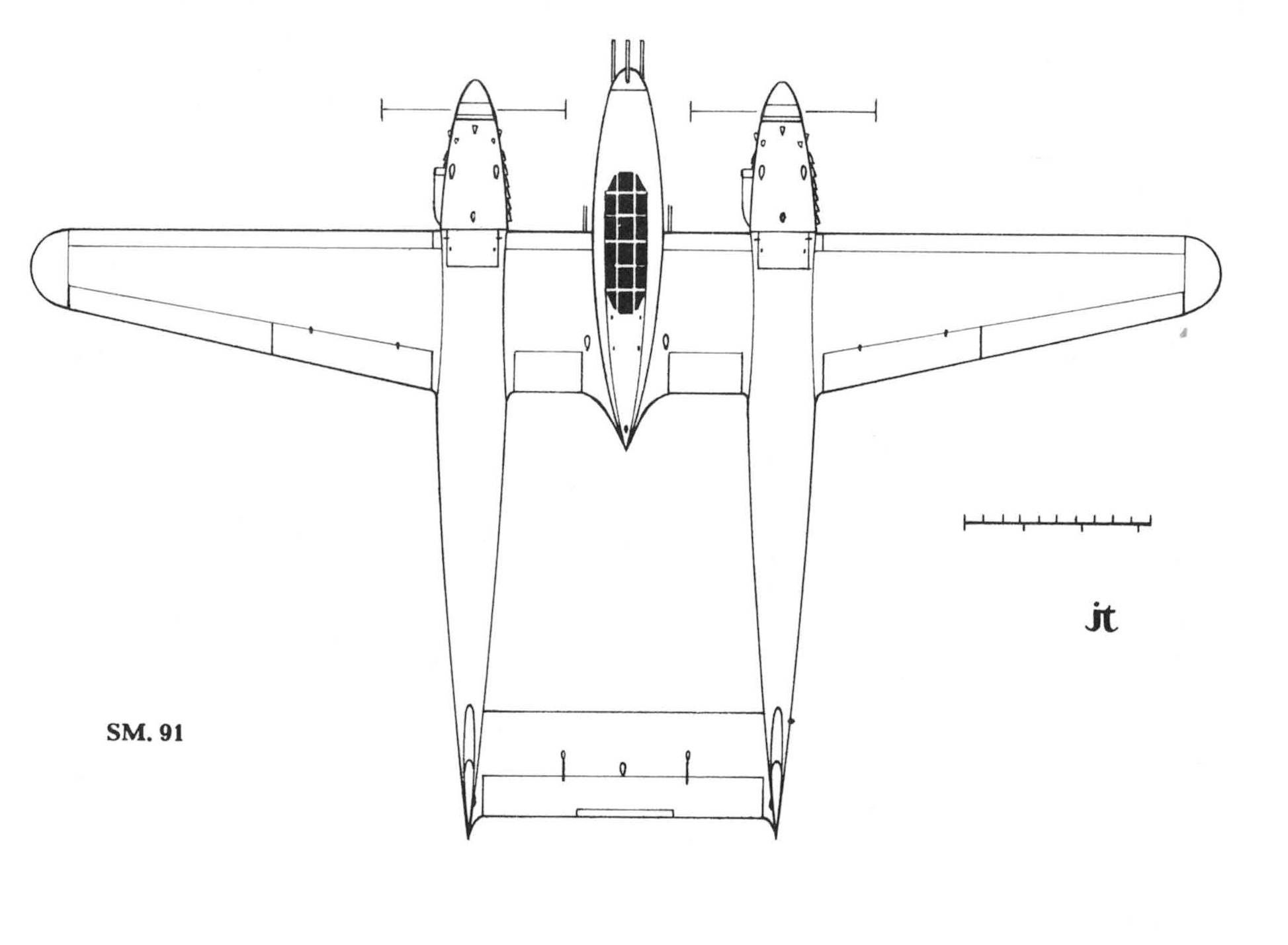
The SM.91 flew for the first time on 10 March 1943 by Aldo Moggi. Performance and handling were considered good. With a max speed of 585 km/h at 7,000 meters, cruise speed of 515 km/h at 6,200 meters and an empty weight of 6,400kg.
Only limited flight tests had been conducted prior to the German evacuation of Northern Italy. A version powered by 1,300hp Rolls-Royce Merlin 620s was proposed but it did not see fruition.
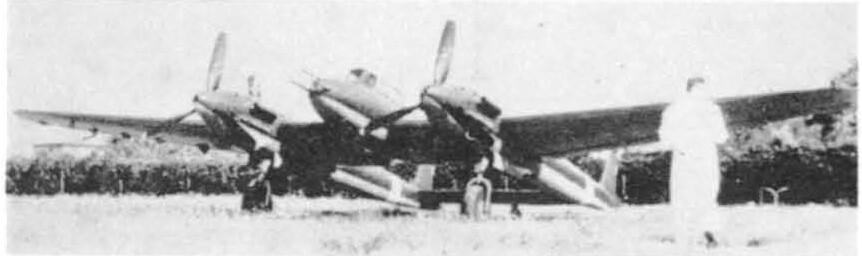
While the SM.91 proved thoroughly satisfactory in tests, the Savoia-Marchetti engineers were already looking for ways of boosting performance still further. Since it was not possible to increase the power as the DB.603 wasn’t available yet for Italy, drag and weight reduction seemed the only course open to the designers.
The SM.92 (or MM.531) kept a lot of similarities with the previous prototype retaining the same engines, wing and tail surfaces. The main difference was that the central nacelle was eliminated and instead the crew was placed in the port boom. This greatly saved airframe weight and drag, permitting higher speed and longer range.
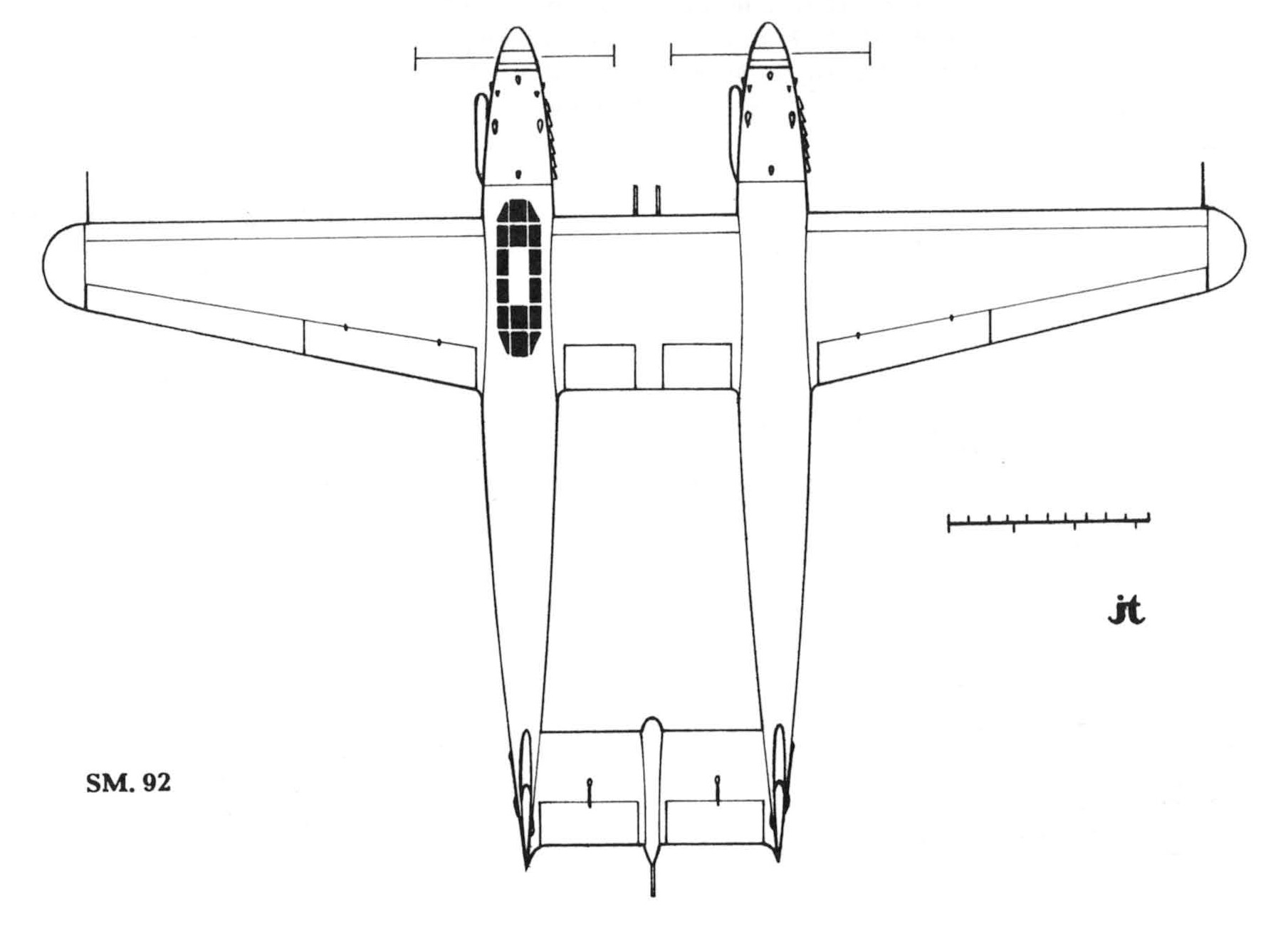
The SM.92 was armed with three 20mm MG 151 and four 12.7mm Breda-SAFAT machine guns and a remote controlled gun in a barbette under the tailplane.

The sole SM.92 was flown for the first time on November 12 1943 under Luftwaffe auspices but never entered production. As the engineers had hoped, performance was significantly better. The max speed was about 615 km/h at 7,600 meters, cruise speed of 540 km/h at 7,000m and an empty weight of 6,250kg.
Due to an identification fault, the SM.92 was attacked by a Macchi C.205 during a test flight that thought it was an enemy P-38 Lightning. The only prototype was destroyed, together with the SM.91, by an American bombardment on 27 December 1944 which seriously damaged the installations of Savoia-Marchetti and the village of Vergiate.

Unfortunately, northern Italy was now under supervision of the German Reich, meaning that her production resources were now German resources. While the Luftwaffe technical evaluation team found the SM.92 interesting, they preferred to devote Italy’s resources to the production of existing German types and types that better fit Luftwaffe requirements and operational doctrine. Work was stopped, and the pilots that remained in the dwindling rump of Fascist Italy retrained on the Bf 109G.
Flight performance
Being a pretty large aircraft, the SM.91 flight performance suffers from its weight and drag. These factors result in relatively poor flight performance. The SM.91 suffers from poor roll rate and slow turn time. Engines are still powerful, giving it a top speed of around 500 km/h at sea level. However the climb rate can be considered quite poor at around 17 m/s.
The SM.92 shares many similarities to the SM.91. It still has the same engines, flaps, airbrake and leading edge. However the main differences are with its weight and drag. The SM.92 improves upon the SM.91 in every way. The roll rate is now much better, its climb speed has been improved to around 19 m/s and its top speed at sea level is around 510 km/h.
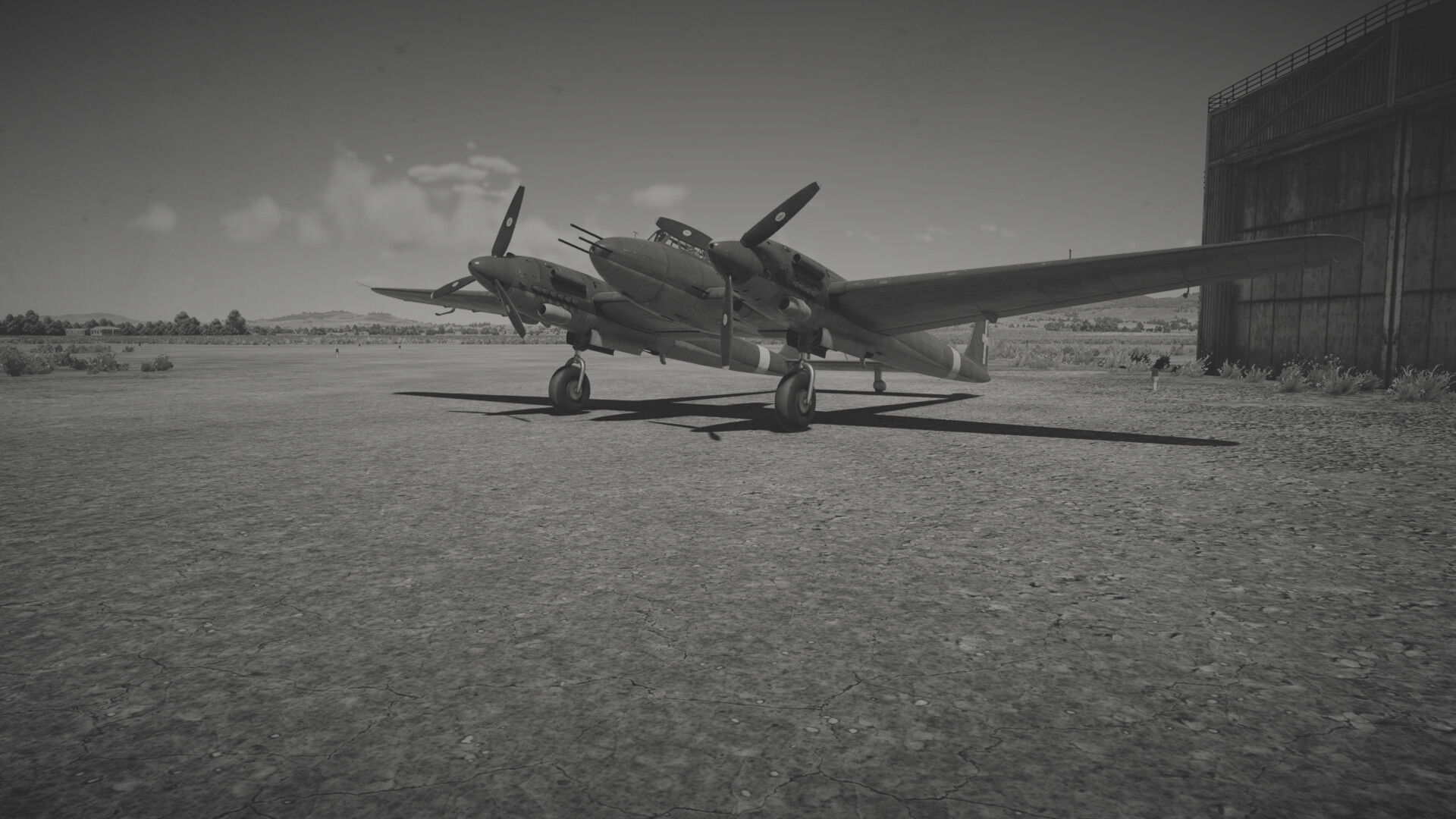
Their dive performance is excellent, with a wing speed limit of 845 km/h and with no significant elevator compression. The aircraft also sports leading edge wing slats that shorten the turning circle and has airbrakes that can help them slow down in a dive and help when landing on an airfield.
Structural limits
| Combat flaps | Take-off flaps | Landing flaps | Wings | Gear |
|---|---|---|---|---|
| 535 | 450 | 260 | 845 | 300 |
Survivability
While having no armor protection, the SM.91's relatively big airframe gives it the ability to take some hits, though 20mm will still be able to tear it apart. If an engine is taken out, the SM.91 is still capable of flying and land at its airfield though its speed will be greatly reduced. It has no access to EFS meaning that it is not capable of putting an engine fire out.
Thanks to its 20mm turret, it is still capable of defending itself when an enemy is chasing you from behind.

The SM.92 has access to a 38mm bulletproof glass on the canopy that can help against small-caliber rounds.

By having a twin boom configuration with no central nacelle, it makes a good configuration for head-on attacks as any hits in the center of the plane won’t do much damage. Be aware that the SM.92 doesn’t get access to EFS meaning that it is not capable of putting an engine fire out.
The 12.7mm turret located in the barbette on the central section of the elevators doesn’t provide much firing angles, making it rather useless for defense.
Armament
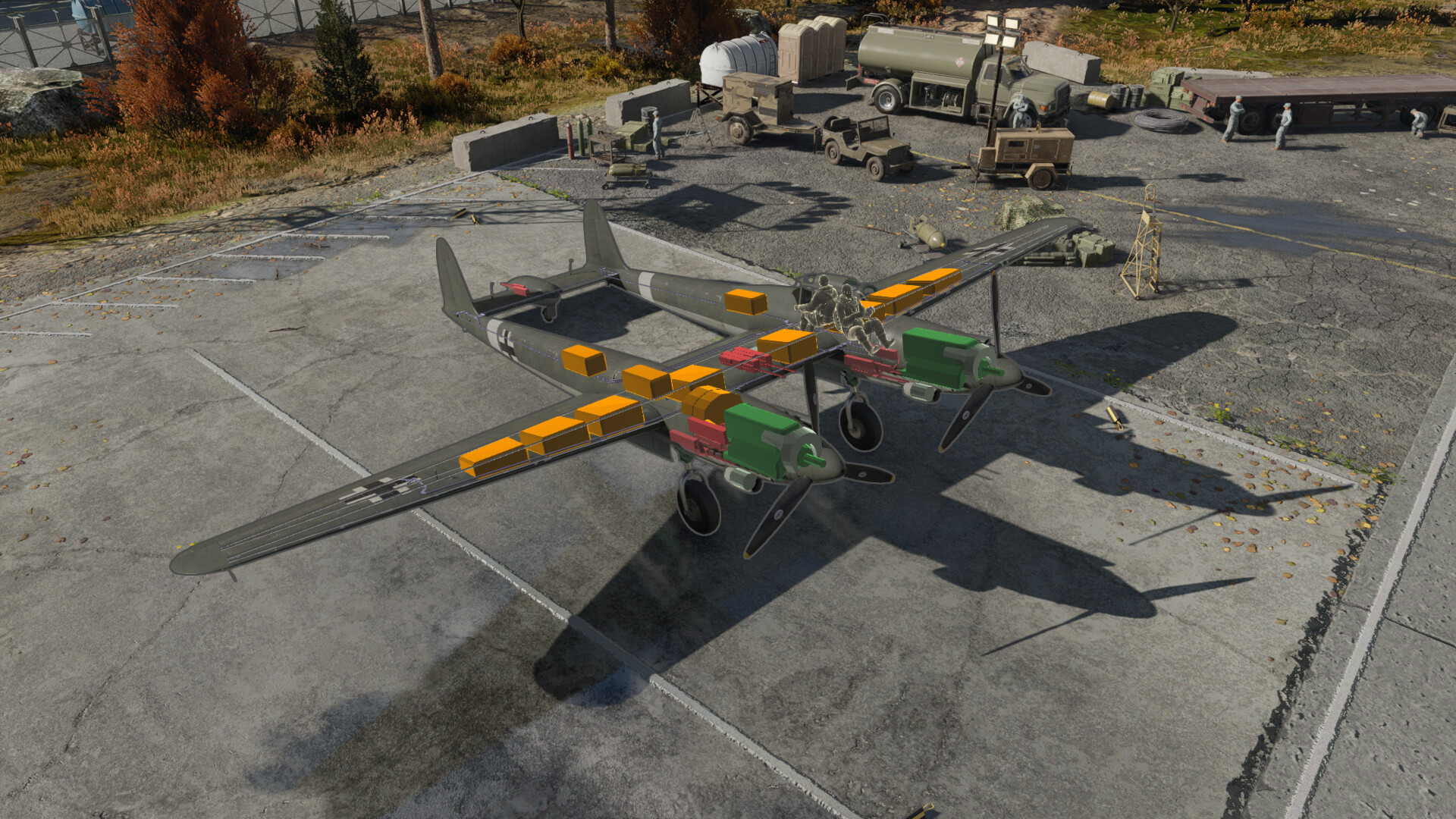
The SM.91 and 92 have both excellent firepower despite having different gun layouts. Both aircraft have access to the 20mm MG 151, with the SM.92 additionally receiving the 12.7mm Breda-SAFAT.
With its 6 nose-mounted 20mm MG 151, the SM.91 has devastating firepower, requiring just a few hits to destroy most enemy aircraft. It has a huge amount of 20mm available and with its rather slow fire rate (700 rounds/min), it is able to hold the trigger much longer, so you don’t need to be very careful about aiming. Having access to the Minengeschoß round gives it very good firepower capable of destroying aircraft in a few hits.
The MG.151 has a rather slow fire rate and slow velocity making it harder to aim.
The SM.91 payload is pretty weak for a strike aircraft, consisting of small bombs only.
- 6×100kg GP 100T: under the outer wings sections. Better suited for light armored targets and open tops.
- 6×50kg GP 50: under the outer wings sections. Very weak but light so excellent to deal with pillboxes, howitzers and SPAAs.
With the omission of the central nacelle, the entire armament configuration has been changed for the SM.92. Instead of the six 20mm MG 151, you get a smaller but still deadly configuration. It consists of two 20mm in the leading edge of the wing center section, a third cannon firing through the starboard airscrew hub and two 12.7mm Breda-SAFAT machine guns beneath each engine. You still have plenty of ammo with 300 rounds for each MG 151 and 350 rounds for each 12.7mm Breda-SAFAT.
The SM.92's payload is significantly improved. It has access to much larger bombs in greater quantities. Every bomb can be dropped individually:
- 2×500kg GP 500: under the wing center section. Excellent for heavily armored targets
- 2×250kg GP 250: under the wing center section. Excellent for heavily armored targets
- 6×160kg A.P. 160: under the outer wings sections. Made for sea targets
- 6×100kg GP 100T: under the outer wings sections. Better suited for light armored targets and open tops.
- 6×50kg GP 50: under the outer wings sections. Very weak but light so excellent to deal with pillboxes, howitzers and SPAAs
It is possible to create your own configurations. Keep in mind the max payload capability is 1650kg.

Usage in battles
Air battles
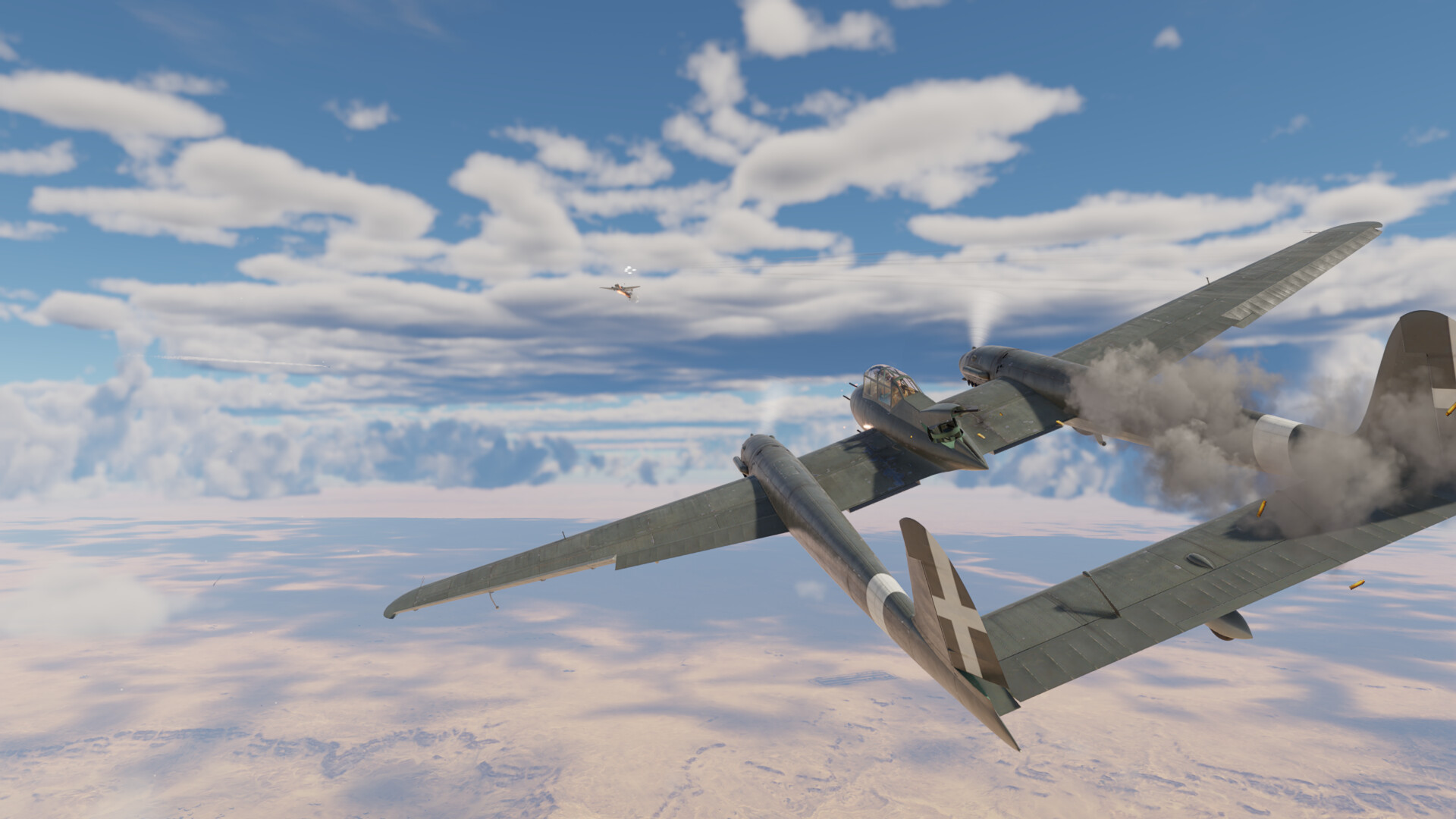
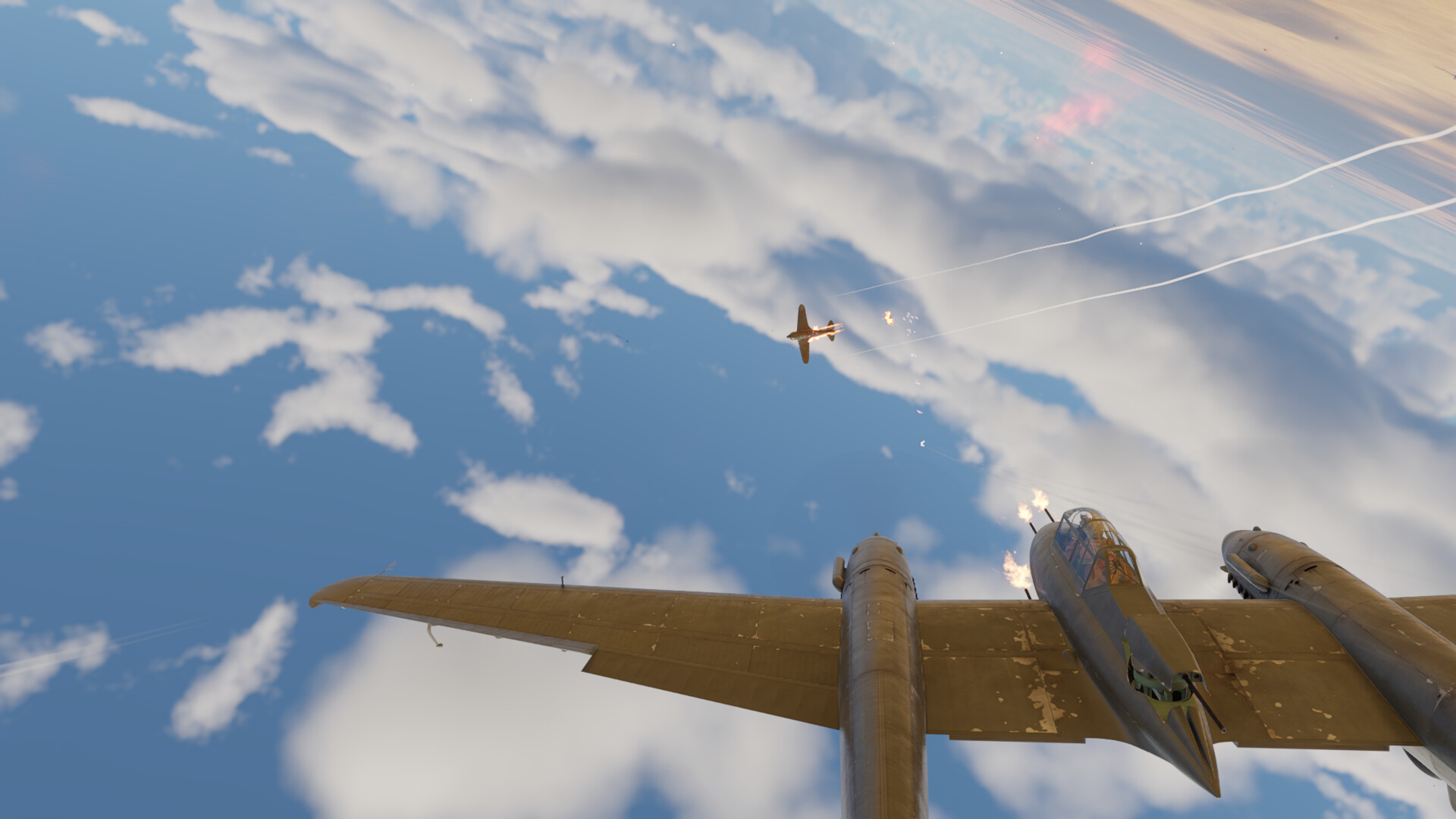
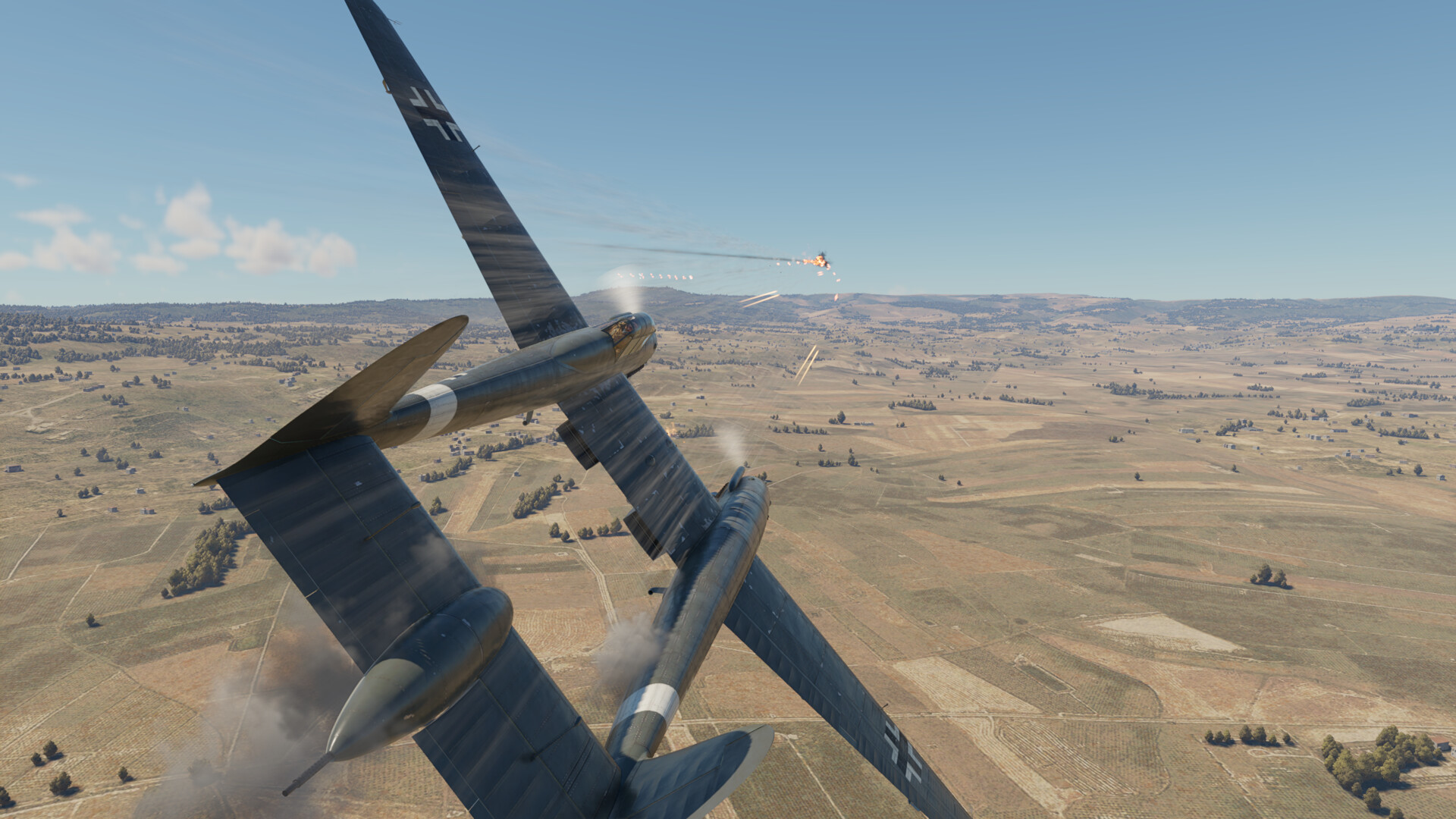
With its strike aircraft role, the SM.91 and SM.92 get an airspawn making it easier for them to access the center of the map where the ground units are. With their large ammo capacity and access to bombs, you can destroy most ground targets but be careful of the enemy team arriving as they have poor defensive capabilities.
Another tactic that can be used is to profit from the airspawn to climb to higher altitudes. Even though their rate of climb isn’t spectacular, the airspawn makes up for this by allowing them to reach high altitudes where bombers are (~5000 m) in a similar or even shorter time than regular fighters. The SM.91 and SM.92 can then switch their role to an interceptor and start hunting bombers. With their powerful firepower they can easily deal with small and large bombers (Pe-8, B-17, Stirling, Do 217). After that you can easily use Boom & Zoom tactics against targets in lower altitude thanks to their very good diving performance. Be careful to not stick in a dogfight unless you have a big energy advantage as the SM.91 and SM.92 maneuverability can be easily defeated against lighter fighters (Spitfire, A6M, Yak-3).

Ground battles
In ground battles, the SM.91 and SM.92 can be a nice CAS option. Although the MG 151 doesn’t offer great performance against armored targets, it’s still useful against open top targets. To compensate for their low penetration, the bombs can be used.
Having access to 500kg or 250kg bombs, the SM.92 can deal with heavily armored targets. The smaller bombs, because of their weak explosive mass, have to be used with extra caution as you’ll have to drop them close to the target to destroy them.
The SM.91 and SM.92 can also be used as a CAP and destroy enemy planes rapidly thanks to their firepower.

Sources
- Italian Civil and Military Aircraft 1930-1945 (Jonathan W. Thompson)
- The Complete Book of Fighters (William Green, Gordon Swanborough)
- http://worldatwar.net/chandelle/v3/v3n1/italtwin.html
- https://warmachinesdrawn.blogspot.com/search/label/Savoia-Marchetti%20SM.91
- https://warmachinesdrawn.blogspot.com/2018/10/savoia-marchetti-sm92.html