Anti-submarine warfare began soon after the first armed submarines appeared. In WW1, the main weapons were depth charges and mines. Then the first active sonars began to appear, along with a new type of weapon: anti-submarine mortars, with its prime example being the British Hedgehog. These mortars would later be improved into rocket launchers, which had considerably greater range and could launch much larger explosive charges. Bofors would develop one of the first such launchers: the 375 mm M/50 anti-submarine rocket launcher. Adopted by many countries and installed on numerous ships, it revolutionized close-range anti-submarine warfare and is still in use today.
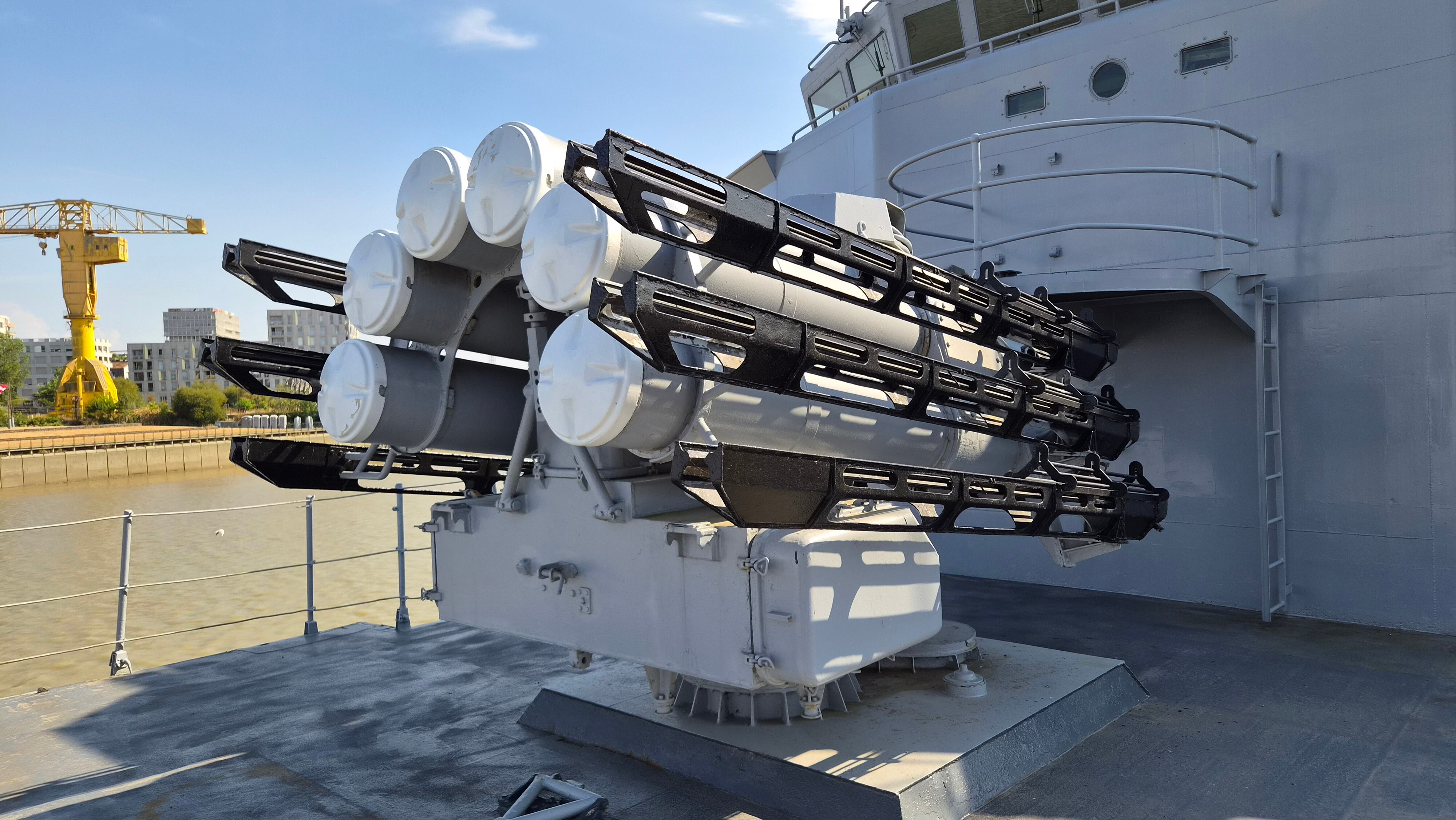
Weapon description
The four-barrel version found on the Köln-class frigates and the six-barrel version found on Le Corse have more differences than might seem apparent.
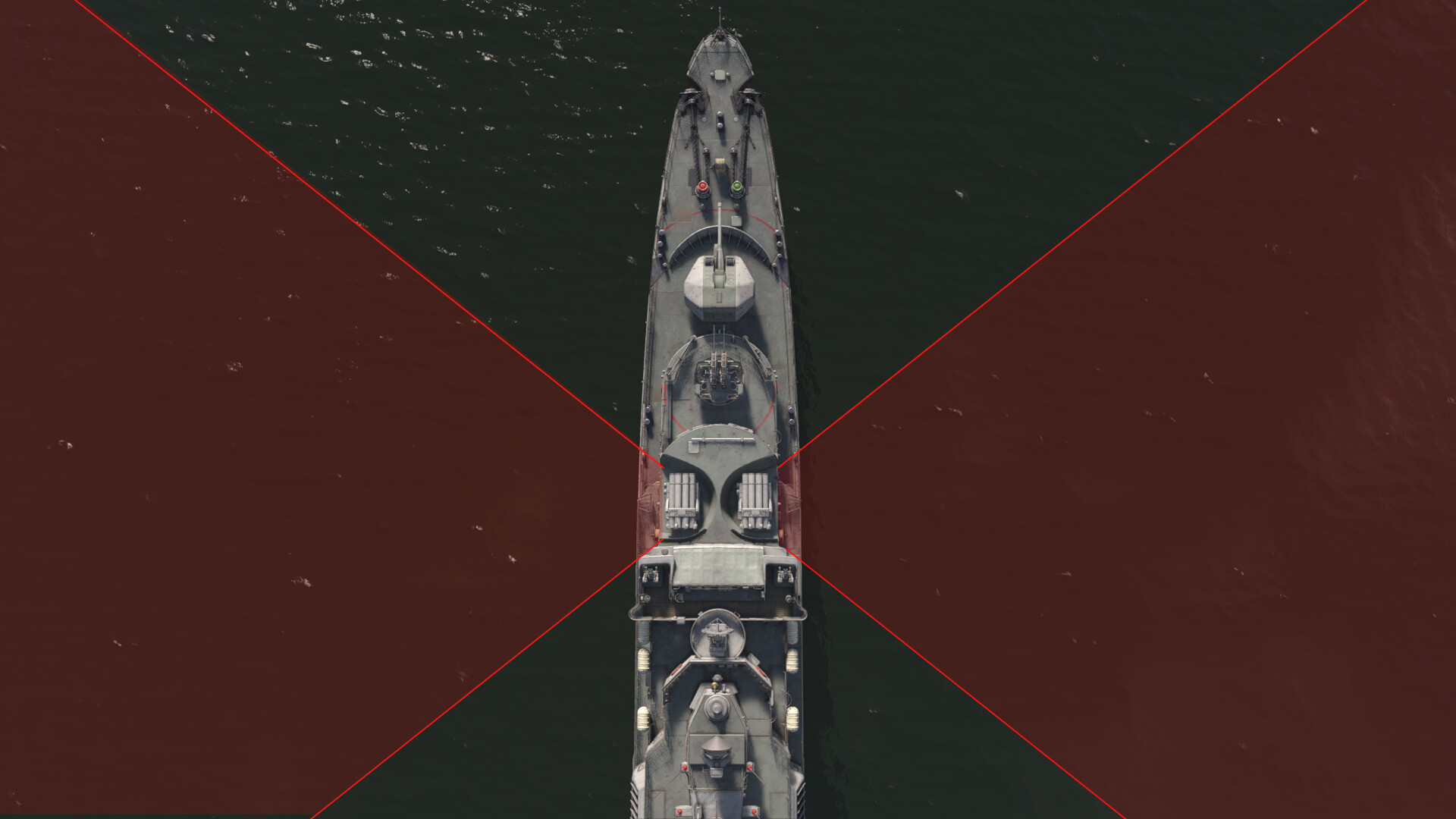
Both share the same aiming speed: 15.3°/s, both horizontally and vertically. However, their horizontal and vertical traverse angles differ because of their mountings. The German ships have special blast shields surrounding the rocket launchers, limiting them to firing only to the sides. The rocket launcher on Le Corse, however, is mounted in the middle of the ship, giving it a better traverse angle than the enclosed German version.
Although the Köln-class frigates have two rocket launchers, they cannot fire both at the same target. Furthermore, because each launcher has only four tubes, they can fire only four rockets before having to reload. Reloading a single rocket takes up to 30 seconds, meaning that reloading all four tubes takes up to two minutes.
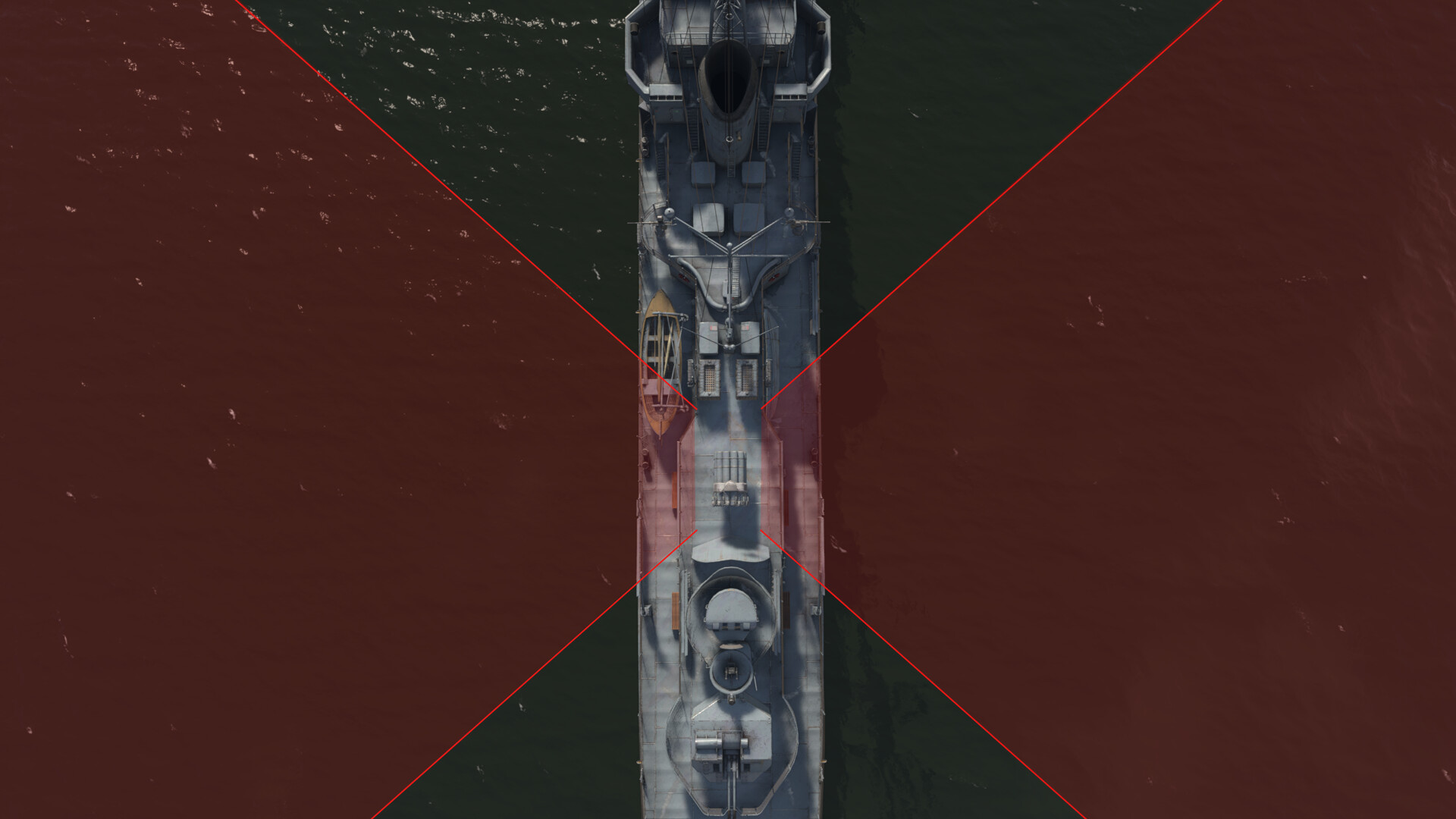
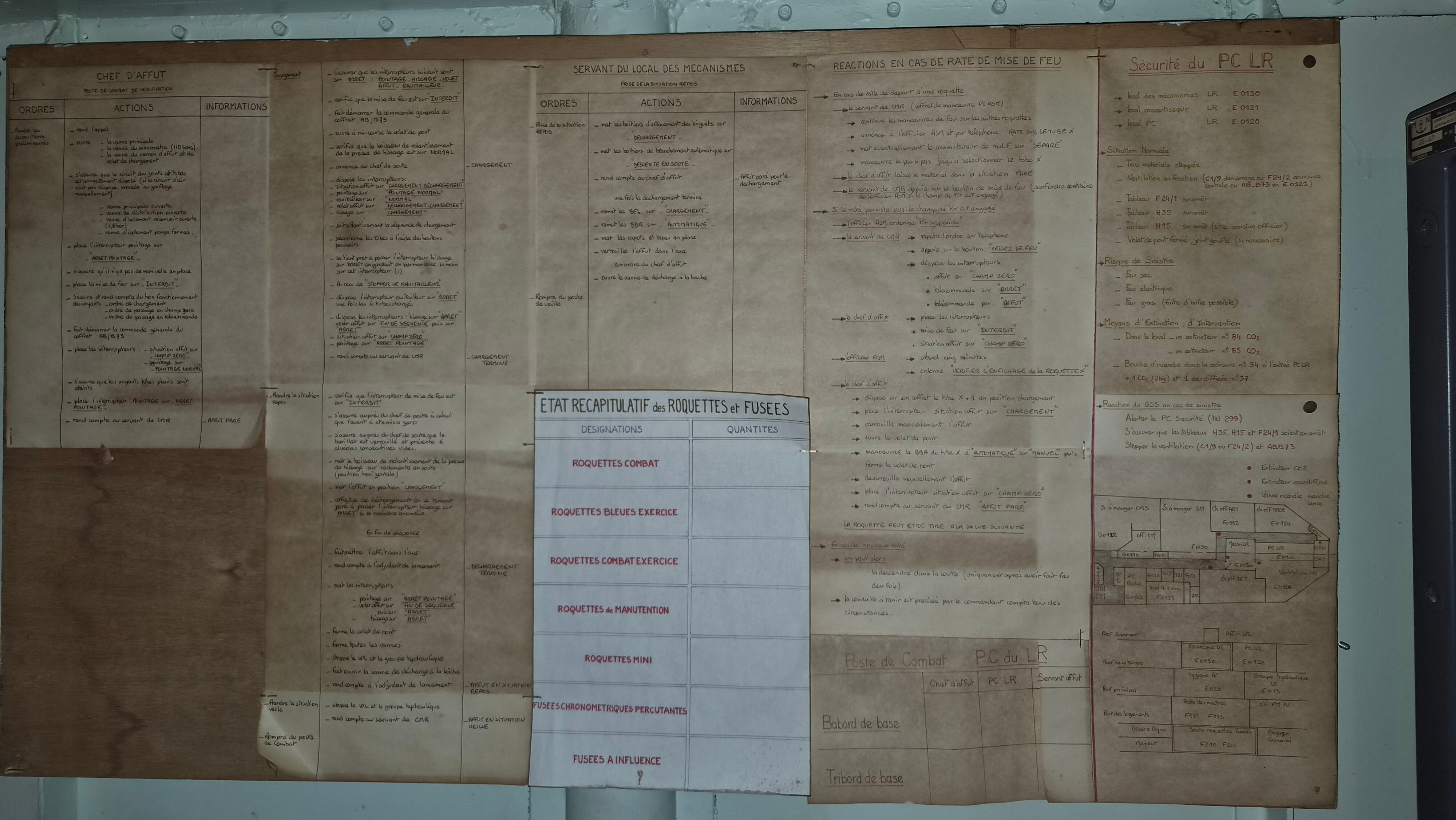
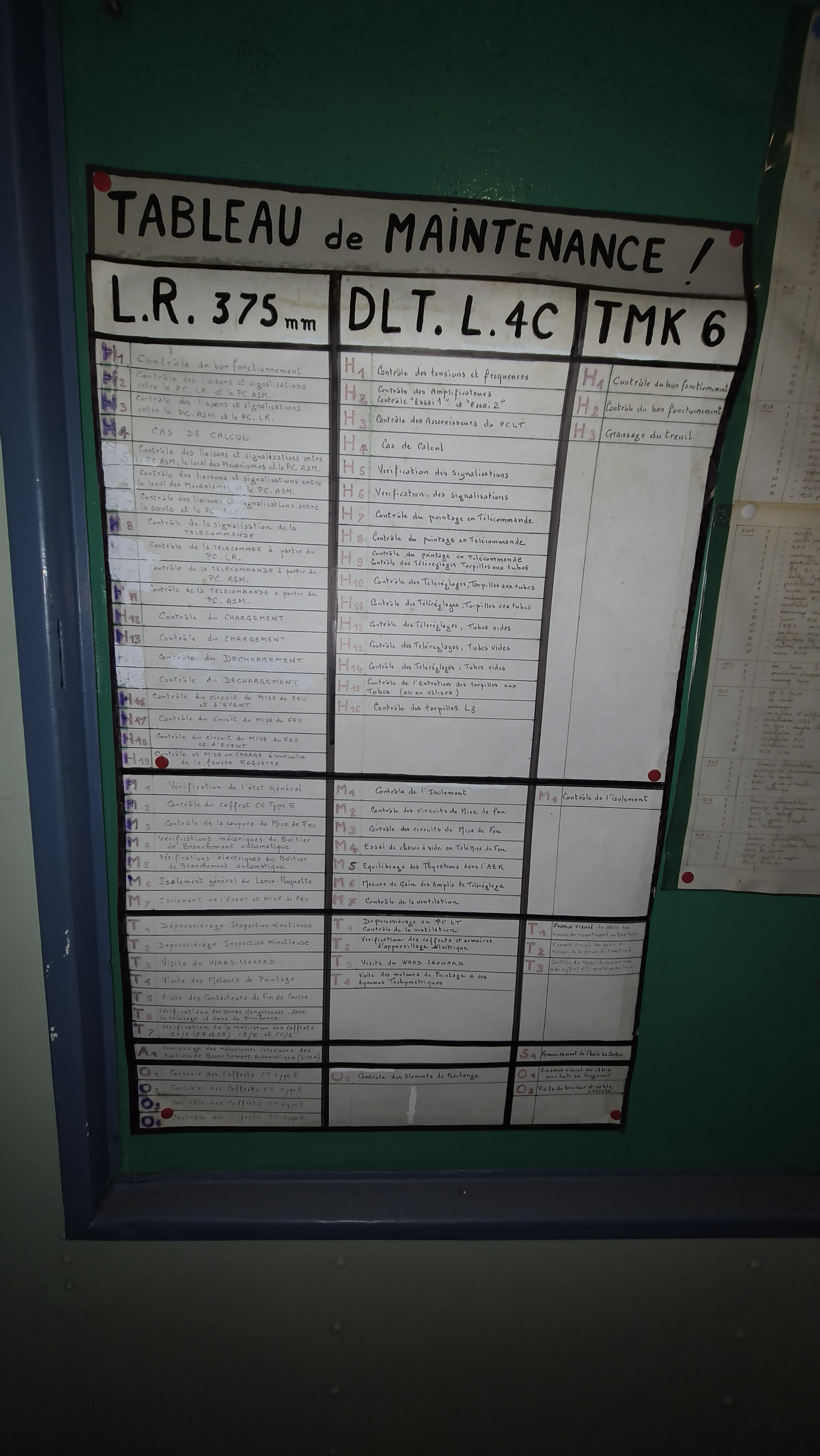
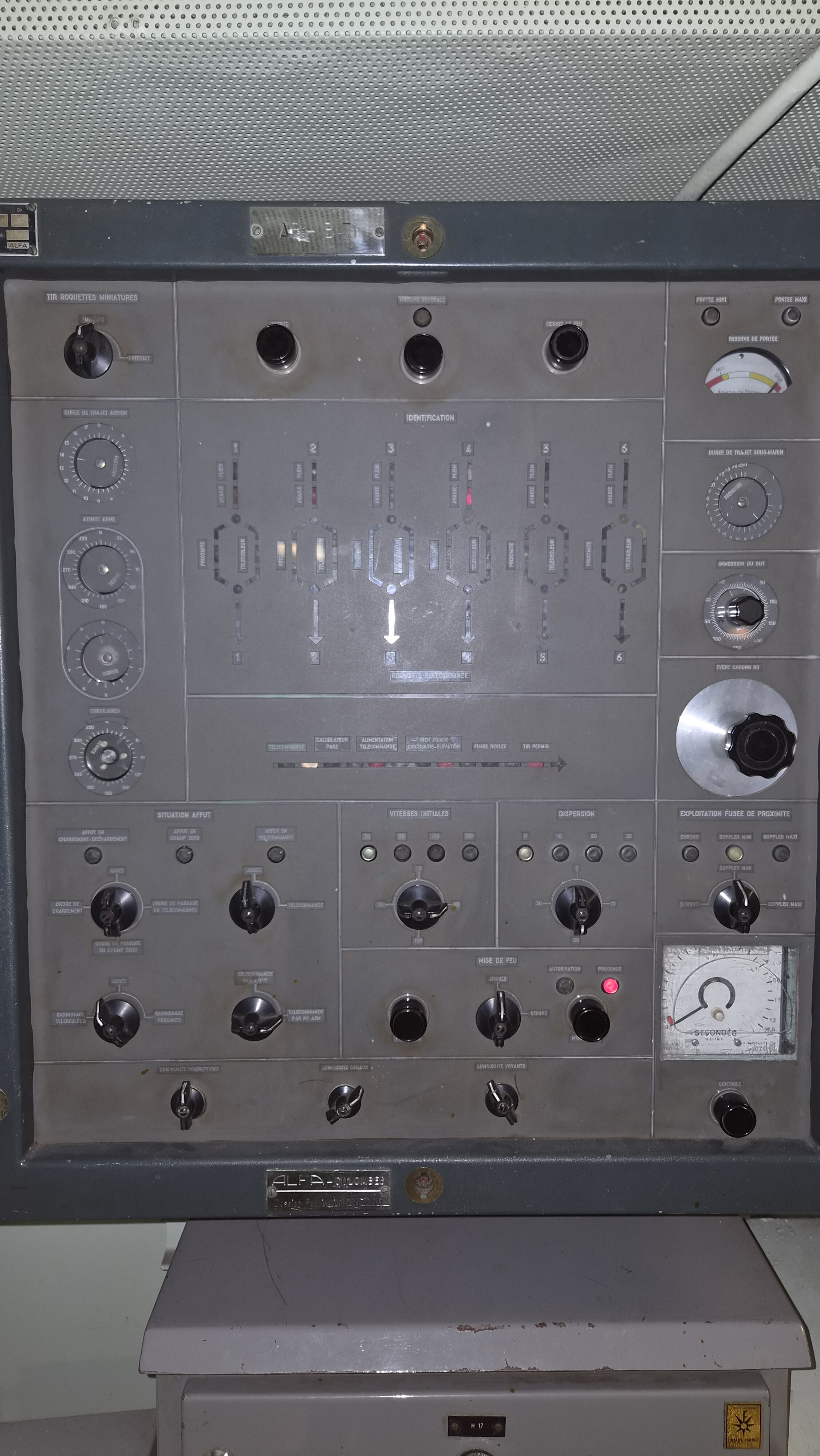
The French Le Corse is capable of firing to both sides using the same rocket launcher. However, this capability is limited by its slow traverse speed of 15.3°/s. This version does not have to reload, as it can fire all 28 of its rockets at a rate of one rocket per second.
Comparison with other anti-submarine rocket launchers
| Model | Range | Max Speed | Mass | Explosive Mass |
|---|---|---|---|---|
| Bofors 375 mm | ~2,800 m | 260 m/s | 250 kg | 107 kg |
| 320 mm Mk.108 | ~750 m | 85 m/s | 238 kg | 113 kg |
| RKU-36U | ~200 m | 33 m/s | 180 kg | 101 kg |
| RBU-1200 | ~1,200 m | 120 m/s | 71.5 kg | 32 kg |
| RBU-2500 | ~2,300 m | 180 m/s | 84 kg | 25.8 kg |
| RBU-6000 | ~4,000 m | 275 m/s | 113.5 kg | 25.5 kg |
Usage in battles
Anti-submarine weapons occupy a particular place in the game because there are no submarines to attack. However, rocket launchers are more versatile than their mortar counterparts.
Because of their current state in the game, anti-submarine rockets explode on impact, whether they hit the surface of the water or a ship. This can be used to inflict extreme damage on targets.
The rockets have an arming distance of 655 m. If you fire at a target within this distance, the rocket will pass through it without causing any damage.
Because of their short range and long arming distance, these rockets can be difficult to use effectively and are not suitable for every situation. However, if you manage to hit a target with a rocket, the target will either be destroyed immediately or suffer severe crew losses. Any hit near the ammunition magazines will guarantee an ammunition explosion, provided that the target does not have armor protecting its magazines.
Their low velocity makes it even harder to hit moving targets. Because of the long minimum engagement distance, you are forced to lead the target by a considerable amount, even when it is moving slowly.
Fortunately, the rocket launcher is never your only armament, and both the Köln-class frigates and Le Corse have much more effective weapons for engaging enemy ships.
History
WW2 saw a rapid evolution in anti-submarine warfare (ASW) armaments. The first major innovation was the Hedgehog mortar, which allowed ships to engage submarines more efficiently than with conventional depth charges. The biggest innovation, however, was the American Mousetrap anti-submarine rocket. Developed from the Hedgehog, this weapon offered greater range while maintaining the same explosive mass. These weapons proved highly effective against German and Japanese submarines and demonstrated that anti-submarine weapons had to evolve alongside submarines, which were becoming capable of diving deeper and moving faster.
After WW2, many countries began developing their own anti-submarine rockets. The Americans developed the RUR-4, Norway developed the Terne system, and the Soviets developed the RBU family of rocket launchers. Bofors also began developing its own anti-submarine rocket launcher, following a philosophy similar to that of the Soviets by allowing multiple rockets to be fired within a few seconds.
Development began in the early 1950s. The first M/50 rockets and launchers were tested in late 1954, and production began as early as 1956. Ships began using the system soon after it entered production, including Swedish Halland-class ships.
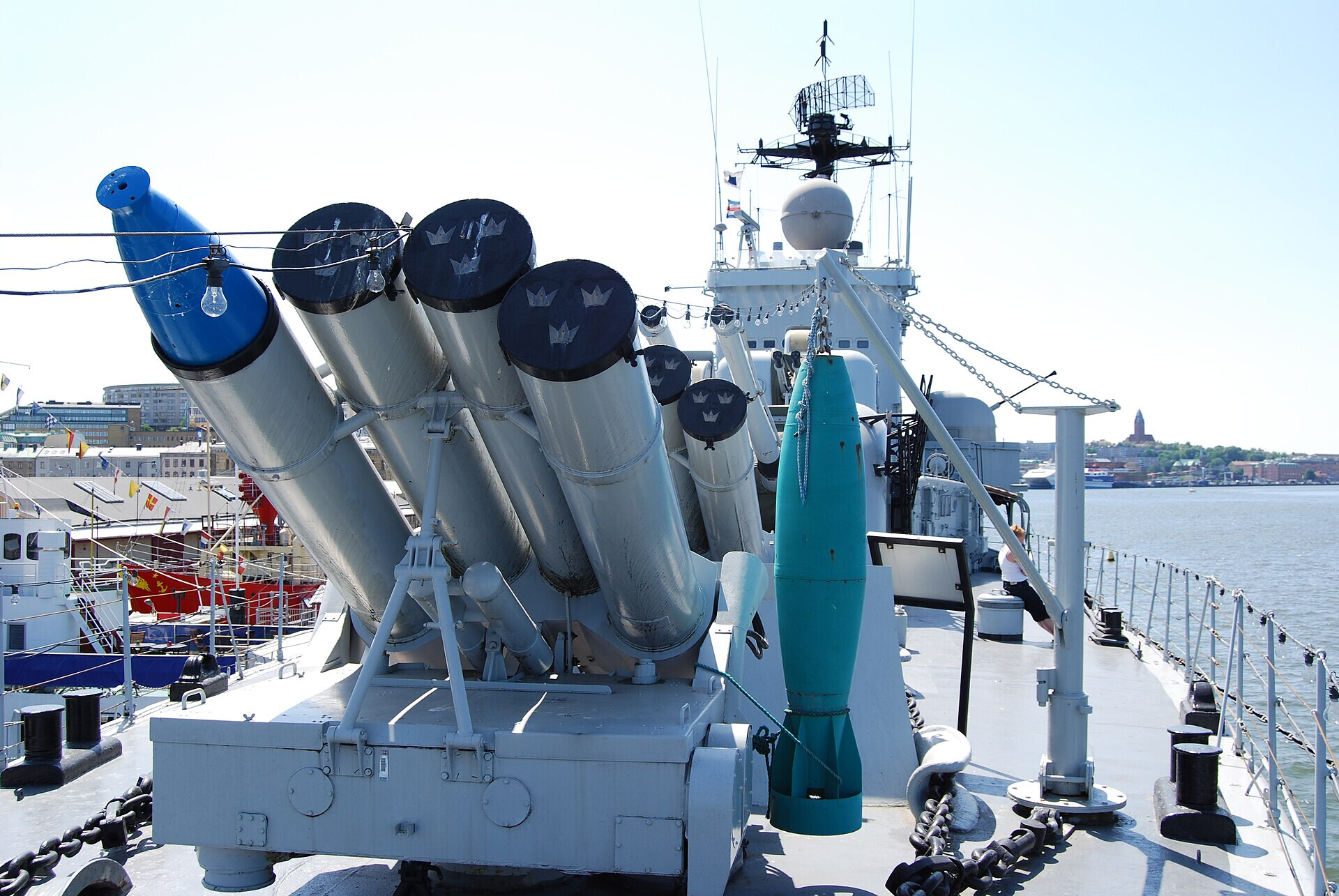
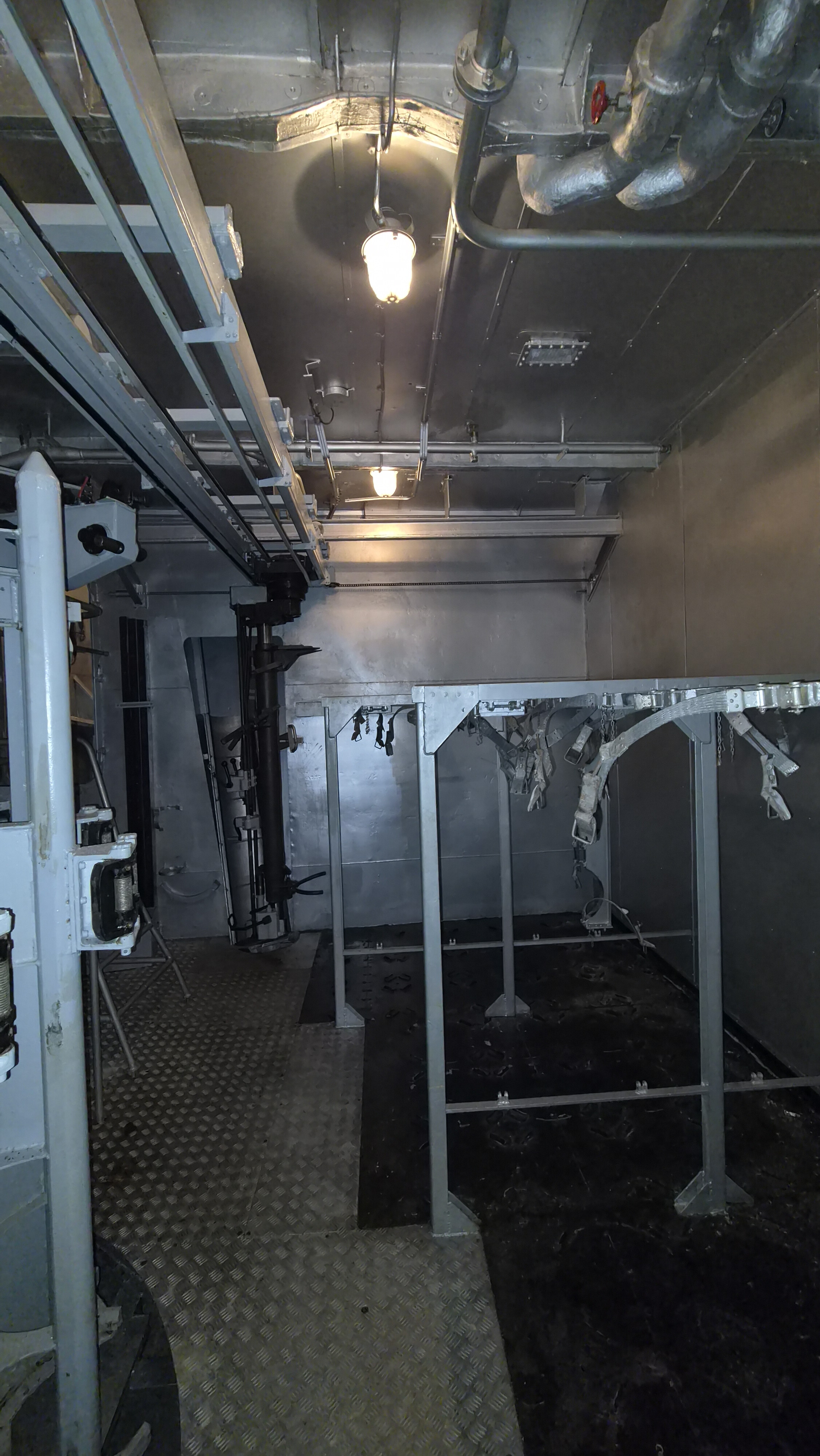
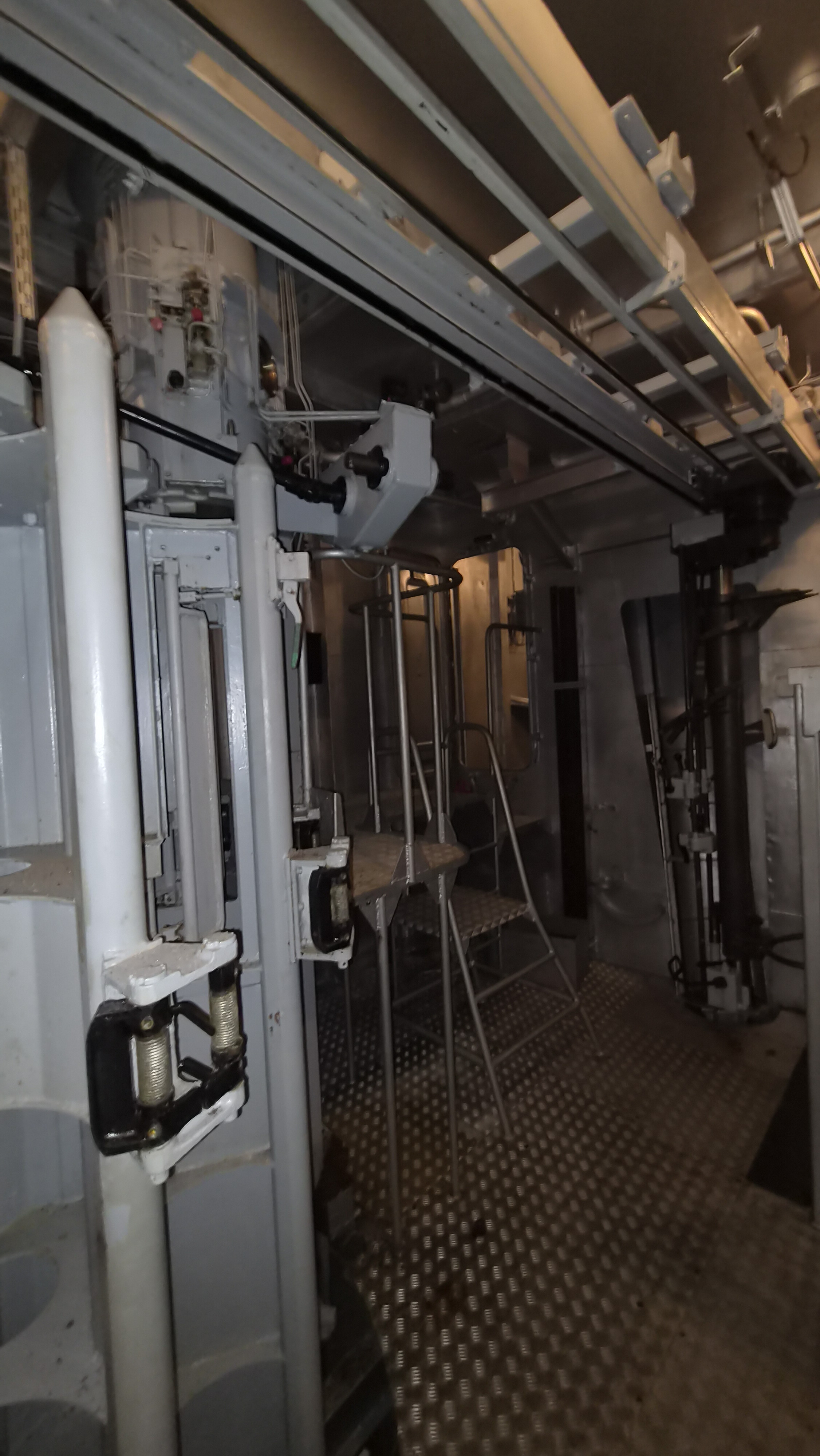
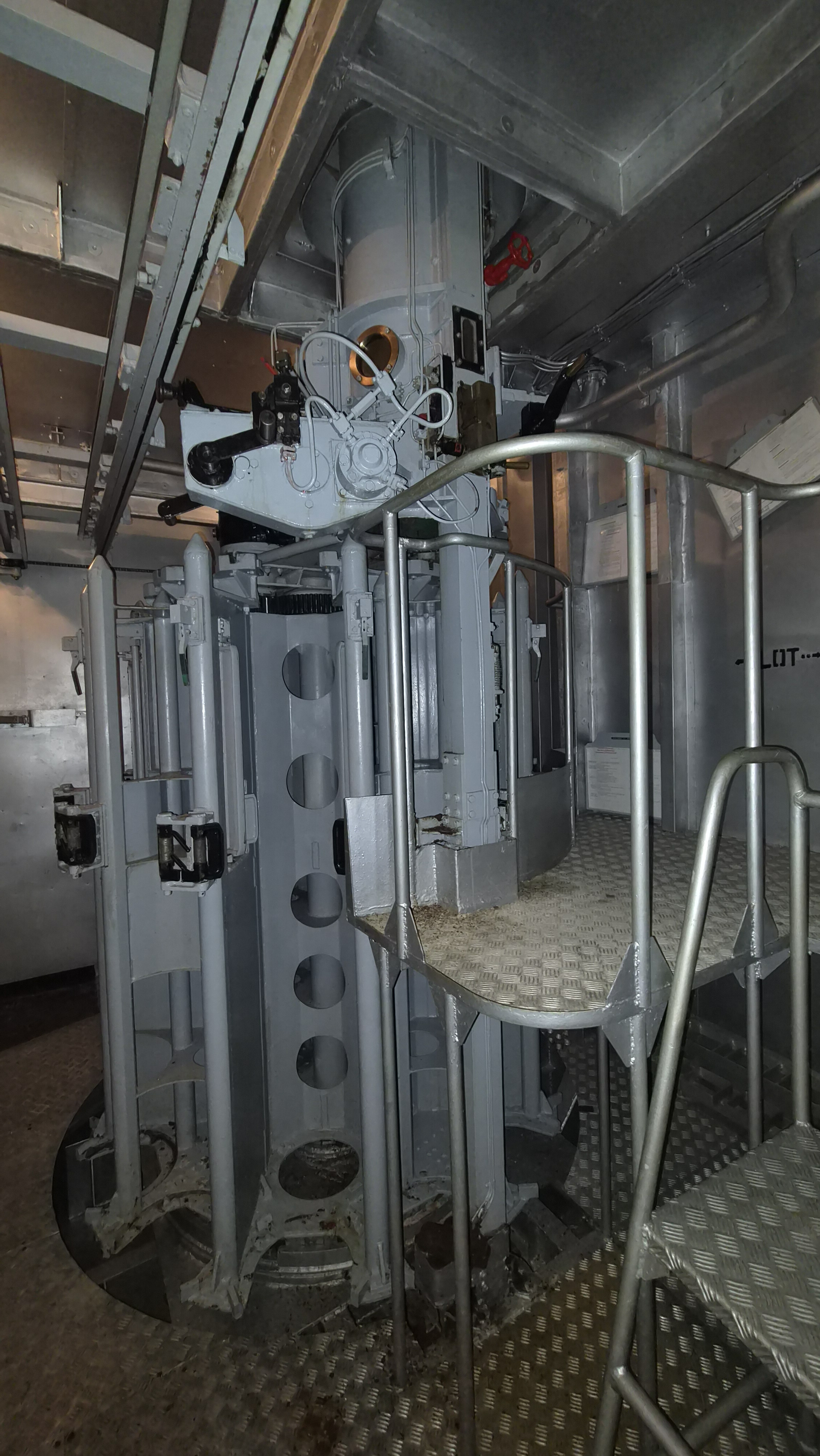
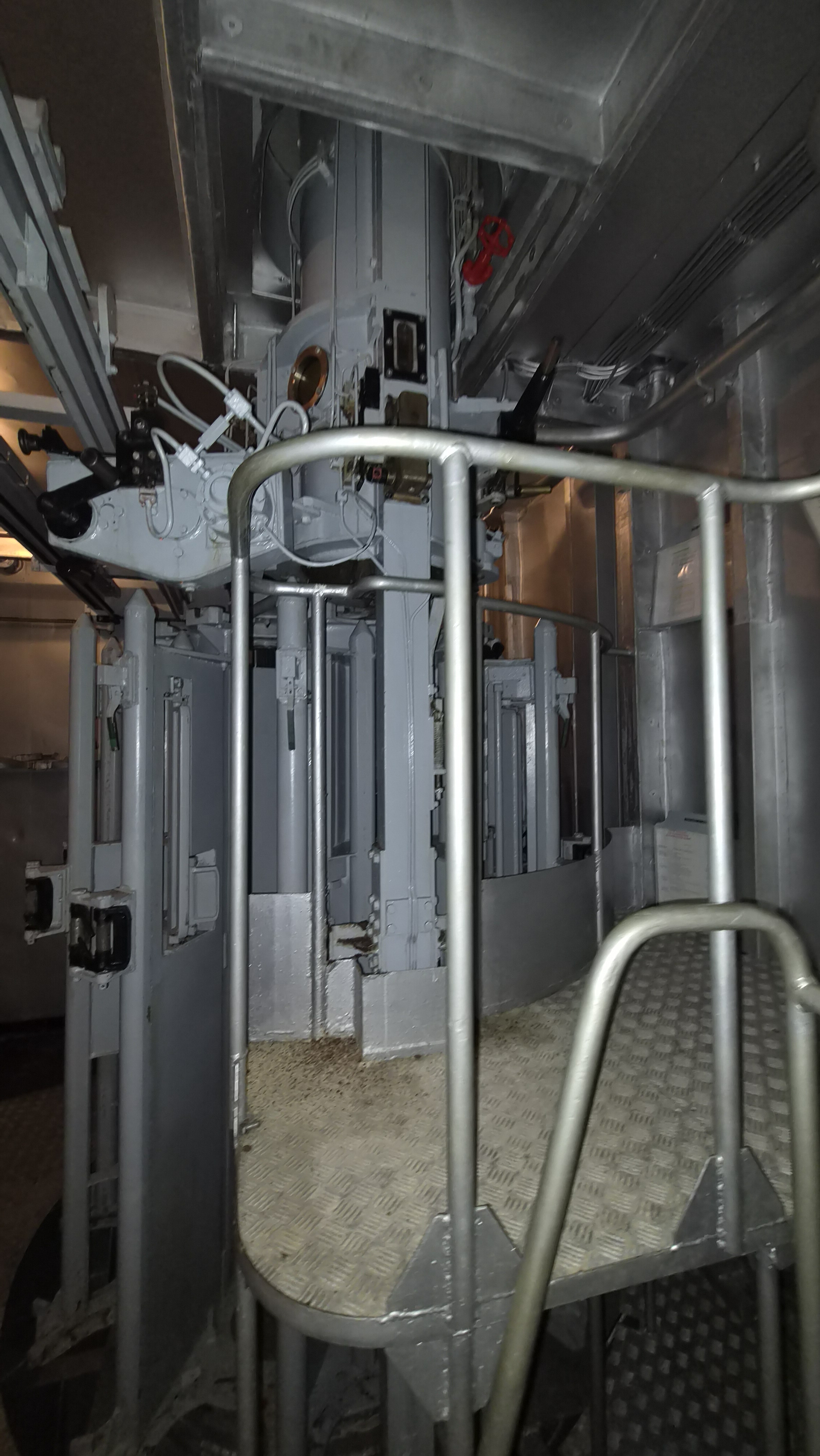
Multiple mounting systems were available. The standard version had the rocket launcher on the deck, the control room below it, and the magazines spread across several decks beneath them. A more compact version placed the magazines and control room on the same deck below the rocket launcher.
Rockets
Bofors developed several rocket variants with different ranges and speeds. The warhead remained the same, while the rockets could be fitted with either an impact fuze or a timed fuze. Only the motor differed. Because of the rocket’s design, the warhead and motor could be exchanged between variants without difficulty.
| Rocket Version | Weight | Minimum Range | Max Range | Speed |
|---|---|---|---|---|
| M/50 (Mimmi) | 100 kg | 370 m | 875 m | 100 m/s |
| Erika | 107 kg | 655 m | 1635 m | 130 m/s |
| Flora | 230 kg | 1400 m | 2230 m | 150 m/s |
| Nelli | 230 kg | 1580 m | 3625 m | 205 m/s |
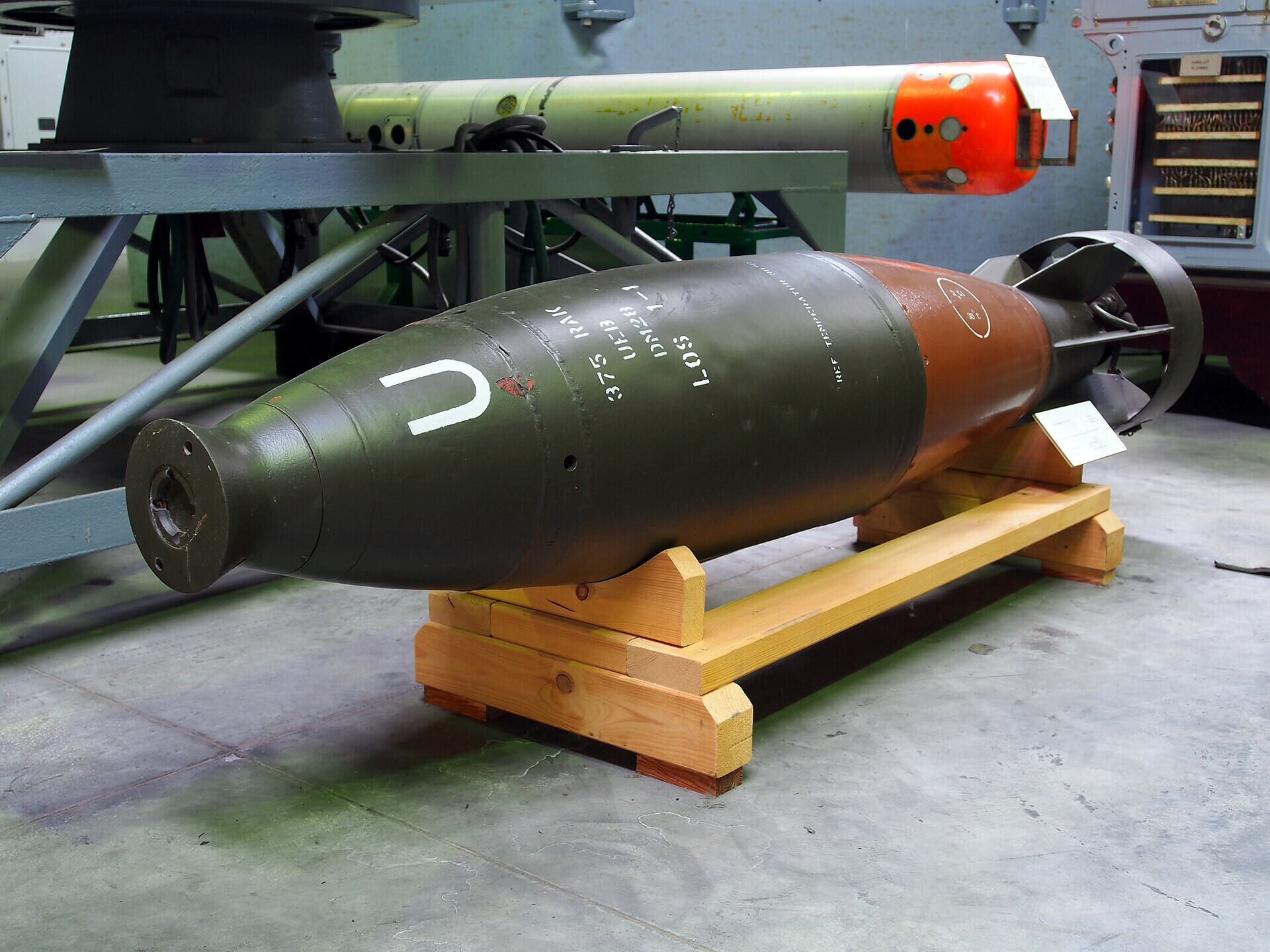
In the 1970s, Bofors continued developing new rockets, which led to the Nelli rocket. This rocket was equipped with a proximity fuze, improving its ability to hit targets. Its motor was also the most powerful, giving it the greatest range and the highest speed of all the variants.
French 6-barrel version
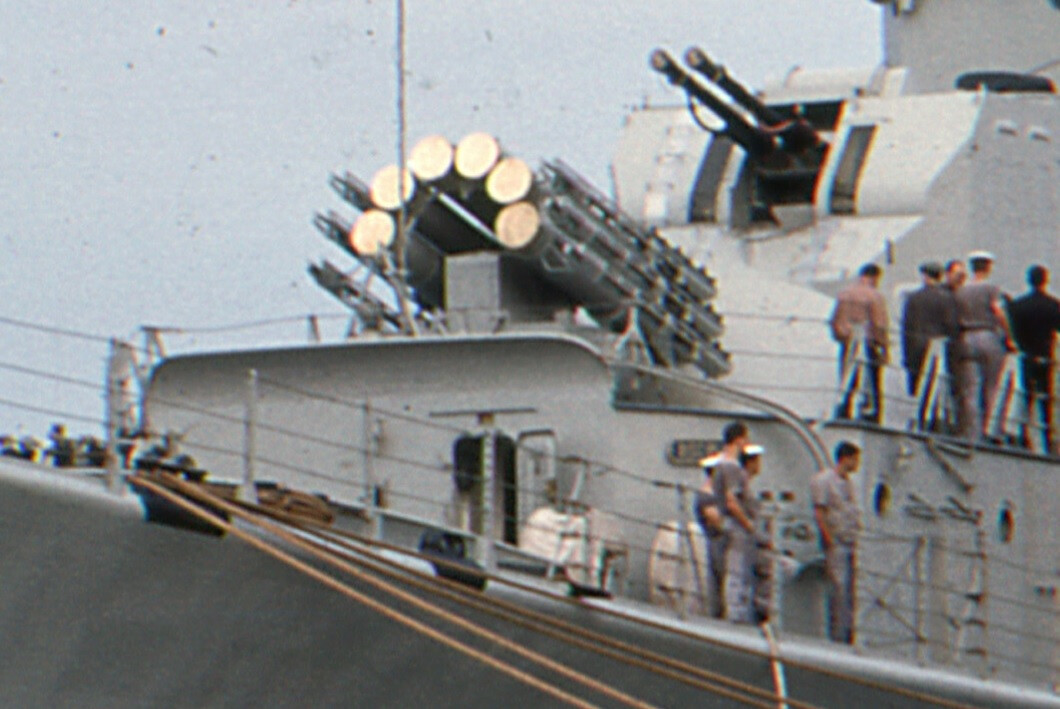
In the mid-1960s, Creusot-Loire and the French Navy became interested in the system, seeing it as a short-range complement to the Malafon ASW missile. In 1967, Creusot-Loire and Bofors reached an agreement under which the French company would produce six-tube launchers under license while using the same rockets, warheads, and fuzes.
This version allowed a single mount to replace the two mounts typically found on other ships equipped with the four-barrel version. It was used on many French ships and was even sold to the Belgian Navy.
This version was designated the Mle 54.
2-barrel version
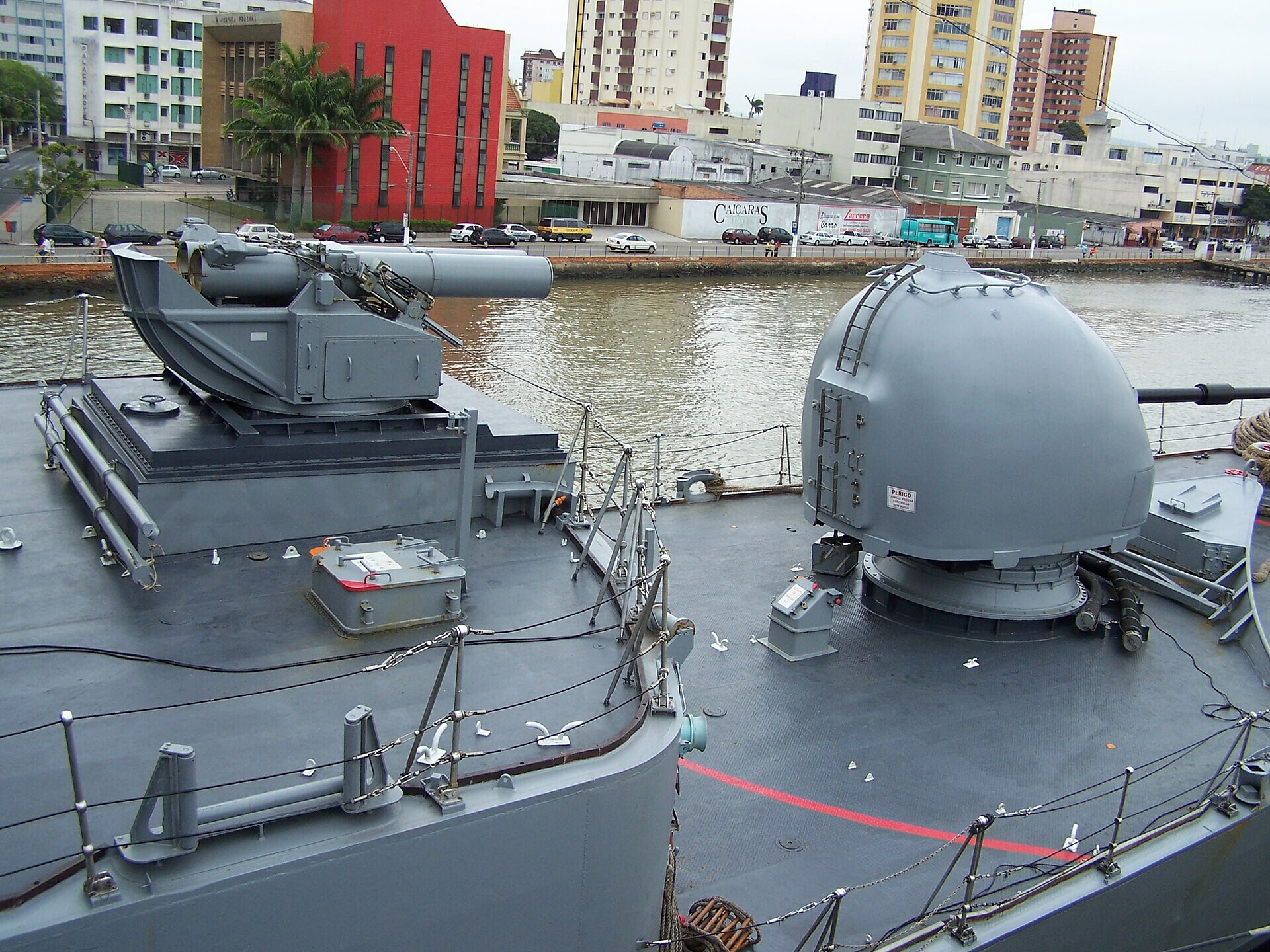
In 1972, Bofors developed a more compact and efficient two-barrel version. This configuration improved the reloading process, allowing both tubes to be reloaded simultaneously in 30 seconds.
Users
Because of its versatility, relatively low cost, and compact design, the Bofors 375 mm anti-submarine rocket launcher was installed on numerous ships and adopted by several navies.
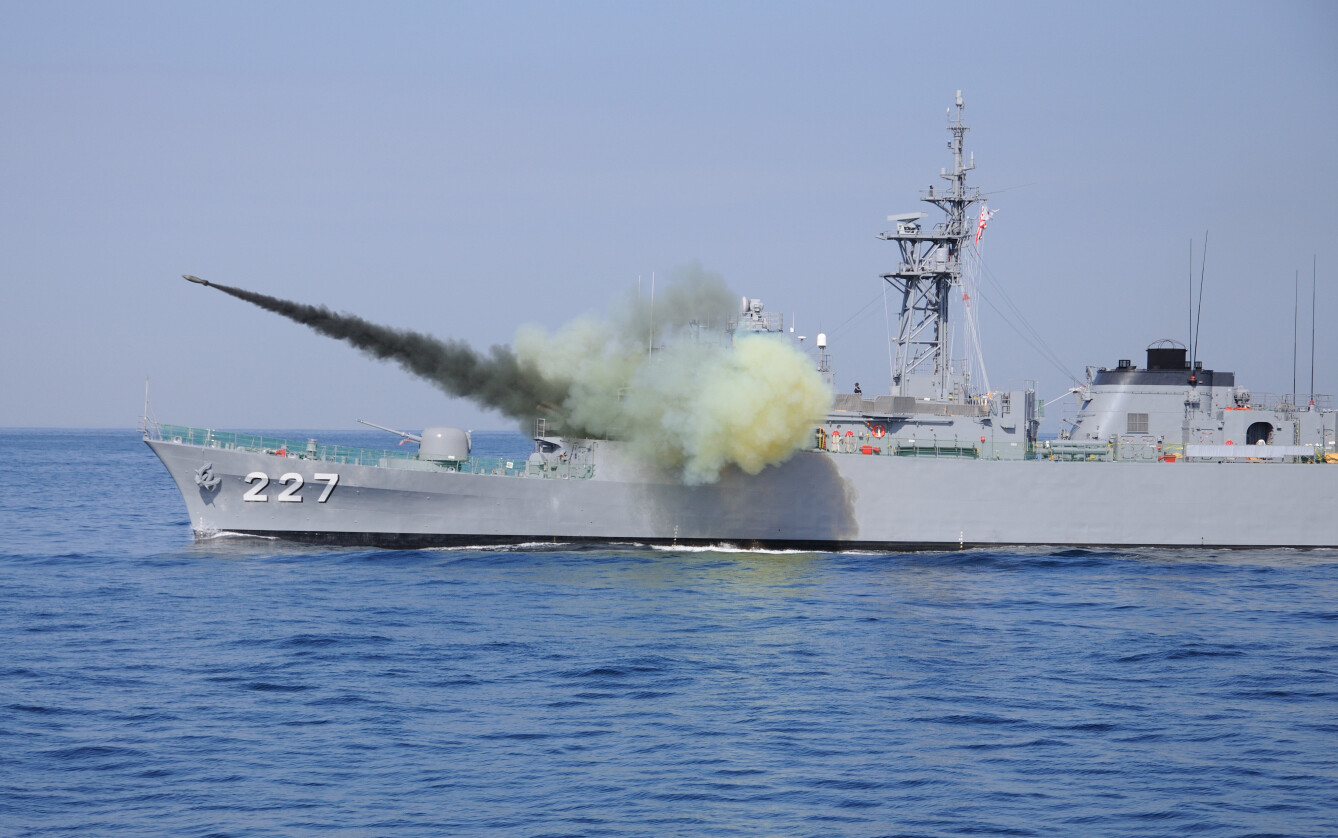
Mitsubishi signed an agreement with Bofors to produce the launcher and rockets under license for the Japanese Maritime Self-Defense Force, where the system was designated the Type 71 launcher.
| Version | Country | Ship class | Service year |
|---|---|---|---|
| Bofors B4 | Sweden | Halland class | 1955–1986 |
| Bofors B4 | Germany | Deutschland class | 1966–1990 |
| Bofors B4 | Germany | Hamburg class | 1964–1994 |
| Bofors B4 | Germany | Köln class | 1961–1989 |
| Bofors B4 | Germany | Thetis class | 1961–2010 |
| Bofors B4 | Netherlands | Friesland class | 1956–1991 |
| Bofors B4 | Netherlands | Holland class | 1954–1986 |
| Bofors B4 | Portugual | Almirante Pereira da Silva class | 1966–1989 |
| Type 71 | Japan | Akizuki class | 1960–1993 |
| Type 71 | Japan | Ishakari class | 1980–2007 |
| Type 71 | Japan | Isuzu class | 1961–1993 |
| Type 71 | Japan | JDS Katori TV-3501 | 1969–1998 |
| Type 71 | Japan | Minegumo class | 1967–2000 |
| Type 71 | Japan | Takatsuki class | 1967–2003 |
| Type 71 | Japan | Yamagumo class | 1966–2005 |
| Type 71 | Japan | Yubari class | 1983–2010 |
| Mle 54 | France | D’Estienne d’Orves class | 1976–[still used] |
| Mle 54 | France | Duperré class | 1957–1992 |
| Mle 54 | France | Le Corse class | 1955–1976 |
| Mle 54 | France | Surcouf class | 1955–1991 |
| Mle 54 | Belgium | Wielingen class | 1976–[still used] |
| Bofors B2 | Spain | Descubierta class | 1978–[still used] |
| Bofors B2 | Niger | Vosper Thornycroft MK9 | 1979–[still used] |
| Bofors B2 | Indonesia | Fatahillah class | 1979–[still used] |
| Bofors B2 | Malaysia | Kasturi class | 1984–[still used] |
| Bofors B2 | Brazil | Niterói class | 1976–[still used] |
| Bofors B2 | India | Nilgiri class | 1972–2013 |
Gallery
Sources
- Article on the Bofors M/50 from weaponssystem.net
- Article on the Bofors 375 mm rocket from weaponssystem.net
- Article on the Bofors M/50 from missilery.info
- Bofors promotional video on the SR-375
- Archived report of the Bofors 375 mm ASW Rockets from forecastinternational.com
- Escorteurs d’escadre — Robert Dumas & Jean Moulin
All photos and images in this article made by Finn_Supra are licensed under Creative Commons Attribution-ShareAlike 4.0 International (CC BY-SA 4.0). You may share, adapt, and use them freely with attribution and same-license sharing.