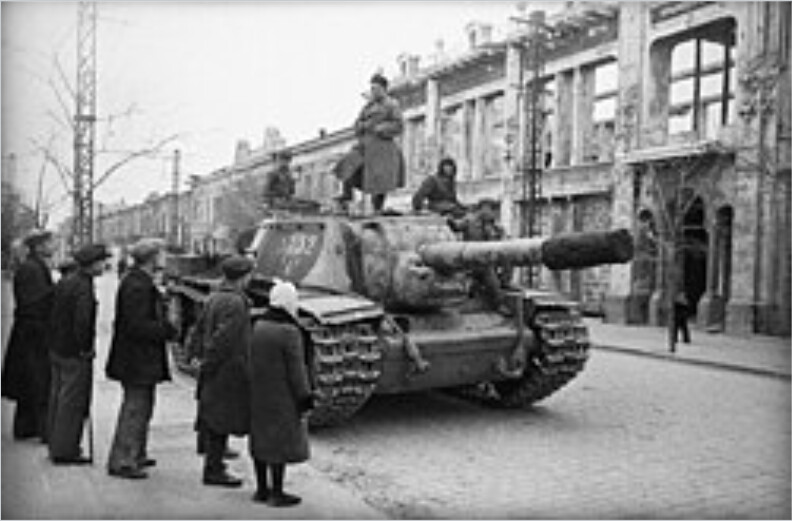
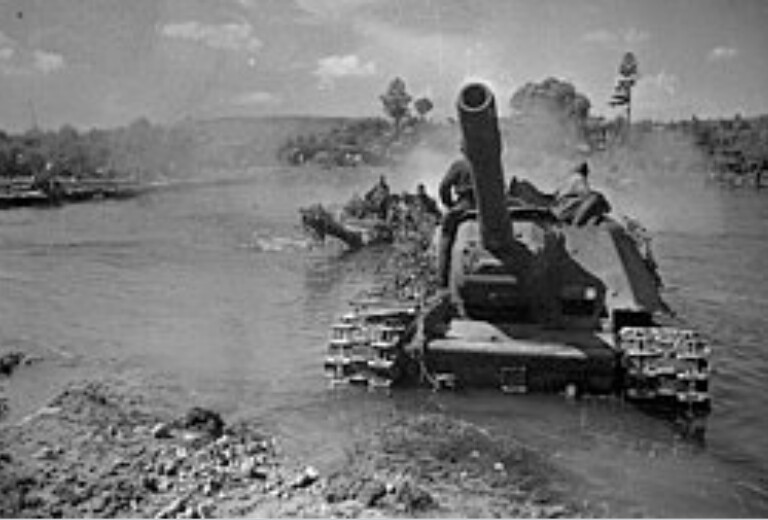
After Operation Uranus, the counteroffensive of the Battle of Stalingrad, it became painfully obvious that the USSR needed mobile heavy guns in order to destroy German fortifications and heavy tanks. The Red Army did have the KV-2 heavy tank for this duty at the time, but mass production of the KV-2 had ceased when the Kirov Plant was moved to Chelyabinsk. The new anti-fortification vehicle had to be faster than the KV-2, with thicker armor, and mount the powerful and more accurate ML-20 howitzer on a less expensive platform. The gun was too long and its recoil too powerful for it to be mounted in a turret, so a casemate structure was opted for. This would result in the soon-to-be-famous SU-152 'Zveroboy'.
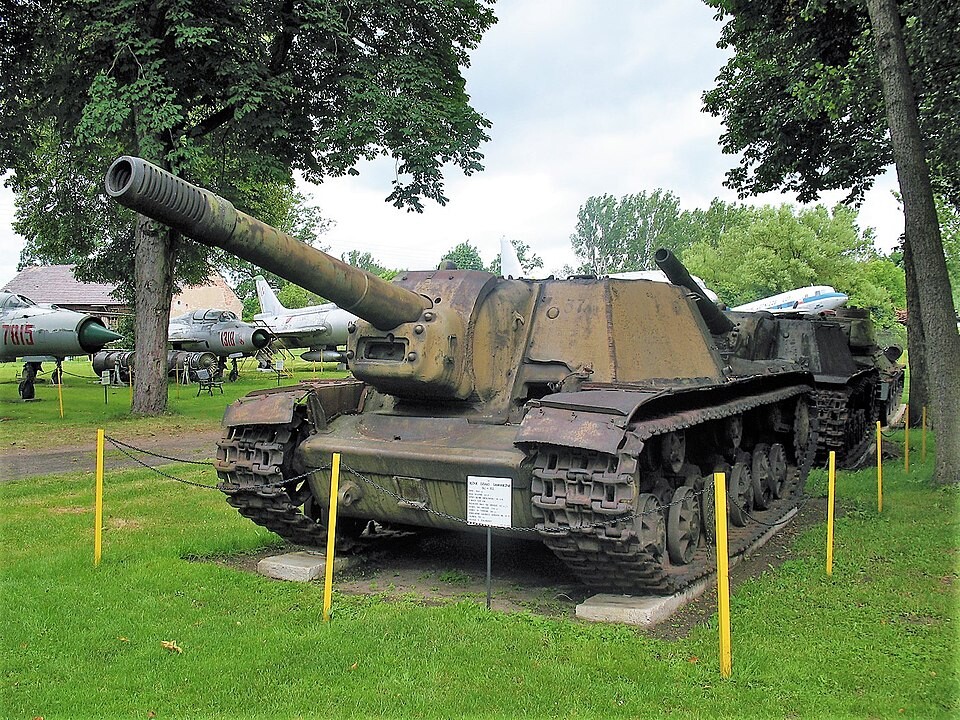
The SU-152
| Armor thickness (max) | 75 mm |
| Length (gun forward) | 8.95 m |
| Width | 3.25 m |
| Height | 2.45 m |
| Engine power | 600 hp / 441 kW |
| Operational range (road) | 180 km / 110 mi or 330 km / 210 mi with external fuel tanks |
| Operational range (cross-country) | 90 km / 56 mi or 120 km / 75 mi with external fuel tanks |
| Top speed | ~43 km/h |
| Crew count | 5 |
| Armament | 152.4 mm (6-in) ML-20S howitzer, optional 12.7 mm (0.5 in) DShK heavy machine gun |
| Entered service | 1943 |
| Amount produced | ~670 |
| Operators | USSR, Germany (as Beutepanzer), Poland (for training only) |
Development
In late 1942, it became painfully obvious that the Red Army needed a new vehicle for engaging German heavy tanks and bunkers. Towed guns were too slow to transport, vulnerable to attack, and prone to being abandoned after getting stuck. The slow and outdated KV-2 was neither available in sufficient numbers nor still in mass production, so an entirely new vehicle was opted for that would be faster and better protected than the KV-2 and armed with the more powerful ML-20S howitzer. At first, an attempt was made to mount the gun in a turret, as with the KV-2, but because it was too long and heavy, and the recoil was sure to make the tank topple over, it was decided that a casemate mount would be more desirable.
The Chelyabinsk-Kirov Factory hadn’t built any SPGs since the KV-7, and as it was very busy with building as many T-34s and KV-1s as possible, initial development was slow.
Of the contenders for the project, three were based on the KV-1S chassis: the Object 236, designed by G.N. Moskvin (under the supervision of none other than Joseph Kotin); Factory No. 8's ZiK-20; and the U-19, designed by the Uralmash factory in Sverdlovsk. Both competitors were too complex and heavy. Thus, the Object 236 won the competition against the other KV-based competitors and was named KV-14.
The KV-14 now had to compete with 2 other designs: Uralmash had also suggested a different design, the U-30, based on the SU-122, and Factory No. 592 suggested mounting the gun on captured German StuGs and Panzer IIIs. This last proposal was rejected because mass production was not possible without a constant influx of captured German vehicles.
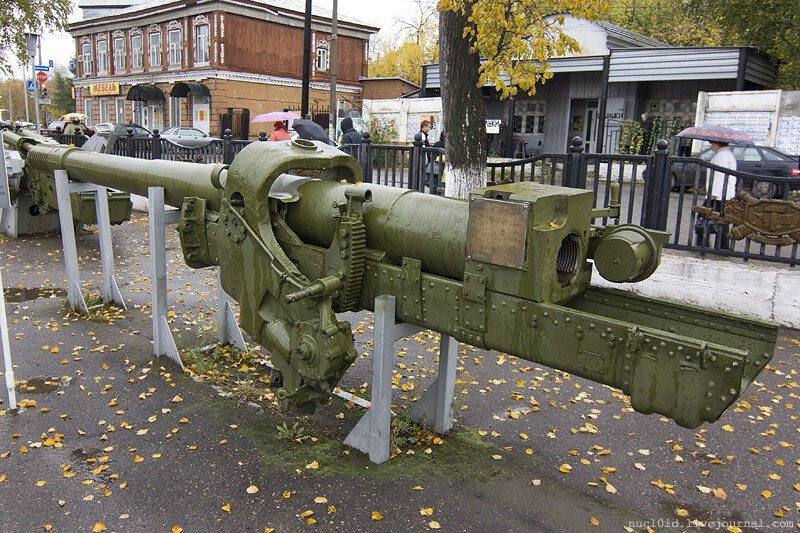
And so, only the KV-14 and U-30 were left. In the end, the KV-14 won due to its better protection and the reliability of the KV-1S chassis. The speed at which the KV-14 prototype was built (25 days) clearly shows how urgent the project was. The vehicle was ready for testing on January 24th, 1943.
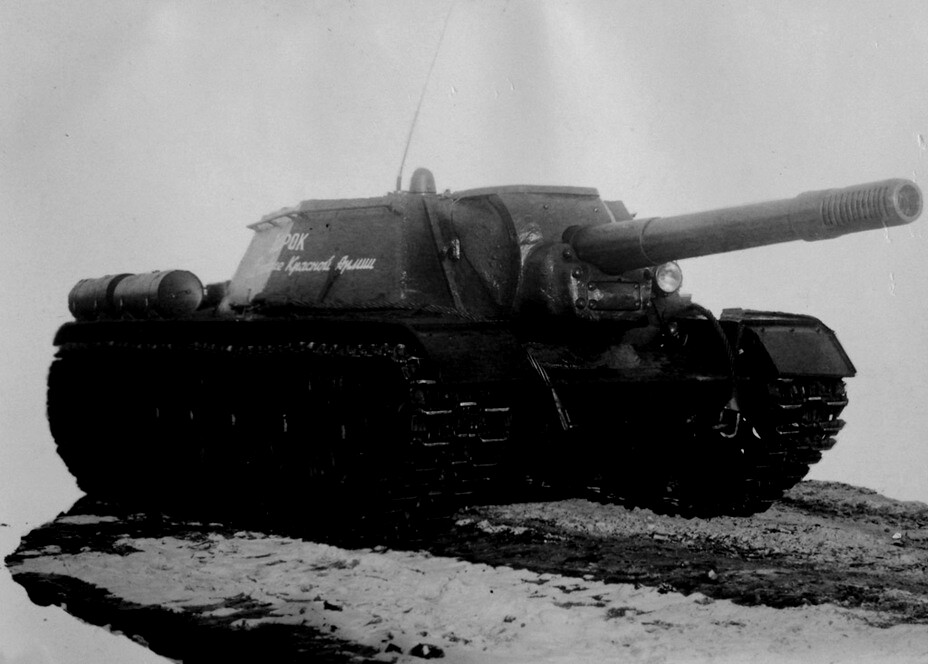
Trials and acceptance into service
Plant trials started on January 25th, 1943, one day after the prototype’s completion. After multiple successful tests, the state trials started. Once again, the vehicle passed the tests successfully. It was accepted into service and renamed the SU-152 on February 14th, with SU (which stands for Самоходная Установка, Self-Propelled Gun or Self-Propelled Mounting) indicating that the vehicle was an SPG and 152 indicating the gun’s calibre. Mass production was immediately ordered.
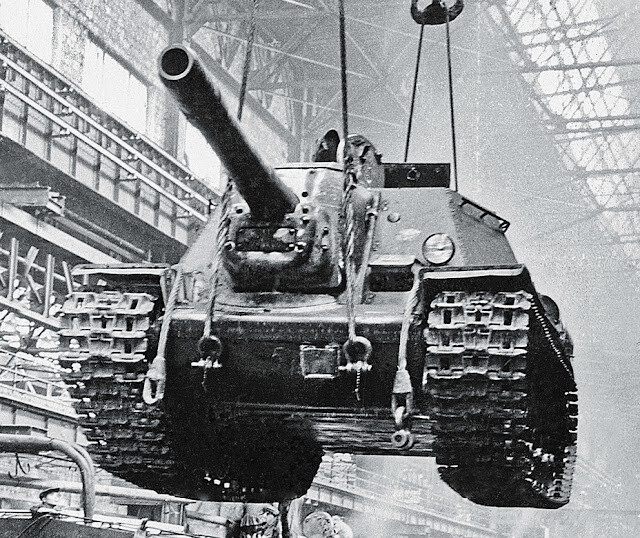
Combat history
The SU-152 at Kursk
The SU-152 first saw action during Operation Citadel (the Battle of Kursk). This battle was not only the single largest tank battle in history; it was the largest battle of any kind in history, and by sheer chance, the Ferdinand/Elefant first saw action here as well. Twenty-four SU-152s were used. Despite not being intended for the tank destroyer role, it proved to be a highly effective vehicle, capable of ripping the turrets off Tiger and Panther tanks using the sheer force of its High Explosive shells. high-explosive shells. Even if this did not happen, the HE shell could jam traverse mechanisms and cause internal spalling through overpressure. There are numerous records of SU-152s destroying German vehicles in this way. This earned the vehicle the nickname 'Zveroboy' (зверобой, beast slayer)
| Amount used in battle | 24 |
| Amount lost | ~8 |
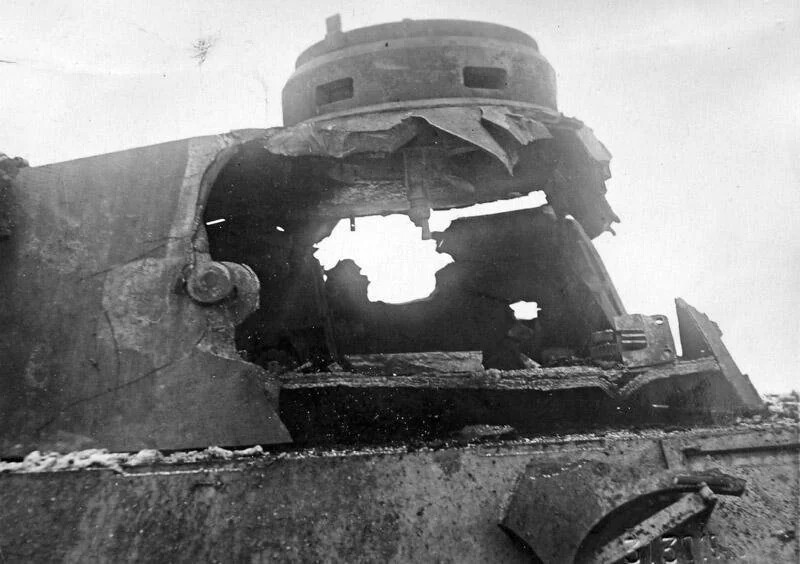
The SU-152 at Operation Bagration
The SU-152 would also play an important role during the Operation Bagration offensive in Belarus, two weeks after the start of Operation Overlord on the Western Front. Here, the SU-152 was mainly used to attack German fortifications.
| Amount used in battle | ~200 |
| Amount lost | ~45 |
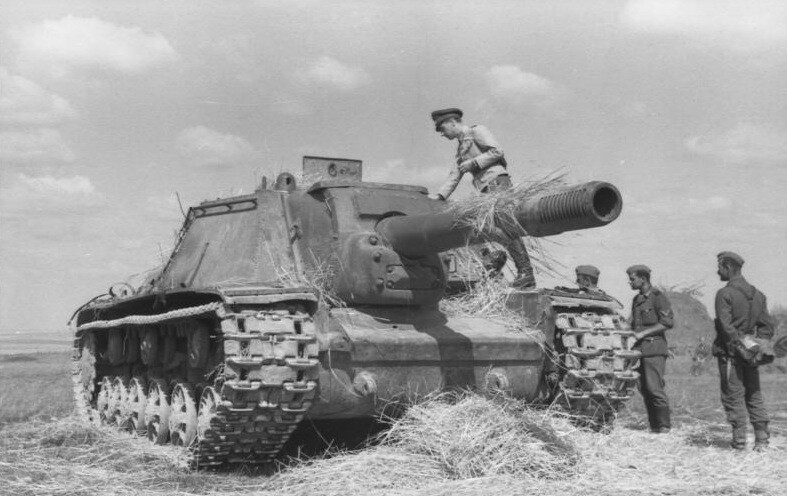
From the second half of 1943 until the end of the war, the SU-152 would also see extensive use on all Soviet fronts, including in Crimea and Finland. Combat losses and the cessation of mass production in December 1943 caused the number of SU-152s to decrease. They would be replaced by the ISU-152, which was more reliable and better armored. Despite all this, the SU-152 would remain in Red Army service alongside its successor for 13 years after World War II, until 1958. Three SU-152s were also used in Poland for training between 1945 and 1949. The ISU-152 would remain in service until 1972.