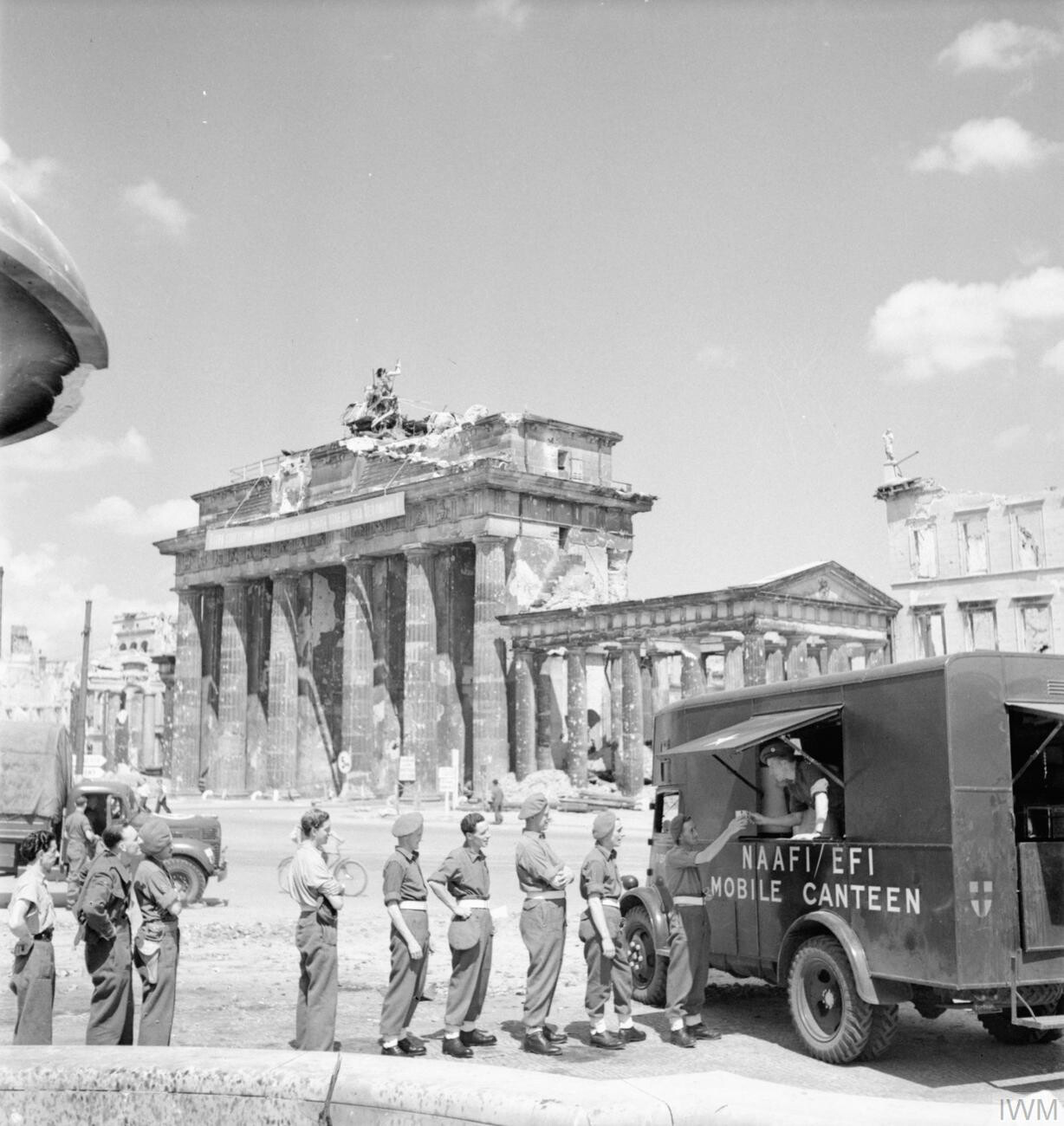
Britain’s relationship with tea had been something of a running joke for many years. In 2025, a joke on social media convinced many people (mostly Americans) that the Brits have a mandatory tea-time, that is marked with an air-raid siren. While this is far from the truth, it is true that many Britons, including those in the Armed Forces, enjoy a cuppa. As such, every British tank since the Second World War has included a little extra luxury — the boiling vessel.
Design
During the Second World War, armoured warfare changed massively, especially for the British Army. In 1939, British tank doctrine was largely centred around WW1-style trench-warfare, but by 1945, tank tactics and technology had advanced considerably to something recognisably modern. As such, tank crews were expected to remain on the front lines for longer, rather than retiring behind friendly trenches after a battle. Fast-moving enemy raids could threaten groups of tanks parked up and un-crewed. Indeed, Micheal Wittman’s famous rampage caught many of its first victims parked up and making tea, leading to catastrophic casualties. It was found after the war, that in the last two months of the European war, roughly 37% of British armoured regiment casualties were from crews outside their vehicles.
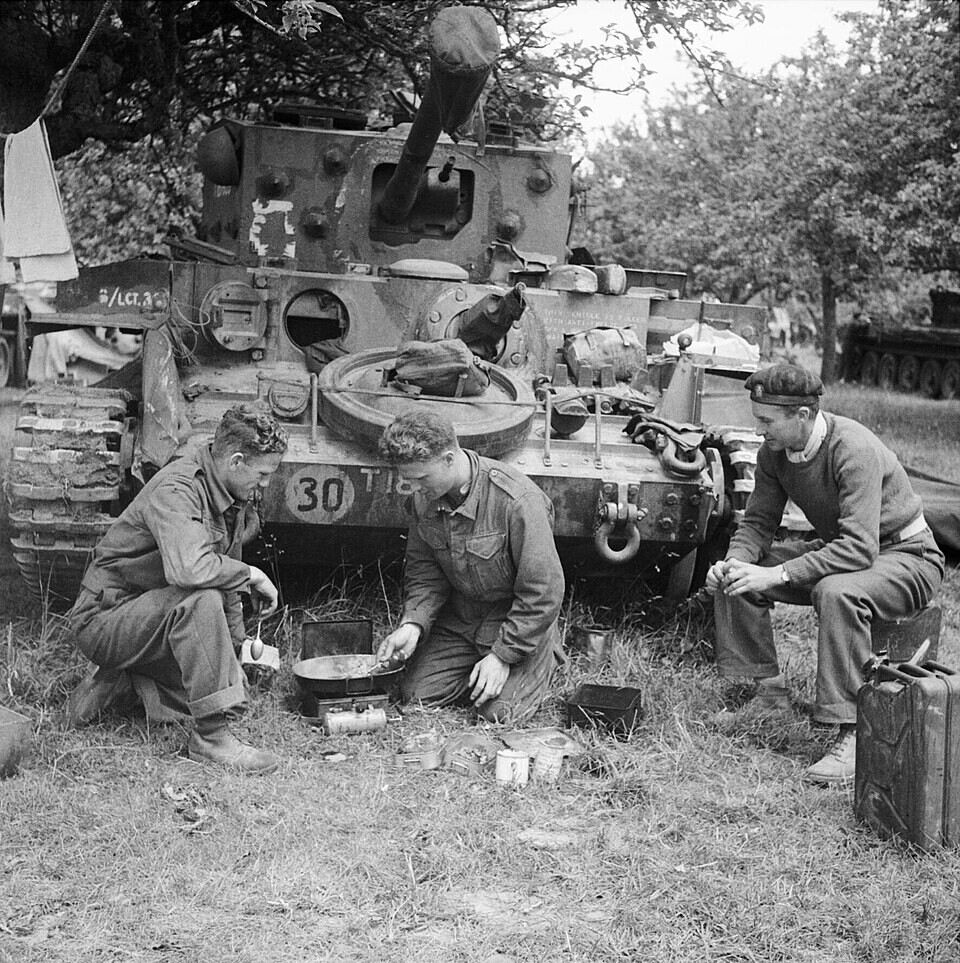
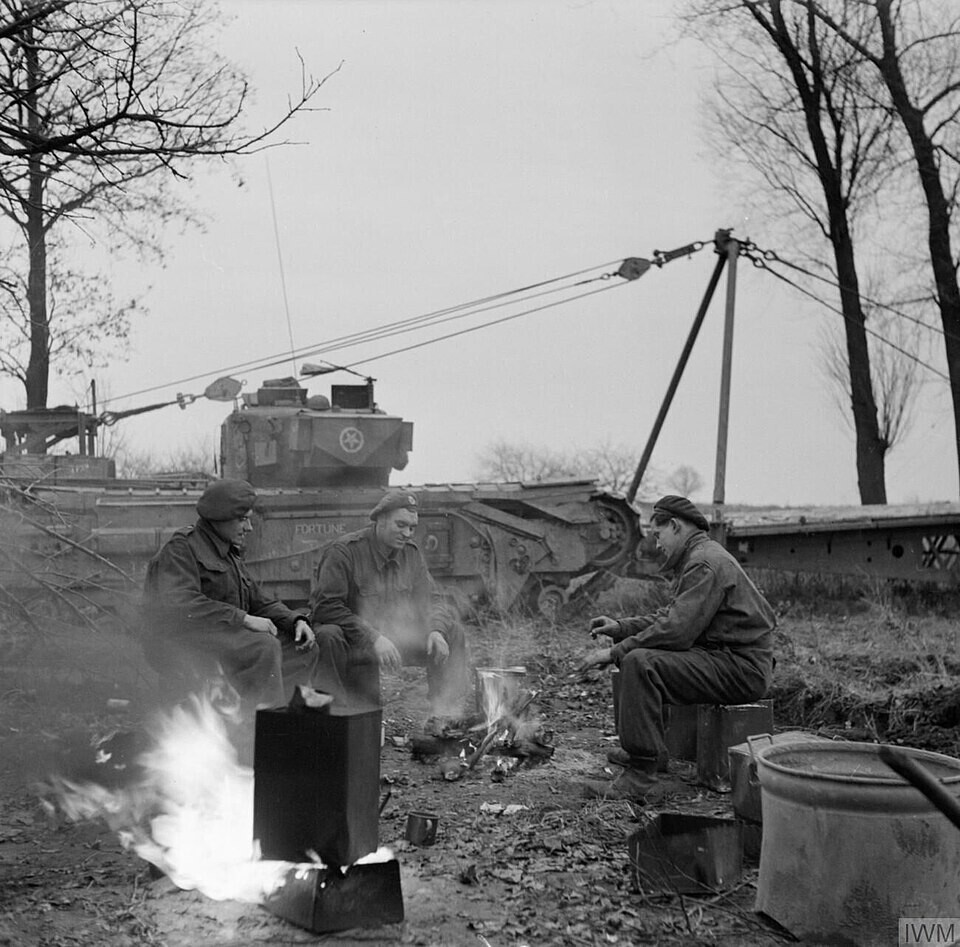
During the war, tank crews usually used a Benghazi Burner to heat up their food. This consisted of an empty fuel can with holes cut into the sides and filled with a mixture of fuel and sand. A second fuel can was then put on top, within which the crew would heat their rations. This had the disadvantage of requiring the crew to exit the tank to use, and of it being a somewhat unreliable method of cooking. A few impatient soldiers tried adding more fuel into the burner to speed up the cooking, only to create a large and dangerous fireball.
Thus, it was decided by someone in the War Office to outfit new British tanks, principally the Centurion that was meant to embody a new style of “universal tank”, with a way of making hot food while “buttoned-up”. This would make the process of cooking up some scran quicker and safer for the crew as they wouldn’t need to dismount and use a external stove, thus enabling the tank to stay combat-capable for longer.
The first model of Boiling Vessel or BV was installed in the turret of Centurion Mk. I main battle tanks in 1945. This was known as the VBE No. 1. In the early 1950s, the No. 2 made of stainless steel was introduced. This was further replaced by the No. 3 which was more reliable and less prone to leakage.
In the 1980s, a company called Electrothermal took over manufacturing of the BV. The modern BV comes in two forms: the RAK 15 which is fitted to every armoured vehicle in the British Army, as well as to many of the MAN trucks that are in service, and the RAK 30. The RAK 30 draws more power to heat up faster and is used by the Royal Marines and UKSF. Both models work off the 24V power supply common to British military vehicles.
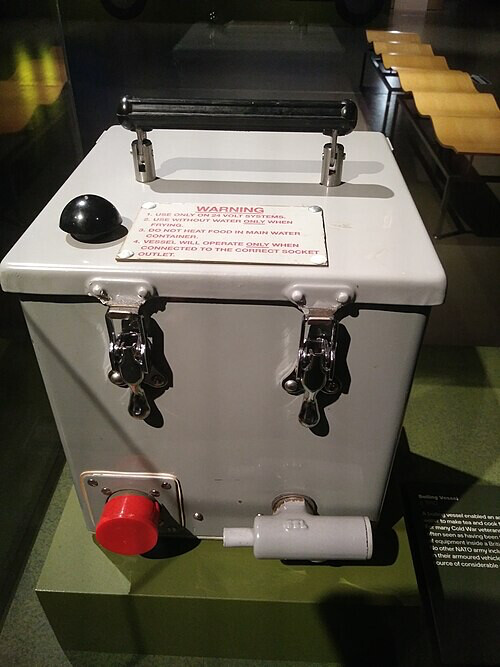
Regardless of the manufacturer or model, BVs have remained largely unchanged throughout their 75-year career. Each is a small-ish grey box that can be sealed and electrically heated. They are all designed such that the outside of the BV remains cool to the touch while the inside can remain piping hot for several hours even if the heating elements are not switched on. Each is large enough to heat a few pints of water, or a crew’s worth of MREs, and has a tap on the front so that hot drinks can be made. BVs are not bolted into place within the tank, and can be taken outside the tank for a more relaxed tea-time or to stop the tank from steaming up. Notably those fitted to FV432 APCs and FV510 Warrior IFVs are larger to allow mounted infantry to use them alongside the vehicle crew.
The modern RAK BVs are apparently capable of heating a gallon of water to 88°C in about 20 minutes.
Since the 2000s, some other countries — mostly NATO members — have taken note of the BV and fitted similar devices to their armoured vehicles. German Leopard 2s are now fitted with BVs as standard, as are some M1 Abrams tanks, though in American service they are know by the much less catchy “Heater, Water & Rations”. Prior to this, American tankers have been known to put rations on the blazing hot exhausts of their Abrams tanks, to get them to a palatable temperature.
Platforms
- A.41 Centurion
- FV421 Chieftain
- FV4030 Challenger 1
- FV4034 Challenger 2
- Challenger 3
- FV430 family (including Swingfire)
- CVR (T) family
- CVR (W) family
- FV721 Fox
- FV521 Warrior
- AS90
- Archer (not the one in-game)
- Ajax family
- Land Rover Wolf/Snatch/Vixen/etc
- Jackal 1/2/3 and other variants
- MAN trucks (various — including Sky Sabre)
- Foxhound MRAP
- Viking
The Crew’s View
It is often said that an army marches on its stomach. This expression has remained true for millennia and the modern-day British army’s solution — at least for their vehicle crews — is the humble BV. Crews are always appreciative of the BV as it gives them a quick and reliable way to cook up some warm scran and a cuppa during a long patrol, even if they’re stuck in the tank. Some crew members have even jokingly called it “the most important piece of kit” aboard the Challenger 2.
Interestingly, when British tank crews have been sent to test other countries’ tanks such as the US M1A1 Abrams, they have been critical of the lack of a BV, saying that the M1A1 would be a good tank to fight in but that they’d much rather live in the Challenger 2. Furthermore, when BV-equipped vehicles have been exported, crews unused to such luxury in an AFV have been very appreciative of it. Ukrainian crews training on the Challenger 2 have apparently been very complimentary of the BV, since most of the other AFVs in Ukrainian service lack such a device. Having a way of making hot food safely in the middle of a freezing Ukrainian winter would be a great morale boost, as anyone who’s gone camping in the cold can imagine.
Typically, in British units, a more junior member of the tank crew is nominated as “BV Commander” — usually the loader since they sit closest to the BV and have an easier time getting in and out of the tank than the driver. Tankers' ration packs differ from regular ones in that they don’t have a paper label on the meal pouches to avoid contamination of the water in the BV. Otherwise they are identical, all the way down to the two teabags provided in each pack.
As many British tank players may have noticed, War Thunder makes reference to the BV in one of the voice lines spoken by British crews. Every so often, when you win a match you can hear the Commander saying “Okay chaps, put the kettle on”, to celebrate their victory.
Final Thoughts
Although tea isn’t as important to Britain’s war machine as some might think, the humorous myths, and tales of the importance of our teatime are based in reality. Small comforts like warm food and drink improve morale immensely, and are just as important to a soldier as his rifle. The boiling vessel has ensured that every tank crew, at least, has been able to enjoy a cuppa and some hot baked beans for nearly 80 years, and it’s almost certain that it will continue to provide for many decades to come.
Sources
- Wikipedia — Boiling Vessel [Accessed 29/4/2026]
- Military Systems and Technology — Electrothermal [Accessed 29/4/2026]
- Armor magazine, September 1989
- Tales from the Supply Depot — AFV Boiling Vessel [Accessed 24/6/2026]
- Medium — The British Perfected the Art of Brewing Tea Inside an Armoured Vehicle [Accessed 24/6/2026]