The F2H-2 Banshee, is an early American jet fighter produced from 1947 to 1953 to be used by the US Navy. This aircraft was surprisingly good in real life and in game, and this article will cover how to use it in battle and a history on its real life usage, variants, and development.
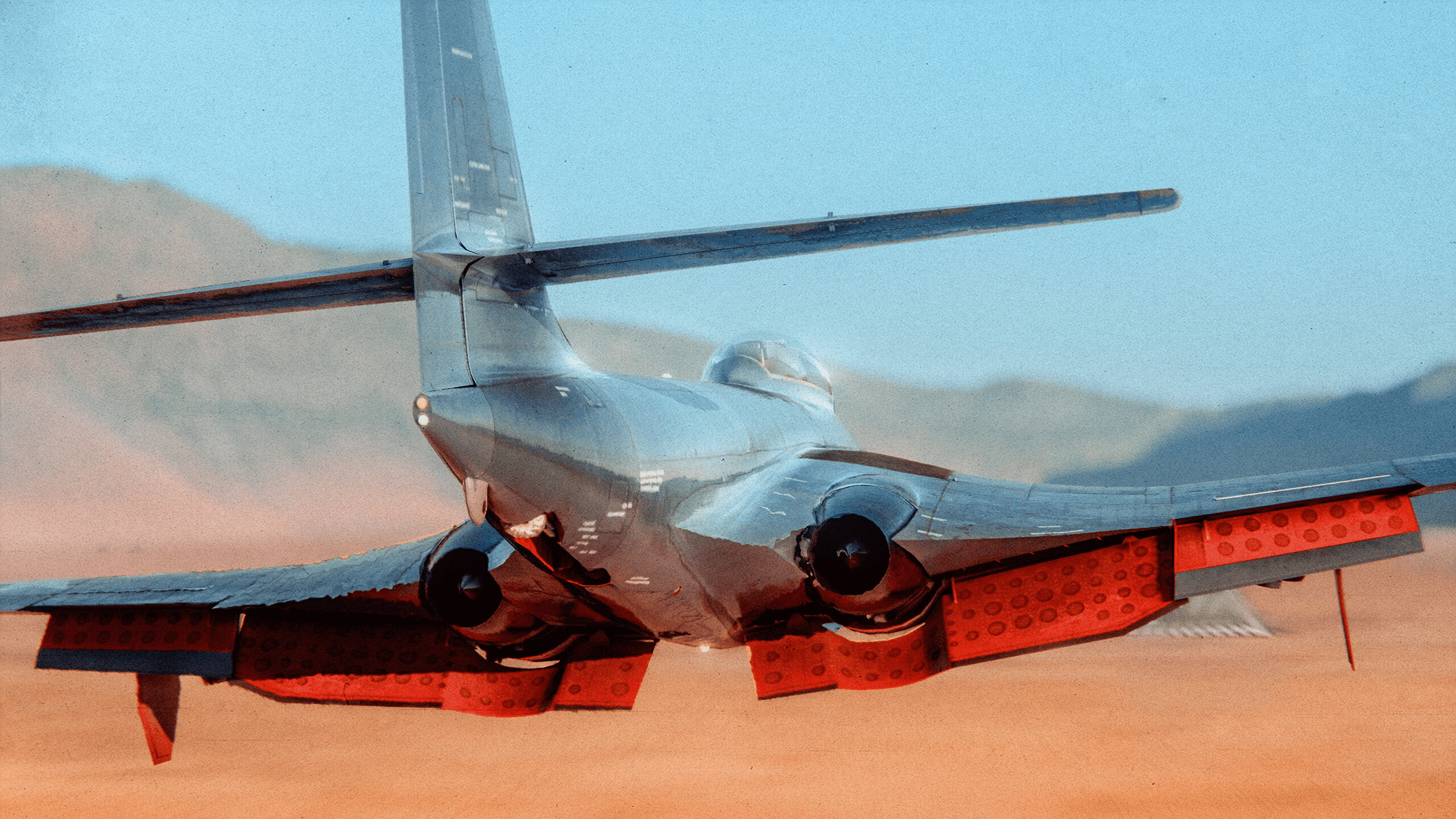
In game:
History:
| Pros: | Cons: |
|---|---|
| Amazing firepower | Cannons spread and overheat when stock |
| Good energy retention | Mediocre acceleration |
| Decent maneuverability in general | Poor instantaneous turn |
| Good flaps and air brake | Ground ordnance is subpar compared to other American jets |
| Alright top speed compared to similar aircraft | Big fuel tanks in the center |
Armament
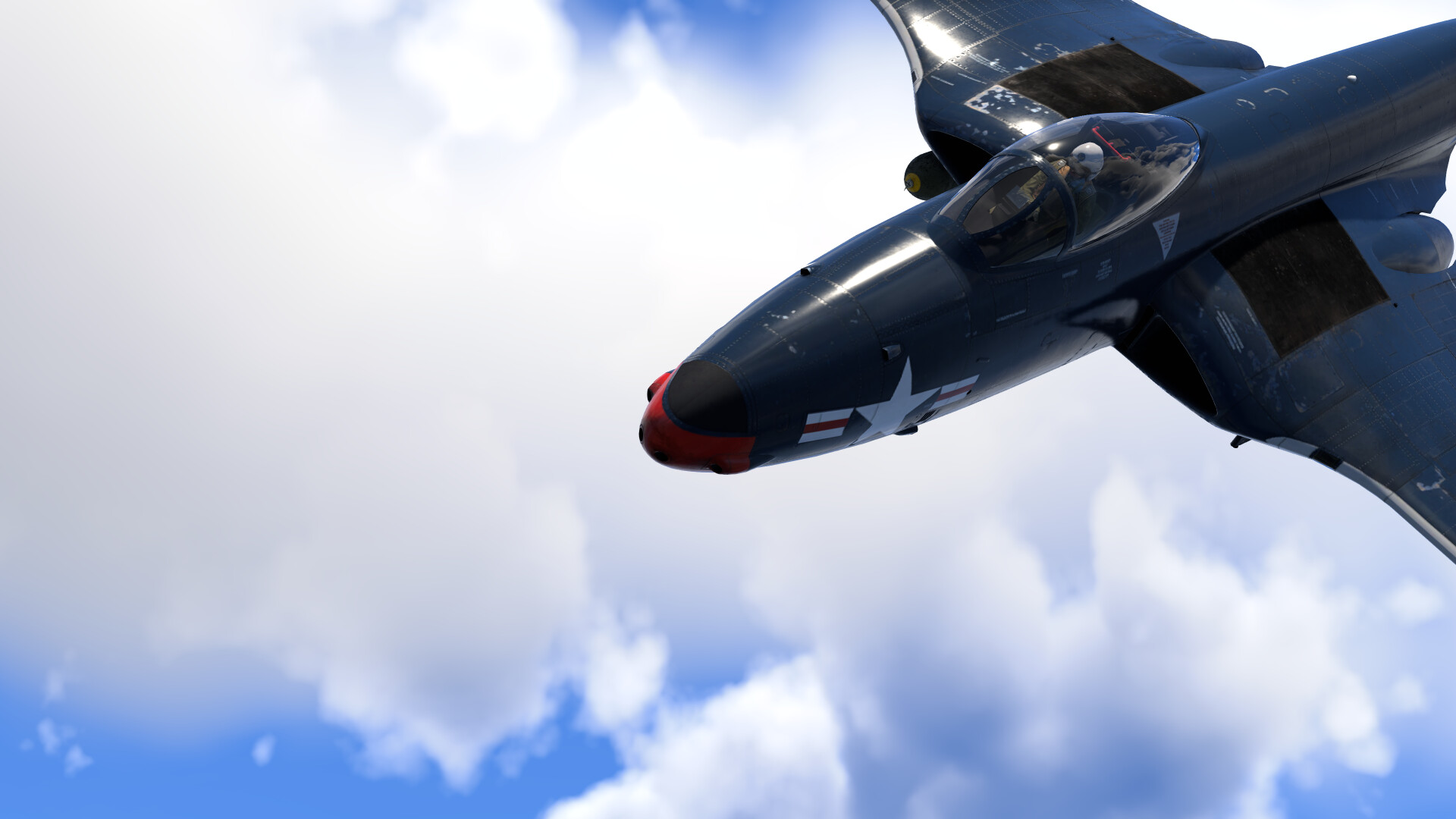
The F2H-2 has a very good armament consisting of four 20 mm M3 cannons in the nose. These each have 150 rounds, totalling 600 rounds, which is more than enough to last a whole match with minimal trigger discipline. Each shell in the belt has a velocity of 832 m/s, and with the guns mounted in the centre of the nose, it is very easy to aim once accustomed to it. Default belts are plenty good enough but the other belts are much appreciated.
- Default — HEF-I/AP-T
- Universal — AP-T/AP-T/HEF-I/HEF-I
- Air targets — HEF-I/HEF-I/HEF-I/AP-T
- Ground targets — AP-T/AP-T/AP-T/HEF-I
- Stealth — HEF-I
Suspended Armament
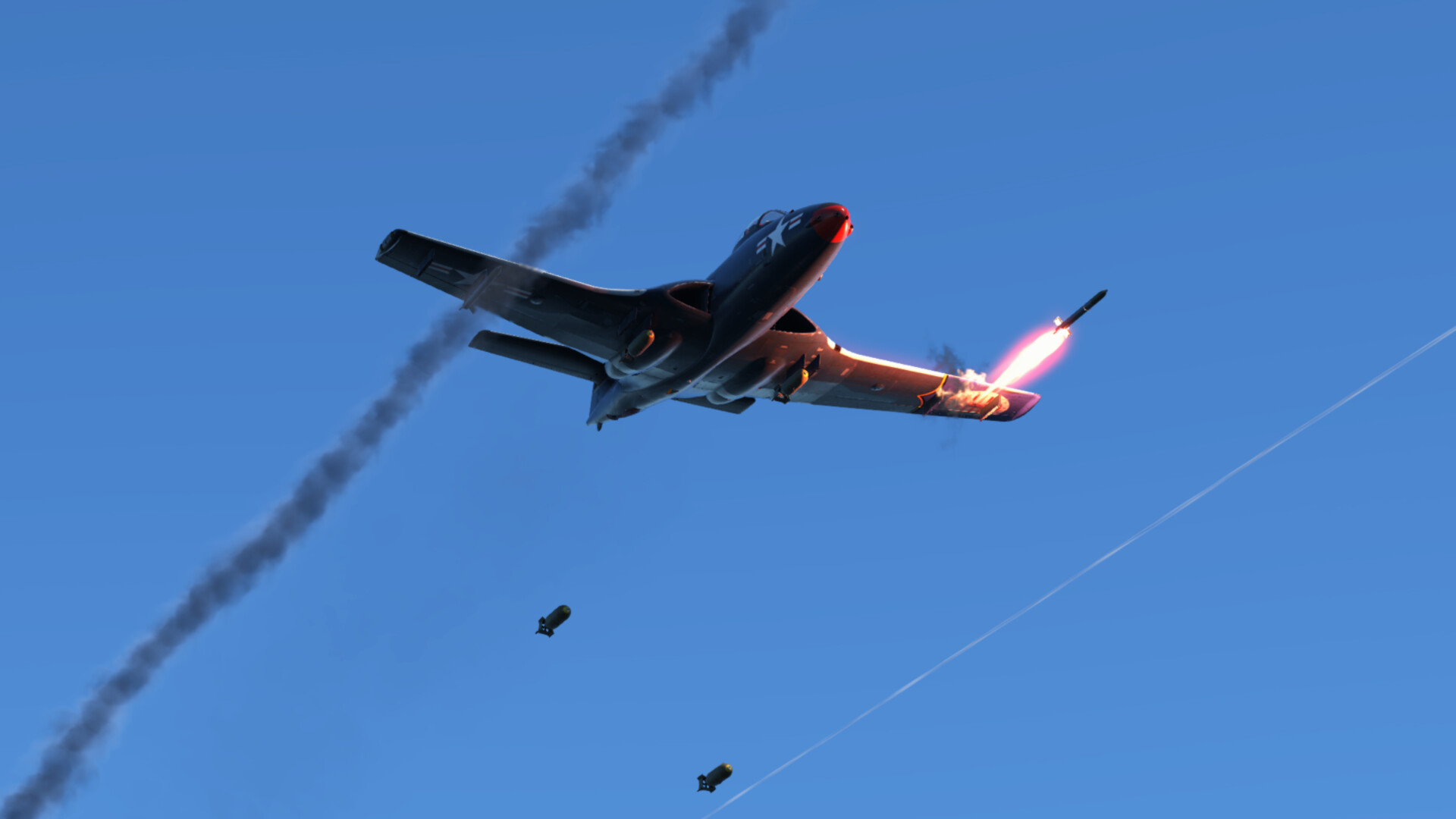
In terms of ground ordnance the F2H-2 can be considered a bit lackluster compared to other American early jets. However this doesn’t make it useless, the aircraft can be equipped with:
- 8x HVAR rockets
- 4×250 lb bombs
- 2×500 lb bombs
500 lb bombs and 250 lb bombs can’t be equipped on the same wing, also the 500 lb bomb can’t be used with the inner-most HVAR.
Survivability
The aircraft features pretty good survivability, typical of American aircraft, with a 12.7 mm steel plate behind the pilot’s head, an 8 mm plate behind the pilot’s back, and 38 mm of armoured glass angled back at 58°. It does not have EFS or any form of countermeasures; however, missiles are not commonly encountered. Fuel tanks are placed in the middle of the fuselage, with two smaller ones on either side of the engines in the wings. All are self-sealing but lack a neutral gas pressurisation system.
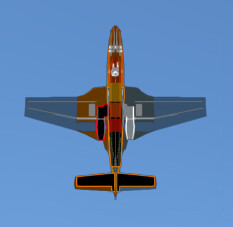
Even with substantial damage it’s still very possible to make it back to the airfield, however dogfighting shouldn’t be continued as the aircraft is not very quick with only one engine. Rolling also becomes difficult with wing damage and the aircraft just generally becomes pretty unstable.
Flight performance
The key thing to do before flying the F2H-2 is to make a loadout without the wing tip fuel tanks, this reduces your weight by 200 kg (440 lb) and overall makes it slightly more agile.
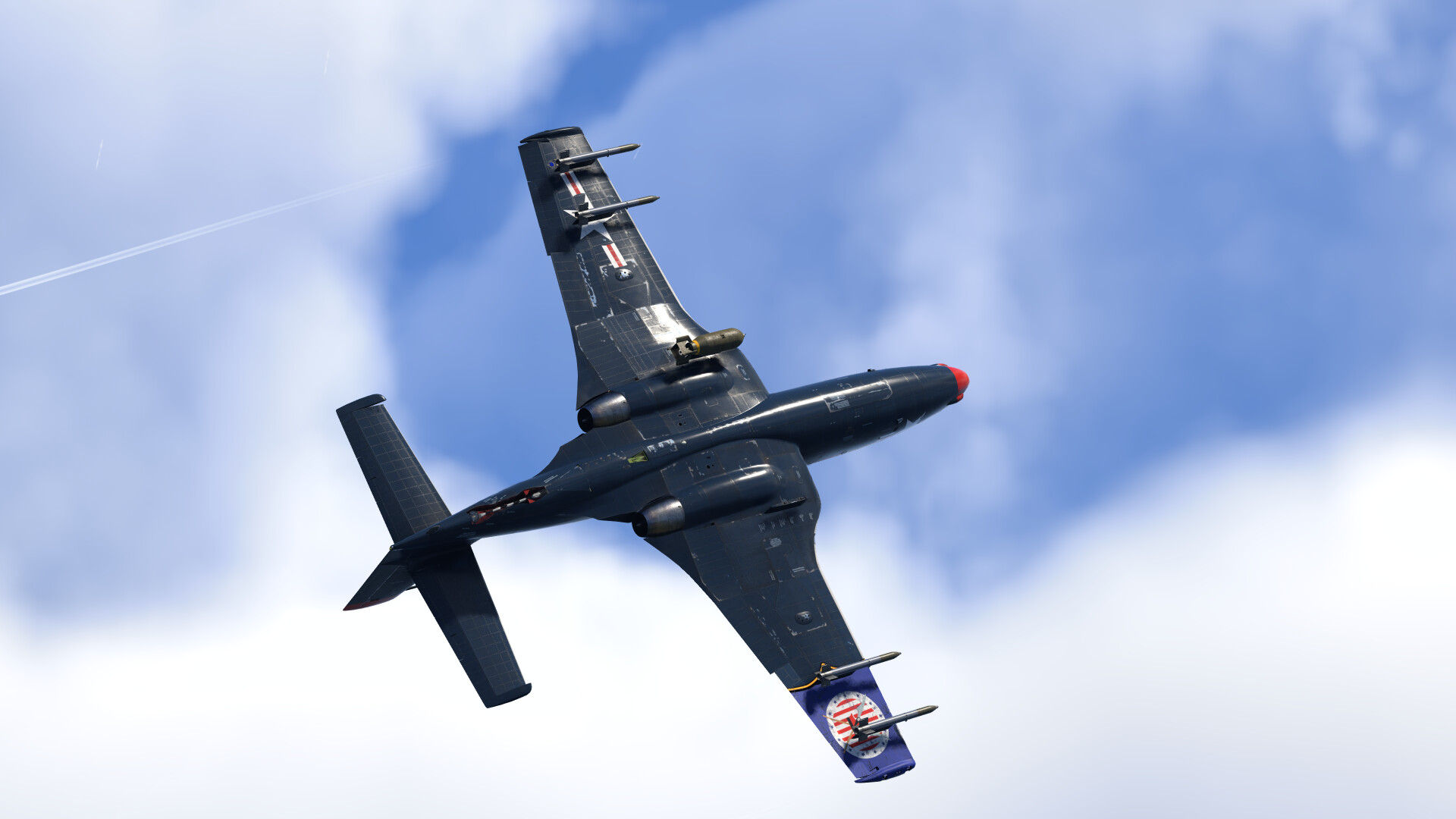
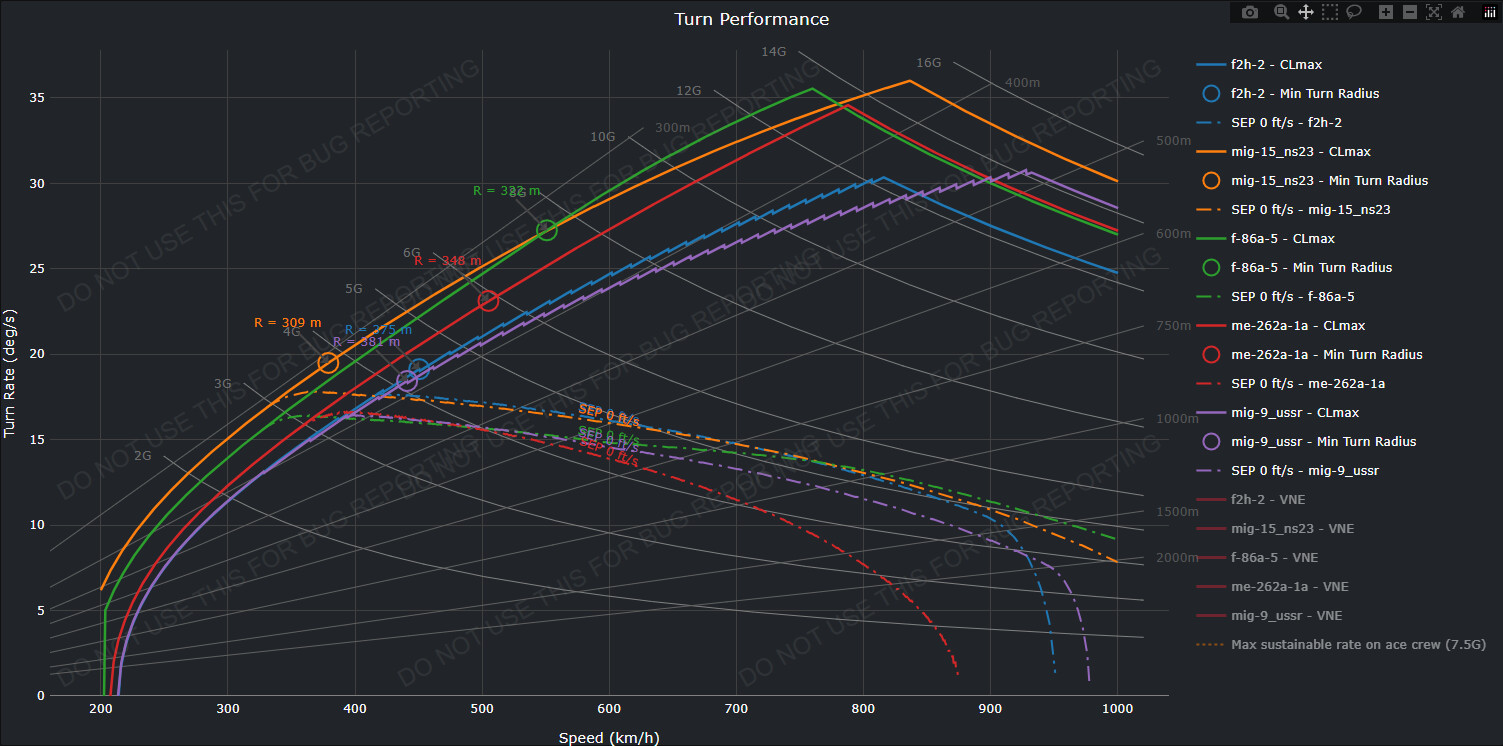
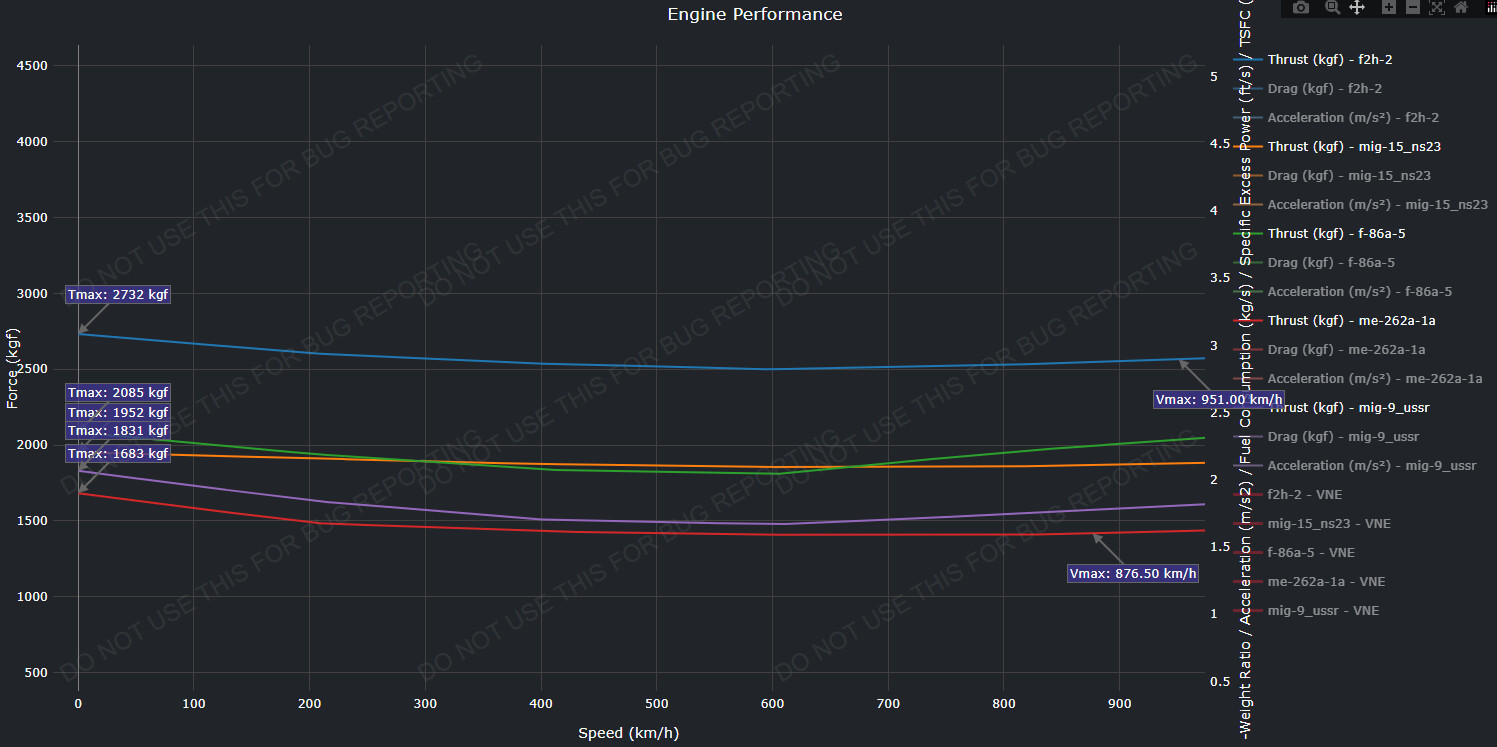
With that out of the way, the aircraft’s performance is commendable compared to other aircraft of its rank. With it being a carrier-based jet fighter, it is slightly on the heavier side weighing in at around 6,700 kg (14771 lb) with 20 minutes of fuel however it does compensate with impressive engine thrust compared to similar aircraft. The maneuverability is also decent: at low and medium speed it can give a hard time to jets with swept wings and some others like the F-84s. The flaps also can decrease the turn time by 20% but their drawback is their quite low speed limit of 325 km/h before they refuse to extend.
The plane does suffer from high speed compression near 800 km/h IAS (which must be taken into consideration while in a dogfight). Since it is a carrier-based jet, its stall speed is low: varying from 185 to 205 km/h IAS, depending on the weight. The positive and negative G limit for the aircraft are plenty for the average pilot, wing failure happening when turning close to 13G with full realistic controls. The Banshee also has access to airbrakes which can help during landing or in combat situations to slow down the plane.
Usage in Battle
Air Battles
As with most low tier jets, keeping speed as energy is still how dogfights in the Banshee should be played out, you have a better climb rate than most enemies, so begin climbing at about 600 km/h (372 mph) and then pull the nose up and continue your climb at around 10° up. Ideally you should have an altitude advantage over your enemies before engaging. Don’t afk-climb as strike aircraft will reach you quickly and could get an easy shot off if you aren’t paying attention.
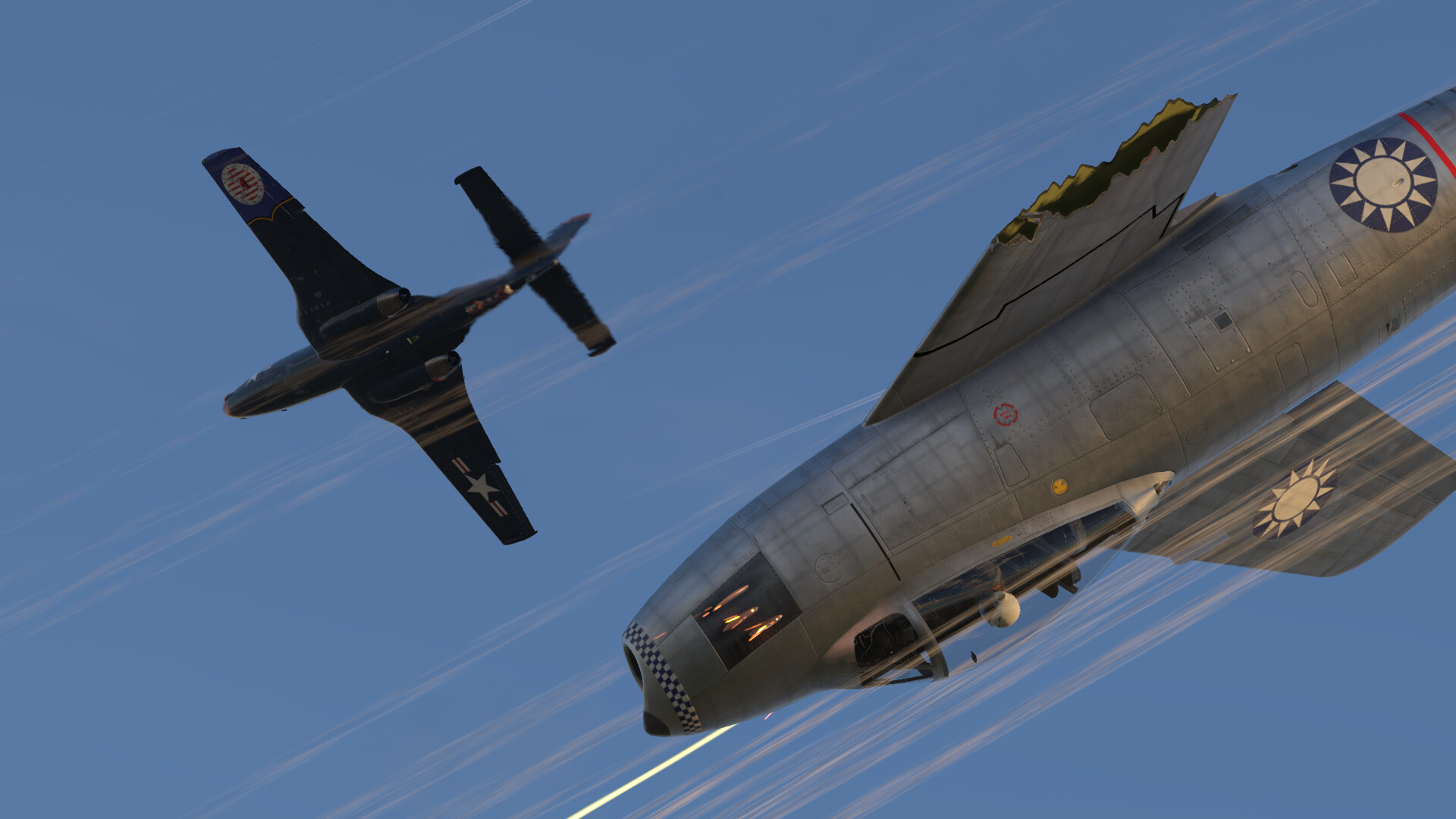
Once in combat, awareness should be maintained of aircraft such as Meteors (specifically the Mk 3), Vampires, Komets, and manoeuvrable Soviet aircraft such as the Yak-23 or La-15, as they generally outperform this aircraft. Any opportunity while they are distracted should be taken to potentially damage and hamper their performance. Most dogfights should be taken into the vertical, using loops or spirals to stall the enemy and gain an easier shot. Head-ons are also viable due to the high-velocity cannons, but they should be taken at one’s own risk.
While energy trapping opponents or doing Boom and Zoom tactics one must be careful as you compress above 800 km/h IAS so extend the airbrakes while diving on people.
Ground Battles
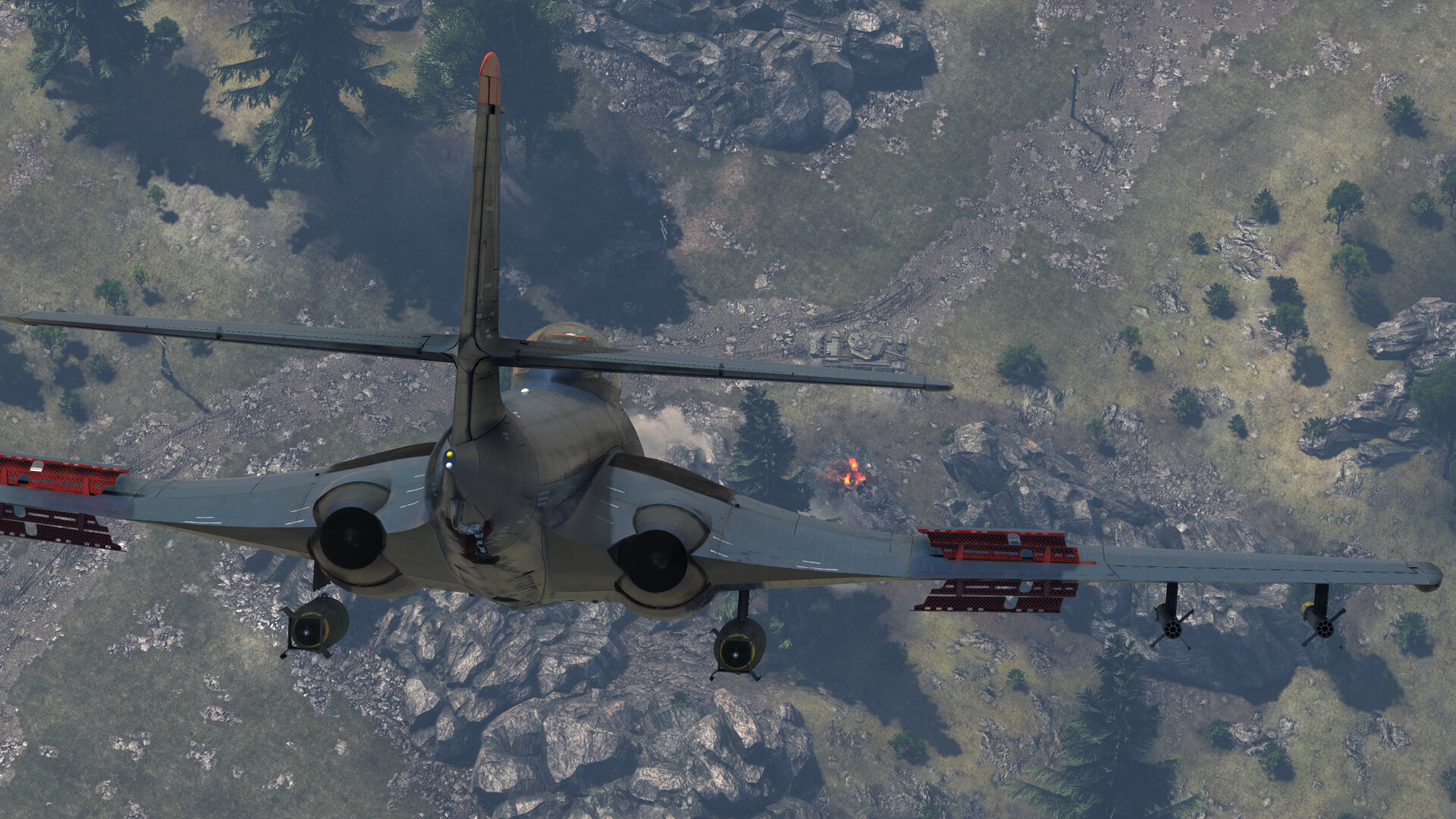
In ground combat the F2H-2 struggles compared to other American aircraft like the F-84s, but that doesn’t mean it is unusable. It’s still effective at shooting down other aircraft using the same tactics as in air battles and with the bombs it gets, it is possible to score some ground kills however the bombs aren’t very large so some precise tossing is required. This aircraft does not get any ballistic computers to aid with this unfortunately.
Design and Development
The McDonnell F2H Banshee originated as a successor to the FH Phantom, the U.S. Navy’s first carrier-based jet fighter. Although the Phantom had only just begun production, McDonnell had already started work on a replacement, leading the Navy’s Bureau of Aeronautics to create three prototypes on 2 March 1945. Initially intended as a simple derivative sharing many components with the Phantom, the design quickly grew beyond this scope as the Navy demanded heavier armament, increased internal fuel capacity, and improved overall performance. These requirements forced a complete redesign of the FH Phantom, becoming the XF2D-1.
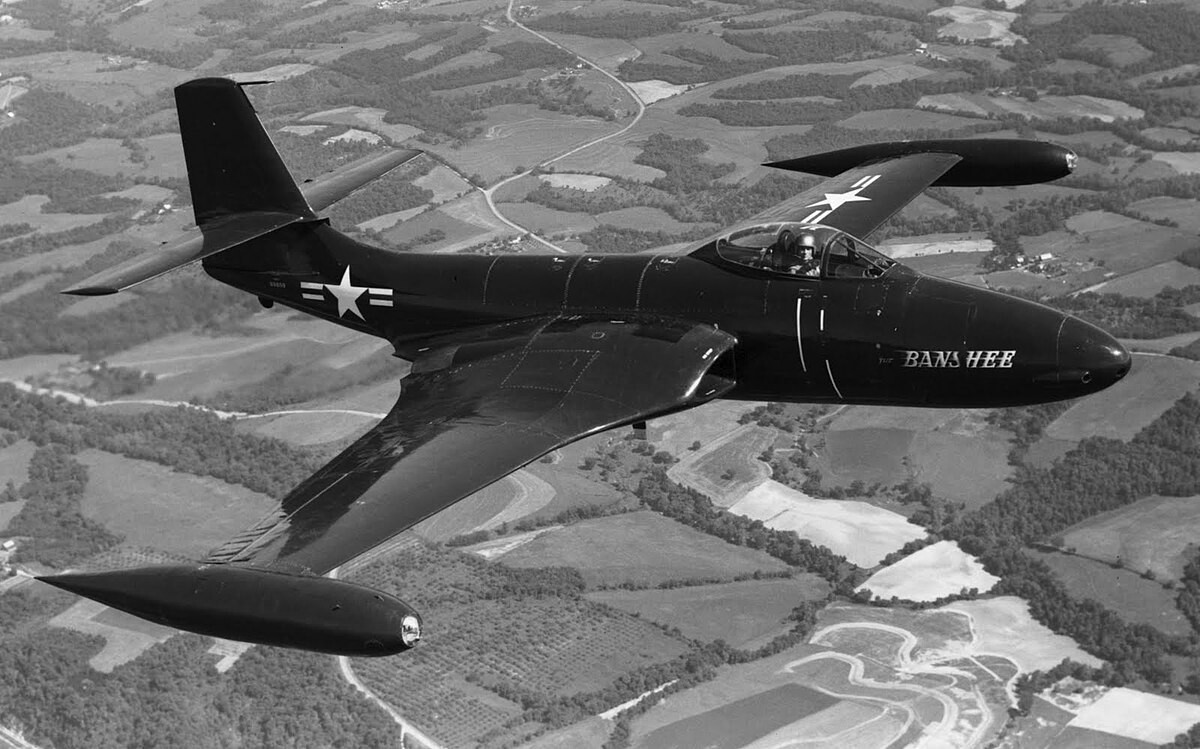
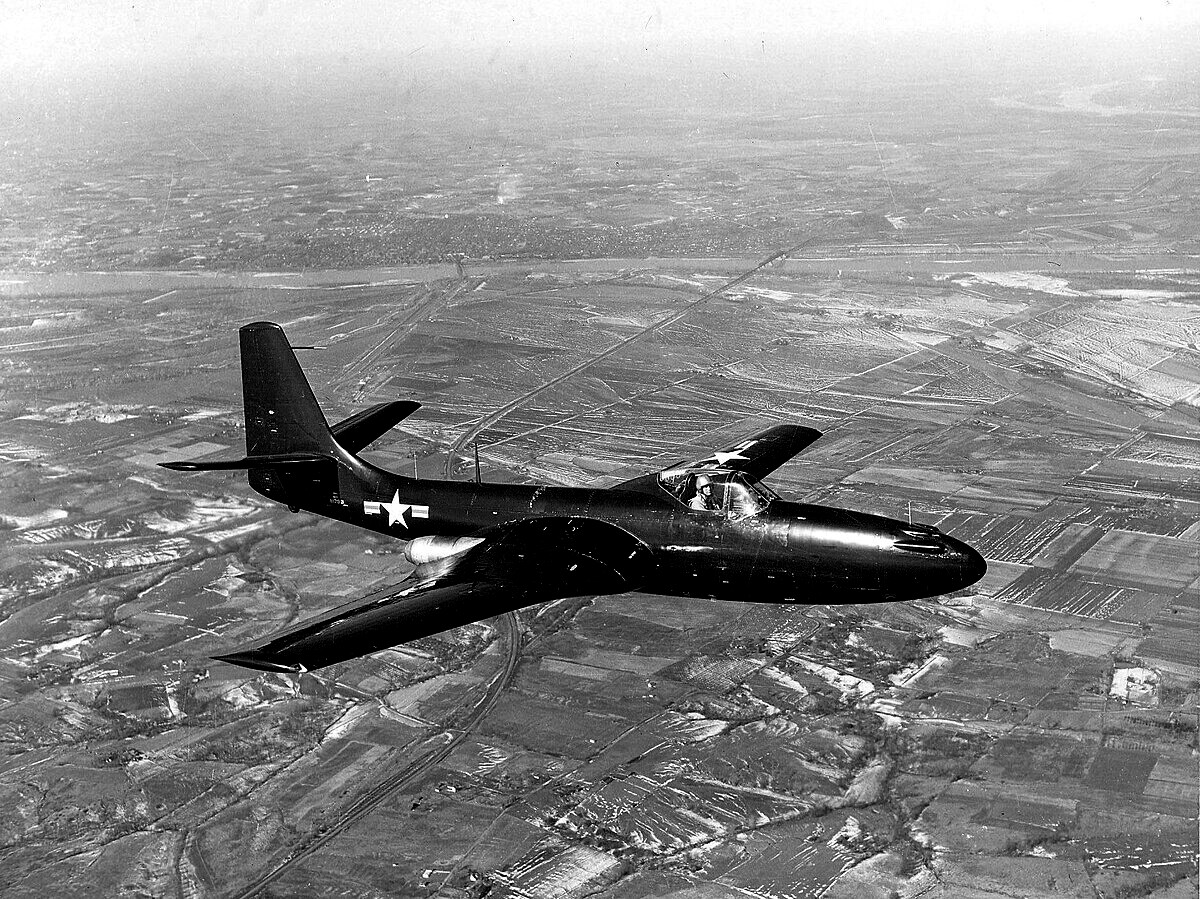
To achieve the desired performance, McDonnell selected a pair of Westinghouse J34 engines, nearly doubling total thrust compared to the Phantom. Integrating these larger engines required a thicker and broader wing, while their higher fuel consumption necessitated a lengthened and reinforced fuselage with significantly greater internal fuel capacity, enabling a mission radius of up to 600 miles. Early Banshees carried no external stores, emphasizing internal volume and aerodynamic efficiency. Armament consisted of four nose-mounted 20 mm cannon, replacing the .50 calibre machine guns of earlier Navy fighters and positioned to prevent muzzle flash from blinding pilots during night operations. The aircraft incorporated numerous modern features, including a pressurised and air-conditioned cockpit, electrically actuated flaps and landing gear, folding wings, canopy, and air brakes, as well as a heated, bullet-resistant windscreen. From the tenth production aircraft onward, an ejection seat was also fitted.
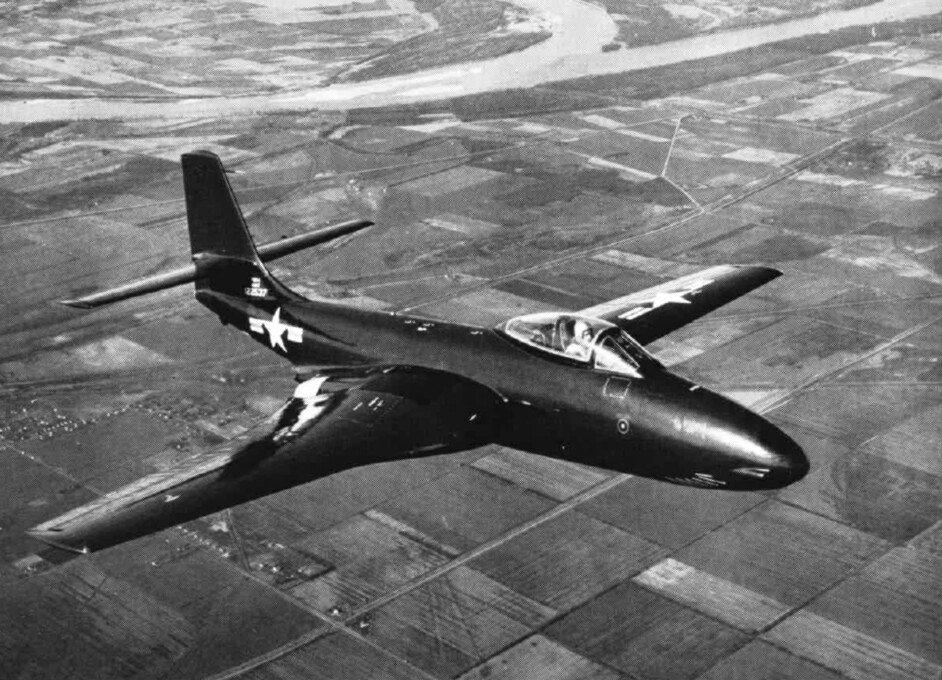
A full-scale mockup was completed in April 1945, but postwar budget reductions slowed development, delaying completion of the first prototype until late 1946.
Variants
The Banshee had a fair few variants over its 6 year production run, these are the more definitive ones.
F2H-1
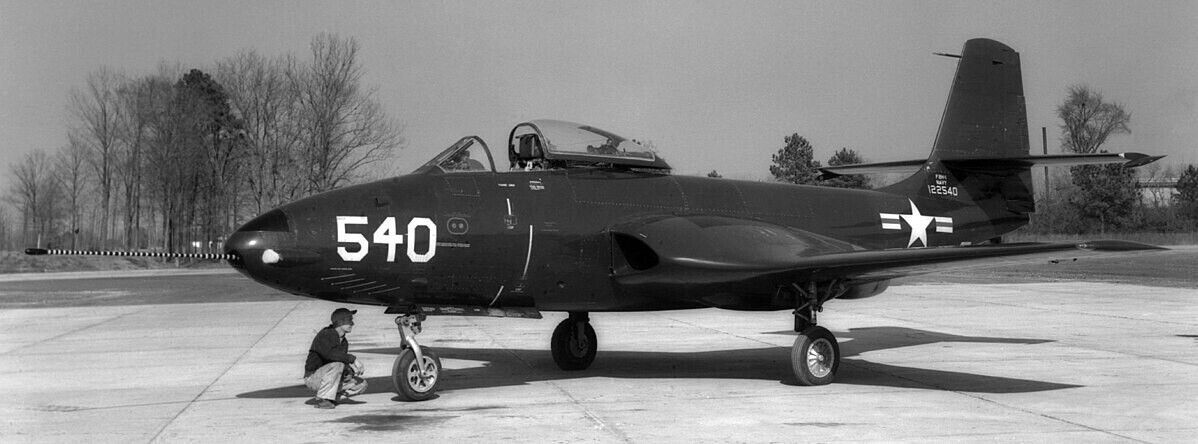
After the prototype XF2D-1, the F2H-1 entered production three months after the last FH-1 and featured a redesigned tail compared with the FH-1. There were also some changes in thickness of the wings and tail. All 56 contracted models were built, most retrofitted with 3,150 lbf (1,430 kgf) engines.
F2H-2/-2B
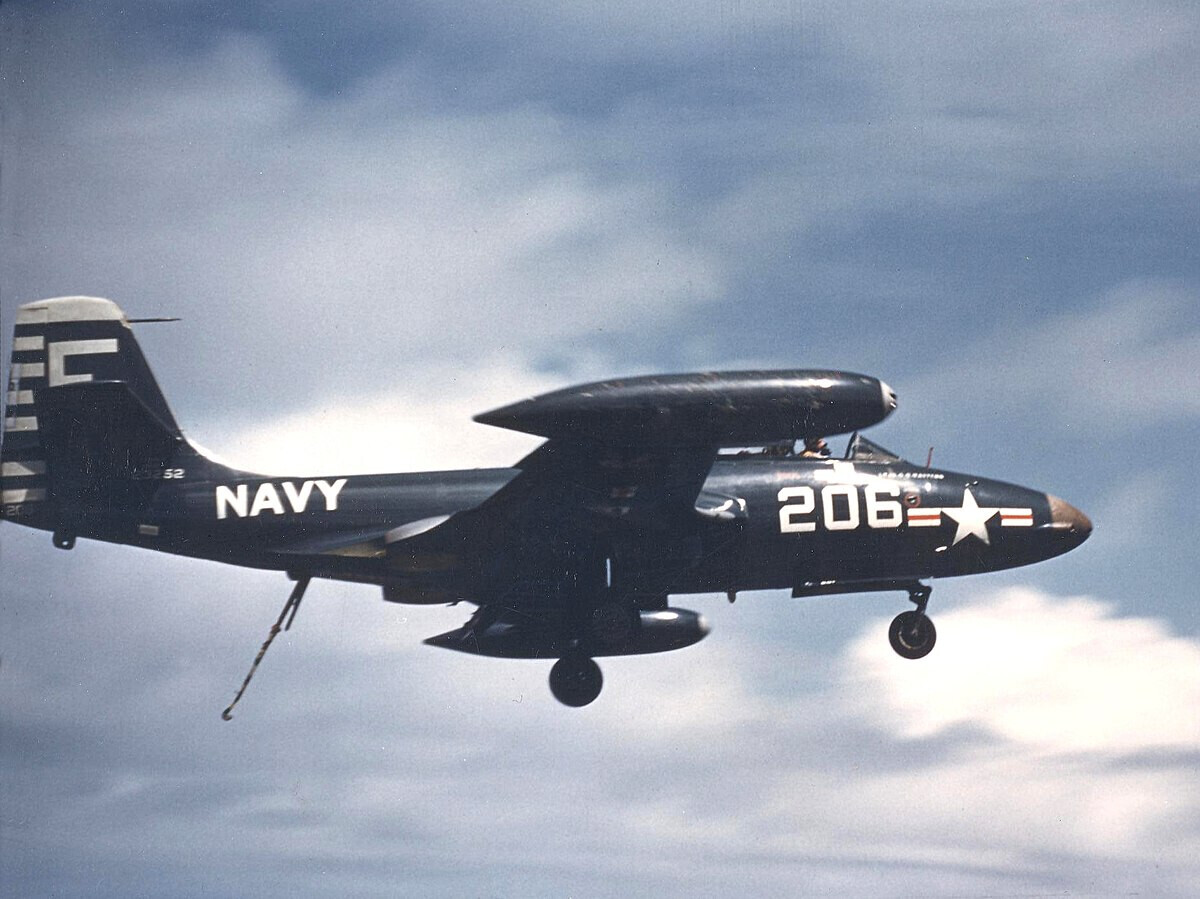
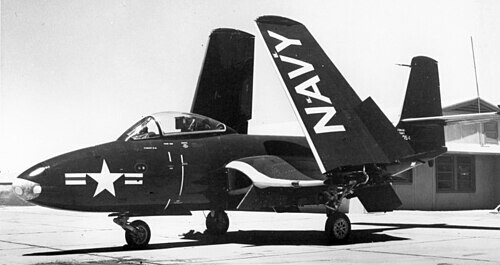
This was the most produced Banshee with several improvements, such as detachable wingtip fuel tanks and eight underwing weapons pylons for bombs or rockets, giving it a bomb load of 1,580 lb (454 kg). Lastly, stronger Westinghouse J34-WE-34 engines that produced 250 lbf (113 kgf) more thrust. Otherwise it was really similar to the previous F2H-1 Banshee in terms of dimensions. 308 were built.
The F2H-2B was a modification with an extra pylon in order to carry the Mark 7 or Mark 8 nuclear bomb, trading one cannon for the necessary electronic equipment. Only 25 built.
F2H-2P
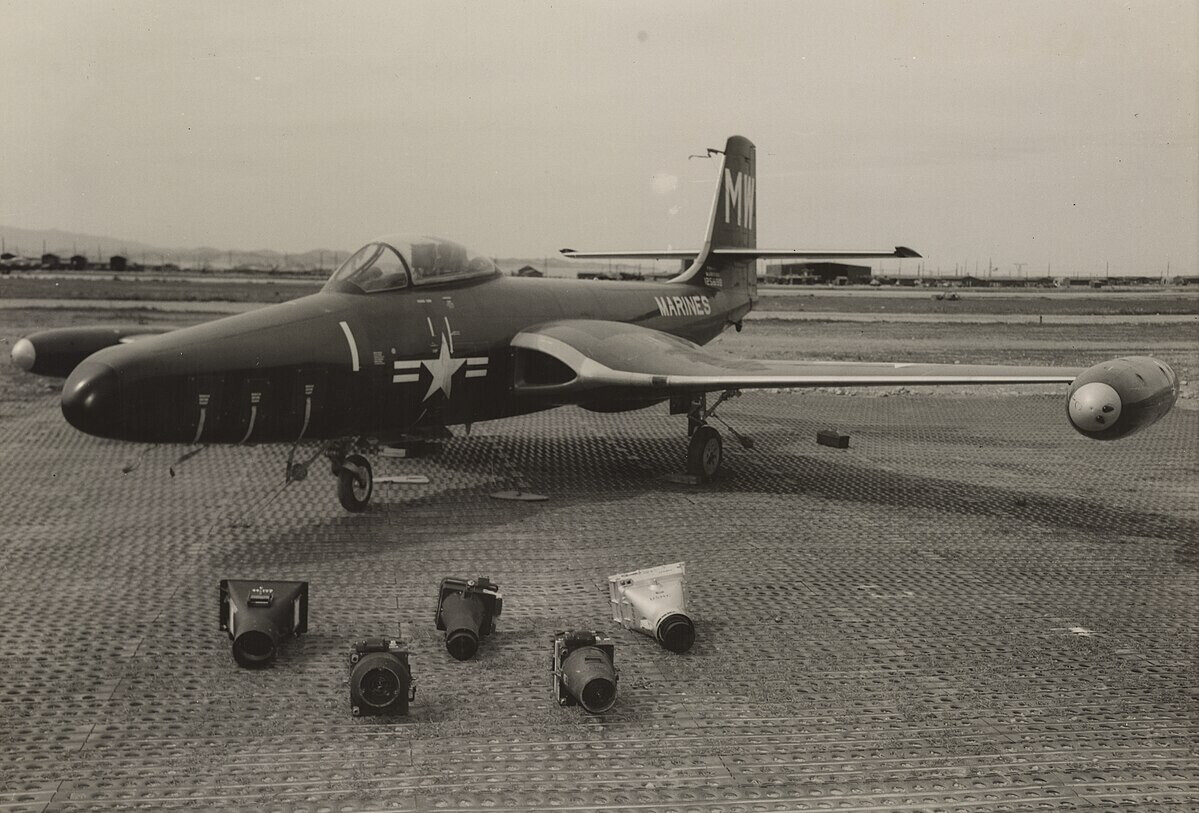
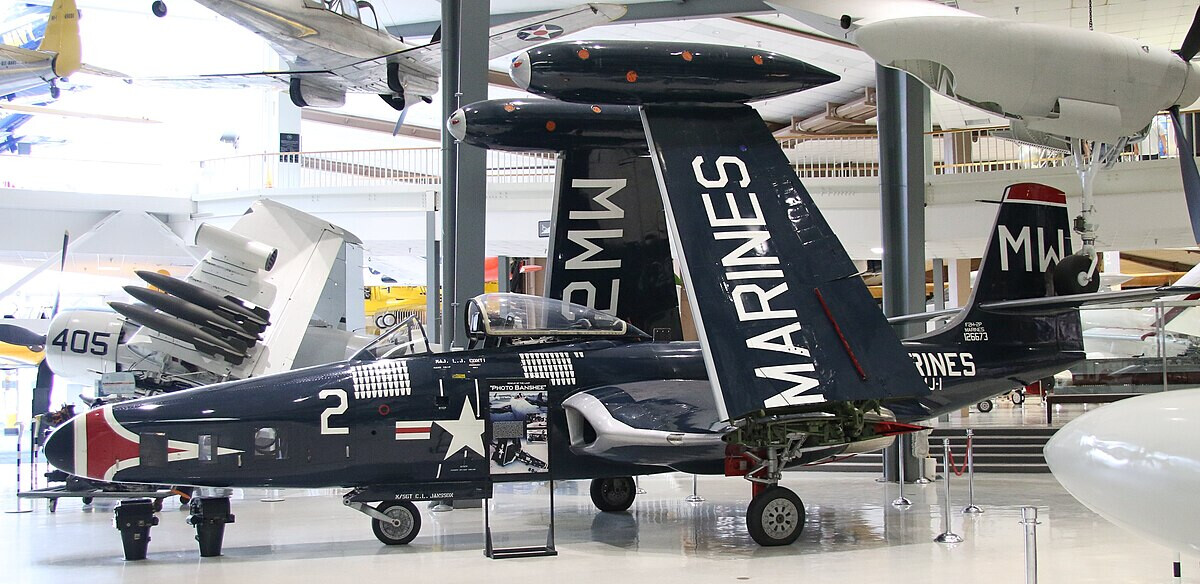
The F2H-2P was the photo-reconnaissance modification with a 2 ft 5 in (0.74 m) longer nose to fit camera equipment consisting of 6 cameras. This aircraft flew near identically to the standard F2H-2 and was the United States first jet powered reconnaissance aircraft. 90 built.
F2H-2N
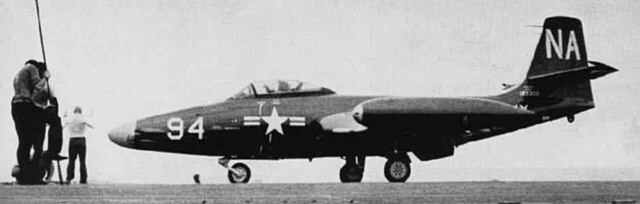
The F2H-2N was the night-fighter variant fitted with the APS-19A radar which was also capable of IFF. This was all fitted in a slightly lengthened nose and the guns, which were the same four 20 mm M3, were adjusted slightly to either side. Once again, despite these minor changes the aircraft handled the same. 14 built.
F2H-3 (F-2C)
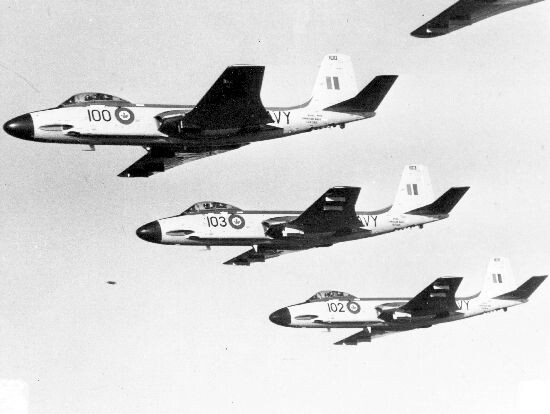
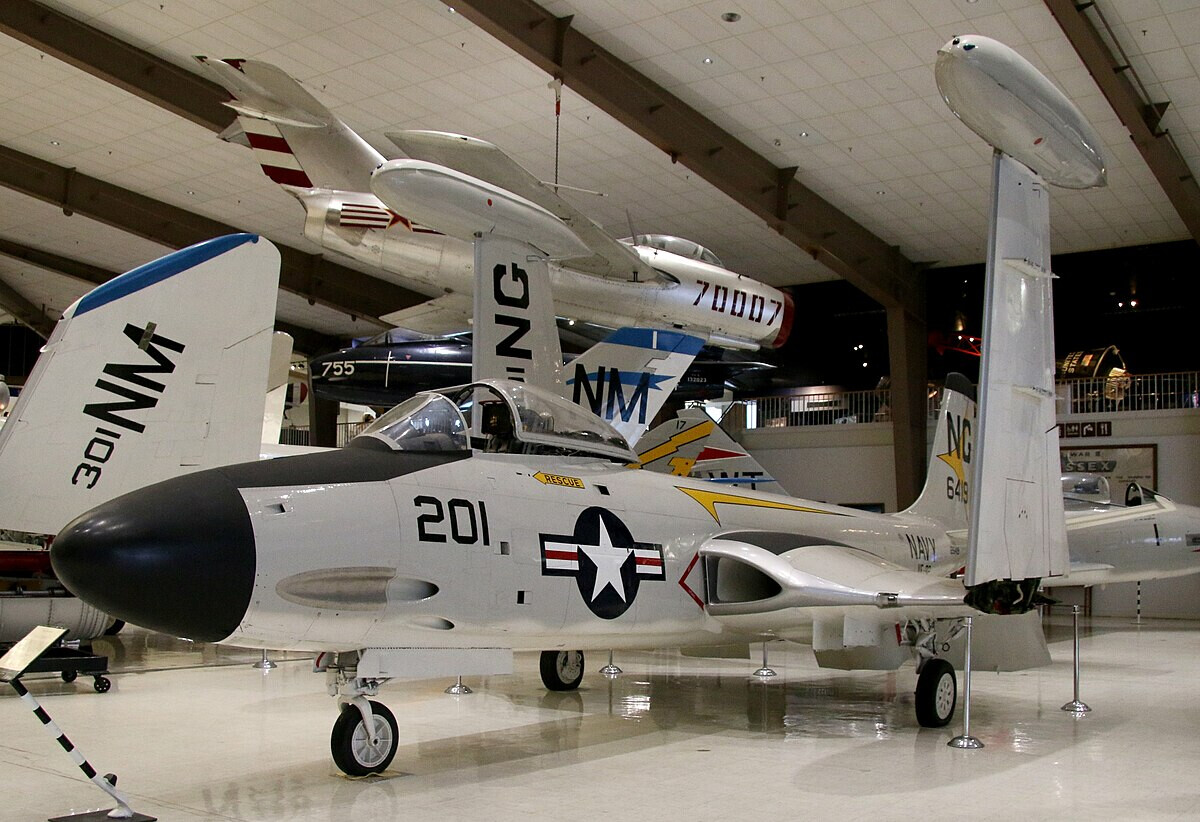
The F2H-3 was the last significant alteration. The fuselage was lengthened to increase internal fuel load. The detachable wingtip fuel tanks were reduced in size, but due to the aircraft’s higher internal fuel capacity, these tanks were not used. The horizontal stabilisers were moved from the vertical tail down to the fuselage and incorporated significant dihedral. Like the F2H-2N, a radar was fitted and the guns were shifted to accommodate the APQ-41 radar. Another four weapons pylons were added under the wings for a total of eight, and the bomb load was increased to 3,000 lb (1,361 kg). The F2H-3 also added provisions for aerial refuelling. These changes resulted in a longer, larger aeroplane that looked significantly different from its predecessors. 250 built.
F2H-4 (F-2D)
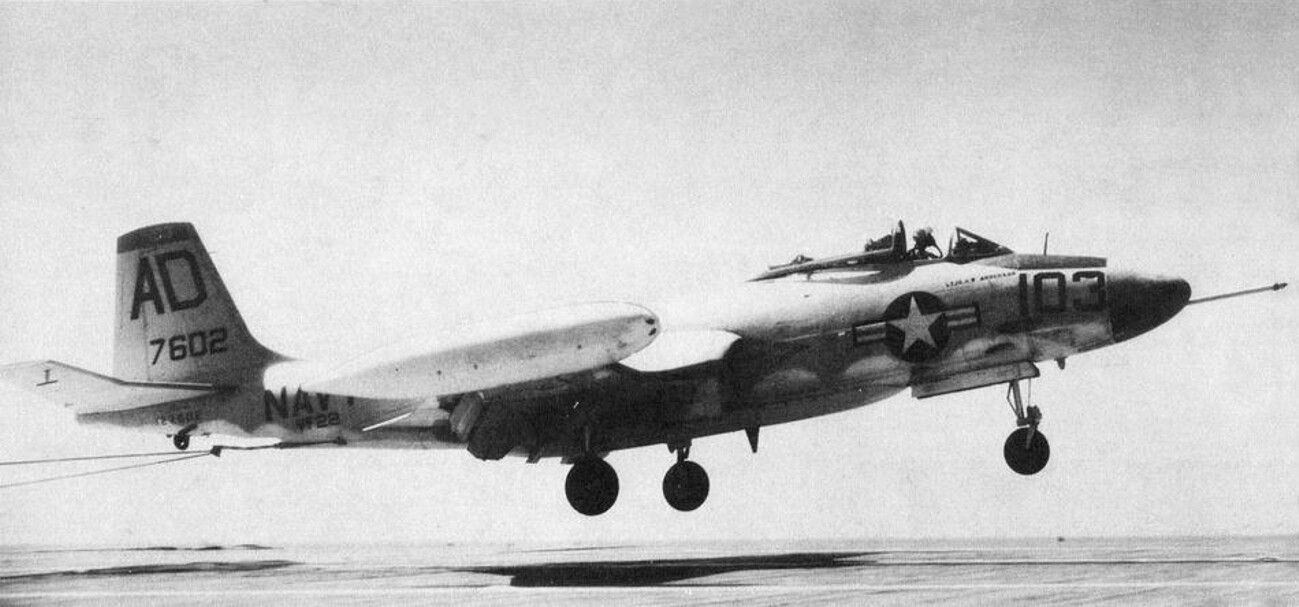
The final variant to be produced was the F2H-4. It had a Hughes AN/APG-37 radar and slightly more powerful Westinghouse J34-WE-38 3,600 lbf engines that increased the aircraft’s service ceiling to 56,000 ft (17,000 m). The F2H-4 was externally identical from the F2H-3. 150 built and redesignated to F-2D in 1962.
Combat Usage
The Banshee saw active service during the Korean War primarily as a high-altitude escort and reconnaissance platform. Deployed from carrier decks and operating with Task Force 77, F2H-2 Banshees flew early combat missions from carriers such as USS Essex and were employed to escort long-range USAF bomber formations and protect naval forces. Radar-equipped variants proved valuable for fleet defence and all-weather patrols, and individual squadrons rotated through carrier deployments throughout the conflict.
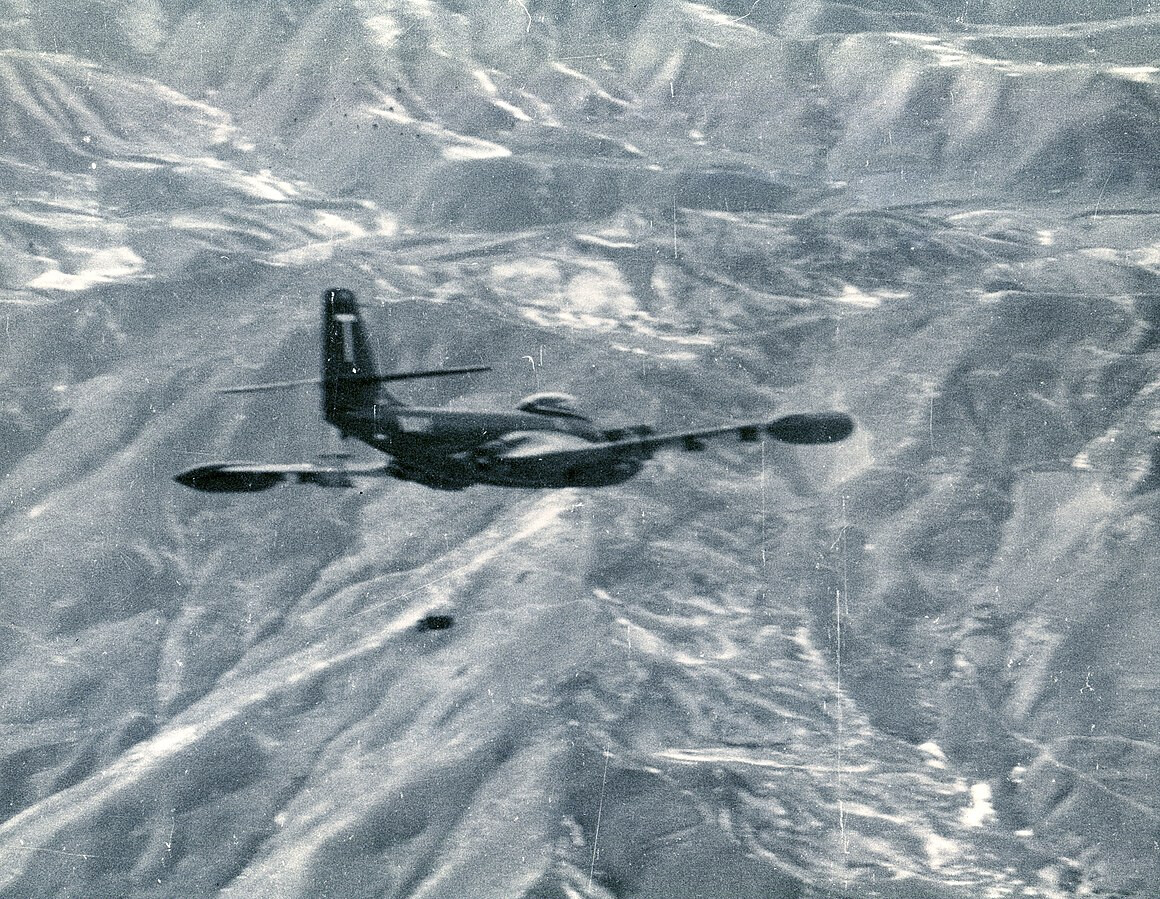
Reconnaissance versions (F2H-2P) and night-fighter versions (F2H-2N) were important to operations over Korea. The F2H-2P’s long range, high ceiling and camera installations made it a sought-after asset for battlefield photography and photo-reconnaissance missions; these aircraft routinely operated with fighter escorts in contested areas and suffered relatively few combat losses despite heavy use. After the war, F2H-3 and F2H-4 served as interim all-weather fleet-defence fighters until swept-wing and more advanced jet types supplanted them.
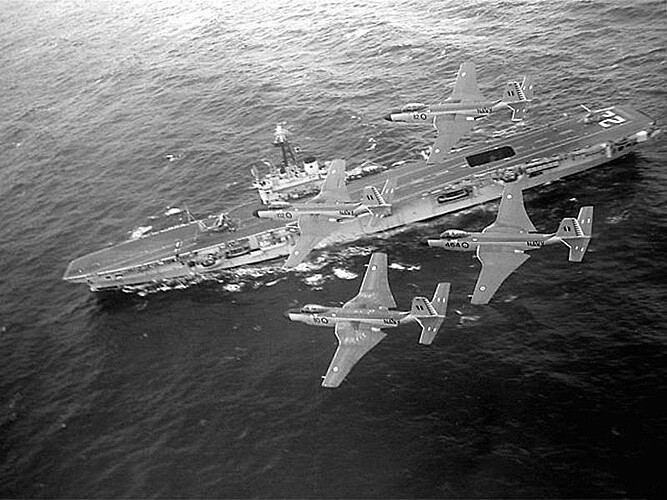
Canada purchased Banshees second-hand from the US and the type became the Royal Canadian Navy’s sole carrier-borne jet fighter. Beginning in 1955 the RCN received F2H-3 aircraft to replace piston-engined Sea Furies; they operated both from shore bases and from HMCS Bonaventure after her commissioning, serving as Canada’s principal naval air-defence fighter and, until the arrival of later types decades later, the only Canadian platform cleared to carry AIM-9 Sidewinder missiles. The Canadian Banshee fleet numbered in the high thirties and remained in service until shifting priorities toward anti-submarine warfare and limited fleet fighter requirements led to their withdrawal in 1962.
Was it any good?
Despite its rather limited service the Banshee was appreciated for its flight characteristics and it didn’t suffer too many losses either so overall it could be said it was a pretty good aircraft.
“Easy to maintain, ruggedly built, and very resistant to flak damage, the F2H-2, with its twin jets, had a high rate of climb that permitted multiple attacks on a target. The plane’s 30-minute endurance advantage over the Panther also impressed pilots from a flight safety standpoint. . . . After VF-172 completed its Essex tour, postwar analysis indicated that 35 percent of all the bombs dropped by the squadron had actually managed to cut a rail line. . . . the Banshees' performance and that of its pilots was extraordinary.”
Surviving aircraft
Many Banshees survive to this day, mainly in Canada and the United States as part of private collections or at naval air and marine corps air stations.
Bibliography
- https://en.wikipedia.org/wiki/McDonnell_F2H_Banshee
- https://www.silverhawkauthor.com/post/canadian-warplanes-6-mcdonnell-f2h-3-banshee
- https://www.usni.org/magazines/naval-history-magazine/2010/february/flying-banshee
- https://www.youtube.com/watch?v=XDQKPNrMg_o
- https://www.militaryfactory.com/aircraft/detail.php?aircraft_id=145
- https://www.history.navy.mil/content/dam/nhhc/research/histories/naval-aviation/Naval%20Aviation%20News/1990/1999/july-august/banshee.pdf