
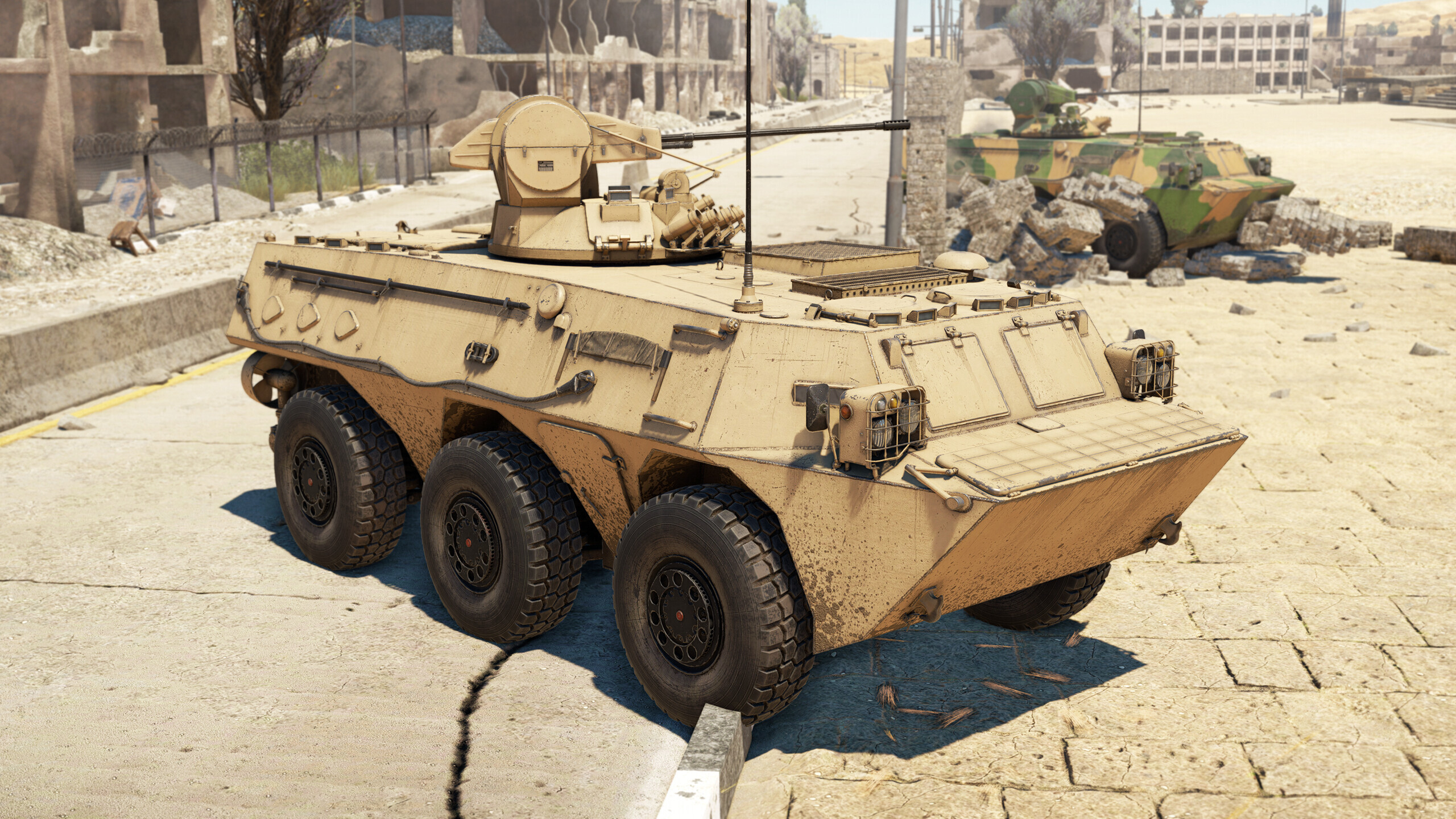
The Chinese WZ551 chassis serves as the workhorse of the PLA. Numerous variants have been developed on its platform, including ATGM carriers, several tank destroyers, a self-propelled artillery piece, and many other vehicles. One such derivative is the ZSL92 infantry fighting vehicle, introduced in a recent War Thunder update. But how does one master this steed from the Celestial Empire? For a detailed analysis, continue reading the article.
| Pros | Cons |
| Powerful and fast engine | Lacks a stabilizer system |
| Decent automatic cannon with armor-piercing ammunition belt | Average maneuverability |
| Equipped with smoke grenades | Weak armor protection and low survivability |
| Amphibious capability |
Armor layout
Like most wheeled armored vehicles, the ZSL92 does not stand out for its protection. Its 10 mm frontal armor, despite having sloped angles, often cannot withstand hits from heavy machine guns, while the 8 mm sides and 6 mm rear cannot even stop rifle-caliber bullets. The situation is slightly improved by internal 5 mm partitions that separate the engine and transmission compartment from the crew, though this does not always protect against the post-penetration effects of bullets or other projectiles. The turret armor consists of 13 mm plates and a 20 mm turret ring with an effective thickness of 27-28 mm. This provides protection for the ammunition feed system and fire control components against 14.5 mm rounds.
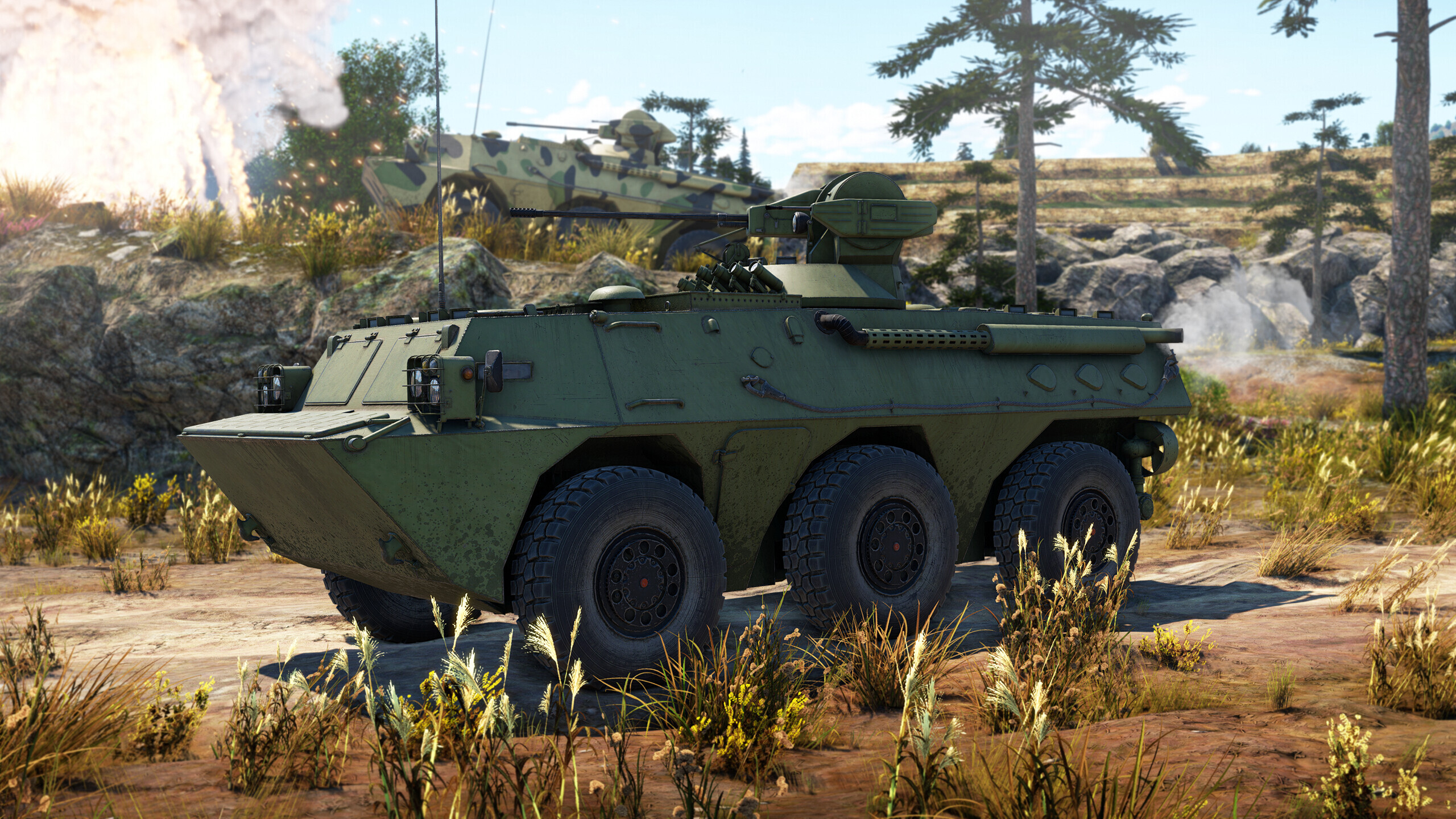
The APC’s survivability is low, as its weak armor provides inadequate protection for the crew against projectiles of virtually any caliber. The situation is further exacerbated by the cramped positioning of the driver and commander in the front of the vehicle, along with the gunner seated directly adjacent to the ammunition storage. However, the thin side armor offers a chance that an AP shell might pass through the vehicle without striking any critical components.
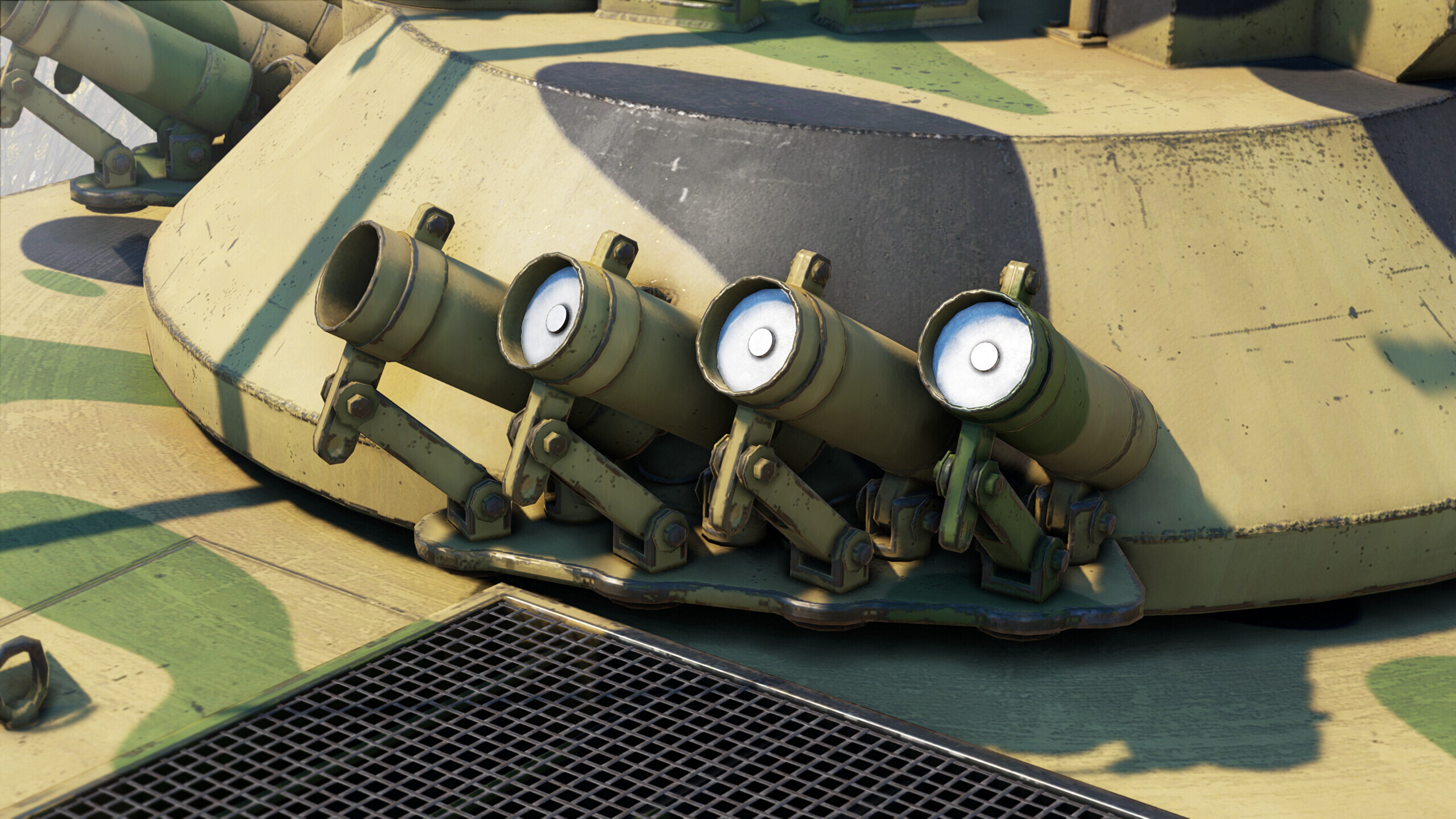
The vehicle’s high silhouette makes it an easy target not only for ground forces but also for aircraft. Under such conditions, to conceal the APC from the enemy or provide cover for allies, the Chinese vehicle carries eight smoke grenades, launched in salvos of two rounds each.
Mobility
The ZSL92 is powered by a 320-horsepower engine, which, combined with its weight of 15.8 tons, gives it a power-to-weight ratio of 20.3 hp/t. This provides the armored vehicle with good overall mobility. On paved surfaces, it can reach a top speed of 88 km/h, allowing it to quickly secure forward positions and be among the first to capture objectives. However, its wheeled chassis is less capable than tracked vehicles when traversing rough terrain, where its maximum speed drops to 55-65 km/h. Negotiating various elevations further reduces its speed to 12-25 km/h, while movement across loose surfaces such as snow, sand, or marshland limits it to 45-50 km/h. Compared to competitors like the SUB-I-II, M53/59, and AMX-10P, the Chinese vehicle’s mobility remains strong, only being surpassed by the R3 T20 FA-HS.
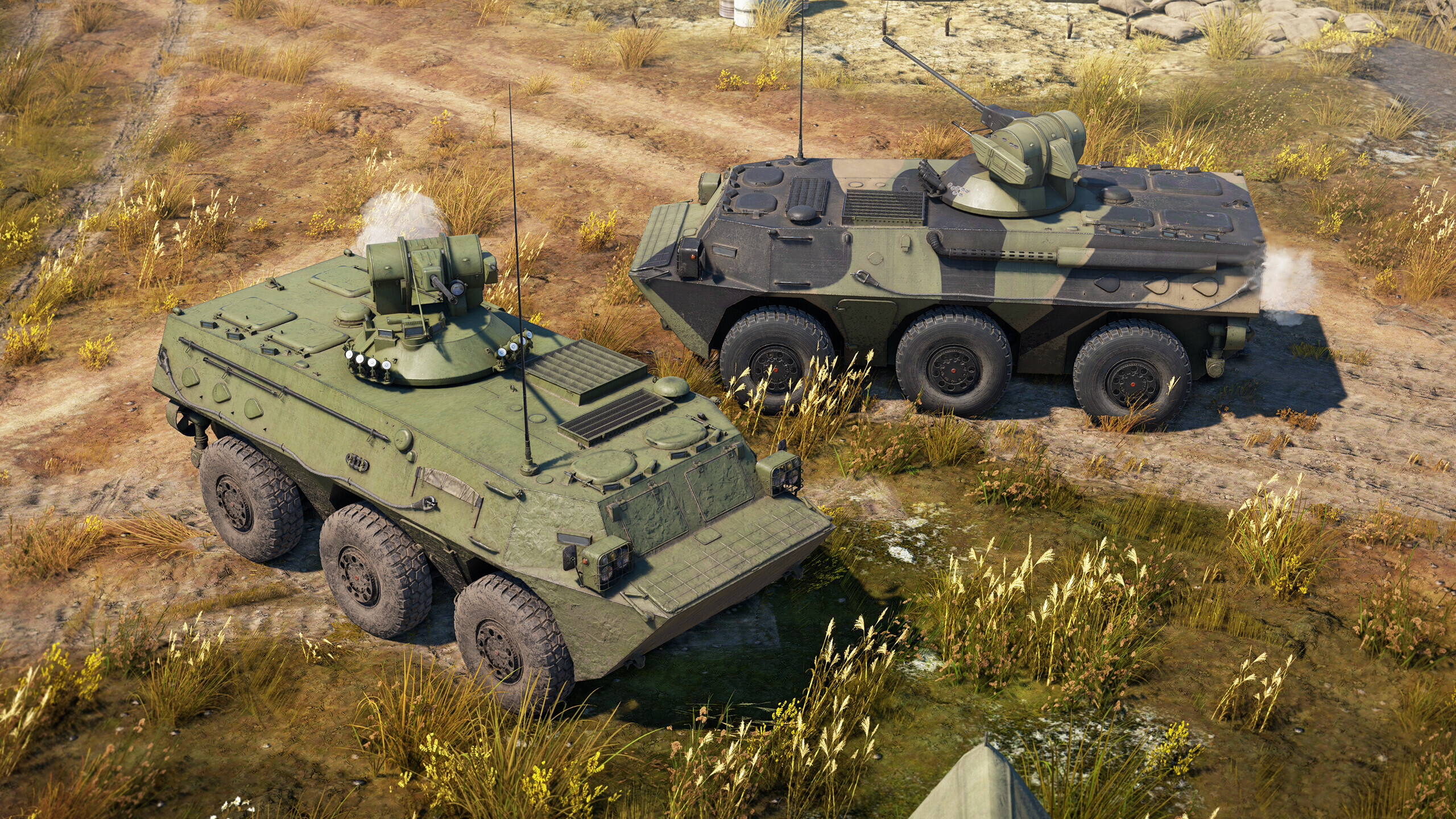
The APC’s maneuverability is rather average: despite having four steering axles, the vehicle responds sluggishly when turning. Its modest turning radius and overall size can become liabilities in urban combat, and these limitations, combined with a reverse speed of just 7 km/h, make maneuvering in tight spaces a slow process. This makes it difficult to quickly withdraw from a contested area or back away after an accidental collision with an obstacle. In this regard, the armored personnel carrier is outperformed by its chassis sibling, the AFT09, which boasts a smaller turning radius.
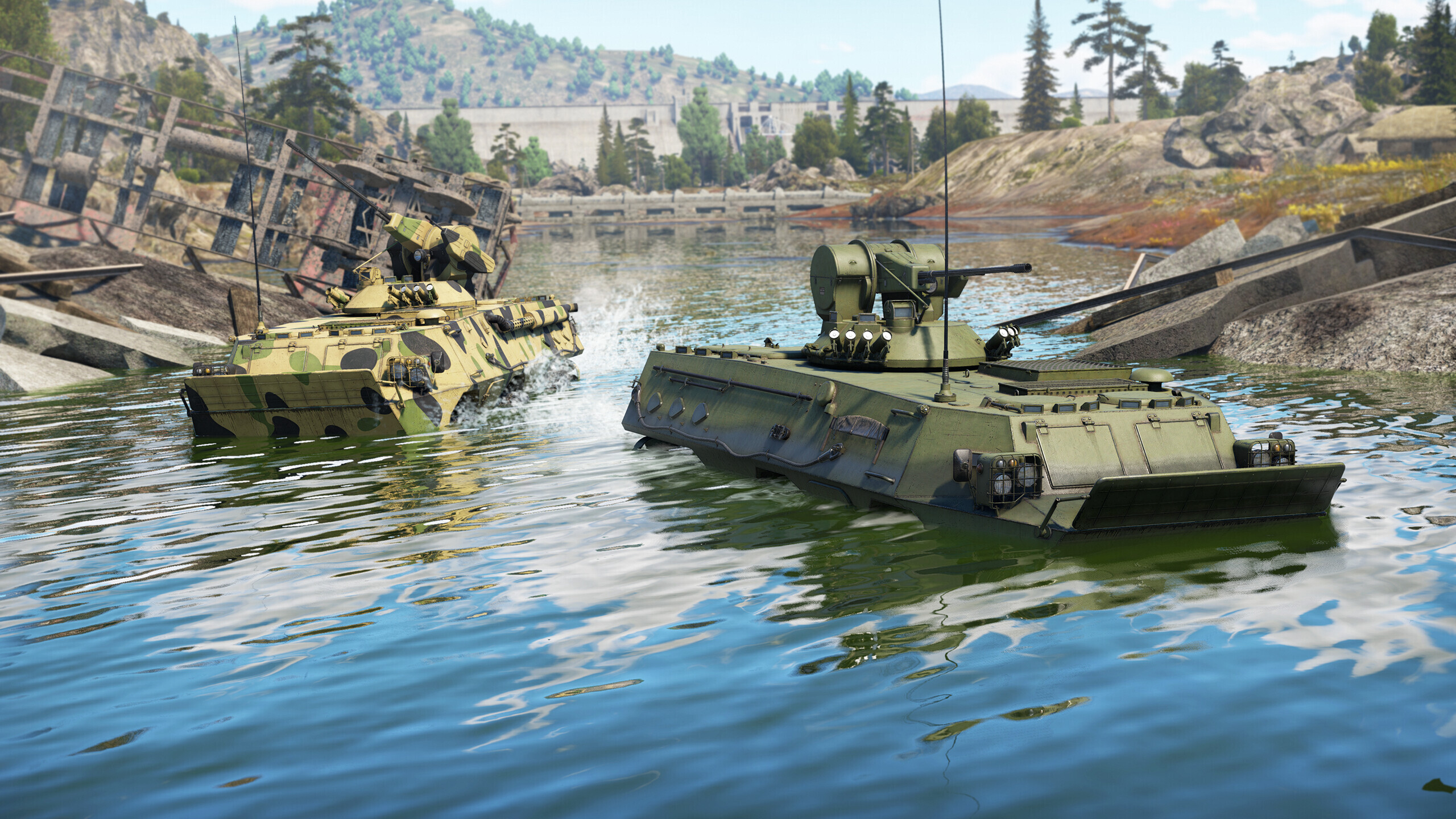
Furthermore, the vehicle features a lightweight chassis design and waterjet propulsion system, enabling it to traverse water obstacles at a speed of 9 km/h. This capability allows it to occupy unexpected positions on certain maps, catching inattentive opponents by surprise.
Armaments
Primary armament
The ZSL92 is equipped with a 25mm ZPT90 automatic cannon, which is a variant of the PG-87 anti-aircraft gun used on the ZSD63. While its rate of fire of 500 rounds per minute is relatively low compared to similar vehicles, it remains sufficient for quickly eliminating opponents. The total ammunition capacity is 400 rounds, with 200 rounds loaded per belt. This quantity of ammunition is adequate for destroying several light and medium tanks. The reload time of 32.5 seconds, reduced to 25 seconds for experienced crews, necessitates finding temporary cover during the process.
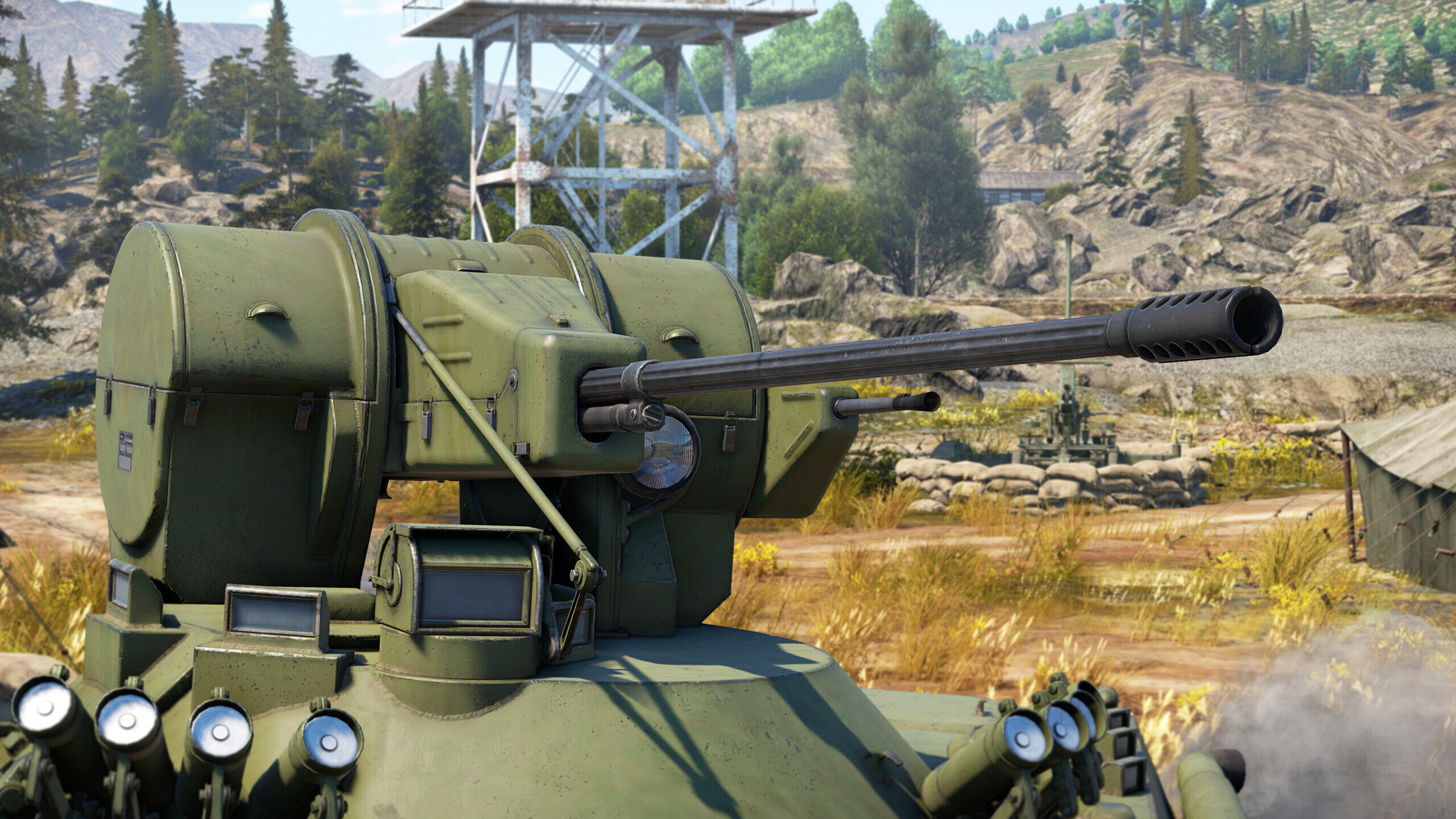
The base turret traverse speed is 31.5°/s with an elevation speed of 28°/s, increasing to 45°/s and 40°/s respectively for experienced crews. This enables both quick targeting of low-flying aircraft and rapid response to suddenly appearing ground threats. The vertical guidance range spans from -8° to +52°. While these parameters are reasonably good, engaging aircraft flying directly overhead remains impossible. Notably, the lack of a stabilizer combined with soft suspension makes accurate firing while moving nearly impossible. The vehicle’s prolonged rocking motion after coming to a stop further complicates aiming at unexpectedly emerging targets.
The automatic cannon can utilize the following ammunition belts:
- Standard: The default belt, composed of an equal mix of armor-piercing and high-explosive tracer rounds. It is reasonably effective against both aircraft and armored vehicles.
- Type 87 HE: This belt contains high-explosive tracer shells and is intended primarily for engaging aerial targets.
- Type 87 AP: This belt consists of armor-piercing tracer rounds and is used mainly against ground vehicles. With 61 mm of penetration at 100 meters, it can engage not only light tanks but also medium tanks when targeting their sides or rear.
Secondary armament
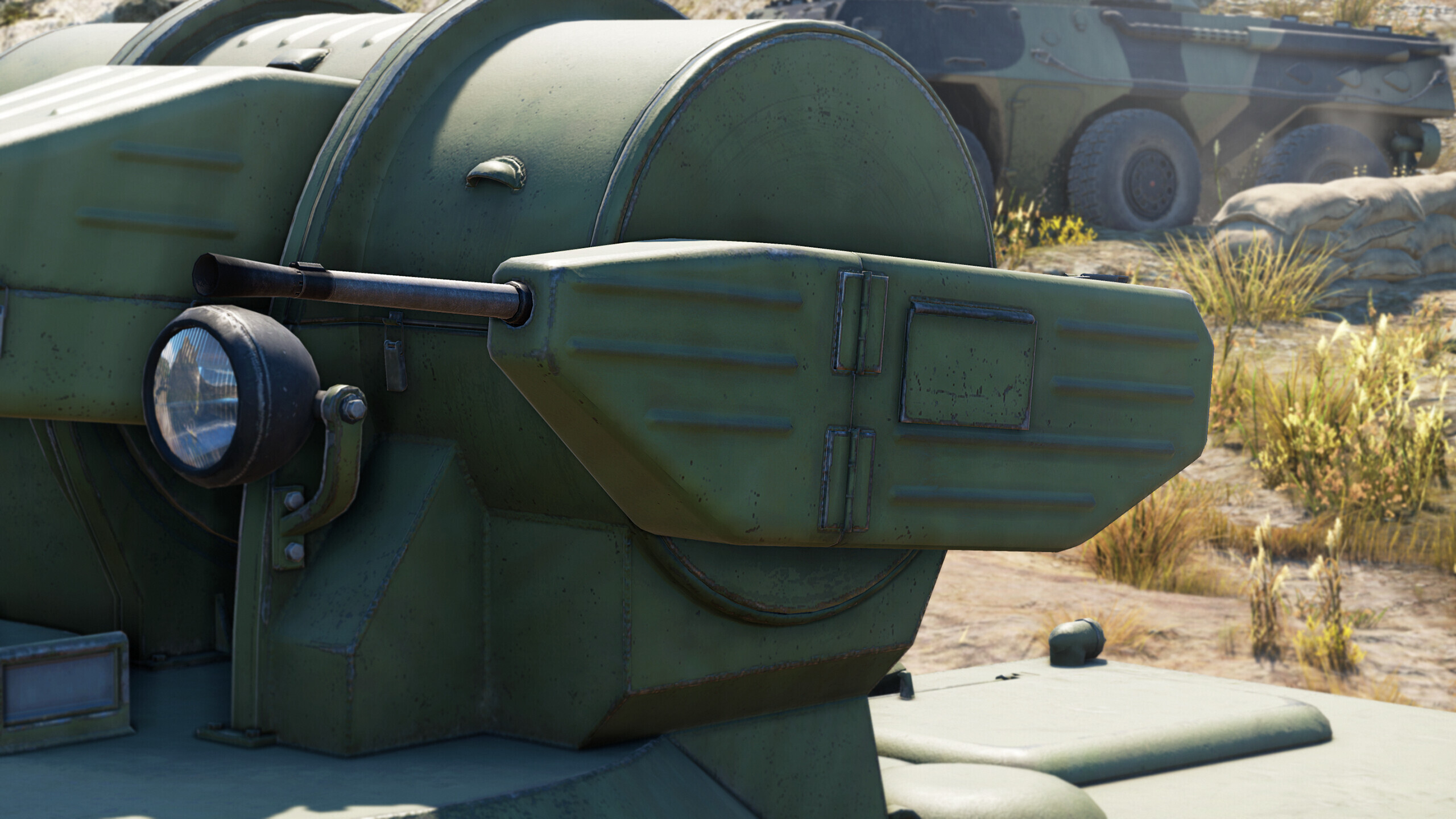
The mounted 7.62mm Type 86 machine gun can be used to destroy minor obstacles or mark enemy positions, though all other combat tasks are better handled by the main cannon.
Usage in battles
The ZSL92 is a highly versatile armored vehicle. Its powerful engine and strong acceleration enable it to capture objectives early and execute flanking maneuvers against opponents. Its 25mm automatic cannon is capable of engaging not only light and medium armor but also low-flying aircraft. While aggressive gameplay is possible, one must account for its extremely weak armor, soft suspension, and lack of a stabilizer. These limitations prevent effective engagement while on the move or in head-on confrontations.
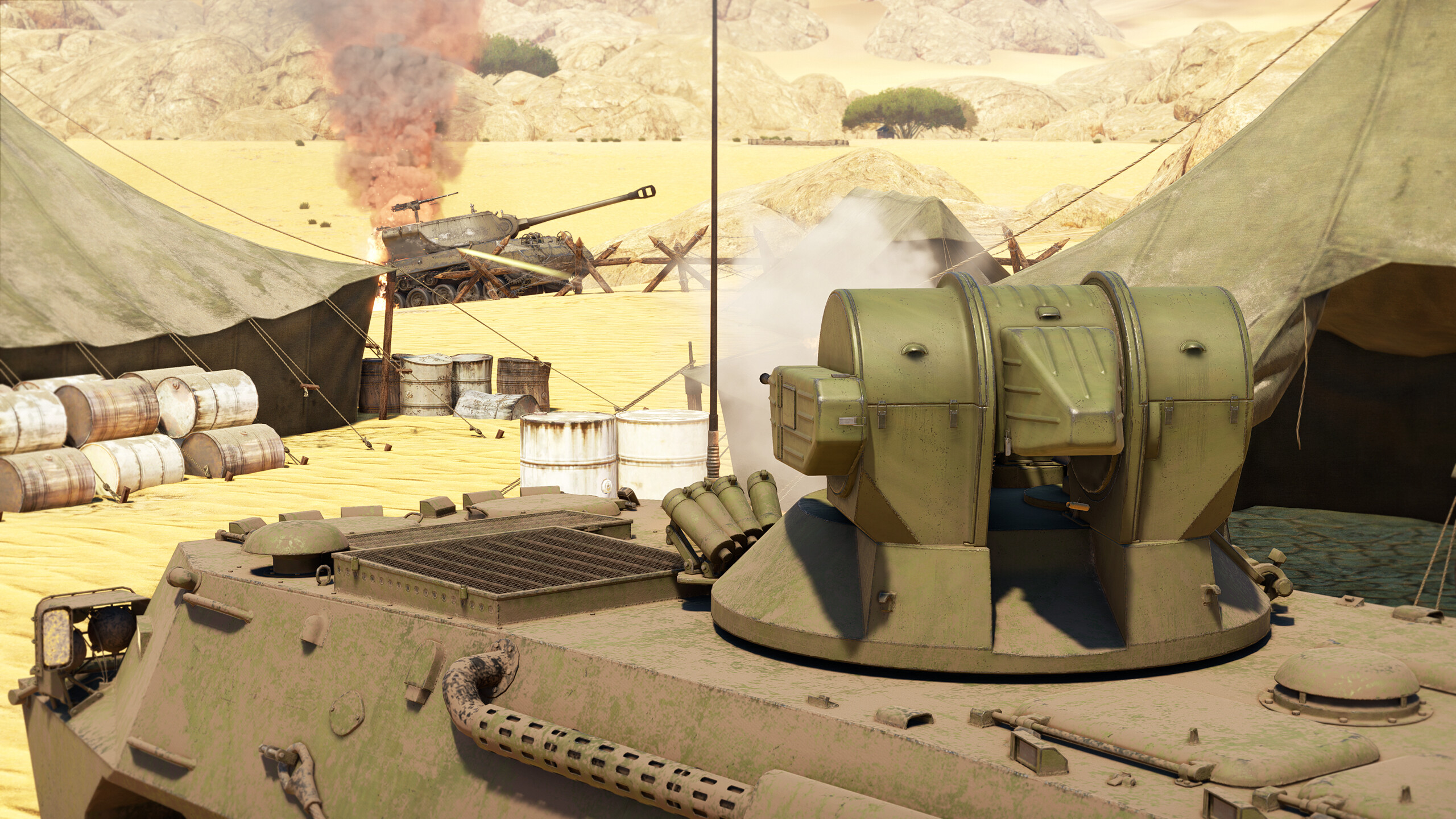
A safer and more effective approach is to outflank enemies or initiate attacks from ambush positions. This tactical approach works well against light and medium tanks; however, direct engagements with heavily armored vehicles like the Tiger II, Jagdtiger, Tortoise, or IS-2 often prove fatal for the ZSL92. In such situations, it is advisable to neutralize the threat by disabling its gun, tracks, or engine before either finishing it off or reposition to find a new target.
The APC performs exceptionally well on open maps but faces significant challenges in urban combat. The center-mounted turret forces the vehicle to either wait for enemies around corners or expose half of its hull when peeking, making it vulnerable to return fire. Despite good overall mobility, its maneuverability in confined spaces can become a critical disadvantage, particularly when facing enemy vehicles at close range that can destroy the ZSL92 before it can retreat.
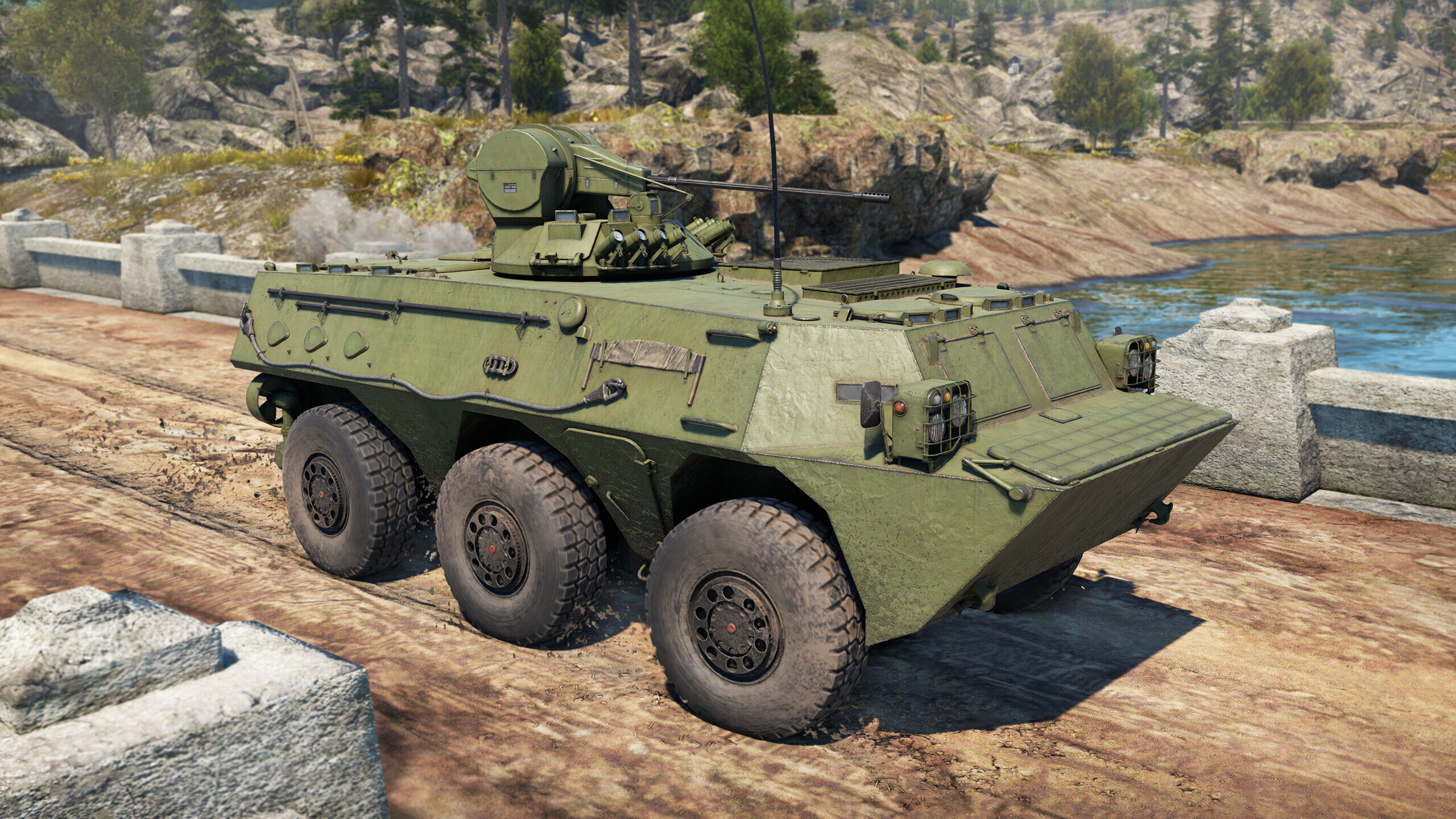
Unlike other armored personnel carriers, the ZSL has a relatively high profile, which serves as both an advantage and a drawback. The elevated turret position and the ability to depress the gun to -8 degrees enable effective firing from behind hills and other cover. However, the vehicle’s height makes it difficult to conceal within vegetation or minor terrain folds, increasing its visibility to both aircraft and ground forces.