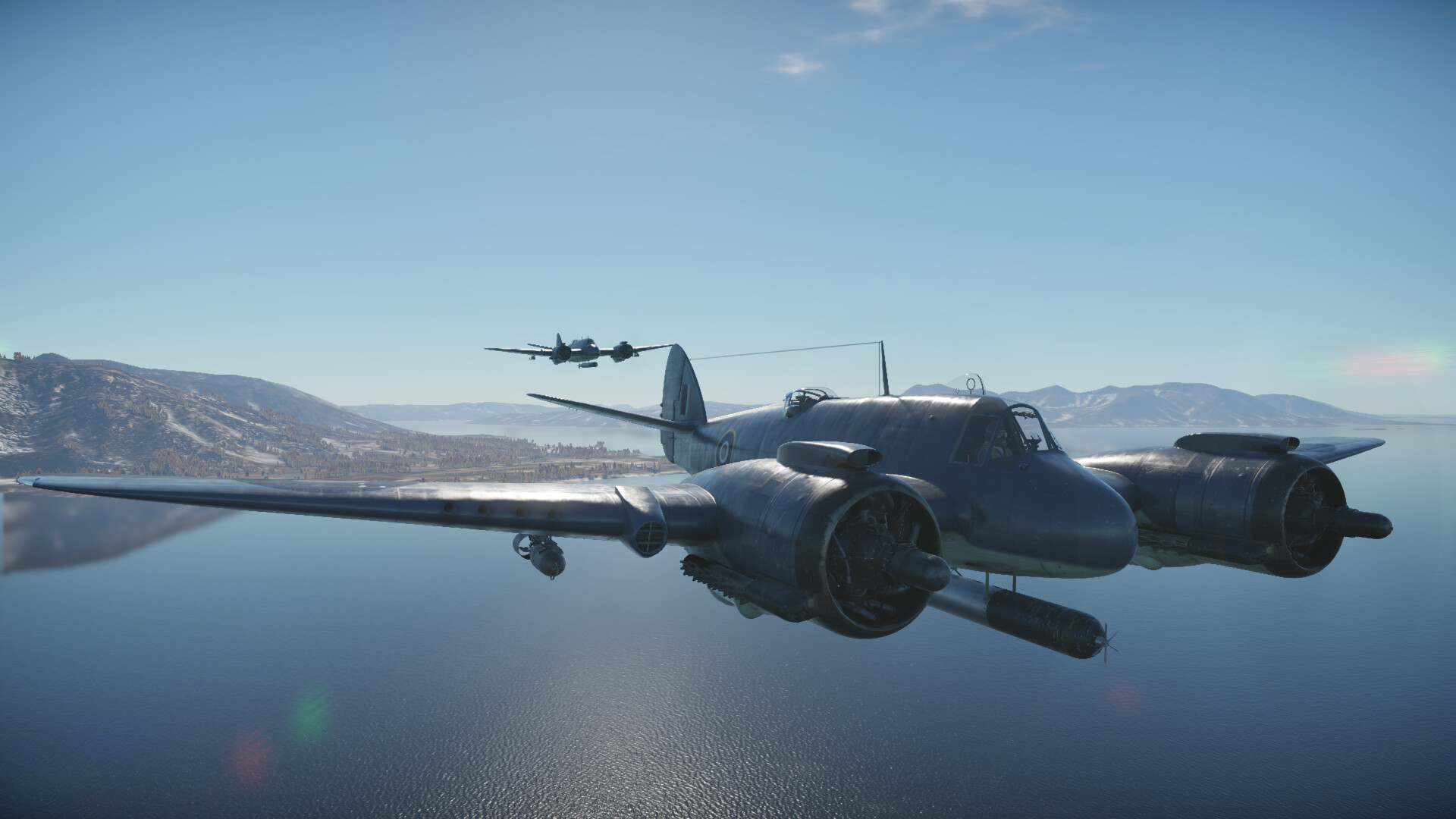
The Beaufighter Mk X is a versatile two-seat heavy fighter. Featuring strong armament and decent survivability, it excels in both air-to-air combat and ground attack missions. Its mix of cannons, machine guns, and suspended armament allows it to handle various targets, while its solid durability gives it an edge in prolonged engagements.
| Pros | Cons |
| Good offensive weaponry | Large size |
| Turret | Poor maneuverability |
| Good bomb load | No air brakes |
| Airspawn | Turret is weak |
| Good maximum speed |
Offensive Armament
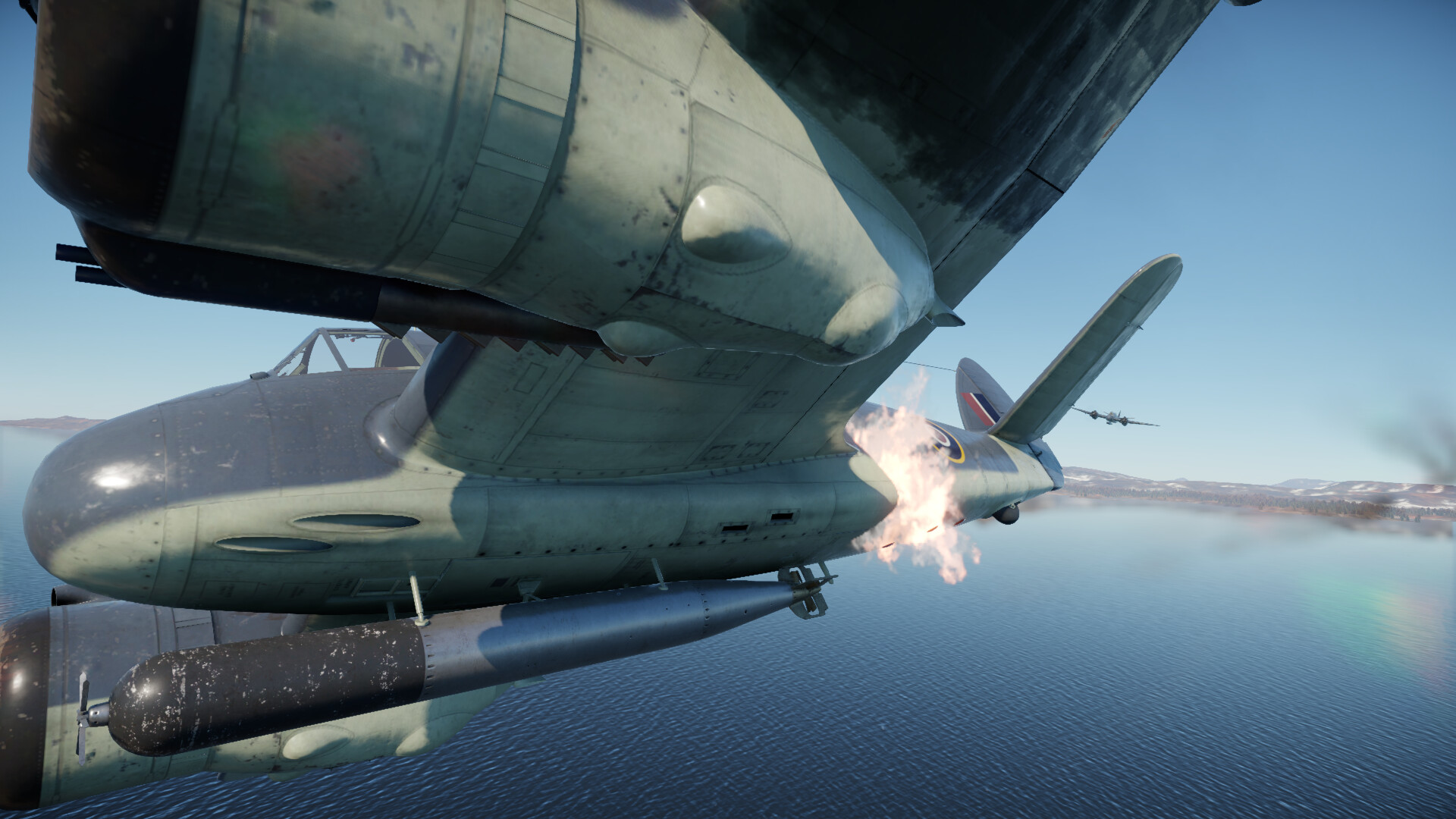
Offensive armament consists of: 4 × 20 mm Hispano Mk.II cannon and 6 × 7.7 mm Browning machine gun.
This is one of the best offensive armaments in its battle rating. The only similar representative in terms of armament is the Sea Hurricane Mk IC or Bf 110 F-2. However, Hurricane lags behind in terms of speed and does not have Offensive and Defensive machine guns. And Bf has less 20 mm cannons, only two of them.
Thanks to this, the Beaufighter is an excellent interceptor of high-flying bombers, head-on combat with attack aircraft or fighters, as well as direct ground support. This allows the aircraft to be used universally, as it is suitable for many roles, although it is not as effective as highly specialized aircrafts. Unlike almost every other British fighter, where weapons are placed in the wings, the Beaufighter has cannons arranged in the nose. This makes its very effective main armament quite easy to hit with.
The “Ground targets” belt allows you to penetrate up to 37 mm of steel. This allows you to attack lightly armored or open targets, or attack more heavily armored targets on the roof. This allows you to provide direct ground support to your ground allies by destroying enemy tanks and vehicles.
Defensive Armament
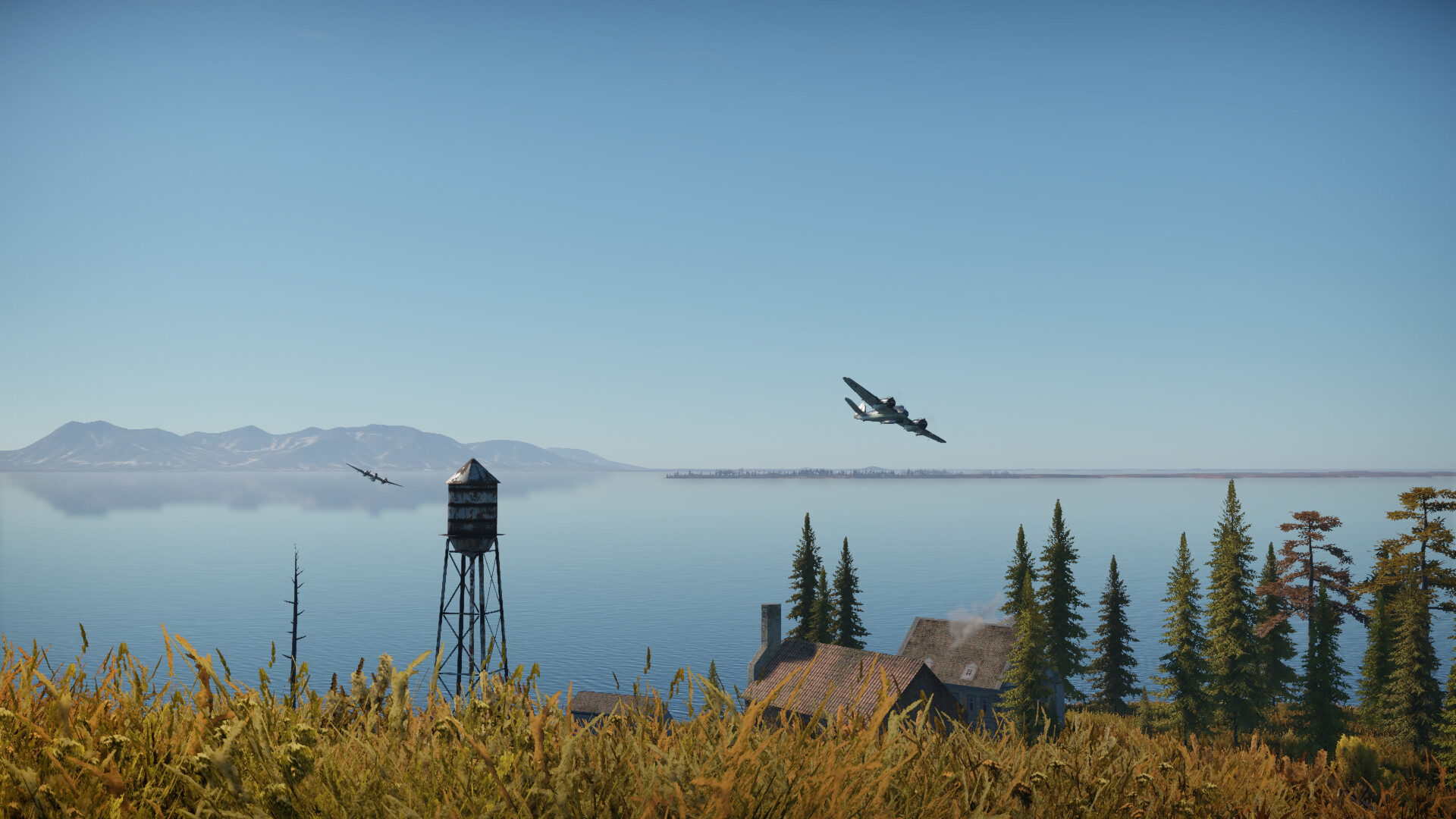
Defensive Armament is quite weak. And represented by only one 7.7 mm Vickers K machine gun. One 7.7 caliber machine gun is not capable of adequately protecting the large Beaufighter from enemy fire. Additionally, considering its inconvenient aiming angles, its existence is nothing more than decorative.
Therefore, it is not recommended to rely on it. It is worth perceiving this machine gun as a deterrent, or hoping that the AI-controlled gunner will inflict at least some damage on the enemy interceptor, giving you an extra chance to escape or fight.

Suspended armament
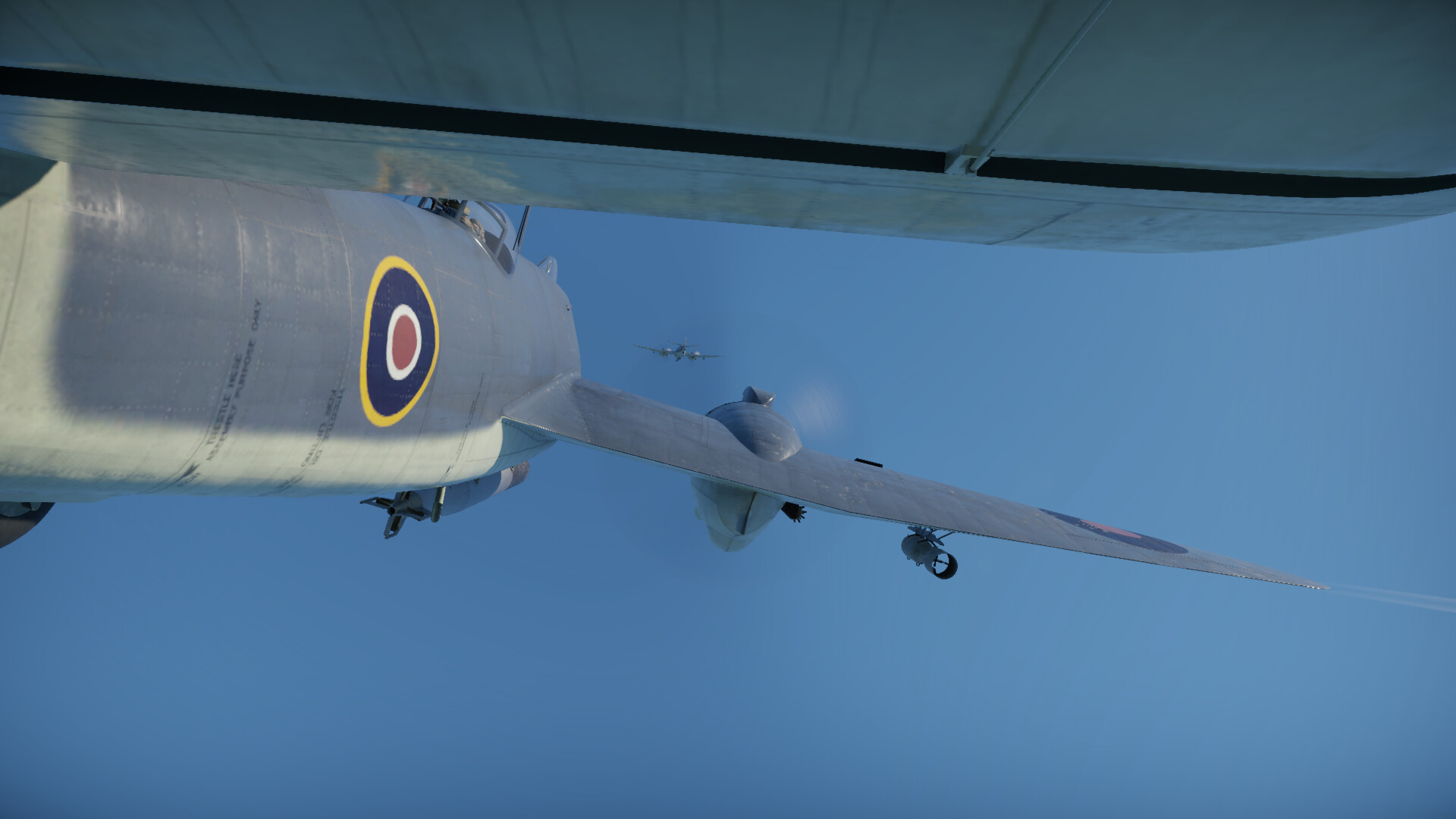
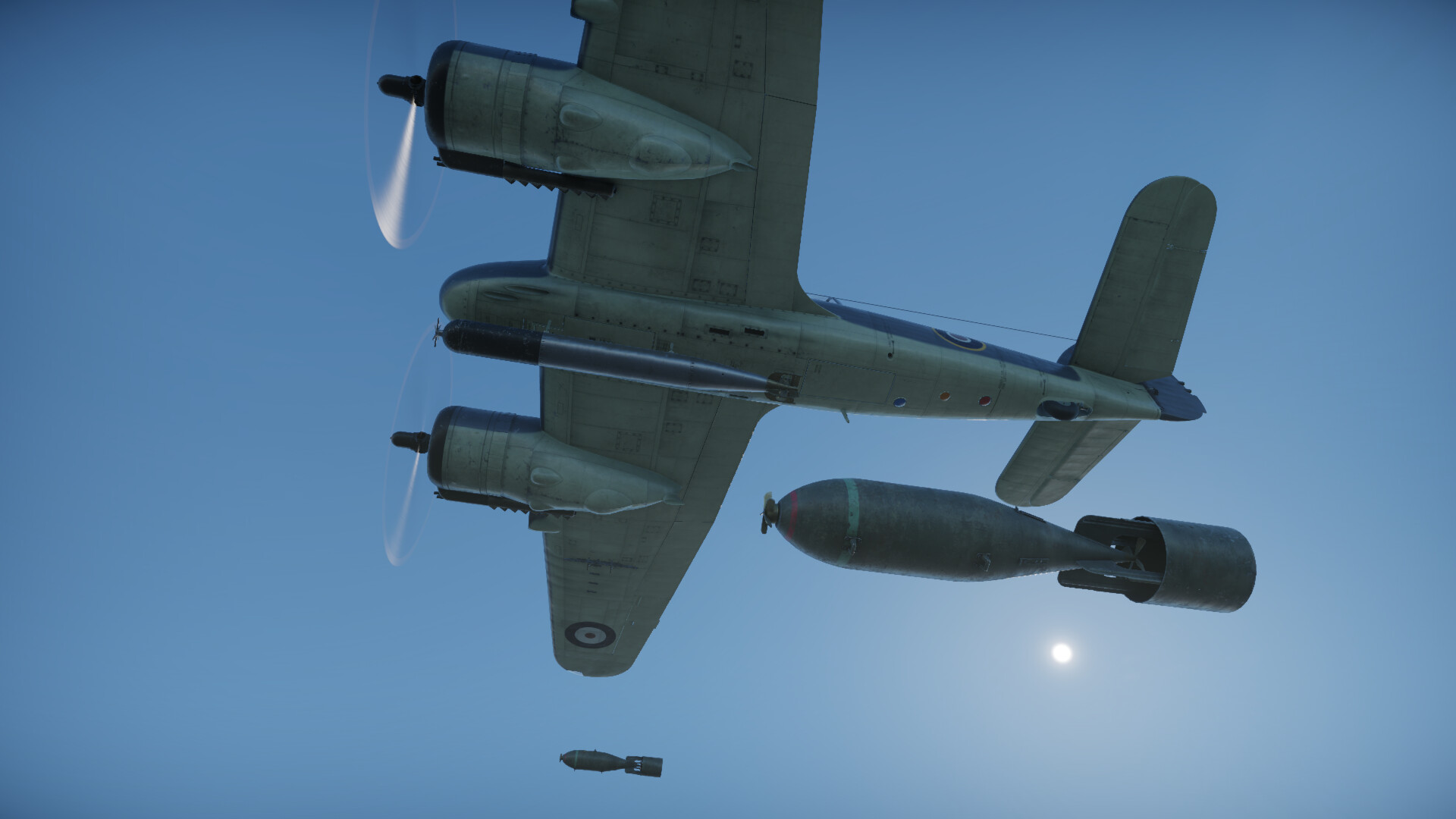
The Beaufighter can be equipped with a wide range of suspended weapons, providing flexibility for various ground attack missions. It can carry up to 930 kg of bombs, but is limited to three suspension points.
Among the most common weapon options are two 250-pound or 500-pound bombs mounted under the wings and a few bombs mounted in the center. For more powerful strikes, it can carry two 1,000-pound bombs, which is close to its maximum load. Alternatively, the Beaufighter can carry four RP-3 rockets. These rockets are only effective against large, lightly armored, or open targets.
However, flying with 1,000-pound bombs makes the aircraft slow and difficult to control. After dropping one of these bombs, a weight imbalance occurs. The Beaufighter copes with this quite well; it is not as critical as in small single-engine aircraft, but it still makes the aircraft less comfortable to fly. It is best to drop the second bomb as soon as a suitable target appears in order to restore stability.
This makes it possible to assemble similar sets for attacking different targets:
Ground (bombs):
4 × M.C. 500 lb Mk.I bomb or 2 × M.C. 1000 lb Mk.I bomb
Universal and most recommended set. Most effective for destroying any targets
Ground (rockets):
8 × RP-3 rockets and 2 × M.C. 500 lb Mk.I bomb
Useful only for attacking open and lightly armored vehicles. Situational set that is very effective in its niches.
Ships:
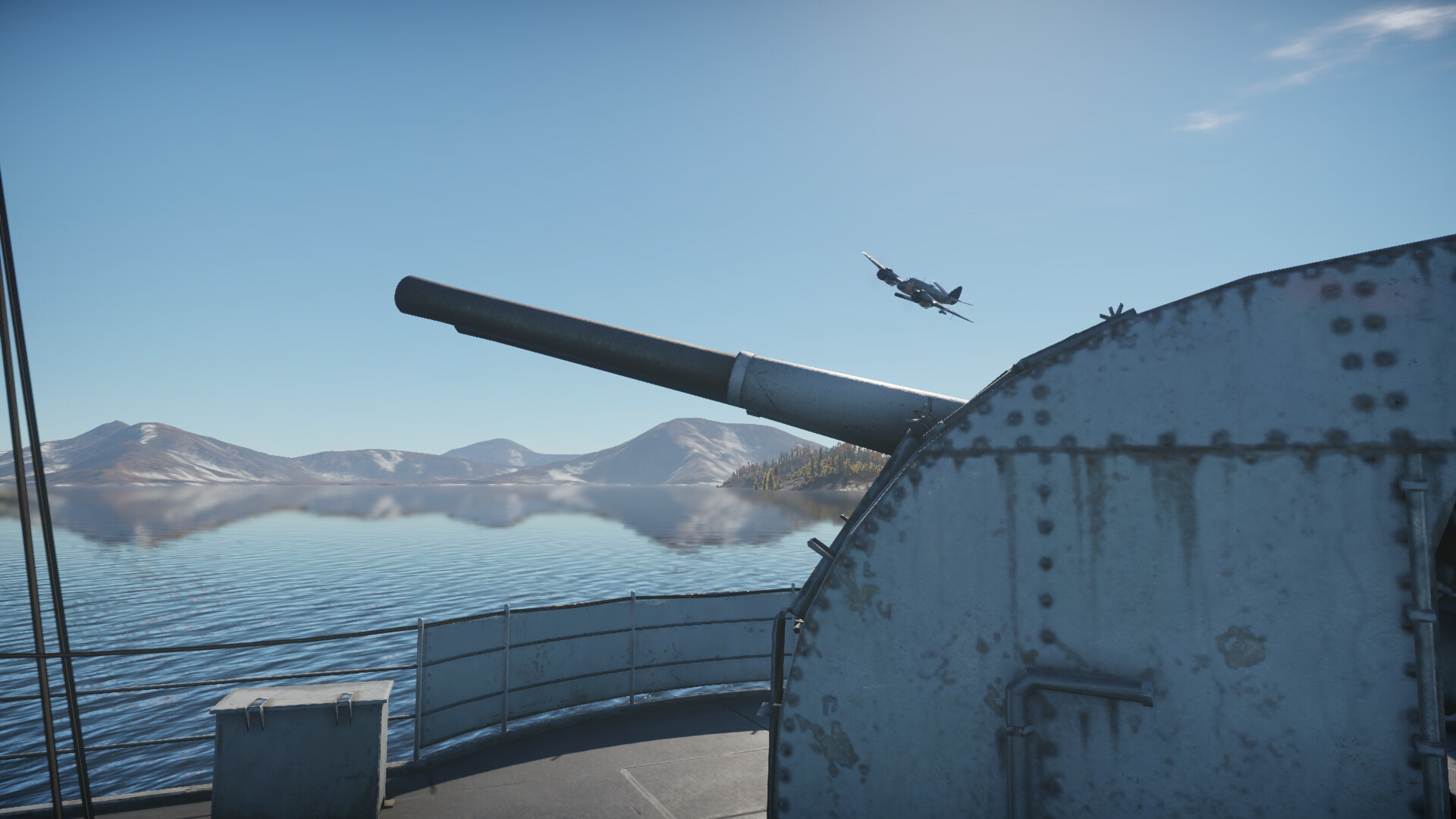
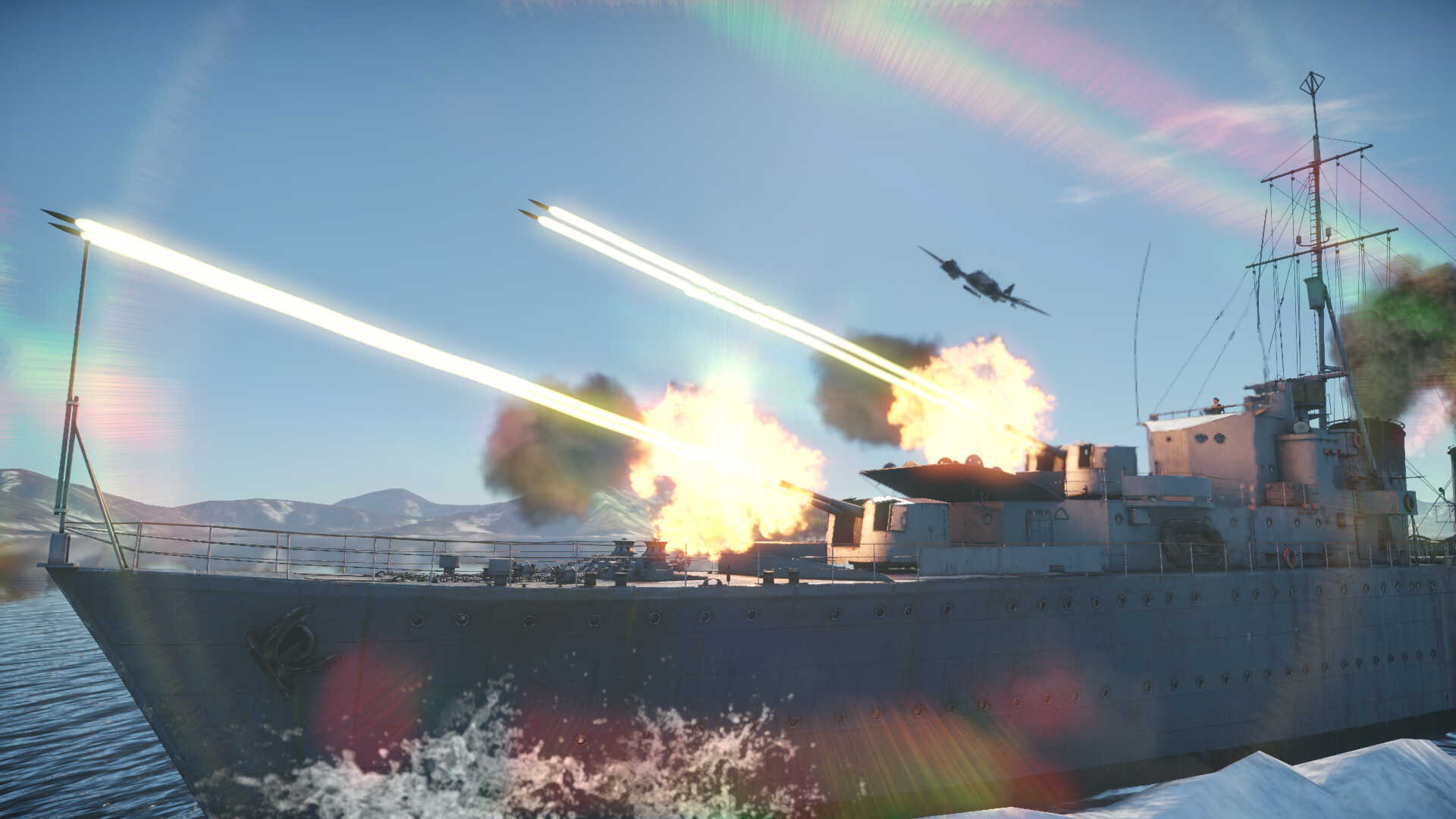
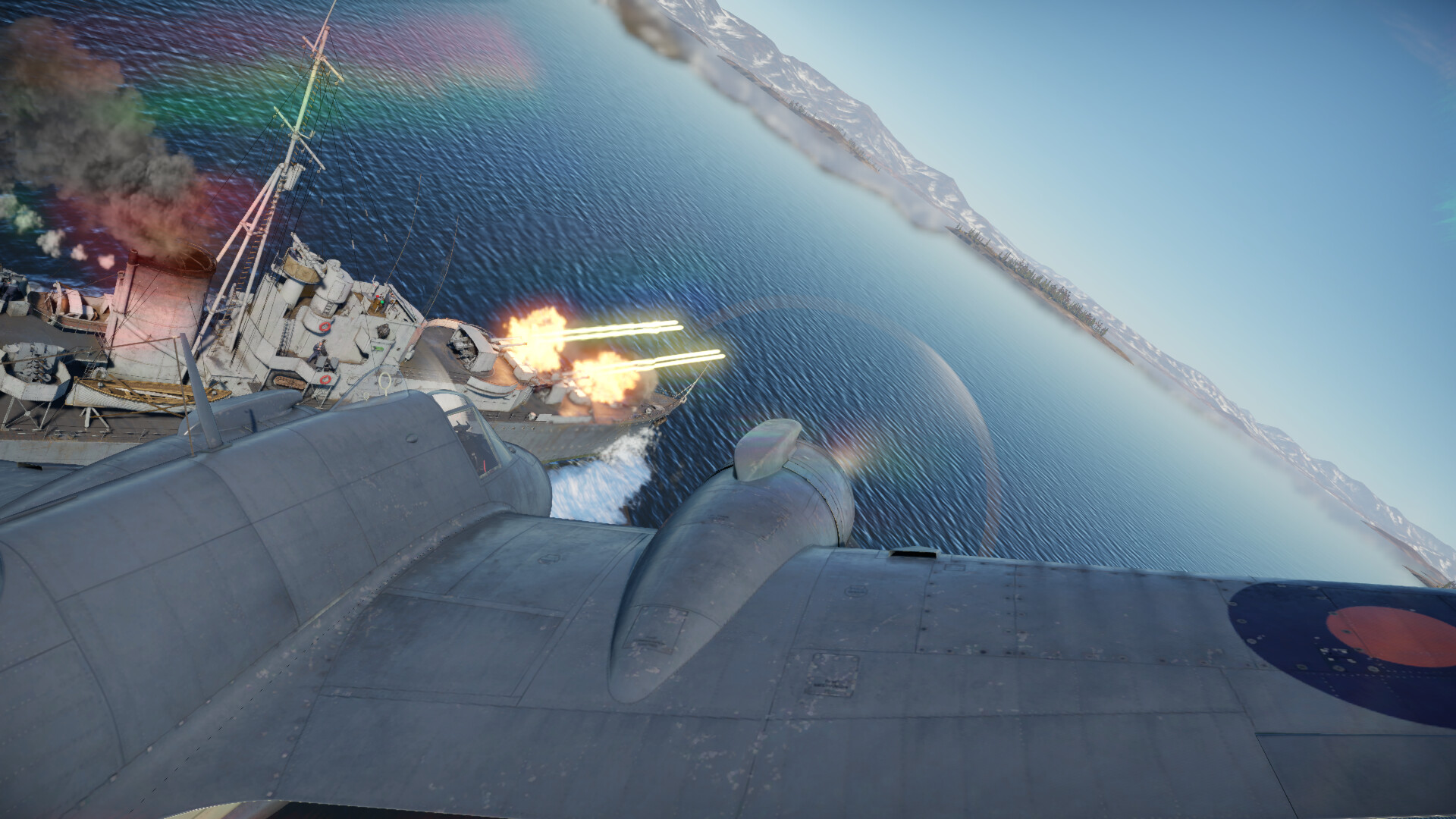
18 inch Mark XII torpedo and 2 M.C. 250 lb Mk.I bomb on wings
Only useful in naval battles
These sets will be enough for attacking various targets using Beaufighters for ground support. It should not be forgotten that 20mm cannons have not bad armor penetration and can inflict considerable damage not only on air targets but also on ground targets!
Survivability and Armor

The Beaufighter has light armor, but some areas, such as the gunner’s side and the pilot’s side, are covered with thick 25 mm steel plates. This protects crew from small-caliber bullets, increasing survivability.
The fuel tanks are located on the wings and are completely hermetically sealed. This reduces the chance of the aircraft catching fire. Consequently, the greatest threat to the Beaufighter is posed by autocannons anti-aircraft fire, capable of ripping off substantial sections of the airframe.
The loss of one engine is also not critical. The aircraft loses a large percentage of its speed and maneuverability, but can return to the airfield without any problems with one engine.
Flight Performance
The Beaufighter usually cruises around 340–360 km/h during low-altitude flight, and can push to ~410 km/h in level flight if not carrying payload. While the aircraft is technically capable of reaching to 490 km/h, such speeds are rarely achievable under combat conditions — especially with ordnance attached or during low-level attack runs. Using 110% of the aircraft’s power helps to increase speed by 30-40 km/h. Diving speed is decent and the airframe can tolerate fast dives for short periods.
In terms of climb performance, it is adequate for its role, but not fast enough to quickly reposition or chase enemy bombers. Players should not expect to win altitude fights against most single-engine fighters.
As a heavy twin-engine aircraft, the Beaufighter is sluggish in most axes of control:
- Roll rate is slow and gets worse the faster you go. Reversing direction or evading shots through banking is very limited, especially when compared to lighter, single-engine fighters like Spitfires or Typhoons, the Beaufighter falls behind in nearly every performance metric. Dogfighting against dedicated fighters is rarely in the Beaufighter’s favor. At low speeds or with flaps deployed, roll response improves slightly but remains poor overall.
- Pitch response is moderate at lower speeds but becomes stiffer as speed increases. You can perform basic maneuvers like boom-and-zoom attacks or slight vertical turns, but sustained dogfighting is not viable. Small single-engine aircraft are more suitable for this purpose.
- Yaw control is acceptable, and the large rudder helps with lining up shots in ground attack runs or correcting aim during shallow dives. At high speeds, yaw response becomes less smooth and more abrupt, with slower reaction compared to medium speeds. However, the change is not severe, and the aircraft remains adequately maneuverable.
That said, this disadvantage is partially offset by its strengths in other areas. The Beaufighter boasts significantly heavier firepower, a much larger payload, and defensive turret. These features allow it to carry out roles that pure fighters simply can’t, such as ground attack or bomber interception with high firepower. But in terms of speed and maneuverability, the Beaufighter lags behind its smaller brothers, without any chance of catching up.
Flaps (combat, takeoff, landing) provide a slight edge in tight turns or evasive maneuvers, particularly at low speeds. However, deploying them inappropriately can lead to loss of control due to the aircraft’s heavy frame and limited engine power.

Usage in battles
Air RB
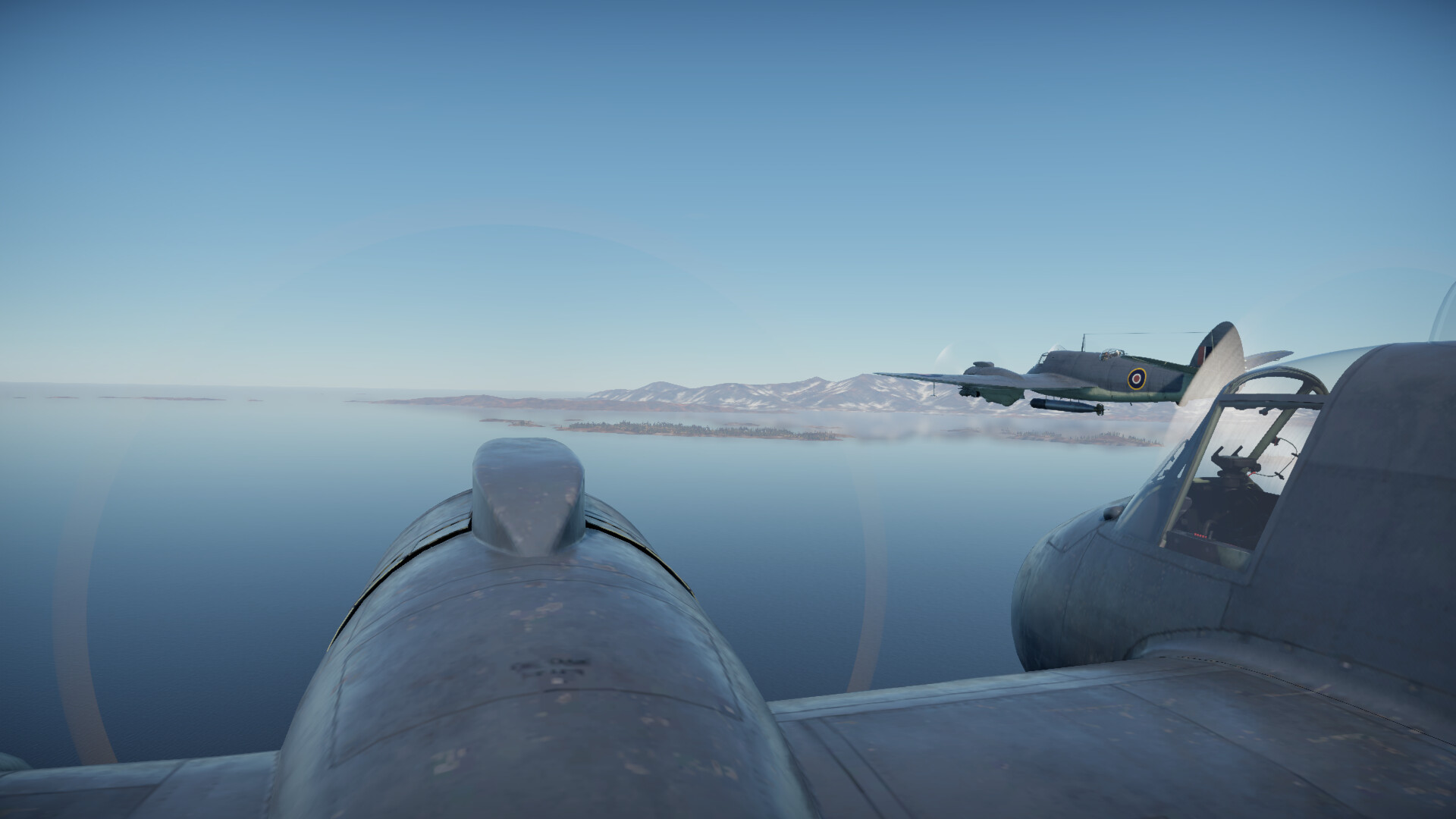
The Beaufighter is most effective in the early stages of an air battle. Thanks to its airspawn and decent energy retention, it usually starts the match above most enemy fighters. This gives the pilot a window of opportunity to intercept low-flying attackers, climbing fighters, or even bombers before they reach high-altitude altitudes, still having enough altitude and speed to quickly dive on low-flying planes or ground targets, while facing minimal competition from enemy fighter aircraft. The availability of suspended weapons allows it to destroy ground targets or enemy bases, after which it can engage in air combat or return to the airfield. Thus, the Beaufighter is not tied to a narrow role — it is capable of adapting to the situation, performing both fighter and attack tasks, depending on the pilot’s style of play.
Beaufighter is universal-ish aircraft, so it can effectively adapt to a wide range of combat scenarios — all depending on the player’s tactical choices. However, this advantage doesn’t last long — once faster single-engine fighters gain altitude or engage in dogfights elsewhere, the Beaufighter becomes vulnerable. Its poor climb and energy recovery mean it’s difficult to regain initiative once it’s lost.
After using suspended ordnance (e.g. for bombing a base), it still retains strong offensive capabilities with its powerful nose-mounted cannons, making it fully capable of engaging fighters in head-ons on the way back to base. It has no equal in head-ons combat. However, due to its big size and maneuverability, it cannot fully compete with single-engine fighters in dogfight. So, it is recommended to not engage in maneuverable combat. Provoke the enemy into a head-on battle, destroying them without difficulty, or run away from those who try to force maneuverable combat on you.
Head-On Combat
While the Beaufighter has the firepower to win many head-ons, it’s important to consider context:
- If it’s in a weaker or equal position (low energy, low altitude, no options to escape), provoking a head-on can be a smart way to trade favorably or secure a kill.
- However, if you have the positional advantage — more speed, altitude, or initiative — throwing that away for a head-on is a waste. Many players abuse this tactic, sacrificing winning positions for the sake of 1 kill. Yes, of course, there is a chance to attack successfully and take out 3 or even 4 opponents, but this rarely happens, and it is much more advantageous to lure the enemy into a more convenient area for attack, without threatening yourself.
Use head-ons as a tool of last resort, or to punish careless enemies — not as a go-to strategy. When outnumbered or dragged into a furball, it’s often better to retreat, regroup, or support from a distance using speed and cannons.
As you can see, Beaufighter isn’t limited to one role. Whether you prioritize air superiority, base attacks, or interception, it gives the pilot a range of viable options. While it may not outperform highly specialized aircraft in their niche, its flexibility and well-rounded performance let it consistently contribute to the team — provided it’s used smartly.
Ground RB
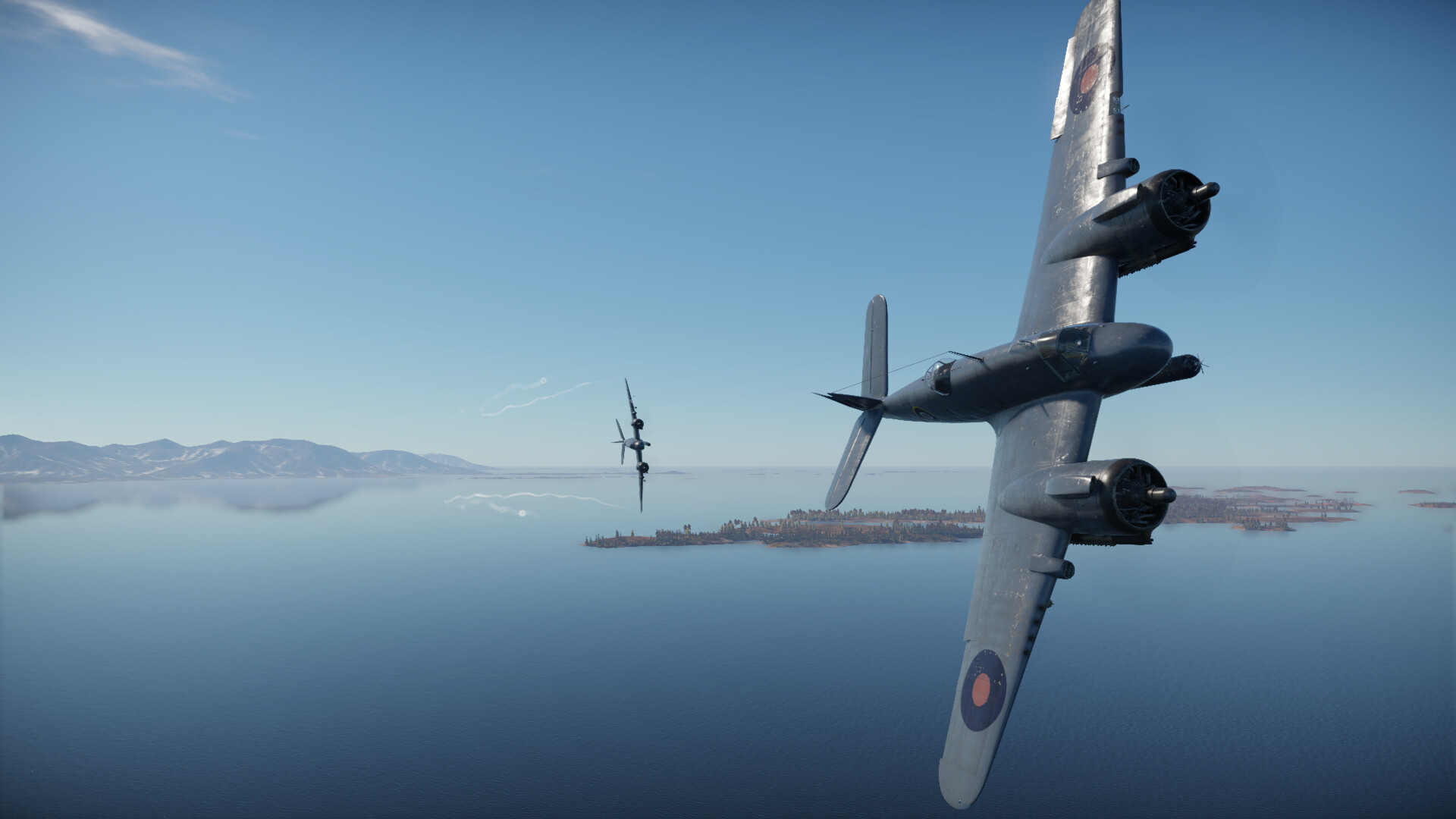
In Ground RB, the Beaufighter proves itself to be a highly capable attacker. Thanks to its versatile ordnance options — including 4 × 500 lb bombs, 2 × 1000 lb bombs, or a mixed loadout of 8 RP-3 rockets and 2 × 500 lb bombs — it can effectively engage nearly any ground target within its battle rating range. Whether it’s tanks, AA, or anything else, the Beaufighter has the tools to deal with them.
Its quad 20 mm cannons, mounted in the nose, offer additional firepower that’s highly effective against targets without armor, open-topped vehicles, light vehicles, and even other attackers or bombers.
This makes the Beaufighter not only a strong first-strike option at the start of a match but also a persistent threat even after dropping its bombs. It’s one of the rare aircraft that can perform ground attack duties while still posing a serious threat to enemy aircraft — ideal for players who want flexibility and impact in a single sortie.