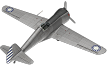
The Curtiss-Wright CW-21 was a fighter designed in the late 1930s for export. It saw service with the Republic of China and the Netherlands, with both using it against the Japanese, and featured a very impressive rate of climb.

Welcome to History in a Hurry! For those of you who do not want to read gargantuan deep dives into hyper-specific topics, this series is where you can find shorter and simpler history overviews that are still well researched and highly accurate. To kick this series off, we are talking about the CW-21.
Table of contents
Design and manufacturing
In July of 1937, Japan invaded the Republic of China, beginning the Second Sino-Japanese War. This is often considered the beginning of World War II in Asia. Very early on in the war, it became evidence that the Republic of China Air Force (ROCAF / 中華民國空軍) was woefully unequipped to fight the new, modern Imperial Japanese Army Air Force (IJAAF / 大日本帝國陸軍航空部隊). The IJAAF made very quick work of the outdated ROCAF's Hawk IIIs, I-15s, Gladiator Mk. Is, Gamma 2Es, and the like. The ROCAF needed modern fighters and it needed them fast.
In 1933, the Central Aircraft Manufacturing Company (CAMCO / 中央飛機製造廠) had been founded by American entrepreneur William Douglas Pawley. It had assembled Curtiss Hawk IIs and IIIs, Northrop Gamma 2Es, and other aircraft for the ROCAF. Pawley was also the president of the Intercontinental Corporation which was the sales representative for the Curtiss-Wright Corporation in China, so CAMCO had a very close connection to Curtiss-Wright. Partially because of this connection, Curtiss-Wright soon began developing a new fighter.
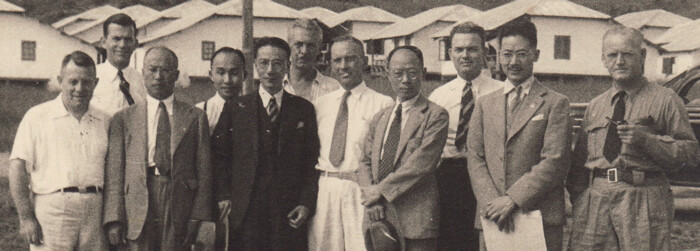
The new Curtiss-Wright Model 21 (CW-21) began development at Curtiss-Wright's Saint Louis Airplane Division. The project's design lead was Willis Wells and the chief engineer was George A. Page Jr. Together, they drafted a design for a fighter somewhat derived from the CW-19. The CW-19L had been Curtiss-Wright's first all-metal aircraft, and the CW-21 was loosely drafted off of the unbuilt special attack variant of the CW-19R. The new CW-21's design philosophy was to use a small, light fuselage with a powerful engine for its size, the 1000 hp R-1820-G5 Cyclone, to give it as high of a rate of climb as possible. The goal was to climb high as fast as possible, dive on enemy formations with very little warning, and then get out as fast as possible with that same engine power. Curtiss-Wright even claimed once that it could climb at 5,280 ft/min, though the highest ever recorded was 4,800 ft/min in 1940. The armament was two 7.62 mm machine guns firing through the propeller arc.
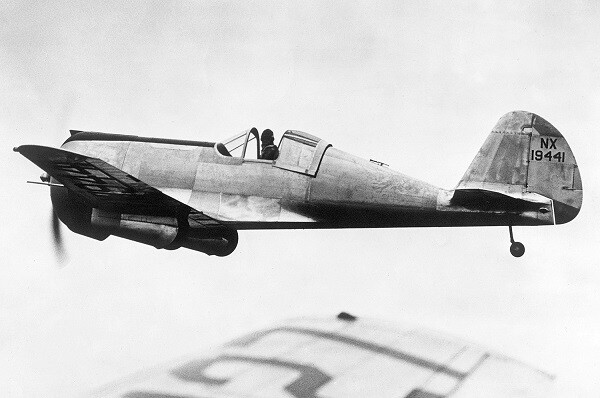
The CW-21 first took to the sky on 22 September, 1938 at Wright Field in Dayton, Ohio. The US Army Air Corps (USAAC) immediately said no to the aircraft, with one officer remarking that it took a "genius" to land it, but that was more-or-less fine since the aircraft was never intended for use by the USAAC anyway. It was an export fighter.
Service in China
The prototype was sent to China for evaluations and in the middle of negotiations for a proper sale, the prototype saw combat over Chóngqìng (重庆) and Curtiss-Wright's test pilot in China, Bob Fausel, claimed he had shot down a Fiat BR.20 bomber with it on 4 April, 1939. In May, a contract was finally signed for 3 aircraft to be sent to China as examples and another 27 to be built by CAMCO. These aircraft were armed with an additional two 12.7 mm machine guns firing through the propeller arc to complement the two 7.62 mm machine guns.
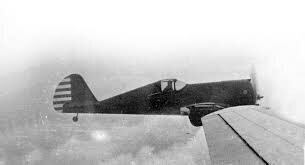

The first 3 made it to China in May of 1940 and were handed to the newly formed 1st American Volunteer Group, the famed "Flying Tigers," to use against Japanese reconnaissance aircraft at high altitudes. However, due to poor visibility or possibly contaminated fuel (though this remains unverified), they all crashed on 23 December, 1941 on a flight from Yangon (ရန်ကုန်) to Kūnmíng (昆明). None of the planned 27 additional aircraft were ever assembled though before CAMCO had to evacuate to Léiyǔn in 1942.
Service in the Netherlands
The Netherlands had somewhat greater success with the CW-21. Curtiss-Wright had developed the new CW-21B with wheels that folded inwards, a semi-retractable tail wheel, and hydraulically-operated flaps. The CW-21B was 29 km/h faster than the CW-21, despite being heavier, though it did have a lesser rate of climb of 4,500 ft/min. Curtiss-Wright had originally demonstrated the CW-21 to the Netherlands between the 18th and 27th of June, 1939, but due to the Netherlands being more interested in twin-engine fighters, they said no. In January of 1940 it was demonstrated again, this time in the Netherlands, and after an offer to deliver 36 of them immediately, the Luchtvaartbrigade ordered 24 of them on 8 April, 1940. However, because the Netherlands surrendered to the Nazi invasion on 15 May, 1940, the aircraft were instead sent to the Militaire Luchtvaart van het Koninklijk Nederlands-Indisch Leger (ML-KNIL), the Dutch air force in the Dutch East Indies.
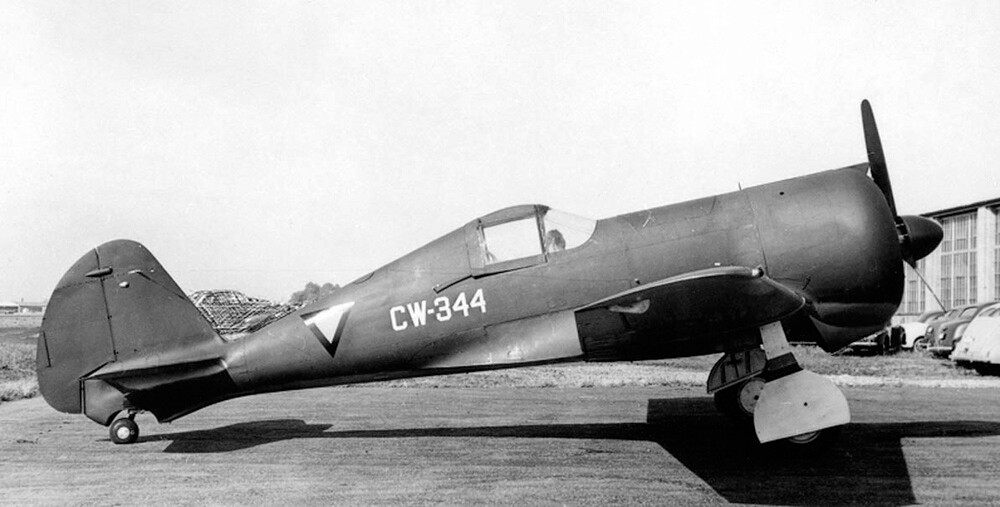
The 24 aircraft were assembled at Andir Airfield in Bandung, Java, in February of 1941 and were given to Vliegtuiggroep IV, Afdeling 2 (2-VLG IV). However, the vehicle's lightweight construction created structural problems, particularly with cracks in the undercarriage. By the time of the Japanese invasion of the Dutch East Indies on 10 January, 1942, only 17 of the 24 aircraft could still fly. The CW-21B proved to be relatively good at fighting Japanese fighters. However, they could not overcome Japan's sheer numbers. By the time of the Dutch surrender to the Japanese on 8 March, only 2 of the aircraft survived.

Captured by Japan
The 2 aircraft that still survived when the Dutch surrendered were captured by the Japanese and pressed into service. From there, their story is somewhat of a mystery. One of the CW-21Bs, after being captured at Andir Airfield, was flown to Tachikawa Airfield (立川飛行場) in Japan. After the Japanese surrendered, it was found in Singapore at Tachikawa Technical Center's Singapore branch in September of 1945 wearing the Hinomaru camouflage, with the winged emblem on its tail being the emblem of Tachikawa Technical Center.
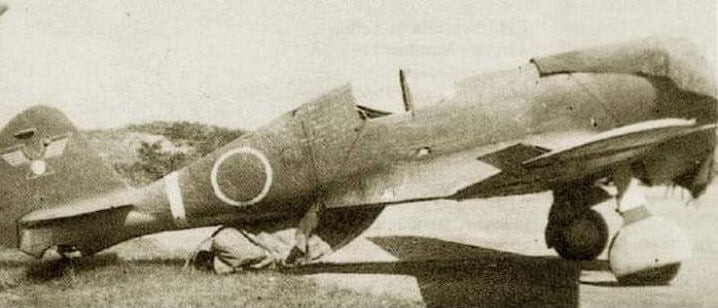
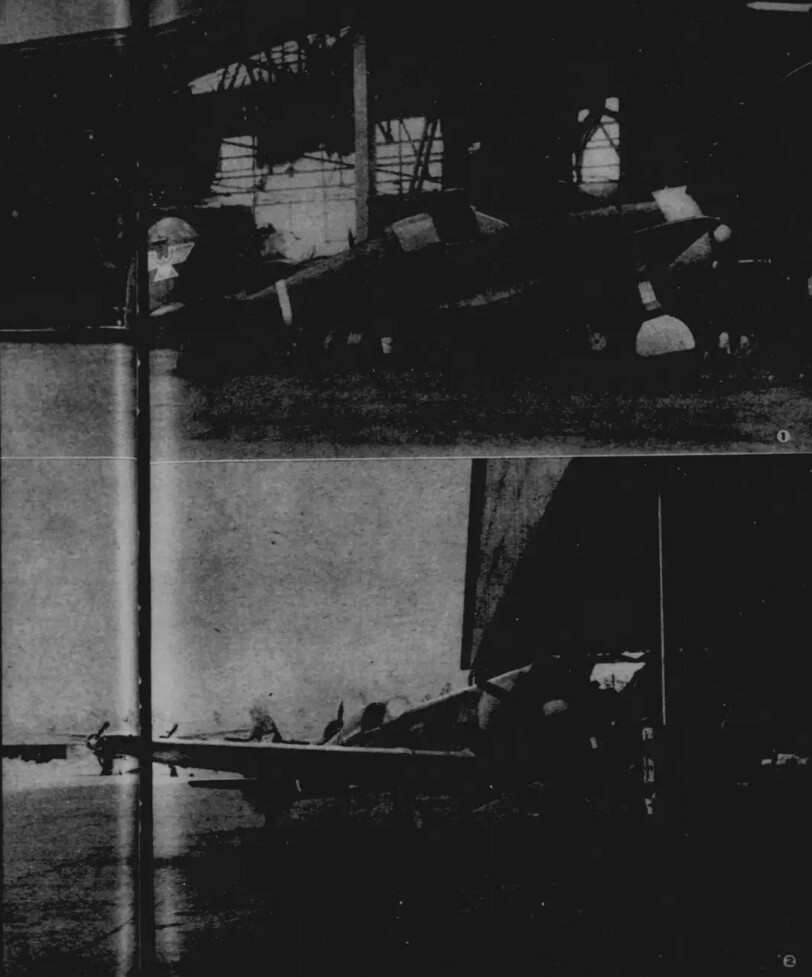
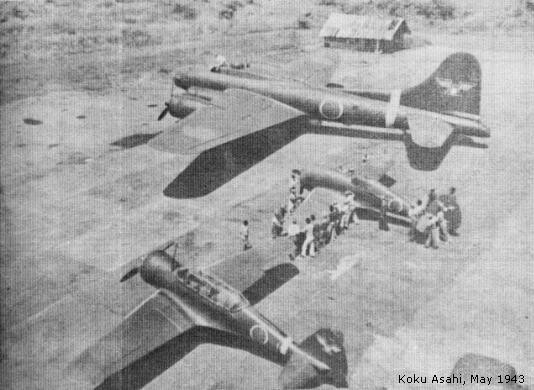
What happened to the other CW-21B is unknown. It is possible, if not probable that it too was flown to Tachikawa, but from there, it is a mystery. It may have been destroyed by the heavy bombardment Tachikawa received during April and June of 1945 by the American 29th Bombardment Group's B-29s, but this is entirely speculation.
So about the name "Demon"...
The CW-21 is very commonly referred to as the CW-21 Demon. This is not correct. Though common, the name Demon is a misnomer. The confusion comes from 2 places. The first is a list of Curtiss-Wright designs compiled by the company in 1946. That list has the entry "CW-21 Demon." in it. "Demon." with a period at the end is short for "Demonstrator". That entry is actually calling it the "CW-21 Demonstrator". The second was a CW-21 in a crate being delivered. The crate had the same "Demon." text sprayed on it, once again short for "Demonstrator". However, these were both confused as calling it the CW-21 Demon, and the postwar nickname stuck. A more accurate, albeit much less flattering name would be the "CW-21 Interceptor", though this was only used by the Dutch.

References
- 朝日新聞社. (1943). 敵機解剖 : 大東亜戦・鹵獲・撃墜撃破飛行機写真集. 朝日新聞社航空朝日編集部.
- Dunn, R. L. (2019). Curtiss-Wright CW-21 “Demon.” Warbird Forum.
- Hoogschagen, E. (2023). Warplane 13 Curtis-Wright CW-21 Interceptor. Lanasta.
- JCFalkenberglll. (2022). The Curtiss-Wright Model 21 Demon (also known as the Curtiss-Wright Model 21 Demonstrator, the Curtiss-Wright CW-21 Interceptor, and the Curtiss-Wright CW-21 Demon) was an American-built fighter interceptor, developed by the St. Louis Airplane Division of Curtiss-Wright Corporation during the 1930s. Reddit.
- Jos Heyman. (2010). Curtiss CW-21 Demon. Secret Projects Forum.
- Wikipedia Contributors. (2025). Curtiss-Wright CW-21. Wikipedia; Wikimedia Foundation.