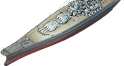
The Yamato-class battleships were two Japanese battleships, Yamato (大和) and Musashi (武蔵), constructed during World War II and operated by the Imperial Japanese Navy (IJN). They were armed with nine 46 cm naval guns and over 150 anti-aircraft guns, and had a displacement of more than 72,000 tons, making them the largest and most powerfully armed battleships in history. While the Yamato and Musashi had a truly stupendous level of firepower and armor, both ships met their fates at the hands of American carrier aircraft and never participated in the massive battleship-on-battleship engagements that they were designed for.

This article will focus on the development, design, specifications, and construction of the Yamato-class battleships. The service history of the IJN Yamato, Musashi, and Shinano will be covered in Part 2 of the Yamato-class battleships series.
Development
The development of the Yamato-class battleships was affected by three main factors: two of their designers, the theory of Kantai Kessen, and the preceding Eight-Eight Fleet program.
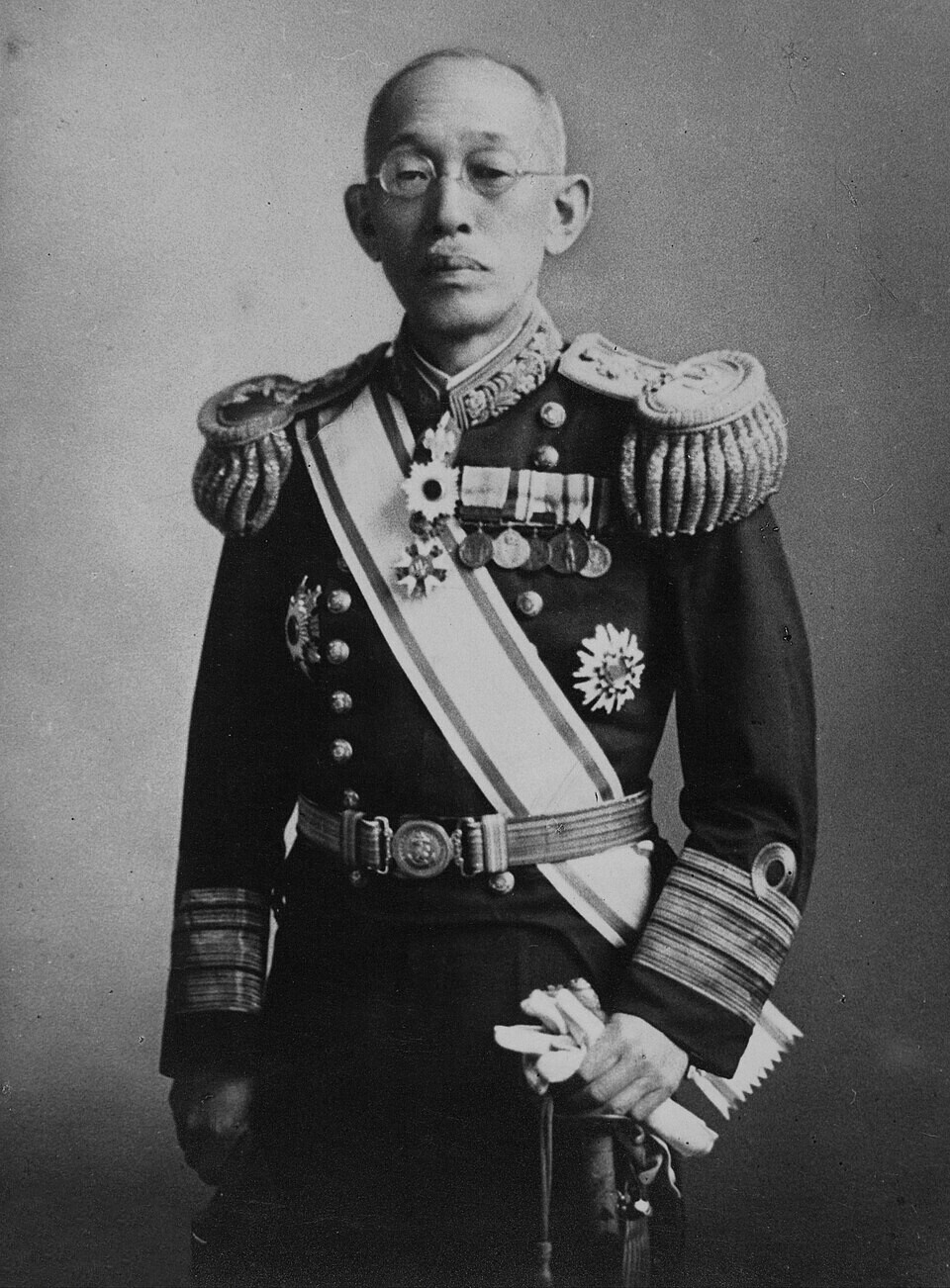
The various designs were heavily influenced and controlled by two men: Yuzuru Hiraga and Kikuo Fujimoto. Both of them were rivals and had very different approaches to design: Hiraga’s designs and methods were practical and conservative, while Fujimoto was innovative and accommodating. How they influenced the development will be examined in more detail in the following sections.
Naval strategists also believed in the Kantai Kessen (艦隊決戦), or Decisive Battle Doctrine, which said that the IJN would win a war through a single, decisive naval engagement. The belief in Kantai Kessen was further reinforced by the IJN’s victory over a Russian fleet during the Battle of Tsushima, which was the decisive winning factor for Japan during the Russo-Japanese War. Additionally, Japanese naval planners quickly realized that their industrial output would never be able to match that of the United States, which would be their most likely opponent in a potential war, so each of their new battleships was intended to combat multiple capital ships at the same time, with an emphasis on superior weaponry and quality over quantity. This led to the IJN pouring massive resources into developing a so-called “superbattleship” that could defeat all other battleships in combat.
The Japanese "Eight-Eight Fleet" or Hachihachi Kantai (八八艦隊) program was intended to help shape the development of the IJN. The Eight-Eight program outlined that Japan should have 8 battleships and 8 battlecruisers or armored cruisers for its navy to combat a theoretical opponent in a naval conflict. An initial Eight-Eight fleet was constructed during the 1910s with the Fuso, Ise, Nagato, and Tosa-class battleships and the Kongo and Amagi-class battlecruisers. However, not all of the planned ships were completed, and the one Tosa-class battleship and one Amagi-class battlecruiser constructed were converted to aircraft carriers.
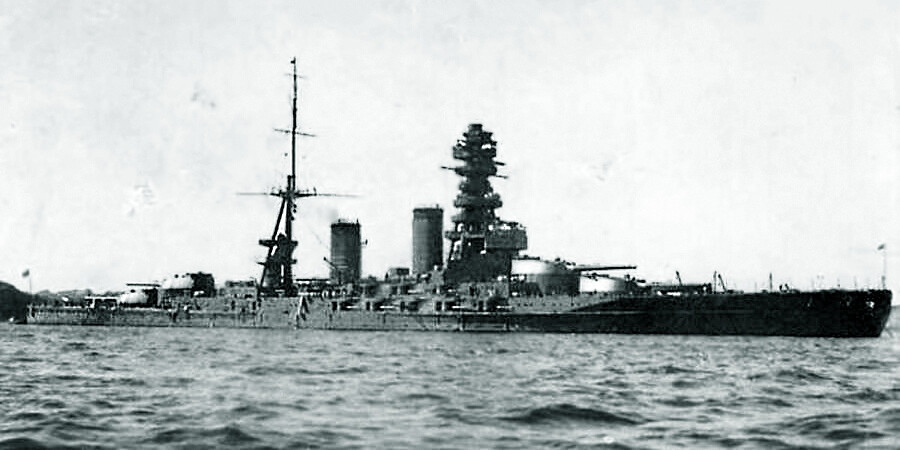
Japan even designed somewhat of a predecessor to the Yamato-class: the Number 13-class fast battleship, which was created by Hiraga in the 1920s to have an armament of eight 46 cm guns with the intention of being part of a second Eight-Eight fleet. Unfortunately, plans for constructing the second Eight-Eight fleet and the potential Number-13 class fell through due to the restrictions of the Washington Naval Treaty after Japan joined it in 1922. The Japanese National Diet (national legislature of Japan) also opposed the construction of new capital ships due to their immense cost.
The Eight-Eight program influenced the Yamato-class battleships by continuing the arms race to defend against capital ships that the United States would field, and this logic eventually led to the culmination of a "superbattleship" design.
Early concepts and design studies
Japan started designing a new class of battleships while still under the restrictions of the Washington and London Naval Treaties. These treaties were intended to prevent a naval arms race between nations by limiting the construction and power (tonnage, armament) of capital ships. The Naval Technical Department was in charge of the design.
In 1933, Japan invoked an exception in the Washington Naval Treaty, which allowed nations in the Treaty to replace capital ships that were over 20 years old. One of the earliest Japanese battlecruisers, the IJN Kongo, was constructed in 1913, so Japan was permitted to construct one new battleship that met the treaty restrictions in exchange for decommissioning the Kongo.
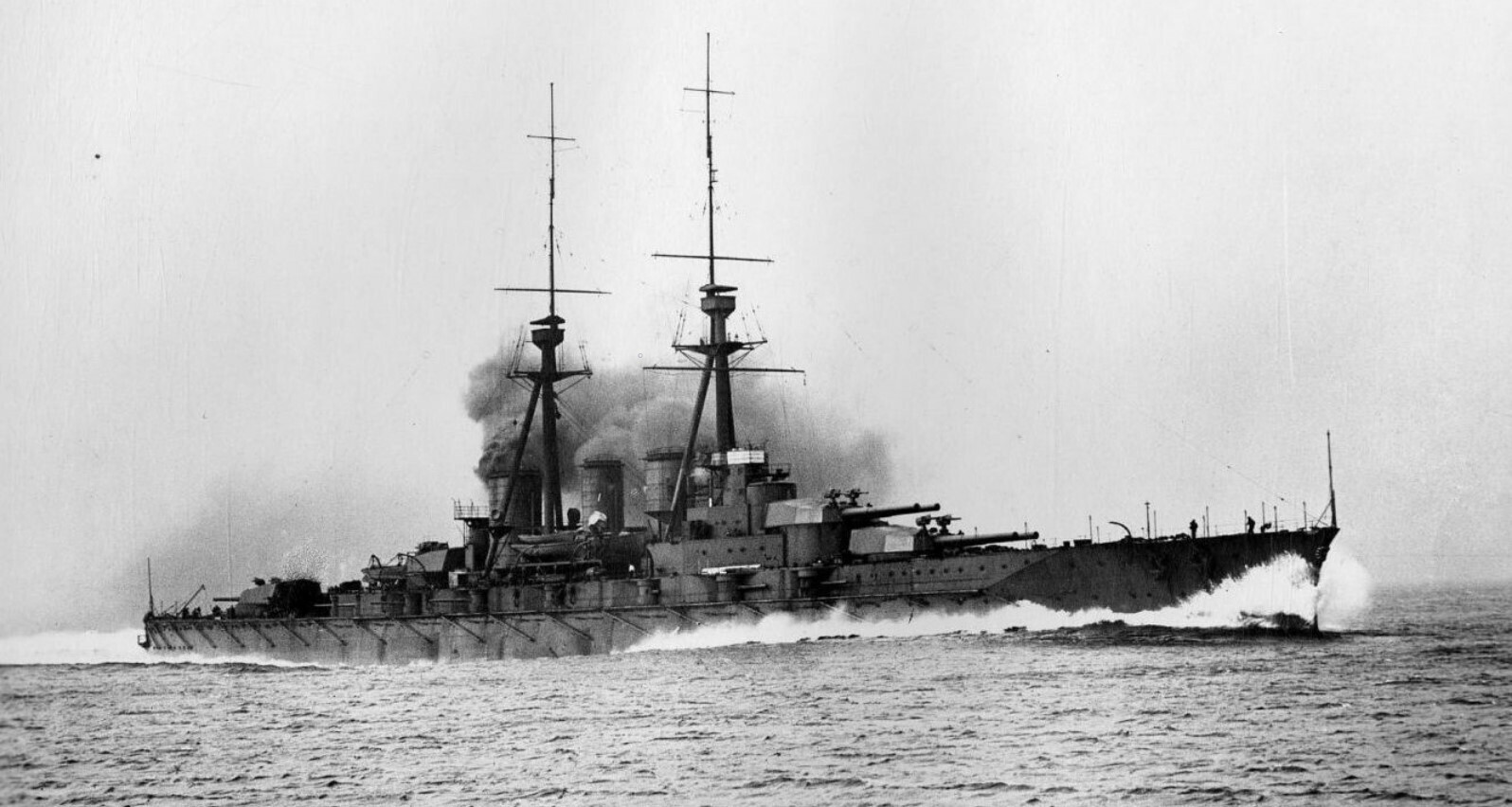
The IJN Settsu was constructed and commissioned earlier than the Kongo, but Japan had already decommissioned the Settsu earlier so they could keep the Nagato-class battleship Mutsu after entering the Treaty.
Official requirements from 1929 stated a maximum displacement of 35,000 tons and a gun caliber of 41 cm (16 in), with a heavy emphasis on damage control. Both Fujimoto and Hiraga each proposed a plan of their own, with all designs in their plans making use of 41 cm naval guns. Fujimoto’s plan was favored by the headquarters of the Naval Technical Department, and it was officially known as the “Naval Technical Headquarters” proposal. However, Hiraga criticized Fujimoto’s design proposal for being unnecessarily hull-heavy.
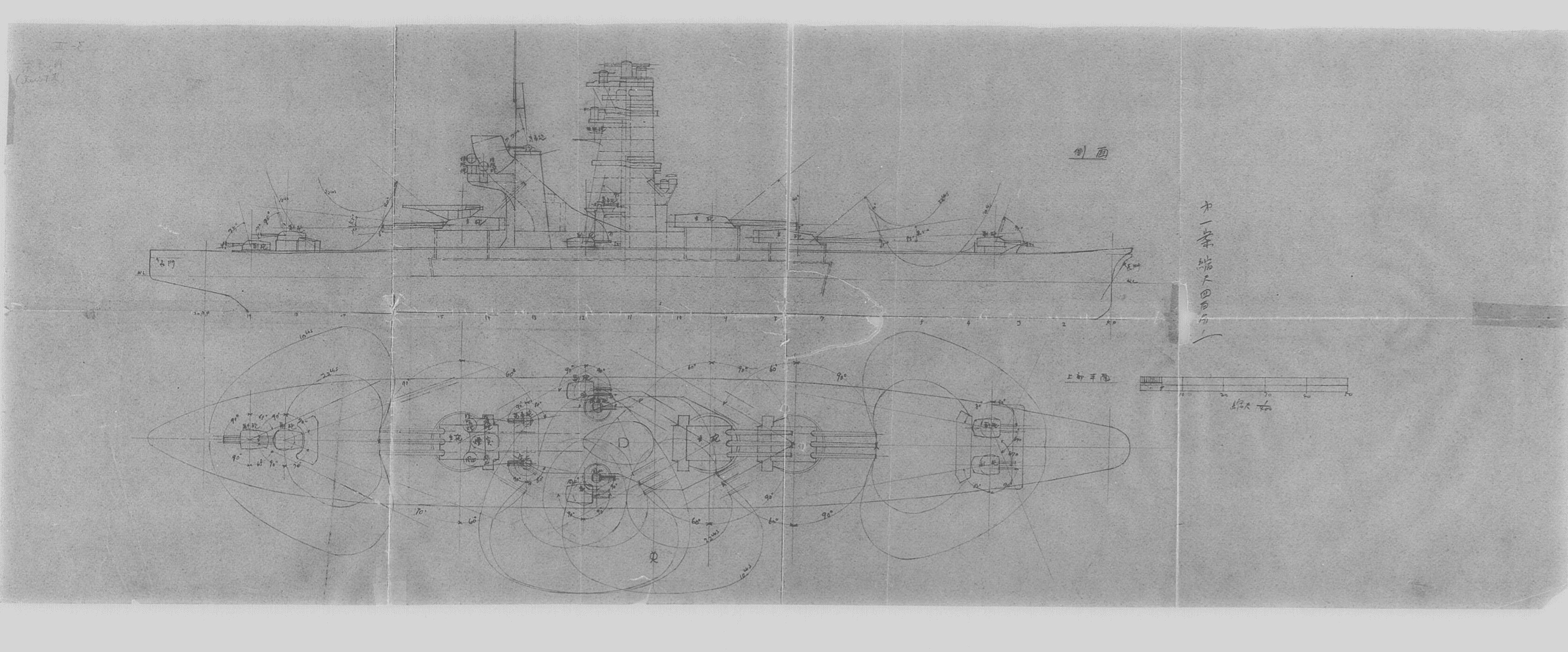
Hiraga’s plan included two designs: one for a 30,000-ton battleship, and the other for 35,000 tons as a probable competitor to Fujimoto’s design. A standout feature was that a significant amount of extremely thick armor was concentrated around the citadel.
None of these preliminary designs came to fruition, but these studies helped to further shape and refine Japan’s concept of a superbattleship.
Further developments
Japan continued to design a new class of battleships throughout 1934. The navy experimented with newer 46 cm and 50 cm guns, and both of these showed promising results due to their impressive firepower and capabilities. Fujimoto, Esaki Iwakichi (the Chief of Basic Planning), and Hiraga participated in the development processes. Fujimoto had a large say in the designs, and was the main driving force behind the development, which integrated a large amount of new technology (such as novel diesel engines).
Fujimoto insisted that the primary guns should be centered around the front to reduce the number of areas exposed to enemy fire. A new design created by Esaki was equipped with diesel engines, giving the ship an exceptional top speed of around 30 knots, even when having an estimated displacement of 67,000 tons. The diesel engines also gave the ship a massive range of 10,000 nautical miles. These specifications were slightly unrealistic but not impossible to achieve.
However, an unexpected event would severely disrupt development and change the outcome of the future Yamato-class battleship forever.
The Tomozuru Incident and the death of Fujimoto Kikuo
On March 12th in 1934, the Chidori-class torpedo boat Tomozuru designed by Fujimoto capsized in a storm while experiencing rolling well within its safety limits. The following investigation found that many ships in the IJN had a lack of stability due to their heavy armament and high center of gravity, including ships designed by Fujimoto. He was suspended until January 9th, 1935.
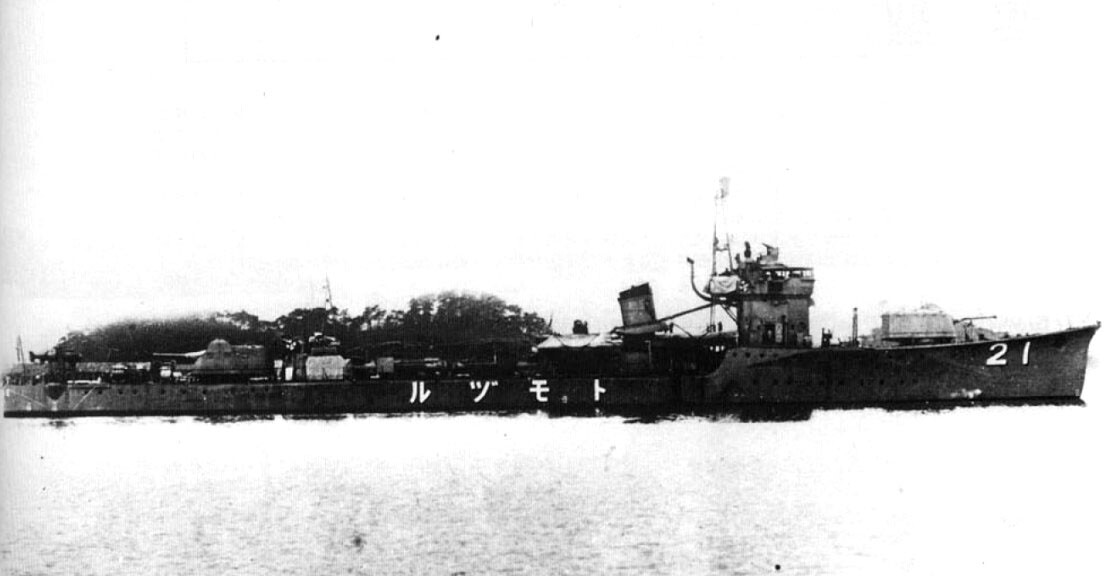
After being reinstated to the Naval Technical Department, Fujimoto died unexpectedly a day later on January 10th due to a cerebral hemorrhage. The exact reason why he suffered a cerebral hemorrhage at such a young age is unknown, but a theory is that drank too much sake while celebrating after his reinstatement. Fujimoto was also widely known to be a heavy drinker.
Since Fujimoto was no longer there to provide support for Esaki, he was replaced by Keiji Fukuda who had the backing of Hiraga. Consequently, Hiraga now was given charge of the design of the new battleship and began to steer the course of development to a more realistic route.
The A-140 project: Japan’s true superbattleship
In 1935, the Japan officially withdrew from the Washington Naval Treaty and announced in October the need for a new battleship: the A-140. This task was given to the Fourth Department of the IJN’s Naval Technical Department. And unlike previous developments, an actual deadline was set, so there now was an increased sense of urgency.
The specifications provided were:
- Eight or more 46 cm guns
- Twelve 15 cm guns, or eight 20 cm guns
- Maximum speed of 30 knots or higher
- Maximum range of 8,000 nautical miles when traveling at 18 knots
- Armor protection effective against 46 cm shells at distances between 20 - 35 km
- Anti-torpedo armor capable of withstanding at least 10 torpedoes with a 300 kg powder explosive warhead
A-140 variants
The name for the project was assigned as the A-140 project. There are a multitude of designs, so only the named and most publicly available variants are listed below. Significant variants that were a milestone in the design process are marked. Generally, the only differences between designs were the firepower and armor arrangement, propulsion type, displacement, and range.
| Version | Date | Milestone |
|---|---|---|
| A-140 | 3/10/1935 | Initial design |
| A-140A | 4/1/1935 | |
| A-140B | 4/1/1935 | |
| A-140C | 4/1/1935 | |
| A-140D | 4/1/1935 | |
| A-140A1 | 4/1/1935 | |
| A-140B1 | 4/1/1935 | |
| A-140A2 | 4/1/1935 | |
| A-140B2 | 4/1/1935 | |
| A-140G | 5/25/1935 | |
| A-140G1-A1 | 7/30/1935 | |
| A-140J0 | 7/30/1935 | |
| A-140J2 | 7/30/1935 | |
| A-140J3 | 8/30/1935 | |
| A-140K | 8/1/1935 | |
| A-140G0-A | 8/14/1935 | |
| A-140G2-A | 8/30/1935 | |
| A-140I | 7/30/1935 | Rearranged main battery design by Hiraga |
| A-140F | 8/14/1935 | Finalized the main battery arrangement to a conventional layout |
| A-140F3 | 10/5/1935 | Finalized the main battery turret design |
| A-140F4 | 10/5/1935 | |
| A-140F5 | 7/20/1936 | Finalized superstructure design |
| A-140F6 | 3/1/1937 | Final design iteration and eliminated diesel engines from the design |
Due to Fujimoto’s prior influence, the IJN initially preferred designs where the primary armaments were centralized at the front of the ship. However, there were concerns with whether the bridge was sufficiently protected from the combined blast from the 46 cm guns, and such an unorthodox layout was frowned upon by many traditionalist designers, especially Hiraga. The design of Japanese battleships usually distributed their firepower evenly across the entire ship.
Hiraga eventually came up with a design of his own (A-140I), which more evenly balanced the firepower. This design had several drawbacks, primarily the need to manufacture two different-sized types of 46 cm turrets, which ultimately led to its shelving. However, the 15.5 cm secondary turrets behind the B and C 46 cm turrets were retained on later prototypes.
Hiraga’s displeasure with the forward centralized armament design also pushed the IJN to reconsider, and all future designs would consequently adopt a more traditional layout with two 46 cm turrets at the front of the ship and a single 46 cm turret at the back. However, problems with the pressure and blast wave from the 46 cm guns were exacerbated by placing a turret at the rear, which now limited the effectiveness of AA weaponry at the rear of the ship, so the battleships would never be able to utilize their AA armament to its full potential.
The IJN also debated whether to install diesel, turbine, or a combination of diesel/turbine engines for the A-140's powerplant. Reliability concerns with the diesel engine eventually led Hiraga and the IJN to cancel the installation of diesel engines on the A-140F6.
Specifications
The final design specifications for the Yamato-class battleships were monstrous: a total loaded displacement weight of 71,111 tons, and a main armament of nine 46 cm (18.1 in) naval guns mounted in three triple turrets. Each Yamato-class battleship dwarfed nearly every other battleship in service, with only the American Iowa-class and German Bismarck-class battleships being somewhat close in terms of tonnage and armament. Each Yamato-class battleship would have a complement of around 2,700 crew members.
| Primary armament | - 9x 46 cm/45 Type 94 naval guns in three triple turrets |
| Secondary armament | - 12x 15.5 cm/60 3rd Year Type guns in four triple turrets |
| Anti-aircraft armament | - 12x 12.7 cm/40 Type 89 naval guns in six dual turrets - 24x Type 96 25 mm guns in eight triple mounts - 8x Hotchkiss M1929 machine gun in four dual mounts |
| Seaplanes | - 6 seaplanes with two catapults |
| Maximum speed | 27 knots |
| Length | 263 meters |
| Displacement (standard) | 64,000 tons |
| Displacement (loaded) | 72,000 tons |
A total of five Yamato-class battleships were planned, but only three hulls were completed. The third hull was eventually converted and used for the aircraft carrier Shinano due to the IJN's dire need for aircraft carriers following the loss of four fleet carriers during the Battle of Midway.
Armor
The Yamato-class battleships adopted an "all-or-nothing" armor scheme, with the armor being constructed using Vickers Hardened (VH) steel. VH steel was chosen due to its ability to be shaped even in extremely thick amounts. The side armor was up to 410 mm in thickness, and the dual-layered deck armor was up to 230 mm. This armor scheme was designed to resist 48 cm shells at a distance of 20 km. Other non-vital areas of the ship had minimal or no armor protection. The hull used a double bottom system to protect against torpedoes and mines.
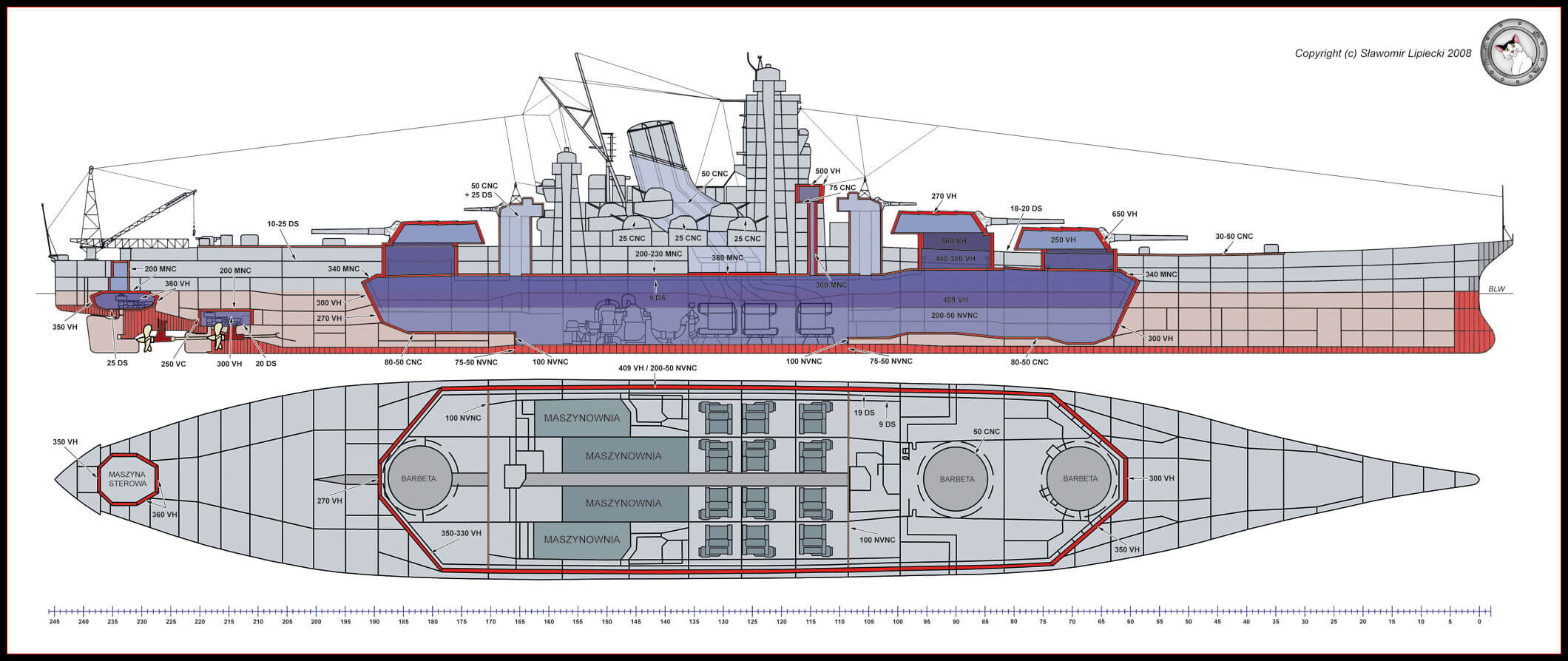
Using an "all-or-nothing" armor scheme meant that the unarmored parts of the hull were extremely vulnerable to flooding, so many thick bulkheads were created to create watertight partitions between compartments. The Yamato-class battleship's armored section of the hull was only 53% of its total length, while the preceding Nagato-class battleships was at 63%. This was because of the weight compensation needed for the thicker armor.
The armor scheme did have a major weakness near the lower riveted hull joint, which lacked proper internal support. This offered poor protection against torpedoes, and the Yamato and Musashi suffered major flooding damage when they were torpedoed by American submarines. The bow of the ships also was a notable weakspot.
46 cm/45 Type 94 (40 cm/45 Type 94) naval guns
The primary armament of the Yamato-class battleships were nine 46 cm naval guns mounted in three triple-gun turrets. These guns were the largest naval guns used on a battleship, and no other ship in existence could match the sheer firepower of the Yamato-class battleships. Each 46 cm triple-gun turret weighed about 2,760 tons (more than a 1930-era destroyer). The maximum range of the 46cm/45 Type 94 naval gun was about 41,400 meters, or 41.4 km.
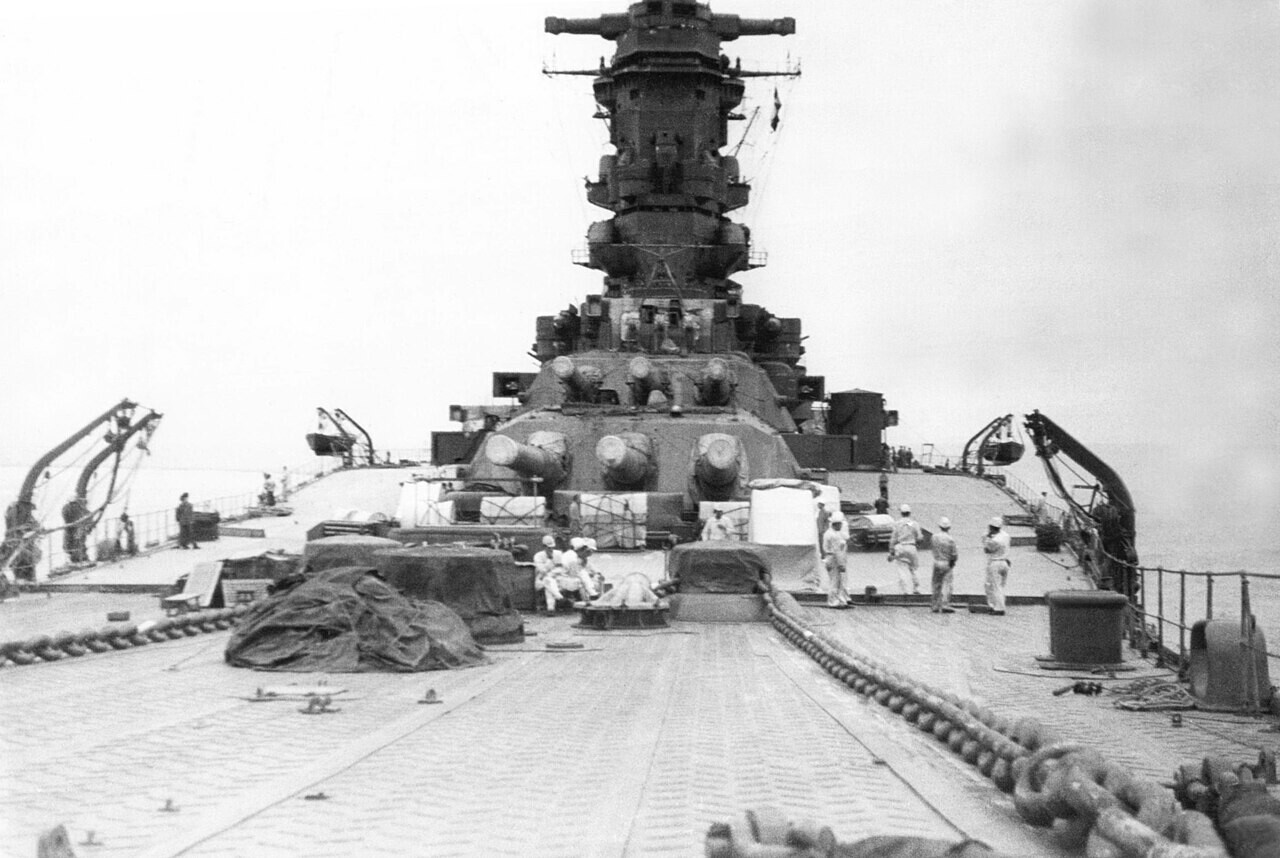
These guns were capable of firing the Type 91 and newer Type 1 armor-piercing shells, and the Type 3 San Shiki "Beehive" anti-aircraft shell. The blast wave from firing the guns was so powerful and dangerous that crewmembers operating the AA weaponry were forced to go inside the ship whenever the guns fired. Buzzers were installed to warn crewmembers before the guns fired; however, they failed to work (possibly due to damage) during the Battle of Leyte Gulf and multiple crewmembers were injured or killed by the blast. This severely limited the actual anti-air capability of the Yamato and Musashi in combat.
The turrets housing the 46 cm guns were extraordinarily well protected, with 650 mm of armor protecting the turret face and 270/250 mm of armor protecting the ceiling and side armor of the turret.
For fire control, a 15.5 m rangefinder and a Type 98 azimuth aiming device were located on top of the bridge. The purpose of the Type 98 was to increase the accuracy of the guns by taking into account the wind speed and direction, type of shells loaded, and the vector of the target after receiving the distance to the target from the rangefinder. Smaller rangefinders were located in the turrets and on the aft bridge of the ship.
Additionally, a single No.21 search radar for aircraft detection was also installed on the Musashi after her launch and on the Yamato in 1943. However, American radar systems were vastly superior to the No.21 because they could also be used for directing the main guns, allowing them to fight in the night and in poor weather.
15.5 cm/60 3rd Year Type
The nine 46 cm main guns were supplemented by twelve 15.5 cm guns in four triple-gun turrets. Two of these turrets were mounted behind the B and C turrets, while two more turrets were mounted amidships on the starboard and port side. Additionally, these are the largest secondary guns ever mounted on a battleship.
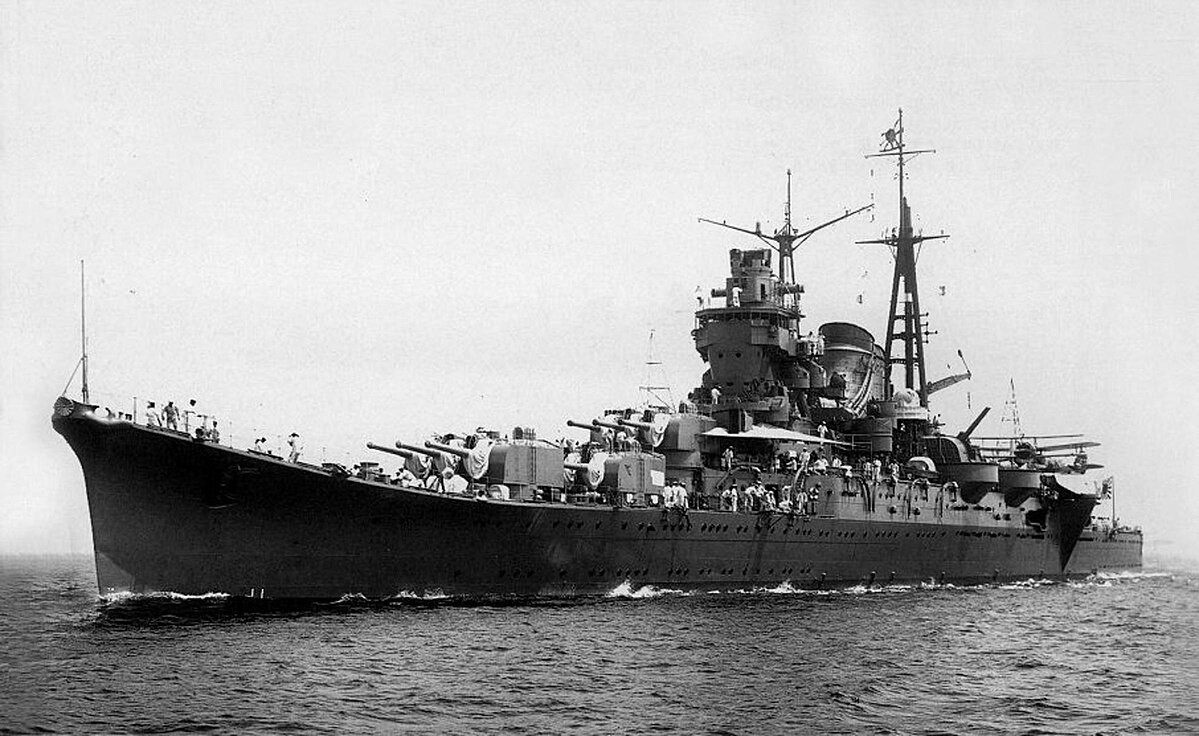
Note: The two amidship turrets were removed during the Yamato and Musashi's mid-war refit to make space for more anti-aircraft weaponry.
These turrets were the same 15.5 cm turrets used on the Mogami-class heavy cruisers but had additional modifications: they had more internal structure reinforcement and the capability to elevate up to 75°. The gun's high elevation also allowed it to perform in a dual-purpose role (combating surface and airborne targets), and they were equipped with anti-aircraft ammunition.
12.7 cm/40 Type 89
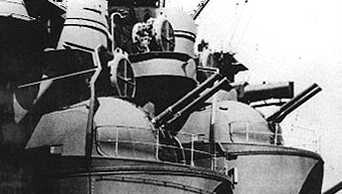
These dual-mounted 12.7 cm guns were the Yamato and Musashi's heavy anti-aircraft armament. The IJN considered the 12.7 cm/40 Type 89 to be a satisfactory anti-air weapon due to its good traverse speeds and high rate of fire. However, not much concrete information survives about it due to the destruction of records related to the Yamato-class battleship's armaments at the end of the war.
Type 96 25 mm
For their medium anti-air defense, the Yamato and Musashi were equipped with the Type 96 25 mm autocannon, which is a locally produced version of the French Hotchkiss 25 mm anti-aircraft gun. The autocannons were used on triple-gun mounts, with some mounts being equipped with a blast shield to protect the operators from the 46 cm main guns when they were fired.
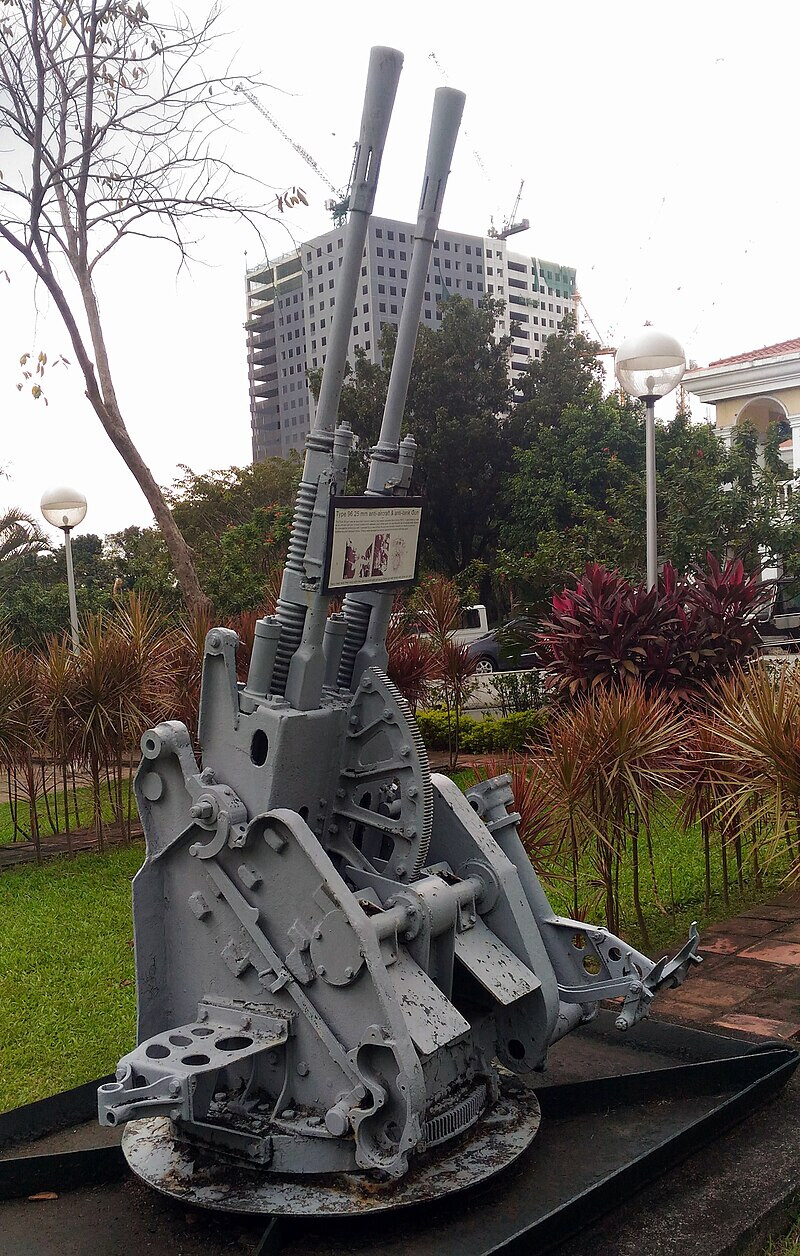
The Type 96 had relatively unsatisfactory performance due to its extremely small magazine size (15 rounds), ineffective sights, excessive vibration, and slow elevation and traverse speeds. The IJN was unable to procure a superior general-purpose autocannon like the Bofors before the end of the war.
Construction
Japan decided on the final plans for building two Yamato-class battleships in 1937. Both ships were known as “First Ship” and “Second Ship” before being named “Yamato” and “Musashi” respectively. Yamato would be constructed at Kure Naval Arsenal (Hiroshima) by the IJN, and Musashi in the Mitsubishi Shipyards (Nagasaki) by Mitsubishi.
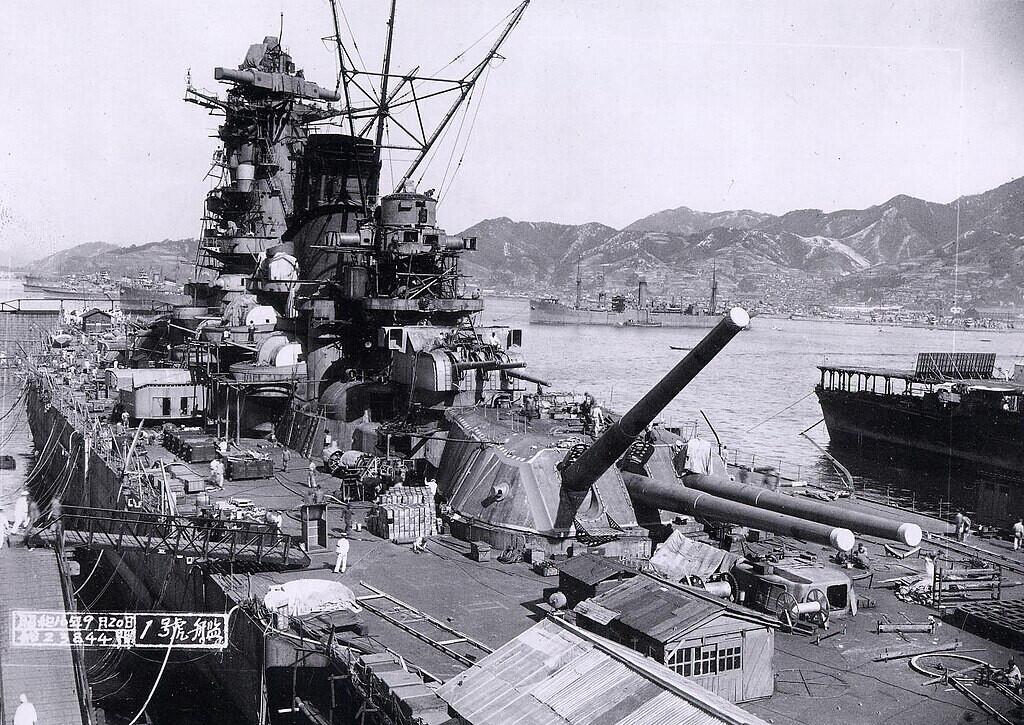
Japanese shipyards and industry were initially unprepared to handle such a massive ship, so new methods for welding (electric welding vs. riveting), presses for the thick armor plates, and construction (the block construction method) had to be adopted.
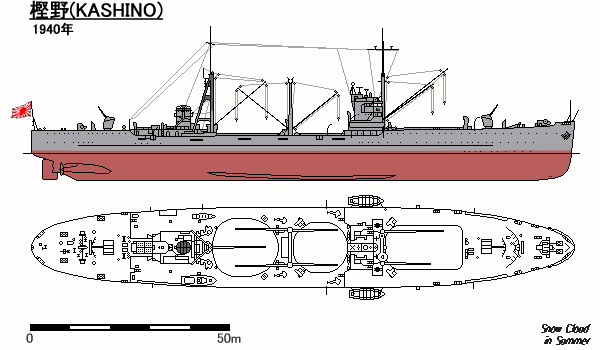
Fun fact: A great example of the various logistical issues was handling the 46 cm naval guns and their turrets: they were simply too large and heavy to transport via rail or sea (each turret weighed more than a 1930-era destroyer), which made transporting them to the shipyards impossible. A new ship, the IJN Kashino, was specifically designed to handle the 46 cm guns and their turrets. This so-called “auxiliary turret conveyance warship” was the only way for the Yamato and Musashi to receive their main armaments.
Some additional challenges posed by the scale of the Yamato-class battleships were:
- Constructing a concrete/planked slipway large enough to fit the battleship's hull
- Importing a 15,000-ton hydraulic machine press from Germany that could stretch and shape the large pieces of armor
- In the case of the Musashi, dealing with an extremely short distance in front of the slipway when launching the ship due to the small drydock size
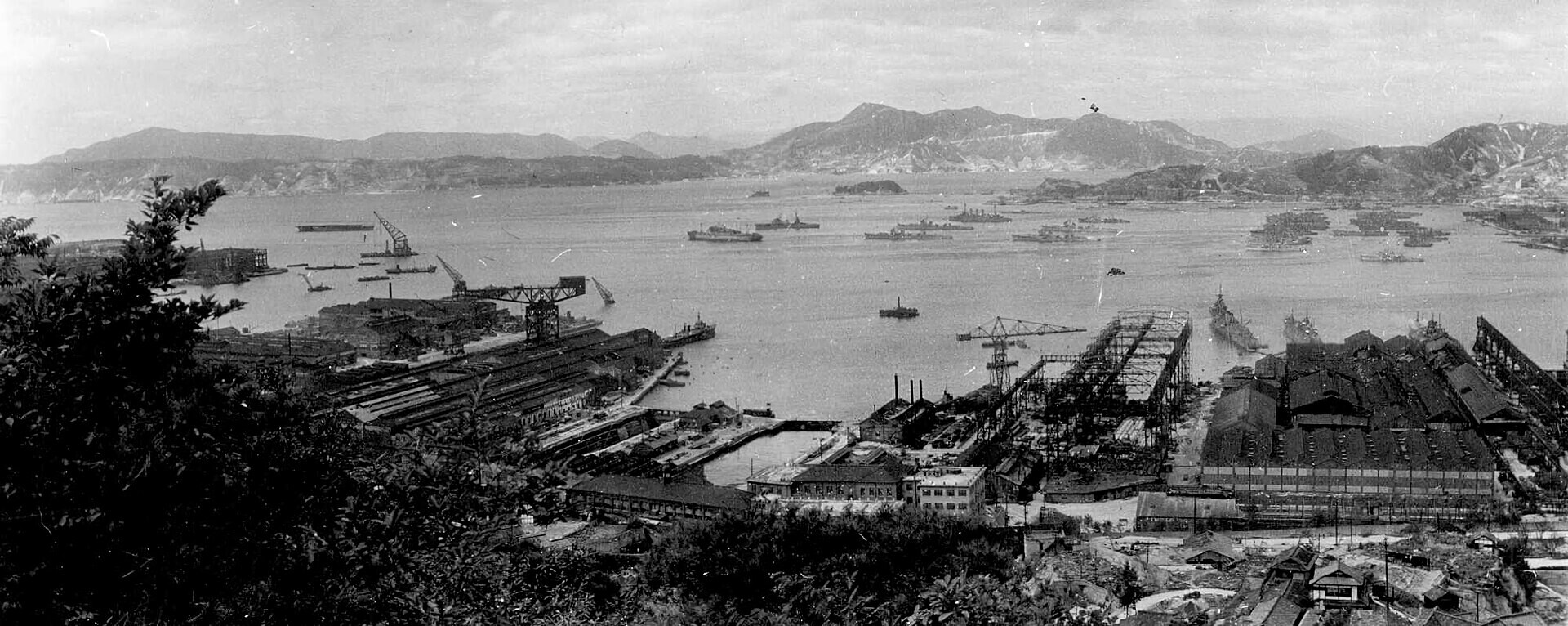
Below is a rough schedule of the Yamato’s construction. Even with the various difficulties, the Yamato and even the Musashi were delivered ahead of schedule. However, the Musashi took longer to complete due to being located in a less suitable dockyard, having a more inexperienced contractor (Mitsubishi) in charge of building instead of the military, and receiving less priority when compared to the Yamato.
| Planned date | Actual date | |
|---|---|---|
| Groundbreaking | November 4th, 1937 | As planned |
| Funnel installation | May 1939 to October 1939 | As planned |
| Engine installation | May 1939 to November 1939 | As planned |
| Launch | August 1940 | August 8th, 1940 |
| Armament installations | May 1941 to October 1941 | March 1941 to May 1941 |
| Sea trials | January 1942 to February 1942 | October 22nd, 1941, to October 30th, 1941 |
| Delivery | June 15th, 1942 | December 16th, 1941 |
The Yamato was delivered earlier than expected due to the exceptional focus and resources that were put into construction. The reason why so much effort was put into the work can be summed up in a statement from Admiral Ryozo Nakamura that was forwarded to all departments participating in construction: Japan simply had no time to waste.
During the 10-plus year construction hiatus, we lost the opportunity to refine our technology, and it was inevitable that we had to focus all our efforts on the development of auxiliary ships. This resulted in the basic research necessary for the construction of capital ships being repeatedly delayed, and we are still unable to make any progress. Therefore, it is essential that all those in charge of the project exert their extraordinary resolve and devote their entire being to the accomplishment of this great mission.
At the launch of the Yamato, there was no large celebration since the project was still under extreme secrecy, and having a ceremony would reveal the existence of the Yamato-class to other nations.
Concealment measures during construction
The Japanese went to great lengths to conceal the development and info about the Yamato-class battleships, and construction was carried out in great secrecy. Nearly all of these counter-intelligence efforts were extremely effective, and the Allies and even other Axis countries did not learn about much accurate information about the Yamato or Musashi until the war ended. Officially, the Yamato-class battleships were listed as having a displacement of 42,000 tons, an armament of nine 40 cm guns, and having a top speed of 25 knots. Only a handful of people knew the actual, accurate specifications.
Construction workers participating in the construction of the Yamato and Musashi were forced to sign an oath and underwent stringent background checks. The windows of houses and ships near the construction site were planked over with wood, and long walls and palm trees were added around the shipyards to obstruct the view of the shipyard. A city-wide air raid drill was also called on the day of the Musashi’s launch, and all of the residents in Nagasaki were forced indoors.
Fun fact: A 19-year-old factory worker stole and burned one of the blueprints for the Musashi’s 46 cm gun turrets. The motive of the factory worker was to get transferred to a different job position by making a mistake. This event caused the IJN to panic greatly: if the blueprints fell into enemy hands, the power of the Yamato-class battleships would be exposed, and the whole project would be for waste since Western nations could easily construct many equivalent warships with their superior industry. Luckily, this did not happen because the worker burned the paper. The worker was later punished and deported to Manchuria for his actions.
However, it would be impossible to prevent rumors from spreading, and the local people in Hiroshima and Nagasaki knew that something big was happening.
Sources
The most valuable resource when writing this article was https://japanese-warship.com. This is a treasure trove of information regarding the IJN and their ships, and I highly recommend anyone interested in Japanese warships to take a look.