
The Leopard 1A5BE was the final major modernisation of the Leopard 1 in Belgian service. Developed from the Belgian Leopard 1A1+ fleet during the late 1980s and early 1990s, it replaced much of the tank's original fire-control equipment while retaining the 105 mm L7A3 gun and the existing chassis. The programme involved Belgian companies such as SABCA and OIP alongside foreign suppliers, and 132 of the 334 Belgian Leopards were eventually converted. By the time the programme was completed in 1997, however, the Cold War had ended and Belgium was already reducing its armoured forces. The history of the 1A5BE is therefore also the history of the changing role of the Leopard within the Belgian Army.
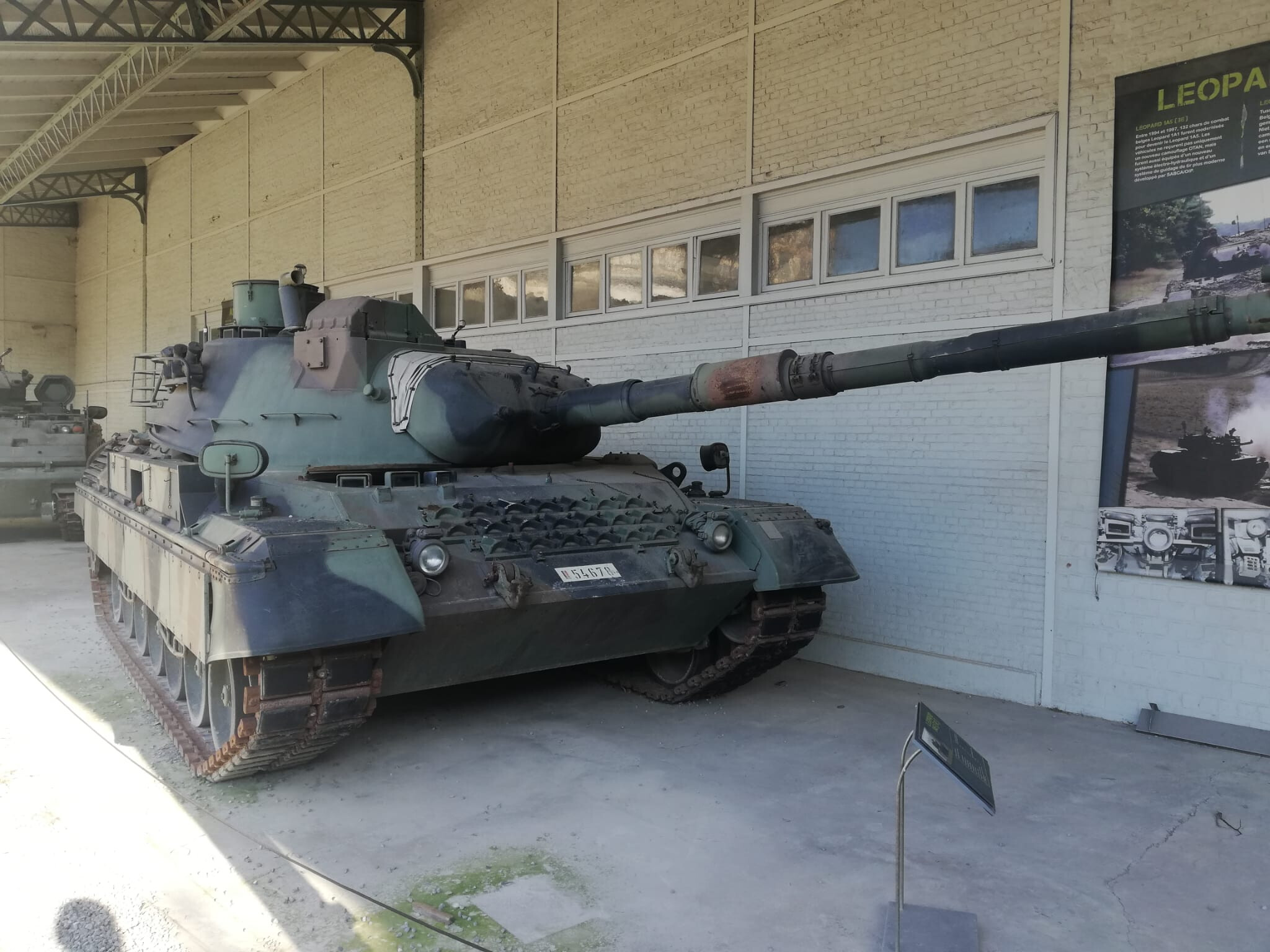
The Leopard subsequently became deeply integrated into the Belgian armoured force. During the 1970s, Belgian industry participated in improvements to the tank's fire-control and weapon-control systems, while the Army developed procedures for stabilised firing, rangefinding, automatic fire control and night fighting. The Belgian Leopard was consequently already a modified version of the original vehicle well before the development of the 1A5BE.
By the 1980s, however, the technological environment of armoured warfare was changing. Improvements in target acquisition, laser rangefinding, fire-control systems and, increasingly, thermal imaging altered the conditions under which tanks could detect and engage targets, particularly at night and in conditions of reduced visibility. The question facing the Belgian Army was therefore not simply whether the Leopard remained mechanically serviceable, but whether its existing combat systems continued to provide the capabilities required of a contemporary main battle tank.
Belgium responded with a further modernisation programme during the final years of the Cold War. Development proceeded from a 1987 contract through prototype and pre-series work, with the first prototype delivered to Belgium on 6 October 1988. Between 1994 and 1997, 132 Belgian Leopard 1A1+ (also known in Belgium as Leopard SCT / Leopard 1A3) tanks were converted to the 1A5BE standard.
The modernisation was driven by both technological developments and the changing requirements of the Belgian Army. Improved thermal imaging and fire-control equipment offered a means of extending the Leopard's operational life, while Belgium was also reconsidering the size of the armoured force it needed to maintain. The resulting programme modernised 132 vehicles rather than the entire fleet of 334 tanks.
A tank adapted to the requirements of a small NATO army
The arrival of the Leopard 1 marked an important stage in the transformation of the Belgian armoured arm. During the 1950s and 1960s, Belgian tank units were largely equipped with American vehicles, most notably the M47 Patton. At the same time, the Belgian Army had developed an established institutional framework for armoured warfare. The Joint Tank Training Centre at Leopoldsburg, established in 1952, provided training for Belgian personnel as well as Danish and Dutch tank crews, illustrating the integration of the Belgian armoured force into the wider NATO training system.
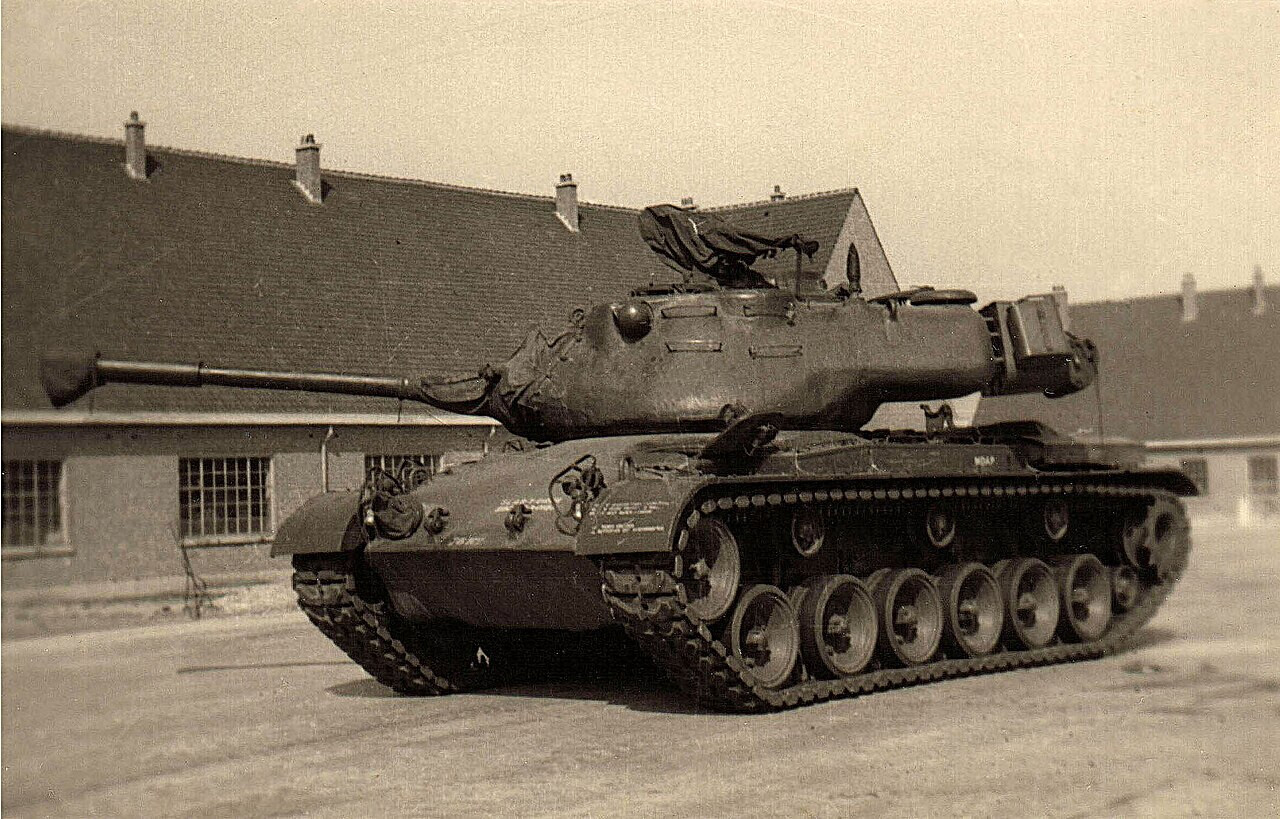
By the late 1960s, however, the M47 was becoming increasingly inadequate for the requirements of the Belgian armoured force. Belgium's land forces formed part of the conventional military contribution to NATO's defence of Western Europe, while the organisation of the Army increasingly emphasised mechanisation, mobility and firepower. The replacement of the Patton was therefore not simply a matter of renewing an ageing vehicle, but part of a broader effort to maintain the capabilities expected of Belgium within NATO.
The Leopard was selected as Belgium's new main battle tank, and 334 vehicles were acquired from Germany. Its selection reflected the technological requirements of the Belgian Army, but the procurement also had an important economic and industrial dimension. Belgian defence policy operated within a longstanding tension between the military requirements established in the NATO framework and the resources made available to the armed forces. Major procurement programmes consequently had to reconcile military capability with wider economic and industrial considerations.
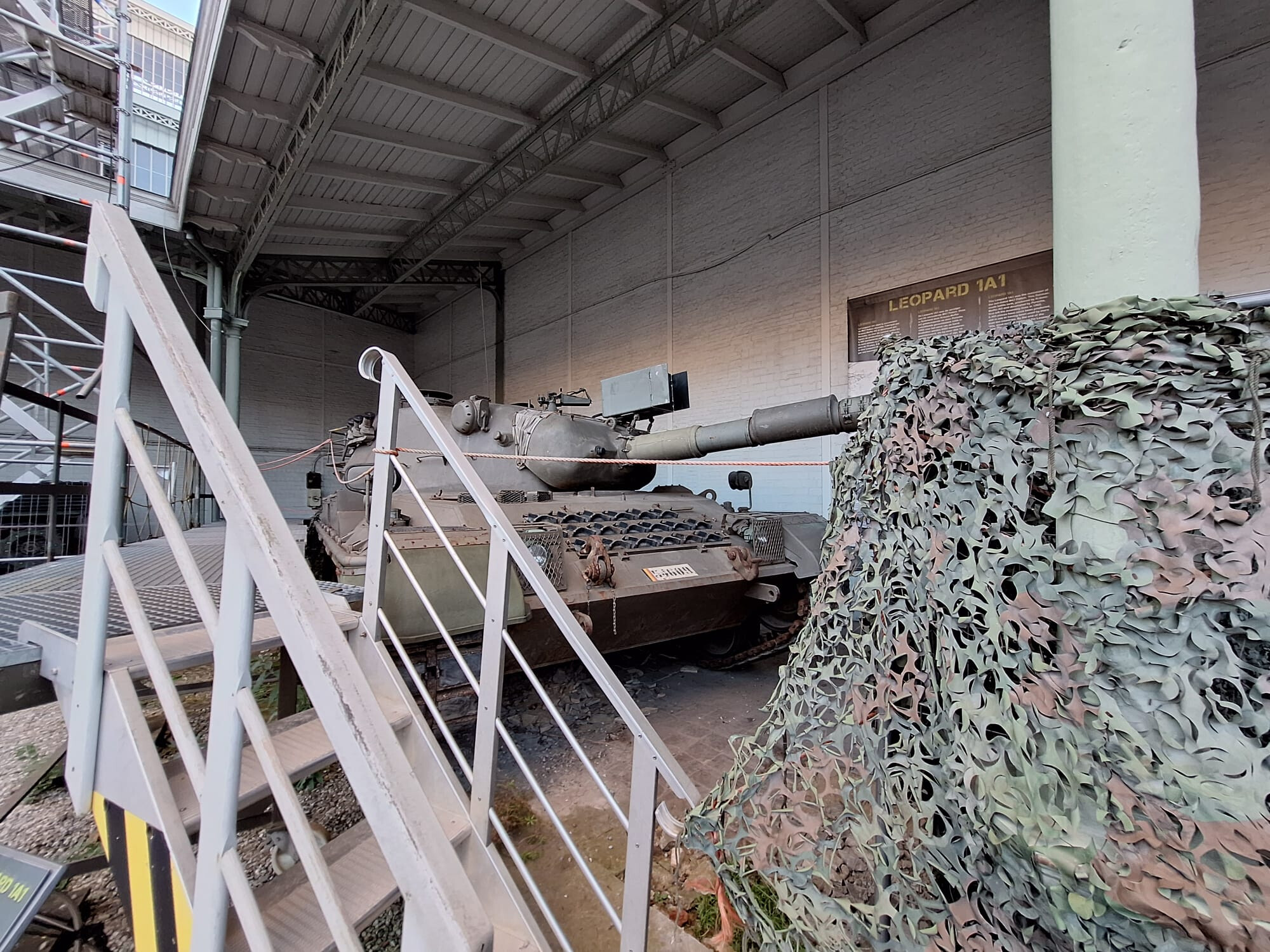
The Leopard acquisition illustrates this relationship particularly clearly. Although the tank was a German design, the procurement was accompanied by industrial compensation orders that returned a substantial part of the expenditure to Belgian industry. The purchase therefore provided Belgium with a modern armoured vehicle while also generating work for domestic industry. This industrial relationship would remain relevant throughout the Leopard's service life, as Belgian companies subsequently participated in the development and integration of modifications to the vehicle.
The new tanks were introduced into the Belgian armoured force during 1970–1971, as the remaining medium tank battalions were progressively re-equipped. Their employment was closely connected to Belgium's NATO responsibilities in the Federal Republic of Germany. The Belgian corps was assigned a role in the defence of the Inner German Border, where its forces were expected to delay an advancing opponent and contribute to the deployment of the wider NATO defensive system. The Leopard was consequently introduced not into an isolated national tank force, but into a mechanised formation whose organisation, training and operational role were closely linked to the alliance's Central European defence plans.
The problem of obsolescence
By the second half of the 1980s, the principal limitations of the Belgian Leopard 1 were increasingly related to the technological environment surrounding the vehicle rather than to the basic design of its chassis. The improvements introduced during the 1970s had considerably enhanced the tank's combat capability, including stabilised fire, laser rangefinding and automatic fire control. The Leopard was therefore not an obsolete vehicle in the sense of being incapable of effective combat. Rather, the equipment through which it observed and engaged targets was gradually falling behind the capabilities being introduced on newer armoured vehicles.
The development of night-fighting technology illustrates this process particularly clearly. Belgian Leopards were already equipped for fighting under conditions of reduced visibility, and the 1979 tank manual documented the use of infrared equipment and dedicated procedures for night engagements. Thermal imaging nevertheless represented a significant technological development. Contemporary reporting on the 1A5BE Belgian system gave a detection range of approximately 5,000 m, classification at 3,000 m and identification at 2,000 m, with detection reportedly extending to 8,000 m under particularly clear conditions. By detecting differences in thermal radiation rather than relying principally on illumination or infrared observation, the new system provided a more versatile means of detecting and observing targets in darkness and other conditions of reduced visibility. The issue was therefore not the sudden disappearance of an existing night-fighting capability, but the growing difference between the Leopard's observation equipment and the capabilities increasingly expected of a contemporary main battle tank.
Belgium consequently began developing a further modernisation of the Leopard's fire-control system during the second half of the 1980s. SABCA and OIP were involved in the development and integration of a system incorporating thermal imaging alongside an improved fire-control architecture. A development contract was placed in 1987, and the first complete prototype was delivered to Belgium on 6 October 1988 following its modification by Wegmann. The programme went through industrialisation and pre-series production before the conversion of operational vehicles began.
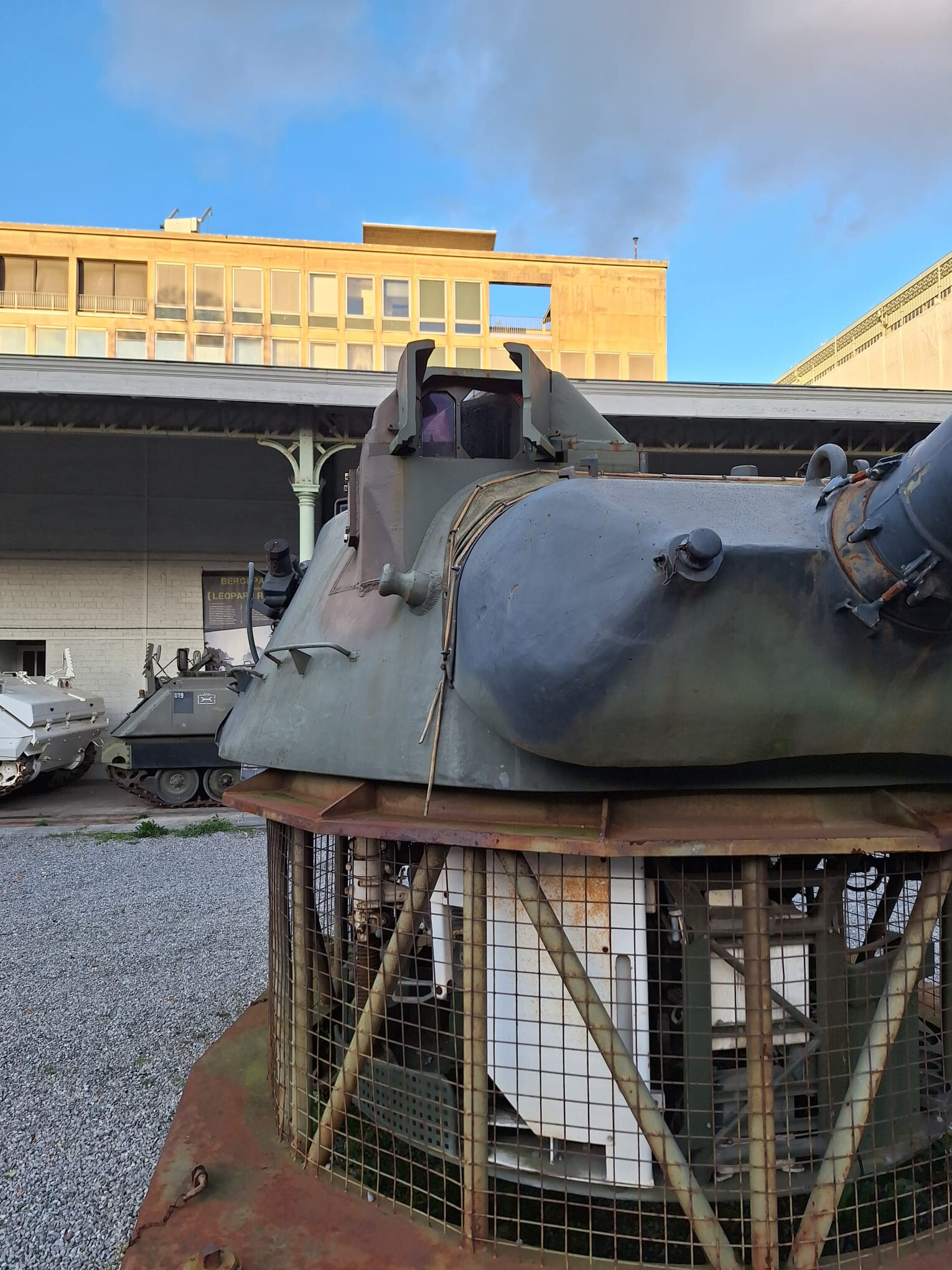
The operational purpose of the programme was later-on stated explicitly by the Belgian government. In a 1992 parliamentary answer, the modernisation was noted as necessary to provide the Leopard with a night-combat capability and the ability to operate under conditions of limited visibility. The programme was also situated within the NATO strategy adopted in 1991. The government considered the modernisation necessary if tanks acquired around 1970 were to remain usable beyond 2000. The age of the Leopard was therefore significant principally because of the technological obsolescence accumulated during more than two decades of service.
The modernisation concentrated on the systems that had become most outdated. Belgium retained the Leopard's chassis and 105 mm L7A3 gun, while introducing new observation, fire-control and weapon-control equipment. This allowed the Army to improve the tank's ability to detect and engage targets without undertaking the much larger task of replacing the vehicle itself.
The timing of the programme nevertheless gave this technical decision a wider significance. Development began while the Belgian Leopard remained part of the conventional NATO defence structure in Central Europe. By the time the modernisation reached series production, however, the strategic environment had changed substantially. The Warsaw Pact had ceased to exist, NATO was adapting to a new strategic framework, and Belgium was beginning to reconsider the size and organisation of its armed forces.
A national technical solution
The modernisation relied on cooperation between Belgian industry and several foreign suppliers. Wegmann assisted with the integration of the new day/night sight and provided technical support during the pre-series phase. Feinmechanische Werke Mainz (FWM) supplied the electro-hydraulic turret-control system, while SABCA was responsible for integrating the fire-control equipment, thermal imaging sight and Leitz Canada muzzle-reference system. OIP Instruments supplied optical components and the commander's telescope. The thermal imaging system used British Class II Thermal Imaging Common Modules manufactured in Belgium under licence, with detector elements supplied by GEC-Marconi Sensors. The 1A5BE was therefore not a wholly indigenous development, but a Belgian-configured modernisation built around a combination of domestic and foreign technology.
Development proceeded through a staged process of prototype construction, industrialisation and pre-series production. A development contract was placed in 1987, and the first prototype was delivered to Belgium on 6 October 1988 following its modification by Wegmann. Wegmann subsequently provided technical assistance during the pre-series phase, while Belgian industrial partners assumed responsibility for production and integration. The programme ultimately covered 132 Leopard 1A1+ tanks, with series conversion continuing through the 1990s and completion scheduled for mid-1997. The modernisation was therefore not a single workshop modification but an industrial programme involving prototype evaluation, multinational technology integration and progressive conversion of an existing fleet.
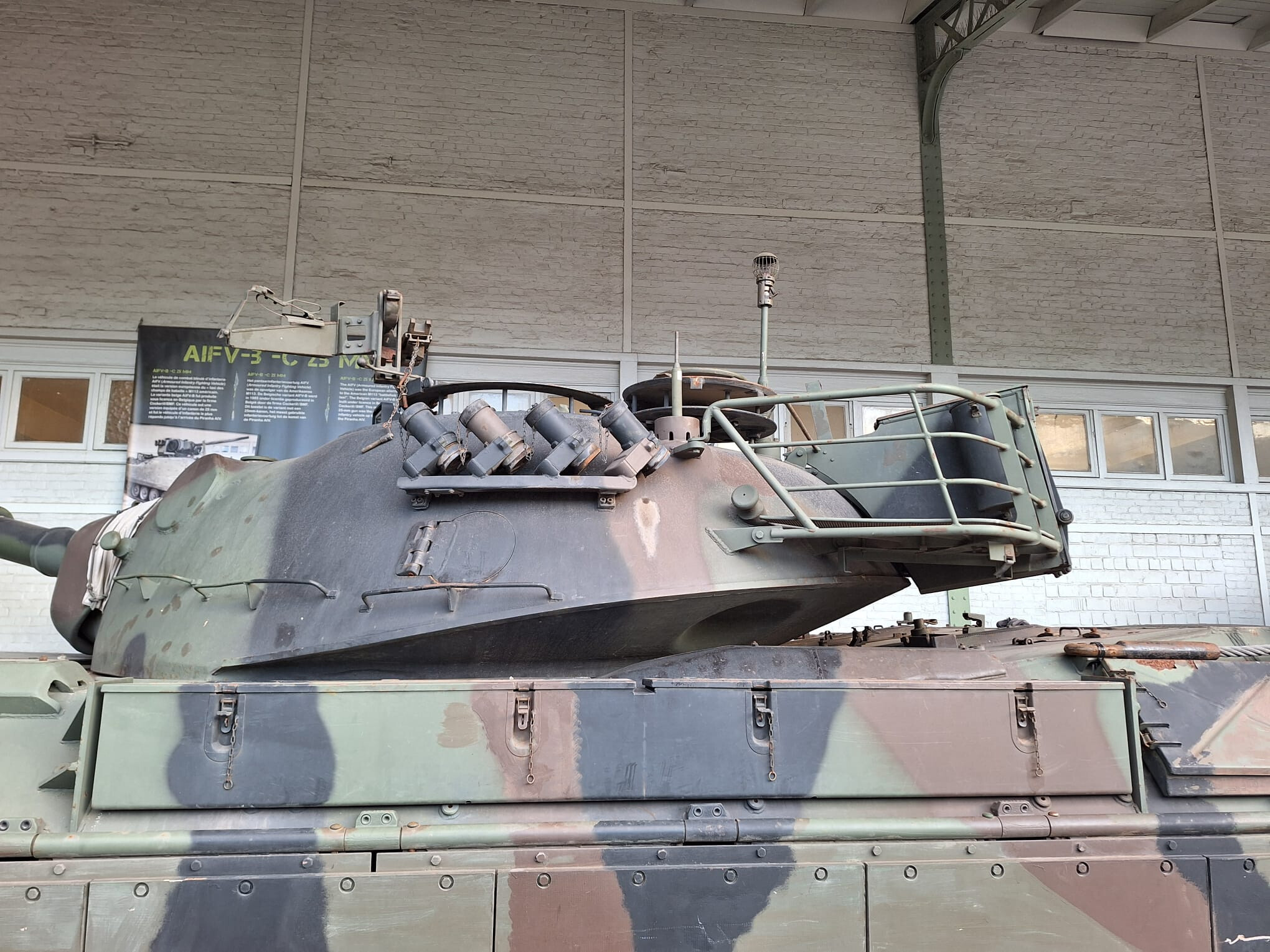
The resulting vehicle was therefore a specifically Belgian interpretation of the Leopard 1A5 concept. Its principal improvement was not a more powerful main armament, but the modernisation of the equipment surrounding the existing 105 mm gun. Thermal observation, laser ranging, ballistic computation and improved weapon control allowed the established armament to be employed more effectively under conditions in which the original equipment had become increasingly limited.
Contemporary descriptions provide somewhat different specifications for the Belgian optical equipment, particularly regarding magnification and the precise characteristics of the thermal and daytime sighting channels. The reported performance of the thermal imaging system is nevertheless more consistent: contemporary reporting gave approximately 5,000 m detection, 3,000 m classification and 2,000 m identification ranges, with detection reportedly reaching 8,000 m under particularly clear conditions.
The involvement of Belgian industry was significant beyond the equipment itself. OIP had already acquired experience with Leopard fire-control systems, while SABCA possessed established expertise in the development and integration of complex weapon and aircraft systems.
The limits of protection
The selective character of the Leopard 1A5BE modernisation was also apparent in the attempts to improve its physical protection. While the observation, fire-control and weapon-control systems could be substantially renewed without fundamentally altering the vehicle's structure, additional armour presented a more difficult problem. The Leopard 1 had been designed around a relatively light construction that placed considerable emphasis on mobility and firepower. Increasing its protection therefore risked changing the mechanical characteristics around which the vehicle had originally been designed.
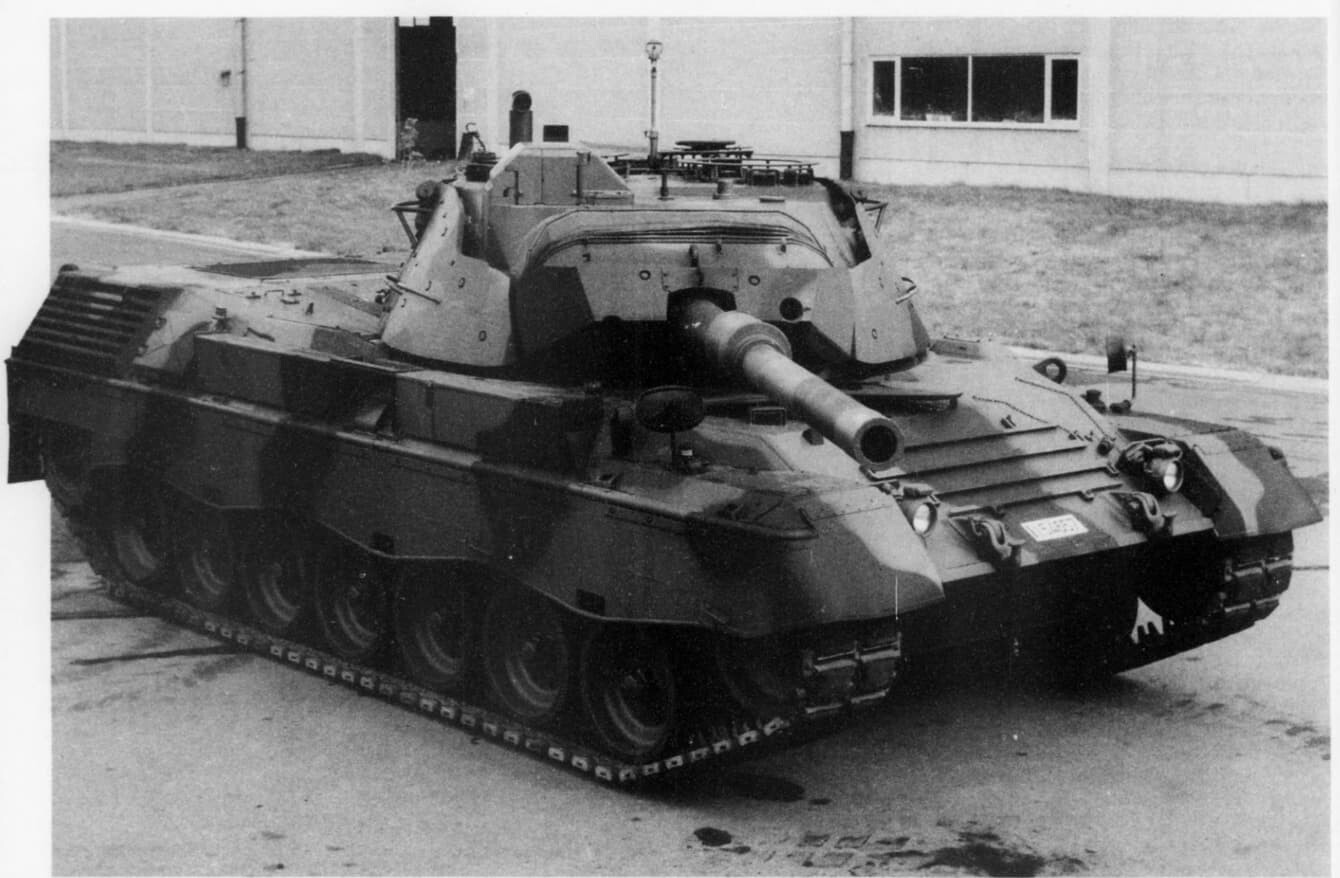
The first attempt to address this issue was already associated with the development of the 1A5BE. The 1988 configuration incorporated mounting points intended to allow the installation of additional spaced armour supplied by Blohm & Voss around the turret. The armour package was evaluated during the development and testing of the modernised Leopard, and was reportedly installed on at least one of the prototype or pre-series vehicles. It was intended to improve protection against shaped-charge threats without replacing the basic armour structure of the Leopard 1. The additional armour nevertheless represented a substantial increase in programme cost. At an estimated cost of approximately 36 million Belgian francs per modernised vehicle, the additional expenditure was considered excessive, while the Belgian Army's staff reportedly did not consider the increased protection sufficiently necessary to justify its adoption. The Blohm & Voss armour therefore remained an evaluated option rather than becoming part of the standard 1A5BE configuration.
Belgium later investigated a more extensive solution using the German MEXAS modular armour system between 1996 and 1998. The trial had a potential industrial dimension as well as a military one, since the production of MEXAS armour in Belgium could have created an opportunity for domestic industrial participation. At least one Leopard 1A5BE was fitted with MEXAS armour on the hull and turret, with a second vehicle apparently being prepared for the installation. The resulting vehicle is sometimes referred to as the Leopard 1A6BE or Leopard 1A5BE (MEXAS), although it should not be confused with a standard Belgian fleet configuration.
The MEXAS trial exposed several practical limitations. The additional armour significantly increased the weight of the turret, placing greater demands on its existing electric or hydraulic traverse system and resulting in mechanical problems. A more powerful and consequently more expensive turret-control system would have been required to accommodate the additional mass. The armour also complicated maintenance, since sections of the additional protection had to be removed to provide access to the engine compartment.
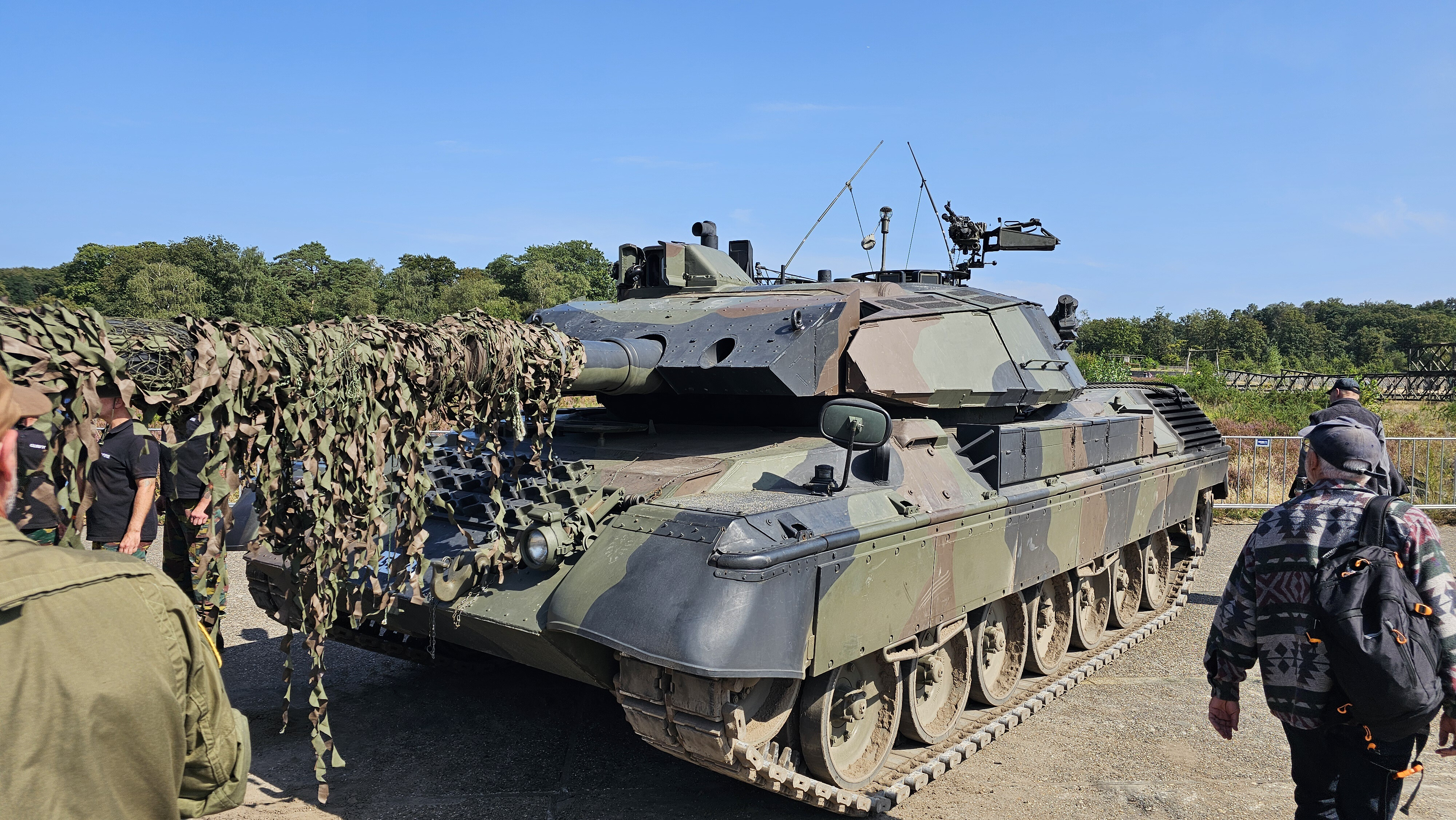
The MEXAS programme was consequently not adopted as a fleet-wide upgrade. The combination of additional cost, mechanical difficulties and the practical disadvantages associated with the armour led to the cancellation of the wider upgrade programme. At least one vehicle nevertheless retained its MEXAS armour for the remainder of its service life, meaning that the configuration technically entered Belgian Army service, although only as an individual vehicle rather than as a standard production variant. The preserved vehicle can now be found in the Royal Military Museum in Brussels, providing a surviving example of an upgrade that was tested but never adopted across the fleet.
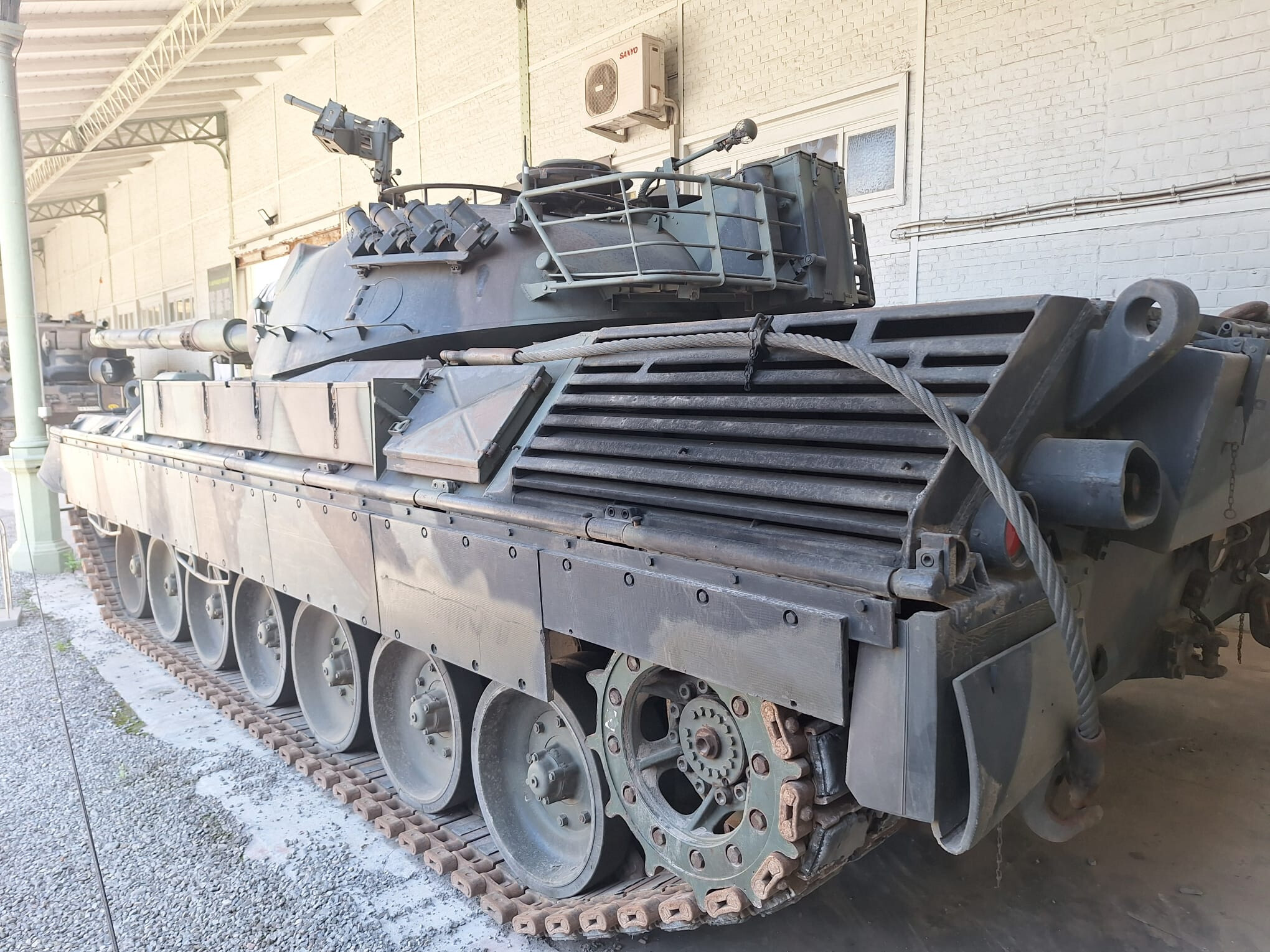
The two armour trials demonstrate the limitations of increasing the Leopard's protection without making more extensive changes to the vehicle. Both the Blohm & Voss and MEXAS packages offered additional protection, but their cost and mechanical implications prevented their adoption across the fleet. The production Leopard 1A5BE consequently retained the basic protection of the Leopard 1, with the modernisation concentrated instead on observation, fire control and weapon control. Belgium had explored ways of improving the tank's protection, but ultimately retained the original balance between mobility, firepower and armour.
The question of ammunition
The decision to retain the Leopard's 105 mm L7A3 main armament also preserved an established ammunition and logistical system. Belgium did not need to introduce a new tank gun or construct an entirely new ammunition infrastructure alongside the modernisation of the vehicle. Instead, the existing 105 mm system could continue to be used while newer ammunition types were introduced or retained alongside older stocks.
Belgian industry had developed a production capability for 105 mm ammunition compatible with L7-family weapons. Defence Intelligence Agency documentation identifies Belgian APFSDS-T projectiles including the M1050 and M1060, alongside other Belgian 105 mm ammunition types. Belgian manufacturers therefore formed part of the wider industrial system supporting the Leopard's main armament, while the international standardisation of the 105 mm L7 also allowed Belgium to obtain compatible ammunition from other sources.
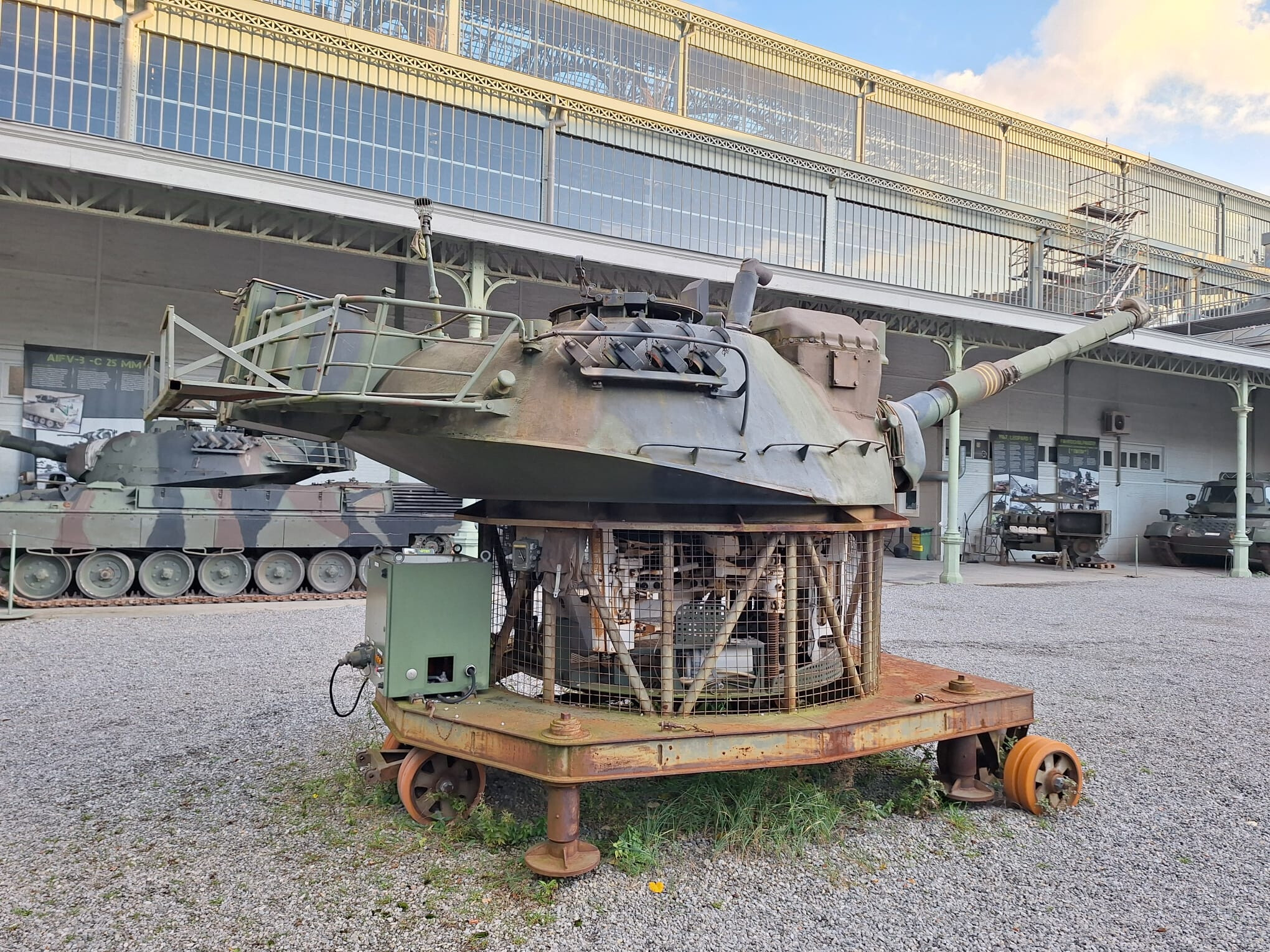
The Belgian inventory was consequently not limited to domestically produced ammunition. Documentation associated with NATO standardisation records a range of 105 mm rounds held in Belgian stocks, mostly domestically produced or slightly modified, including the German/Israeli DM23A1 and DM33 APFSDS-T, the British L52A2 APDS-T and L39A2 smoke round, the US/Belgian M393A2 HEP-T, the Belgian M416 WP smoke round and the US/Belgian M724A1 TPDS-T training projectile. However, in the 2000s MECAR munition was also bought and used, like M393A2 HEP-T, M416 WP smoke, M1001 APFSDS-T, M1010 HE-T, M1050 APFSDS-T, M1060 APFSDS-T and M1061 HEAT-T. The inventory was a combination of Belgian production and ammunition acquired from foreign sources, rather than a single nationally produced ammunition family or solely German-supplied ammunition.
Retaining the L7A3 allowed Belgium to modernise the tank's observation and fire-control equipment without introducing a new main armament or replacing the existing 105 mm ammunition infrastructure. The Leopard 1A5BE thus combined a modernised combat system with a weapon and logistical arrangement that had already been established during decades of Belgian service.
Industry and the modernisation of an existing fleet
The modernisation of the Leopard 1 cannot be separated from the Belgian industrial and technical capabilities that had developed around the vehicle during its preceding decades of service. When the first Leopards entered Belgian service between 1968 and 1971, they were incorporated into an established armoured force closely linked to Belgium's contribution to NATO's defence of Central Europe. The vehicle subsequently became the principal medium tank of several Belgian armoured formations, supported by established training, maintenance and logistical structures.
The Belgian Leopard was also subject to continuous adaptation. During the 1970s, Belgian industry participated in improvements to the tank's fire-control and weapon-control equipment. By the time the Belgian Army's 1979 Leopard tank manual was issued, the vehicle had already diverged considerably from the configuration in which it had originally entered service. The equipment documented in the manual included automatic fire-control equipment, the TEM 2A rangefinder and weapon stabilisation for firing on the move, while extensive procedures were provided for infrared observation and night fighting. The 1A5BE programme therefore represented a further stage in an established process of technological adaptation rather than the first major modification of the Belgian Leopard.
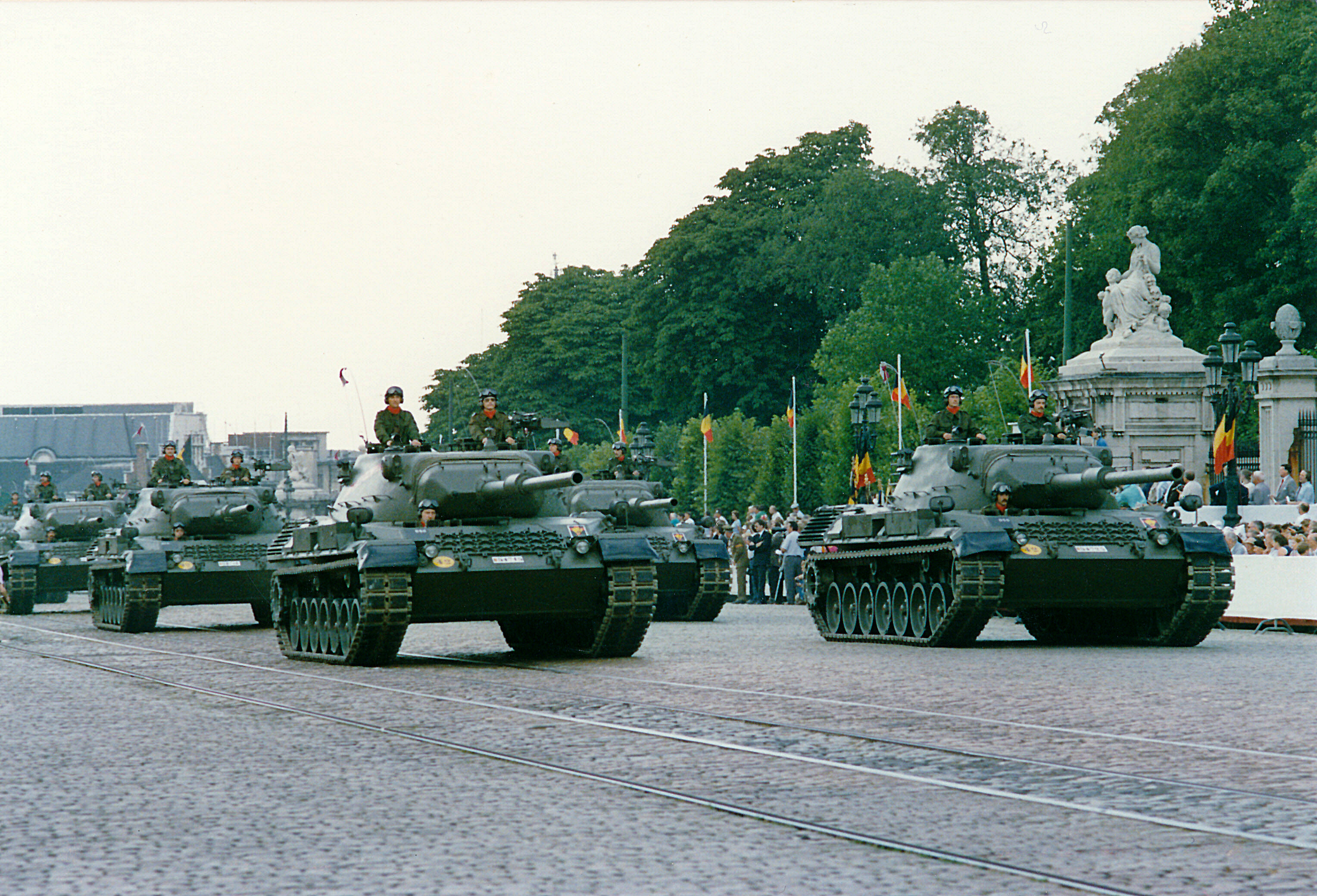
This continuity was closely associated with companies such as SABCA and OIP, but the 1A5BE programme also depended on cooperation with foreign manufacturers. Wegmann provided turret and sight integration expertise, while Feinmechanische Werke Mainz supplied the electro-hydraulic turret-control system. OIP contributed optical components and sight assemblies, while the thermal imaging system incorporated British-derived technology produced in Belgium under licence. The programme therefore combined Belgian industrial expertise with selected German and British technologies rather than representing either a wholly indigenous development or a direct adoption of the standard German Leopard 1A5.
The industrial dimension had also been present from the beginning of the Leopard programme. The decision to acquire the Leopard had been influenced not only by military considerations but also by economic and industrial factors. The procurement was accompanied by industrial compensation arrangements through which a substantial proportion of the associated expenditure returned to Belgian industry. The Leopard therefore fitted a wider Belgian approach to major defence procurement, in which the acquisition of foreign-designed equipment could also support domestic industrial activity.
This relationship reflected a broader structural problem in Belgian defence policy. Belgium's commitments within NATO required the maintenance of military capabilities corresponding to the alliance's defence plans, while the resources available to the armed forces were constrained by domestic political and economic considerations. The resulting tension between military requirements and available resources was already evident before the Leopard modernisation programme. Successive modifications to the Leopard should therefore be understood within a longer effort to maintain NATO-relevant capabilities without necessarily replacing existing equipment whenever newer systems became available.
The programme ultimately covered 132 of the original 334 Leopard 1s. Contemporary reporting described these vehicles as sufficient to equip three 40-tank armoured battalions, with twelve additional vehicles allocated to training and reserve purposes. Modernisation was therefore concentrated on the part of the fleet intended to remain in operational service, rather than being applied to every Belgian Leopard.
The significance of the programme therefore extended beyond the 132 vehicles themselves. The Leopard had entered Belgian service as a German-designed tank, but successive modifications, industrial involvement and operational experience had progressively given it a specifically Belgian character. The 1A5BE represented the culmination of this process: an established foreign platform adapted through domestic expertise and retained in reduced numbers as Belgian defence requirements and resources changed.
From the Cold War to the post-Cold War Army
The Leopard 1A5BE entered service as the strategic environment for which the Belgian Leopard fleet had originally been acquired was disappearing. The first Leopards had been introduced as part of Belgium's contribution to NATO's conventional defence of Western Europe, with Belgian armoured forces assigned to the wider Central European defence structure. By the time the modernisation programme reached completion in 1997, however, the Warsaw Pact had disappeared and the strategic framework of the Belgian Army was undergoing fundamental change.
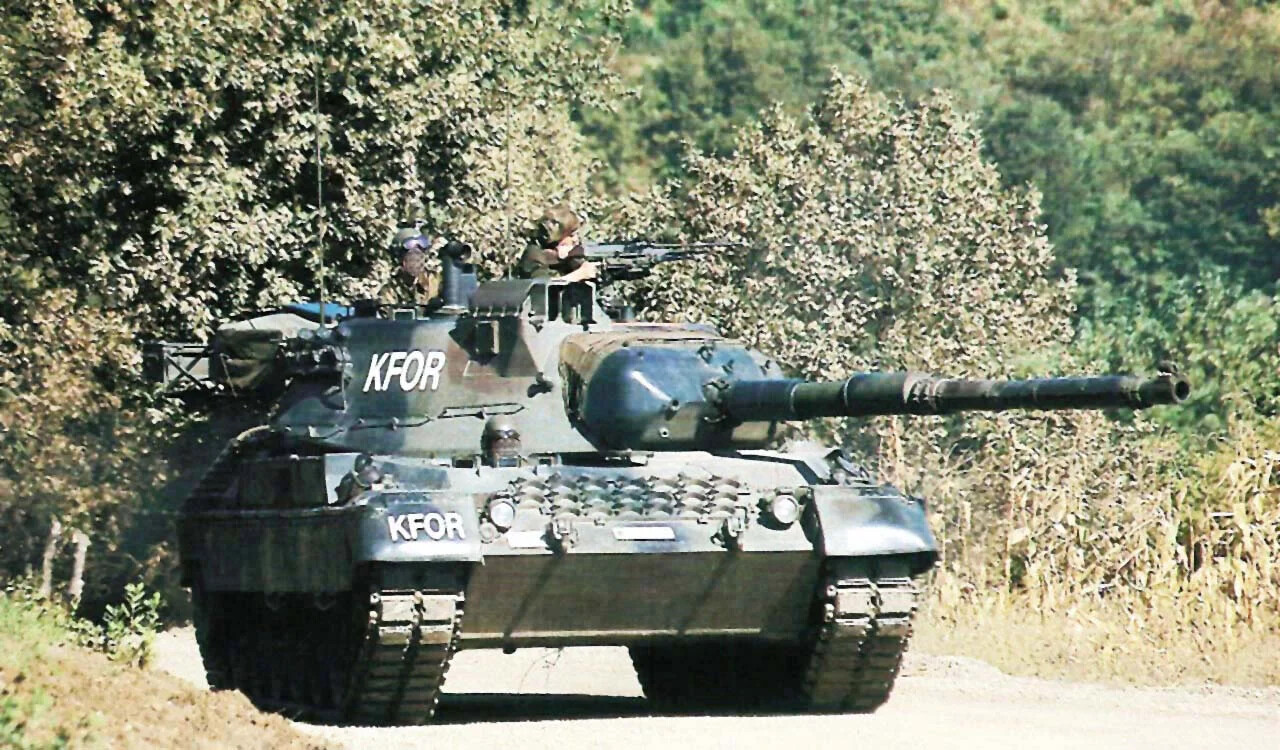
The modernised Leopard nevertheless continued to serve in operational roles during this transition. Belgian Leopard 1A5BEs were employed with Belgian forces participating in the Kosovo Force (KFOR), where they operated as part of a multinational force in a substantially different environment from the conventional armoured confrontation for which the Leopard had originally been acquired. Their deployment demonstrated that the modernised vehicle remained usable beyond the Cold War, even as the role of heavy tracked armour within the Belgian Army was changing.
The fleet itself continued to contract. The 132 modernised vehicles represented only a portion of the original 334-tank fleet and were intended to provide the equipment for a reduced number of operational formations, supplemented by vehicles for training and reserve purposes. The remaining Leopard 1A1+ tanks were progressively withdrawn from Belgian service. By 2011, a parliamentary record identified two tank battalions still equipped with the Leopard 1A5 and stated that the intention was to withdraw the tanks and replace them with armoured wheeled vehicles.
This change formed part of a wider transformation of the Belgian armed forces after the Cold War. The Army increasingly placed greater emphasis on deployability and flexibility, while the large armoured formations associated with the defence of Central Europe were reduced. In this context, the Leopard's replacement by wheeled armoured vehicles was not simply a consequence of the technical characteristics of the 1A5BE. It reflected a broader change in the organisation and intended employment of the Belgian Army.
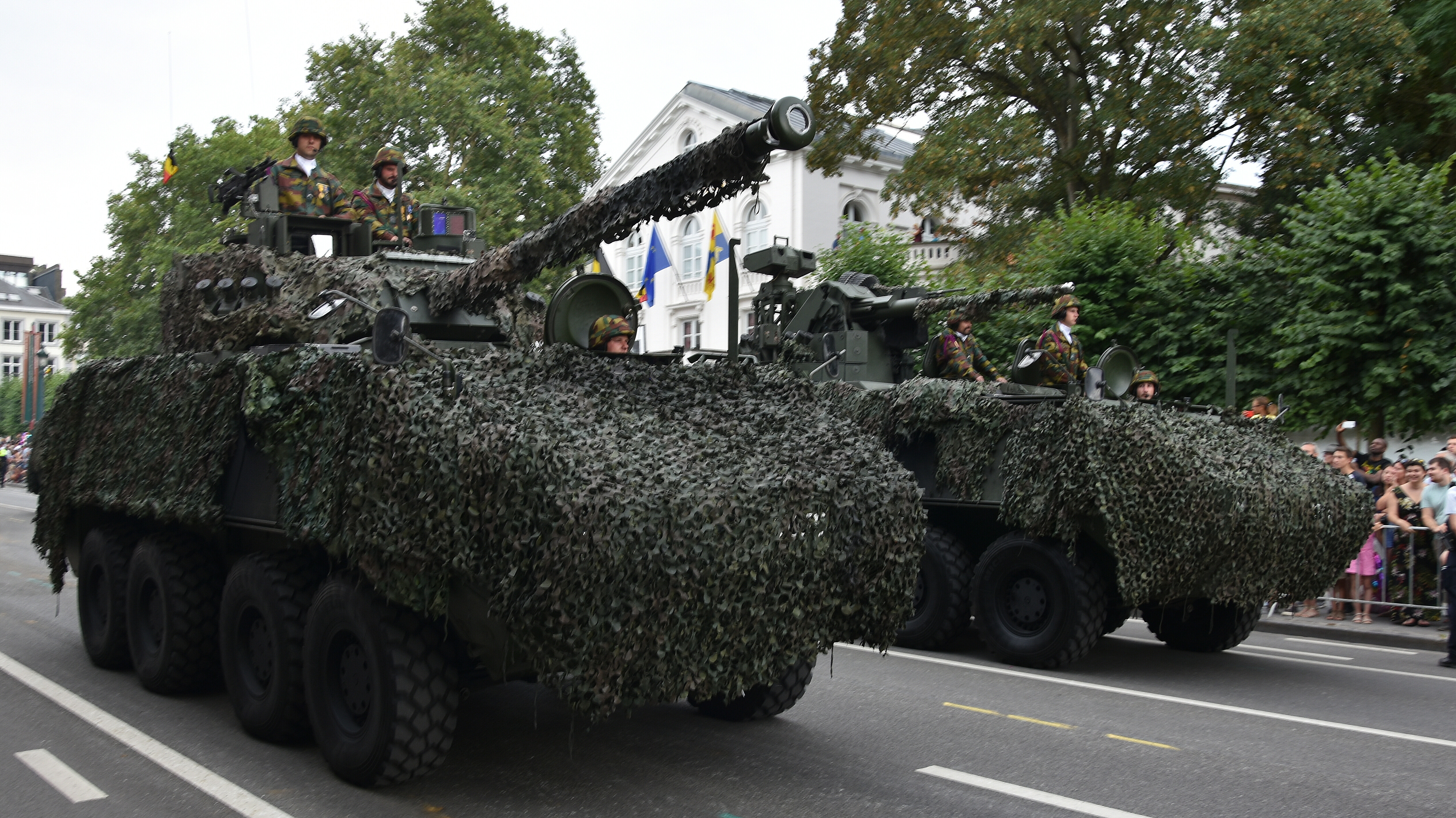
The direction of this transformation was already apparent around the turn of the century. The Belgian Army's modernisation planning increasingly envisaged a smaller and more mobile force, with the role previously assigned to tracked tanks progressively reconsidered in favour of wheeled systems. The Leopard 1A5BE therefore became part of a force structure whose long-term development was moving away from the maintenance of a conventional tank fleet.
The timing of the withdrawal is consequently as significant as the modernisation itself. Belgium had invested in a substantial renewal of the Leopard's observation and fire-control capabilities, extending the useful life of the vehicle well beyond the period for which its original equipment had been designed. Yet the strategic and organisational reasons for maintaining a large tracked armoured force were simultaneously diminishing. The 1A5BE consequently served for much of its later life within a military organisation that was becoming progressively less dependent on main battle tanks.
The final withdrawal marked the end of a much longer period of Belgian tracked-tank operations. The Leopard had served the Belgian Army for more than four decades, from its introduction in the early 1970s until the final firing of its 105 mm guns in 2014. Its retirement therefore represented not merely the end of one vehicle type, but the conclusion of the Belgian Army's era of medium and main battle tanks as a central component of its conventional ground forces.
A material reflection of Belgian defence policy
The Leopard 1A5BE was the result of several decades of adapting the Leopard to Belgian requirements. The original German design had already undergone significant modifications during the 1970s, particularly to its fire-control and weapon-control systems. The 1A5BE took this process further by introducing thermal imaging and improved fire-control equipment, while retaining the existing chassis and 105 mm L7A3 gun. Its development brought together Belgian industrial expertise and foreign technology to extend the service life of an established vehicle.
Only 132 of the original 334 Belgian Leopards were converted. This reflected the changing requirements of the Belgian Army as much as the technical needs of the vehicle. The modernisation provided a smaller fleet with improved combat systems, while allowing the Army to retain much of its existing training, maintenance and logistical infrastructure. The programme was completed in 1997, by which time the strategic environment that had originally justified the Leopard's acquisition had already changed.
The Leopard 1A5BE illustrates a longstanding problem in Belgian defence policy: maintaining the capabilities expected of a NATO ally while adapting them to the resources available to the state. Belgium addressed this challenge by modernising equipment that could still serve its purpose, rather than immediately replacing the entire system. The 1A5BE was the final and most extensive expression of that approach, but its eventual withdrawal also reflected the changing priorities of the Belgian armed forces.
Army Guide. (n.d.). Leopard 1. https://www.army-guide.com/eng/product152.html
Brabant, W., Hoeck, P., Warnauts, J. P., Deleers, J., Guérin, J. P., & Bara, X. (2014). De Belgische cavalerie door de eeuwen heen. Éditions du Perron, EAN: 9782871142546
Belgian Chamber of Representatives. (1989). Question et réponse concernant la modernisation des chars Léopard I. Questions et Réponses de la Chambre des représentants, 1988–1989. https://www.lachambre.be/qrva/pdf/47/47-1988-89-55.pdf
Belgian Chamber of Representatives. (1992). Programme d'équipement « Modernisation Leopard I » (Question No. 64, 29 May 1992). Questions et Réponses de la Chambre des représentants, 1991–1992, 29. https://www.dekamer.be/QRVA/pdf/48/48K0029.pdf
Belgian Chamber of Representatives. (2011). Commission de la Défense nationale: Compte rendu intégral. https://www.dekamer.be/doc/CCRI/html/53/ic104x.html
Belgian Defence. (n.d.). Leopard 1A5 (BE). Internet Archive. https://web.archive.org/web/20160322140030/http://www.mil.be/nl/materiaal/leopard-1a5-be
Belgian Senate. (2008, February 21). Annales des séances plénières—Séance de l'après-midi. https://www.senate.be/www/?MIcolObj=pdf&MInamObj=pdfid&MItabObj=pdf&MItypeObj=application%2Fpdf&MIvalObj=67109576
Bundeswehr. (n.d.). Kampfpanzer Leopard: Die Versionen der Bundeswehr.
Cunibert, J. P., De Vos, L., & Strobbe, M. (1982). De Belgische landmacht 1945–1980. Forum van de Landmacht.
Foss, C. F. (Ed.). (2011). Jane's armour and artillery 2011–2012 (32nd ed.). IHS Jane's Information Group. https://openlibrary.org/books/OL26823563M/Jane%27s_Armour_and_Artillery_2011-2012
Jane's Information Group. (1995). Jane's armour and artillery upgrades 1995–96. Jane's Information Group.
Jerchel, M., & Sarson, P. (1995). Leopard 1 main battle tank 1965–95. Osprey Publishing. https://www.ospreypublishing.com/uk/leopard-1-main-battle-tank-196595-9781855325203/
KNDS. (2023, July 20). KNDS confirms its ambitions in Belgium by appointing a managing director. https://knds.com/en/press-releases/knds-confirms-its-ambitions-in-belgium-by-appointing-a-managing-director
Lobitz, F. (2006). The Leopard 1 MBT in German Army service—Late years. Tankograd Publishing.
MKOK Leopoldsburg. (n.d.). Verhalen. https://www.mkok.be/verhalen
Nationaal Militair Museum. (n.d.). Leopard 1A5BE MEXAS en M48 Patton. https://www.nmm.nl/nl/stories/leopard-1a5be-mexas-en-m48-patton/
NATO Standardization Agency. (1998, March 25). STANAG 4458: 105 MM ammunition for rifled tank guns (Edition 1). https://quicksearch.dla.mil/qsDocDetails.aspx?ident_number=210064
OIP Sensor Systems. (n.d.). Timeline. https://www.oip.be/about-us/timeline/
Ogorkiewicz, R. M. (1991). Modernizing Belgium's Leopard 1 tanks. International Defense Review, 24(8), 822–825.
Shackleton, M. (2003). Leopard 1 trilogy: Volume 3—Foreign usage. Barbarossa Books.
United States Defense Intelligence Agency. (1994). Projectile and warhead identification guide—Foreign (DST-1160Z-029-94). Defense Intelligence Agency. https://pdfcoffee.com/projectile-and-warhead-identification-guide-foreign-pdf-free.html

