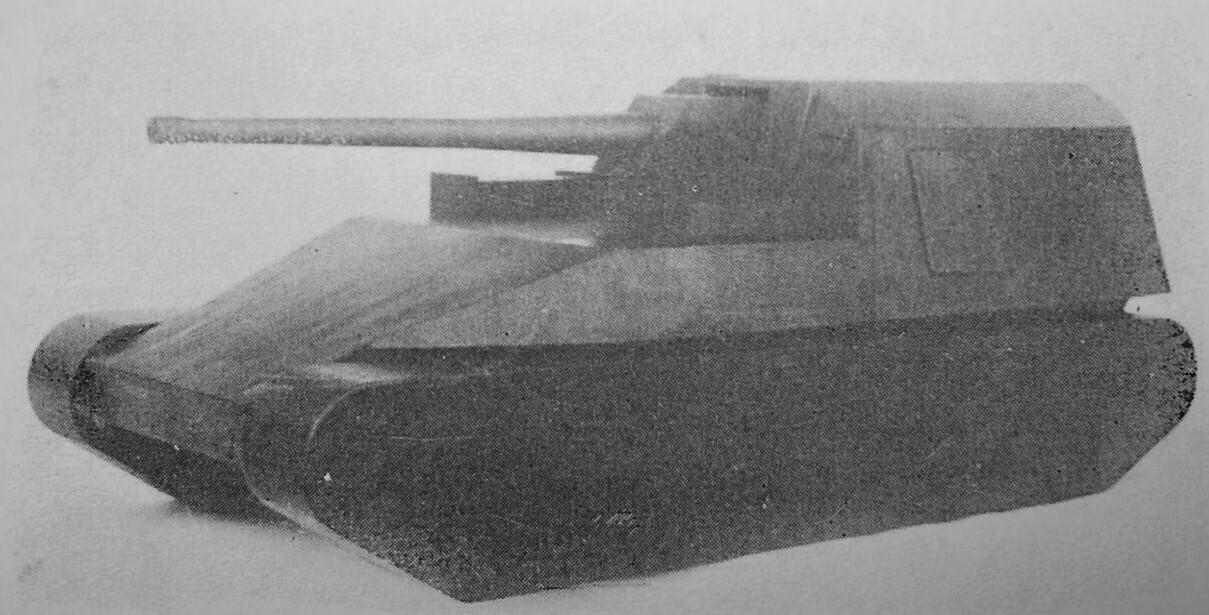
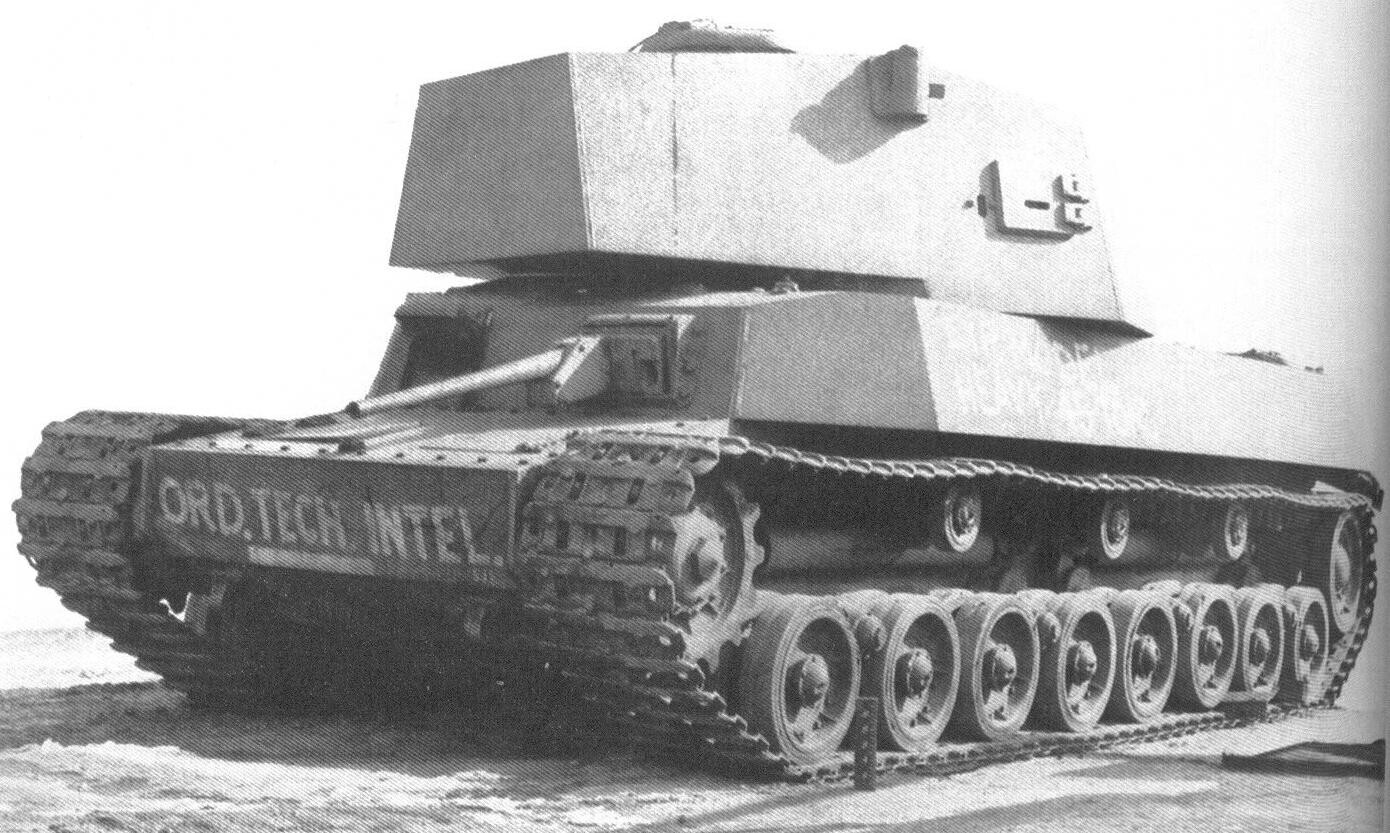
In the Pacific War, it quickly became apparent after the initial deployments of the Japanese Chi-Ha tanks that they lacked sufficient armor and firepower to contend with the American M4 Shermans and M3 Lee/Grant. Consequently, development of successors began as early as 1940; one of these was the Type 5 Chi-Ri (五式中戦車 チリ / Medium Tank Type 5 Chi-Ri). Parallel to this, the Ho-Ri, intended to serve as a heavy tank destroyer, was designed based on the Type Chi-Ri. However, due to a shortage of raw materials, which were allocated to the Type 4 Chi-To rather than the Chi-Ri, it never entered serial production; only a single unfinished Chi-Ri prototype was built, while the Ho-Ri project was abandoned entirely, with only a scale model ever being constructed.
Technical Data
Chi-Ri
| High | 3.05 m |
| Length | 7.3 m |
| Width | 3.05 m |
| Mass | 37.6 t |
| Crew | 5 |
| Engine | Kawasaki Type 98 liquid-cooled aircraft petrol engine |
| Power | 550 hp |
| Top Speed | 45 km/h |
| Range | 250 km |
| Main Armament | Type 5 75 mm Gun |
| Secondary Armament | 1 x Type 1 37 mm Gun 2×7.7 mm Type 97 MG |
Ho-Ri
| High | 2.7 m |
| Length | 7.4 m |
| Width | 3.5 m |
| Masss | ~ 40 t |
| Crew | 6 |
| Engine | BMW 12-cylinder aircraft petrol engine |
| Power | ~ 550 hp |
| Top Speed | 40 km/h |
| Range | N / A |
| Main Armament | 1 x Type 5 105 mm gun |
| Secondary Armament | 1 x Type 1 37 mm gun 2–3 × Type 97 7.7 mm machine gun |
Development
Even at the time of the Chi-Ha’s introduction and its initial deployment at the Battle of Khalkhin Gol, its armor and armament proved inadequate against Russian anti-tank guns and tanks; consequently, work on newer models began early on. Following encounters with more modern American tanks, specifically the arrival of the M3 Lee / Grant in 1942 and the M4 Sherman in 1943. And after having already developed the Chi-He and subsequently the Chi-Nu as successors to the Chi-Ha in an effort to keep pace with newer American armor, a new vehicle was once again required. Two types were considered: the Type 4 Chi-To and the Type 5 Chi-Ri.
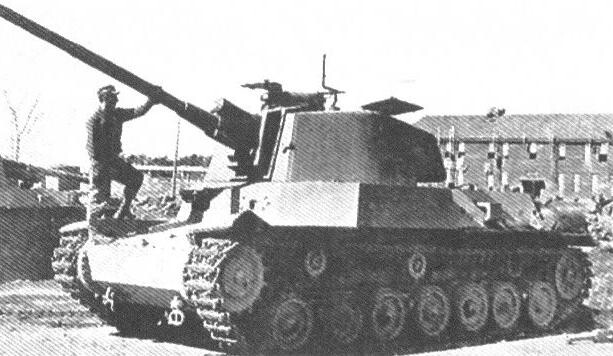
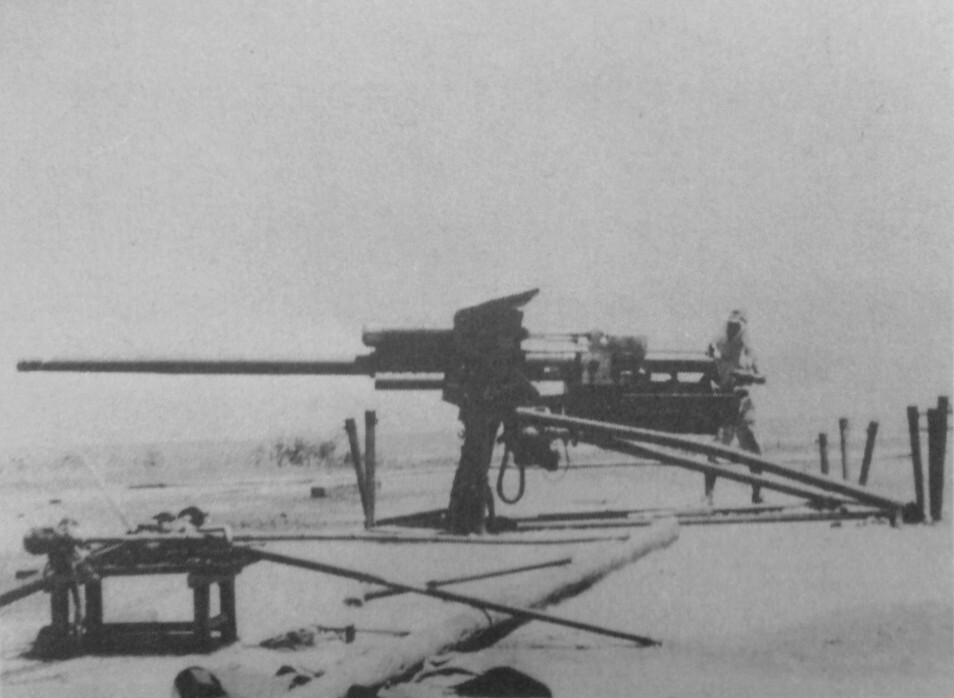
Both tanks were designed for the contingency of an imminent invasion of the Japanese home islands; however, both were also constrained by a lack of resources and sufficient manufacturing capacity. The Chi-Ri’s suspension was based on that of the Chi-To, though the chassis was lengthened by one wheel to accommodate a 75mm Type 5 gun in an octagonal turret; a 37mm Type 1 gun was also mounted in the hull, while a 7.7mm Type 97 machine gun was installed coaxially with the 37mm gun, and another was mounted on the side of the turret. The armament was also slated for improvement; specifically, the original 75mm gun was to be replaced by a new 88mm tank gun, a plan that never materialized.
Although a Mitsubishi diesel engine was initially planned, the decision was made to use the Kawasaki Type 98 Ha-9-IIb, an 800 hp engine originally designed for aircraft (and built under license from BMW), with its output reduced from 800 hp to 550 hp. Later, a 500 hp turbocharged diesel engine from Mitsubishi was to have been developed and installed.
Plans called for the armor to be reinforced to a thickness of up to 75 mm. However, in light of the American tanks, it was clear that armored warfare doctrines were changing; consequently, there was a need for armor-piercing weapons that also possessed sufficient armor protection themselves, leading to plans to eventually increase the Chi-Ri’s armor to up to 105 mm. Ultimately, the Chi-To was selected because it was far more feasible to produce than the Chi-Ri.
Nevertheless, a single, incomplete prototype of the Chi-Ri was built before the war ended and subsequently fell into American hands.
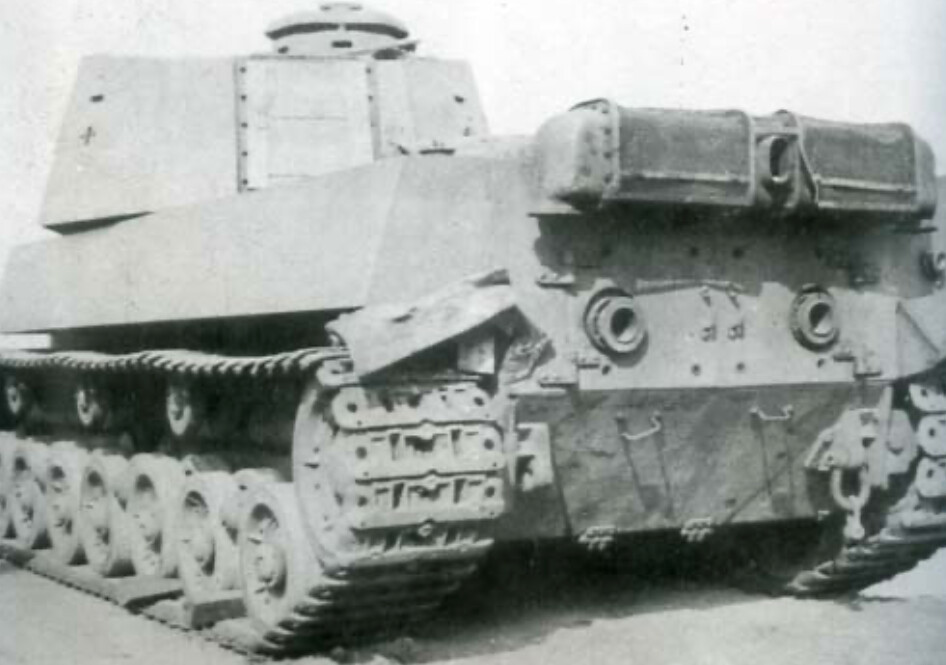
Starting in 1943, work began on developing a heavy tank destroyer capable of outclassing American tanks, namely the Ho-Ri (試製新砲戦車 ホリ/experimental model of a new tank destroyer Ho-Ri). The chassis of the Chi-Ri was selected as the basis for this project. A casemate was mounted on the rear section of the chassis, while the engine was relocated to the center of the vehicle.
The frontal armor was designed to be up to 150 mm thick, with side armor of approximately 100 mm and rear armor of 75 mm. An experimental 105 mm gun was chosen as the primary armament, while plans for secondary armament included retaining the chassis-mounted 37 mm Type 1 gun and a coaxial Type 97 machine gun. Consideration was also given to mounting two additional machine guns or a twin Type 4 20 mm or two 25 mm anti-aircraft guns on the casemate roof to provide defense against low-flying aircraft.
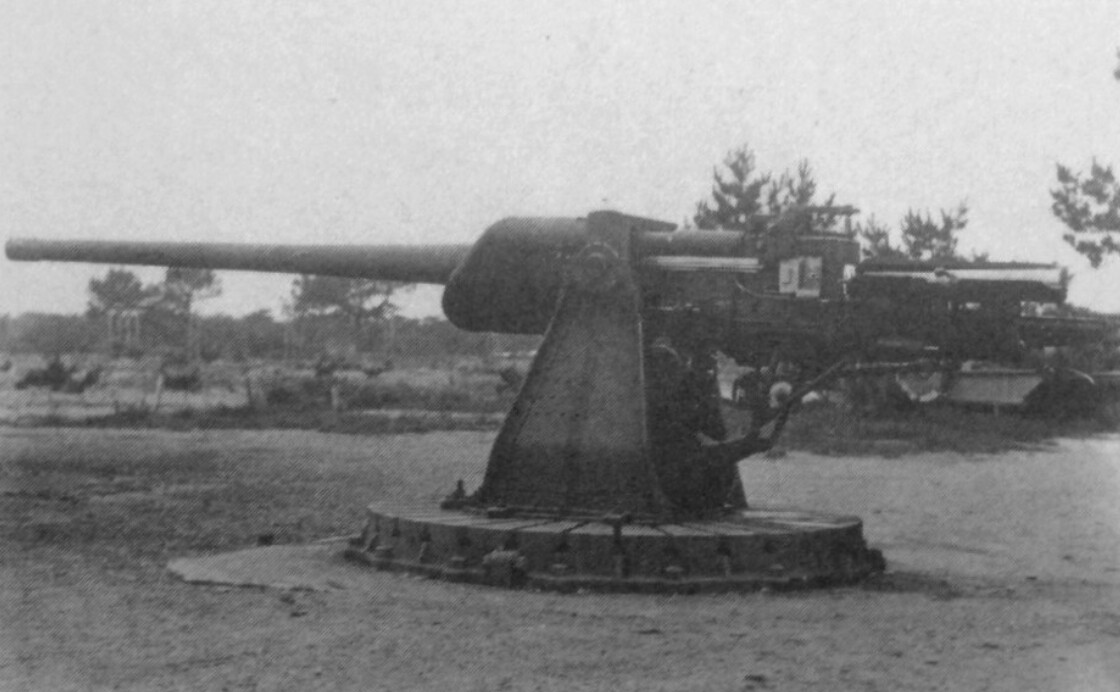
A redesign of the superstructure layout was also considered as a sort of second version; in this configuration, the casemate was moved to the center while the engine remained at the rear, making the vehicle resemble the Jagdtiger, whereas the first version looked similar to the Ferdinand / Elefant. Ultimately, the second version was abandoned, and the goal was set to produce five units of the first version before the end of 1945. However, as is well known, this never came to pass; the project was still in the development stage during the final days of the war, and construction of a prototype, aside from the gun and a one-to-one model, never took place.
Towards the end of the war, a study was conducted to consider the impact of modernizing the Type 5; this included the potential installation of a 10 cm gun and 135 mm armor. However, the results of this study are unknown, as they were destroyed during the final days of the war prior to the surrender on September 2, 1945.