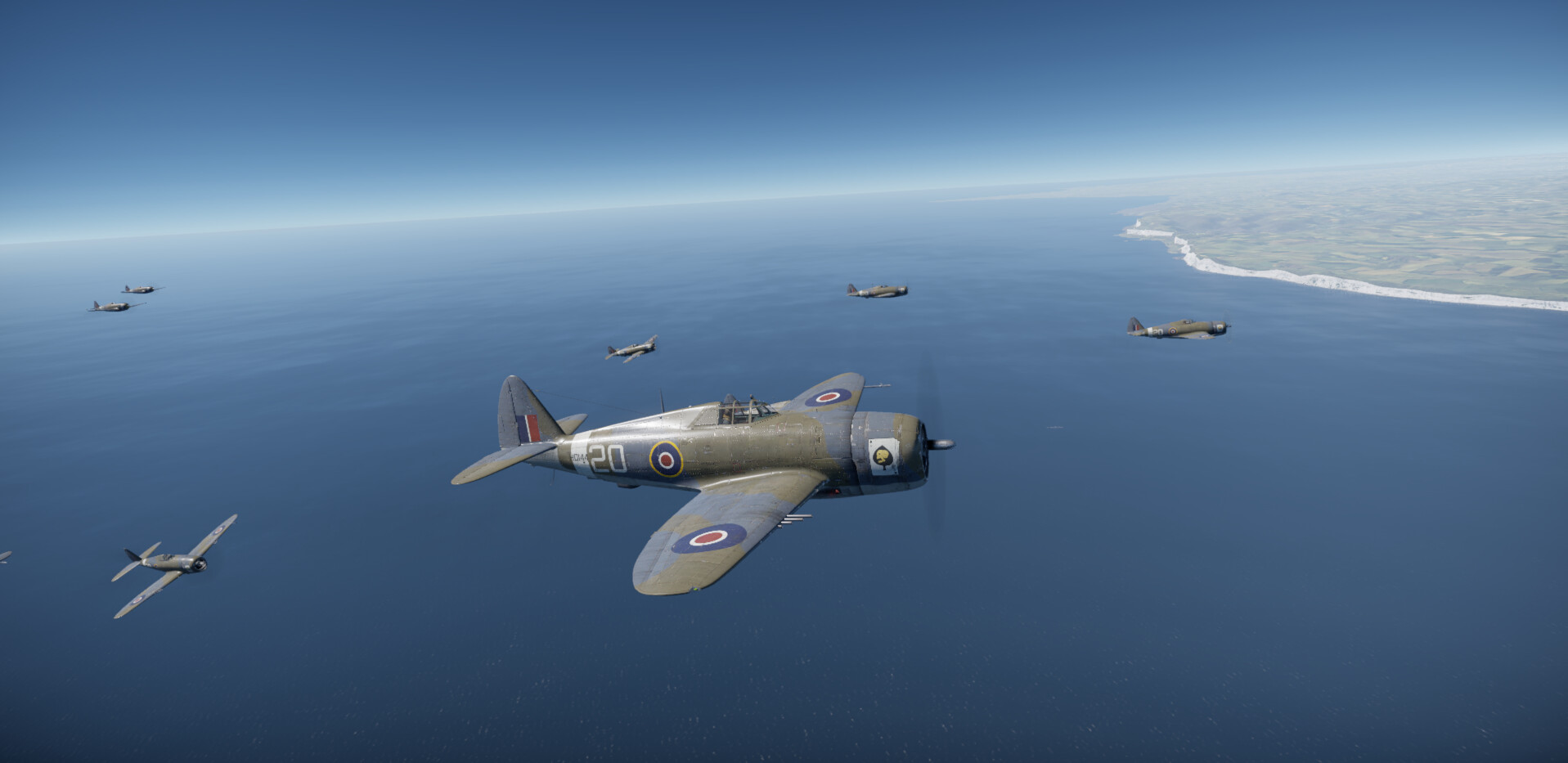
The Thunderbolt Mk.1 was the first variant of the P‑47D supplied to the Royal Air Force under Lend‑Lease. As one of the heaviest single‑engine fighters of the war, it introduced RAF pilots to an American design philosophy built around structural strength, high‑altitude performance, and exceptional dive capability. Its large radial engine, robust airframe, and eight .50‑calibre Browning machine guns made it a formidable fighter‑bomber capable of absorbing significant damage while delivering powerful strikes against both air and ground targets.
History
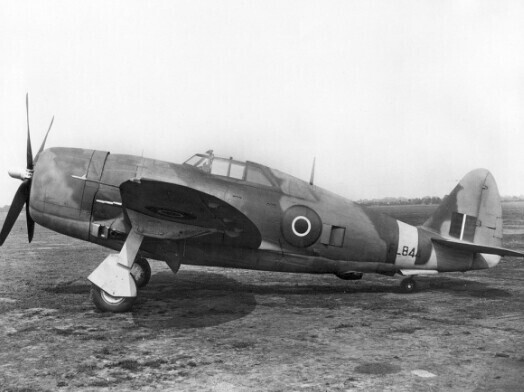
The Thunderbolt Mk.1 corresponds to the P‑47D‑22‑RE, one of the early “razorback” production blocks of the P‑47D series supplied to the Royal Air Force under the Lend‑Lease program. Deliveries began in 1944, with the RAF adopting the type primarily for operations in the Southeast Asian theatre.
In RAF service, the Thunderbolt was not employed as a high‑altitude escort fighter as it was in USAAF doctrine. Instead, it became a dedicated fighter‑bomber, valued for its exceptional durability, heavy armament, and reliability in tropical conditions. These characteristics made it well‑suited to the demanding environment of the Burma campaign, where aircraft routinely operated from rough forward airstrips and faced intense ground fire during low‑level attack missions.
Thunderbolt Mk.1s were assigned to several squadrons of the Third Tactical Air Force, including No. 30, No. 79, No. 135, No. 146, No. 261, and No. 34 Squadrons. Their missions included interdiction of Japanese supply lines, strafing of troop concentrations, attacks on rivercraft and transport infrastructure, and close air support during major Allied offensives such as Imphal, Kohima, and Meiktila. The aircraft’s ability to absorb significant battle damage and still return to base earned it a strong reputation among RAF pilots and ground crews.
Although the majority of RAF Thunderbolt operations occurred in Burma, a smaller number of Mk.1s were evaluated and used in Europe by units such as No. 56, No. 63, and No. 183 Squadrons. In this theatre, the aircraft continued to serve in the fighter‑bomber role, conducting armed reconnaissance and ground‑attack missions. However, the RAF already fielded Spitfires and Tempests for air superiority, so the Thunderbolt’s European employment remained limited compared to its extensive service in Asia.
The Thunderbolt Mk.1 was later supplemented by the Thunderbolt Mk.2 (bubble‑canopy P‑47D‑25 and later blocks), which introduced improved visibility and structural refinements. Even so, the Mk.1 played a significant role in RAF operations, demonstrating the effectiveness of American high‑altitude fighter design when adapted to low‑level strike missions in one of the most challenging combat environments of the Second World War.
Pros and cons
| Pros | Cons |
| Very strong airframe with excellent damage tolerance | Poor low‑speed maneuverability |
| Outstanding dive speed and high structural limits | Large target profile |
| Good energy retention at medium and high altitudes | Average climb rate for its class |
| Eight .50‑calibre machine guns with long firing time | Noticeable performance loss at low altitude |
| Wide selection of bombs and rockets for ground attack |
Flight characteristics
The Thunderbolt Mk.1 is built around the Pratt & Whitney R‑2800‑21 radial engine, giving it strong performance at medium and high altitudes. The aircraft excels in dives, where its weight and aerodynamic stability allow it to reach very high speeds without structural failure. Control response remains stable even at high velocity, making it ideal for boom‑and‑zoom tactics.
At lower speeds, the aircraft becomes sluggish. Its high wing loading reduces turn performance, and it cannot compete in sustained manoeuvring engagements with lighter fighters. Roll rate is moderate, improving with speed, while pitch authority becomes limited during slow‑speed climbs or tight turns.
The aircraft retains energy well in level flight and shallow climbs, allowing it to disengage effectively after an attack run. Its stall behavior is predictable, but recovery requires altitude due to the aircraft’s mass.
Armor and survivability
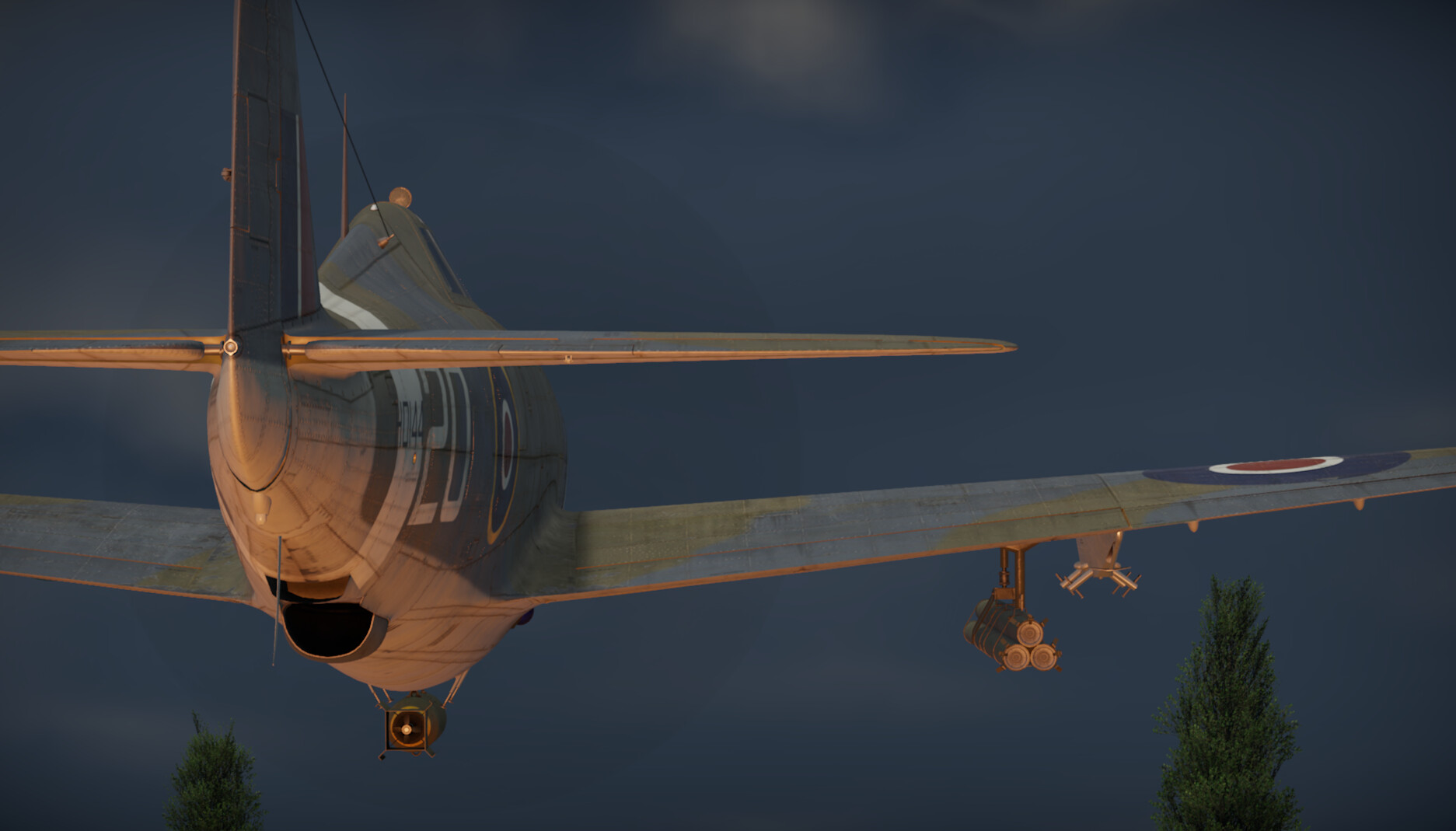
The Thunderbolt’s survivability is one of its defining traits. The radial engine can absorb significant battle damage without immediate failure, and the aircraft’s large, rugged structure withstands hits that would cripple lighter fighters. The cockpit is protected by 9.5mm steel plating behind the pilot and 38mm bullet‑resistant glass in the windscreen.
Fuel tanks are self‑sealing, and the aircraft’s size distributes damage across a wide area, reducing the likelihood of catastrophic failure. Even with multiple control‑surface hits, the Thunderbolt often remains flyable long enough to return to base.
Armament
Offensive armament
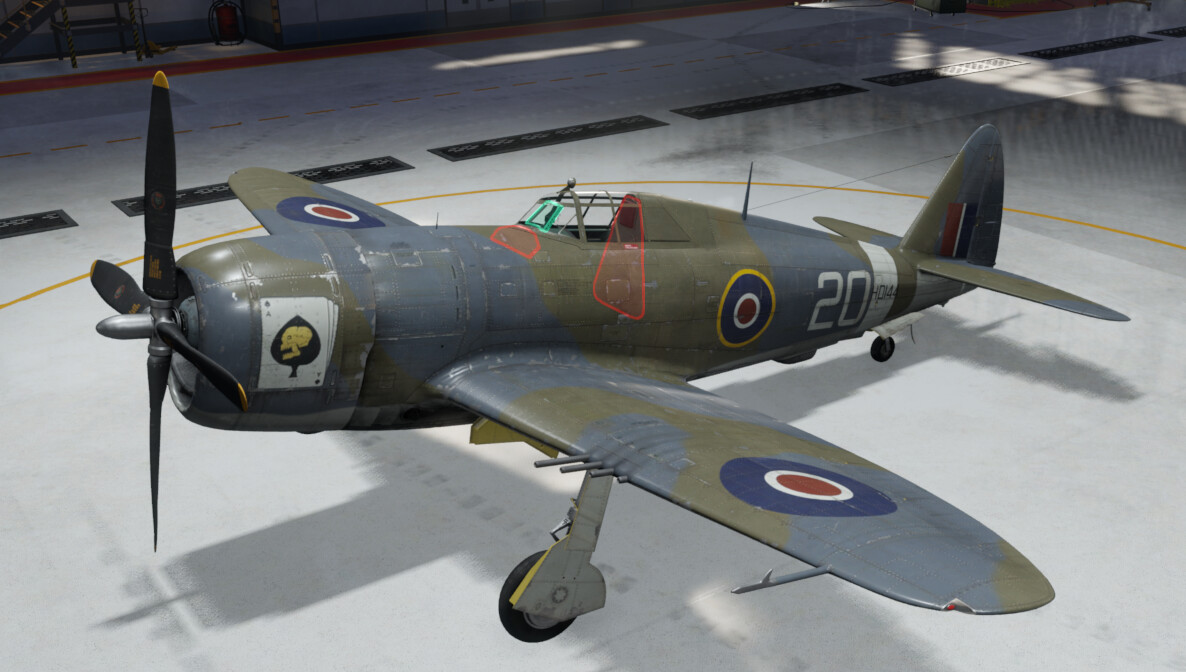
The Thunderbolt Mk.1 mounts eight 12.7 mm Browning M2 machine guns, four in each wing. This provides dense, sustained fire with excellent penetration and destructive capability. The guns are effective against both fighters and lightly armored ground targets.
Secondary armament
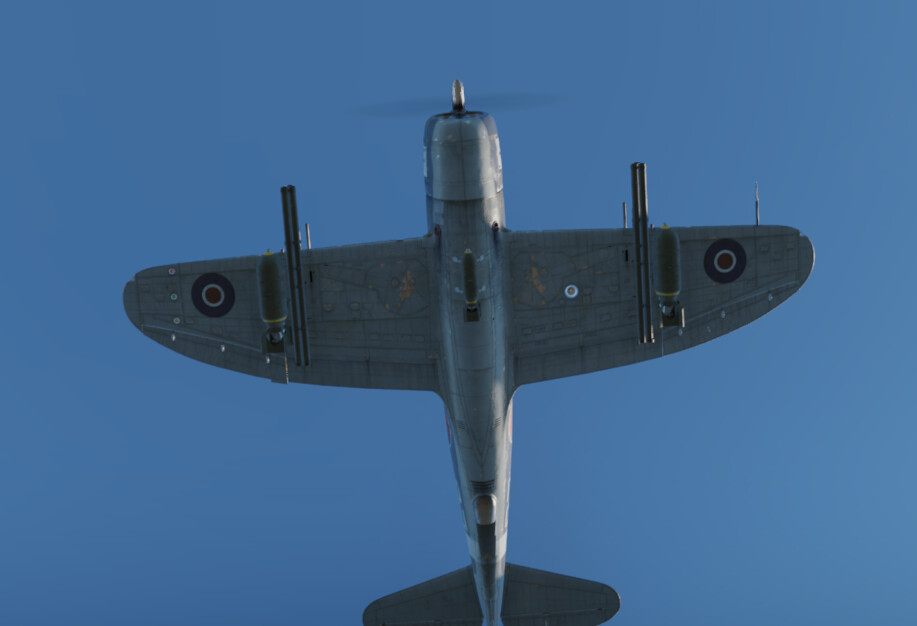
The aircraft can carry a variety of ordnance, including:
- 500 lb and 1,000 lb bombs
- 250 lb bombs
- M8 rocket launchers
These options allow the Thunderbolt to perform close air support, anti‑vehicle strikes, and battlefield interdiction with considerable effectiveness.
Usage in battles
Air combat
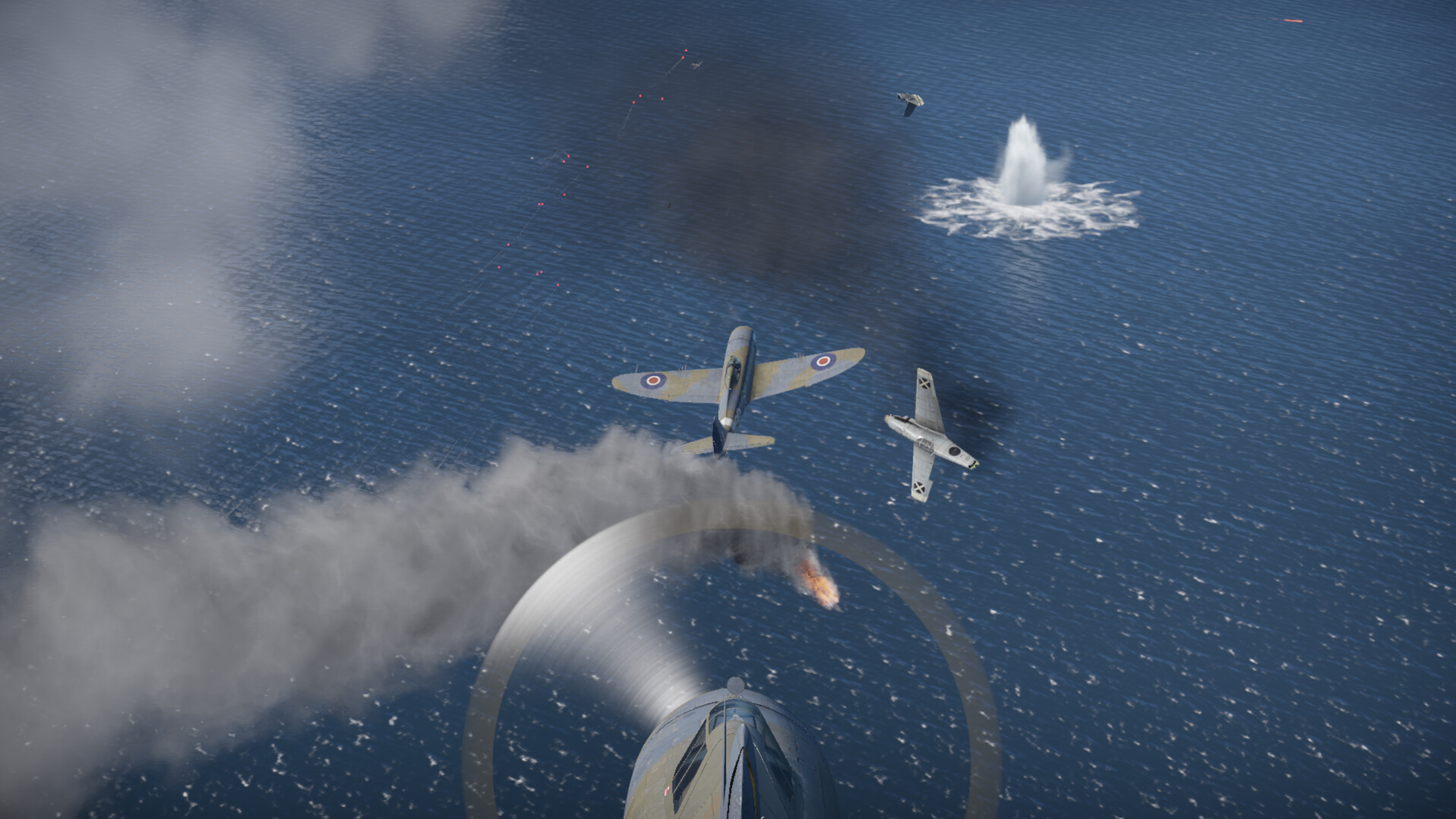
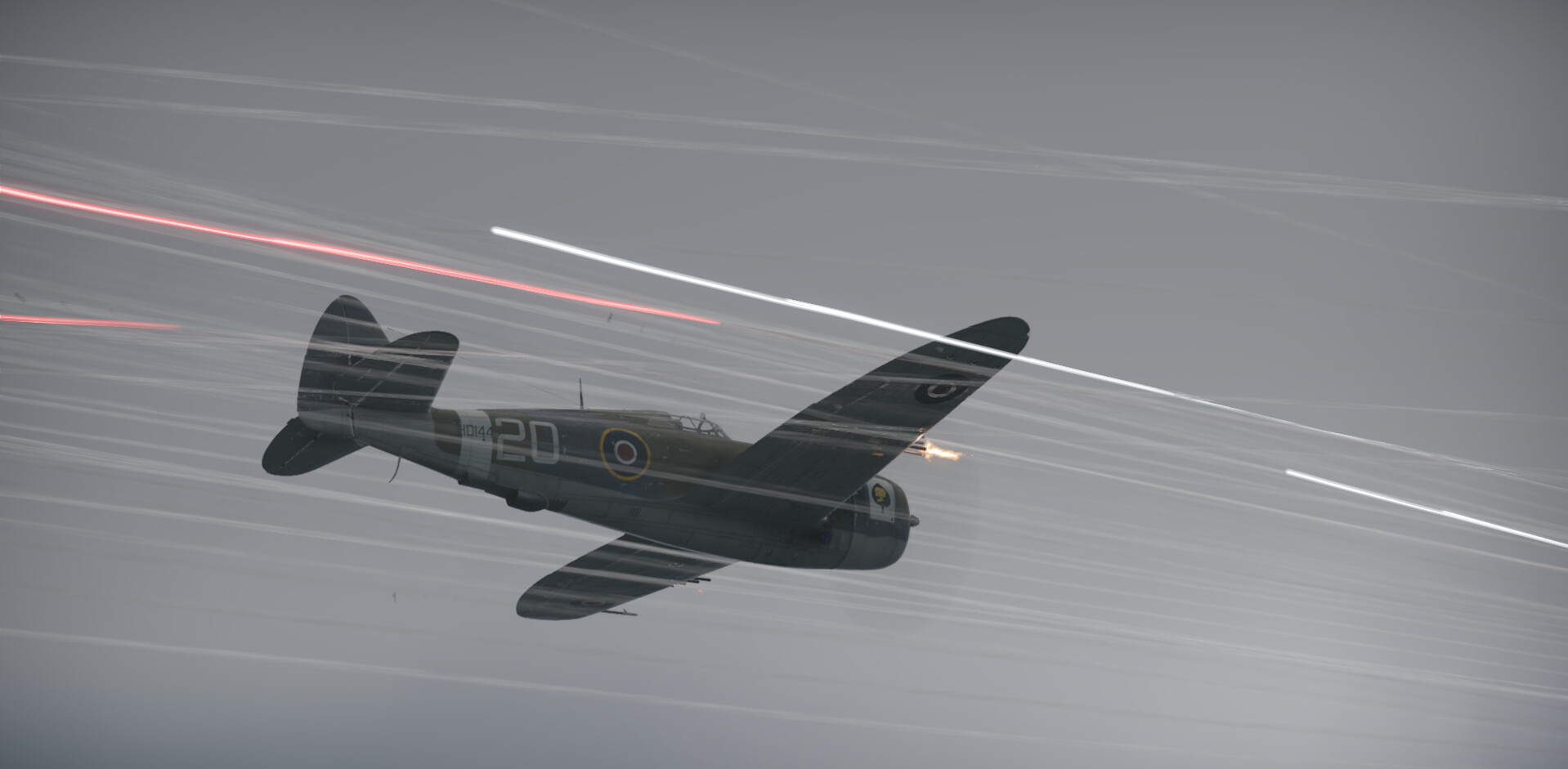
The Thunderbolt Mk.1 performs best when flown with altitude and speed. Pilots should climb to a moderate altitude, build energy, and attack using boom‑and‑zoom passes. Short, controlled bursts maximize the effectiveness of the .50‑calibre guns while minimizing exposure.
The aircraft’s durability allows it to survive brief head‑on engagements, but it should avoid turn fights with more agile opponents. Maintaining an energy advantage is essential; once the aircraft becomes slow, it is vulnerable to being out‑turned and out‑climbed.
Ground attack
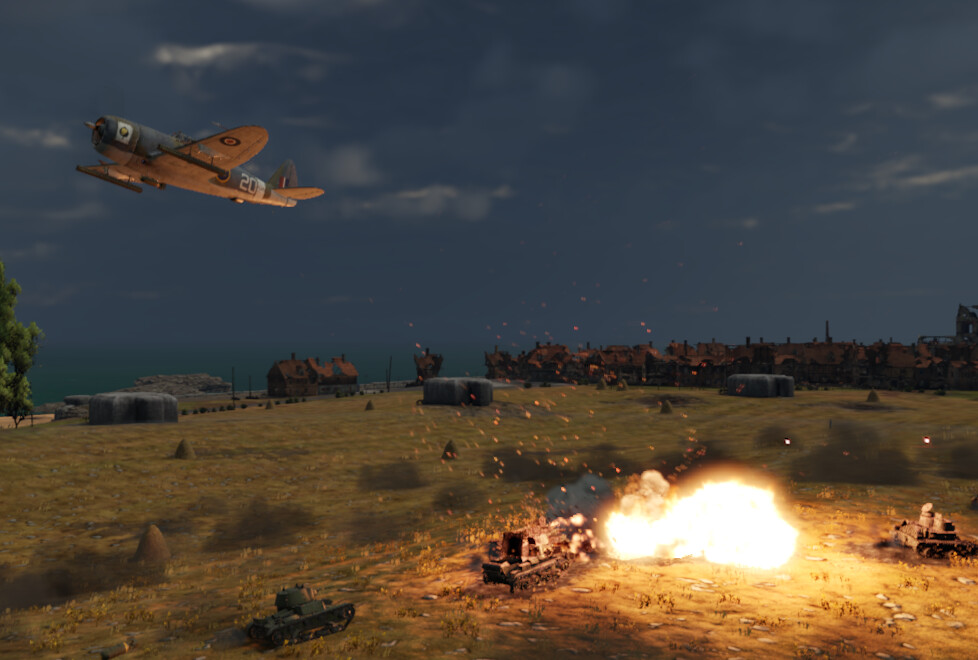
With its heavy machine guns and optional bombs or rockets, the Thunderbolt is a capable strike aircraft. It can destroy soft vehicles, artillery, and light armor with gunfire, while bombs and rockets allow it to engage harder targets.
Attack runs should be performed at speed, using shallow dives to improve accuracy. After releasing ordnance, the aircraft’s excellent dive performance allows it to escape anti‑aircraft fire quickly.
Sources
- Freeman, Roger A. Thunderbolt: A Documentary History of the Republic P‑47.
- RAF Museum Archives — Lend‑Lease Fighter Records.
- U.S. National Archives — P‑47D‑22‑RE production data.