Many Garfords remained to take part in the Russian Civil War after suffering relatively few losses in World War I. Some others were captured by the Germans, Czechs, and Balts, among others. After the war ended, they continued to serve in the Red Army and in states that could not afford new armored vehicles.
The first article discussed the Garford's service in the Russian Empire's army and navy during World War I. The second part will cover their use in the Russian Civil War and their deployment by other countries.
All dates are given in the Gregorian calendar, despite Russia using the Julian calendar at the time.
White Garfords
By the time of the October Revolution in 1917, Russia ranked second in the world in terms of the number of armored vehicles, surpassed only by Great Britain. The country had produced more than 201 vehicles and purchased at least 346 armored cars or their chassis by that point.
However, most of these vehicles, along with all the associated factories, fell into the hands of the Reds. The White forces were generally organized far from the front lines and on the outskirts of the country. They received very few vehicles. Most of these were Austins purchased before or during the war, while the rest were captured.
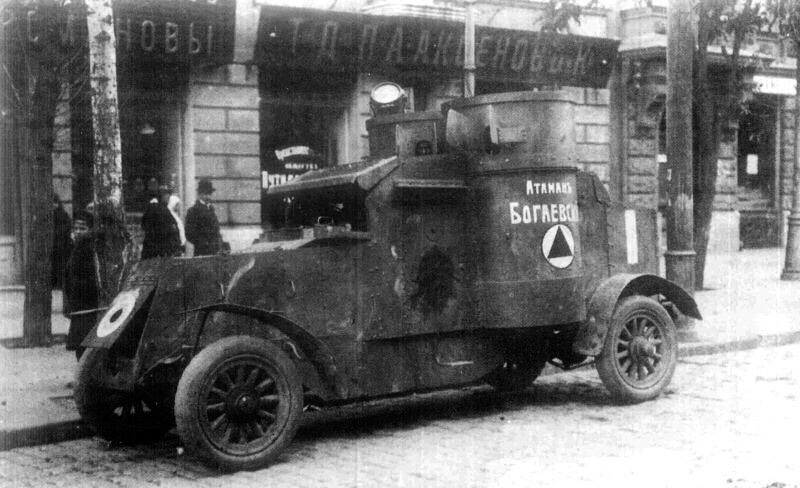
The Armed Forces of Southern Russia (AFSR), from their formation on January 8, 1919, did not initially possess any Garfords, and their number likely did not exceed 8-10 units by the end of the conflict. The first mention of a Garford in their service dates to March 16, 1919, when a single vehicle was captured in Grozny—without an engine, transmission, serial number, or radiator. It was incorporated into the reserve armored division. Soon the vehicle was sent for repairs and even fitted with an engine, but its subsequent fate is unknown.
In April, the entire AFSR had 25 armored cars, among which only one Garford—the "Sibiryak", later most likely renamed "Bogatyr"—was listed in the documents. It was captured by Red Army troops sometime in March 1920 with significant damage.
In mid-September, a single "Gromoboy" armored car from the 1st Detachment of the 3rd Armored Division was also mentioned. It may have been the Garford which previously served with Ukrainian forces under the name "Dmytro Vitkovsky".
The October 25 report also mentions 12 armored cars belonging to the Don Army, which was a part of the AFSR. One of these cars was a Garford named "General Sidorin". It had been captured from Communist forces earlier and had a damaged gun. By November 6, it had been sent to Rostov for repairs but most likely never received them and was captured in early 1920.
In April 1920, the remnants of the AFSR were reorganized as Wrangel’s Army. By that point, the army had almost no armored vehicles left. However, following the summer offensive in Northern Tavria, it had 34 armored cars on its roster by July, including at least three Garfords. Two were in Sevastopol awaiting major repairs, which they never received before the White Army evacuated. Another was in Kerch but was in such poor condition that it was sent for parts.
Finally, a Garford named "Crocodile" served with a division of the Ural Separate Army, active in 1919. It was successfully used in battles against Chapaev’s 25th Rifle Division, which was a part of the Red Army. However, being only one vehicle, it could not alter the course of the fighting. Ultimately, it was abandoned during the retreat in November-December 1919. The "Crocodile" was captured by the Red Army at that time.
Red Garfords
Unlike the White Army, the Red Army took a more meticulous approach to inventorying and maintaining its armored vehicles. It also retained access to the factories that manufactured them during World War I. However, it was no longer possible to purchase equipment or obtain parts abroad.
Red Army armored vehicles played a direct role in the October Revolution and the capture of Petrograd and Moscow. They even participated in the assault on the Winter Palace. Nevertheless, production of the Garfords did not resume, though various workshops continued to produce parts for them. Instead, the factories produced modified Austins.
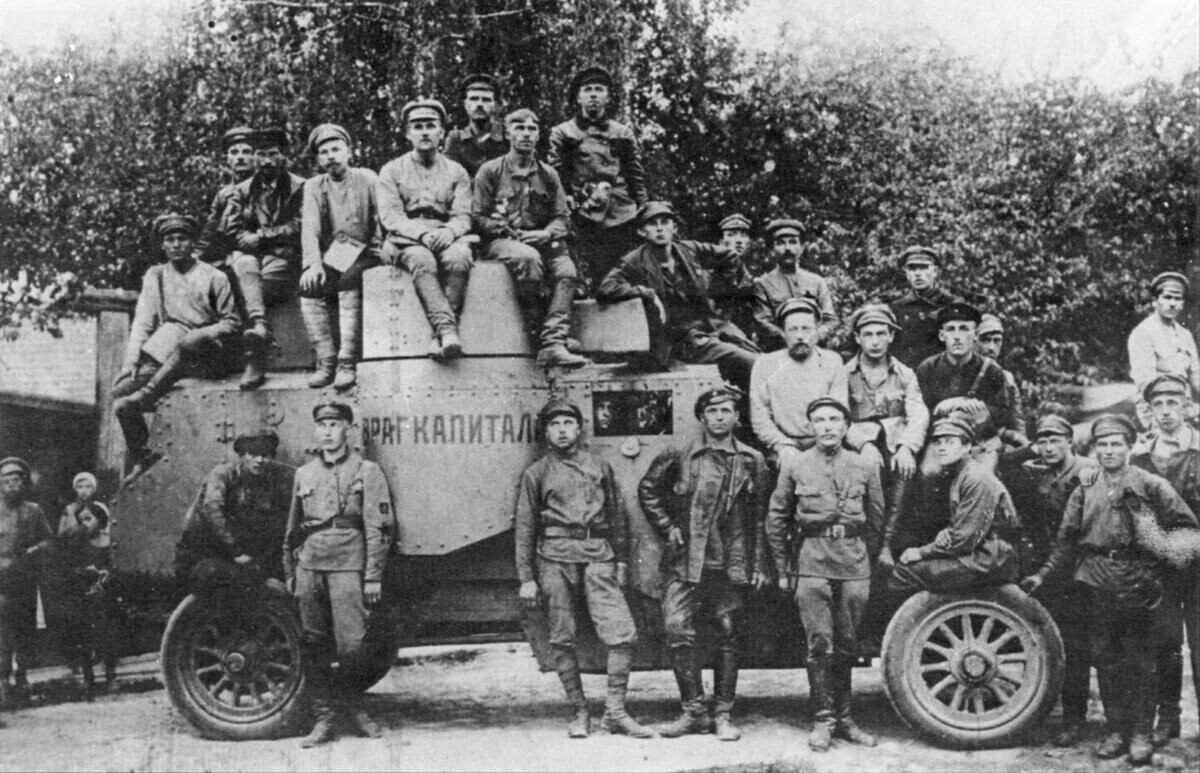
As early as October 1917, the Red Army captured the first Garford from the Putilov Factory, along with 16 armored cars. By November, the Garford had been transferred to one of the Red Guard detachments.
The first armored detachments were sent to the front in early 1918, amounting to at least 59 armored cars of all types on the frontline. Overall, there have been 270 armored cars in service, with 150 in a working condition. However, there is no detailed information on specific types with these numbers.
Nevertheless, it is known that one Garford was used to suppress the uprising in Yaroslavl in July 1918. Four more armored cars were sent with it. Their deployment was not very successful. The Garford destroyed one friendly armored car before being knocked out by a friendly armored train.
Around the same time, the vehicles were also used to suppress uprisings by the Black Hundreds and White Guards in Yamburg, Luga, Bologoye, and Gatchina. Upon seeing them, the rebels most often simply surrendered.
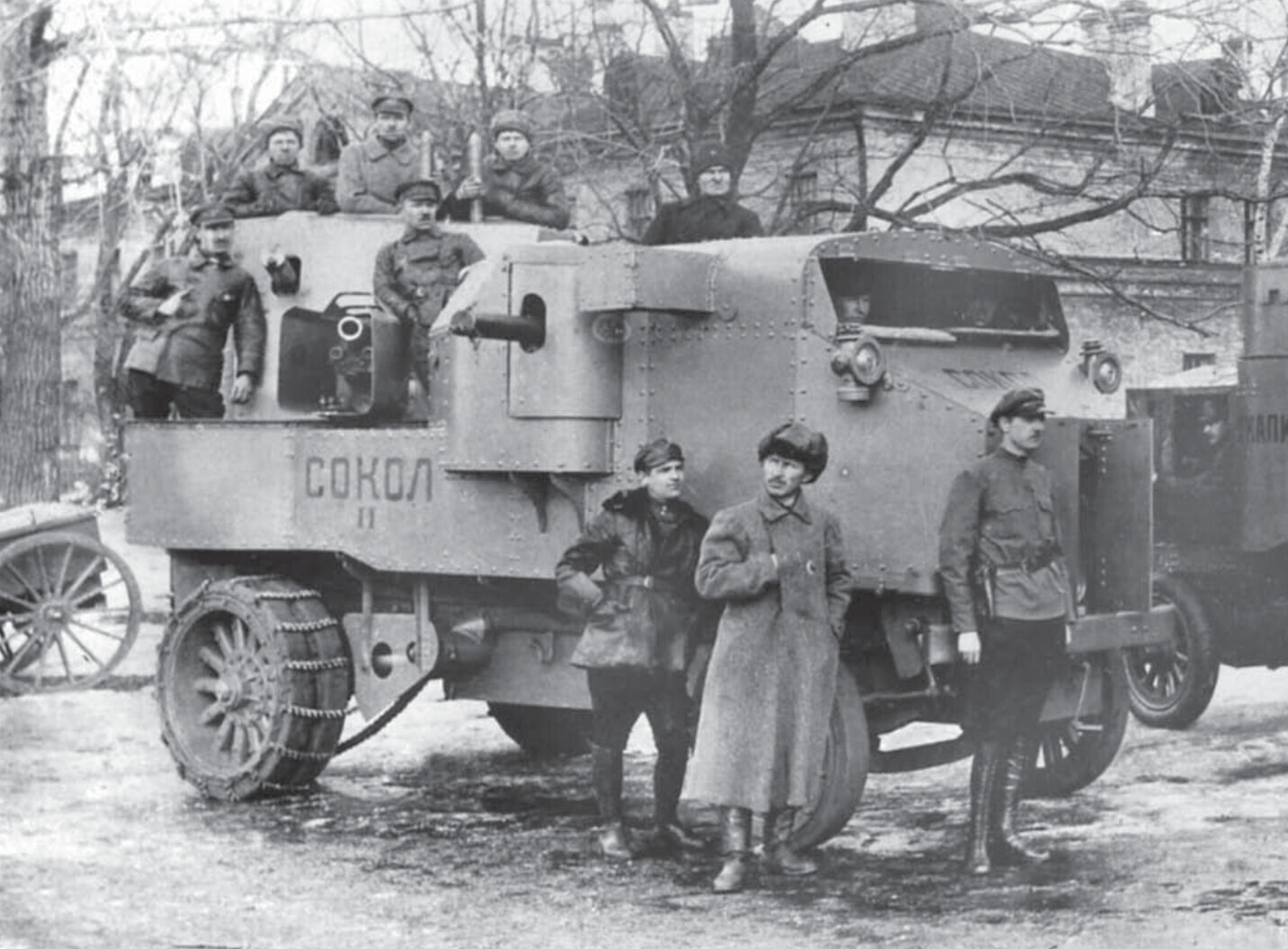
In the summer of 1919, the Main Military Engineering Directorate of the Red Army proposed mounting the Garford armored hulls on a new chassis because the old one had become worn out from World War I and the Civil War. The guns on the armored cars were also wearing out, which led to an increase in instances of them exploding upon firing. The situation was not made any easier by the fact that, during the Civil War, the cars were used on nearly all fronts and frequently changed hands.
For instance, six Red Army Garfords were in Turkestan in 1920, while another nine were on the front with Poland. Some vehicles were used quite successfully against Wrangel’s army. For instance, the Garfords were deployed on the Kakhovka bridgehead which consisted of open terrain with small hills. This sector was important for the White Army, which frequently sent its few armored cars and tanks into battle. The Garford proved extremely effective against them.
For example, on September 1, 1920, four Whippet tanks from Wrangel’s Army attacked the bridgehead. The attack was successfully repelled by the Red Army's artillery and the Garfords of the 42nd Detachment. One of the Garfords was hit by an enemy 37 mm gun during the attack. By November, the front had shifted significantly toward Crimea. The Garfords first participated in battles at Perekop, then advancing into the peninsula's territory.
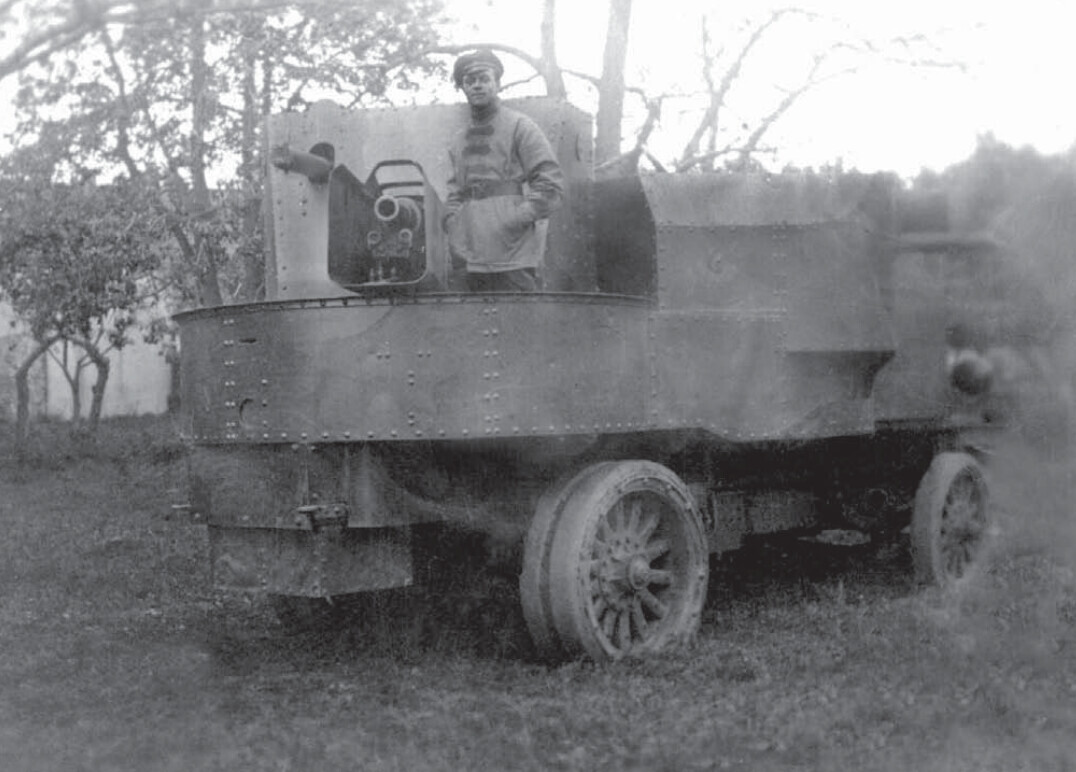
By the end of the Civil War on December 18, 1921, the Red Army had 26 Garfords out of a total of 261 armored cars. The Garfords remained in service until 1925, when they were gradually placed in reserve.
From 1923 to 1924, there was a plan to convert the armored hulls for rail transport. However, due to wear and tear and a lack of funds, the idea was never implemented. The idea was revisited in early 1930, but the Garfords were never addressed. In spring 1931, some vehicles were stripped of their armor; others were sent to serve as targets at firing ranges; and the rest were used for film shoots.
German Army and Freikorps
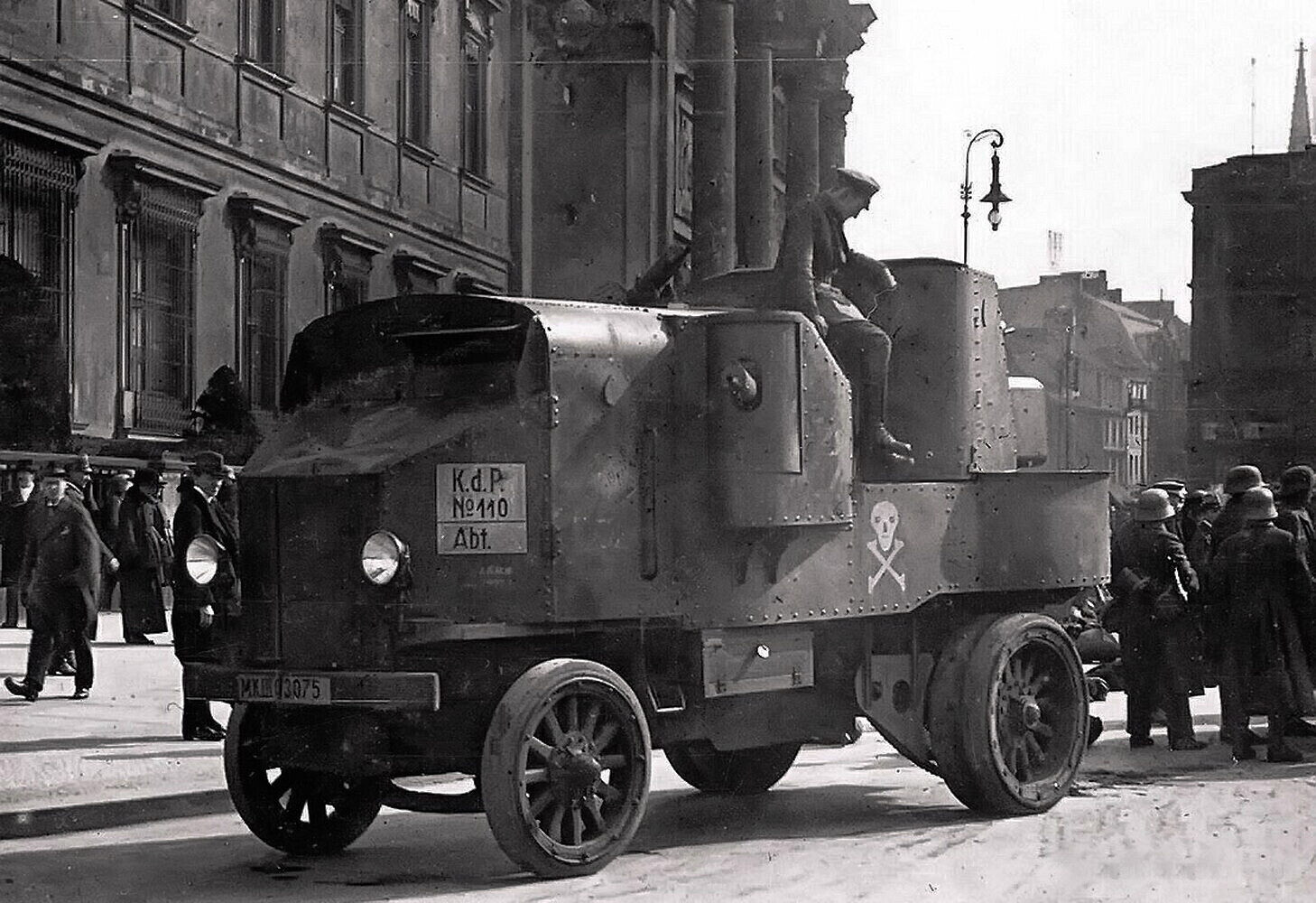
In September 1917, the Germans captured at least three Garfords, one of which was severely damaged. The other two were sent to Berlin and assigned to the 9th Armored Machine-Gun Platoon.
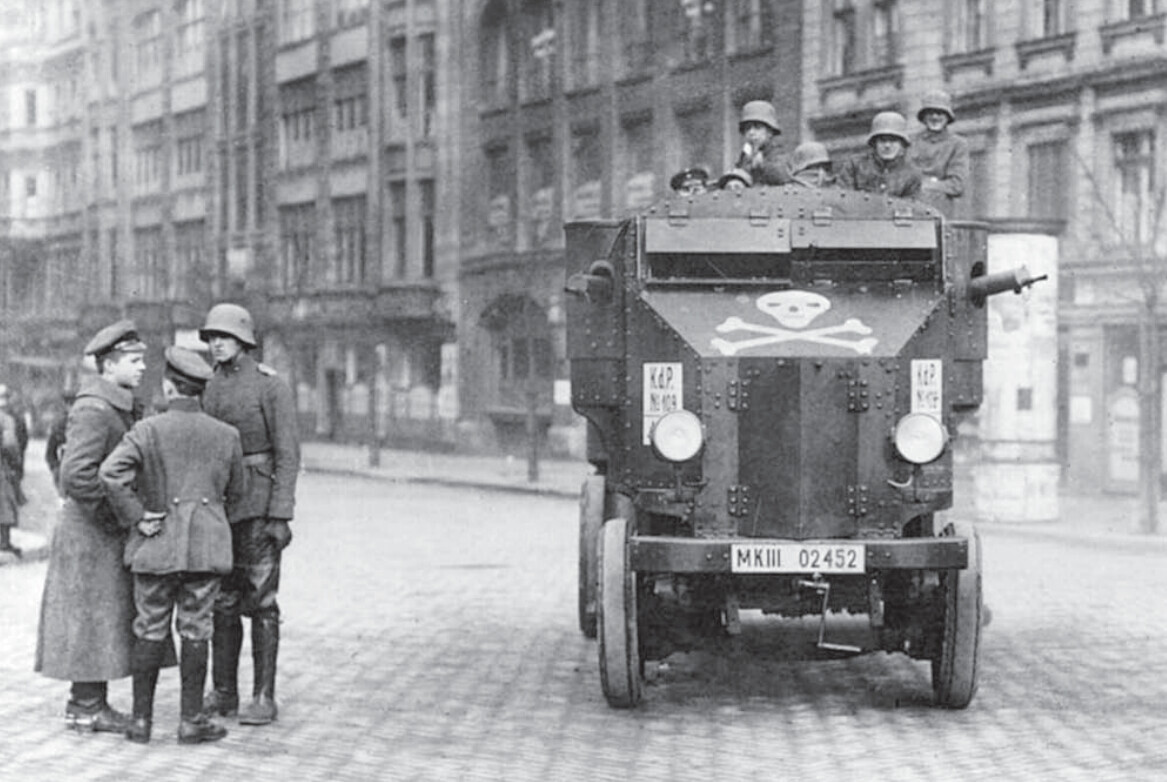
There, the vehicles were re-armed with German MG 08 machine guns and fitted with German radio equipment. They were also repaired. Due to a shortage of parts, the vehicles were not combat-ready until November 10, 1918. Initially intended for the front, they ultimately had to fight within Germany itself. As the German army disbanded, the "Volunteer Army"—the Freikorps—emerged.
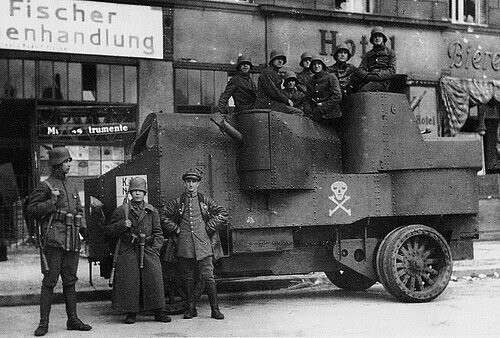
In January 1919, clashes broke out with the Spartacus League. During this time, the Freikorps deployed both Garfords in various German cities, including Berlin. Following the signing of the Treaty of Versailles, the armored cars were dismantled.
Latvian Garfords
The Republic of Latvia was established on November 18, 1918. After a series of battles and with the help of German volunteers from the Iron Division, the Latvians repelled most attacks by Soviet Latvia. By May 1919, the young state had begun organizing its own army. In July, they began forming an armored division and searching for suitable equipment.
In addition to the Austins, they found a single Garford on a shortened chassis that had previously belonged to the Russian Imperial Navy. The vehicle received its own name, “Lacplesis”. Soon, a second vehicle was found for another unit and named "Kurzemnieks".
The situation was once again growing dire for the Republic of Latvia. In October, a joint army of German volunteers, White Guard units, and other volunteers from various countries set out for Riga. They demanded passage through the country and did not wait for a response.
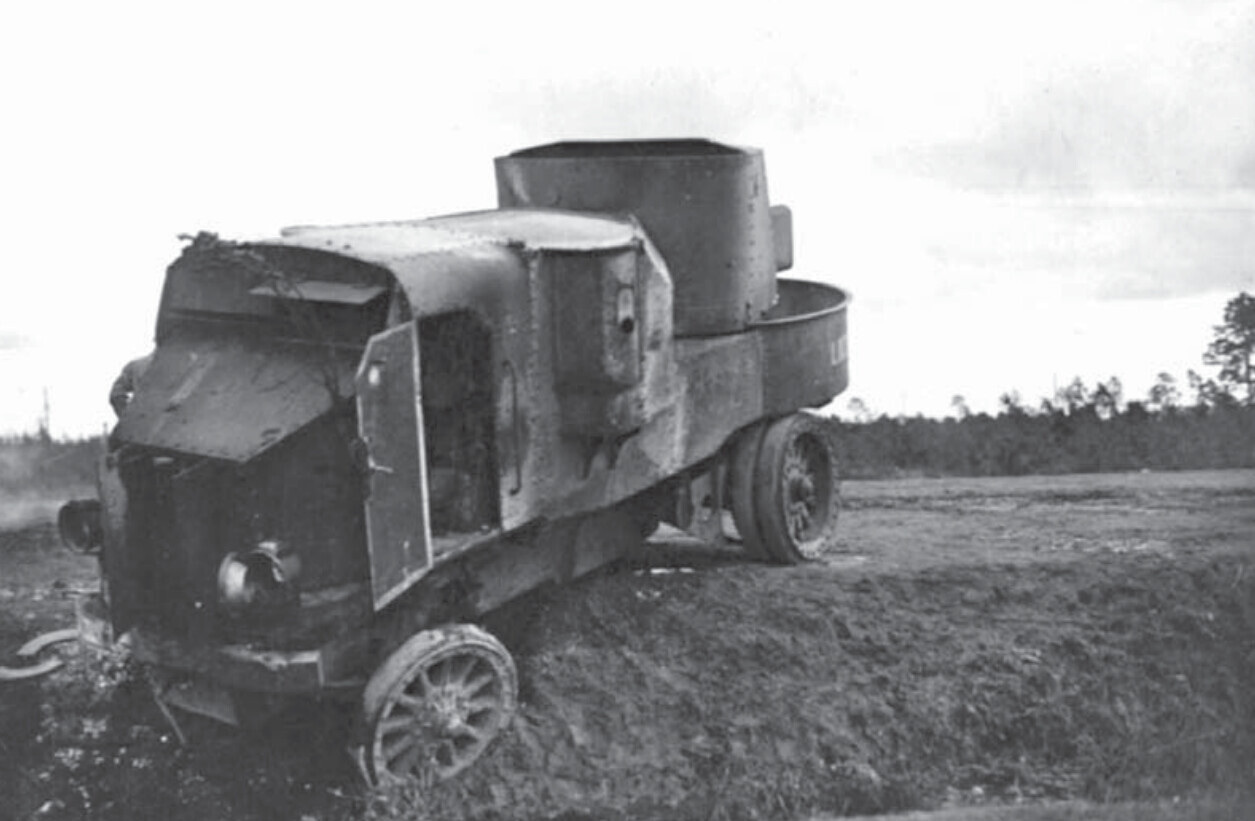
On October 7, the "Kurzemnieks" was dispatched to stop the enemy advance, but it broke down en route. The following day, the "Lacplesis" was tasked with supporting infantry on the Jelgava Highway. It successfully repelled a German attack near the Baloži Cemetery and forced enemy armored vehicles to retreat. However, it was forced to retreat after coming under artillery fire. In doing so, the "Lacplesis" became separated from its own infantry, ended up in a ditch, and was destroyed by Latvian or German grenades the following day.
Only the "Kurzemnieks" remained. As early as October 9, it took part in repelling an attack by the White Guard forces of Bermont-Avalov. The Latvians lost some ground during the day, but by midnight, with the help of "Kurzemnieks", they had recaptured it and seized 10 german machine guns together with some grenades. At the end of the battle the engine broke down, and "Kurzemnieks" had to be towed back to Riga. It returned to the frontline at October 14.
The "Kurzemnieks" fought quite successfully against enemy forces on Latvian territory until December 1, after which it returned to Riga for repairs. In the spring and summer of 1920, the "Kurzemnieks" was also used in battles in Latgale against the Communists until the armistice was signed.
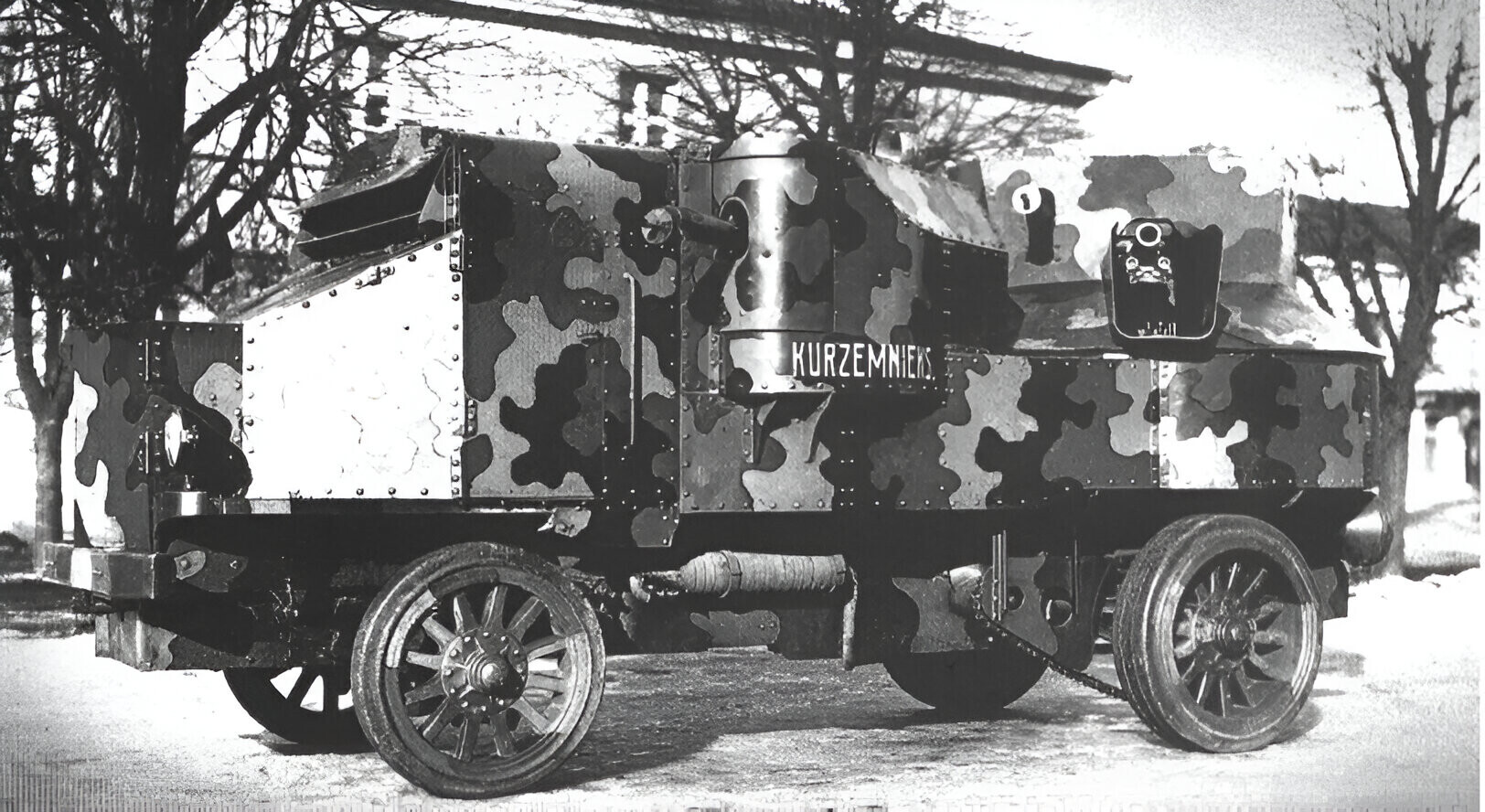
The vehicle returned to Riga in 1921, and it was fitted with a new Wisconsin engine and an armored skirt in the 1920s. The Garford remained in service until the mid-1930s. After that, it was placed in storage at the Riga Citadel. The last photo of the vehicle was taken by the Germans in the summer of 1941. After that, its history is unclear.
Polish Garfords
The Polish army also acquired several of these vehicles. The first Garford was captured from Ukrainian units on February 23, 1919. While retreating from fire from a Polish armored train, the Ukrainian Garford drove into a ditch and became stuck. The crew of the same armored train then recaptured it. The Polish army gave it the name "Dziadek", meaning "Grandfather". The vehicle became the backbone of the newly formed 1st Armored Car Platoon.
In 1920, the vehicle was sent to the Novograd-Volynskyi area, where it participated in repelling a Soviet attack on March 21. There, it encountered three Soviet Austins and was forced to retreat due to enemy artillery fire. During the retreat, the Garford destroyed one Soviet vehicle, nicknamed "Ukrainets".
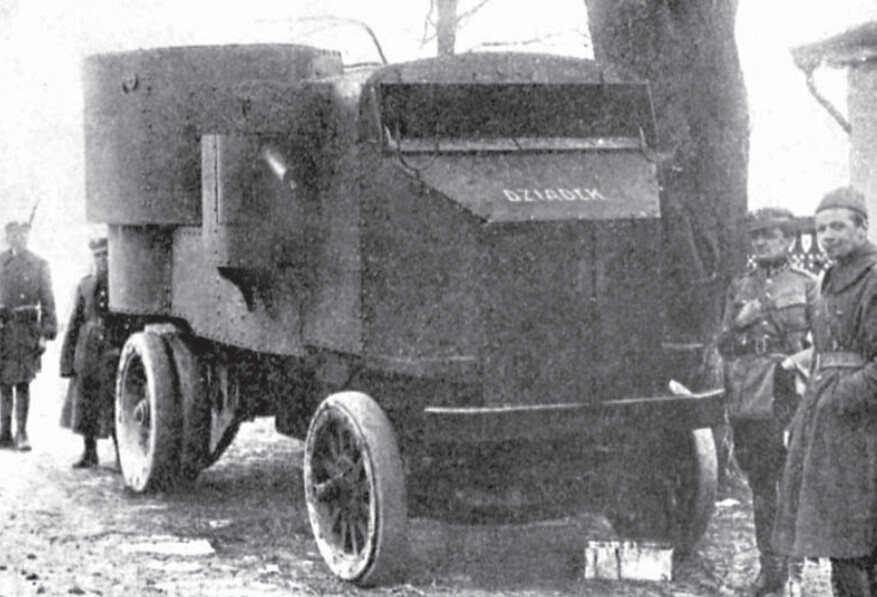
The second Garford was captured on April 26-27. Notably, the "Dziadek" was put out of action on this same day, though it was later evacuated and repaired. In any case, the second armored car was recaptured from the Soviet infantry in the village of Belopolye while it was inoperable. On June 7, it was towed to the nearest town and sent to Warsaw for repairs. There, it was renamed "Zagloba". "Zagloba" saw action starting on August 8, fighting near Lvov, Krasne, and Lutsk.
The third and final vehicle was captured on June 4, 1920, near the village of Stolpishche, which is now part of the Gomel Region. It was a naval Garford named "Uralets". Originally, Soviet troops sent it to attack Polish positions. However, along with other armored cars, it was pelted with grenades and fired upon by machine guns. During the battle, the Garford was disabled, and its crew was killed while attempting to retreat. The "Uralets" was hooked up to a tow rope and towed away. It was later renamed "General Szeptycki".
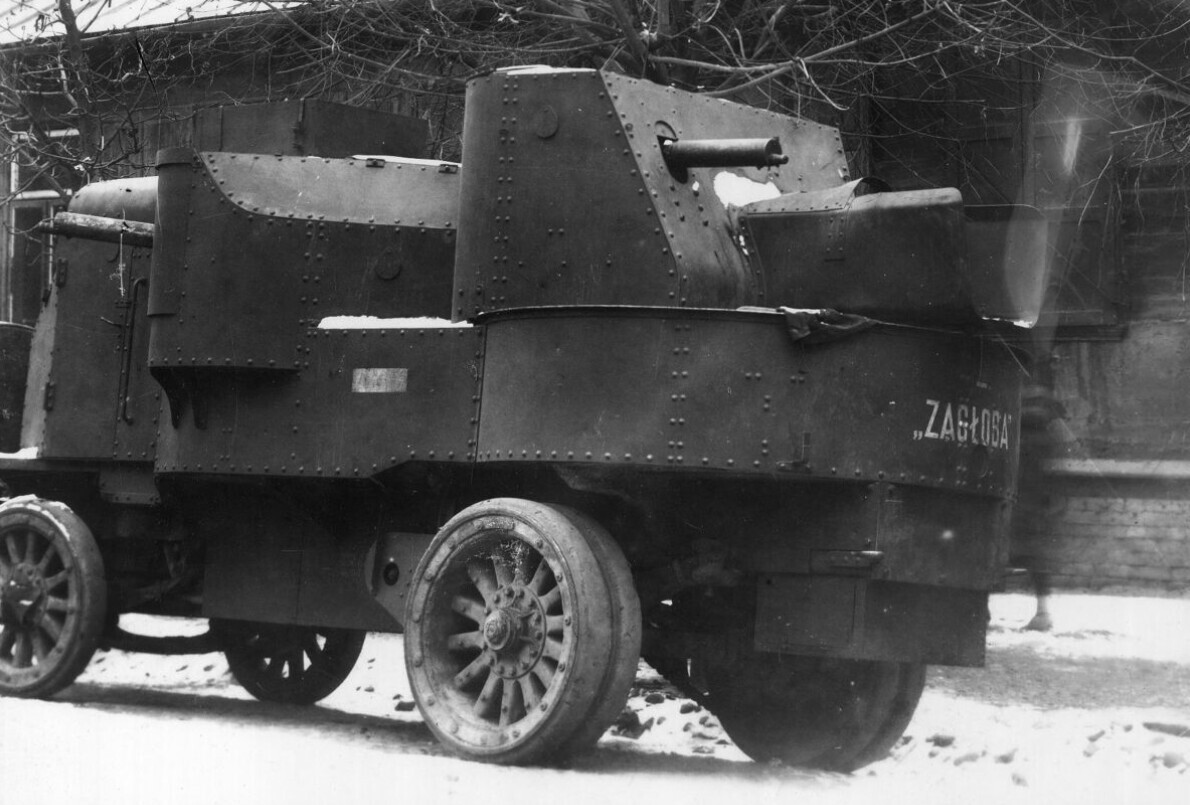
All three Garfords survived until the end of the Soviet-Polish War. In 1925, they were placed in storage in Krakow, where their story ends.
Other users
One Garford was in service with the Democratic Republic of Georgia. Most likely acquired from the Germans in 1918 along with other armored cars, it saw action in battles for Georgia until 1921, after which it became a Soviet trophy. This vehicle was distinguished by its turret roof armor and machine gun mounts.
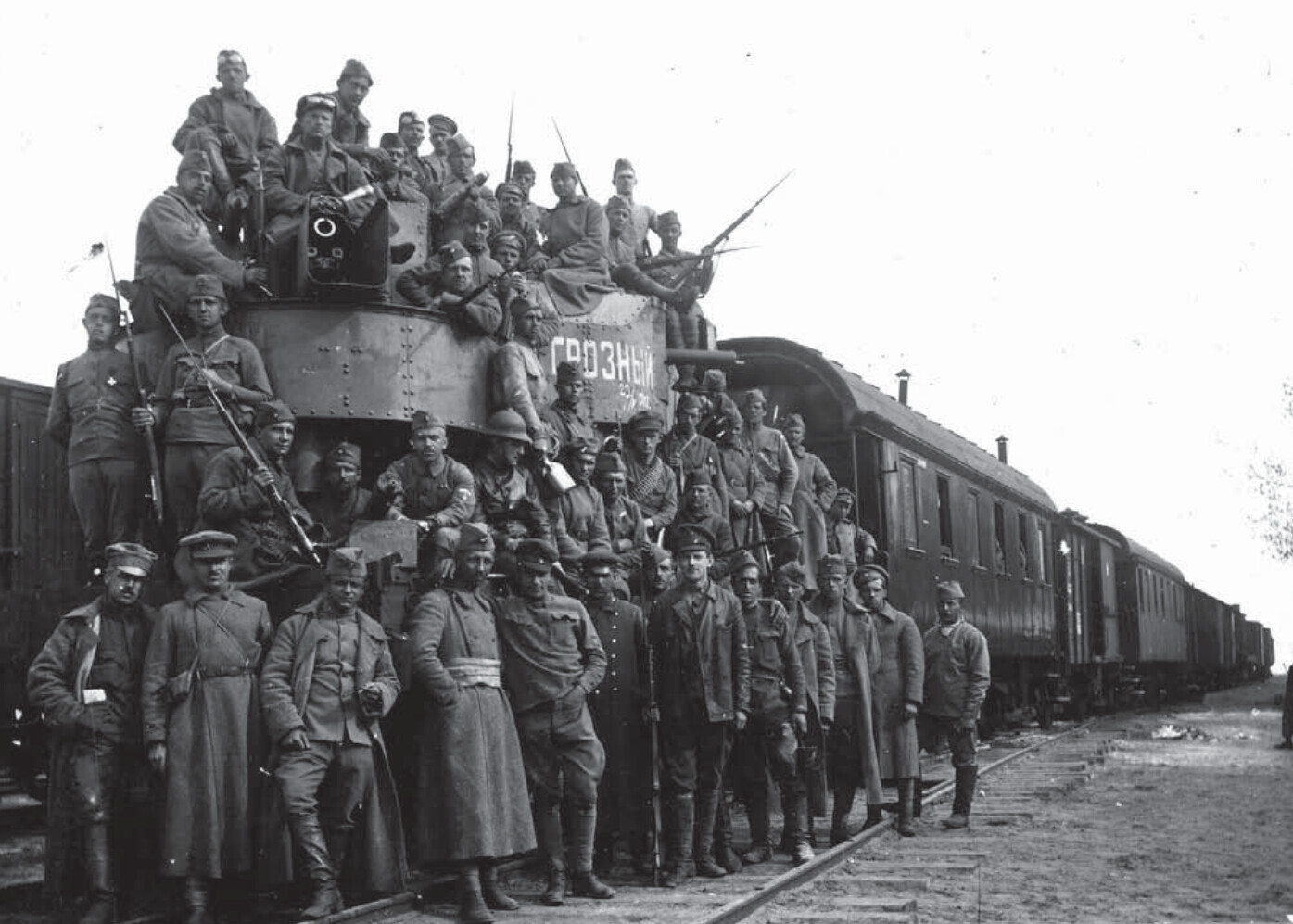
Additionally, the Czechoslovak Corps captured a Garford on May 28, 1918. The vehicle was named "Grozny". The inoperable armored car was mounted on a railway platform and became part of an armored train. On May 29, the vehicle was used to capture Serdobsk. On June 5, it participated in repelling a Soviet armored vehicle attack. It also took part in the encirclement and subsequent capture of Syzran on the night of July 9-10. Starting September 22, the vehicle took part in defending the city against the Soviet offensive. On October 3, 1918, Soviet troops reached the Syzran-Samara railway, threatening to encircle the Czechs. The Czechs retreated, abandoning all six armored trains.
Sources
- Osprey New Vanguard 83 — Armoured Units of the Russian Civil War, White and Allied, 2003
- Osprey New Vanguard 95 — Armoured Units of the Russian Civil War, Red Army, 2006
- Osprey New Vanguard 127 — German Panzers 1914-1918, 2006
- Maksim Kolominets — Русский Гарфорд, 2019
- Putilov-Garford — tank-afv
- Images without sources listed are taken from these five above.