
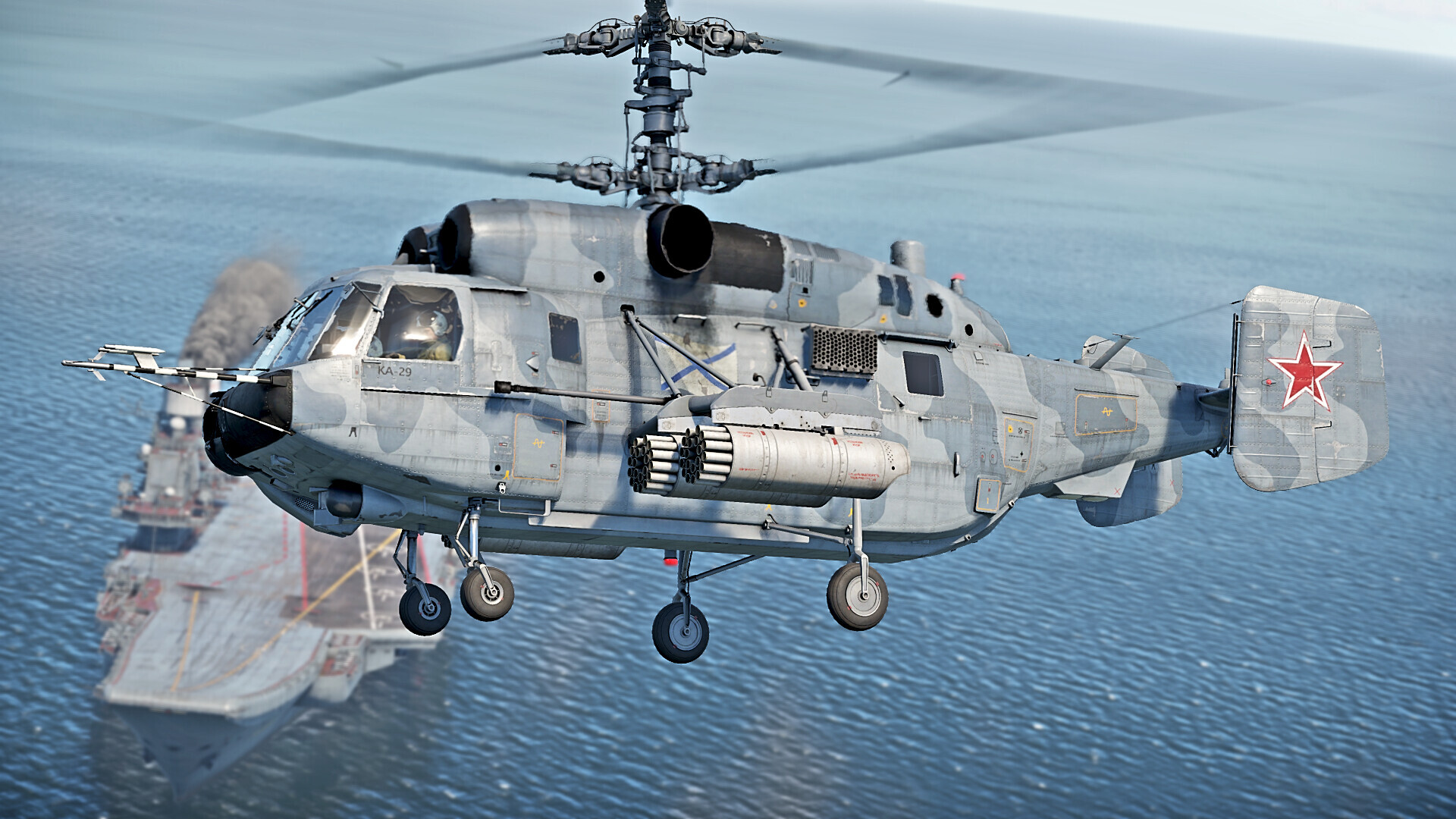
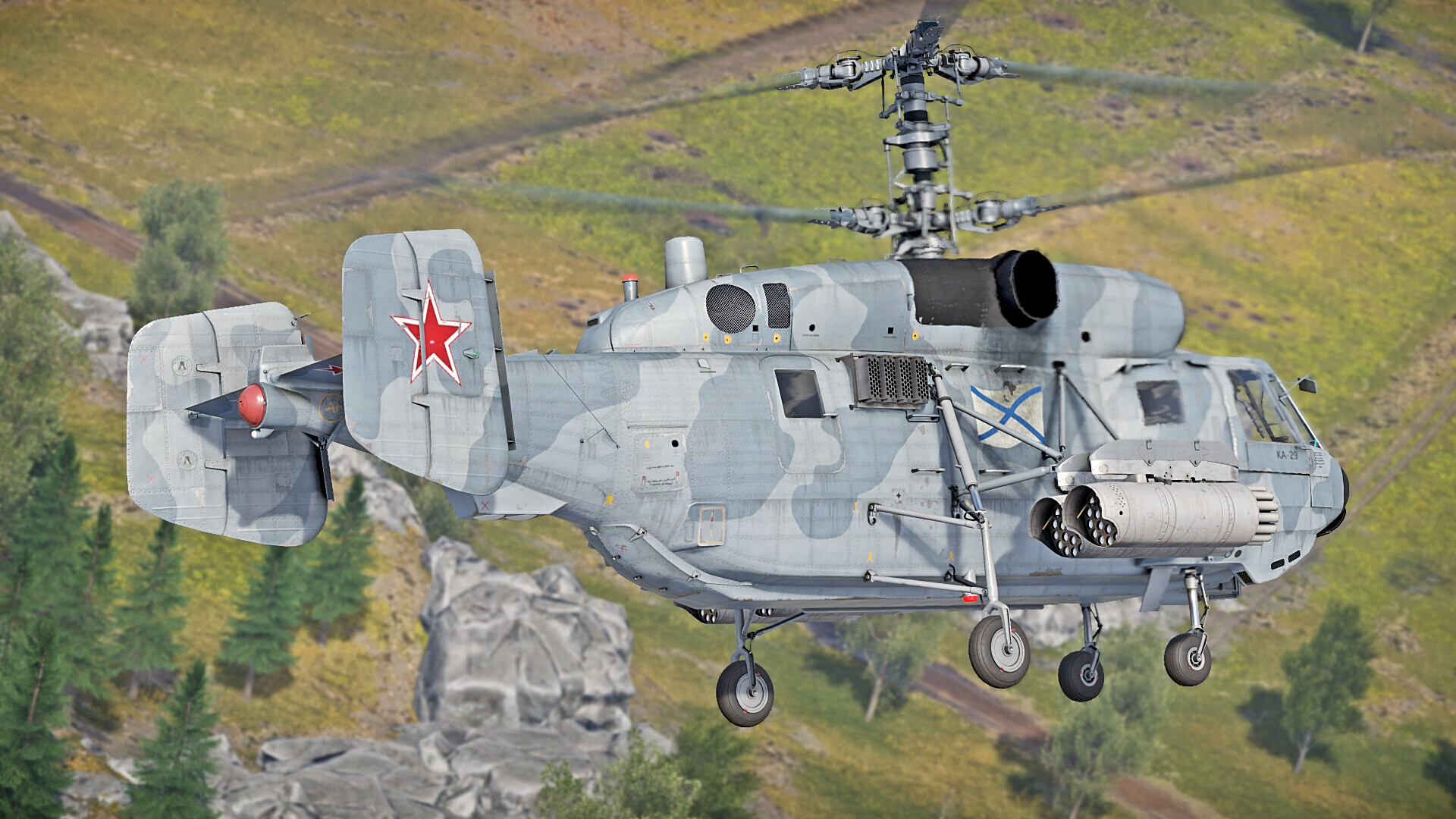
Among the few helicopters with a coaxial rotor system that do not have a tail rotor is the Ka-29, a small multi-role shipborne helicopter. It’s not only cute, but also very dangerous, being one of the best early Soviet helicopters. How does it perform in the game? What’s the history of the bun? Read more in this article!
| Pros | Cons |
| Excellent maneuverability | Lack of RWR |
| Good survivability, high amount of countermeasures | Small-caliber 7.62 mm machine gun with poor depression angles |
| Shturm missiles and S-8KO rockets | Poor optics with no thermals or auto-tracker |
Flight performance
The Ka-29 is equipped with two Klimov TVZ-117V engines. These engines propel the helicopter at an average speed of 230 km/h, which, while not particularly fast, is sufficient for comfortable flight. Despite its heavy weight, the Kamov maneuvers well in the air thanks to its coaxial propeller system. Because of the coaxial rotors, the loaf can fly with a damaged tail.
Competitors of the loaf
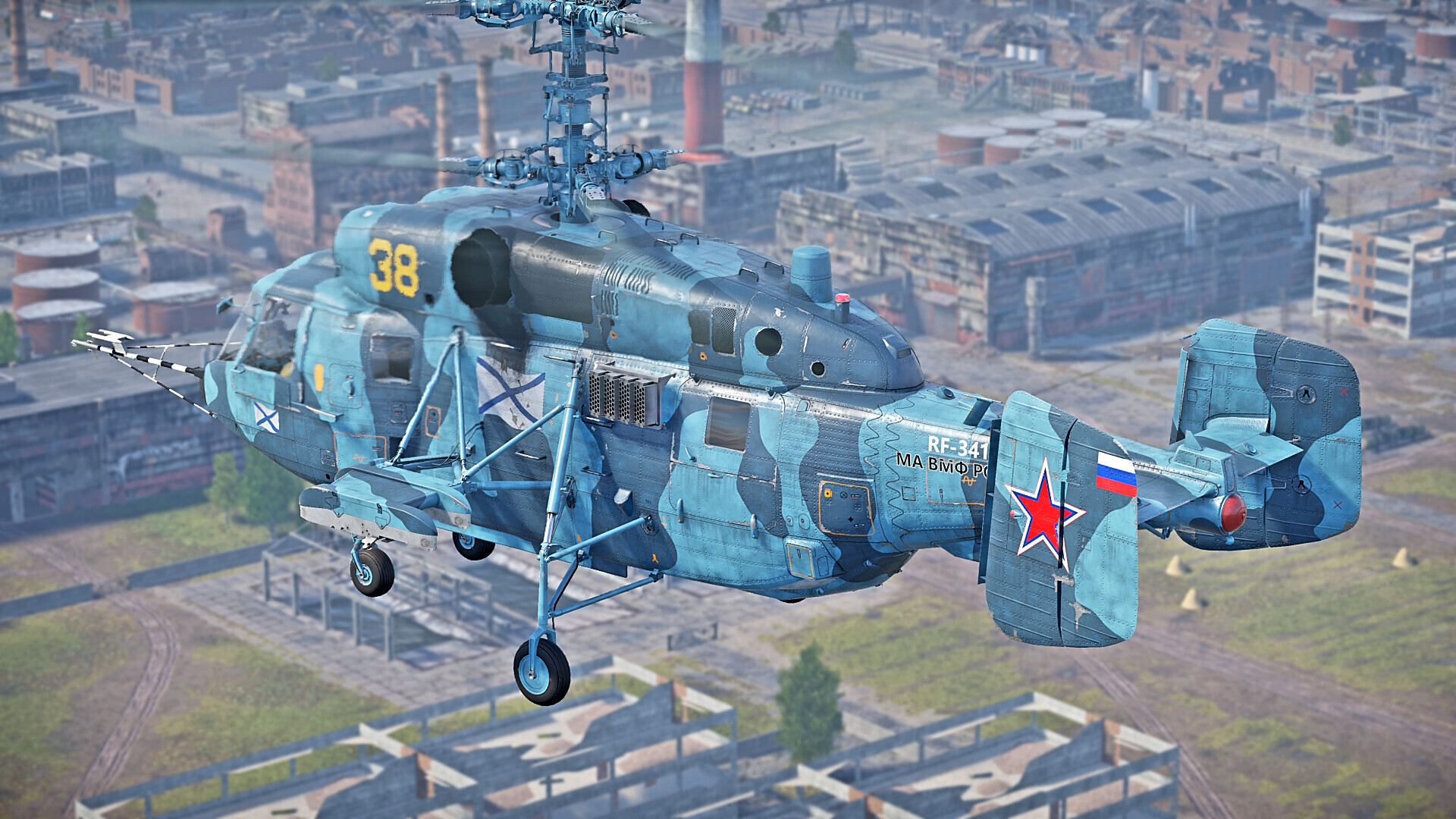
Compared to its competitors, the Soviet loaf generally competes on par with the German Bo 105 and early American Cobras (primarily variants before the AH-1W). The Bo 105 flies well, but has a smaller payload. Meanwhile, the American competitor has slightly worse flight characteristics. The Cobra is equipped with better optics and a thermal sight, while its TOW missiles have a shorter range and lower speed than the 9M114s on the Ka-29. Compared to its Soviet brothers, the Mi-24 or the Mi-8 AMTSh, the Kamov is much better in maneuverabillity, but slightly slower than the “Hind” or the “Hip”. It also handles damage better, especially because of the ability to fly without a tail.
Armor and Survivability
Most Kamov helicopters boast good armor and a robust design, and the Ka-29 is no exception. Pilots are protected by 8 mm steel plates on the sides of the cockpit, as well as 22 mm-thick bulletproof glass. This armor, of course, will not protect pilots from heavy machine gun fire, but it can protect against rifle-caliber rounds from enemy tanks.
The helicopter’s survivability is excellent. One of its key distinguishing features is its ability to fly without a tail, thanks to the coaxial propeller system developed by Kamov. Furthermore, the modules have a unique layout: the powerplant is located above the empty fighting compartment, beneath which are also the fuel tanks. Even if these tanks are hit, although leaks are frequent, the Ka-29 can still return to the airfield if it hasn’t already flown away.
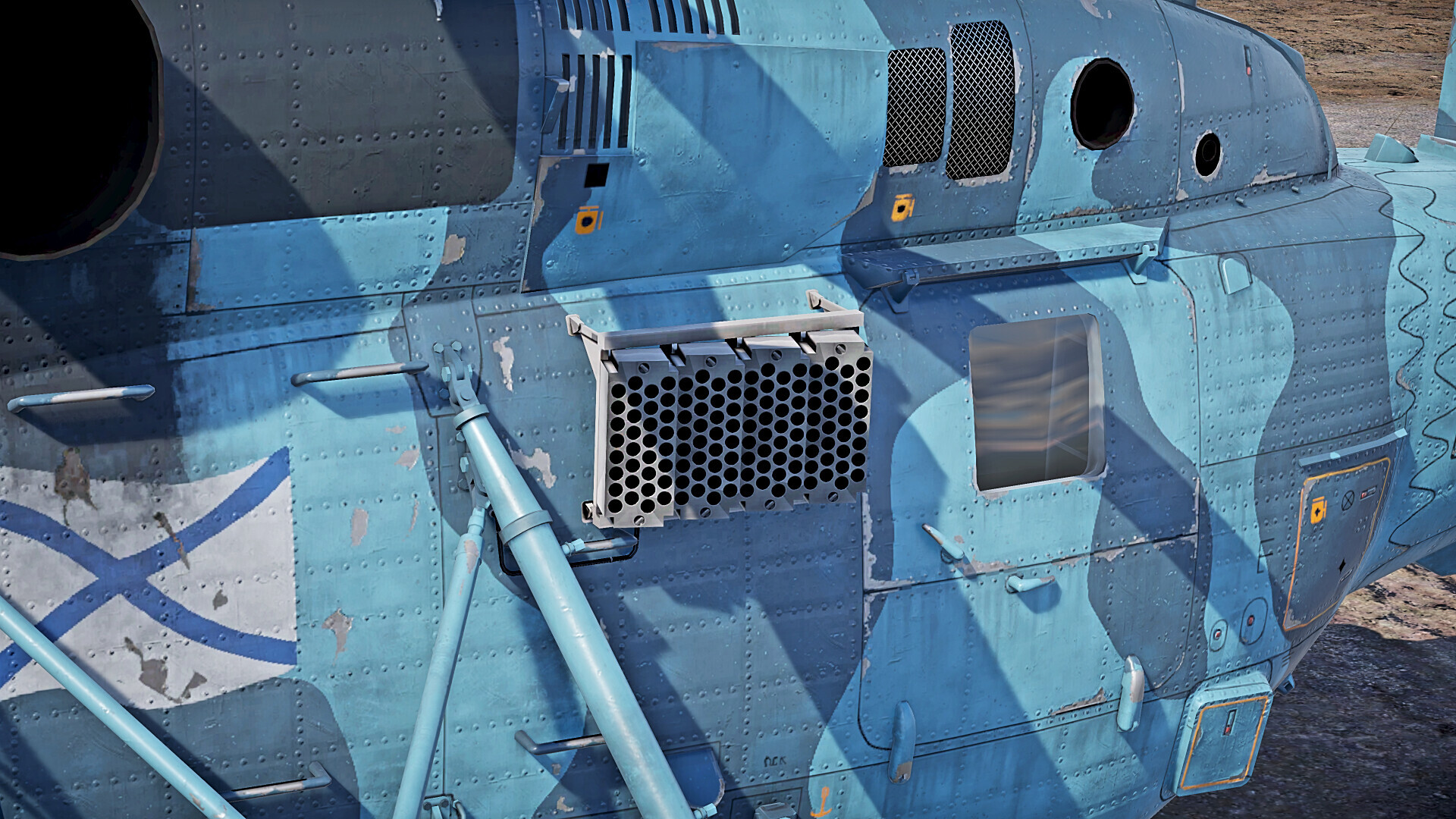
In addition to its armor and compact module layout, the Ka-29 has a number of basic auxiliary defense systems. These include:
- Countermeasures (256 units) — flares protect the helicopter from IR-guided missiles, and chaff can protect the Kamov from radar-guided missiles. They can help disrupt radar lock-on, but nothing more special;
- IRCM — Optical-electronic jamming station. It provides additional protection for the helicopter and “confuses” infrared missiles at a range of over 3 kilometers, forcing them to follow false targets. However, this deception won’t work with jamming-resistant missiles: IRCM won’t protect the helicopter against Stinger missiles.
Armament
Main armament
As a regular weapon, the Kamov is equipped with a six-barrelled 7.62 mm GShG, with a total ammunition capacity of 2,000 rounds. Although the machine gun has an impressive rate of fire of 6,000 rounds per minute, with a penetration of 13 millimeters, it can only effectively combat unarmored helicopters or aircraft and light SPAA systems like the Japanese Type 93. In addition, due to its high rate of fire, the machine gun makes a distinctive sound, making it easy for the enemy to identify it.
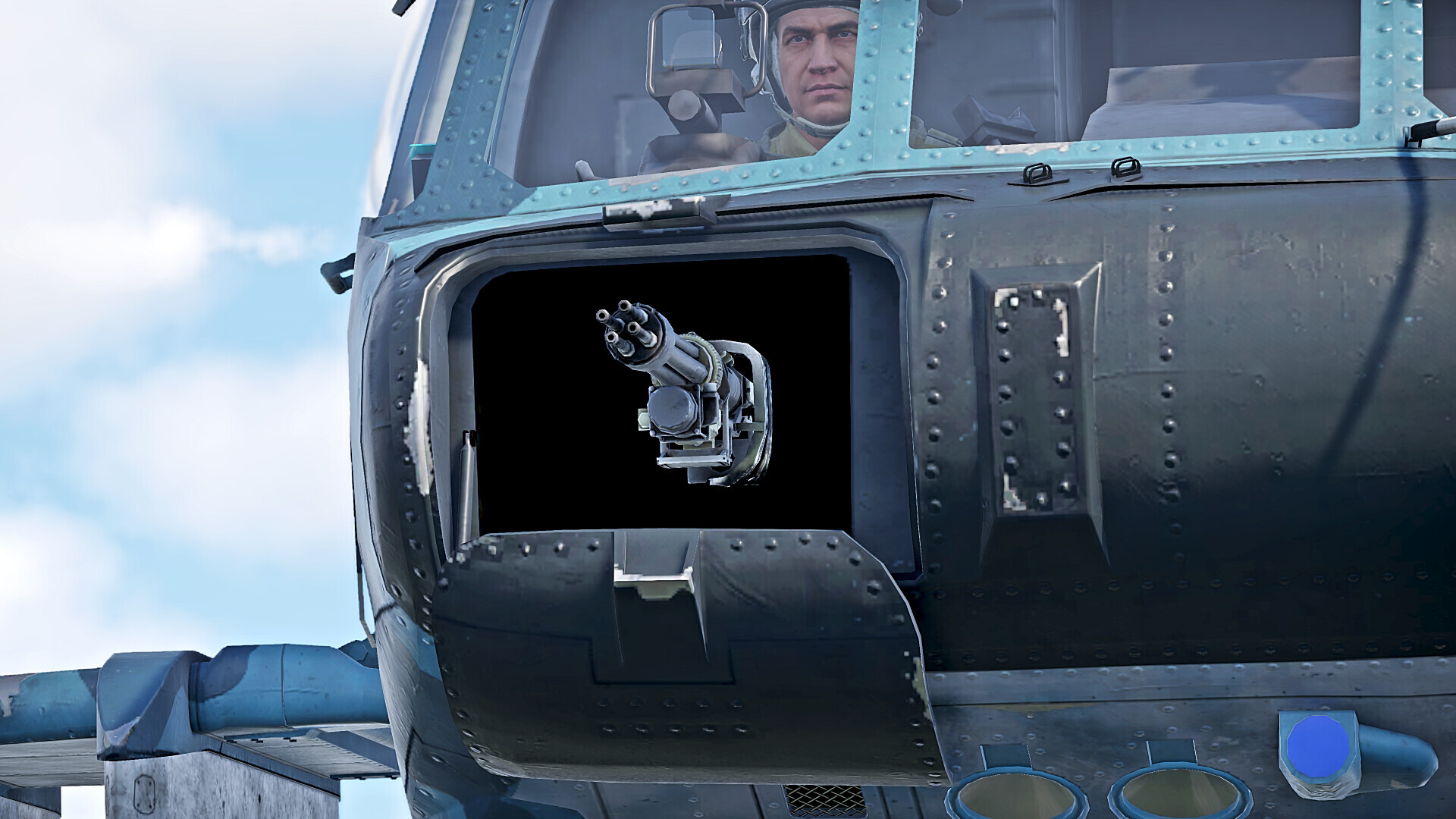
The standard GShG belt includes an armor-piercing incendiary tracer round, an armor-piercing incendiary round, and a tracer round. There is no option to select a belt for the main small arms.
Additional small arms
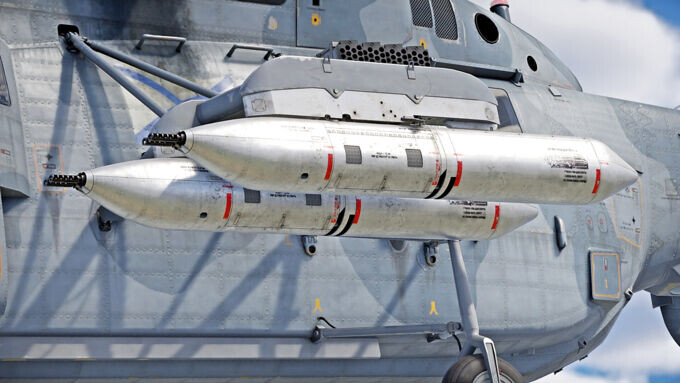
Although the Kamov’s “basic” cannon is not impressive, additional containers can be attached to the pylons. These include:
- Container UPK-23-250 — GSh-23L cannons with a 250-round ammunition capacity. These cannons are an excellent weapon against stationary targets. However, they are only suitable for defending against frontal attacks by aircraft due to their fixed position on the pylons;
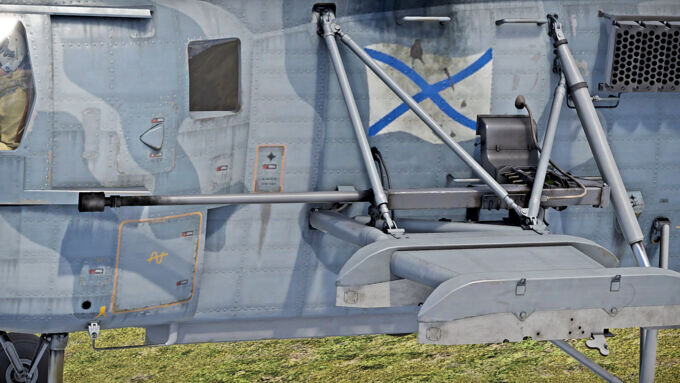
- 2A42 — a familiar automatic cannon for many players, which can also be found on the BMP-2, with a total ammunition capacity of 200 rounds. It does not take up space on the pylons, as it is mounted directly to the left of the pilot’s cabin. Due to its rigid attachment, it can only fire in a straight line.
Suspended armament
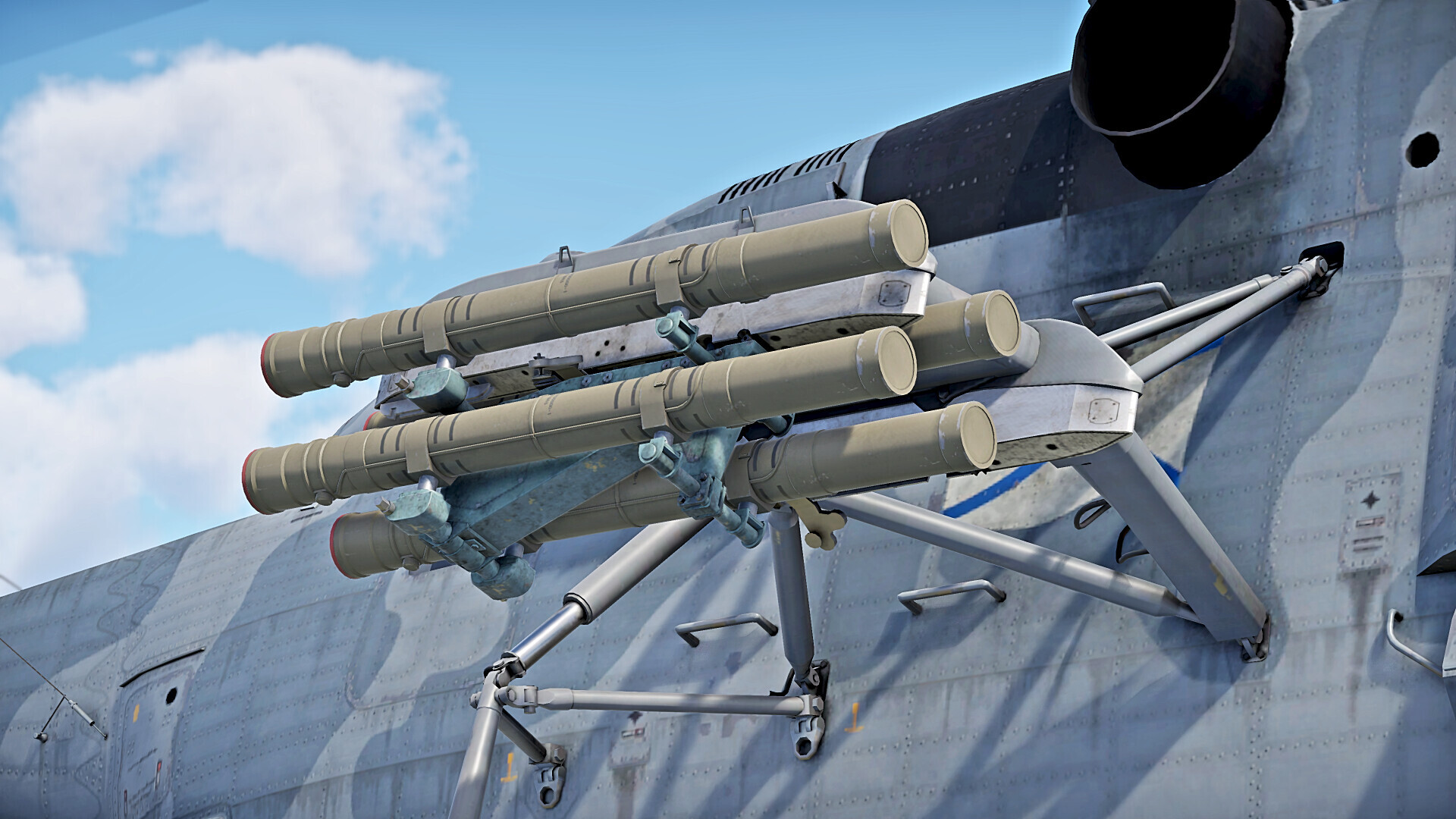
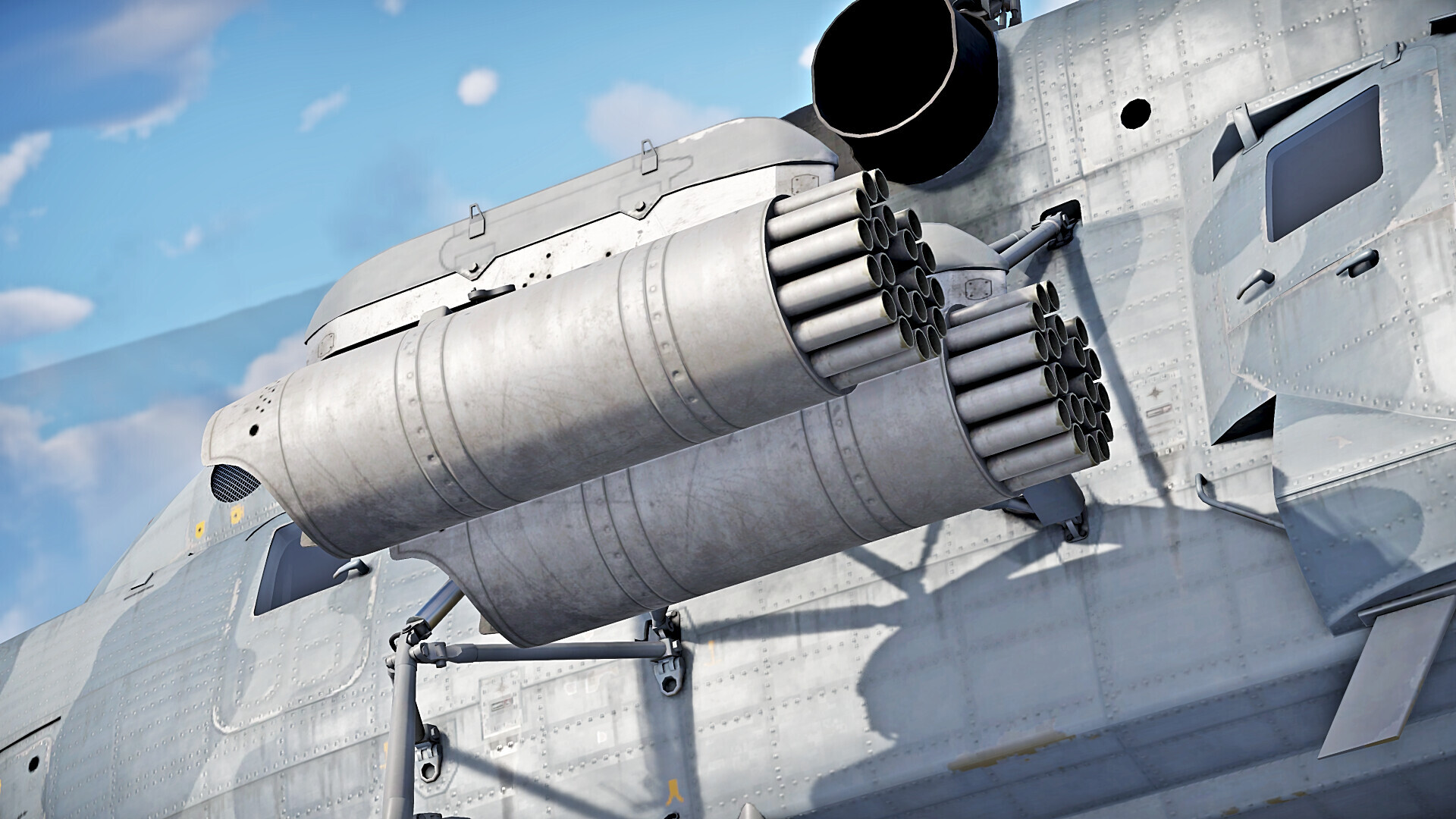
The Ka-29 has a total of 4 hardpoints for attaching external weapons. At the same time, the helicopter can carry up to 8 Shturm missiles and 40 S-8KO rockets. Let’s take a closer look at the helicopter’s armament:
- S-8KO — classic and well-known rockets, which can be found on most Soviet helicopters. They have an excellent penetration of 420 mm and are available in quantities of 80. They are effective against tanks, but lack the necessary damage due to their HEAT warhead;
- 9M114 “Shturm” — an ATGM with a range of 5 km and a speed of 550 m/s. It has sufficient armor penetration to destroy light tanks and MBTs, but it has a low HE effect. The low amount of explosive also plays a role, and in most cases, a single hit will not be sufficient.
Use in combat
The Ka-29 is not the most versatile helicopter on the battlefield, but it can certainly find its place. The helicopter has good maneuverability, which allows it to effectively hide behind terrain features. What tactics can be used? Let’s take a closer look!
The Kamov performs well from the first spawn with unguided weapons. This is facilitated by the excellent S-8KO rockets, which cope perfectly with the opponents that the Ka-29 encounters. However, it should be noted that the rockets are not the best choice for dealing with moving targets and often require close proximity to the enemy. Furthermore, there can always be a SAM player from the first spawn, and the helicopter lacks an RWR for detecting them. Therefore, you will need to manually track launches.
There’s no point in playing against aviation: the Ka-29 doesn’t have air-to-air missiles, which means it can’t effectively deal with enemy aircraft. Instead, it has to focus on defense rather than offense. To achieve this, the vehicle is equipped with a GShG machine gun, which has a high rate of fire but limited aiming angles. The 2A42 30 mm gun pod can help, but even it has poor accuracy at a distance of more than 1 kilometer and a rigid mount on the left side of the helicopter fuselage. However, GSh-23L containers can be used in enemy head-on attacks, which will make it almost impossible for the enemy to escape without damage.
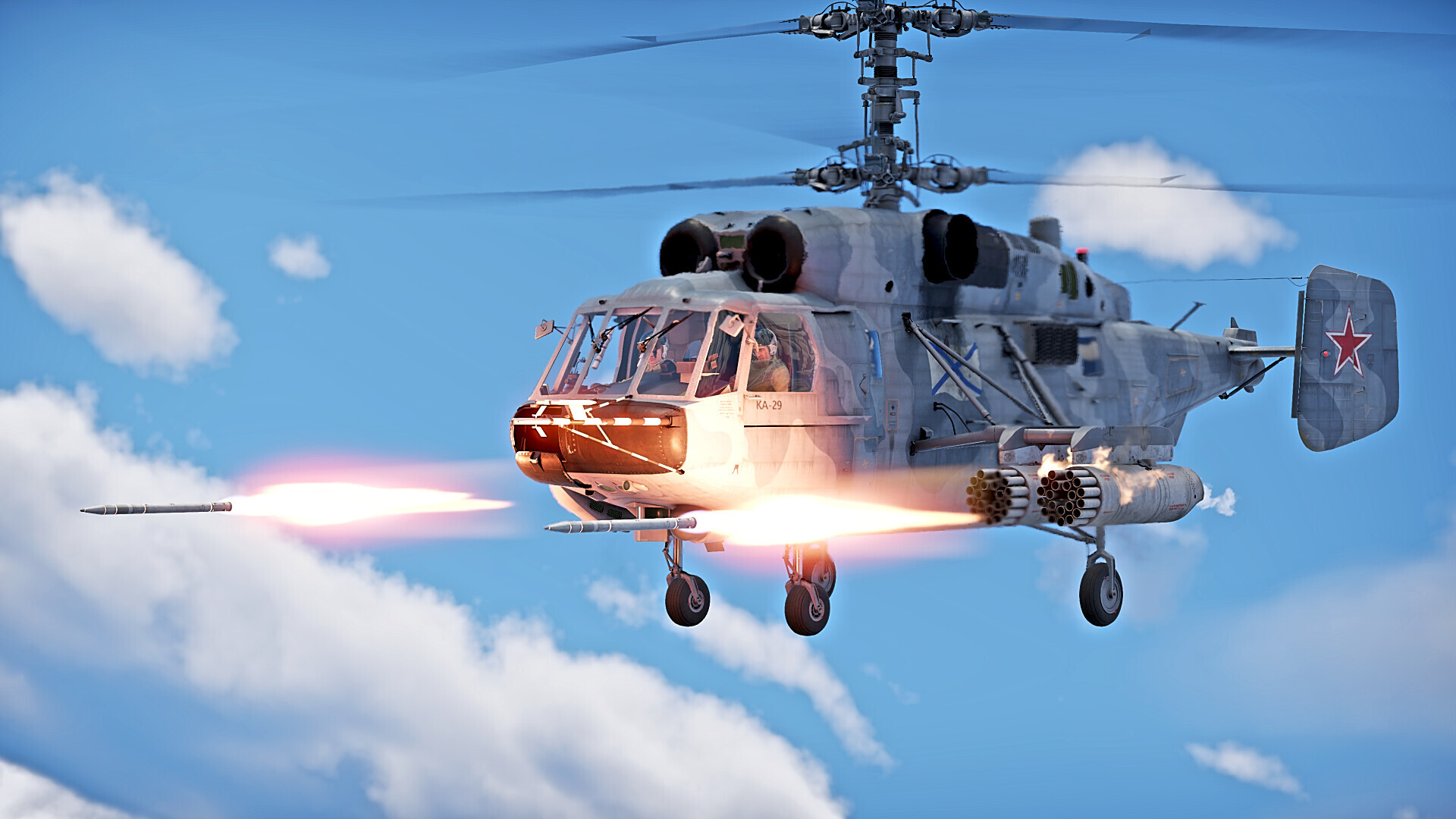
The best loadout for use will be a set of 8 Shturm missiles, 2 blocks of S-8KO rockets, and the 2A42 cannon. The most effective way to play is to hide behind folds in the terrain. Despite the maximum launch distance of 5 kilometers and a speed of 550 m/s, the low 15x zoom and the lack of a teleautomatic system prevent the Kamov from operating effectively at long distances. Therefore, the best tactic is not to engage from afar while trying to hit the enemy, but to remain in close proximity and use the helicopter’s survivability. To combat aviation, it is best to use frontal attacks or engage when the enemy has lost all energy during a maneuver or turn against the Kamov.
History of the helicopter
The whole story began on April 3, 1972. The Council of Ministers of the USSR adopted a resolution according to which the Kamov Design Bureau was tasked with developing the Ka-252 heavy transport helicopter, with the primary requirement being the ability to be based on the same ships as the Ka-25, as well as the ability to search for submarines within a 200-kilometer radius of the carrier ship.
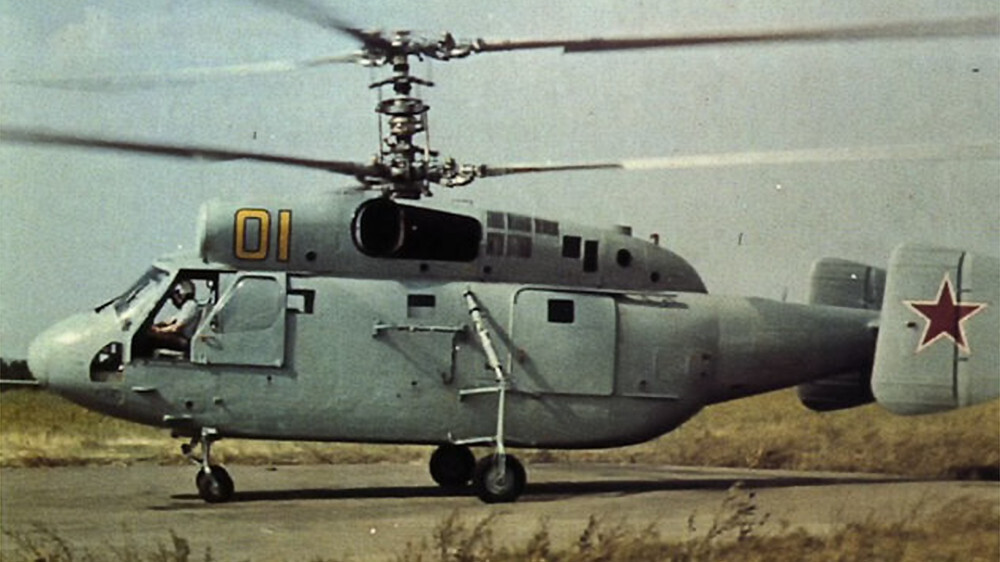
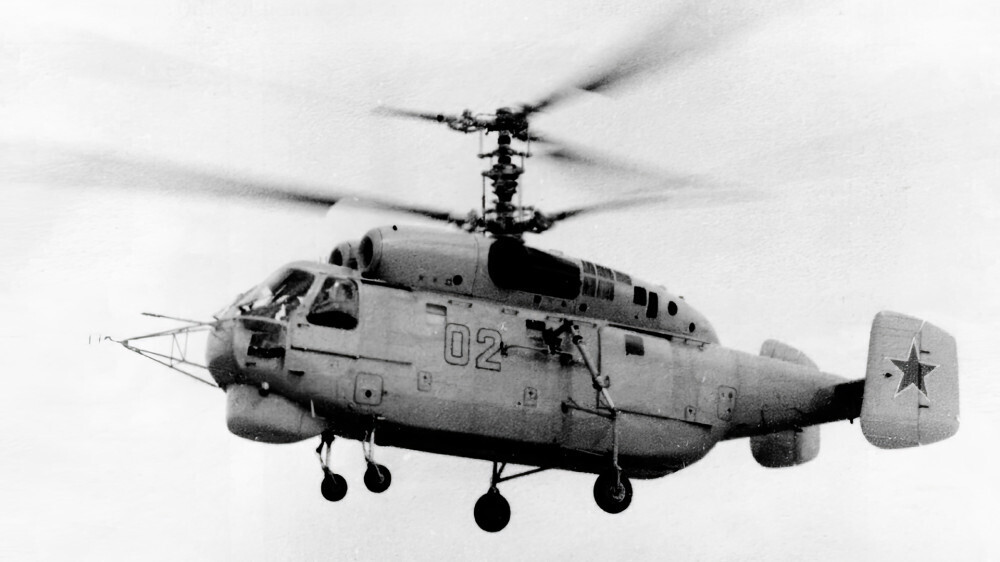
The new Kamov was designed to search for, detect, track, and destroy submarines at depths of up to 500 meters and a maximum speed of 75 km/h. The helicopter was equipped with new engines manufactured by Klimov, the TVZ-117, which were significantly more powerful than the Ka-25's powerplant, which consisted of two GTD-3F engines with a combined output of approximately 1,500 hp.
Unfortunately, the death of N.I. Kamov slowed down both the production process and flight tests. The Ka-252 made its first flight only on December 24, 1973, and development was continued by S.V. Mikheev. It wasn’t until nine years later, on April 14, 1981, that the helicopter was accepted into service and given the designation Ka-27 (NATO reporting name — Helix).
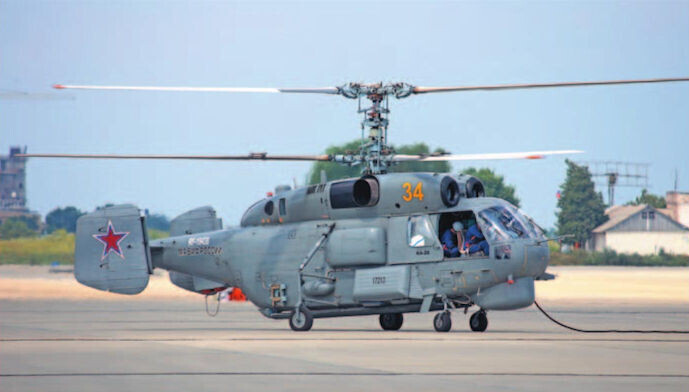
Compared to the “old man” Ka-25, the new helicopter was much more efficient than the old model. Kamov was not only successful, but also multifunctional. Some of the most successful modifications include:
- Ka-27PS (Search and Rescue) — For searching for and rescuing people in distress at sea. Equipped with an upgraded radar system linked to equipment for detecting surface objects with radar beacons;
- Ka-27PL (Anti-Submarine) — The main purpose of the new Kamov. It is capable of finding targets at depths of up to 500 m and speeds of up to 75 km/h in search areas. It can operate at a distance of more than 200 kilometers from the carrier ship;
- Ka-27RLD (Radar Patrol) — A special modification of the Ka-29, designed to detect low-flying air targets, including cruise missiles, at any time of day and in any weather conditions. It was originally intended for deployment on Project 1143 aircraft-carrying cruisers;
However, time was running out, and the need for a transport and combat modification gradually arose. Mikheev was once again appointed chief designer for production. The first prototype of the Ka-252TB, also known as the Ka-29, made its maiden flight on July 28, 1976. The helicopter’s tests were successful, and in 1985, mass production of the Ka-29 (NATO reporting name — Helix-B) began. Between 1985 and 1991, 59 helicopters were produced at the Kumertau Helicopter Plant.
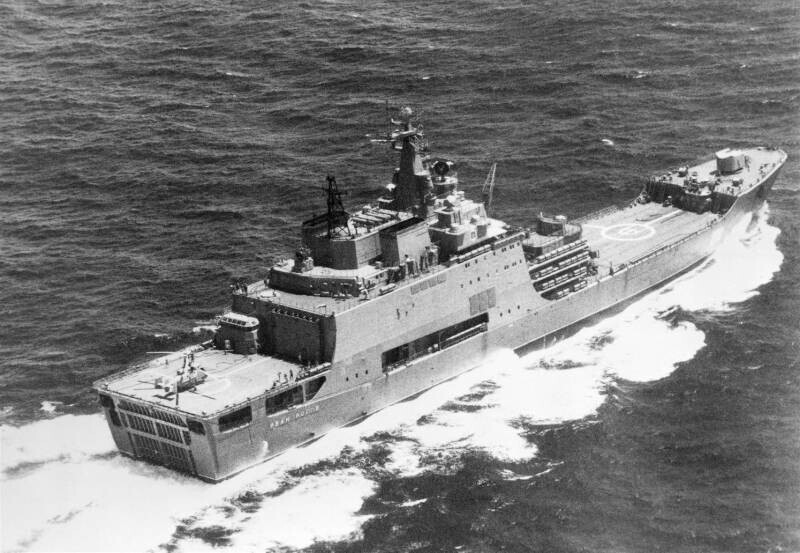
Unfortunately, no more helicopters were produced, and with the decline in intensive use of the Ka-29, most of the transport and combat helicopters were gradually retired. The helicopters became unnecessary due to the lack of resources to maintain their technical condition. The fleet gradually put the helicopters into reserve or completely decommissioned them, leaving fewer than 20 operational units by the end of the 2000s.
There is only one known use of the helicopter in combat: two Ka-29s, converted into flying laboratories, were sent for testing purposes to develop methods for the combat use of the Ka-50. One of the helicopters was equipped with a Ka-50 sighting system, while the other was equipped with an unconventional 2A42. In the winter of 2001, a combat strike group consisting of two Ka-50s and a single Ka-29VPNTSU was tested in the real conditions of the Chechen conflict.
Sources
Note: some links may not work because of their Russian domains.
- Ka-27 (Wiki);
- Ka-29 (Wiki);
- Ka-27 (Topwar);
- Ka-29 (Topwar);
- Ka-29 (Livejournal)