
France might have won World War Two on paper, but in reality it had suffered a massive defeat. The Germans, of course, had steamrolled them at the start of the war. Showing the ineffectiveness of their tactics, tanks, and leadership. It was the lessons they learned there, that mobility and the ability to react to unforeseen threats quickly and effectively, that shaped the entire French armoured forces to this day.
Postwar Dreams and postwar reality
It is with those lessons that the AMX-13 was designed. The French army wanted an air mobile force, one that could quickly be deployed anywhere in their massive empire and basically instantly get into the fight. For this they needed tanks light enough to be carried in one of their new planned cargo planes, heavily armed so they could stand on their own, and to be mobile both for quick tactics and as a replacement for their lesser armour.
There were also other considerations that went into the design. Mainly, the tank chassis had to be versatile; budgets were tight, and the more commonality between vehicles, the better. Another important thing that was taken into account was manpower. France had never really recovered from World War One, and World War Two had not done the country any favors. Fighting capable men were in low supply and very much needed in the rebuilding of the country and economy. And the fewer crew a tank needed, the more could theoretically be fielded.
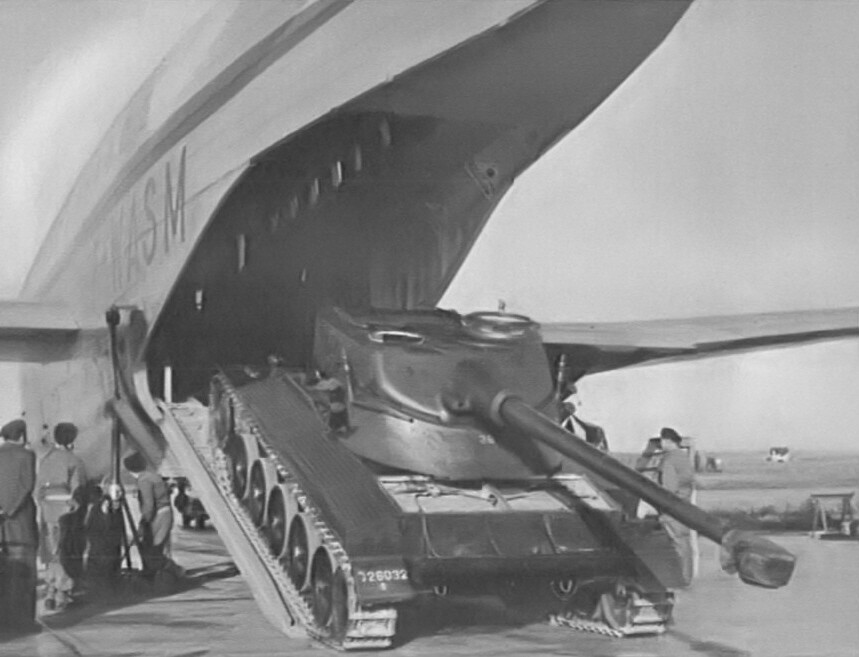
As the true situation of France’s postwar economy became clear, the dream of the air mobile brigades shattered. There simply weren’t funds for big new transport planes that would support such a force, and with the big global empire on a clear decline, the reason for the existence of such a force became smaller and smaller.
The AMX-13, however, adapted. Its part in the air-mobile brigades was replaced with a part in reconnaissance. There its role was not just to locate the enemy, as it would have been with most countries, but also to engage and pin them down. The AMX-13, with its mobility and strong cannon, was perfect for this. Later in its life, the AMX-13 also proved a perfect basis for a multitude of vehicles. Be it simple upgrades to the armament or completely different vehicle classes like APCs, ARVs, ATGM carriers, SPAA, and many others.
Two chassis enter, one chassis leaves
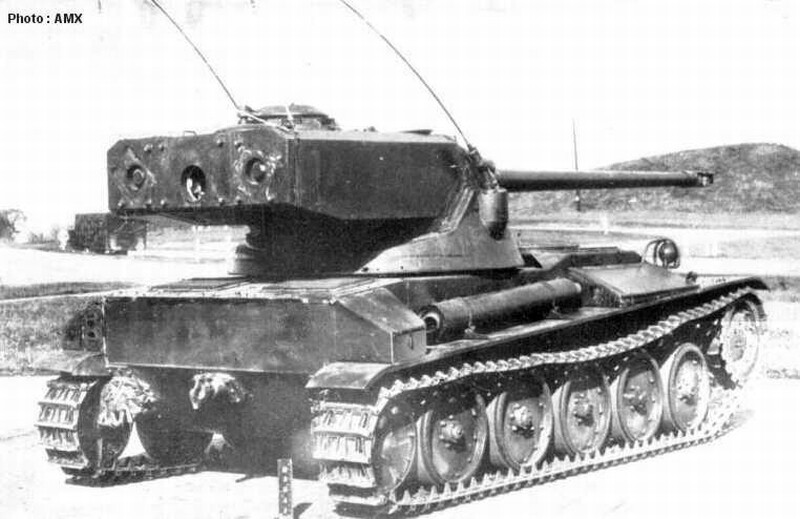
As with other nations, France’s tanks are made with two separately designed components: the turret and the hull. The AMX-13 was no different in this regard. For the hull, both AMX and FMC offered a design, with the biggest difference being in suspension (torsion bar for AMX and hydropneumatics for FMC), with AMX ultimately being chosen due to lower costs. The turret was designed by GIAT, with different types being offered. The FL-10 was ultimately chosen for the French army.
Note: GIAT also designed the FL-12 turret, which is very similar to the FL-10 turret. The biggest difference is the gun, where the 75mm was swapped out for a 105mm, which is also found on the artillery piece based on the AMX-13, the MK-61 105. France instead chose to rebore the 75mm to 90mm, which would lead to the AMX-13 90. Later on, the FL-12 was upgraded to the FL-15, which kept the same gun but had improved optics. Another turret that is very similar is the FL-11. Originally designed for the Panhard EBR, this is an oscillating turret but without the auto-loader and a shorter, lower-pressure 75mm gun. In the game, all of the above-mentioned turrets are playable, with the FL-10 and FL-11 being put on the EBR and AMX-13, the FL-12 being put on the SK-105, and the FL-15 being found on the DF105.
The most important aspect of the hull of the AMX-13 is probably the engine placement. It is located in the front of the hull to the right of the driver. This placement allowed for better weight distribution, which was important when the tank was still to be air transportable, but it was also a plus when it came to the versatility of the chassis. The frontal engine meant the AMX-13 was a great platform for a variety of vehicles, including, for example, troop transports, anti-air vehicles, artillery pieces, and armored recovery vehicles.
The original AMX-13 was powered by a SOFAM Model 8Gxb 8-cylinder water-cooled gasoline engine providing 250 HP, leading to a power-to-weight ratio of about 17 hp/ton when combat loaded.
Note: A lot of export countries later swapped the gasoline engine for a diesel one, usually with extra horsepower as well.
Fourth time’s the charm
The AMX-13 chassis was mainly produced in 4 separate types, starting with 2A and ending with 2D, with several differences between the four. There also was the first batch of vehicles, also known as the type 1 vehicles. These were made whilst the initial kinks of the vehicle were still being ironed out. The funds for vehicle production were gotten from the Marshall Plan, and part of the agreement was that production had to start as soon as the prototype was found satisfactory by the USA. Here are the special points of all four main production types and how to recognize them:
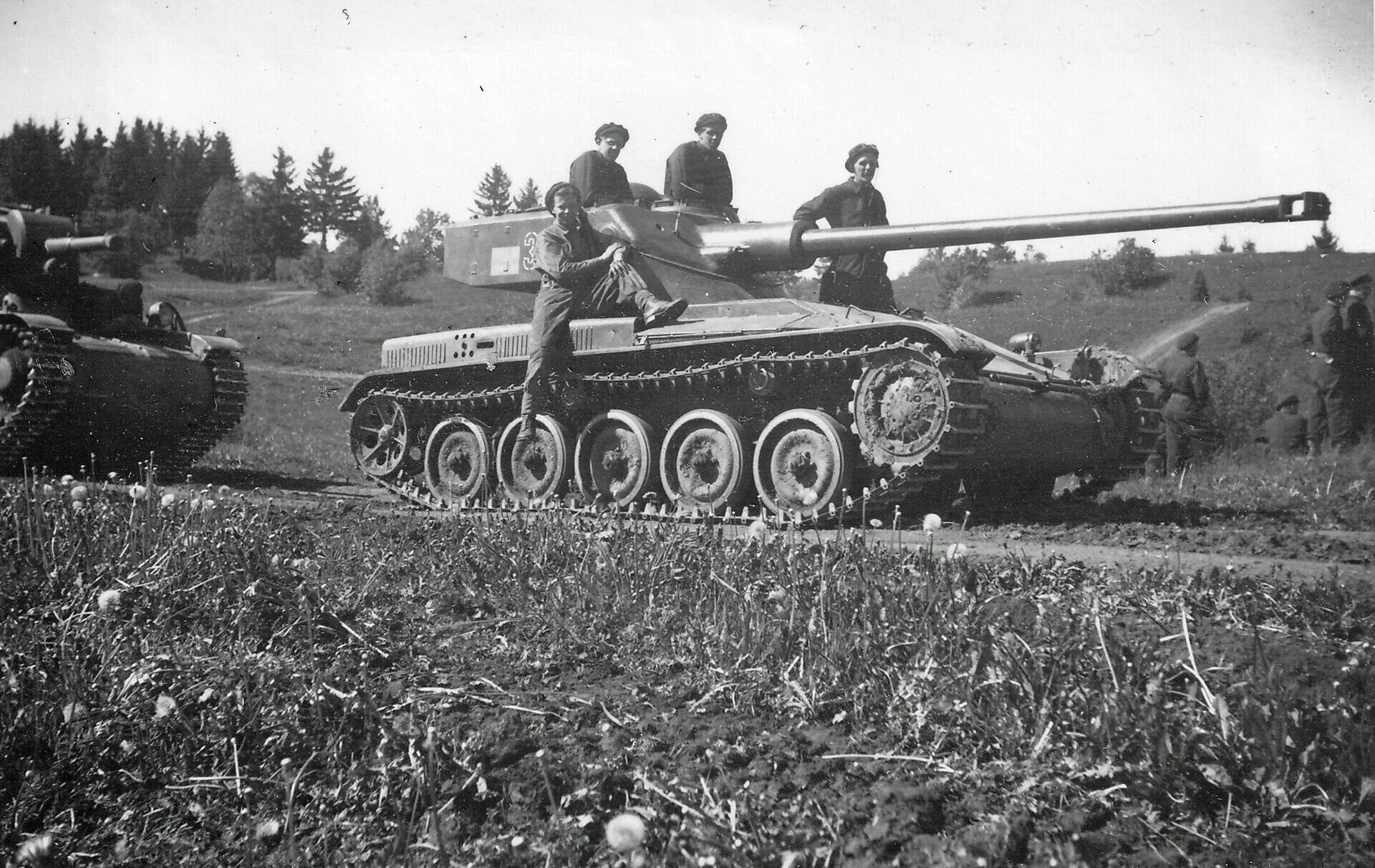
Type 2A
This was the first definite edition of the AMX-13; it can be recognized by 5 unique features.
- Two headlights (without guards originally)
- A siren/horn on the left fender
- Four rear lights
- A closed exhaust with ventilation covers
- Sloping stowage boxes on the track guard
Type 2B
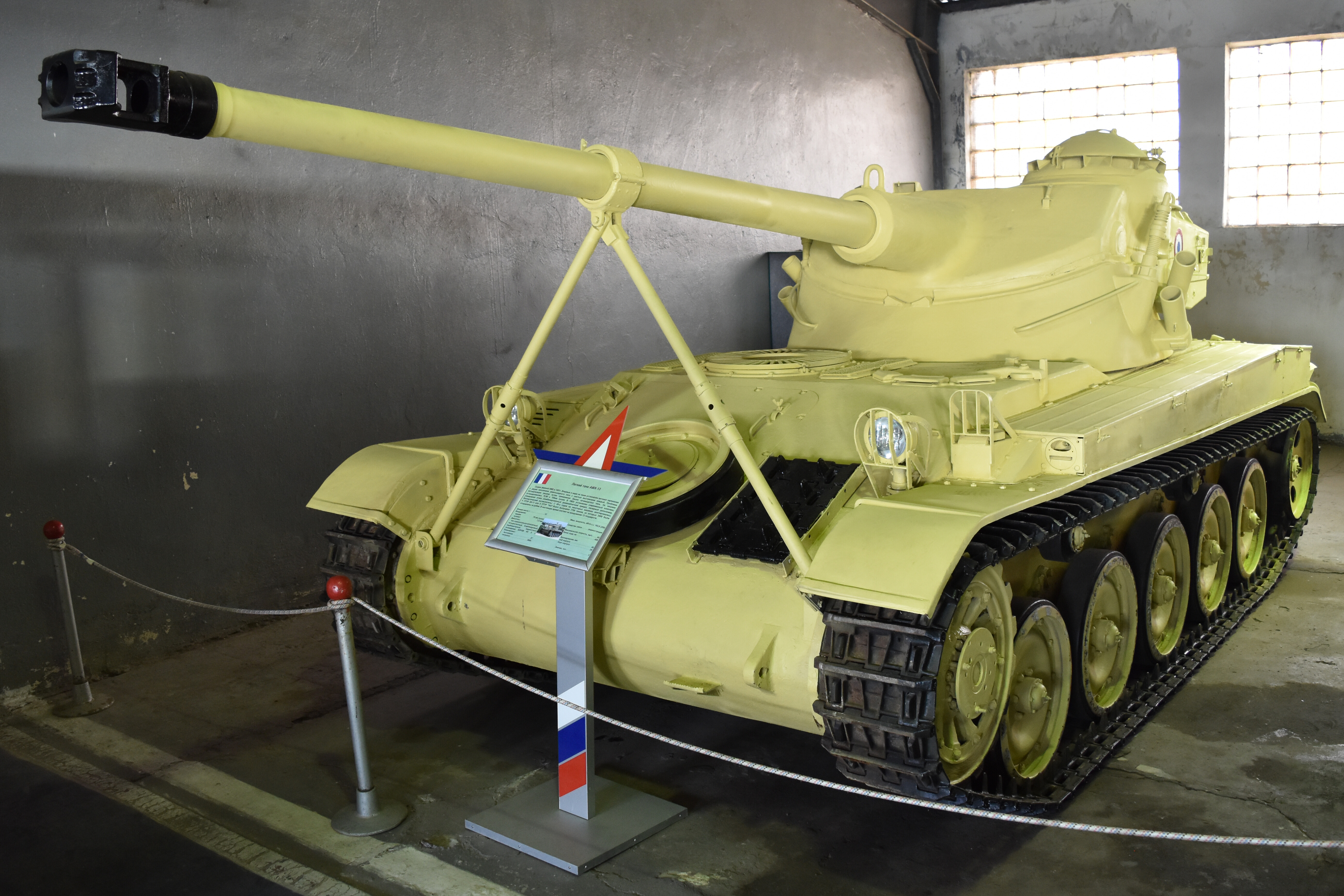
The type 2B chassis mostly changed up the electrical system as well as other minor improvements, mainly:
- Removal of blackout lamps in headlights
- Two new front side lights
- Replacement of four rear lights by two new ones
- Moving of the position siren/horn to the right side hull
- The exhaust guard was revised
- Stowage boxes became flat topped instead of sloped
- The camouflage net rack was modified
Type 2C
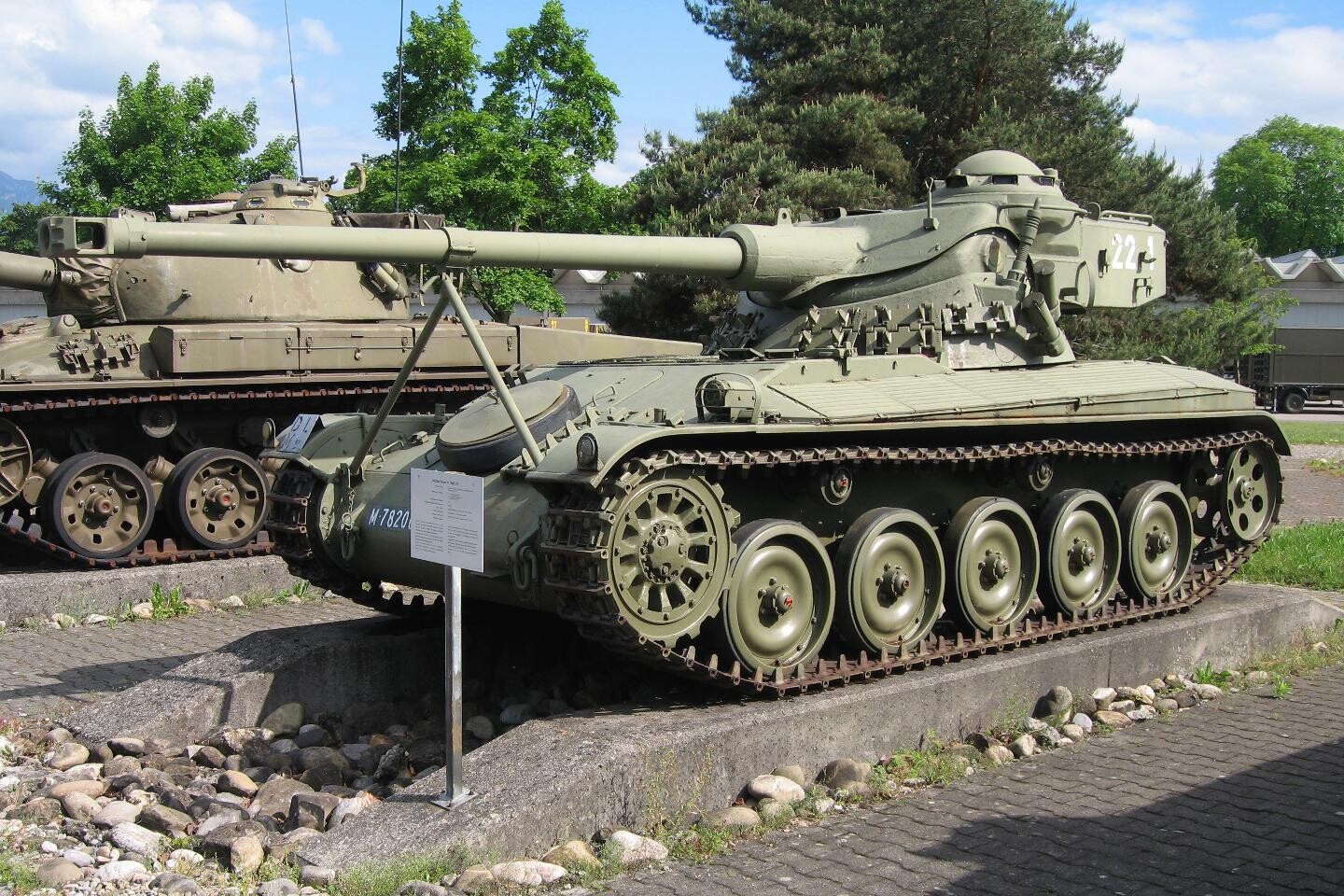
The type 2C once again improved mainly the electrical system, though they were even more minor, as well as improvements to the powertrain. Externally, it looked basically identical to the type 2B chassis with only one difference:
- Gun crutch now holds the gun horizontal instead of slightly downwards.
Type 2D
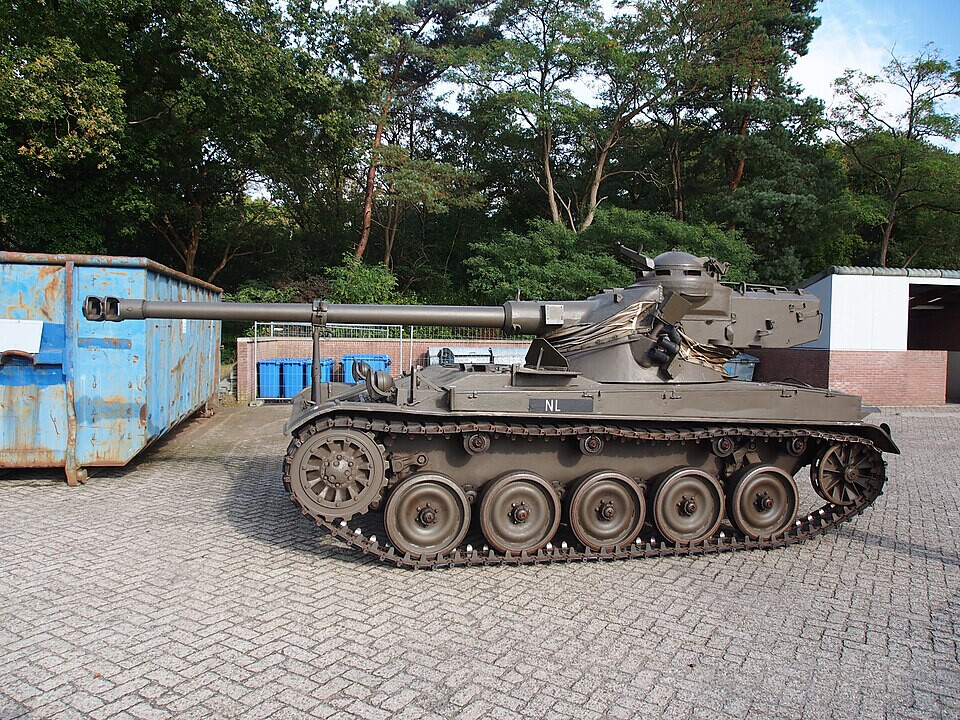
The type 2D is where the chassis truly became its ultimate form, and all vehicles of other types were eventually refitted to this standard, or as close to it as structurally possible. When it came to the suspension, it wasn’t always possible to fully get it up to standard. The visible modifications were as follows:
- Four return rollers per side instead of 2
- The casting of idlers was revised
- Two messier shock absorbers were added on the first and last road-wheel support arm
- New tow hook models were used
- A hooded guard for the drivers central periscope
All in all, the modifications were in general minor but still improvements. The FL-10 turret also had 5 main types; however, the external differences between these are even more minor.
Why does the AMX look like that?
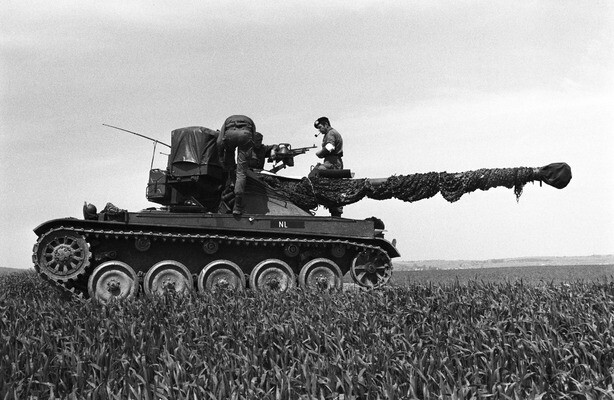
When looking at the AMX-13, the unique thing would have to be the turret. This has a simple reason: unlike conventional tanks, where the cannon is on a pintle within the turret, allowing for sideways movement with the turret and up and down with the cannon, the AMX-13 has an oscillating turret. The big difference is that an oscillating turret is made up of two parts. The first is the pintle that allows for up-and-down movement, which is put on the turret ring, allowing for sideways movement. The second part is the turret itself; it houses the cannon and crew. It is a bit like a ball in a socket in this regard.
The biggest upside of this arrangement is the fact that the cannon will always be in the same location compared to the turret part, which allows for a very simple auto-loader design, seeing as you never have to take into account how a battle barrel would move, like with a conventional turret. This is exactly what happened with the AMX-13 as well. It featured a simple yet very effective and reliable auto-loader, which was very impressive for its time.
The design has quite a few downsides, though. It is almost impossible to seal up for NBC protections, and the large gap easily attracts debris, making it higher maintenance. It’s also harder to stabilize because of the increased weight of the moving parts.
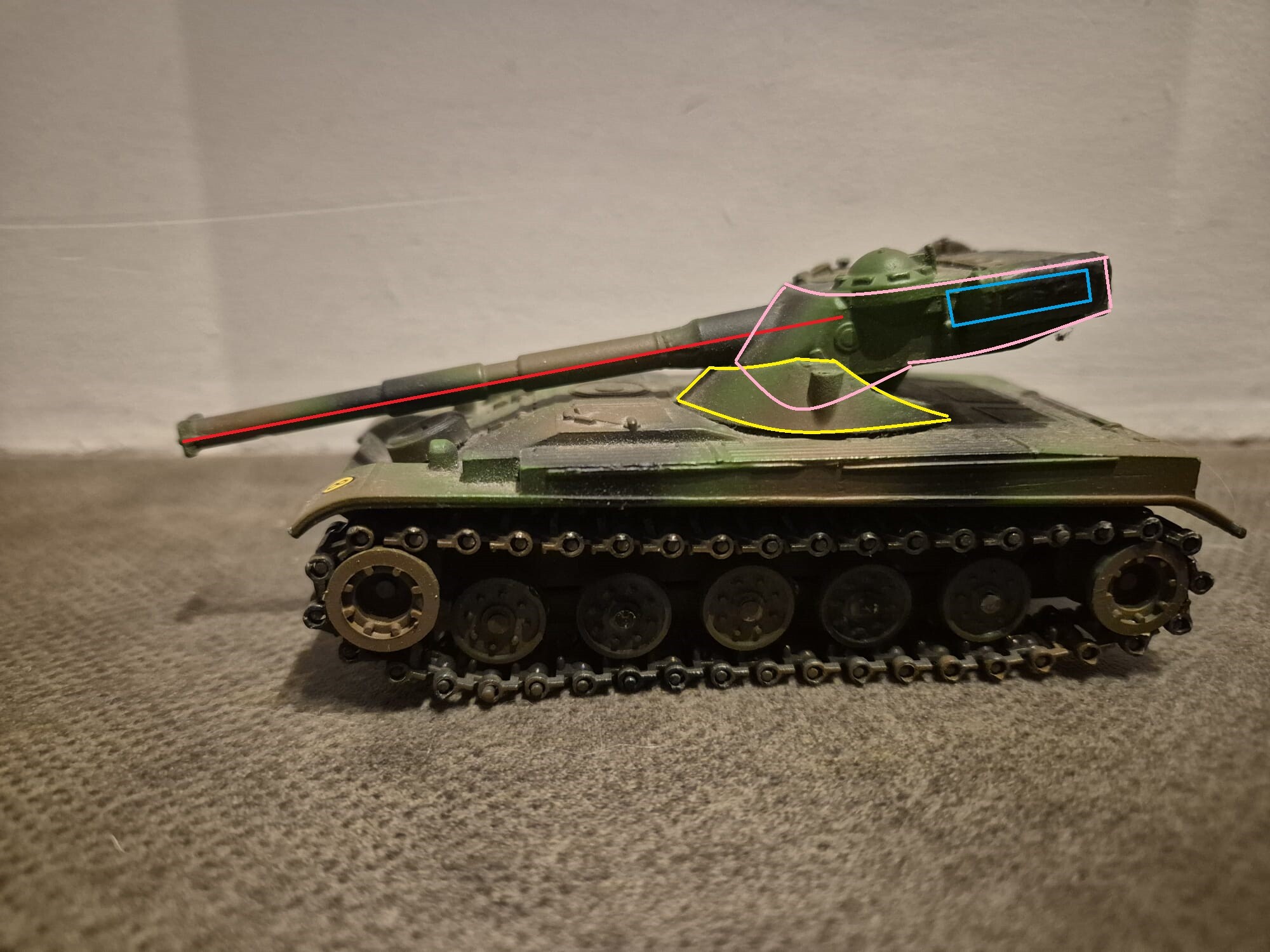
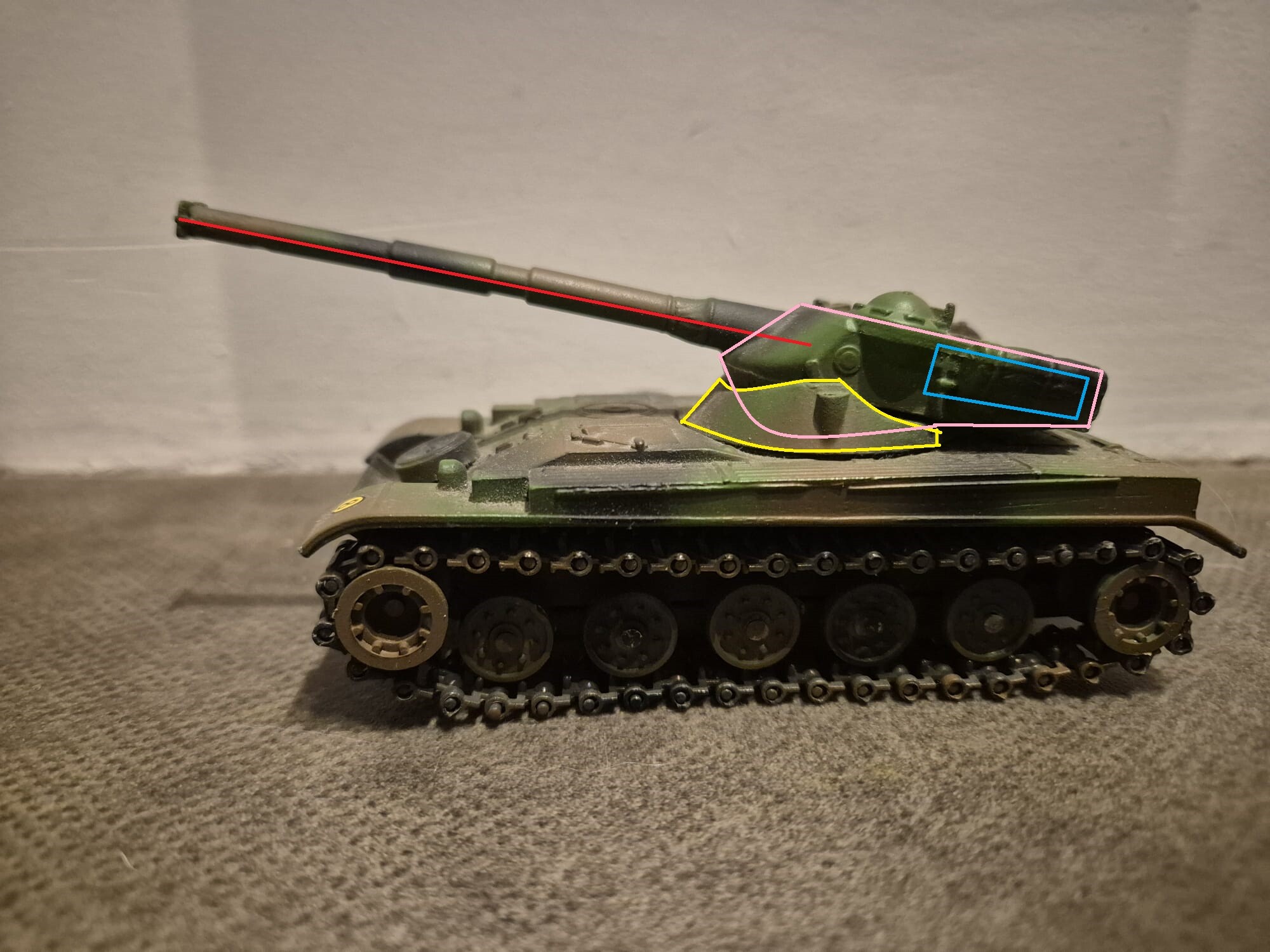
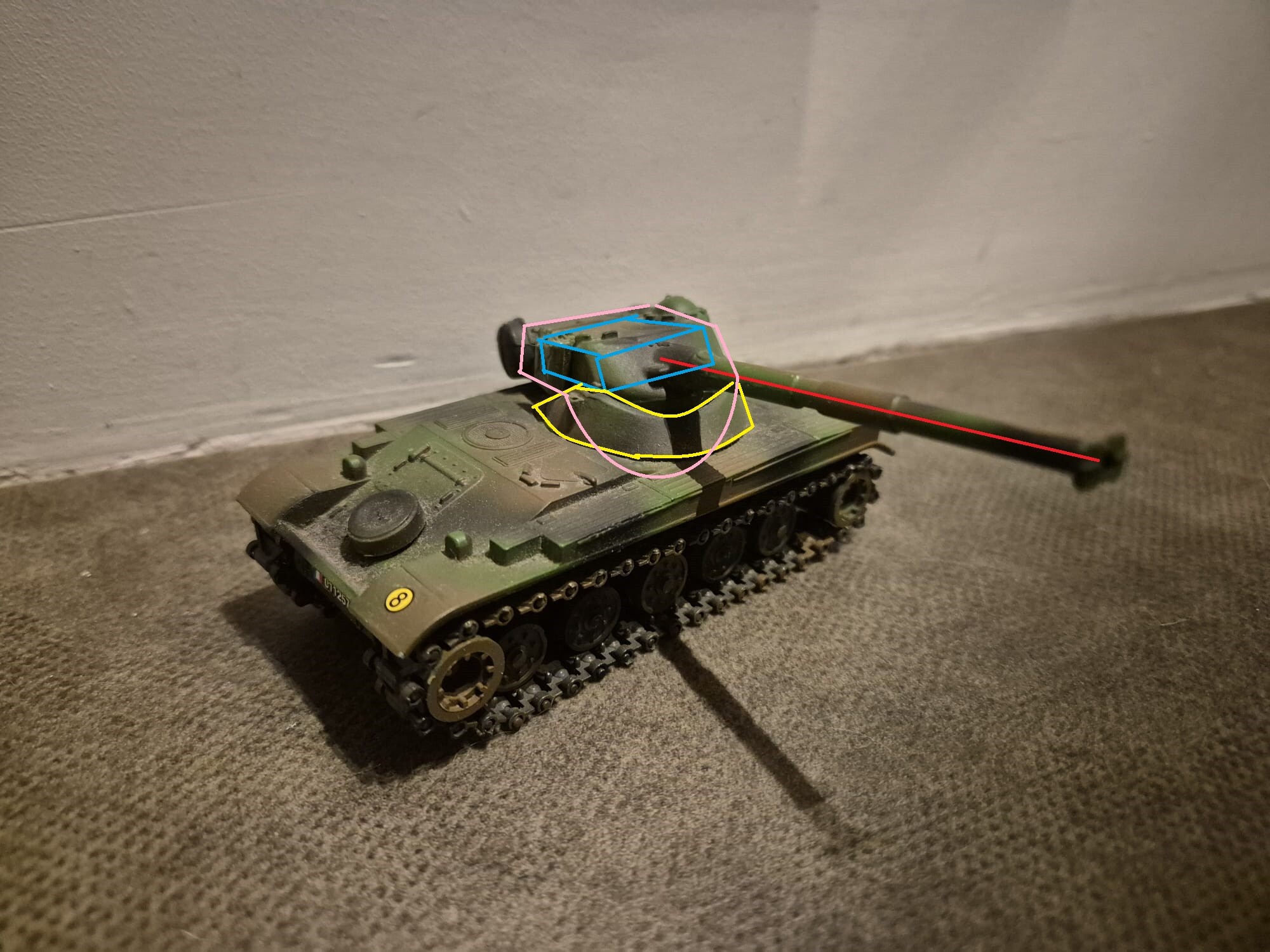
- The red line represents the barrel and the gun breech
- The light blue represents the auto-loader
- The yellow represents the “socket part of the turret”
- The pink represents “ball” part of the turret
Of important note is how the barrel always stays in the same line as the auto-loader, thus allowing for a simple mechanism.
One in a dozen
The autoloader of the AMX-13 is housed in the turret. It consists of two drum magazines. One on the left back side and one on the right back side of the turret, both holding 6 rounds each. The gunner can pick which round he fires by simply rotating one of the drums to the desired shell, unlocking a latch holding the ammo in place, and then turning the drum slightly to allow the shell to roll out into a tray. A pusher then pushes the shell into the gun breech, where it awaits firing. After firing the gun, the breech spits out the spent casing, and it’s then deposited outside the tank through a little hatch. After which the process can repeat.
On the top of the turret there are two hatches, one for each of the ammo magazines, that allow for quick reloading from the outside. It is also possible to reload the tank from the inside of the tank, both by refilling the magazines and by simply laying a shell in the tray. It is interesting to note that HE shells were always fired by manual loading out of fear that the auto-loader would set them off.
Note: The autoloader was not changed for either the 90mm or the 105mm ammunition. The drums were big enough to simply hold these rounds without modification.
The many types of AMX
Over the years the AMX-13 and its relatives have come in many different and sometimes strange variants. From simple upgrades of the armament to swapping the turret with another tank. There are even variants that convert to vehicle to an artillery piece with a 155mm gun. The list below is by no means exhaustive but paints a good picture of just how versatile the platform is. It’s ordered chronologically and by vehicle type.
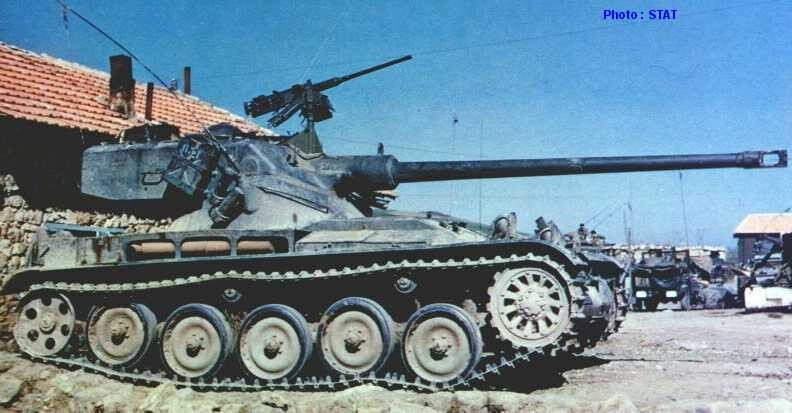
The AMX-13-75
This was the first version of the AMX-13. It was armed with a 75mm gun, which itself was loosely inspired by the 75mm of the Panther tank (all but the barrel was completely designed from scratch). When it was introduced, this was a very strong cannon for a light tank, but armor developments quickly made it obsolete.
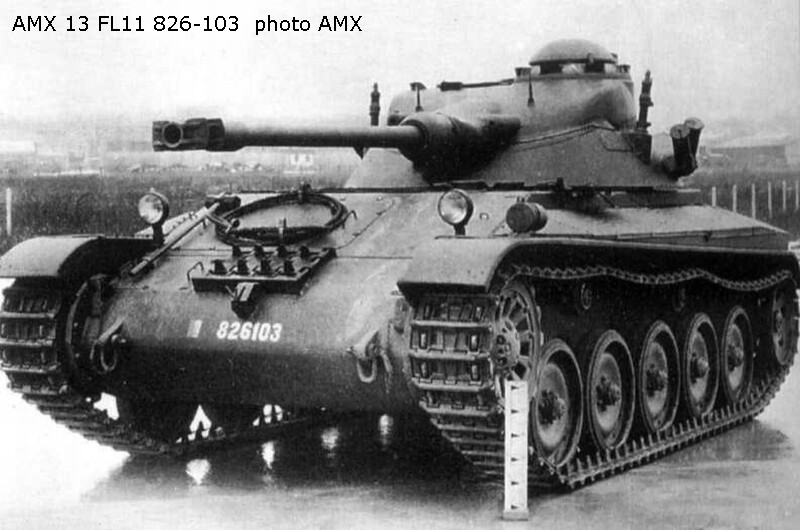
The AMX-13 FL-11
After World War Two, France was desperate to hold onto its colonies. This did not go without a fight from the local population, often desperate for freedom. This was also the case in French Indochina (modern-day Vietnam, Laos, and Cambodia), where France and the Vietminh had been in a bloody battle since 1946. In 1952 the minister of Indochina would request that France’s best light tank be provided to the cavalry units fighting the Vietminh. The standard AMX-13 was deemed too unwieldy for guerrilla warfare. However, there was a simple solution: it was proposed to mount the FL-11 turret of the Panhard EBR on the AMX chassis. An added bonus was that this made the tank about 1.5 tons lighter. Only 20 were ordered, with the first 5 being used as trainers and as testers for airlift possibilities (to be able to airlift the vehicle, it had to be done in 3 different payloads, with the chassis, turret + tracks, and running gear needing to be flown out separately). The vehicles were completed too late to aid the cavalry, though, with the war ending before they got to the troops. The vehicles were then sold to Morocco, after which their fates become unknown.
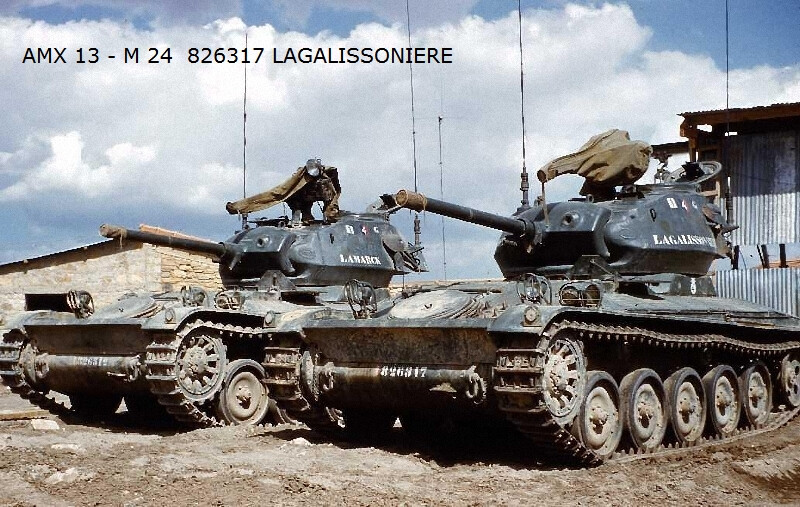
The AMX-13-M24
After World War Two, France, as with many other countries, received a lot of American vehicles under the Marshall Plan. One of these was the M24 Chaffee. In the late 1950s, these tanks had begun to show their age, and it was decided to try and modernize the vehicle. Two proposals came out of this. One was mating the Chaffee hull with the FL-11 turret, and the other was mating the Chaffee turret with an AMX hull, with the only modification being a special “adaptor” piece to connect the two (the turret basket of the Chaffee turret was too tall to fit otherwise). The former was rejected due to being too cramped; it was deemed too difficult to manually load the HE shells. The latter, however, was deemed usable and was accepted into service. It was only used in Algeria until France withdrew from the region in 1964, after which the gun and mantlet were removed and replaced with a Plexiglas window, and they were used as driver’s training vehicles.
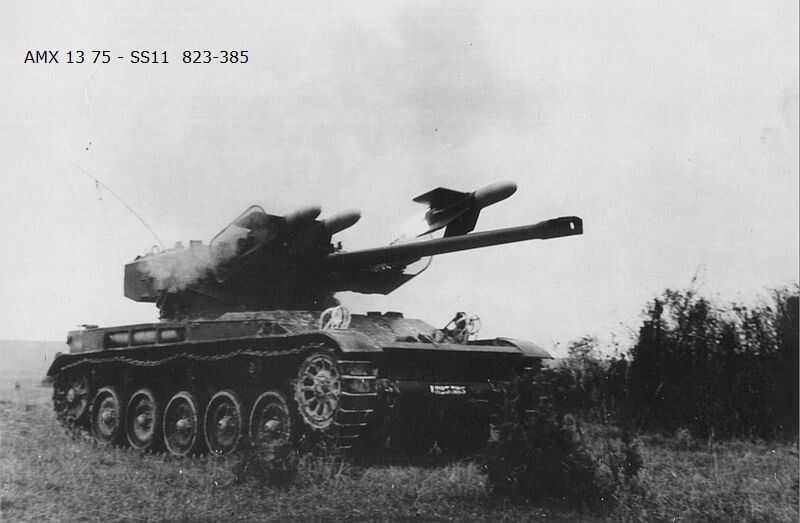
The AMX-13 75 SS-11
This AMX-13 was designed to further increase the lethality and can be seen as a side project to the 90mm. It was mostly meant to bolster the French forces stationed in western Germany, which would have had to engage with the enemy at longer ranges due to the terrain there. The enemy also would have had access to superior armour and armament compared to the regular AMX-13, so the SS-11 rockets would’ve added a nice big punch to push them back.
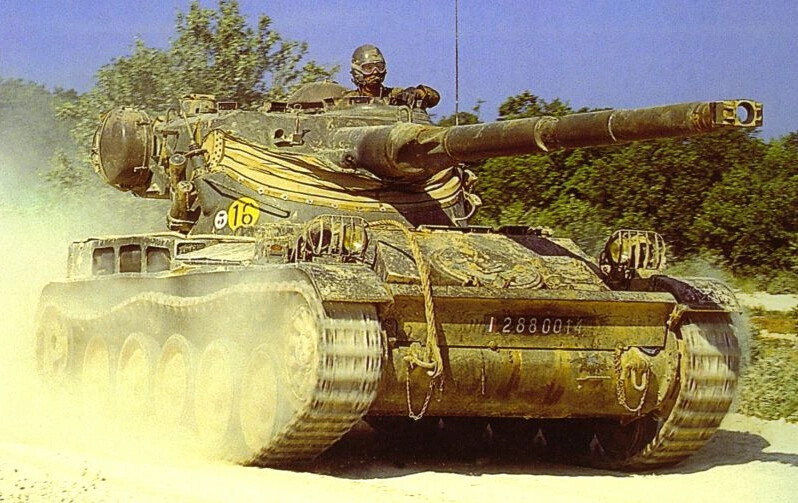
The AMX-13 90
After France realized that the 75mm was becoming outdated. They looked into multiple ways of up-gunning the design. The one they ended up picking was the 90mm version. This had a simple reason: the 75mm could be up-bored to 90mm, meaning that the modification was a cheap and simple one. A consequence of this was, however, that the barrel became a lot thinner, so it was decided to add a thermal sleeve to minimize warping of the steel. A foldable searchlight was also added to the back of the turret with some other minor modifications.
The AMX-13 105
This was one of the other proposed possibilities for up-gunning the AMX-13. However, as this required a completely new turret, the modification was far more expensive, and France rejected it for their domestic armoured forces. It was, however, a massive success on the export market, garnering a lot of attention. There were issues with the recoil, though, and early versions were prone to cracking the metal.
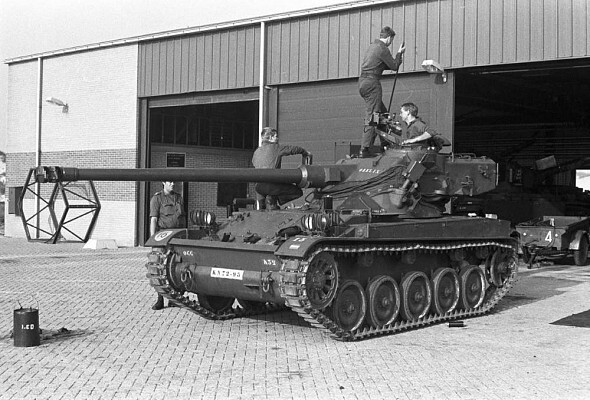
The AMX-13 HOT
As new missiles were developed, it was decided to upgrade the AMX-13 with these missiles. The HOT missile came forth out of a joint development of Germany and France. Unlike the older SS-11 missiles, which were manually guided with a joystick, the HOT missiles were semi-manually guided (meaning that instead of guiding the missile via a joystick, one simply had to keep the target in the crosshairs, and the missile would make its own adjustments). Overall, the HOT missile was a big improvement. It was faster, lighter, and offered superior penetration. There is not much known about the AMX-13 HOT; there are photographs of it with 3 or 4 missiles in a special container on each side of the barrel, but about the project itself and its eventual cancellation, little is known.
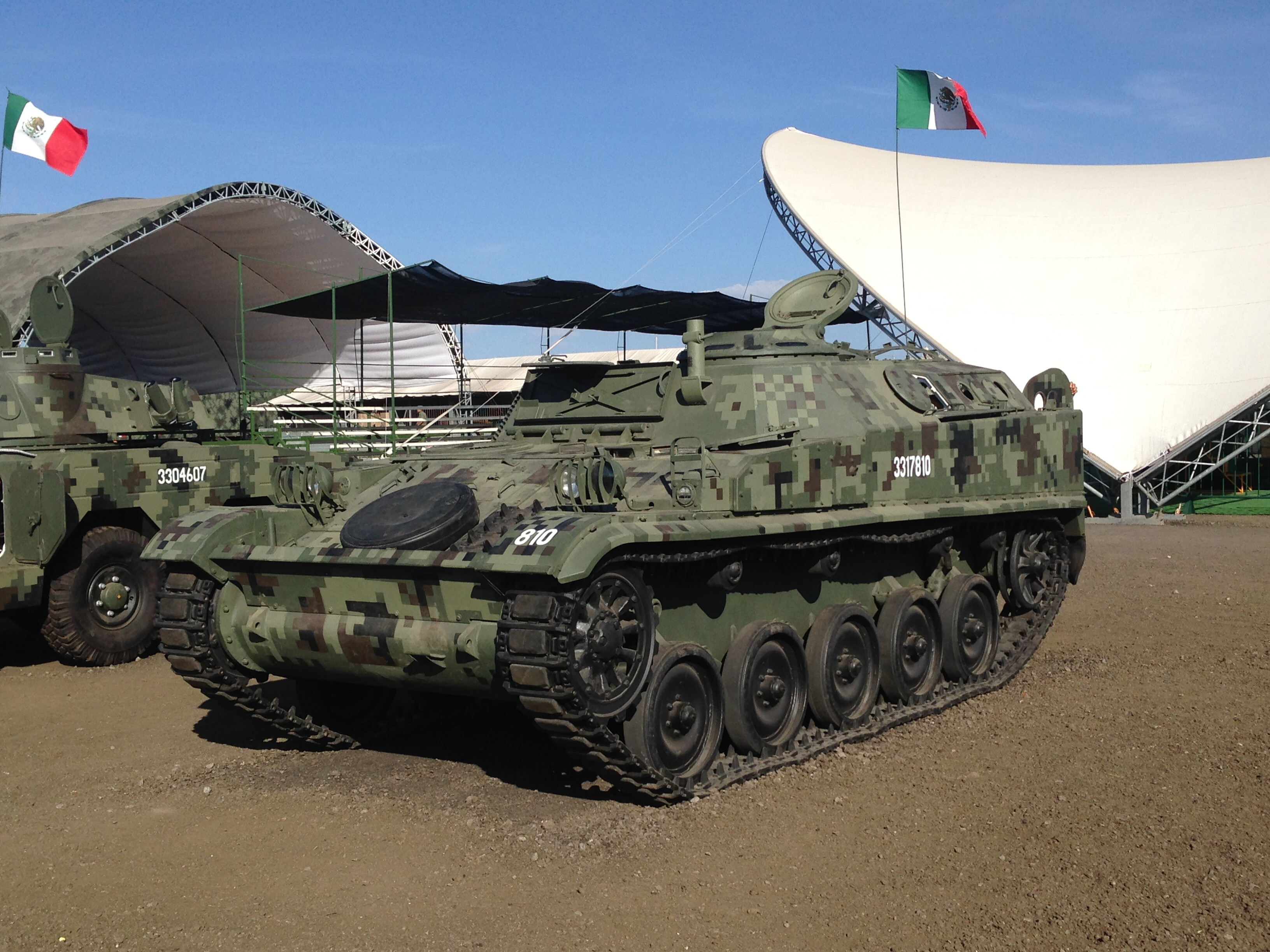
The AMX-VCI
As stated before, the AMX-13 platform was easily adaptable to other roles, one of the biggest ones being the AMX-VCI. This was a standard AMX-13 chassis but with a big superstructure on the back of the hull, with space for 10 passengers and 3 crew. It was an APC, one of the earliest examples of a purpose-built one. It came with a number of armaments, sometimes with a turret or just a machine gun, depending on the version. There are a numerous amount of versions based on the VCI, from ARV to APC to ambulances and even SPAA—far too many to really dive into here, but I would suggest you do your own further research!
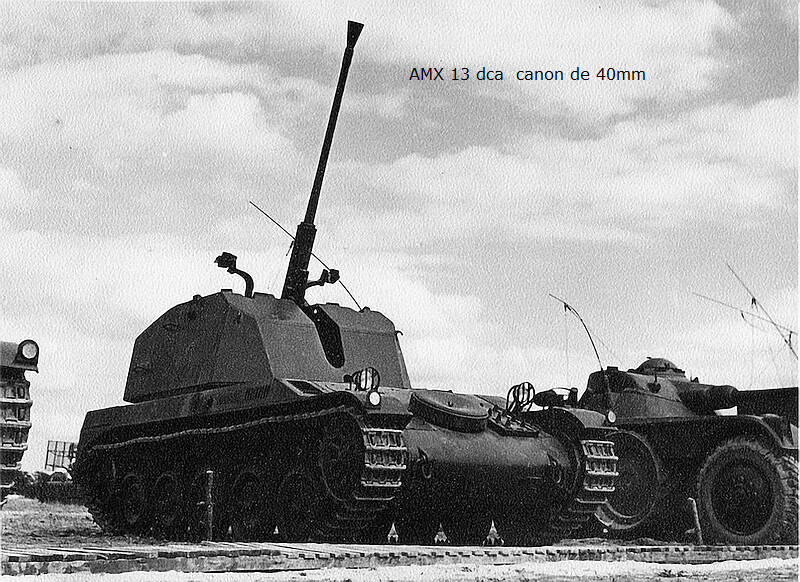
The AMX-13 DCA 40
After World War II, France was in need of an anti-air platform, and in the late 1950s, work began on a turret that could fit on either a Panhard EBR or the AMX-13. The turret was meant to hold a Bofors 40mm (a legendary anti-aircraft gun in its own right, created by Sweden and used by America and Britain as well as many others) and was lightly armed and open-topped. The project was cancelled, as was the production of the Bofors 40mm, as jet aircraft had progressed to the point that manually guided anti-aircraft weaponry was deemed too hard to aim. It wasn’t until the late 1960s that France got a true SPAA.
The VTT-DCA
France got its hands on a lot of M16s after World War Two. As the platform began aging, they looked into a solution to keep the offensive capabilities but on a newer, more mobile platform. The solution was simple: add the quad mount of the M16 onto the AMX-13 platform. It was decided that the VTT was the best pick for this. However, as with the previous SPAA vehicle, it was decided that with modern jets being a factor, manually guided anti-air fire was too ineffective to make a difference, and thus the project was scrapped with one prototype built.
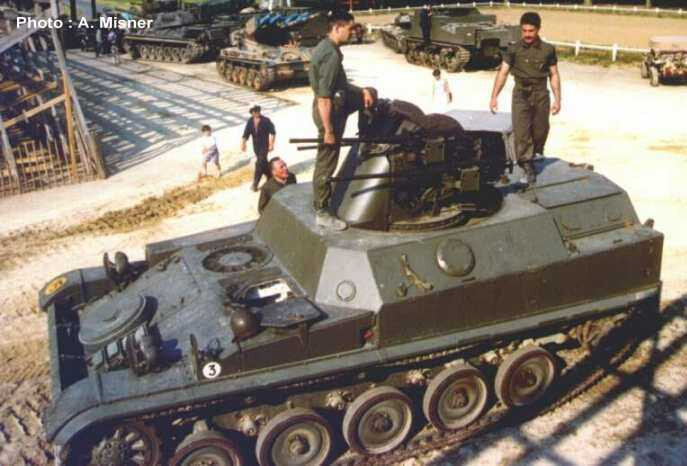
The AMX-13 DCA
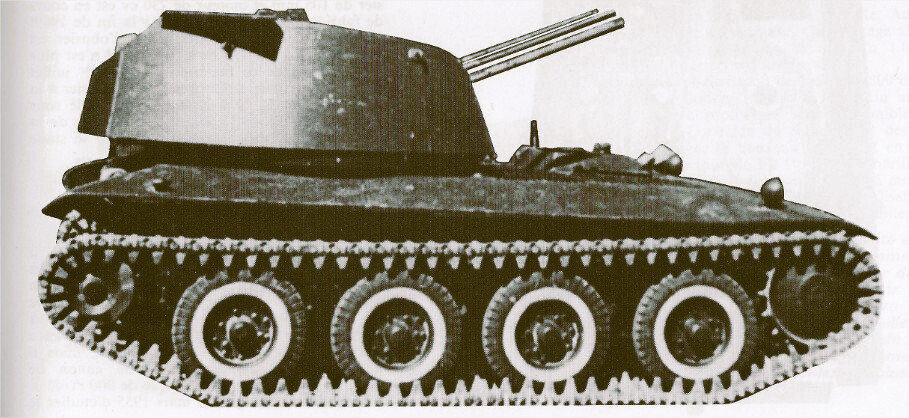
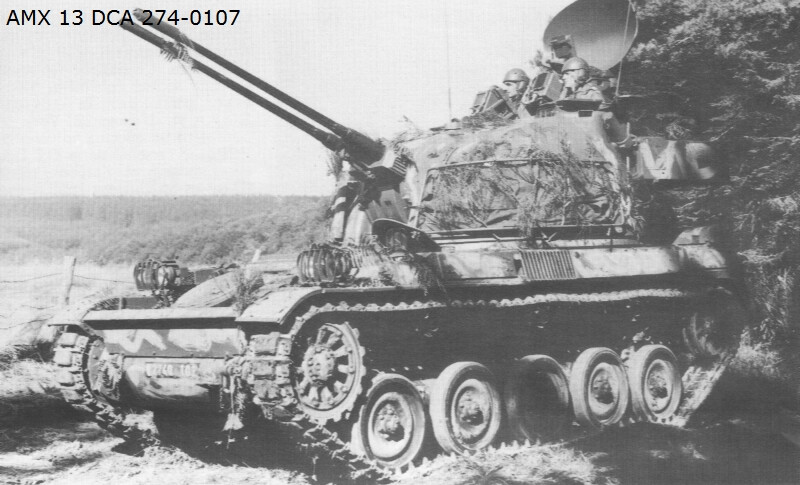
After the failure of the last two programs (as well as many others), France still was without an SPAA vehicle that could support the armoured divisions. Thus another program was started. This program was meant to create a turret with twin 30mm cannons. Two versions were meant to be produced: one with a simple optical guidance system and one with a radar-controlled guidance system. This turret (which is the same turret as was later put on the AMX-30 DCA) required only that the turret ring be enlarged, and no other modifications had to be made. The radar-less vehicles were the first to be delivered, with the radar-capable variant taking a few more years to be developed. When the radar-capable variant finished development, all optical-guided variant vehicles were upgraded with a radar. The AMX-13 DCA was a small, cramped vehicle that didn’t have a great ammunition load, and not many were built. It was slowly phased out when the AMX-30 ROLAND became available.
The AMX-13 howitzers
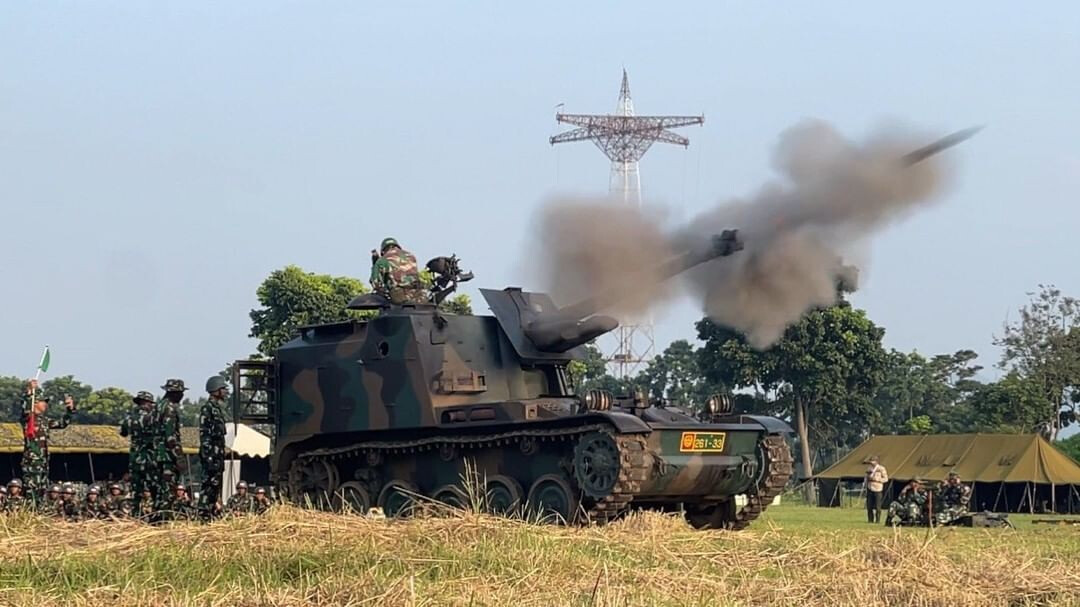
There are a couple of howitzers based on the AMX-13, mainly the AMX Mk 61 and the AMX Mk F3. There also were the prototypes Mk 62 and Mk 63, but these never went into full production.
The Mk61 was an AMX-13 with a new fixed superstructure on the back in which was housed a 105 mm howitzer (the same gun as found on the AMX-13 105).
The Mk 62 and Mk 63 were basically the same vehicle, but instead the 105 mm was put in a purpose-built turret instead of a casemate design.
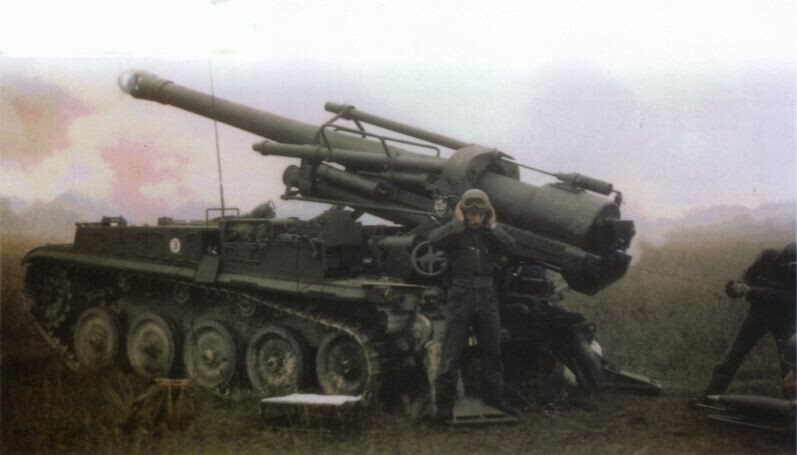
The AMX Mk F3 (also known as the AMX 155) was a stripped-down AMX-13 chassis with a massive 155mm cannon on the back. It was the smallest and lightest 155mm motorized gun carriage available. Only two crew could actually drive inside the vehicle, with the other 8 crew needed to fire the gun driving in a separate support vehicle. It doesn’t carry its own munition, this also being carried by a separate vehicle.
Who used it and when
The AMX-13 was used by many, many countries however and some still use them to this day. It would be far too much to add them all here and I implore you to do your own research to find the other interesting stories out there.
France
While France was the main producer and user of the AMX-13, it did not see much actual battle while in service there. France was mainly fighting guerrilla forces, and the AMX-13 usually was too heavy or too big to fight effectively against such forces. It was, however, used in the Algerian War, where the AMX-13-24 was used as well. A few were lost in combat, but overall it was liked by its crews. It was also used in the Suez Crisis, where it was put to the test against Egyptian tanks like the Soviet-made T-34, IS-3, and SU-100 while supporting French paratroopers.
Had the Cold War ever turned hot, French troops stationed in West Germany would have used the AMX-13 in the light tank/reconnaissance role it was designed for. It was also one of the few places where the SS-11-carrying variant was stationed, which would’ve done well against heavy Soviet armor even at long distances. Later on, the AMX-13-90 was also stationed there.
Israel
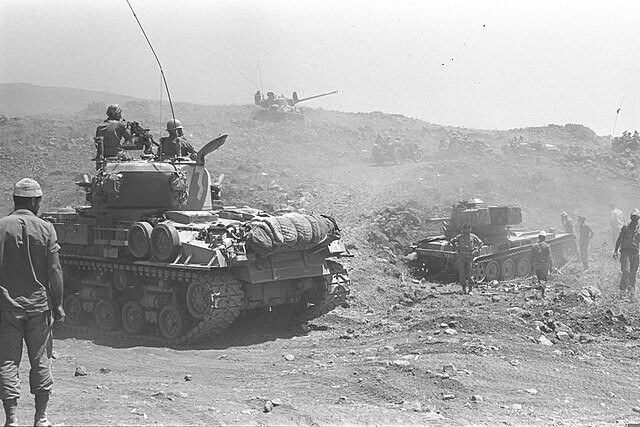
France was the first country to allow export of its modern armoured vehicles to Israel, with all others boycotting it due to fear of Israeli aggression in the region as well as potential backlash from Israel’s neighbors. However, because France did not start producing the AMX-30 until 1966 (which they would never export to Israel because relations had soured), Israel had no source of a modern medium tank and thus decided to fit the AMX-13 into this role (as well as buy upgraded M4 Shermans, which got fitted with the French 75 mm or 105 mm guns) to complement the Centurions they already had. The AMX-13 was used heavily during the Six-Day War, where it was not very successful; the armour was too light to withstand frontal attacks, and the 75mm gun proved useless against the Soviet T-55 and IS-3 tanks. Israel started phasing the tank out after the conflict.
The Netherlands
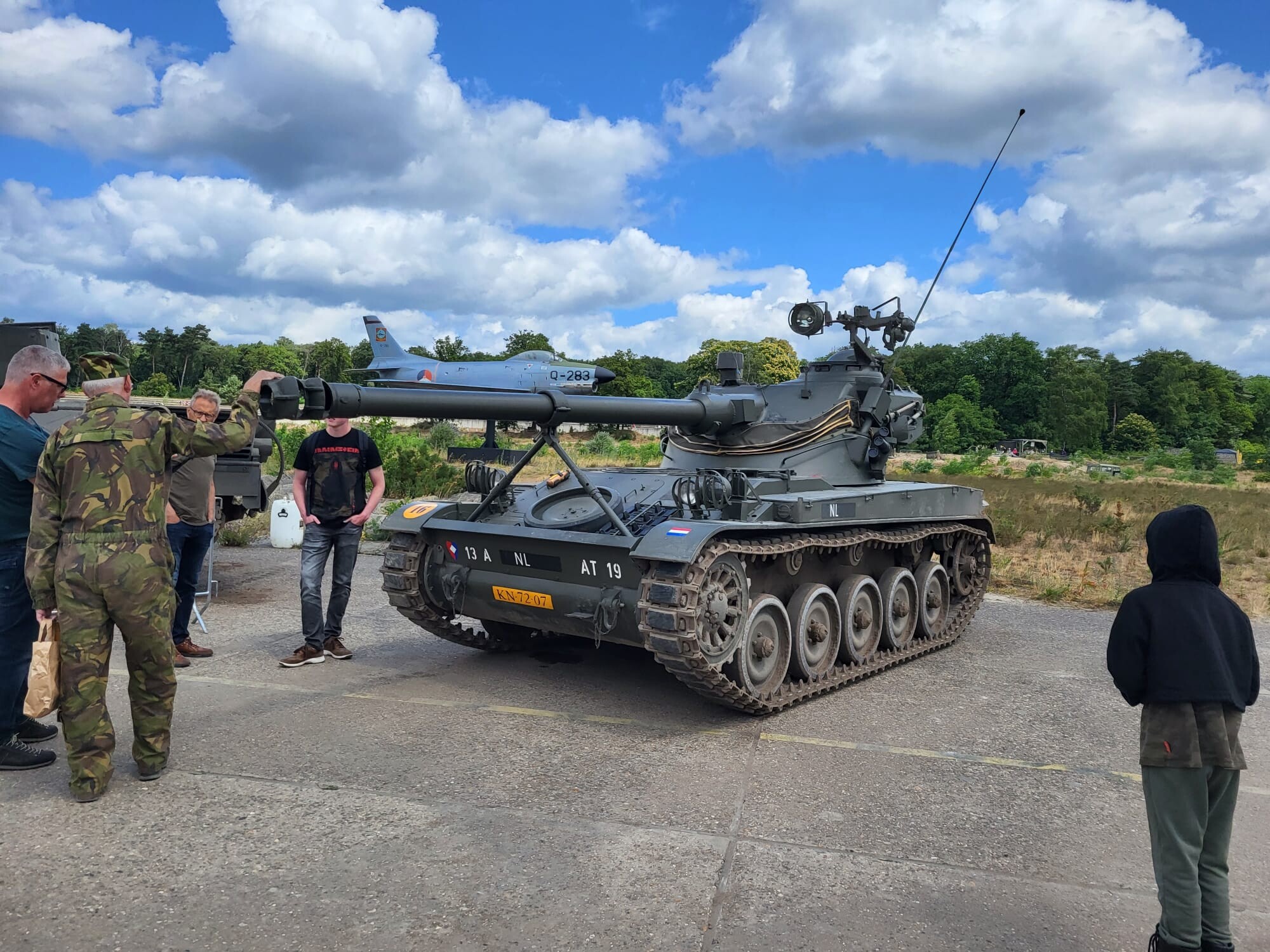
The Dutch originally bought the AMX-13 as a replacement for their aging M24 fleet they got after World War Two. Of note is that they were the first to buy the 105mm armed version with the FL-12 turret. The AMX-13 seemed the most logical replacement, with the only other option being offered on the market being the M41 Walker Bulldog, which was seen as too heavy and big to be practical in the reconnaissance role the light tank was to be used for.
The Dutch had many issues with the platform; for example, they deemed the machine too maintenance-heavy, which in turn made them limit the allowed drive hours per vehicle. They also had issues with cracks forming in the steel of the turret, made even worse due to the increased recoil of the 105mm gun. There also was a scandal involving the purchase of the vehicle; it is said that the main reason the platform was chosen was to appease the French government after the Dutch Air Force bought the American Starfighter over the French Mirage. The Dutch also used the VTT (called PRI in Dutch service) and the AMX mk63 (called PRA in Dutch service). The AMX platform was used for about 20 years, in which it saw no combat.
India
India used the AMX-13 in the Indo-Pakistan War of 1965, where it fought alongside the Centurion and the M4 Sherman against Pakistani M47 Pattons as well as M4 Sherman and M36 Jackson tank destroyers. The AMX-13 proved very capable against these tanks, and there was even a battle where a group of 12 AMX-13s held off about 70 Pakistani tanks.
India was also the only country to use the AMX-13 for its original designed purpose. In 1962, 6 AMX-13s were airlifted in an AN-10 to a high-altitude airfield to defend the mountain roads against Chinese forces in the Sino-Indian War. The AMX-13 proved a formidable foe against the Chinese, who had no tank forces available for such a high altitude. However, the AMX-13 did struggle with the oxygen-poor air and freezing temperatures. It was so cold that one of the 6 had to keep idling through the night so it could jump-start the other 5. The airlift itself was also a challenge; with the AN-10 having a 10-ton weight capacity, both the vehicle and the tank had to be stripped down as far as possible, with only exactly enough fuel to do the round trip and idle on the airfield for 15 minutes to allow unloading.
Venezuela, Peru and Ecuador
These three are the only countries that still actively use the AMX-13 to this day (Indonesia is currently phasing them out). They use a mix of 75, 90, or 105 mm armed versions, either bought new or secondhand. They also use the VTT and a variety of locally built variants, which range from mine-clearing vehicles to ATGM carriers. Most, if not all, have been upgraded with a diesel engine as well as numerous others to keep such an old platform semi up to date.
My main source was the book “Images of War: The AMX-13 Light Tank, a Complete History” by MP Robinson, Peter Lau, and Guy Gibeau. I highly recommend it if you want further information on the subject, as buying the book will support the authors, and they provide far more knowledge than could fit in this article.