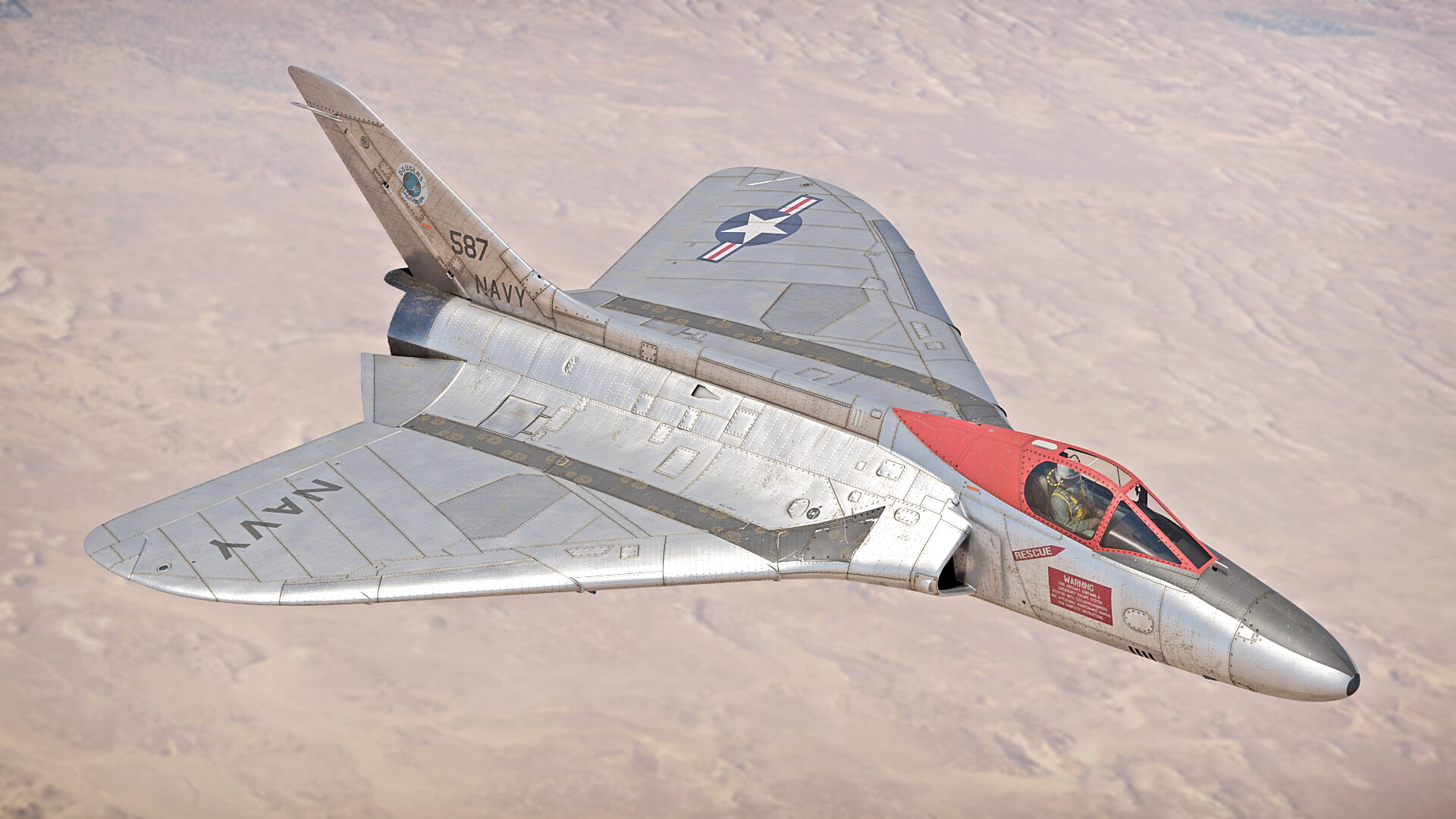
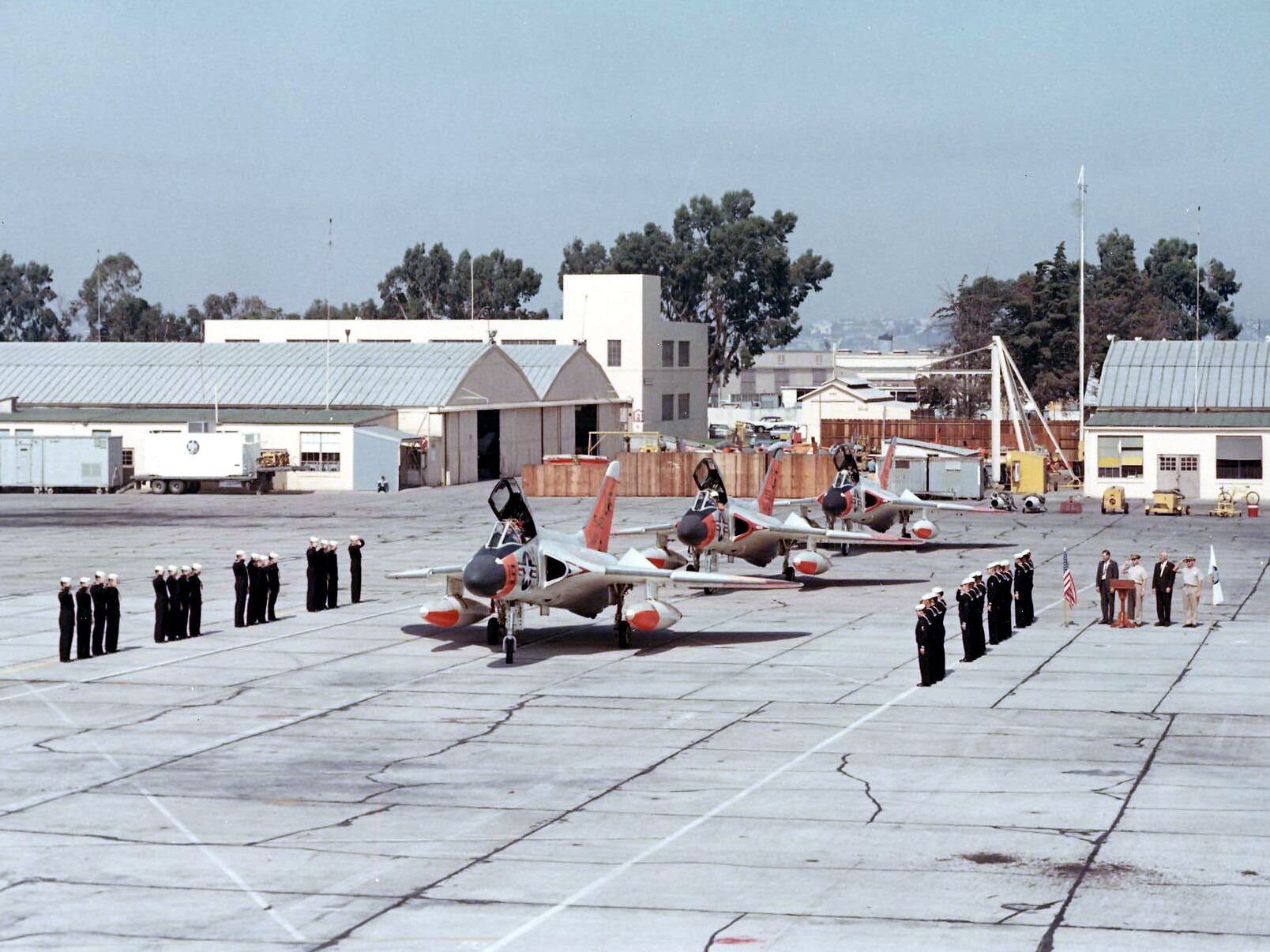
The F4D-1 is the only carrier-capable delta-winged fighter which was employed by the US Navy. The plane itself represents the era of early jet aviation when designers experimented with unusual solutions. In the game, the F4D-1 Skyray differs significantly from other jet fighters and aircraft with similar wings. Like the latter, it can turn sharply toward the enemy, and it carries good weapons. However, its low maximum speed is disappointing, and like other delta wings, it quickly loses energy. So, how do you play it?
| Pros | Cons |
|---|---|
| Four AIM-9Bs | Rapid energy loss in turns |
| Powerful engine with good acceleration | Low amount of cannon ammunition |
| Good guns damage | Poor maneuverability at high speeds |
| Ability to snap the nose at the enemy | |
| Ability to hold inside the enemy’s turn circle at low speeds |
Flight characteristics
The F4D-1 is powered by a single Pratt & Whitney J57P8 jet engine that provides 7,270 kgf of thrust under ideal conditions. Its one of the better sides of the airplane, as apart from very slow speeds its acceleration is only exceeded by such dogfighting giants as the MiG-19 and some supersonic aircraft. That said, the acceleration declines at higher speeds due to the plane’s significant drag, and combined with the suboptimal maneuverability at such speeds, it’s not worth it to keep the plane flying fast. Although the F4D-1 accelerates better than most aircraft, it will still take a while to regain lost speed.
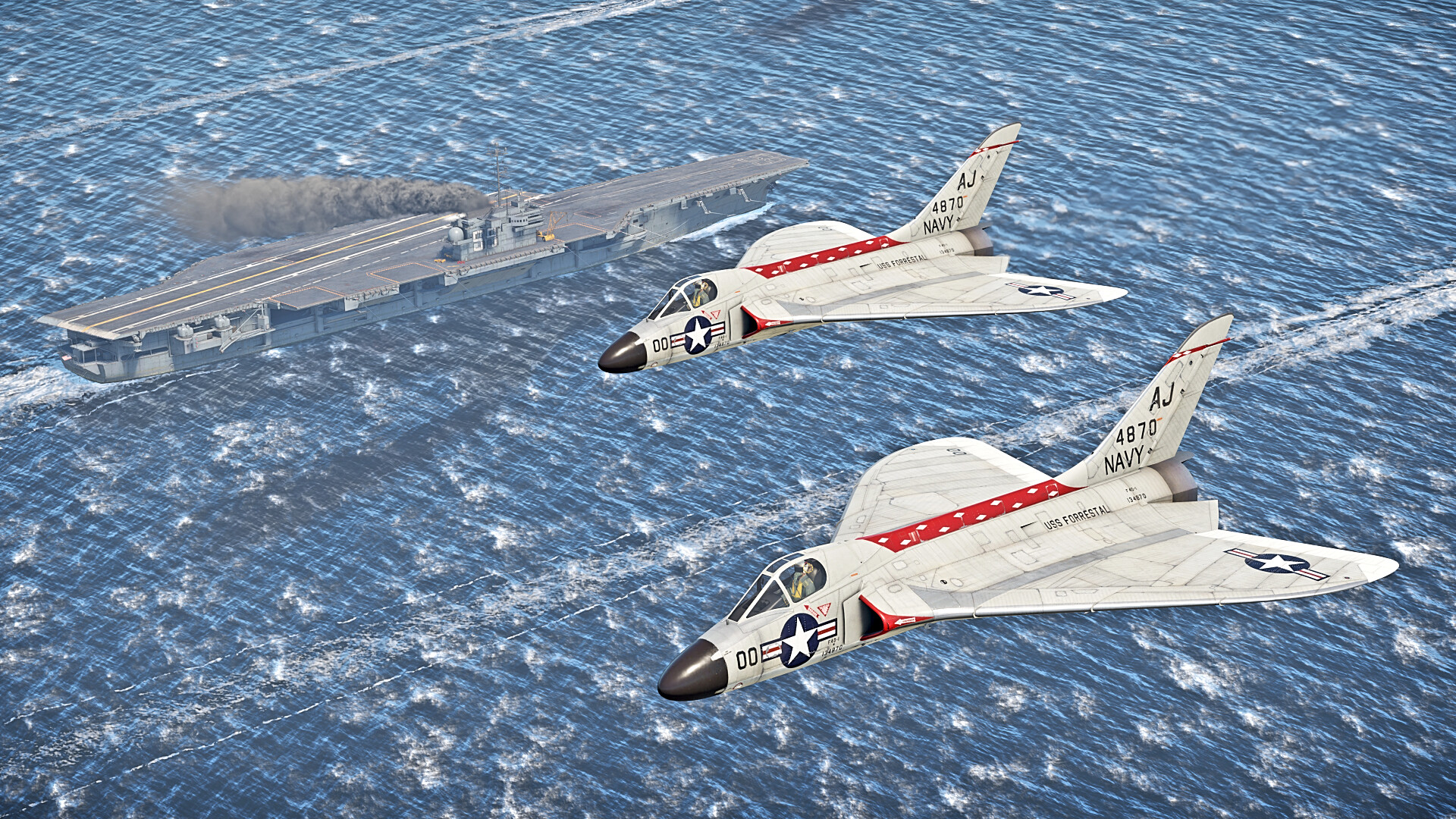
Along with good acceleration, the plane also has a good climb rate. The fighter will often find itself at altitude with its opponents, second only to the likes of MiG-19 or the F-106A.
On the other hand, maneuverability of the F4D is pretty controversial. At low speeds, around 350 km/h, the plane will be pretty decieving, as it will be able to fly where the mouse is pointed, but will be pretty unresponsive overall, especially with rudder movements. Moreover, at speeds lower than 180 km/h it might get into a pretty difficult stall, even in realistic battles. Even then, if the enemy got just as slow, the F4D will be able to stay inside their turn circle.
At high speeds the F4D-1 also doesn’t turn well. At around 850-950 km/h it starts to compress a lot, to the point it becomes difficult to dodge even an AIM-9B. Not to mention it would be much harder to outturn even supersonic jets.
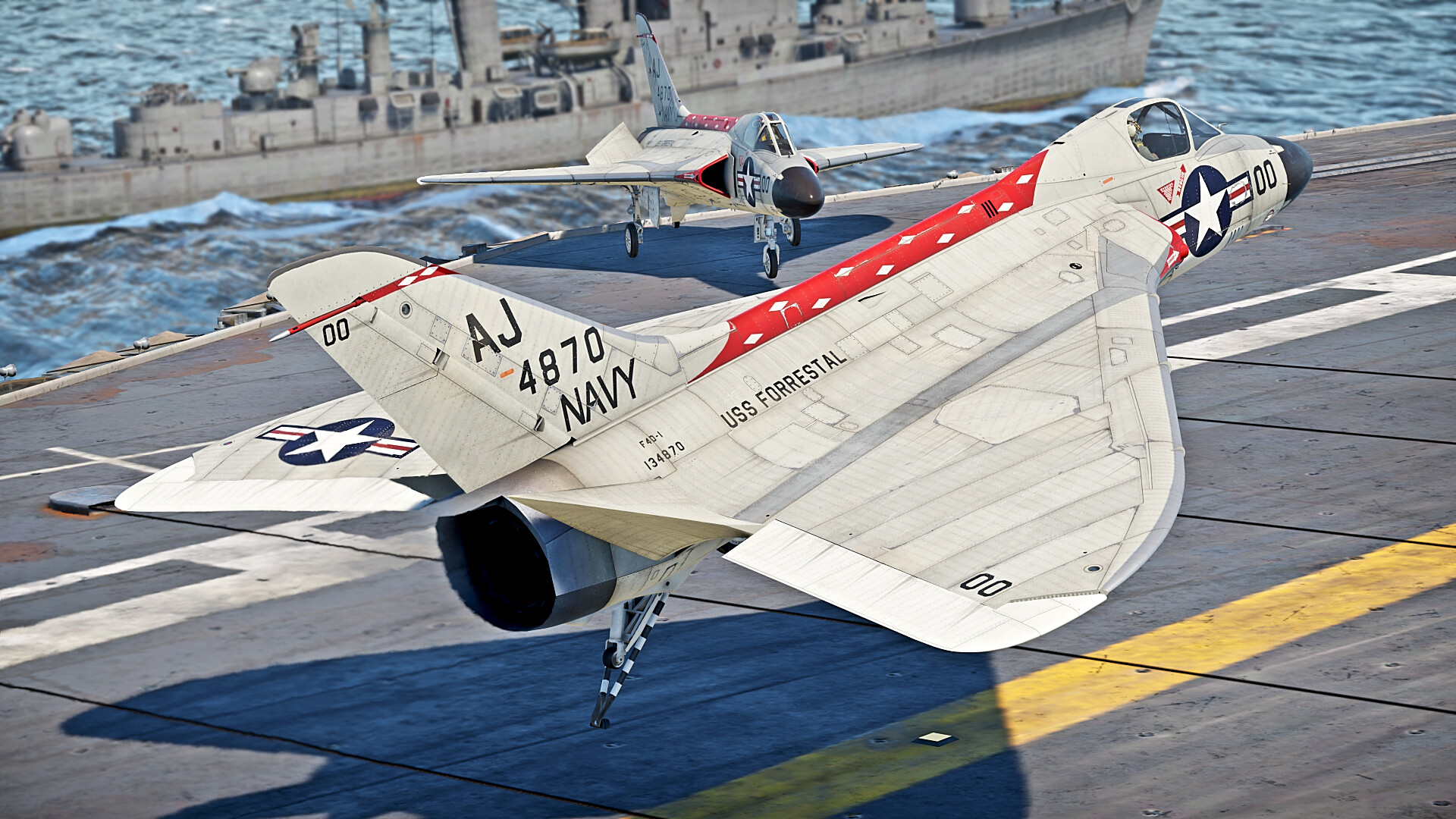
That makes 600-800 km/h the optimal speed to dogfight your enemies, as the nose will be very snappy and instantaneous turns will be very high overall, and on higher ranges of the spectrum, it will still be possible to dodge enemy missiles. But, going this fast does not prevent the F4D from losing a lot of speed, making a pilot rely on quick kills. Not only that, some planes will simply outturn the F4D, no matter what you do, for example, the Me 163 or the MiG-17, while others will be able to energy trap it, mainly MiG-19s.
On the offensive, the F4D is still very dangerous to any plane on the enemy’s six because it will be almost impossible to make it overshoot. And its snappy nose will give you plenty of time to make a kill. In defense, however, it can only rely on flying slowly, which in a normal match usually means getting shot down by a third party.
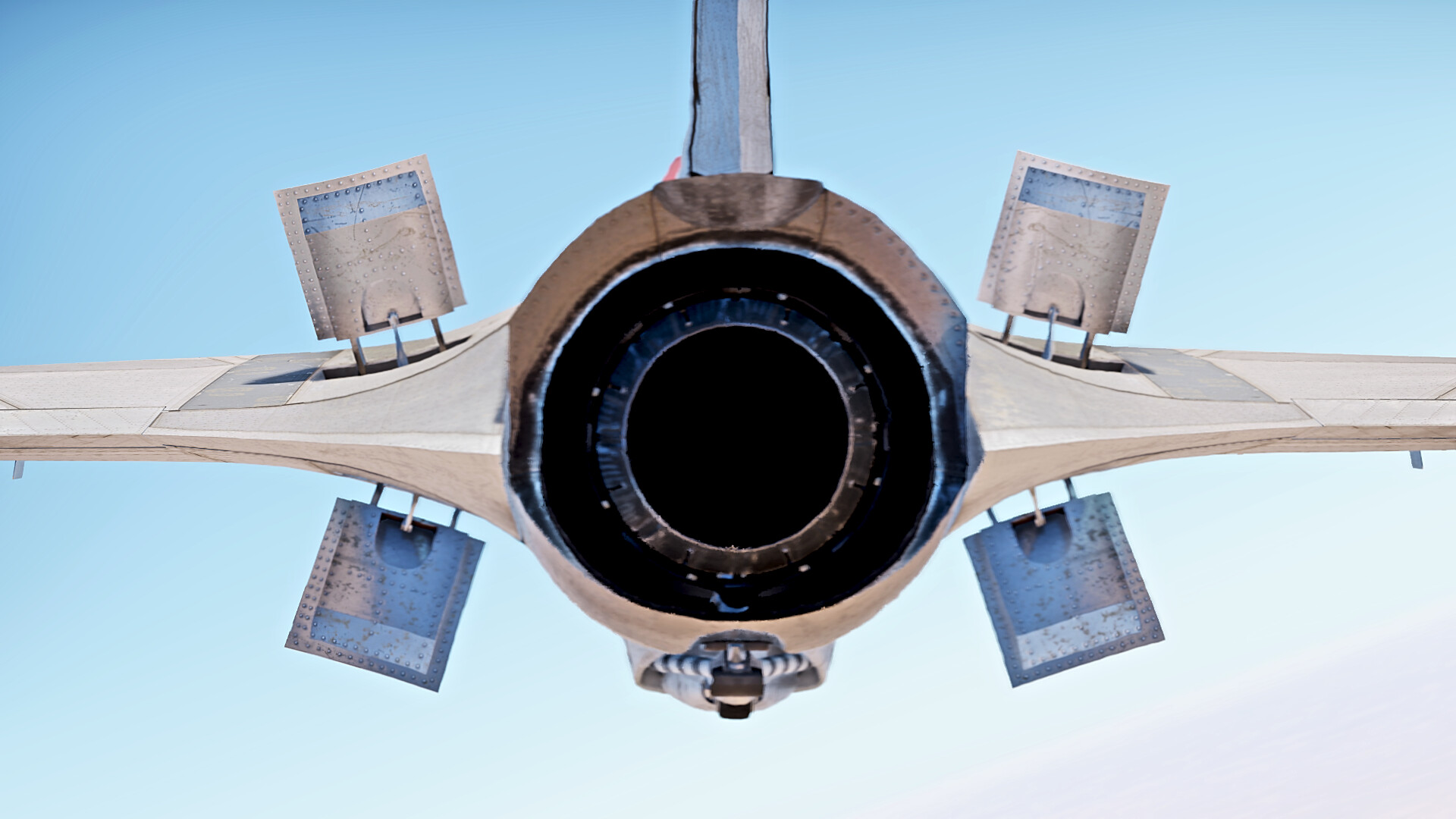
The F4D has unusual flaps near the engine exhaust that are impossible to rip but limited by possible extension speeds. They could be useful in battle, but they just make the plane lose more speed and don’t solve the issue of an unresponsive rudder. The landing gear deploys and retracts quickly but rips at speeds over 400 km/h.
Armor and survivability
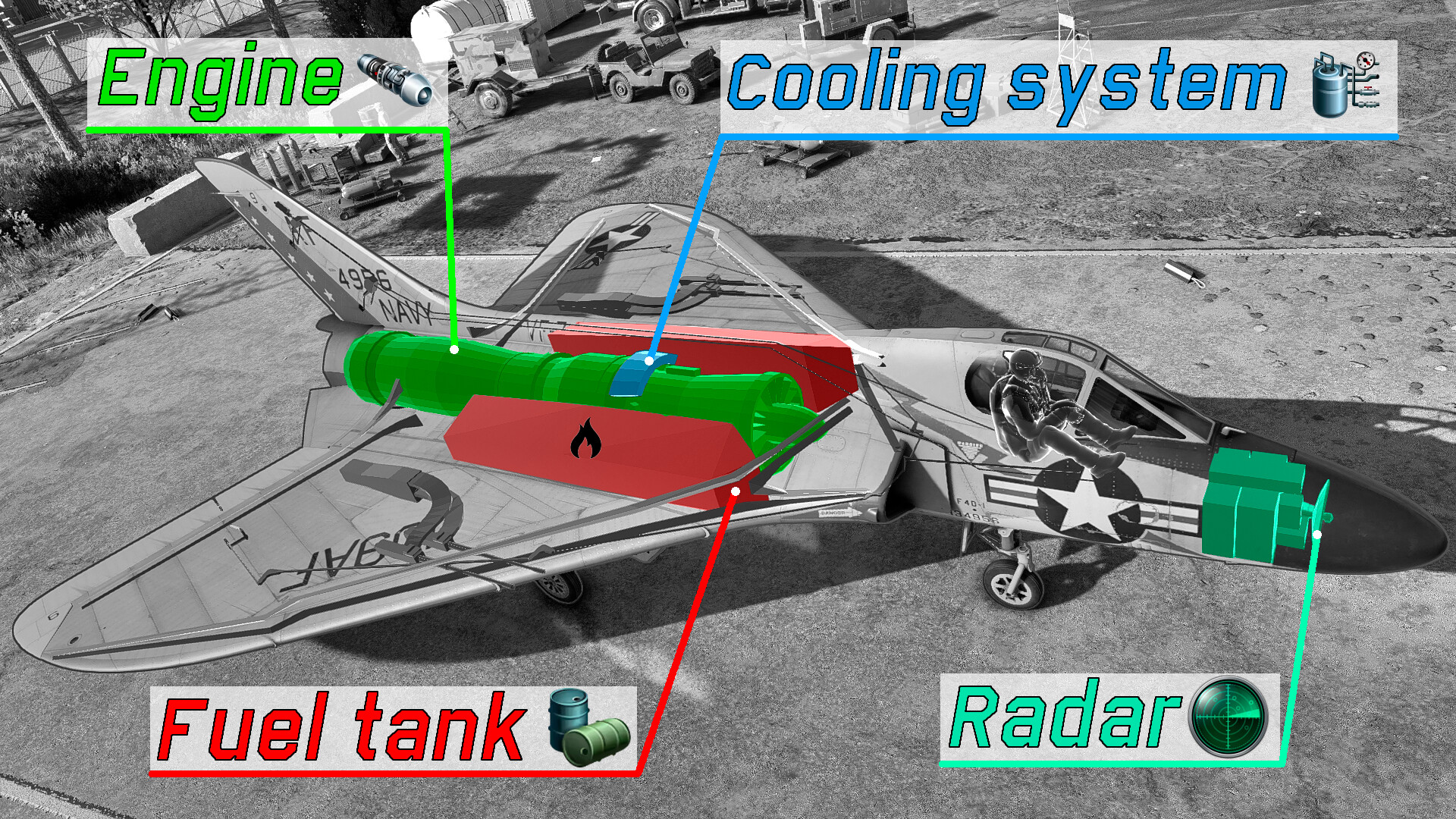
While all jet aircraft have low survivability, the F4D has it worse. The plane has huge wings that easily break from enemy .50 caliber fire. Even if that doesn’t happen, a damaged wing decreases the plane’s flight characteristics so much that it is effectively out of the match and must land. The only notable upside is that the fuel tanks are located closer to the center of the plane and don’t catch fire that often. The plane also lacks flares, making it almost impossible to dodge Shafrir 2 missiles and the like, for example found on Ayit. The plane also lacks RWR, although radar missiles are very rare.
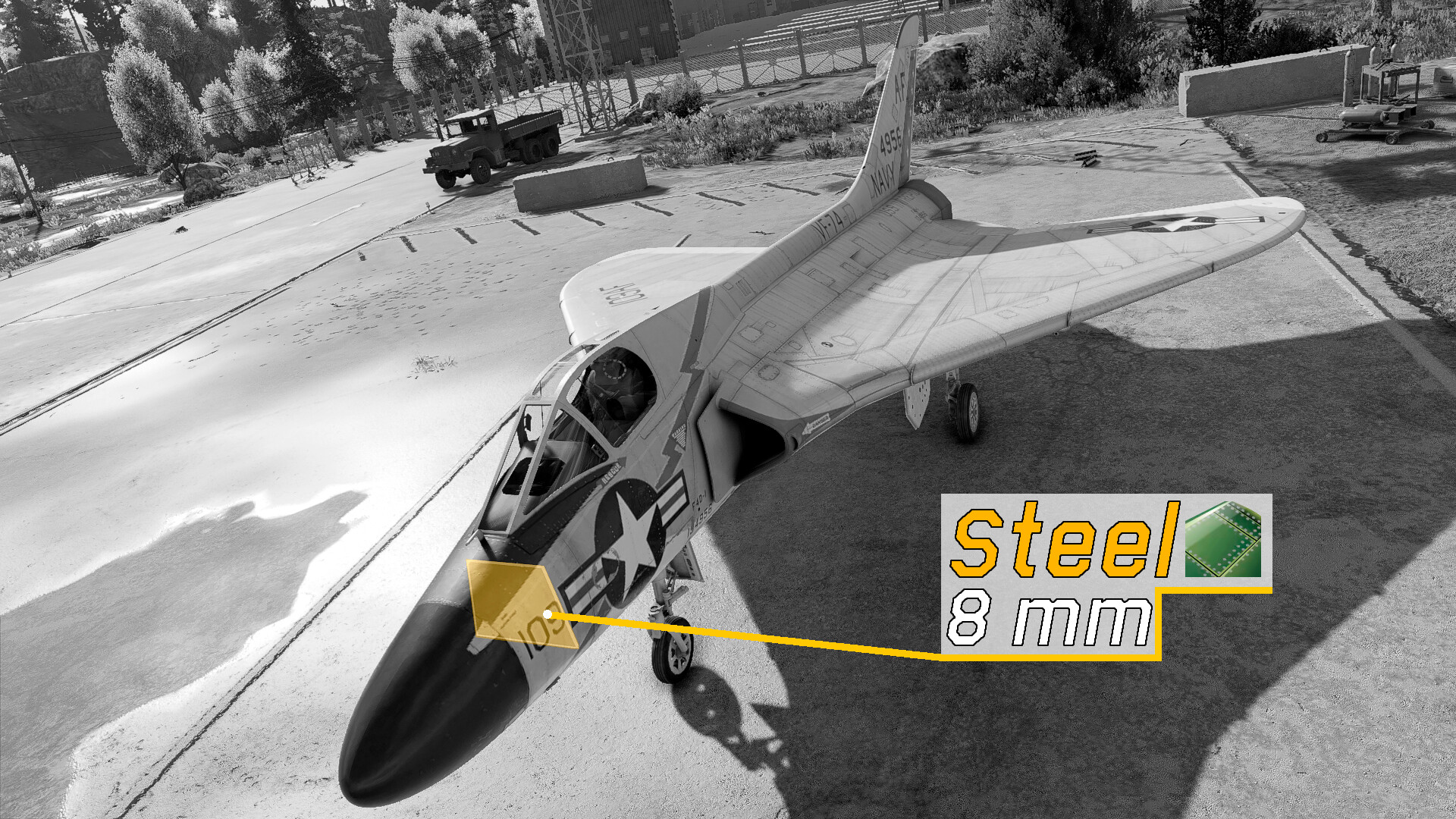
The F4D also has a single 8 mm plate in front of the pilot as its armor, but it will hardly protect from any enemy fire.
Weaponry
Cannons
The F4Ds main armament is represented by four 20 mm Browning-Colt Mk12 Mod 0 cannons, two per each side of the wing. Each cannon has merely 65 rounds of ammunition, amounting to a total of 260 shots. Such small ammo forces you to shoot with small bursts, as otherwise it will be gone very quickly. It’s even worsened by their far position into the wings, but at least their ballistics are not bad.
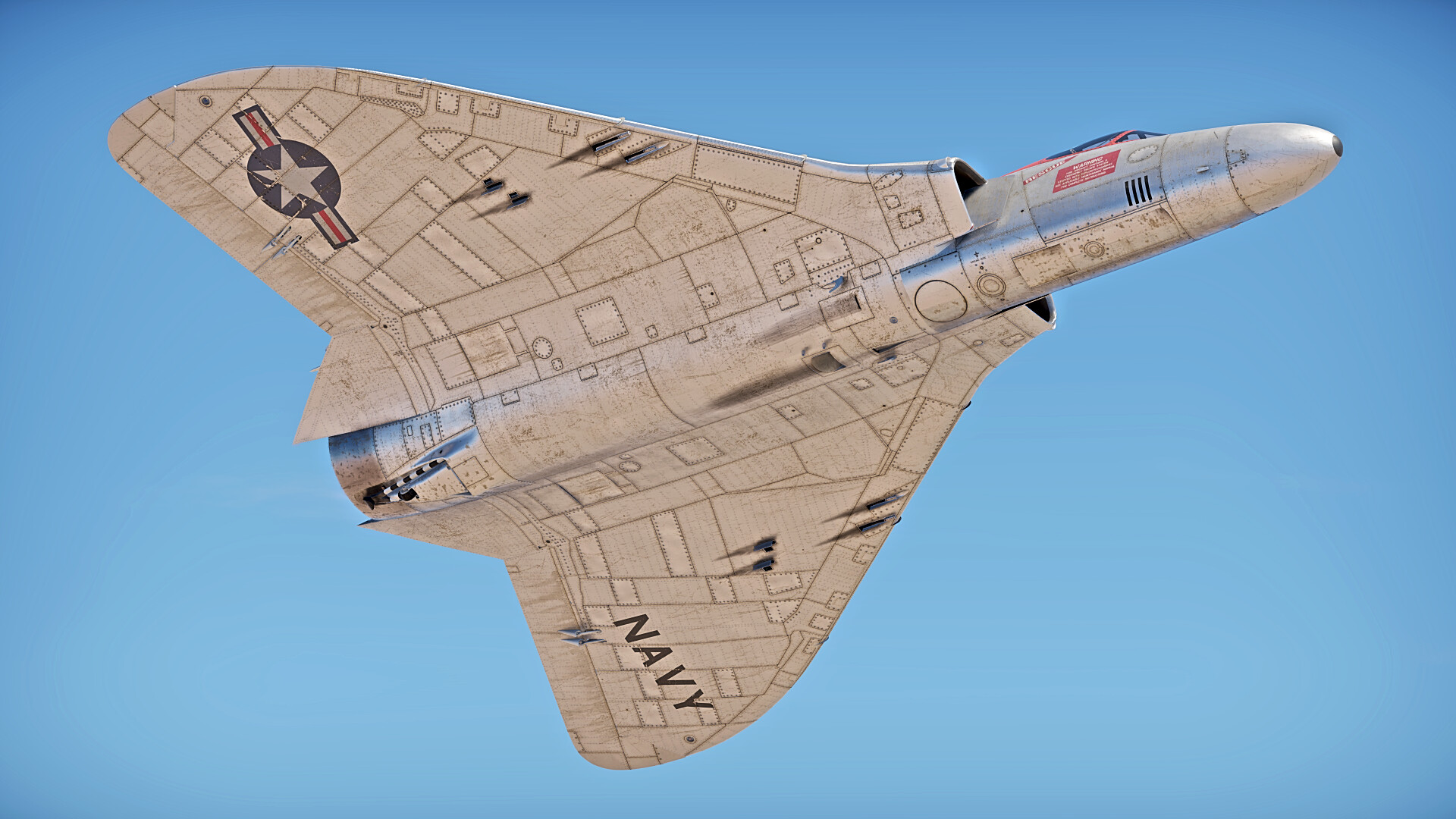
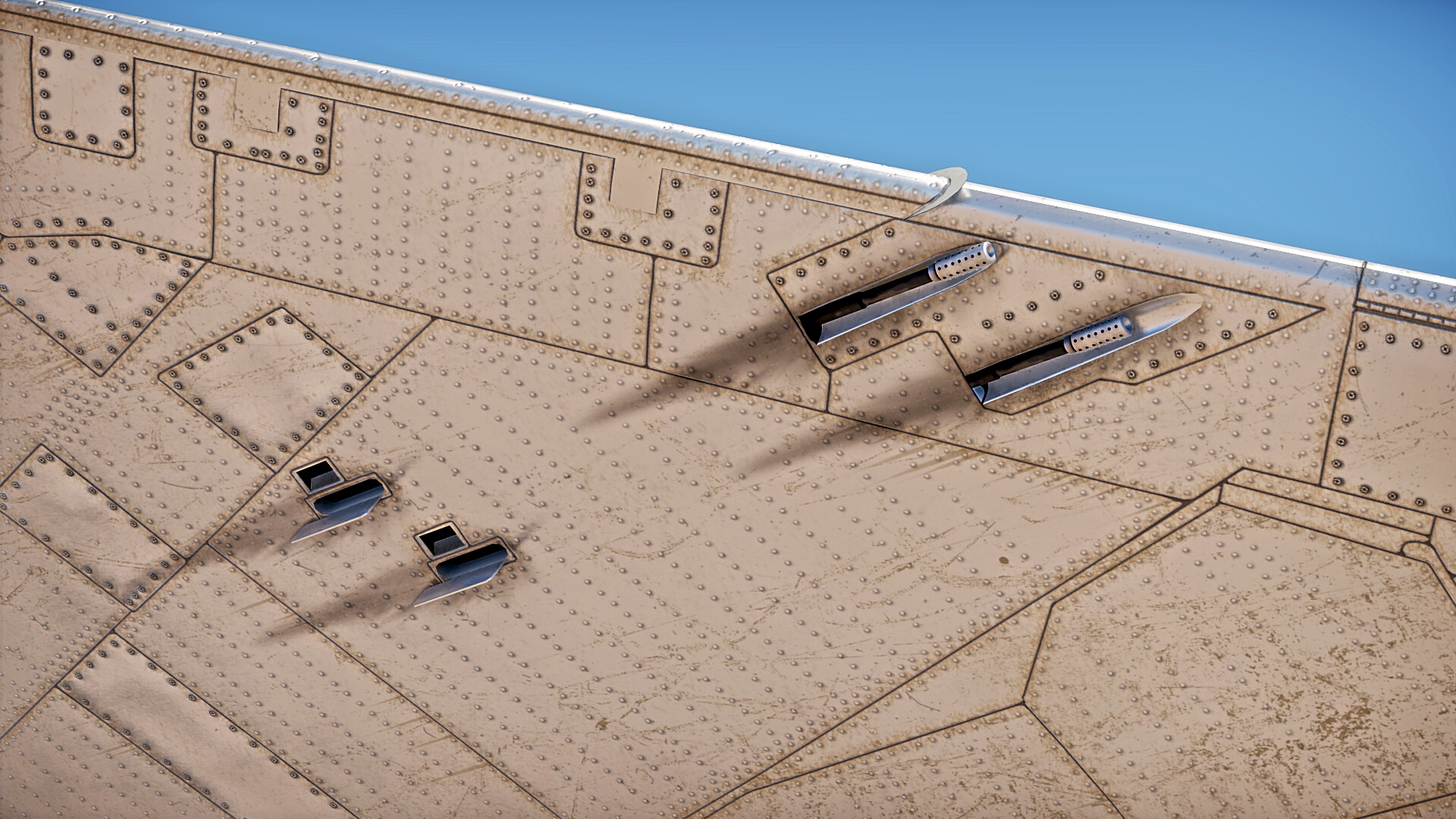
Belt selection is pretty telling to how the game names them. Air target belt is best suited for air combat, often damaging wings and setting enemies on fire. Ground targets belt is best suited for ground combat, but with low ammo and relatively small penetration, the guns are pretty bad for attacking ground vehicles.
Suspended armaments
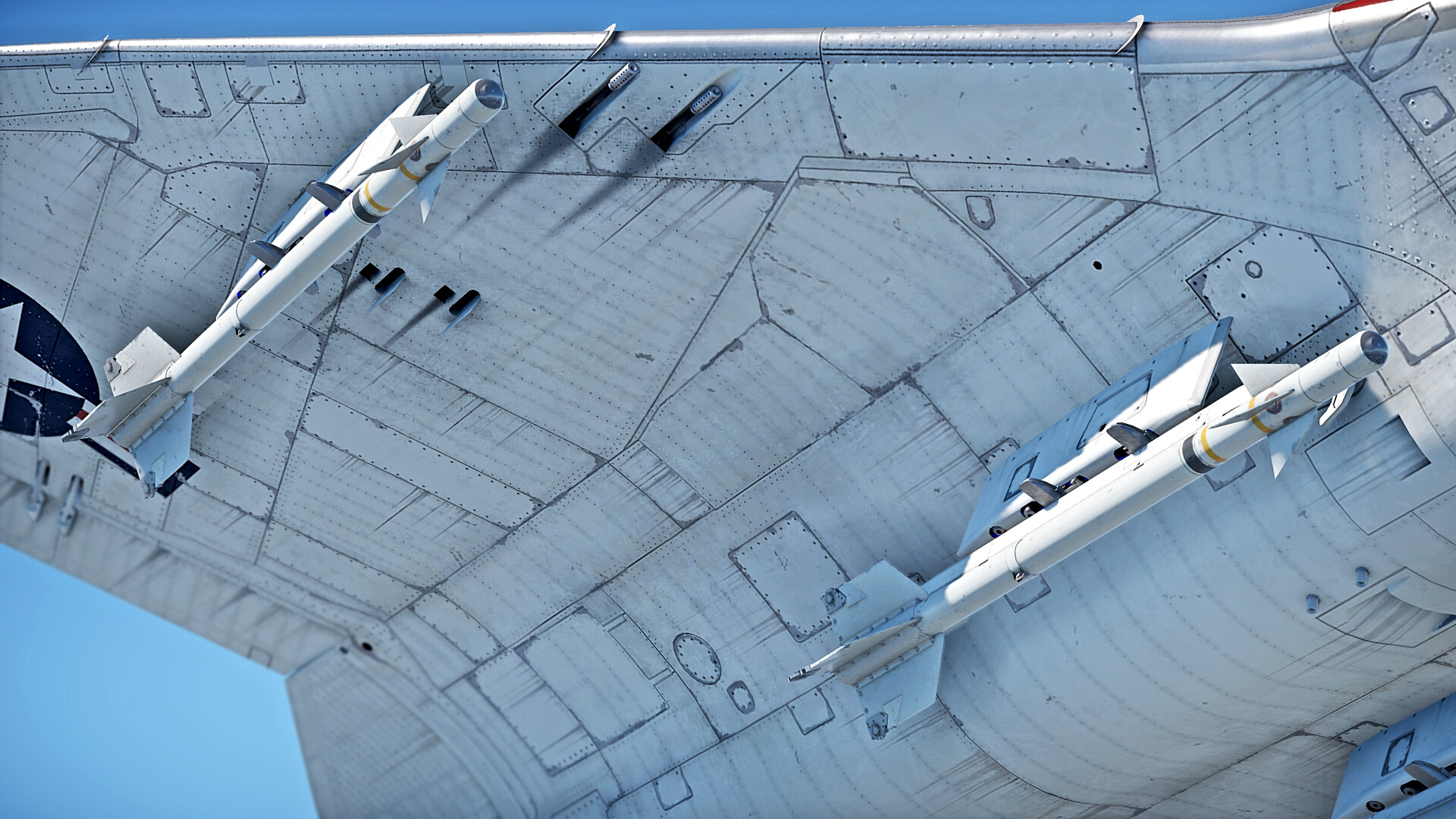
The Skyray’s suspended armament options are limited. For air combat, it has four AIM-9B Sidewinder missiles. These missiles can be used effectively against distracted enemies, enemies without energy, at extremely high altitudes, and against bombers like the Yak-28B. However, the most common use is forcing the enemy to dodge the missile to catch up to them. Since flares are uncommon, a launch from 700 to 1,300 meters will have to be defended against.
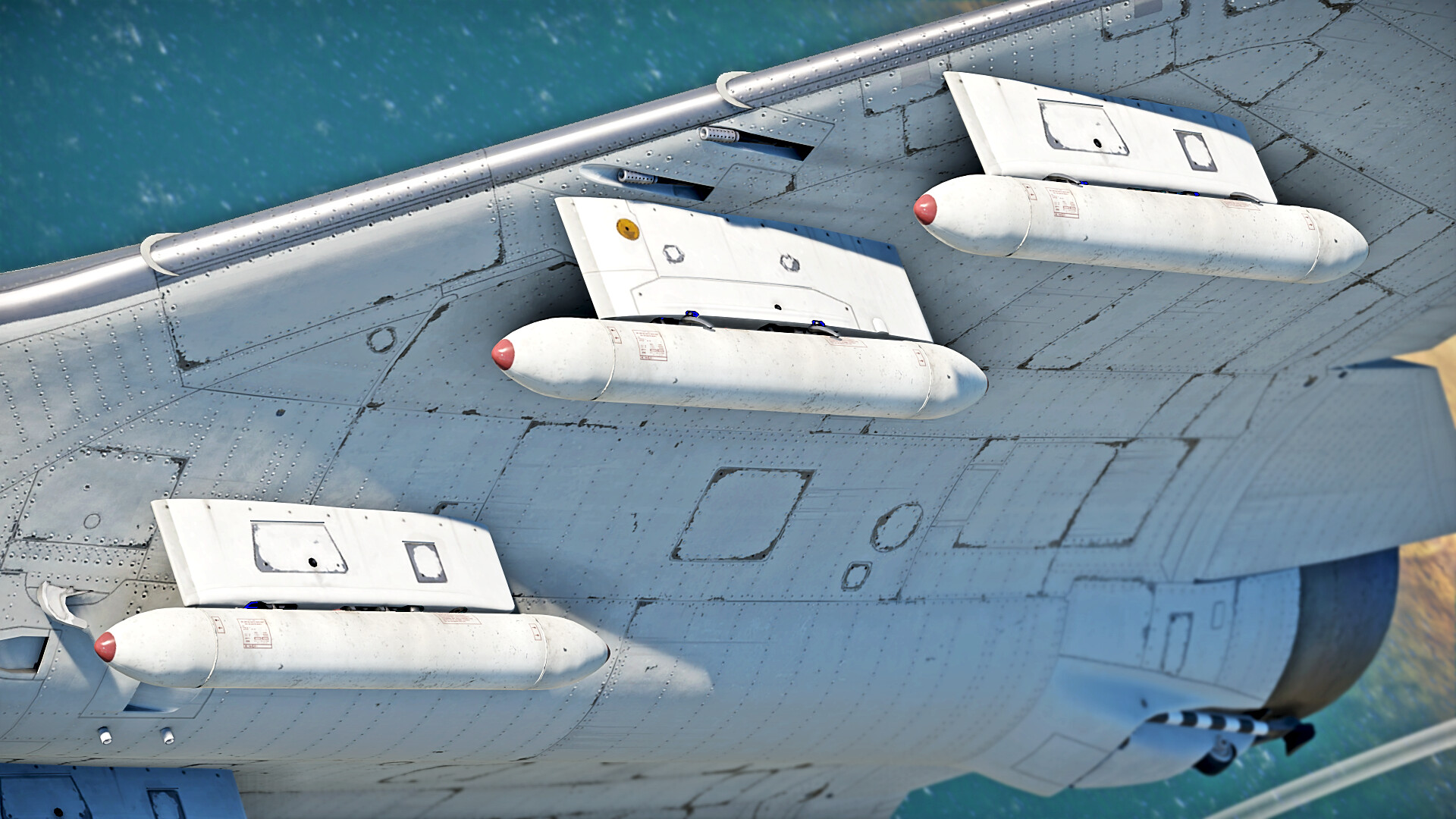
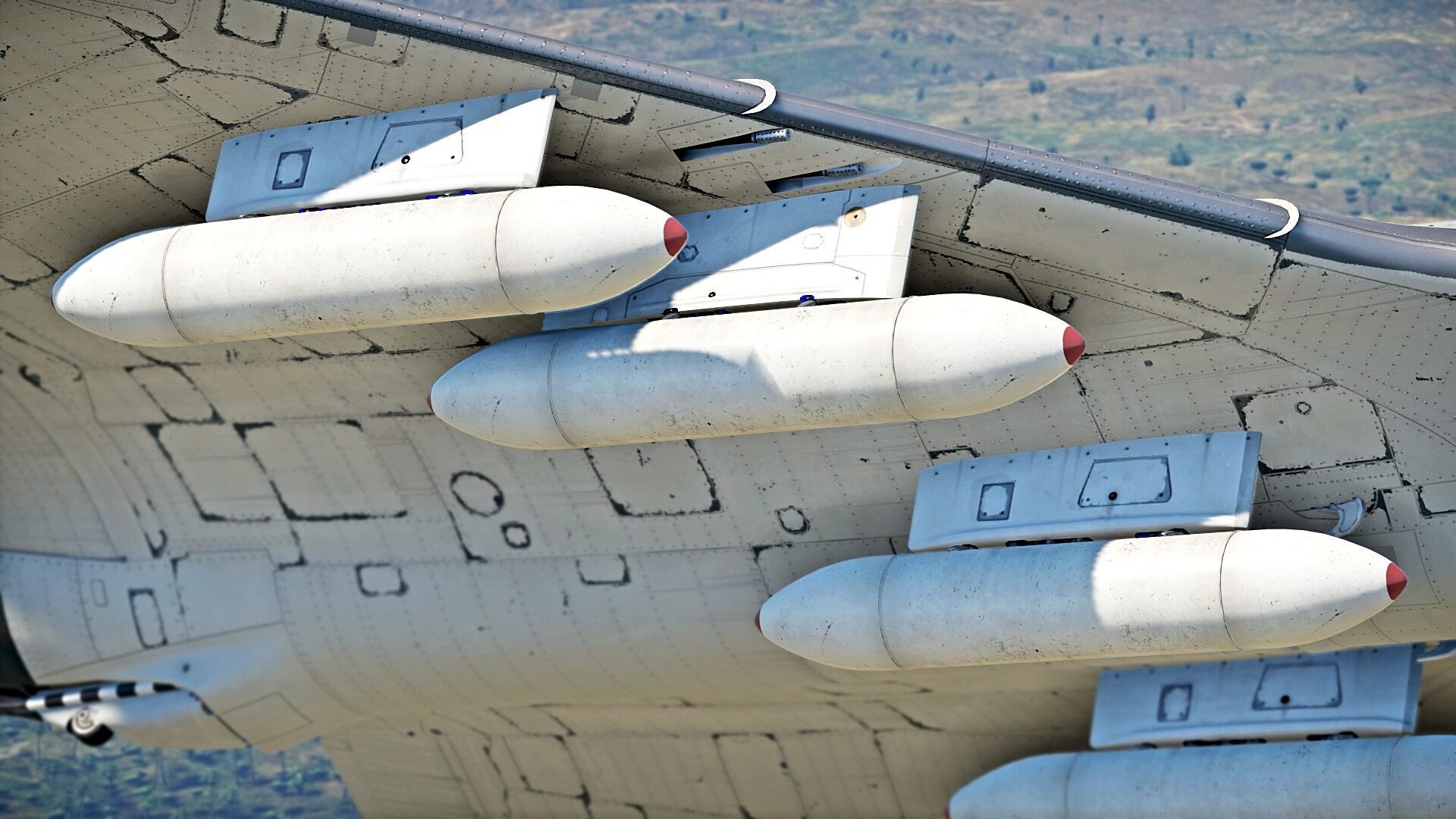
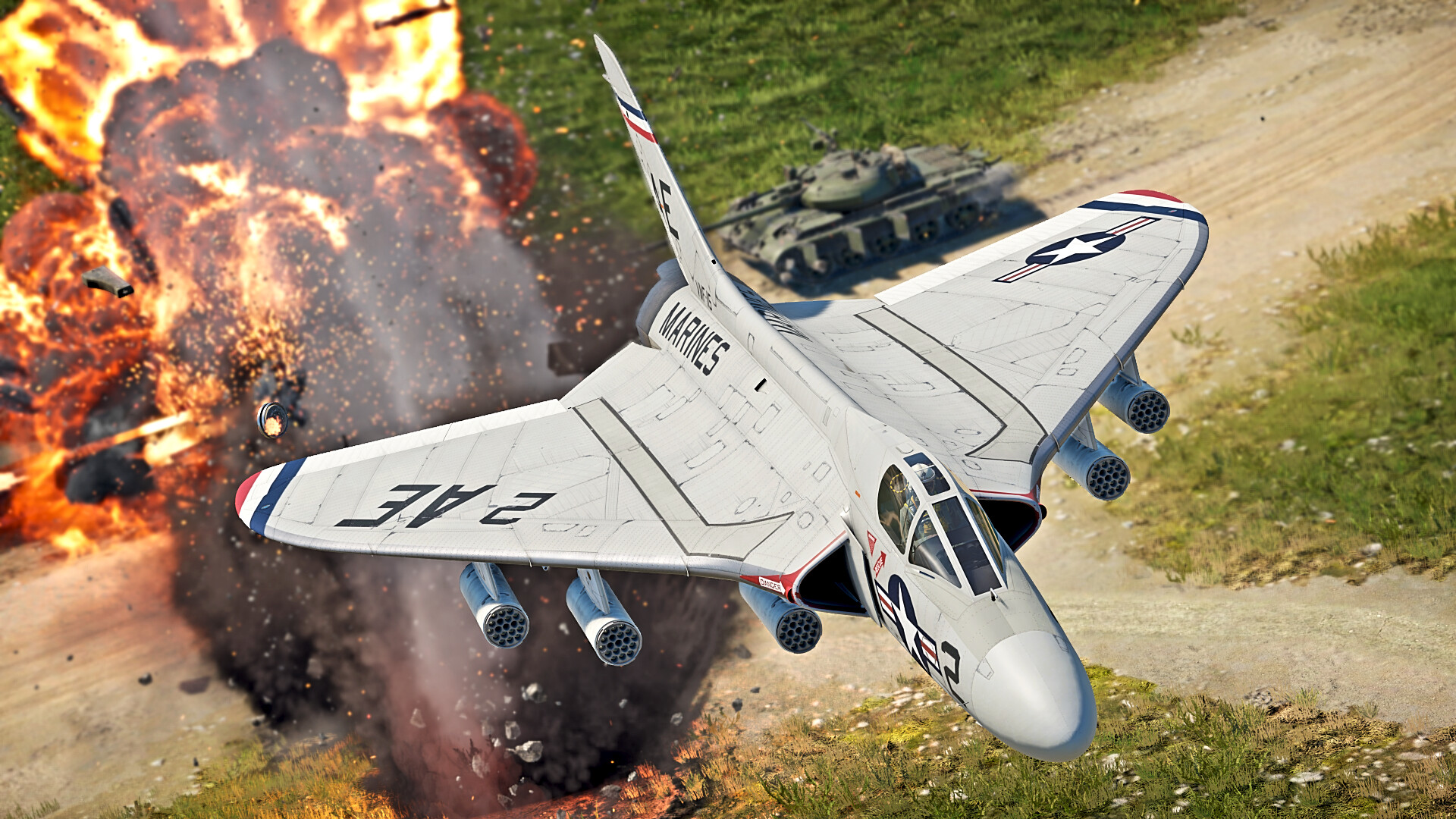
For attacking ground targets the Skyray can use up to 114 FFAR Mighty Mouse rockets in 6 containers. As mixed battles are saturated with big amounts of SAMs and AA guns with HE-VTs, it will be pretty hard to get close for a launch, but if you do the rockets are pretty easy to aim and can easily penetrate most of the enemies. Note that the plane lacks a ballistic computer.
Usage in combat
Air battles
The F4D-1 is a unique plane that does not allow you to force your playstyle onto it. With its uncomfortable main armament and challenging gameplay in a defensive posture, the Skyray is best used to support your team by shooting down distracted enemies. It can still 1v1 many planes, provided no third party joins the fight, which often happens. In any case, 20 minutes of fuel is more than enough for an average battle.
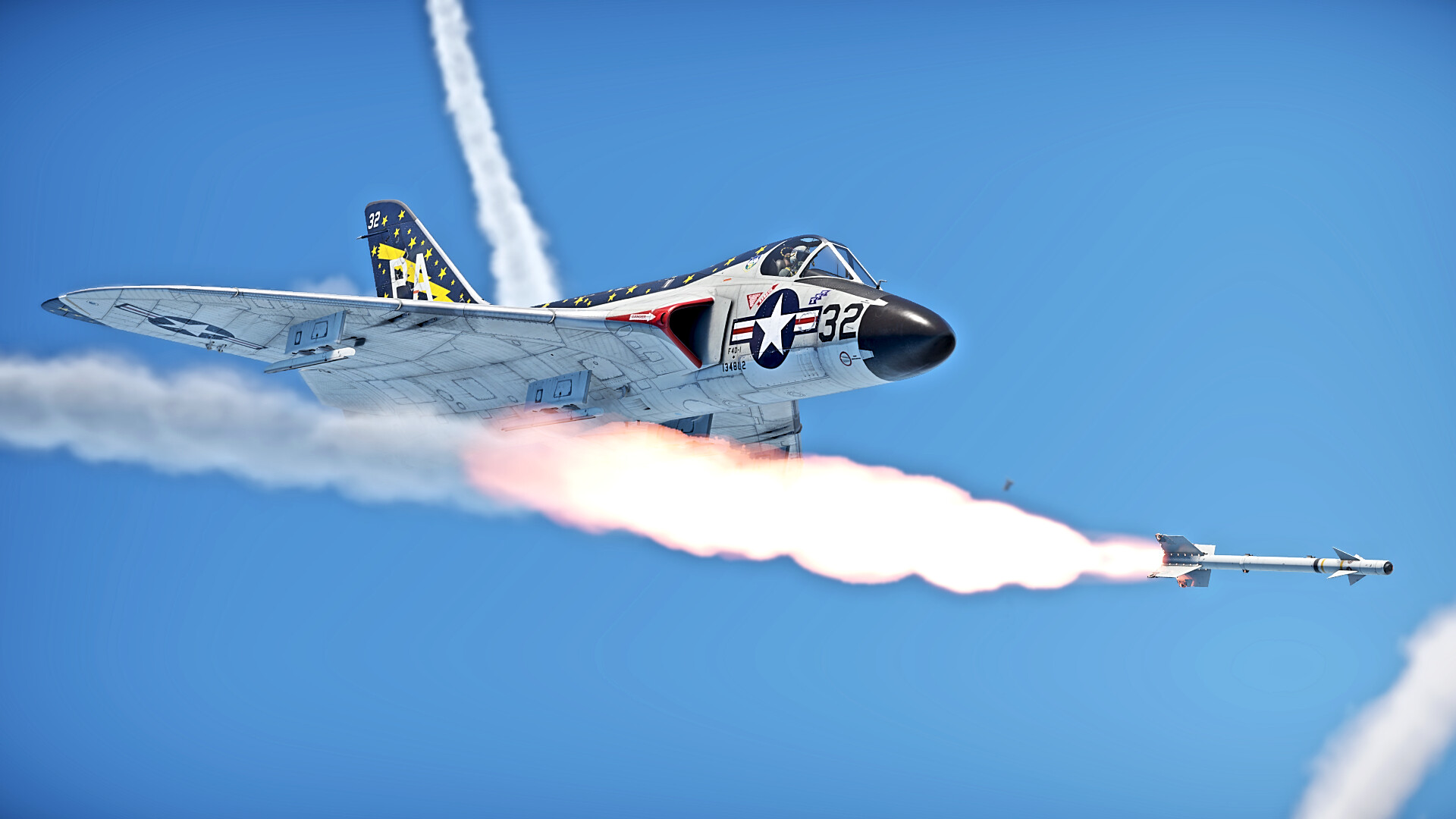
The main tactic is to climb to an altitude of 3-6 km, which is possible thanks to the fighter’s high acceleration. Then, you can launch missiles early at enemies who don’t see the F4D or are distracted by your allies. The more enemies you shoot down early on, the fewer you’ll have to shoot with the uncomfortable 20mm cannons.
But sooner or later the enemy will be able to force the Skyray into a combat, which will ideally happen when it flies at 600-800 km/h. Then it will be possible to quickly turn towards the enemy and shoot them down, with exception to planes alike to the MiG-17. Most other aircraft, despite F4D’s poor defensive abilities, can still be defeated.
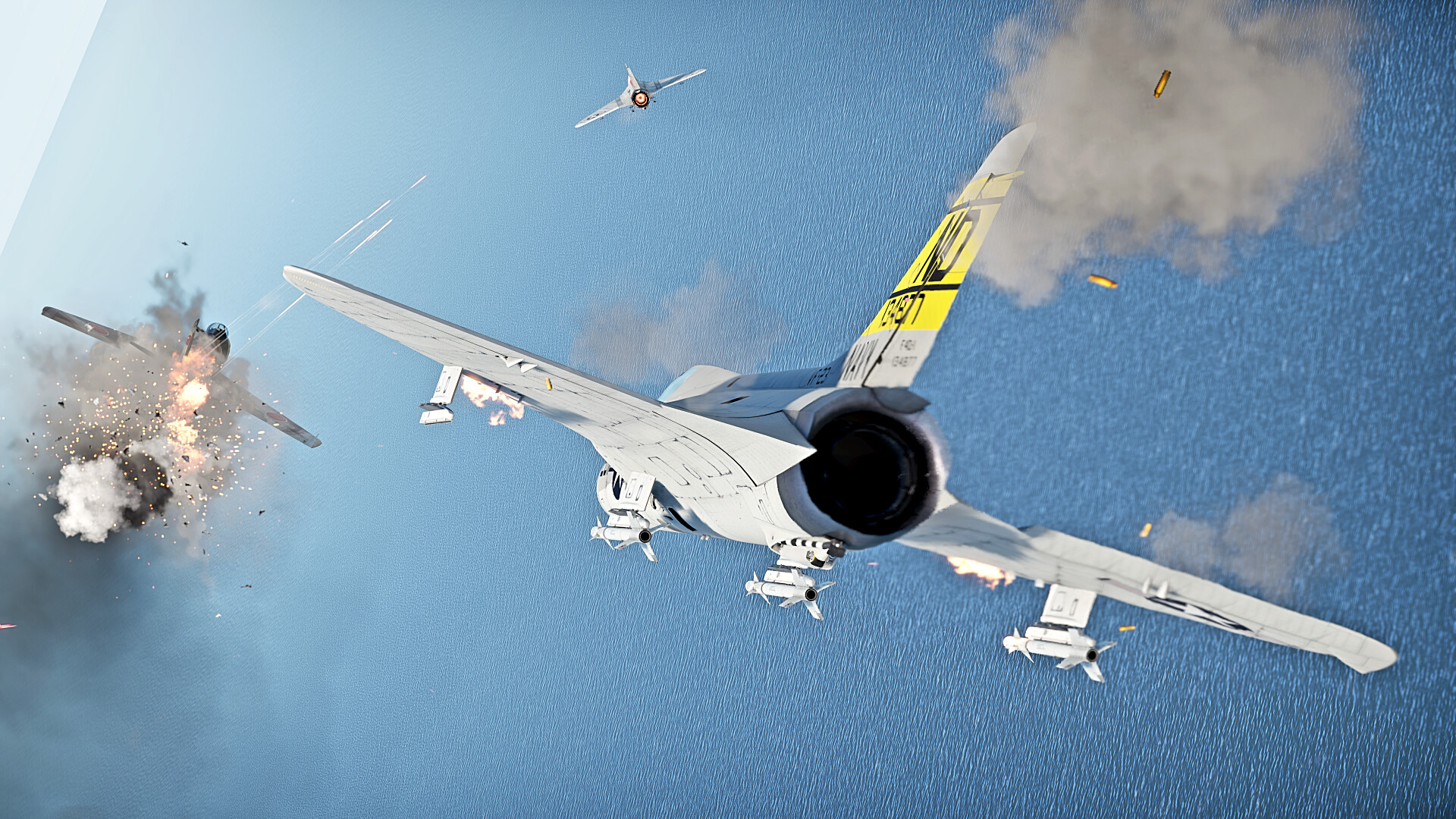
For example, MiG-19s are often flown by inexperienced pilots who can be shot down after making them fly past or by shooting a missile when they try to stall you out too aggressively. If that fails, you can always reset the fight when the MiG flies in another direction because the Skyray’s acceleration is high enough to do that. Just fly away and let them fly past again.
Low speed maneuvers are best avoided, but its not always possible to do that. Then it necessary to keep in mind that the plane will be pretty unresponsive and difficult to aim. But many supersonics like the MiG-21 can be easily outturned when you both are slow.
Mixed battles
In ground combat the F4D-1 is struggling, as it’s only really effective at shooting down other aircraft using the same tactics as in air battles. Its still possible to shoot at the enemy tanks with rockets, but that would force you to get pretty close to enemy air defenses. That is especially hard as the plane lacks a ballistic computer.
History
Towards the end of WW2, the Americans had captured a lot of advanced aeronautical technology in Germany, including Alexander Lippisch’s works on delta-winged aircraft. Douglas company was particularly impressed by those works and presented their design in 1947. Meanwhile the US Navy required a fast interceptor with a high climb rate to shoot down Soviet bombers. And here is where Douglas' project came in.
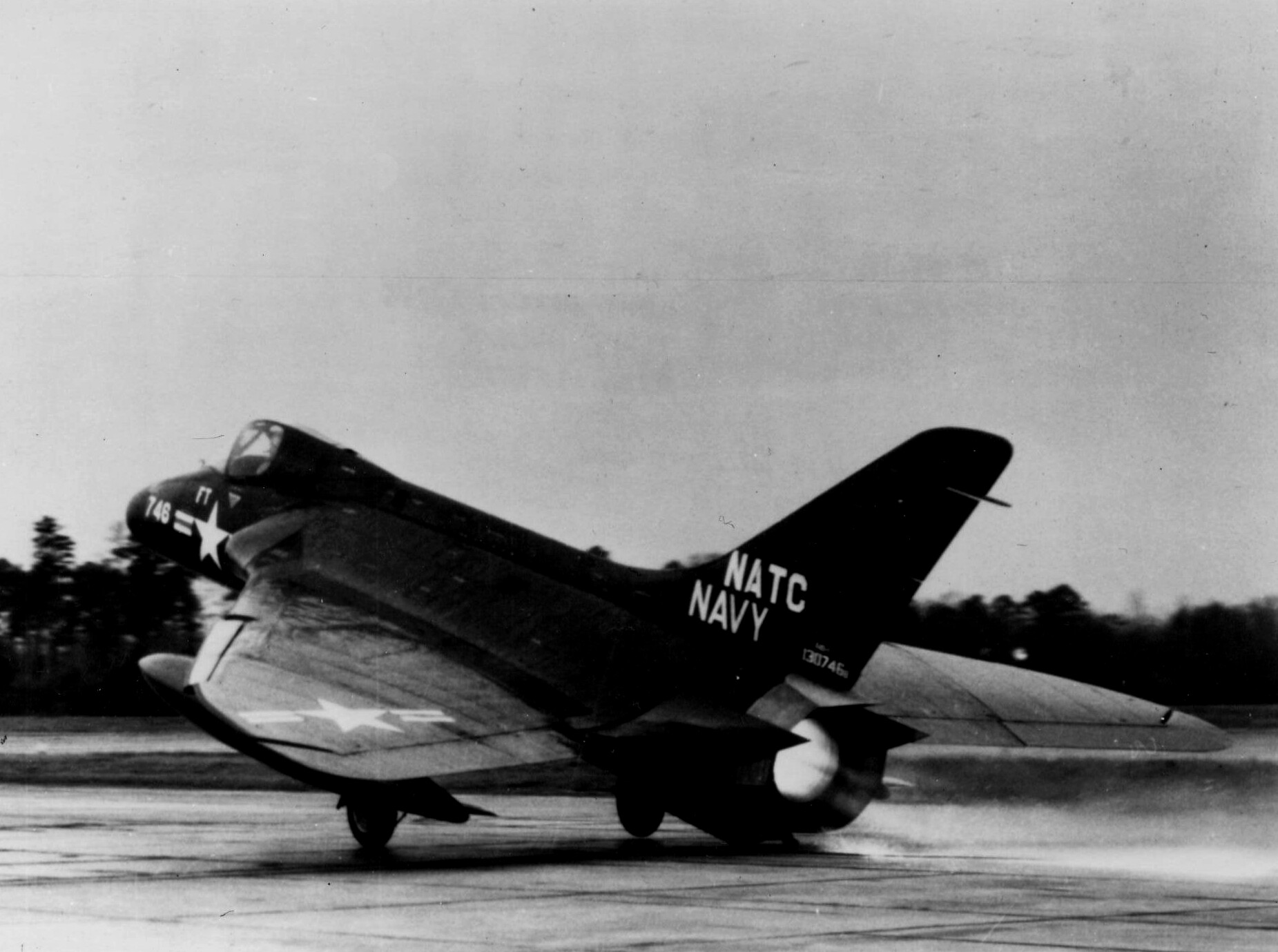
Works on creating the mockup lasted until March 1949. Douglas designed a thin delta-wing aircraft powered by a single Westinghouse J40 jet engine, which was supposed to be replaced by J57 by the time the aircraft was to enter service. Previous plans of putting two J34 engines were rejected. Its main weaponry was supposed to be unguided rockets, but it was later decided to use 20 mm cannons.
The maiden flight of the prototype happened only in January 1951, soon followed by the second prototype. This second aircraft set an absolute speed record of 1,211 km/h and 100 km closed course record of 1,171 km/h.
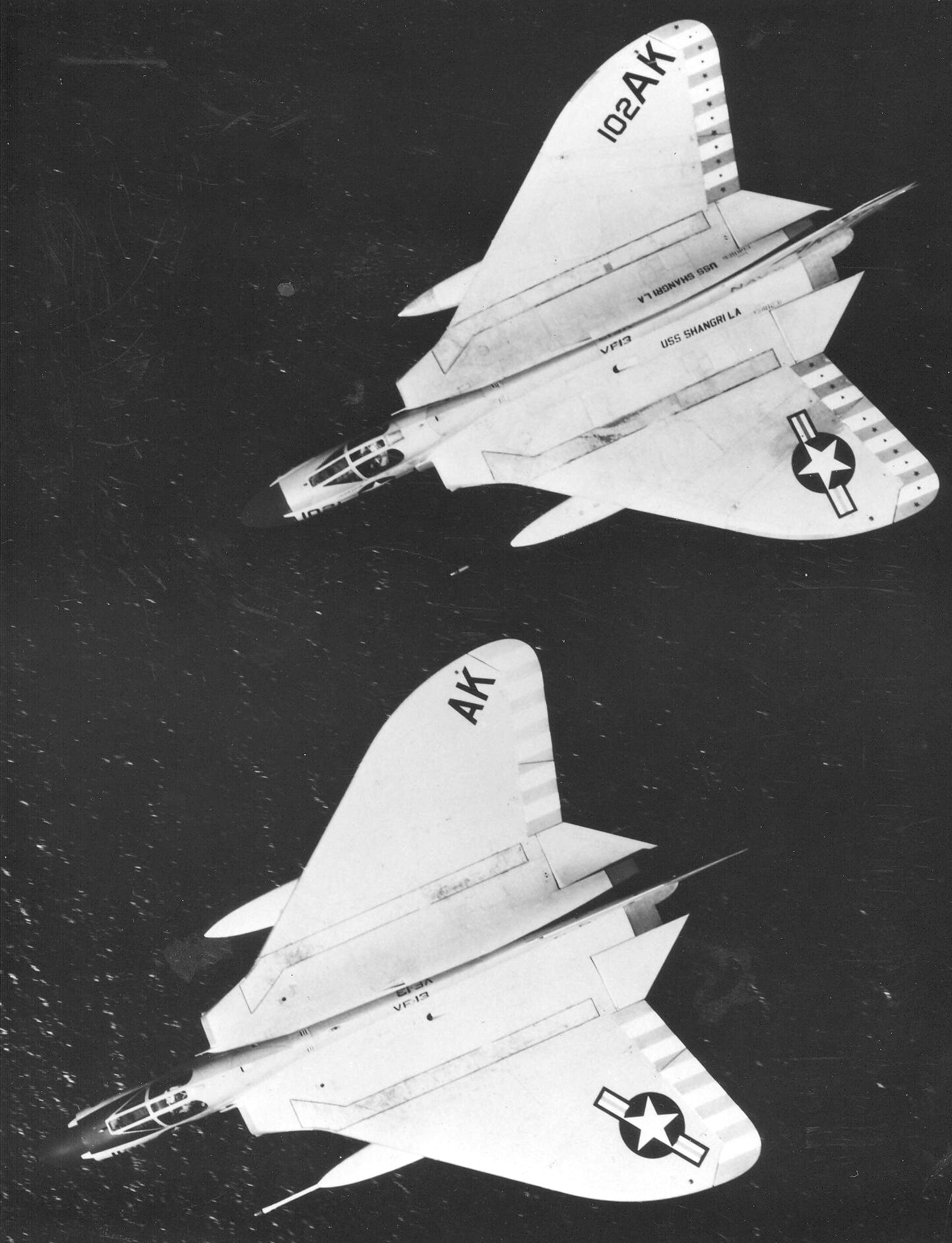
In October 1953, having improved the design and reliability of the plane, the F4D-1 was put into production, with the first production aircraft making first flight in June 1954. In 1956, the Skyray finally entered service. There were only 420 F4D-1s made, with it being the only mass-produced variant.
The F4D-1 was also the only delta-winged aircraft to see service in the US Navy. It was used by the Navy and USMC for 8 years, but didnt see any combat. The closest the plane got to a conflict were multiple scramble actions during the Taiwan Strait Crisis in the late 1950s.
Sources
- Douglas F4D Skyray — Naval Fighters 13, Nick Williams, Steve Ginter
- Wikipedia
- Tamiya 1/72 F4D-1 scale model manual