
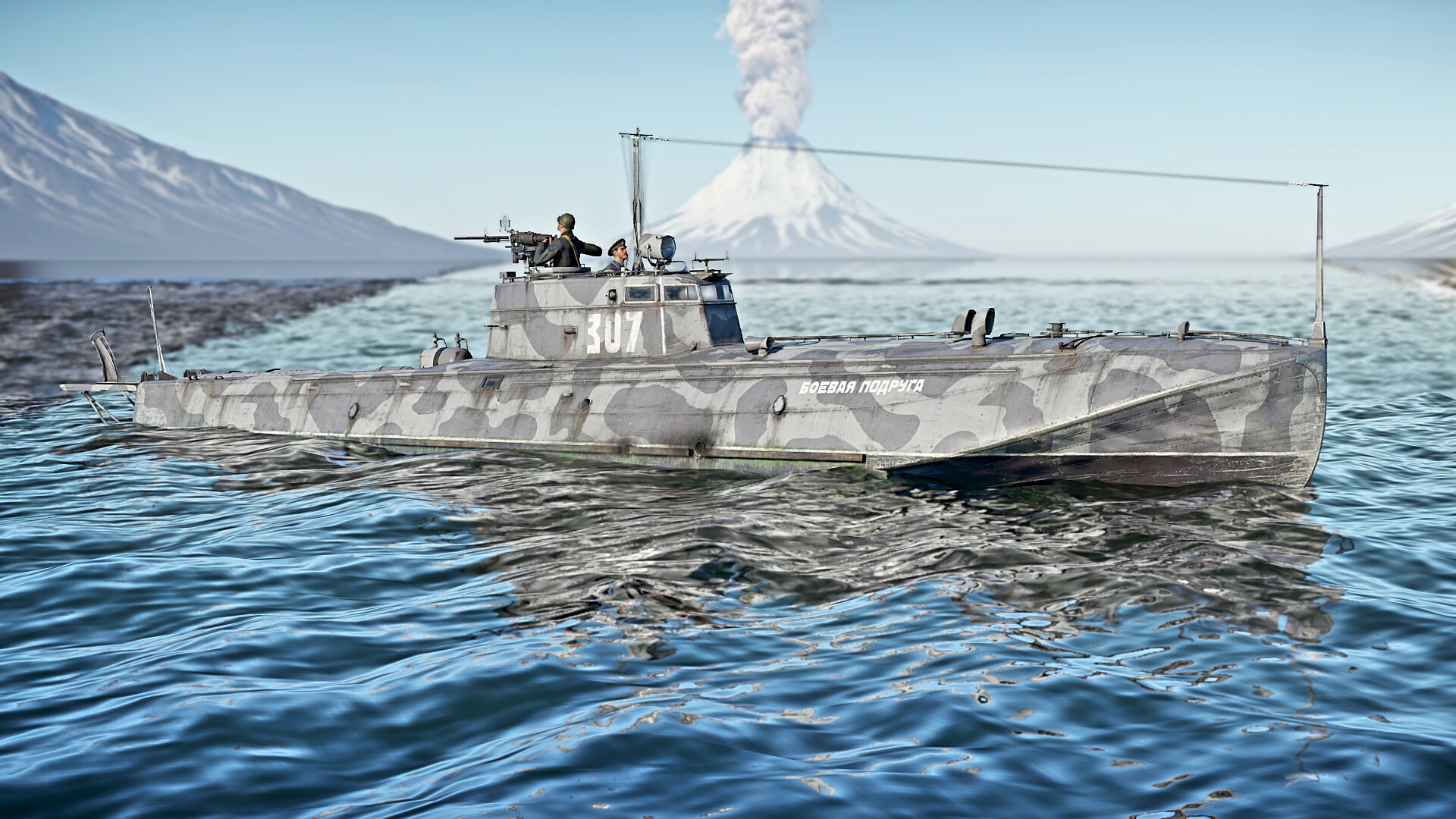
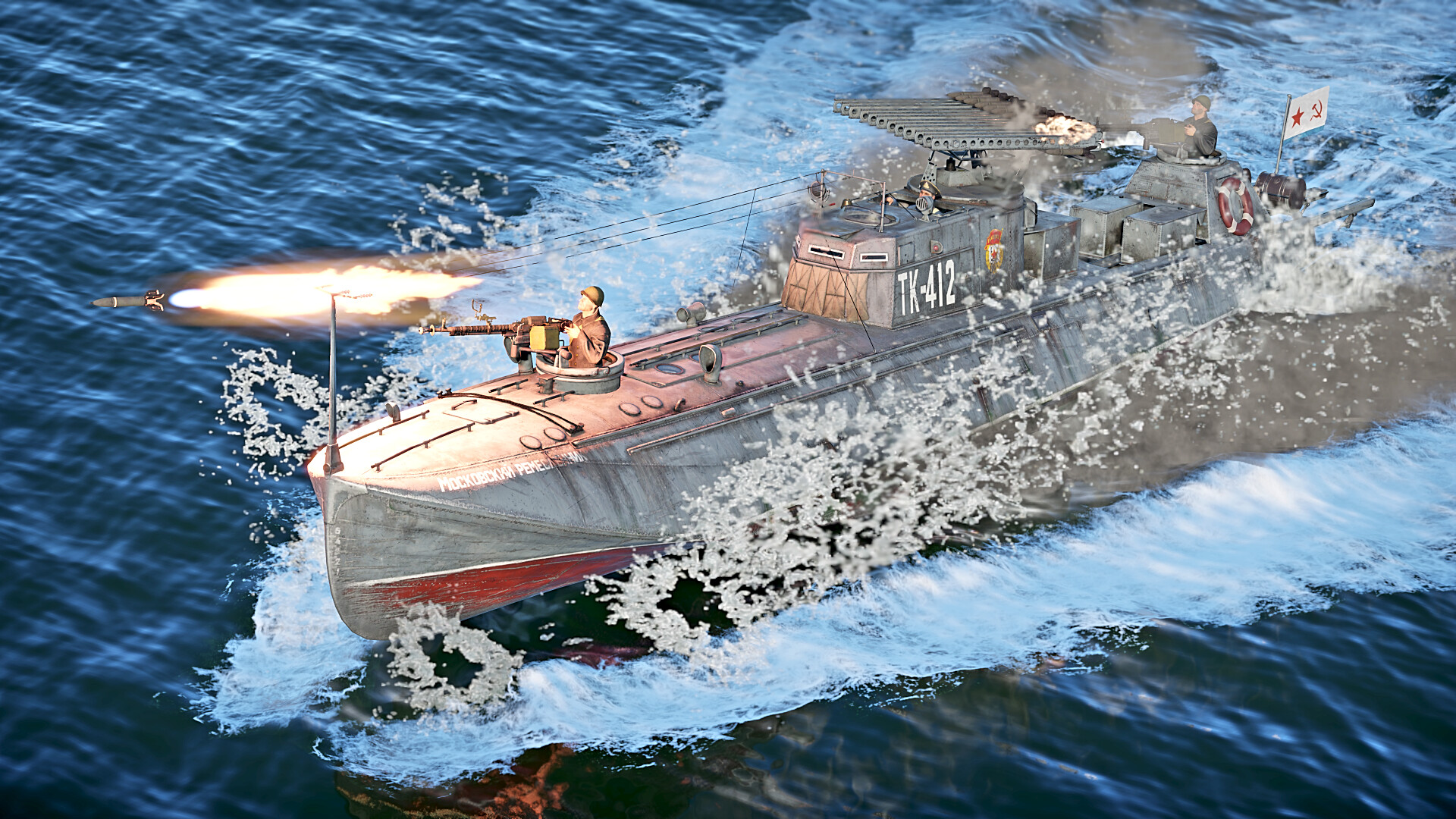
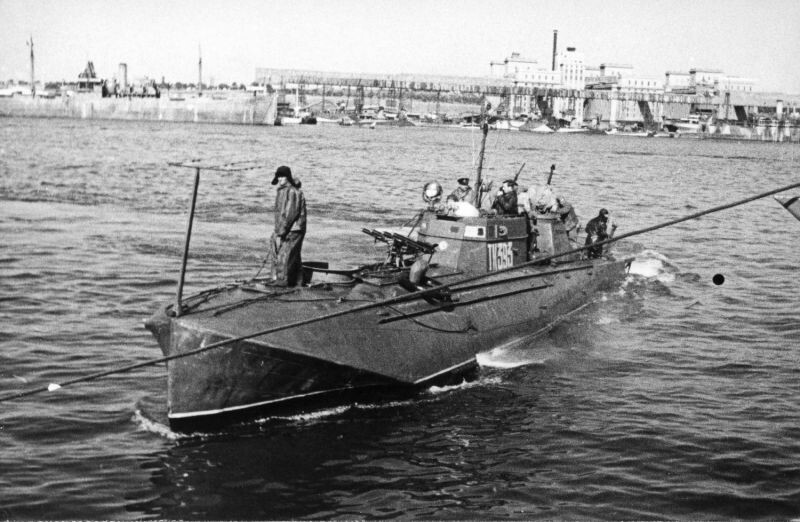
The G-5 class boats were the product of Soviet active coastal defense doctrine. To accomplish their mission, Soviet designers built the fastest torpedo boat of its time to attack large ships. However, this came at the expense of range and seaworthiness, negatively affecting the combat effectiveness of these vessels. In War Thunder, however, these two factors do not affect the G-5, which is a fast and maneuverable torpedo boat albeit with weak armament and low survivability.
| Pros | Cons |
|---|---|
| Very high speed | Overall weak armament |
| Comfortable maneuverability | Low survivability |
| Tiny size | Lack of torpedoes on TKA-412 |
| Good rockets on TKA-412 |
Armor and survivability
G-5 boats have virtually no armor. G-5 hull and superstructure are made of 4 mm steel, and captain's bridge is additionally protected by 5 mm armored glass. This "armor" is insufficient to protect against rifle-caliber machine guns and will hardly protect against shrapnel from distant explosions.
Survivability is also quite poor. The boat's crew consists of only six people, and a couple of hits to the bridge or turret are enough to disable the machinery. While the internal layout is spacious, it's important to note that all modules are above sea level, even when stationary, and the ammunition is stored on deck. The TKA-412 has even lower survivability due to its high-mounted rocket launcher.
Mobility
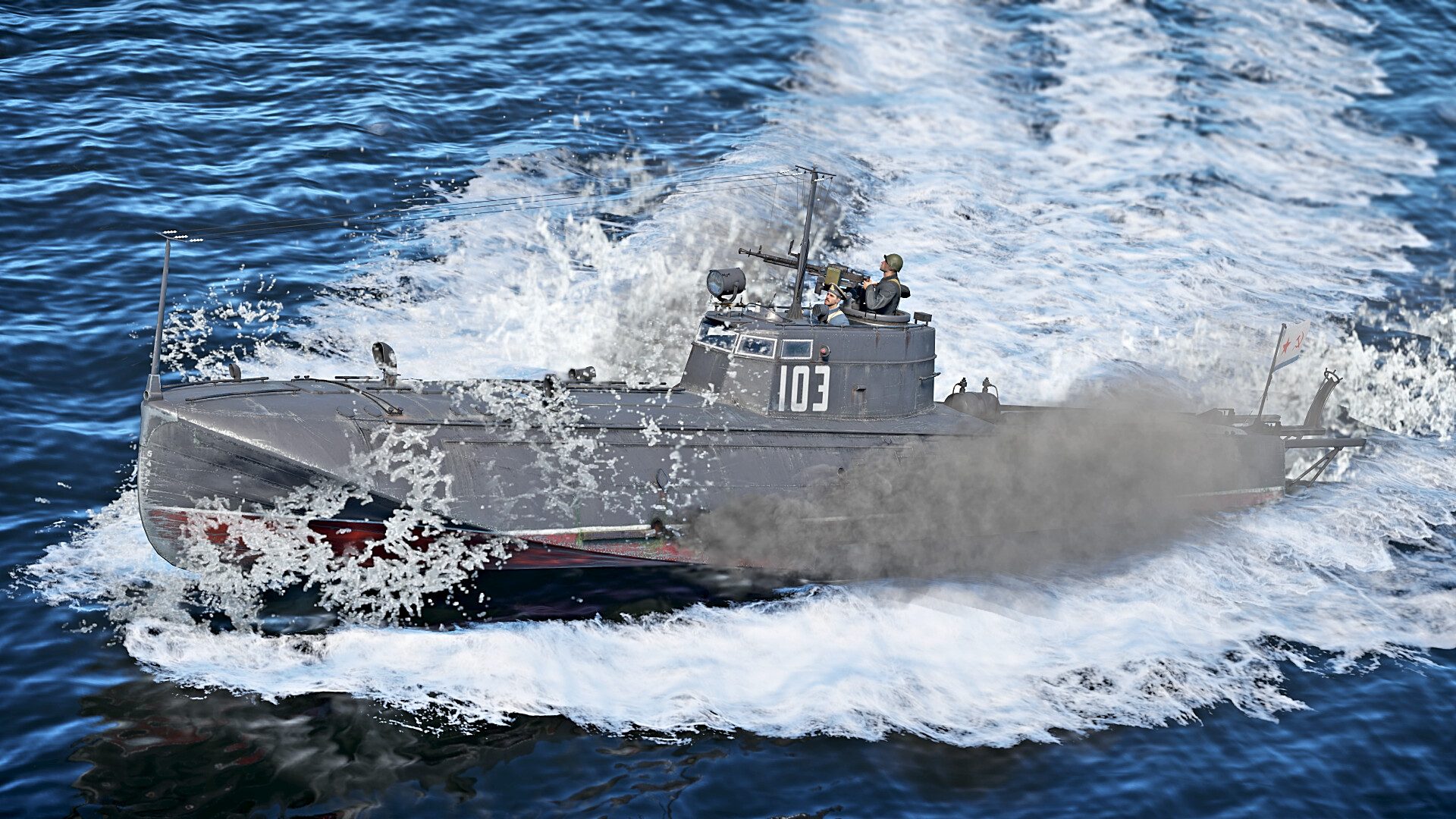
G-5 boats truly shine with their agility. They accelerate to their maximum speed of 94 km/h (50 knots) in just 14 seconds. Coming to a complete stop takes about 6 seconds, which is also an excellent value. The rudder shifts quickly from side to side, and the boat itself hardly skids in the process. The draft is very low, and at full speed, the G-5 can navigate any shoal.
Armament
Main caliber
G-5
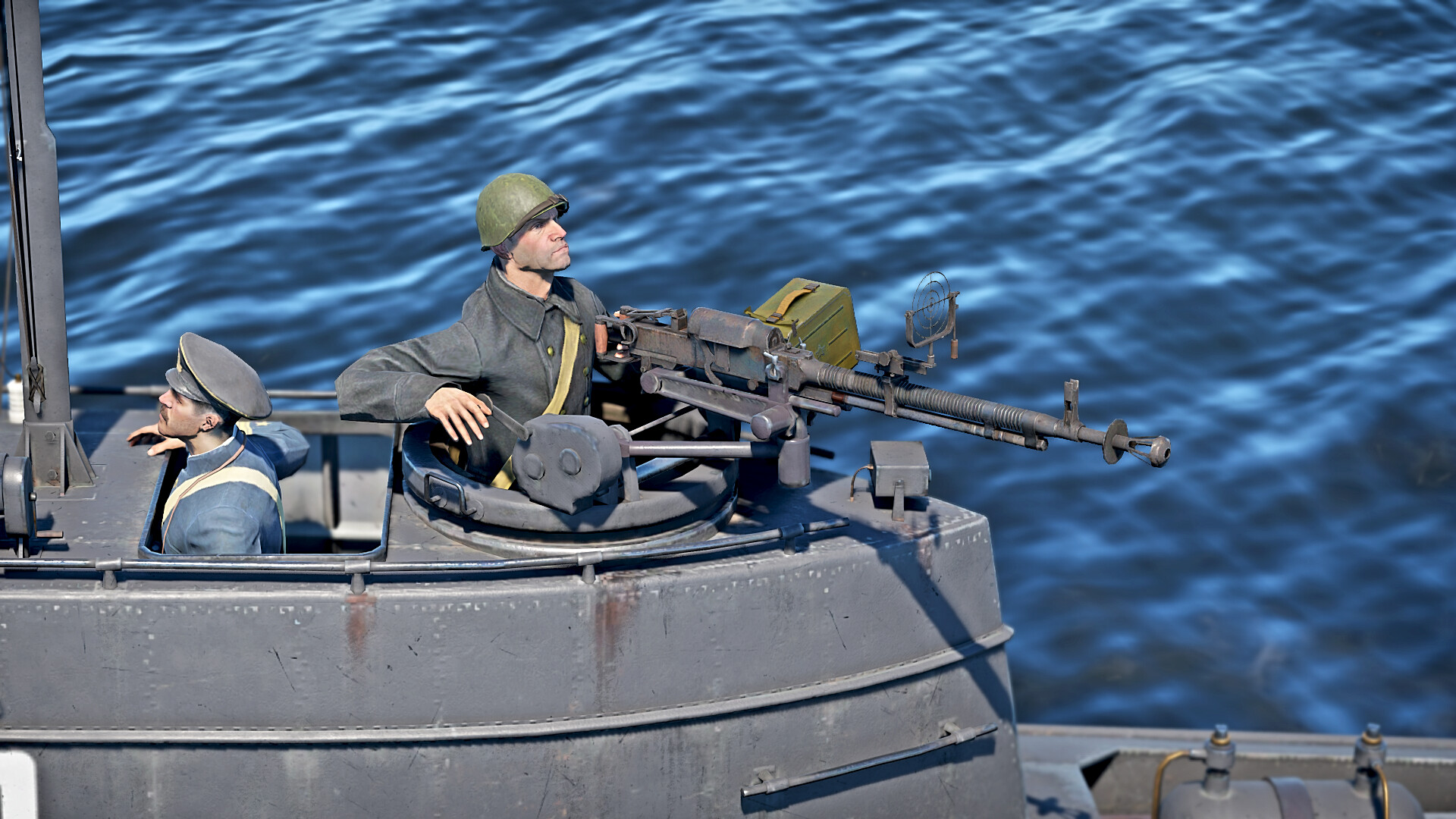
The basic G-5 is armed with a single 12.7mm DShK machine gun located just behind the commander's bridge. It can aim in any direction, and it can fire forward at targets no closer than 500 meters, even at full speed, which is quite good. The +70° elevation is sufficient for engaging airborne targets. The turret's machine gun has a rather high rate of fire, and its 2,000-round total ammunition load will last a long time. However, the magazine holds only 200 rounds, so it requires reloading pretty often.
The following belts are available for the G-5 and TKA-412:
- Universal: AP-I/API-T/IAI
- HE: IAI/IAI/IAI/API-T
- API-T: API-T/AP-I/IAI/AP-I
In this case, the API-T belt is most suitable for the boat, since IAI shells often explode on the hulls of enemy ships without penetrating them or causing damage. In addition, such shells contain very little explosive material, and instead it is easier to focus on shooting enemy modules with armor-piercing rounds.
G-5 (ShVAK)
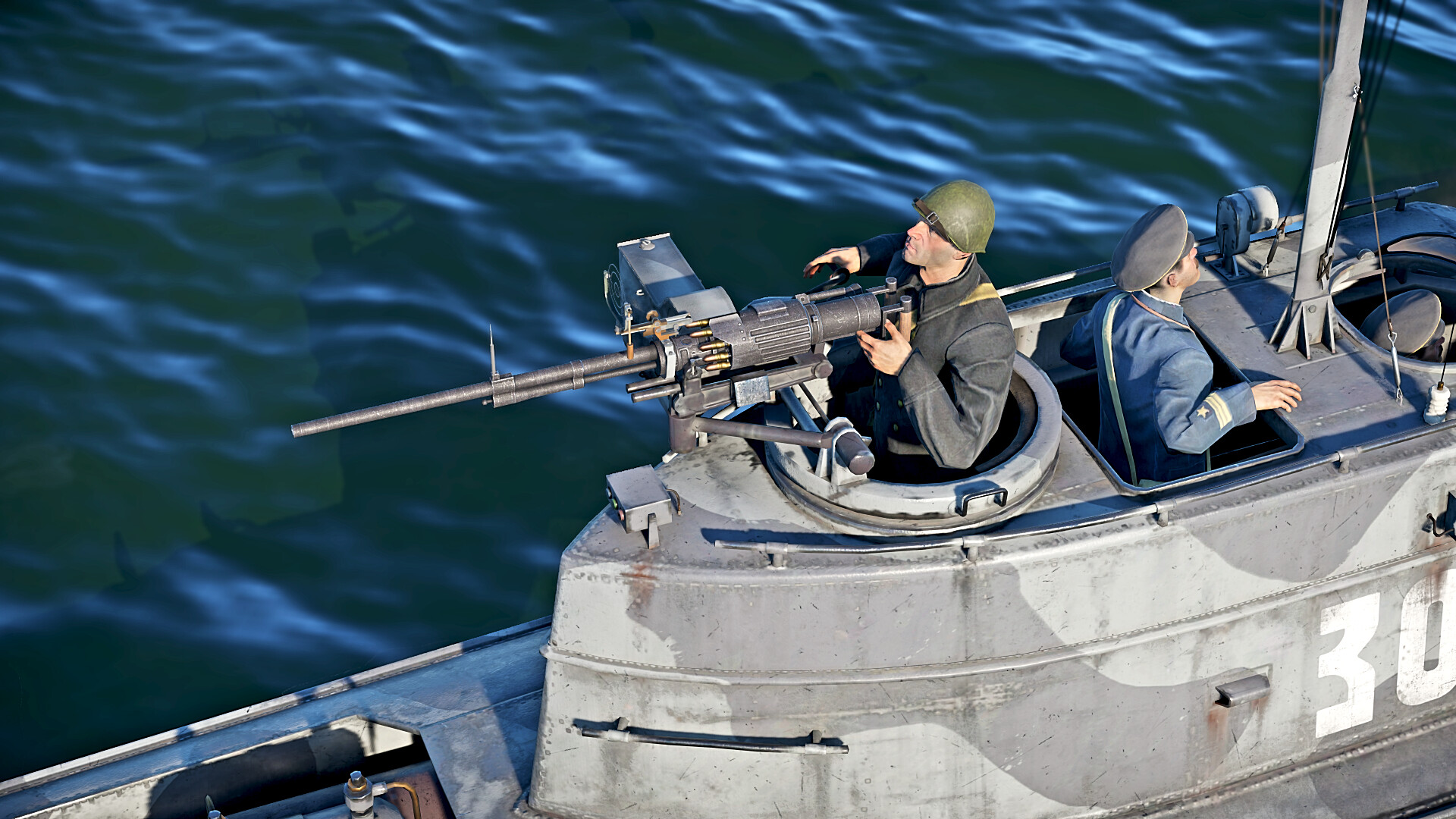
As the name implies this variant has a 20-mm ShVAK installed on the same mounting. It has a total ammunition load of 754 shells, with each clip holding 65 shells. Due to its superior ballistics, the boat can only fire forward at full speed from a distance greater than 600 meters.
The following belts are available for the G-5 (ShVAK):
- Universal: FI-T/AP-I/FI-T/AP-I
- HE: FI-T/FI/FI/AP-I
- AP: API-T/AP-I/AP-I/FI
As with the standard G-5, the AP belt is the most effective for the same reasons. Twenty millimeters of high-explosive (HE) ammunition is nowhere near enough to penetrate your enemies' hulls and superstructures, so it's time to learn how to pinpoint enemy modules.
TKA-412
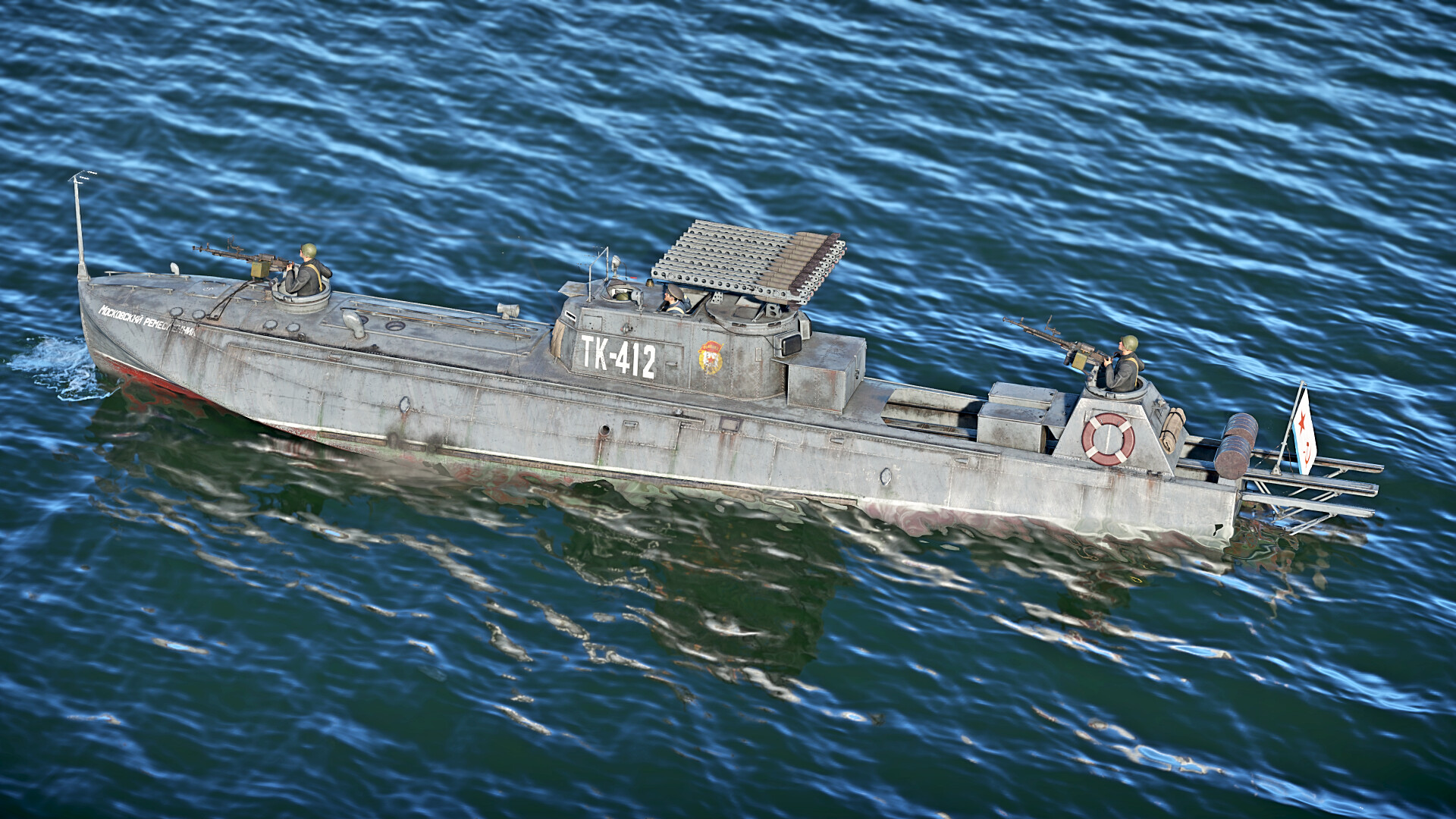
Compared to the G-5, the TKA-412 now has two DShK machine guns on the same mounts in different positions: one in front of the bridge and one on the stern. One should keep in mind that the rear turret cannot shoot forward due to the superstructure. Belts are the same, ammo is the same per machine gun and is 4000 rounds in total.
Additional armament
G-5 and G-5 (ShVAK)
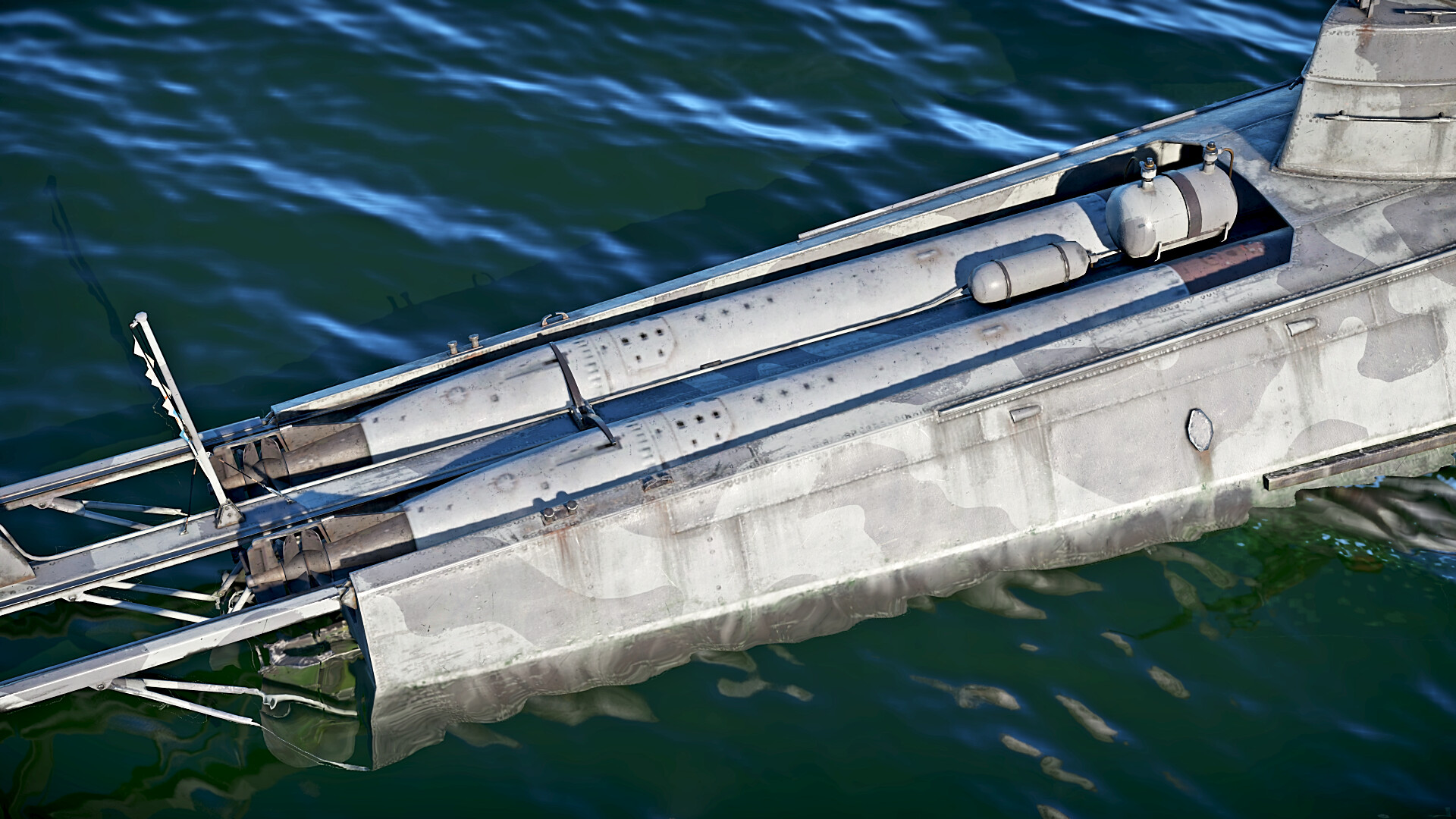
Both G-5s are armed with two 533-mm 53-38 torpedoes located in the stern. The torpedoes are ejected backward from the torpedo tubes, pass under the boat, and head for their target. Each 53-38 torpedo contains 300 kilograms of explosives, can travel three kilometers, and moves at a fairly low speed of 56 kilometers per hour. Such torpedoes can hit and sink a sub chaser or other heavy boats, but against torpedo boats and alike, you have to rely on luck. Against large destroyers they can inflict significant damage but are unlikely to sink a target.
TKA-412
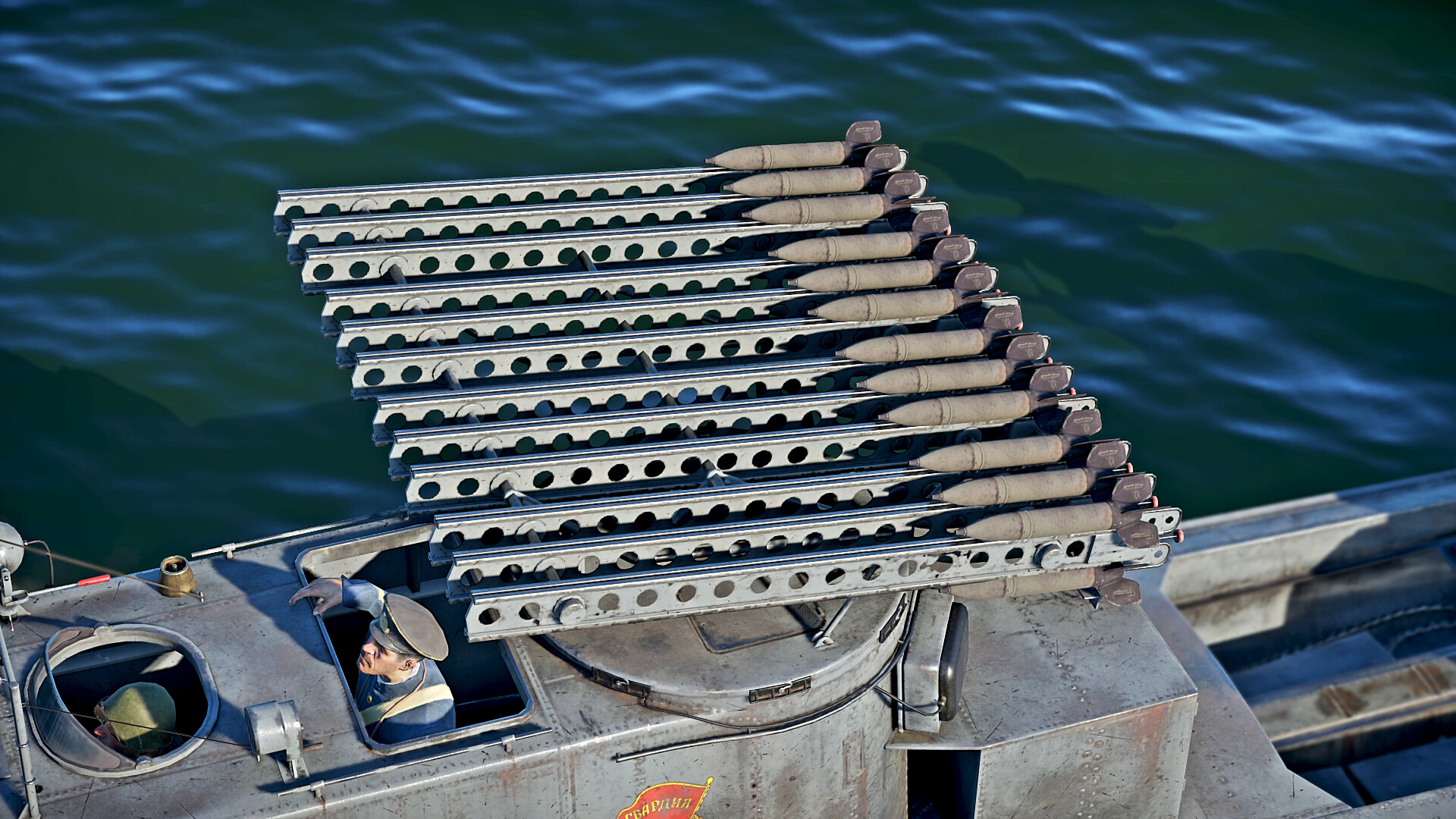
The TKA-412 has a single 82 mm M-8 rocket launcher instead of torpedo armament. It has a single load of 24 rounds (its possible to shoot one rocket at a time) and has a total ammunition load of 48 rockets. While they deal significant damage, the low velocity makes it tricky to hit targets. Initially, you will need to learn how to anticipate the enemy's movements correctly.
Combat usage
Despite the differences in armament, all three boats play the same. G-5s are fast, but lack in armament and survivability compared to their enemies. The only way to offset it is to flank. While island maps have a ton of possible routes, the majority of beginner players funnel in the bigger gaps between the points and prefer shorter travel distance. So, in going around, both DShK and ShVAK can deal serious damage and destroy a enemy torpedo boats.
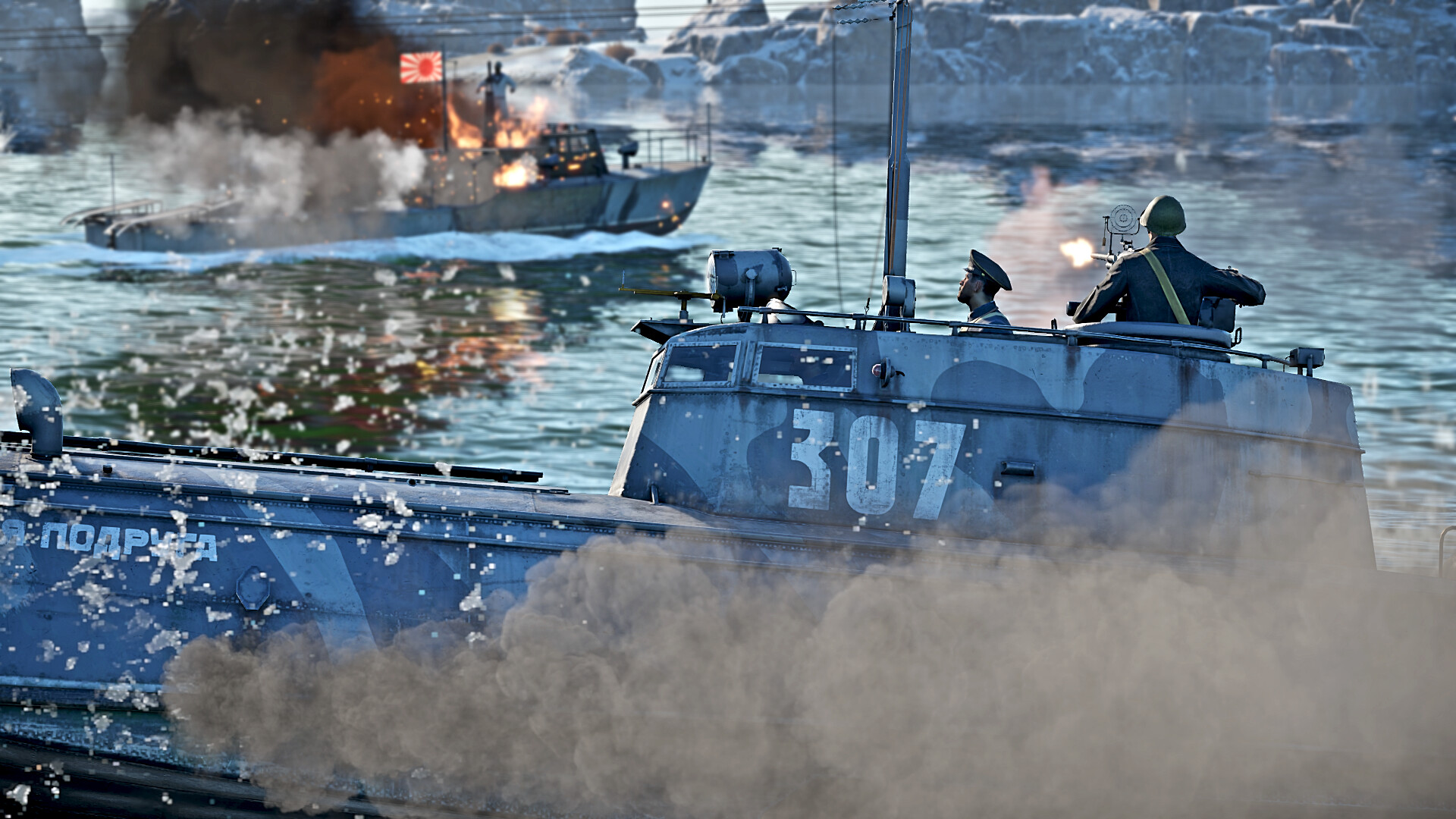
The best strategy to engage bigger ships, like sub chasers or gunboats, is hardly different. Facing them head-on is not an option, so its all about flanking again. For the biggest ships its better to stick with torpedoes and rockets instead of shooting and spooking the enemy too early.
Moreover, with TKA-412 its best to avoid overusing the rear turret too much, as the boat already has an awful survivability, and angling or showing the whole side makes it even more worse.
History
After studying the experience of World War I, the Workers' and Peasants' Red Fleet concluded that small minelayers, destroyers, and torpedo boats were inexpensive yet effective weapons capable of easily defeating larger, more expensive enemy vessels. The seamen were particularly impressed by the actions of British torpedo boats, which damaged and sank several Soviet ships in 1919. First, they studied captured enemy boats, and then, in 1925, TsAGI was tasked with creating a torpedo boat that would surpass foreign counterparts in speed.
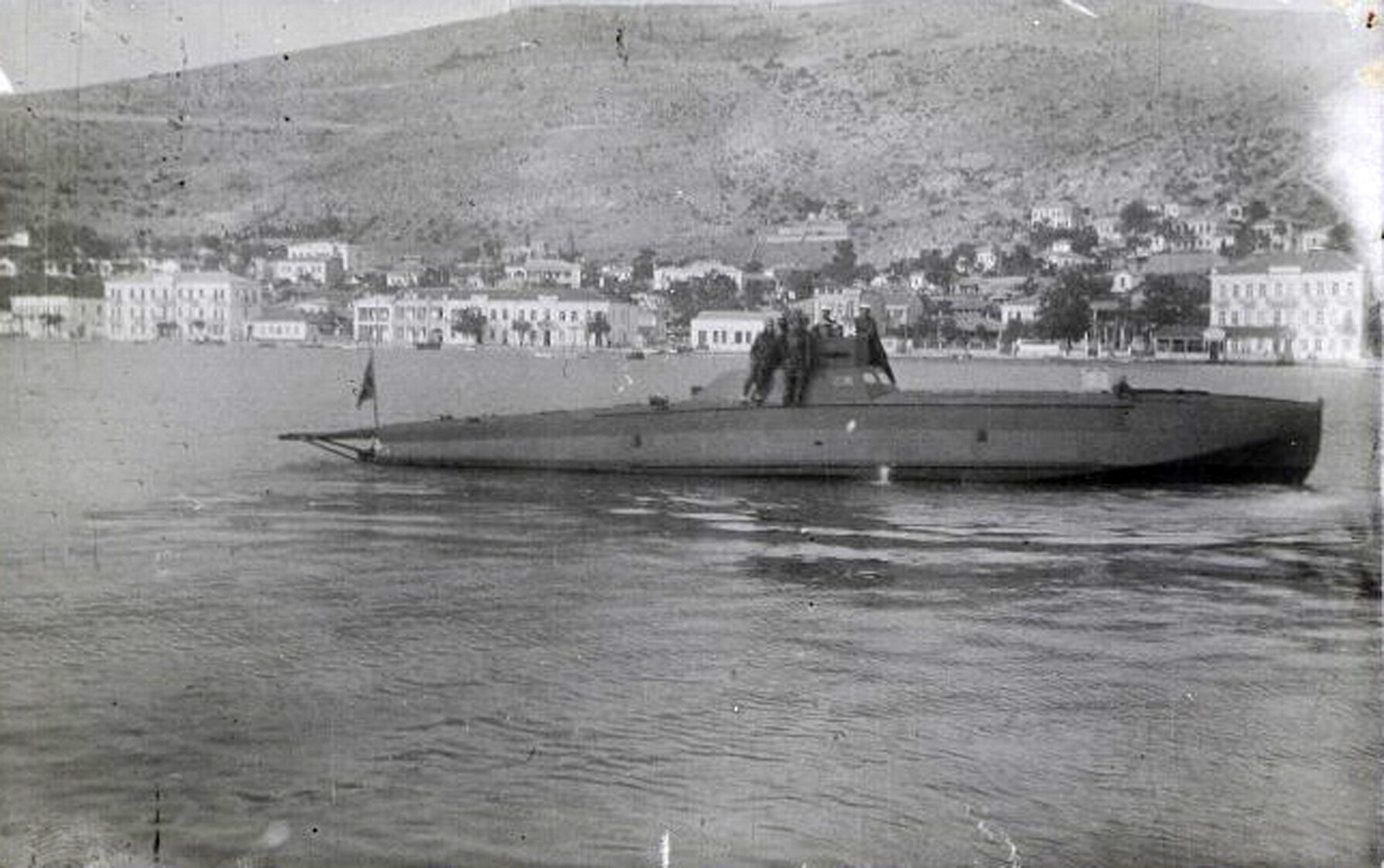
Six months later, construction began on a boat named ANT-3 "Pervenets", and testing started on April 30, 1927. During testing, however, issues with cavitation were discovered, limiting the top speed of the boat to 30 knots. Therefore, its designer, A. N. Tupolev, adjusted the propeller pitch. Now, the boat exceeded all expectations, reaching a speed of 46 knots. In comparative tests, it proved to be significantly faster than its English counterpart.
Impressed by the boat, the Navy ordered an improved version. It was to have the same 46-knot speed, 450-mm torpedoes (as development of the 533-mm torpedoes was delayed), and two American Wright Cyclone engines. However, it was also necessary to address the issues of hull material corrosion, poor paint quality, and excessive spray ingress of the wheelhouse. In November 1927, the newest boat, the ANT-4, was presented. It reached a speed of 46.8 knots, and its new hull shape reduced spray ingress thanks to the enclosed wheelhouse. The corrosion problem was solved on this prototype and production models.
The Navy approved the new boat, and mass production began at the A. Marti factory in Leningrad in 1928. The Navy designated the boat the Sh-4. Between 1928 and 1932, a total of 59 boats were built.
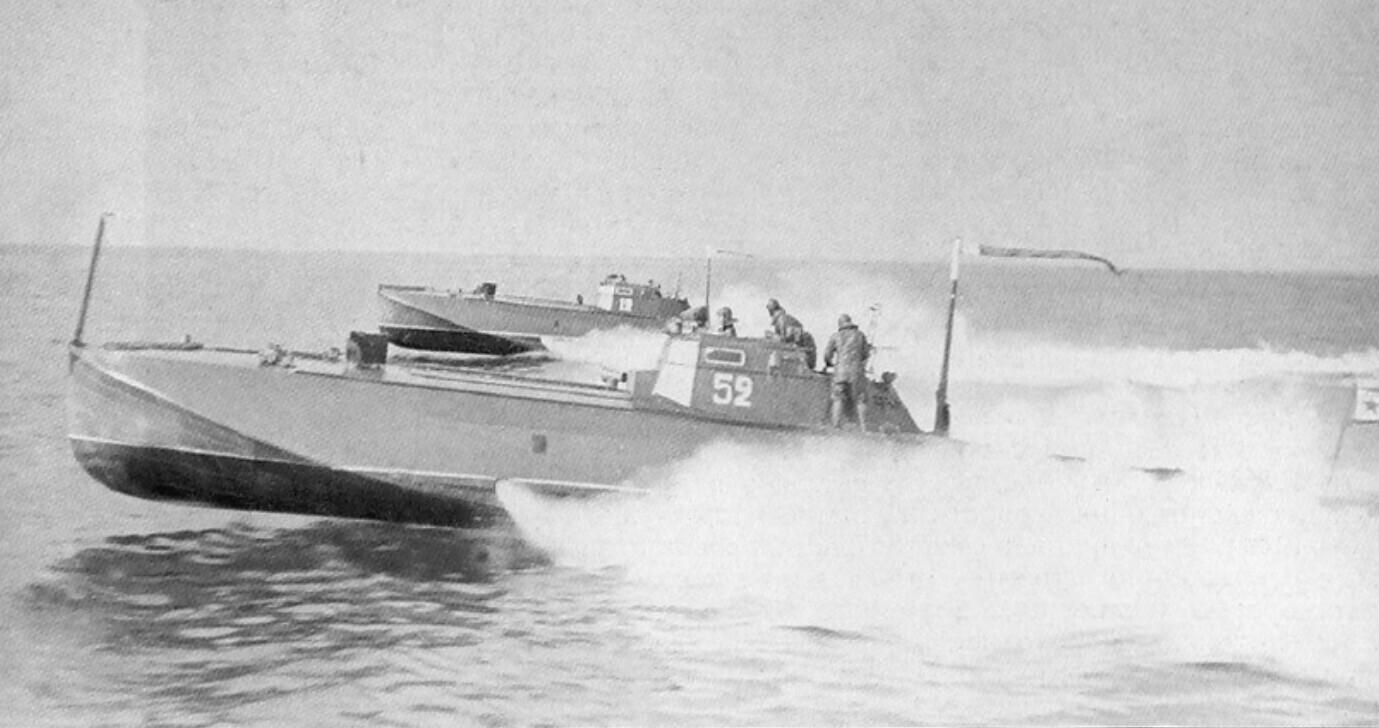
Even since the days of the ANT-3, however, the Navy had been unsatisfied with the weak 450 mm torpedoes. In June 1928, therefore, a new technical assignment was issued that could be fulfilled in one of two ways: with three 450 mm torpedoes or two 533 mm torpedoes. Construction of the ANT-5 prototype began a year later.
However, due to issues with supplying and producing parts, construction of the ANT-5 did not finish until February 1933. Compared to the Sh-4, it had an increased hull length, a larger torpedo caliber (533 mm), and the ability to install more powerful ACCO or Packard engines. Ultimately, though, AM-34 aircraft engines were installed. The boat was accepted into service by the fleet on August 1, 1934, and designated G-5 (gliding). Serial production began that same year.
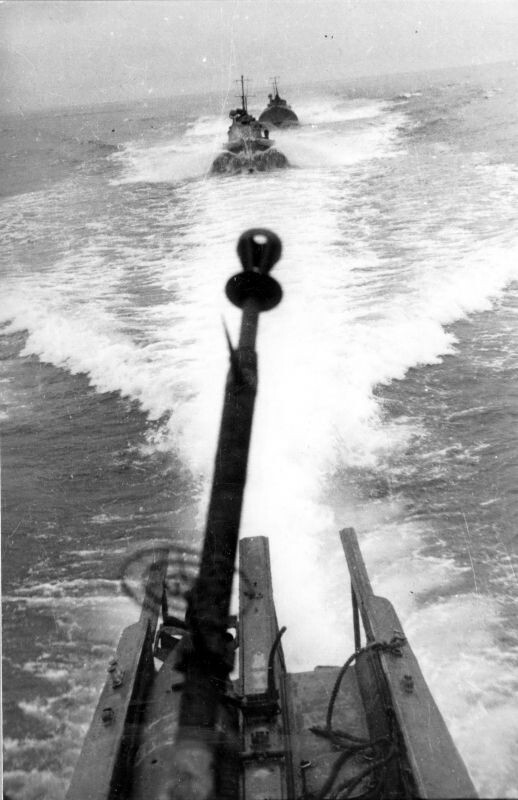
Notable changes from the prototype included the new wheelhouse lacking the characteristic cutout for a machine gun, the deck plating was not corrugated, the exhaust pipe was different, and there were two longitudinal stiffeners along the upper part of the hull. Additionally, early G-5s were armed with either two DA machine guns or one ShKAS, whereas later models (starting with the X series) had large-caliber DShK machine guns. However, ShVAK cannons were only installed from the initiative of some of the ship commanders.
The boats had several problems. Duraluminum was scarce, and the aircraft engines ran on aviation fuel, which was highly flammable. It wasn't until the start of the Great Patriotic War that a diesel engine was obtained, even though the G-5 had already been in service for seven years.
As early as 1936, attempts were made to improve the combat effectiveness of boats. For instance, the 152 mm and 76 mm "dynamo-reactive guns" of the Kurchevsky system were tested on Boat No. 379 in the Black Sea. These recoilless guns would have increased the ship's firepower. However, these installations had poor rate of fire and range, so the navy quickly abandoned them.
The issue was revisited at the start of the war when the military wanted to equip the boats with RS-82 aircraft rockets for defense against airplanes. Some boat crews installed one or two homemade launchers pointing upwards by their own initiative.
For offensive purposes they were first installed on boat No. 175 in June 1942. It was a field-made six-round mount installed on the wheelhouse. It was fixed in direction, but the vertical angle could be changed. From August to November of that year, Artemzavod created the RPU-6 mount, which had horizontal aiming capability and simpler firing, among other improvements. It was soon installed on many Black Sea Fleet boats.
Work on the 24-rocket launcher began on November 17, 1941. However, it did not yield results until 1942 when 14 experimental boats were built for the Black Sea Fleet as part of the program. They were all distinguished by the installation of the M-8-M on the boat's wheelhouse.
The G-5 class of boats remained in service until the end of 1945, at which point they began to be replaced by ships supplied under the Lend-Lease Act. The G-5 boats were either scrapped or given to foreign navies.
Sources for text and images with no links
- Торпедные катера серии Г-5 — Соломонов Б., Кулагин Б.
- Wikipedia page