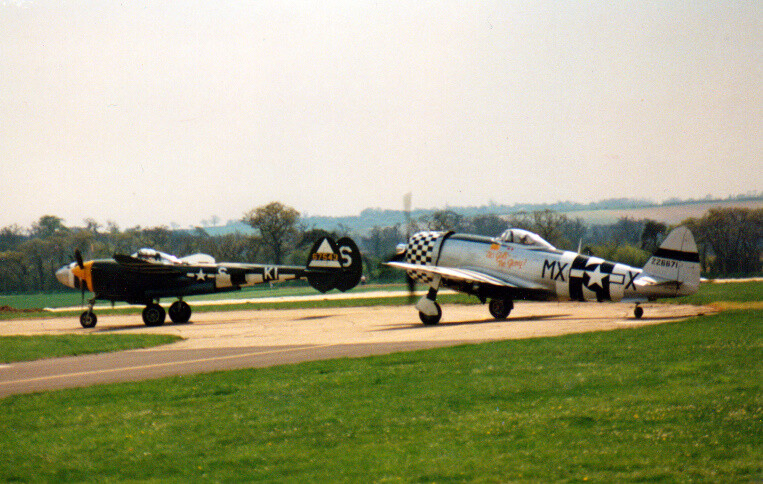
The Republic P-43 Lancer, introduced in 1940, was a transitional American fighter that bridged the gap between prewar designs and the more advanced aircraft of World War II. It offered respectable high-altitude performance for its time, along with decent armament, similar to its more popular successor, the P-47 Thunderbolt. The P-43 provided valuable experience in high-altitude operations and combat testing, with some serving in China under the American Volunteer Group and later the Chinese Air Force.
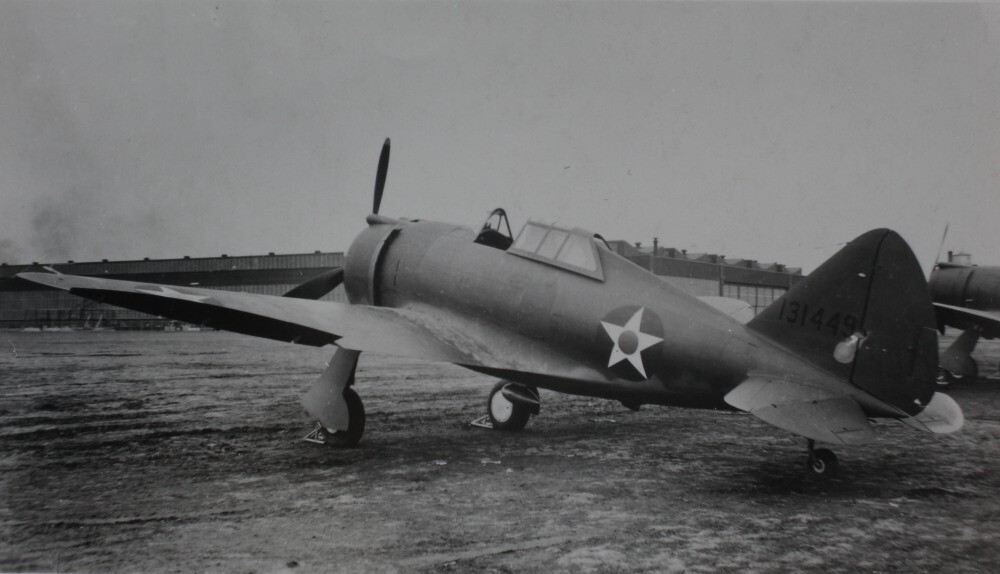
Technical data:
- Length — 8.69 m (28 ft 6 in)
- Wingspan — 10.97 m (36 ft 0 in)
- Height — 4.27 m (14 ft 0 in)
- Wing Area — 20.7 m² (223 sq ft)
- Gross Weight — 3,372 kg (7,435 lb)
- Max takeoff weight — 3,846 kg (8,480 lb)
Design:
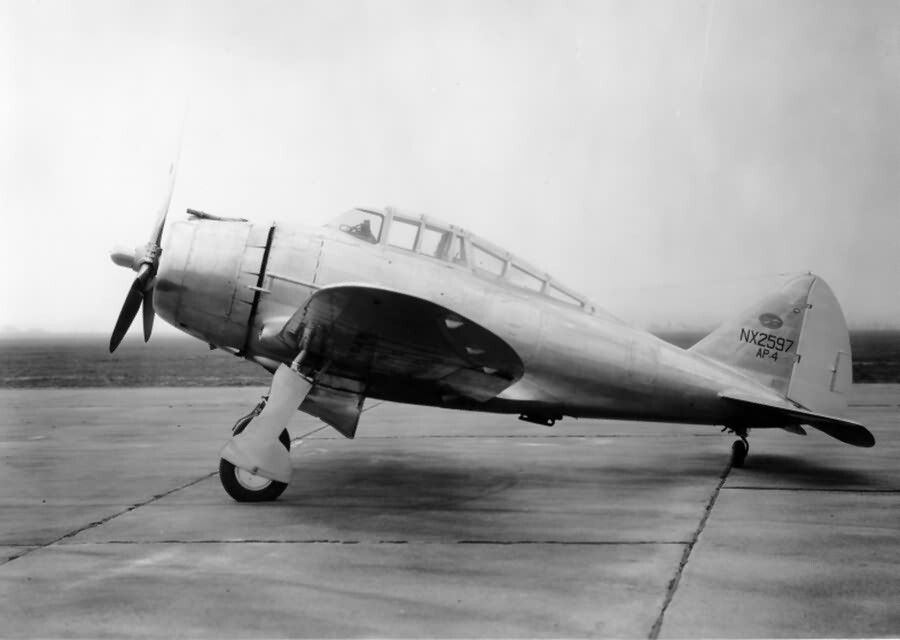
By the late 1930s, the U.S. Army Air Corps realized its existing fighters, many still based on prewar biplane designs, would not stand a chance against the faster, higher-flying monoplanes emerging in Europe and Asia. The need for a modern fighter with greater speed, altitude performance, and heavier armament was clear. Seversky Aircraft (which later changed its name to Republic Aviation) which had been testing several prototypes based on the P-35 at their own expense, settled on a daring design, the AP-4. This aircraft featured a Pratt & Whitney R-1830-SC2G engine with a turbo-supercharger, which ended up showing real promise at high altitude.
Development:
After a demonstrator flight of the AP-4, the USAAC placed an order for 13 more that would be designated YP-43. These were slightly different from the AP-4, having a “razorback” fuselage and a slightly adjusted engine air intake resulting in the distinctive ovoid cowling which it would share with the under-development P-47. The P-43 was powered by an R-1830-35 engine generating 1,200 hp, making it fast (nominally, 356 mph at 20,000 ft), featuring a good climb rate, and a service ceiling higher than its officially credited 36,000 ft. On paper, the P-43 appeared roughly equal to the P-40B being supplied to China for the AVG (American Volunteer Group) in 1941, and its turbo-supercharger made it clearly superior at high altitude.
Variants:
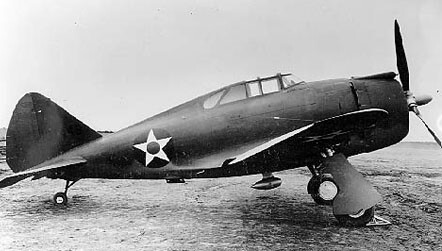
However, after receiving combat reports from Europe in 1941, the USAAC already knew the P-43 was obsolete, and it wouldn’t be possible to improve it further. Production continued, resulting in a few variants while the Air Corps waited for the promising P-47.
P-43
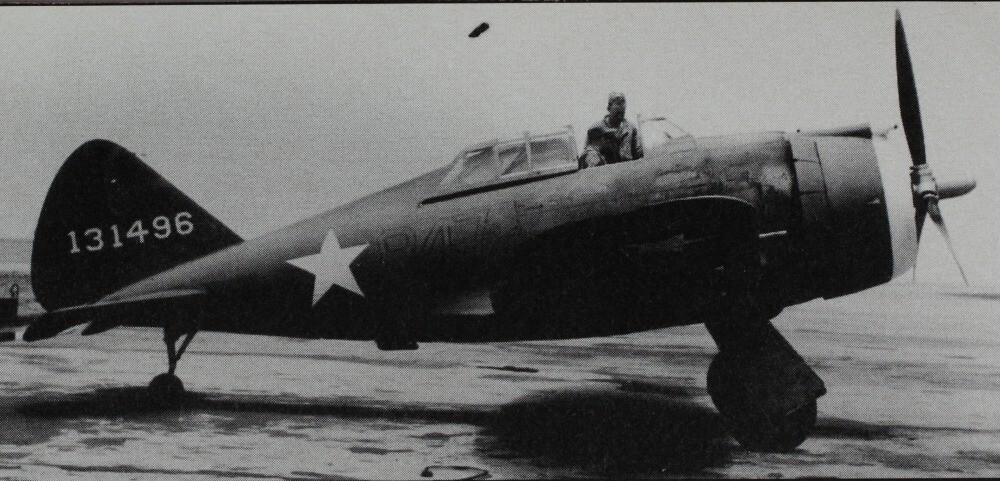
The first production variant had an armament consisting of two .50 caliber machine guns in the cowl and a single .30 caliber machine gun in each wing. This variant was nearly identical to the YP-43 prototype. 54 P-43s were built.
P-43A/A-1
This variant was powered by a R-1830-49 engine and armed with .50 caliber machine guns in the wings, replacing the P-43's original .30 caliber. The A-1 and A variants were externally identical, but the A-1 ended up being the export variant for China. Some rudimentary armor and fuel tank protection was added as well as hardpoints for bombs or a fuel tank. In total, 205 were built.
P-44 Rocket
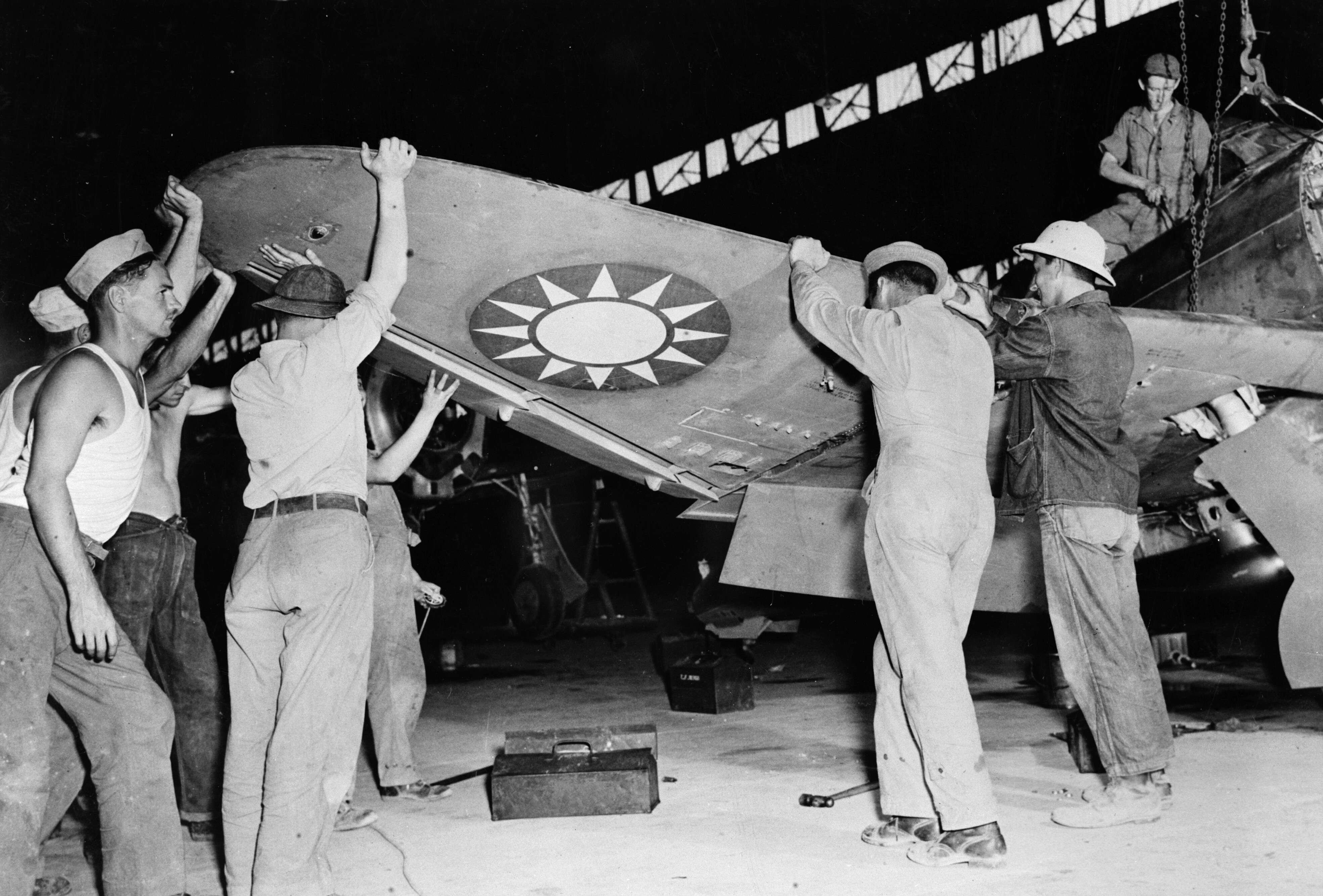
This was a proposed version of the P-43A (known as the AP-4J before being designated P-44) with a 1,400 hp Pratt & Whitney R-2180-1 engine and .50 caliber machine guns in the wings. This was proposed because of ongoing delays with the P-47 program, but after combat reports came from Europe, it was clear that this new design would be obsolete. Only a sketch was made, and the 80 orders were cancelled.
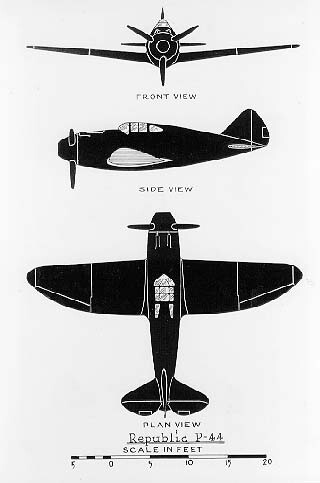
Photo-reconnaissance variants
Due to their sub-par performance, any surviving P-43s were converted to recon aircraft and becoming restricted from combat in October 1942. Therefore being renamed RP-43s. These all had minor changes apart from the cameras and their mounts.
P-43B-RE
Most Lancers built that remained in the United States were used in the training role. By 1942, most survivors were being converted for photo-reconnaissance work and re-designated P-43B, being fitted with cameras. Some 150 P-43As were converted to P-43B standard. This meant the fitting of two Eastman Kodak K-24 aerial cameras side-by-side in the rear fuselage.
P-43C
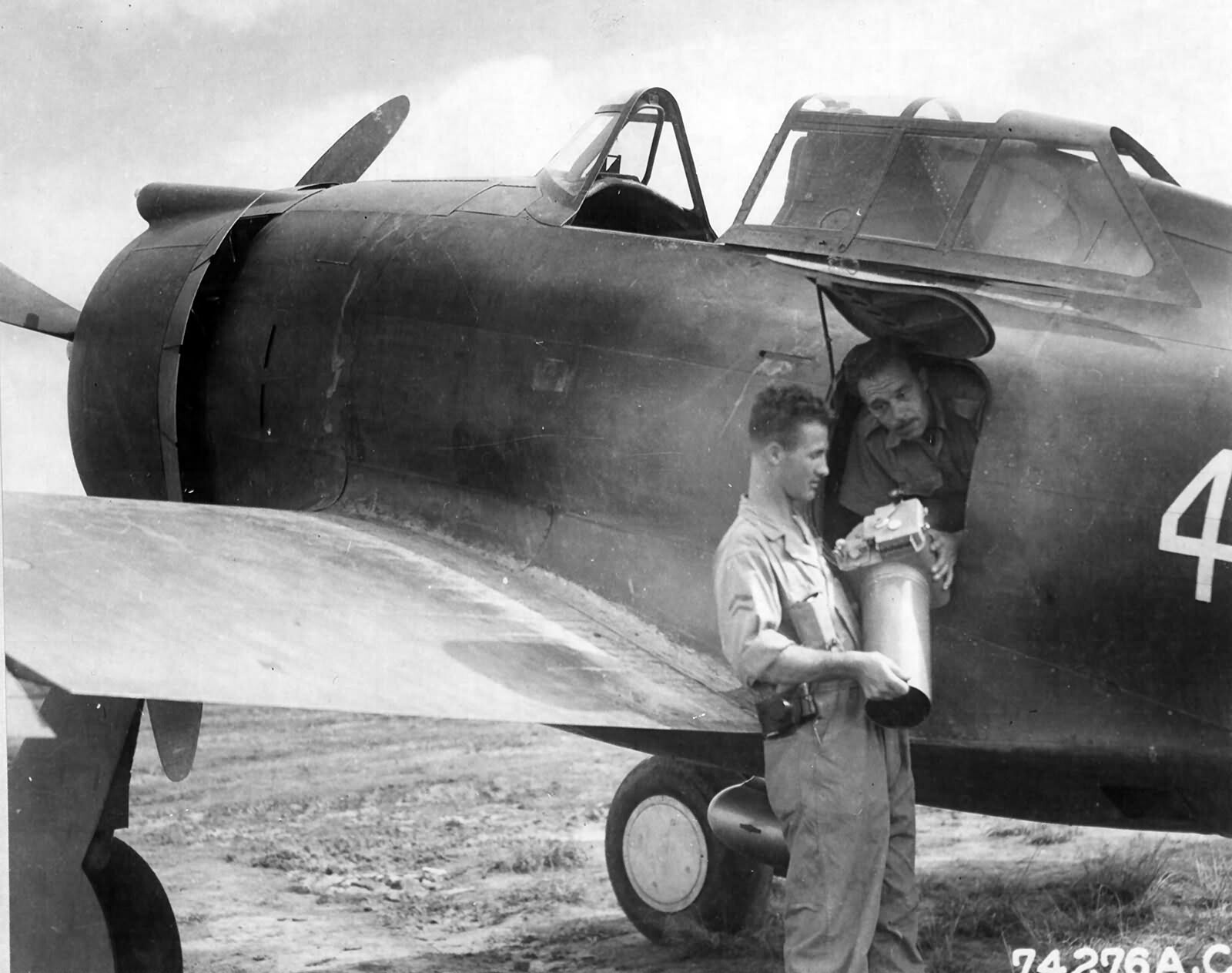
The P-43C series also served the same role, but being new build aircraft. However two P-43As received some modifications mostly related to equipment and became P-43Cs. Not much documentation exists of what the changes were.
P-43D
Largely identical to the P-43C, but 4 P-43D were loaned out to the Royal Australian Air Force to serve with the No.1 Photo Reconnaissance Unit where they flew many high altitude recon missions before being returned to the USAAF in 1943.
P-43E
Only a proposed photo-reconnaissance variant which was never built. It would have been based on the P-43A-1 with a Pratt & Whitney R-1830-47 engine.
Combat Usage:
While the P-43 Lancer never became a major combat aircraft, it did see some operational use, particularly in China and the Pacific during the early stages of World War II. 125 were shipped to the previously mentioned AVG under Lend-Lease and given to the “Flying Tigers”. The P-43s were praised by their pilots for having good high-altitude performance, a good roll rate, and no vulnerable liquid-cooling system. However, the turbo-supercharger was unreliable, armor was lackluster, and the fuel tanks weren’t self-sealing and constantly leaked.
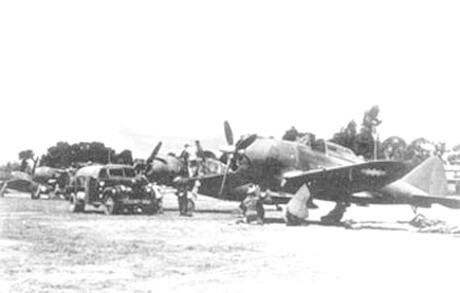
Because of this, the AVG used the P-43 for high-altitude reconnaissance and interception missions against Japanese reconnaissance aircraft, as it was the only aircraft at the time that could reach the Japanese Ki-46 “Dinah”. It was rarely used in air-to-air combat due to its vulnerable fuel tanks and instead it was a stopgap while newer aircraft were being developed, such as the P-38 and aforementioned P-47.