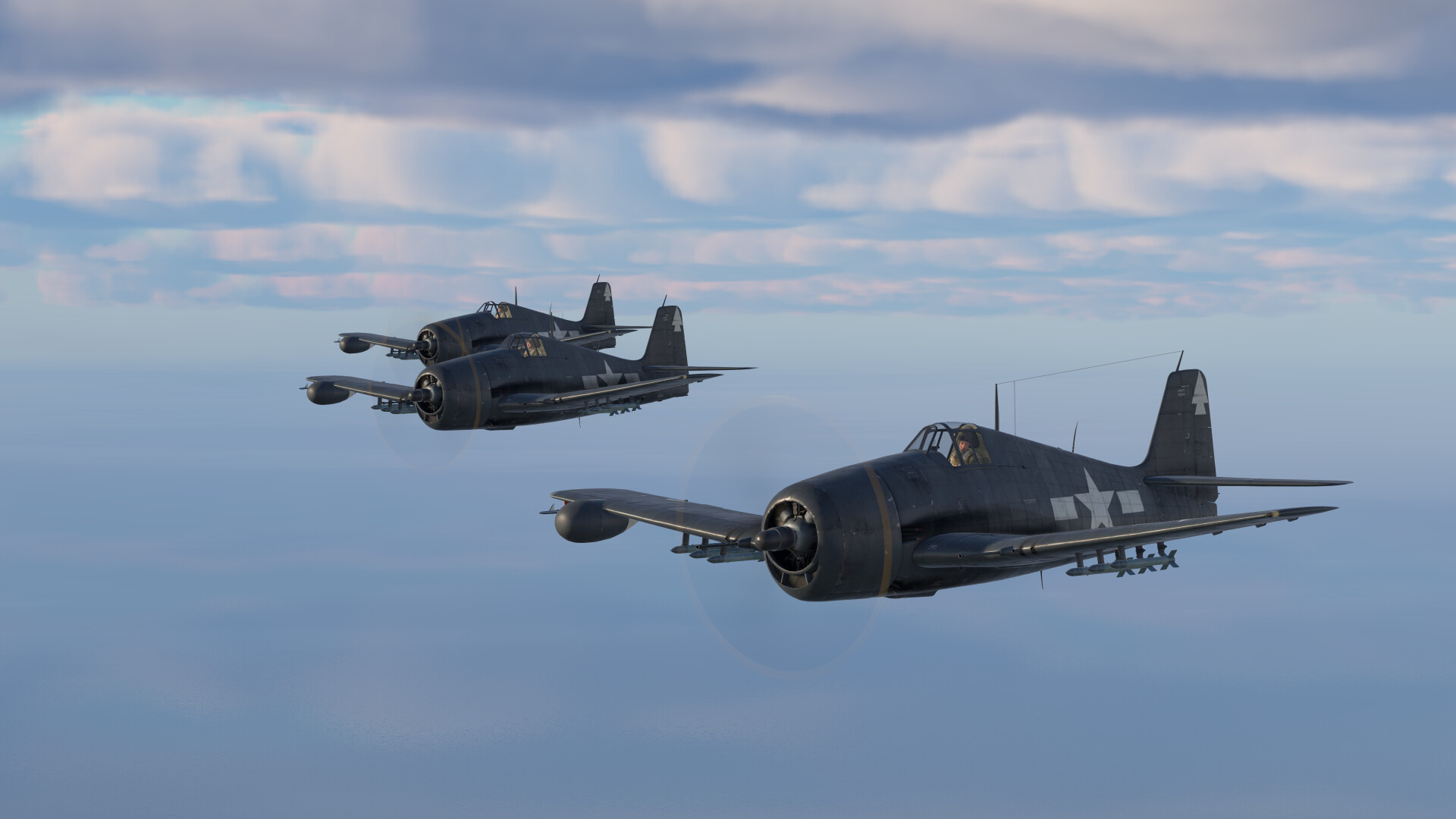
The Grumman F6F-5 Hellcat, introduced in 1944, marked the peak of the Hellcat’s development, featuring a more powerful R-2800-10W engine, aerodynamic refinements, and the ability to carry bombs and rockets in addition to its six .50 caliber machine guns. Renowned for its durability and combat effectiveness, it secured Allied air superiority in the Pacific. Its night-fighter variant, the F6F-5N, carried the AN/APS-6 radar in a wing-mounted radome and paired four .50 caliber machine guns with two 20 mm cannons, giving U.S. forces the ability to hunt enemy aircraft at night and extending the Hellcat’s dominance into night operations.
| Pros: | Cons: |
|---|---|
| Great guns with loads of ammo | Poor climb rate |
| Very resilient airframe with lots of armor, can handle damage well | Maneuverability suffers greatly with additional suspended armament |
| Competent high-altitude performance | Quite sluggish under 300km/h (186mph) |
| Great ground attack loadout options | Very heavy aircraft |
| Strong engine with 3 stage supercharger, allowing it to reach high altitudes | Top speed is subpar compared to other American aircraft |
Armament:
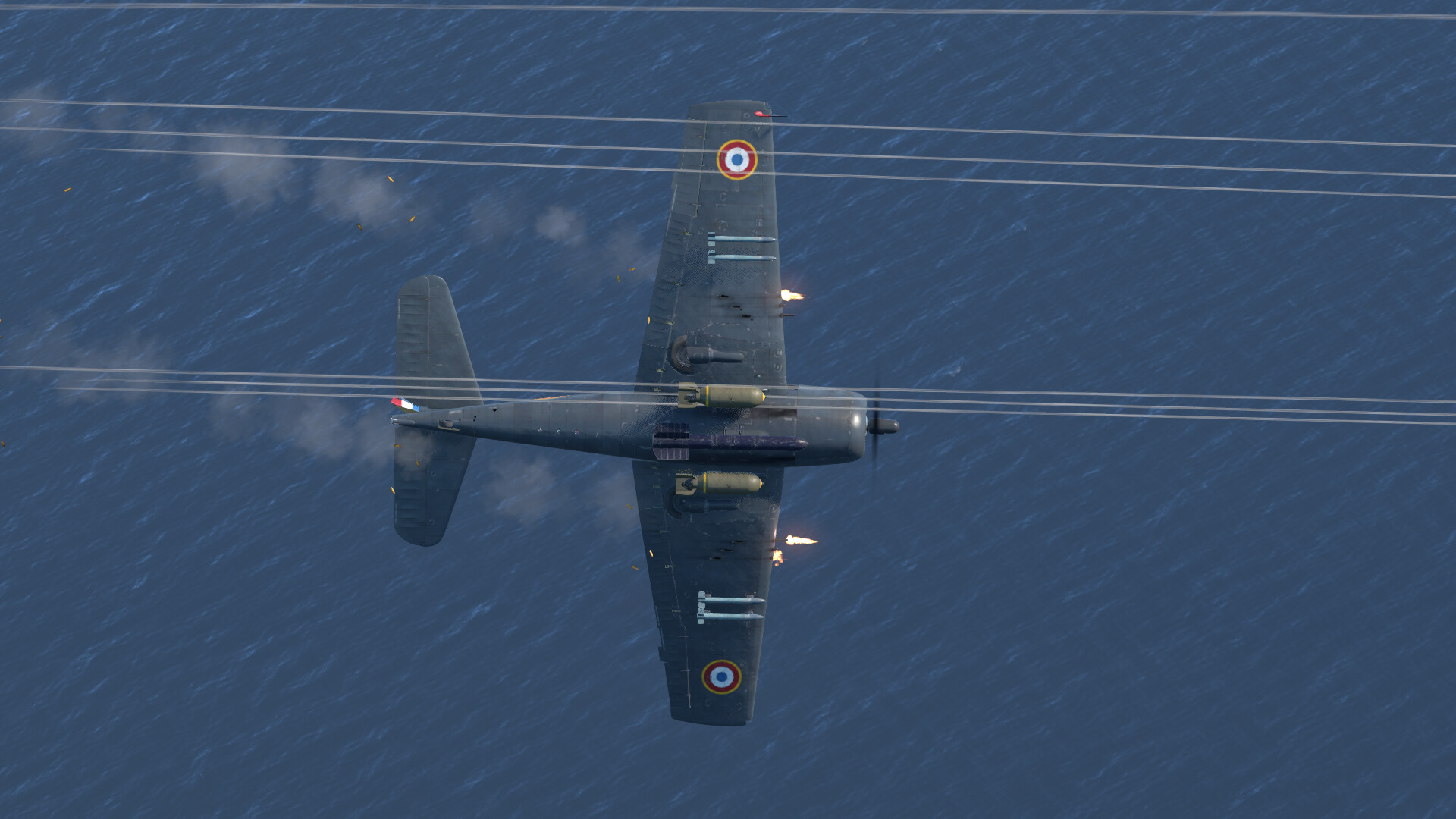
Both variants of the Hellcat have very good armament options with various selection of bombs, rockets and even a torpedo. The F6F-5 has 6 .50 caliber machine guns and the F6F-5N swaps out a pair of .50 caliber guns for a pair of 20 mm cannons. All of these guns have a high muzzle velocity and are easy to aim. Remember to set your convergence to around 600 m as they are wing mounted.
Suspended armament is also really good on these aircraft, consisting of a variety of rockets, bombs and a torpedo. This aircraft gets the typical 500 lb, 1000 lb, and even a 2000 lb bomb which are all perfectly capable of destroying any tank. You also get HVAR and Tiny Tim rockets which are both capable of destroying open-tops with a close hit and some light tanks with a direct hit. However the Tiny Tims are preferred because of their high explosive filler making them capable to destroy tanks even with close hits. But be careful, as these will damage you if you don’t pull up in time.
Survivability:
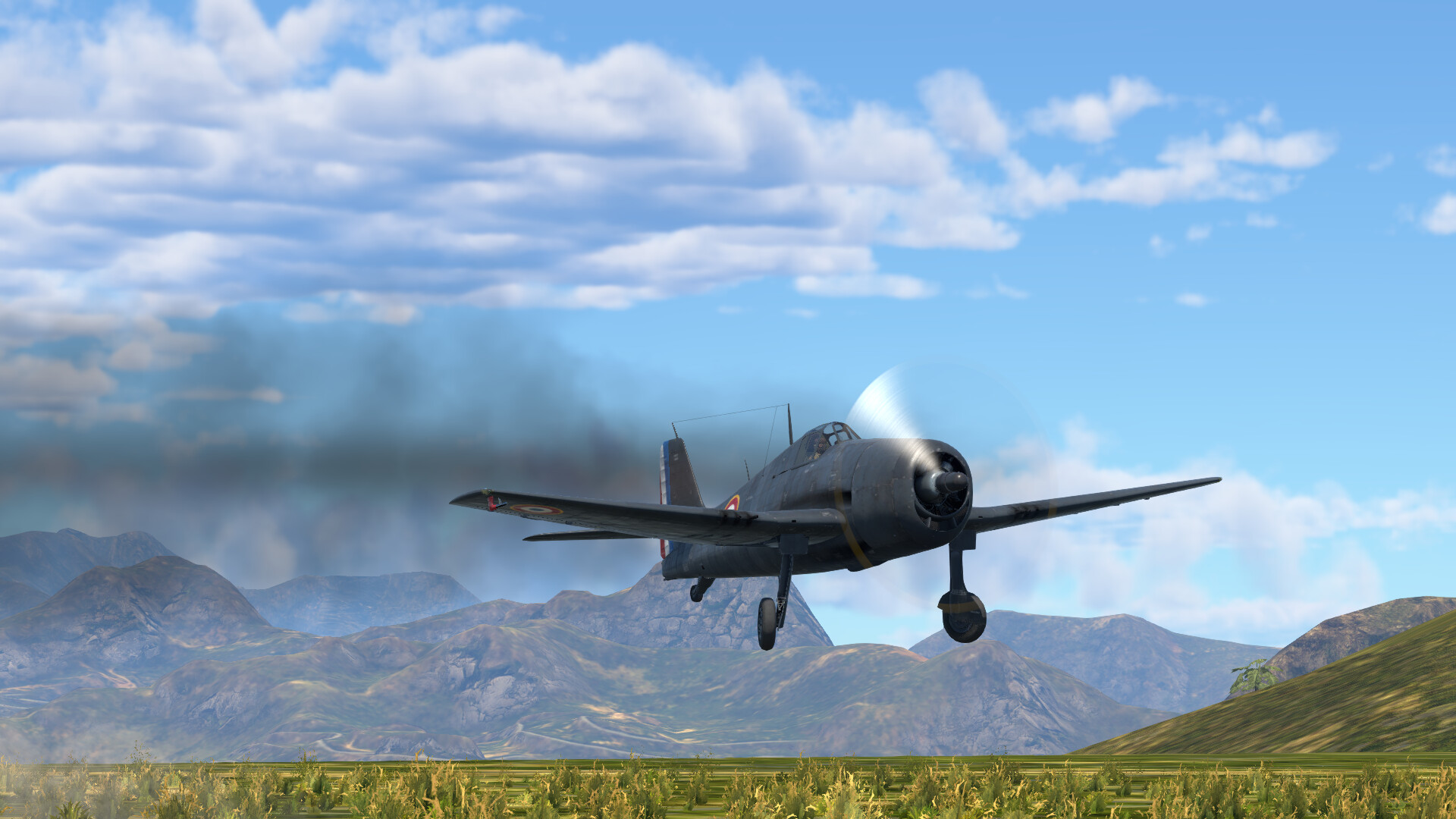
The F6F-5 and 5N are considerably robust and armored aircraft, as is typical of American naval fighters. This armor will enable pilots to survive several hits if they end up tailed by some more agile enemy aircraft, like the Japanese, British or even Soviet planes and particularly against weaker guns like light machine guns and some 20 mm cannons. However, damage to the airframe and wing spars will compromise flight performance by creating more drag, making you even more vulnerable. The armor is as follows:
- 38 mm Bulletproof glass in front of the pilot.
- 6.35 mm Steel plates behind the pilot.
- 3 mm Steel plates front and rear of the oil cooling system.
- 3 mm Steel plate on fuselage top in front of the pilot.
- 3 mm Steel plates under engine and oil cooling system.
American pilots can take advantage of the adequate bulletproof glass and the armor around the nose and the engine when in dogfights with enemies or when being shot at from the ground.
Flight performance:
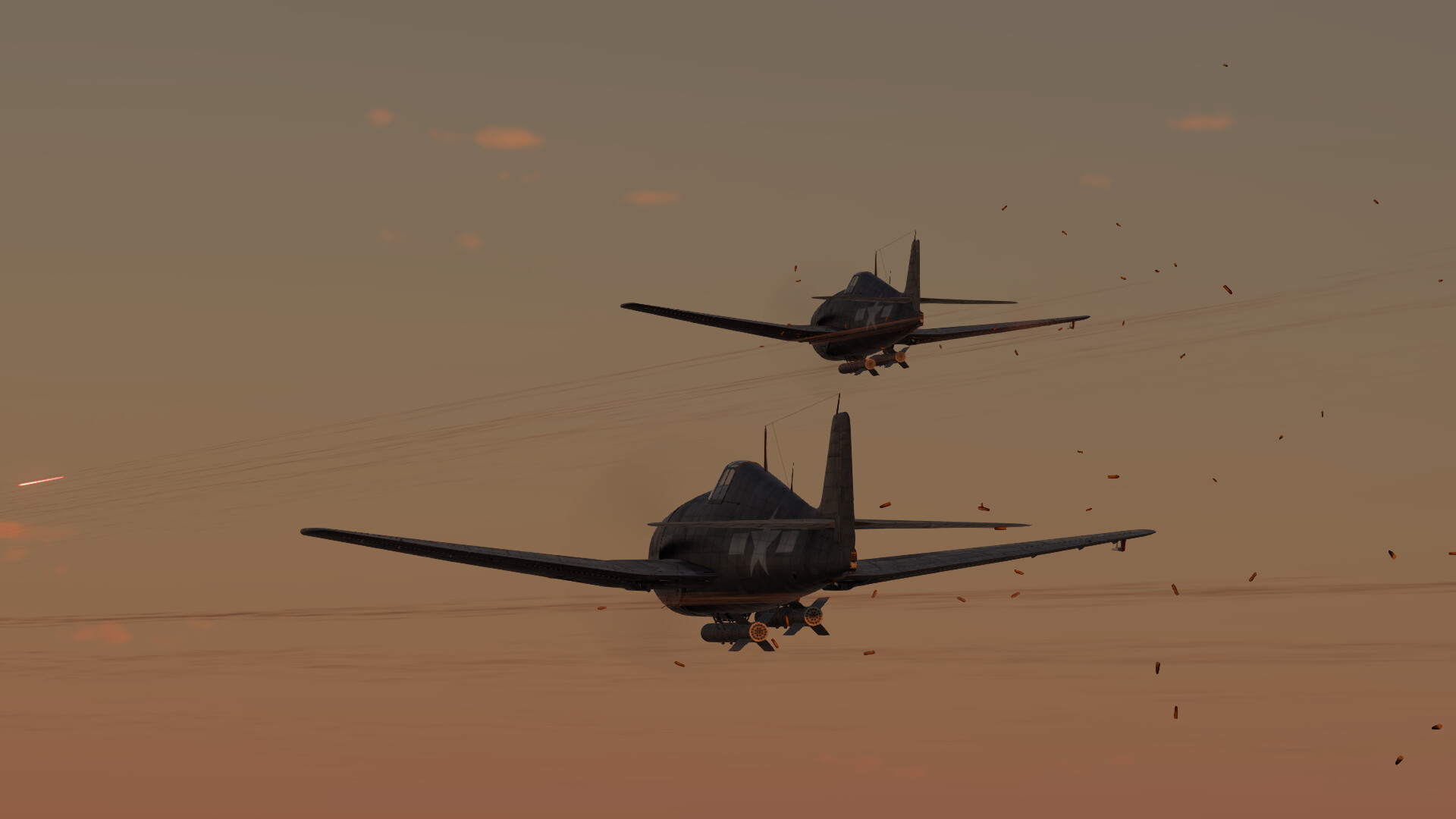
The main advantage of this fighter is the powerful but often overloaded engine with a max hp of 1,999 and takeoff hp of 2,397 when spaded. This aircraft is very heavy at between 5.7 and 7 tonnes, and especially the night fighter variant which has a radar and twin 20 mm cannons but with the same engine as its regular counterpart. However, due to the Hellcat’s efficient cooling system WEP lasts approximately 12 minutes before overheating. Both variants have a sturdy airframe that can handle ~ +12G and ~ -5G, it also has a structural limit of 803km/h and the following limits for its flaps: 487km/h for combat, 458km/h for take-off and 310km/h for landing.
Compared to other aircraft the F6F-5 is a jack of all trades. You get a decent turn-rate, but not the agility of Zero or Spitfire, mediocre energy retention, but not like a Bf 109 and alright top speed, but slower than a P-51. Therefore you should choose your fights carefully and try to exploit the weakness of your enemy.
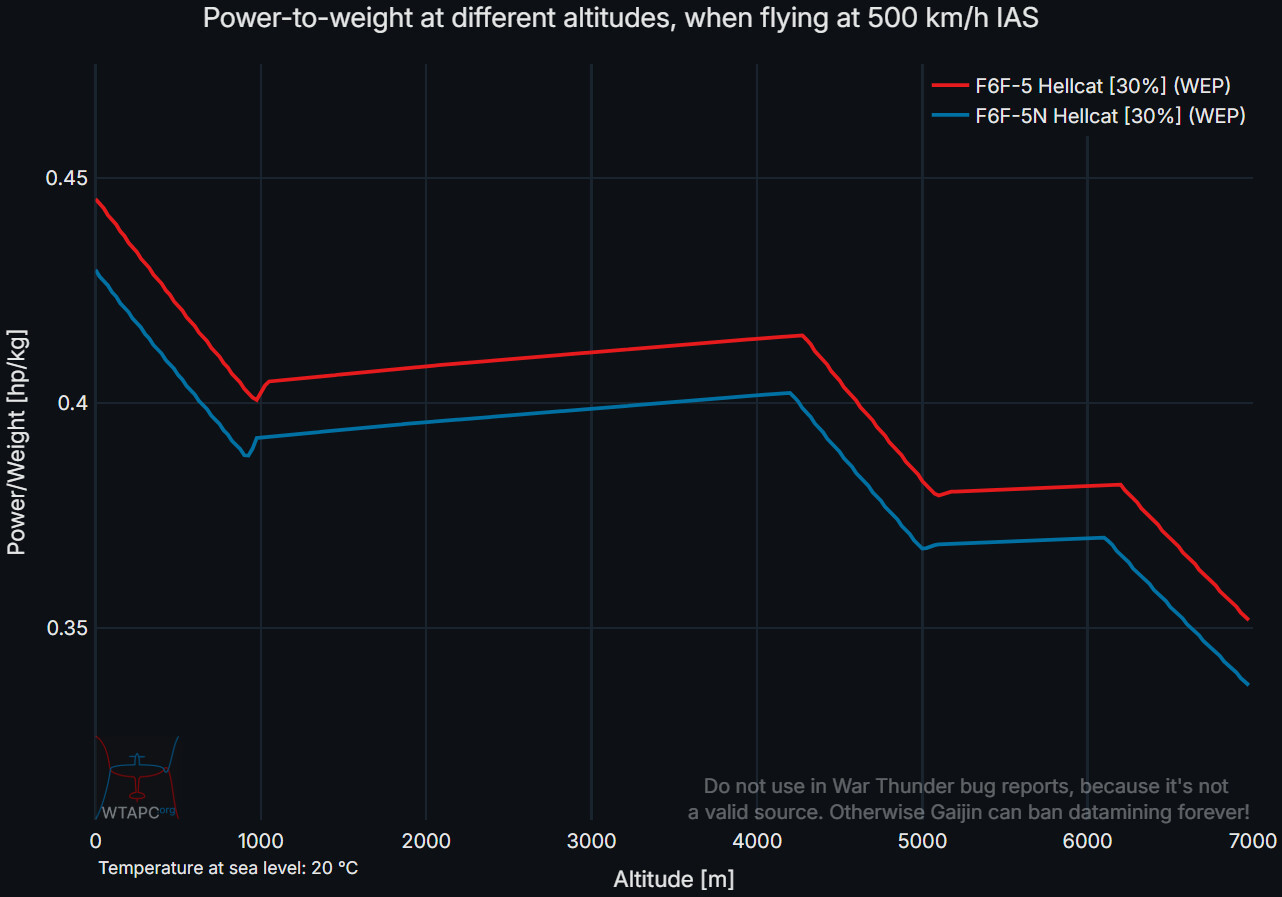
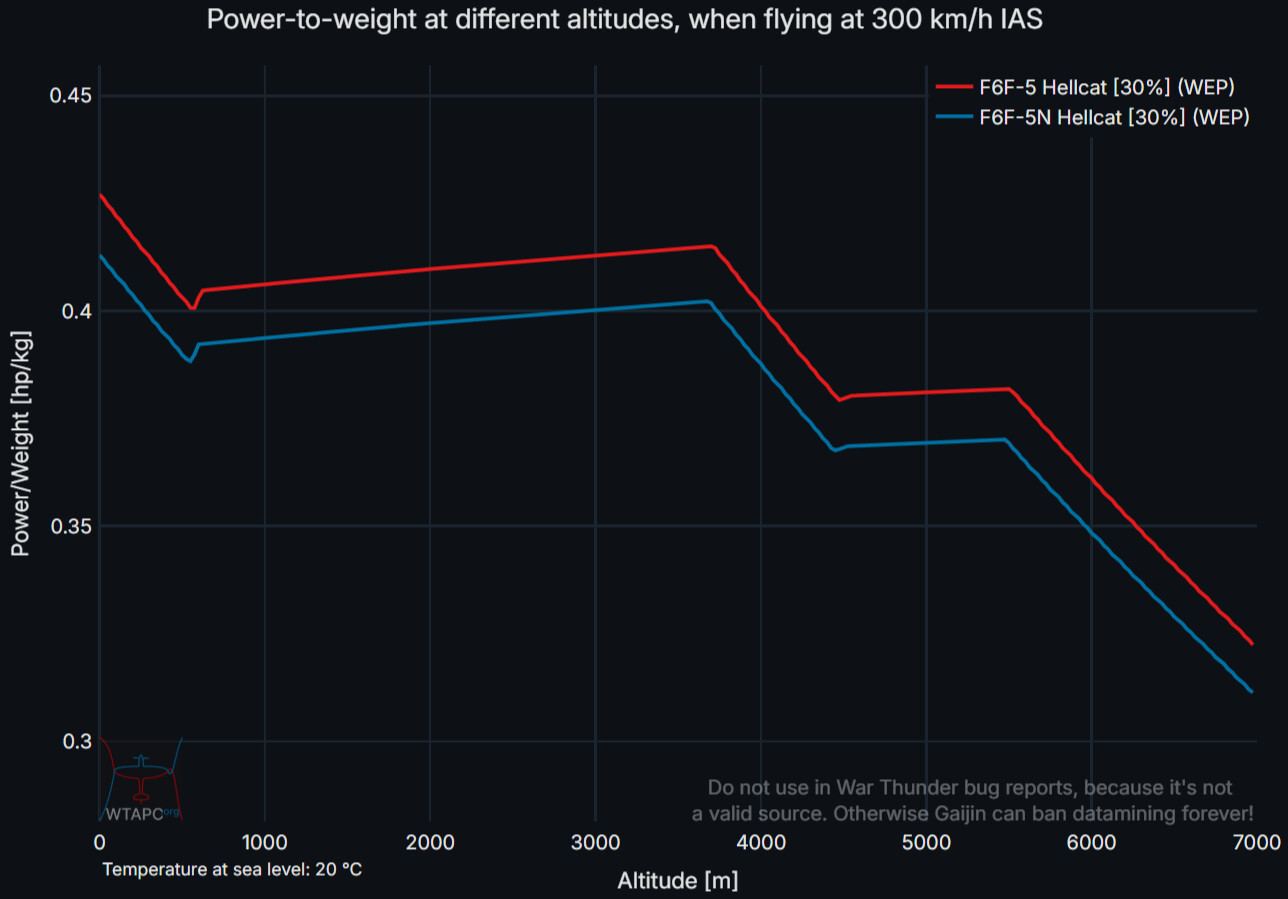
A short guide to Manual Engine Controls (MEC):
It is very rewarding to learn and constantly apply MEC during Simulator and Realistic battles. The main instruments beneficial for the F6F are: propeller pitch, radiators, and superchargers.
- The propeller pitch will enable the F6F to reach higher top speeds. This is vital during pursuits or diving away; something in which the F6F is great at. They also provide increased thrust/lift and less speed when needed; for example during vertical slow speed dogfights.
- The radiators lets the F6F cool down the engine in hot weather maps or when your overheating. While closed, they reduce aerodynamic drag and therefore increase top speed. However, prolonged closure of the radiators leads to overheating and ultimately, to engine damage.
- Superchargers are an important piece of the MEC, they will let the F6F reach superior high altitudes with a decent amount of speed even when fully loaded. They should only be used while climbing not during low altitude flights. Stage 1 is activated by default, stage 2 should be activated around 3-4 km of altitude and stage 3 should be activated above 5-6 km of altitude. The warmer the map, the sooner this should be activated. If cooler, it should be activated a little later.
Pilots should keep an eye out to make sure their inputs are affecting their performance positively and not negatively.
Usage in battle:
Air battles:
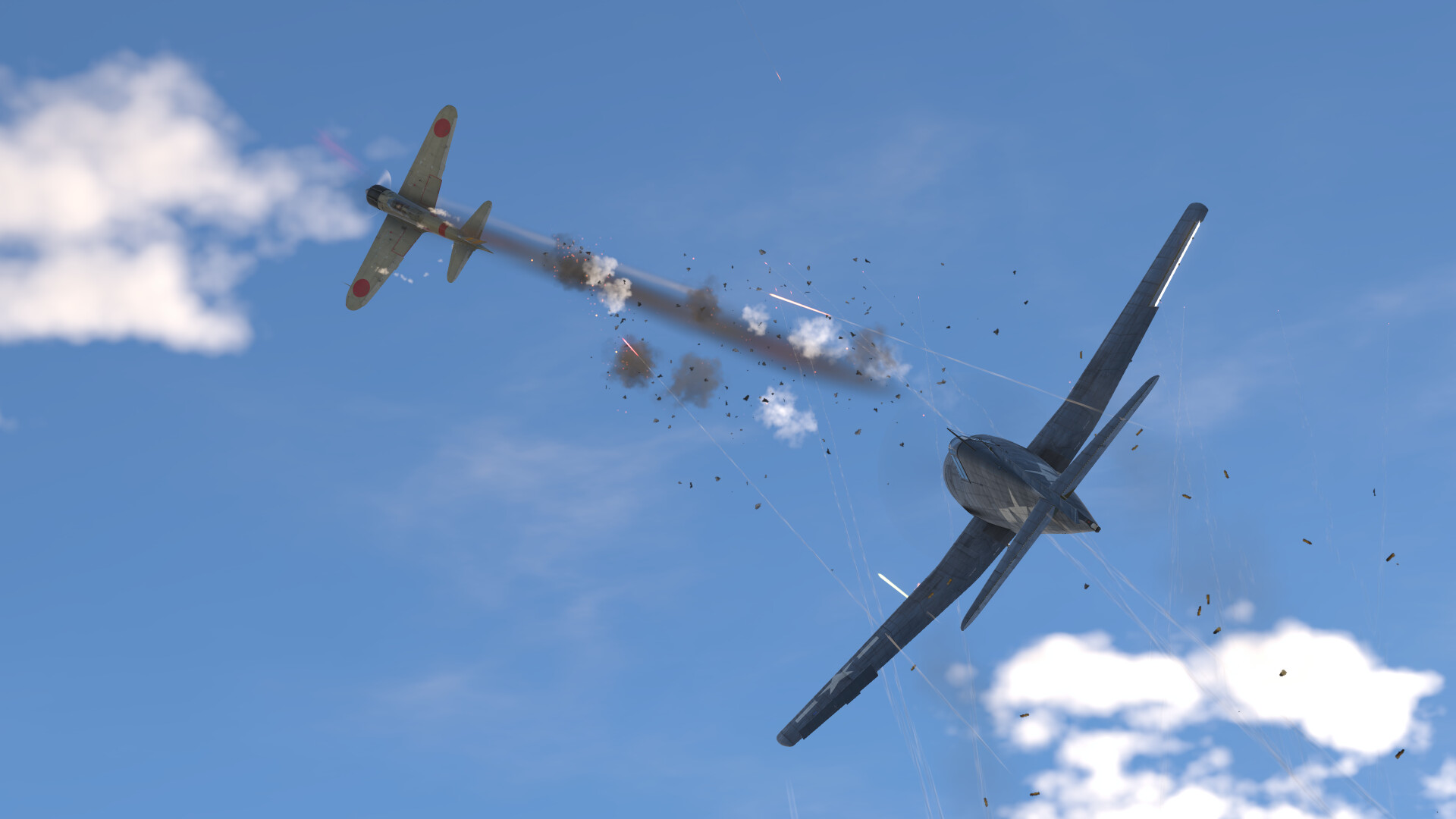
The key to both surviving and owning in the F6F is to keep your speed up and try to be even marginally higher than your opponents. Below 300 km/h it is very sluggish. As with most American fighters, boom & zoom is the preferred combat mode for the Hellcat, while its average high-speed maneuverability can be used to add in a high yo-yo. It has a lot of ammo, but good aim is still important since boom & zoom only allows you a small window of opportunity to hit your target before climbing back to altitude. Still, this is an excellent plane to practice your aim and tactics with because it’s more forgiving than most boom & zoom fighters. If you don’t have particularly good aim, a good tactic is to open up at 500m, starting with your aim on the aircraft, and then slowly move your aim ahead of the target. You won’t require as much lead when diving on your target at around 500-600 km/h but be careful: past 650 km/h it compresses and pulling out becomes very difficult. The Hellcat even has a decent turn rate as long as you keep your speed so turn fighting twin-engine fighters like the Mosquito is viable.
The F6F-5N plays very similarly, but more cautiously, as it is a bit heavier. The twin 20 mm cannons are fairly easy to aim and do a lot of damage so head-ons are viable, especially with turn-fighters like Spitfires or Zeros, but be careful as they can damage or even set fire to your engine. The radar is situational in Arcade or Realistic, but can be very useful in simulator. Not many planes have a radar at this BR so it can give you an edge in identifying targets before you spot them. It also has IFF, target tracking, and a very fast scanning rate both horizontally and vertically.
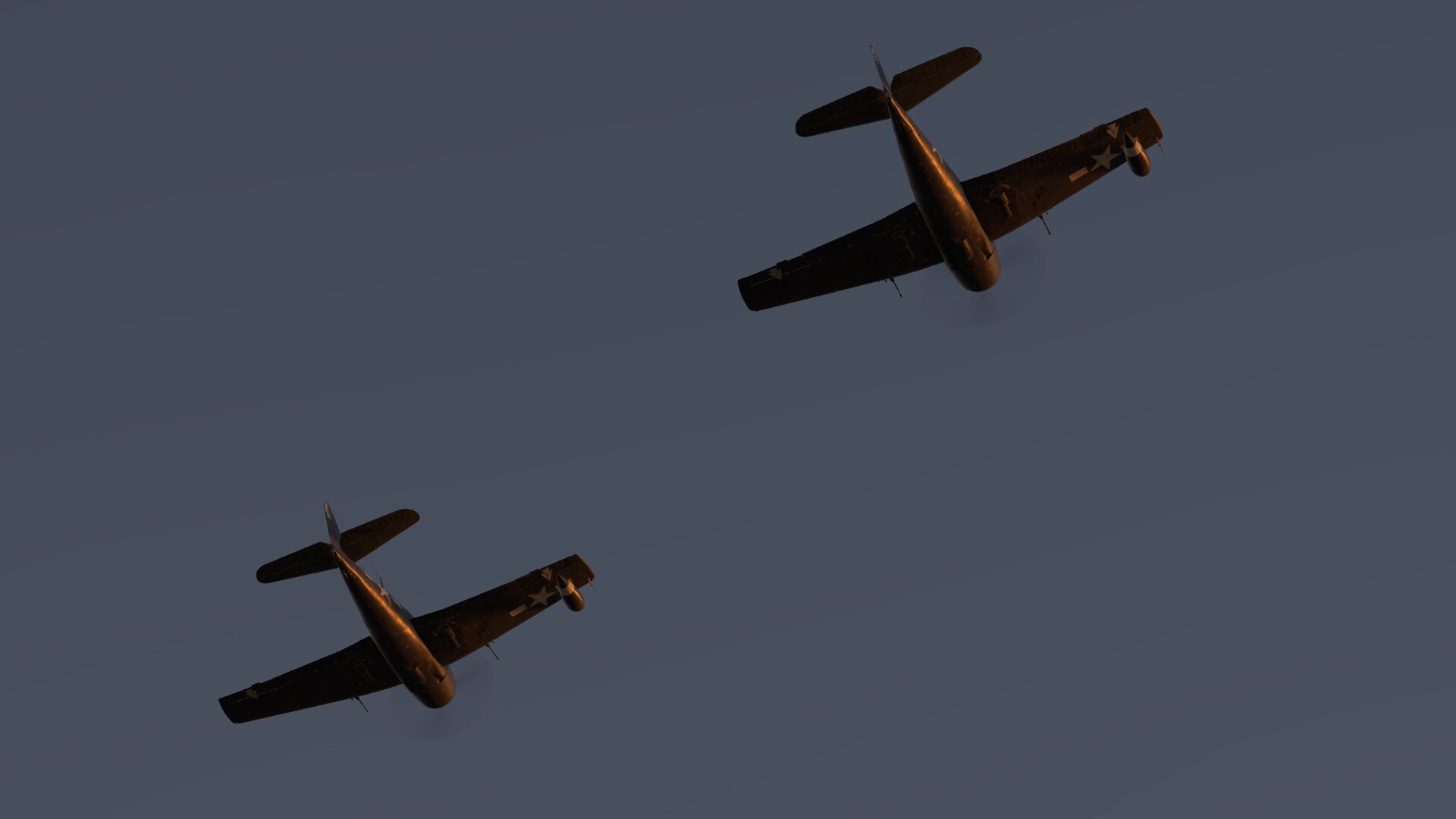
It is incredibly important to use Manual Engine Controls while piloting the Hellcat in Realistic or Simulator Battles. The Hellcat has access to three Supercharger gears, each tailored for a different altitude, and each will significantly improve your performance at their appropriate altitudes.
Ground battles:
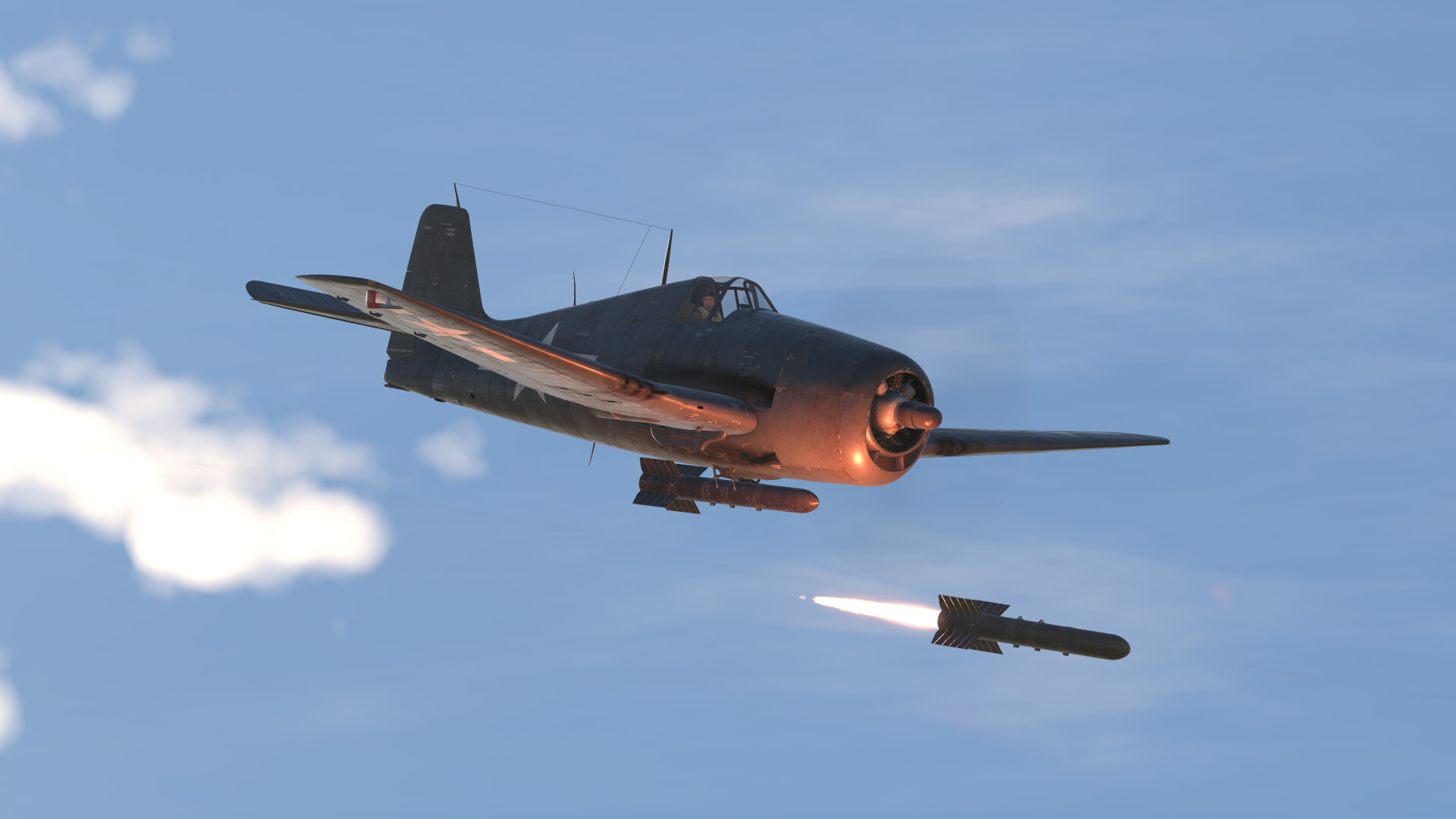
There really isn’t much more to say about the F6F other than that it excels in ground attack, a large option of munitions will suit any scenario and any player. The Tiny Tims you get are devastating against tanks, not even requiring a direct hit to overpressure the enemy. Just be careful to fire them from far enough to not damage yourself. You can equip three 1000 lb bombs or even a 2000 lb bomb to destroy clusters of enemies. HVARs are a good alternative to your guns to take care of open-tops or SPAA. Keep an eye on the sky for enemy aircraft and keep your speed as a slow Hellcat is an easy target.