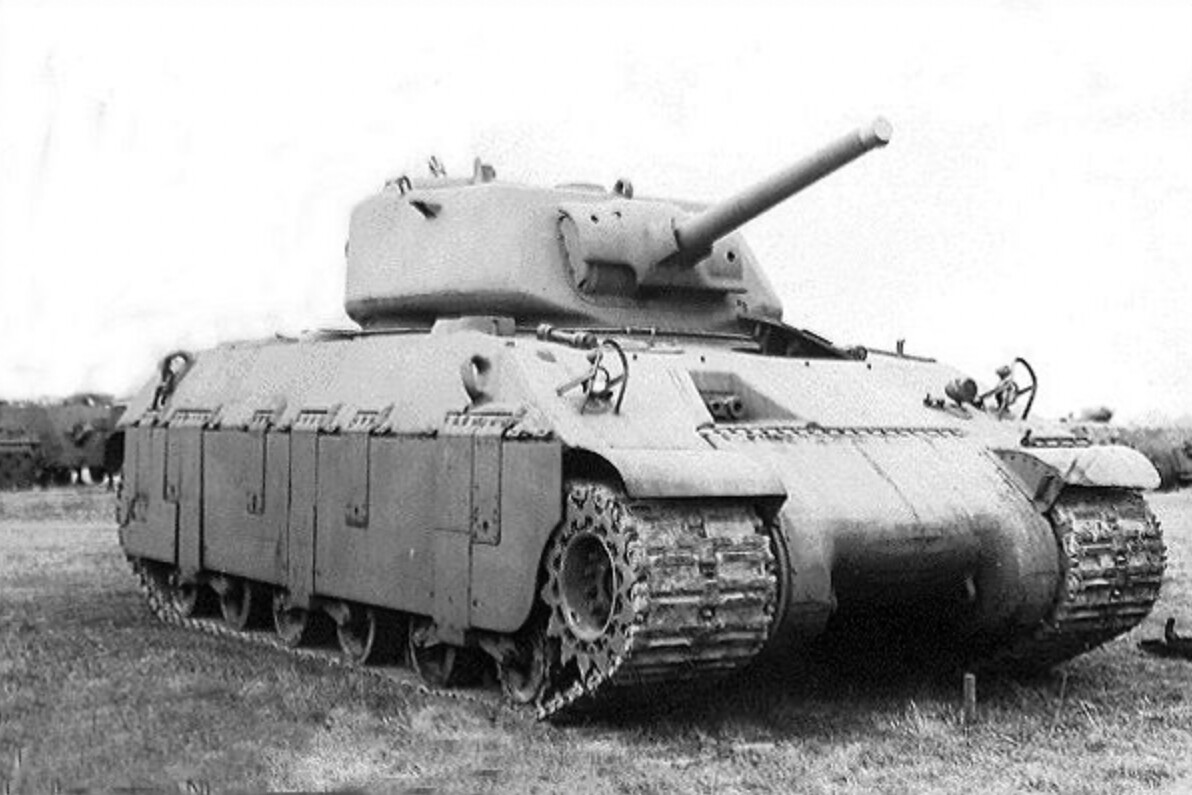
The T14 was a heavy tank that was the result of a joint American and British project aimed at developing a universal heavy infantry tank. The United States built two prototypes, one of which was sent to Great Britain for testing and the other was tested in the United States. They never entered serial production and never saw combat.
Technical data
| Length | 6.19 Meters |
| Width | 3.17 Meters |
| Higth | 2.99 Meters |
| Mass | 42.6 Tons |
| Crew | 5 |
| No. Build | 2 |
| Main Armament | 75 mm M3 (90 Rounds) |
| Secondary Armament | 2x M1919 Browning (1x coaxial, 1x in the chassis) (9000 Rounds) |
| Engine | Ford GAA V8 |
| Max. Speed | 38 km/h |
| Power-to-Weight Ratio | 12.86 HP/t |
| Operational Range | 160 km |
Development
The United States wanted to develop its own heavy assault tank. Therefore, the head of the American Ordnance Department, Henry L. Stimson, traveled to Great Britain in 1941. His task was to analyze British experience with the Churchill tank and develop their own model, providing ideas and future requirements. The tank to be developed was to be more powerful than the Churchill. Following this, the United States and the British launched a joint project in which both sides would develop a new assault tank and, once both sides were satisfied, hand over a prototype to the other for testing.
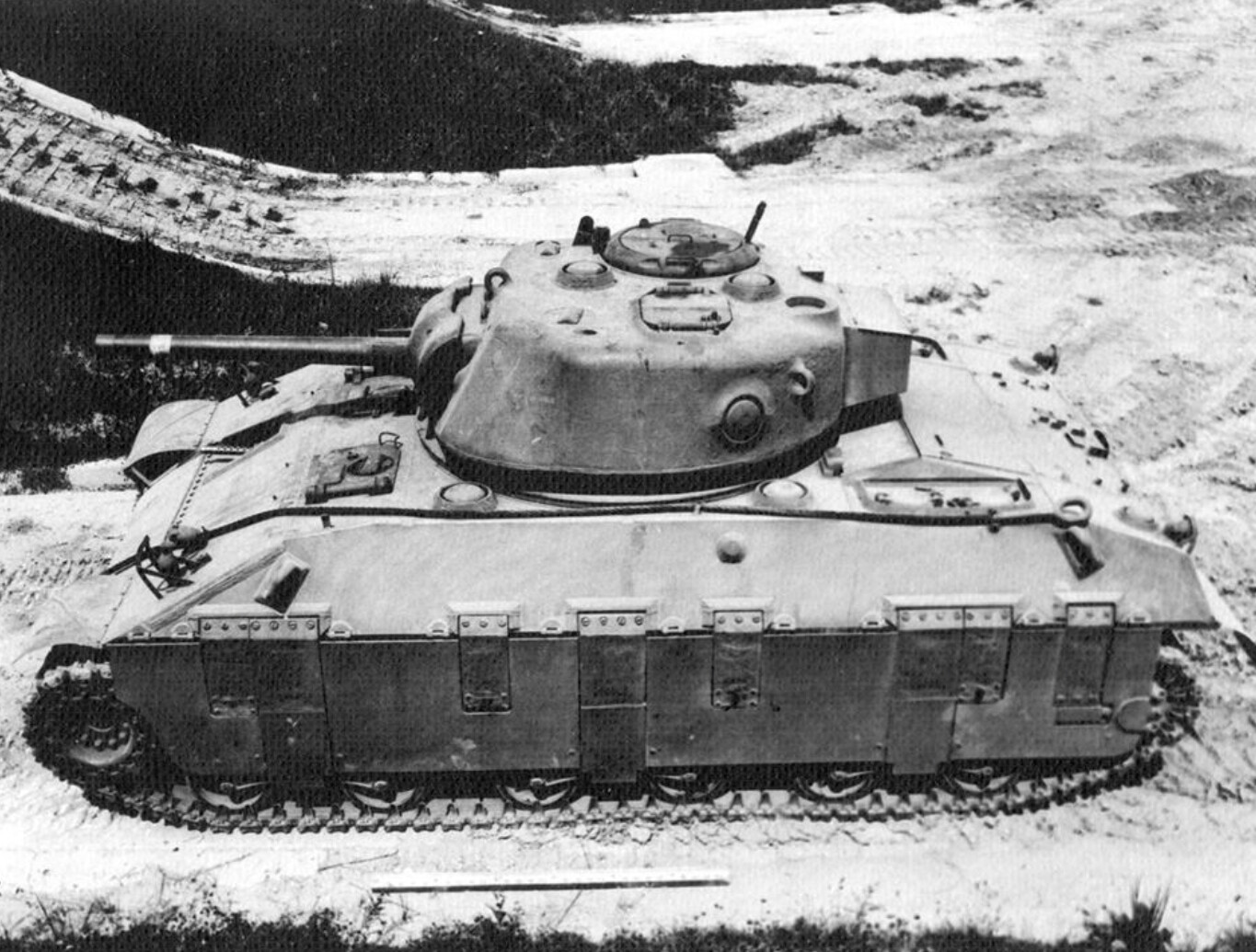
In 1943, the tank design called for a British 57 mm 6 pounder or the American 75 mm M3/M2, which was used in the M4 Sherman and the M3 Lee or M3 Grant, and also used many parts already used on the M4 Sherman to simplify production and save costs through custom-made parts. Ultimately, the engineers decided on the 75 mm M3 for the T14. After several downgrades in priority due to chassis defects and raw material shortages, several modifications and alterations were made to the chassis of the first prototype to address these deficiencies. The armor was to have the same thickness as the M4 Sherman, namely 50 mm, but the 60-degree angled armor increased the effective armor of the T14's frontal hull to approximately 127 mm. The turret armor was increased to 101 mm and had a 30-degree angle. The side armor was increased to 60 mm and was additionally used with additional armor in the form of steel plates. Instead of leaf springs, it was decided to use double road wheels, one inside and one outside, dampened by a coil spring. The engine was initially planned to be a Ford GAA V8, but ultimately a Ford V12 was chosen, with a fuel tank holding just under 950 liters, thus giving a range of approximately 160 kilometers at 38 km/h.
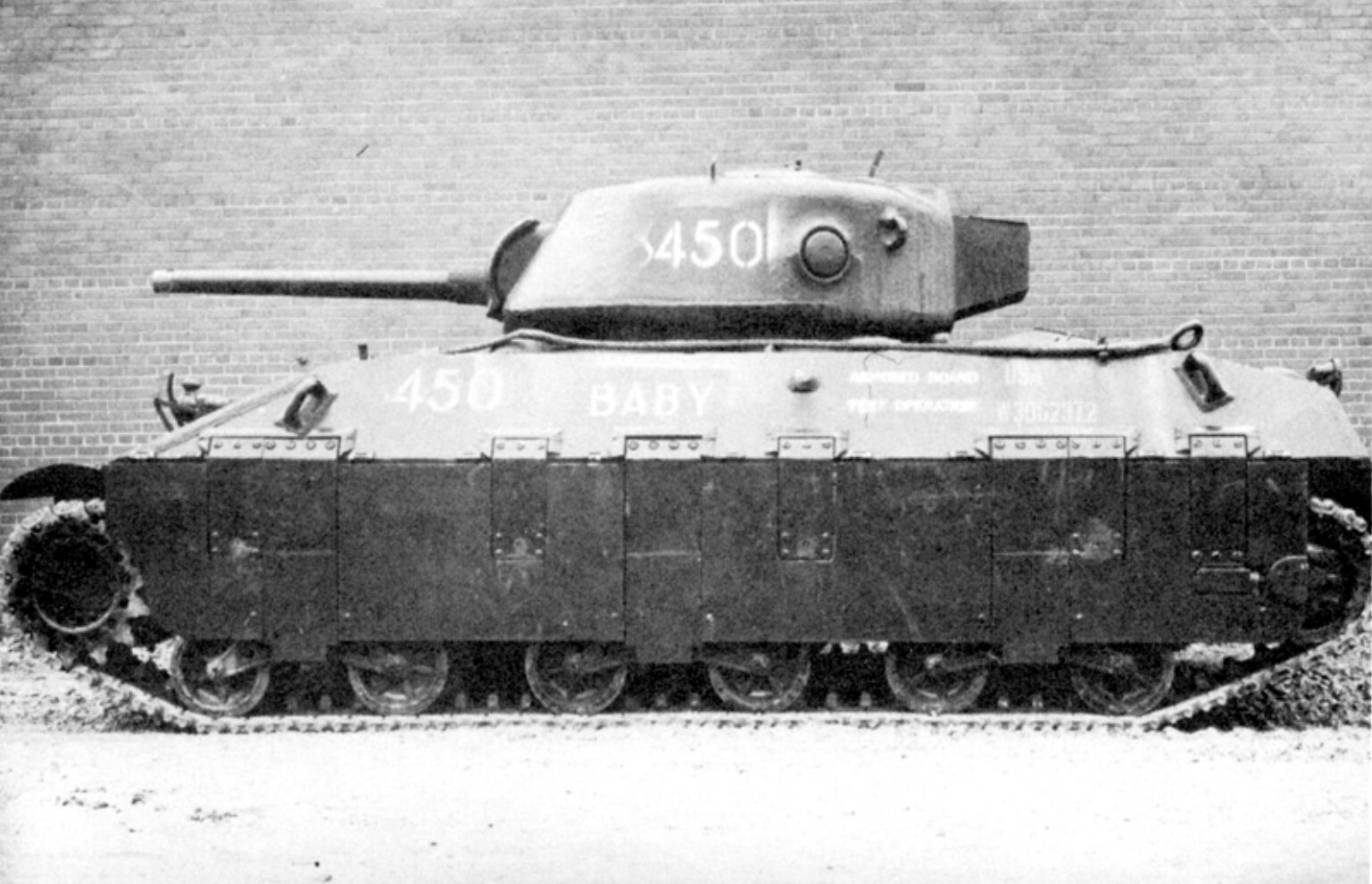
The British ordered 8,500 units in advance, after which US engineers began detailed design. Tests on the second completed prototype, delivered to Great Britain in 1944, showed that the vehicle was far too heavy for its intended purpose. Tests on the first prototype in the United States produced the similar results: high wear on the tracks and outer road wheels, the suspension system was unsatisfactory, and the tracks slipped when driving off-road. The nose machine gun recess also represented a weak point in the armor. At this point, the British Army was more than satisfied with the Churchill and its cruiser tanks such as the Crusader or Cromwell and the planned series production and British pre-orders for the T14 were canceled due to the identified deficiencies in the chassis and hull.
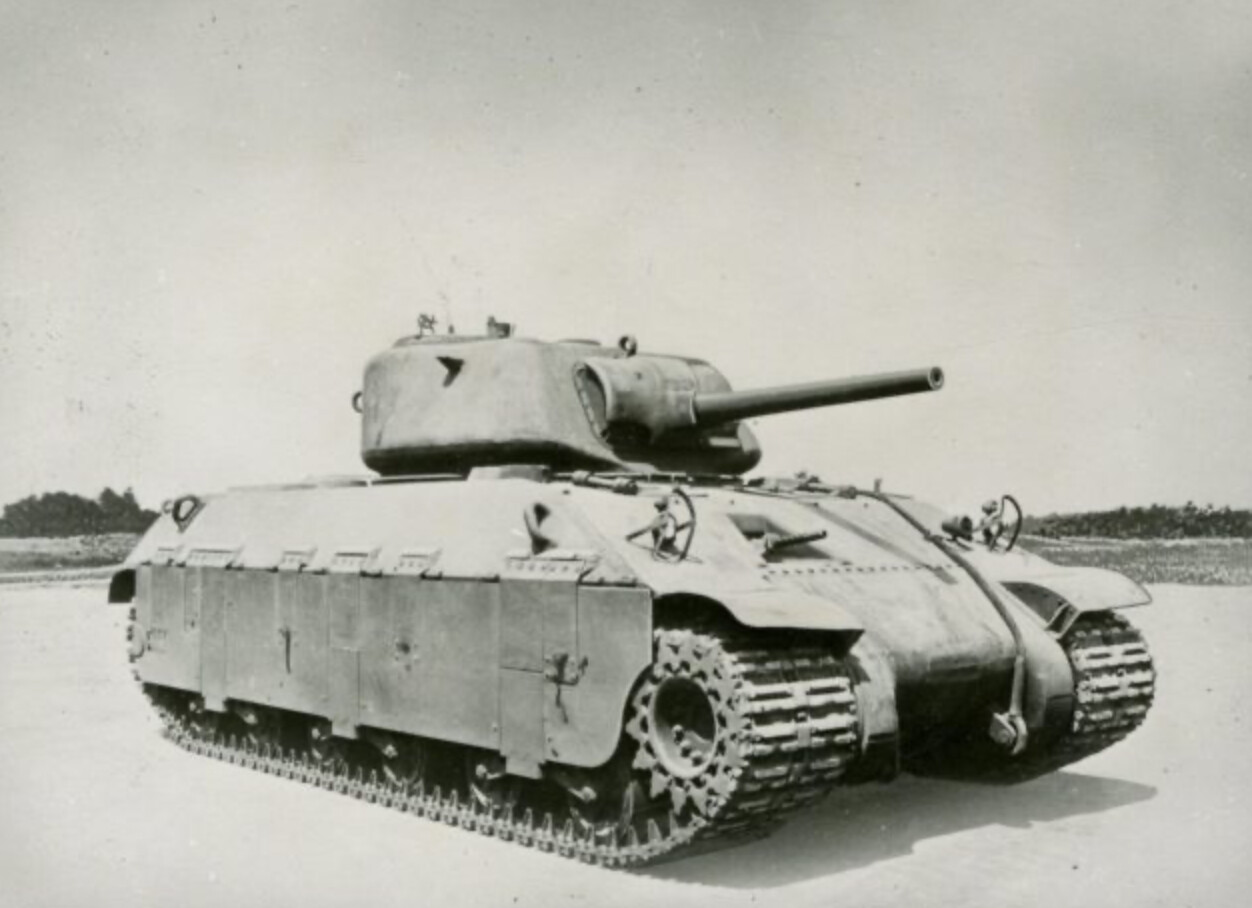
The units ultimately built consisted of only two prototypes. The British, for their part, had developed the A33 Excelsior heavy assault tank based on the same characteristics and specifications as part of the joint project. This tank was based on the Cromwell, but was a redesign. It was significantly wider and more heavily armored on the hull. A reinforced Cromwell turret was used as the turret, but this, too, never entered service or went into serial production.
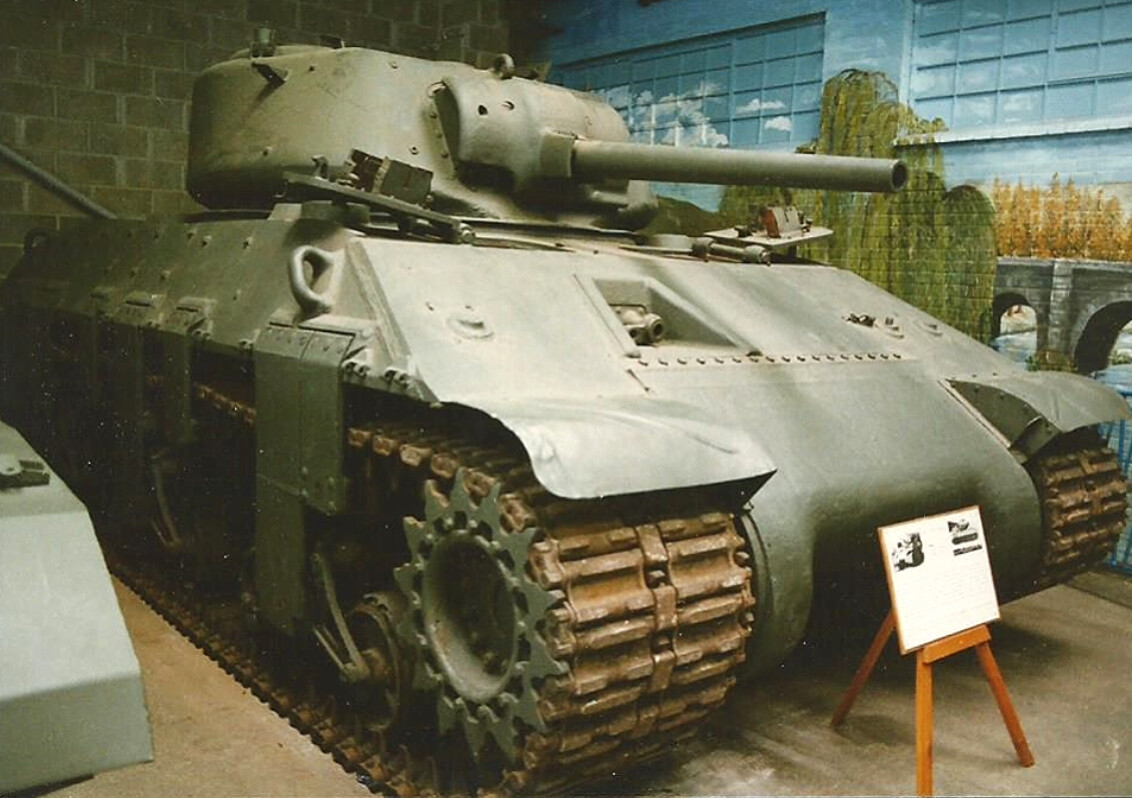
Both tanks never made it past the testing phase due to their unfavorable technical characteristics, particularly their weight. For heavy tanks, the Allies continued to rely on the British Churchills, several different versions of which had already been developed specifically for specific missions (you can find out more about the different Churchill versions here: The Churchill: The Iron Prime Minister). They were satisfied with them, so they preferred them and, accordingly, they were used instead of the T14 or the A33 until the end of World War II.