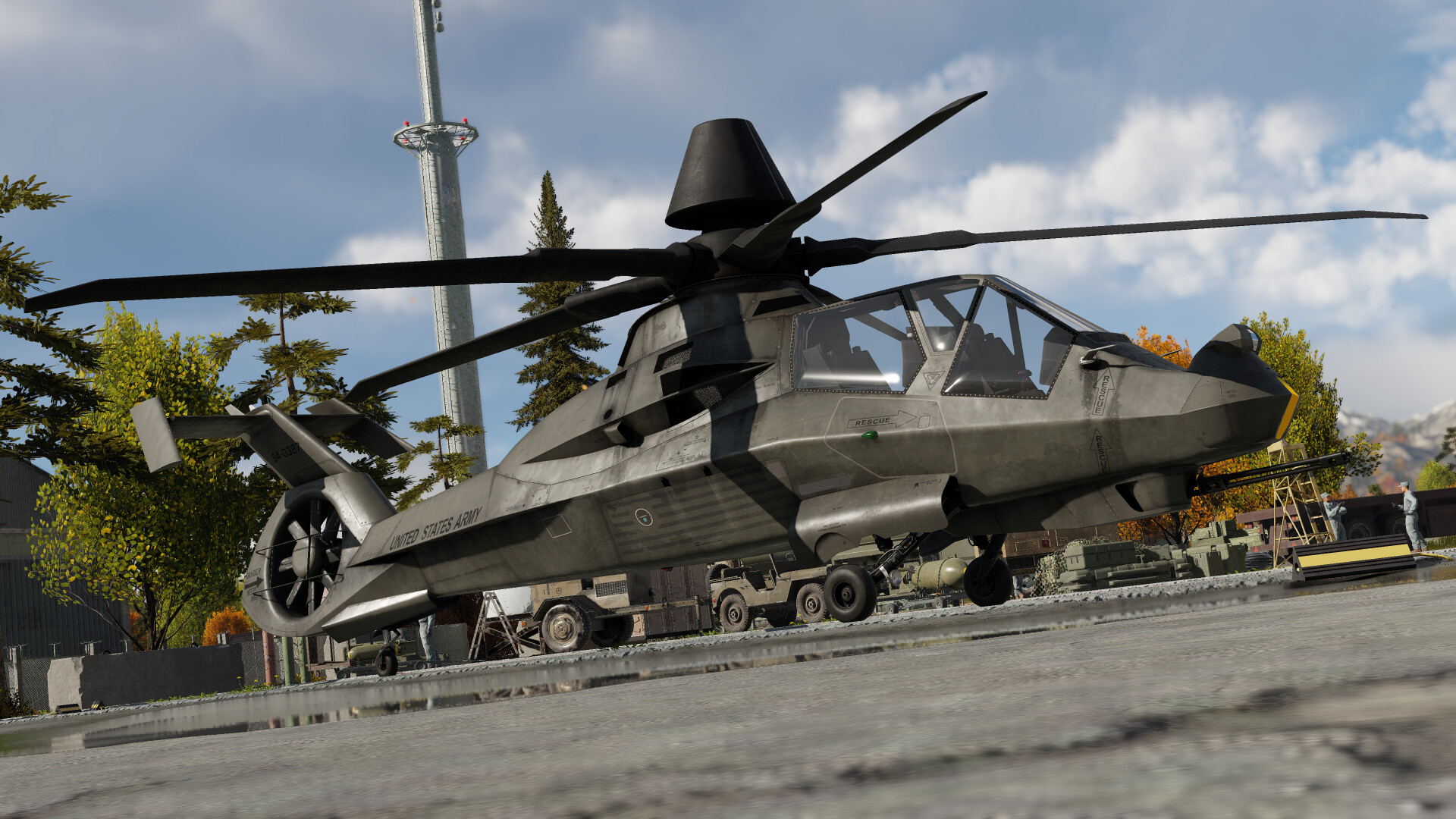
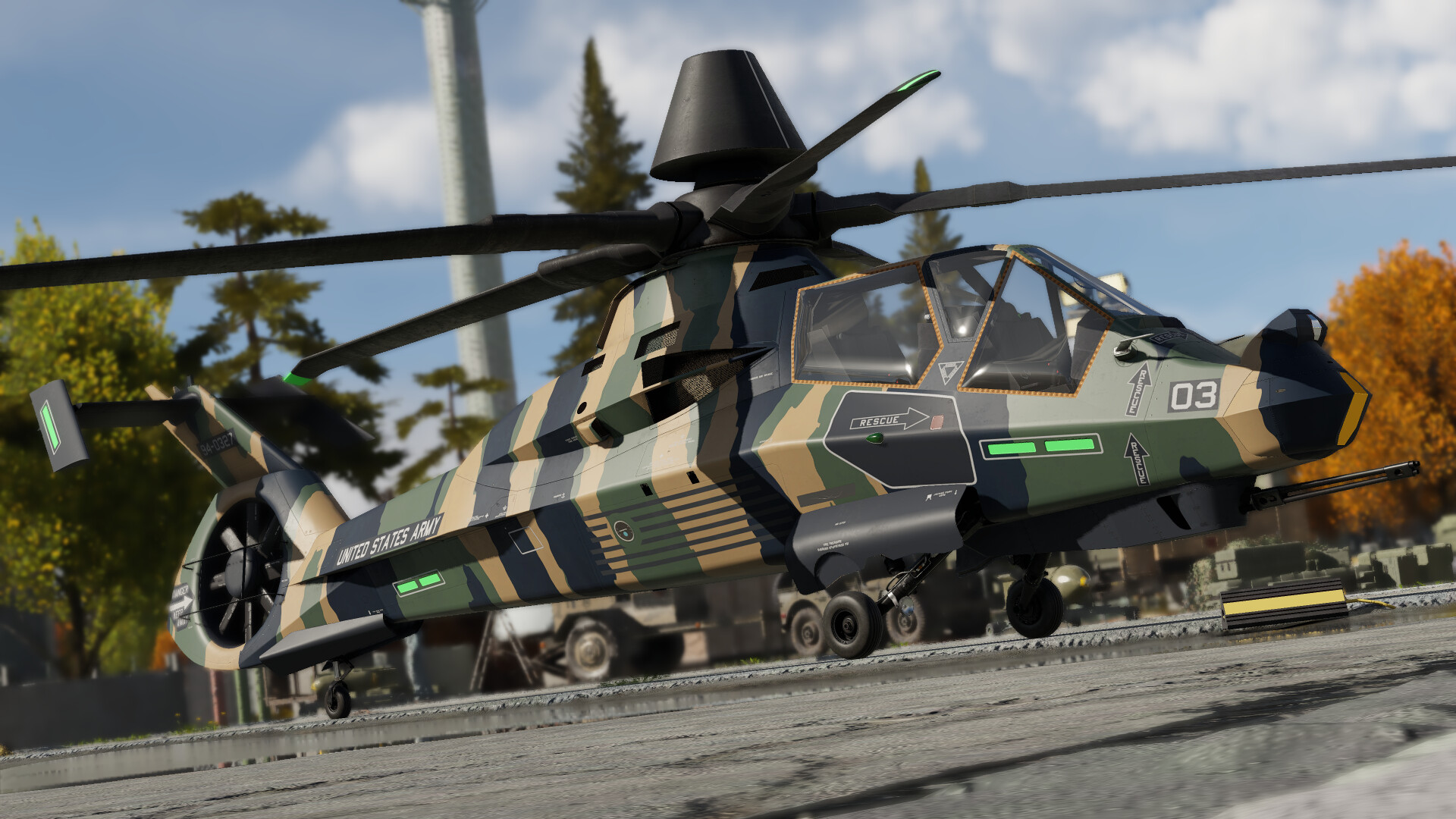
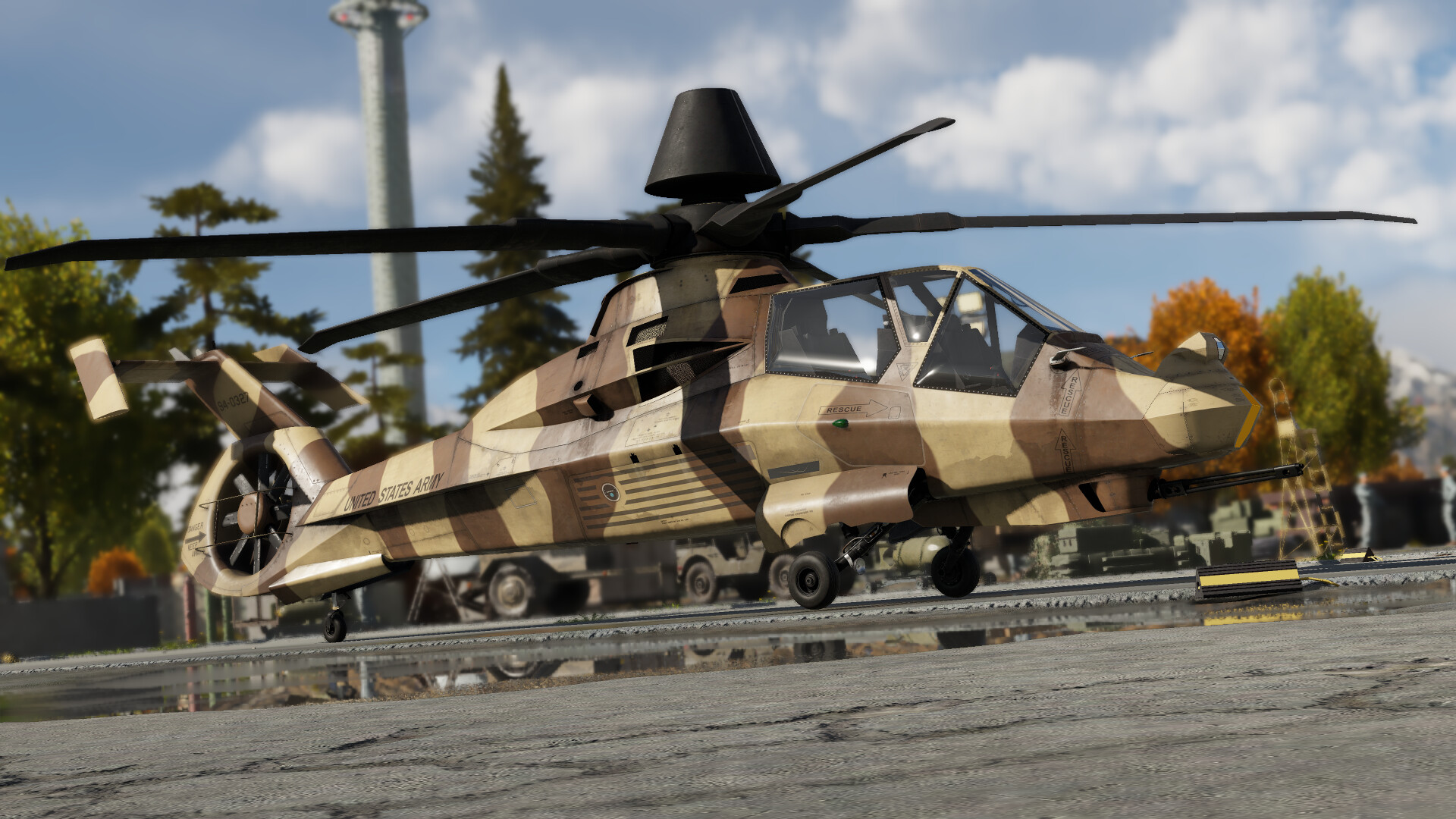
Hello everyone, and welcome to the Bob’s Guide! In this article I will guide you through the RAH-66 Comanche’s history, modules, armaments, mobility and how to play it in different game modes!
History of the Comanche
In the 1980s, the U.S. Army launched the LHX program to replace its aging helicopters, aiming to develop a stealth-capable aircraft with a maintenance-friendly design. Boeing-Sikorsky won the contract, leading to the development of the RAH-66 Comanche—though only two prototypes were built.
Despite meeting or exceeding performance requirements—including stealth, maneuverability, and advanced avionics—the program suffered from delays, budget overruns, and shifting military priorities following the end of the Cold War.
The helicopter featured revolutionary innovations, including reduced radar, infrared, and acoustic signatures, as well as a fully integrated fly-by-wire system. Its advanced rotor and fantail systems enabled exceptional agility, including the unique “snap-turn” maneuver. Maintenance was streamlined through a modular, dual-fuselage design, and the helicopter was intended for both reconnaissance and light combat roles.
Ultimately, the project was canceled in 2004, but the Comanche’s technology influenced future military aviation.

Armors and Modular Protection Analysis
This section is covered in detail in the video, watch from the timestamp here.
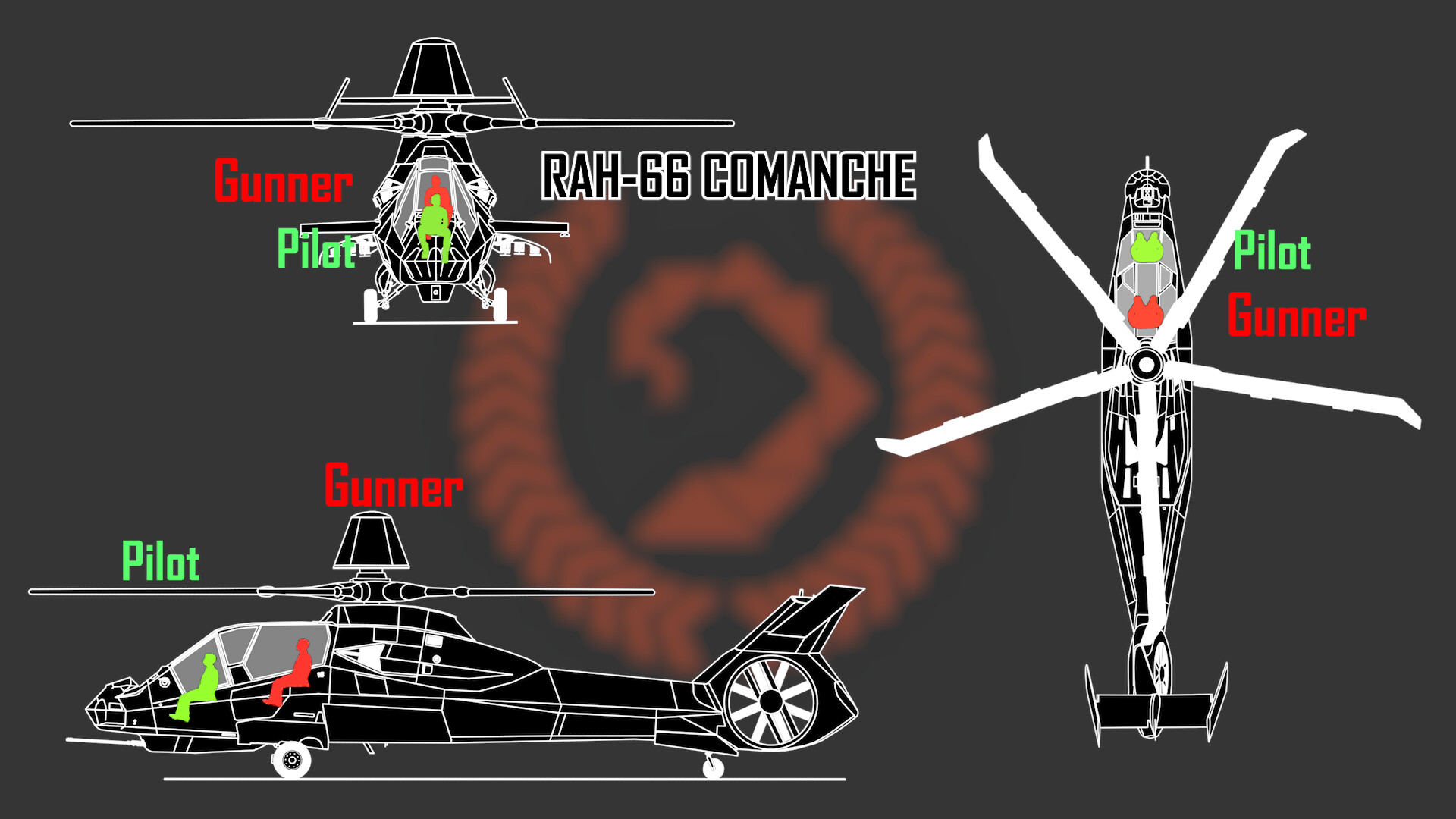
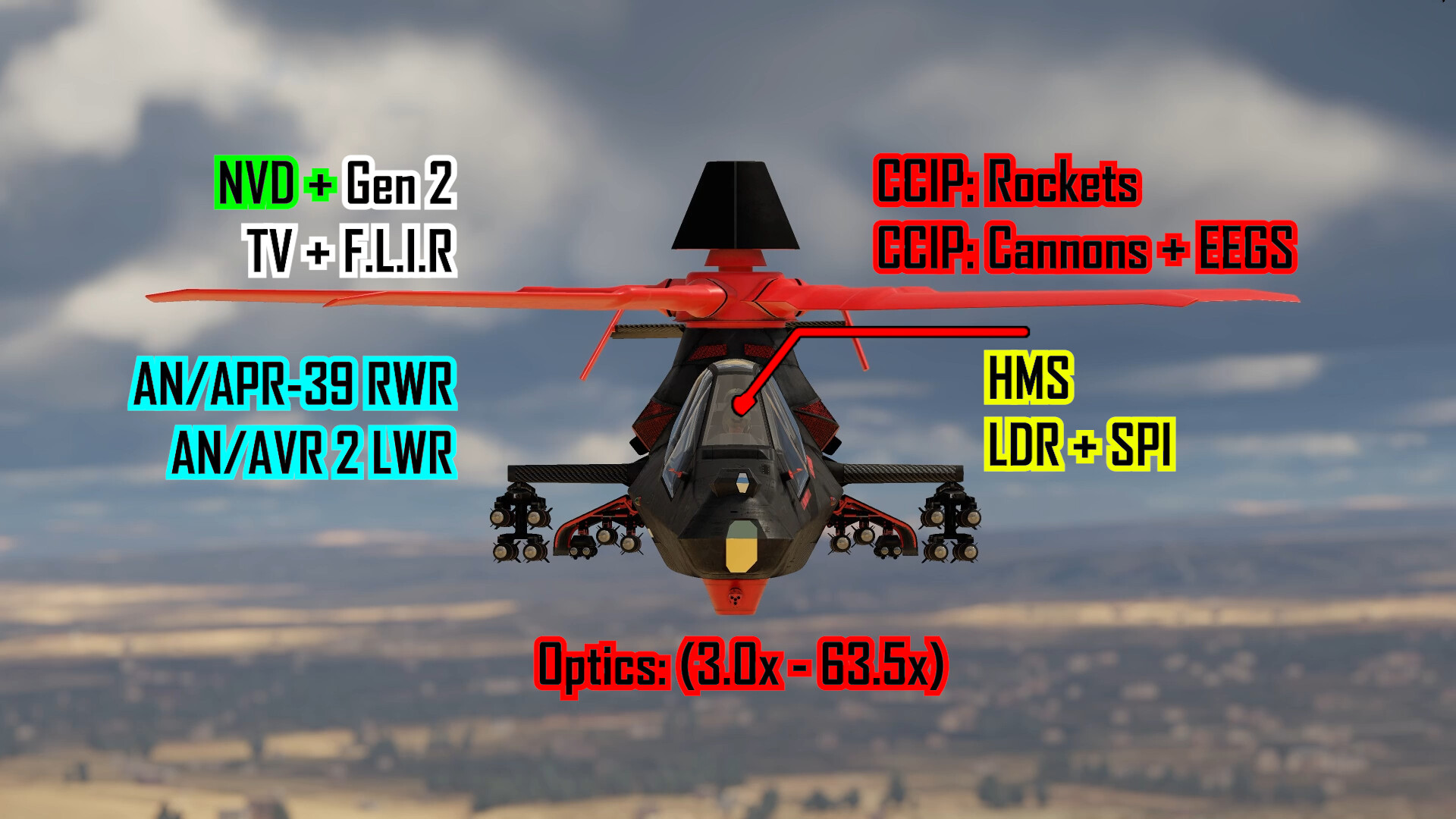
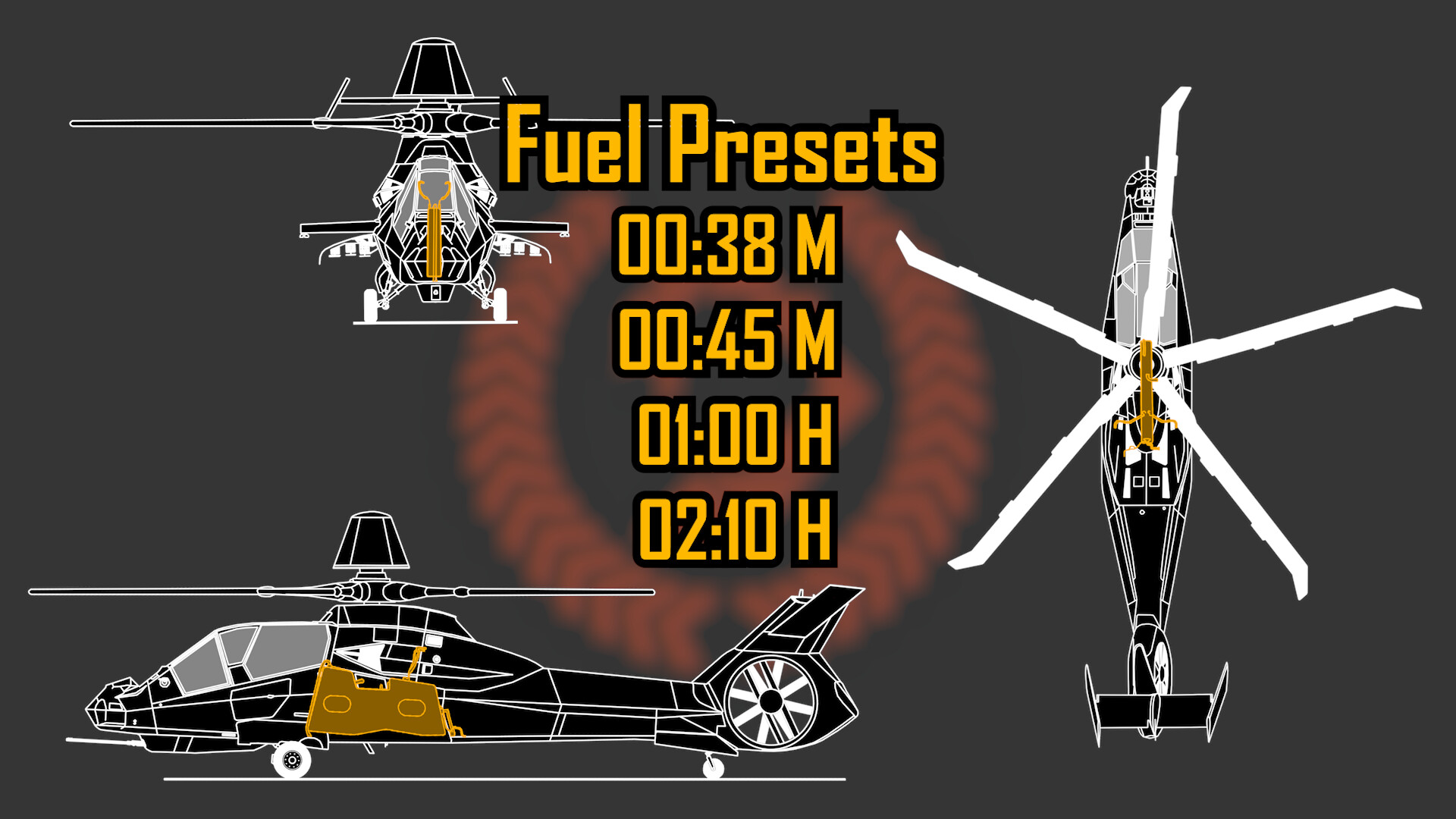
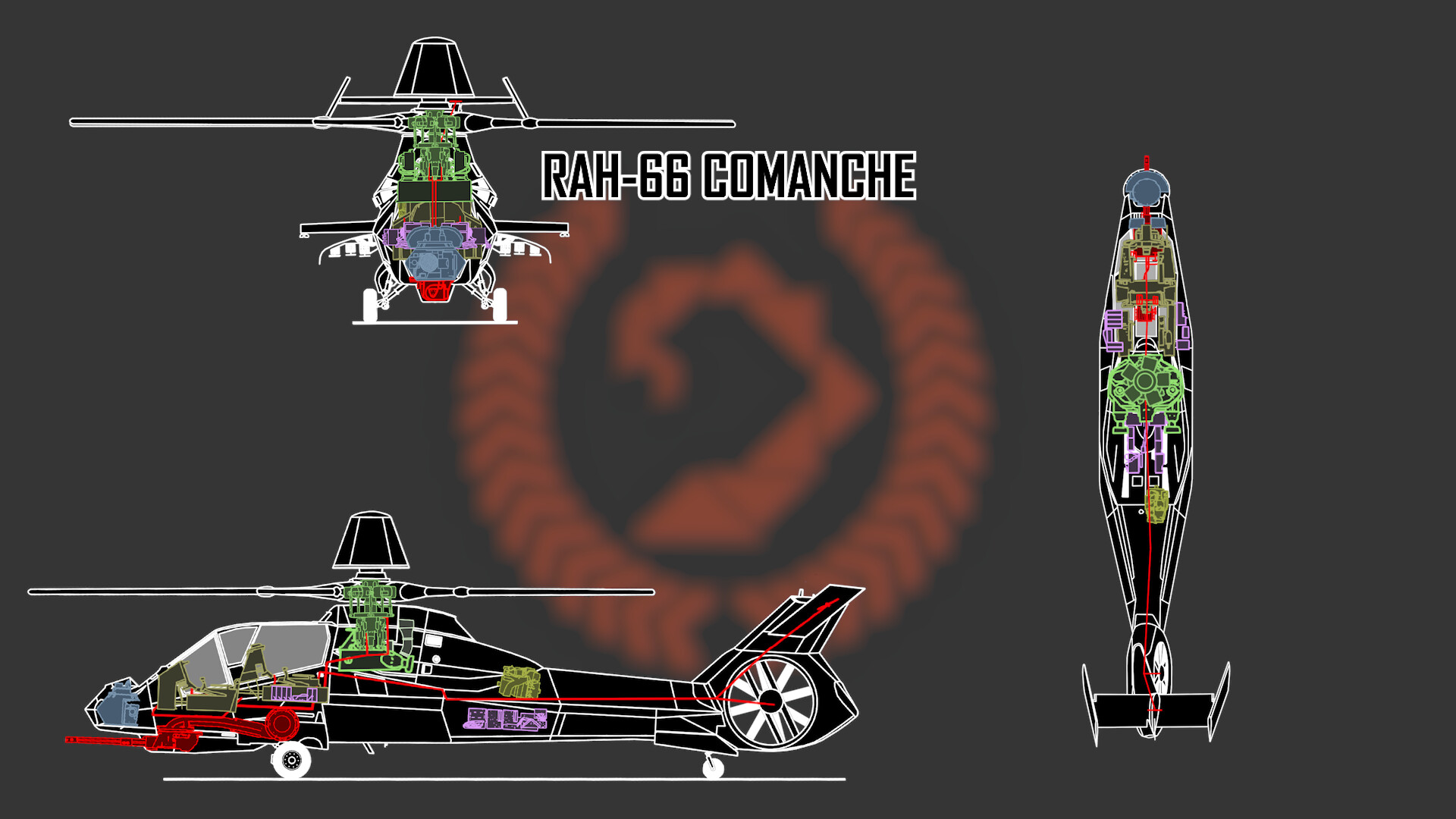
The RAH-66 Comanche features a dual-operator cockpit and control systems, advanced targeting systems including second-generation thermals, FLIR, and a 63.5× zoom optic. It is also equipped with RWR and LWR.
Despite lacking countermeasures such as flares, IRCM, or MAW systems, its low radar and infrared signatures help compensate for this limitation.
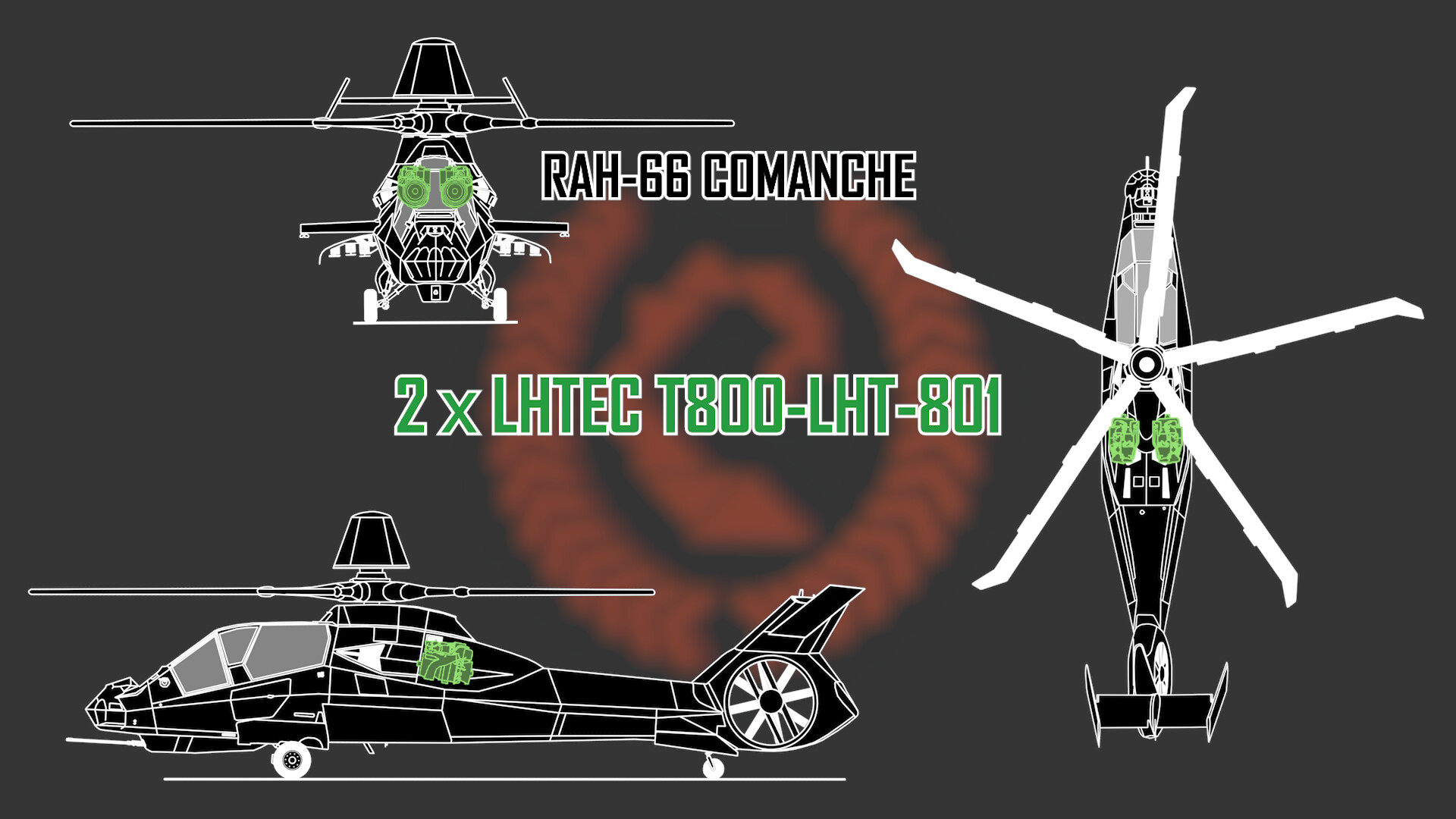
Internally, it includes modern avionics, a self-sealing fuel tank with a neutral gas pressurization system, and LHTEC T800-LHT-801 engines that require careful RPM management. Additional systems include the AN/APG-78 Longbow radar for target detection, making it a somewhat decent platform in War Thunder.
The information about Radar Cross Section and infrared signature of this helicopter are beyond the scope of this article and will be examined in detail in a separate article based on a dedicated search.
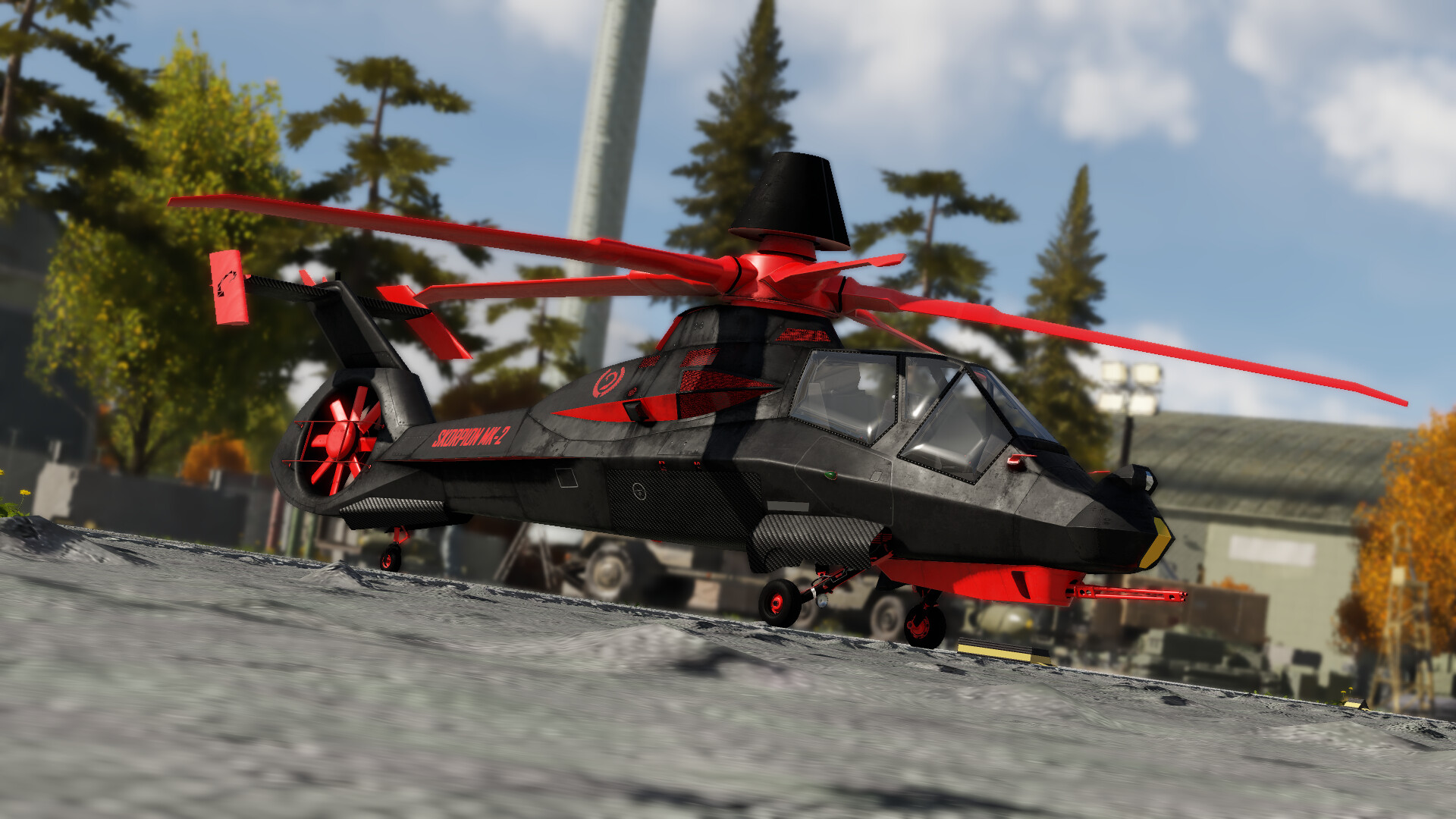
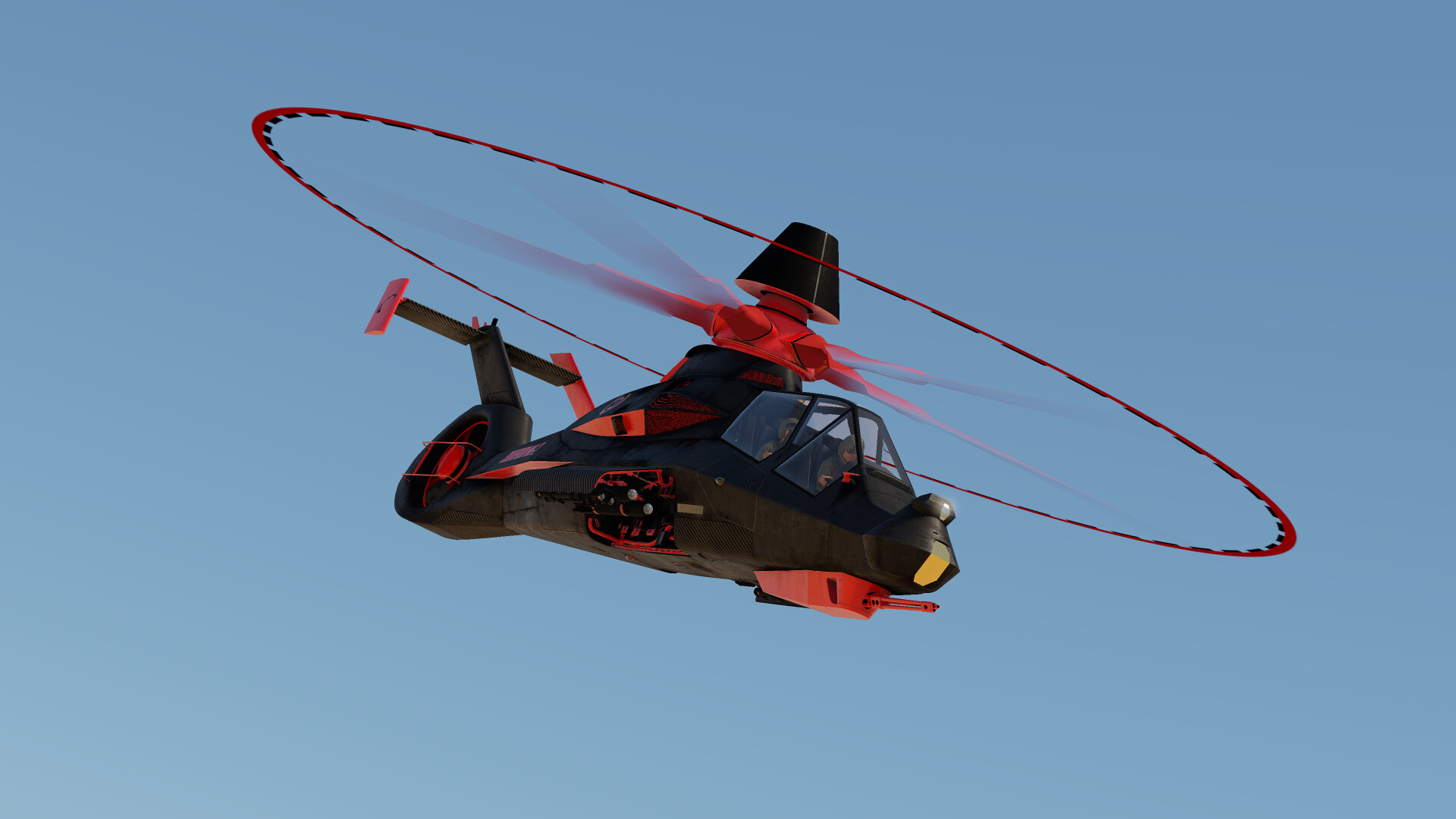
PLEASE NOTE: This custom skin is only available in live.warthunder and is not currently in the game. You can download this skin here.
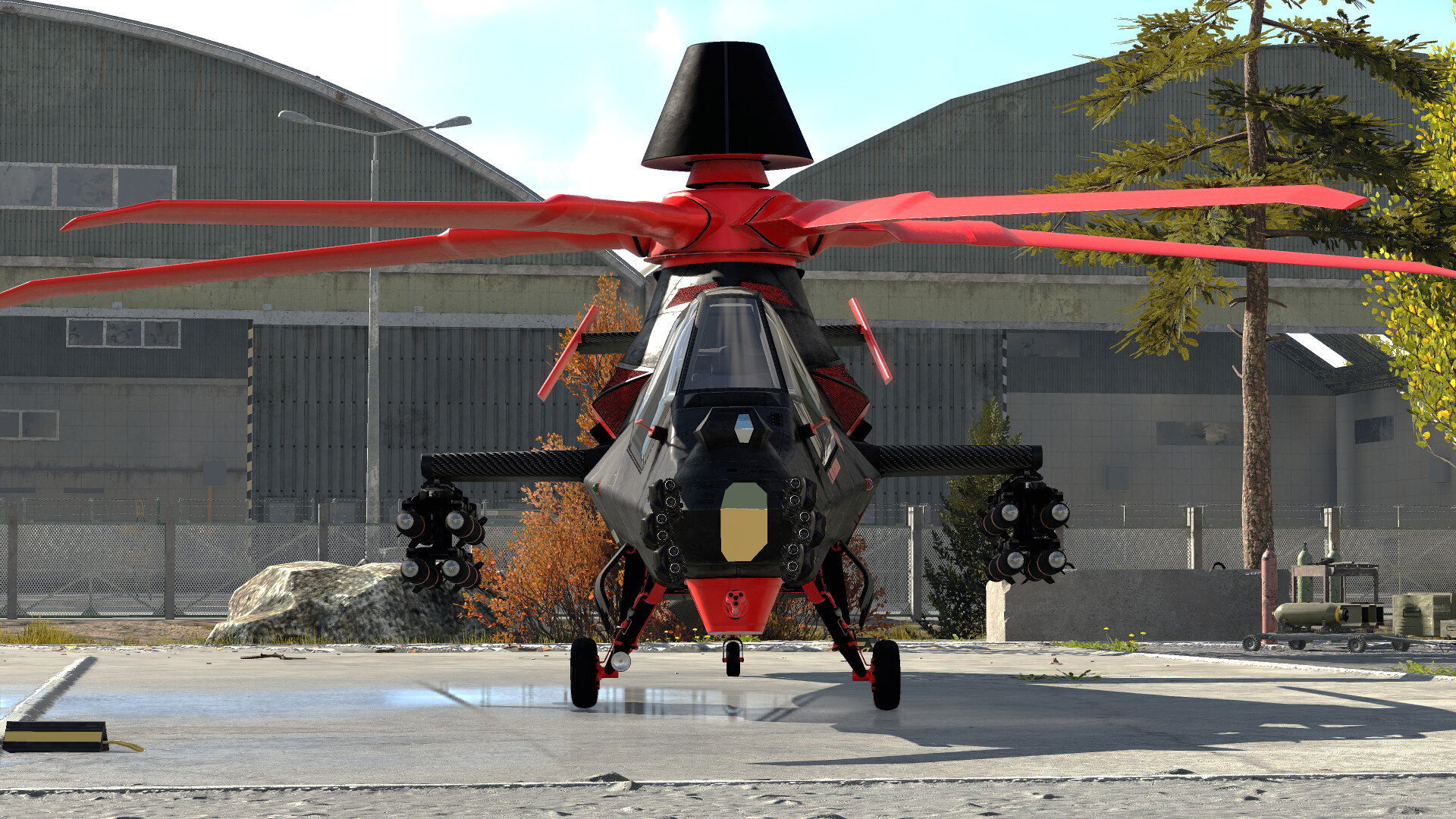
Armaments of the Comanche
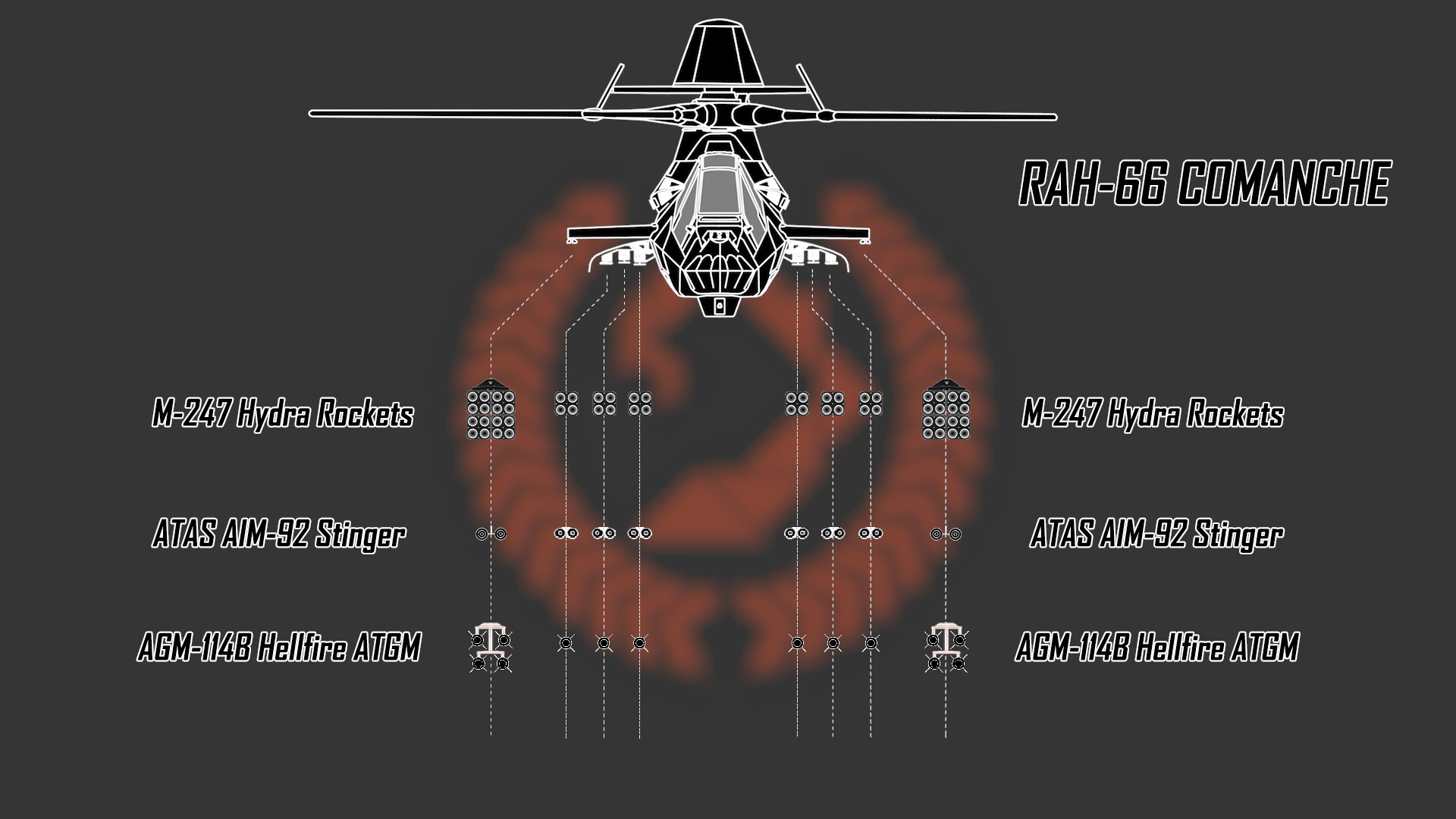
Unfortunately, there are several inaccuracies in how the Comanche is represented in the game, such as the inclusion of modern Hellfires, the number of AIM-92 Stingers it carried, and gun or optics stowage that compromises its stealth profile. I’ve decided to leave these issues in the video itself rather than bringing them in this article.
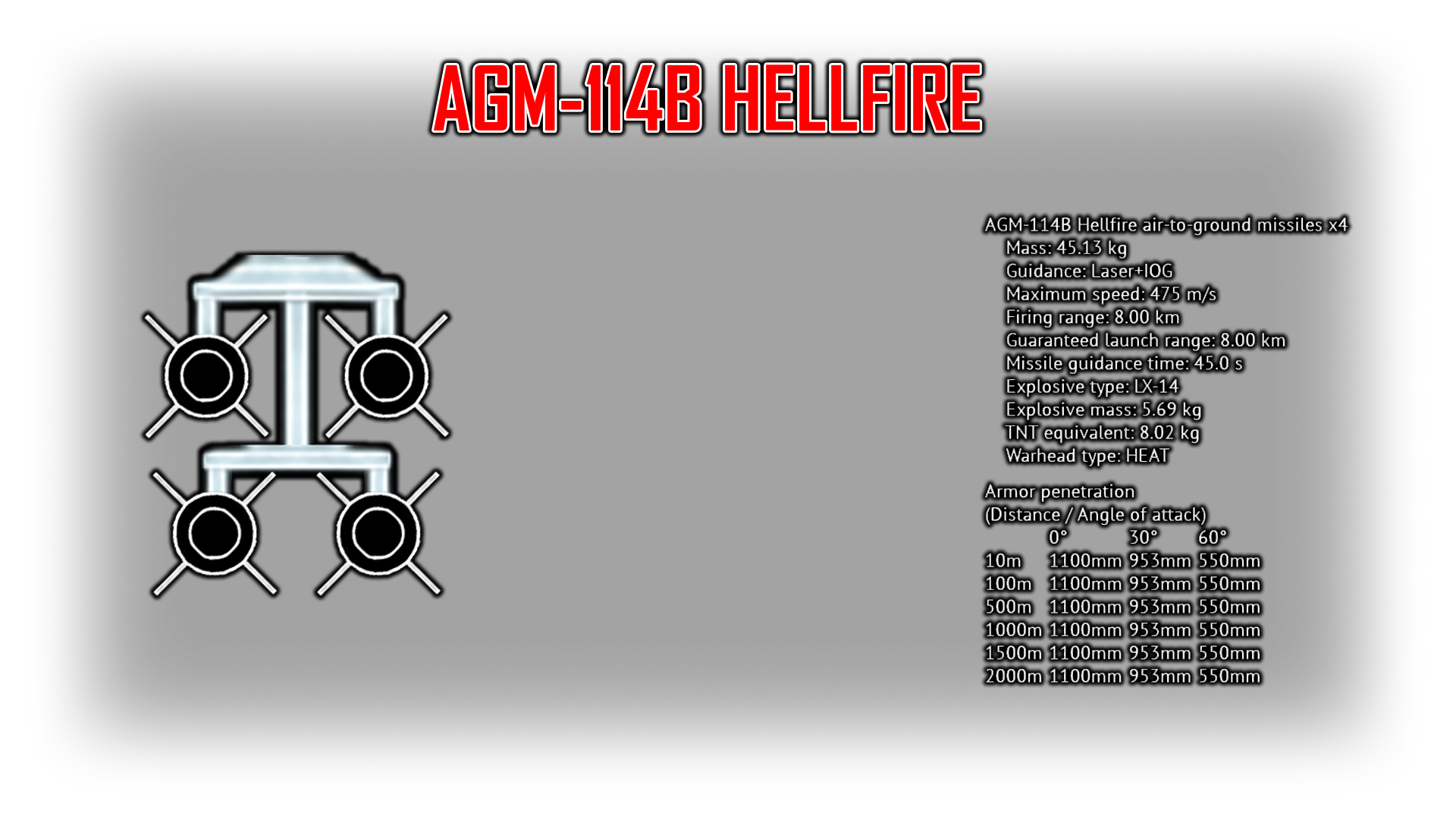
AGM-114B Hellfire ATGMs (14x)
4x ATGMs on outer pods; 1x ATGM per inner pod; Totaling 14x ATGMs
| Pros | Cons |
| Excellent explosive mass | Visible on SPAA radar |
| Great HEAT penetration | Lacks tandem warhead |
| Impressive speed | Inaccurate & pointless lofting |
| 8 km of range | Missile tracking issues |
| Precision targeting via IRST lock | Requires practice to aim effectively |
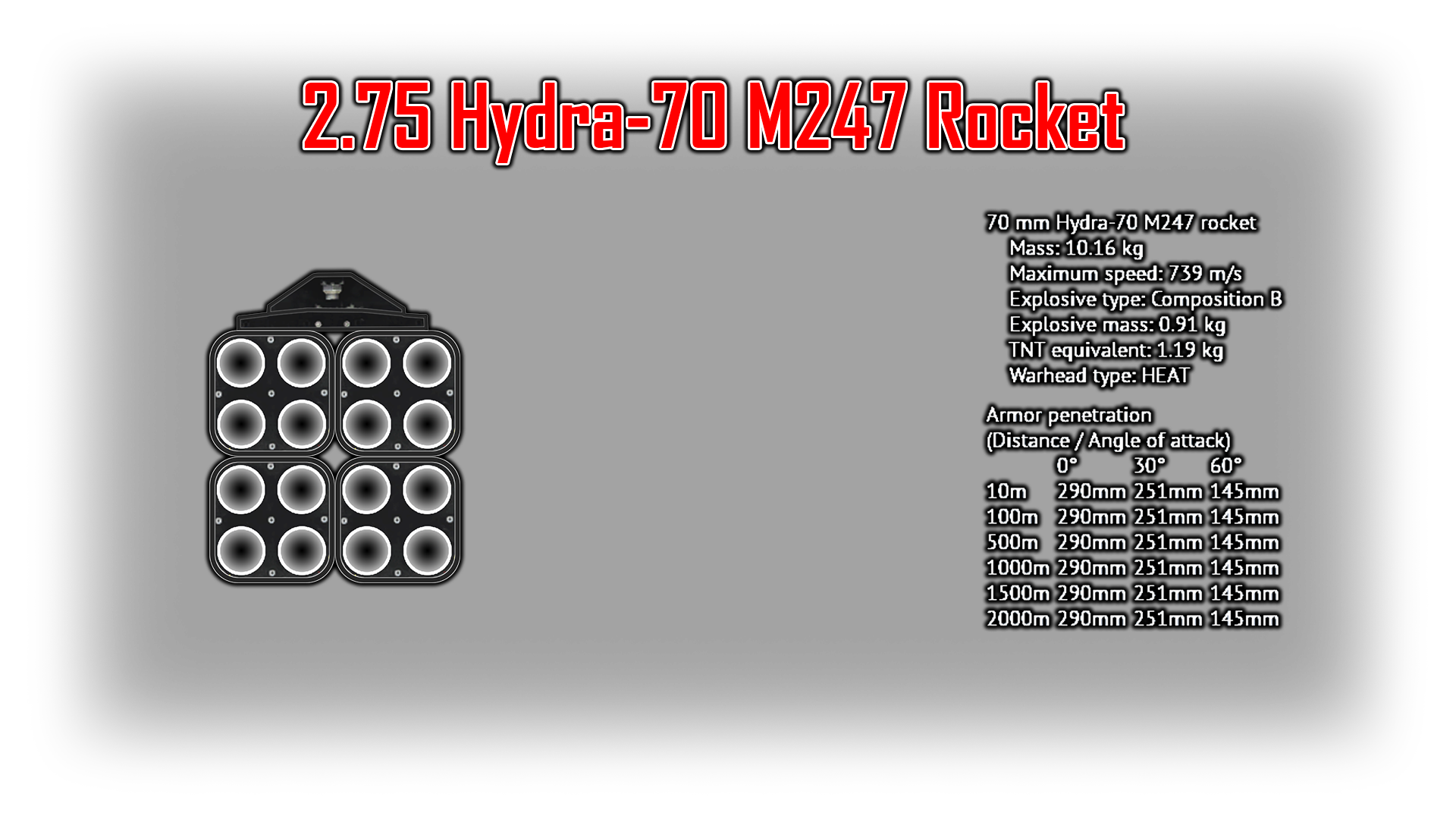
2.75 Inch Hydra-70 M247 Rocket (56x)
16x rockets on outer hardpoints + 4x per inner hardpoints; Totaling 56x rockets
General information about the hydra rockets
- Solid Penetration: Up to 290 mm, making them effective against armored or soft targets.
- Good Explosive Mass and Speed: Capable of delivering decent damage upon impact.
- Moderately Reliable: Can be a useful secondary weapon option in Helicopter PVE.
- Inefficient Weapon Trade-Off: Four Hydra rockets occupy the space of one Hellfire missile (compared to 7:1 on other helicopters, such as the Apache), reducing your guided munition capacity.
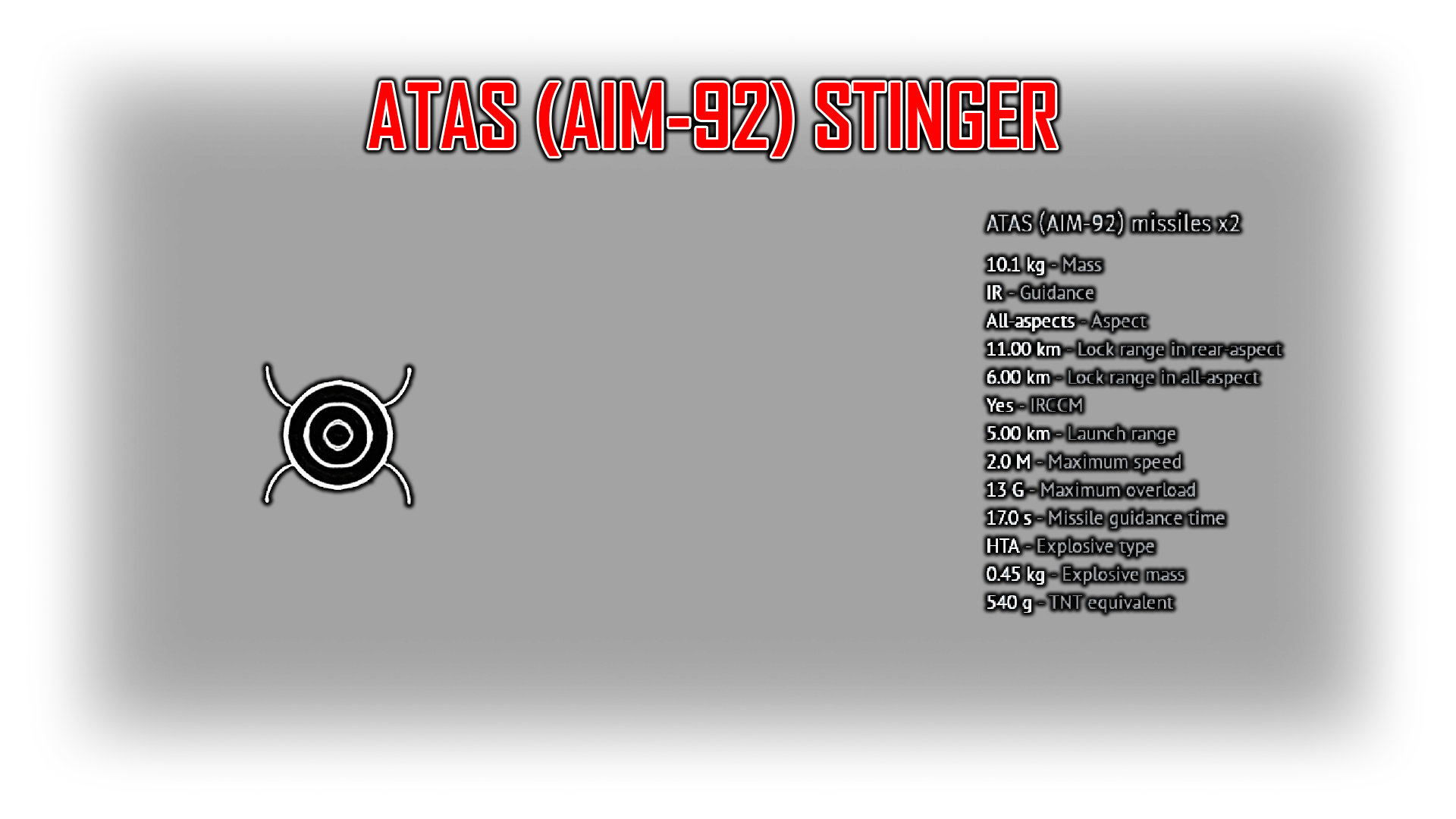
ATAS AIM-92 (16x)
2 per hardpoint; Totaling 16x ATAS
| Pros | Cons |
| Decent maneuverability | No proximity fuse |
| Good 6 km range | Easily evaded |
| Useful for air defense | Questionable efficiency on outer pylons |
| Flexible loadout options |
Some tips for using the ATAS AIM-92
- For maximum firepower, consider loading AIM-92 Stingers in internal bays only, allowing for:
- 4 ATAS + 12 Hellfires,
- 8 ATAS + 10 Hellfires,
- 12 ATAS + 8 Hellfires.
- Avoid placing ATAS AIM-92s on outer pylons unless you prioritize air defense over ground attack capability.
- Use ATAS AIM-92s primarily for opportunistic kills on unaware or low-mobility aircraft; avoid relying on them too much, they may fail to take down the enemy.
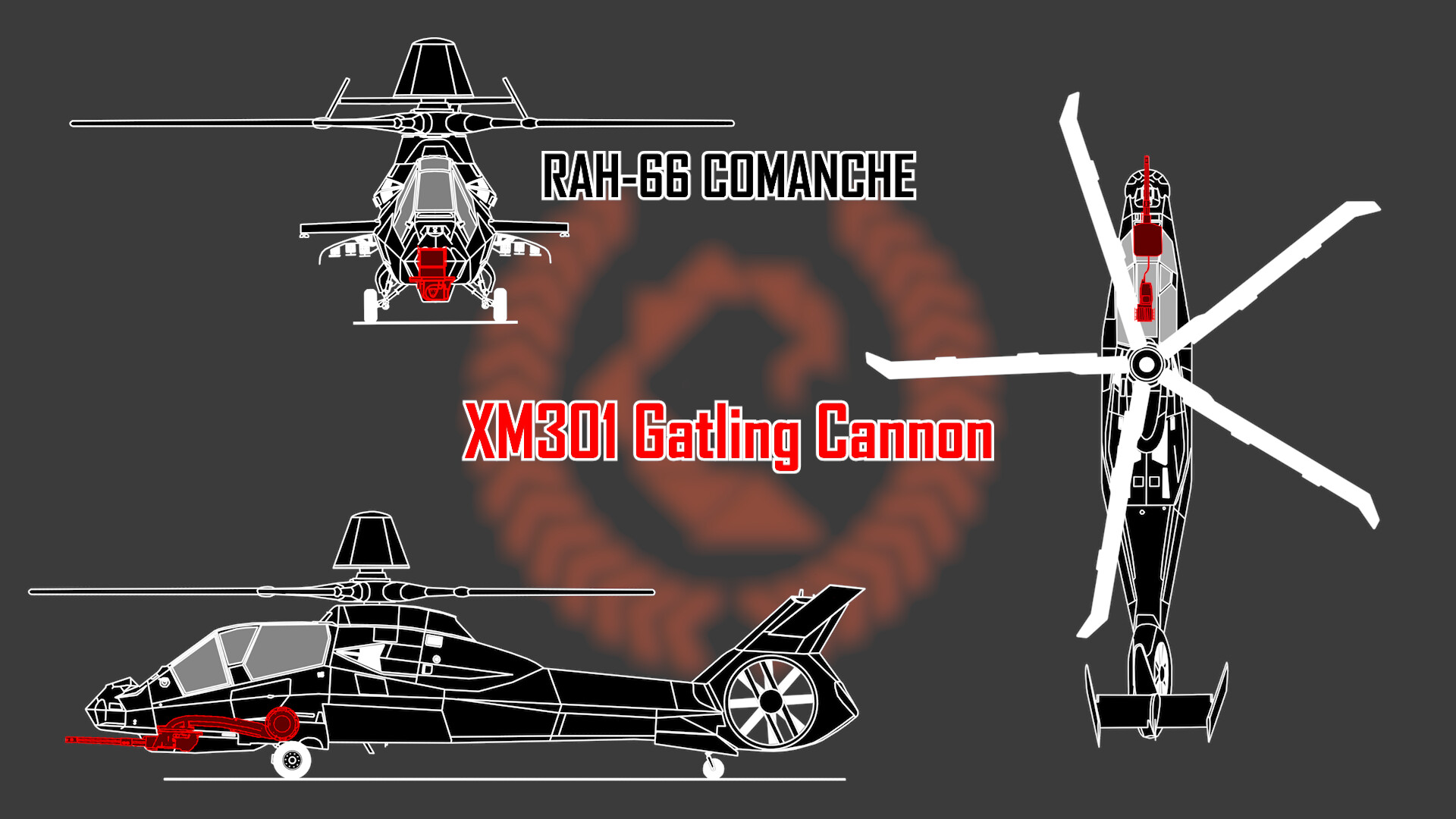
20 mm XM301 Gatling Cannon
| Pros | Cons |
| Dual rate of fire options | Short sustained fire time |
| 500-Round ammunition load | Overheats faster than alternatives (2A42 or M230) |
| Effective against light targets | Lacks the “Stealth Mode” in the game |
| Target locking against aircrafts |
Tips on how to use XM301 cannon
- This cannon jams after just ~9 seconds at high rate of fire, and ~17 seconds at low rate of fire.
- Use low fire rate mode when possible to extend firing time and avoid jamming.
- Fire in short bursts to prevent overheating and maintain weapon availability.
- Lead your helicopter toward the target to assist the turret’s tracking, enhancing hit probability.
- Avoid continuous fire—build pauses into engagements to maintain gun function during prolonged encounters.
Mobility and Maneuverability
The RAH-66 Comanche offers exceptional mobility, rivaling top-performing helicopters in the game, such as Chinese helicopters, the EC-665 series, and Lynx variants. Despite being heavier than what its engines would ideally support, it feels remarkably agile and responsive, delivering excellent pitch, yaw, and roll control—even at high speeds or during aggressive maneuvers.
It features an auto-retracting landing gear (which retracts above 230 km/h) and a powerful fantail, both of which enable advanced yaw control and tactical flexibility—though this comes at the cost of complex engine RPM management.
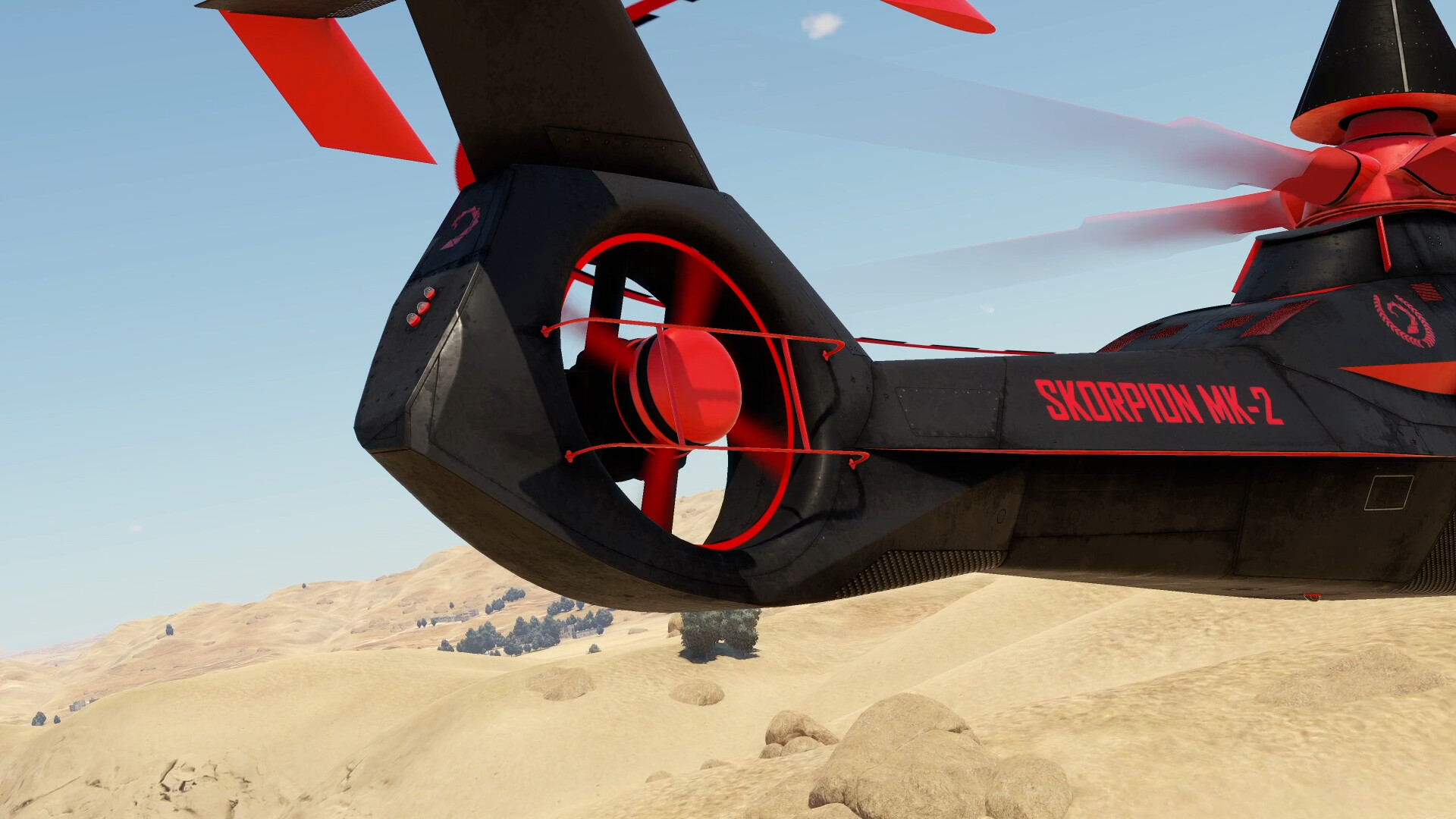
Maintaining proper RPM is critical to avoid over-revving or stalling the engines, but with effective collective pitch control, the helicopter remains stable and delivers top-tier performance.
Game Modes
Helicopter PvE
In Helicopter PvE game mode, the RAH-66 proves to be an exceptionally versatile platform, capable of efficiently adapting to the majority of objective types.
While it may not carry the highest number of missiles or rockets, its speed, maneuverability, and ability to “chain-fire” Hellfires make it ideal for destroying enemy assault units and defenses, intercepting enemy attackers and bombers, and quickly capturing Base A.
The Comanche handles convoy destruction competently, though it shows some limitations against bases or heavy armor once its munitions are depleted.
Ultimately, its agility & flexible loadouts make it a decent and reliable choice in Heli PvE, and will not disappoint you.
Ground Realistic Battles
In Ground Realistic Battles, the RAH-66 sits at a somewhat awkward battle rating, where effective vehicle lineups are limited and often overshadowed by more iconic vehicles at higher tiers.
While it can be paired with options like the M1A1, IPM1, or even higher-tier vehicles such as the HSTV-L or M1A2 Sep V2, this flexibility comes with trade-offs in lineup efficiency and survivability against anti-air and airborne threats.
Players have several tactical options—such as rocket rushing, mid-range AIM-92 Stinger ambushes, or traditional “spawn, climb, fire, retreat” ATGM tactics—but must frequently reposition to avoid a quick return to the hangar.
The Comanche performs exceptionally well when using only its internal weapon bays at lower BRs, and with full loadouts at higher tiers—depending on the presence and capability of enemy anti-aircraft systems.
The Comanche remains a viable and rewarding platform for those who take time to master positioning, overall armaments usage, and situational awareness.
Final Verdict
In the end, the RAH-66 Comanche may not be a necessary addition if you already own the AH-64A (GR) Apache or a comparable attack helicopter, as its stealth capabilities feel more like a gimmick than a game-changer.
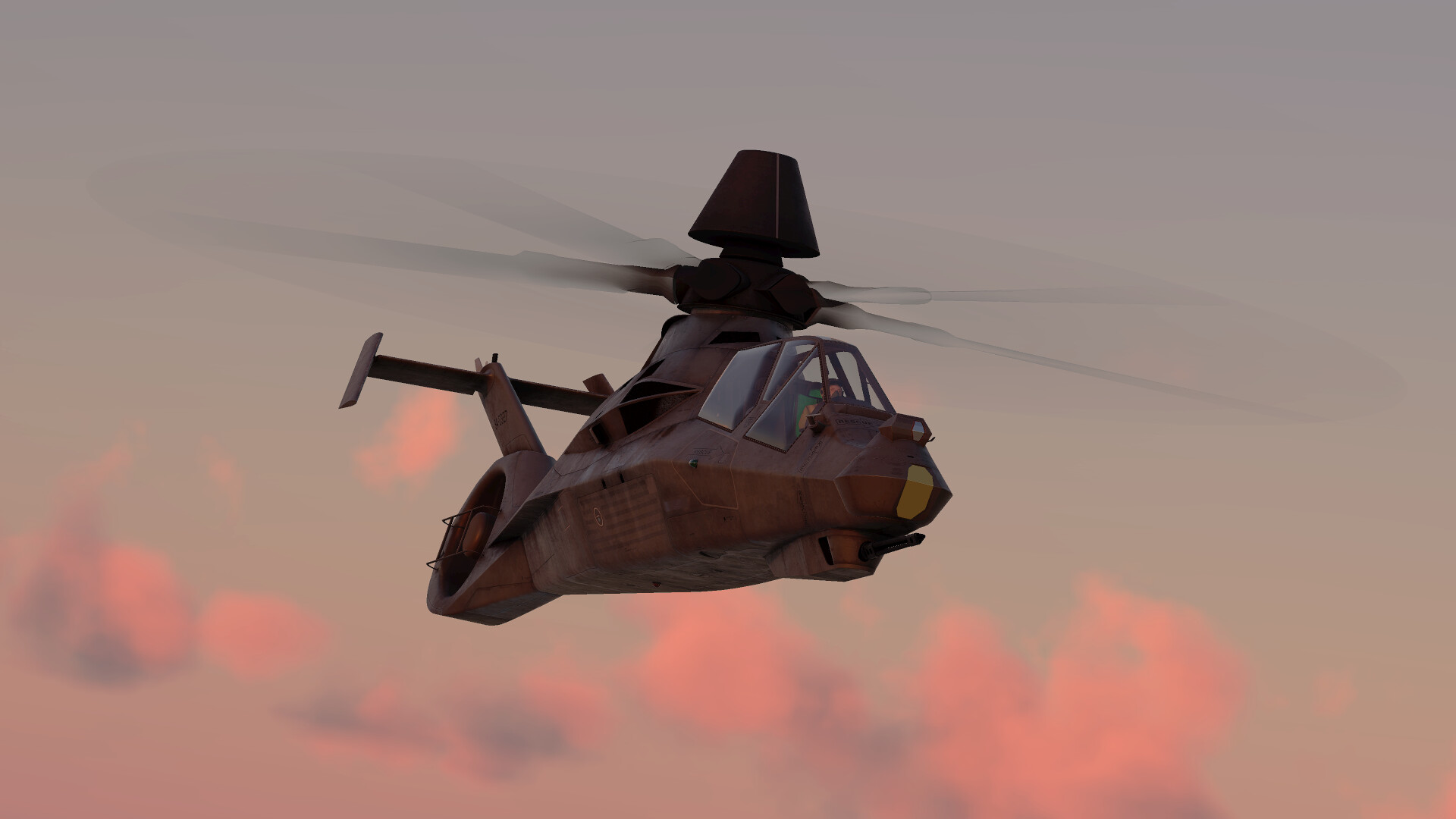
While its armament count is slightly lower and its cannon somewhat inferior to the Apache’s, the Comanche compensates with features like a mast-mounted radar and a favorable ATAS-to-Hellfire loadout configuration.
The helicopter offers excellent handling, impressive aesthetics, and generally satisfying performance—although its tail section appears to be more prone to damage than that of the average helicopter.
I have to say, RAH-66 is iconic… no one can deny that. It felt really handy and did not disappoint me every time I try to push it to its absolute limits. Test drive it first if you want to buy it. If you didn’t like it, there are still other options as well. Overall, while not essential, the Comanche is still a solid and enjoyable platform for those seeking a more unique and agile helicopter experience.