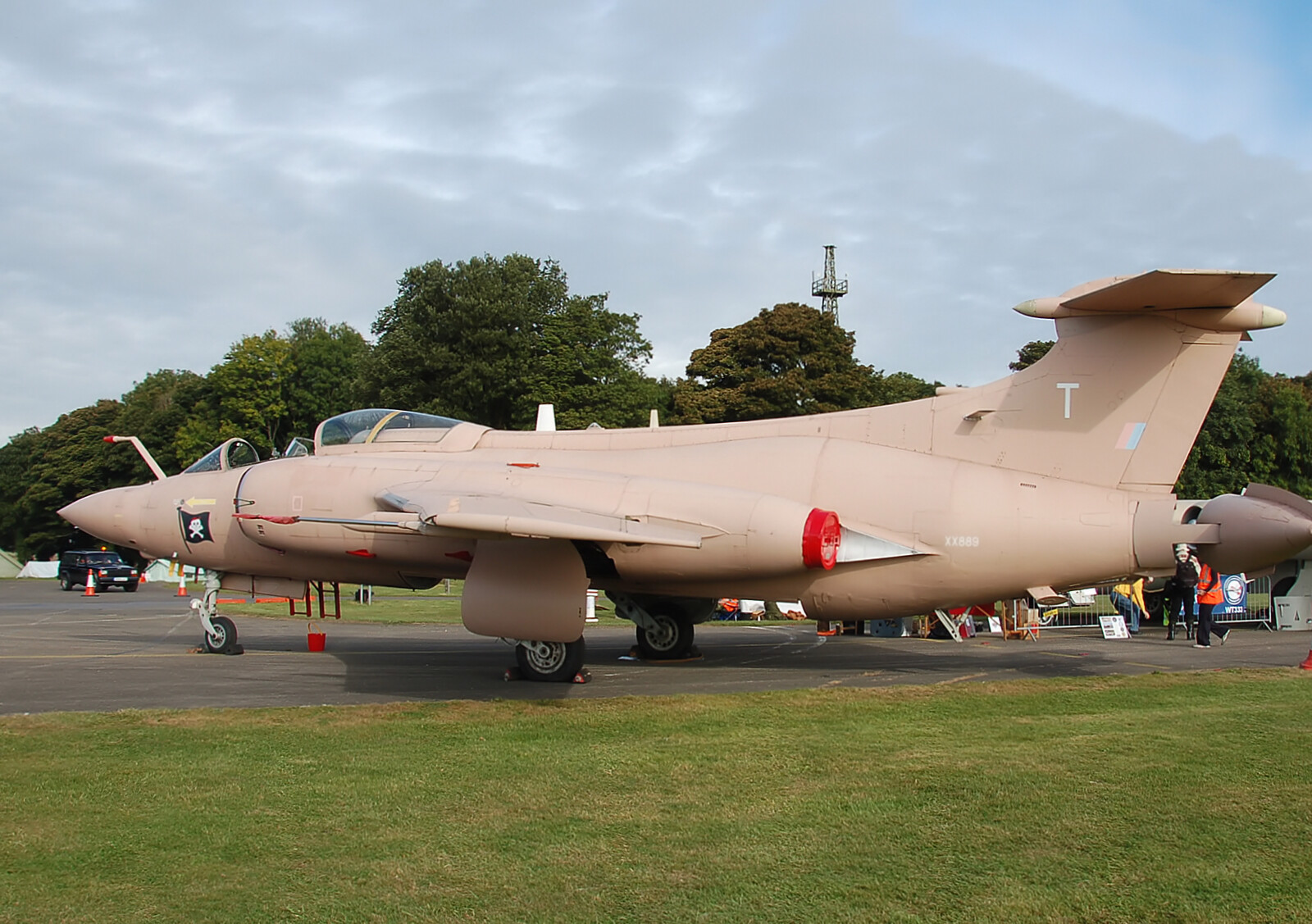
The Blackburn Buccaneer was a British carrier-borne, high-speed, low-level strike aircraft, designed by Blackburn Aircraft in the 1950s for the Royal Navy in response to the USSR’s Sverdlov-class ships. 209 planes and 2 prototypes were ever created.
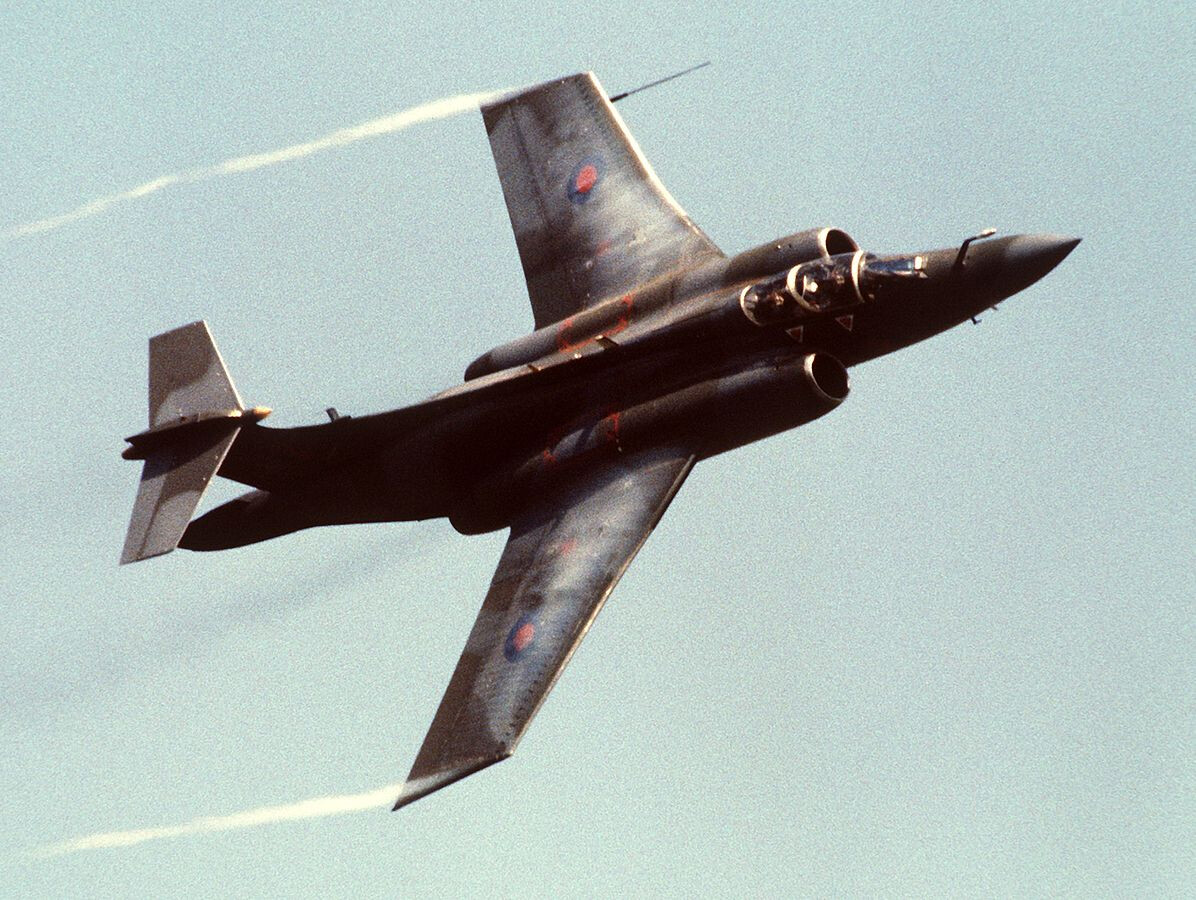
When the Soviet Union introduced the Sverdlov-class light cruisers, instead of building a new class of its own cruisers, the Royal Navy decided that it could counter the threat with help of aviation.
The main requests were:
- Long-range
- Capability of carrying nuclear weapons under the cover of enemy radar
- Striking enemy ships or ports with bombs/rockets
Blackburn Aircraft won the tender to produce their design.
Early Development
The NA.39 (later designated M.148T) was a highly advanced aircraft for its era. Due to the strict secrecy surrounding its innovative construction and design methods, the entire project remained classified until February 1957. During this period, official documents referred to the aircraft only as 'BNA' or 'BANA'—short for Blackburn Naval Aircraft or Blackburn Advanced Naval Aircraft. This vague designation eventually led workers to nickname it the “Banana Jet”, a name that stuck and accompanied the aircraft throughout its service life.
Early Blackburn concepts featured a bulbous nose with side-by-side crew seating, high-mounted wings, and engines positioned at the wing roots. However, the design was soon refined into the now-familiar, area-ruled shape of the Buccaneer.
The Buccaneer incorporated several advanced features for its time. Among them were area ruling, exceptionally strong wings and spars milled from large steel forgings, and boundary layer control (BLC). The BLC system redirected engine bleed air through slits along the wing leading edges, significantly increasing lift and allowing for lower landing speeds, higher payloads, and a more compact design—crucial for carrier operations. Folding wings, a foldable nose, and a split rear-fuselage airbrake further enhanced its suitability for naval use.
Another notable innovation was the miniature detonating cord (MDC) embedded in the canopy. Designed originally for safer underwater ejection, it shattered the canopy during an ejection sequence, allowing the crew to exit through it—dramatically increasing survivability. The MDC concept was later adopted by aircraft such as the Harrier, Hawk, and Tornado.
The first prototype, XK486, flew on 30 April 1958 and was publicly demonstrated at Farnborough that August.
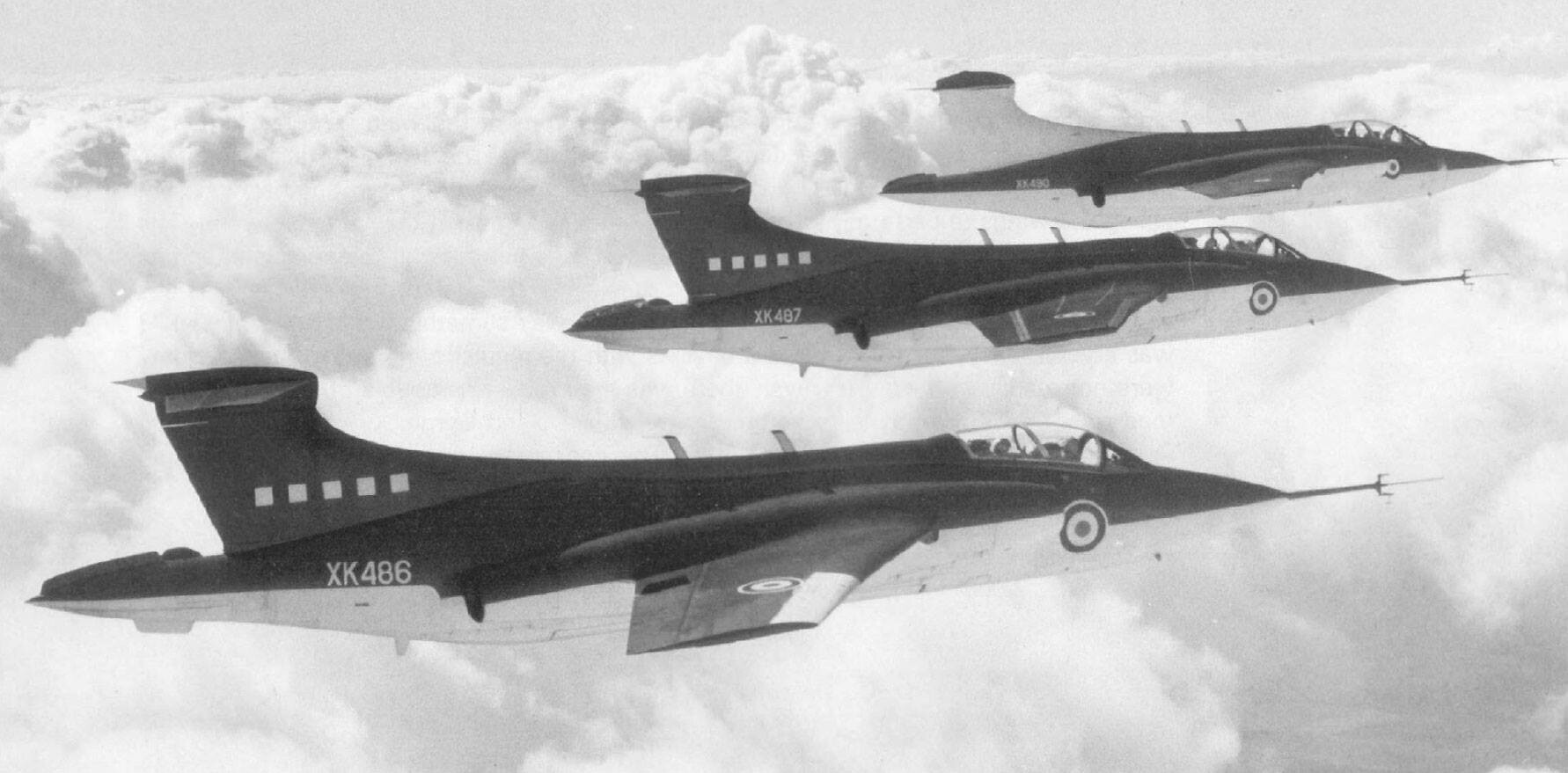
Production of the development batch continued with each aircraft looking subtly different — introducing different airbrake, tailplane and nose designs until an acceptable standard was reached. One of Buccaneer’s standout design features was its rotating bomb bay. This allowed internal carriage of weapons without the aerodynamic penalties of open bay doors. Ordnance could be deployed quickly while maintaining airflow integrity. Although primarily intended to ensure efficient, high-speed flight to the target rather than for radar stealth, the rotating mechanism also had the side effect of limiting the aircraft’s radar cross-section during weapon release.
Incidents
Unfortunately development was marred by a number of incidents. Starting with XK490 in October 1959. During a test flight, a U.S. pilot flew the aircraft in an unapproved and untested configuration. It stalled at 10,000 feet, and lacking the altitude to recover, both crew members ejected while inverted — but were killed shortly before the aircraft struck the ground.
First prototype was lost in October 1960, the pilot sensed that the aircraft was rolling without his input and initiated ejection. In reality, the artificial horizon had failed, and with no visual reference due to cloud cover, the pilot was unable to maintain orientation. Both crew members ejected successfully.
The next one, the 13th production aircraft—XK529—crashed in Lyme Bay during carrier trials on 31st August 1961. It had over-rotated during a catapult launch, stalled, and fallen into the sea. Crew died.
Buccaneer S.Mk.1
Carrier trials began in January 1960 on HMS Victorious (scrapped in 1968). In August, Navy officially named the aircraft “Buccaneer S.Mk.1”.

Germany was interested in the new plane, but the Buccaneer never entered Marineflieger service — due to British administrative missteps and partly because Germany opted to standardize its fleet around the F-104 Starfighter for most roles.
The original retractable refueling probe proved unreliable, leading to its replacement with a fixed unit — compromising the Buccaneer’s otherwise clean aerodynamic profile. Similar visual disruptions later came from the addition of RWR (Radar Warning Receiver) “bullets” on the wing leading edges and at the tailplane junction. By November 1961, Buccaneers of 700Z Squadron were being painted in overall anti-flash white, signaling their transition to the nuclear strike role.
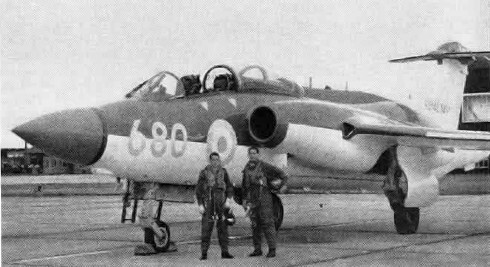
First operational Buccaneer squadron was to be 801 NAS. Receiving their first S.1s in July 1962, they were first embarked for a short cruise in February 1963. Test 700Z squadron was disbanded in January and its aircraft assigned to 809 NAS training squadron.
Buccaneer S.2
Although the Buccaneer had effectively taken over the strike role from the Scimitar, operational experience with 801 Squadron in the hot climate of the Far East revealed a critical limitation: the Gyron Junior engines of the Buccaneer Mk.1 lacked sufficient thrust to safely launch a fully loaded aircraft from a carrier deck. As a workaround, Scimitars were deployed aboard HMS Eagle to serve as aerial refueling platforms. This allowed Buccaneer S.1s to take off with reduced fuel loads — maximizing weapons carriage — and refuel immediately after launch.
However, the Mk.1 also had quite a few other problems. Engines' intake guide vanes were problematic, with sudden knocks, loss of power, and engine failure being very common. In order to solve the Mk.1 problem in a more permanent way, it was decided to retrofit the Buccaneer with a new, more powerful engine. Rolls Royce’s Spey was chosen.
Although the possibility of upgrading to the Buccaneer Mk.2 began in late 1959, the conversion work did not begin until January 1962 and was completed in May 1963. The delay was put to good use: many of the Mk.1 components were replaced with more modern and reliable versions a new power generation system and stronger undercarriage (to carry larger bomb loads) were installed. Later, an improved radar and attack system was installed. Prototype HS Buccaneer S. Mk 2 (XK526) first flew on 17th May 1963.
Production included 20 HS Buccaneer NA.39 development aircraft, 40 HS Buccaneer S. Mk 1 fitted with DH Gyron Junior engines, and 84 HS Buccaneer S. Mk 2 powered by RR Spey engines.
Also, new improved Buccaneer Mk.2 was offered to South Africa as a suitable platform for patrolling and protecting the sea lanes around the Cape. Sixteen aircraft were ordered, designated Buccaneer S.50. These were based on the S.2 variant but featured key modifications: the wing-folding mechanism was de-powered, and two auxiliary rocket engines were added in the rear fuselage to assist takeoffs from hot-and-high airfields.
In the first batch of 8 aircraft, 1 was lost during delivery, resulting in only 15 aircraft being delivered to the 24th South Africa’s squadron. Later, the British government banned the sale of Buccaneer.
Following trials in American waters, one Buccaneer entered the record books by completing a non-stop transatlantic flight from Goose Bay, Canada, to its home base at Lossiemouth, Scotland. Covering 1,950 miles in 4 hours and 16 minutes, it became the first Fleet Air Arm aircraft to cross the Atlantic in a single leg.
The introduction of the S.2 variant went significantly more smoothly than that of the S.1. With its more powerful engines and improved performance, the S.2 quickly gained a strong reputation and widespread popularity within the Fleet Air Arm. Very soon, all S.1 (Mk.1) were modified or replaced by S.2.
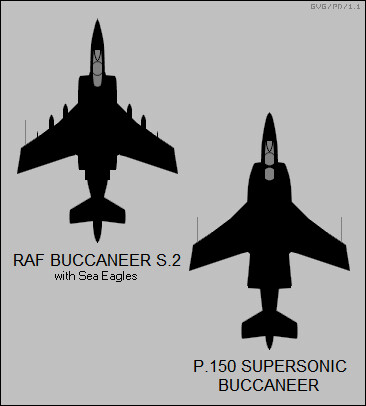
After this, there were plans for a fighter variant (P.140), a universal strike variant (P.145), and a P.150 supersonic (Mach 1.8) Buccaneer with an extended fuselage and new wings for long-range strike (a task later to be performed by the MRCA or Tornado). However, this idea never left the drawing board because “Air Force cannot use Navy aircraft”.
Disaster for the Navy
In 1966, a new defense policy review conducted by the Labour Party government was a disaster for the Navy. The planned new navy aircraft carrier (CVA-01), which was badly needed, was canceled. Existing carriers were too small, leading to difficulties in operating large and heavy aircraft such as the Buccaneer, Sea Vixen, Scimitar, and others. The clock was ticking on the reduction of the existing carrier force. Since TSR2 was canceled and the acquisition of the American F-111 failed, in 1968 it finally became clear that the only alternative was the Buccaneer.
Sea Vixens, which used to be the equivalent of Buccaneer fighters, had been decommissioned. Only one aircraft carrier was left to accommodate them, so the US Phantom was ordered to replace them in the fleet.
Soon, the Phantom replaced the Sea Vixen and operated with Buccaneers of 809 Squadron from the Royal Navy’s last aircraft carrier, HMS Ark Royal. Buccaneers began to enter service with the Royal Air Force from both new production models and former naval forces. Newly built Buccaneers equipped with full Martel missile capability were designated S.2B, while former Navy aircraft that received only partial Martel modifications were redesignated S.2A.
During the early stages of RAF Buccaneer production, Hawker Siddeley (which had already absorbed Blackburn Aircraft) introduced a bulged bomb bay door that incorporated additional fuel capacity. Initially, the plan was to reuse large slipper tanks previously used by South African Buccaneers. However, without a rocket booster in the rear fuselage — as was present in the South African variant — these tanks caused center of gravity issues. The redesigned bulged door offered a much more balanced and effective solution.
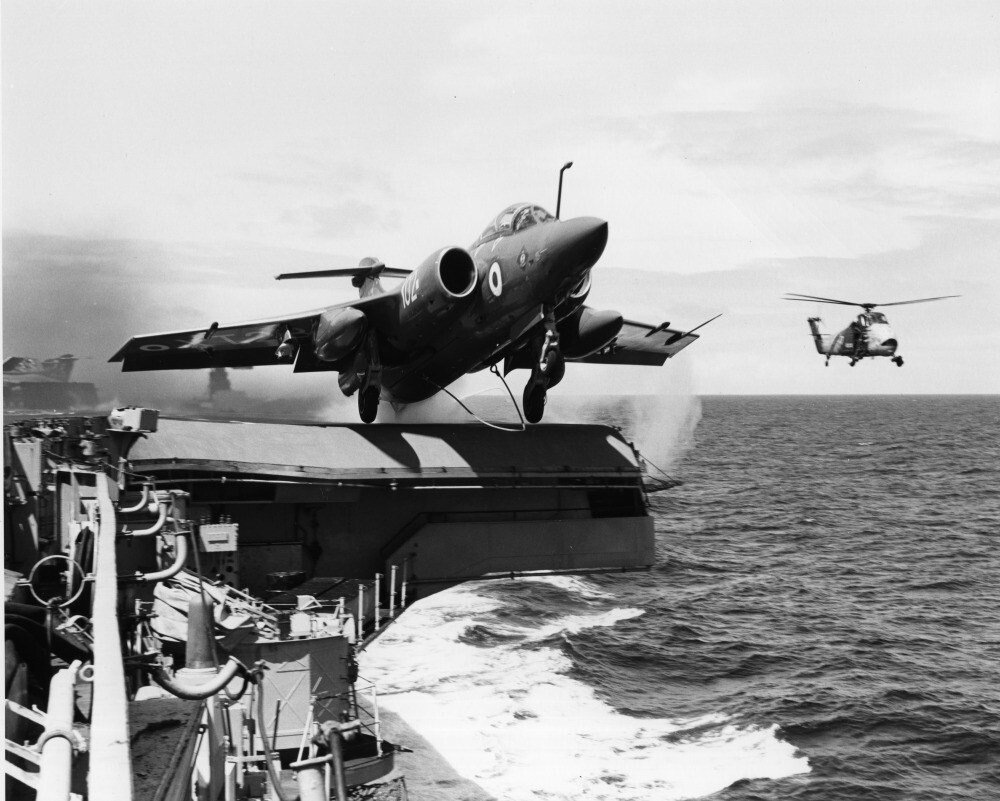
Buccaneers hung on in the Navy longer than expected, being upgraded to S.2C standard (similar to S.2A) and some to S.2D standard (similar to S.2B).
When HMS Ark Royal made her final port call in 1978, her Buccaneers and Phantoms were transferred to the RAF, leading to the disbandment of 809 Naval Air Squadron.
It was only then that the Royal Air Force realized what a stroke of luck it had been to acquire the Buccaneer, after all their previous hostility to the aircraft (which had led to the loss of such beautiful versions!).
Fatigue and Tornado
All Buccaneers were decommissioned in February 1980 after one disintegrated in midair during Exercise Red Flag, killing the crew.
Investigation revealed serious fatigue problems — a modification made to the S.2 version affected the load-bearing capacity of one of the spars, and apart from anti-ship squadrons from 12 and 216 Squadrons (they mostly flew over the sea and thus performed far fewer complex maneuvers on land), this affected almost all Buccaneers.
No RAF Buccaneers flew until August, when only those that were not too badly damaged were allowed to fly. 216 Squadron was disbanded.
New spar rings were progressively installed across the fleet, enabling operation with Laser-Guided Bombs (LGBs) and the Pave Spike targeting system. LGBs gained popularity following their effective use by RAF Harrier GR.3s during the successful Falklands campaign in 1982.
However, by 1983, Buccaneer operations began to wind down with the introduction of the Tornado.
To support this shift, a modernization program for the maritime Buccaneers was launched. The Martel missile was now considered obsolete, and British Aerospace’s Sea Eagle was selected as its ideal replacement. By 1986 the remaining Buccaneers had been given self-defense rockets and chaff & flare dispensers.
Various upgrades let Buccaneer fleet keep in service until 1993 or 1995. But the South Africans showed their effectiveness by sinking 2 oil tankers off the Cape and then using them to attack targets in Angola during South Africa’s participation in the Angolan border war.
Buccaneers were not among the RAF aircraft initially deployed to the Gulf. However, on 23 January 1991, the Buccaneers were suddenly called into action to provide laser designation support for RAF Tornado squadrons during the Gulf War. In just three days, crews at RAF Lossiemouth prepared six aircraft — freshly painted in desert pink, equipped with secure radios, retrofitted with early S.1-style wingtips for improved low-level stability over flat desert terrain, and upgraded with modern chaff and flare dispensers — and deployed them to Saudi Arabia.
A further six aircraft followed, and the first combat mission was flown on 2 February. Over the course of 216 sorties, these aging Buccaneers laser-designated targets for 169 LGBs dropped by Tornadoes and also delivered 48 LGBs themselves — all without suffering a single loss.
End of an era
The South African Air Force retired its final Buccaneers on 30 June 1991, while the RAF’s No. 237 Operational Conversion Unit (OCU) was disbanded in October 1991, its training role no longer required. No. 12 Squadron followed in October 1993, with No. 27 Squadron taking over its duties.
Due to ongoing issues with the Tornado GR.1B in the maritime strike role, No. 208 Squadron continued operating Buccaneers beyond this point. A newly reformed No. 12 Squadron, equipped with Tornado GR.1Bs, stood up at RAF Lossiemouth in January 1994 and began its work-up phase.