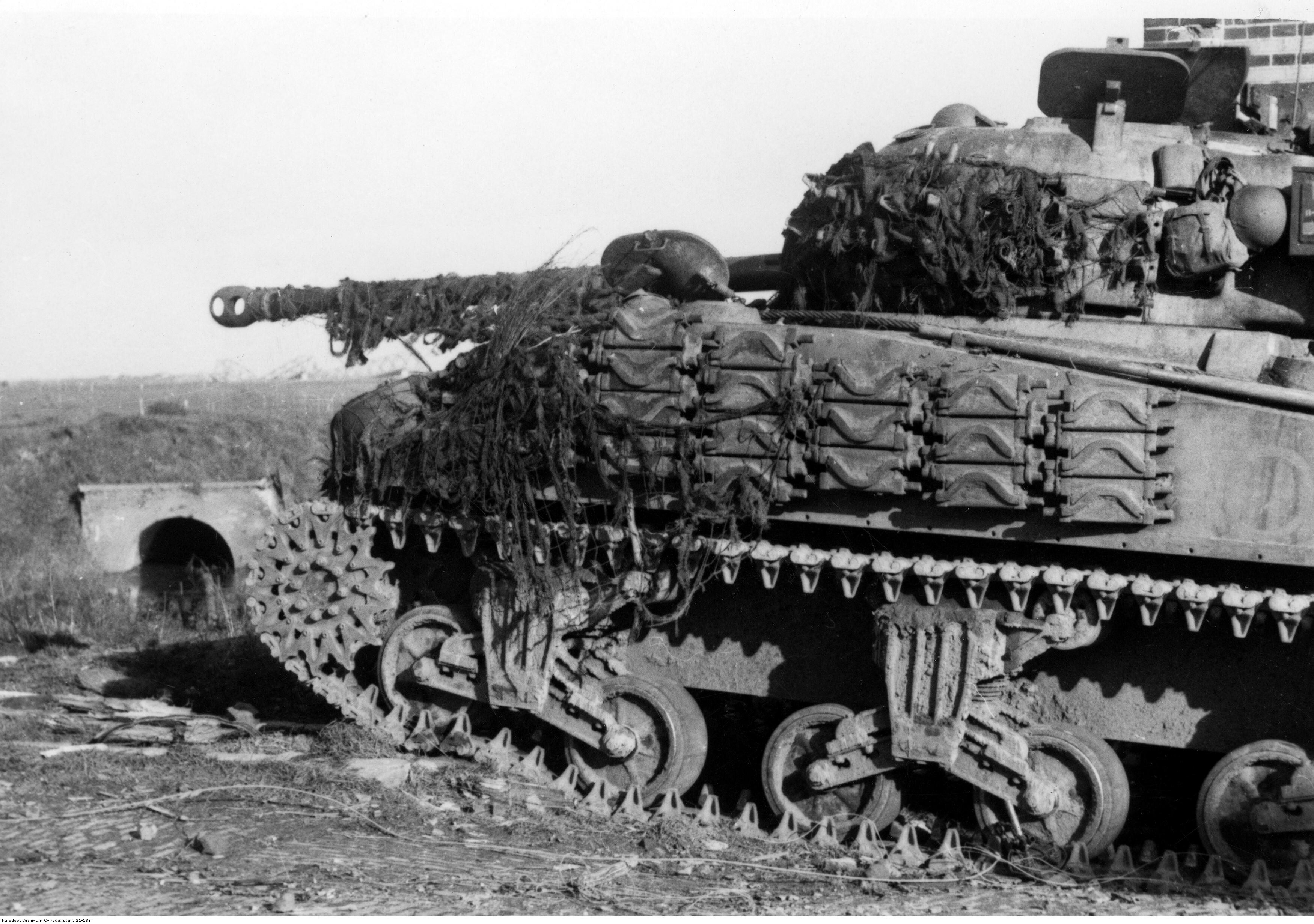
Around 1943 in World War II, the M4 Sherman was one of the best tanks in use by the Allies, surpassing the German standard Panzer IIIs and Panzer IVs at the time. However, it was during the middle of 1943 that the Sherman design was beginning to wane in superiority with the reveal of newer German tanks in the front lines, namely the Tiger I and the Panther tanks. These tanks were able not only to knock out the Sherman at a longer range than the Sherman could compete in, but also to withstand the 75 mm rounds fired from the Sherman with their frontal armour. In order to improve the Sherman’s firepower against these better German tanks, the Americans decided to upgun their tanks with the superior 76 mm gun. The British, however, decided to up the ante with one of the Allies' most powerful anti-tank guns at the time, the 17-pounder.
The 17-pounder
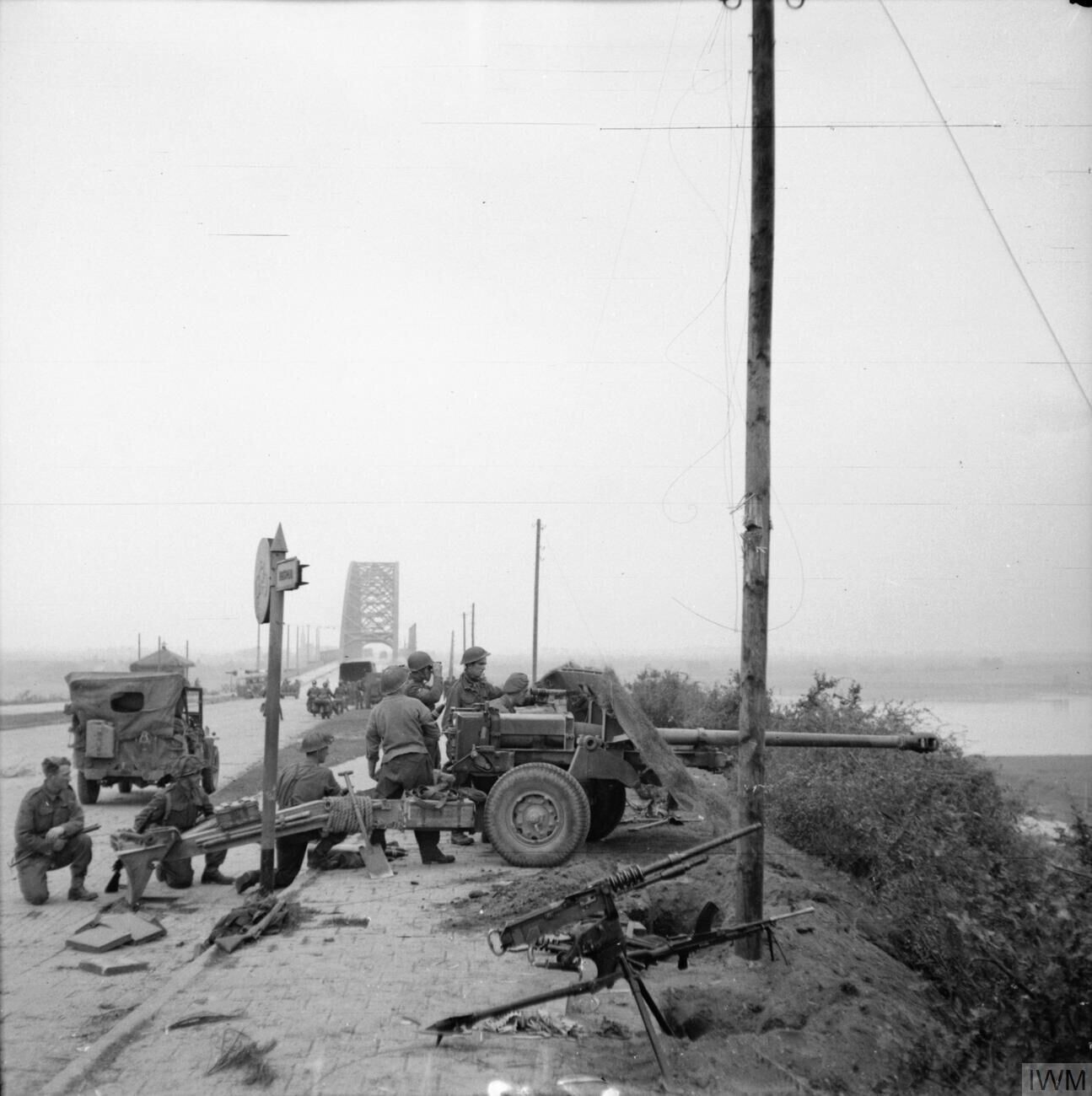
The Ordnance QF 17-pounder was a 76.2 mm anti-tank gun developed by the United Kingdom around 1942, but was considered as far back as 21 November 1940. The British predicted that the Germans would be increasing their tank armour gradually to make current anti-tank weapons ineffective in North Africa, a lesson learned when their issued 2-pounder, 6-pounder, and 75 mm guns were meeting heavier armoured tanks, and even tanks with superior firepower like the 75 mm KwK40 on the Pz.Kpfw. IV Ausf. F2.
The first prototype batch was completed in Spring 1942, and the design was finalized in 1943 and accepted into service that same year, where it would see great effect in the Italian Campaign as one of the best Allied anti-tank guns. One of the reasons why the 17-pounder was so effective was the use of the APDS shot (Armour-Piercing Discarding Sabot), which could penetrate up to 256 mm of armour at 500 m distance; this was due to the smaller, but much faster projectile used that contained more kinetic energy than a full-sized shot. However, drawbacks with this ammunition included the lack of tracer to enable adjustment of shots, inaccuracy beyond 500 yards, and the less damage it could cause to the enemy tank.
Development
A kick-start
The effectiveness of the 17-pounder against the new German tanks and the lacklustre anti-armour firepower on British tanks brought upon the concept of mounting the 17-pounder onto tanks. The first mention of mounting the powerful gun onto a tank carriage was as early as 9 December 1941 by the Tank Board, which prompted design specification A29, a 45-ton, 17-pounder-armed tank that was eventually cancelled for another design.
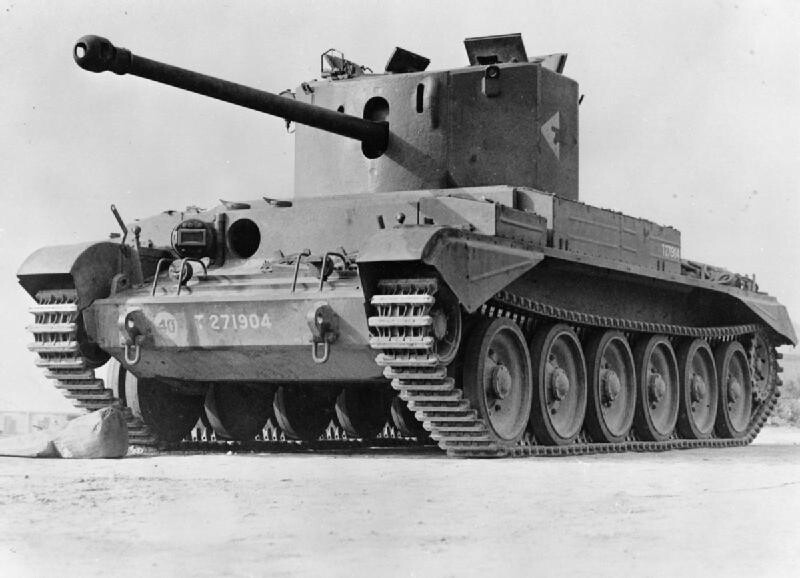
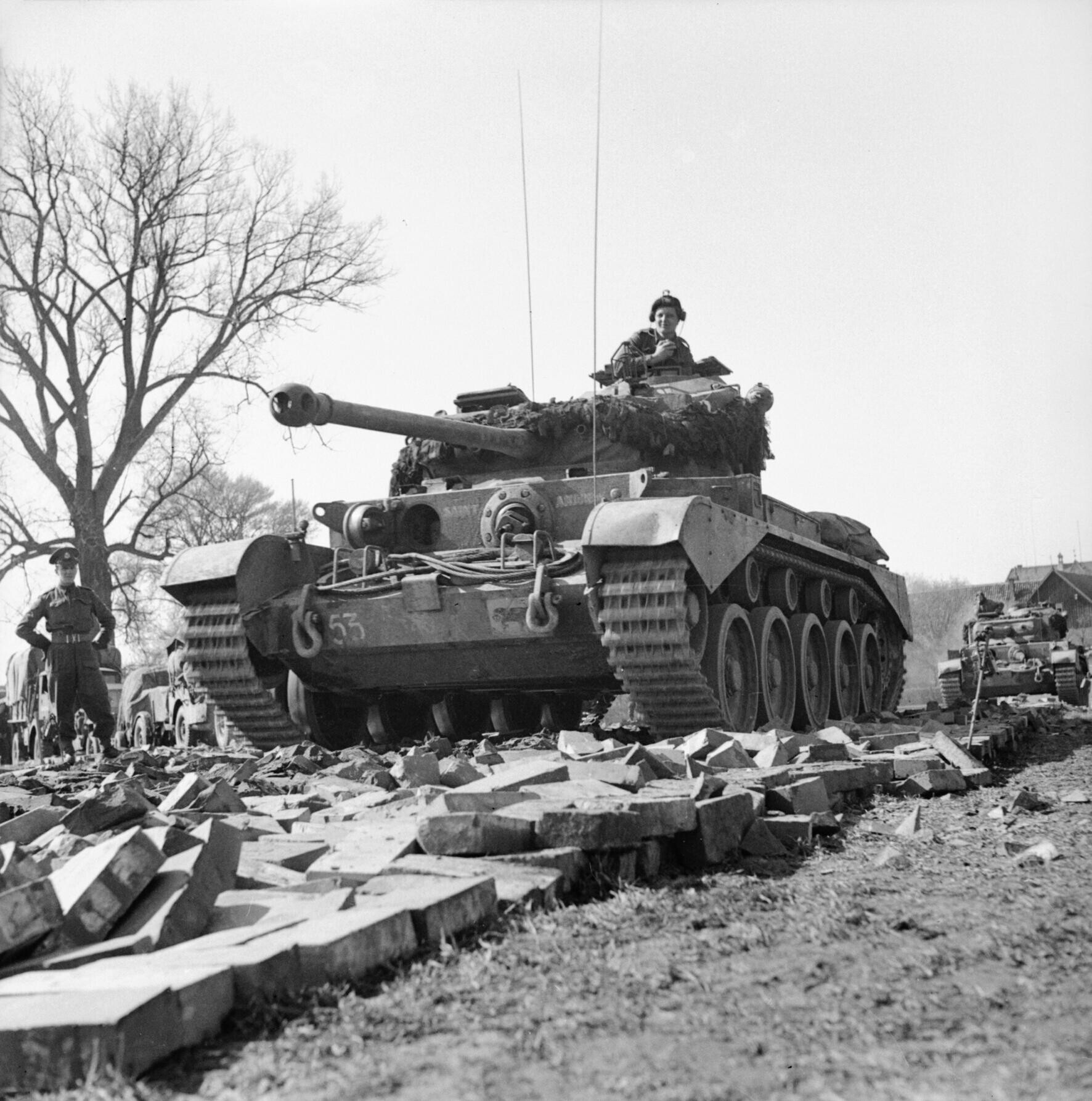
The next design took the Cromwell tank as its basis, with development proceeding in 1942 as the A30 (later known as the Challenger). While the A30 was in development, the prolonged development time had the Tank Board set up two more 17-pounder projects: the A34 (Comet) for a short-term project and A41 (Centurion) for a long-term one, in the summer of 1943. However, in the same year, a side project for a 17-pounder tank was conducted by two officers.
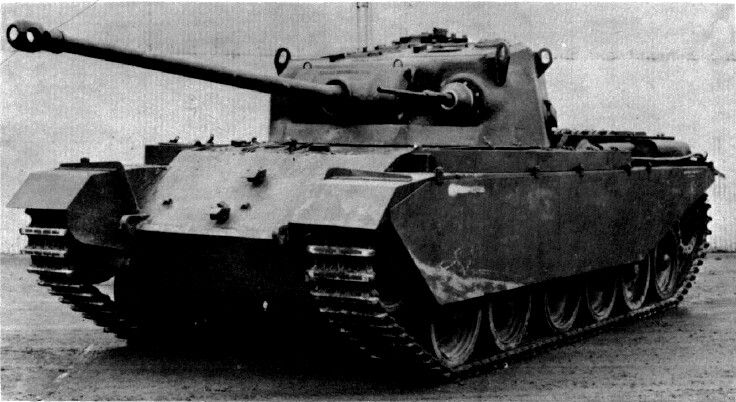
Royal Tank Regiment major George Brighty, based at the Royal Armoured Corps Gunnery School at Lulworth in Dorset, believed that the M4 Sherman was a better tank mount for the 17-pounder than the A30, which was being tested in Lulworth. He experimented with an acquired Sherman, though came to the conclusion that the turret size was too small for the 17-pounder’s breech and recoil. Still, he persisted in his efforts and, in a rather absurd solution, fitted the 17-pounder into the turret by locking the gun into the mounts and removing the lengthy recoil system, forcing the tank’s mass and suspension to absorb the entirety of the 17-pounder’s recoil. Though this proved to have worked, the modification was far from ideal for any practical usage.
During his trials, Brighty joined up with another major of the RTR by the name of George Witheridge. Witheridge was also convinced of the Sherman’s virtues from his time at Fort Knox when advising on tank gunnery techniques. While he appreciated the dual-purpose usage the 75 mm gun on the Sherman provided, he was concerned about improving the armour-piercing properties while retaining the same high-explosive charge. Witheridge arrived at Lulworth to Brighty’s design, which he found unsuitable. In a statement on how confident such a design looked from the outside, Witheridge test-fired Brighty’s 17-pounder Sherman from the outside three times before trying it out inside. Priority soon shifted to develop a recoil system for the Sherman-mounted 17-pounder.
However, some time after Witheridge’s arrival, the Department of Tank Design (DTD) sent a directive to the two men to cease their development on the up-gunning of the Sherman, possibly to protect their A30 project. Witheridge, still keen on the idea of using the Sherman, tried to get this directive reversed by appealing to his connections, namely a man going by Major General Raymond Briggs. Briggs, Witheridge’s commanding officer in North Africa and also enthusiastic about improving British tank firepower, put the word to Claude Gibb, Director General of Weapon and Instrument Production at Ministry of Supply, to which Gibb approved and the 17-pounder Sherman was back up. However, with the Ministry of Supply now involved with the project, the design was shifted from two enthusiastic officers to the engineers.
Professional’s touch
One person deemed responsible for completing the project was W.G.K. Kilbourn, a professional engineer at Vickers who was stationed at Chertsey when he was assigned the 17-pounder Sherman by the DTD. He managed to fit the 17-pounder gun into the Sherman turret by extensively modifying the gun. He replaced the recoil cylinders with shorter ones mounted on the sides, opposite each other top and bottom, on a special cradle, modified the gun barrel to fit onto the cradle for better support, and placed the gun breech to open horizontally (contrary to the statement that the gun was simply rotated 90 degrees sideways, as the operators of the gun had not been rotated along with the breech).
The redesigned 17-pounder, named Mk IV, was built on 11 November 1943 at the Royal Ordnance Factory and could fit into the Sherman turret, but now the concern was for the crew inside. The large breech of the modified 17-pounder ate up a lot of internal space and isolated the loader on the left side of the gun and turret; the solution was to cut a hole above the loader’s position and add a hatch. The radio, usually mounted on the rear of the turret, was deemed too close to the recoiling breech for comfort, so an armoured box was welded to the turret rear for the radio and a hole cut into the turret rear for operating it away from the recoiling gun. The armoured box also had the benefit of acting as a counterweight for the longer and heavier gun in the turret.
Finally, there was an issue of ammunition stowage for the larger and heavier 17-pounder rounds, which were 6 inches longer than the 75 mm shells. The stowage on the tank was in bins in the turret for ready access, but a bulk of it was placed under the turret floor that could only be accessed when the turret was aligned in a certain position for each bin, making them more suitable for replenishing the ready racks during breaks in combat. To increase the stowage for more 17-pounder rounds, the bow machine gunner was removed along with his machine gun (the port welded over by a prominent wedge-shaped armour), and a rack holding 15 rounds placed in his location; however, the position for the rack was also impossible to reach during combat, and one location on the rack was so hard to get to that it wasn’t used, making the total stowage 14 rounds instead.
Kilbourn’s efforts and those of assisting engineers managed to finally fit the large 17-pounder gun into the constrained space of the Sherman turret intended to mount the 75 mm gun, as well as perform the necessary modifications to accommodate combat usage of the vehicle. It then moved on to the next stage of being approved for service.
Conversions
Inspection of the completed Sherman with the 17-pdr started on 6 January 1944, and the War Office wrote a requirement for up to 2,100 of the tanks to be upgunned. Not every Sherman could undergo the conversion, whether by technical or logistical limitations, and only petrol-engined models with an M34A1 gun mount and a hydraulic turret traverse system were eligible. This meant that the Shermans converted were the Sherman I (M4), Sherman I Hybrid (M4 “Composite”), and Sherman V (M4A4). Technically, the Sherman II (M4A1) and Sherman III (M4A3) were also eligible for conversion to those standards, but information on the Sherman II is scarce, and photographic evidence of cast-hull converted Shermans usually turns out to be Sherman I Hybrids; Sherman IIIs were all allocated to the U.S. Army as their mainstay tank, so no M4A3s were even available in British service to convert.
Tanks armed with the 17-pounder were designated by a “C” at the end of their mark number, leading to names such as the “Sherman VC” to denote an M4A4 with the 17-pounder conversion. Troops with the upgunned Sherman were describing the tank as a Firefly as early as March 1944, regardless of type. How it got the name is debatable, but it is most likely due to the very prominent muzzle flash that the 17-pounder produces when firing.
Still, as D-Day approached for the Allied forces and the A30 Challenger was continually delayed, the eagerness of the troops to acquire the Firefly rose substantially. Four factories were prioritised for the conversion: two in London, one in Manchester, and another in Nottingham. From the conversion period of 1944 to 1945, up to and between 2,100 and 2,200 Fireflies were converted, making it the most produced tank with the 17-pounder of the war.
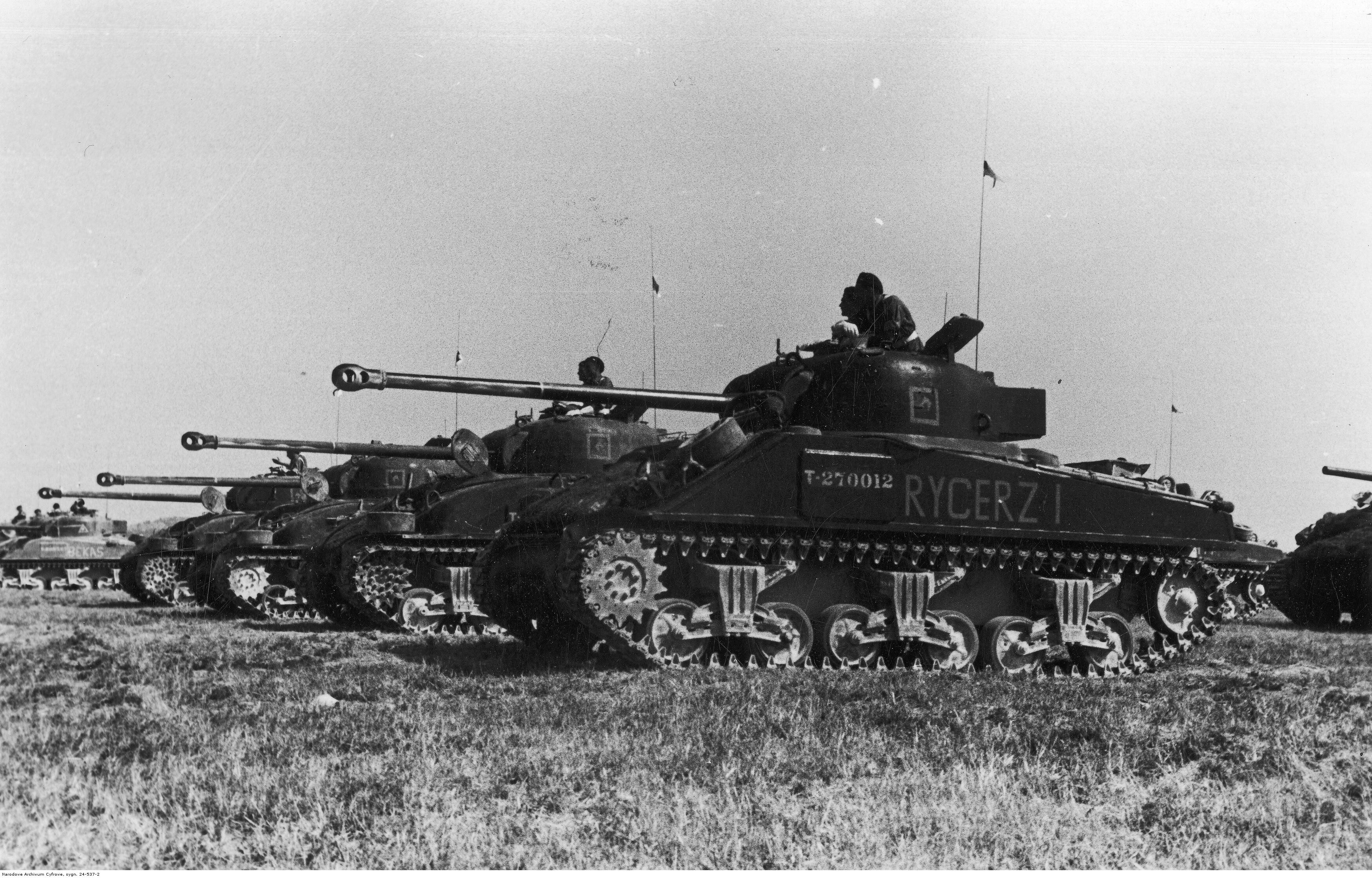
Allocation of the Fireflies was one troop per three Sherman troops (troop being an equivalent of a platoon and consisting of four tanks), but even regiments that were equipped with Cromwells were supplemented with Fireflies until the A30 Challenger was fit for service. The Fireflies were also allocated to Canadian and Polish regiments. Due to the relative newness of the Firefly, most of the training done on the utilisation and deployment of the Fireflies was done in the combat field by each regiment.
Combat usage
Fighting at the theatres
The Firefly’s first combat action on D-Day was not actually on the land of Normandy, but on the sea. The Fireflies were assigned an unusual role — while on the LCT that would carry them to the beaches, they would fire over the berm towards concrete fortifications and blast them with the 17-pdr. Six Fireflies were allotted, separated into pairs, to DD tank regiments of the British 13th/18th Hussars at Sword Beach, and the Canadian 1st Hussars and Fort Garry Horse at Juno. Though the 13th/18th Hussars were reported not to have fired their Fireflies on the way in, the 1st Hussars seemed to have good experiences with them in the rough weather. Once the LCT reached the shore, the Fireflies were ordered to disembark and head inland, finishing off obstacles and joining their original tank regiments.
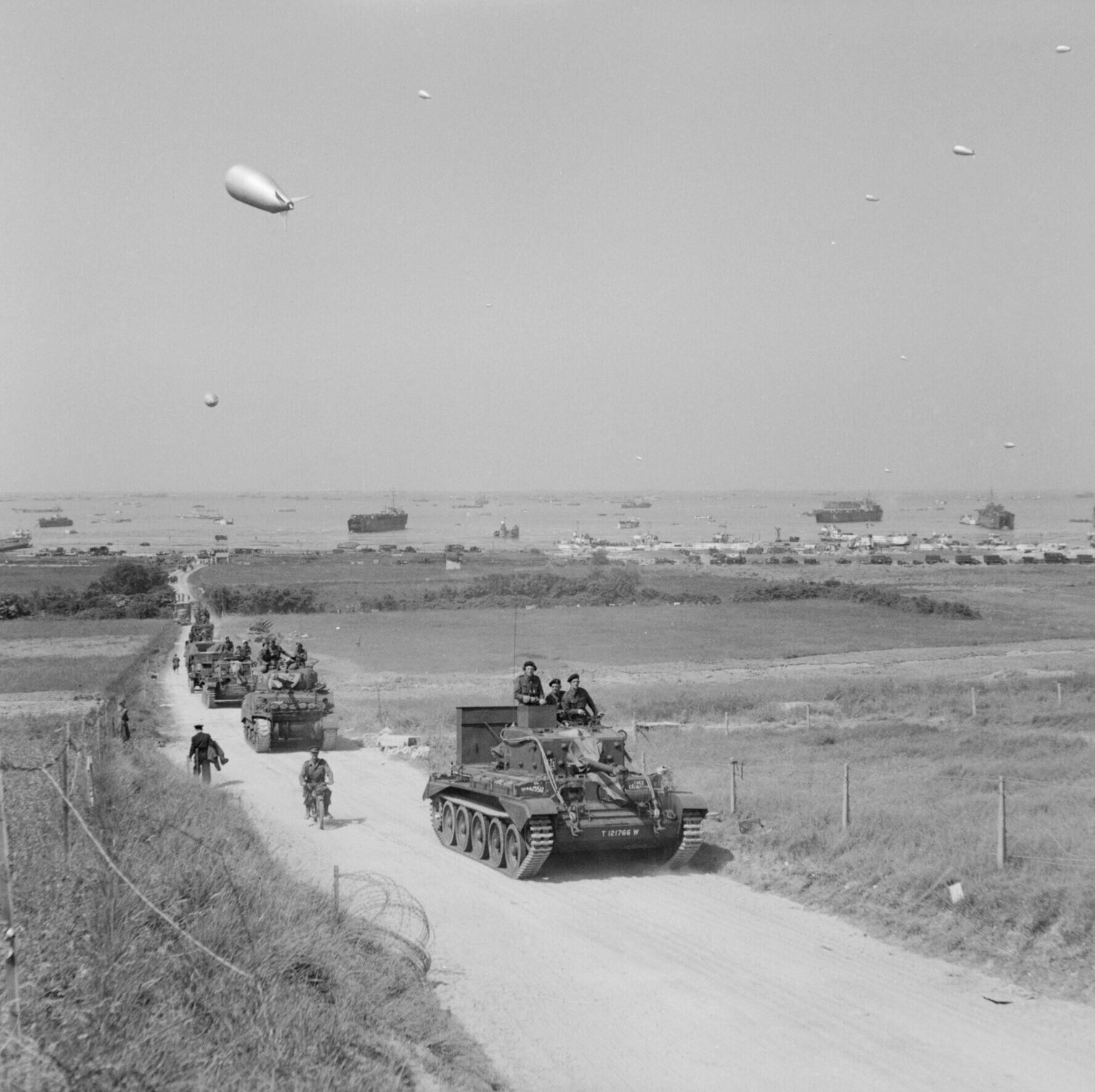
The first non-DD tank regiment with Fireflies to land was the Staffordshire Yeomanry, which had at least 12 Sherman VCs with 48 Sherman IIIs; however, little information exists on how it performed on the opening days of the Normandy campaign. Other regiments were originally DD tanks with Fireflies but were employed as regular tank regiments once inland. One such regiment was the Sherwood Rangers Yeomanry. It was they who, a few days after the landings, deduced that the Germans seemed to be targeting their Fireflies specifically for their longer guns. Though this deduction was not supported by evidence (19% of total Fireflies were lost, but 29% of regular tanks were lost as well), the concern of Firefly loss was great because of the supply issue. As illustrated, though 22 Fireflies were lost, by June 23 only six replacements had arrived.
Experience from the ground and the density of heavy German tanks changed some initial organisation of one Firefly troop per three Sherman troops into one Firefly per tank troop. Fireflies were in such high demand that some commanders expressed thoughts of obtaining the 17-pdr armed M10 as supplement. Still, the units acquiring the Fireflies appreciated what they had, as it was the only tank in Normandy in the summer of 1944 that had a reasonable chance of defeating a Panther or Tiger at combat ranges in the front. In fact, the Firefly is most likely the responsible tank that destroyed the Tiger tank containing the Tiger Ace Michael Wittmann on 8 August 1944.
Once Firefly supply to the Normandy campaign was satisfied in October 1944, Fireflies were allocated to the Italian theatre, shared out to the Polish, Canadian, New Zealand, British, and South African regiments stationed there. With that, a supply issue arose in that theatre for the Firefly, causing the units that received them to treasure them greatly. Heeding the comments on how Fireflies were singled out for their long guns, there were attempts to hide the prominent gun barrels, ranging from deceptive paint schemes, camouflage, and even dummy barrels on the back of the Firefly turret that would be pointed forward to mimic the short 75 mm gun.
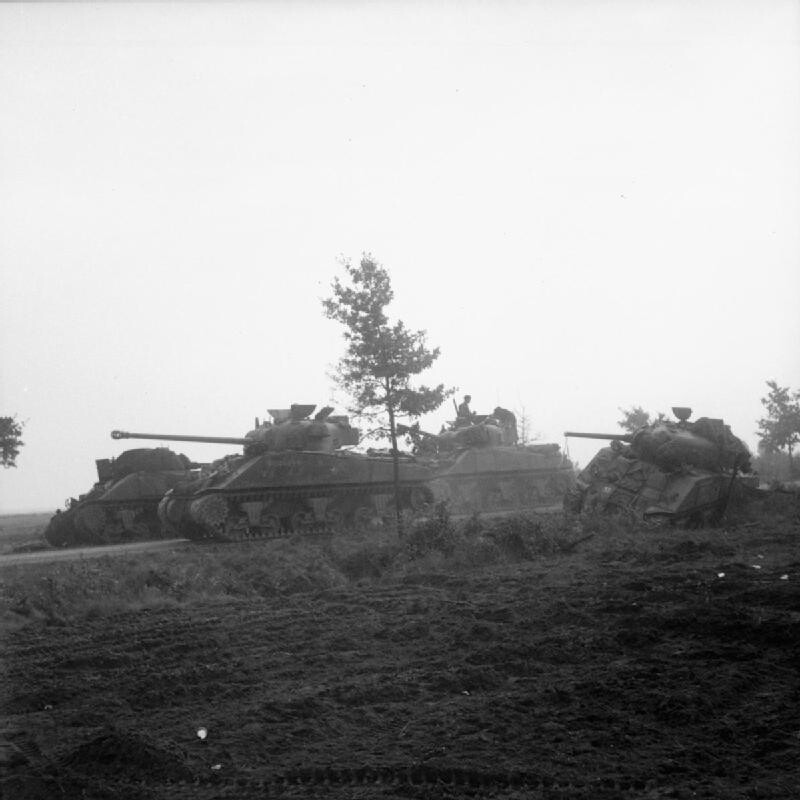
Still, the Firefly served in the British Armies in the European Theatre of Operations up to and until May 1945, when they were retired along with the end of the war for replacement by better designs like the Comet cruiser tank and the Centurion tank.
Reception
The Firefly’s performance was very favorable for the troops who had to use them against heavy German tanks. Though a good portion of Germany’s armour on the Normandy front were Panthers, a good majority were still Panzer IVs and self-propelled guns, all of which were manageable even with the 75 mm guns.
Field reports by Colonel W.E.H. Grylls in 1945 helped highlight troop sentiments regarding the Firefly in combat, and especially their deficiencies. The muzzle brake sometimes came loose due to an inadequate locking design; the traverse gear also failed at times because of the extra turret weight from the gun; rain leaked into the radio box on some tanks; internal space for the Firefly turret crew was comparatively cramped compared to the Sherman’s; the muzzle flash at the gun’s muzzle brake could obscure the target enough that it was difficult to ensure the firing round hit it; and muzzle flash on the breech end of the gun inside the turret had a tendency to cause discomfort and uneasiness for the crew. Grylls also highlighted crew praise regarding how the Firefly tended not to catch fire as quickly as Shermans, though this is deduced to be due to the placement of the majority of ammunition on the bottom of the hull, like the “wet stowage” arrangement on newer Sherman models.
Some deficiencies were fixed, such as the flashback at the breech end by implementing a delayed action breech on the 17-pounder Mk.VII model, but all these faults never diminished the popularity of the Firefly, highlighted by Field Marshall Bernard Montgomery’s statement that he wished to have Fireflies replace all types of Shermans in British service.
Initially, the Americans were not enthusiastic about the Firefly because they believed they had a comparable design in the 76 mm-armed Shermans. It was not until Normandy when they were proven wrong and learned that the 76 mm guns were unable to contend against Panthers from the front. Though they soon developed HVAP ammunition, General Omar Bradley’s 12th US Army Group on 13 August 1944 requested Fireflies be made until better American armament like the 90 mm could be fielded. Due to supply constraints, they never received any during that time period. Not that the Americans' own industries were making the situation easier for the British; when they discontinued their M4A4 Sherman and 75 mm gun production, there was a quick drop in Firefly conversions in the latter part of 1944 until they could supplement production with enough Sherman I models.
In the American program, it was advised that they try mounting the 17-pounder in the T23 turret made for the 76 mm gun, but also mounted on the T26 chassis. This advice did not make much progress. It wasn’t until February 1945 when the British finally made time for conversions for the Americans. The first trials involved converting two M4A3 Shermans to fit American specifications, like fitting their larger radios, adding stowage brackets for the M2 machine gun, and attaching a M9 elevating quadrant on the gun cradle. A request of 160 Fireflies was specified on 11 March 1945 for completion on 30 April, with the Americans shipping suitable tanks from France back to England for conversion. On 7 April, the initial order was halved to 80 due to the incoming end of the war and its demand ending with the lack of encountered German armour after the Ardennes Offensive. At the war’s end, there were 100 tanks sitting in depots ready for conversion, with 86 converted tanks. The excess Shermans were given away, and leaders were left wondering what to do with these Fireflies they no longer needed. It was decided on 26 May that these American Fireflies were to be retained in Europe for equipping the occupational force. No evidence exists regarding what happened to these Fireflies past that point.
Legacy
The Firefly’s reputation during and after the war is a product of hindsight. The British understood the trend that was happening in German armoured forces and acted accordingly with the 17-pounder. It should be noted that the 17-pounder’s super round, the APDS, did not appear in Firefly stowage until August 1944, and in combat was really inaccurate past 500 yards and the round fouled the barrel that it affected follow-up shots with APCBC rounds. As such, APCBC round would still be standard usage and though the 17-pounder was still slightly more powerful than the 76 mm, it traded crew comfort and design quality in the Firefly in comparison to the 76 mm gun in the larger T23 turret.
What solidified the Firefly’s place in history in comparison to the 76 mm Shermans was that on the very first day that the Allies invaded Normandy, the British actually brought the Fireflies while the Americans left their 76 mm guns in English depots. Thus, the British can claim with great confidence that on the opening days of Operation Overlord, they had a tank that could kill the German cats.
Bibliography
- Fletcher, David. Sherman Firefly Great Britain: Osprey Publishing Ltd., 2008. Kindle Edition
- Hunnicutt, R.P. Sherman: A History of the American Medium Tank U.S.A.: Feist Publications, 1978
- Morans, Nicholas. Inside the Chieftain’s Hatch: Sherman VC “Firefly” part 2 YouTube, 20 Mar. 2017. Web. 29 Mar. 2017.
- Zaloga, Steven. M4 (76mm) Sherman Medium Tank 1943-65 Great Britain: Osprey Publishing Ltd., 2003. Kindle Edition
- Zaloga, Steven. Armored Thunderbolt: The U.S. Army Sherman in World War II U.S.A: Stackpole Books, 2008. Kindle Edition
- Zaloga, Steven. Armored Champion: The Top Tanks of World War II U.S.A: Stackpole Books, 2015. Kindle Edition