
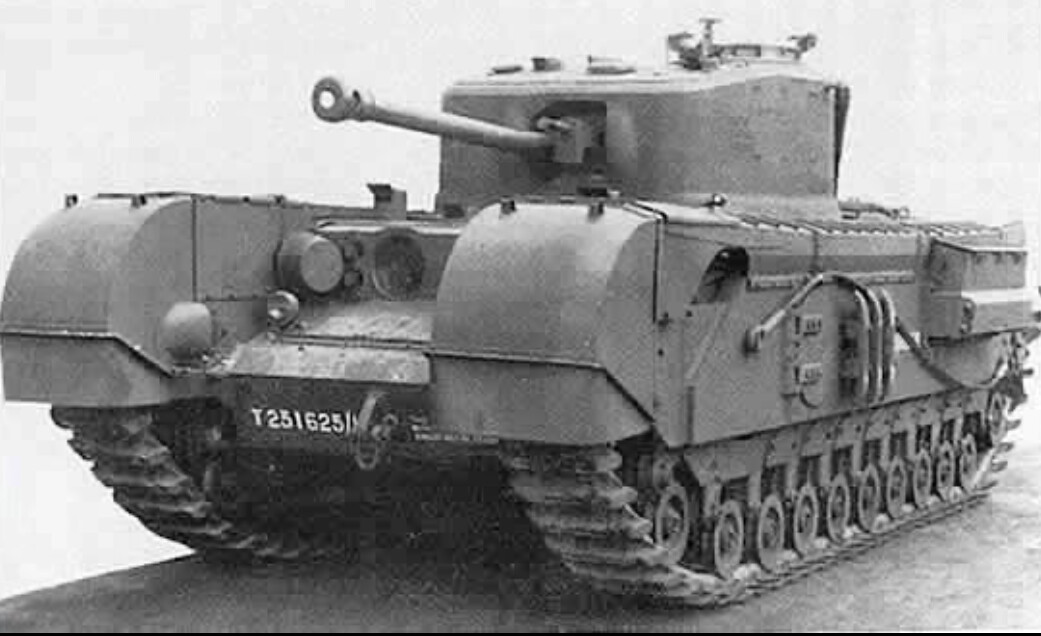
The Churchill or A22 was a British heavy infantry tank named after British Prime Minister Winston Churchill. It was used by Allied troops during World War II from 1942 onward and, in small numbers, by the Soviet Union. The vehicle remained in use until the Korean War. A total of more than 5,640 units were produced in various versions and modifications.
- Technical data
- Development
- Variants
- Deployment
- Conclusion
Technical data
| High | 2.78 Meters |
| Width | 3.25 Meters |
| Length | 7.45 Meters |
| Mass | 40 t |
| Crew | 5 |
| Engine | Bedford 12-cylinder, 4 stroke, water-cooled, horizontally opposed, L-head petrol engine |
| Power | 325-350 hp |
| Speed | 20 km/h (street) / 13 km/h (off-road) |
| No. Build | > 5,640 |
| Power to weight ratio | 8.4-8.8 hp / tonne |
| Operational Range | 120 — 210 km |
Development
The first considerations for the development of the Churchill date back to 1939, when a replacement for the Matilda II infantry tank was sought. Vauxhall, the company commissioned to develop the new tank, based its design on the requirements of the First World War. The tank was to be capable of traversing the most difficult terrain and withstanding fire from all known enemy anti-tank weapons.
Armament was considered secondary and merely adequate; speed played no significant role in the planning, as the tank only needed to keep pace with the infantry in a trench warfare scenario and was therefore classified as an infantry tank like the Matilda. However, the new tank was to fit on an ordinary railway carriage, which limited its width and only allowed for the installation of smaller tank turrets and thus also smaller cannons.
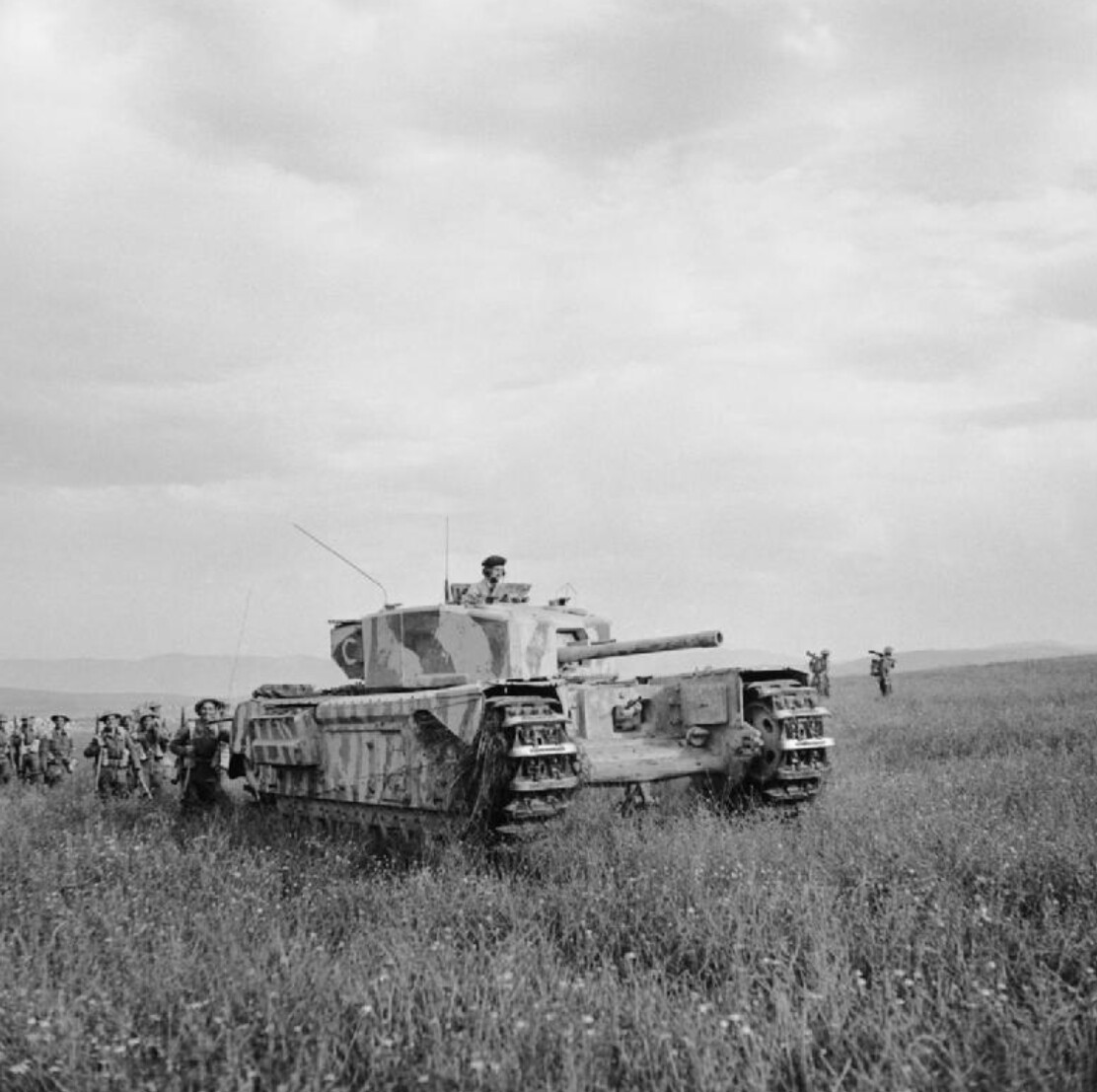
For this reason, the structure of the British tanks from the First World War was adapted, and the tracks extended above the top edge of the hull. Considerations to mount a main armament consisting of two 40 mm 2 pounders in bay-like bay windows on the sides, similar to the arrangement in the Mark I, were abandoned, and it was decided to position a 2-pounder gun in a rotating turret on top of the hull and a 76 mm 3 inch howitzer in the hull next to the driver’s seat. The Battle of Britain had just begun, so for morale reasons, the A22 was given the designation “Churchill.”
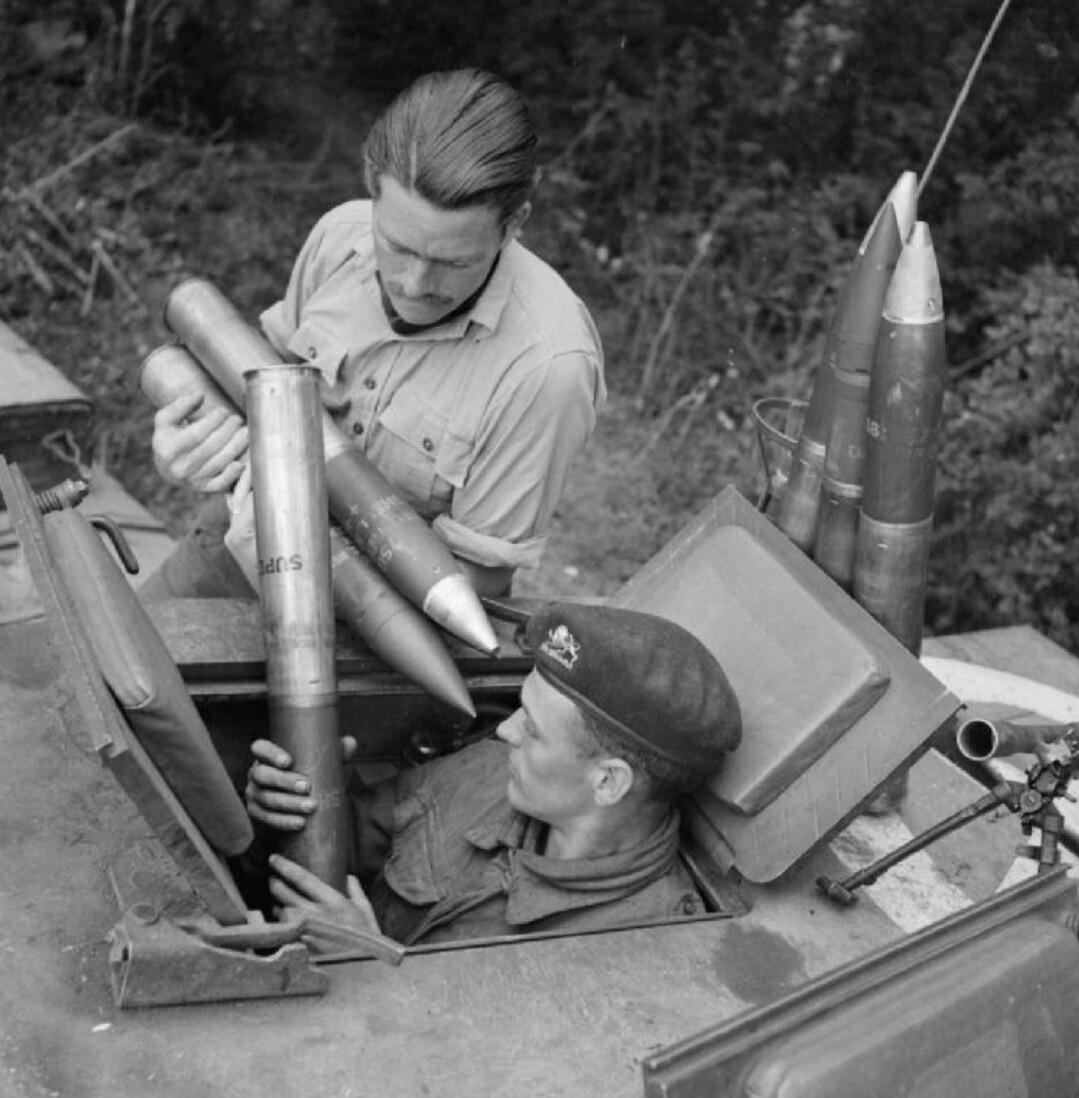
In keeping with the armament, the crew was reorganized, unlike other vehicles of the time. Instead of a radio operator, there was now a gunner for the 76 mm howitzer in the hull. The crew consisted of the commander, the driver, two gunners on early models (or a radio operator/machine gunner on later versions), and a loader. The hull was divided into four sections: the driver’s compartment, the engine compartment, the transmission compartment, and the fighting compartment with the turret.
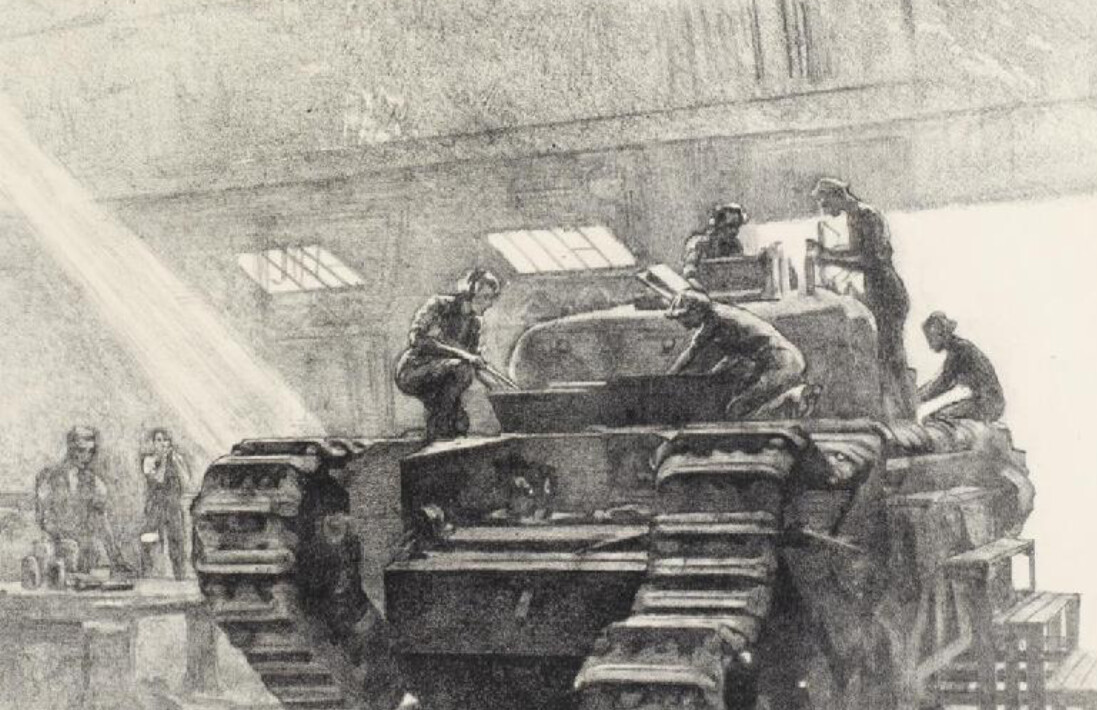
The hull was made of 12.7 mm thick standard steel sheeting, to which the individual armor plates were screwed or riveted, resulting in up to 102 mm of armor at the Mark I’s most protected point. The hull rested on eleven road wheels per side, of which only nine directly supported the armor. This high number of road wheels ensured that the tank could continue to move even with some damaged road wheels.
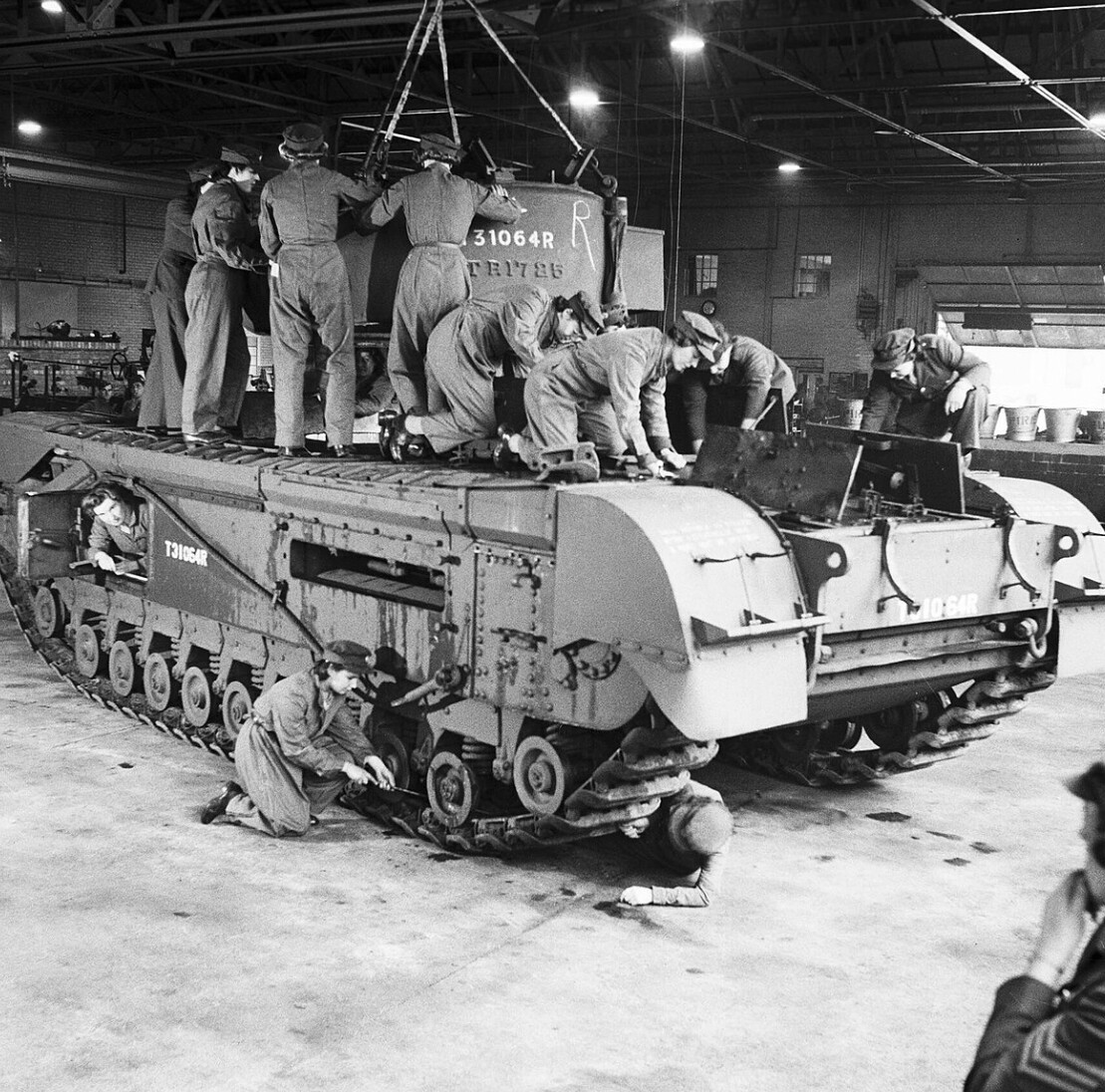
Furthermore, cast turrets were increasingly used for the early Churchill variants because their production required fewer steps and fewer personnel, and the result was a robust turret with no risk of flaked rivets flying around the vehicle’s interior. The heavy weight remained a disadvantage. When it became necessary to install the heavier 57 mm 6 pounder gun in the turret on later models, welded turrets were used to save weight.
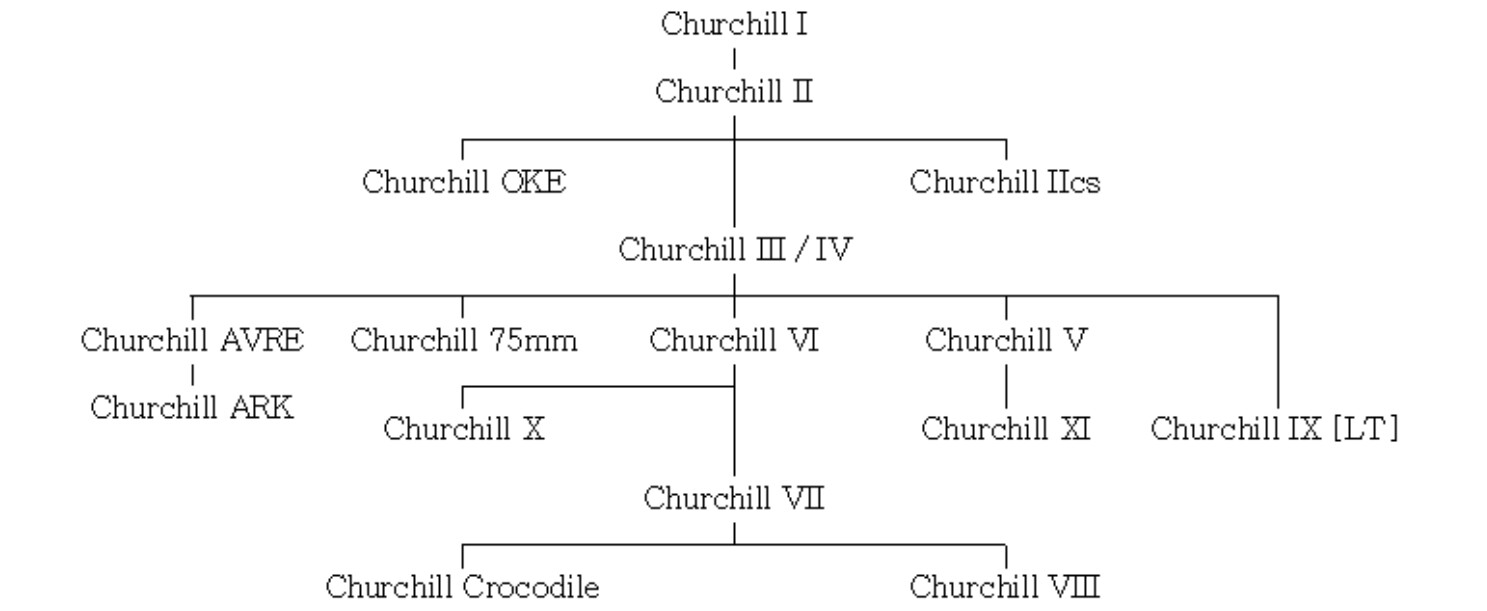
Variants
Churchill Mk I
The Churchill Mk I was the first version of the A22 Churchill, of which 303 were built during the war. It was armed with a 40 mm 2-pounder cannon in the turret with 150 rounds, as well as a coaxial Besa machine gun. The hull housed a 3-inch howitzer with 58 rounds. This was intended for use against infantry and lightly armored targets.
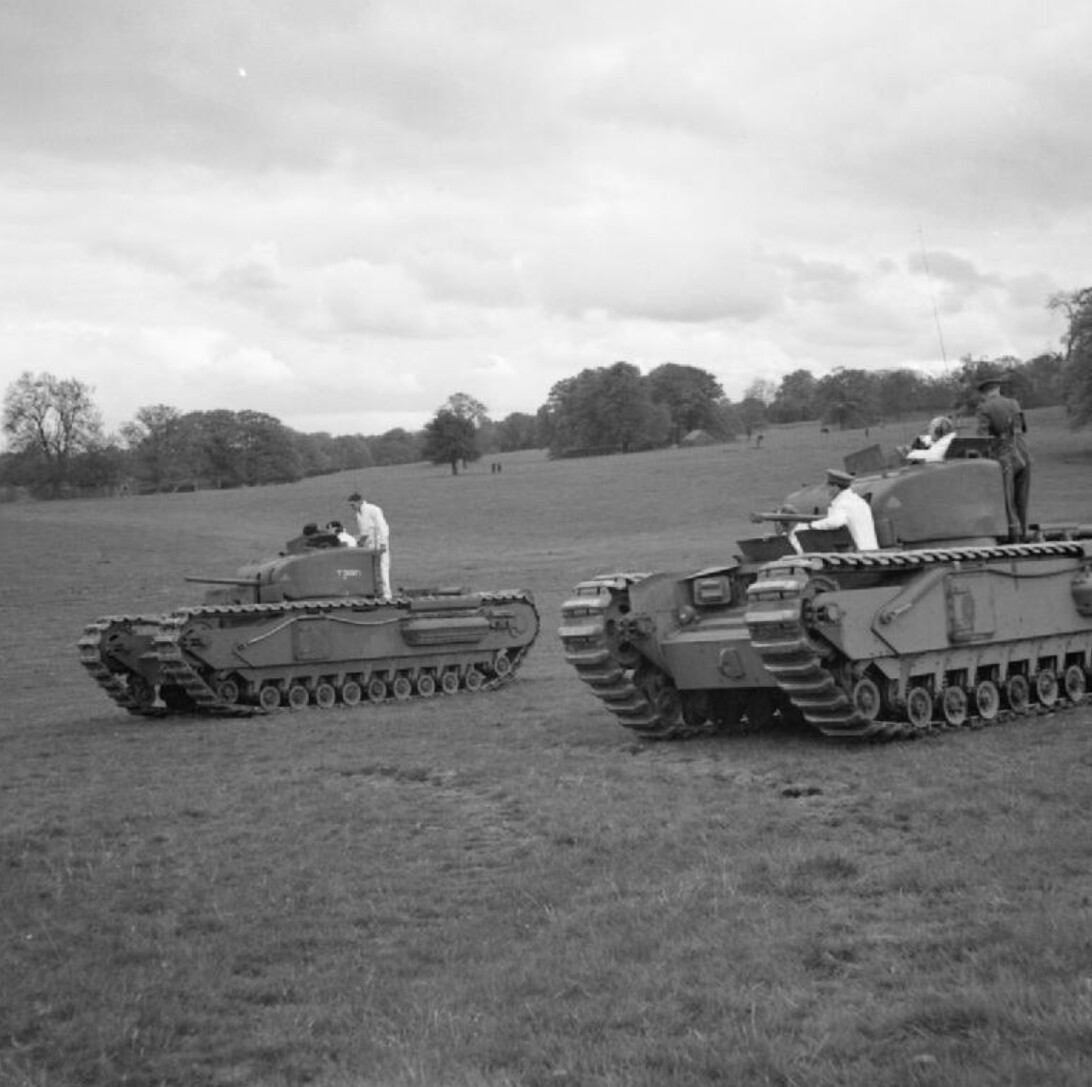
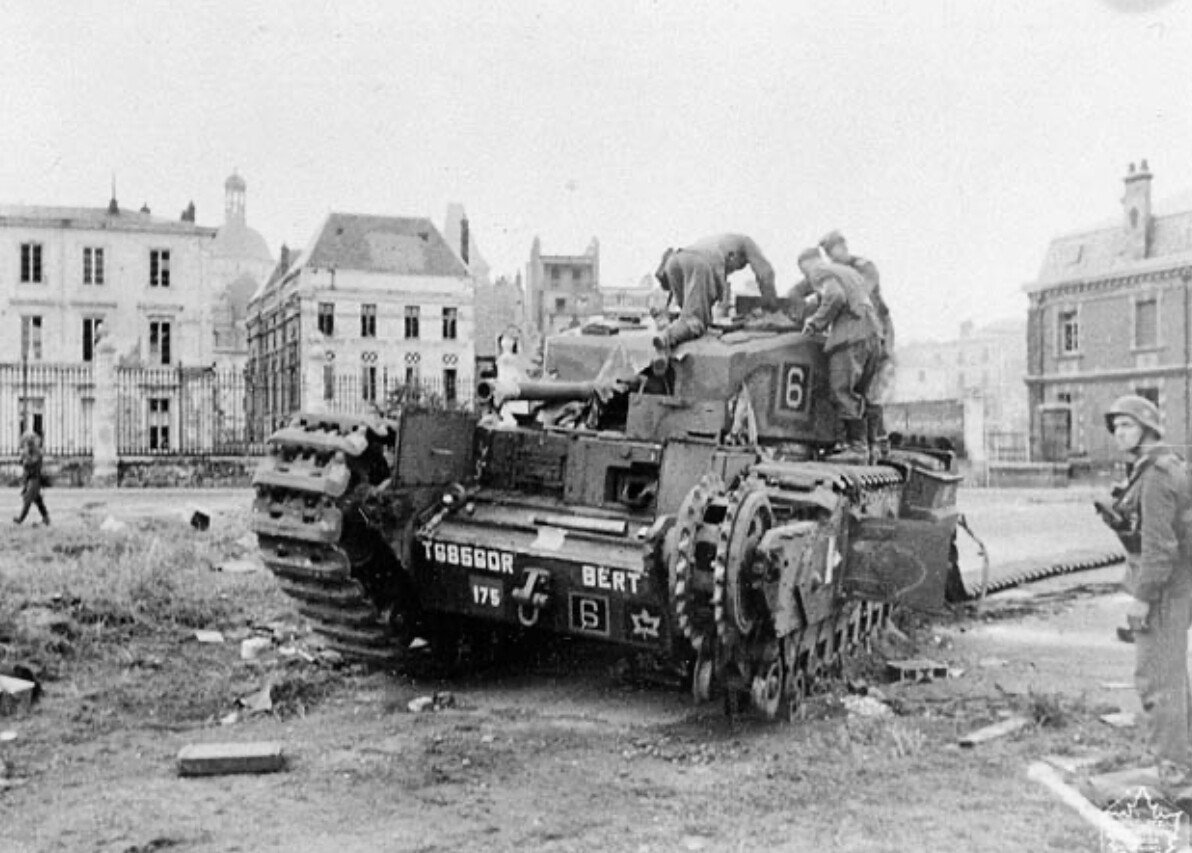
The Mk I was known for its lack of mechanical reliability and was good at negotiating narrow trenches and obstacles. This was due to its length and its all-around tracked chassis, which was based on experience gained during the First World War in negotiating trenches and blast holes. Its first deployment was with a small number of Churchill Mk Is and other versions of the Churchill during the Dieppe Raid (Operation Jubilee), which failed, and all Churchill Mk I tanks were destroyed.
Churchill Mk II
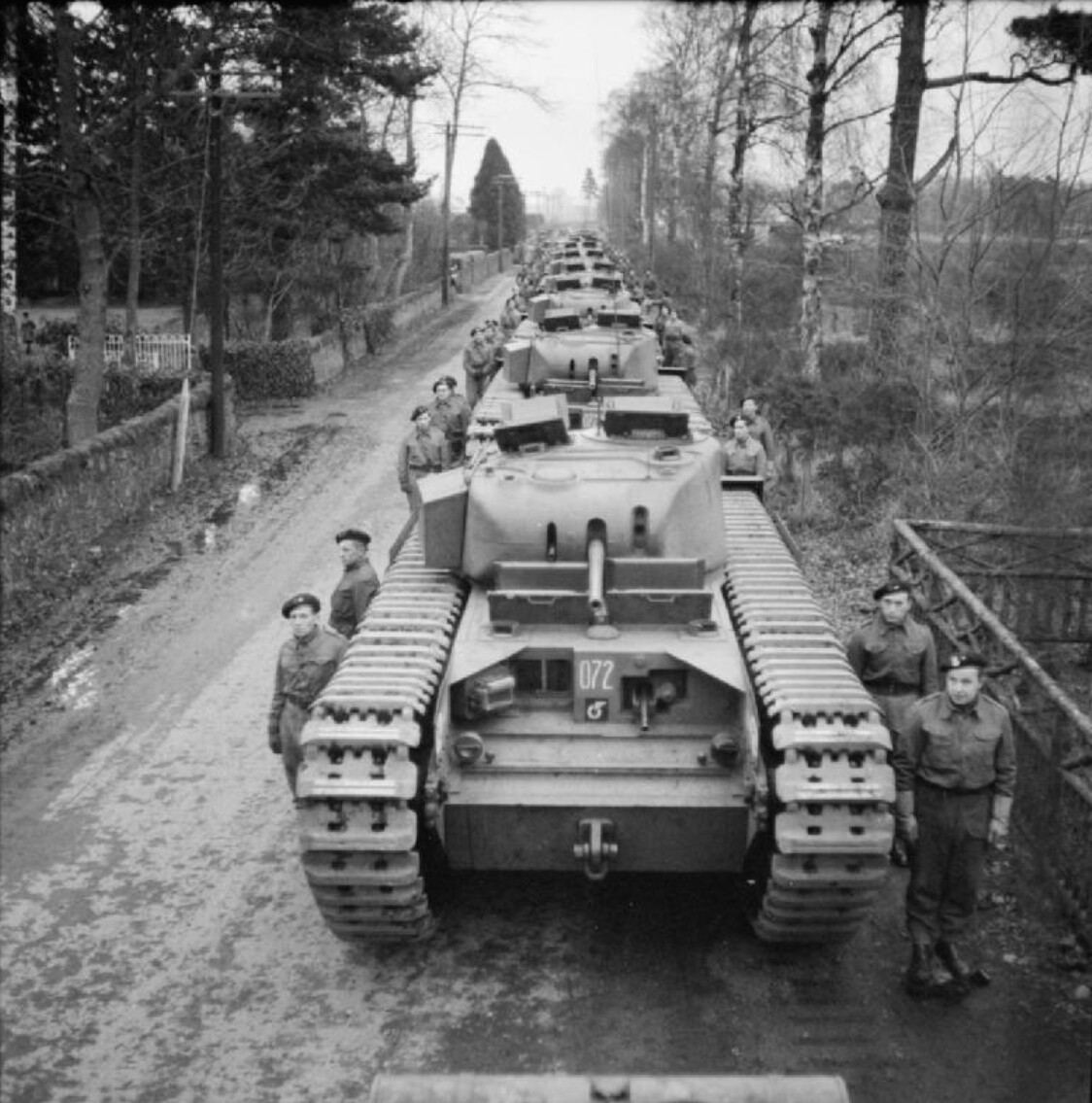
The Churchill Mk II was the second version of the Churchill. It differed significantly from the Mk I with its reinforced armor and the 40 mm 2-pounder gun in the turret was replaced by a 57 mm 6-pounder gun. The howitzer in the hull was also replaced by another Besa machine gun in order to reduce construction costs and simplify the construction process of the 1,127 units produced.
Churchill Mk II (CS)
The Churchill II CS (Close Support) featured a 2-pounder gun mounted in the hull and a 3-inch QF howitzer mounted in the turret. It was sometimes called the “Churchill II.” Its purpose was to support infantry in close combat, such as assaults. However, very few were produced and none saw combat.
Churchill Mk III
The Churchill Mk III featured a new welded turret from Babcock & Wilcox Ltd. instead of the cast turret previously used in the Churchill series. It retained the 57 mm 6-pounder of the Churchill II, but the howitzer was now completely removed from the tank. The Mk III was also sent to the Soviet Union as part of the Lend-Lease program. A total of 301 Churchill tanks (of various designs) were sent, of which only 258 arrived and were used on the Eastern Front.
Churchill Mk IV
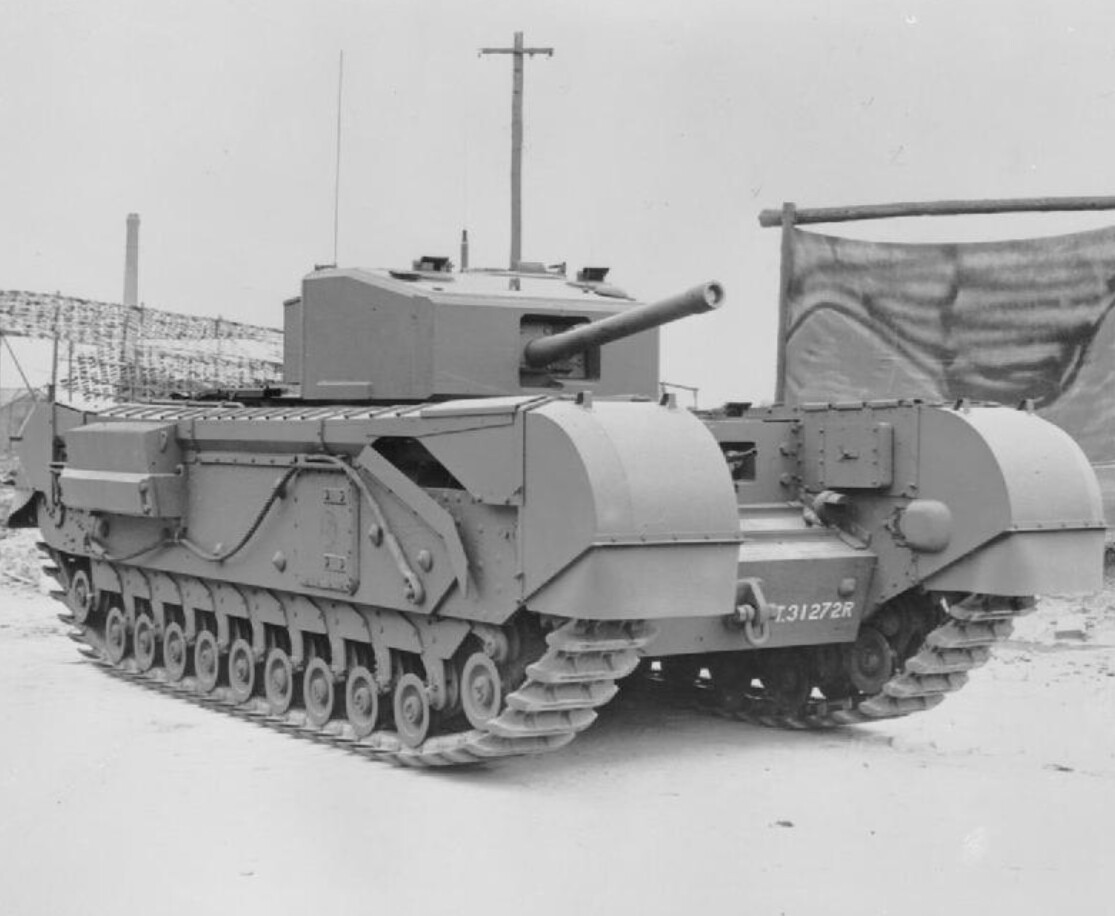
The Mk IV was the most commonly produced Churchill during World War II, with 1,662 produced, and differed little from the Churchill Mk III. The main change was the reversion to the cast turret, which was significantly cheaper than the welded turret. The clean, square shape of the welded turret remained unchanged and was carried over to the cast turret. Additionally, a telephone was installed at the rear of the Churchill. This was intended to allow the infantry following the Churchill to communicate with the tank crew, which was an advantage in the role of an infantry tank.
Churchill Mk V
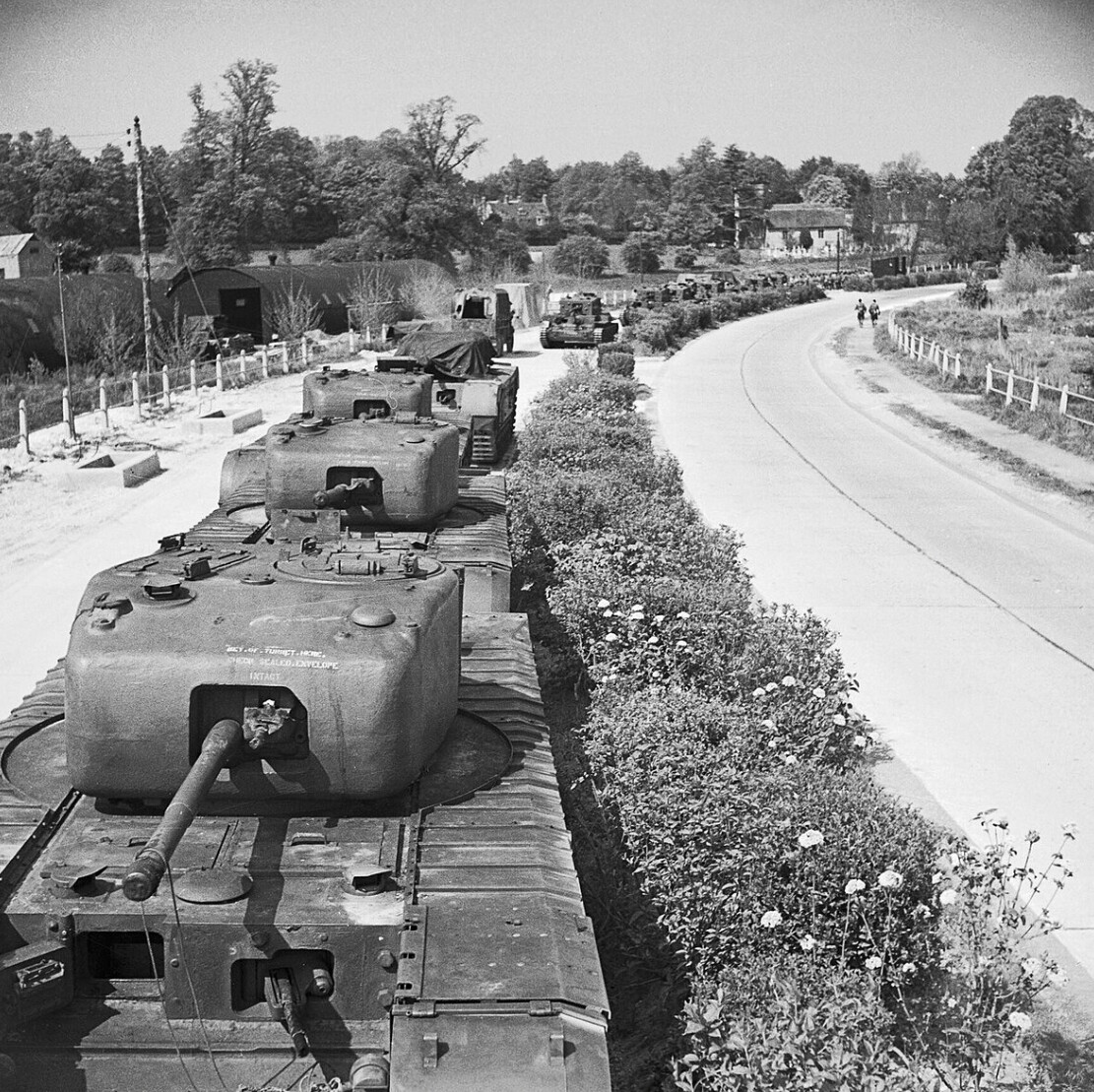
The Churchill Mk V was a Churchill that, instead of the previous 57 mm 6-pounder main gun, now had a 95 mm howitzer, which, like the 75 mm howitzer of the Churchill Mk I and Mk II (CS), was intended for infantry support. The Mk V had 47 rounds and was built on the basis of the Mk IV, thus using a cast turret instead of a welded one. The gun could fire several types of ammunition. In addition to shaped charge shells, it could also fire smoke grenades and HE grenades with a maximum range of 6,200 m. 241 models of this version were built and used by British tank troops in Italy or on the Western Front in Europe.
Churchill Mk VI
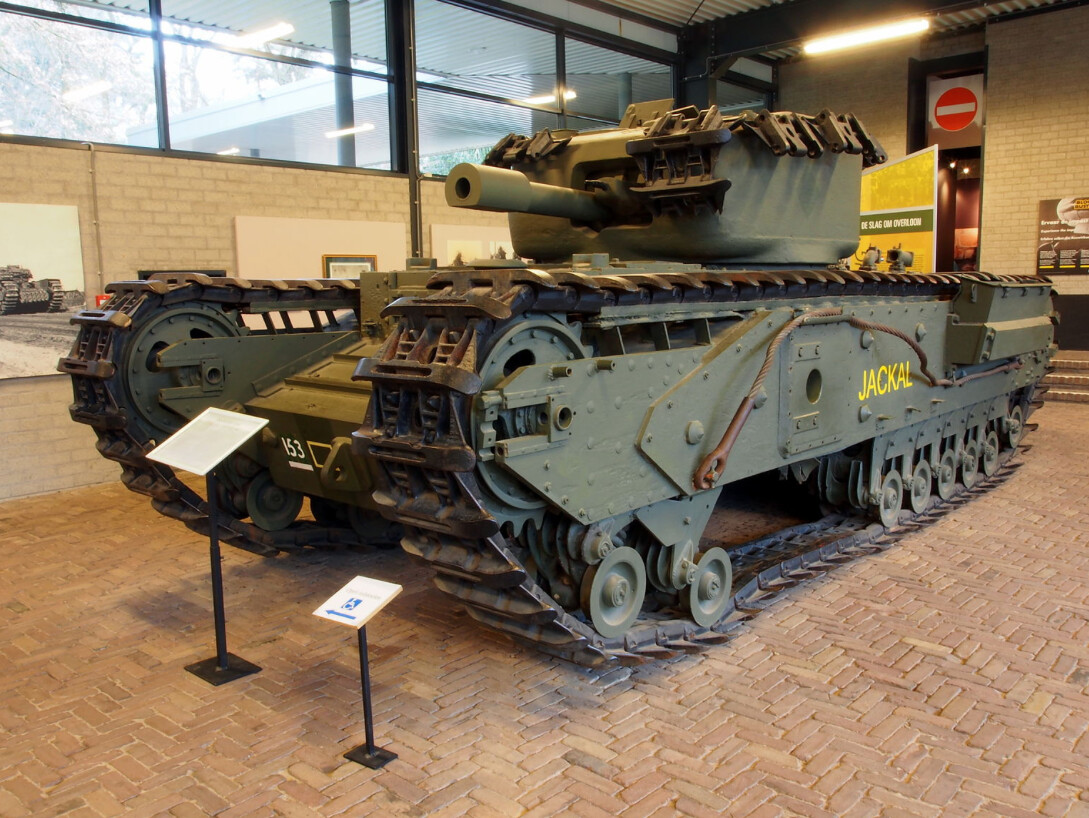
The Churchill Mk VI again featured a new gun as its primary armament. This time, the QF 75 mm Mk.V was installed in the Churchill, which had greater penetration than the 6-pounder. In addition, a protective collar was added to the hull of the Mk VI to protect the gap between the turret and the hull, making it less vulnerable. Due to the imminent completion of the Churchill Mk VII and the additional modernization of the Mk III and IV, only 200 examples were built.
Churchill Mk VII
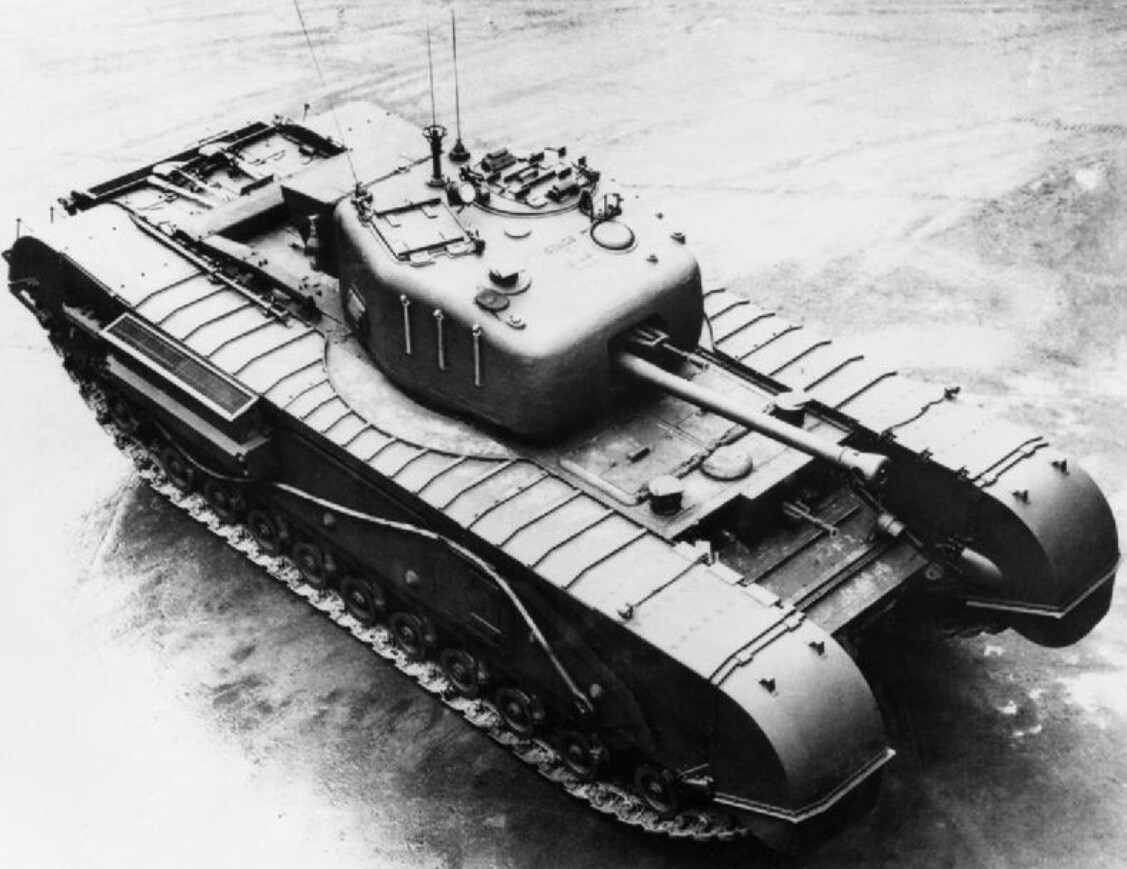
The next major redesign of the Churchill was the Mk VII. It still used the 75 mm cannon of the Mk VI, but the Mk VII was wider and much more heavily armored. Its frontal armor was 50% thicker than that of a Tiger I (152 mm), which meant it could withstand enormous loads from enemy fire. It was often referred to as the Churchill Heavy because it was considerably more armored than its predecessors. In the spring of 1945, it was given its own specification number, “A42.” The Mk VII was first used on D-Day by British tank troops. After D-Day, it was used by three regiments of the Royal Armored Corps in Western Europe and a British tank corps in Italy. After the Second World War, 20 of these vehicles (alongside the Crocodile and AVRE) were in service with the 7th Royal Tank Regiment in the Korean War. They were used, for example, in the Third Battle of Seoul.
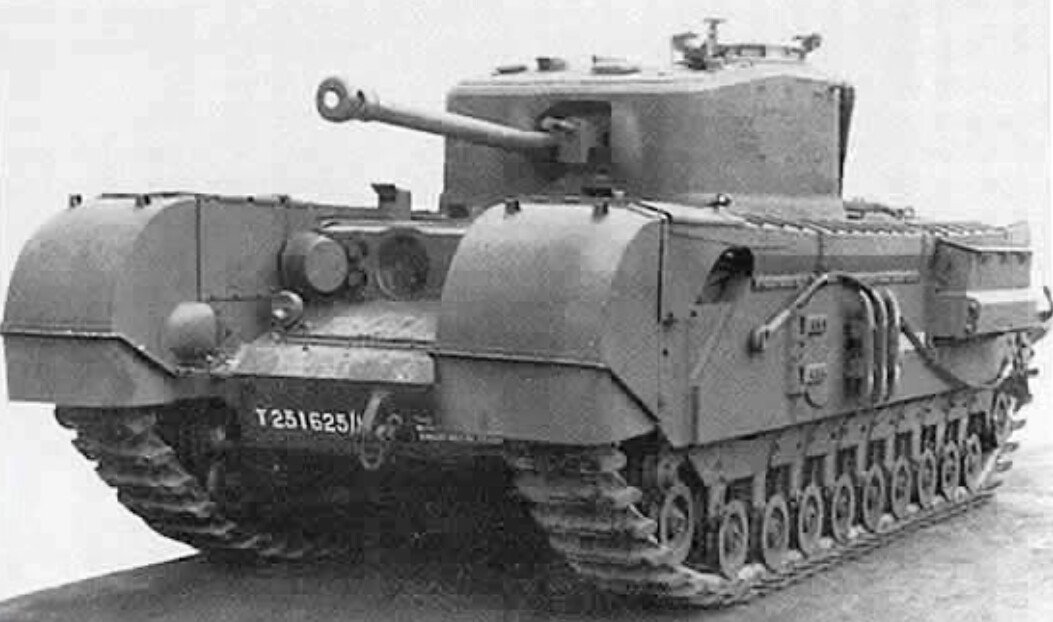
Churchill Mk VIII
The Mk VIII differed from the Mk VII only in that the Mk VIII was equipped with the 95 mm howitzer and the 47 rounds in a slightly modified turret, otherwise everything remained the same as the Mk VII.
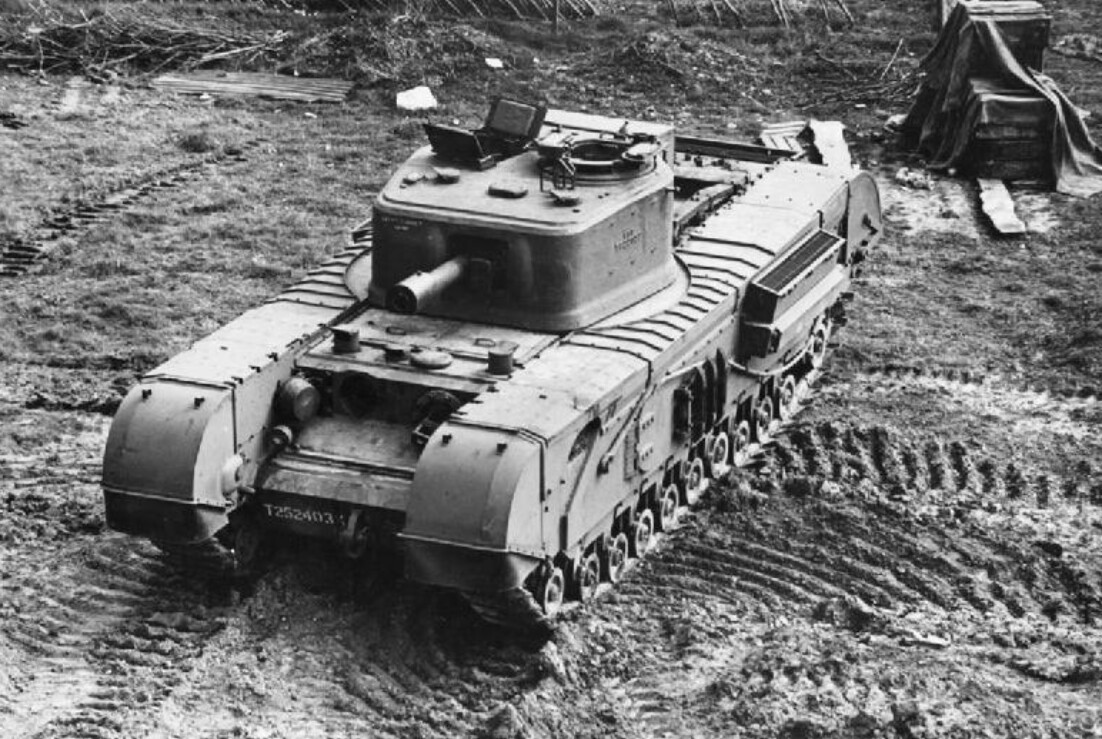
Churchill Mk IX
The Mk IX was a Churchill III/IV upgraded with additional armor on the hull and turret, as well as modifications to the transmission and chassis. As long as the original turret lacked additional armor, it was called the Churchill IX LT (“Light Turret”). Modernized examples mainly retained their 6-pounder gun, but the 75 mm gun was also rarely installed.
Churchill Mk X
The Mk VII was also modified with the improvements of the Mk IX. These were accordingly called Churchill Mk X. Here too, the transmission and drive were modified and the armor reinforced. They did not receive new armament, but as with the Mk IX, if a turret of the Mk X was not reinforced, it was also referred to as “LT” (Light turret), thus correspondingly Churchill Mk X LT.
Churchill Mk XI
The Mk V was supposed to receive the same improvements as the Mk IX, and this version was supposed to be called Mk XI, but was never built.
Churchill NA 75
The Churchill NA 75 (North Africa) differed from the Churchill IV, in that the NA 75 replaced the 6 pounders with American 75 mm guns and gun mantlets from 48 Shermans destroyed by mines during Operation Whitehead and mounted these guns in the cast Churchill Mk IV turrets. Some Churchill Mk IIIs were also converted in this way, but they retained the Mk IV turret with the conversion. The performance of the guns after the conversion was almost identical to the 6 pounder gun of the Mk VI.
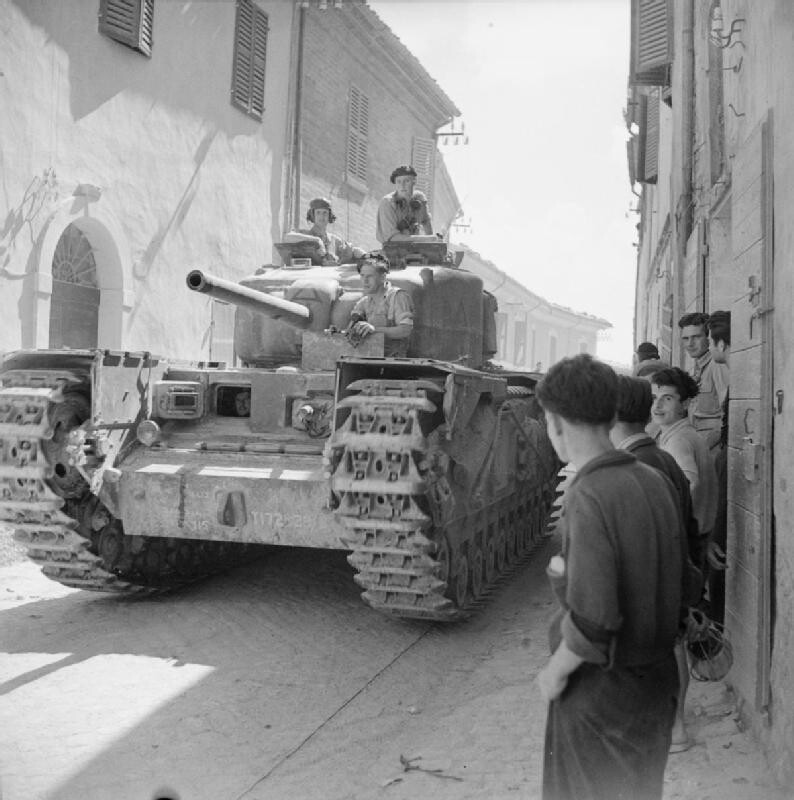
In order for the Sherman gun mantlet to fit the Churchill Mk IV turret, a section of the front of the Churchill turret had to be welded away before the Sherman gun mantlet could be welded on. A slot for the gun mantlet then had to be welded away at the top to achieve sufficient straightness. The Sherman’s 75 mm gun was designed for left-hand loading, while the Churchill, in accordance with British practice, was right-hand loading. The gun was modified and the fire control system adapted. The conversion involved approximately 200 tanks and was carried out between March and June 1944. The conversion project earned the officer in charge, Captain Percy Morrell, an MBE (Most Excellent Order of the British Empire) and a doctorate.
Churchill ARK
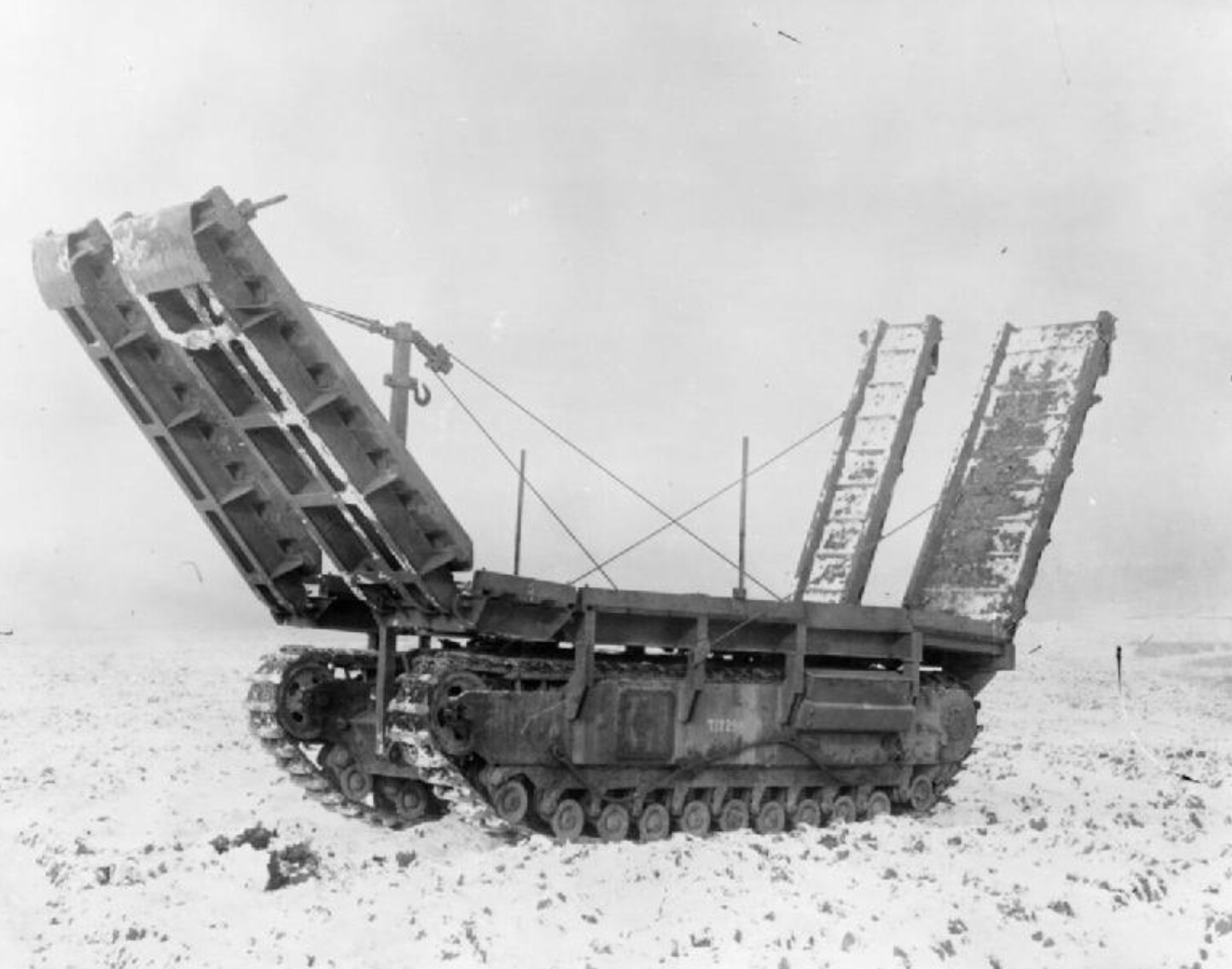
The Churchill Armored Ramp Carrier (ARK) was a turretless Churchill with ramps at both ends, forming a mobile bridge. Fifty of these vehicles were built based on the Churchill Mark III and Mark IV. The Link Ark, also known as the Twin Ark, consisted of two ARKs positioned side by side to allow for a wide crossing. The ramps were foldable and allowed for a longer crossing of 20 m. The Twin Ark was also used after World War II for the post-war Conqueror heavy tank as a temporary bridge.
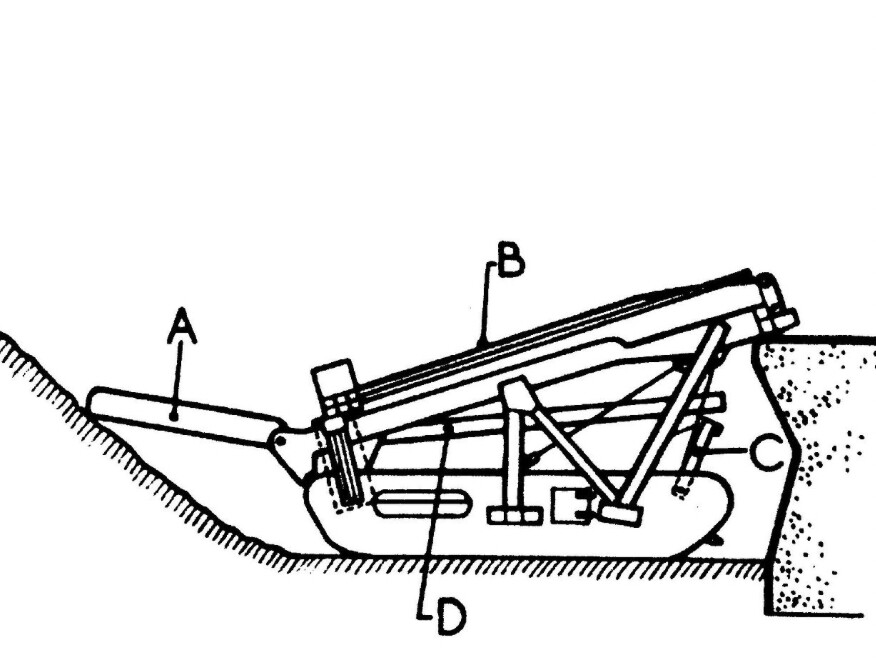
The Ark Mk II had a wider bridge on the left side, measuring 1.2 m instead of the usual 0.61 m, which meant that narrower vehicles could now also use the ARK. These were conversions of the Ark Mark I from mid-1944. The Ark Mk II, based on an Italian design, was originally called the “Octopus.” It was built in Italy using US ramps on the Churchill Mk III chassis.
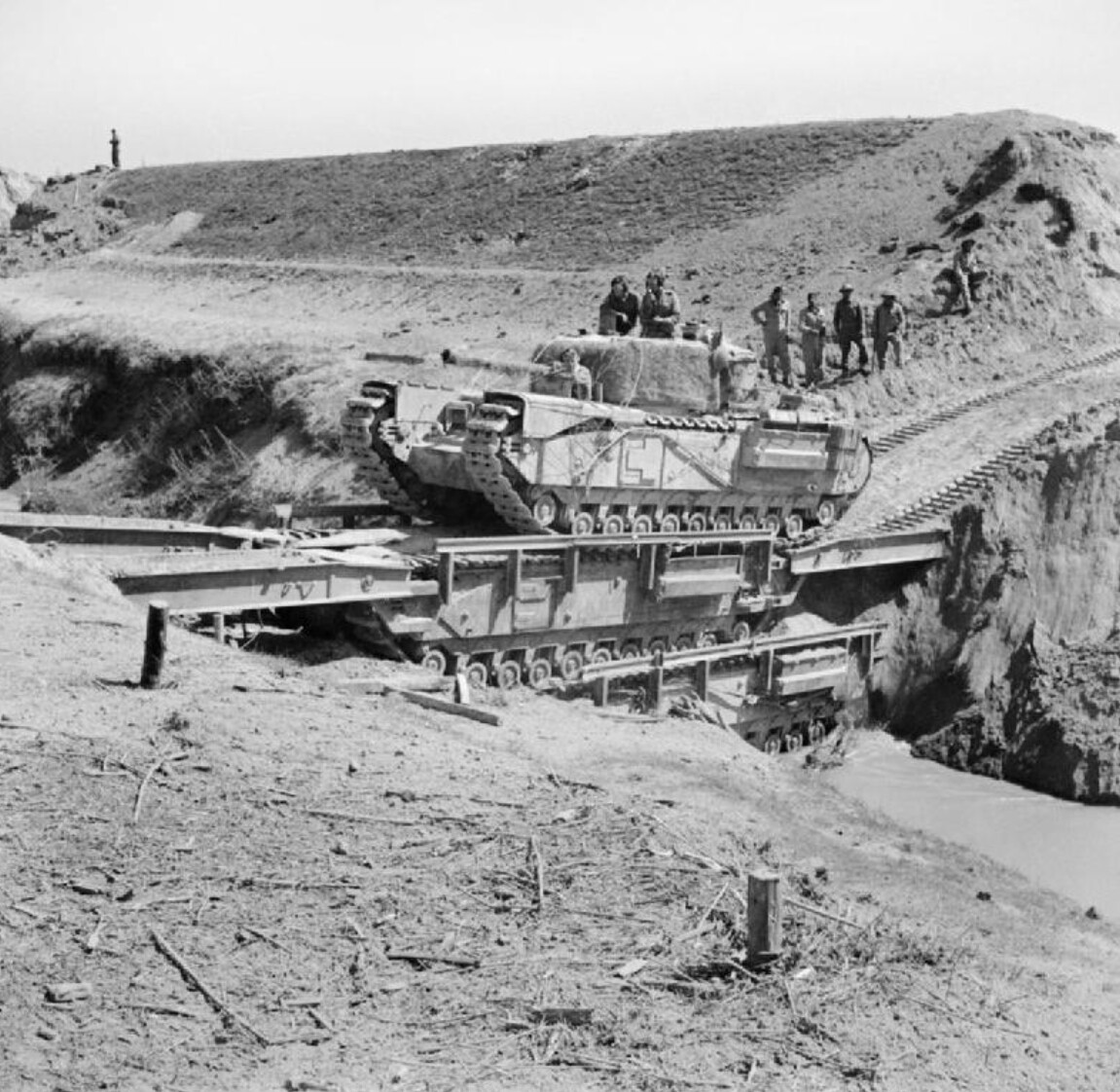
There was also the “Lakeman Ark,” an experimental design for crossing obstacles at high altitudes. It was a Churchill equipped with a turret, possibly equipped with a cannon. The tactic was for the Lakeman Ark to drive close to the obstacle so that the following vehicles could drive onto the Lakeman Ark using ramps at the rear. With the help of a bridge structure, the Churchill itself could drive onto the obstacle and thus overcome it.
Churchill ARV
The Churchill Armored Recovery Vehicle (ARV) was a version of the Churchill tank used as a recovery vehicle. The Churchill ARV I was a converted Churchill Mk I. The turret and hull-mounted gun were removed. The hull-mounted gun was replaced with a BESA machine gun, and a crane superstructure was installed in place of the hull.
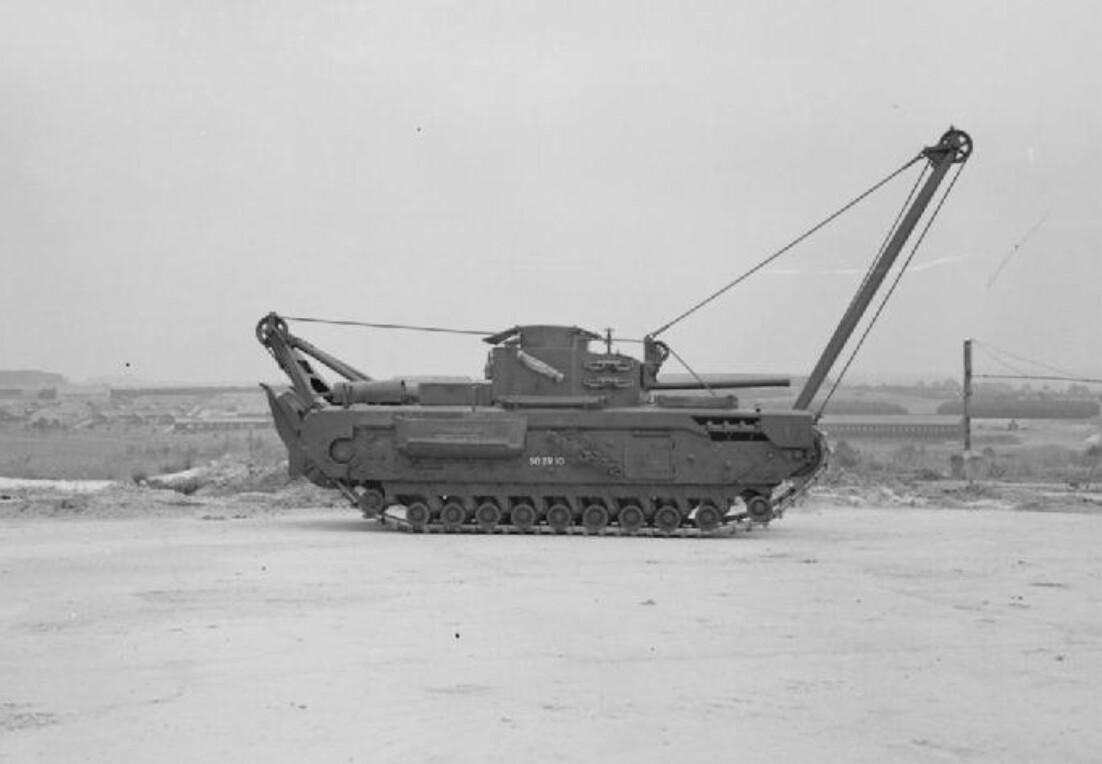
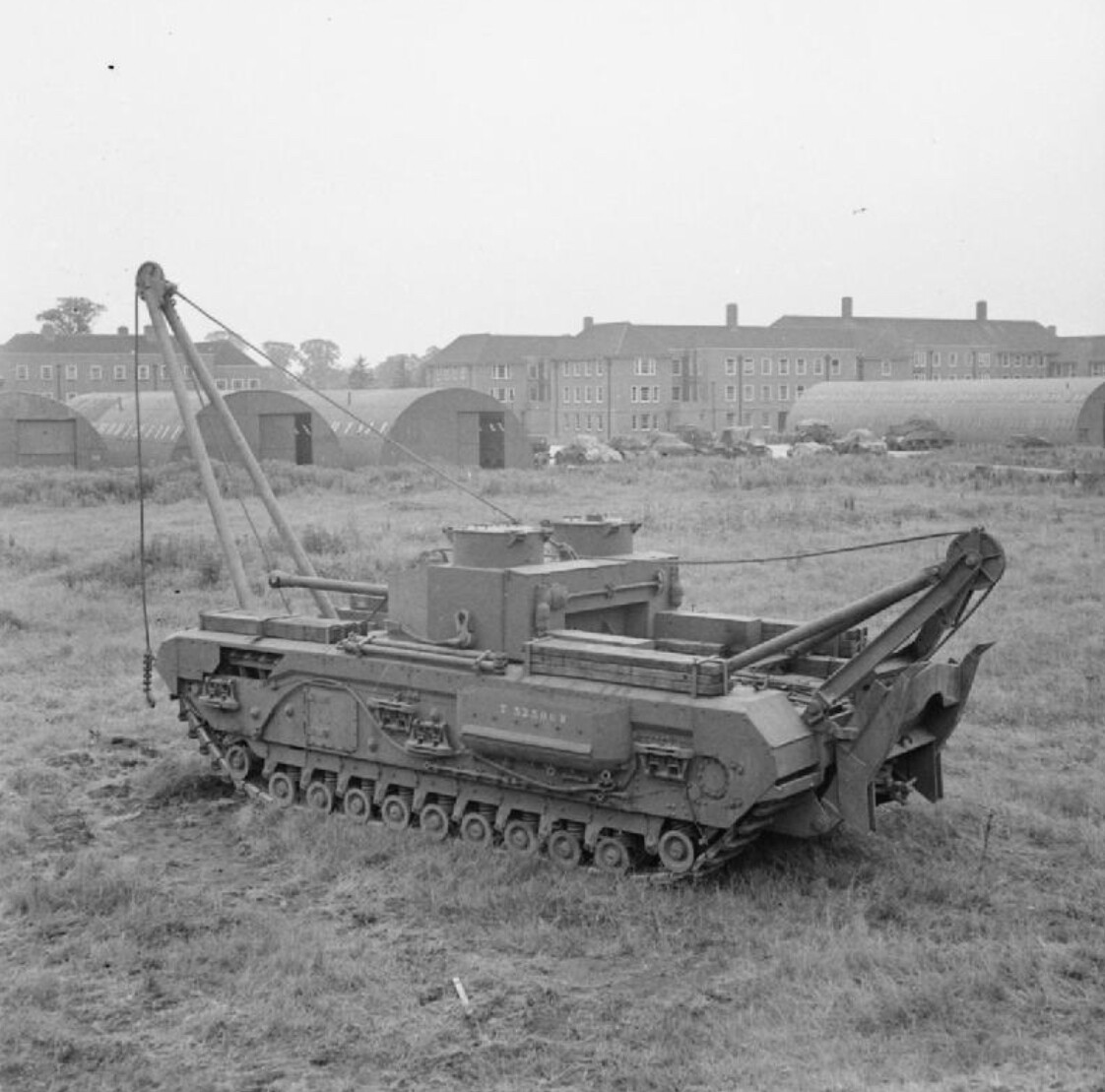
The crew consisted of three REME members who piloted and operated the Churchill ARV. The ARV II was something different; it had a fixed turret and a dummy 6-pounder, as well as the crane, which had a maximum lifting capacity of 7.6 tons.
Churchill ARVE
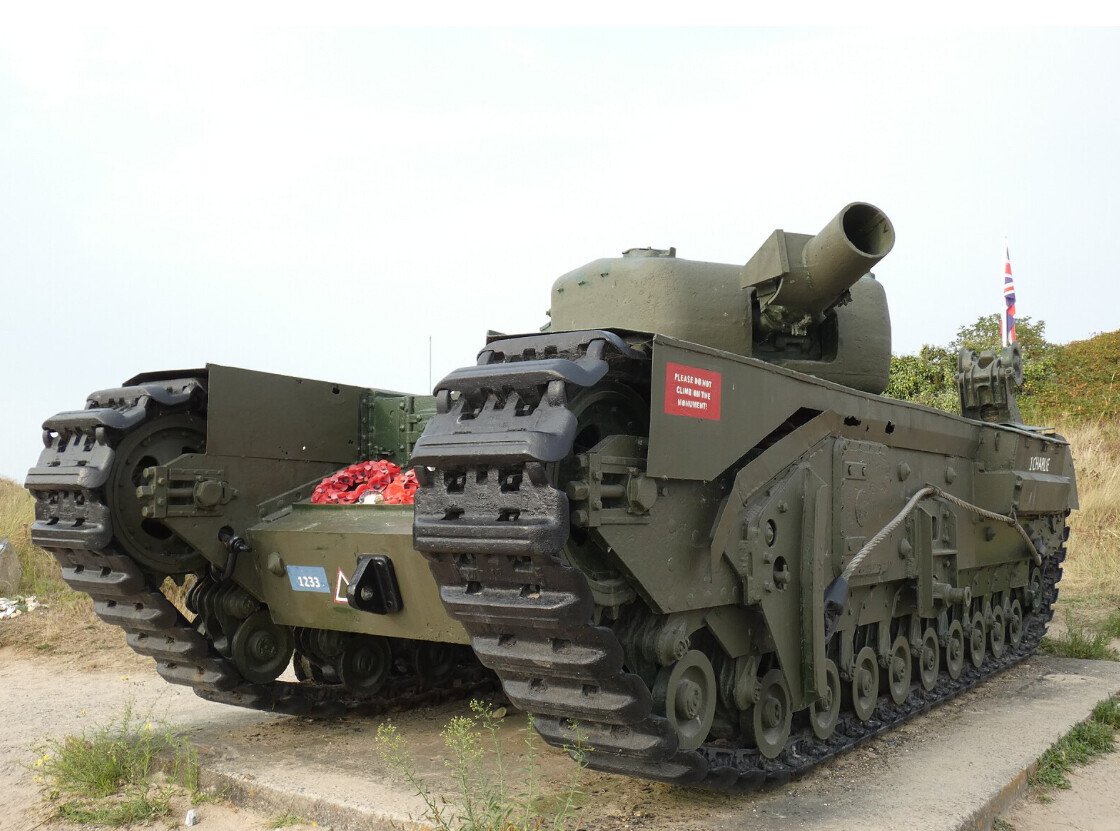
The Churchill “Assault Vehicle Royal Engineers” (AVRE), built by Canadian engineer Sir Percy Hobart based on the experience of the Dieppe Raid, was based on the Churchill Mark III or Mk IV, but was equipped with the “Mortar, Recoiling Spigot, Mark II” (or “Petard”). This mortar had a diameter of 230 mm and fired the heavy Bomb Demolition Number 1, also known as the “Flying Dustbin,” with a 12.7 kg self-propelled grenade. This mortar was designed to quickly destroy nearby fortified positions.
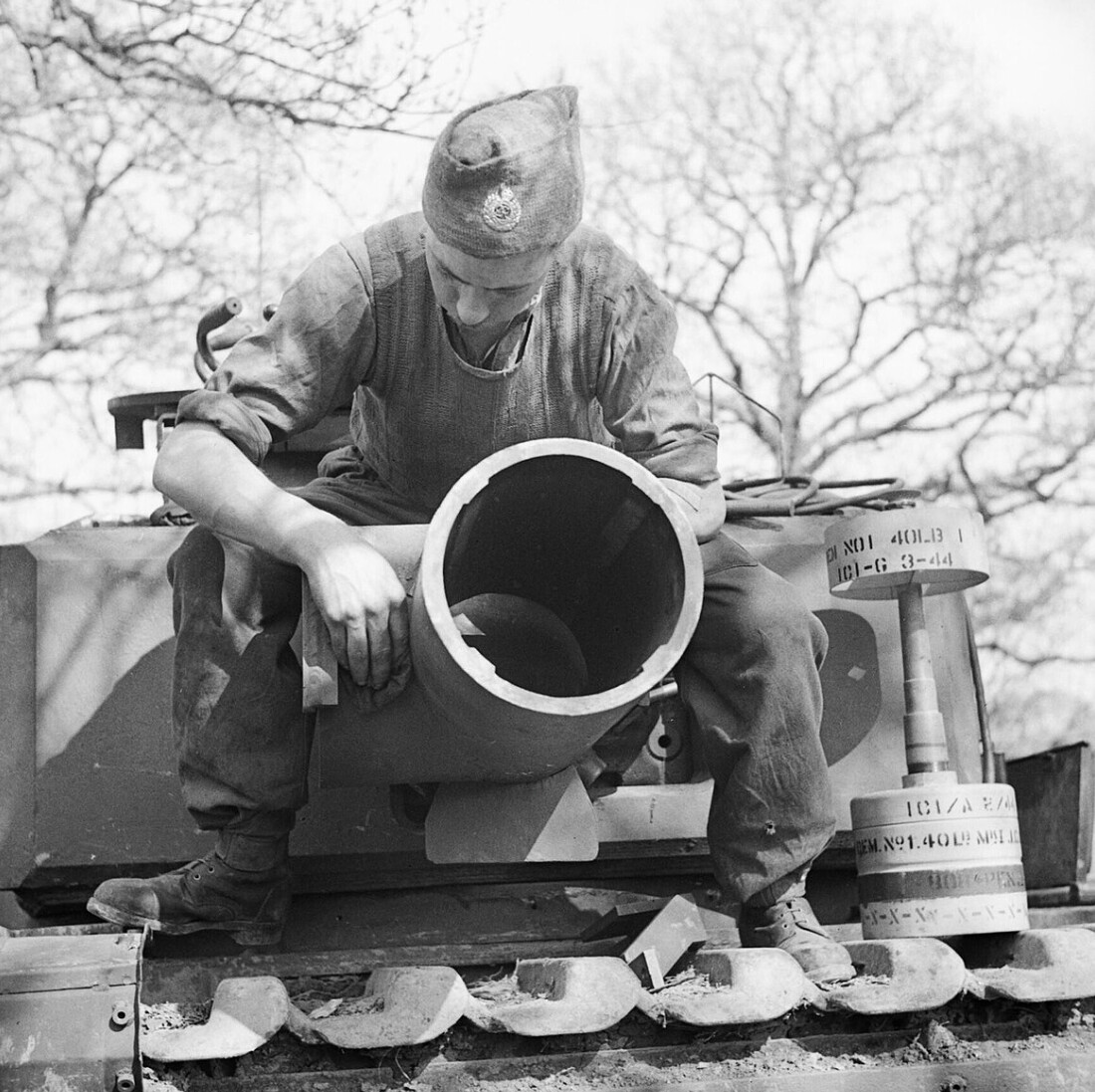
The mortar was reloaded by rotating the turret slightly to the left, with the tube positioned directly over the sliding hatch of the hull machine gun. The standard two-piece hatch was covered and replaced with a small sliding hatch to allow access to the mortar. The mortar tube was then rotated vertically, and the crew member opened the hatch. They then pushed the projectile into the tube, after which the tube was closed and the vehicle was ready to fire again. The AVRE could also be equipped with numerous other attachments, such as the small box girder bridge, which was attached to the front of the tank and placed over ditches or narrow rivers up to 9 meters wide, and the Canadian Indestructible Roller Device (CIRD), which served as mine protection for the tank tracks.
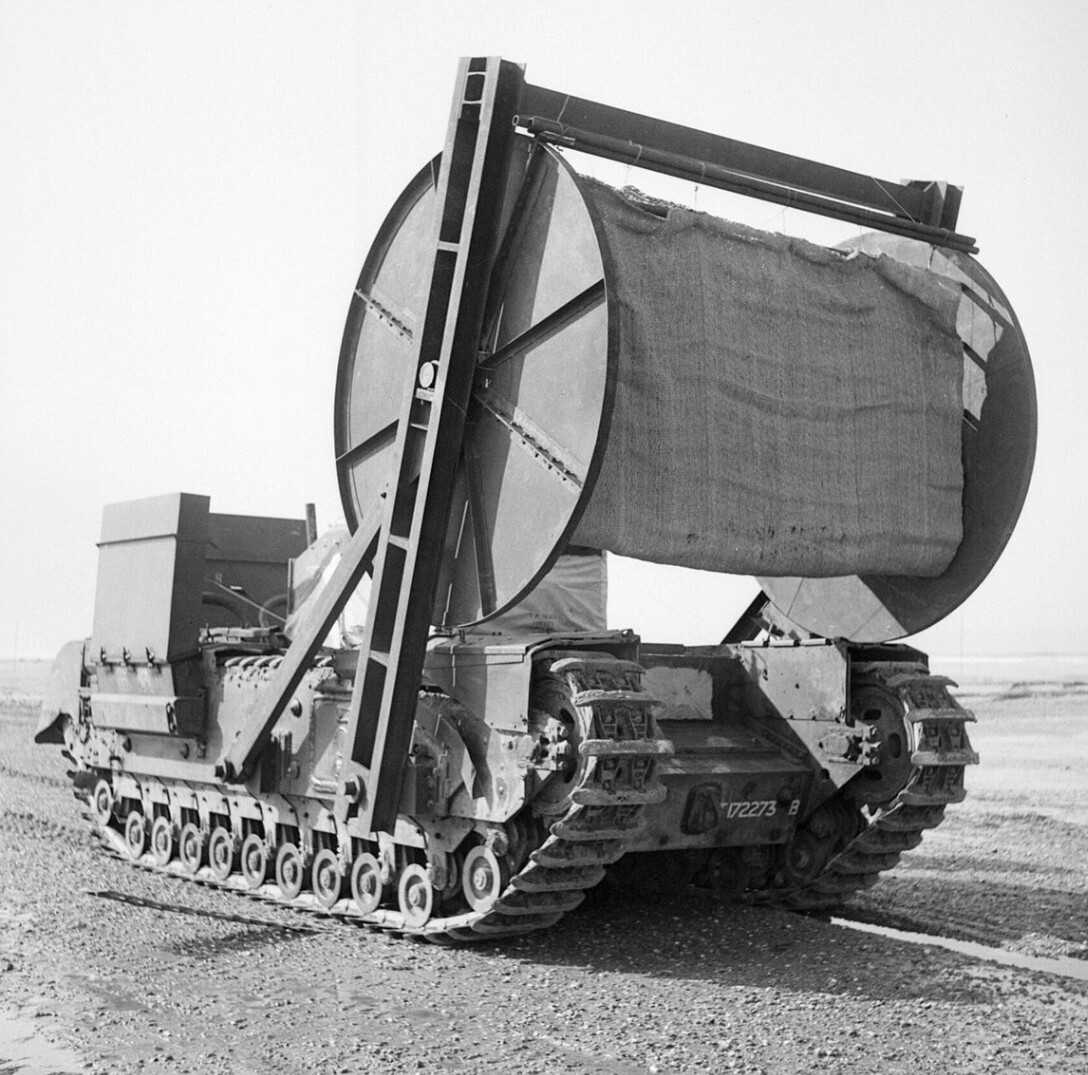
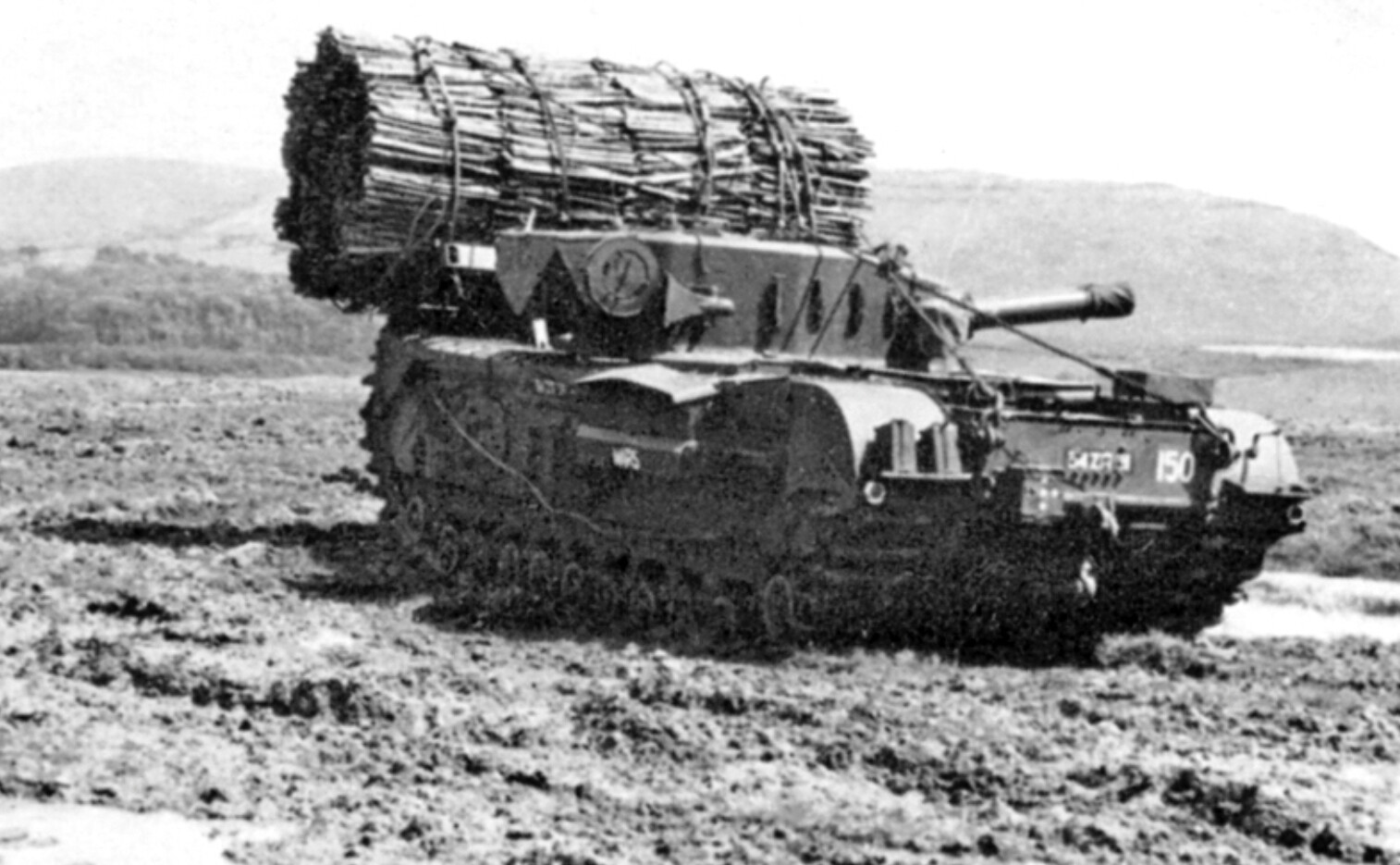
It could also carry fascines (large bundles of wood carried on the front of the tank and dropped in front of trenches or uneven terrain to help the Churchill cross trenches or uneven terrain), devices for attaching explosive charges to obstacles, and spools (giant rolls of canvas on drums unrolled in front of the Churchill to help it cross soft terrain). They were used during the invasion of Normandy to help the Churchill cross soft sand and to clear a path for following vehicles so they wouldn’t be lost on possible mines.
By the time of the invasion of France in June 1944 on D-Day, 180 AVREs had been built. They were first used on D-Day by the British 79th Armoured Division in Normandy. They were extremely successful and served until the end of the war to destroy fortifications. A further 574 followed during and after the war. The crew consisted of six crew members. The driver was from the Royal Armored Corps, and the other five crew members belonged to the Royal Engineers. One RE crew member was a non-commissioned officer from the Explosive Ordnance Department. He was responsible for the “flying dustbins” as well as for directing the crew’s descent from the tank to attach the explosive charges (the so-called “wading charges”).
Other examples that did not see active combat service were equipped with mine ploughs, mine rollers, or special explosive charges for removing reinforced concrete walls to create the necessary space. After the war, new Churchill AVREs were developed based on a modified Churchill Mk VII, armed with a breech-loading slow-explosive gun (165 mm Royal Ordnance L9) that fired even heavier HESH shells containing approximately 18 kg of C4 explosive. The name of the AVRE was changed to “Armoured Vehicle Royal Engineers.”
Churchill Bridge Layer
The British had experience in bridge building with the Valentine bridge-laying tank and the Covenanter bridge-laying tank, and in 1942 they began work on a bridge-laying tank based on the Churchill chassis. This was to carry the Bridge, Tank, 30 ft, No. 2 bridge type, which could carry a 60-ton tank or be used by Class 40 wheeled vehicles. These bridge sections were mounted on a turretless Mk III or Mk VI with a hydraulically pivoting arm attached to the chassis. Upon reaching an obstacle such as a stream, the hydraulically driven arm at the front of the tank pivoted and extended the bridge.
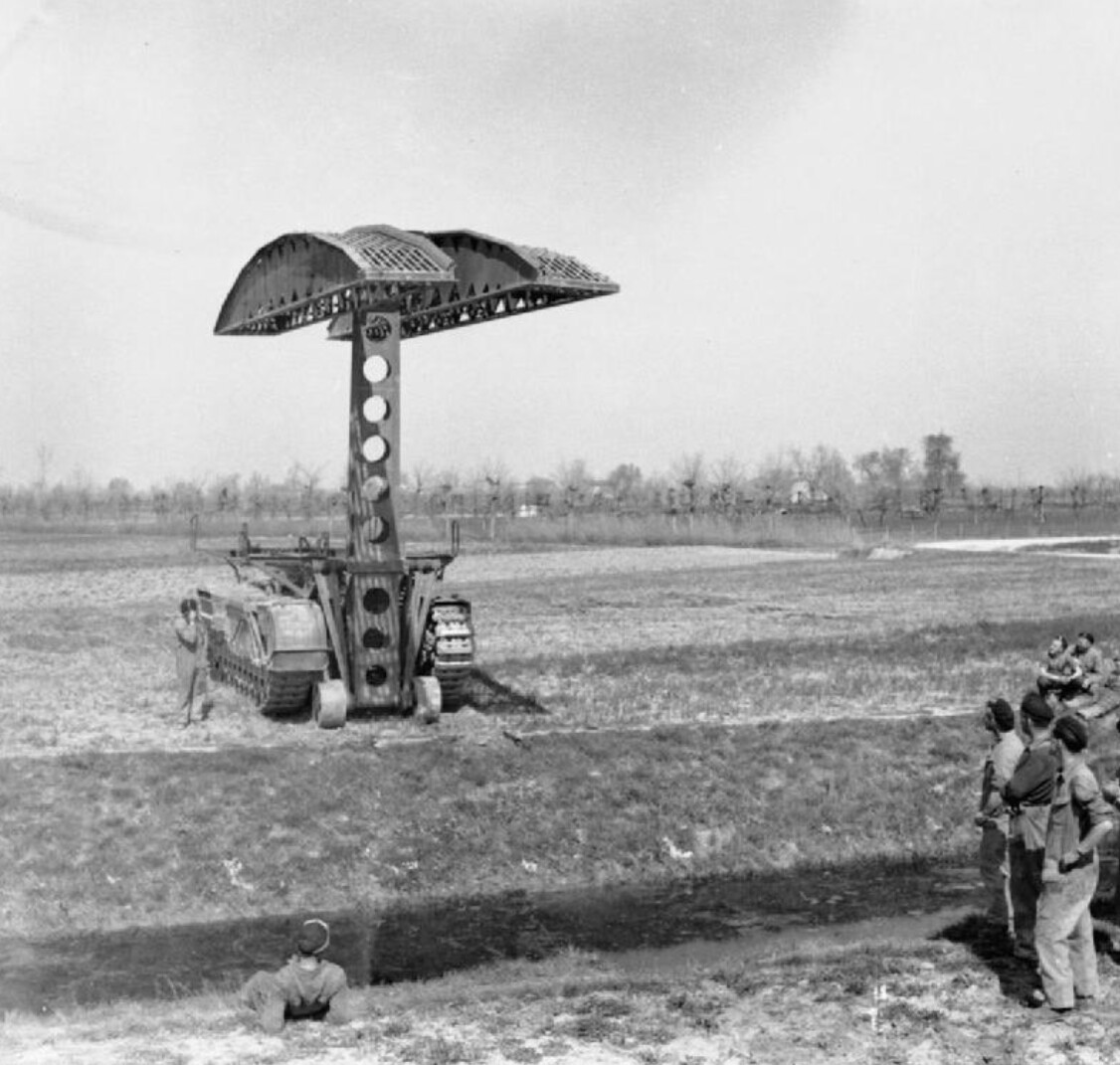
The “Skid Bailey” was a bridge made of Bailey bridge segments on skids, which was maneuvered into position by one or two Churchill bridge-laying tanks. It was typically used to bridge cratered roads under fire. The Mobile Bailey Bridge was a complete bridge for Class 40 traffic and spanned a gap of 21–24 m. The bridge itself was 46 m long and had 3.0 m long ramps at both ends. It was assembled at a safe distance from the gap and then pushed to the construction site by a Churchill bridgelayer, with another tug assisting from the front; the center of the bridge was supported by non-powered Orolo rollers. On site, one bridgelayer pushed the bridge over the gap and then released it.
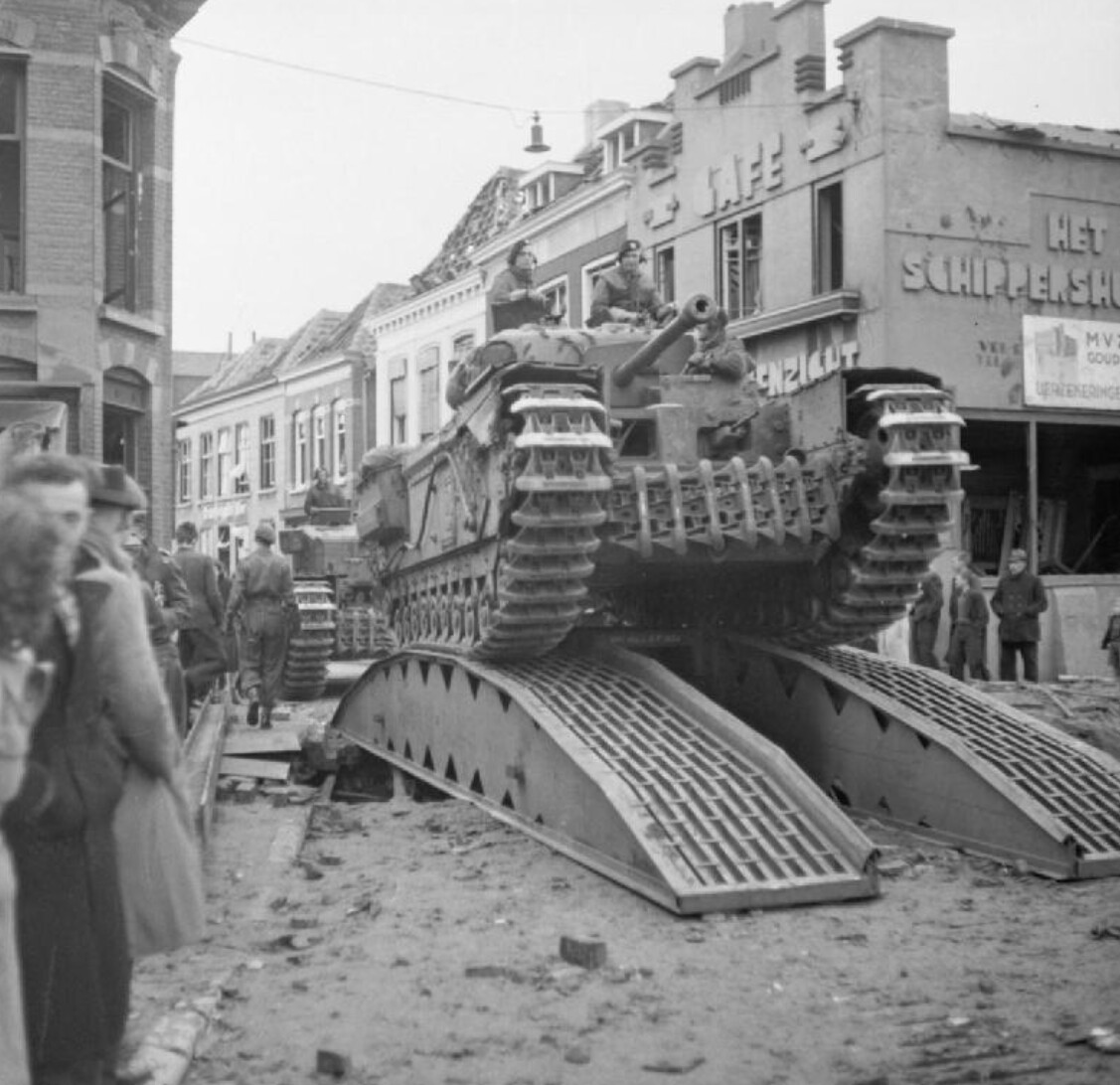
The Mobile Brown Bridge was an improvement on the Mobile Bailey. Named after a Canadian Royal Engineer in Italy, the Bailey bridge was transported on a Churchill bridgelayer, whose tower was removed, while another Churchill bridgelayer carried and pushed the rear end of the bridge. Once the first Churchill was in position, the other bridgelayer pushed the bridge over the gap. An additional 6 meter long bridge end served as a counterweight while the bridge was lowered into position. The “Mobile Dalton Bridge,” named after a Royal Engineer Officer, was a 43 meter long Bailey bridge that was transported on a Churchill bridge sling while a second bridge sling pushed. The procedure was similar to that of the Brown Bridge.
Churchill Crocodille
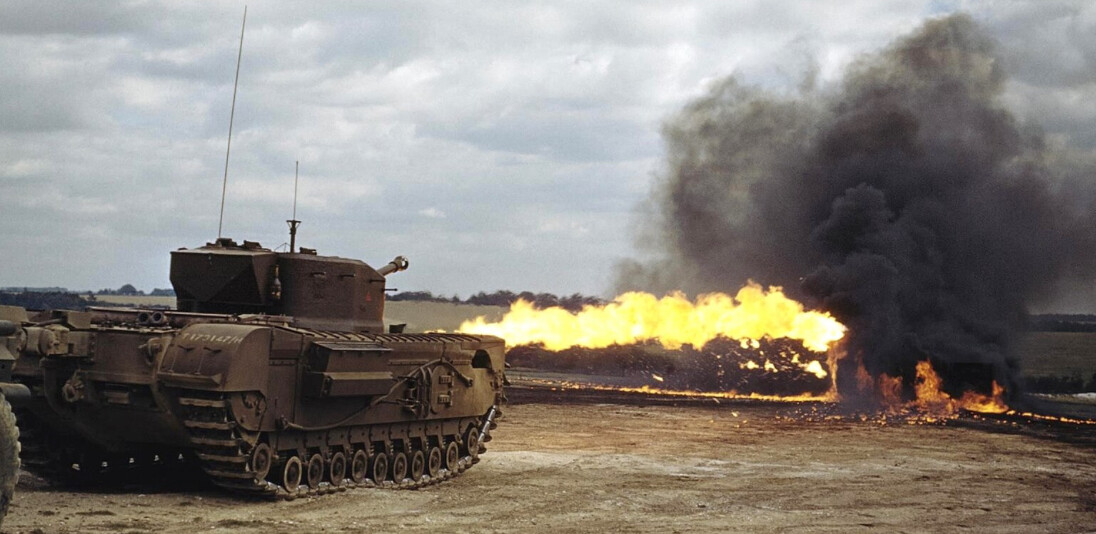
The Churchill Crocodile was a converted Churchill VII with the hull-mounted machine gun replaced by a flamethrower. The flamethrower and pressurized gas were carried in an armored wheeled trailer towed behind the vehicle. It could fire multiple one-second bursts over a distance of over 137 meters. The Crocodile was one of the “Hobart’s Funnies,” another vehicle type of the 79th Armoured Division.
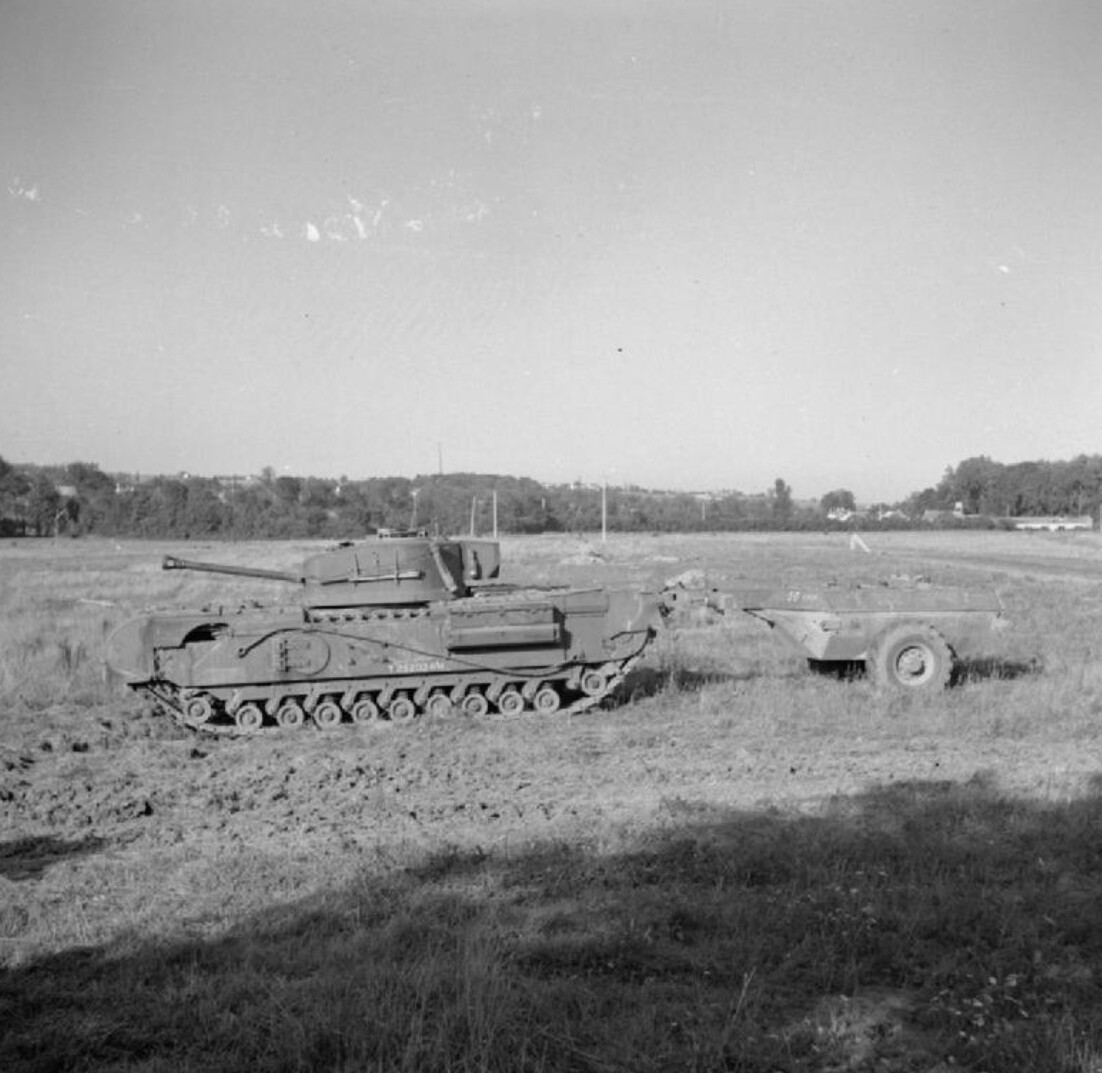
The flamethrower and trailer combination was produced as a kit for the Churchill no more than 800 of the kits were produced in total. These kits could be easily mounted and dismounted on the Mk VIIs.
Churchill OKE
There were three OKE Churchills. They were a Churchill Mark II and Mark III equipped with flamethrowers. The OKE flamethrower tank was developed specifically for the attack on Dieppe and named after its designer, Major J.M. OKE. The design was essentially based on a Churchill tank equipped with a Ronson flamethrower. The flamethrower tank was located in the rear, from which a pipe led to the fixed mount on the front left hull, leaving the machine gun in the hull free. The three OKE tanks were named “Boar,” “Beetle,” and “Bull.” They were in the first wave of the attack on Dieppe, but were quickly lost and abandoned.
Churchill Gun Carrier
The Churchill Gun Carrier was developed in 1941 at the request of the General Staff to investigate the feasibility of equipping infantry and cruiser tanks with large-caliber, high-velocity guns, particularly for use against German tanks to destroy them. Of the infantry tanks, neither the Churchill nor the Valentine could mount a turret with a high-velocity gun larger than the 6-pounder. However, it was proposed to build a fixed casemate to create an even larger gun with a limited traverse range.
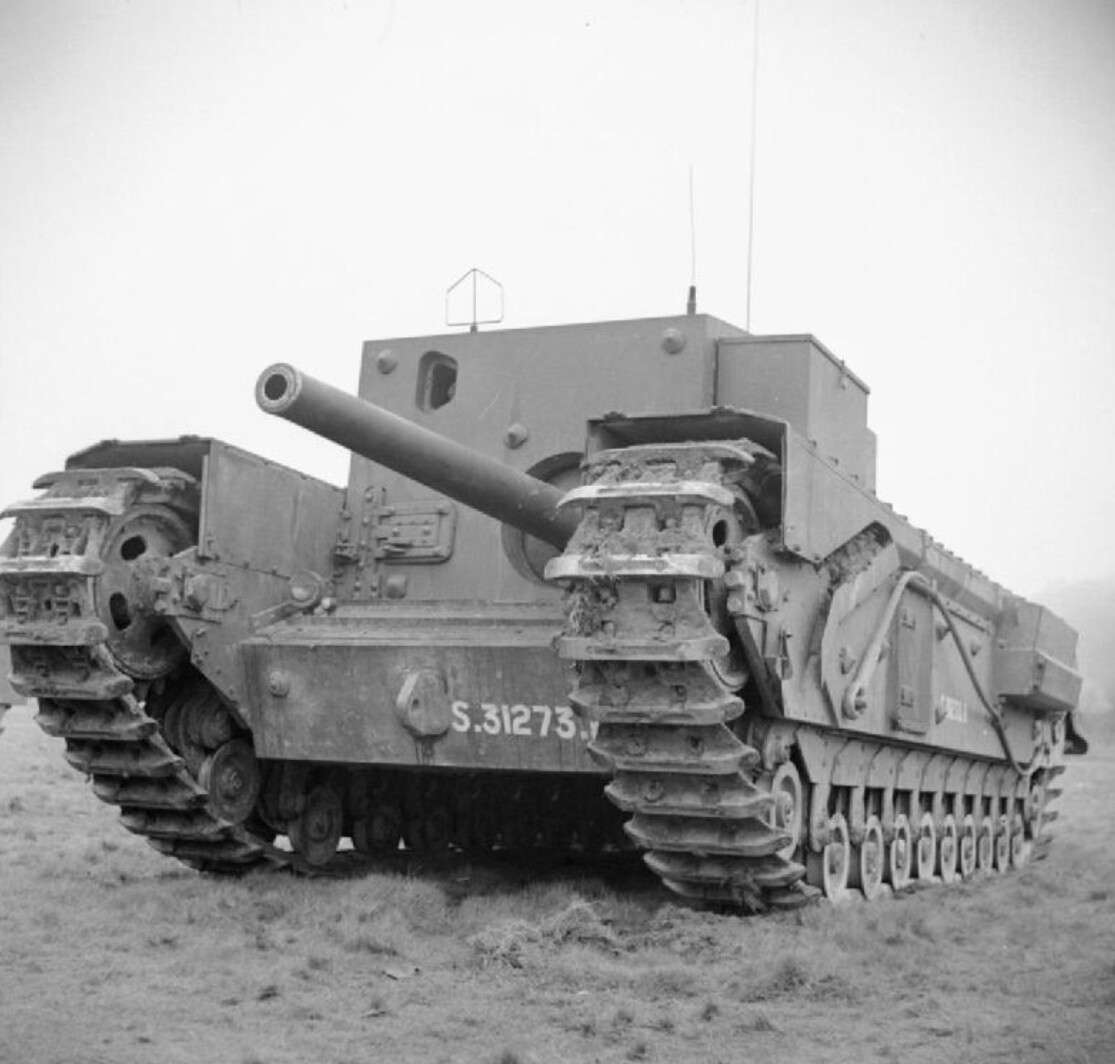
Vauxhall received 100 3-inch guns and was commissioned to produce the Churchill Gun Carrier. The design called for a fixed, square casemate made of thick armor plates with the gun mounted in a ball mount low to the front next to the driver. The frontal armor was 88 mm thick, the side armor was 76 mm, and the new gross weight of the Churchill Gun Carrier was 39 tons. The interior provided space for 12 HE and anti-tank grenades, as well as a four-man crew. As an anti-tank gun, the 3-inch gun was somewhat more effective than the 57 mm 6-pounder at ranges below 900 meters, but less effective than the 17-pounder. The pilot vehicles were ready for testing in early 1942 and proved satisfactory. However, in order not to hinder production of the Churchill Mk III, the order was maximized to 24 vehicles.
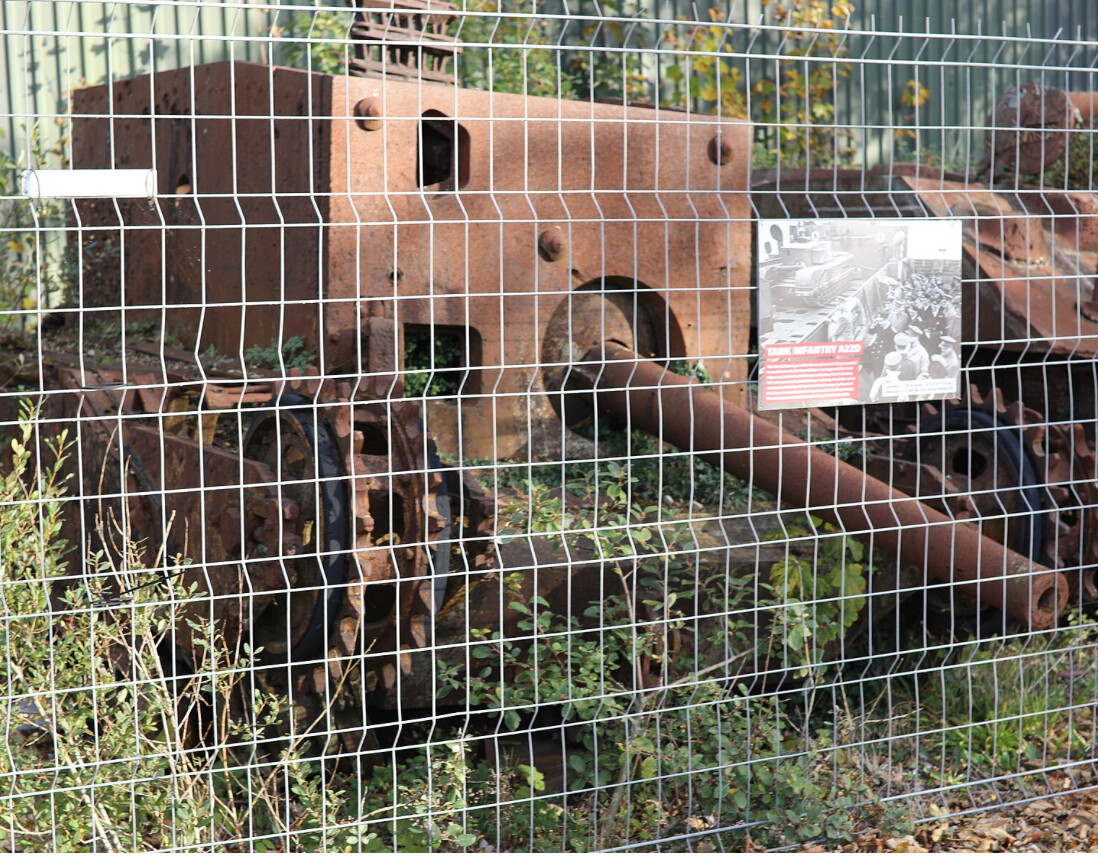
Since Vauxhall, the main designer and manufacturer of the Churchill, had already committed to full production of the Gun Carrier and ordered parts and armor, Vauxhall complained, whereupon the full order was resumed, but quickly reduced to 50. The 50 vehicles were built between July and November 1942 and became embroiled in debate during this time as to whether they were artillery or tanks. The decision was made in favor of the tank, and the Tank Design Department requested some modifications to the tank, but these could not be implemented. The prototype was built by Vauxhall and received a T number. The other 49, built by Beyer, Peacock & Company in Manchester, received their WD numbers with the prefix S, as for self-propelled guns. Requirements and tactics had changed again in the meantime, focusing on the Churchill’s 75 mm gun and a smaller proportion on the 17-pounder.
It is not known whether these tanks were used in combat, as the 17-pounder anti-tank gun provided the British with the necessary firepower when the 3-inch gun was still needed. Some tanks had their guns removed and converted into mine-clearing guns designated “Snake,” which were used for trials and exercises in 1942/43.
Churchill Kangeroo
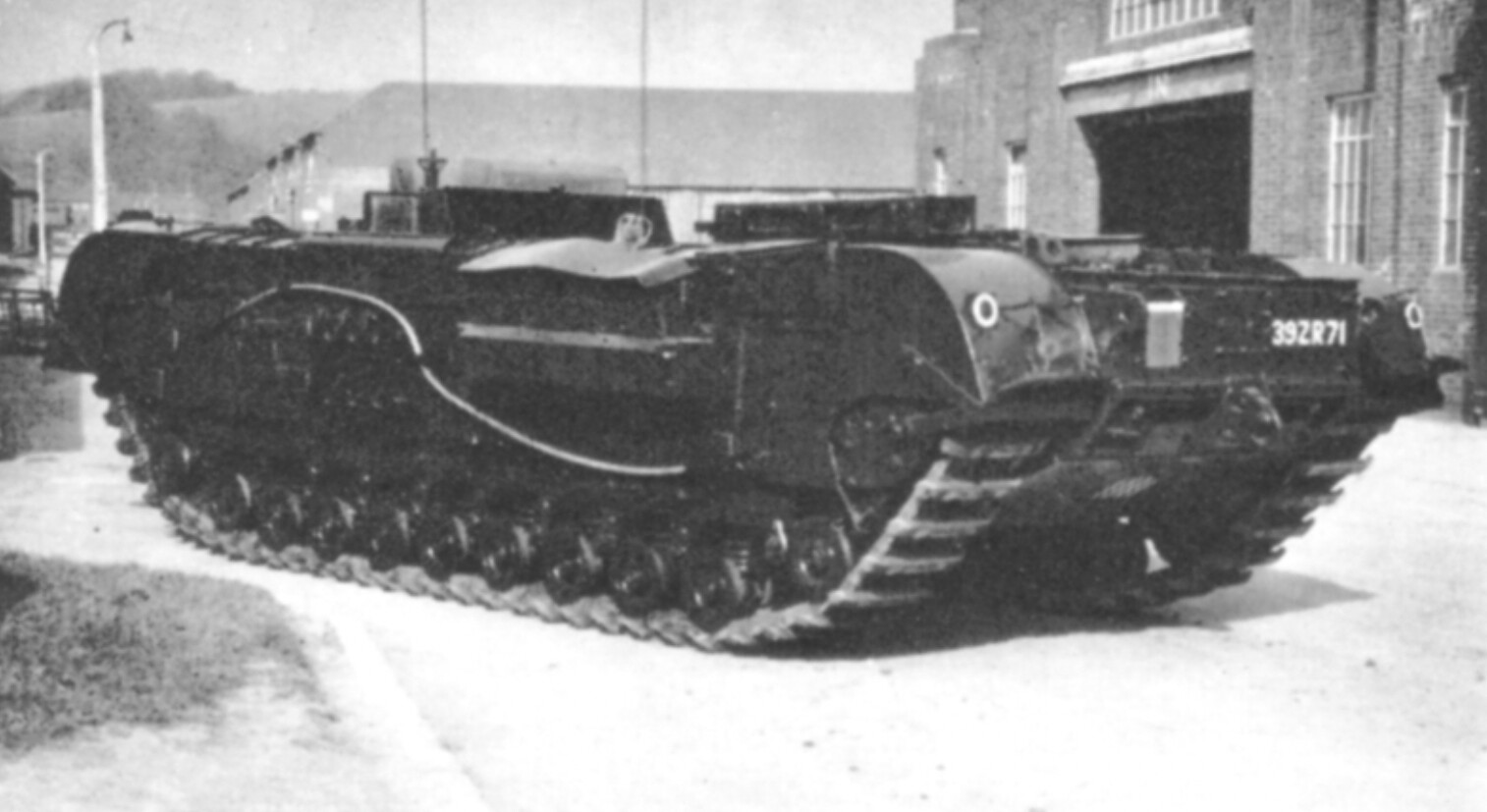
The Churchill Kangaroo was a turretless Churchill tank converted into an armored carrier. It was designed to transport equipment and personnel, even over rough terrain.
Black Prince
The Black Prince A43 was a further development of the Churchill. In 1943, an attempt was made to create a Churchill with the same 17-pounder anti-tank gun as the Sherman Firefly. The Cruiser Tank Mk VIII Challenger, armed with a 17-pounder anti-tank gun, could not be produced in sufficient numbers in time for the invasion of Europe, and development on the Centurion had only just begun. The required wider turret forced Vauxhall to completely redesign the hull, but retained as many components as possible from the Churchill Mark VII, including the Bedford Flat 12 engine.
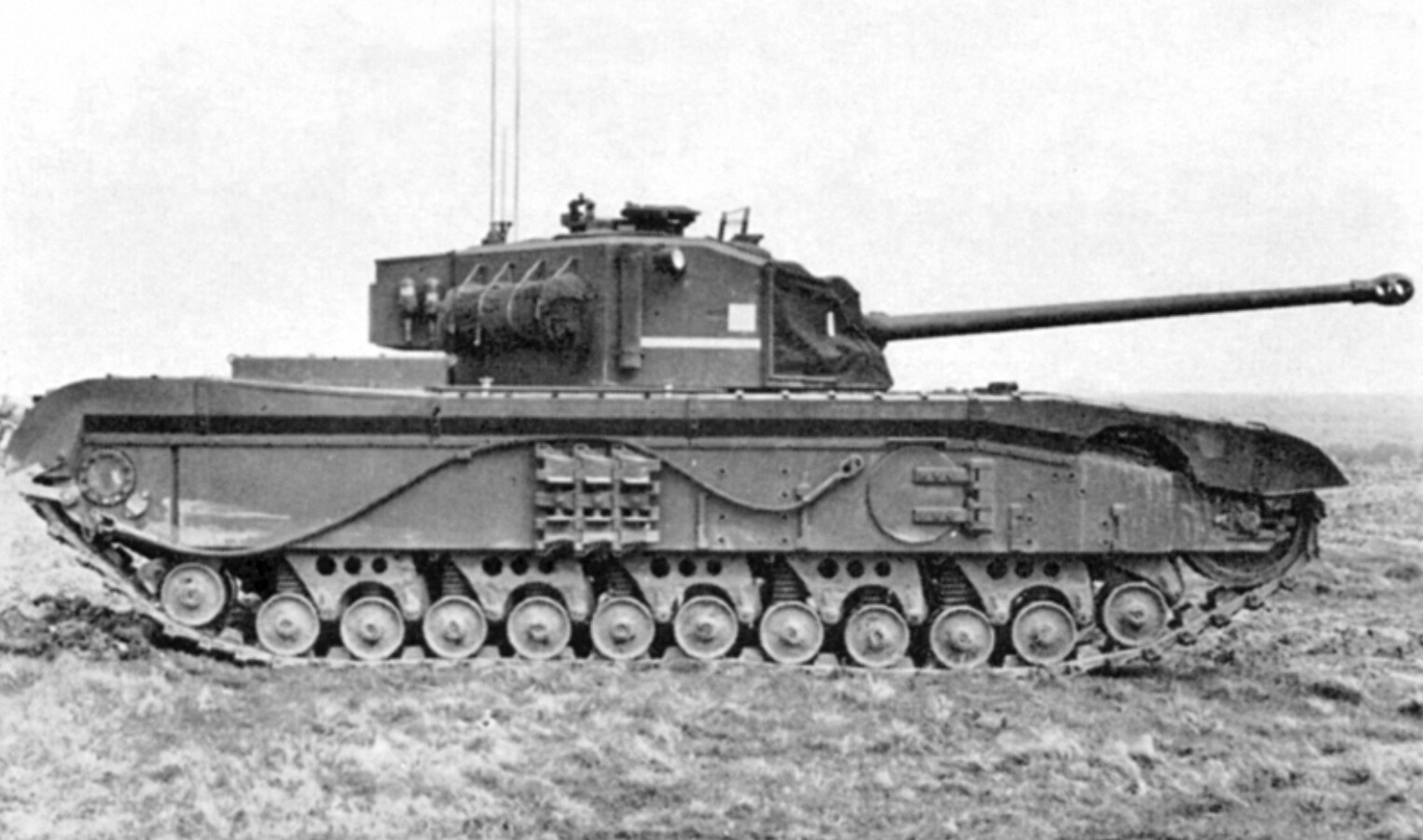
This made the already heavier Black Prince significantly slower than the other Churchills, reaching a top speed of 16 km/h on the road instead of 24 km/h, and only 12 km/h off-road. The product was the “Infantry Tank, Black Prince (A43).” Six prototypes were built and delivered to the Panzer troops in May 1945, shortly before the end of the war in Europe. The test program was completed, but the project was discontinued due to the success of the new and less complex Centurion Mark I. This offered the same armament and frontal armor, was faster, more maneuverable, and production had just begun.
Deployment
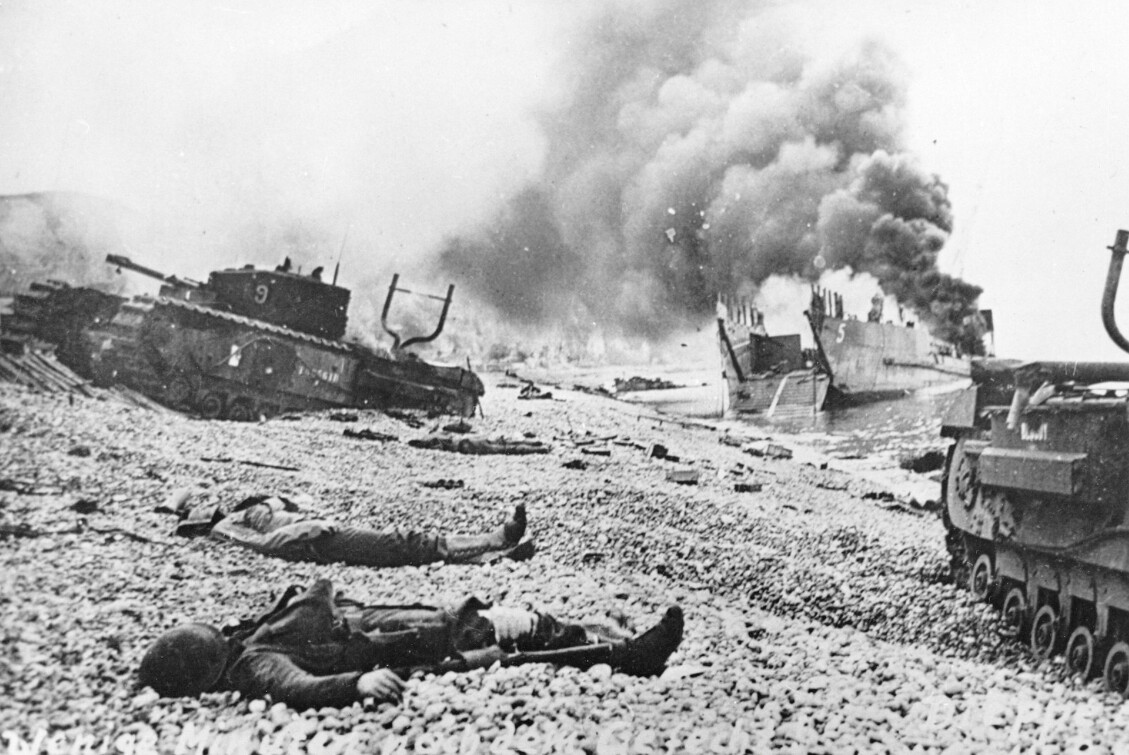
The Churchill’s first combat deployment occurred in August 1942 during the Dieppe landings. Fifty-eight tanks were to be dropped onto the beach by LCT boats, but only about half reached the shore. Due to insufficient reconnaissance, the beach rock had not been examined, and several tanks lost their tracks in the chert or became stuck. All the Churchills that managed to leave the beach could only damage the concrete bunkers with the armor-piercing ammunition from their 57 mm guns. Ultimately, all the tanks were lost.
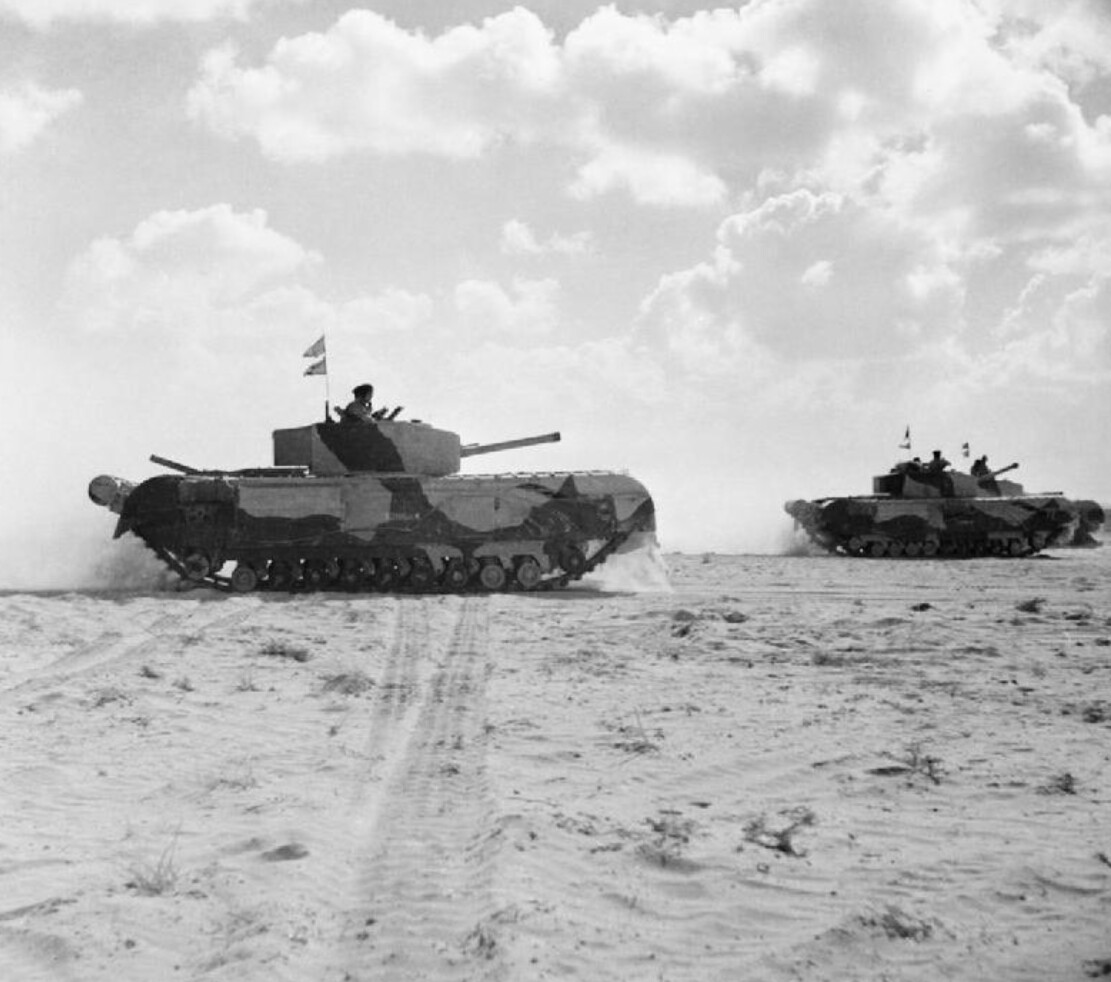
Six Churchill Mk IIIs were shipped to Egypt, where the model saw combat for the first time in October and November 1942 during the Battle of El Alamein. The six vehicles were commanded by Major Norris King, which earned the force the designation “Kingforce.” After two battles, the tanks had suffered 106 hits, but only one of the Churchill tanks was destroyed and two others damaged.
During later operations in North Africa to repel the German attack in February 1943 during Operation Ochsenkopf, the psychological effect of the seemingly impenetrable armor on the enemy and the friendly infantry was highlighted in the operational report.
Later on the war, the tanks were frequently used during the Normandy landings in June 1944 and in the autumn of 1944 in Italy during the battles for the Gothic Line. The now available AVRE variant of the Churchill was also used for pillbox operations. The vehicles' good off-road capabilities proved decisive in some cases, such as the Battle of Hill 309 near Caumont in July 1944.
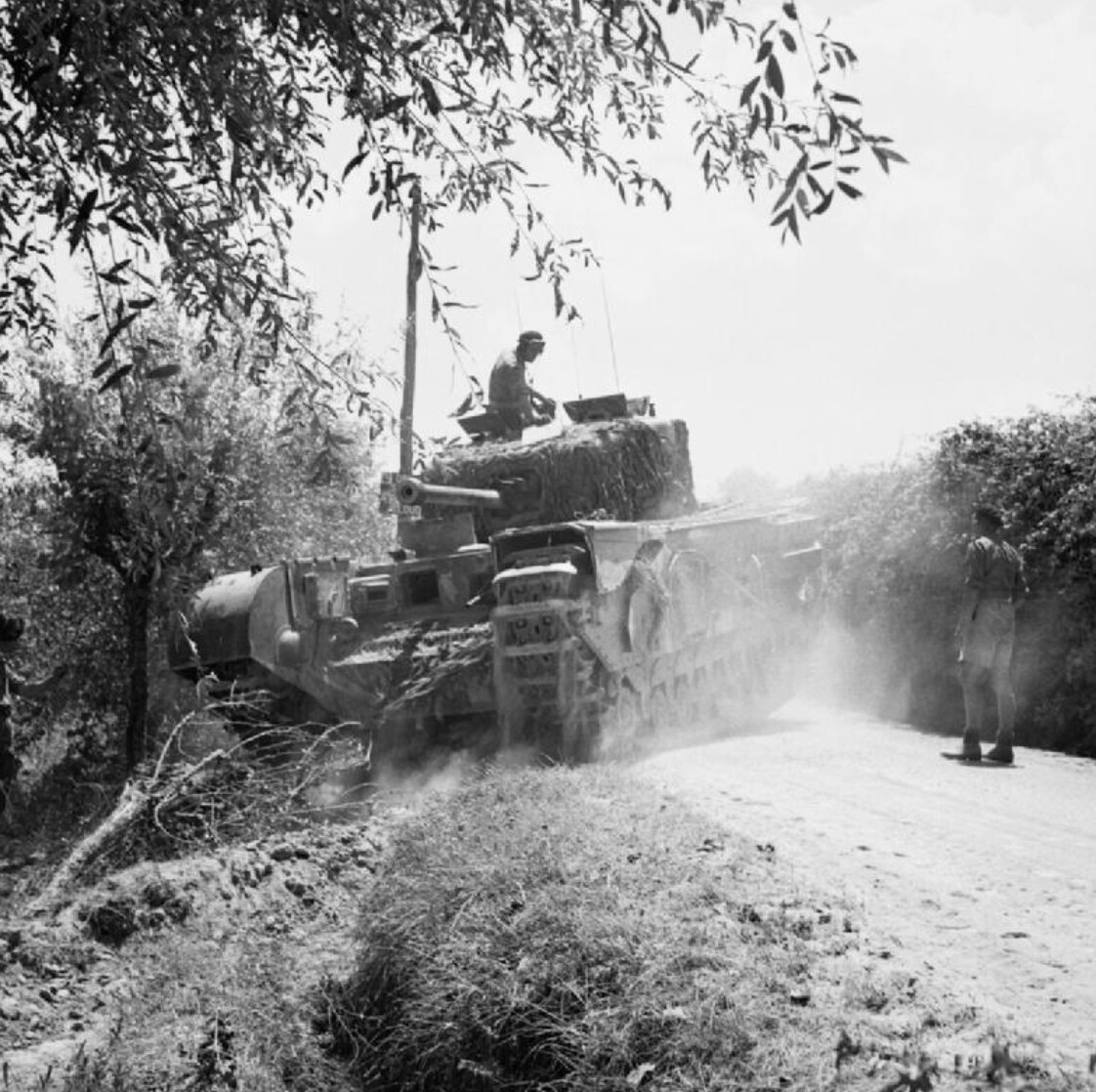
Although the Churchill was one of the most heavily armored vehicles in the Battle of Normandy, it was still vulnerable to kinetic energy projectiles from modern German 7.5 and 8.8 cm anti-tank guns, even on its best-armored front. This was compounded by the shaped-charge warheads of portable anti-tank weapons such as the Panzerfaust. Crews therefore attempted to improve armor protection by adding track links, road wheels, and other accessories.
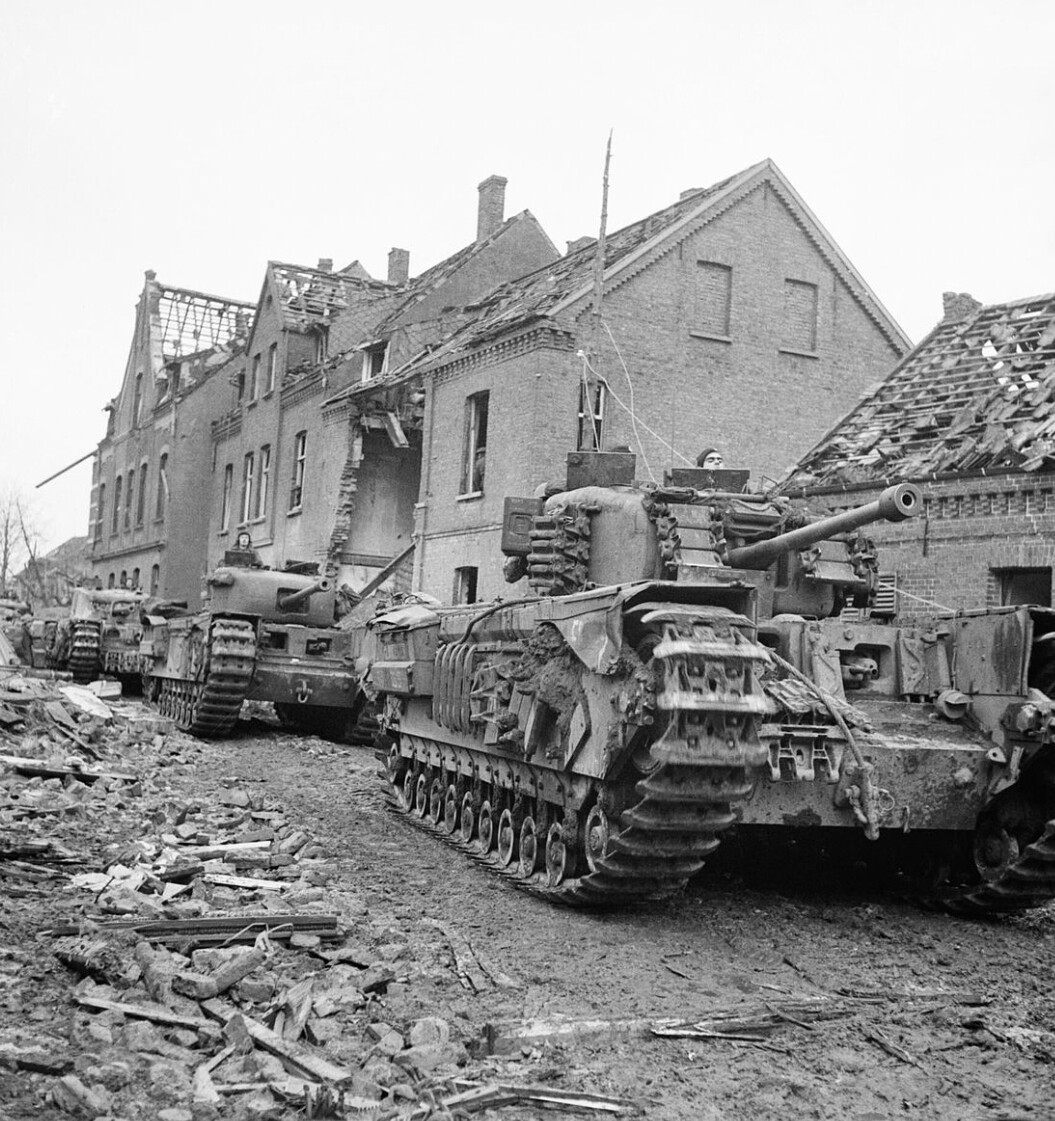
Under the Lend-Lease Act, the Soviet Union received a total of 258 Churchill Mk IIIs and Mk IVs with the 57 mm 6 pounder gun starting in late summer 1942. The Soviets tested the tank and compiled a long list of design and quality defects that required constant repairs. However, the armor appeared good, and the armament and speed were at least adequate compared to heavy Soviet models.
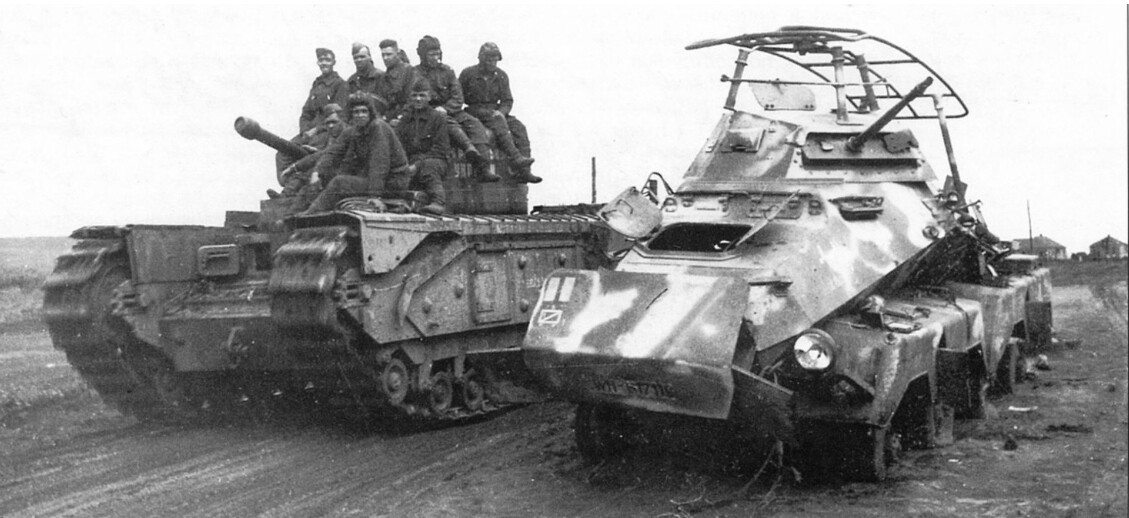
Nevertheless, the tank was not particularly popular and was nicknamed “the enemy of the tankers” by its crews. The Churchill’s first Soviet deployments were as part of the 21st Army during the Battle of Stalingrad in January 1943, where the tanks initially participated in the encirclement of the 6th Army and later in breaking the Gumrak pocket. Later, the vehicles participated in, among other events, the Panzer Battle of Kursk in the summer of 1943. The last combat deployment of Churchill tanks in the Red Army was as part of the 8th Army during the occupation of Tallinn and the fighting for the Moonsund Islands in September 1944.
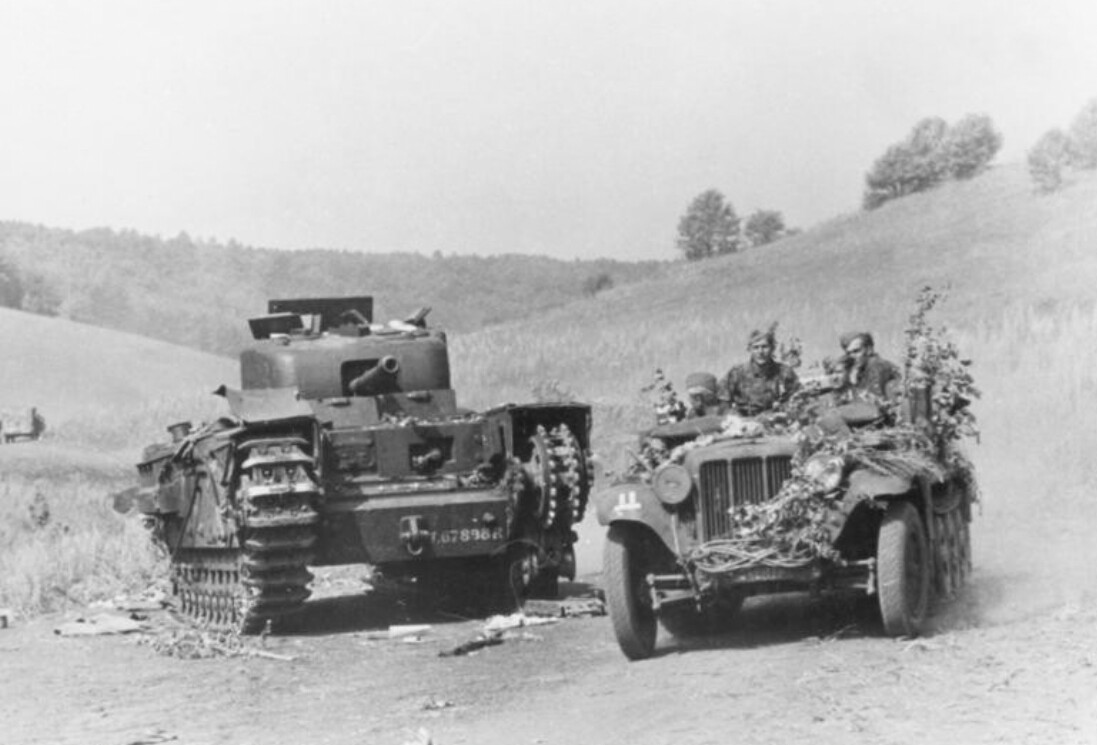
In the Korean War, the British deployed a squadron of Churchill Crocodiles and AVR tanks as part of the United Nations forces, in addition to Cromwell and Centurion tanks. They landed in Pusan in November 1950 and were used as part of “C” Squadron of the 7th Royal Tank Regiment, primarily in combat against Chinese troops. Ireland was the last country to use the Churchill until the late 1960s.
Sources
- [Wiki DE] Infantry Tank Mk IV Churchill
- [Wiki EN] Churchill Tank
- [Wiki EN] List of specialist Churchill tank variants
- [Tank Encyclopedia] A.22, Infantry Tank Mk.IV, Churchill NA 75
- [Tank Encyclopedia] Churchill ARV Mk.I & Mk.II
- [Tank Encyclopedia] Churchill A.R.V.E
- [Tank Encyclopedia] A.22D, Churchill Gun Carrier
- [Tank Encyclopedia] A.22F, Churchill Crocodille
- [Oorlogs Museum Overloon] Churchill Mk. V