
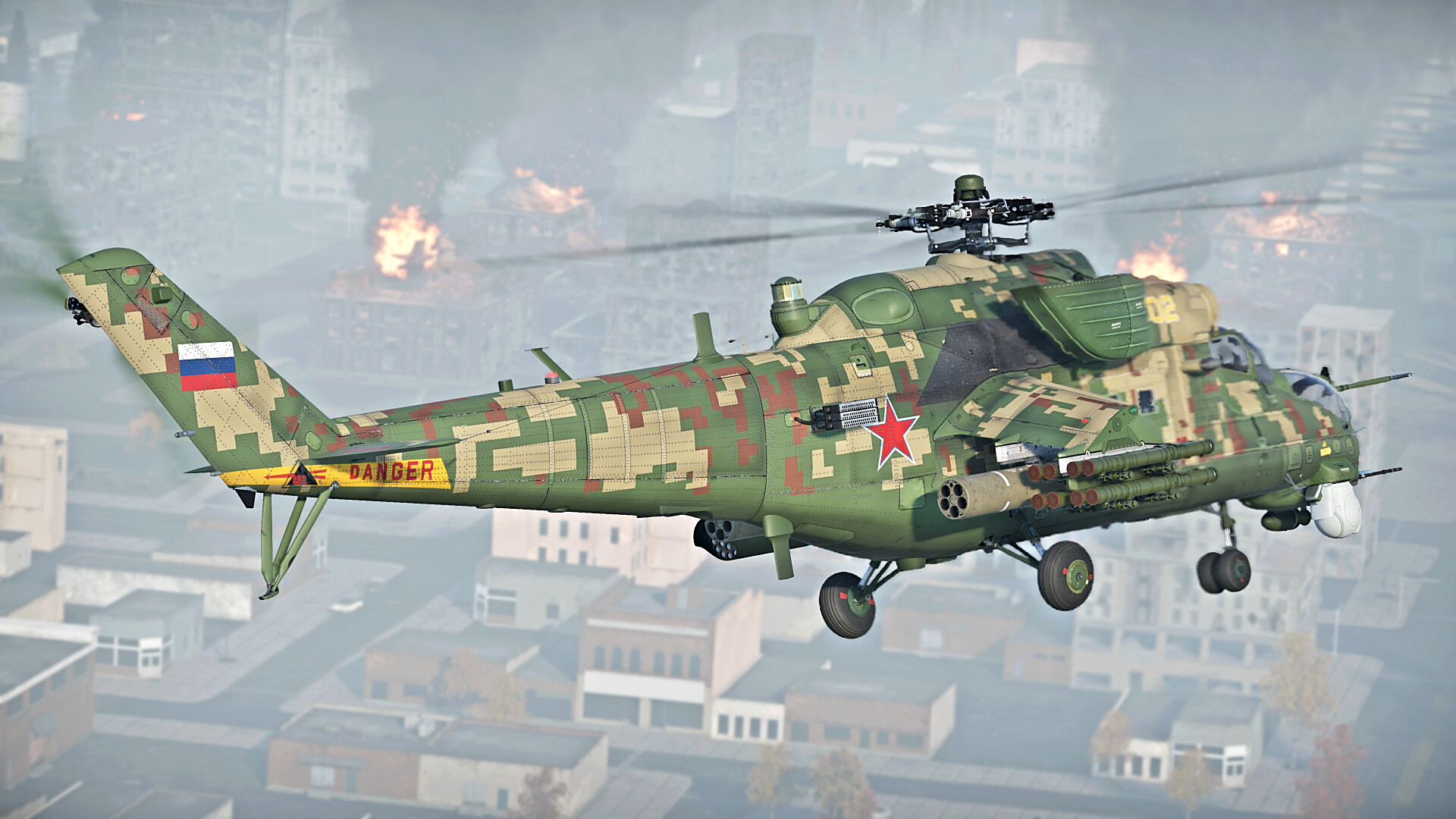
The Mi-35M is one of the helicopters produced by the Mil Design Bureau, borrowing the design from the legendary Mi-24 “Hind” with a number of positive changes. Although the “Crocodile” has lost two hardpoints of its armament, it has been replaced with advanced electronics, excellent optics, and new external weapons. How does the successor to the legendary Mi-24 perform in combat? Read the article to find out!
| Pros | Cons |
| Excellent optics with a 3rd gen thermals. Available with an Auto tracker. | Simplified threats on the RWR |
| Excellent top speed | Helicopter’s inertia |
| Wide range of suspended weapons | Only 4 hardpoints |
| Good offensive armament with excellent armor belts | Small ammunition capacity, poor accuracy at distances further than 1 kilometer. |
| Advanced 9M120-1 “Ataka” and 9M39 “Igla” guided missiles |
Flight performance
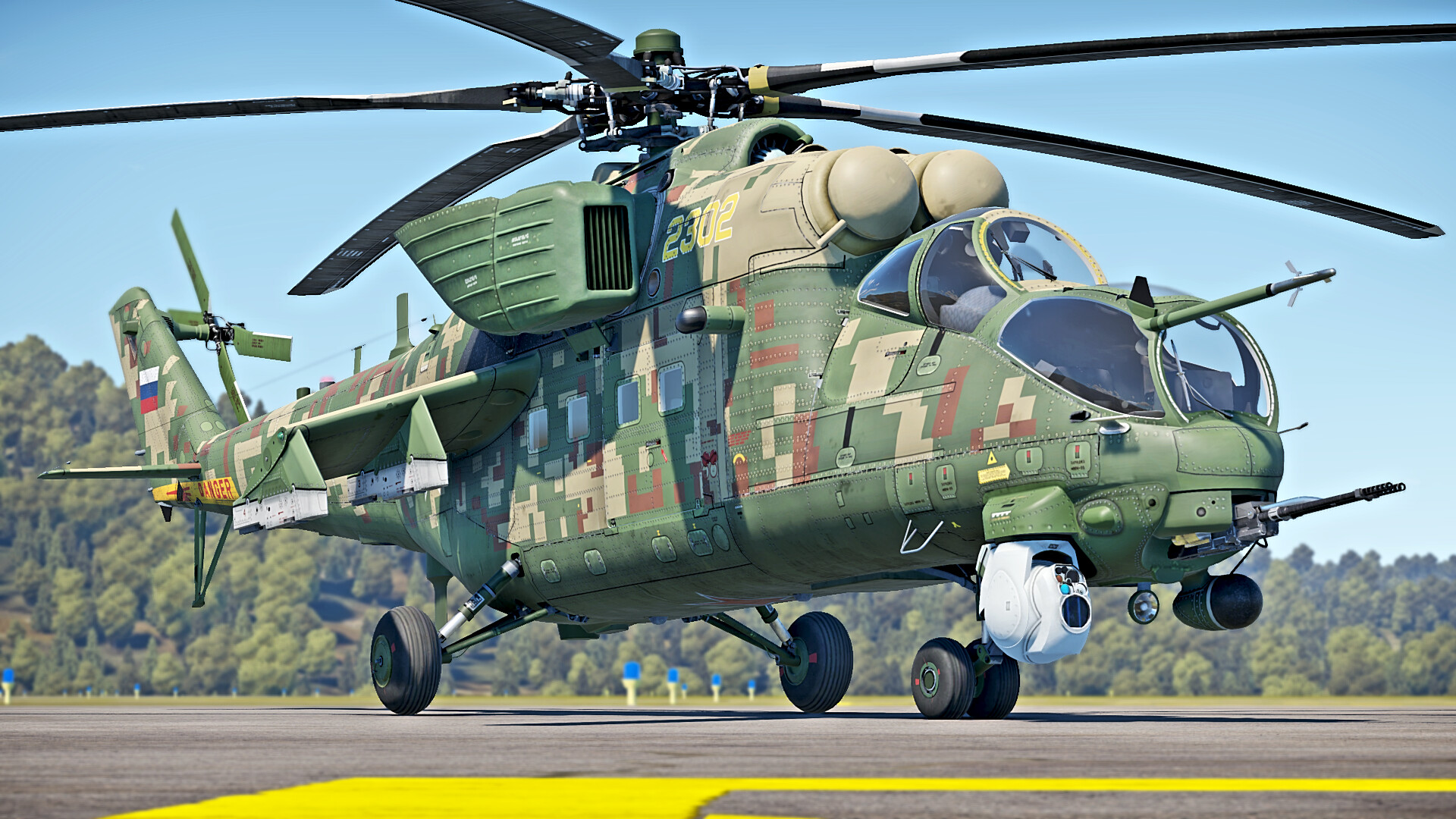
The Mil Mi-35M is equipped with two Klimov VK-2500-II Turboshaft engines, producing a maximum power of 2,200 horsepower and 220 kgf of thrust each. With these engines, the helicopter accelerates to an average speed of 280 km/h in a straight line. The helicopter’s rate of climb is average, typically 6 or 7 m/s, which is pretty enough for a “Hind”.
The Mi-35M’s maneuverability, on the other hand, is very average: the helicopter is heavy and inert, just like its previous modifications, such as the Mi-24P or the Mi-24V. Of course, the main reason for this is the aircraft’s empty weight of 8.78 tons. Consequently, the helicopter is very heavy and extremely reluctant to maneuver, and reacts poorly to course changes.
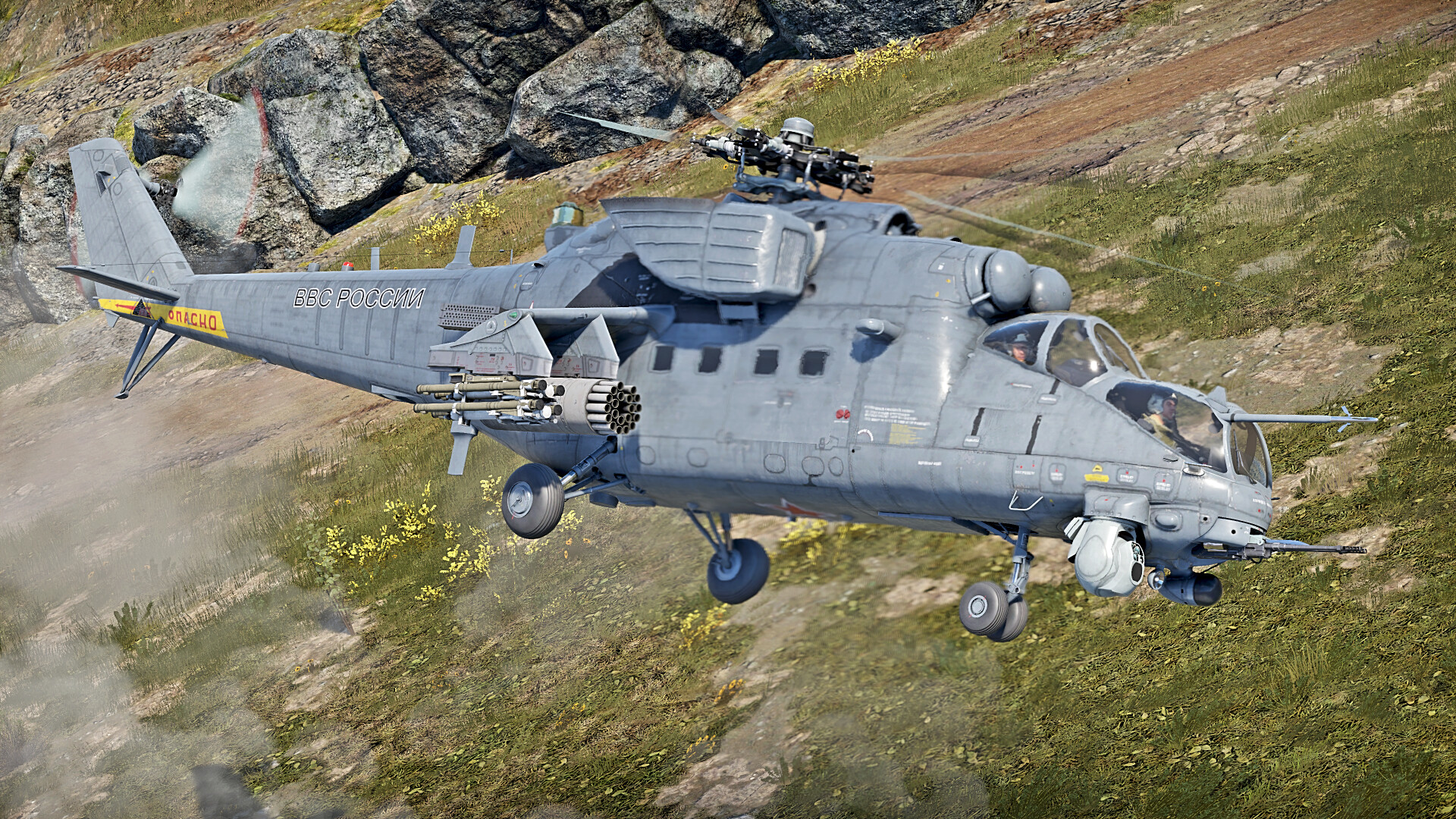
Both maneuverability and maximum speed of the Mil cannot be really compared with the British G-LYNX for example, which has excellent maneuverabillity and one of the highest top speeds among all of the helicopters in game.
American OH-58D Kiowa Warrior and AH-6M “Little bird” helicopters are very light and maneuverable, but due to their size, they carry a smaller payload than Mi-35M. The Kiowa Warrior has only two hardpoints with four guided-air missiles or two AIM-92 stingers and 2 ATGMs, while the Little Bird, given its size, is heavily loaded with additional 7.62 mm miniguns for anti-aircraft use.
Survivabillity and armor
The Mi-35M is well armored. The helicopter has a tandem configuration: the weapons operator sits in the front and controls the automatic cannon, while the pilot sits behind him. The pilots are protected by 4 mm and 8 mm steel plates, as well as 55 mm armored glass, which can withstand direct hits from heavy machine guns and even some autocannons. However, you shouldn’t rely too much on the armor: the helicopter might can be protected against MGs, but the armor won’t protect against autocannons with a caliber greater than 30mm, SAMs, ATGMs or the HE tank shells.
The helicopter’s avionics are distributed between the front and rear sections, with the systems responsible for the anti-aircraft guns, NVD, and radar equipment located at the rear, and the unit responsible for the use of guided and “dumb” weapons, and the multifunction display with the HUD located directly in the cockpit behind the Mi-35M’s pilot.
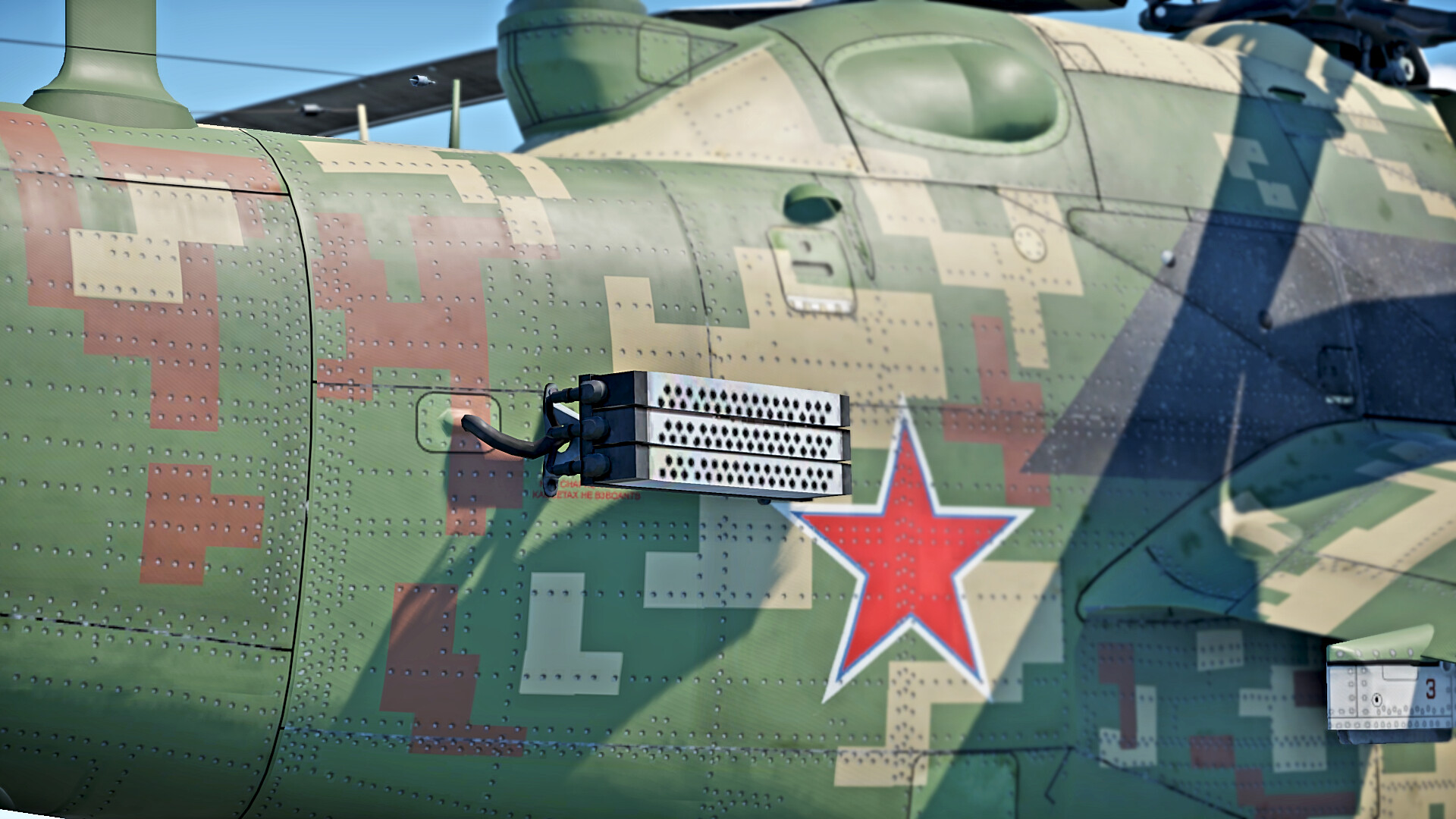
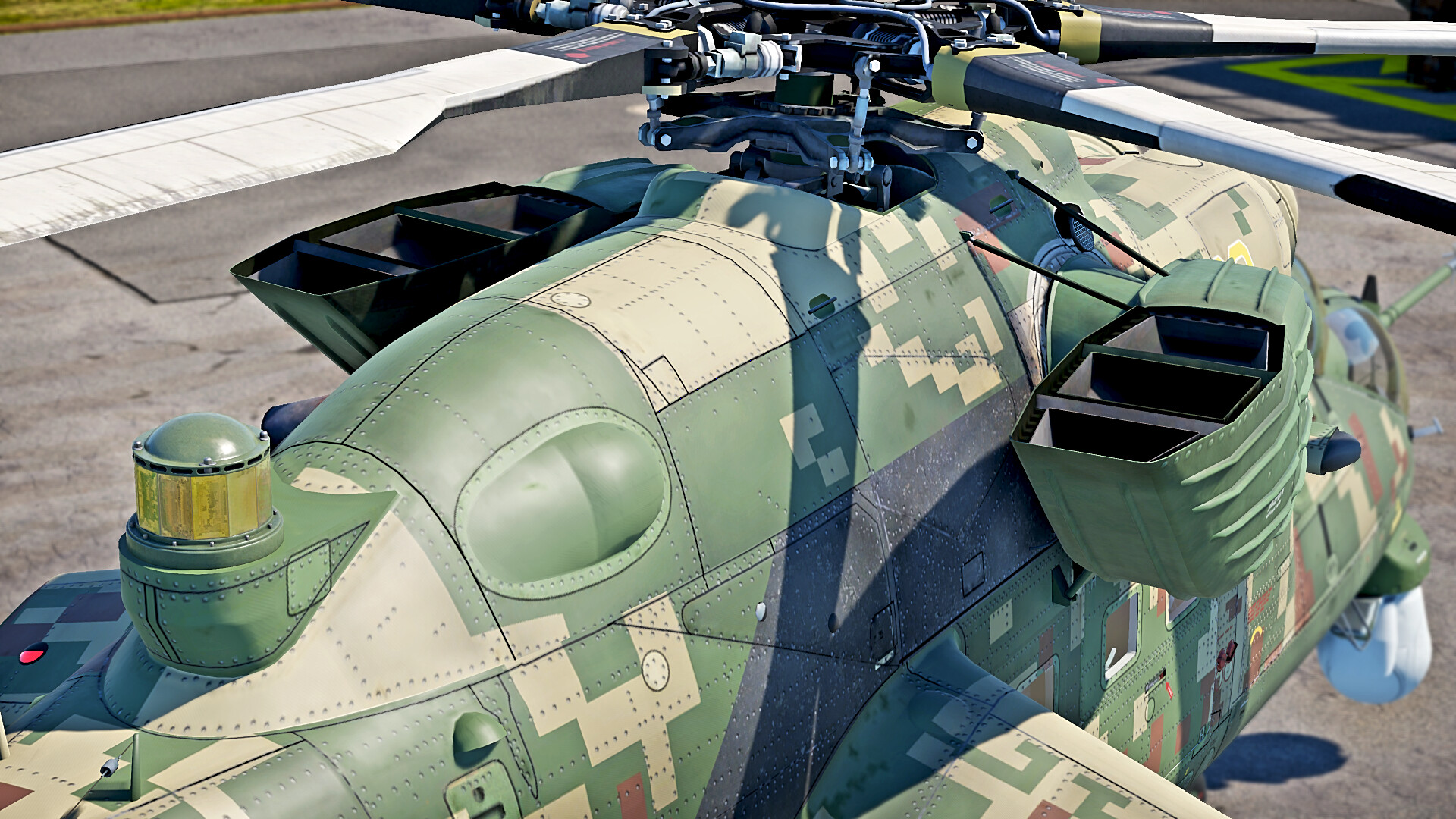
2. IRCM (small round thing) and HIRSS system on the exhaust of Mi-35M.
In addition to armor, the helicopter has additional survivability aids. These include:
- Countermeasures (192 units) — flares protect the helicopter from IR-guided missiles, while chaffs protect the “crocodile” from the radar-guided missiles. They can help disrupt radar lock-on, but that’s all;
- IRCM — Optical-electronic jamming station. Provides additional protection and confuses infrared missiles, forcing them to follow false targets. Works effectively at a range over 3 kilometers. However, this deception won’t work with jamming-resistant missiles: IRCM won’t protect the helicopter against AIM-92 Stinger missiles;
- RWR (Radio Warning System) — alerts the Mil’s pilot to the presence of a radar lock and an active radar. However, the system is far from sophisticated: it only has six standard threat types and cannot warn when the helicopter is locked onto by enemy anti-aircraft guns;
- The HIRSS (Helicopter Infra Red Signature Suppression system) — reduces the helicopter’s infrared signature by shielding hot exhaust gases and mixing them with cool air. With the HIRSS, targeting the Mi-35M from a distance greater than 3 kilometers is slightly more difficult.
Armament
Main armament
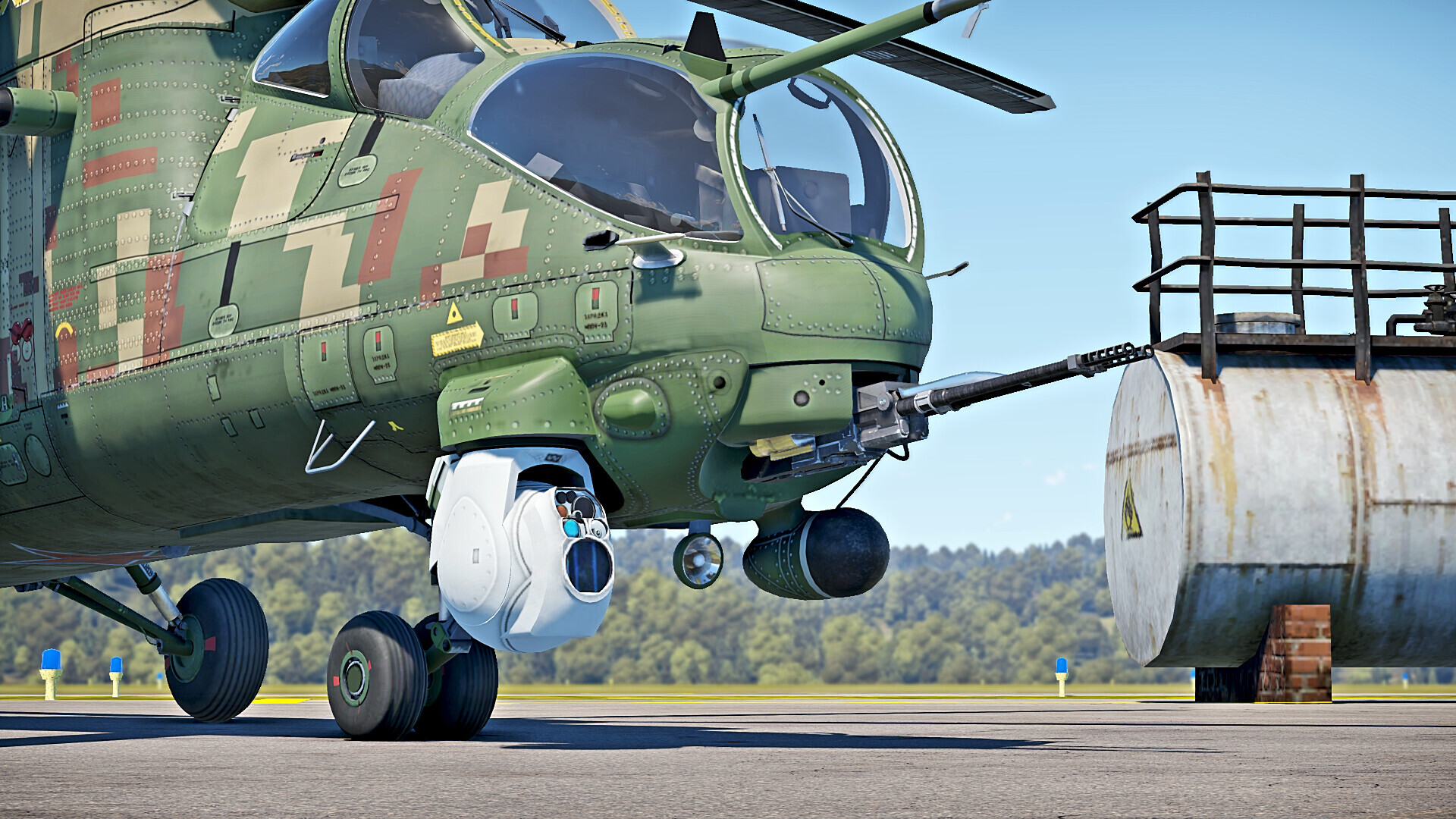
The Mi-35's primary armament is a 23 mm GSh-23L cannon with an excellent firerate of 3,396 rounds per minute. It boasts excellent accuracy at ranges of up to a kilometer and good aiming angles: ±60° at horizontal and from -40° up to +10° in vertical. Combined with the auto tracker, the helicopter is capable of easily engaging enemy aircraft, especially at close range, as the cannon’s accuracy is significantly poor beyond 1 km.
Gsh-23L has a few belts to choose. These include:
- Default — belt of two high-explosive fragmentation rounds and one armor-piercing round. It’s well-suited for destroying targets in helicopter PVE, such as recoilless rifles or the M113 APC.
- Armored targets — a belt of one high-explosive and three armor-piercing rounds. With 31 mm of penetration, it can be effectively used against light tanks and vulnerable main battle tanks that lack adequate roof armor. It is also the only belt which doesn’t have tracers;
- Air targets — a belt of 4 high-explosive and 1 armor-piercing rounds. Effective against aircraft and helicopters at close range;
- Stealth Attack — a belt of one armor-piercing incendiary and two high-explosive fragmentation rounds for true night hunters. It has no tracers, making it effective at range. It’s effective for hunting helicopters and against aircraft attempting a frontal attack on the Mi-35.
Suspended weapons
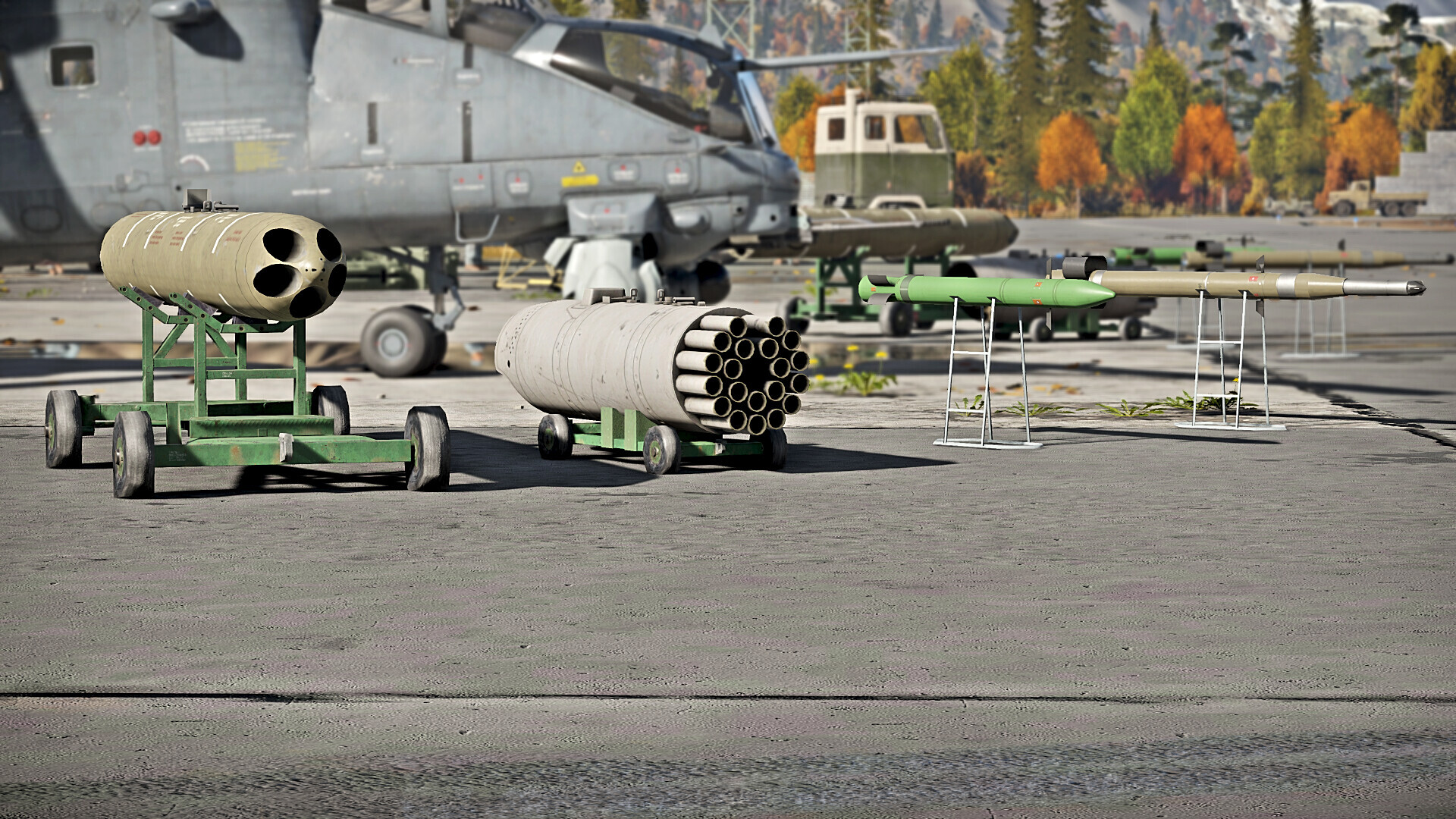
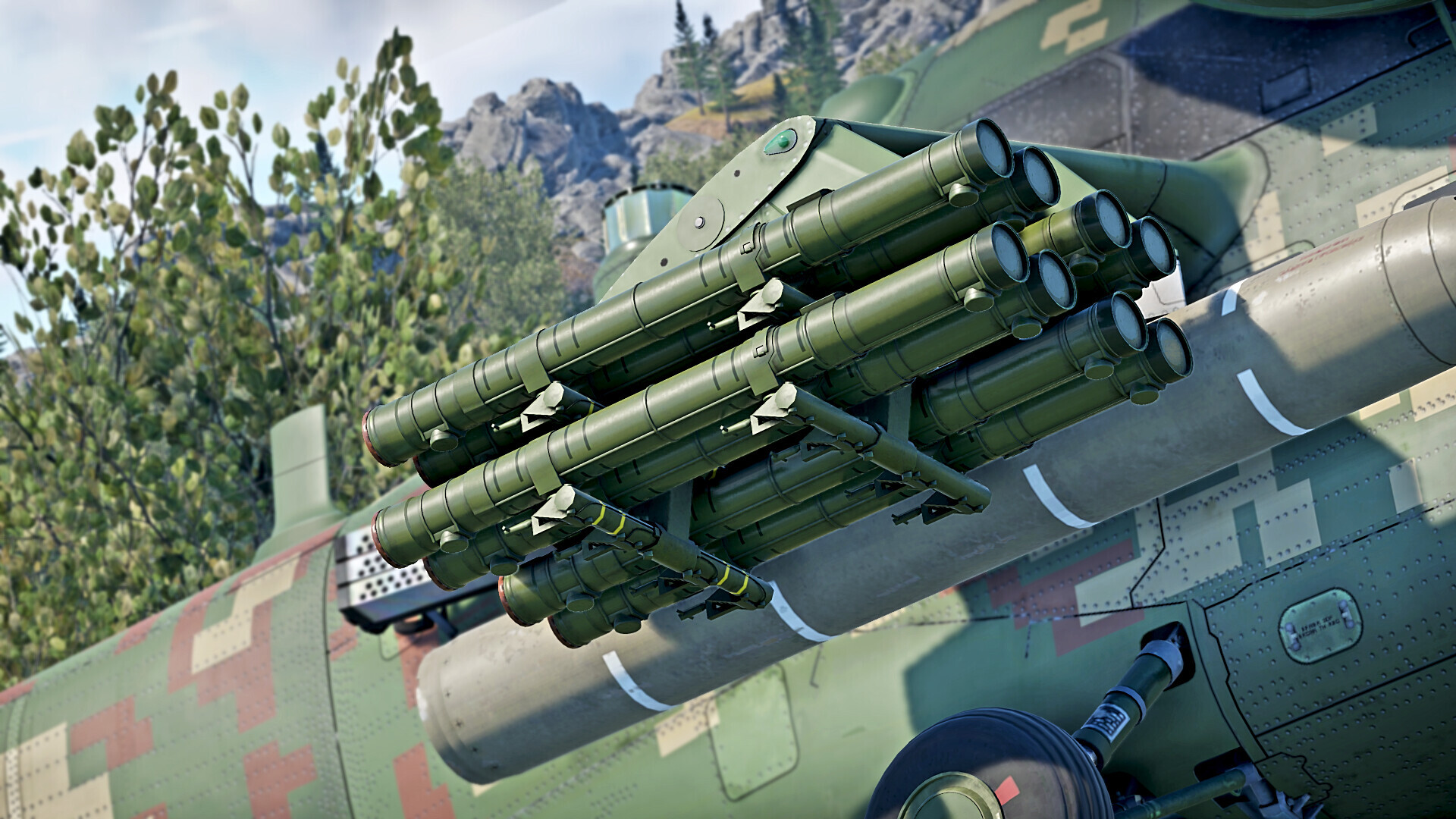
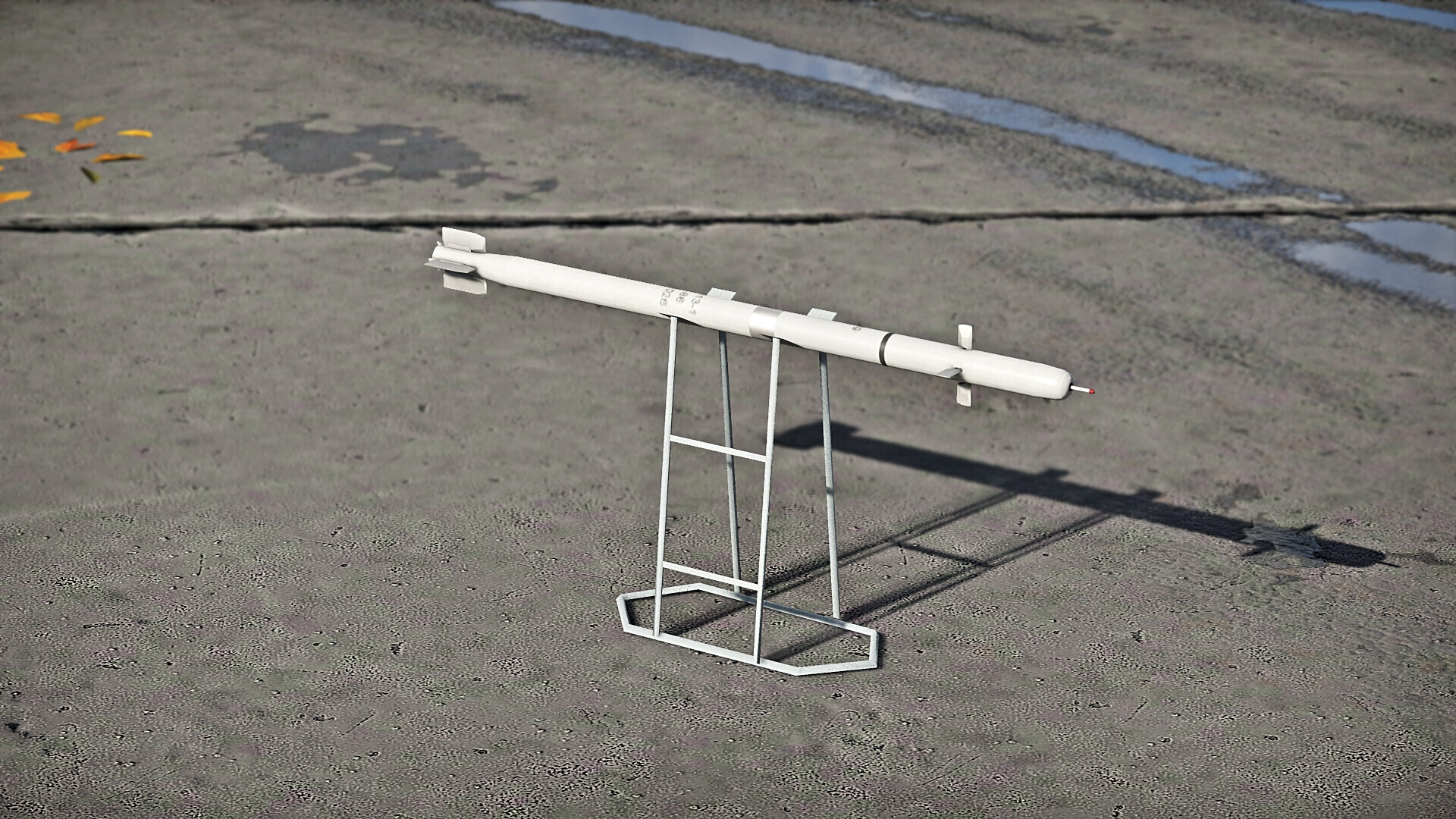
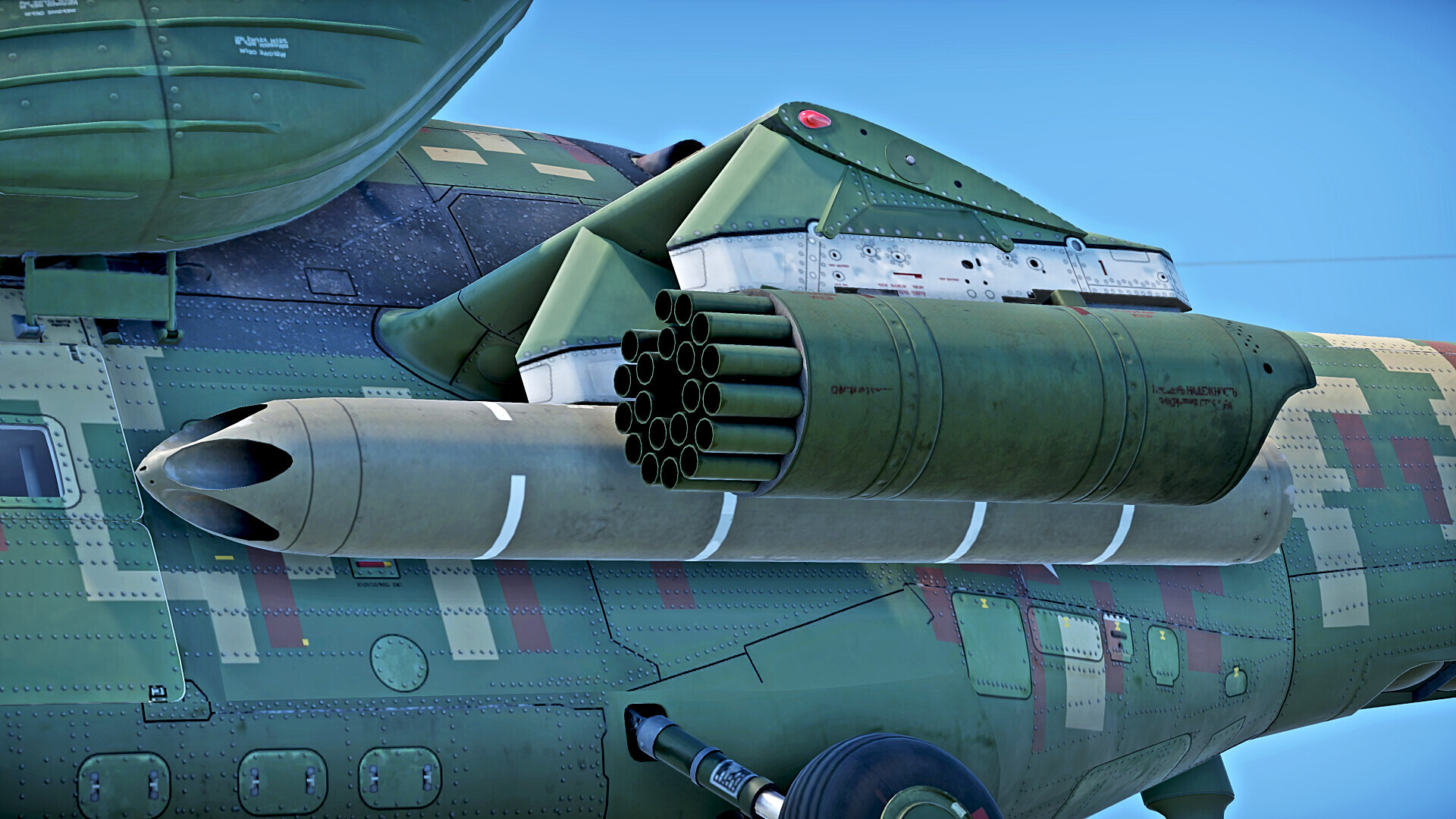
2. 9M120-1 “Ataka” ATGMs;
3. 9M39 Igla AAM;
4. S-13OF (on the left) and S-8KO (on the right)
The Mi-35M has a very wide range of suspended weapons. Four hardpoints can simultaneously carry up to eight ATGMs, four air-to-air missiles, and two unguided rocket pods. So, what does this entire armament offer? Let’s take a closer look:
Unguided rockets
- S-8KO — A well-known unguided rocket with excellent penetration of 420 mm, available in 80 units. Effective against tanks, but underperforming due to the cumulative effect;
- S-13OF — heavy high-explosive fragmentation rocket, with only 10 in total. Although there are only 10 rockets, they are excellent choice against light vehicles and SAM systems. They also can easily penetrate the roof of a main battle tanks and, in most cases, deal fatal damage to them;
Anti-tank guided missiles (ATGMs)
- 9M114 “Shturm” — Early ATGMs with a range of 5 km and a velocity of 550 m/s. They have weak armor penetration, but are effective against light vehicles and SAM systems. The helicopter can carry 2, 4, or 8 ATGMs on a single pylon.
- 9M120-1 “Ataka” — Tandem ATGMs with identical range but superior armor penetration of 800 mm and excellent after-armor protection. Effective against main battle tanks. Mi-35M can carry up in to 8 9M120s on a single pylon.
Guided air-to-air missiles (AAMs)
- 9M39 Igla — an all-aspect IR missile with a range of 5,2 km and a g-force of only 10Gs. However, it is effective against aircraft, especially in the rear hemisphere and head-on collisions, as well as against helicopters with a high thermal signature. It lacks a radio fuse and requires a direct hit to destroy its target.
Additional cannon armament
- UPK-23-250 container — contains GSh-23L cannons with 250 rounds of ammunition. This is an excellent weapon against stationary vehicles, but it cannot be used effectively in combat due to its ability to fire only in a straight line.
Combat use
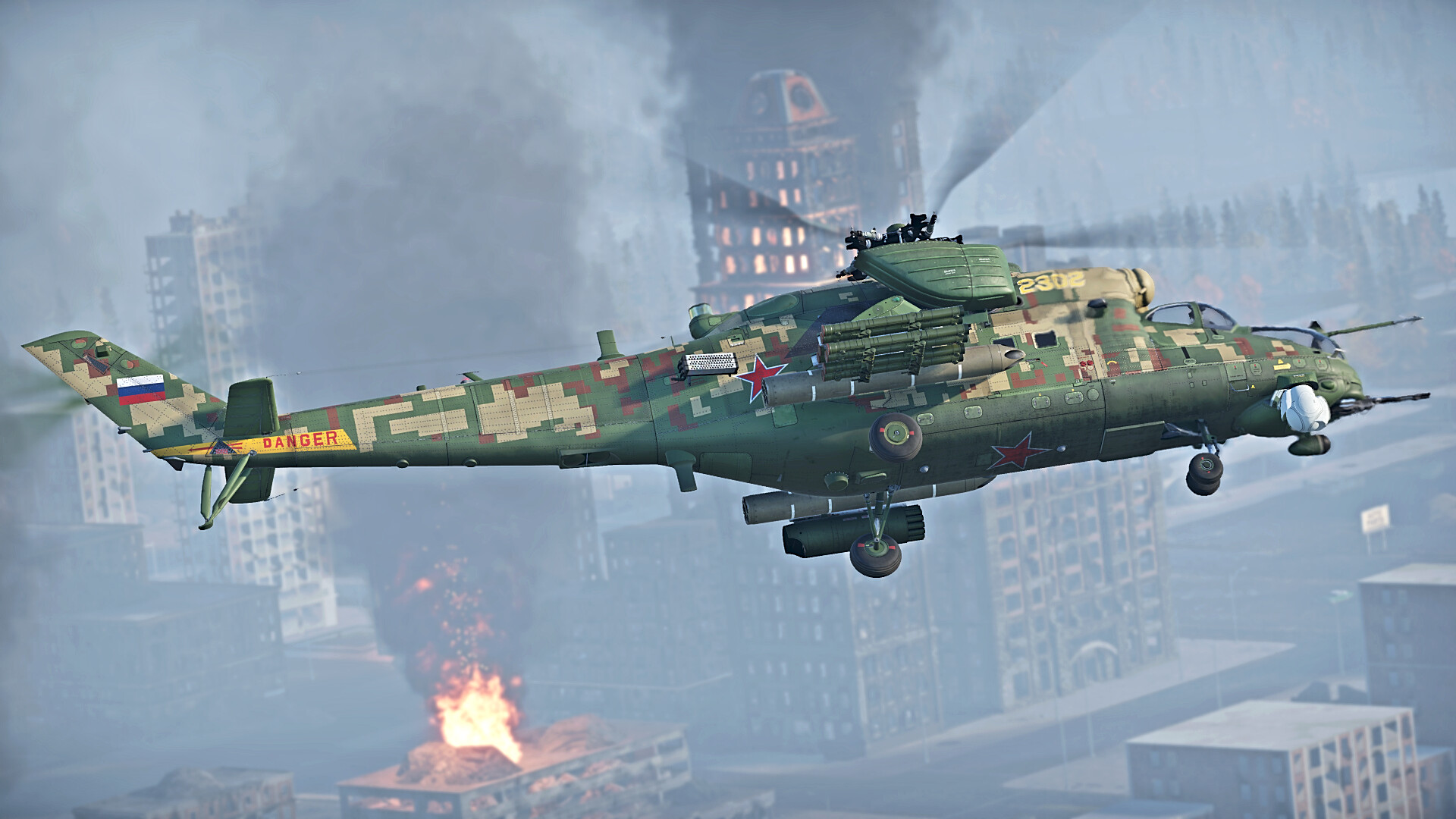
The Mi-35M can confidently be called a versatile fighter. In joint combat, the “Crocodile” performs admirably against both ground and airborne targets, especially in the hands of an experienced pilot. The helicopter can operate in virtually any weather thanks to its advanced optics, including a thermal imager and night vision devices, which are especially indispensable during night combat.
What tactics can be used in combat? Let’s take a closer look:
The first respawn with unguided rockets, also known as “Rocket rush”, has always been a flashy and exciting experience, but this tactic isn’t exactly known for its effectiveness. While the Mi-35M can certainly “assault” with unguided rockets during the first respawn, it’s often unlikely to claim more than a couple of destroyed vehicles. The helicopter lacks proper armor, and most hits, even with a 7.62 mm round, can damage the avionics, rendering the helicopter inoperable in most cases.
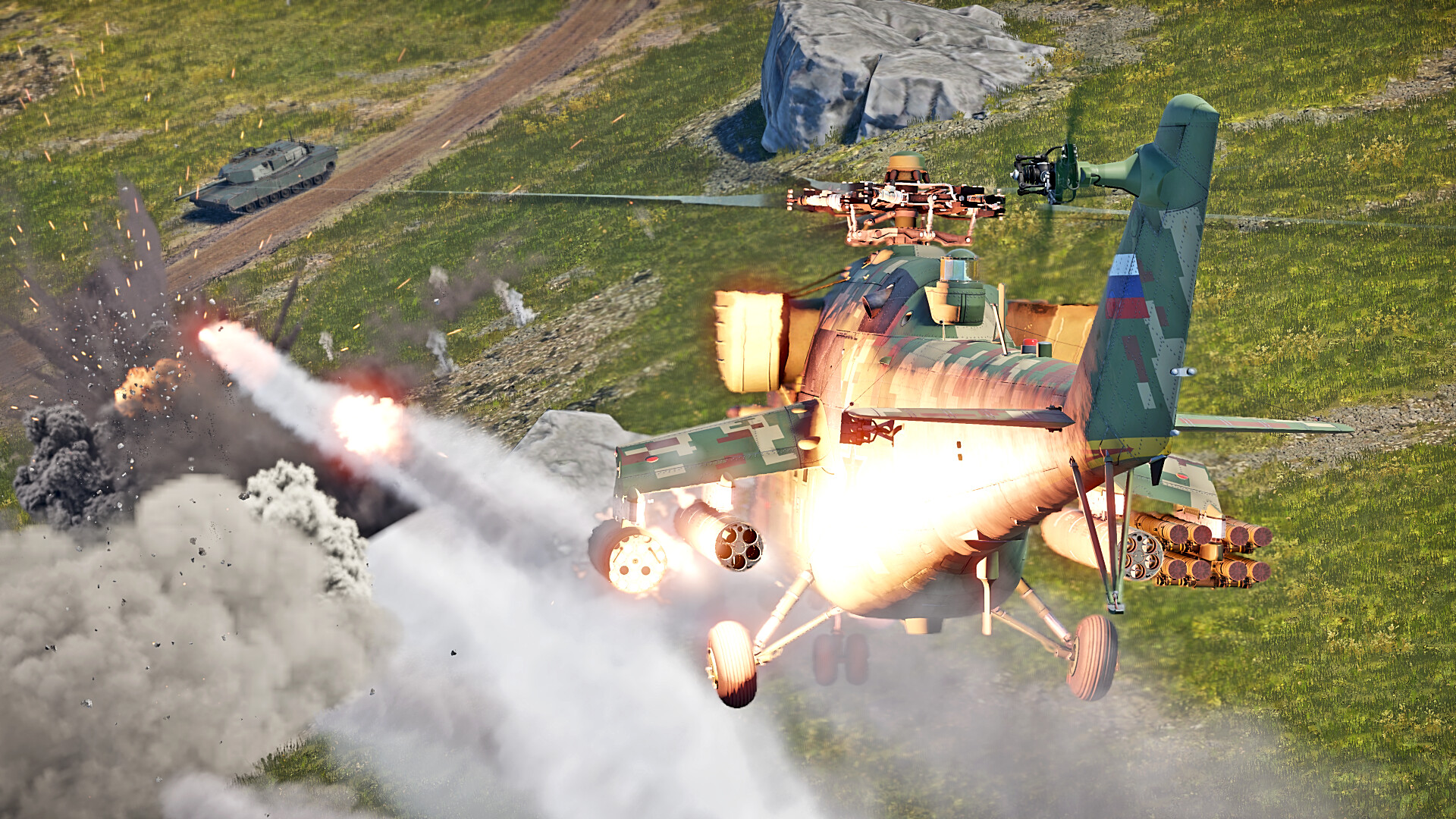
The Mi-35M will be more effective when playing off the terrain and hunting armored vehicles with “Ataka” missiles: they have a long range and good after-fire effect. Mountainous maps, like Pradesh or Sinai, dictate tactics based on rocky terrain and a quick escape from the enemy. The only real danger in this case will be aircraft or helicopters seeking revenge.
A combination of 9M39 air-to-air missiles and GSh-23L gunpods is ideal for engaging enemy aircraft. Eight missiles are virtually guaranteed to destroy at least one air target per engagement, but it’s worth noting that if the enemy has flares, the missile may be distracted if enemy uses them and can easily miss. Missiles should be launched unexpectedly, so the enemy isn’t expecting them and has less time to evade.
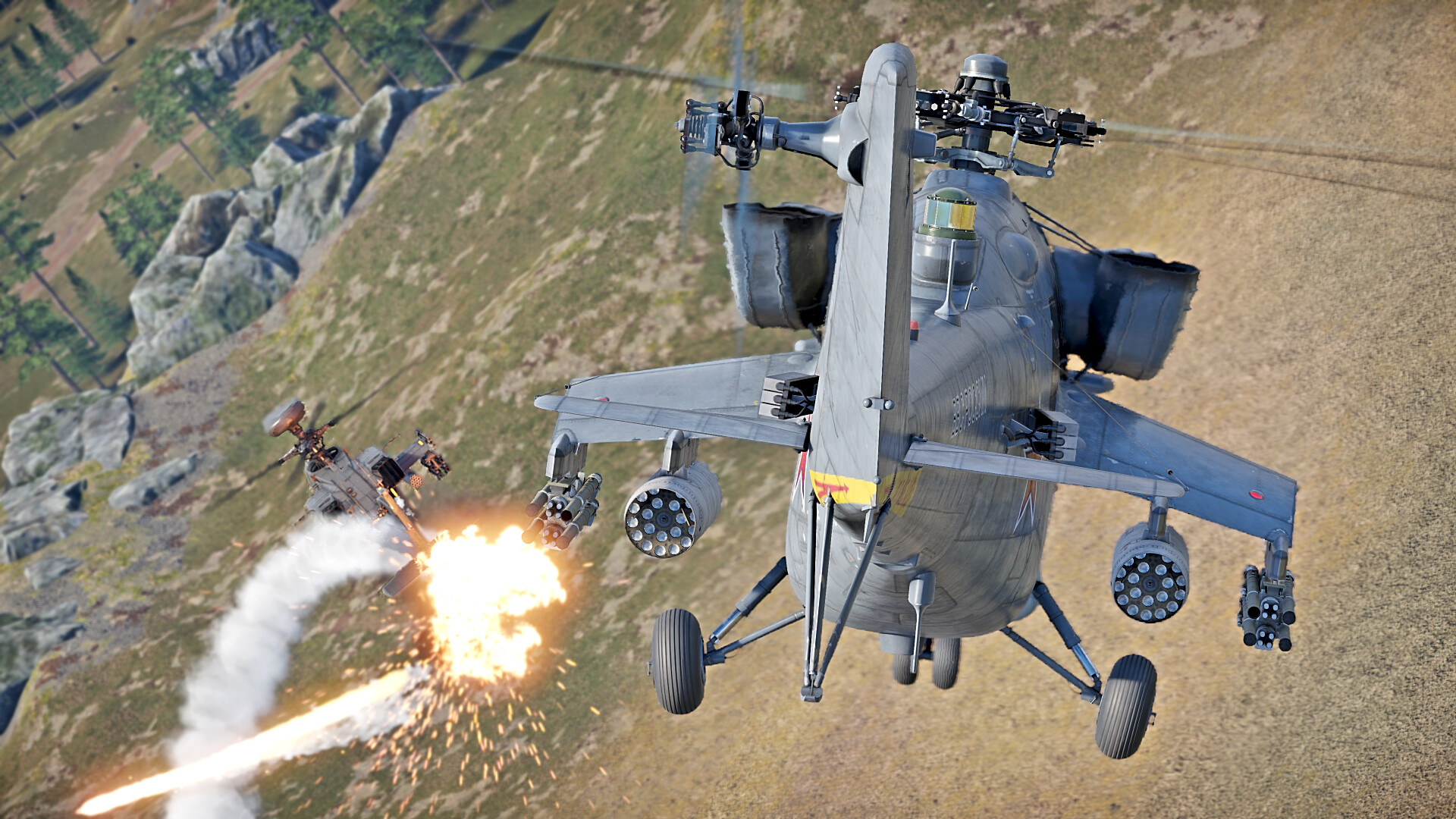
The most versatile armament for the Mi-35M is eight 9M120-1 ATGMs, four 9M39 air-to-air missiles, and two S-13OF pods. After spawn, it’s best to start by knocking out the SAMs with semi-active guidance, such as the Osa, Strela, or the Roland 1. Maintaining a long range is crucial for effective engagement of SAMs —with a 5.5 kilometers range and the Mi-35M’s excellent optics, this approach is far more effective than at close range. Once the helicopter has dealt with the SAMs, it is finally time to switch on a tank targets at closer range. Without SAMs, focusing on MBTs will be much easier.