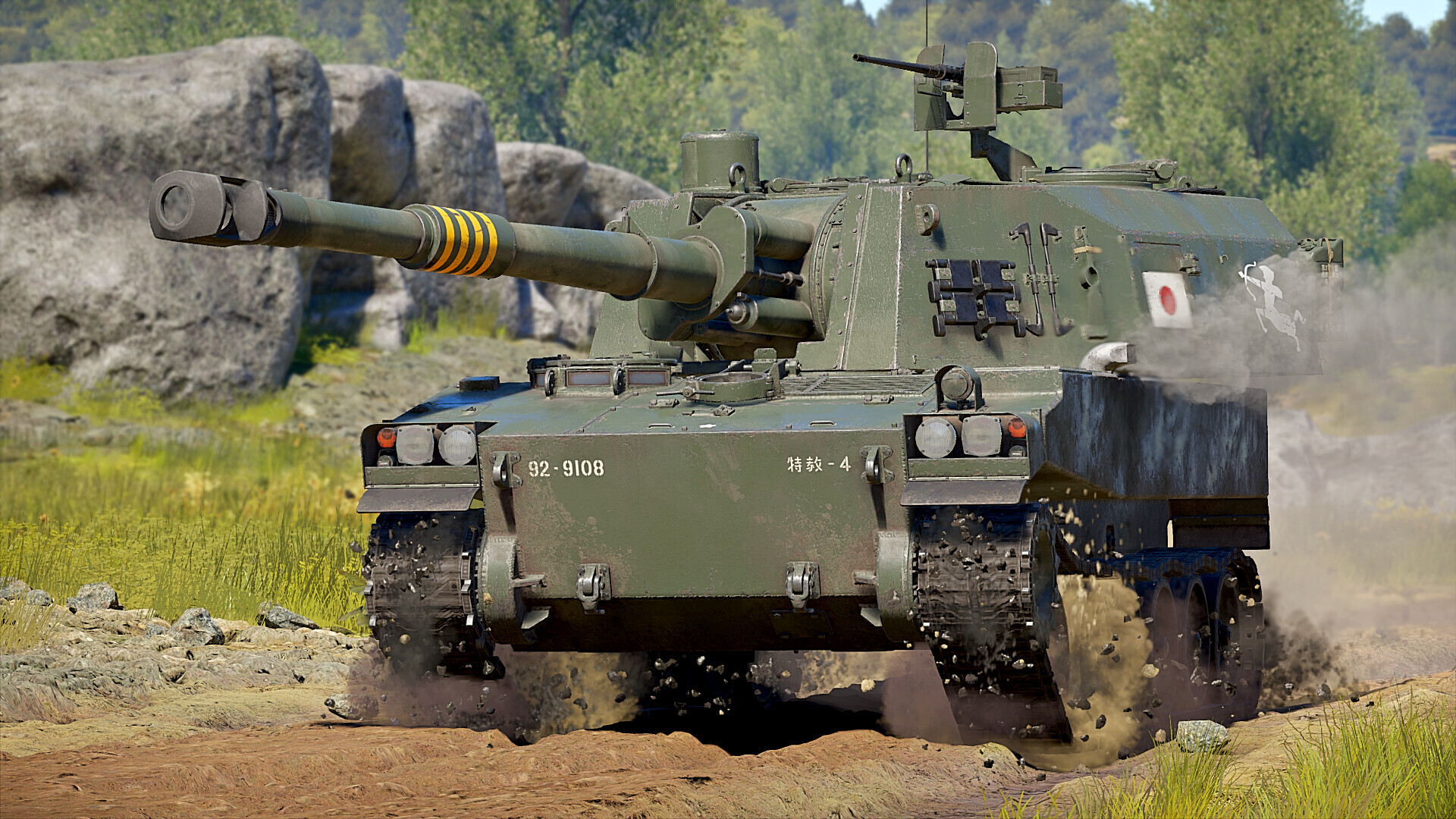
The Type 75 SPH: a vehicle that was ahead of its time and played a key role in defending Japan for over 40 years. But how does it perform in War Thunder? Is it significantly different from other self‑propelled guns, and what are its strengths and weaknesses? Read more about this samurai in the article!
| Pros | Cons |
| A powerful main weapon | Low survivability |
| Automatic loader | Low horizontal traverse speed of the weapon |
| Good reload | Aluminum armor |
| HE with a radio fuse |
Armor and survivability
The Type 75 SPH’s armor, like that of its counterparts, is rather weak: 30 millimeters of aluminum and 25 millimeters on the roof, which can only protect against rifle‑caliber machine guns or small fragments; the armor will only protect against heavy machine guns at long range.
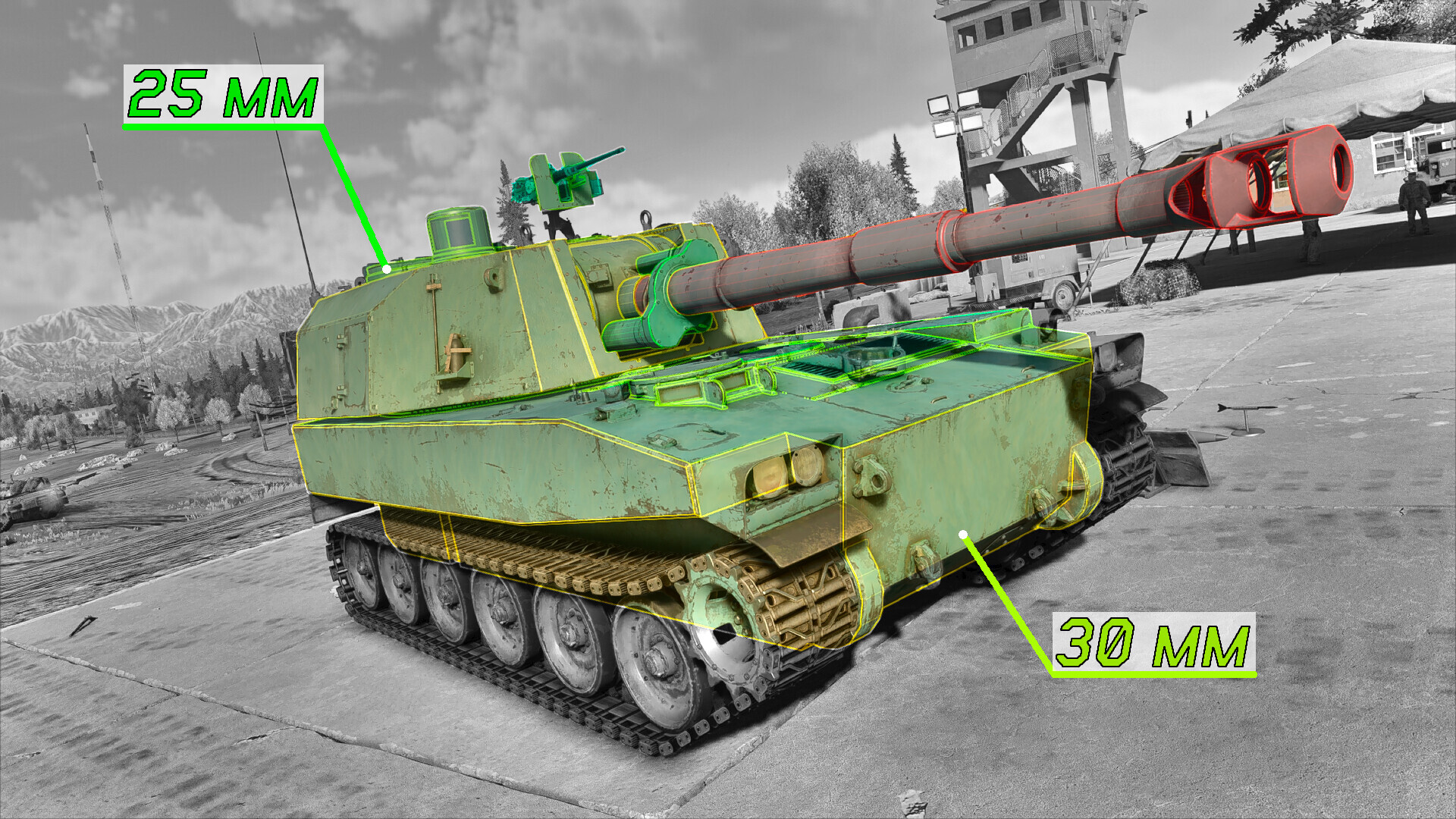
The vehicle has low survivability on the battlefield due to its large silhouette and the dense arrangement of ammunition in the rear part of the turret and in the lower part of the fighting compartment. A hit on the turret, where 5 out of 6 crew members are located, usually results in serious damage or destruction of the vehicle. However, the vehicle also has an advantage: the engine is located in the front part, which allows it to “absorb” hits from a heavy machine gun or autocannon.
Mobility
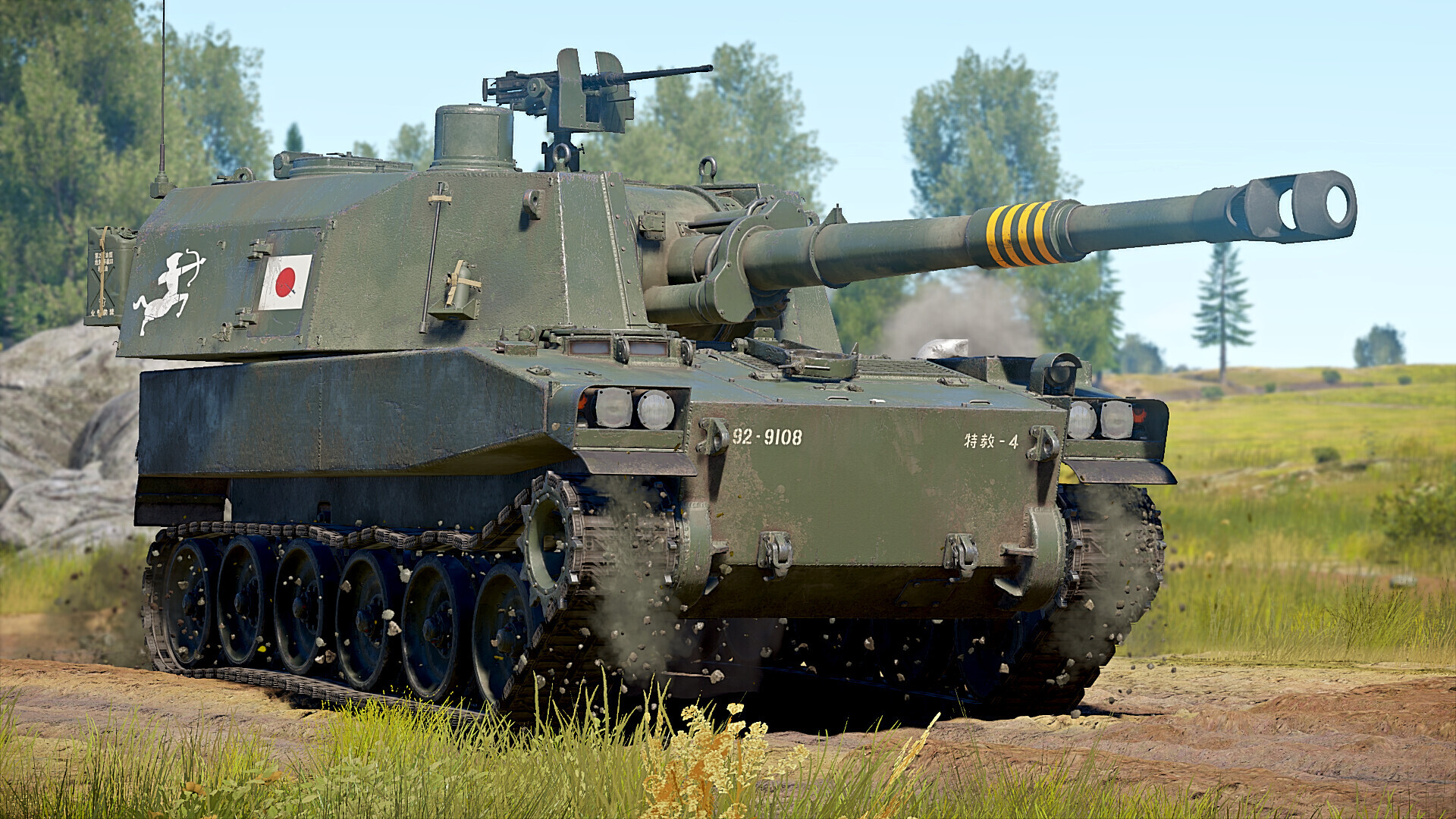
Despite the weak hull protection, the Japanese made up for it with mobility. Weighing 25.3 tons, it is equipped with a 520 horsepower engine, which gives it a power‑to‑weight ratio of about 20 hp/t, comparable to such rivals as the M41 Walker Bulldog and the SU‑100P, which allows it to be among the first to take up advantageous positions. The Type 75 SPH is inferior only in terms of maximum forward speed — 47 km/h compared to 72 and 63, respectively. It is also capable of accelerating to 19 km/h in reverse, which will allow it to roll back after a shot into cover, which may help conceal its weakness in terms of armor.
Armament
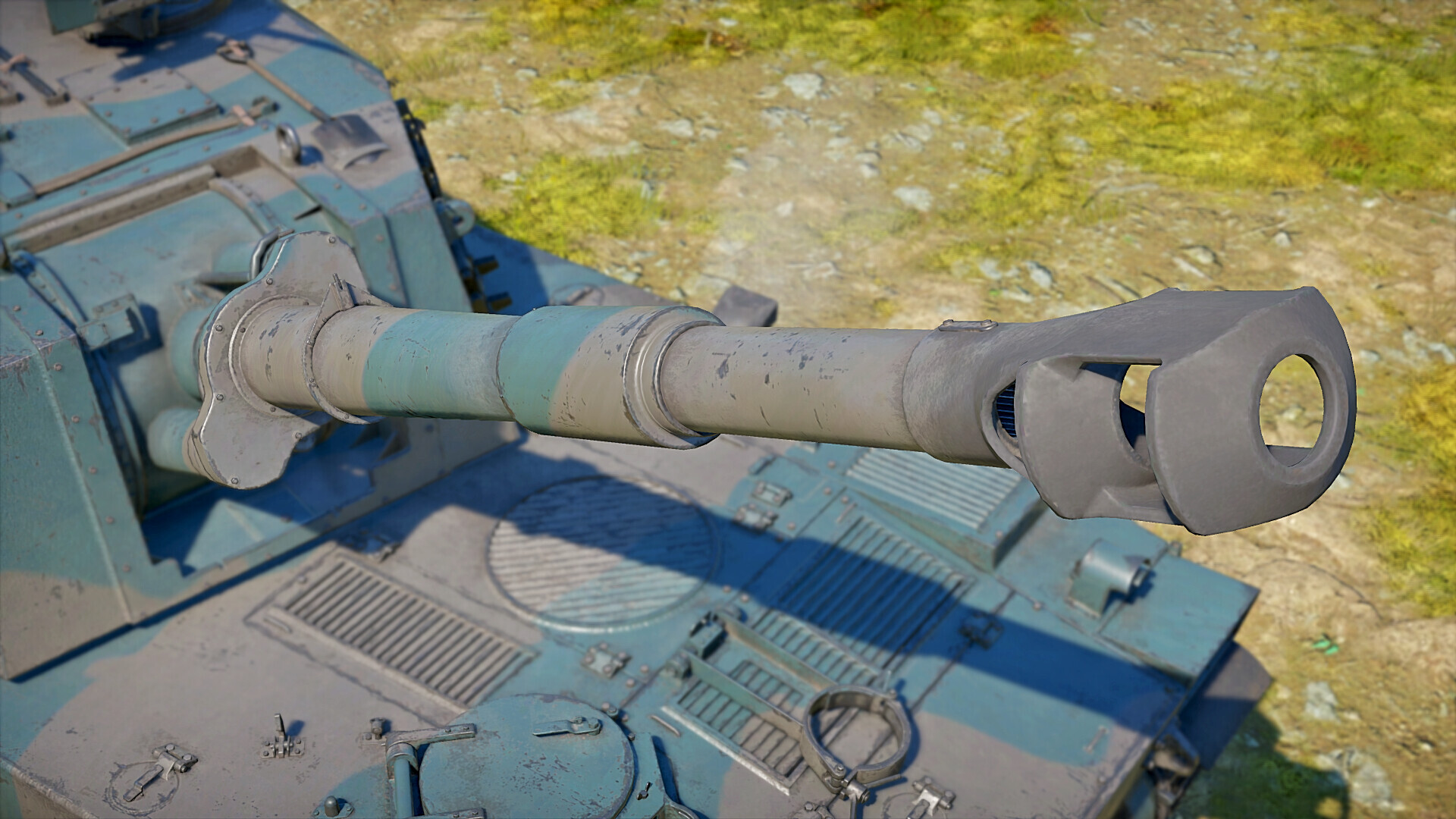
The main weapon of the Type 75 SPH is a 155‑mm NSJ L/30 howitzer with a good reload time of 10 seconds, which is ensured by an automatic loader. The barrel length of 30 calibers (4,65 m) provides good ballistics for its class. The vertical guidance angles are 5° downward, which allows ignoring some irregularities, and 65° upward, which enables firing at air targets.
The ammunition is represented by the following shells:
- M107 — a “stock” high‑explosive fragmentation shell with an armor penetration of 61 mm and an initial flight speed of 580 m/s, featuring excellent armor penetration, high‑explosive effect, and damage.
- M107 (PF) — a high‑explosive fragmentation shell with a radio fuse, largely identical to the previous projectile. It is effective against aircraft, lightly armored targets, and targets behind cover due to its radio‑controlled detonation capability on approach: it can be used to detonate above the roof of an enemy tank, which eliminates the need to target vulnerable parts of the hull and makes it possible to fire at targets behind cover.
- Type 75 is a more advanced high‑explosive fragmentation shell; it has an armor penetration of 54 mm and a smaller amount of explosives than the M107. However, it has an initial flight speed of 720 m/s. It is recommended to switch to using this projectile if you have difficulty understanding the ballistics of the M107.
- M110 — smoke round. It has a large smoke screen deployment radius of 21 m and a retention time of 30 s.
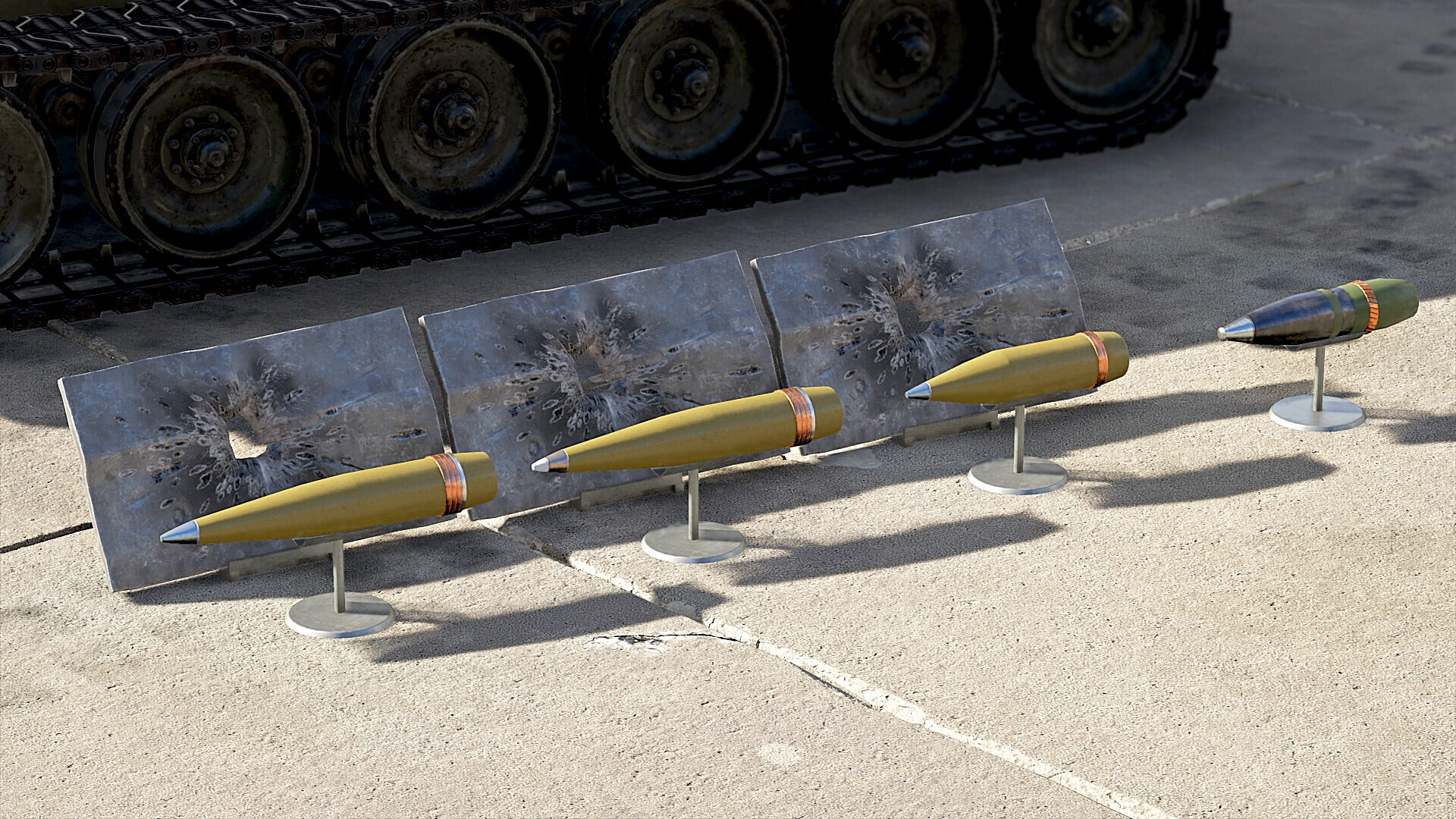
It is worth noting the specific features of using high‑explosive fragmentation shells. These munitions can accidentally detonate due to a bush or a low fence, revealing the location of the self‑propelled artillery unit, but they do not cause significant damage to the enemy. They should be directed at areas with the least protection, where the fragments can cause harm. For example, you can target the turret so that the shell penetrates the hull roof, or aim at the equipment on the turret roof to destroy the turret itself. In rare cases, you can fire near the enemy if the tank has an open conning tower or thin side screens.
Machine gun armament
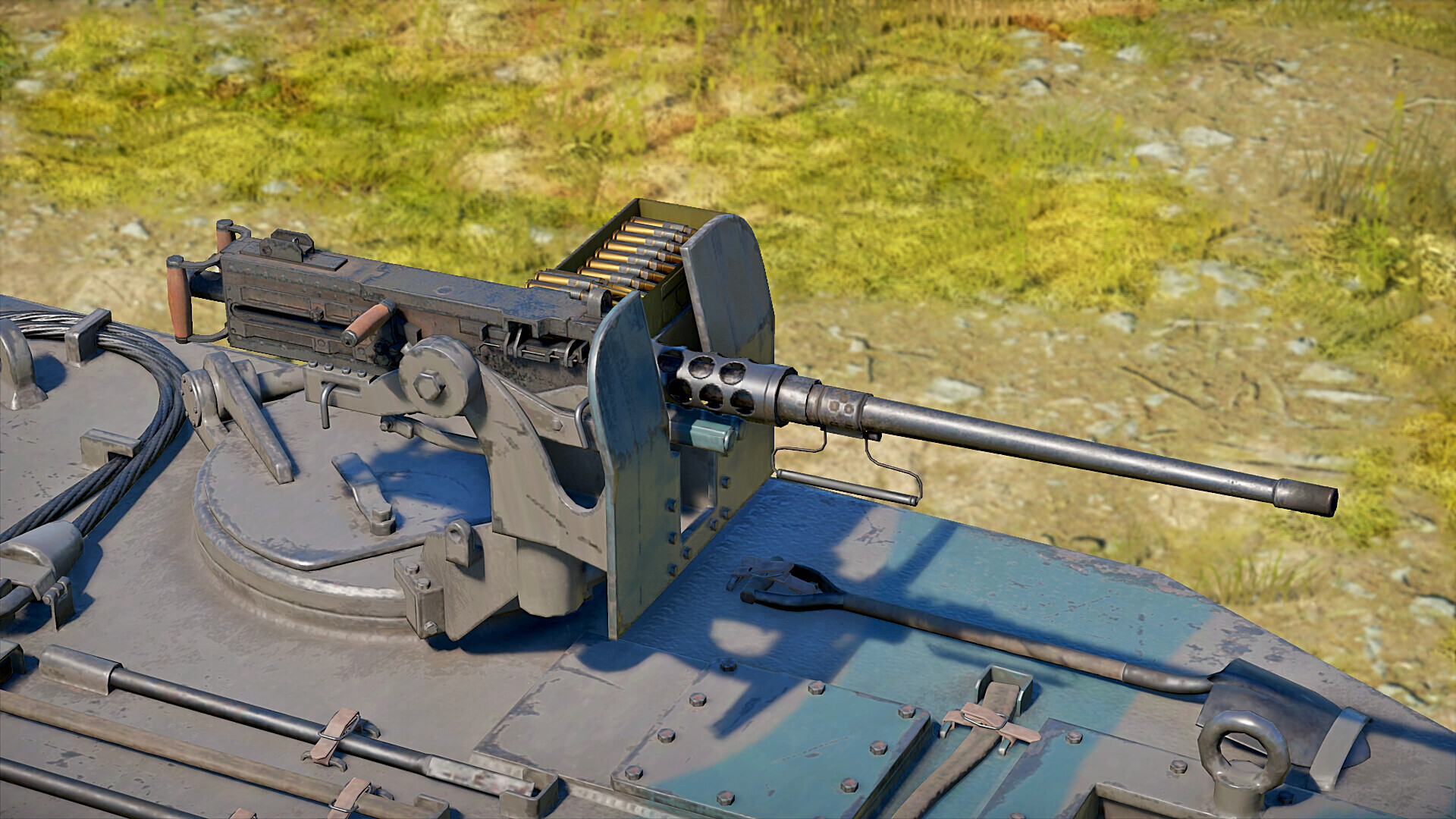
The Type 75 SPH is also equipped with an M2 heavy machine gun mounted on the turret, with an ammunition capacity of 600 rounds. Thanks to its wide aiming angles, this machine gun is most often used to destroy lightly armored targets at short ranges.
Use in combat
The Type 75 SPH is a vehicle with good mobility and powerful weaponry. However, weak protection and low gun aiming speed often do not give the right to make mistakes, whether at short range or at long range.
Playing from the second line will maximize the use of its firepower to support allies. Therefore, from a tactical point of view, it is more profitable to use it at medium distances, protecting allies and gradually moving forward. This makes it possible to use its fire potential more effectively and minimize the risk of return fire.
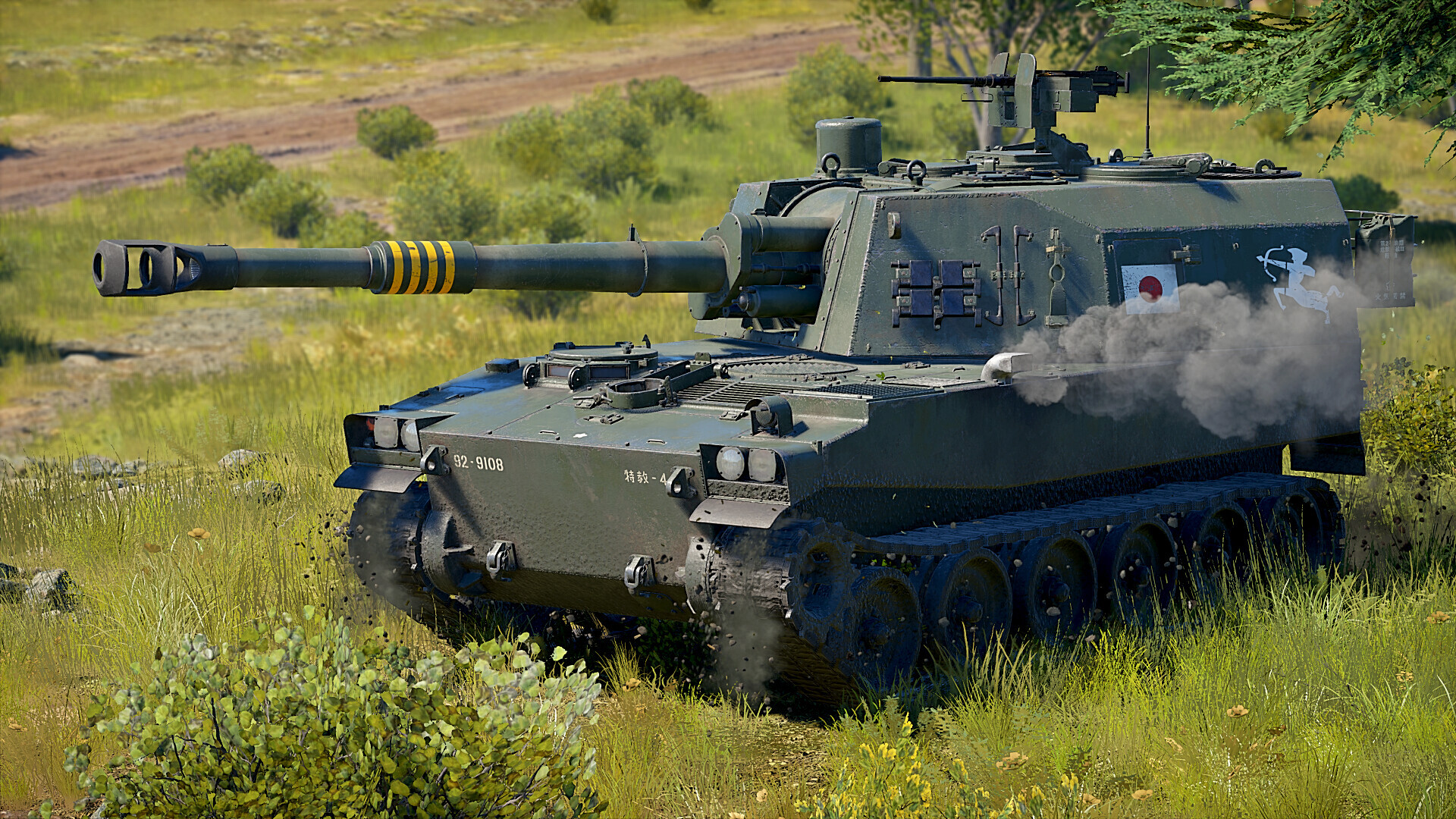
At long ranges, the self‑propelled gun is capable of acting as a “sniper”. Its ballistics can make it difficult to hit a target at long distances, and the ability to quickly retreat after firing thanks to its decent reverse speed is an important way to get out from under enemy fire. However, the terrain plays a key role — any elevation can limit the sector of fire due to insufficient downward elevation. Therefore, when choosing a position, this factor must be taken into account first and foremost.
In urban conditions, the low maneuverability and slow gun aiming speed significantly reduce effectiveness. However, the Type 75 is still useful for defending straight streets and intersections. A powerful volley can hold off the enemy if allies are nearby, covering the flanks. But you should be careful, as the main threat comes from vehicles equipped with rapid-fire automatic cannons, which are common at this rank.
Historical background
In 1969, Mitsubishi Heavy Industries began developing a 155‑mm self‑propelled howitzer under a contract from the ground forces of the Japanese Self‑Defense Forces. Japan Steel Works acted as a subcontractor and took on the production of the artillery system and the turret. In 1972, two prototypes of 155‑mm howitzers were developed, differing in their loading systems. Models were created with both short‑barreled (24‑caliber) and long‑barreled (30‑caliber) guns. For mass production, the long‑barreled version was chosen. The prototypes also had a rear blade to dampen recoil, but after tests it turned out that it was not needed, and it was not used in the mass‑produced version. Technical tests began in 1972, and field tests were conducted in 1973–1974. After successful tests, the vehicle was adopted for service, and in October 1975 it was standardized as the Type 75 155‑mm self‑propelled howitzer.
The main feature of the Type 75, which set it apart from the American M109 or the Soviet 2S3 “Akatsiya”, was a mechanized loading system that was unique for its time.
In the aft niche of the turret, JSW engineers installed two rotating revolver‑type drums, each of which could hold 9 rounds (a total of 18 ready‑to‑fire rounds in the machine itself, plus another 10 in additional stowage in the hull). The shells were fed into the tray and loaded using a hydraulic drive; before each cycle, the gun automatically returned to a loading angle of 6 degrees, and after loading, it instantly restored the previous aiming angle.
Serial production began in 1977 and continued until 1985 (the last vehicles were delivered to units until 1988). A total of 201 vehicles were built. Due to Japan’s strict export regulations, the self‑propelled gun was never offered for export and never left the islands.
The vast majority of Type 75s were concentrated in the artillery regiments of the Northern Army on the island of Hokkaido — it was there, on the most dangerous strategic axis, that the Japanese expected a possible breakthrough by Soviet troops. The hull, made of an aluminium alloy, protected the crew only from shrapnel and small‑arms fire, but this was sufficient for the classic operation from concealed firing positions. The vehicle served faithfully for four decades. Starting in 1999, it was gradually being replaced by the more advanced Type 99.
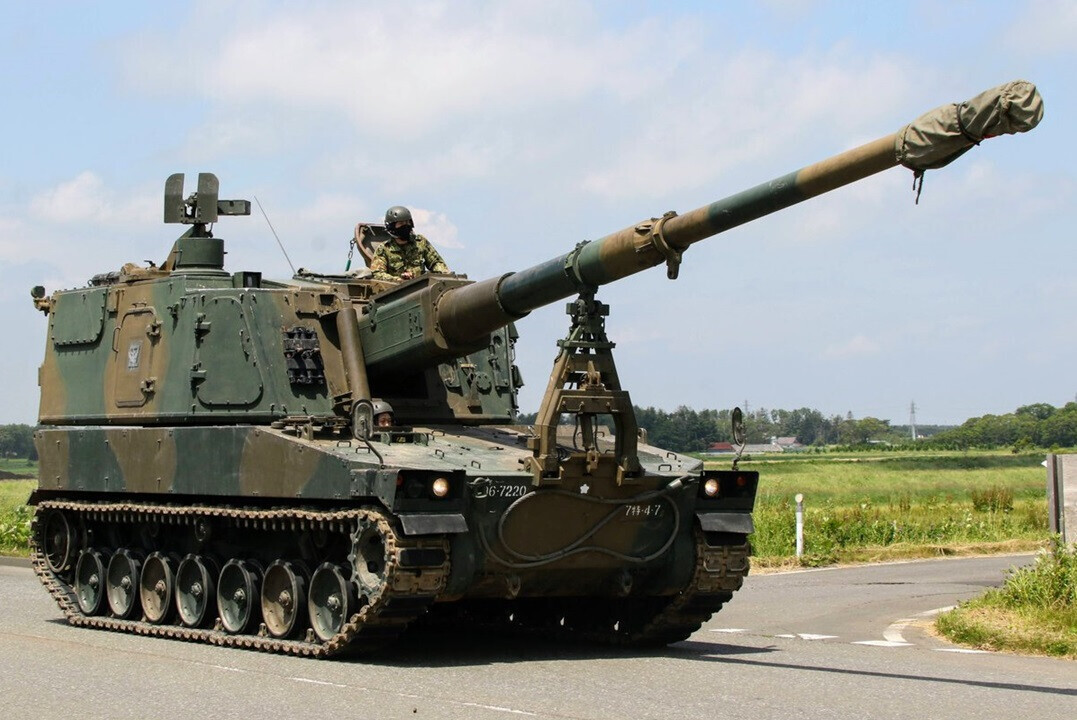
As of December 2008, Type 75 SPH vehicles were still equipped with the 5th, 11th, 171st, and 172nd field artillery battalions. Despite the fact that at the time of its release, the Type 75 was on par with its foreign counterparts in terms of its characteristics, by the early 2000s it had already become obsolete. The last vehicles were in service until the mid‑2010s, and in 2016 they were completely replaced by the Type 99.
Sources
Note: some links may not work because of their Russian domains.