The Renault YR and Renault ACG, officially designated the AMC.34 and AMC.35 respectively, were a pair of French medium tanks designed in series. Initially conceived for the 1931 French Army Cavalry plans for the Automitrailleuse de Combat (AMC) role as a light tank, both were essentially dead on arrival.
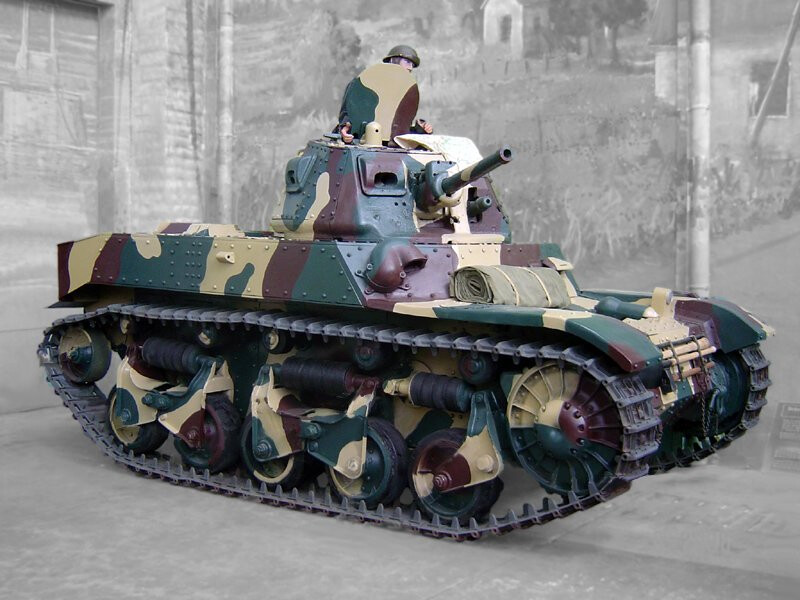
The AMC.34, despite improvements and a pre-series order of 12 vehicles, suffered from a suspension too fragile, and prior to the delivery of the first vehicle, the requirements for the AMC program regarding speed and armour were increased, which would make the AMC.34 too heavy. Despite this, the French did still use them briefly, adopting them in January 1936 before later transferring them for use in Morocco on 15 December 1937, briefly becoming the most modern tank in the theater before being ultimately phased out by the Hotchkiss H.39 in November 1939. Belgium also ordered 25 improved AMC.34s on 13 September 1935, though due to multiple delays, they eventually cancelled the order before later agreeing with Renault and the French government to receive 10 AMC.35s. All the French AMC.34s were likely either scrapped or hidden by the summer of 1940.
Speaking of the AMC.35, while it did see combat in both the French and Belgian armies, it was initially kept in reserve in France with no crews trained before being pressed into service for the Battle of France following the German breakthrough at the Second Battle of Sedan on 15 May 1940. It received poor reviews from French crews, who described it as unreliable with a short off-road range, difficult to use due to the cramped turret, and having insufficient armour thickness for what was deemed, at that point, a medium tank. None of this was particularly helped by the fact that it didn’t have a radio.
Those captured by the Germans were designated the Pz.Kpfw. AMC 738 (f) or (b), depending on whether they were captured from the French or the Belgians, and were pressed into service for policing or as driver training tanks.
Background
The French Army Cavalry, in need of future armoured fighting vehicles, planned three vehicles. One was the Automitrailleuse de Reconnaissance (AMR, light reconnaissance, short range), one was the Automitrailleuse de Combat (AMC, effectively a tank), and the other was the Automitrailleuse de Découverte (AMD, quick reconnaissance, long range, primarily over roads). Specifications were issued on 22 December 1931, requiring the AMC to weigh no more than nine tons, have a cruising speed of at least 30 km/h, and be equipped with a 47 mm main gun. The plan was confirmed on 23 January the following year and approved by the Ministry of Defence on 9 December.
Development
Prior to the specifications of the three future armoured vehicles, Louis Renault was forewarned about their likely contents. As such, in the autumn of 1931, his design team was ordered to design an AMC. The team initially proposed using welded steel plates for the armour, which Renault refused due to the necessity to hire expensive, professional welders. Despite this, the team built the Renault VO, a welded prototype that could serve as an alternative to the AMR 33, which was being developed concurrently. While Renault was initially positive about the Renault VO upon its completion in 1932, he decided on a riveted version instead; this quickly proved too heavy, requiring a complete redesign and a much smaller vehicle, resulting in the Renault YR.
The Renault YR was presented to the Commission d’Expériences du Matériel Automobile at Vincennes on 12 October 1933, still with the welded turret of the Renault VO. After testing by the Section Technique de la Cavalerie, the prototype was given several improvements, including larger fuel tanks and a stronger clutch and gearbox, and was some time later designated the AMC.34. An order was made for a pre-series of 12 hulls on 9 March 1934, later to be mated with a turret chosen from a range of standard turrets. The first hull was delivered on 17 October the following year.
Design, AMC.34
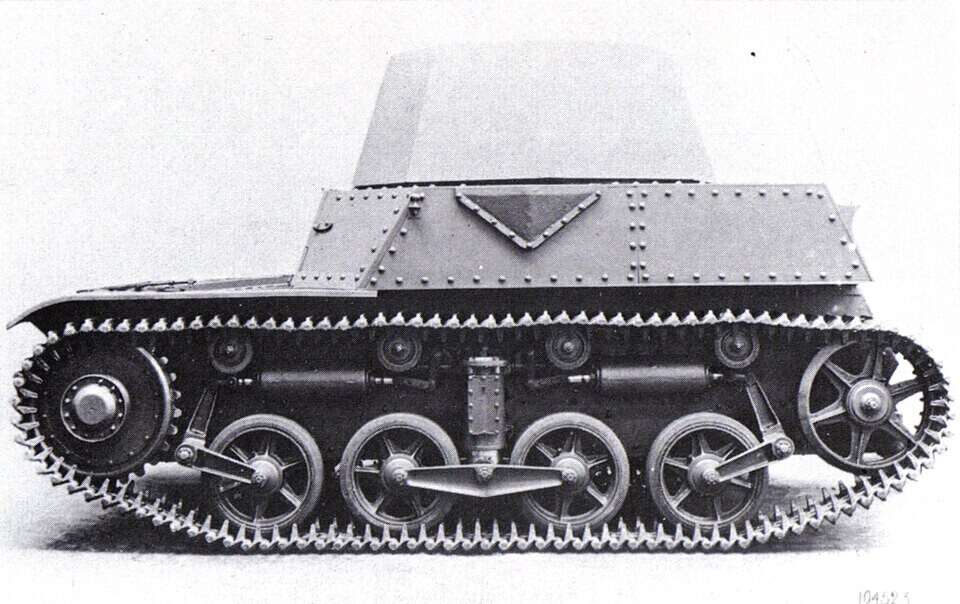
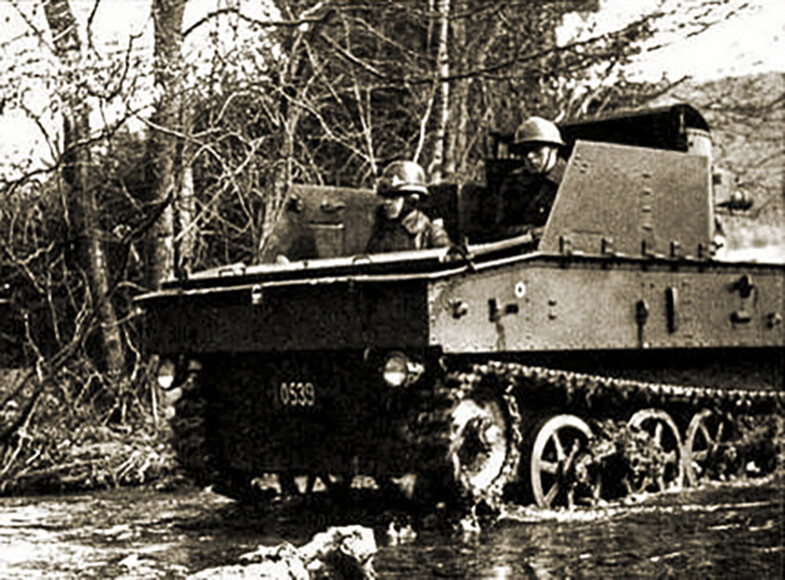
The AMC.34 was 3.98 m in length and 2.07 m in width, with the prototype having an identical suspension to that of the AMR.33. Of note is that this system was deemed to be too fragile, later necessitating a redesigned suspension for the AMR.35, as the suspension of the AMR.33 was prone to either breaking down or breaking off the vehicle. The production version of the AMC.34 thus used the suspension envisaged for the AMR.35, a central bogie with a vertical spring, with a wheel behind and a wheel in front of the bogie that had an oil-damped horizontal spring. The weight of the hull specifically was 9.7 metric tons, with 20 mm thick vertical plates.
The engine was a 7.125-litre V-8 outputting 120 hp located to the right of the driver, with a fuel tank of 220 liters, leading to a top speed of 40 km/h and a range of 200 km.
French operational history, AMC.34
The operational history of the AMC.34 is fairly short-lived; it was decided on 26 June 1934, over a year before the delivery of the first hull, that the AMC.34's armour had to be thickened to make it immune to anti-tank guns and that it now needed to reach a top speed of 50 km/h. As the AMC.34 was not strong enough to carry the extra weight, the AMC.34 was redesigned into the AMC.35; no further orders were made by France for the AMC.34.
Despite this, the pre-series vehicles were pressed into French service due to a lack of modern tanks. In January 1936, they were given to the 4e Régiment de Cuirassiers, first with turrets taken from Renault FTs, and later with APX1 turrets armed with the SA 34 47mm gun.
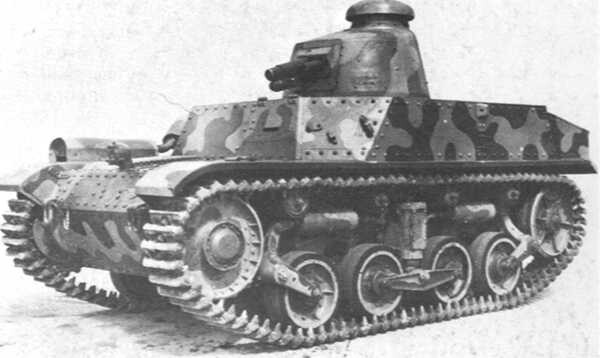
By 1937, increasing production of more modern tanks allowed AMC.34 hulls to be sent to Morocco for use by the 1e Régiment Chasseurs d’Afrique, making them the most modern armoured vehicles in the colonies; these tanks were refitted with the two-man APX2 turret, though it took many months for the 25 mm Hotchkiss cannons destined for the turrets to arrive, meaning they were initially equipped with just 7.5 mm machine guns. These tanks were also equipped with ER 28 short-wave radios, a better-protected fuel tank to the rear, and a safer horizontal ventilation grille on the rear engine deck.
The AMC.34 was replaced by the H.39 in November 1939, with three AMC.34s being taken for use in driver training. These and the remaining nine AMC.34s did not appear on the armistice controls list, indicating they were either scrapped by the summer of 1940 or hidden.
Submission and design, AMC.35
As previously stated, the stipulations for the AMC program were adapted to increase its armour thickness to defeat anti-tank guns and increase its top speed to 50 km/h. The adapted prototype was delivered by Renault as the Renault ACG on 7 March 1936, with Renault asking that the vehicle be accepted if it met the new specifications on the basis that the AMC.34 had already been accepted for production and this was merely a “slightly changed” variant.
That same day, the remilitarization of the Rhineland by Germany began. This made the Cavalry uneasy, leading them to preemptively order an initial run of 17 of the “slightly changed” variant in the spring of 1936, later expanding the order to 50; this variant was, as of that time, untested.
The Commission d’Expériences du Matériel Automobile became suspicious of the fact that the factory designation of this “slightly changed” variant had changed from the Renault YR to the Renault ACG. Upon inspection of the variant, they discovered it was, in fact, a completely new design. Following a testing program on 27 November 1936, they decided that, despite the many changes, the ACG was still unfit for service. While they did not cancel the Cavalry’s order for political reasons, they did note that it would be advisable to test vehicles before ordering them in the future. Thus, the first AMC.35 was delivered to the Cavalry on 1 November 1938.
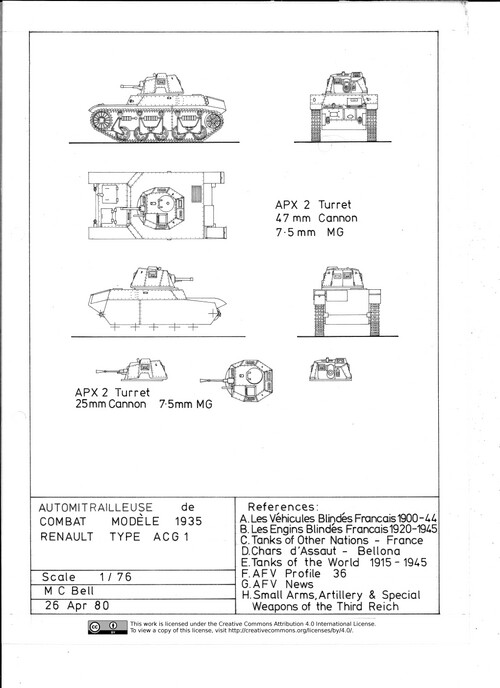
The AMC.35 had much the same dimensions as the AMC.34, however, it was slightly longer at 4.572 m in length to install a shortened 11.08-litre V-4 version of the V-6 used in the Char B1, with this shortened version outputting 180 hp. The suspension was improved from the AMC.34, consisting of five road wheels on a suspension using horizontal rubber cylinders as springs. With a top speed of 42 km/h, the vehicle was slower than the specifications required. Further, the vehicle had a 300-litre fuel tank for a range of 160 km, a wading height of 60 cm, and the ability to cross a trench of two meters.
The armour was also insufficient, with vertical 25 mm plates riveted and bolted to the chassis that were unable to defeat anti-tank guns. The initial prototype was fitted with an APX2 turret, a turret of octagonal shape and cast sections welded, riveted, and bolted together, containing a 25 mm SARF fortress gun and a 7.5 mm Reibel machine gun; because the 25 mm SARF was needed for the Maginot Line, the production series of AMC.35 was fitted with a 47 mm SA 35 instead. The production model carried 120 main gun shells and 5,250 machine gun rounds.
French operational history, AMC.35
The French production of the AMC.35 continued after 1 November 1938, with the original order of 17 vehicles being completed in March 1939. By the beginning of World War II on 1 September 1939, 22 vehicles had been completed. Production then accelerated, with three built in September, nine in October, and eight in November, by which point all remaining materials had been exhausted. In January the following year, five more vehicles were produced, with production then discontinuing for a total of 57 vehicles completed, ten of which were exported to Belgium per the next section. 47 were listed as still in France by the spring of 1940, though it is unclear whether this included prototypes and project tanks, as the original order from the Cavalry was for 50 vehicles.
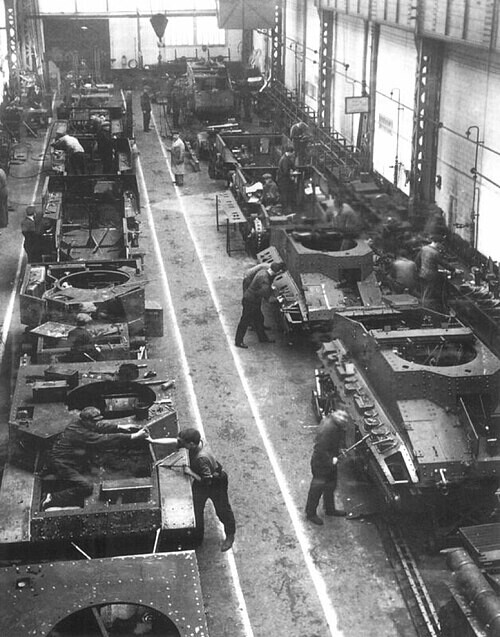
At first, no French units were equipped with the AMC.35 as no crews had been trained on it. Following the German breakthrough at the Second Battle of Sedan from 12–15 May 1940, it was decided on 15 May that all reserve tanks would be pressed into service. Several ad hoc units were hastily formed and equipped with AMC.35s, with the 11e Groupement de Cavalerie being given 12 and five informally created Corps-francs Motorisés being promised seven each, though they were initially given just five. Reviews from crews deemed the vehicles to be unreliable, with them having an extremely short range in rough terrain; difficult to use, with the APX2 turret appearing unfit for two men to operate effectively; of insufficient armour thickness for a medium tank; and containing no radio, preventing coordinated maneuvers.
Despite these reviews by contemporary crews, armour historian Brian Terence White judged the AMC.35 quite favorably, stating that it was: “…one of the most advanced French tanks for its size in that, as well as being equipped with a good gun, it had a two-man turret […] with all the advantages of command it conferred. […] somewhat surprisingly, for in retrospect this seems to have been one of the best prewar French light tank designs; only 100 were built.”
The French conceived two variants: a smoke-laying vehicle, for which only a prototype was completed, and a tank destroyer to be equipped with a 75mm gun. The latter was studied in 1939 as the ACG 2 but was never produced. Although the ACG 2 was never produced, it has led some sources to name the AMC.35 the ACG 1.
Belgian operational history
There was only a single foreign buyer for the AMC.34, the Belgians; in 1935, their cavalry began a mechanization program. Initially planning to equip all six of their cavalry regiments with squadrons of 12 tanks consisting of eight Vickers T-15s and four “guntanks”. The AMC.34 and the competing Vickers Medium Tank Mk.F prototypes were tested from 7–10 November 1934, with the AMC.34 being chosen; thus, on 13 September 1935, 25 AMC.34 hulls of an improved version were ordered to fill the latter role at a unit price of 360,000 French francs, with 25 APX2 turrets ordered to fit to them, for a total price of approximately 18.5 million Belgian francs.
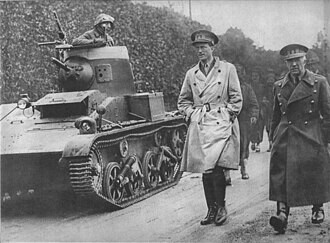
The delivery of these improved vehicles was intended to begin in October 1935; the same month production began on the original French order. As such, Renault was unable to produce the improved version for the Belgians. Technological, financial, and social problems — including the December 1936 nationalization and restructuring of Renault’s military division into the Ateliers de construction d’Issy-les-Moulineaux (AMX) — meant that delivery would fall further behind, alongside the fact that Renault believed the AMC program would not receive large orders, lowering its priority.
The Belgian minister of defense, General Henri Denis, demanded on 3 June 1937 that the single improved vehicle prototype be sent to Belgium, which it was the following day. Testing from 23–27 August showed its hill-climbing capabilities were poor, leading the Belgians to decide the seven tanks destined for the Chasseurs Ardennais were unnecessary, lowering the order to 18 vehicles. Between the political tensions regarding the order from both left- and right-wing politicians in Belgium and the deliveries that failed to materialize from Renault, the Belgians decided in December 1937 to completely cancel the order, accept a contractual fine of 4 million francs, and divert remaining funds to the production of the Belgian-built T-13.
Embarrassed, the French government pressured Renault to accept a new agreement. It was discovered in early 1938 that the Renault factory had the materials to build 75 AMC.35s. Of these, 60 had already been built, and assembly had started on approximately 50 vehicles. It was thus agreed on 21 April that year that Renault would complete 35 vehicles, ten of which would be delivered to Belgium (including the prototype), a countervalue to the contractual fine. Belgium was also given five sets of reserve parts and eight armour sets. The new agreement was signed on 15 June, stipulating that the tanks would be delivered prior to 31 July. By that point, the French Army Cavalry had decided to use the SOMUA S.35 instead, advising that the Belgian order should be prioritized.
Renault had originally asked for this on 6 May; however, on 2 June, the French Ministry of Defence stated that the terms of the original agreement were to be followed: batches of ten at a time, seven to go to France and three to Belgium. Production only began in November 1938, and the first delivery to Belgium was delayed until 30 March 1939, with the second batch exported in May and the final batch on 7 August.
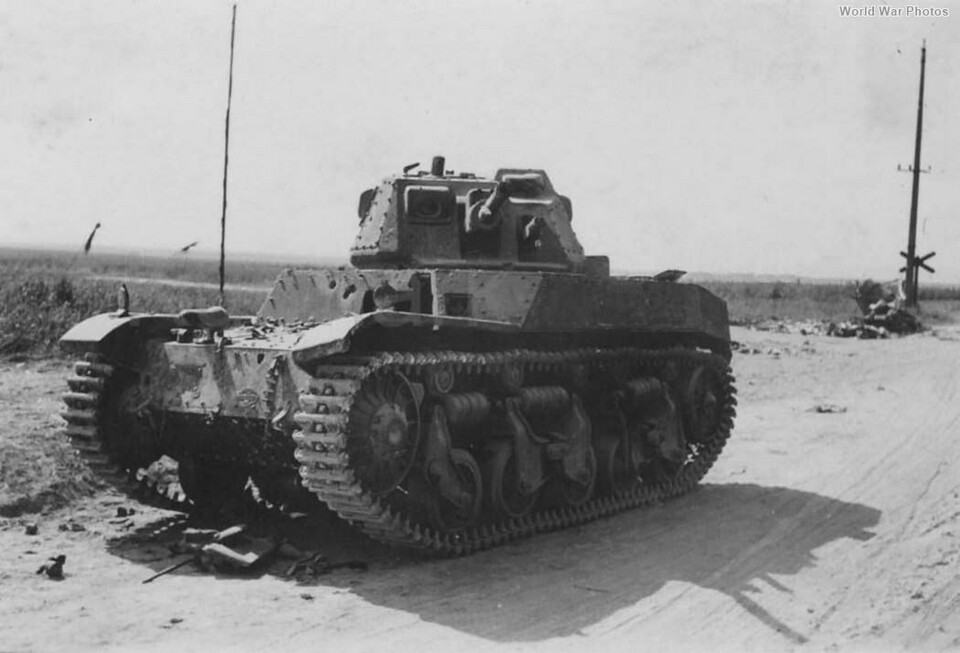
All the turrets were also delivered in 1938, leading to a surplus of 15, of which 13 were used on coastal defense pillboxes. The final two were used at Remouchamps, where a fortress was supposed to be built, though this fell through due to a lack of funds and only two casemates were built.
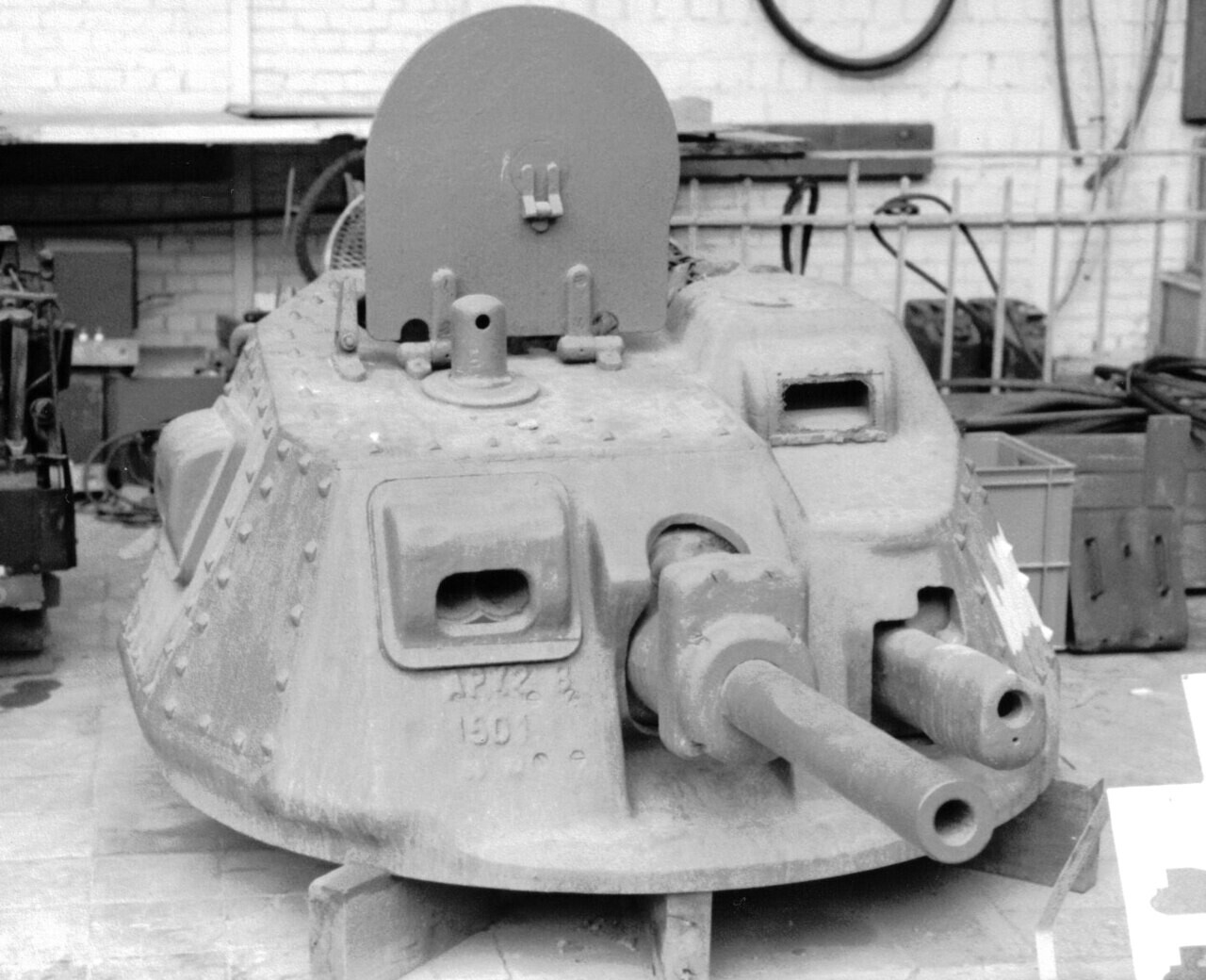
The turrets were all equipped with the Belgian FRC 47 mm gun, which was similar to but 15 mm shorter than the French 47 mm SA 35. A different machine gun was used as well, with an optionally coaxial 7.65 mm Hotchkiss 08/15 MG. The Belgian turrets, which were produced at Nantes, were designated the APX2 B, which had the diascopic sight on the left of the turret moved to the facet behind, as the machine gun made it impossible to look through in its original position.
The turrets were rebuilt by the Société d'Électricité et de Mécanique Van den Kerckhove & Carels (SEM) in Ghent between September 1939 and February the following year.
By the time all nine non-prototype hulls had finally arrived in Belgium, it was discovered that engine, transmission, and suspension wear were all excessive. In January 1940, the two in the worst condition were transported to the arsenal of Etterbeek for use as donor vehicles to keep the others running, with another used for driver training.
The eight tanks, including the driver training tank, were provided to the Escadron d’Auto Blindés du Corps de Cavelerie, or the Armoured Car Squadron of the Cavalry Corps, which was formed on 1 September 1939 at Watermael-Boitsfort. The unit moved to Ghent for training, gradually receiving more vehicles from SEM, before later moving to Brussels.
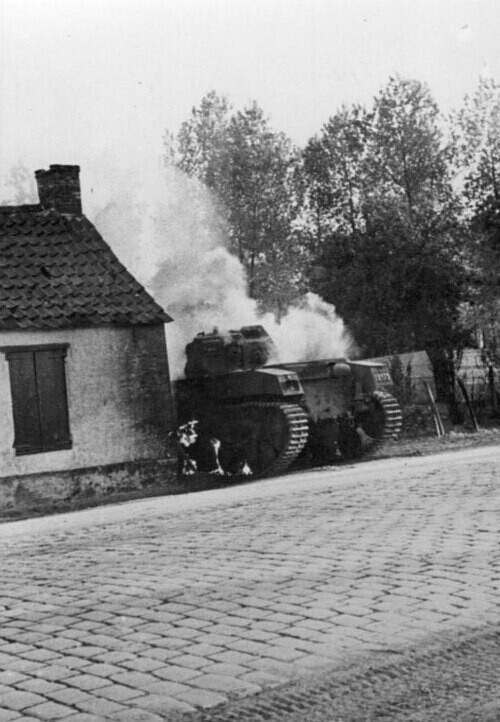
When Germany invaded Belgium on 10 May 1940, the driver training tank was reunited with the seven AMC.35s, later being sent to Humbeek under the 1st Light Regiment in order to defend the canal and bridges between Willebroek and Vilvoorde. They first saw combat the following day, with German scouts being spotted near the rail and road bridge of Kapelle-op-den-Bos; following a hit from a Pak 37 anti-tank gun, one of the AMC.35s was abandoned, with the other continuing to fight until it was ordered to retreat. The remaining six tanks fought as a rearguard.
After various moves, on 19 May another tank was lost after it was hit by a Pak 37 during contact with German advance units. On the morning of 21 May, one tank was destroyed with its entire crew lost, and another was disabled by several Pak 37 hits.
By dawn on 25 May, they reached the town of Sint-Eloois-Winkel and were used for patrol work. The following day, they were mistakenly fired upon by a Belgian 75mm gun, believing them to be German forces. They were reinforced that night by some T-13s and were dispatched to various locations to watch for German infiltrators.
At the Belgian surrender on 28 May, only two tanks remained operational.
German operational history
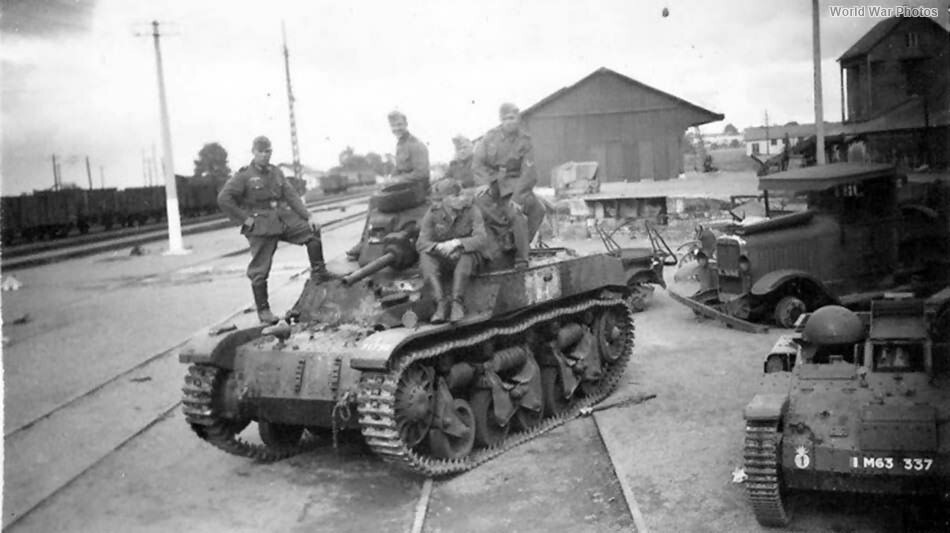
The AMCs served in a very minor role in the Wehrmacht, with such vehicles captured being designated the PzKpfw AMC 738 (f) or (b), depending on whether they were captured from the French or the Belgians. These were used for driver training and policing roles.
Legacy
There is some historical debate on the true production numbers of the AMC.35, with it being believed for some time after the war that there had been 100 AMC.35s produced, consisting of 75 for France and 25 for Belgium. It is believed this misconception comes from the Riom trials, where the Vichy regime indicted many for their perceived failures in preparing the French military for war. The accused, intending to claim that French tank production was greater than that of Germany, estimated that 75 AMC.35s were produced, adding the 50 intended for France to the 25 AMC.34s originally ordered by Belgium. Later writers, purportedly assuming that the 75 meant the vehicles intended for France, added the original order of 25 Belgian AMC.34s to the 75.
The wreck of an AMC.35 was discovered and restored and has been on display at the Musée des Blindés in Saumur since 2006. The Museum of the Army in Brussels displays a single turret removed from one of the two pillboxes that defended the harbor of Zeebrugge or the Port of Bruges-Zeebrugge.
- English Wikipedia, AMC 34
- English Wikipedia, AMC 35
- Brian Terence White, Tanks and other Armoured Fighting Vehicles of World War II, p. 93
- Tank Encyclopedia Archives, Renault AMC 35
- Surviving Belgium WW2 Tanks, The ACG-1 Belgium medium cavalry Tank (AMC35)