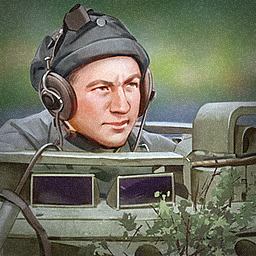
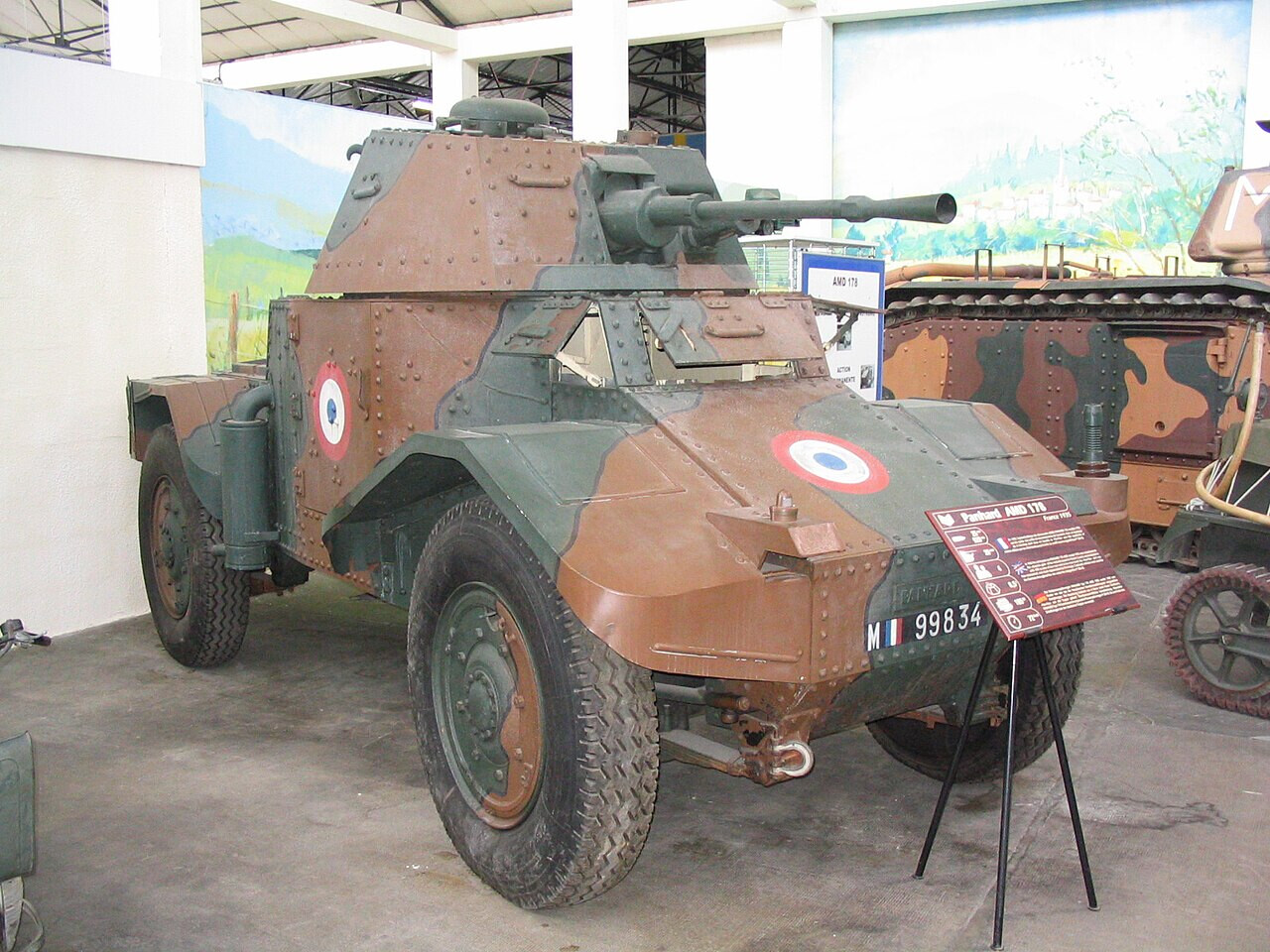
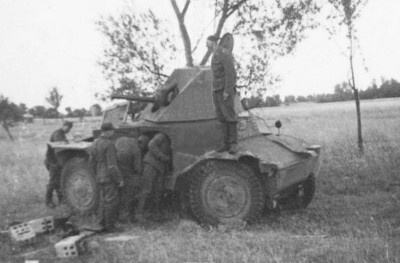
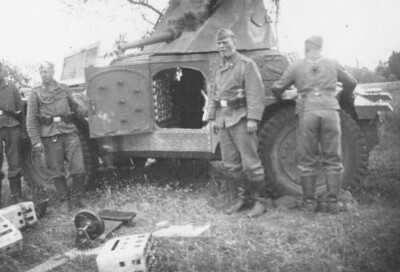
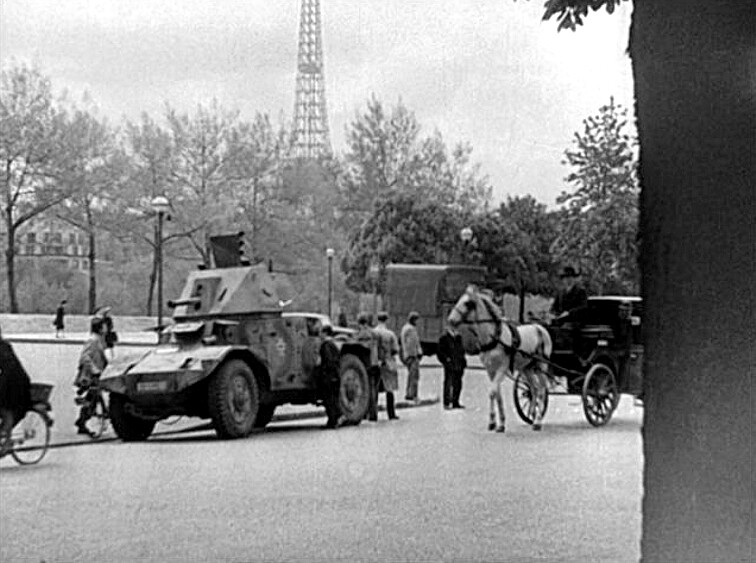
The Panhard 178, officially designated the Automitrailleuse de Découverte Panhard modèle 1935, also known in the game primarily as the AMD.35, was a French 4×4 armoured car designed for French Army Cavalry units. The AMD.35, alongside being equipped with various cannons, was also used by Nazi Germany and converted to use the 5 cm KwK 38 L/42 (used as the main armament of the Panzer III) or the 5 cm PaK 38 L/60 (primarily used as a towed anti-tank gun). The Pz.Sp.Wg.P204(f) KwK 39/1 is fitted with the 5 cm KwK 39. The AMD.35 became the first mass-produced 4×4 armoured car for a major country and was considered very advanced for its time, with its variants, including the Panhard 178B, remaining relevant until the 1970s.
Background
Panhard & Levassor had a history with the French Army, producing a touring car used as an unarmed reconnaissance vehicle during the 1905 French Cavalry manoeuvres. It was later equipped with a machine gun and used during the 1907 invasion of Morocco, before crashing in 1908 and being refitted. A further seven similar vehicles were produced and sent to Morocco, both designs of which were well received. The engines for the 1925 prototype of which later became the Schneider (P16) M1928 and M1929; and the Type 165/175, starting in 1932.
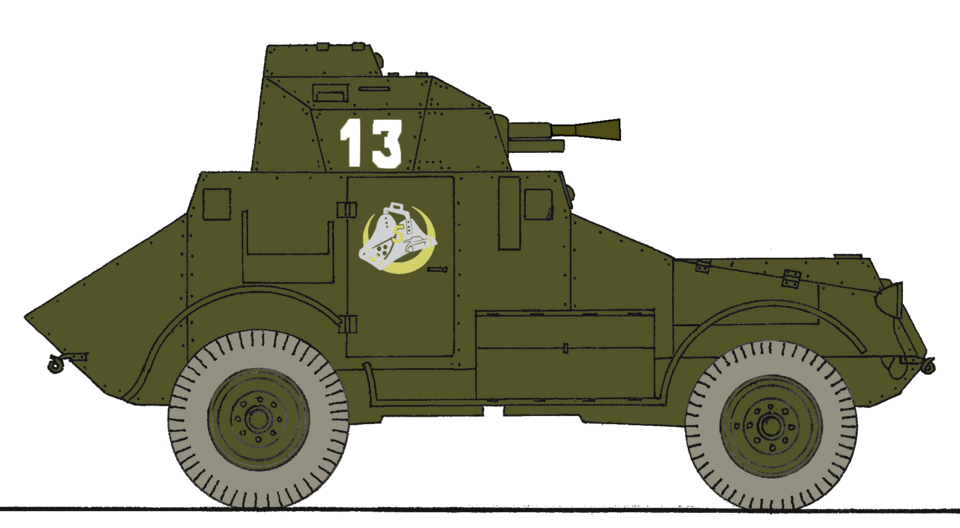
The French Army Cavalry, in need of future armoured fighting vehicles, planned three vehicles. One was the Automitrailleuse de Reconnaissance (AMR, light reconnaissance, short range), one was the Automitrailleuse de Combat (AMC, effectively a tank), and the other was the Automitrailleuse de Découverte (AMD, quick reconnaissance, long range primarily over roads). Specifications were formed on 22 December 1931, which were further developed on 18 November the following year and were approved on 9 December. The specifications required a weight of 4 metric tons, a range of at least 400 kilometres, a top speed of 70 km/h, a cruise speed of 40 km/h, a turning circle of 12 meters, 5–8 mm armour, a 20 mm gun, and a 7.5 mm machine gun. The following year, companies including Renault, Berliet, Latil, and Panhard put forward proposals.
Development
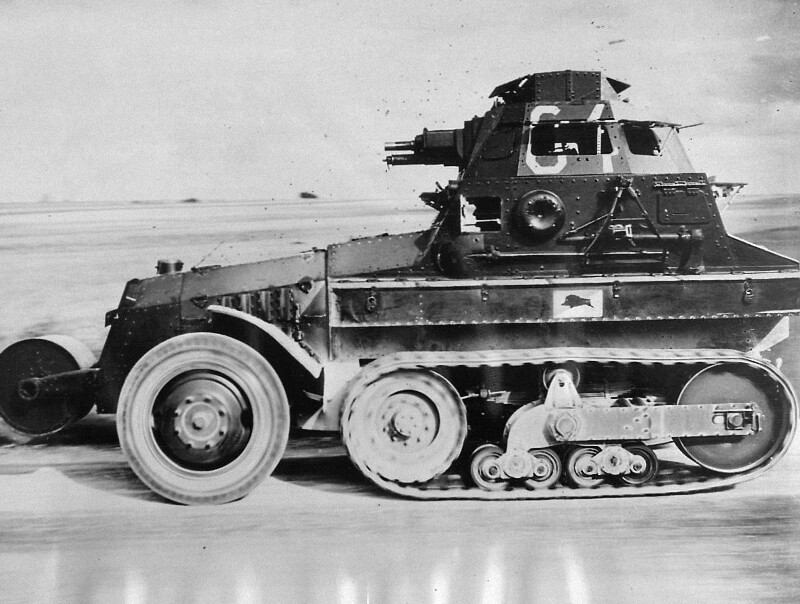
Renault built two Renault VZs, one of which was classified as an armoured personnel carrier; Berliet built one Berliet VUB; Latil presented a design in April 1934, while Panhard presented its prototype in October 1933: it was presented to the Commission d'Expériences du Matériel Automobile at Vincennes in January 1934 as the Panhard voiture spéciale type 178 (Panhard 178), though with an Avis 13.2mm machine gun turret, as the intended turret was not ready at the time. Of the other prototypes, the Berliet was considered reliable but too heavy and traditional, while the Latil had no all-terrain capabilities.
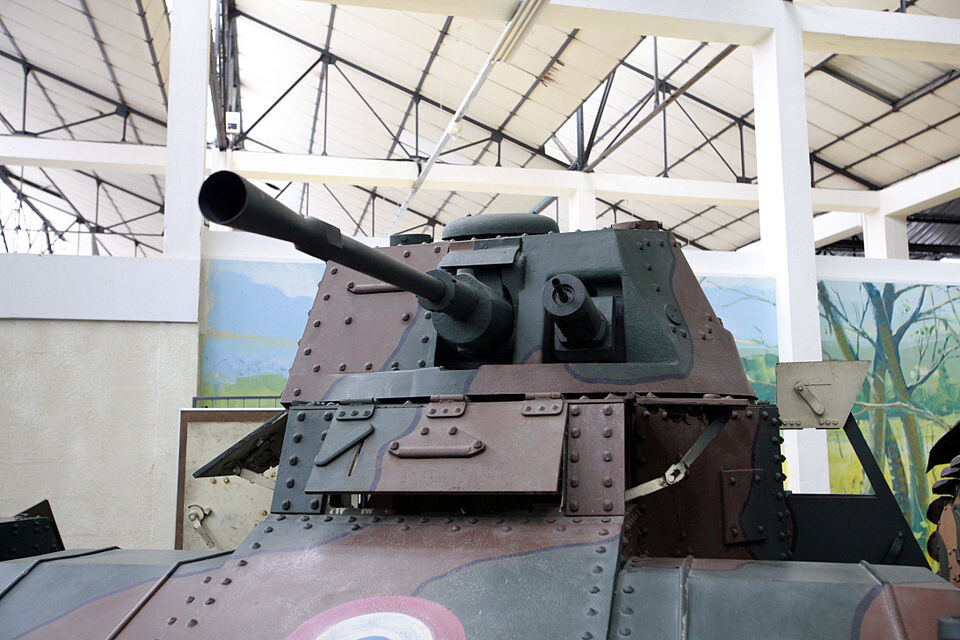
The Panhard 178 was tested from 9 January to 2 February 1934 and, despite being larger and heavier than the specifications, was accepted on 15 February on the condition that small modifications be made. That autumn, now lacking the bottom tracks of the original, the improved Panhard 178 was tested by the cavalry before being accepted later that year as the AMD Panhard Modèle 1935 (AMD.35). It was by that point equipped with the APX3B turret, based on the APX3 from the AMC.35. The turret suffered from reliability issues, including cracking in the gun sights and high internal temperatures causing overheating, which, following tests from 29 June to 2 December 1937, was improved in the 1937 model, which began production the following year. The improved model was fitted with a ventilation system and a gun silencer.
Design
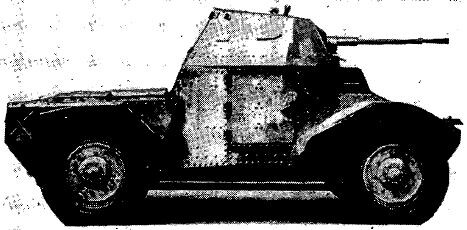
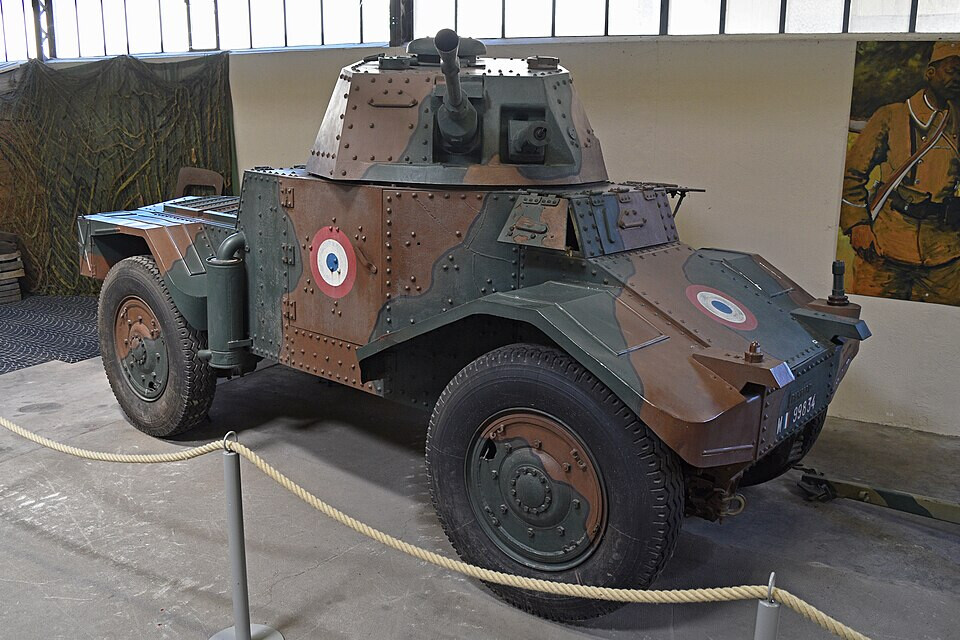
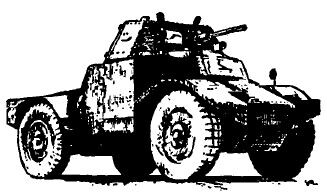
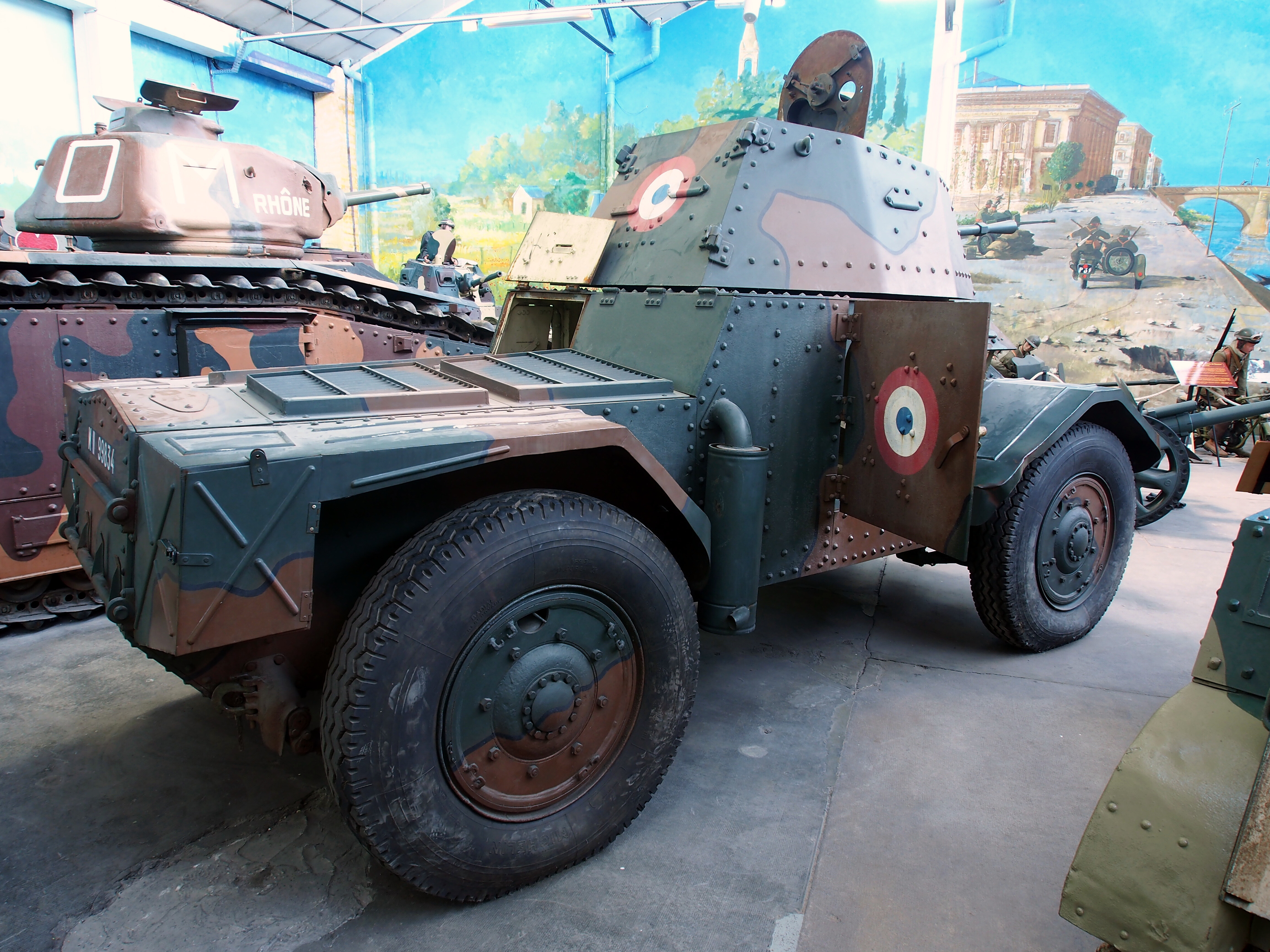
In order to keep it as effective as possible in its role, the AMD.35 had to be kept as light as possible, resulting in a vehicle 4.79 m in length, 2.01 m wide, and 2.31 m in height. The vehicle also had a tapered engine compartment containing a Panhard ISK 4FII bis V4 producing 105 hp. Due to the low height of the engine compartment, the AMD.35 had a distinctive silhouette due to the comparative height of the fighting compartment; the engine and fighting compartments were separated by a fireproof bulkhead.
The turret used for the final vehicle had 26 mm of frontal armour, 13 mm (sides), 7 mm (lower), 9 mm (top and glacis), 13 mm (front, back, and sides of the superstructure), and a 20 mm bolted and riveted armour plate for the nose. The total weight of the vehicle was 8.2 metric tons; however, it was still very mobile, reaching a maximum of 72.6 km/h and a cruising speed of 47 km/h, with a range of approximately 300 km provided by two fuel tanks of 120 and 20 litres in the main and auxiliary tanks.
Though the vehicle was 4×4, the leaf spring suspension reduced the off-road speed to 42 km/h, with its four wheels limiting its wading and trench-crossing capabilities to 60 cm. It was assisted in clearing vertical obstacles 30 cm in height by two small wheels at the front of the hull.
There were four crew members, the front driver using an eight-speed gearbox and a normal steering wheel, while steering could be switched to reverse so an assistant-driver, facing rearwards and sitting to the left of the engine, could drive the vehicle backwards in an emergency with the four off-road gears at the off-road maximum. The assistant-driver doubled as the radio operator, operating either the ER29 short-range or the ER26 long-range radio, the latter of which had a range of 60km.
The large APX3B turret was spacious, could accommodate two crew members (commander on the right and gunner on the left), and featured electric traversal. The gunner was equipped with a rudimentary turret basket, with each crew member being equipped with a periscope (the Gundlach on later designs) and PPL.RX.168 episcopes.
The primary armament was intended to be a 20mm gun. This failed to materialise, and it was considered that the 37mm Modèle 16 gun, a standard for armoured cars, could replace it; this was rejected due to its poor performance against armoured targets. Instead, the 25mm SA 35 was used, a shortened variant of the 25mm Hotchkiss modèle 34, the primary French anti-tank gun, which was fitted with the L711 sight. Due to the shorter barrel, heavier charges were used, slightly improving the muzzle velocity of the original anti-tank gun to 950 m/s. The gun had a maximum penetration of approximately 50 mm with a tungsten round, which was easily defeated by sloped armour. Despite the vertical plates used by German tanks being defeated by the round up to 800m, even when penetrating, it failed to set fires, sometimes taking 15 shots to set a fire. 150 rounds were stored.
The secondary armament was the optionally coaxial Reibel 7.5mm machine gun with 3,750 rounds, 1,500 of which were armour-piercing; the magazines were stored on the inner walls of the fighting compartment, including the main entrance door to the right of the vehicle. A reserve machine gun was stored to the right of the driver, which could be mounted to the top of the turret for anti-aircraft defence.
Production Variants
Command Version
The command variant was produced with a fixed, unarmed turret and without standard radios; it instead featured the ER27, which could transmit between 80 and 150 km, and two ER26s.
North African Version
The variant produced for North Africa was initially planned to feature a 37mm gun, which was later changed to a 47mm gun. Due to the worsening situation in Europe at the time, the North Africa variant was forced instead to be the regular AMD.35, though with some internal changes and a more efficient radiator.
Colonial version
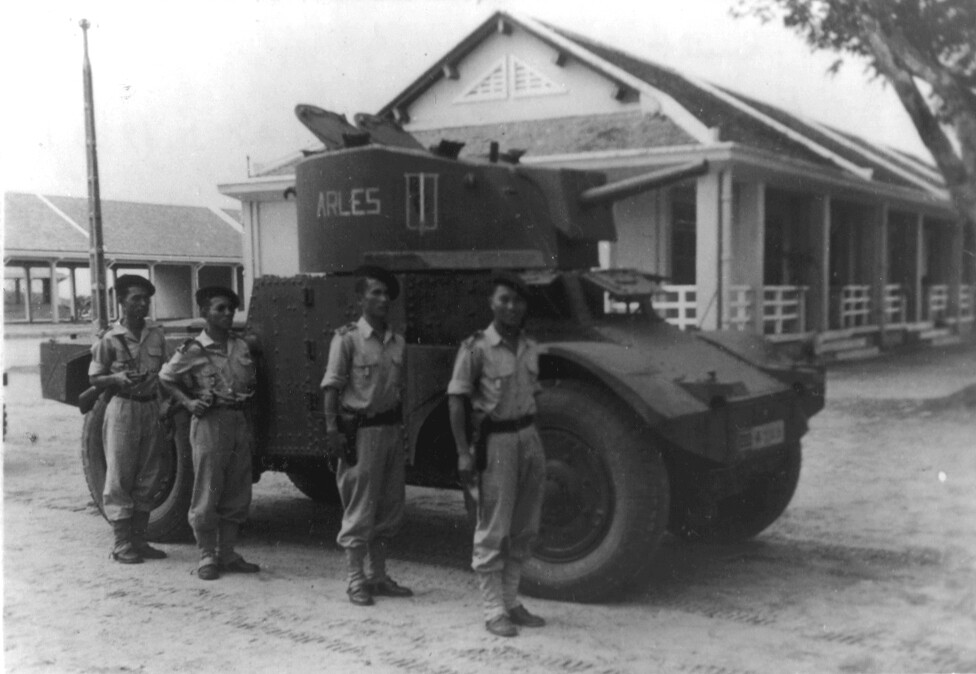
The variant produced for French Indochina (later described in this article as the colonial variant) was equipped with the APX5, a one-man turret taken from the Renault AMR 35 ZT2, armed with a 25mm gun and a 7.5mm machine gun. The crew was reduced to three: a driver, an assistant driver/radio operator, and a commander/gunner.
Voiture 47
A tank destroyer variant was initially put forward in a letter from the French Army General Staff and the Director of the Cavalry on 14 January 1939, stating that it was possible to arm the APX3B with the 47mm SA 35 gun. The letter also stated that the gun was in short supply due to its use in producing the S35 and B1 Bis and in up-arming the Char B and Char D2, which were at that time temporarily armed with the short-barrelled 47mm SA 34. Despite the letter requesting the acceleration of production of the 47mm SA 35, both for its current needs and to arm the Panhard 178, little to no advances were made by May 1940, and it was uncertain whether the APX3 could be armed with the 47mm SA 35.
By April 1940, another proposal was made, the Voiture spéciale 207. This variant would call for a rear-facing 47mm SA 37 gun; however, it was only developed. From the beginning of the invasion of France and the Low Countries, the 25mm SA 35 that armed the AMD.35 proved effective against most German tanks but performed poorly at range, particularly when faced by the Panzer 35(t) and 38(t), and performed poorly against infantry due to the lack of high-explosive shells and the fact the gun was not automatic.
This led to calls, most likely on 31 May 1940, by Squadron Chief Joseph d’Astorg, 1st Régiment d’Automitrailleuses (1st RAM), for Renault to find a way to arm the Panhard 178 with a 47mm SA 35 behind a gun shield instead of a rotating turret.
Renault, in just three days, designed a closed, entirely welded, octagonal turret, giving the vehicle a higher, more wedge-shaped silhouette. It was armed with the 47mm SA 35 gun, firing the 47×194mm Obus de rupture modèle 1935 armour-piercing capped shell at a velocity of 660 m/s. German tests revealed it could penetrate 40 mm of armour at a range of 400 m and an angle of 30°. Aside from this, it could also fire a high-explosive shell with a velocity of 590 m/s and 142 g of explosive mass.
The turret was more heavily armoured than its original, having a 13mm frontal plate with an additional 25mm plate in front, amounting to 38mm, a respectable thickness even for medium tanks of the time, with the rest of the turret being 25mm thick. The turret was hand-cranked instead of electric, and the rear entry hatch was replaced by a narrow top hatch described as “more of a lid”. Vision to the sides was provided by large, round holes protected by a rotating cover.
The turret was fitted to a hull on 5 June 1940, succeeding in firing trials the following day. With plans to build four vehicles a day and, from that August forward, 35 a month. Paris was evacuated on 10 June, and though Renault provided plans to slightly revise the turret to provide better crew conditions and to arm the turret with the 7.5mm FM 24/29 machine gun and stated they could produce four turrets a day on 11 June 1940, the factories it was to build them in in Billancourt were evacuated to secondary factories further south the following day. An official order for 40 turrets came on 13 June, but Renault was unable to fulfil it. The prototype, known as Voiture 47, was the only completed vehicle and was delivered to 1st RAM as early as 6 June that year.
Production
The AMD.35 began production at the Panhard & Levassor factory at the Avenue d’Ivry in the 13th arrondissement of Paris, though only the automotive parts and lesser fittings were built into the vehicle; the armoured hull was prefabricated by subcontractors, initially the Société de Construction des Batignolles in Nantes that could provide a maximum of 20 per month, which was superseded in 1940 by their forge in Firminy; the turret was provided by the Atelier de construction de Rueil, who also used subcontractors, mainly the Société Française de Constructions Mécaniques in Denin.
By 1 September 1939, 219 vehicles had been delivered (including prototypes), with a further 71 behind schedule due to delays in turret production. By the end of deliveries in May 1940, a total of 339 AMD.35s were completed in France. In total, 385 were ordered over eight orders sent between 27 May 1935 and 18 January 1938.
Of those non-standard or not produced in France, order and production numbers include; the radio command variant, which received orders of 12 each in 1937 and 1938, which were confirmed on 9 December 1938, with the vehicles being delivered between October and December the following year; the colonial variant, of which eight were produced; North Africa variant, of which 128 were produced; and two further orders for the standard variant, one confirmed on 22 July 1939 for 12 vehicles and the second for 100 confirmed on 27 September that year, for both of which only 14 were made in France.
Despite an intended 1,018 vehicles by 1 October 1940, following the invasion of Poland on 1 September 1939, it was believed that lightly armoured vehicles could not survive during the war; thus, the Panhard 178 family was supposed to be replaced by the more heavily armed and armoured Panhard AM 40 P armoured car (a failed design, elements of which would later be used to design the Panhard E.B.R.).
As of the Armistice of 22 June 1940, 491 vehicles had been completed. By 7 June that year, 52 hulls were completed for which turrets were unavailable, with a further 10 hulls completed by approximately 22 June. Following the armistice, a further 176 were completed for Germany from prefabricated parts, amounting to 729 completed.
Experience and Improvements
With further testing and experience, designers discovered the vehicle had a weak clutch, slow turret rotation, a cramped interior, unreliable radios, poor cross-country driving, and noisy brakes. On the other hand, it was reliable and easy to drive on roads, and the engine was quite quiet.
Over the course of its production, several improvements were made, including; the fitting of lifting hooks; the first 30 vehicles had two primitive periscopes on the turret roof, a Chrétien diascope on the front and vision slits with armoured shutters on its sides and drivers ports; from approximately the 111th vehicle, changes including a Panhard factory plate on the nose and a softer factory camouflage pattern with black lines no longer separating the brown and bronze-green spots were made; from the 270th vehicle, stowage boxes were added to the rear fenders; and the final turrets also included a rear-pointing episcope for the commander instead of a vision slit.
French Deployment
By the outbreak of the Second World War, 218 vehicles were in service with 11 squadrons. 21e Escadron d’AMD 35 was first destined for Finland and the Winter War in the spring of 1940, but was then sent to Narvik to assist Norway during the German invasion of Denmark and Norway. The 4e Groupe de Reconnaissance de Division d’Infanterie (GRDI) replaced their role in Finland and was equipped with 13 Panhard 178s of various models.
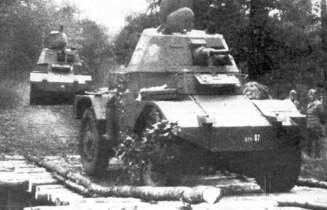
By the beginning of the Battle of France on 10 May 1940, approximately 370 completed vehicles were available, of which were allocated to reconnaissance units; each of the Army Cavalry’s three armoured divisions, the Divisions Légères Mécaniques (DLM), were equipped with 40 armoured cars, four radio variants and a reserve of four vehicles for a total of 144; each of the Army Cavalry’s light divisions, Divisions Légères de Cavalerie, each had a squadron of 12 AMD.35's, a radio variant and a reserve of four for a total of 85; the motorised infantry division’s GRDI’s, of which there were seven, each had 16 vehicles, for a total of 112 vehicles. After the beginning of the Battle of France, several ad hoc units were formed, including the 32e GRDI with five Panhard 178s and the 4e DCR with 43.
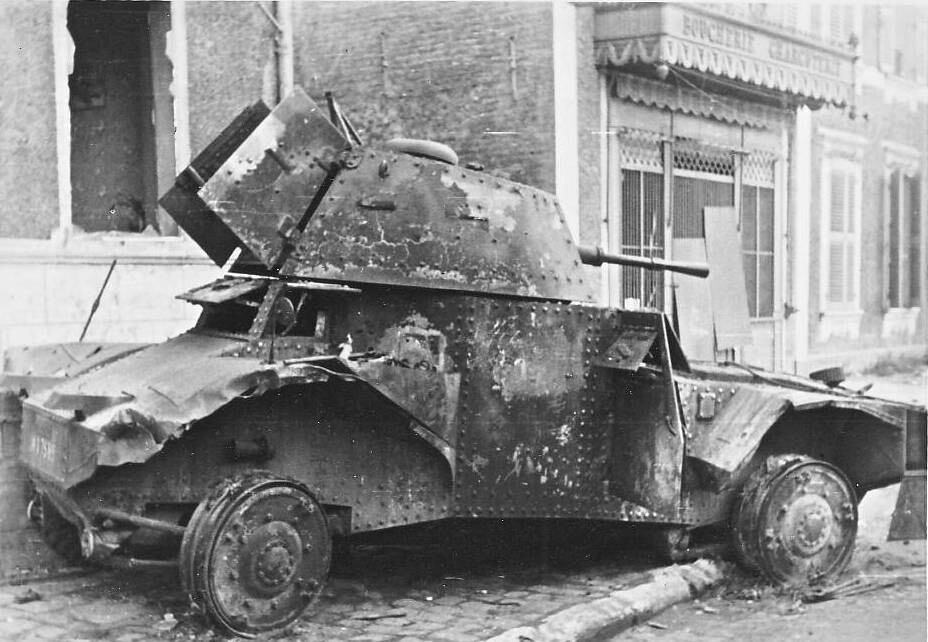
During the Battle of the Netherlands, 1DLM aimed to use their Panhards to maintain contact with the Dutch Army. During the 32 hours from the beginning of the battle on 10 May 1940, the Panhards of group Lestoquoi covered over 200km, reaching the city of Den Bosch on the following afternoon. After successful skirmishes with German armoured cars, they withdrew to follow the Dutch in retreat. Asked to assist the Dutch infantry in an attack on the southern bridgehead of the Moerdijk bridges, held by German paratroopers, Lestoquoi’s commander hesitated under the assumption that the bridgehead would prove too much for the Panhards. While they were immobile at the time, Stukas attacked them, disabling one vehicle and causing a quick withdrawal.
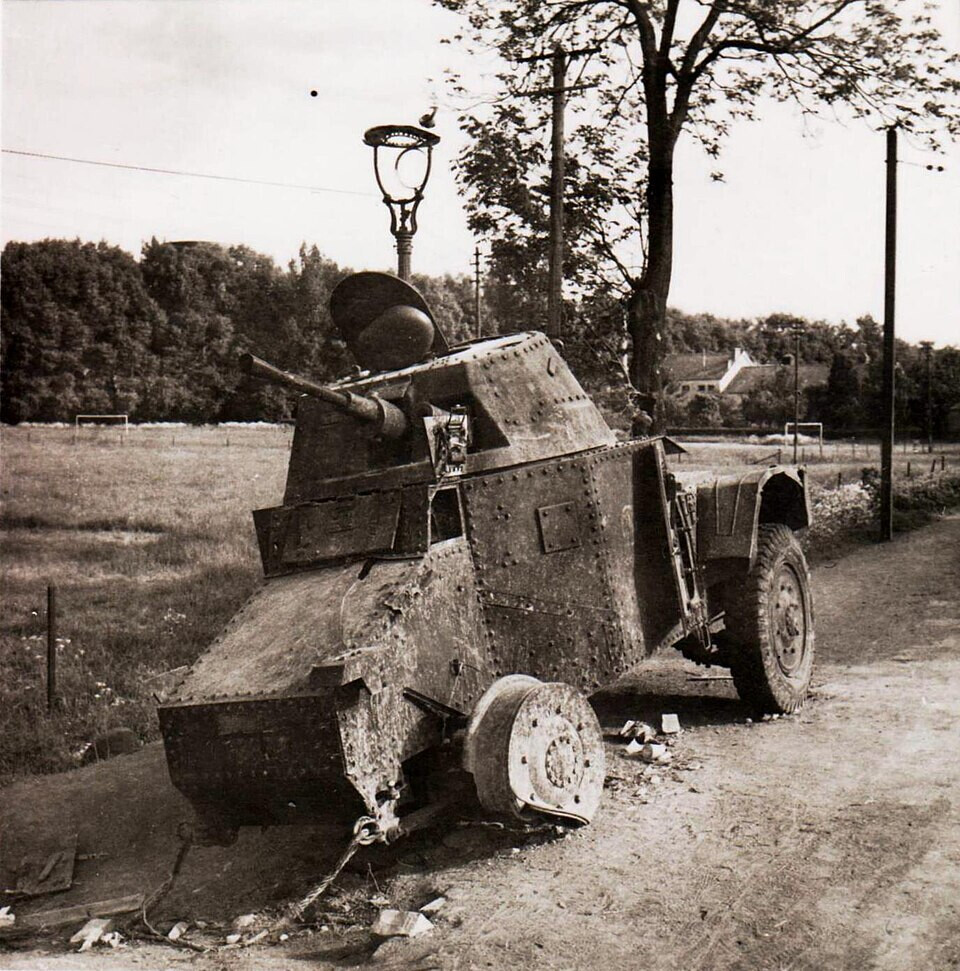
The other two DLMs hurried to prevent the advance of the 3rd and 4th Panzer Divisions following the quick fall of Fort Eben-Emael. They successfully delayed them until the Battle of Hannut in Belgium, the largest tank battle of the campaign, at which they engaged German reconnaissance vehicles and suffered little to no damage.
Of Voiture 47, it saw action with the 1er Régiment d’Artillerie de Montagne on 15 June 1940 when it, as part of a patrol of which it led, defended the bridge over the river Yonne et Etigny, destroying two German “heavy tanks” (believed to be either Panzer 38(t)'s or Panzer IV’s) with three shells and assisting the patrol in the destruction of a column of vehicles. Voiture 47 suffered multiple unidentified hits to the turret, though none penetrated. It was destroyed by its crew, along with a large portion of the unit’s equipment, on the morning of 17 June at Châtillon-sur-Loire, as the bridge they had planned to cross over the Loire to defend its southern banks had been destroyed to prevent a German crossing.
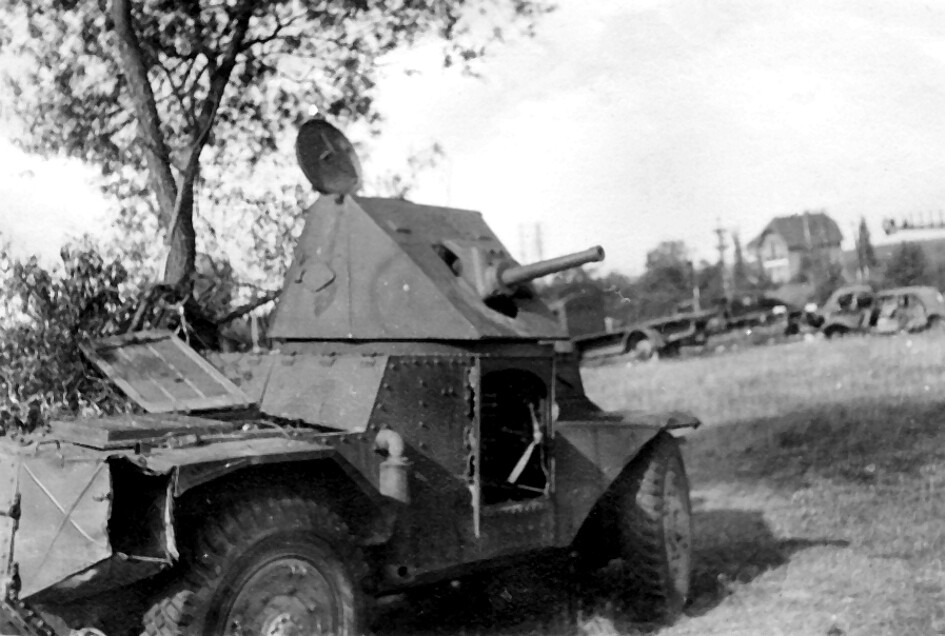
Following the liberation of France, 1e Groupement Mobile de Reconnaissance of the French Forces of the Interior would, among many other vehicles captured from German forces, use two AMD.35s. One was the standard variant described above, while the other was a version modified by the Germans to fire a 5cm KwK 39 L/60 in an open-topped turret.
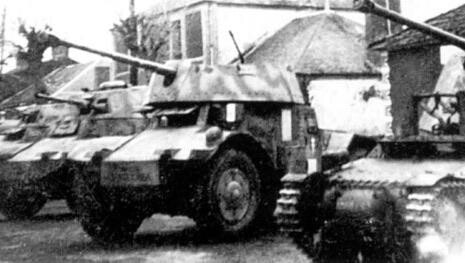
In late 1944, a new turret was designed by Fives Lille and designated the FL1. Its cylindrical form allowed it to install the 75mm SA 45 L/32 gun. The Panhard 178B, as it was later named, was fitted with a new four-cylinder engine and the EM3/R61 radio and began production in Firminy. An initial order for 150 was made on 5 January 1945 and confirmed later that year on 31 July, though it was decided before manufacture to fit it with the 47mm SA35 and a machine gun. 414 of these were built. This variant was used in France, Syria, Tahiti, Madagascar, and Vietnam, with its last use by France occurring in Djibouti in 1960 by the 15e Escadron Blindé d’Infanterie de Marine; it remained in Syrian use until the February 1964 Damascus Uprising.
Axis Deployment
Due to their performance and suitability under German doctrine, especially when compared to the Sonderkraftfahrzeug (Sd.Kfz.) 222, captured AMD.35s were immediately pressed back into service by the Germans during the Battle of France.
Many of the captured examples described below were later refitted with the German FuG 10 or FuG 11 radios due to the importance of radio usage in German doctrine, unlike French examples where only platoon and squadron leader vehicles were equipped with radios.
Approximately 190 Panhards, most of them new, were issued to German reconnaissance units for use during Operation Barbarossa in 1941 as the Panzerspähwagen P204 (f), with the radio variant being designated Panzerspähwagen (Funk) P204 (f); aside from the 2nd SS Panzer Division Das Reich, 3rd SS Panzer Division Totenkopf and police units, the Panzerspähwagen P204 (f) was primarily used by the 37th and 92nd armoured reconnaissance battalions under 7th and 20th Panzer Divisions respectively. 107 Panhards were lost that year, with thirty still in use on the Eastern Front as of 31 May 1943, some of which were fitted with spaced armour.
Additionally, a single example is known of an AMD.35, likely on the Eastern Front, with the mantlet and gun converted to use the Soviet 45 mm tank gun model 1932 (20-K). It is believed, based on a single known image unearthed in 2020 (shown below), that it would be entirely possible to equip the APX3B turret with such a gun; however, such a conversion would reduce the ammunition stowage and may have required the removal of the standard French 7.5mm MAC 31 machine gun.
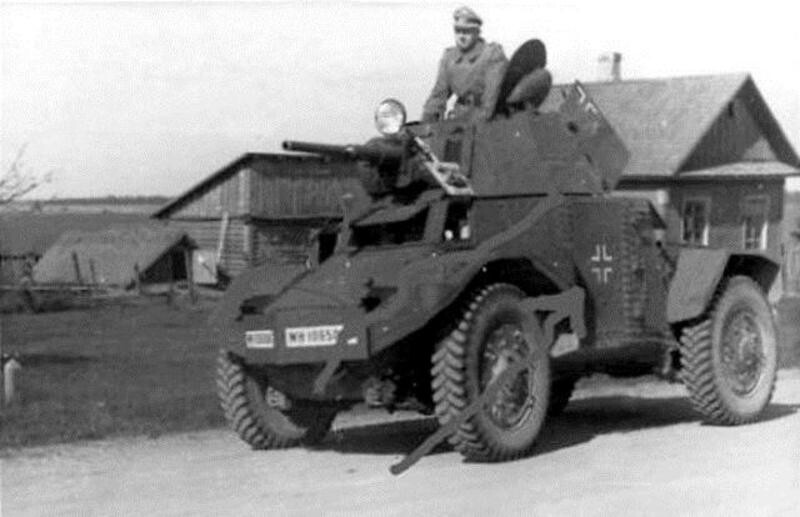
It is believed that the conversion would prove beneficial in an infantry support role as, while there was never any production for high-explosive shells for the 25mm Hotchkiss-equipped AMD.35s, there was a bountiful supply of high-explosive shells for the 45mm 20-K; this is however the only benefit, as the converted gun only has a slightly higher performance than the standard 25mm. While both guns would see success against the Soviet T-26s or BT tanks, they would either struggle to or fail to penetrate a T-34 or KV.
It is also believed that it would not make logistical sense to perform a conversion. Due to lengthening supply lines, it may have become easier to source shells for the 45mm 20-K, shells were still being produced for the 25mm Hotchkiss at that time; it is known that the standard 25mm Hotchkiss-armed AMD.35s remained fully equipped right to the gates of Moscow, with an AMD.35 of Das Reich reaching the outermost bus terminal outside the city.
It is therefore possible that such a conversion was necessitated by damage to the 25mm Hotchkiss, such as by enemy fire or malfunction.
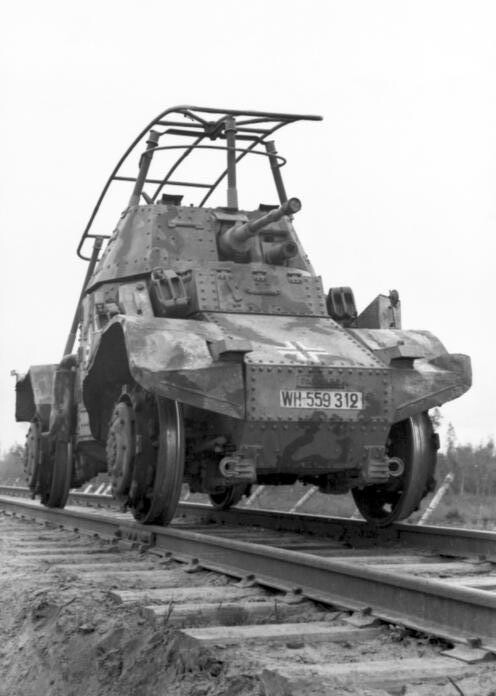
Following the Battle of France, several were fitted to railway cars on armoured trains to protect railway lines. 43 Panhards were later modified to operate independently on railroads, primarily against partisans in the Balkans; designated Schienenpanzer, they were equipped with specialized wheels to run on tracks and fitted with large radio frame aerials.
Of the captured French command variants, some retained their former roles, while others were provided to Propaganda Kompanies and often issued to war correspondents under the Das Reich and the 1st SS Panzer Division Leibstandarte SS Adolf Hitler; armed with an MG34, they were equipped with a German radio set, cameras, and sound recording equipment.
In November 1942, the Italian Army captured two Panhards, which they used until September the following year in the 224th Coastal Division. Between November 1942 and the summer of 1943, some AMD.35s were converted to use either the 5cm KwK 38 L/42 or 5cm KwK 39 L/60 gun in an open-topped turret and used for garrison duties.
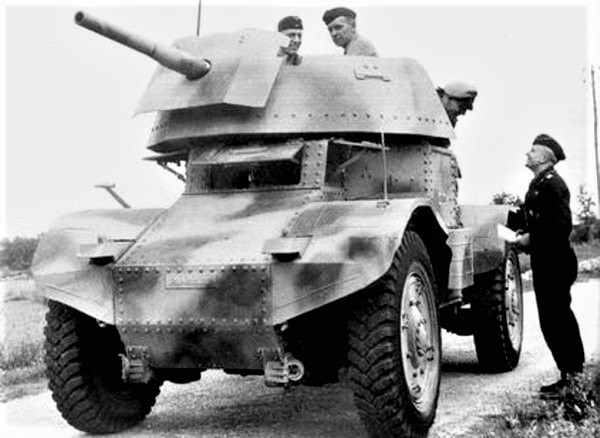
Of unknown date and number, some were re-armed with the 2cm KwK 30 L/55, notably used on the Panzer II family, while others were converted to serve as turretless command vehicles. Another was a vehicle equipped with a 7.92mm MG81 turret taken from a German bomber, which was used to protect Luftwaffe Column 143.
As of June 1943, 33 AMD.35s of unknown variant were used by units on the Western Front.
Vichy Deployment / Camouflage of Materials Usage
Under the terms of the armistice, Vichy France was provided with 64 Panhards, stripped of their primary armament but equipped with an additional machine gun. Engineer Joseph Restany, the engineer who originally designed the Renault turret fitted to Voiture 47, was recruited to the Vichy regime’s Camouflage du Matériel (CDM), a secretive organization formed for the creation of hidden weapons caches, by its founder, Colonel Emile Mollard, in April 1941. The organization mostly hid infantry equipment, but also hid armoured vehicles.
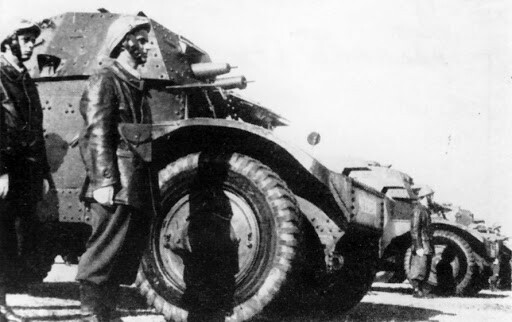
From April, under the false name J-J. Ramon, he designed new turrets based on the original Renault design to be fitted with either the 47mm SA 35 or the original 25mm guns in his hotel room at the Grand-Hôtel de Castres. Some were more advanced thanks to the increased development time, though others were more rudimentary due to the secrecy of the project and a lack of materials.
Production was concentrated around Castres-sur-Agout, a rural area of southwestern France with numerous mechanical workshops, with the town of Castres housing an artillery park led by a colonel allied to Mollard that housed some un-turreted Panhard 178s. Though Restany initially wanted to find an industrial designer to fabricate the turrets, it proved impossible to find one in the area.
The turrets were armoured by 20mm plates for vertical surfaces and a 10mm top with both a rear and top hatch. Though initially not armed with a machine gun, some of the turrets were later fitted with the FM 24/29 machine gun to the right of the main gun. 45 new turrets were produced by 28 January 1942, approximately 20 of which had the 47mm SA 35 and the rest had the 25mm gun, which were fitted to hulls hidden from the Germans during the evacuation to Southern France.
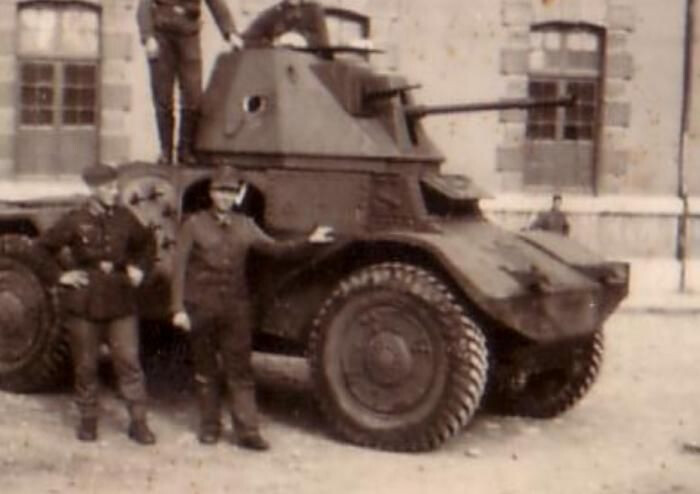
A wooden mock-up was first created in May 1941 in the Castres workshop of Henri Delmas, who would later take orders for the mechanical pieces needed for the turrets and subcontract to others the manufacture of various turret elements. He lent one of his workshops in the town of Mazamet, near Castres, to Restany and the CDM; this workshop was used to receive the armour plates and turret races and to manufacture some of the turret races, the manufacture of which was complex and performed with rudimentary machinery.
The production of the races took place in multiple other workshops as well, including in Saut-du-Tarn and Saint-Juéry, with the necessary ball bearings being manufactured at Saint-Etienne before being delivered to the Castres area. Welding electrodes were brought in from Toulouse, while the armour plates for the turrets were snuck out of the steelmaking plant at Saint-Chamond, Loire, which was under heavy surveillance; the cutting of the plates was performed in the Mazamet workshop.
Parts requiring the use of mechanisms, a foundry, or a forge were provided by Delmas' subcontractors. The turrets were initially assembled in a workshop on the Mediterranean coast in Saint-Cyprien, near the Spanish border, though this was changed mid-production to a workshop built in an abandoned mine in Griffoul. All the transportation needed for the project was provided by the CDM’s truck fleet.
The first turret was finished satisfactorily on 1 October 1941, with the only change in later turrets being the application of a shield to seal potential gaps between the gun and the turret. Nine turrets were completed each month, with the final turret being completed on 28 January the following year. Some issues occurred during production, with Restany at one point writing that hulls hidden in Châteauroux had been “tweaked” by “amateurs”, causing difficulties in the mounting of the turrets. Though he did not note what changes had been made, he would later write that, at Montauban, the hulls had a smaller turret ring. Though not writing why or if he even knew why, it has been later theorized that these were hulls intended for colonial use, with a possibility that four intended for such service lacked turrets at the time of the evacuation of Paris and the Panhard factory.
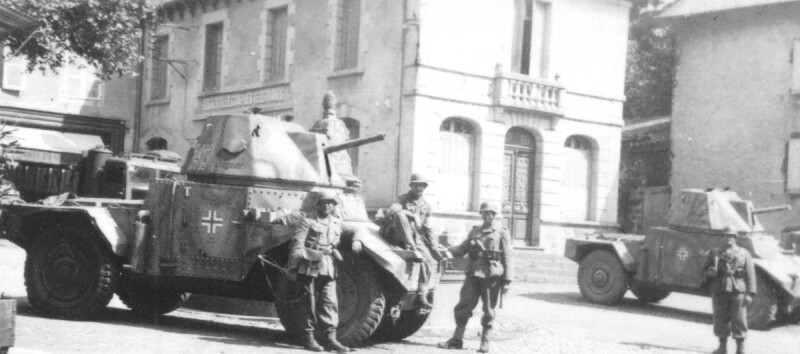
Once finished, each was delivered to units with turretless Panhard 178's by a workshop truck similar to those used by the French Army prior to the invasion. Despite being the centre of manufacturing, Castres was reportedly the most risky place to deliver to; Restany at one point wrote that, during the delivery of two completed turrets, the truck stopped, later having six cars pull alongside it. This convoy was transporting the German control commission of Toulouse on a tour of the area. The commission reportedly chatted with the drivers of the truck, but did not inspect it.
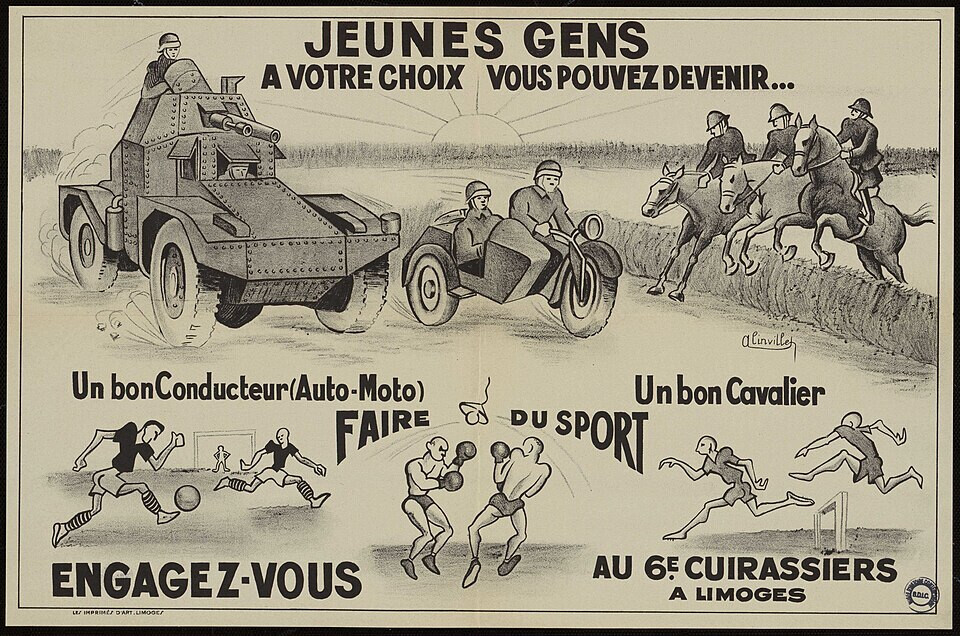
The regiments that received completed turrets included the 2nd Dragoons in Auch, the 3rd Dragoons in Castres, the 8th Cuirassiers in Châteauroux, the 8th Dragoons (operating in Issoire but with the turretless hulls in Clermont-Ferrand), the 6th Cuirassiers in Limoges, the 11th Cuirassiers in Lyon, the 7th Chasseurs (operating in Nîmes but with the hulls in Marseille), and the 3rd Hussards in Montauban.
The vehicles were partly hidden or dumped in lakes when Germany annexed the entirety of France in November 1942, though some were used by the German Sicherungs-Aufklärungs-Abteilung 100, later renamed Sicherungs-Aufklärungs-Abteilung 1000 in February the following year, which was established in December 1943 under the military commander of France and split between an armoured reconnaissance company and a security company. Some were also potentially later taken for use by the resistance in 1944.
- English Wikipedia, Panhard 178
- Key Military, French Protection
- Tanks Encyclopaedia, Panhard 178 CDM
- Tanks Encyclopaedia, Panhard 178 with Renault 47mm Gun-Armed Turret
- Tanks Encyclopaedia, Panzerspähwagen 204(f) with 45 mm 20-K Cannon
- Axis History, Captured & converted French vehicles in German service (Internet Archive link used to prevent linkrot)