
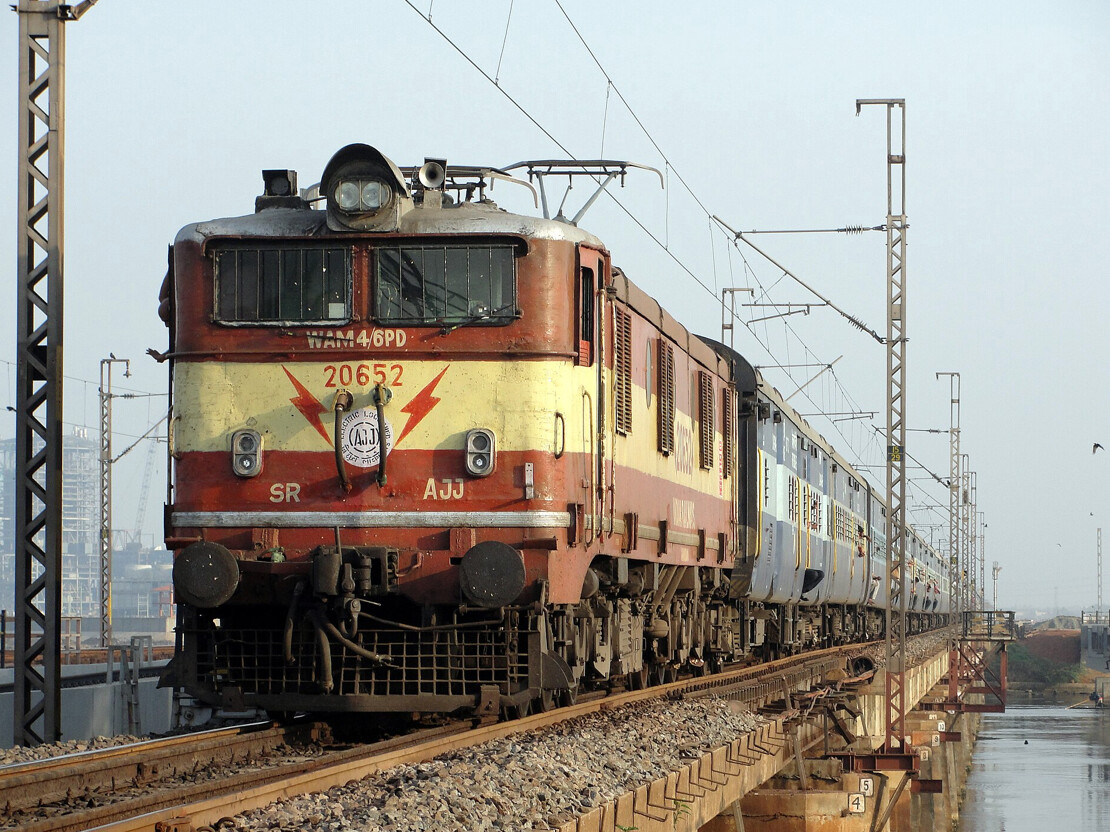
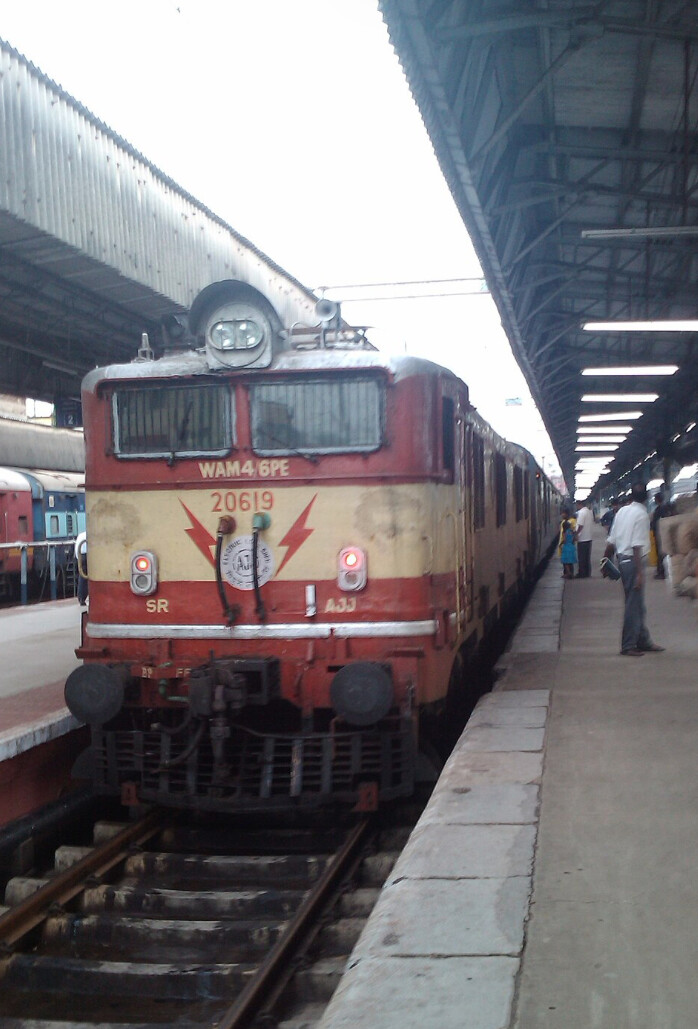
The WAM-4 is an Indian locomotive. It was developed and built by the Indian manufacturer Chittaranjan Locomotive Works (for short: CLW) and the Research Design and Standards Organization (for short: RDSO) between 1970 and 1983, with 500 units produced. Its name is composed of W for wide gauge, A for alternating current, and M for mixed, indicating that it can be used for both freight and passenger trains, just like the Br 52 and the EMD. Finally, the 4 indicates that it is the 4th generation of the WAM series, similar to the EMD. She served with the Indian Railways for almost fifty years until she was retired between 2005 and 2020; nevertheless, she was one of the most successful Indian locomotives.
In-Game
The WAM-4 can be found multiple times on the Paradesh map along the railway line, both as a stationary object. The train route stretches across almost the entire map; it starts at C1 and continues via D — F 2, G 3-6, F — B 6. These are distributed throughout the entire route.
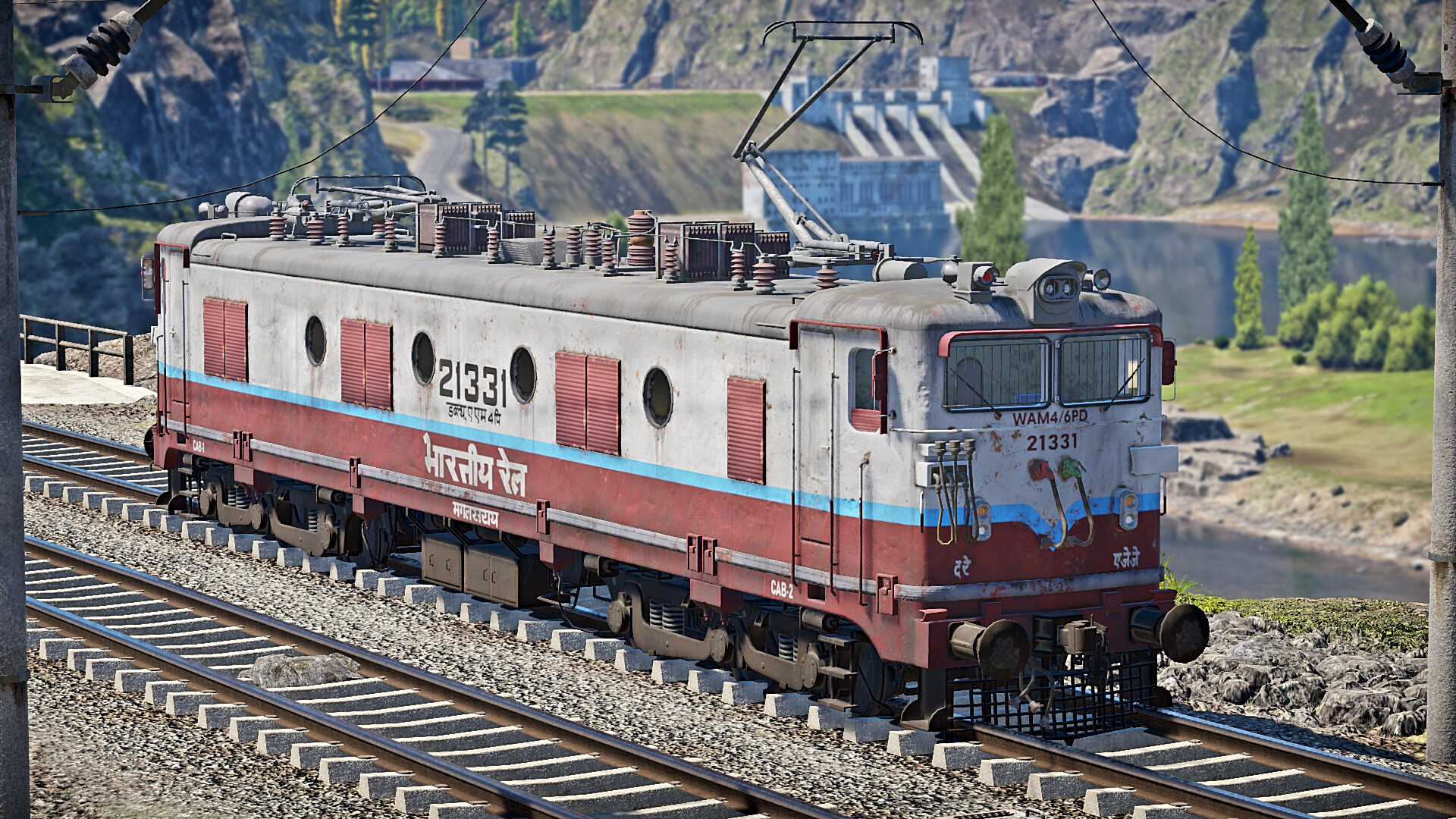
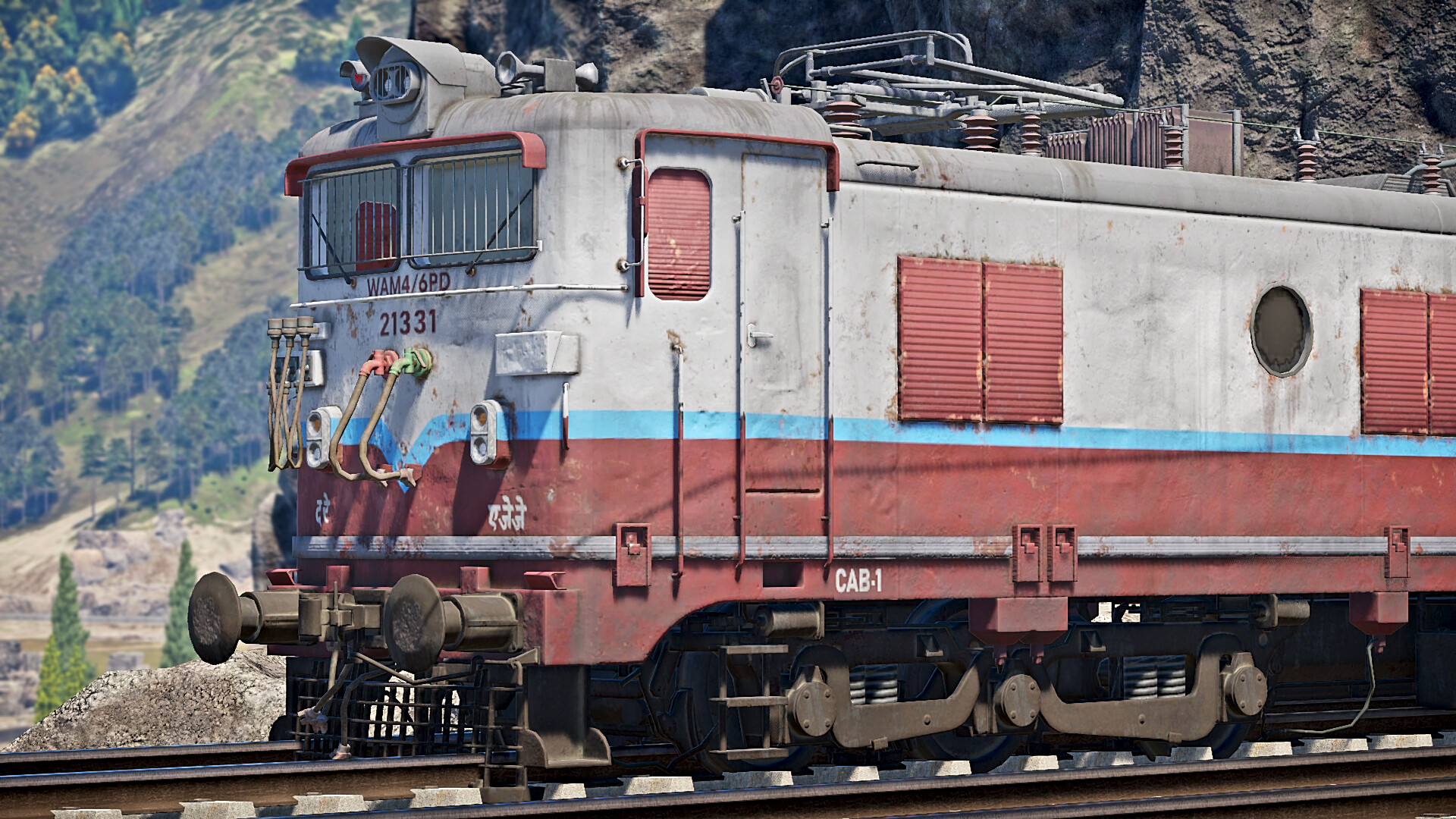
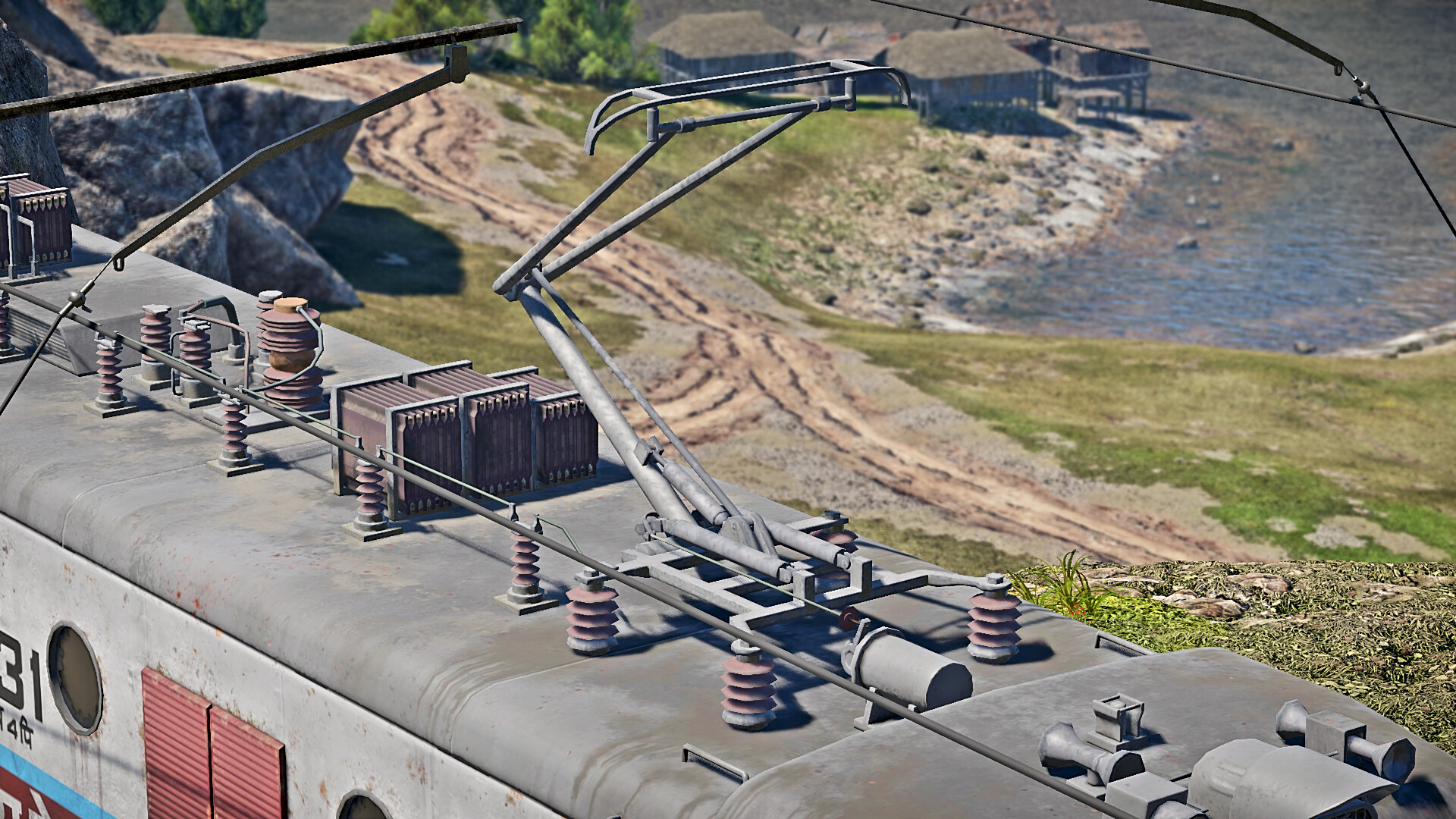
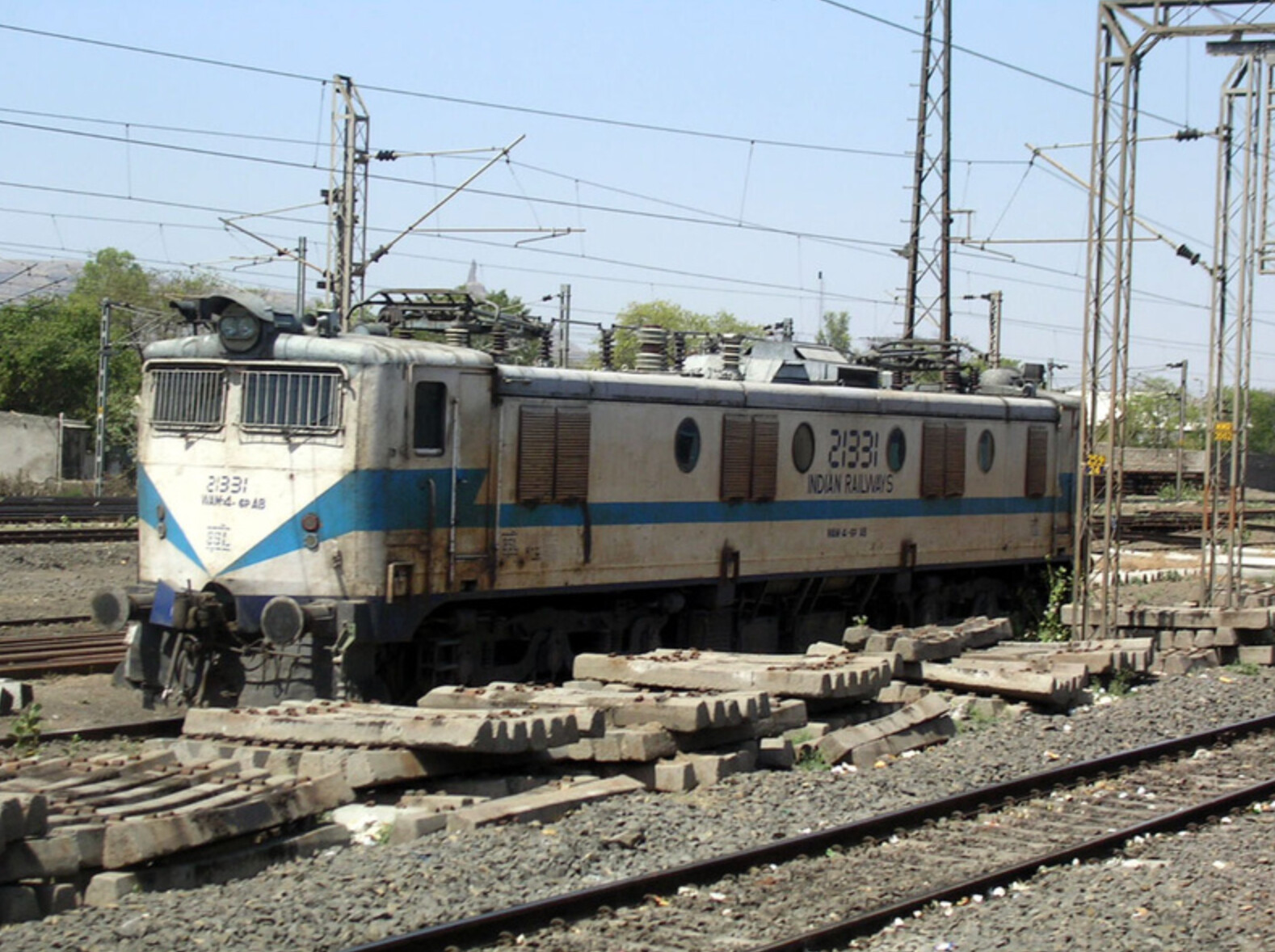
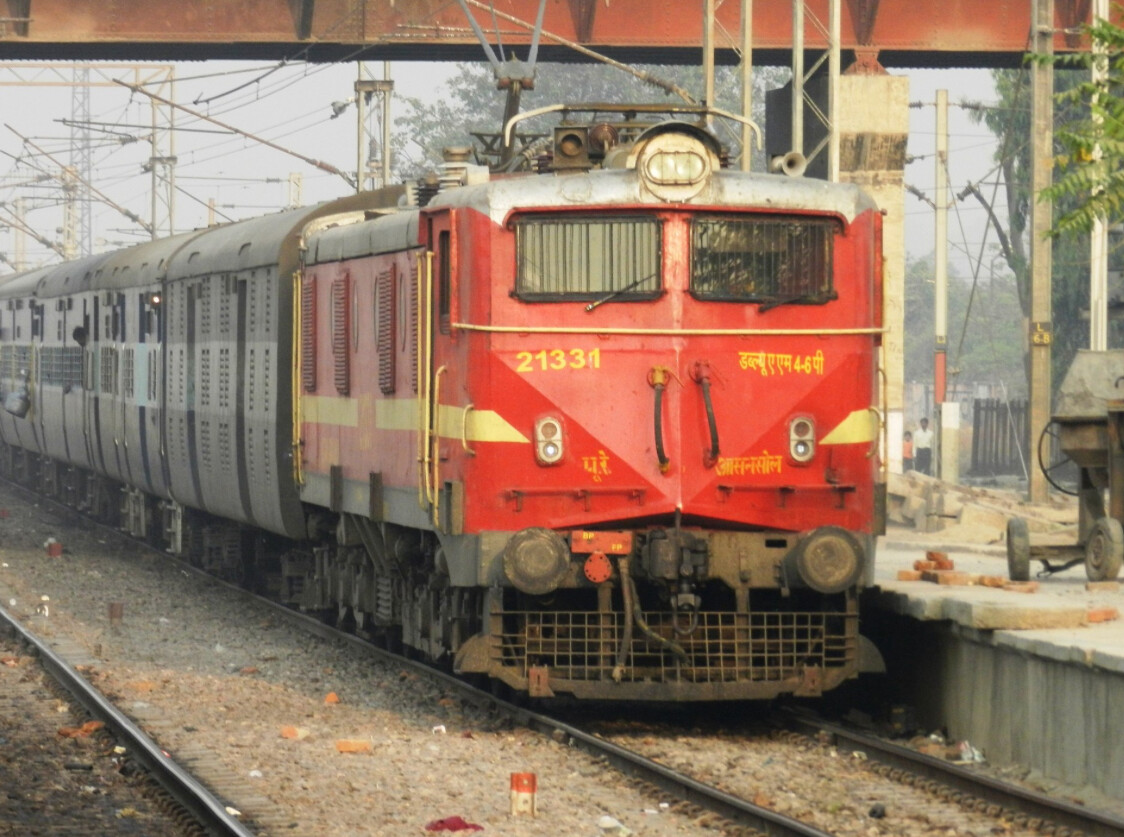
Another detail about the model in the game is that it’s the correct version, just like the original “21331”; it’s a WAM-4 6P D (more about the variants below).
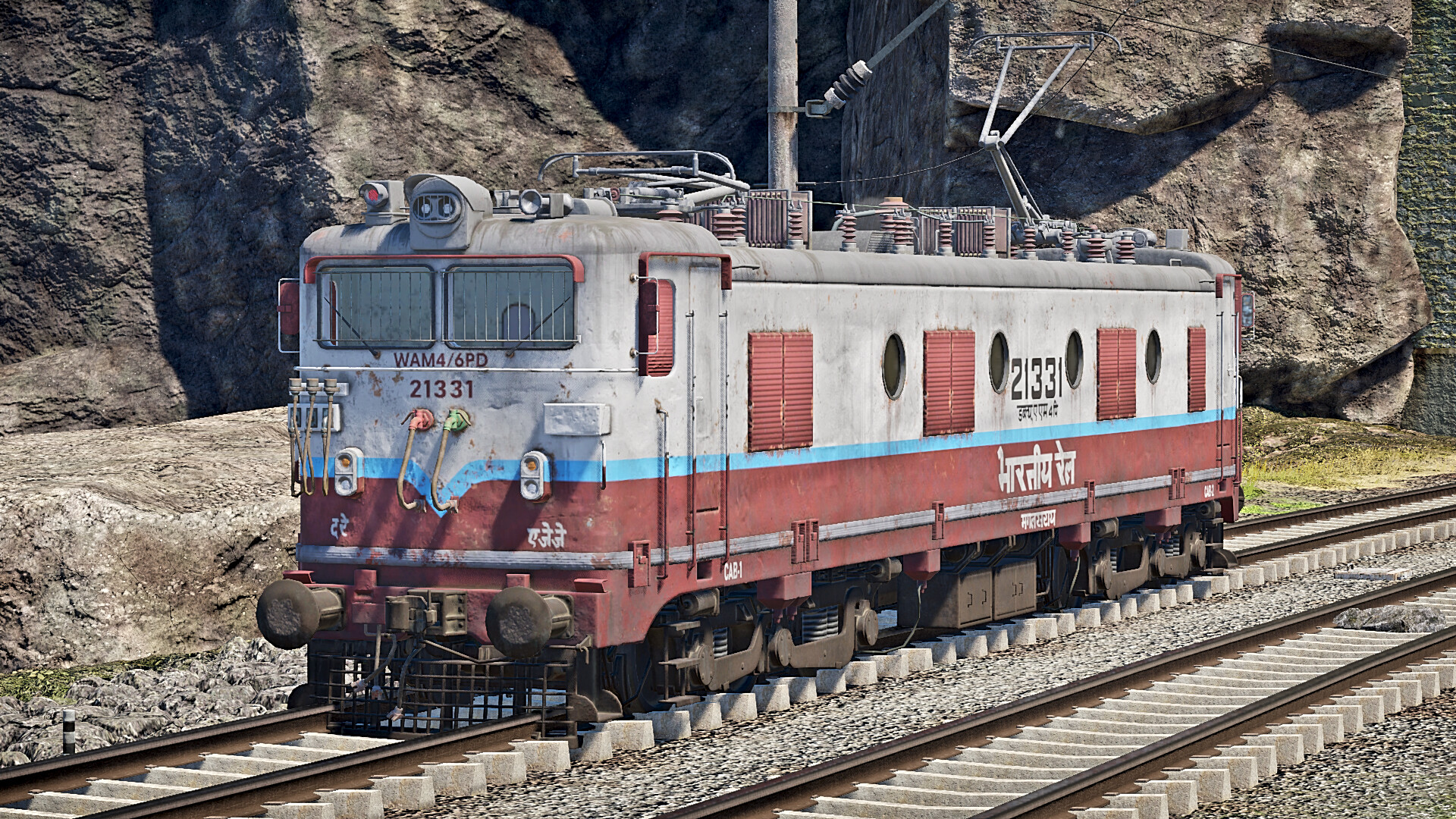
Note: The locomotive number shown in the game on the WAM-4 really existed; in the game it is shown in a livery called the Barbie doll design, which is supposed to look futuristic.
Technical Data
| Height | 4.16 m |
| Width | 3.05 m |
| Length | 19.97 m |
| Numbers | 500 |
| Years of construction | 1970 — 1983 |
| Mass | 112.8 t |
| Engine | 6 × Alstom/CLW TAO 659A1 |
| Power | 3,640 hp |
| Power System | 25 kV at 50 Hz |
| Top Speed | 120 km/h |
| Track Gauge | 1,676 mm |
| Wheel Arrangement | Co’Co’ |
| Wheel diameter | 1.092 mm |
Development
In the 1970s, Indian Railways sought to develop a new electric locomotive to replace the WAM-1, 2 & 3. The WAM-1, 2 & 3 locomotives were to be replaced because they exhibited several design flaws that made them unsuitable for use in India. Additionally, high production numbers were desired to facilitate the planned 1990 phase-out of steam operations in India. Furthermore, by that time, large parts of India’s rail network would have been electrified.
The WAM-4 was the first of its series to be designed directly in India, namely by the Research Design and Standards Organization (RDSO). Its predecessor, the WAM-1, was designed and built by Krupp, Krauss-Maffei, SFAC, and La Brugeoise et Nivelles (100 units). The WAM-2 & 3 were designed and built by Mitsubishi, Hitachi, and Toshiba (36 and 2 units).
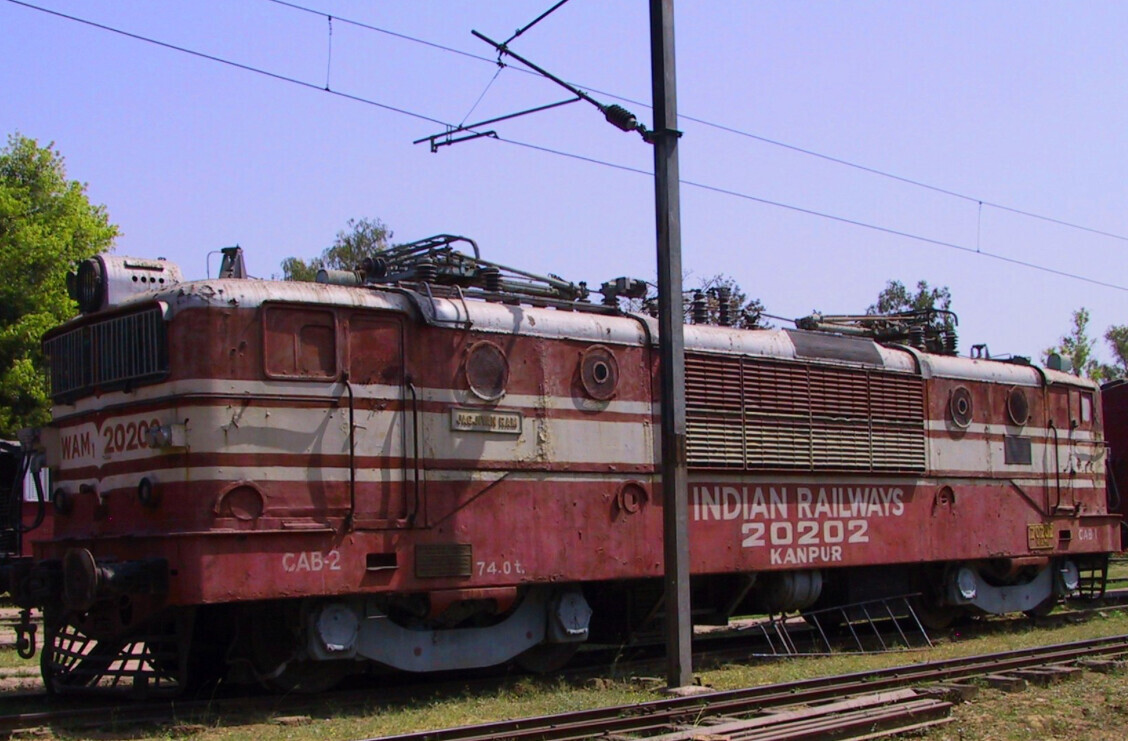
Accordingly, the RDSO designed the WAM-4 taking the following points into account:
- Asymmetric three-axle ALCo bogies, as used on the WDM-2, instead of the two-axle bogies of the earlier WAM series. This was intended to give the locomotive better traction compared to its predecessors.
- Rectifiers with silicon diodes.
- Control of the traction motors by regrouping and applying field weakening.
- Components of the auxiliary drives mostly from Indian manufacturers: air compressors from Westinghouse and Kirloskar, fans from SF India, and vacuum pumps from the English manufacturer Northey.
- Compressed air brakes and rheostatic brakes for the locomotive combined with vacuum brakes for the train.
- Multiple traction of up to four units.
Also new was the installation of modern silicon rectifiers, which converted the alternating current stepped down by the transformer into direct current for the six traction motors more reliably and with less maintenance. Furthermore, their series and parallel grouping was redesigned to ensure better and more efficient starting tractive effort and speed regulation. For example, in a six-motor series connection (one motor per axle per locomotive), the motors were connected in series to distribute power evenly during acceleration. In parallel connection, all traction motors operated simultaneously to gain speed. In summary, the series connection allowed the locomotive to distribute power evenly and prevent overloading under heavy loads during acceleration, while the parallel connection allowed the locomotive to reach higher speeds.
Variants
Over a period of 13 years, 500 units of the WAM-4 were built in 15 different versions. These were:
Note: I am going through the different versions in alphabetical order, even if a few are only a further development, are identical but have minor changes or have the same task area.
- WAM-4: The basic version of the WAM-4, as mentioned, had the capability to operate all traction motors individually or in groups. The standard gear ratio was 15:62. The locomotive itself, in its basic configuration, used its own air and electronic brakes, while the train brake (for the entire train) used a vacuum brake. It had no specific area of operation, as it was used in mixed applications.
- WAM-4B: It was the freight train variant of the WAM-4. Technically, it was largely identical to the basic version, but was designed more for high tractive effort at medium speeds. Its gear ratio and operational design made it particularly suitable for heavy freight trains. Later, this version became the basis of the WAG-5 freight locomotive family; some were accordingly reclassified as WAG-5B.
- WAM-4D: It was equipped with compressed air brakes. While the basic version primarily used vacuum brakes, this variant could already operate trains with compressed air brakes. Only the braking system changed, not the motors or the power control.
- WAM-4DB: This was a further development of the D version with dual brakes, meaning the ability to use both vacuum and compressed air brakes simultaneously, which made it more versatile in its use.
- WAM-4E: The WAM-4E completely dispensed with vacuum brakes and was designed exclusively for compressed air braking. This simplified the braking system and reduced maintenance, but made the locomotive less flexible in terms of rolling stock.
- WAM-4G: The WAM-4G, like the WAM-4B, was intended for freight transport, with the “G” standing for “Goods”. The main difference to the WAM-4B lies primarily in its official operational classification rather than in fundamental technology. While the WAM-4B later transitioned directly into the WAG-5 development, the WAM-4G remained closer to the original WAM-4 design.
- WAM-4H: The H received a Hitachi traction motor instead of the Alstorm motors installed in the original version. Electrically, the system remained the same, but the motor characteristics, maintenance requirements, and spare parts availability differed.
- WAM-4P: The P version was the passenger train version of the WAM-4, where “P” stands for “Passenger”. It had a higher speed, achieved through optimized gearing, which made the locomotive more efficient at high speeds, but it had slightly less starting tractive effort than the freight versions.
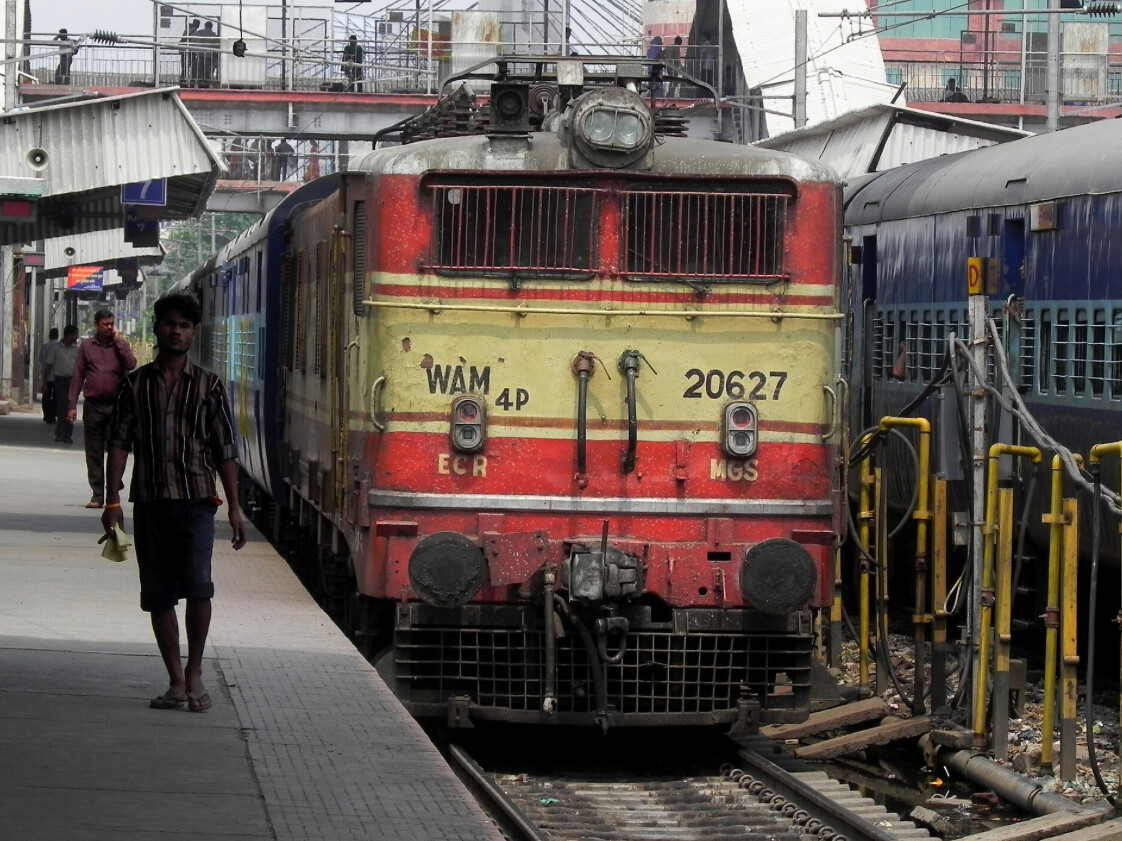
- WAM-4P D: The D version was equipped with dual brakes. This allowed it to pull more modern passenger cars and also made it more reliable in its braking power.
- WAM-4 2S3P: Two of the six traction motors were connected in direct group circuits so that they shared the voltage; this meant higher traction and controlled power build-up.
- WAM-4P DB 3P: It was the combination of the 2S3P motor grouping with the dual brake technology for passenger locomotives.
- WAM-4 6P: Here, all drive motors ran continuously in parallel, ensuring they all received the full available voltage. This further optimized the top speed, but at the expense of traction.
- WAM-4 6PE: It differed little from the 6P, except that it also received a compressed air braking system.
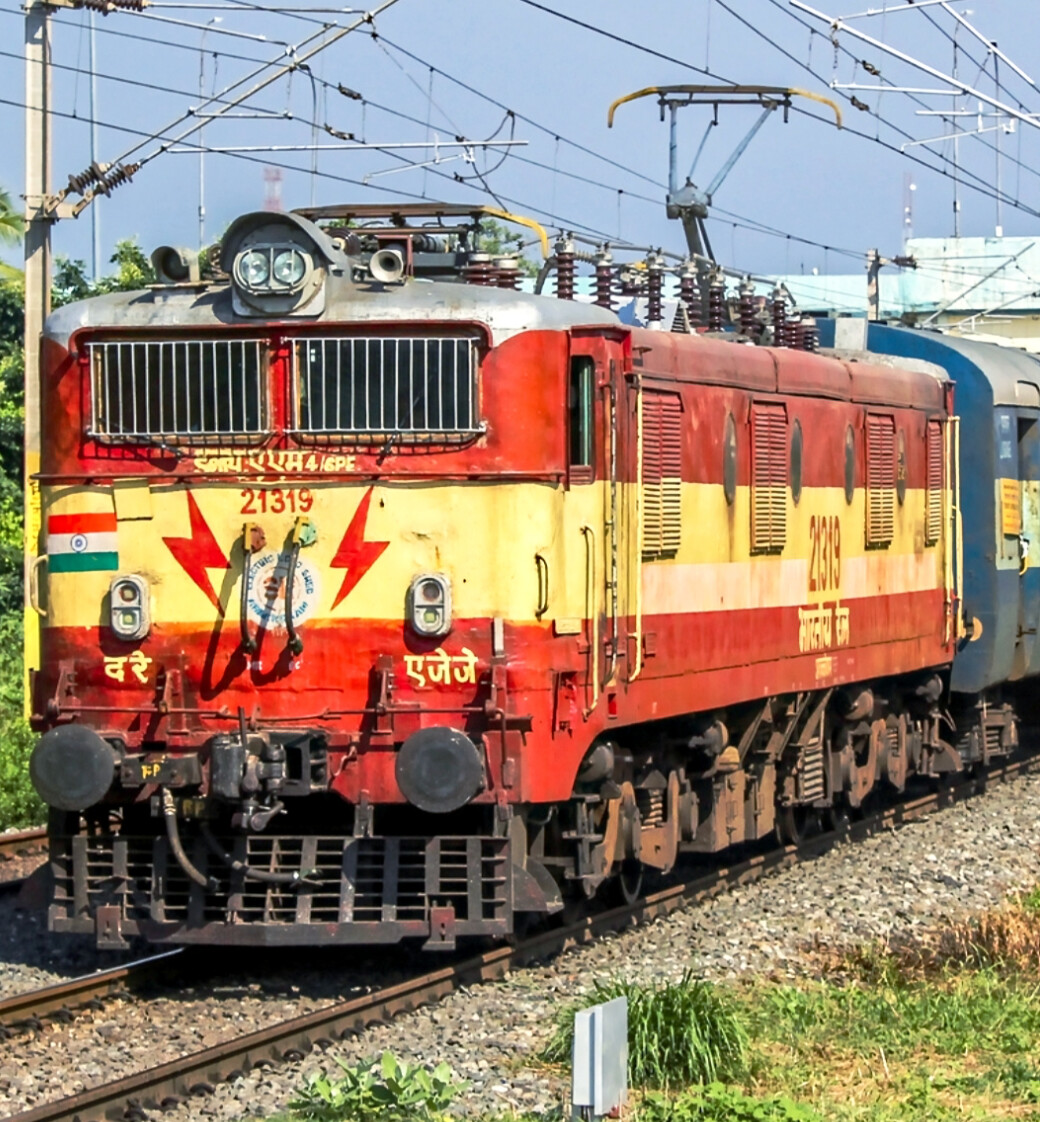
- WAM-4 6P D: It differed little from the 6P, except that it also received a dual brake braking system.
- WAM-4P DB 6P: In this version, the passenger version was combined with the sixfold permanent parallel connection of the drive motors with a dual brake system.
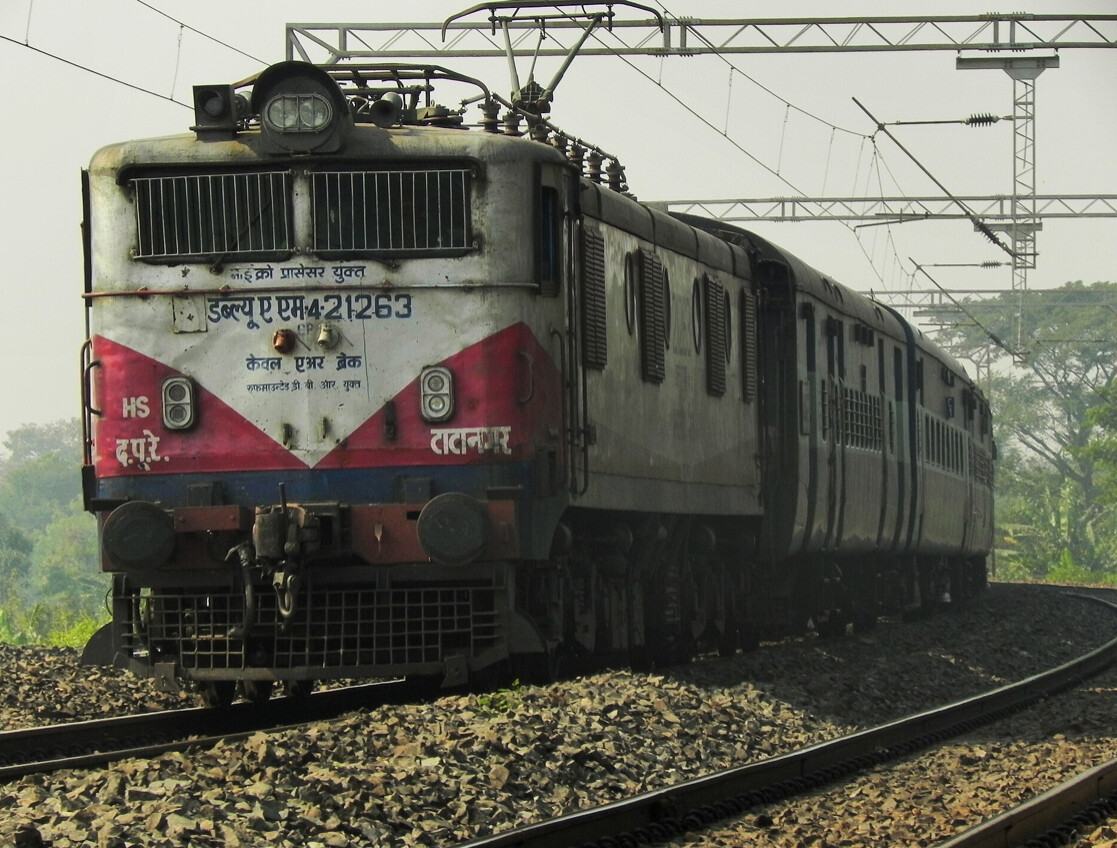
- WAM-4 6PDBHS: This was the high-speed version; it combined the dual brake and the 6P motor paralleling with a new gearbox ratio modified to 1:2.76 so that it could reach even higher speeds. The “HS” stands for “High Speed”.
- WAS-4: Locomotives 21380, 21385, and 21387 from the WAM-4 6P series were converted into shunting locomotives and renamed WAS-4. They were fitted with air brakes only and also received a modified gearbox ratio as well as equipment adapted for shunting operations. The “S” stands for “shunting”.
Fun Fact: Some locomotives even received their own names. Such namings took place on anniversaries, celebrations, or similar occasions. Some examples for the WAM-4 are
- WAM-4G, vehicle number: 20201, name: Rajatabha
- WAM-4, vehicle number: 20420, name: Sukh Sagar Naveen
- WAM-4P, vehicle number: 20615, name: Surubhi
- WAM-4 6P, vehicle number: 21320, name: Garuda
- WAM-4, vehicle number: 21380, name: Navchetna
- WAM-4 6P, vehicle number: 21399, name: Anant
Deployment
The WAM-4 was specifically designed for mixed use. As a result, it was used throughout India for passenger, freight, and mixed trains.
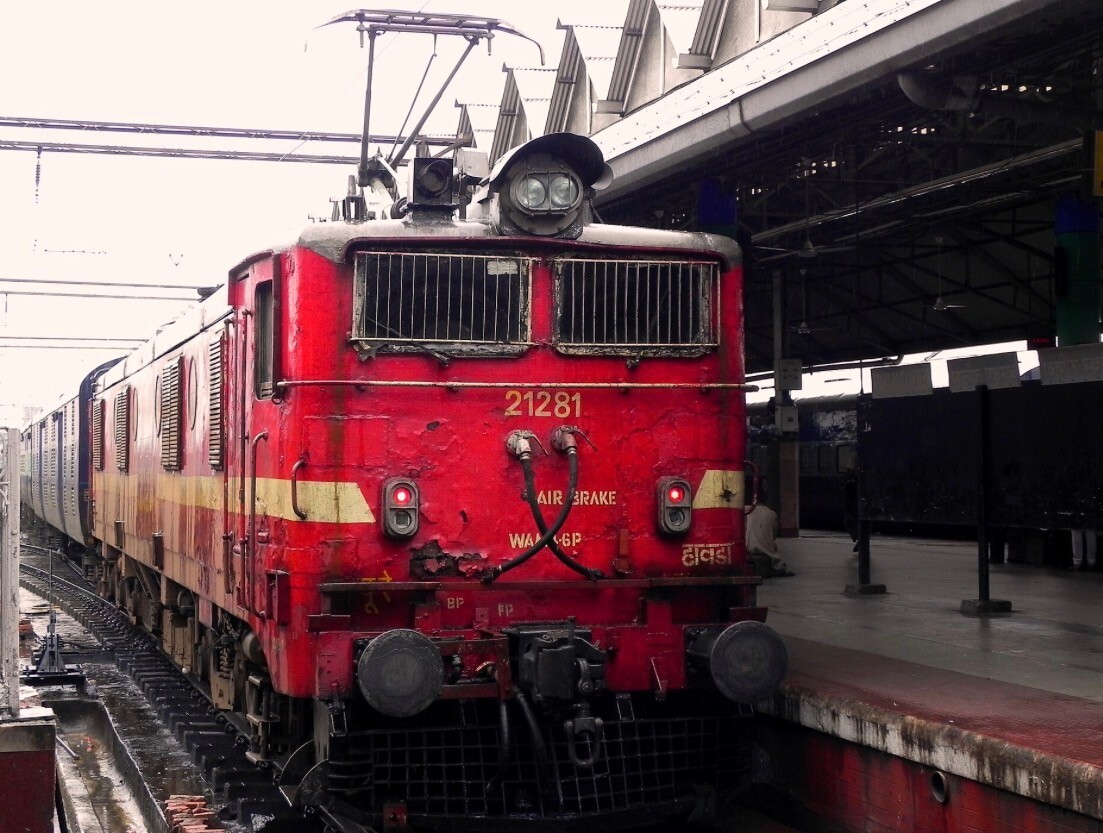
The Chennai Central–Mysore Shatabdi Express, on which the WAM-4 served as a passenger locomotive, comprised 6 stops and was 500 km long, running daily between Chennai and Mysore Shatabdi. The WAM-4 itself only pulled the train between Chennai Central and KSR Bengaluru station, where it was coupled to a WDP-4 or WDG-4 based in Hubli and a WDM-3 based in Tondiarpet, which then pulled the train to Mysuru station
The Bhopal Janata Express, on which the WAM-4 was also used as a locomotive for passenger trains in the 1980s and 1990s, ran between Bhopal Junction, or simply Bhopal Station, and Mumbai Central. Train service began in 1953 and ran daily from 1957. Later, the line was extended to Lucknow and finally, as the Lokmanya Tilak Terminus–Gorakhpur Kushinagar Express, to Gorakhpur.
However, the line was not fully electrified in the 1980s; only the northern section was in a condition suitable for electric locomotives in the early to mid-1980s. In 1984, during the Bhopal disaster, the WAM-4 was only in regular service on the already electrified northern sections of the Delhi main lines, even though the area around Bhopal itself was not electrified and therefore diesel locomotives were needed for the southern sections. The trains were then usually hauled by a WDM-2 diesel locomotive, at the latest from Agra station onwards.
The Mumbai Central–Okha Saurashtra Mail Express is another express train operating between Mumbai Central and Okha in western India. It runs from Mumbai Central to Okha, serving the states of Maharashtra and Gujarat. The train covers the 990 Km route in 17 hours and 50 minutes, making a total of 29 stops along the way. Prior to February 2012, the train was hauled by two WCAM-1 locomotives from Valsad between Mumbai Central and Ahmedabad Junction. For the remainder of the journey, a WDM-3A or WAM-4 locomotive from Ratlam or Vatva took over until the line was fully electrified.
Video
- [Wiki DE] IR-Klasse WAM-4
- [Wiki EN] Indian locomotive class WAM-4
- [Wiki EN] Bhopal Janata Express
- [Wiki EN] Chennai Central–Mysore Shatabdi Express
- [Wiki EN] Howrah–Delhi Janata Express
- [Wiki EN] Saurashtra Mail
- [24coaches EN] AC Electric Locomotives Roster: The WAM Series!
- [Egghof.com] WAM
- [The Indian Railways Fan Club EN] WAM-4 and Variants
- [The Indian Railways Fan Club EN] History of electrification
I would also like to thank Keebird for the great screenshots of the WAM-4 in the game.