
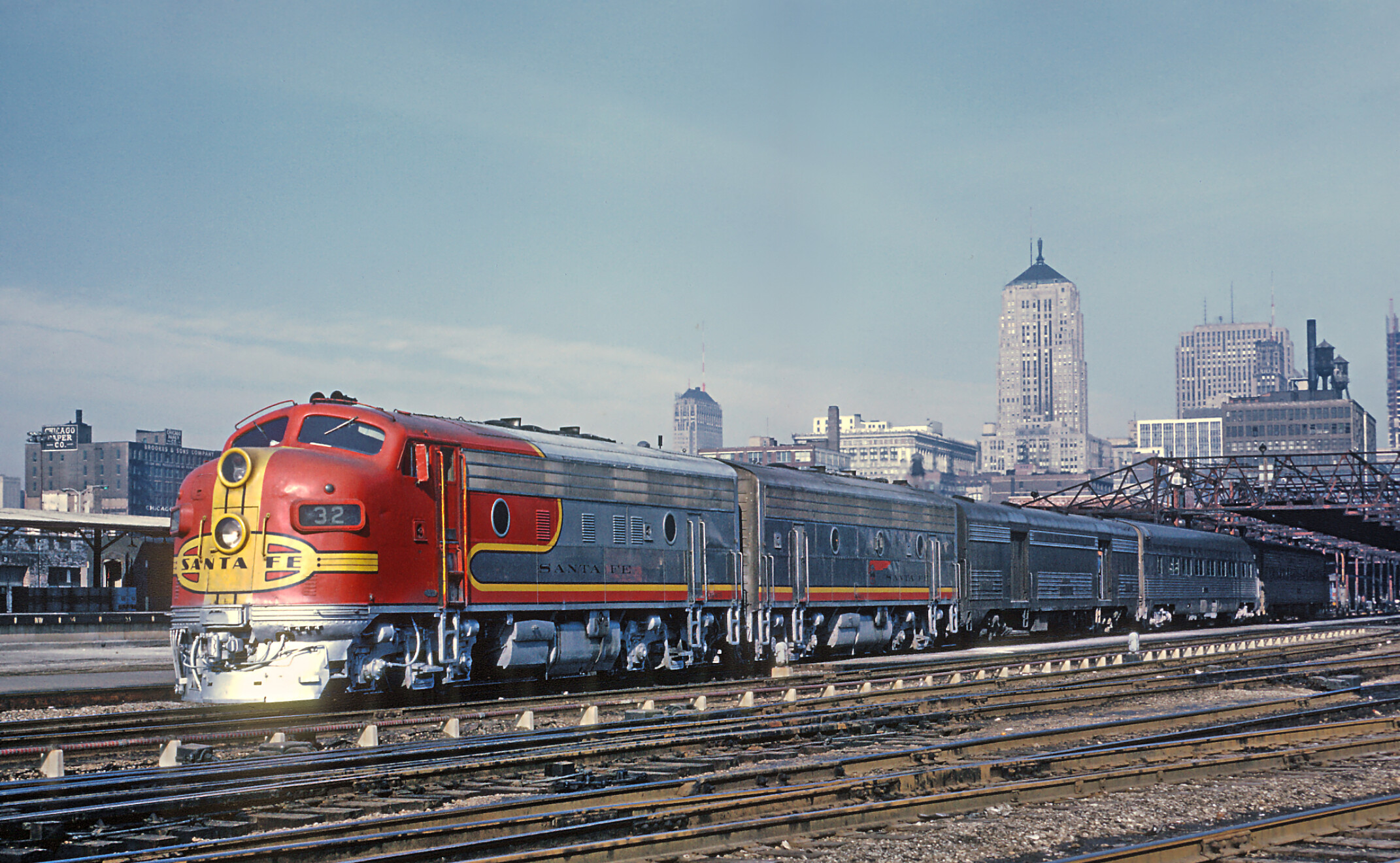
Today I’m going to tell you a little more about trains, but not the Br 52 this time. Today it’s about the EMD F series. The EMD F is an American diesel-electric locomotive from General Motors Electro-Motive Division. It was designed as a heavy freight locomotive, but it was also used for passenger trains. A total of 1,807 units were built between 1945 and 1949: 1,111 of type A and 696 of the cabless units of type B.
- In-Game
- Technical data
- Development
- Deployment
In-Game
The EMD F3 is easy to find in the game; it can be seen on the “American Desert” and “Spaceport” maps. The in-game version is near-identical to the real life EMD F3s; visually, only the second headlight is missing from the vehicle. However, a version with only one headlight also existed in real life. Nevertheless, the locomotive is easily recognizable in the game.
Note: In the game, all EMD F3 locomotives are depicted with passenger trains; they usually consist of a Type A locomotive with 6 passenger carriages.
On the American Desert map, the EMD F3 is represented twice: once as a stationary model at the station, located at point A on the left side of the map and hard to miss. The other train enters the map from sector G3 at the beginning of each battle, traveling to the station until it comes to a stop and remains there until the end of the battle.
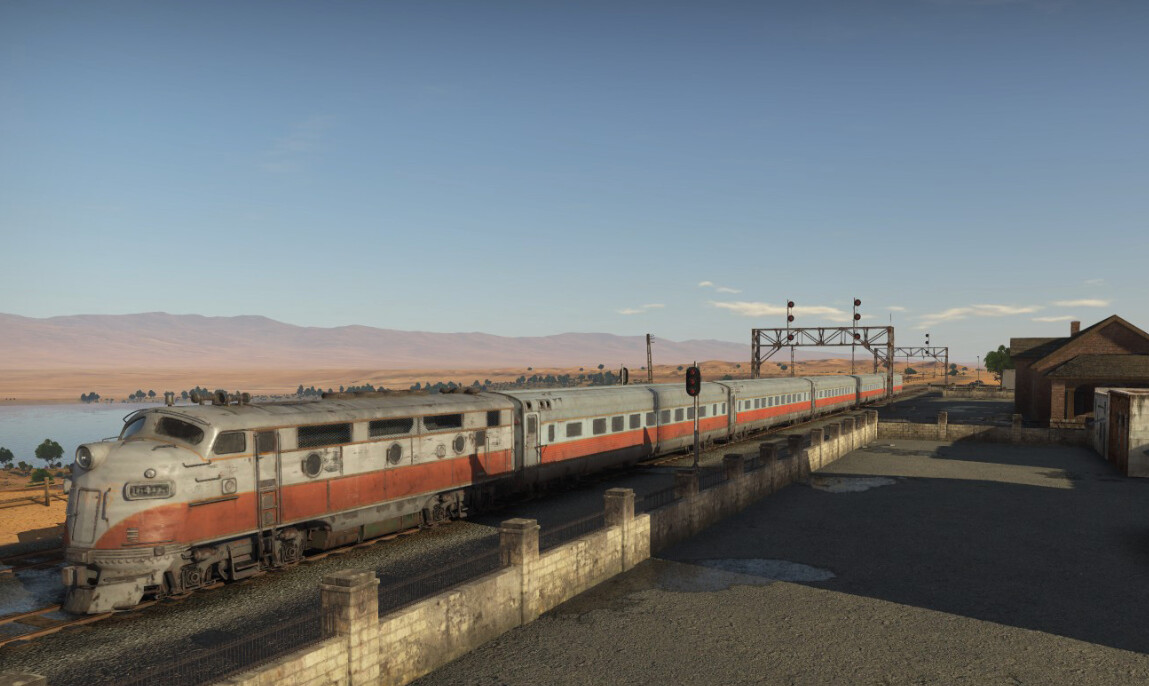
Fun Fact: You can play a little game with the train: if you are fast enough with your tank and stand in front of the train before it arrives, you can let the train push you. If the train fails, you win; if the train succeeds, you lose.
On the Spaceport map, you can also find the EMD, as it’s standing with the passenger train on a bridge near the city on the right-hand side, which stretches across the entire map. However, the locomotive is completely stationary at around the midway point of the map throughout the entire match.
Note: You can also shoot at the locomotives or wagons, like with the Br 52, so that they break down. You can also shoot the locomotive of the train inbound to the station on the American Desert map, to prevent it from entering the station.
Technical data
| Height (m) | 4.57 m |
| Width (m) | 3.25 m |
| Length (m) | 15.44 m |
| Numbers | 1,807; 1,111 Type A and 696 Type B |
| Years of construction | 1945–1949 |
| Mass | 106,000 kg (106 tons) |
| Engine | Two-stroke V16 Diesel |
| Fuel Tank | 4,500 L Diesel |
| Power | 1,500 HP |
| Top Speed | 164 km/h |
| Track gauge | 1,435 mm (standard gauge) |
| Wheel arrangement | Bo'Bo' |
| Wheel diameter | 1,016 mm |
Development
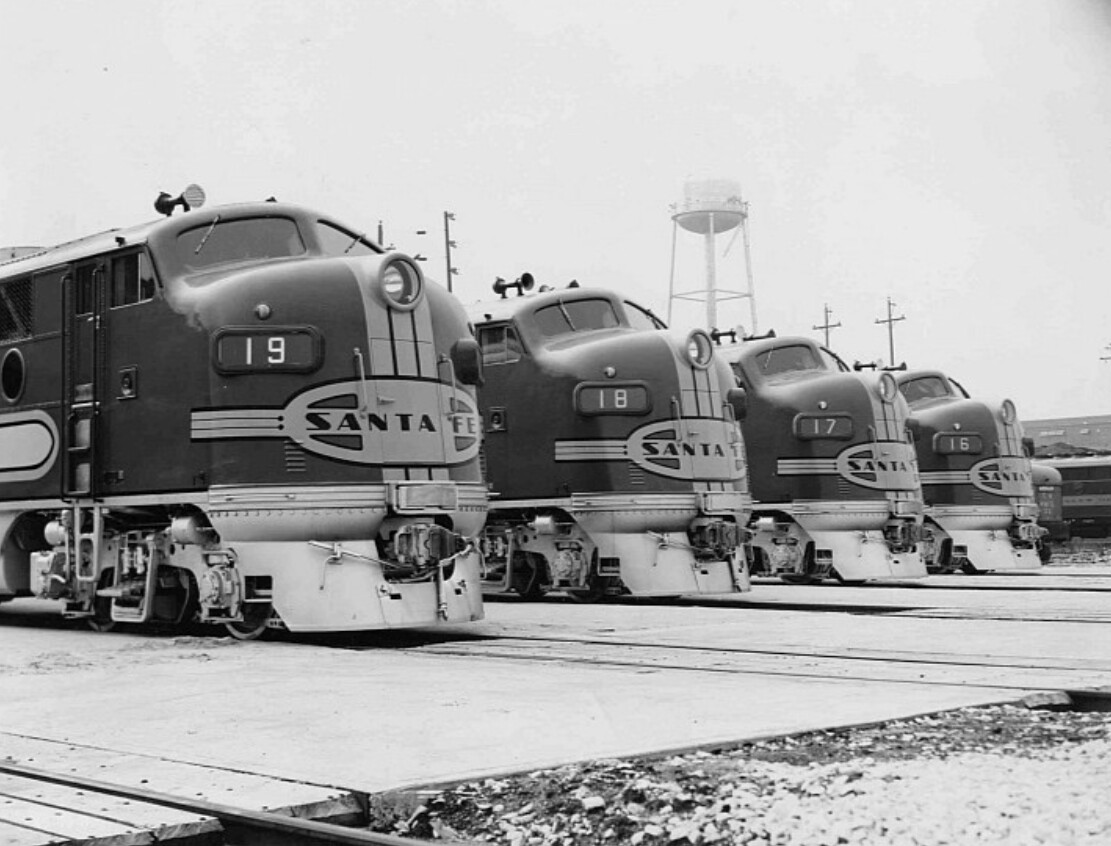
The EMD F3 is a further development of the EMD F2, which in turn was a further development of the EMD FT, a streamlined diesel-electric locomotive designed in 1937. Electro-Motive Division further improved the EMD 567 diesel engine used in the EMD F2, developing it into the EMD 567B. However, the electrical system of the EMD F3 was not yet fully developed, which is why a new generator and new wiring were installed.
Simultaneously, production of the F2 was also underway, which required reduced power output because otherwise the engine and generators would have been overloaded. Therefore, the output power of the F2 would have been identical to that of the FT, since the latter still used the D8 generator which could deliver less power with the engine, especially since production was too low.
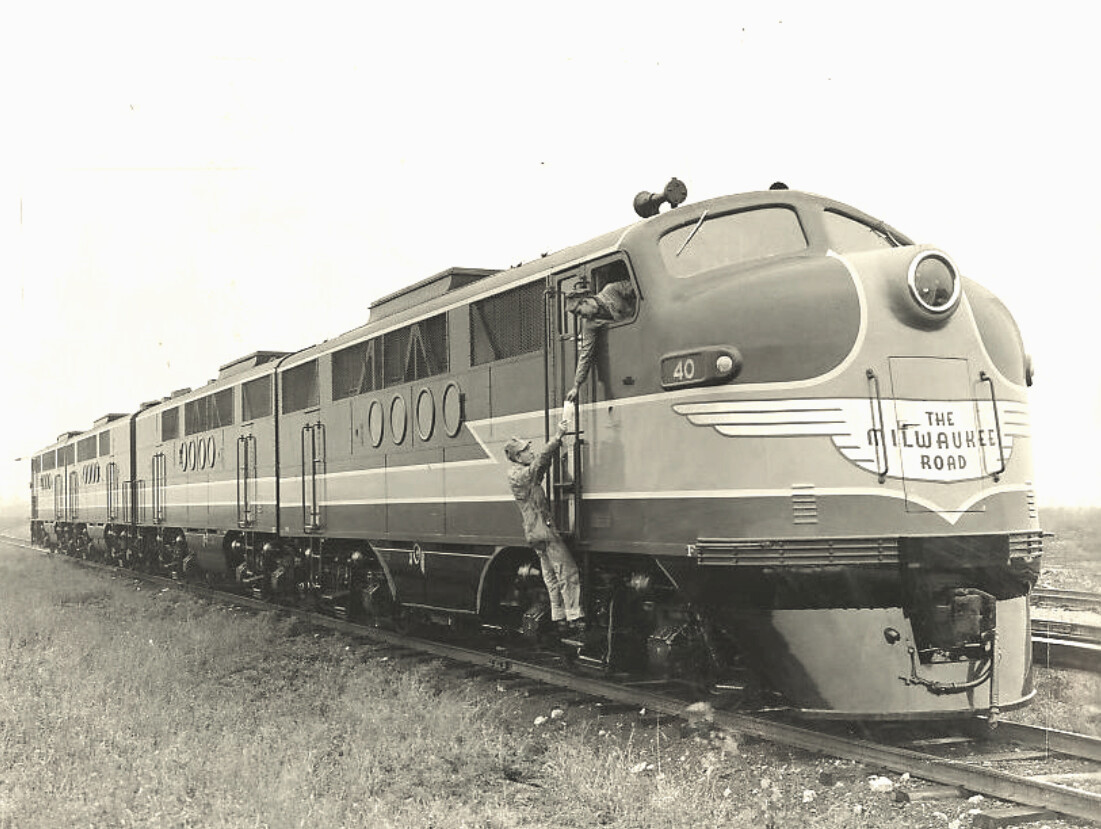
This ultimately led to the decision to mass-produce the F3, as it had more power than the F2 and FT, which only used the D8 generator, thanks to its improved engine and electrical system with the new D12 generator. Mass production of the F3 began in 1946, allowing the EMD 567B engine to unleash its full potential.
What’s also very interesting is that the EMD F series had a Type A & B division. Specifically, only the Type A was equipped with a driver’s cab, while the Type B had none and was only intended to supplement the Type A in a traction unit (a group of two or more locomotives) to double its power and thus transport more freight. Therefore, it probably wouldn’t have been possible for the Type B to run without a Type A locomotive, as it couldn’t be operated by a driver due to the lack of a cab.
Deployment
The EMD F3 was available either as a single Type A, in a pack with one Type A or one Type B, or as a group of four consisting of two Type A and two Type B units, which together would deliver a total of an astounding 6,000 HP.
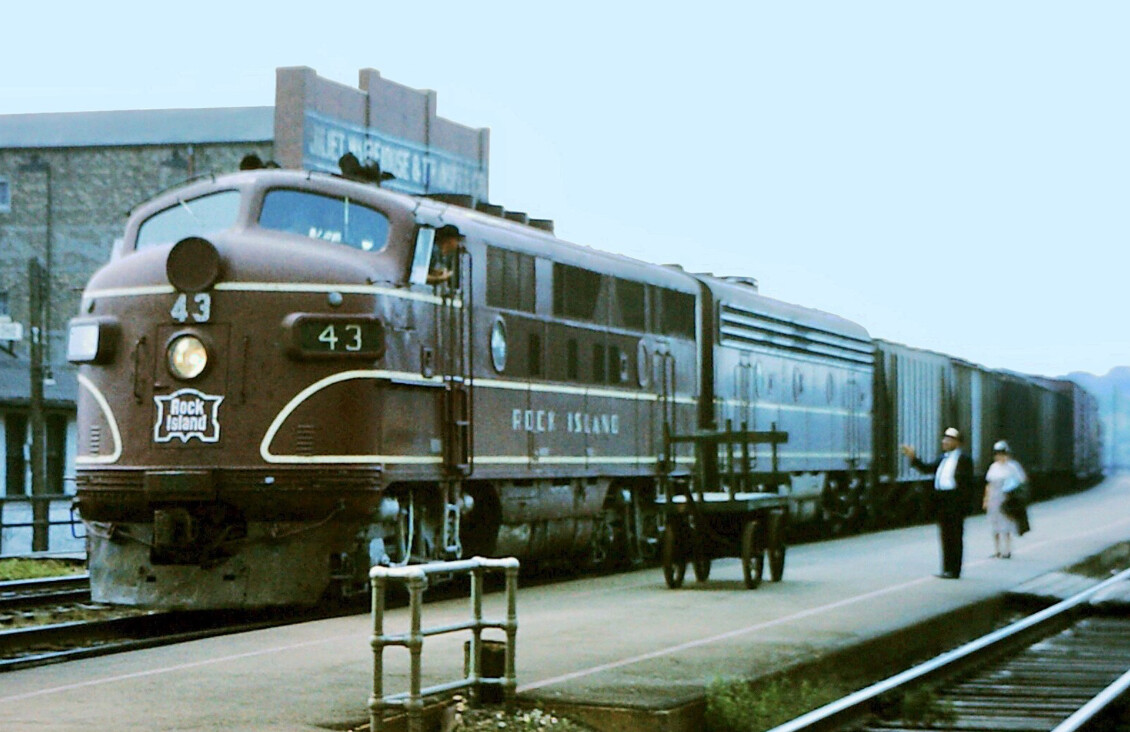
It was used by, among others, major North American railroad companies such as the Union Pacific Railroad, Southern Railway, Southern Pacific Railroad, Pennsylvania Railroad, Chicago, Burlington and Quincy Railroad, and Atchison, Topeka and Santa Fe Railway, but also in Canada by the Canadian National and Canadian Pacific. It was also used by numerous other railroad companies in Mexico, Australia, and Saudi Arabia. In total, more than 50 rail associations used the EMD F in various liveries, modifications, and specifications.
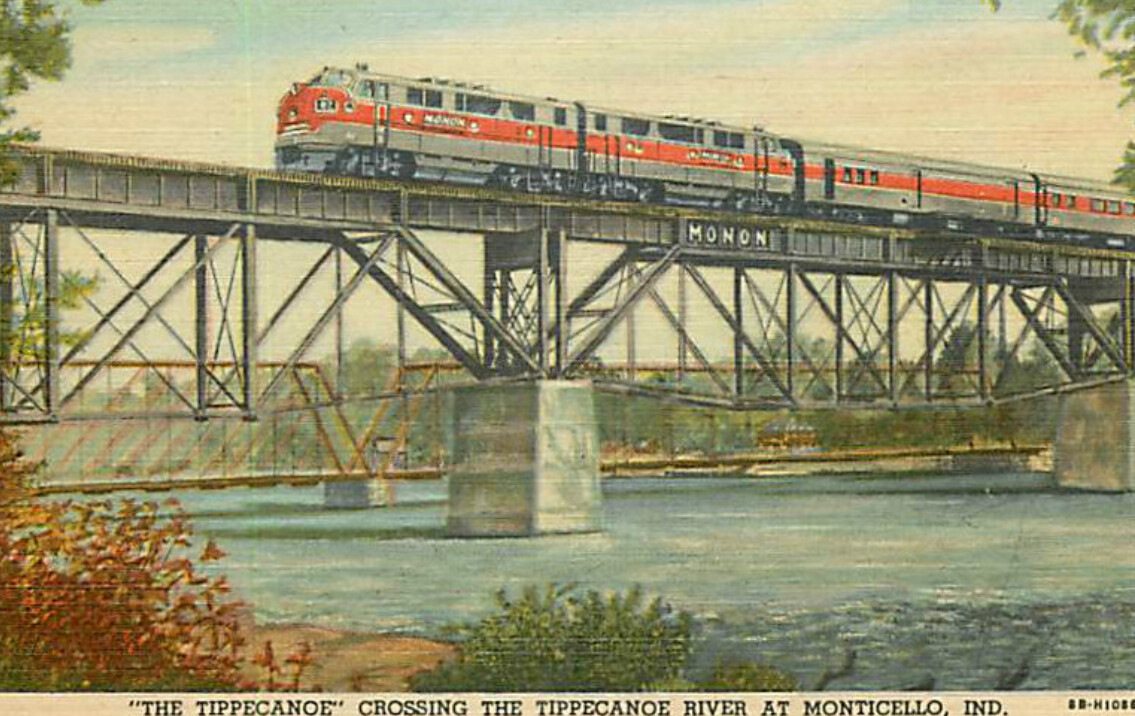
The EMD F was originally designed as a freight locomotive, but it was also used as a passenger locomotive by certain operators, most notably Santa Fe, which used the EMD F to connect several American cities. The most well known example of these would be the EMD F3 that was used as a passenger train between Chicago and Los Angeles, better known by its nickname “The Kansas City Chief”.
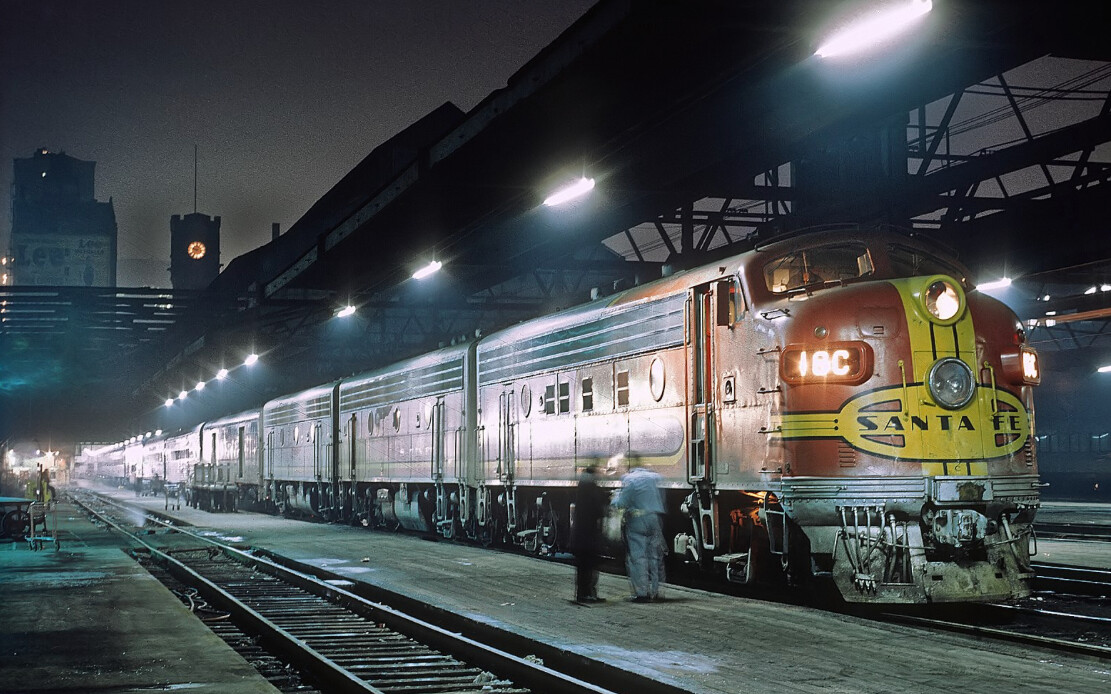
There were a total of five generalized versions of the F3 named “Phase I–V”: these differed only in the appearance of the cooling grilles, the number of portholes on the side of the locomotive, the number of front headlights, or other attachable parts. The various railway companies also used different body shapes for the EMD F3 locomotive. Thus, depending on the railway company using the locomotive, there was a different, special casing for the F3, tailored to the operator’s specific needs and wants.
Note: The designations Phase I–V are not official designations but rather internal technical terms used to differentiate the construction of the locomotive.
Note II: The phases generally differ only in the number of portholes and the type and shape of the wire mesh, steel panels, or fan type and height. There were no major performance differences between these units.
- Phase I: The classic version has three portholes per side. Between these portholes, above the portholes, are wire mesh grilles, and on the roof are three large fans.
- Phase II: One of the most common modifications here was that there were only two portholes per side, and the wire mesh above the portholes is continuous. There is also wire mesh between the two portholes. The three large fans are still on the roof.
- There was a Phase II early and late version; they only differ in that the fans are positioned lower than in the early version, meaning they protrude less upwards; otherwise, they are identical.
- Phase III: The Phase III is a mixture of the Phase I and the Phase II Late; it has two portholes and the wire mesh arrangement of the Phase I, as well as the low-profile fans of the Phase II Late.
- Phase IV: The wire mesh has now been replaced by steel panels above and between the portholes.
- Phase V: Externally, there was no difference between these and the Phase IV locomotives; the main changes included its traction capabilities being improved and fine-tuned.
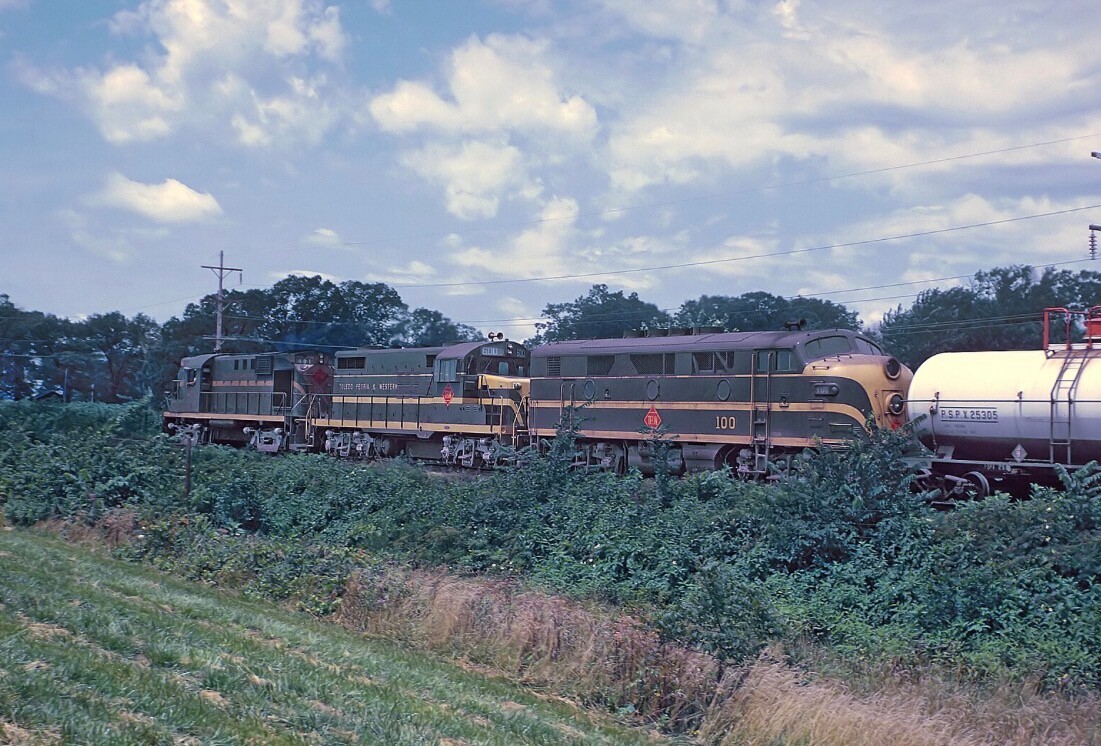
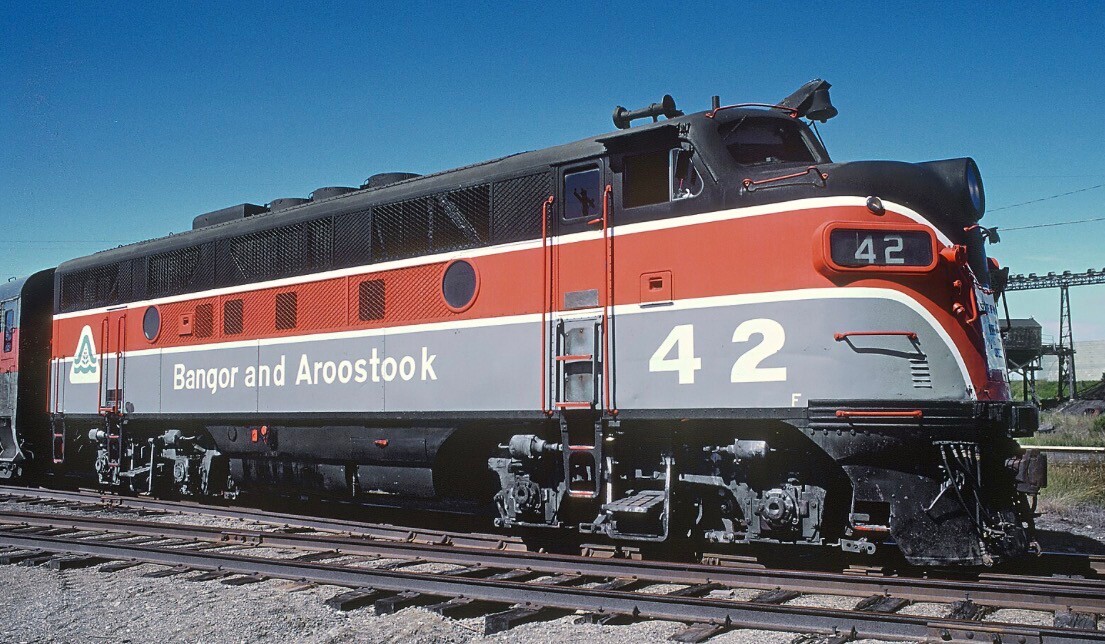
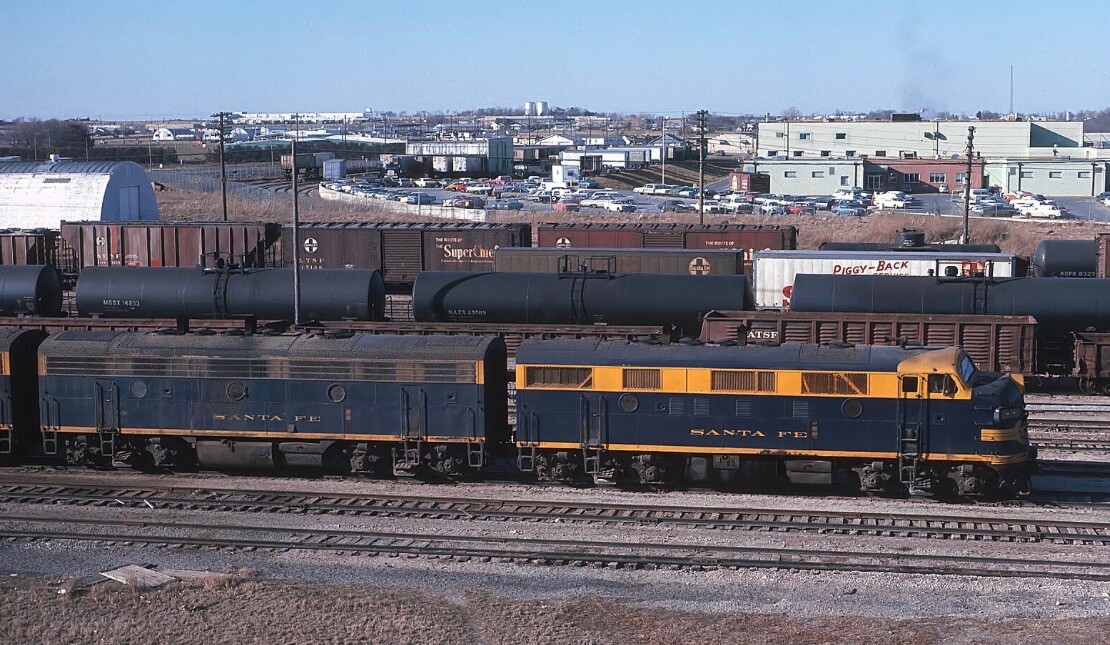
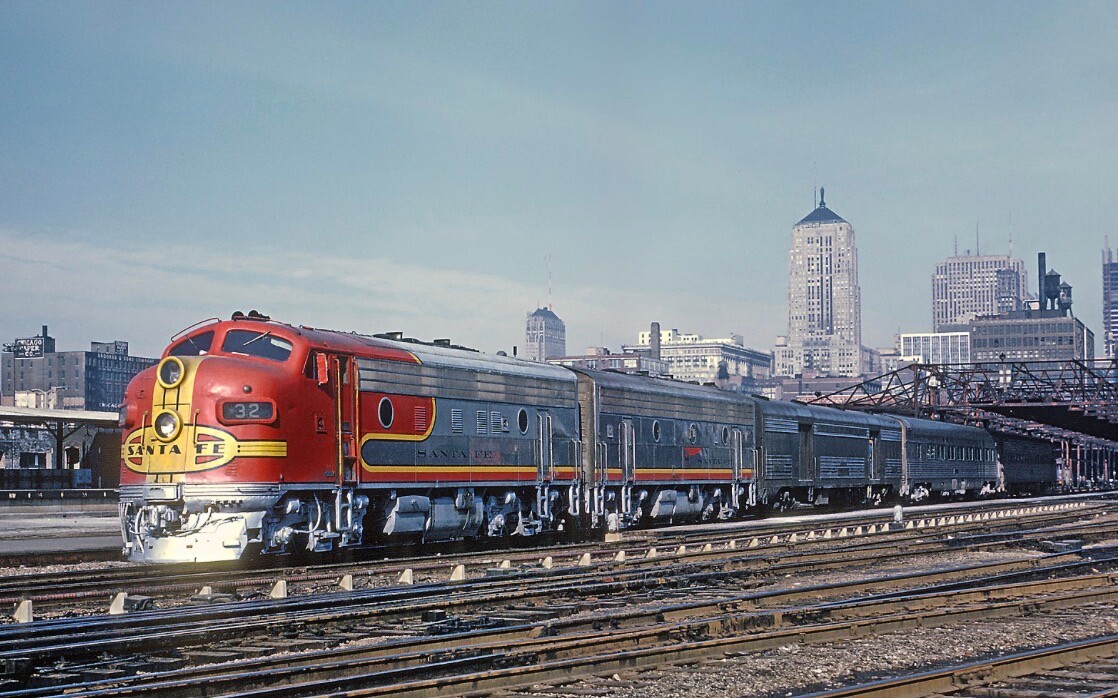
It wasn’t long before the EMD F7, a further development of the EMD F3, was developed. Since there was no F4 or F6, and the F3 was also labeled F5, the designations, somewhat confusingly, skipped from the F3 to the F7. Adding to the confusion, the F7 looked almost identical to the F3, both technically and visually. Compared to the F3, it was given newer electronics to keep up with the changing times, but otherwise remained roughly identical to its original form.
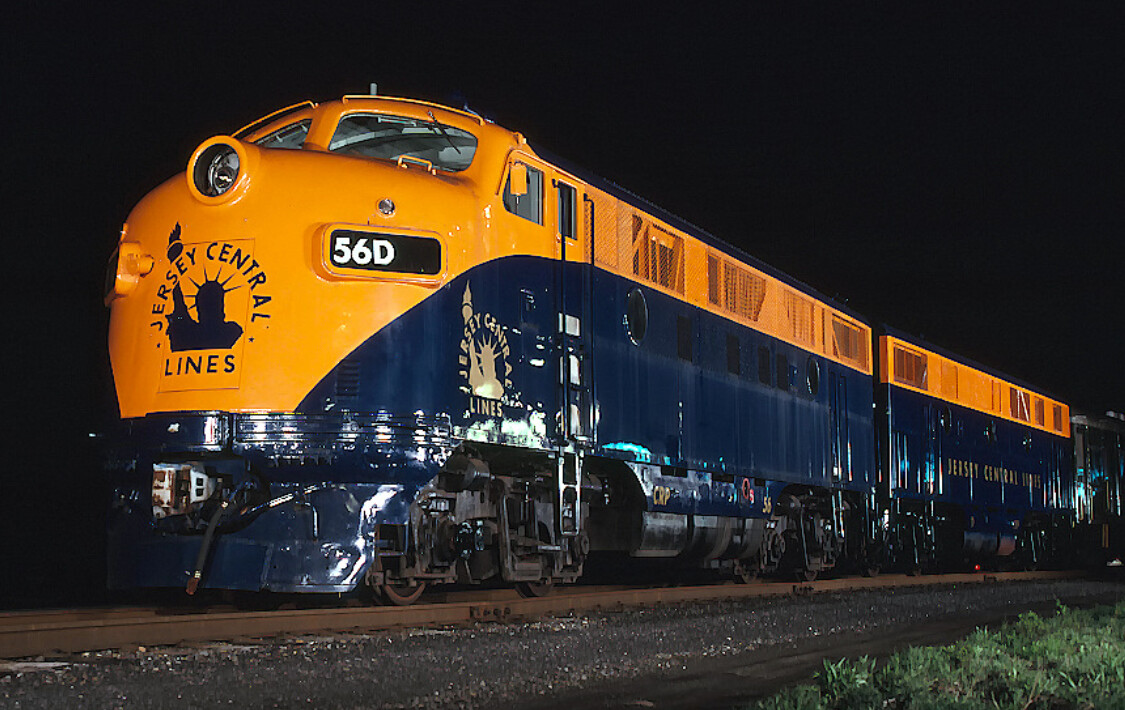
Today, some F3 locomotives have survived to this day and are housed in various museums in North America, such as the Alberta Pioneer Railway Museum, the Danbury Railway Museum, or the Steamtown National Historic Site. Some are not operational, but with a bit of luck, you might be able to get a ride on the locomotive during festivals or major events!
(the number of construction units varies depending on the source)