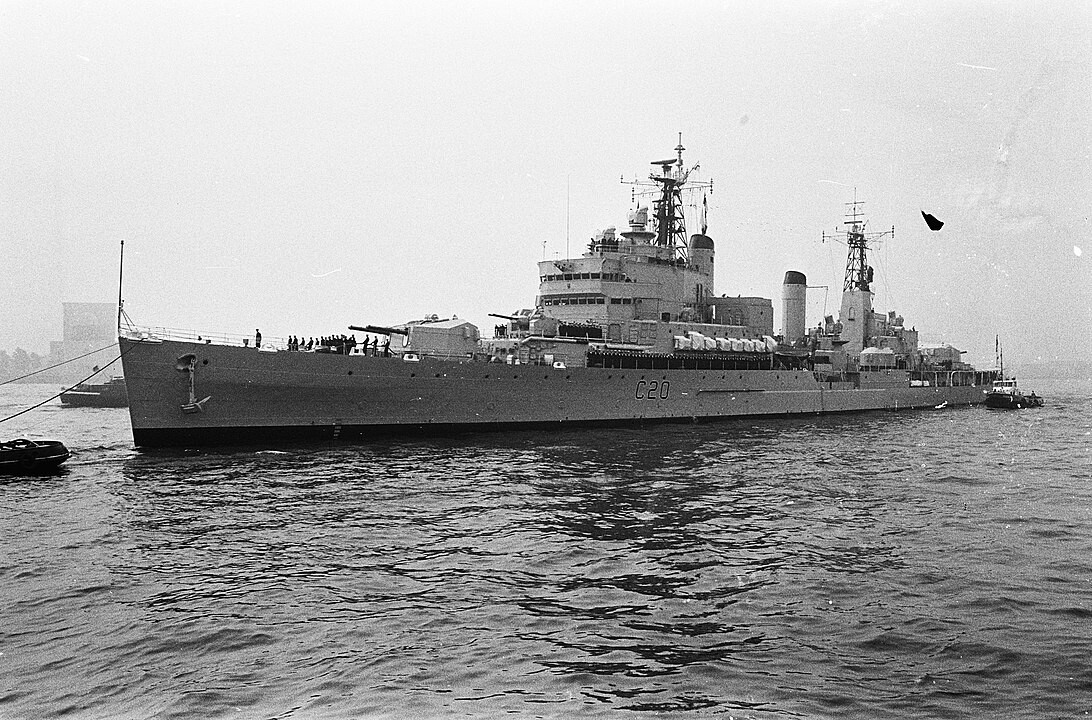
HMS Tiger (C20) was the lead ship of the Tiger-class, a set of three light cruisers built for the Royal Navy following the end of the Second World War. Initially laid down as a Minotaur-class light cruiser (a smaller derivative of the Crown Colony and Town class cruisers), she was completely redesigned while being built and eventually launched as a completely new design. Featuring an advanced semi-automatic main battery and fully automatic anti-aircraft armament, she was the last “gun cruiser” built for the Royal Navy.
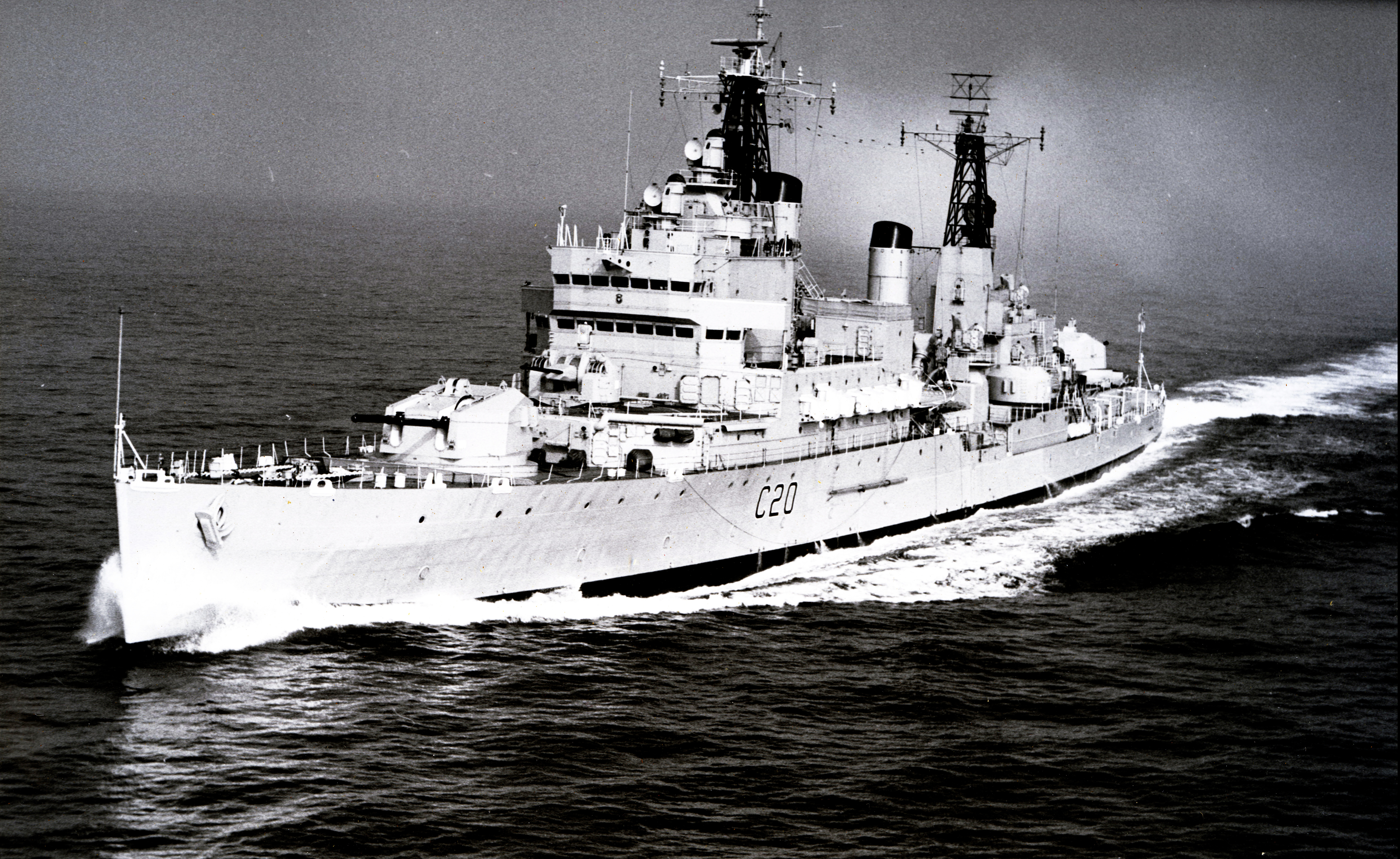
HMS Tiger was launched in 1945, but inefficiencies in her construction resulted in her being completed almost 15 years later, in 1959. She served as the flagship of the Mediterranean Fleet from 1959 to 1960, and later participated in the Indonesian Confrontation. In 1968, she began a lengthy conversion into a command helicopter cruiser. This resulted in the removal of her aft guns and the installation of a massive hangar and deck complex, from which she could operate multiple Westland Wessex anti-submarine helicopters. HMS Tiger was subsequently used as a flagship. Due to her high crew complement and high operating costs, HMS Tiger was decommissioned in the late 1970s and placed in reserve, ultimately being scrapped in the late 1980s.
Design and development
During the Second World War, the British Navy conducted a massive cruiser-building programme, building many vessels of the Dido, Arethusa, Town, Crown Colony and Minotaur (Swiftsure) classes. The last of these classes, the Minotaur/Swiftsure class, was under construction in 1944 when the British Navy realised that there was neither the budget nor the manpower to operate those ships. As a result, the British naval command decided to barter with the Royal Australian Navy (RAN) to get them to purchase two Minotaur-class cruisers for the cost of 9 million British pounds. However, this deal failed to materialise, and as a result, the last three ships of the Minotaur-class were suspended. They sat in dry dock, possibly waiting to be disposed of. However, a dramatic change in British naval construction plans saved them from the breakers' yard.
Cruiser vs destroyer debate
In 1945, it was hoped that the Battle-class destroyers could accomplish most of the roles that cruisers could, thereby eliminating the need for cruisers. However, British First Sea Lord Andrew Cunningham realised that there was not enough budget for the construction of new, three-turreted destroyers (later the Daring-class) that could truly accomplish the roles of cruisers. As a result, the Royal Navy decided that they would need to build a new class of cruisers. The only hulls available for this purpose were the three unfinished Minotaur-class hulls: Bellerophon (renamed Tiger), Defence (renamed Lion), and Blake (which retained her name). As a result, Tiger was launched, albeit in an unfinished state, in late 1945.
Meanwhile, the argument about cruisers persisted. Several designs were considered and debated, while the choice of main armament (mainly the choice between 5-inch, 5.25-inch or 6-inch guns) was also contested. By 1948, a new Minotaur-class design had been developed (otherwise known as Design Z), mounting ten 6-inch guns in five automatic dual turrets and displacing almost 18,000 tons fully loaded. However, with the re-election of Winston Churchill in 1951, the British naval budget was reduced, and the Design Z “Minotaurs” were cancelled. Between 1945 and 1954, no work was done on the Tiger-class cruisers. However, in 1954, it was decided that the Tigers would be completed, albeit to a completely new design, using entirely new armament.
Hull, sensors and armament
The redesigned Tiger-class was fitted with a main battery of four 6-inch QF Mk N5 guns in two double semi-automatic dual-purpose (DP) turrets. These weapons had initially been developed as a faster-firing version of the BL Mk 23 guns mounted on the preceding cruiser classes. HMS Tiger received the weapon with a brand-new semi-automatic turret, allowing rates of fire of up to 20 rounds per minute (RPM). In addition, Tiger’s main armament was capable of 360-degree rotation. In practice, the Mk N5 guns were extremely unreliable and jammed after just 30 seconds of continuous fire; however, RN command found this to be irrelevant, as response speed after enemy detection was believed to be the determining factor in future naval engagements. This was especially true when dealing with the fast-flying jet aircraft of Tiger’s time.
HMS Tiger was armed with an anti-aircraft battery of six 3-inch QF Mk N1 guns in three dual turrets. These guns had an extremely high rate of fire of 90–120 RPM, but were prone to jamming after short bursts, similar to her primary armament.
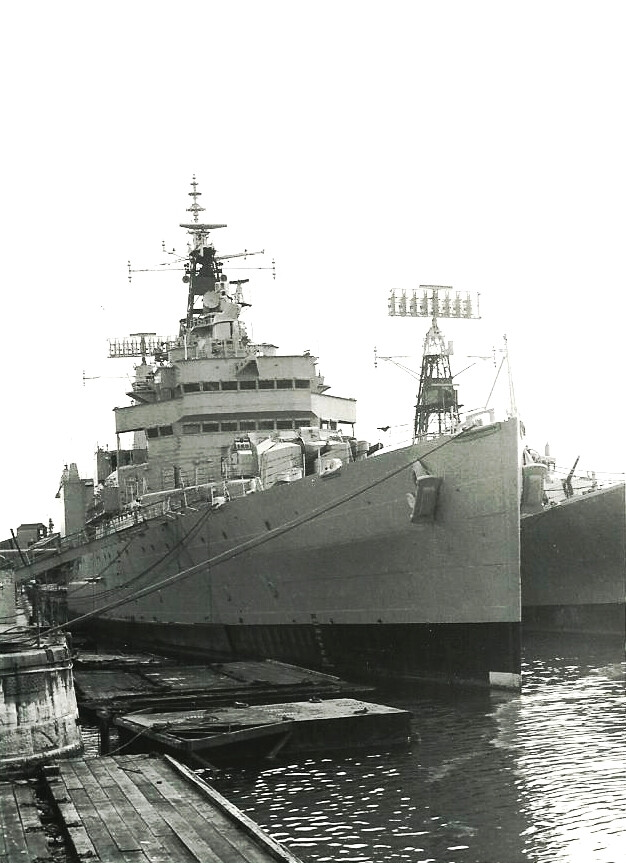
Tiger’s hull was retained from her original 1945 design, but was widened substantially to accommodate her new equipment. She also received a completely new, modernised superstructure that was much wider than the superstructures fitted to her WWII counterparts; thus, she is easily distinguished from ships such as HMS Swiftsure, her half-sister.
HMS Tiger carried a Type 992Q surface radar with a range of 56 km, a Type 960 air-warning radar with a range of 310 km, a Type 277Q surface/air radar with a range of 220 km, and five MRS 3 fire-control directors for each 6-inch and 3-inch turret. Her peacetime crew complement would have been 698 officers and men, while her wartime crew complement would have been almost 900 personnel. The implementation of these changes took nearly four years; as a result, HMS Tiger was fully commissioned on 18 March 1959.
Operational history
Following her commissioning, HMS Tiger spent most of 1959 and 1960 in trials testing her highly advanced armament. It was during this time that the Navy realised the true extent of her armament’s unreliability: her 3-inch guns experienced teething troubles that resulted in severe unreliability, while her 6-inch guns were prone to jamming after short periods of firing. The 3-inch gun issues were mostly fixed by late 1960, but her 6-inch guns remained unreliable and were never fully rectified. During this time, she sailed to visit several Baltic ports and deployed to the Mediterranean as the flagship of the British Mediterranean Fleet.
In the early 1960s, HMS Tiger deployed to the eastern theatre to serve during the Indonesian Confrontation. However, her operational capabilities were hindered by a lack of crew members, due to Navy manpower shortages of the 1960s. She was known publicly to be “only partly operational”, and the Glasgow Herald went as far as calling Tiger a “floating office”. In 1966, she hosted talks between the British government and the new Rhodesian leadership under Ian Smith, who had unilaterally declared independence from the United Kingdom.
Later career and conversion
HMS Tiger was placed in reserve in 1966, having become extremely obsolete due to the introduction of new guided-missile surface combatants. However, the decision was made to convert her, along with her sister ships, into helicopter cruisers. At the time, the British Parliament found that this would have been the cheapest option, costing 5 million pounds per vessel. The conversion took until 1972; Tiger’s rear armament was removed and replaced with a massive flight deck and hangar to support the operation of four Westland Wessex helicopters. The rear pair of 3-inch mounts were removed and replaced with a pair of Sea Cat missile launchers for Sea Cat surface-to-air missiles.
By 1972, the Tiger was operational again, and the government wasn’t happy about it; the conversion had cost 12.8 million, rather than the 5 million it was supposed to cost. As a result, the Lion’s conversion was cancelled, and she was placed into reserve; Lion ended up as a spare parts ship, providing parts for the Tiger and Blake. This was done to such an extent that the Tiger’s crew members began calling her the 'Liger', due to the massive amount of Lion’s parts used to keep her operational.
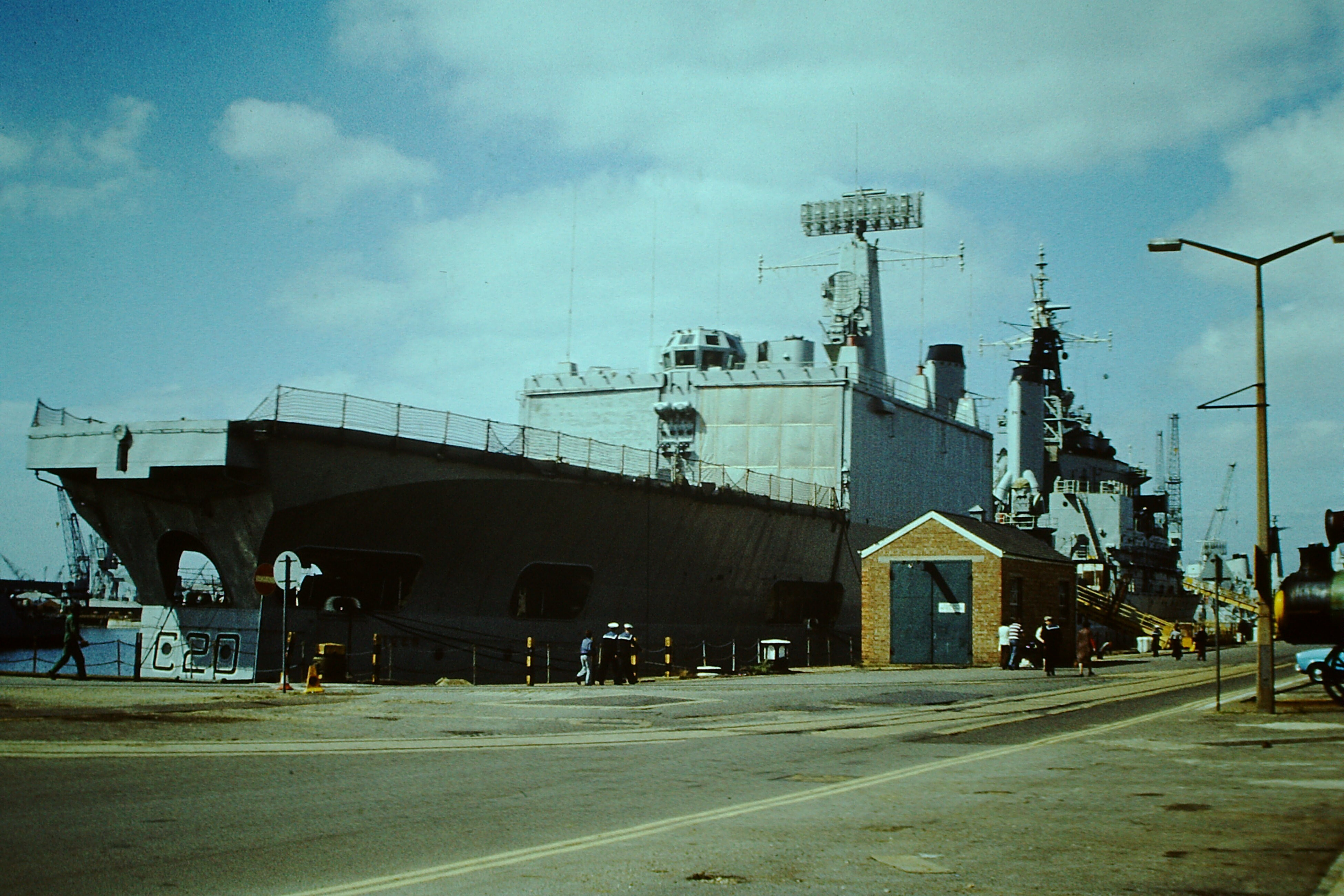
HMS Tiger saw little service as a helicopter cruiser, being decommissioned in 1978. Her only major event during this period was the 1977 Silver Jubilee Fleet Review for Queen Elizabeth II. Being an extremely large vessel, she was costly to operate compared to the guided-missile destroyers that the Royal Navy had invested in. Thus, she was placed on the “awaiting disposal” list in early 1979, along with her sister Blake.
In early 1982, the Falklands War broke out, and HMS Tiger was immediately reactivated, along with Blake. The Royal Navy seriously considered sending the Tigers to the Falklands for several reasons; firstly, their large 6-inch main artillery guns could be used for shore bombardment, but more importantly, they possessed the third-largest helicopter decks in the Royal Navy (after the carriers Hermes and Invincible). In fact, the decks were large enough to operate the Sea Harrier S/VTOL aircraft, and this capability had been tested by Blake in the early 1970s. However, in the end, the ships' high operating costs proved decisive, and both were inactivated again once the Falklands conflict came to a close. HMS Tiger remained in reserve until 1986, when she was sold for scrap.